Festive Christmas Worksheets
Cracker Dominoes (A)
Grades: 1st Grade
-Number-Bonds-to-10-Questions-Worksheet.jpg?w=3840)
Cracker Dominoes (B)
Grades: 1st Grade
-Number-Bonds-to-20-Questions-Worksheet.jpg?w=3840)
Elf and Gingerbread Man
Grades: 1st Grade

Cracker Dominoes (C)
Grades: 2nd Grade
-Number-Bonds-to-100-Questions-Worksheet.jpg?w=3840)
Christmas Code Breaker (A)
Grades: 3rd Grade
-Questions-Worksheet.jpg?w=3840)
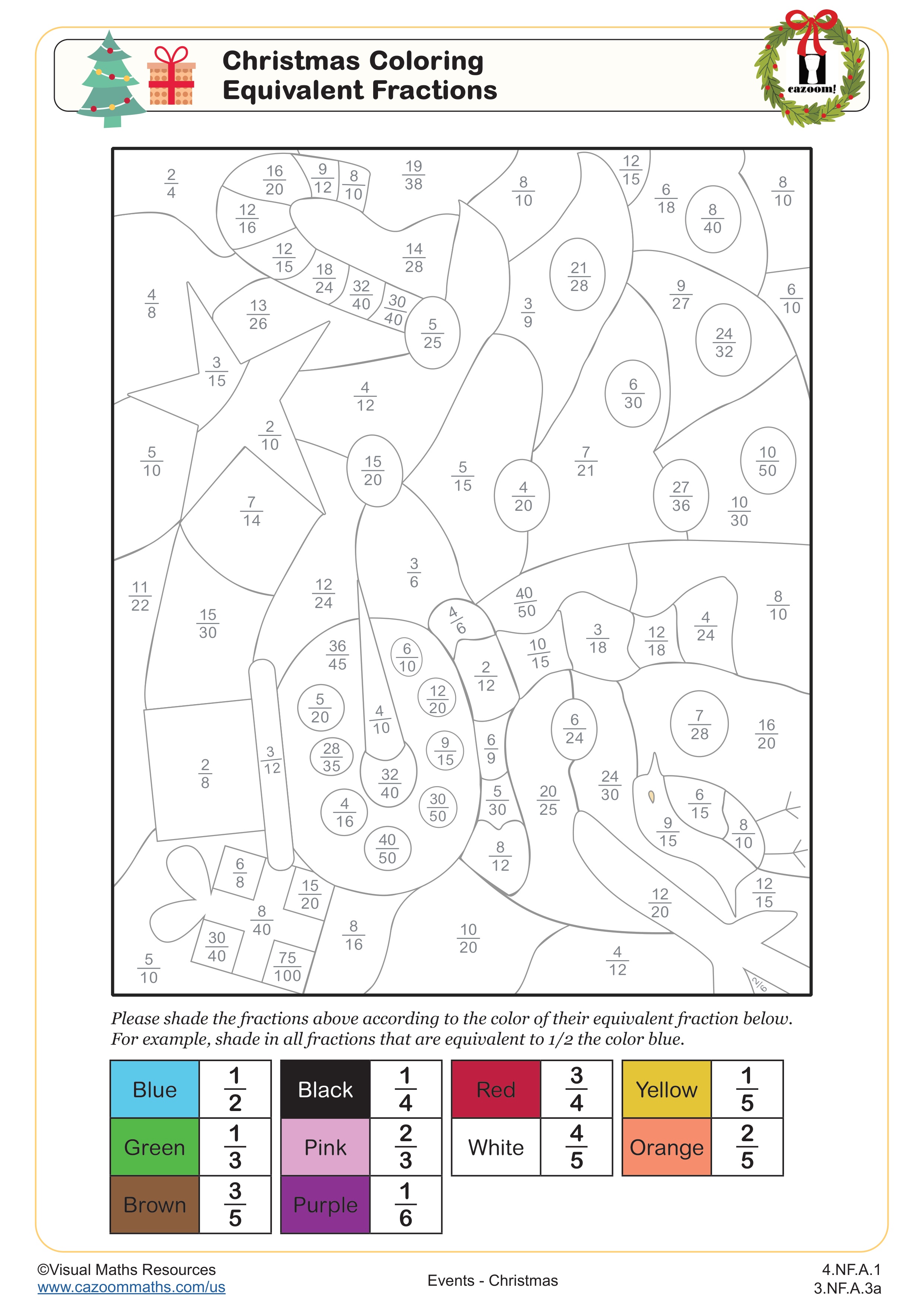
Christmas Coloring - Equivalent Fractions
Grades: 3rd Grade, 4th Grade
Christmas Code Breaker (B)
Grades: 7th Grade
-Questions-Worksheet.jpg?w=3840)
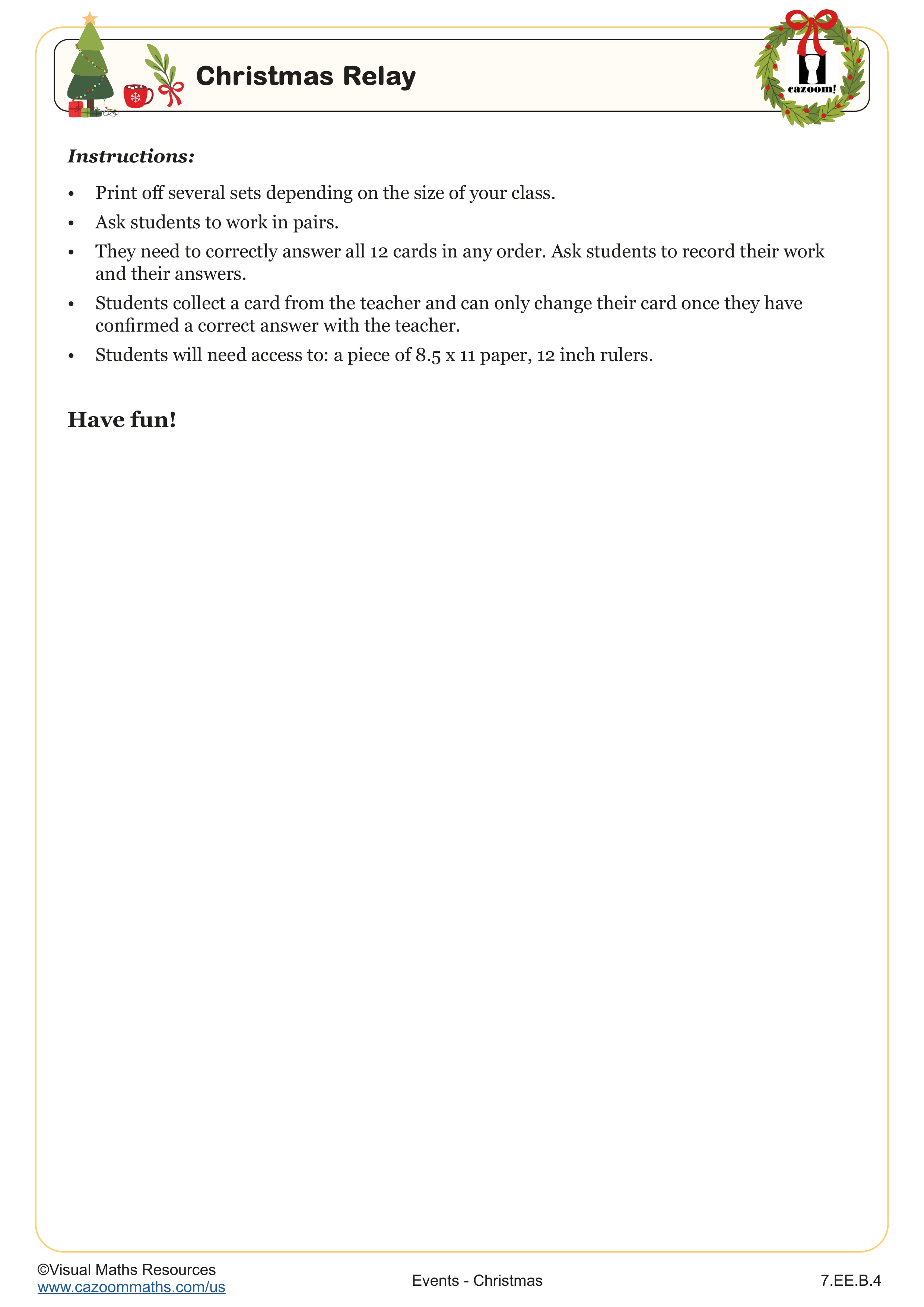
Christmas Relay
Grades: 7th Grade
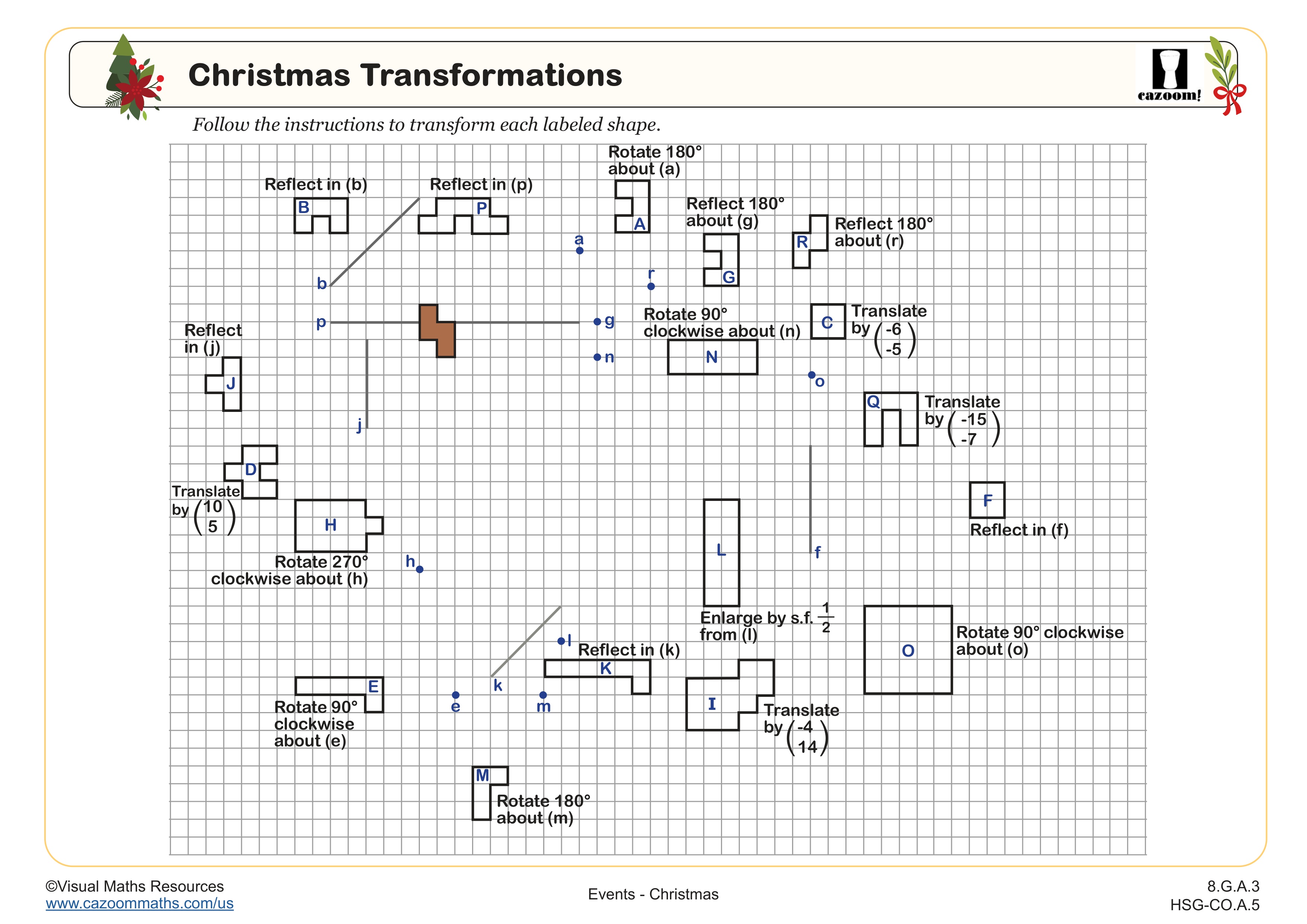
Christmas Transformations
Grades: 8th Grade, Geometry
Christmas Reflections
Grades: Geometry

Drawing Snowflakes
Grades: Geometry

All worksheets are created by the team of experienced teachers at Cazoom Math.
FESTIVE CHRISTMAS MATH!
December classrooms have a special feel, don't they? There's math hiding in all the Christmas excitement if you look closely. Students work out Advent calendar days, calculate gift money, and figure out wrapping paper sizes. Christmas trees are just triangles, really, while snowflakes show brilliant symmetry patterns. Fairy lights make sequences, ornaments are great for counting, and Christmas cookie recipes involve proper fractions. Wrapping presents needs area work, and Christmas shopping means dealing with percentages. Cazoom Math Christmas Worksheets tap into this festive mood, showing students that math isn't just textbook stuff – it's actually part of the holidays they enjoy.
Christmas Worksheet Pack: The Math Behind Festive Celebrations
December 25th has some nice mathematical bits to it. The date's quite neat – 25 is a perfect square (5 × 5), and being the 12th month gives us 12 × 25 = 300. Christmas trees work well for geometry lessons, showing triangular shapes and symmetry that students can actually draw and reflect.
Advent calendars run for 24 days, and 24 has tons of factors – 1, 2, 3, 4, 6, 8, 12, 24. That's handy for division work. The "12 Days of Christmas" song adds up to 364 gifts altogether, which is nearly a whole year! Snowflakes are mathematically perfect with their six-way symmetry, making them brilliant for transformation work.
Festive Statistics: Christmas Numbers That Count
Christmas numbers are quite useful for math lessons. American families typically spend around $900 on Christmas presents, which works well for budgeting exercises and percentage problems. About 25-30 million real Christmas trees get sold each year in the US – good for comparing ratios with artificial trees.
Christmas cards are big business too – roughly 1.3 billion sent annually across the United States. With about 130 million households, that works out to around 10 cards each. Christmas dinner timing involves proper calculations: a 12-pound turkey needs about 15 minutes per pound at 325°F, so that's 180 minutes total. These everyday Christmas numbers fit nicely into fraction work, data exercises, and problem solving, showing students how math actually connects to what they're doing at home.