Converting Lengths - Meters and Centimeters WORKSHEET
CCSS Description: Convert among different‑sized standard measurement units within a given measurement system (e.g., convert 5 cm to 0.05 m), and use these conversions in solving multi‑step, real world problems.
Converting Lengths - Meters and Centimeters WORKSHEET DESCRIPTION
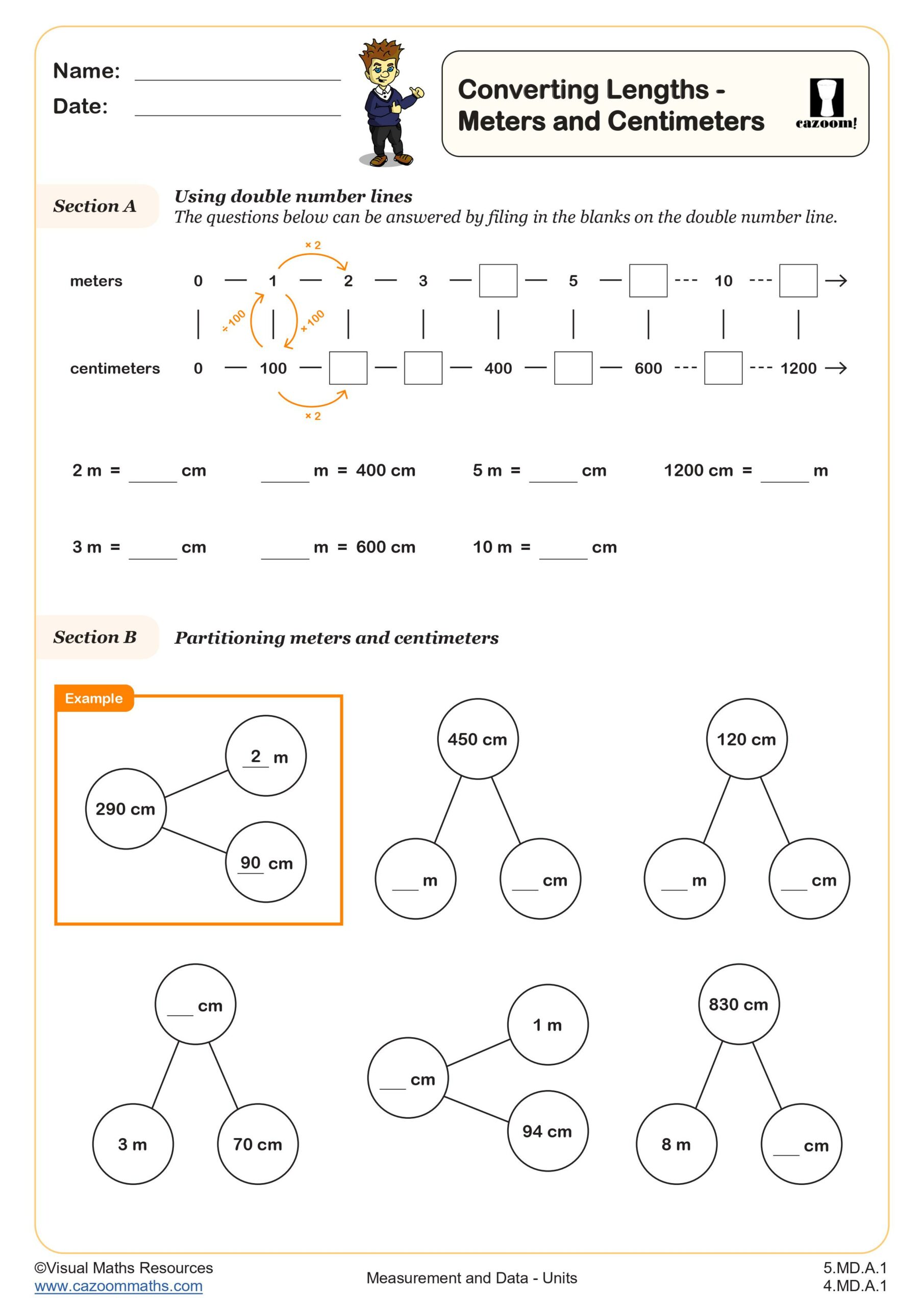
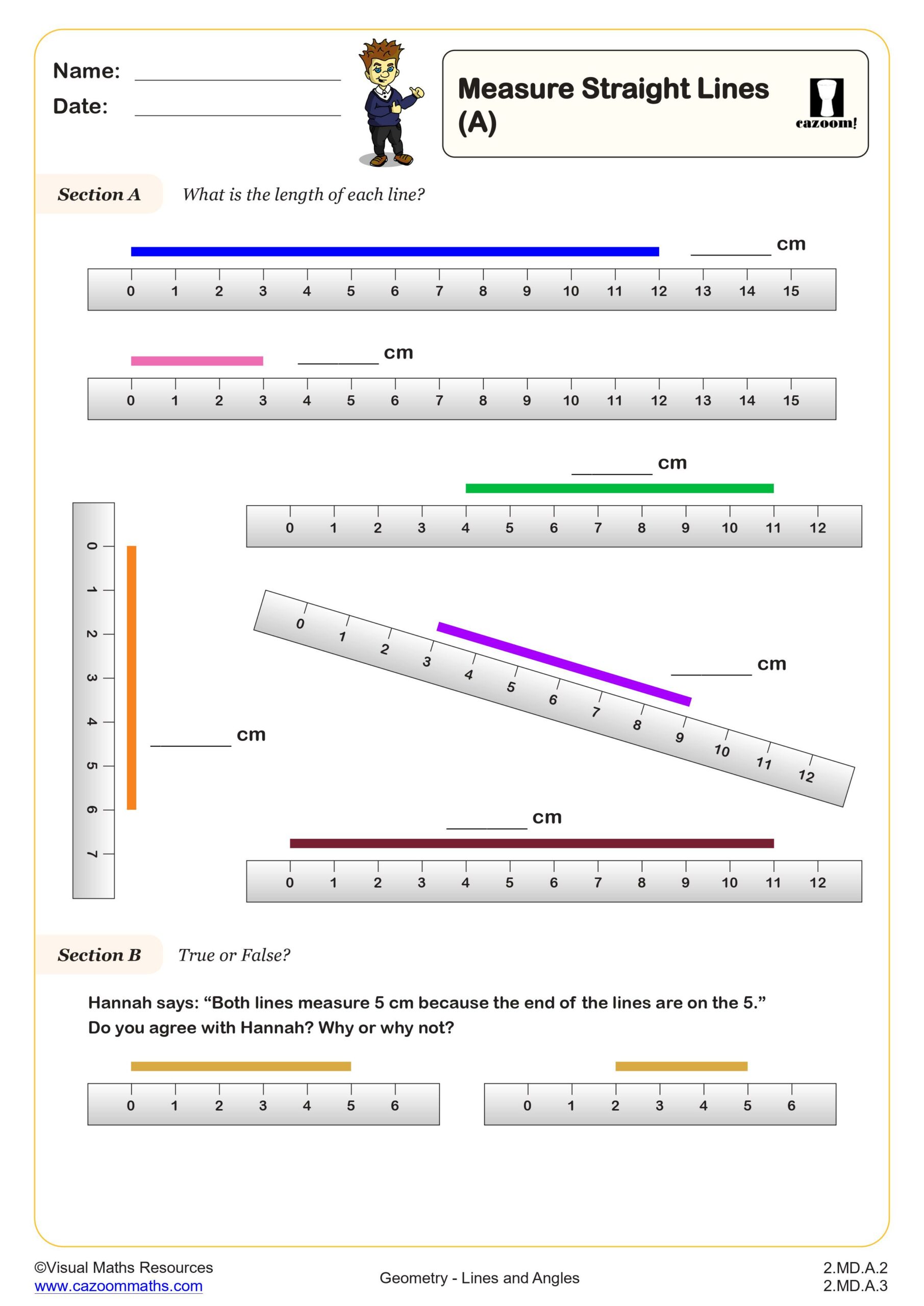
Prepare your students to measure, compare, add, and subtract lengths fluently in meters and centimeters by first looking at some equivalent measurements.
Learners will use a double number line to find the equivalence of whole numbers of meters and centimeters in section A. Lengths in cm, such as 290 cm, are partitioned into cm and m in section B using part part whole models. Fractional lengths in meters are considered in section C where students calculate how many cm there are in ¼ , ½, and ¾ of a meter before applying this to find equivalences such as 150 cm = 1 ½ m.
All worksheets are created by the team of experienced teachers at Cazoom Math.
RELATED TO Converting Lengths - Meters and Centimeters WORKSHEET
Frequently Asked Questions
This Converting Lengths - Meters and Centimeters worksheet is designed for 4th Grade and 5th Grade students. At these levels, students are ready to work with more complex measurement conversions and can handle the fractional concepts like finding equivalences between mixed numbers and centimeters. The progression from whole number conversions to fractional parts of a meter aligns well with the mathematical development typical of these grade levels.