Dividing Fractions WORKSHEET
Dividing Fractions WORKSHEET DESCRIPTION
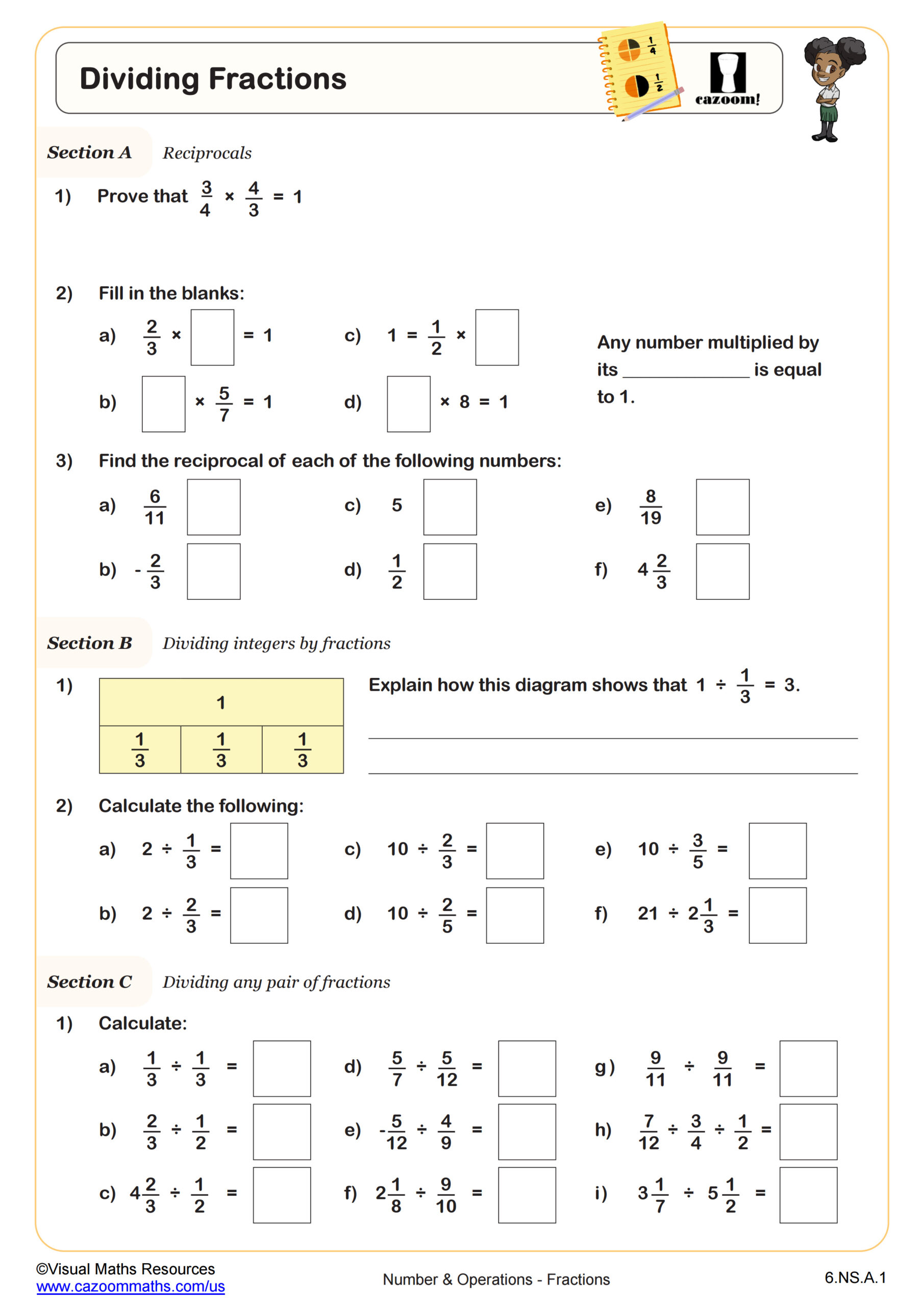
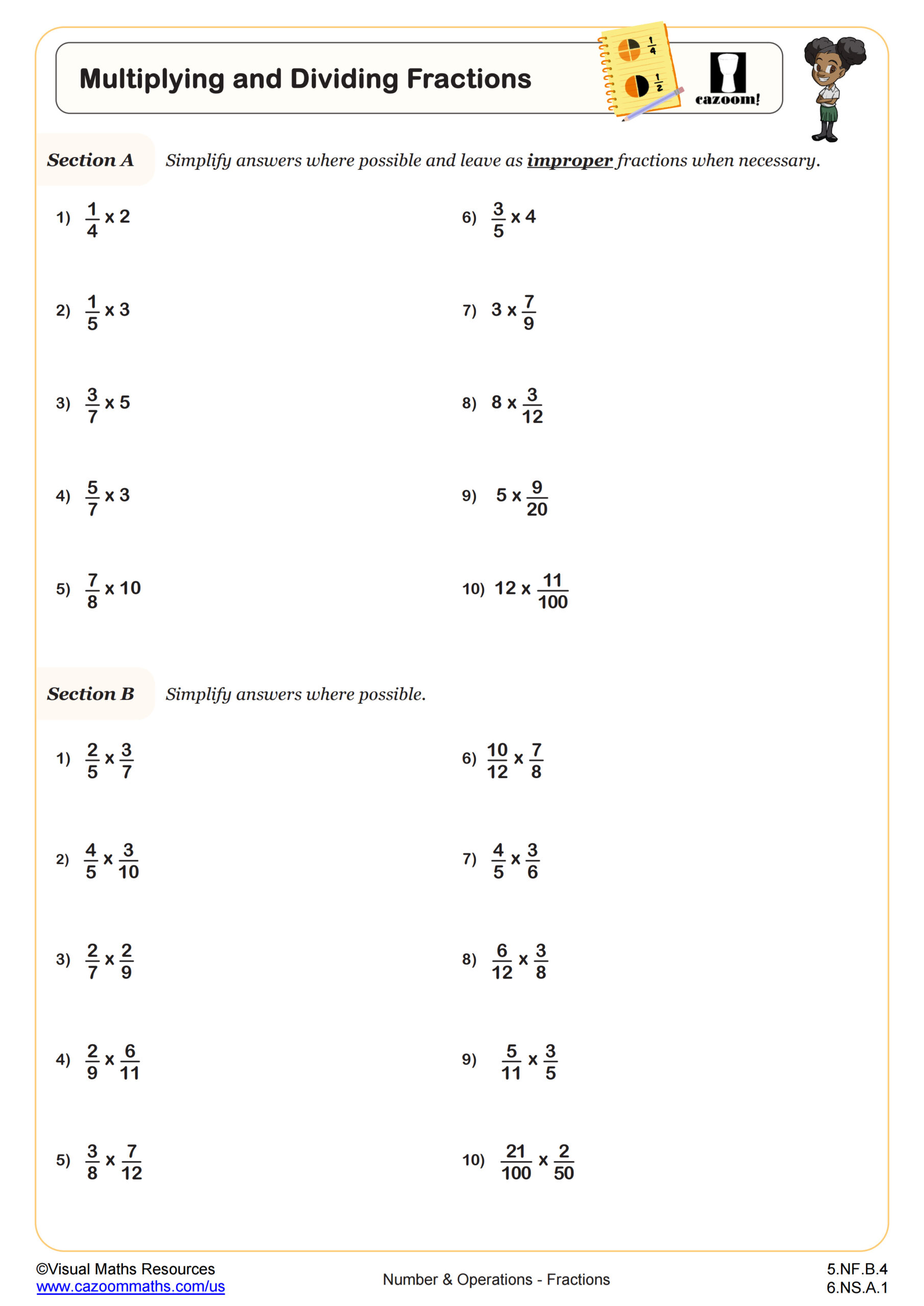
Take a deep dive into dividing fractions with this worksheet.
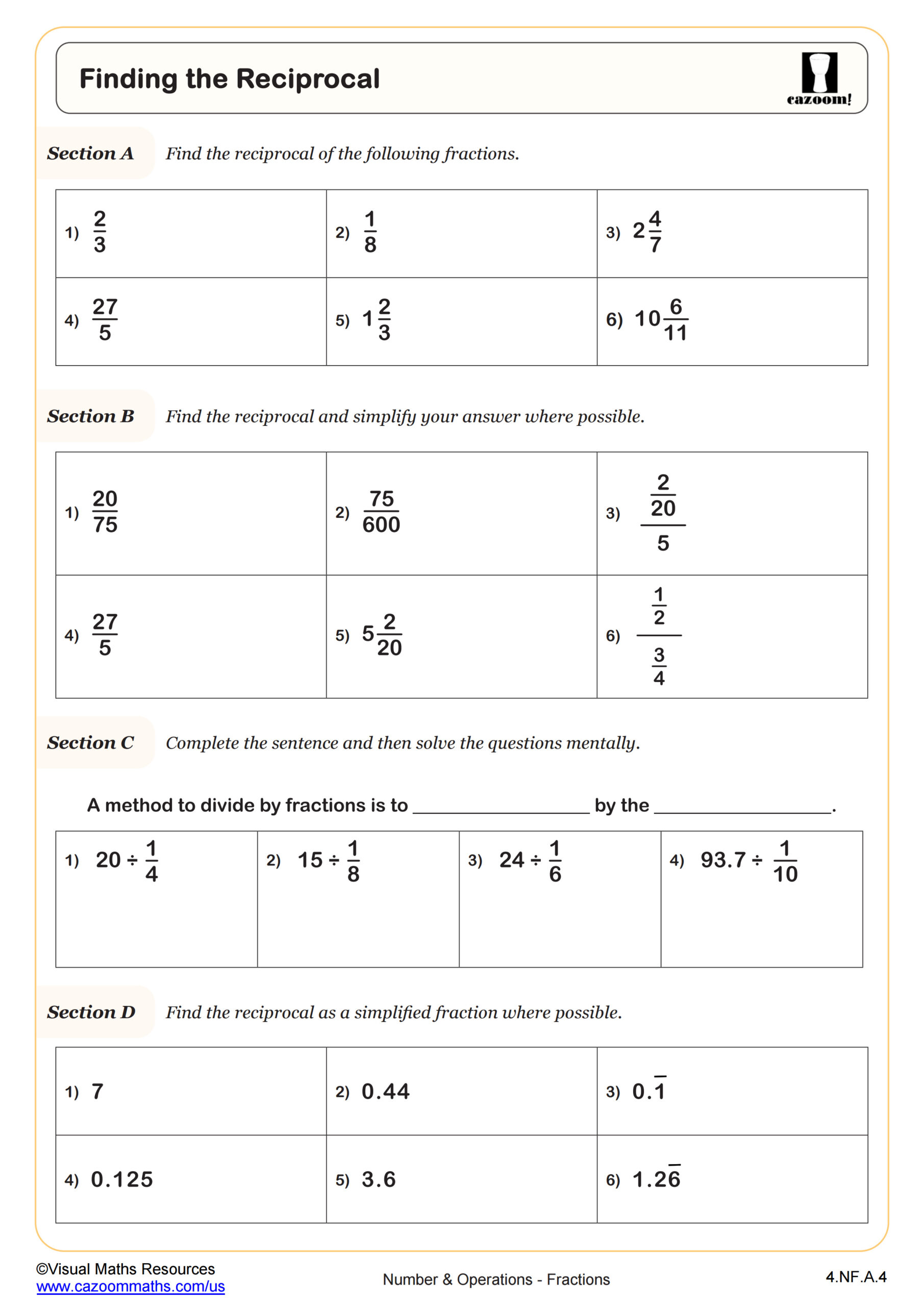
Dividing fractions begins with securing understanding of what a reciprocal is and how to find the reciprocal of any number.
Section B uses imagery to explain division of integers by fractions followed by six questions for students to try for themselves.
Next, section C progresses to learners to dividing a pair of fractions, including negative fractions and mixed numbers.
Give students a chance to articulate their knowledge in section D with spot, explain and correct the mistakes questions. These are designed to highlight common misconceptions that arise.
Sections E and F really challenge your students' thinking and knowledge of dividing fractions as they work with algebraic fractions and finish with two challenge puzzles.
All worksheets are created by the team of experienced teachers at Cazoom Math.
RELATED TO Dividing Fractions WORKSHEET
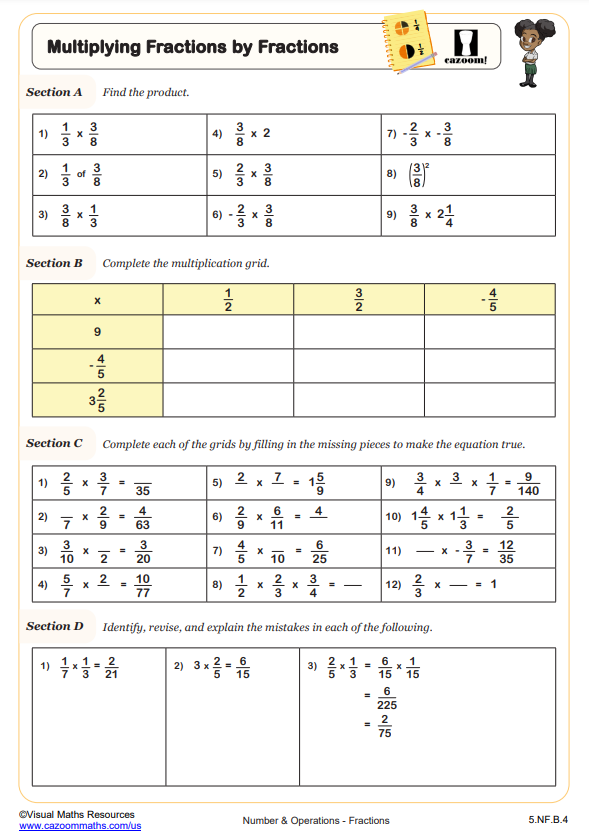
Frequently Asked Questions
This worksheet is specifically created for 6th grade students who are ready to tackle the concept of dividing fractions. At this level, students typically have a solid foundation with basic fraction operations and are prepared to understand more complex procedures like finding reciprocals and applying the "multiply by the reciprocal" rule.