1st Grade Number and Operations Worksheets
Add Mixed Numbers with the Same Denominator
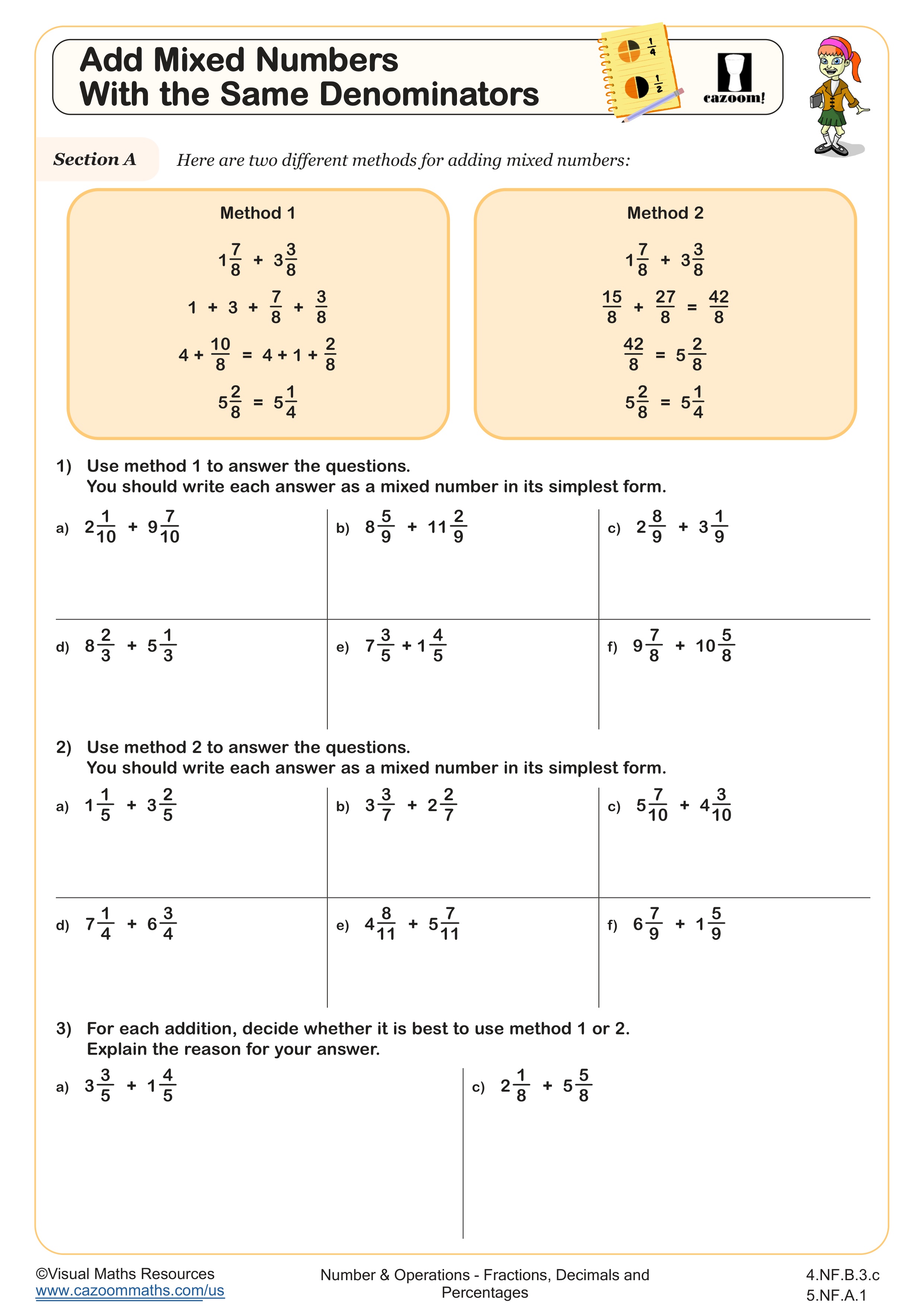
Adding and Subtracting Decimals
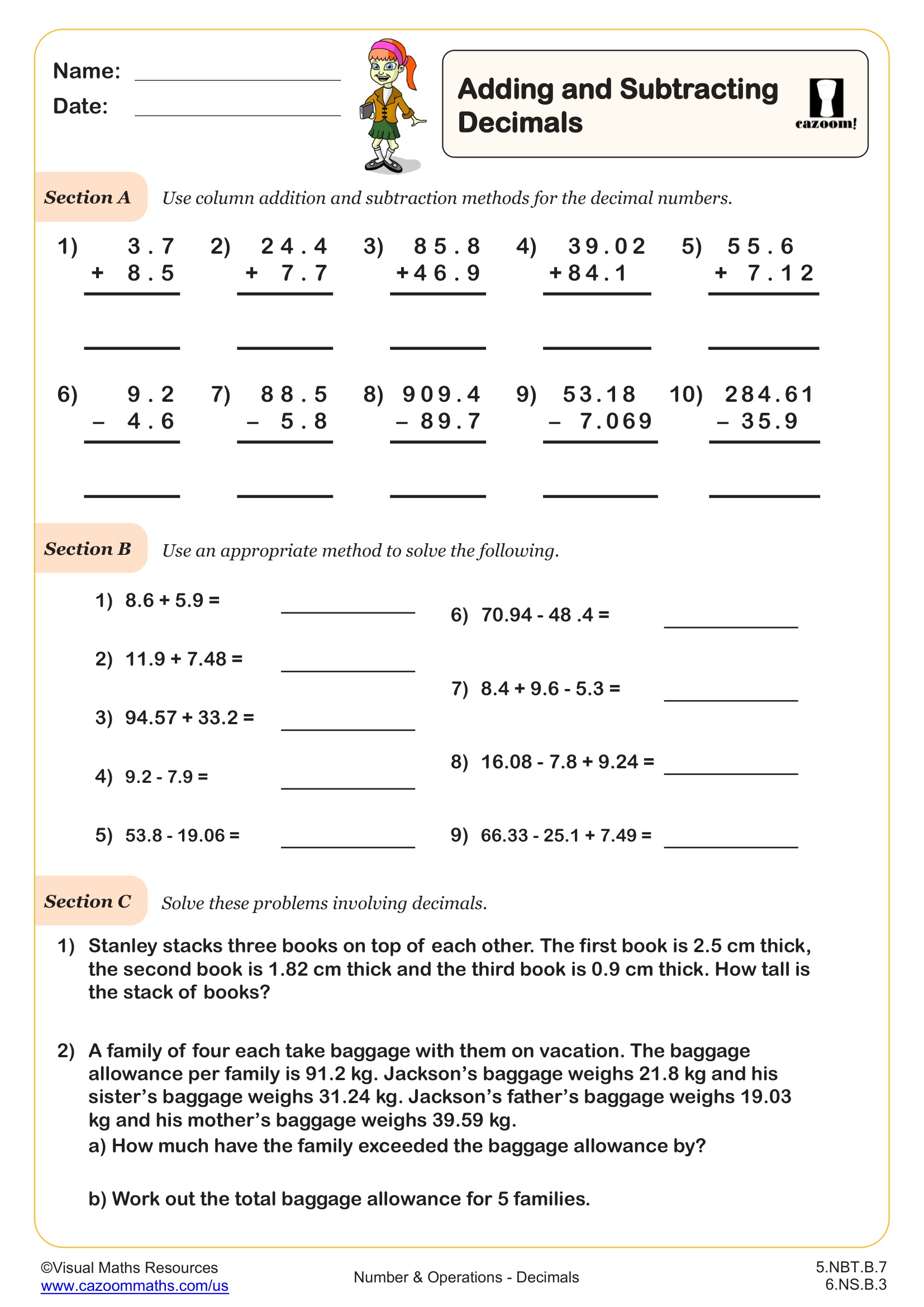
Calculating with Recurring Decimals
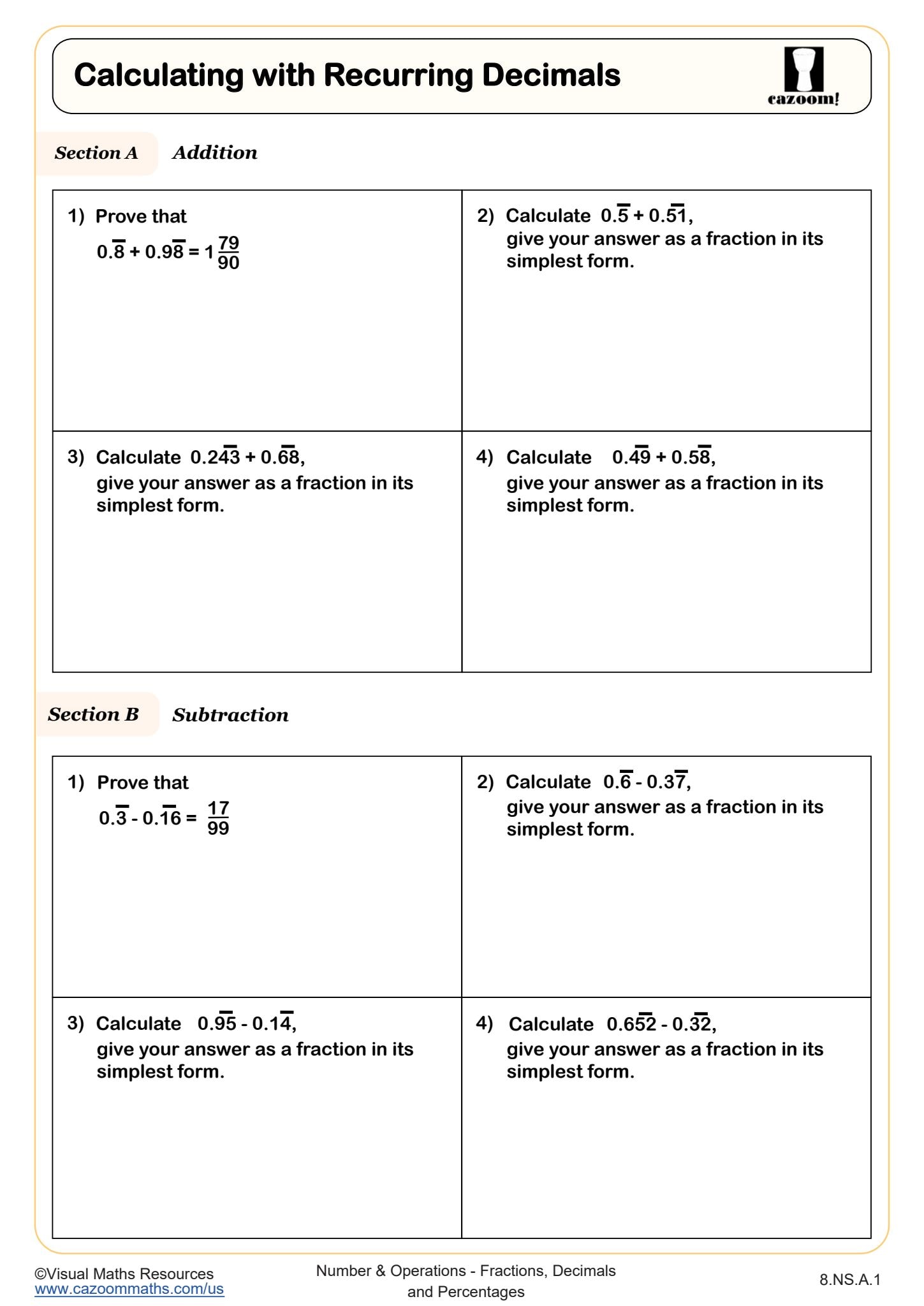
Colourful Equivalances (A)
Comparing Decimals (A)
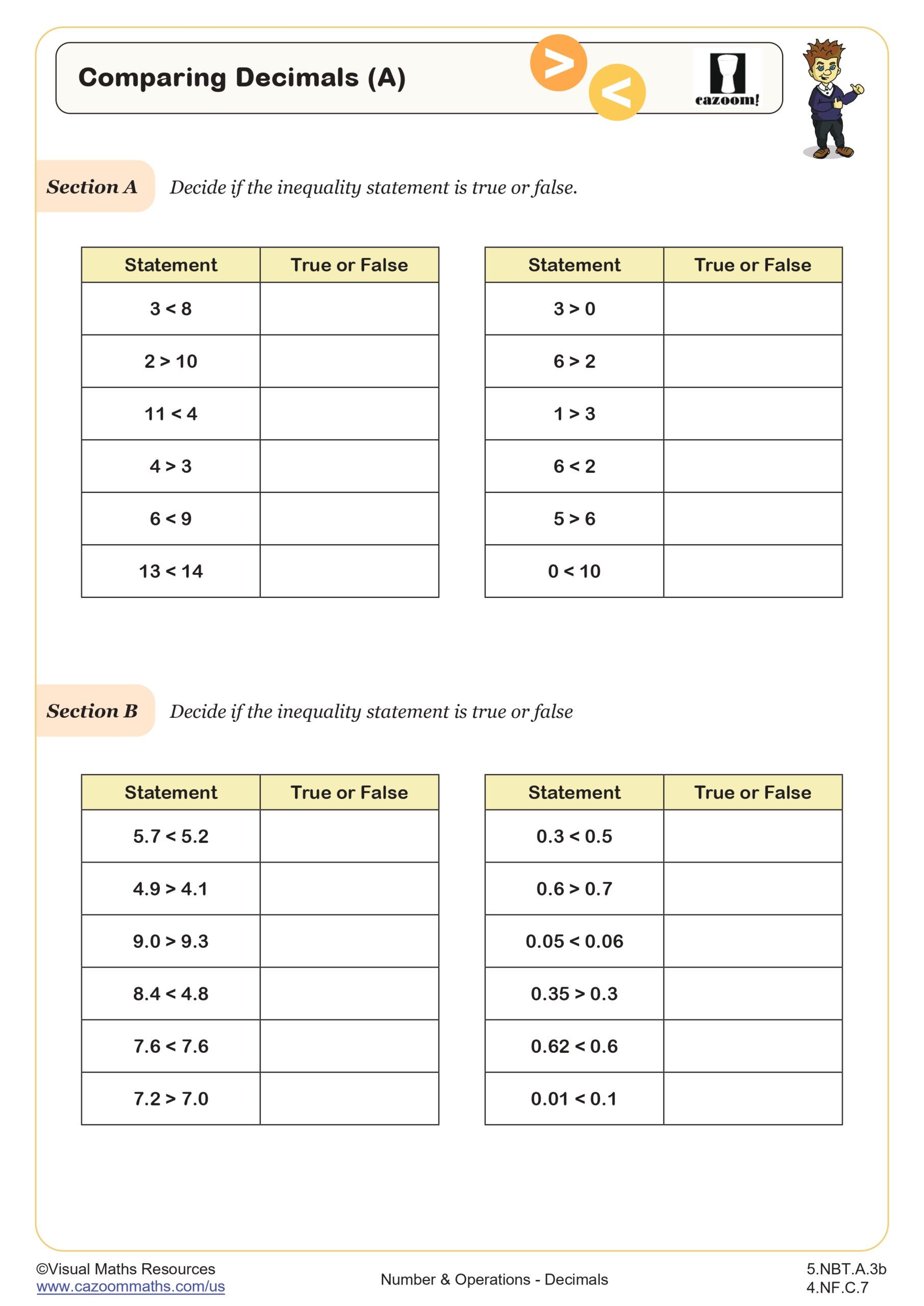
Comparing Fractions
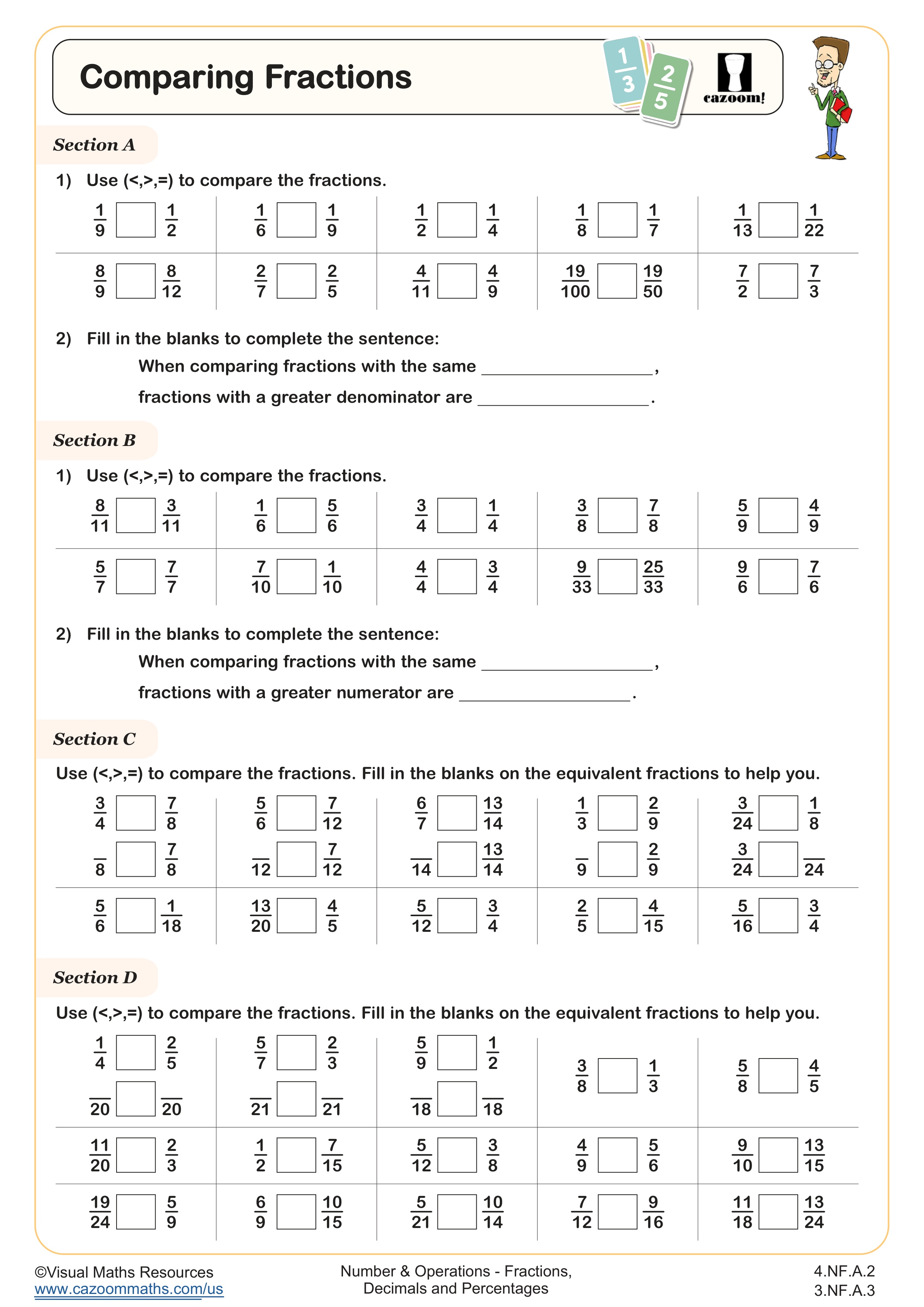
Compound Interest
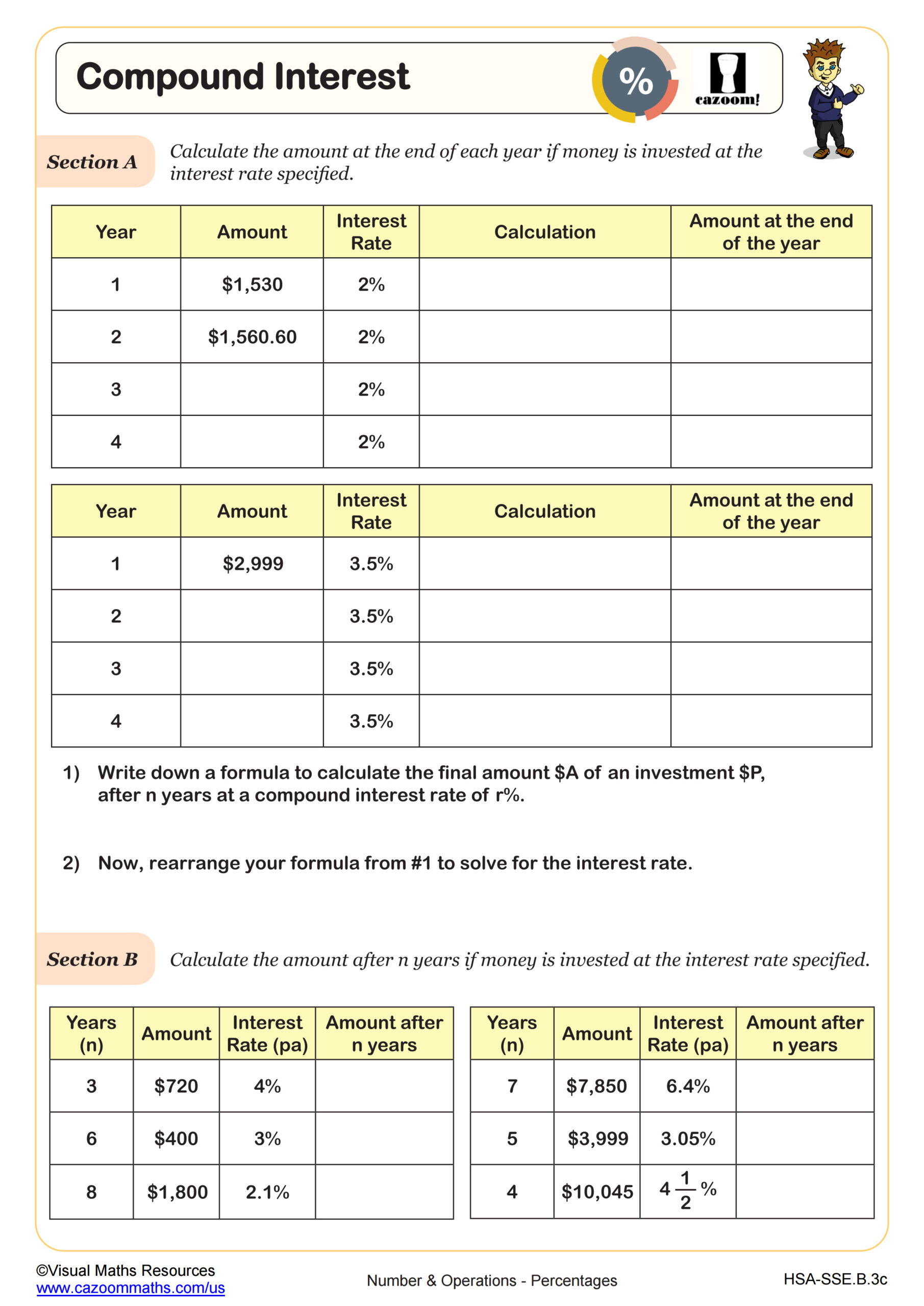
Compound Interest - Problem Solving
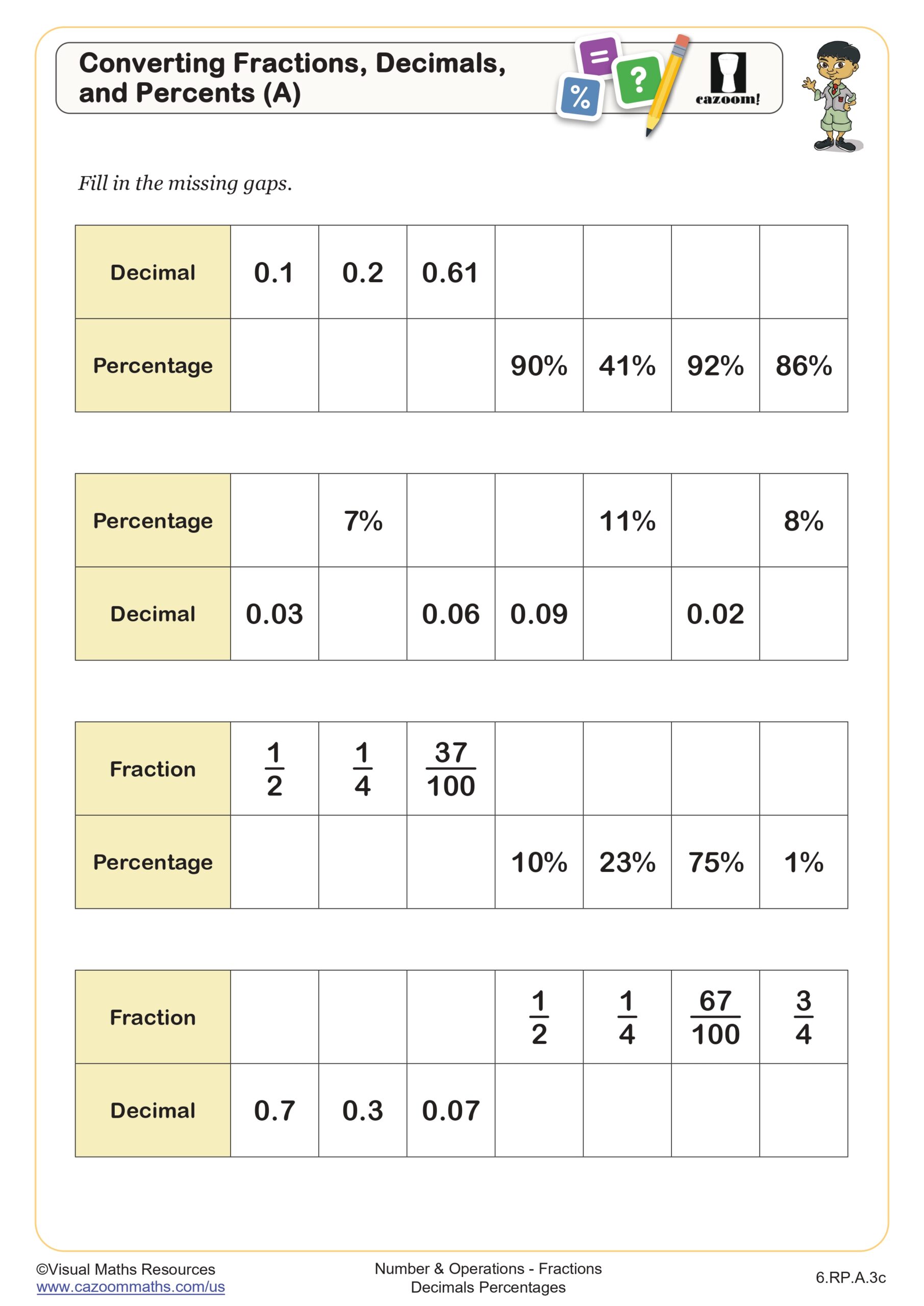
Converting Fractions, Decimals, and Percents (A)
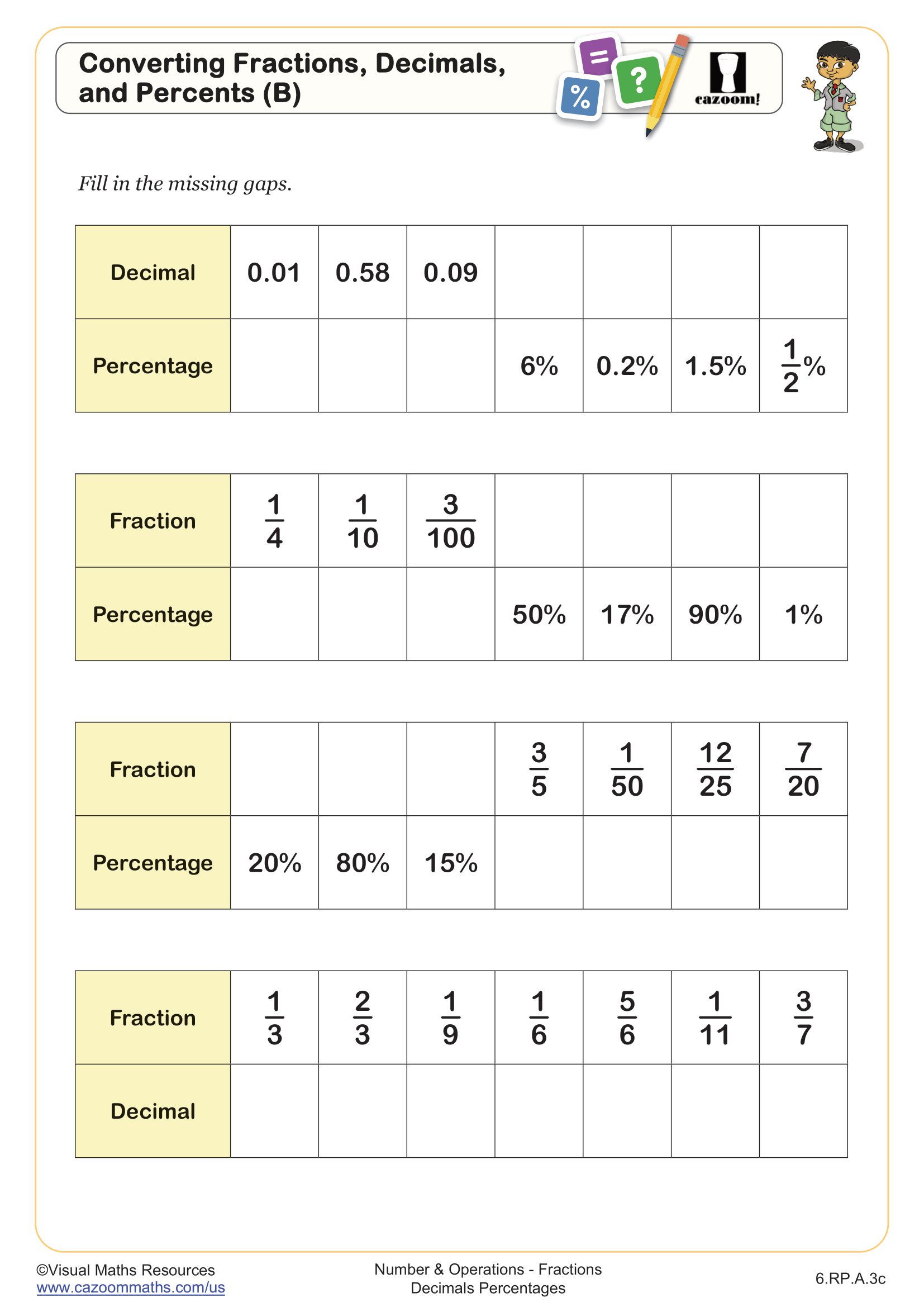
Converting Fractions, Decimals, and Percents (B)
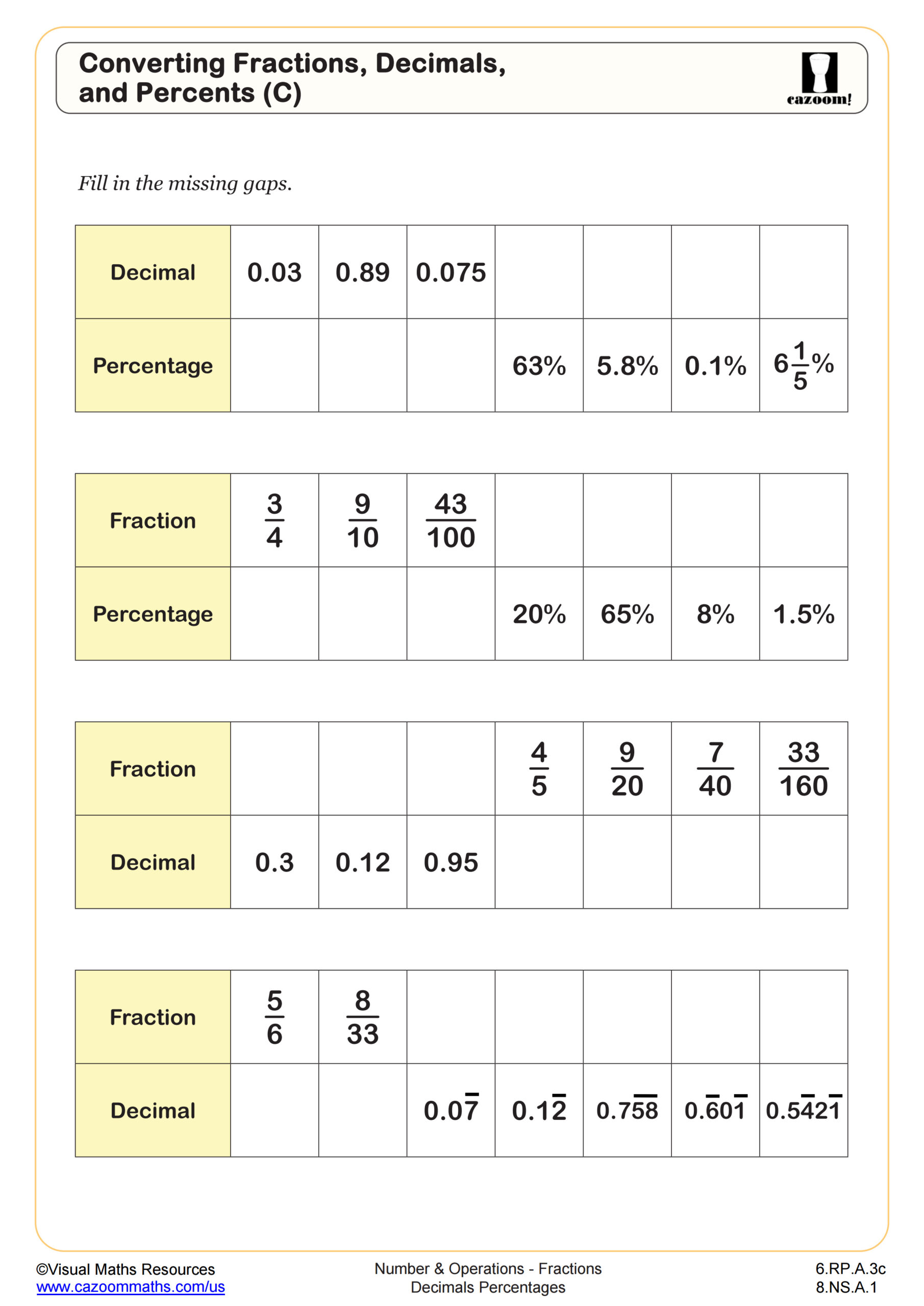
Converting Fractions, Decimals, and Percents (C)
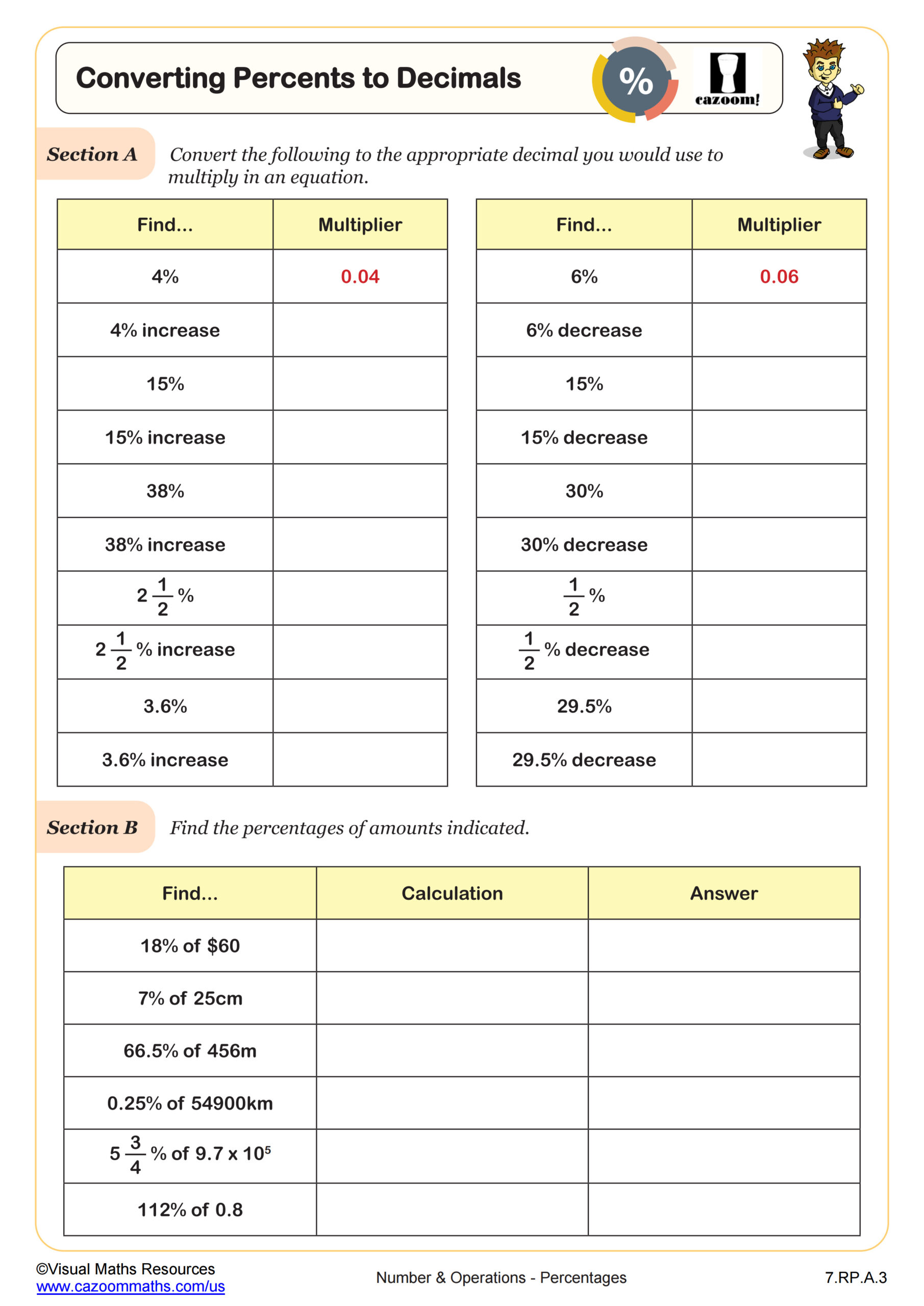
Converting Percents to Decimals
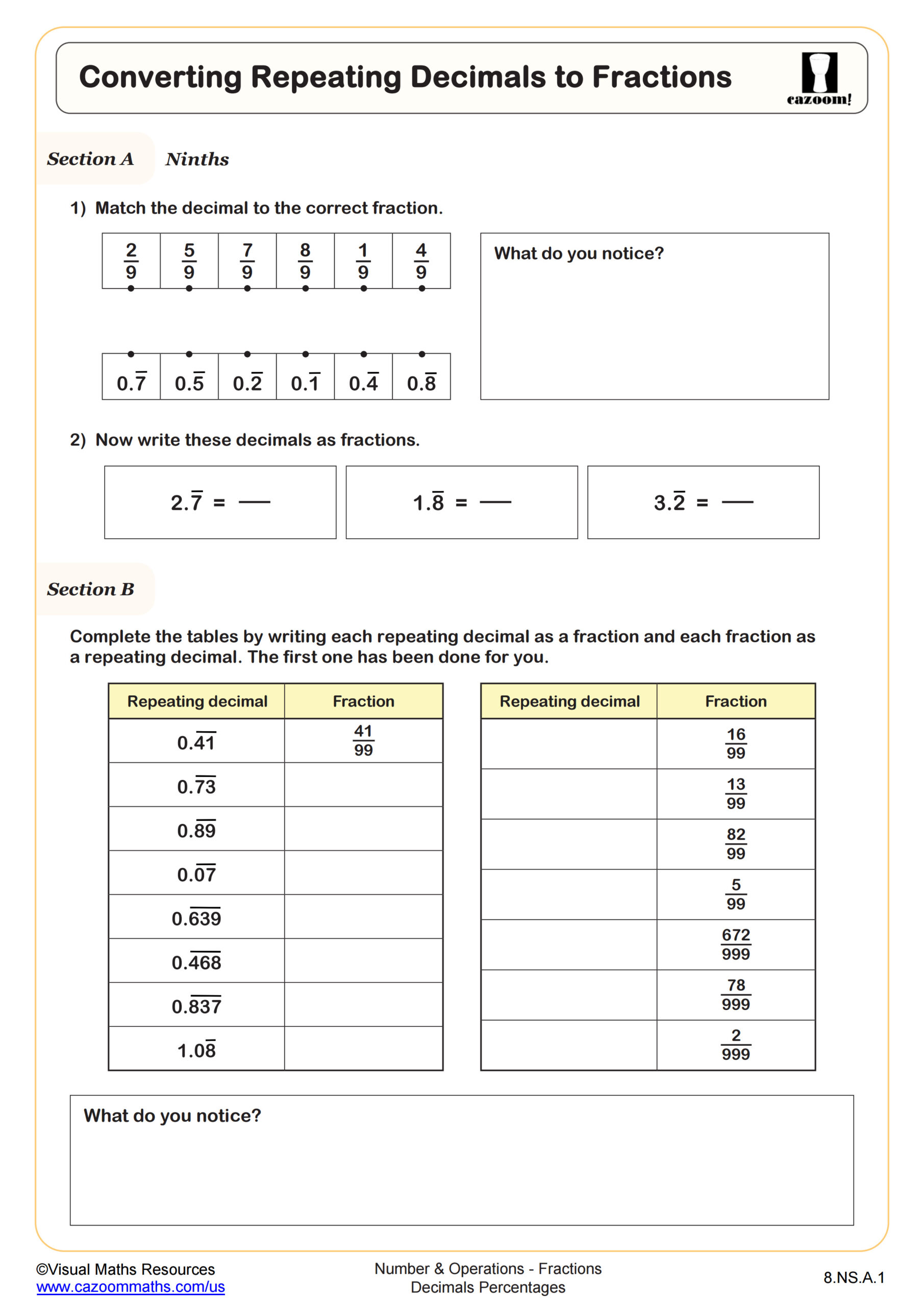
Converting Repeating Decimals to Fractions
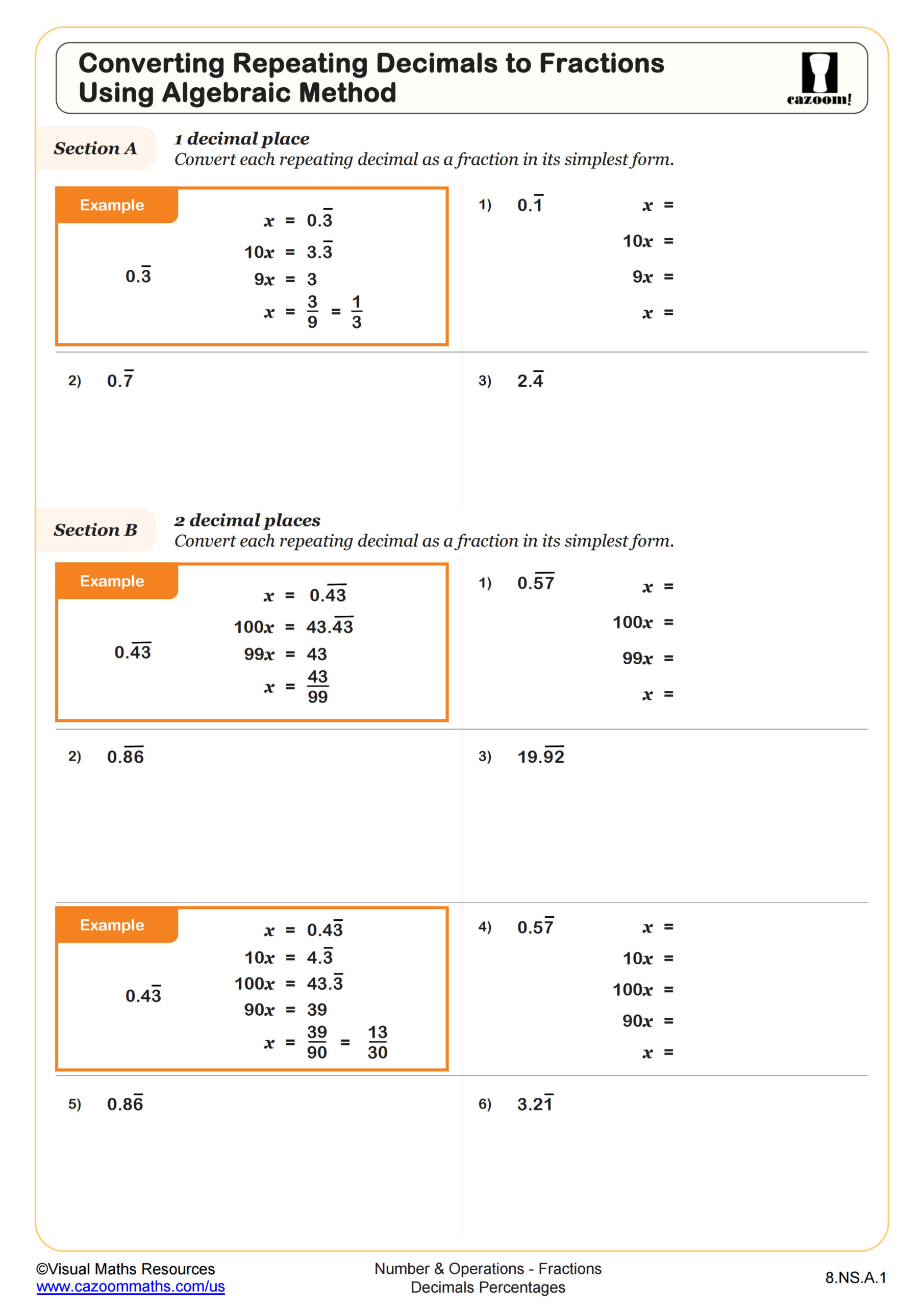
Converting Repeating Decimals to Fractions Using Algebraic Method
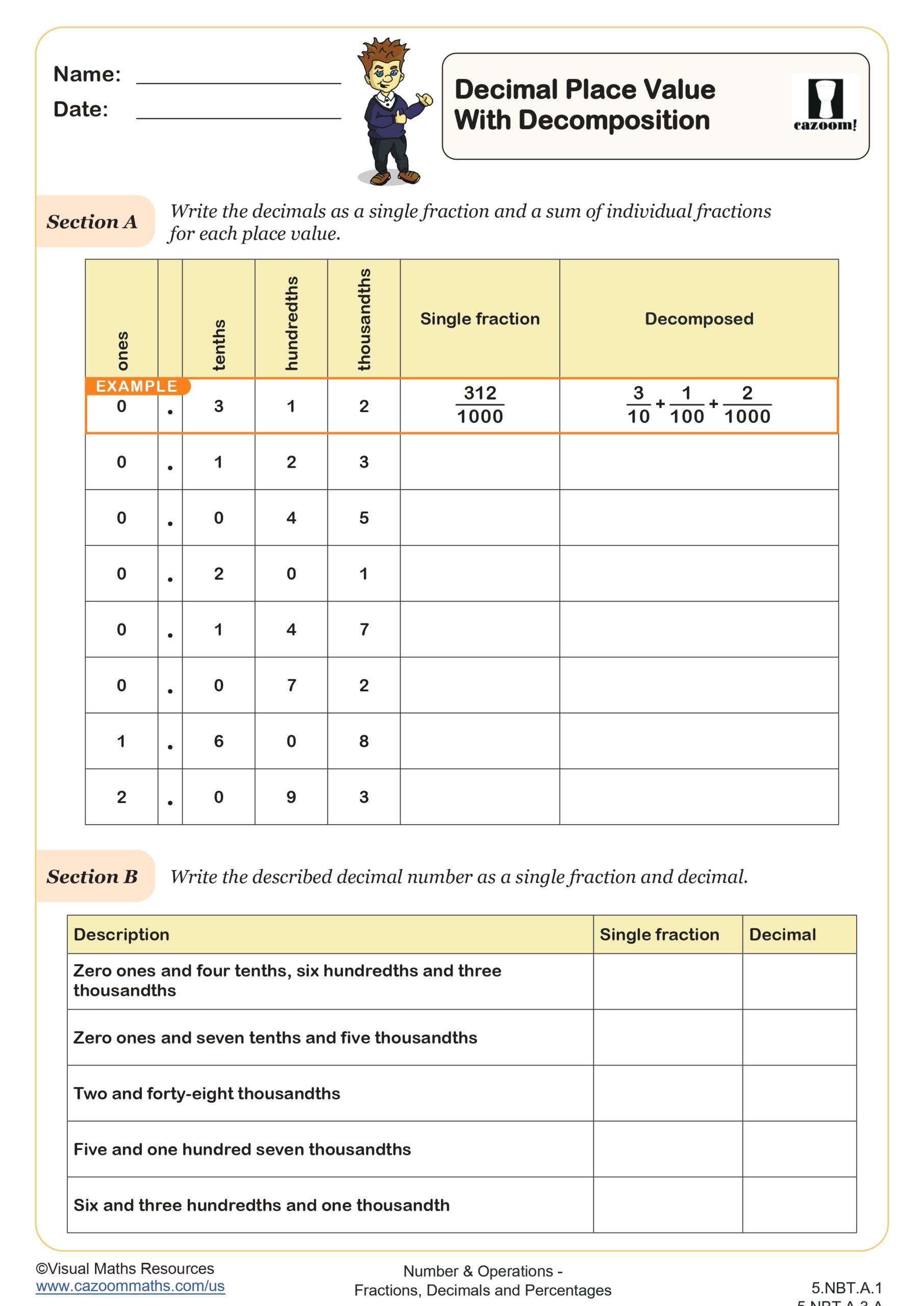
Decimal Place Value With Decomposition
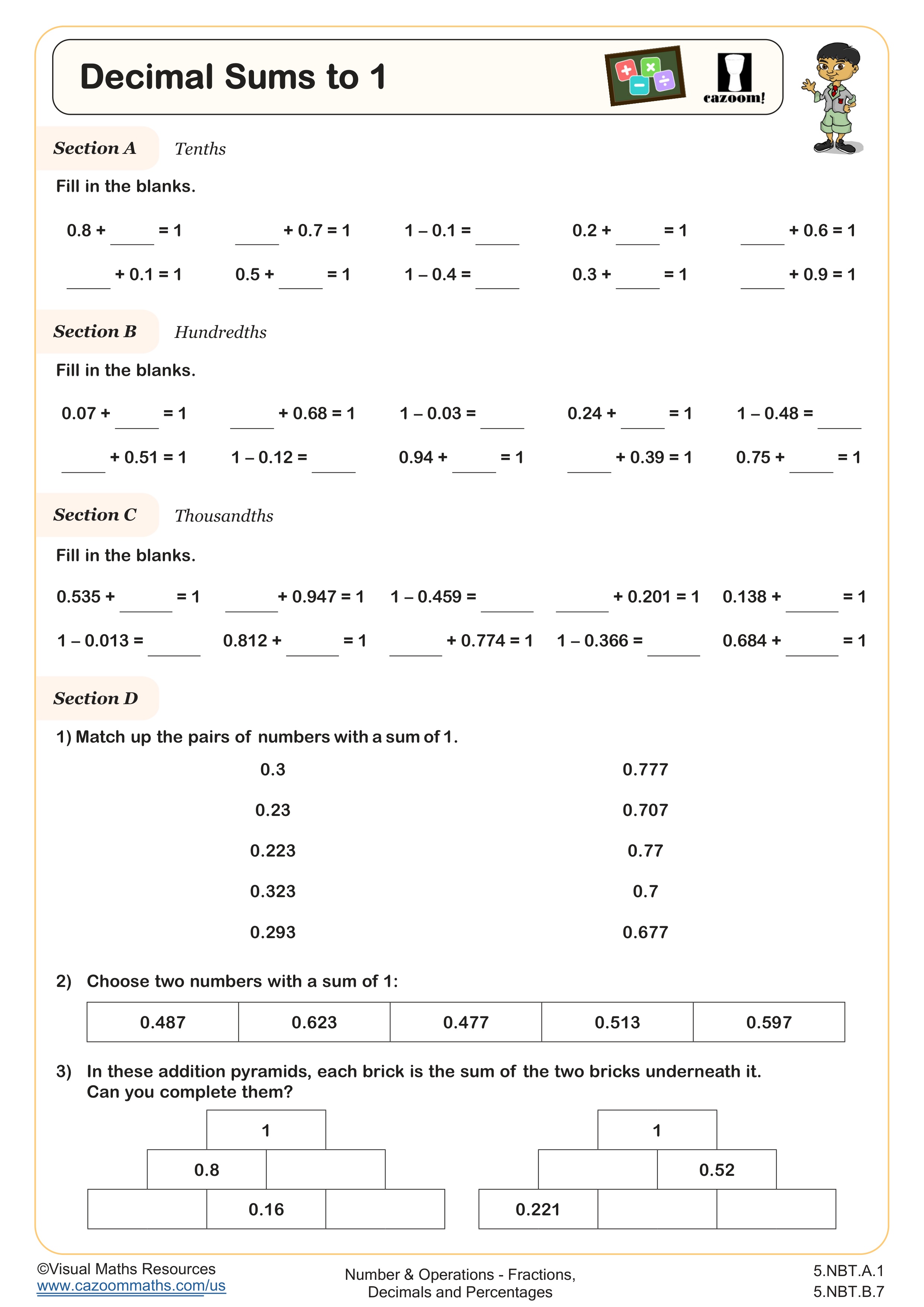
Decimal Sums to 1
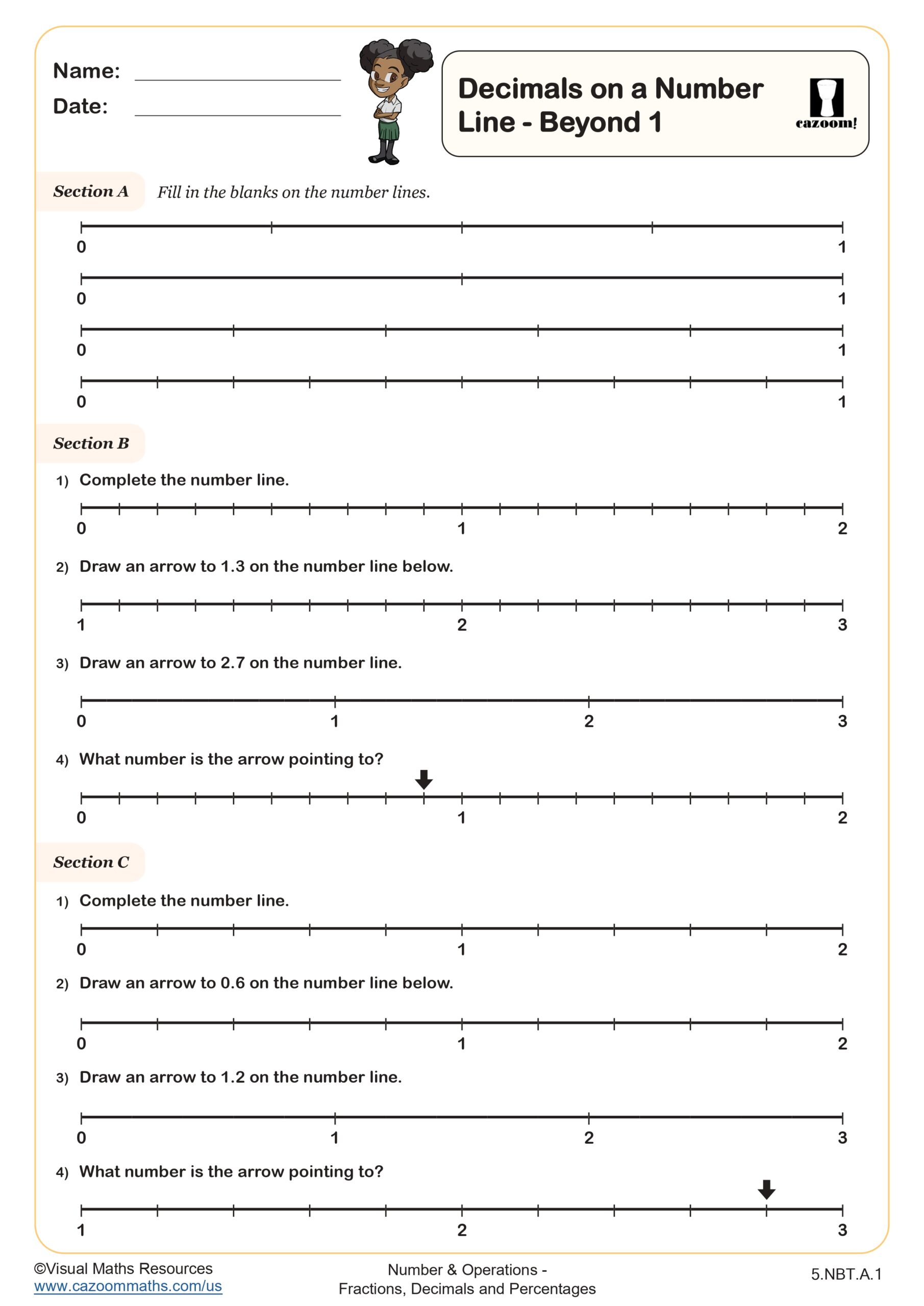
Decimals on a Number Line - Beyond 1
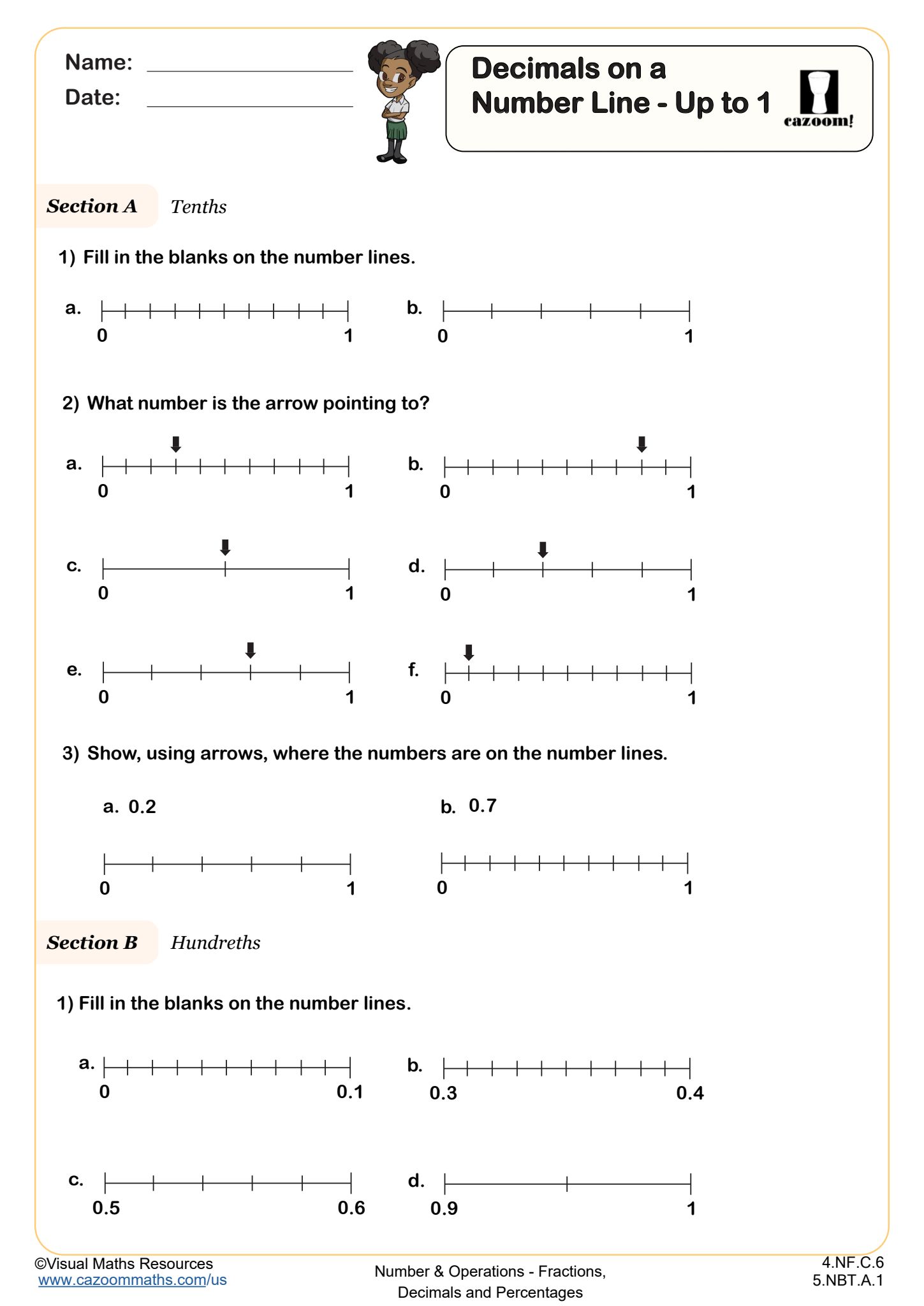
Decimals on a Number Line - Up to 1
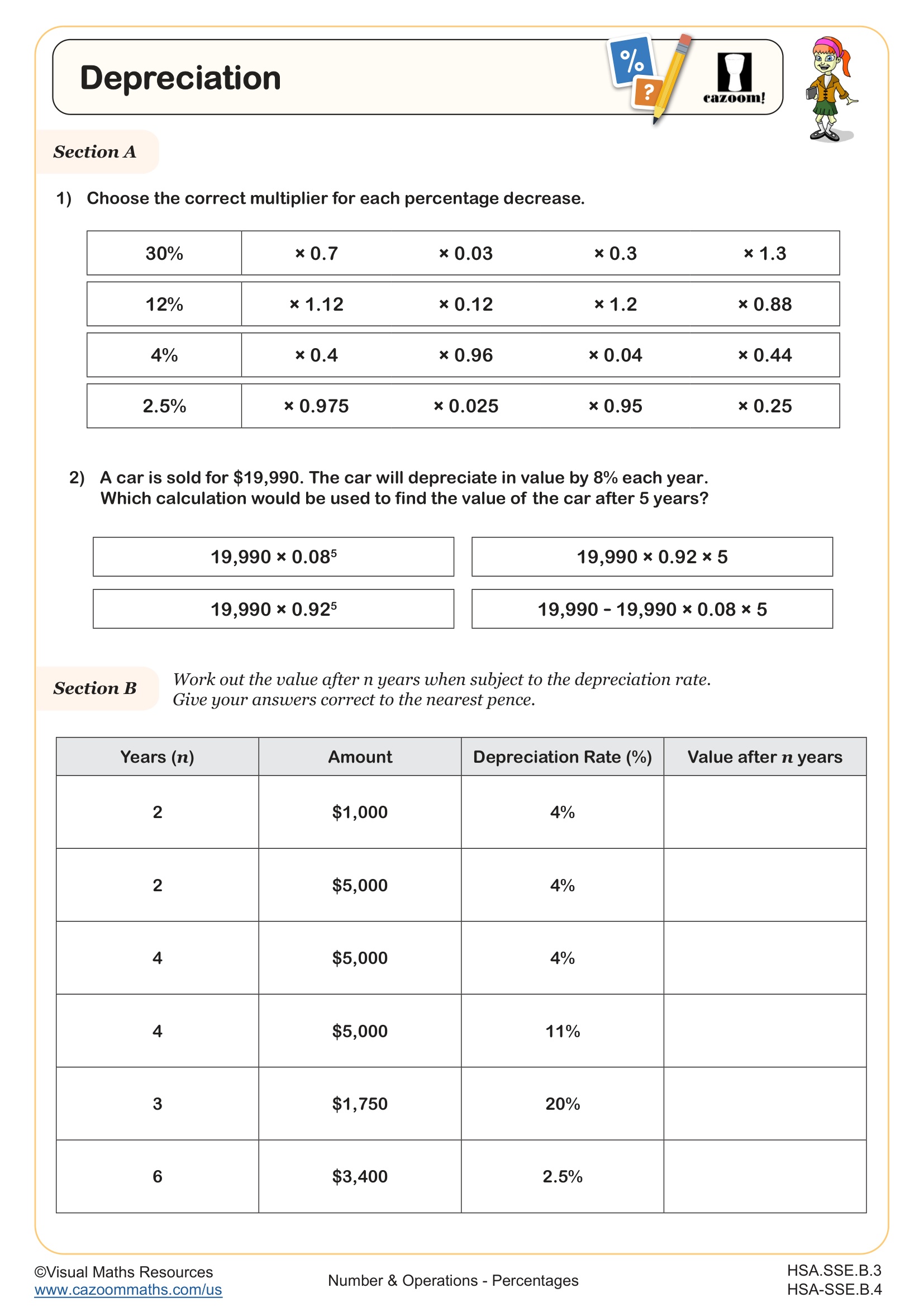
Depreciation
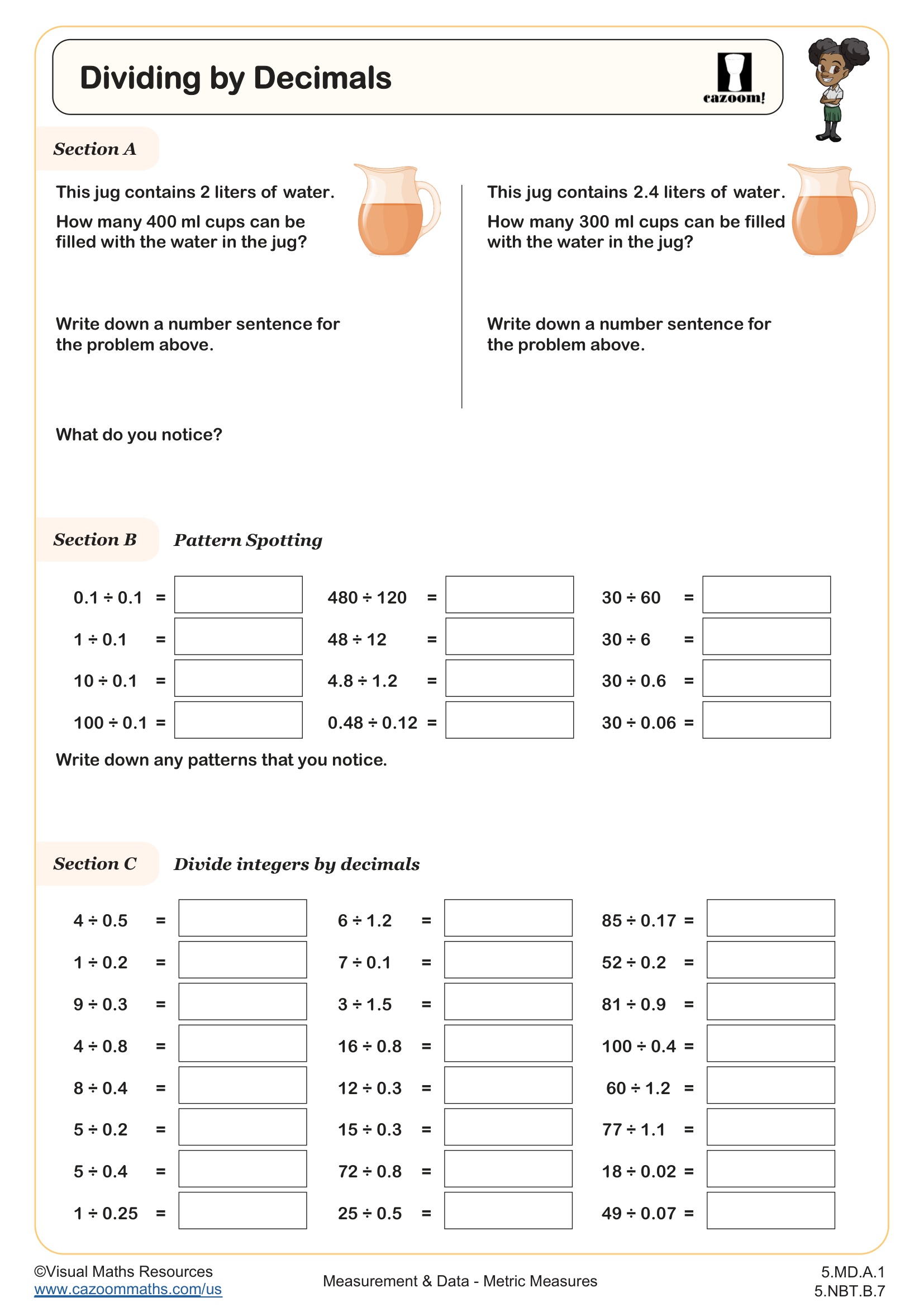
Dividing by Decimals
Dividing Mixed Numbers
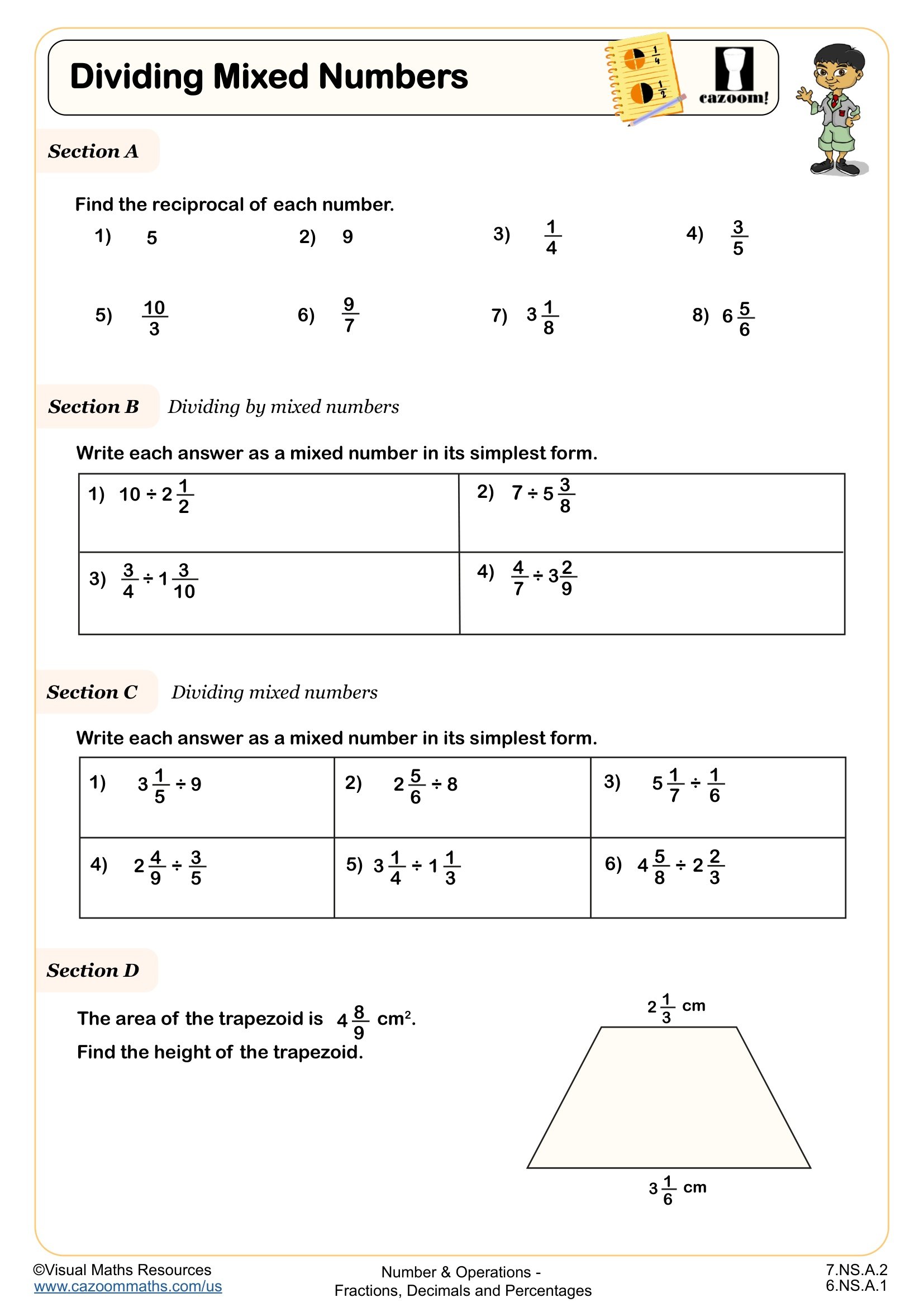
Estimating (A)
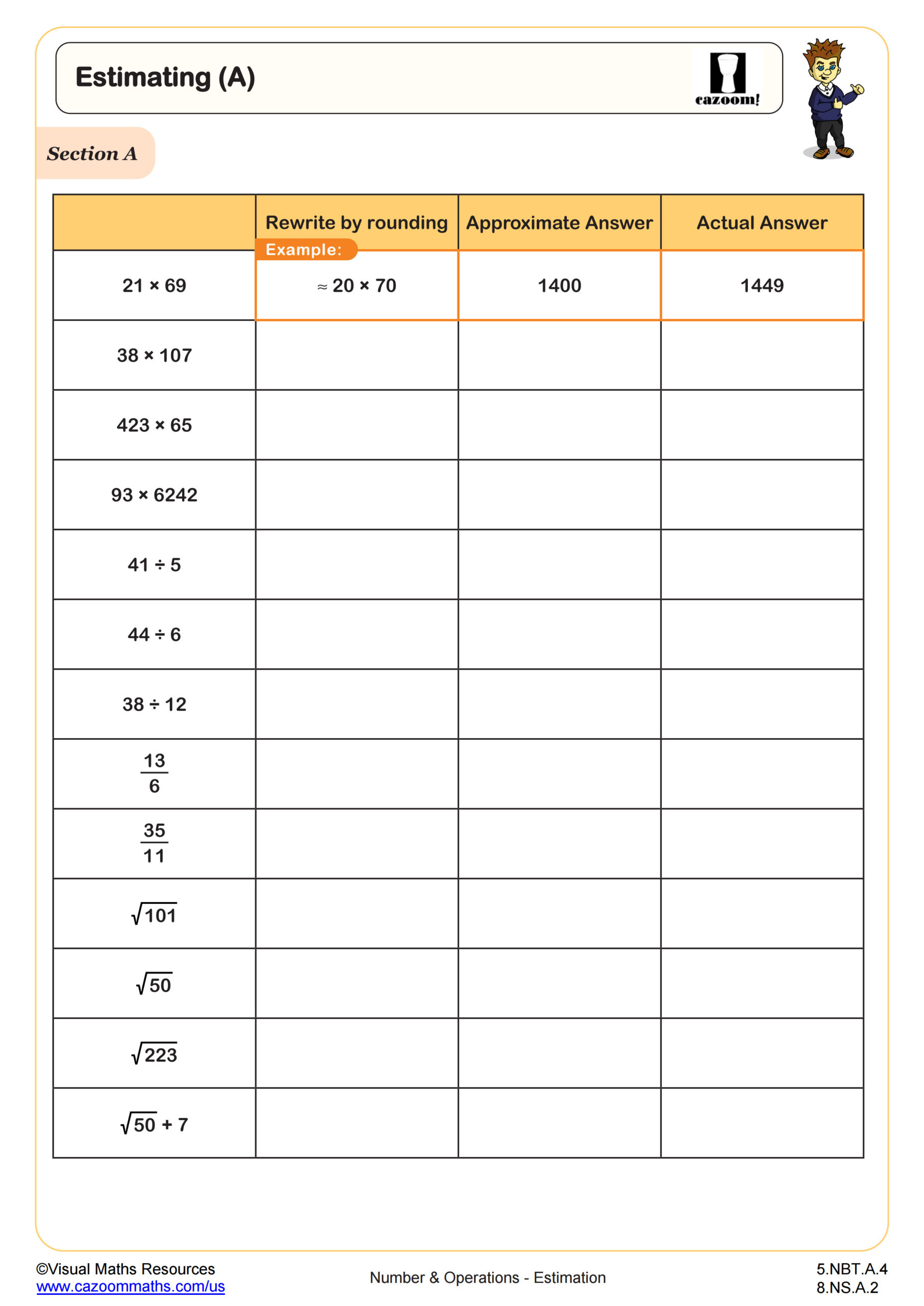
Estimating Shopping Bills
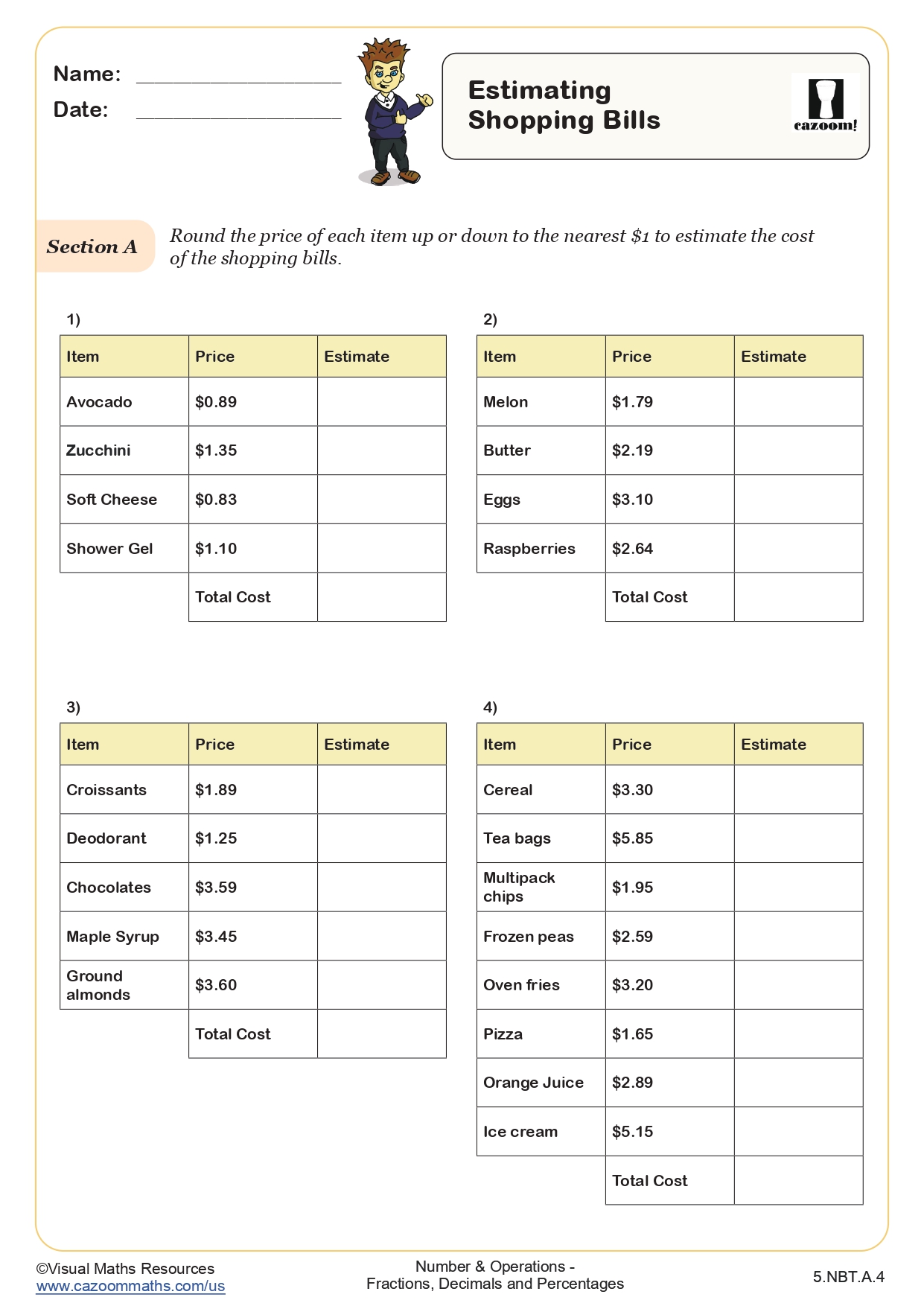
Estimating Square Roots
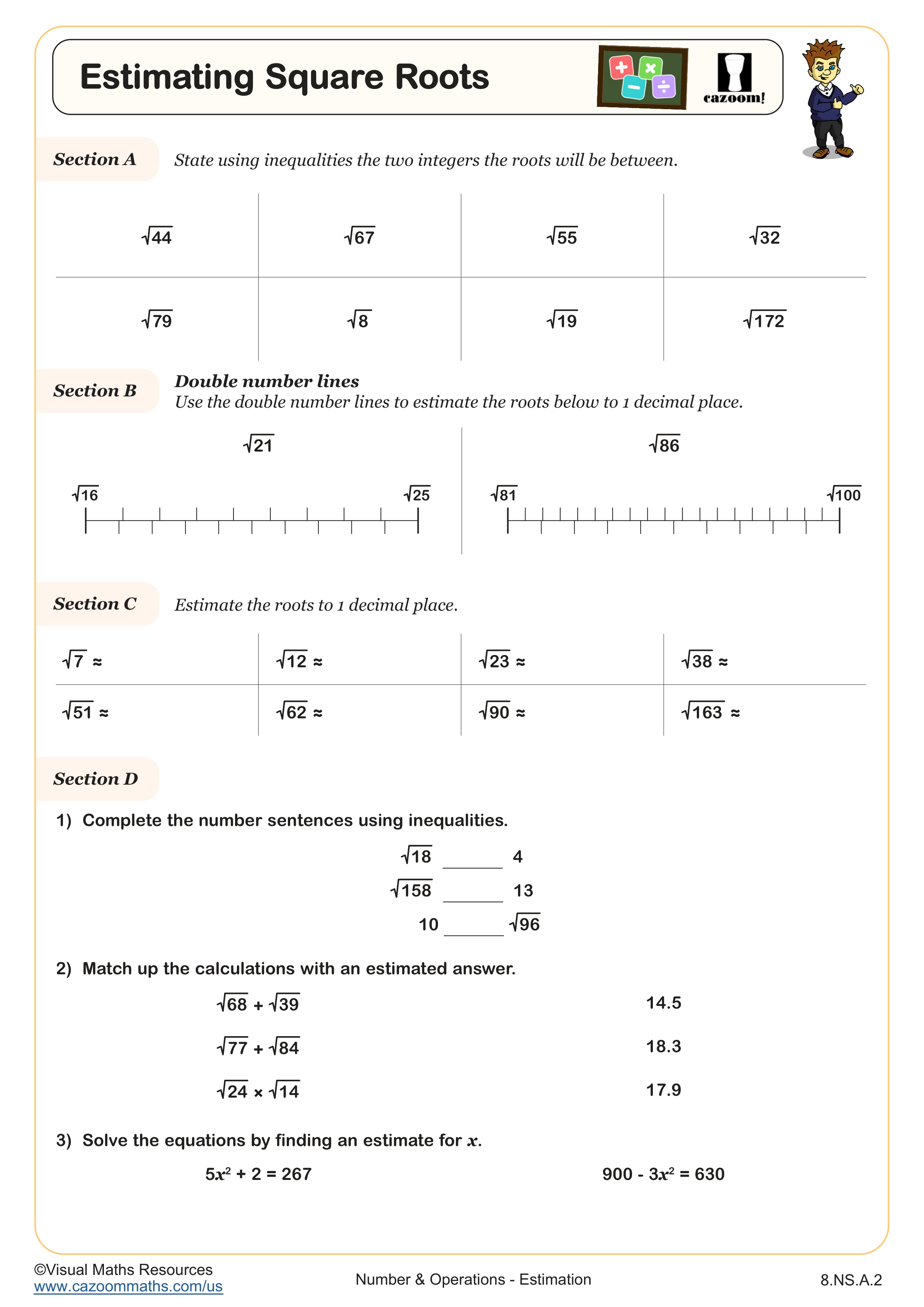
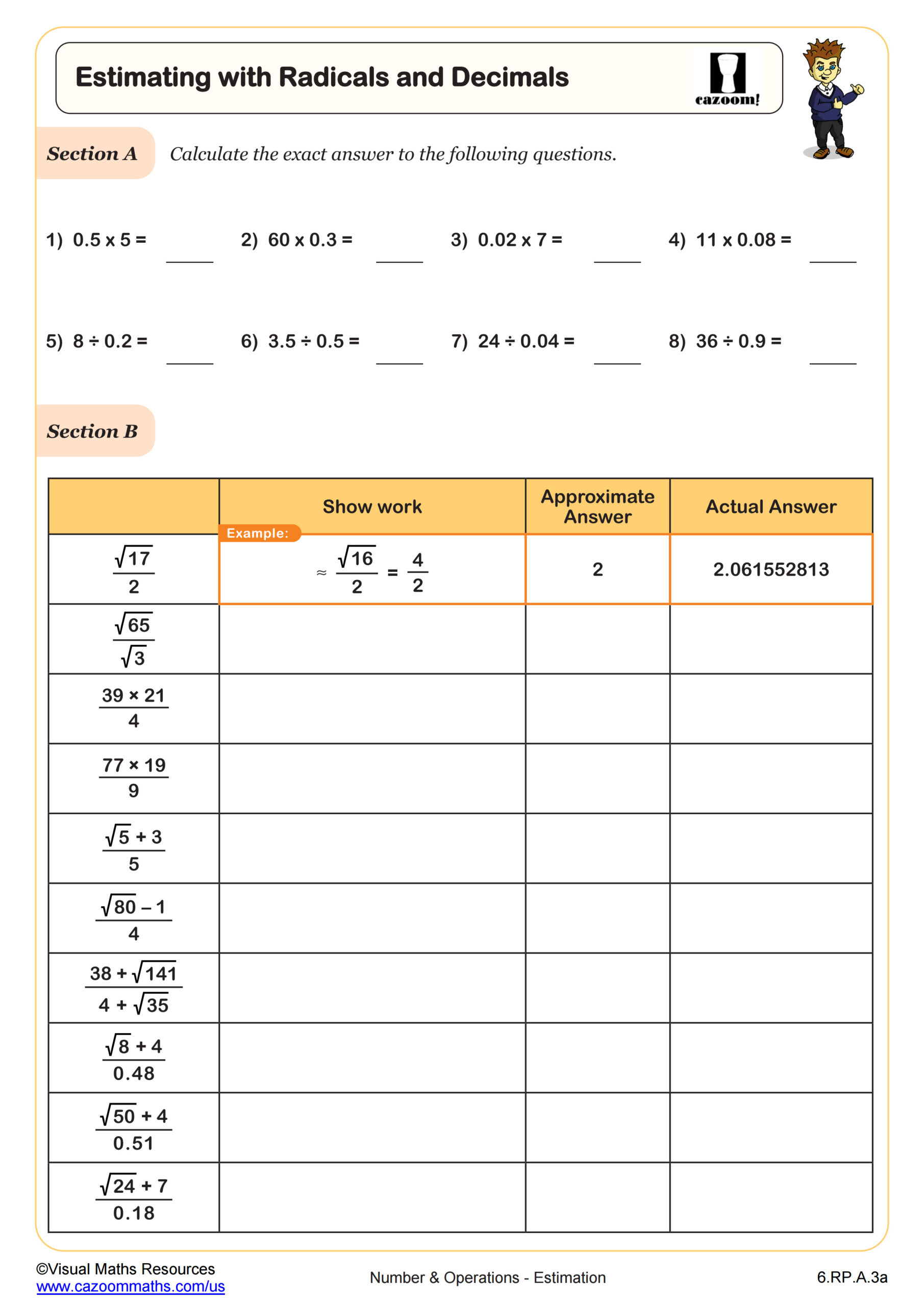
Estimating with Radicals and Decimals
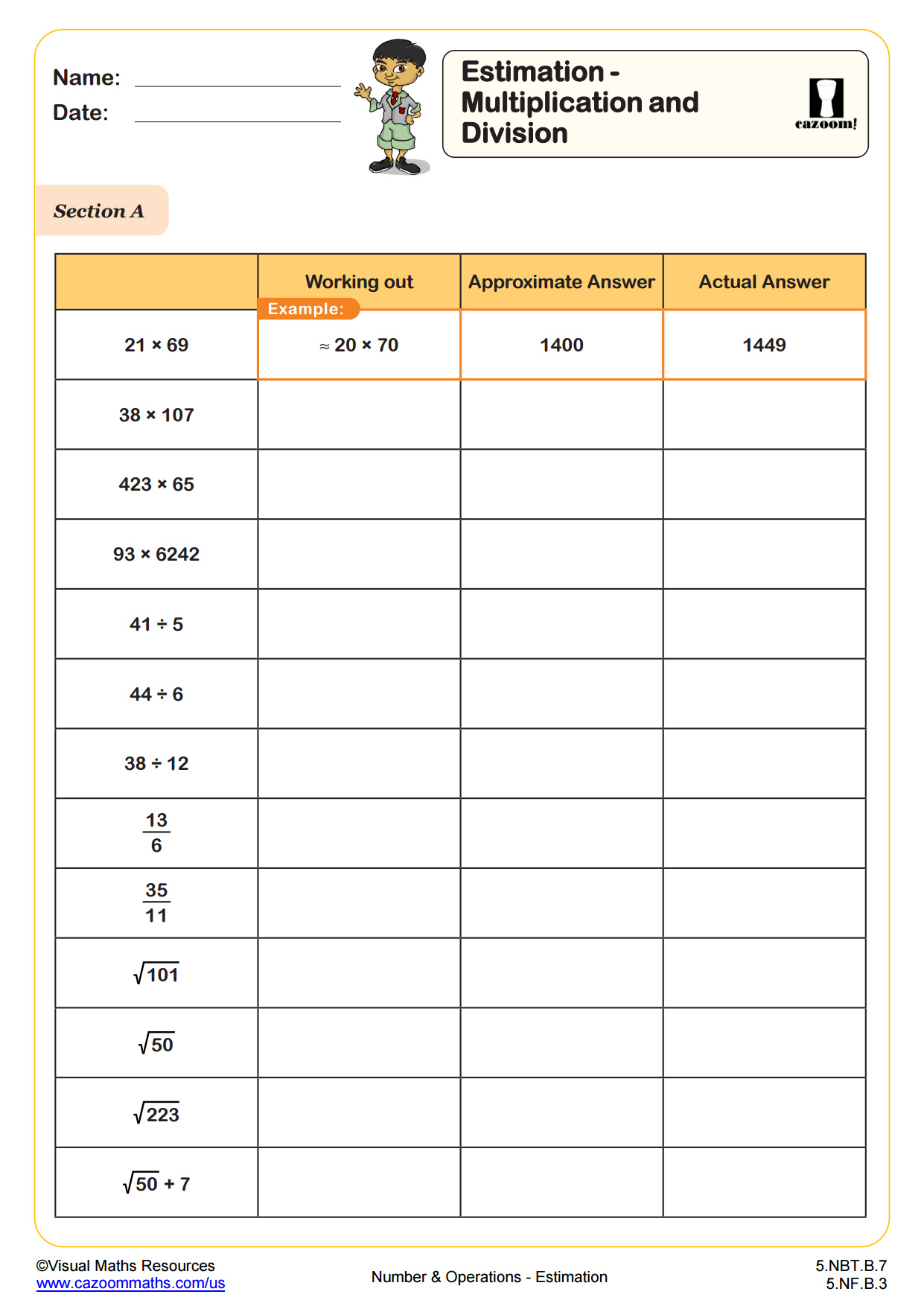
Estimation - Multiplication and Division
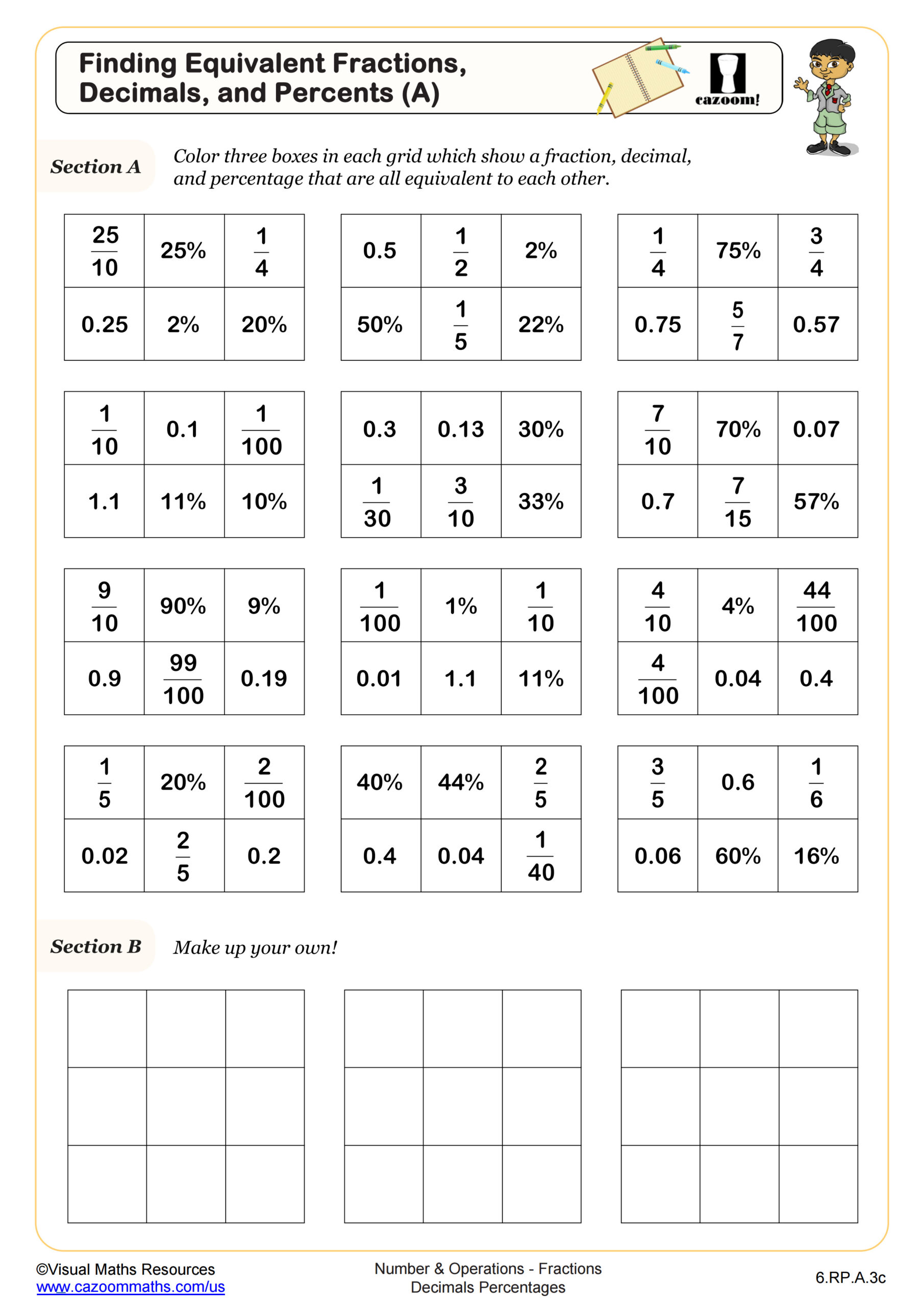
Finding Equivalent Fractions, Decimals, and Percents (A)
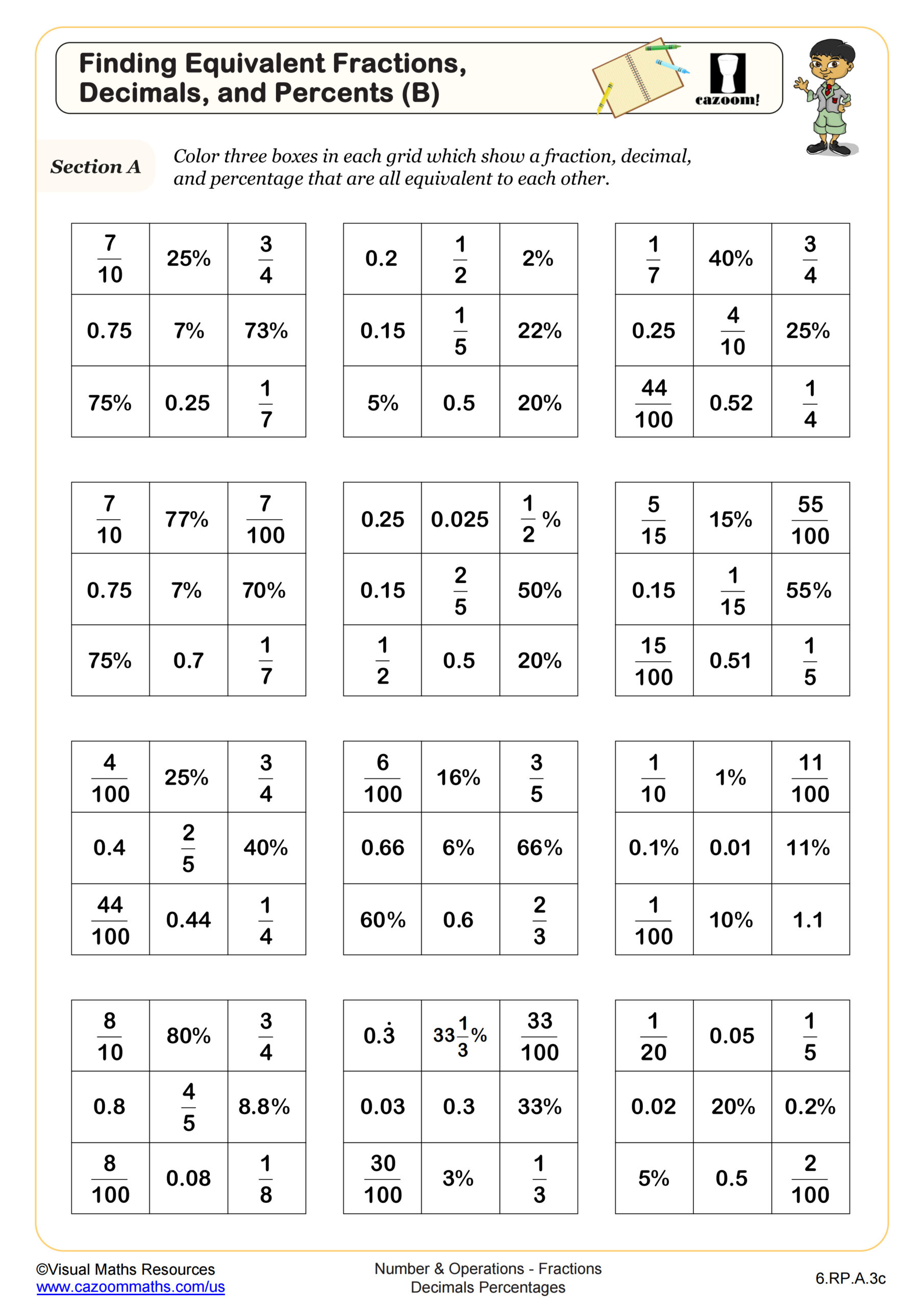
Finding Equivalent Fractions, Decimals, and Percents (B)
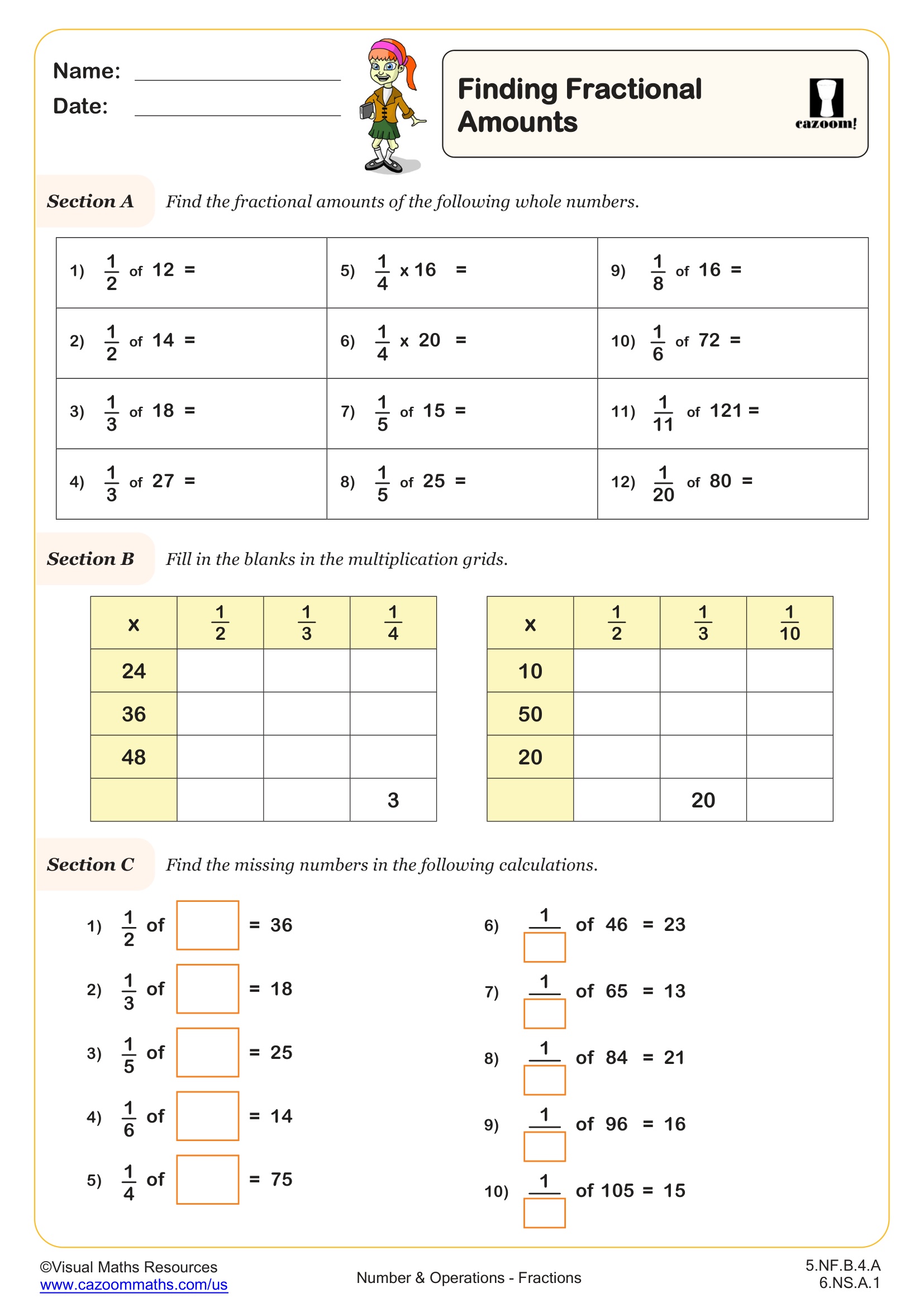
Finding Fractional Amounts
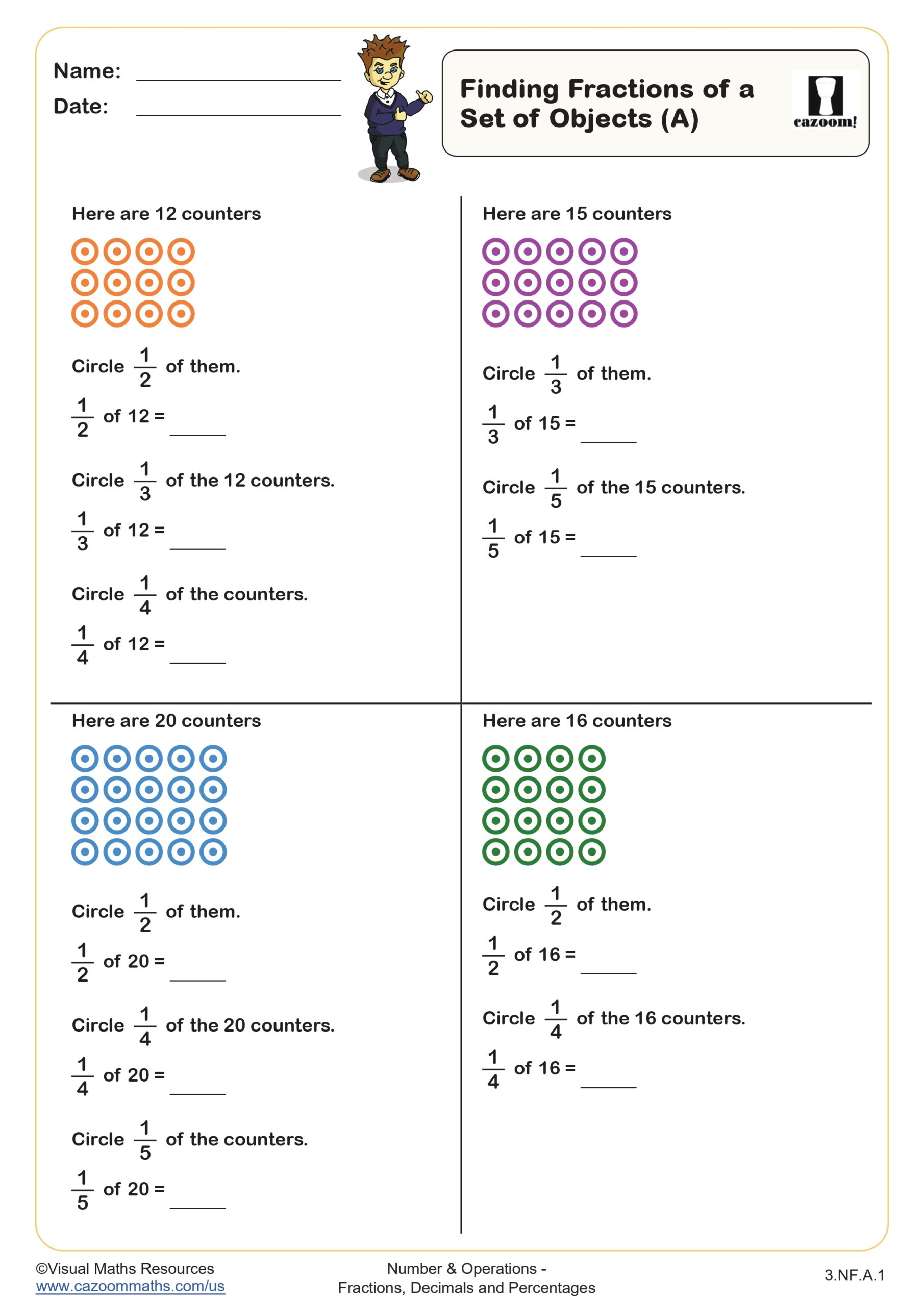
Finding fractions of a set of objects (A)
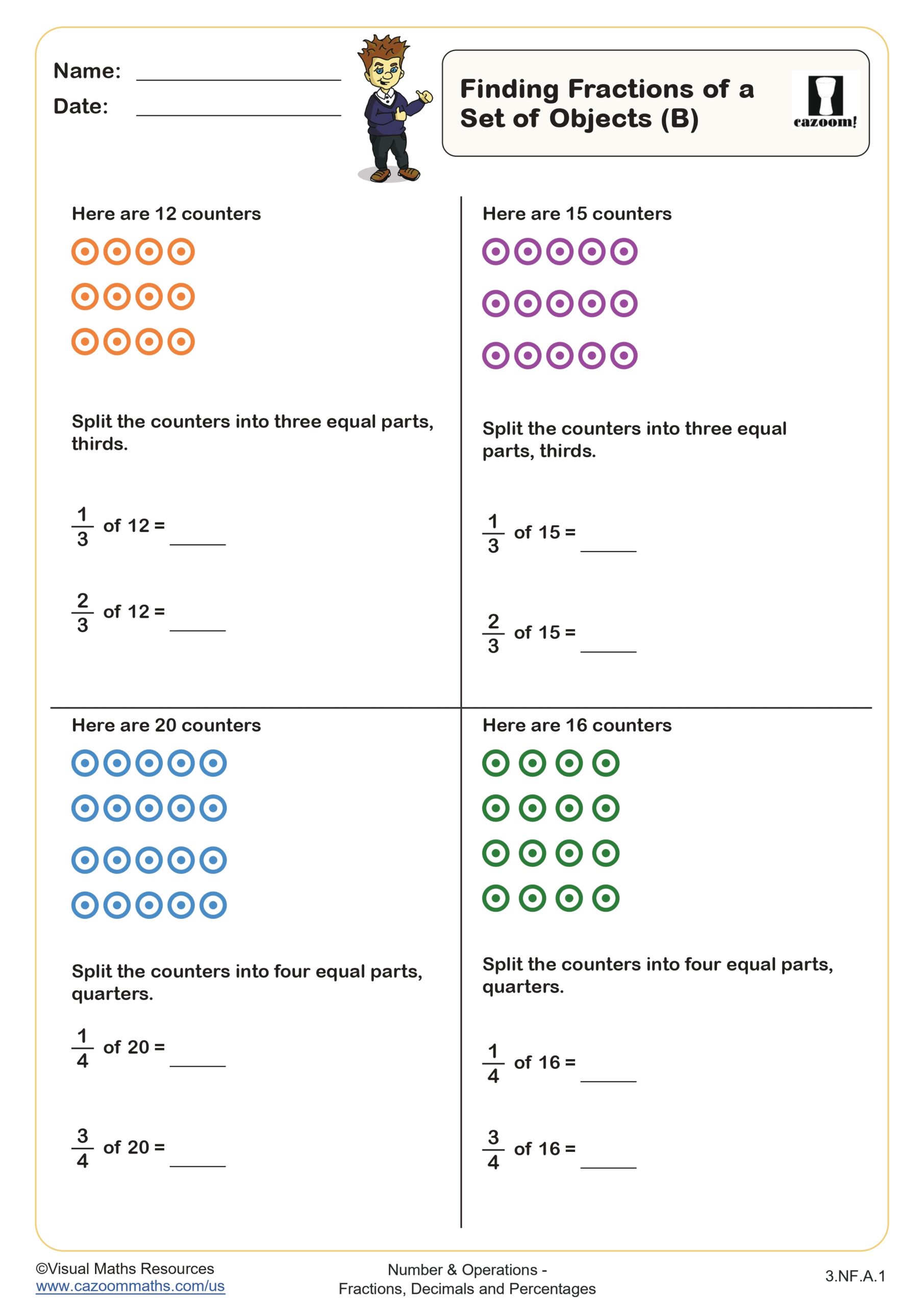
Finding fractions of a set of objects (B)
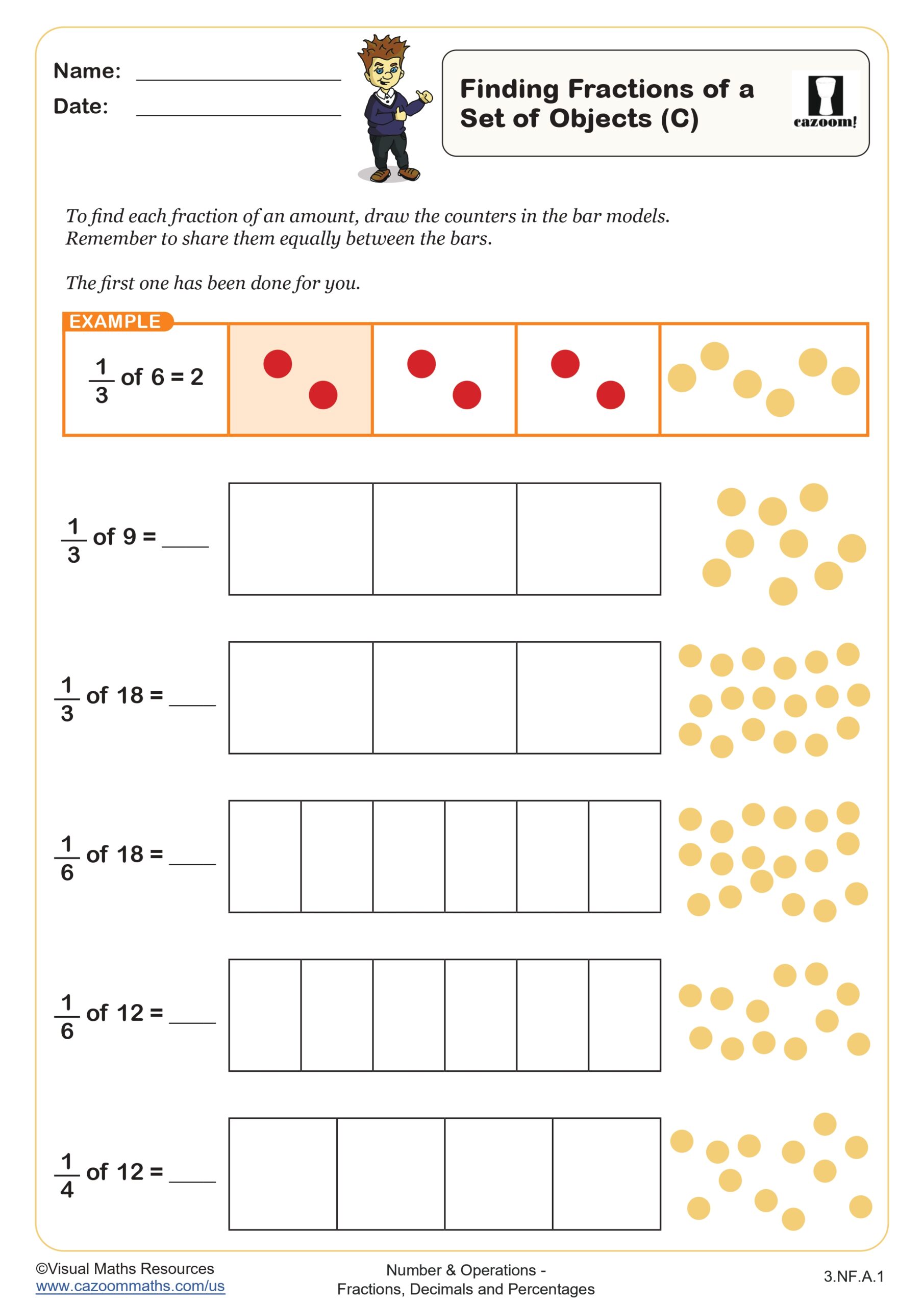
Finding fractions of a set of objects (C)
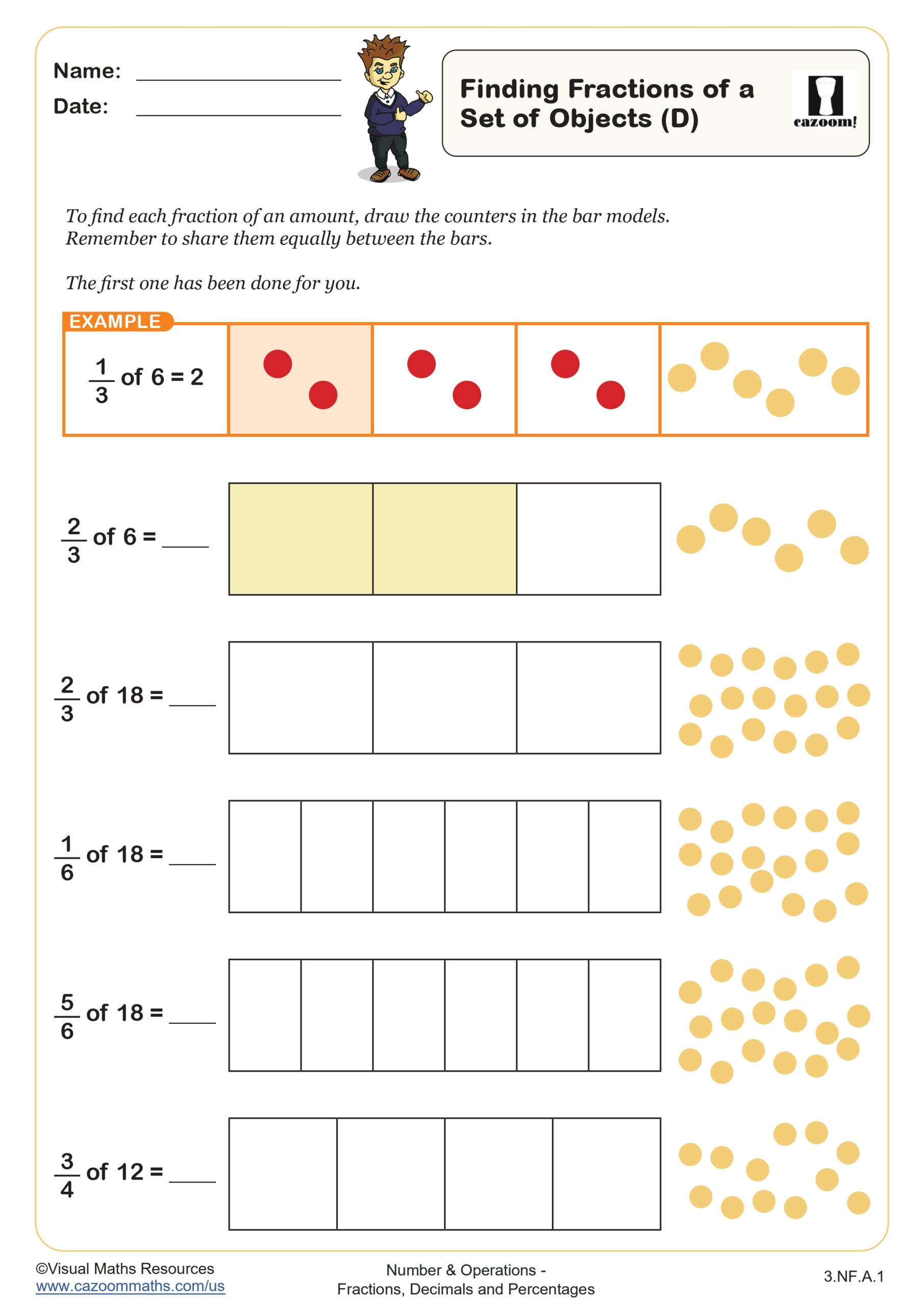
Finding fractions of a set of objects (D)
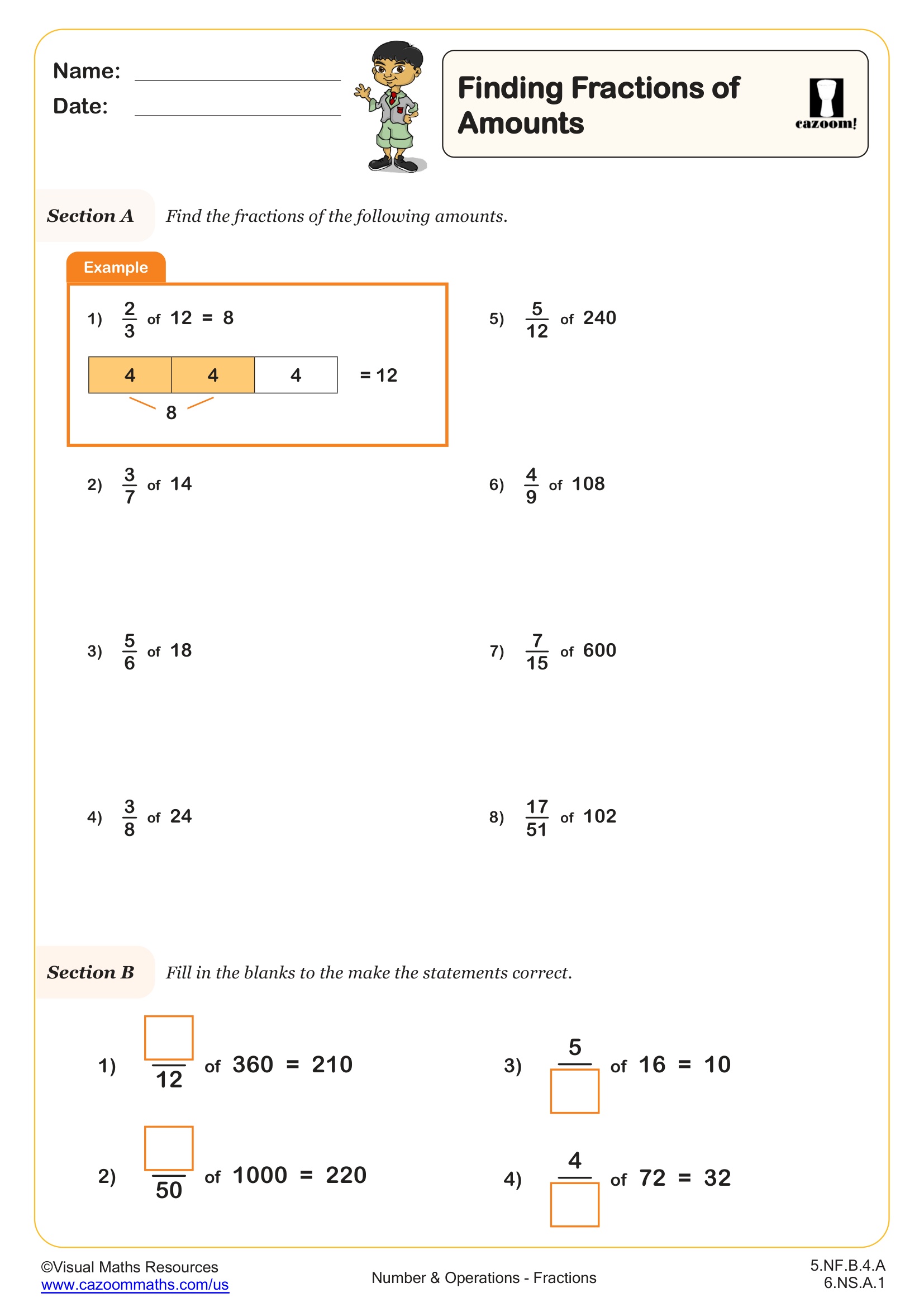
Finding Fractions of Amounts
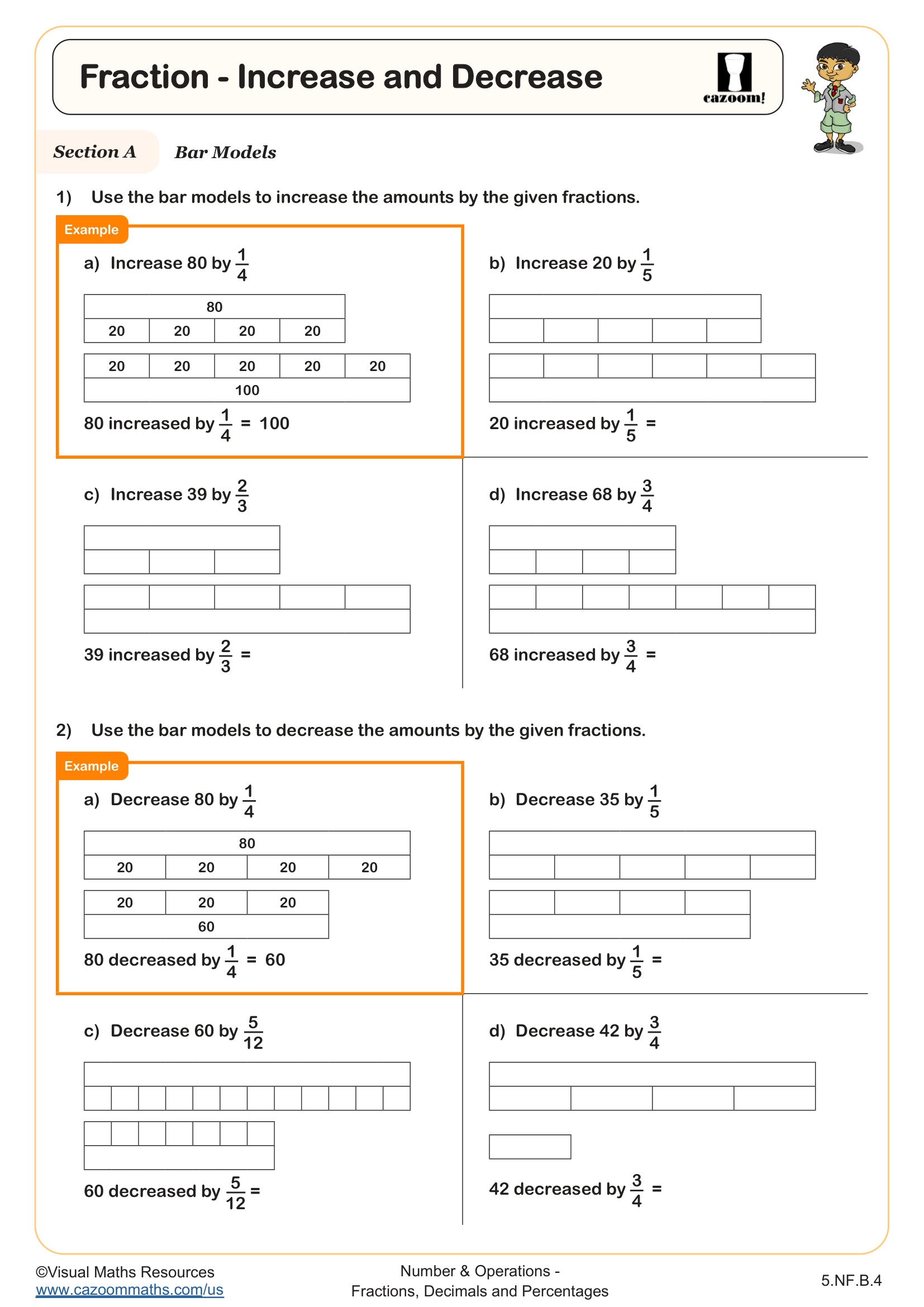
Fraction - Increase and Decrease
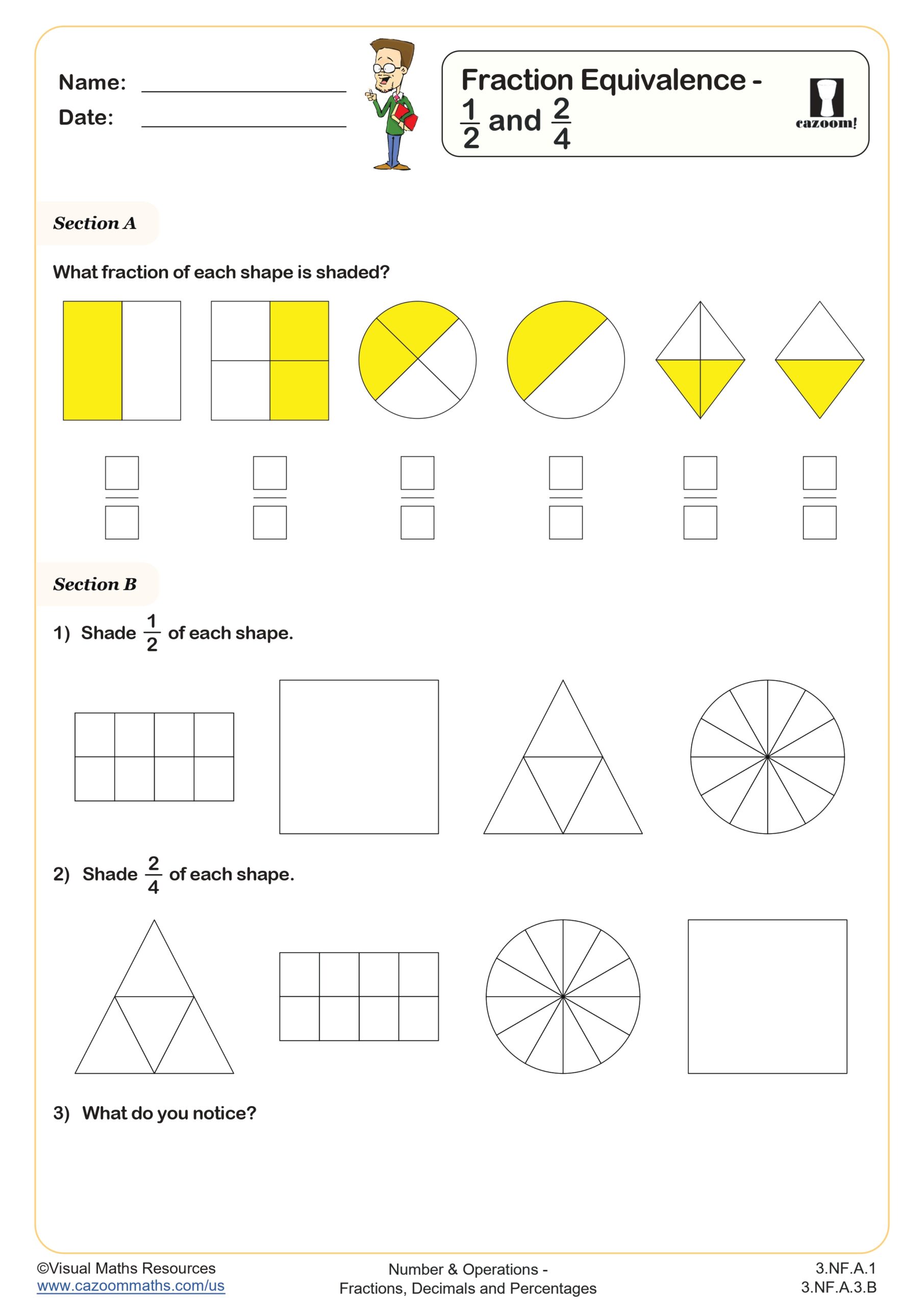
Fraction Equivalence - 1/2 and 2/4
Fractions, Decimals and Percentages (A)
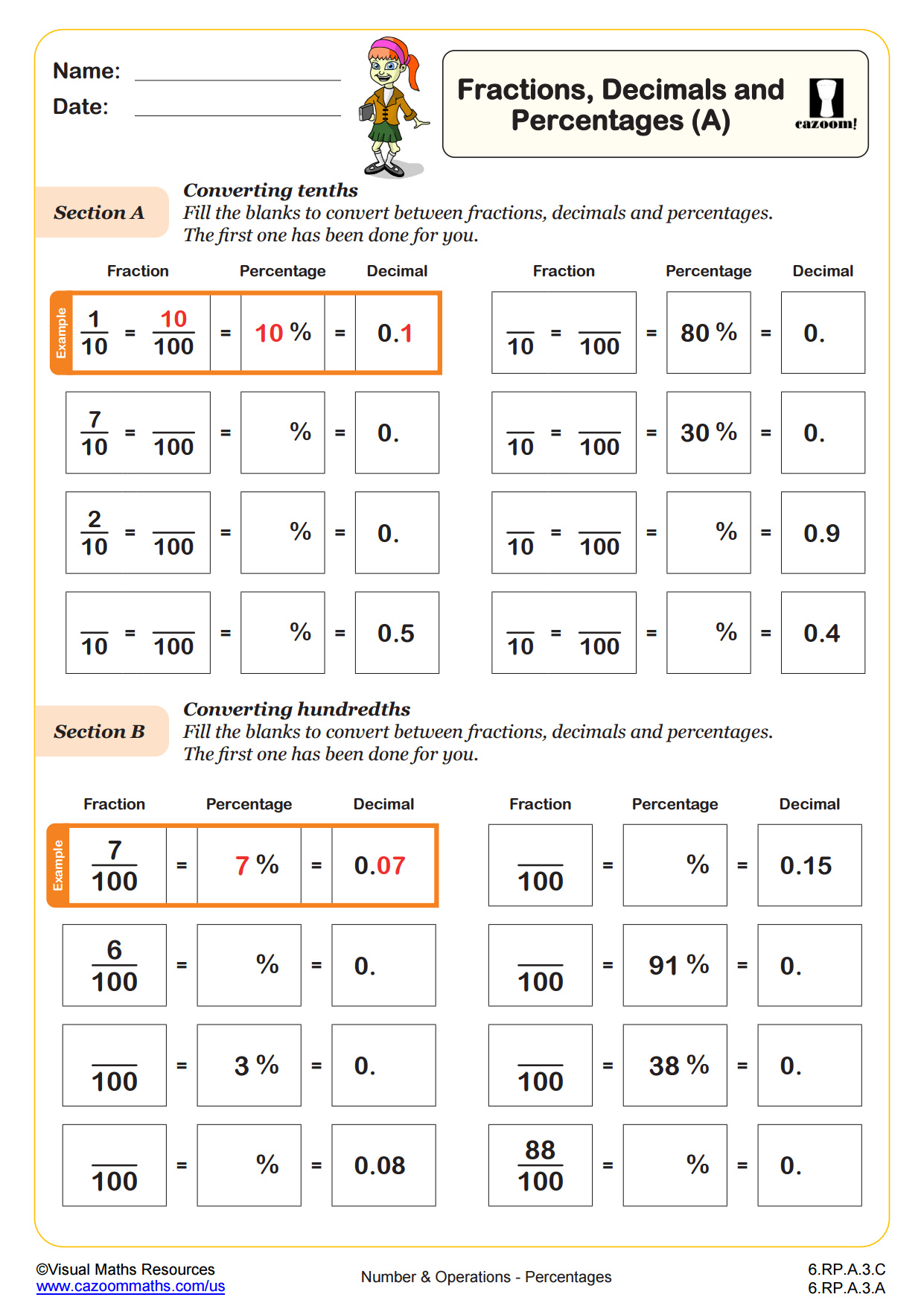
Fractions, Decimals, and Percents (A)
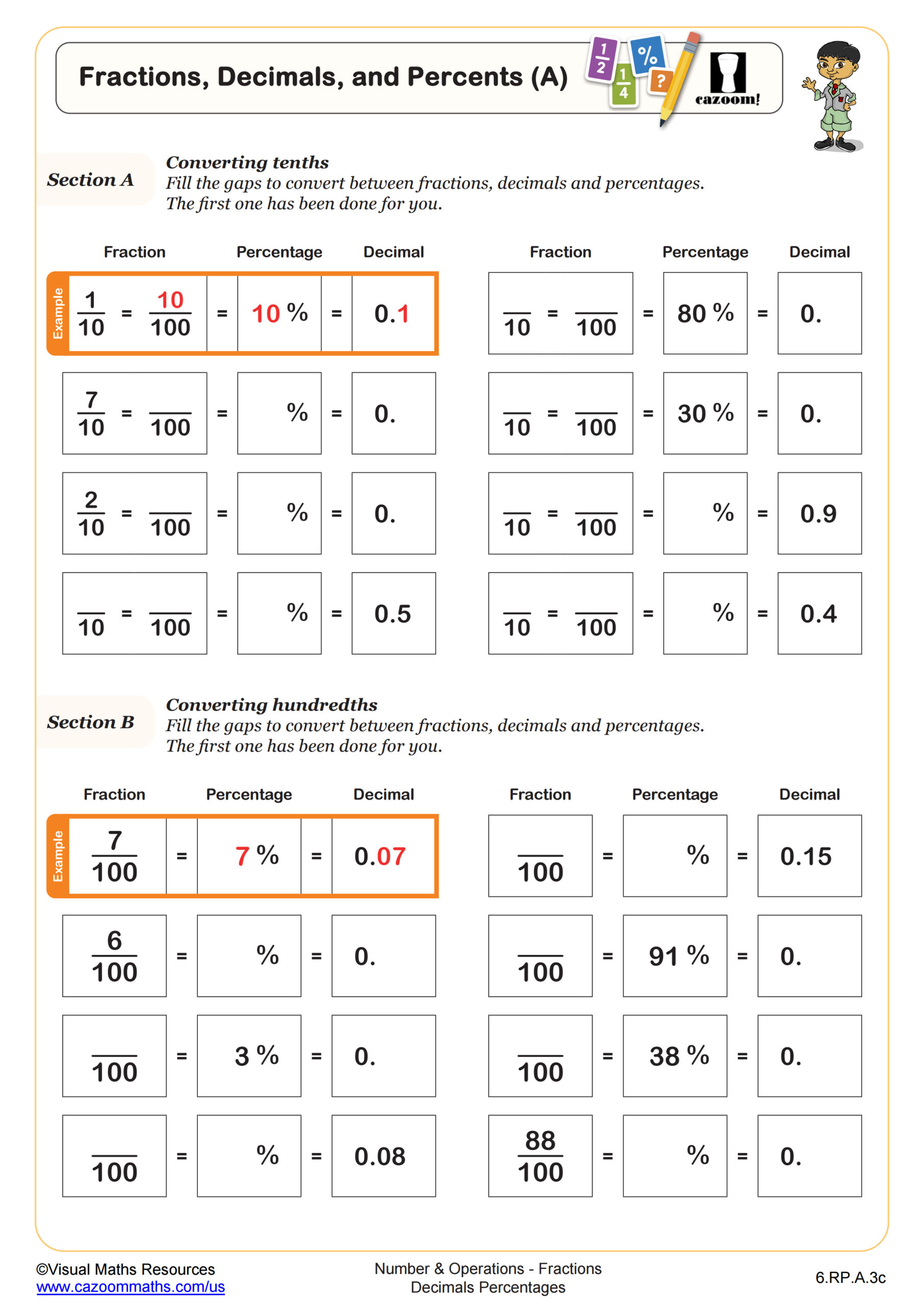
Fractions, Decimals, and Percents (B)
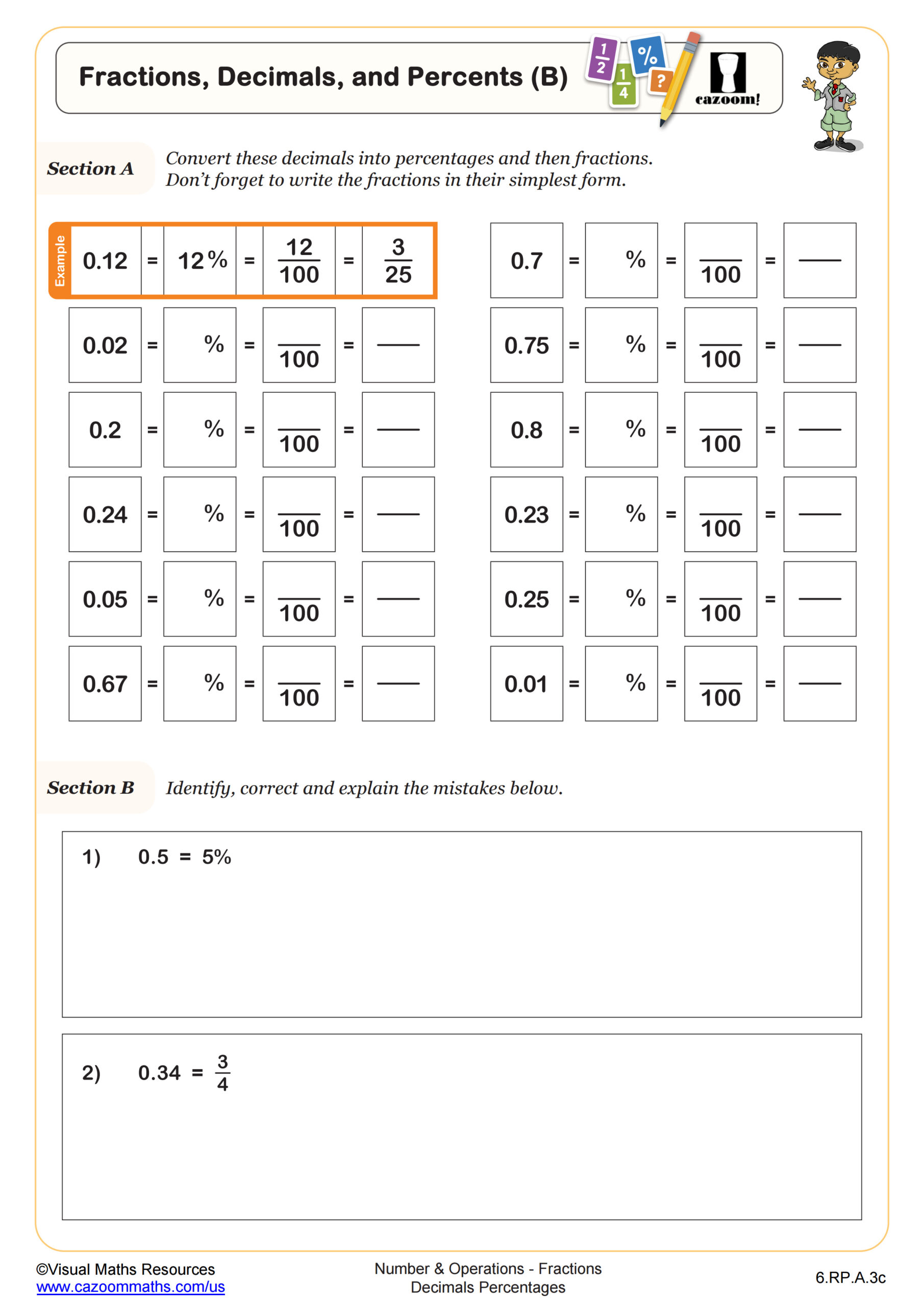
Fractions, Decimals, and Percents (C)
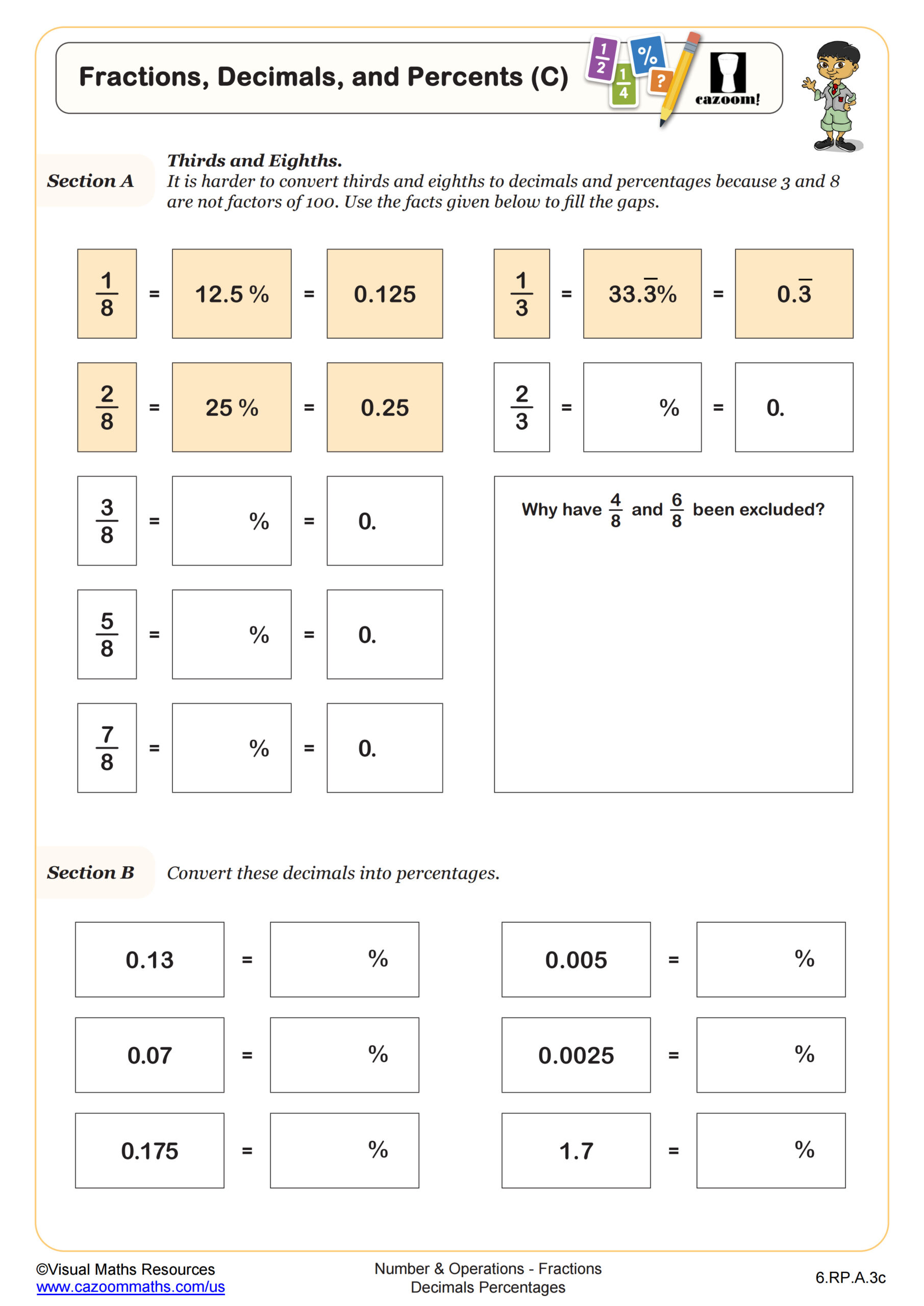
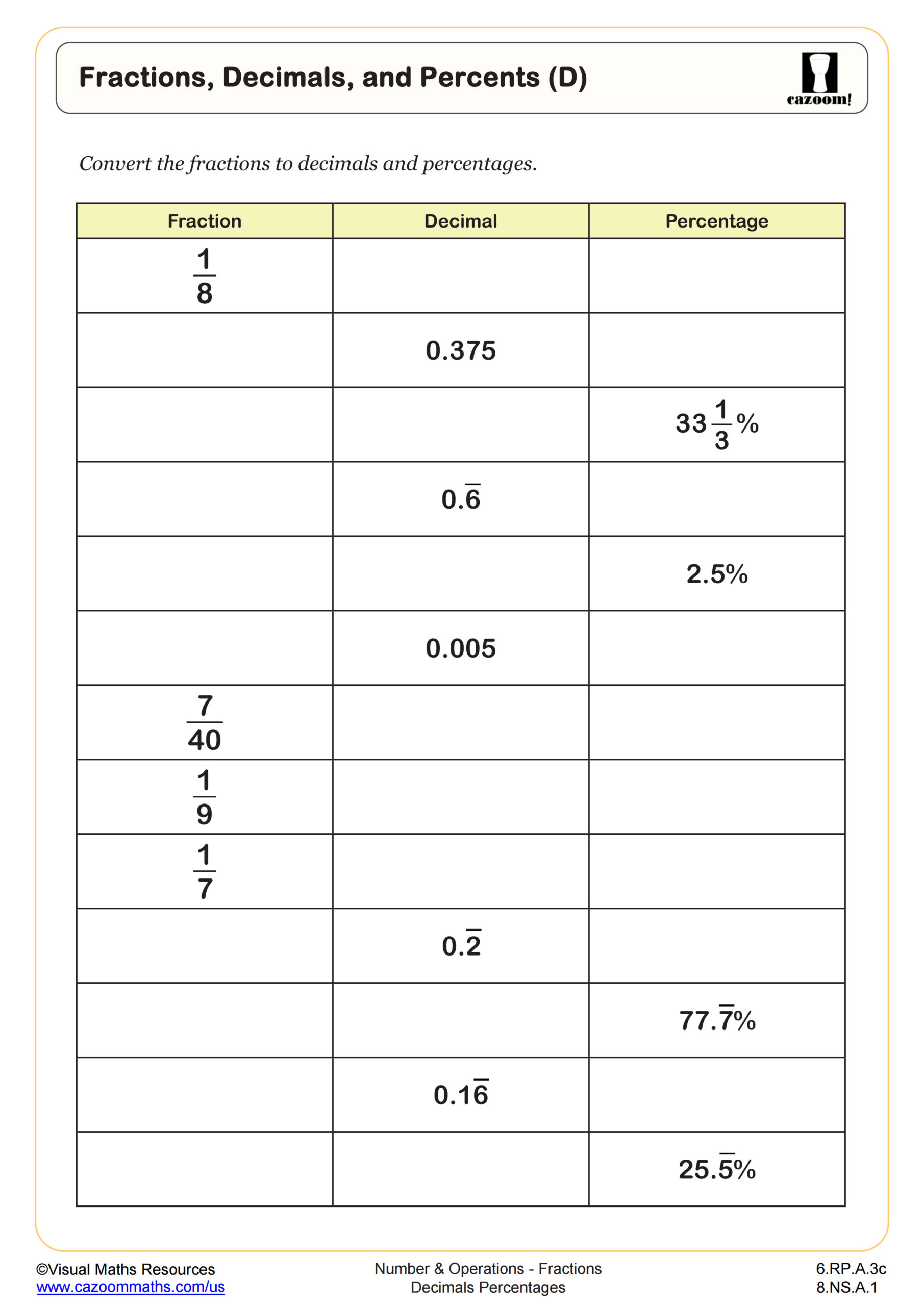
Fractions, Decimals, and Percents (D)
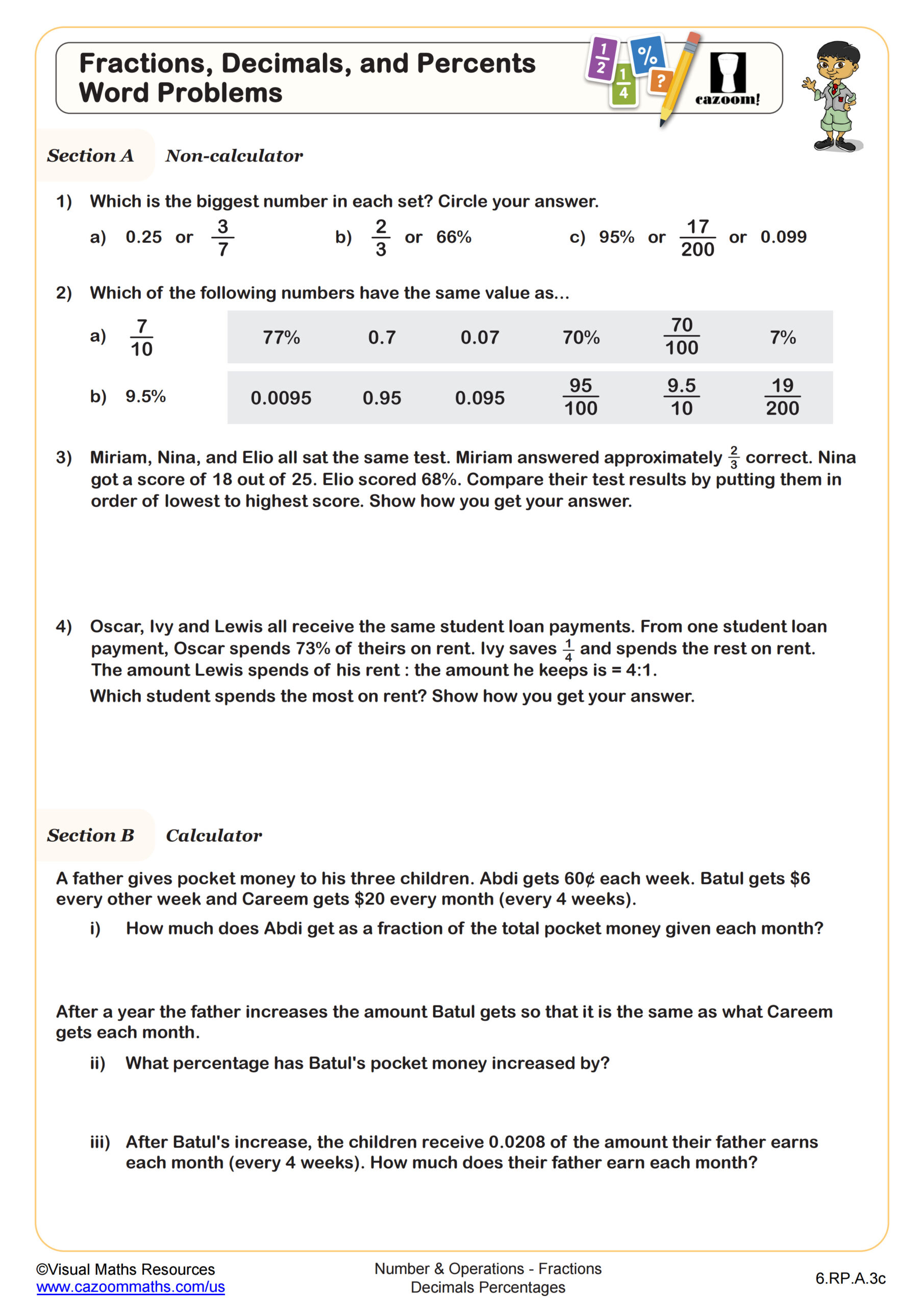
Fractions, Decimals, and Percents Word Problems
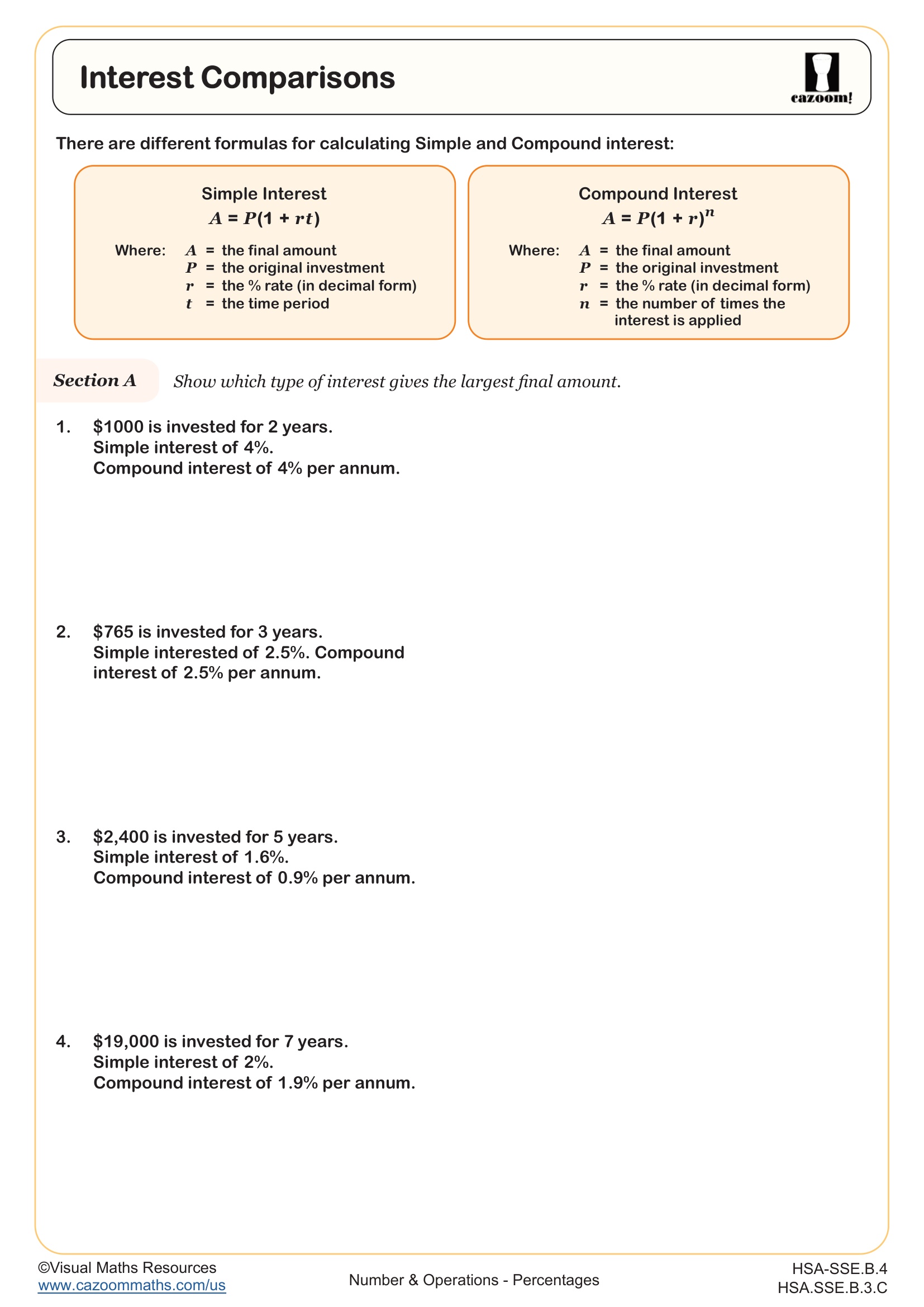
Interest Comparisons
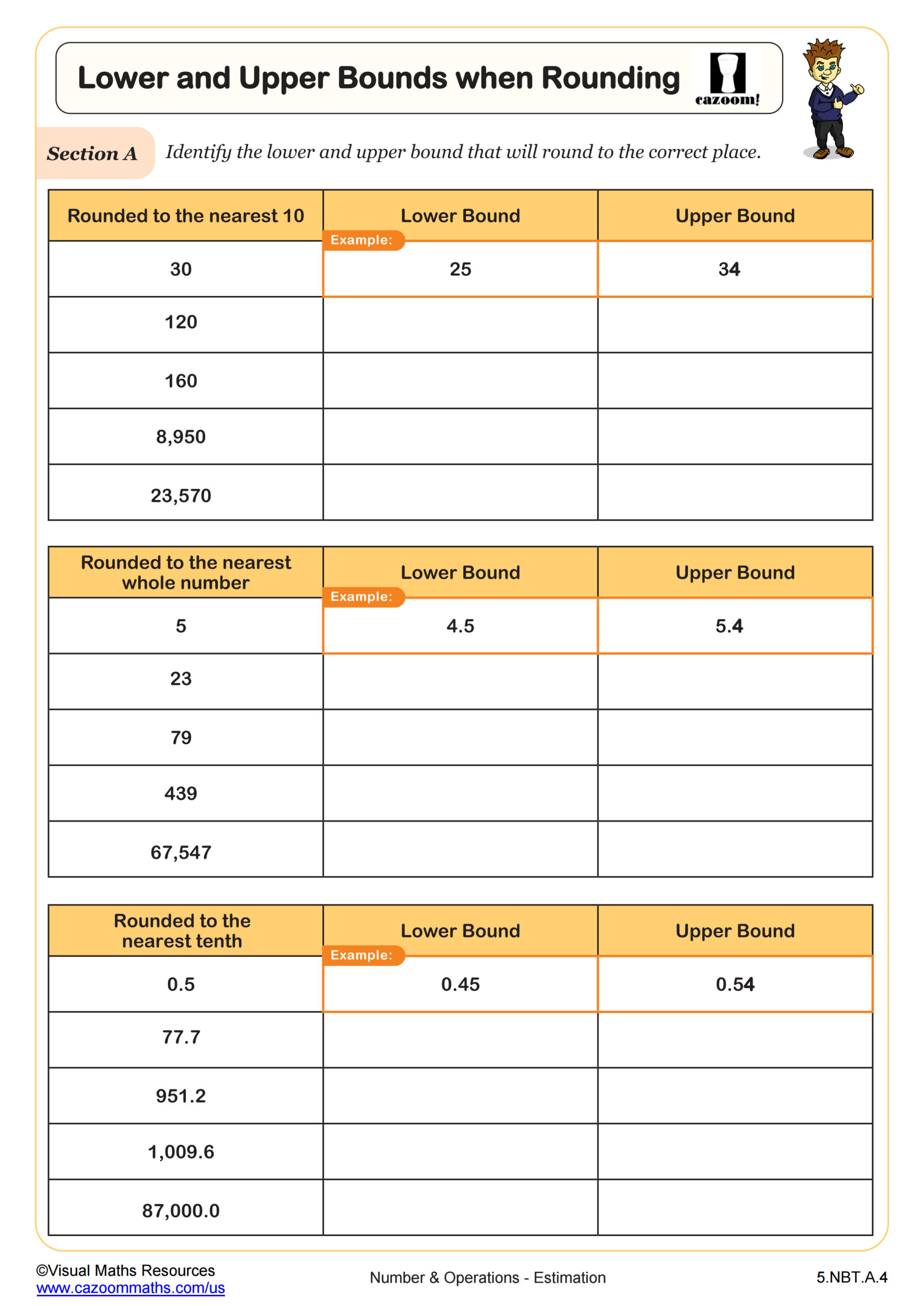
Lower and Upper Bounds when Rounding
Mental Percentages
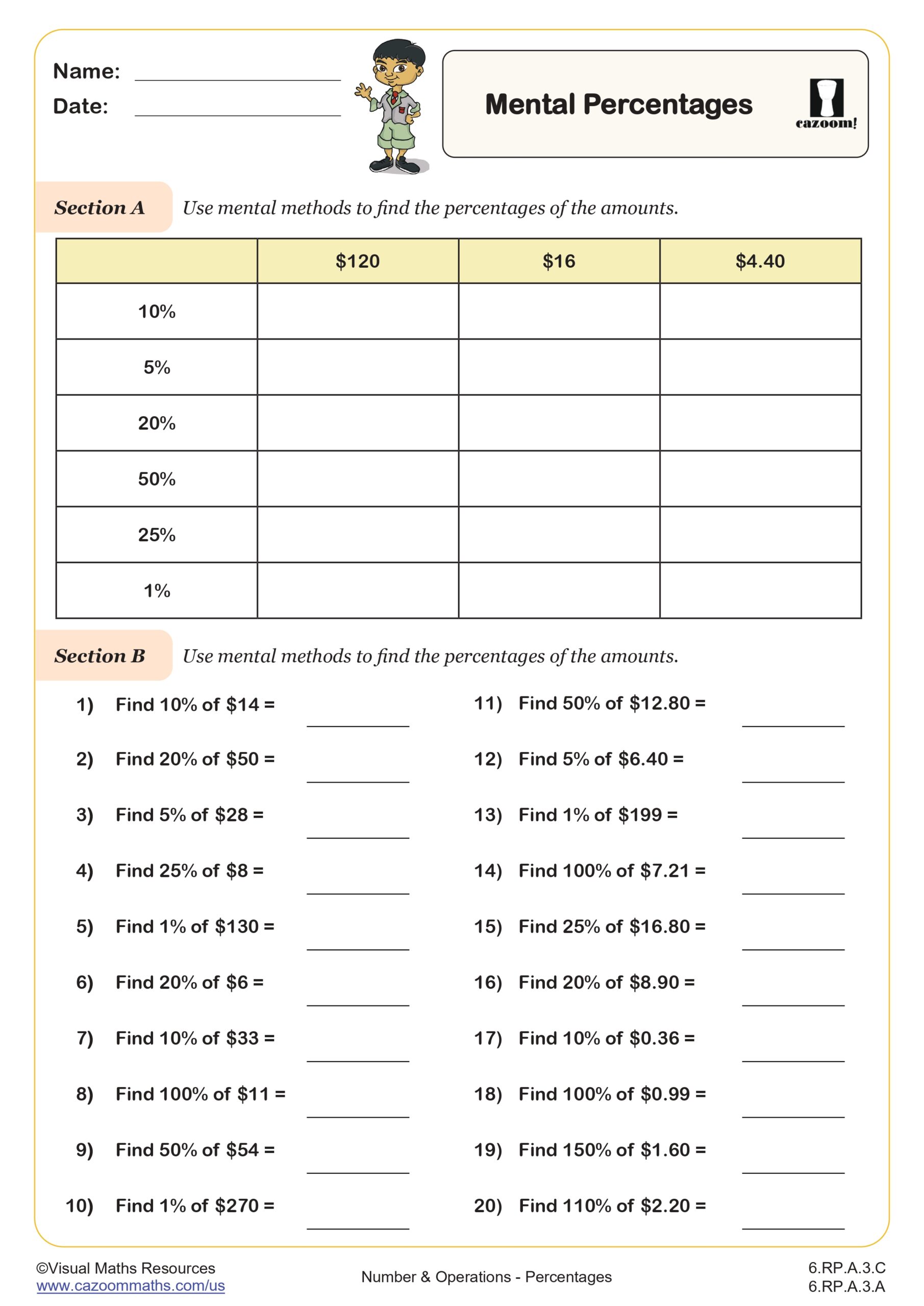
Money Problems (B)
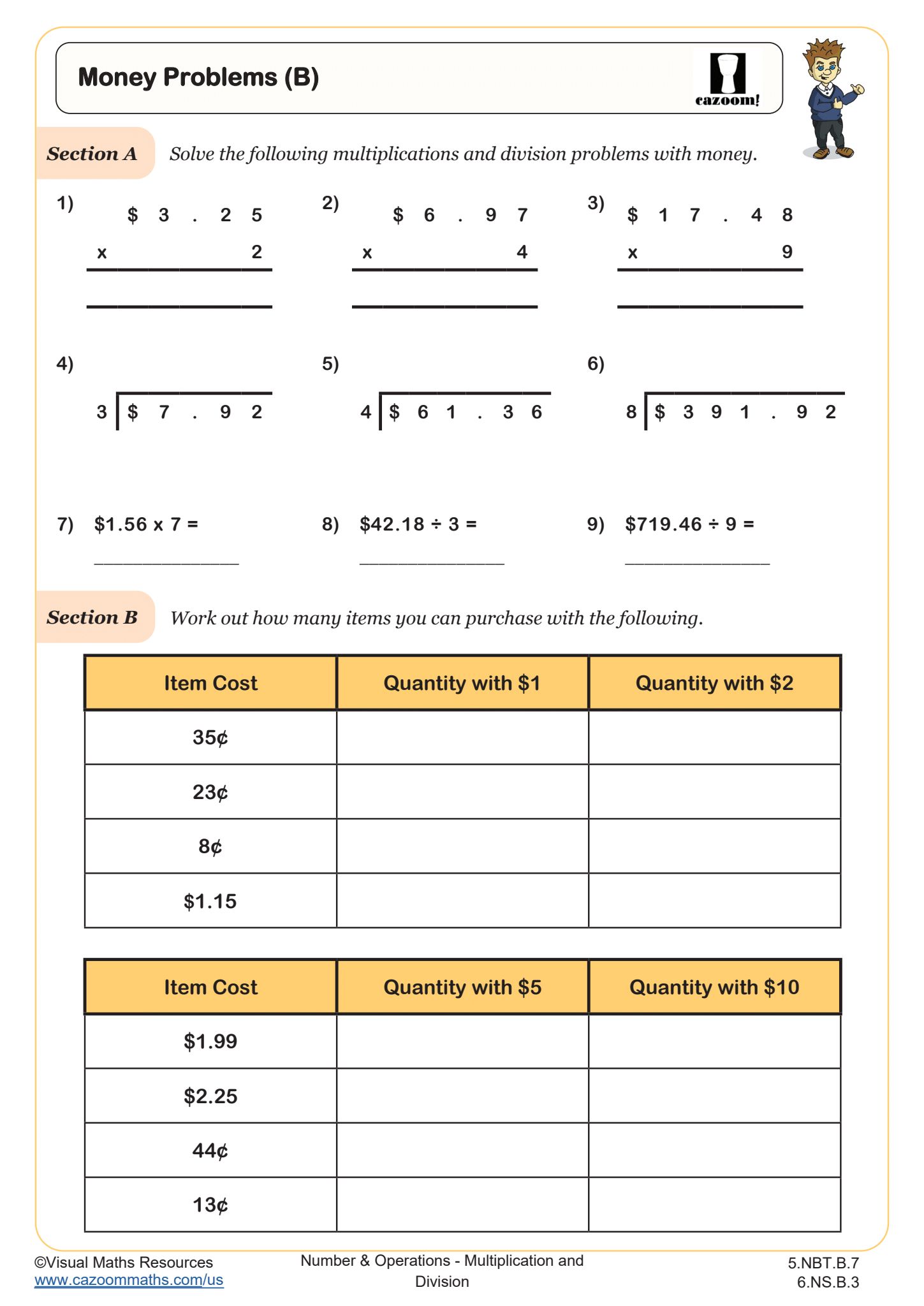
Multiplying and Dividing by 10, 100 and 1,000 Codebreaker
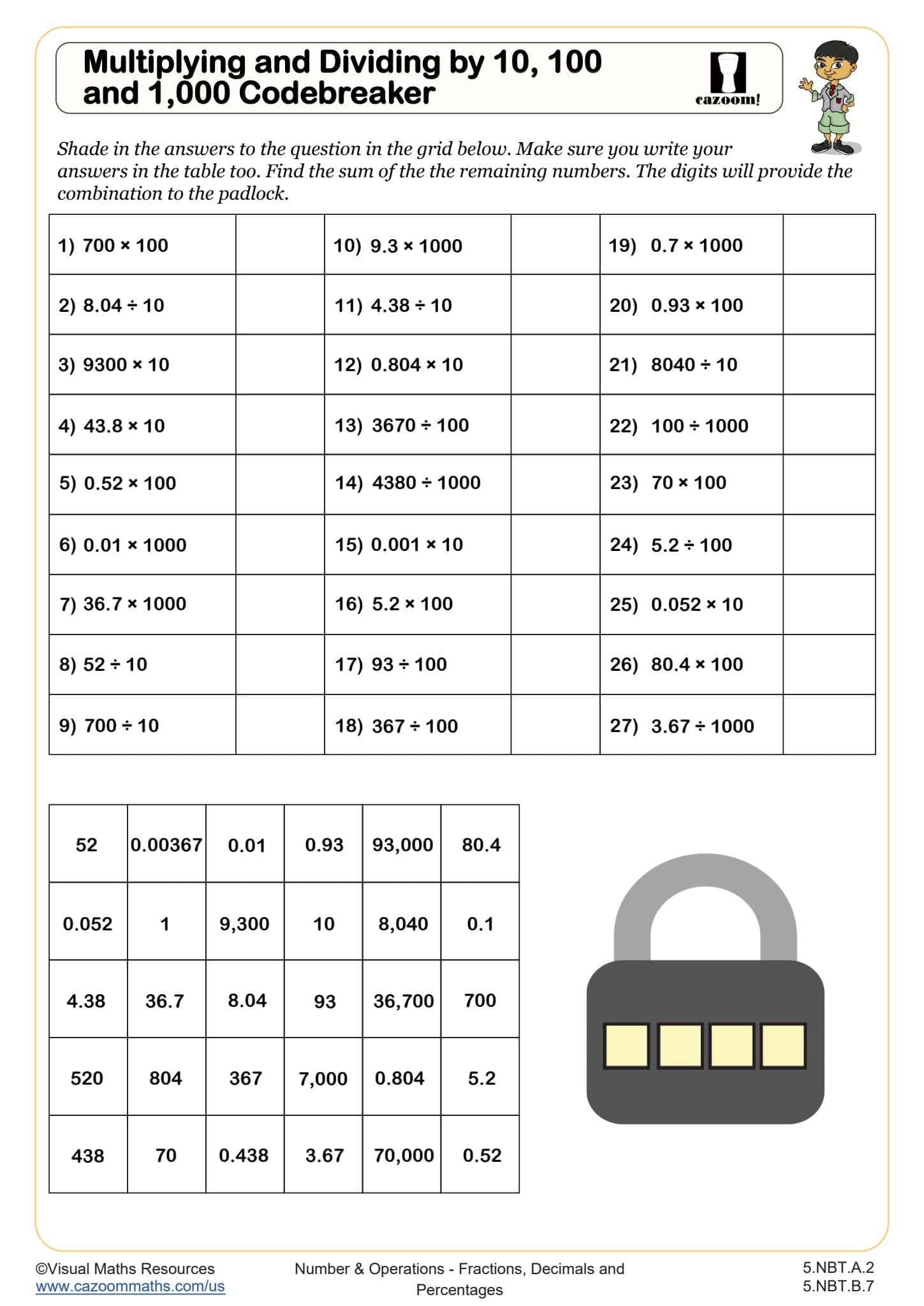
Ordering Fractions, Decimals, and Percents (A)
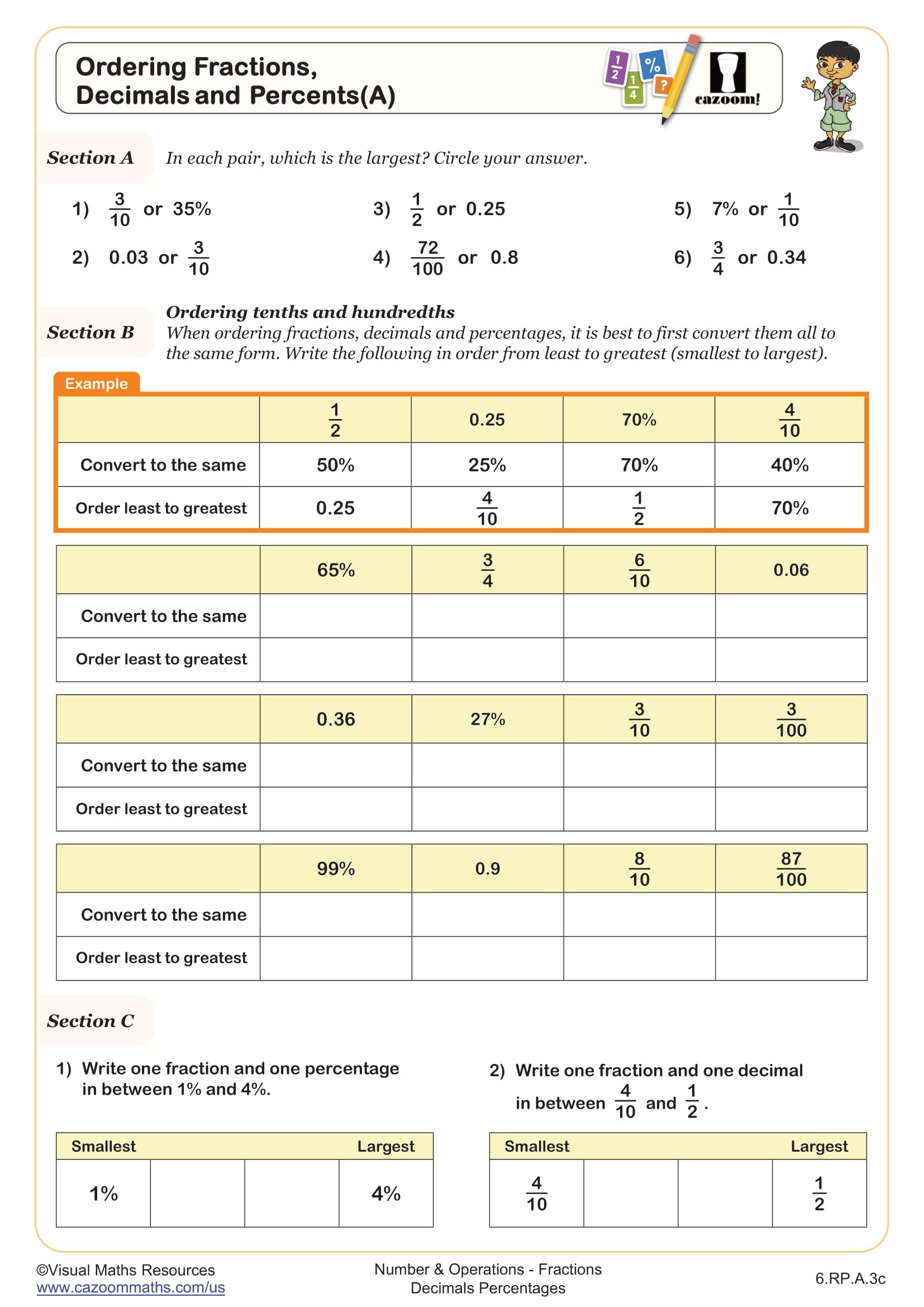
Ordering Fractions, Decimals, and Percents (B)
Partitioning Decimals - Tenths and Hundredths (A)
-Questions-Worksheet.jpg?w=3840)
Partitioning Decimals - Tenths and Hundredths (B)
-Questions-Worksheet.jpg?w=3840)
Percent Change
Percent Increase and Decrease
Percent Word Problems
Percentage Change (A)
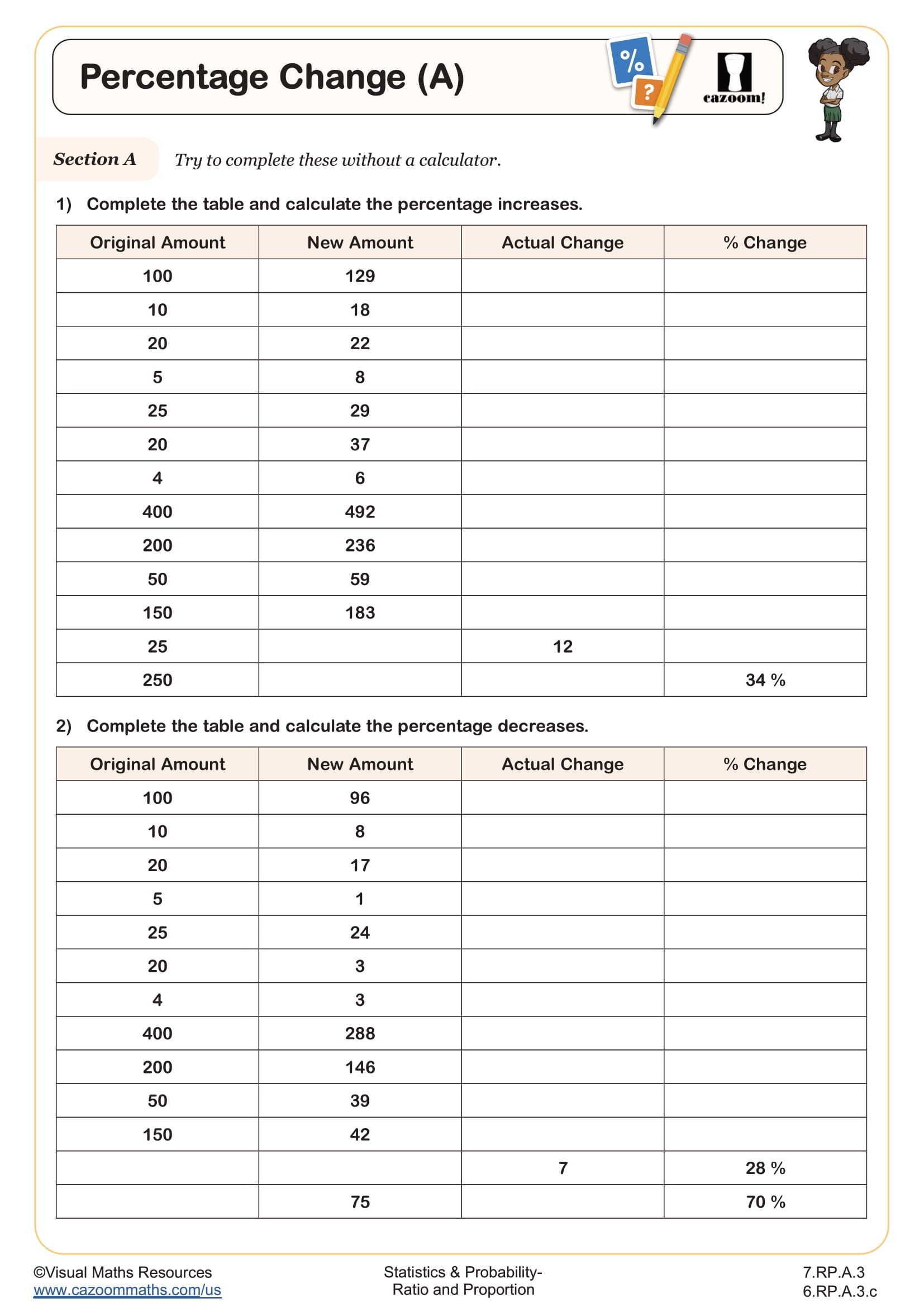
Percentage Decrease - Using a Bar Model
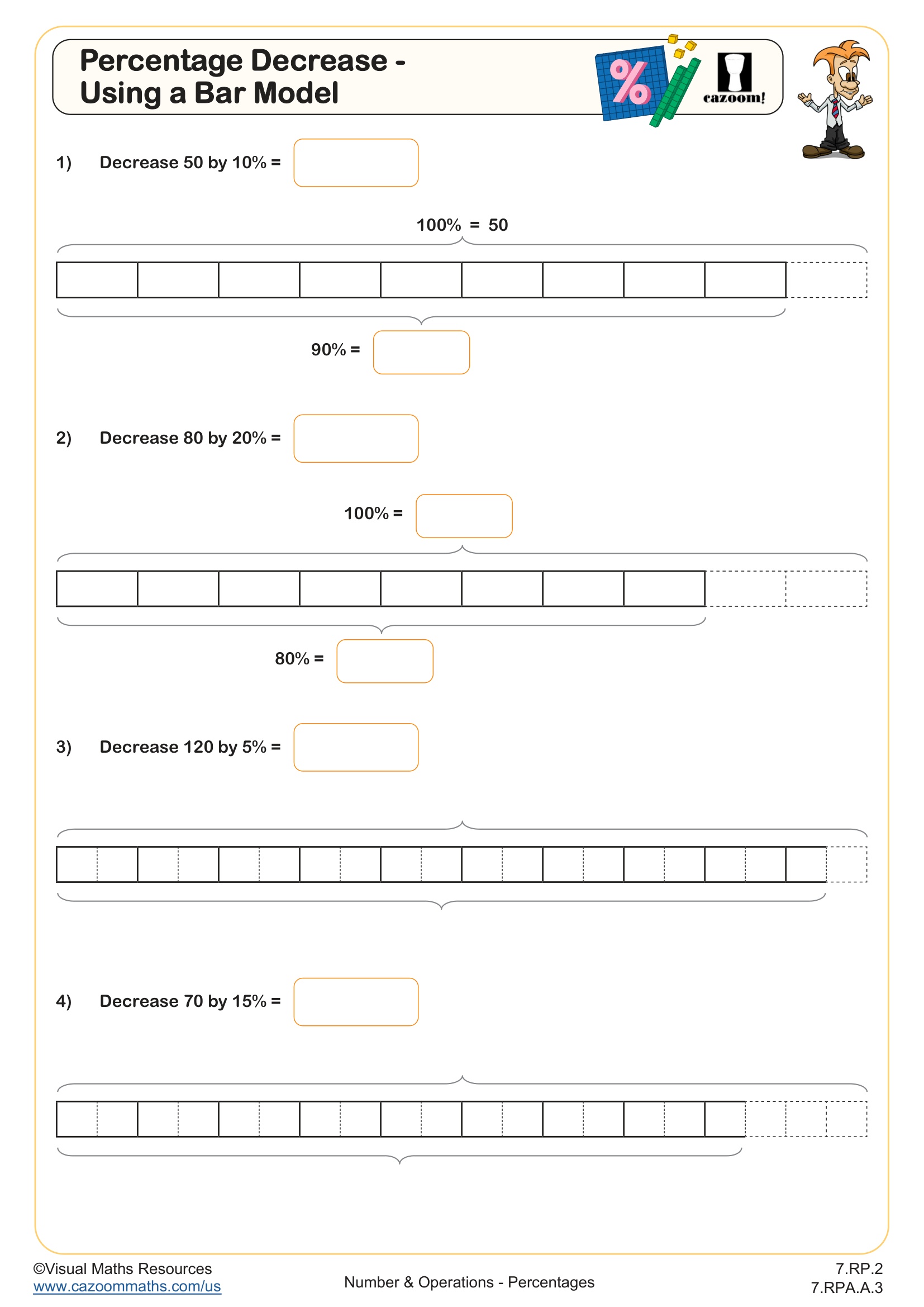
Percentage Increase - Using a Bar Model
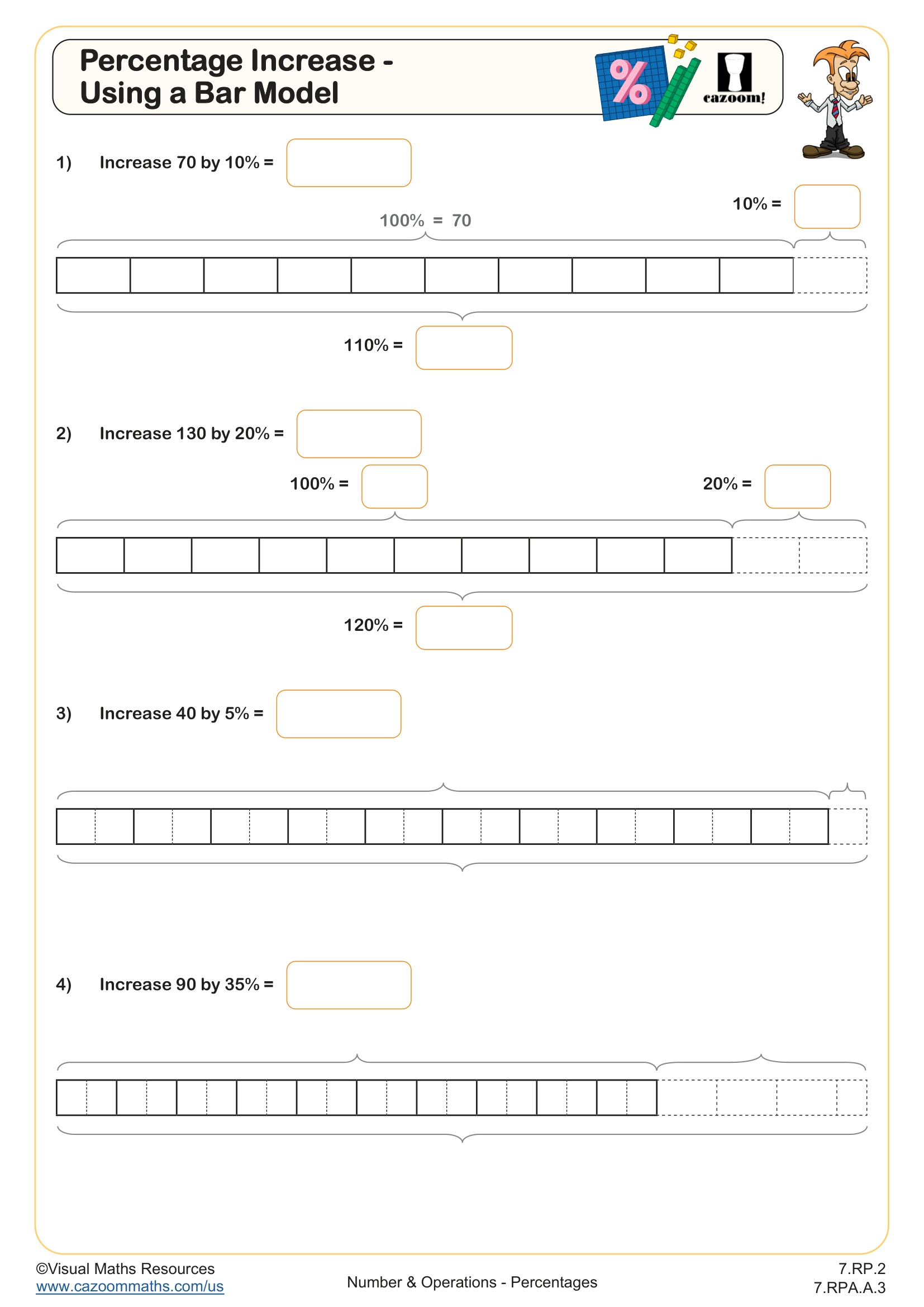
Percentage Problems
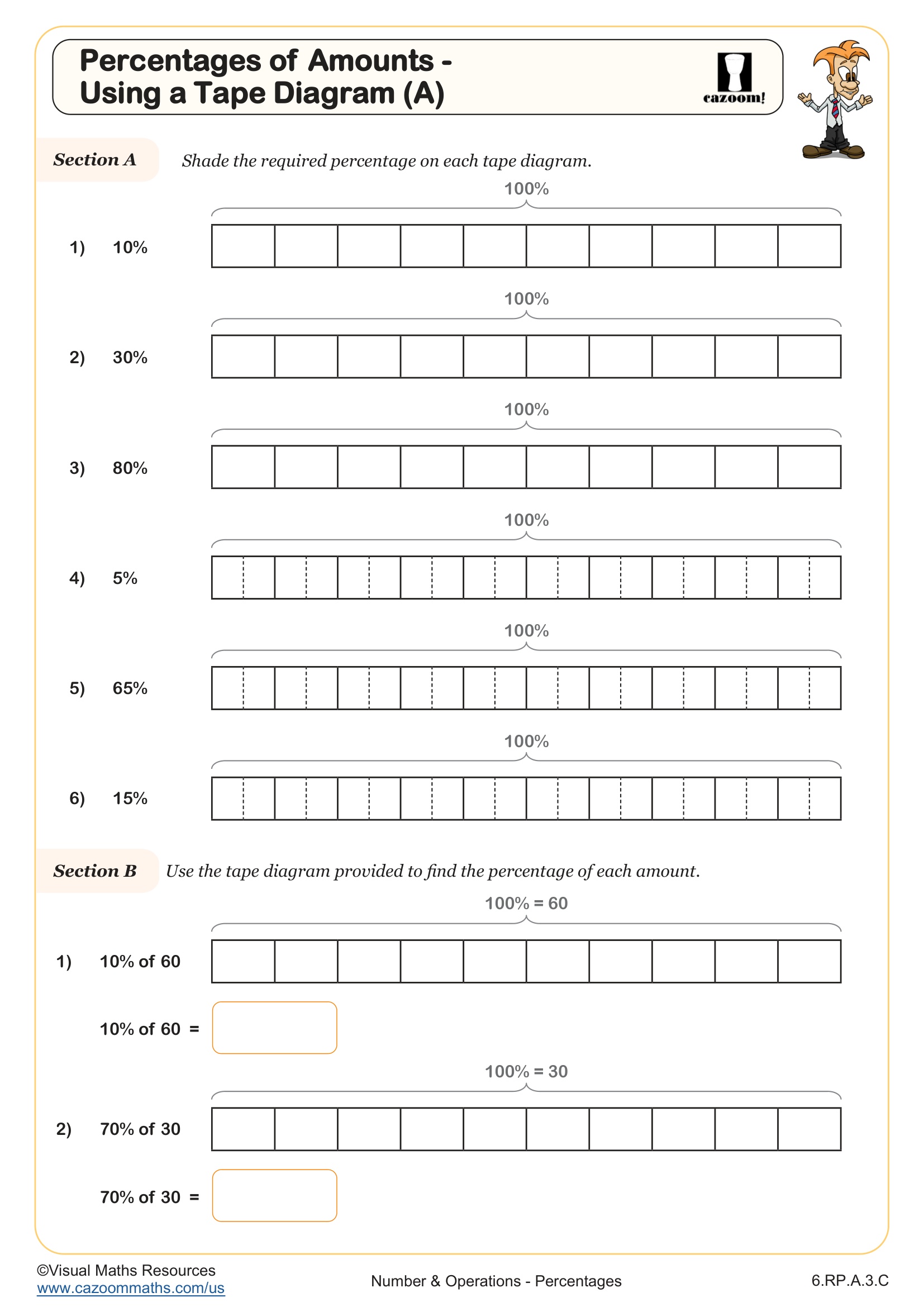
Percentages of Amounts - Using a Tape Diagram (A)
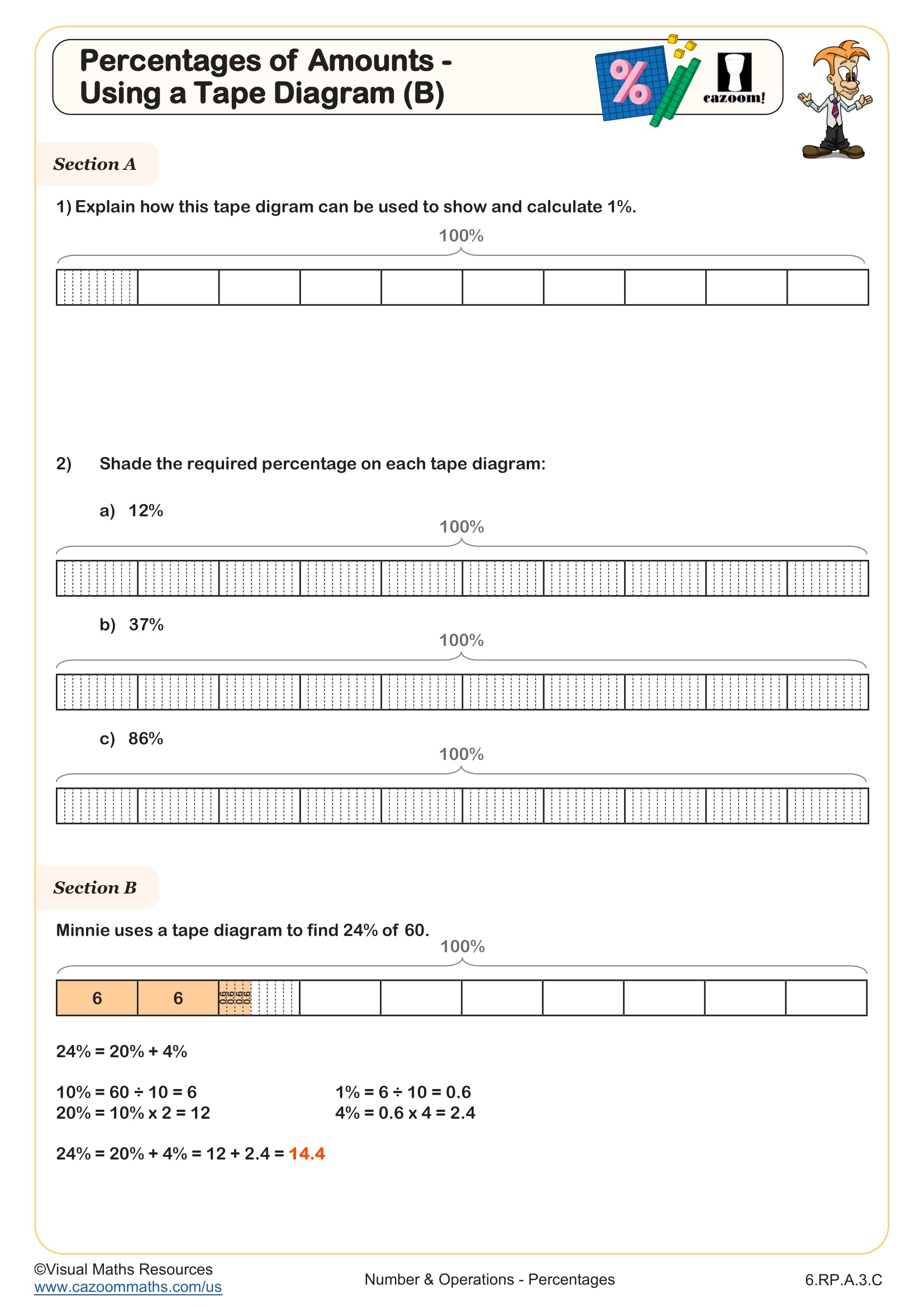
Percentages of Amounts - Using a Tape Diagram (B)
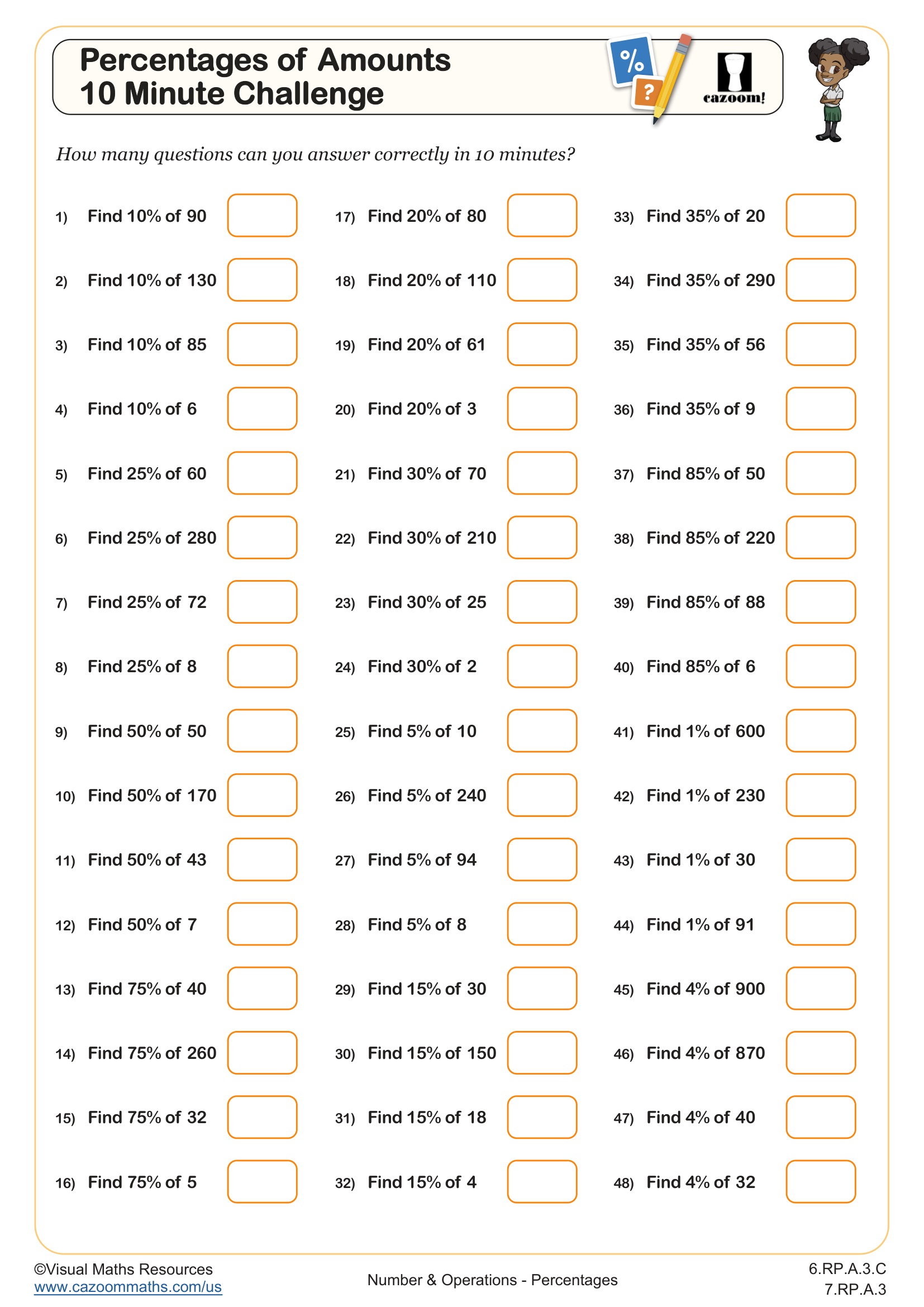
Percentages of Amounts 10 Minute Challenge
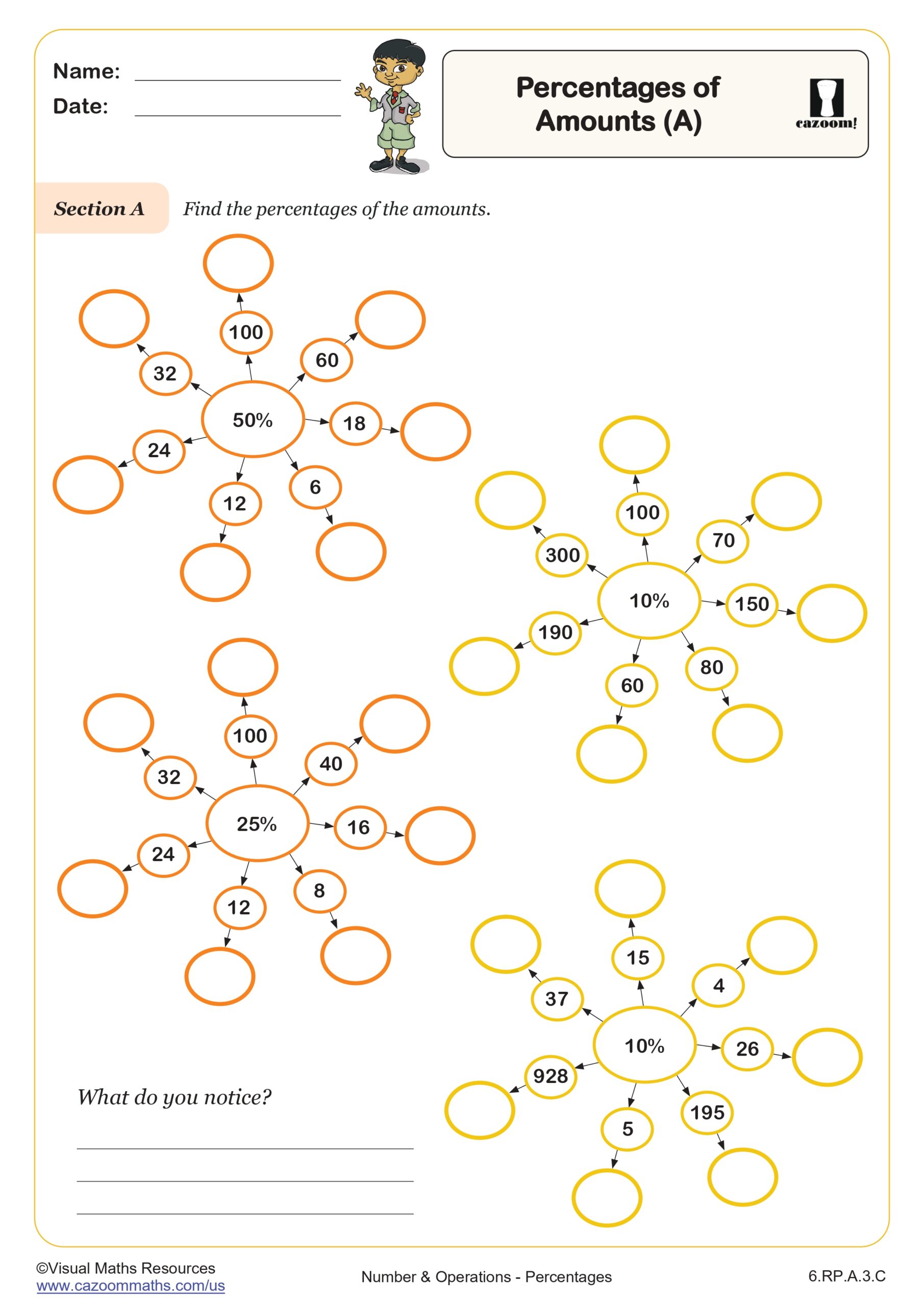
Percents of an Amount (A)
Percents of an Amount (B)
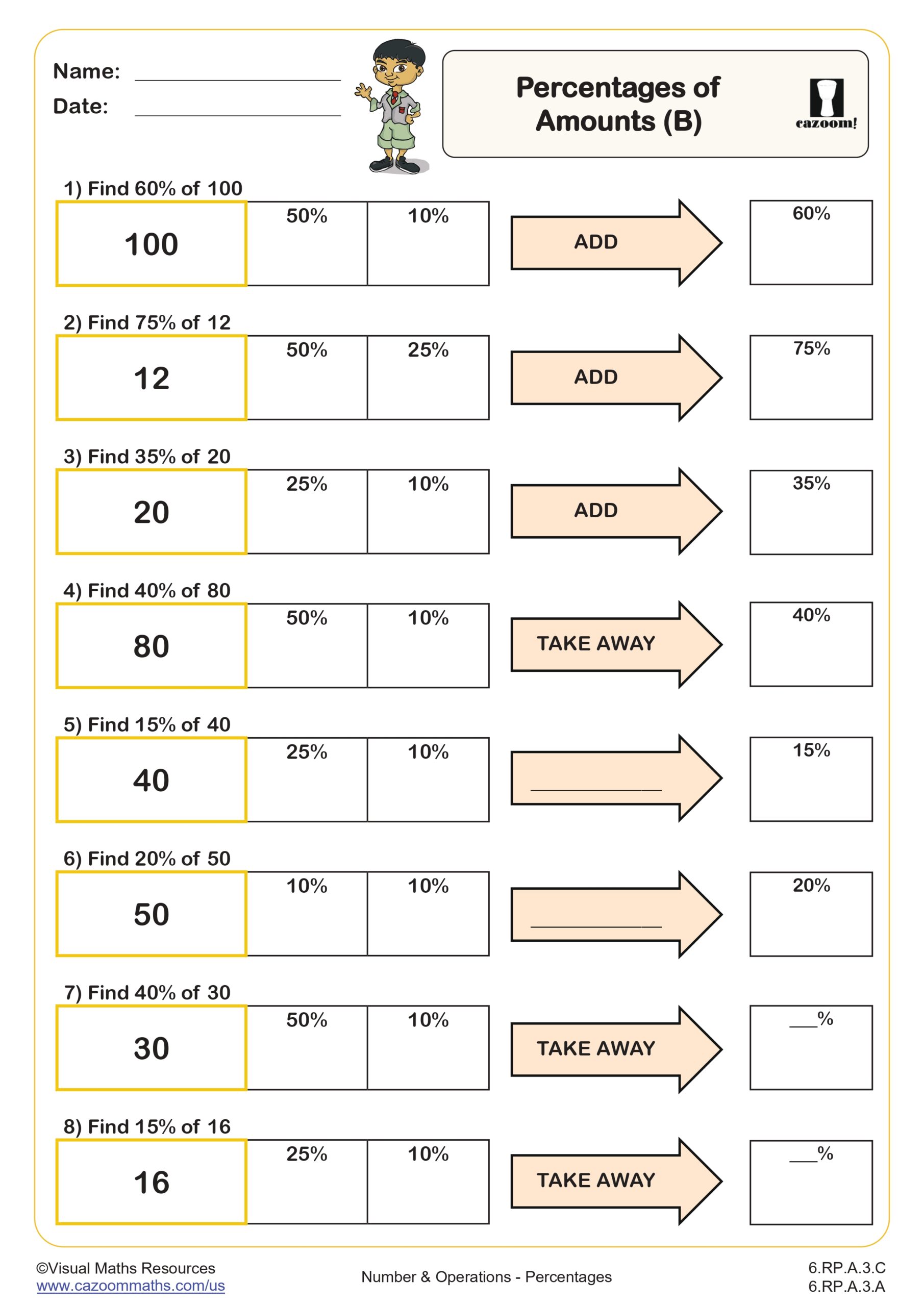
Percents of an Amount (C)
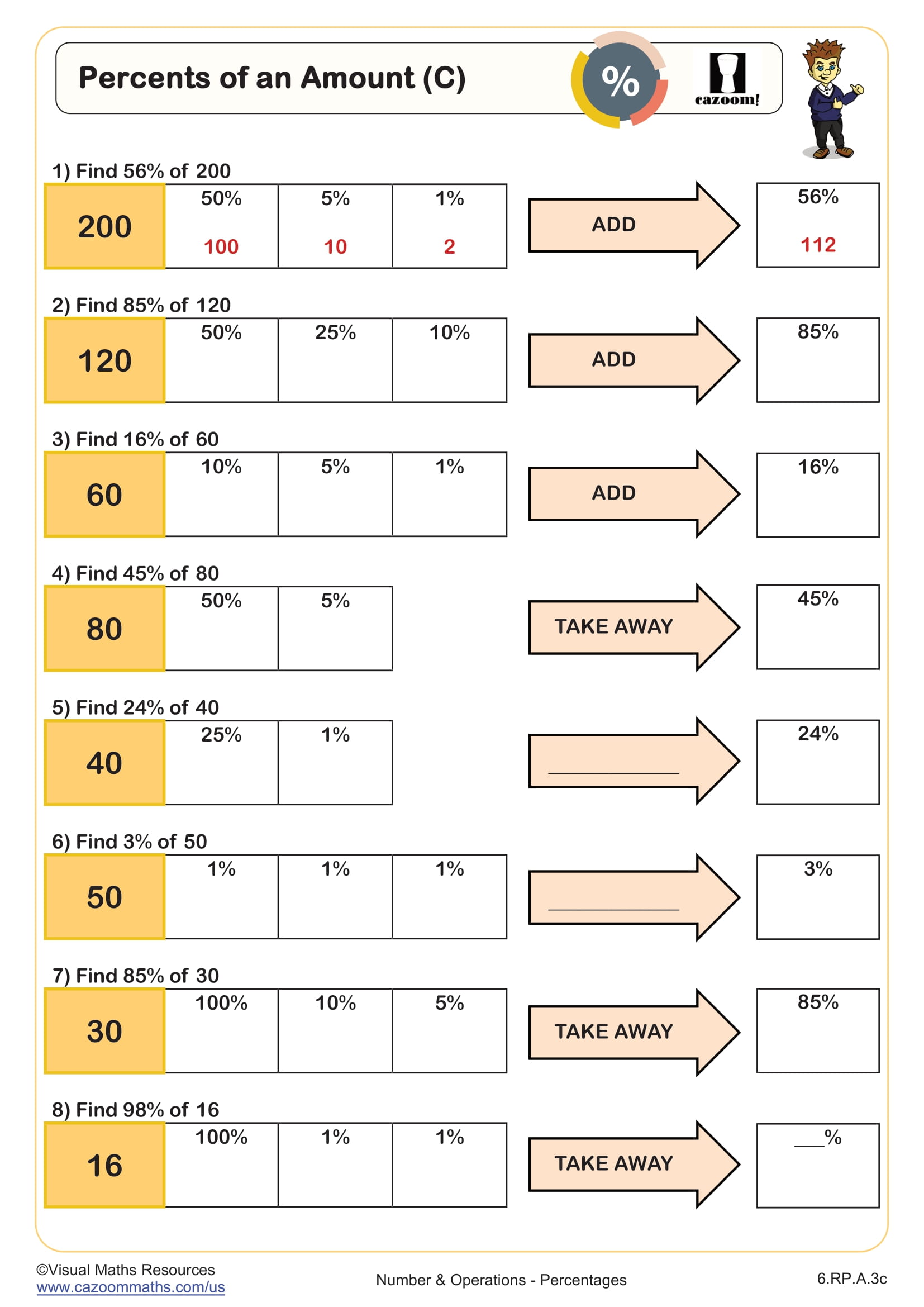
Percents of an Amount (D)
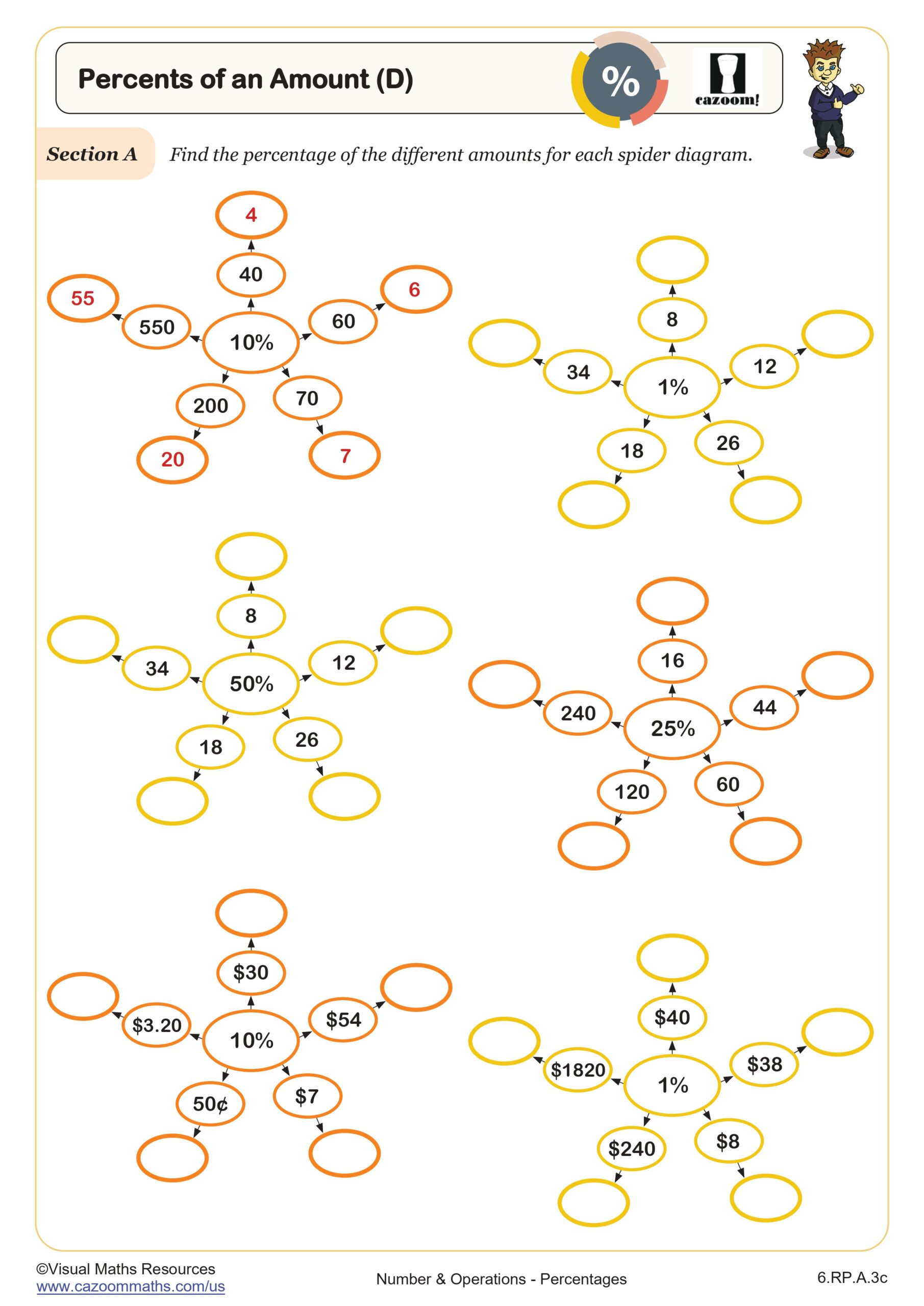
Percents of an Amount (E)
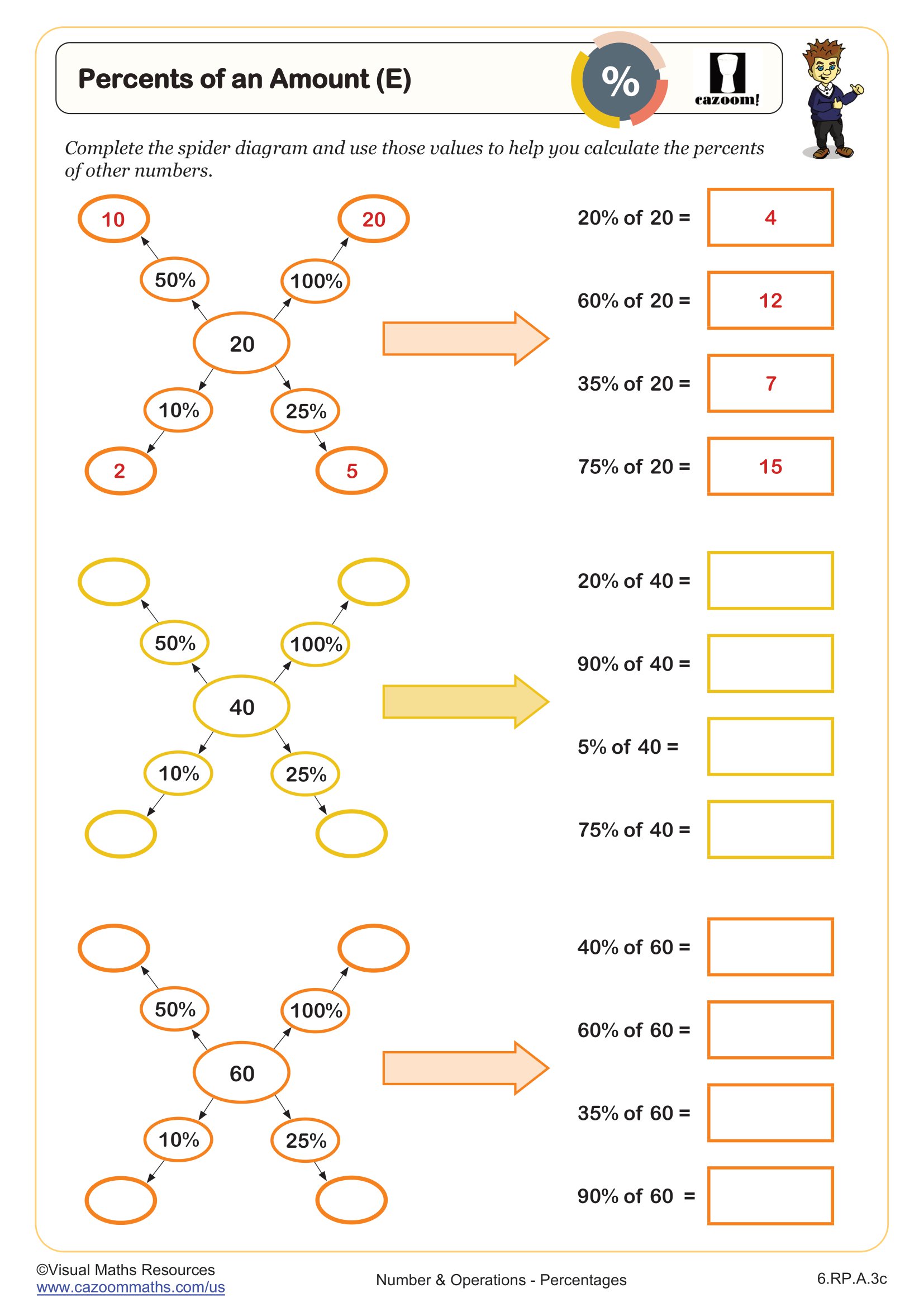
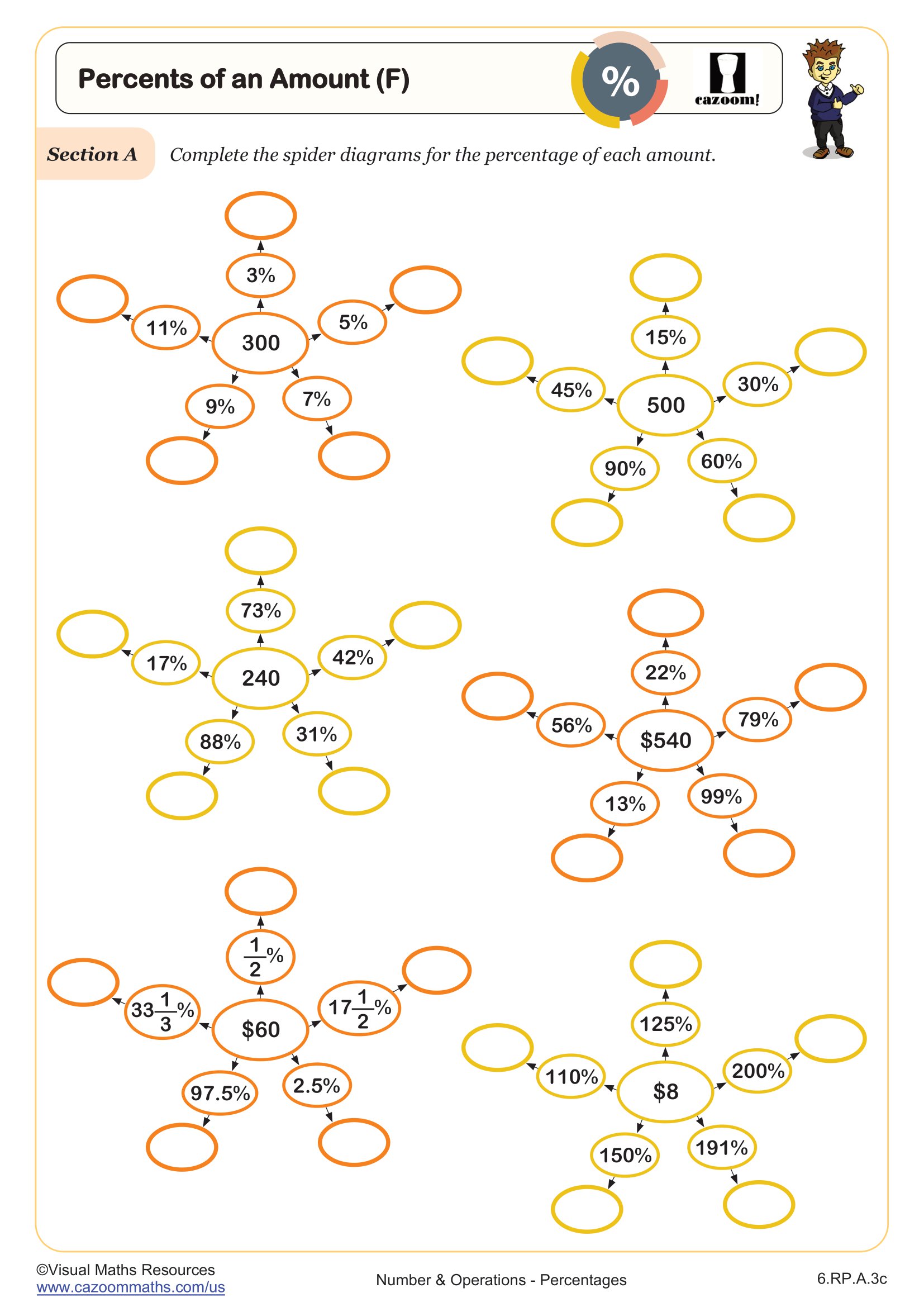
Percents of an Amount (F)
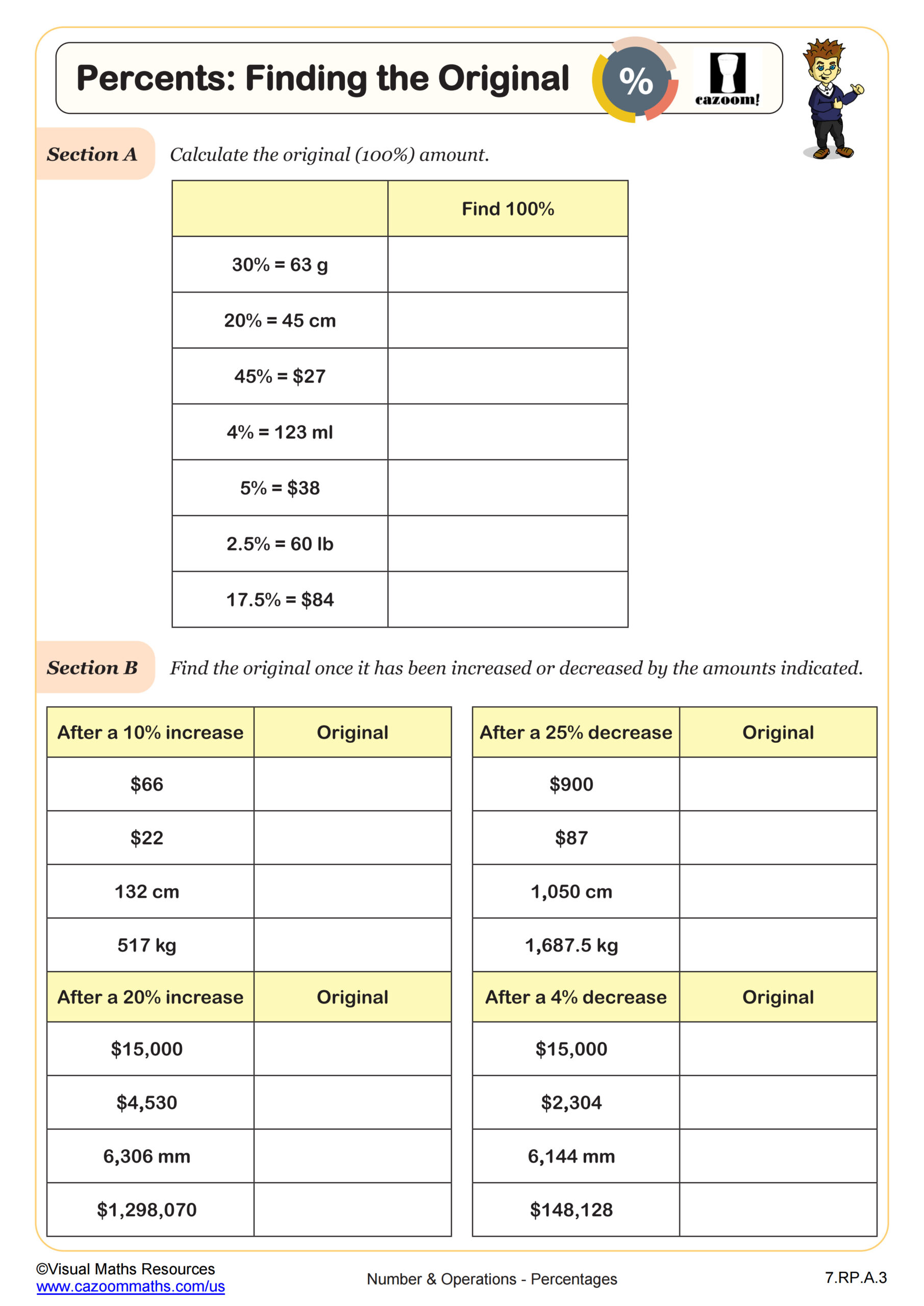
Percents: Finding the Original
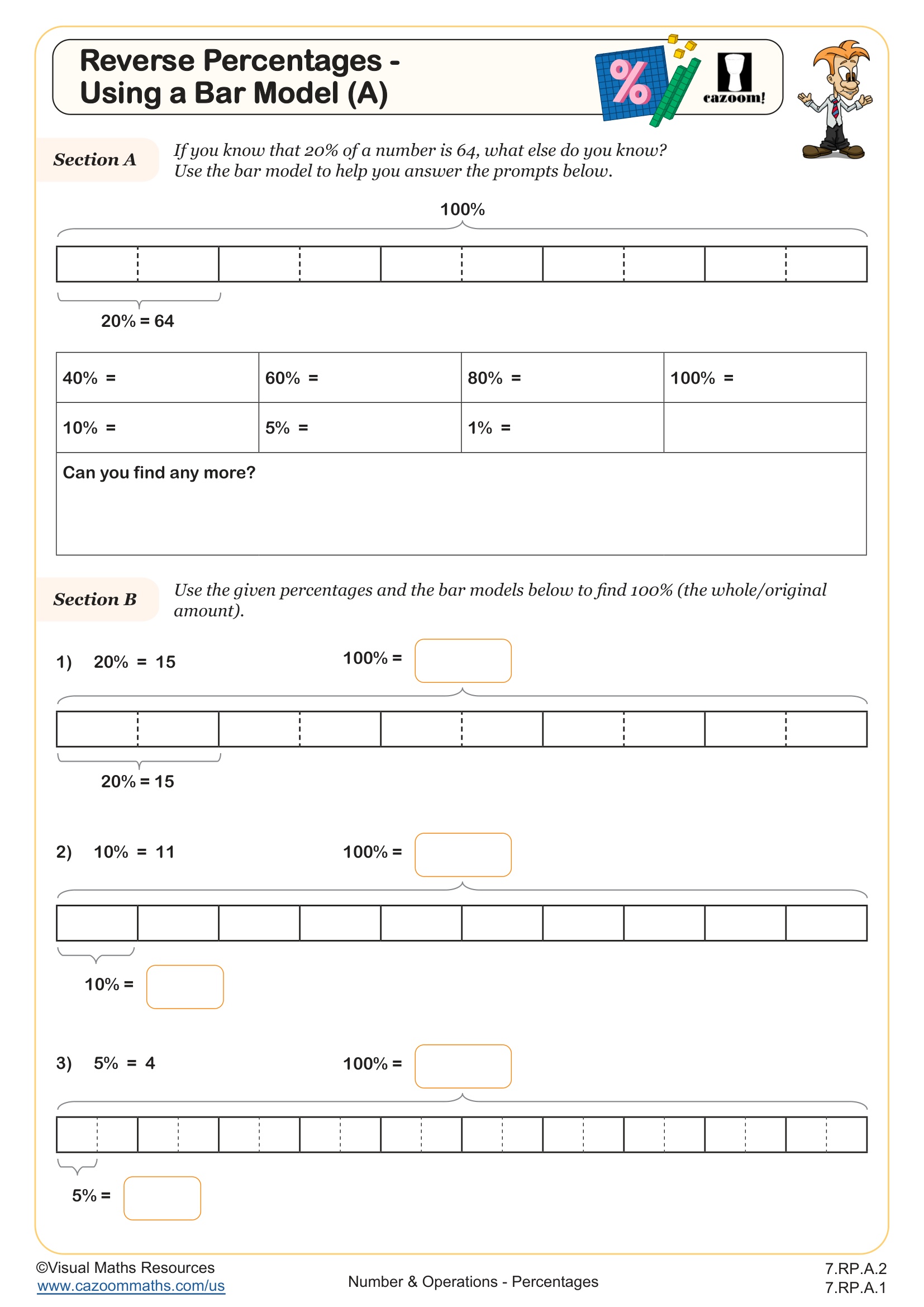
Reverse Percentages - Using a Bar Model (A)
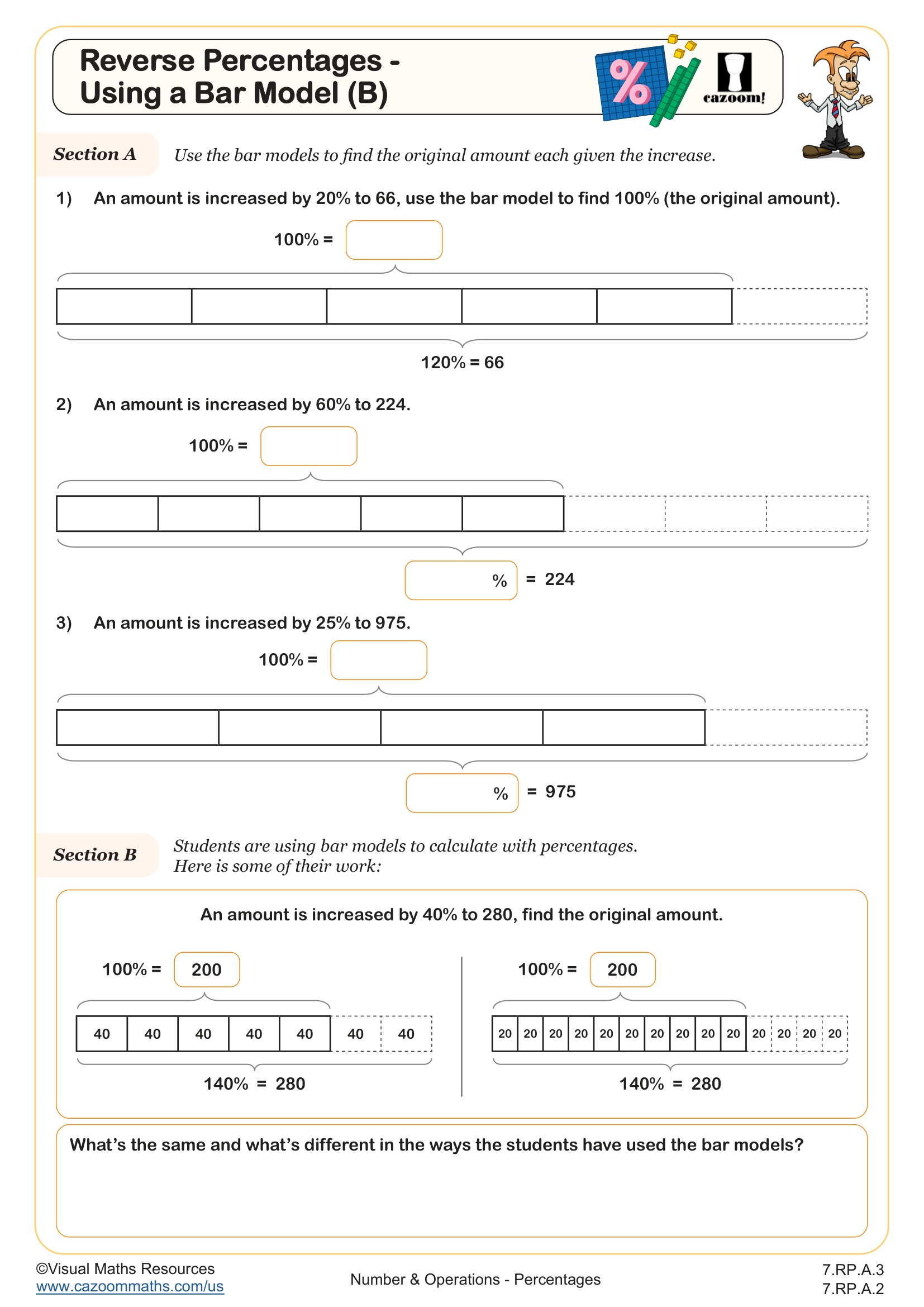
Reverse Percentages - Using a Bar Model (B)
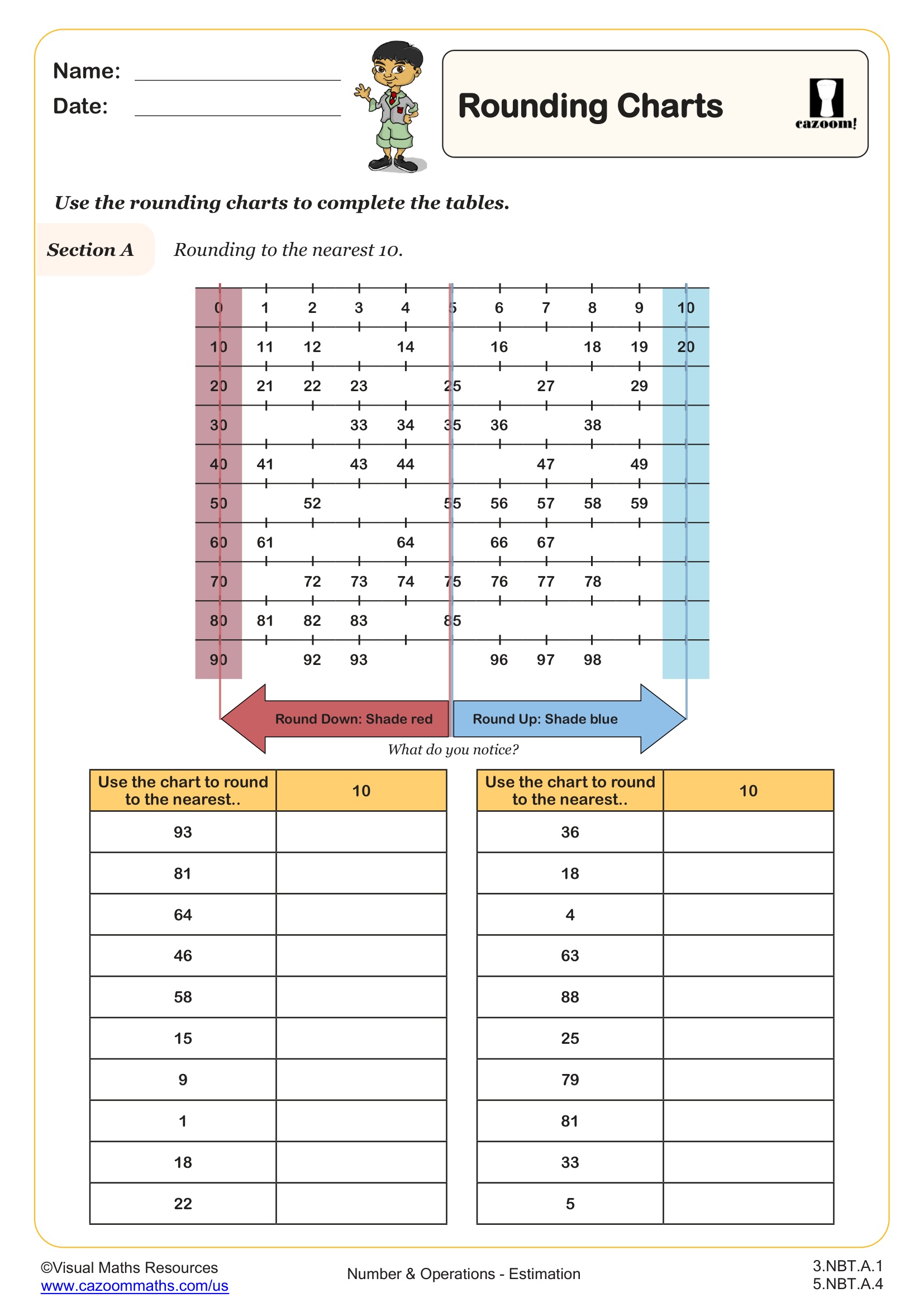
Rounding Charts
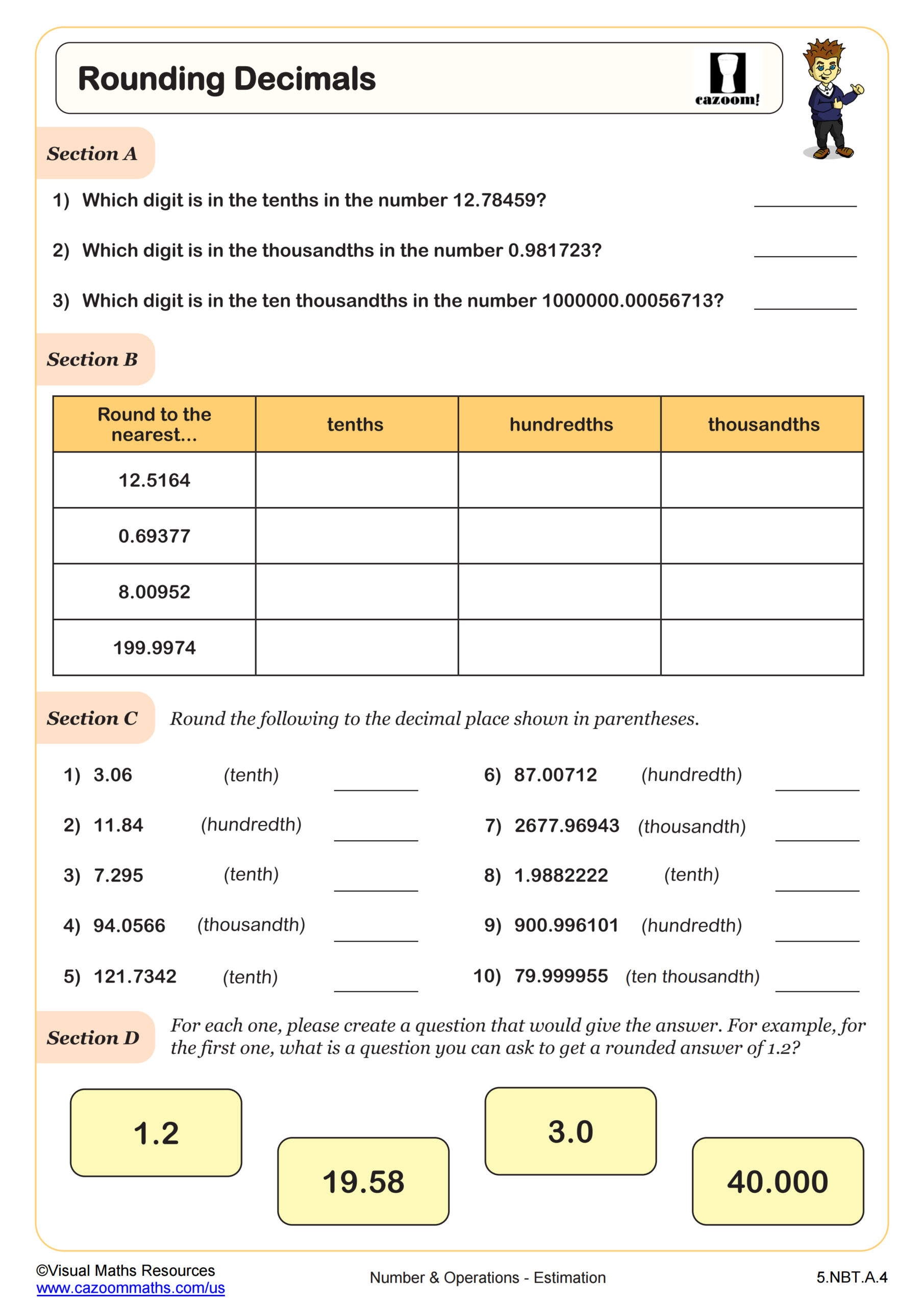
Rounding Decimals
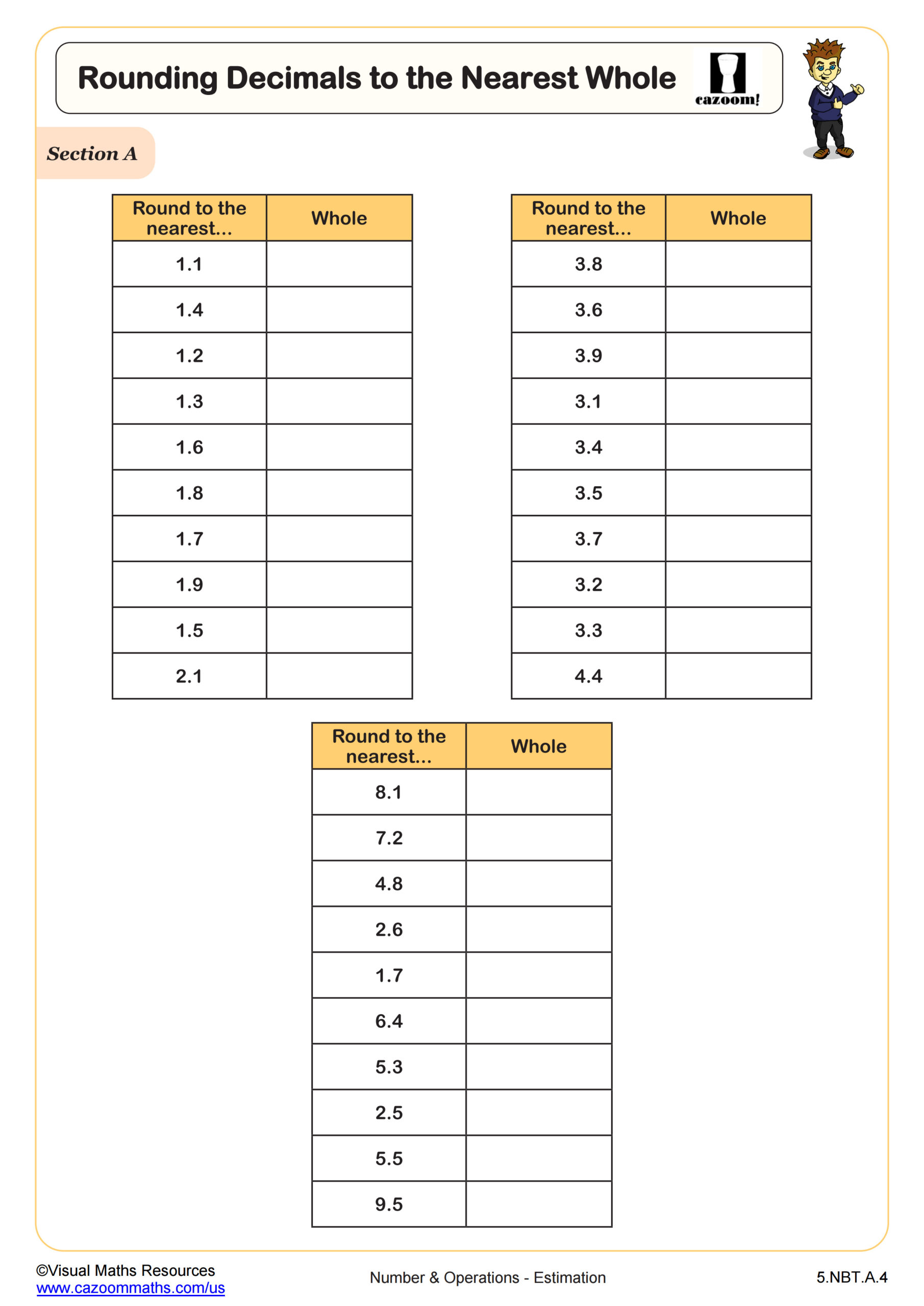
Rounding Decimals to the Nearest Whole
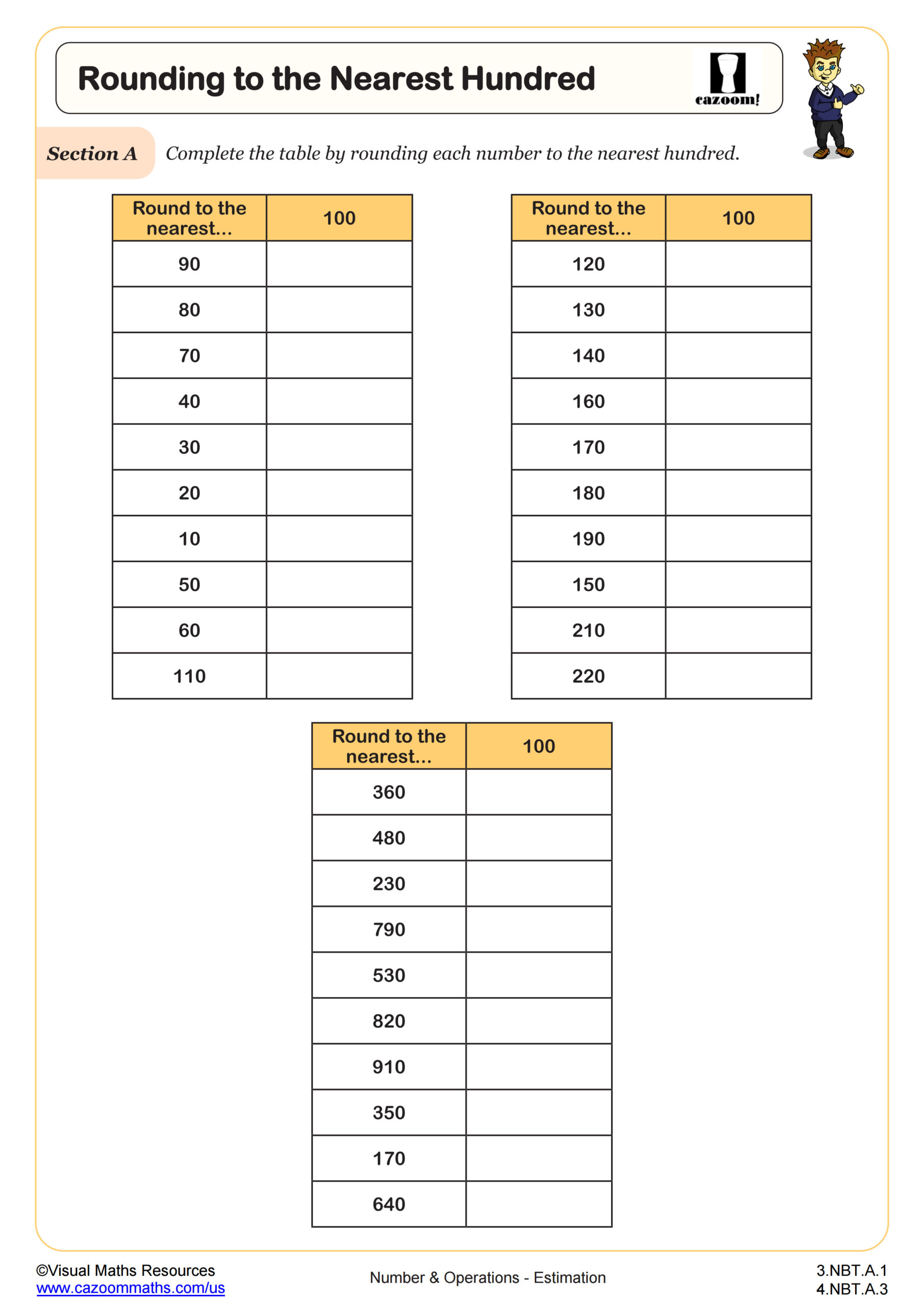
Rounding to the Nearest Hundred
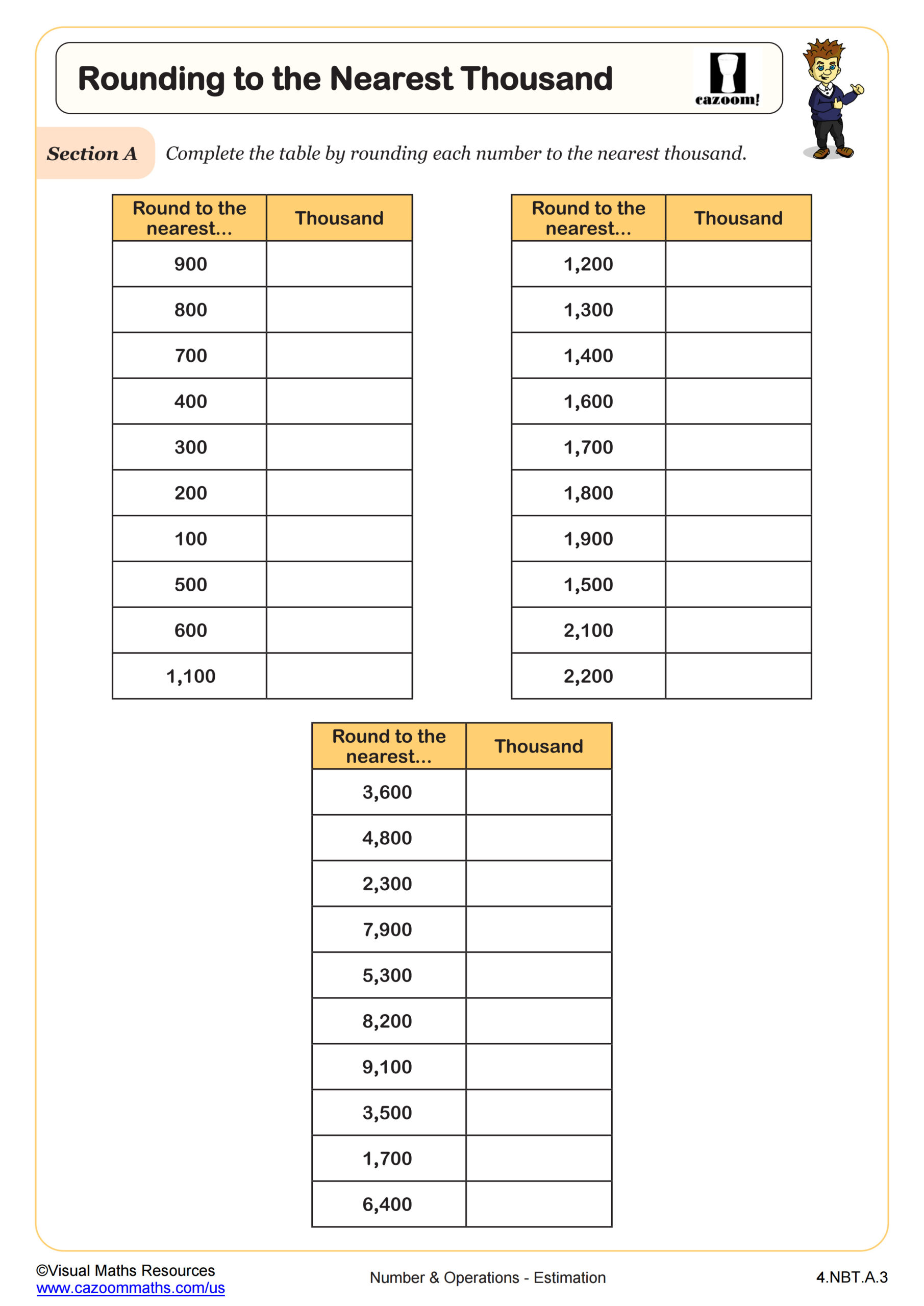
Rounding to the Nearest Thousand
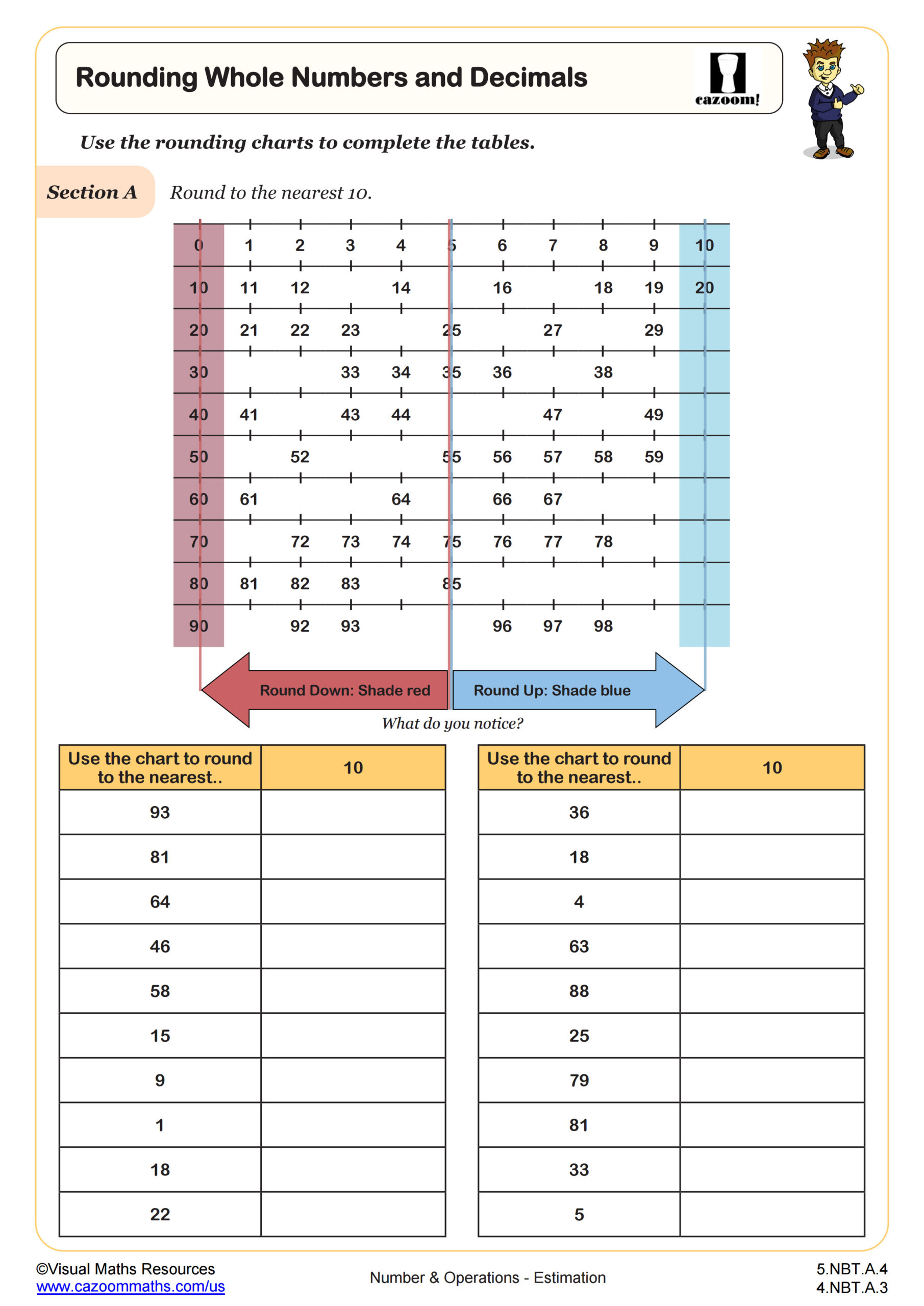
Rounding Whole Numbers and Decimals
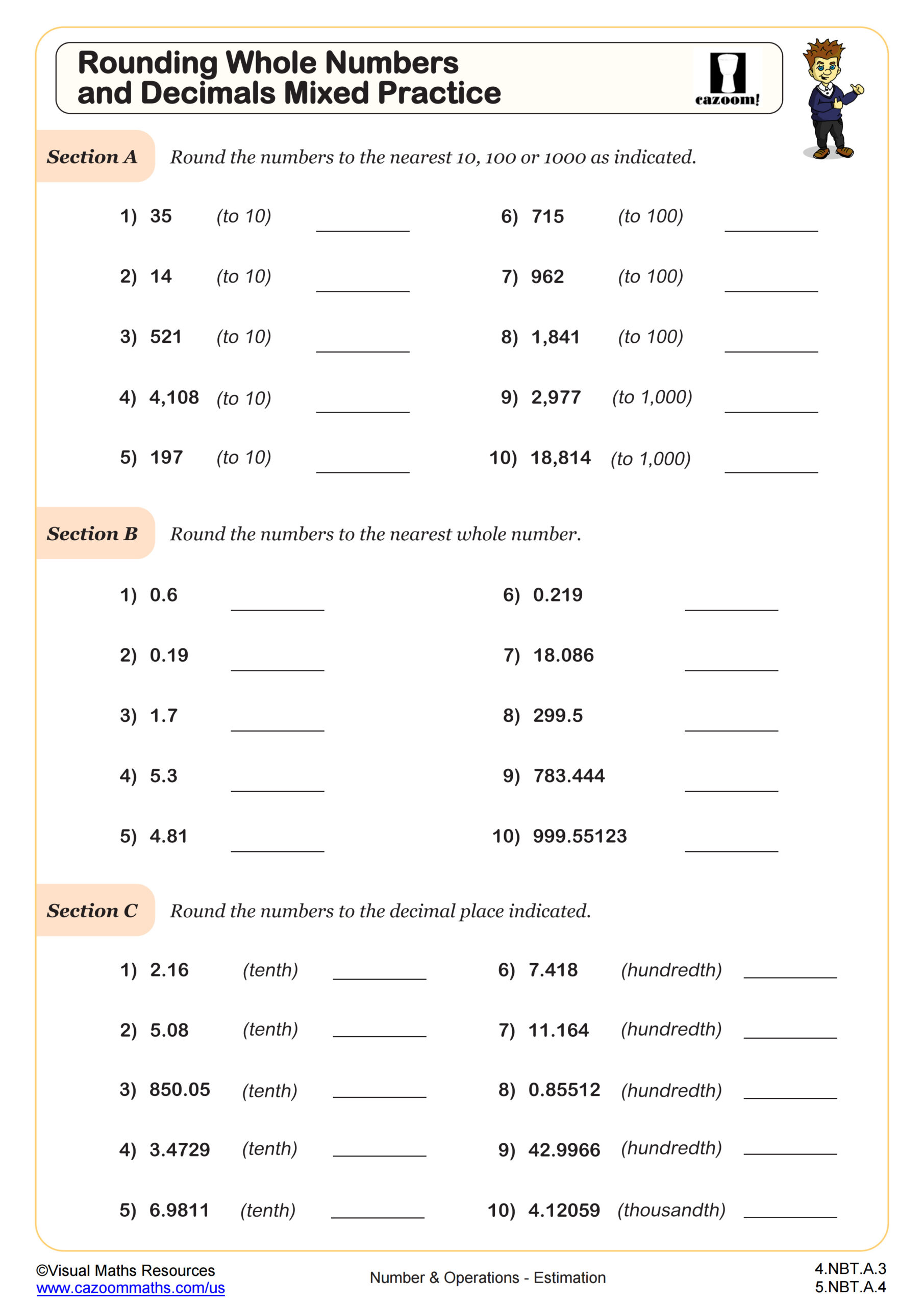
Rounding Whole Numbers and Decimals Mixed Practice
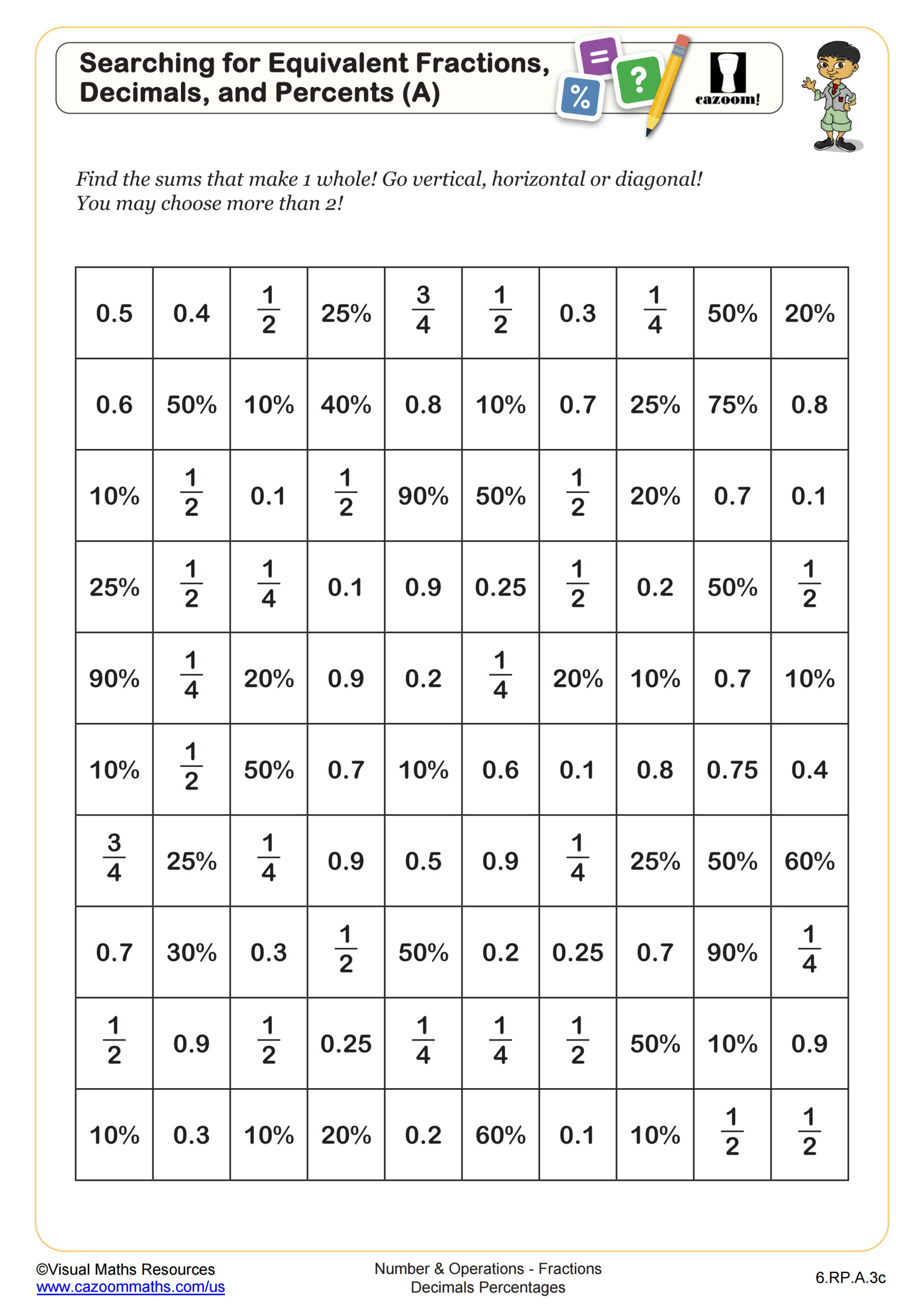
Searching for Equivalent Fractions, Decimals, and Percents (A)
Searching for Equivalent Fractions, Decimals, and Percents (B)
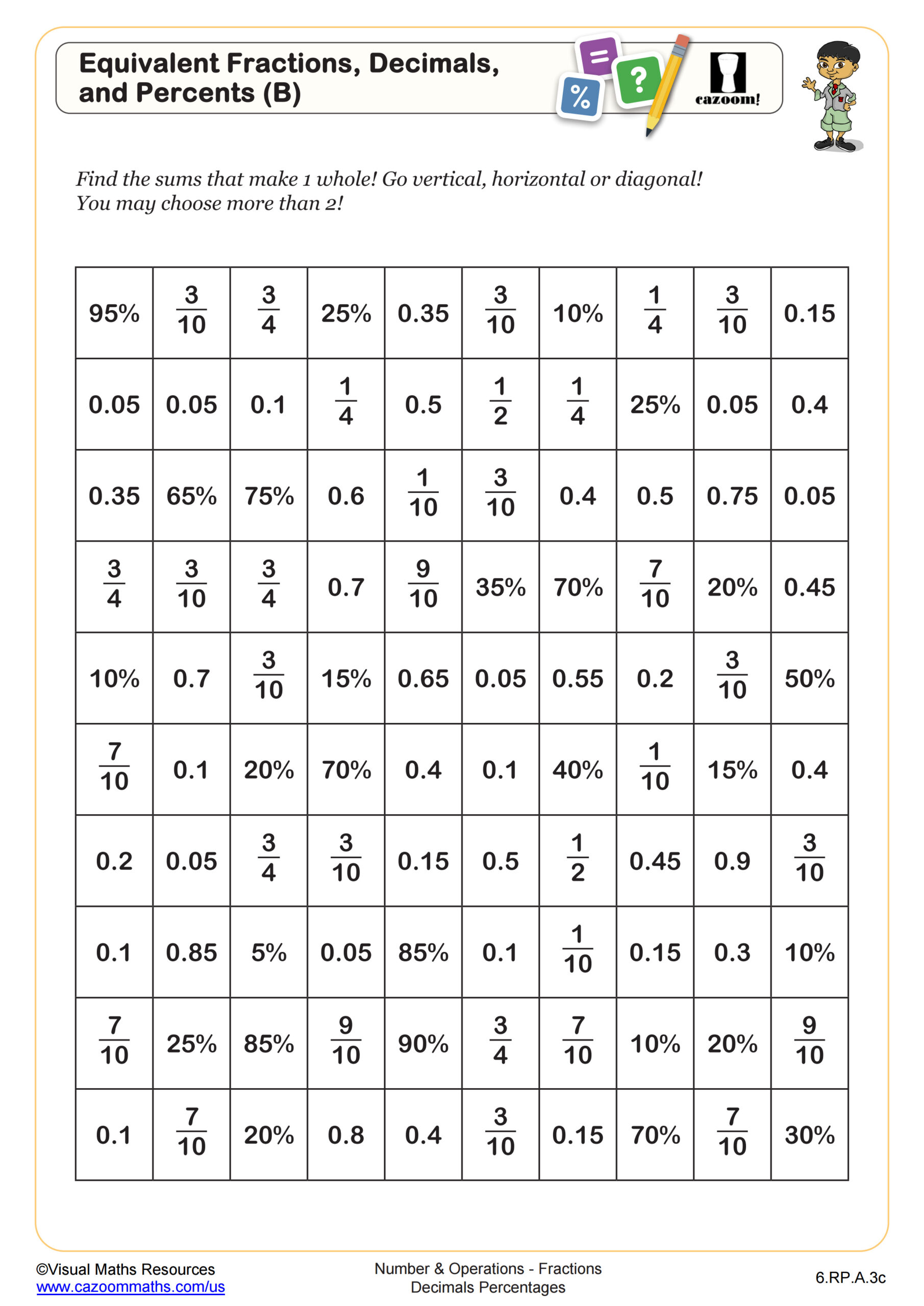
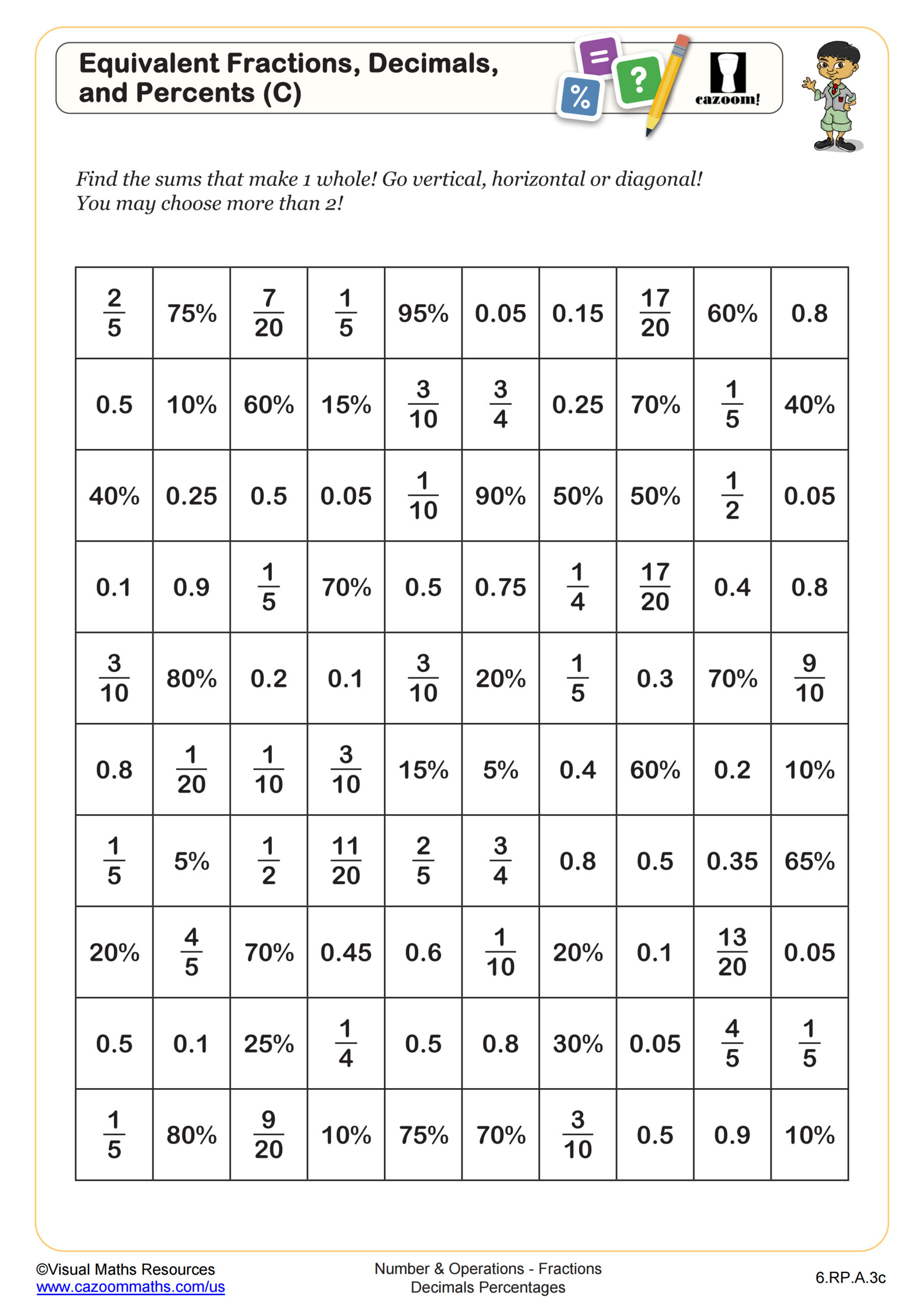
Searching for Equivalent Fractions, Decimals, and Percents (C)
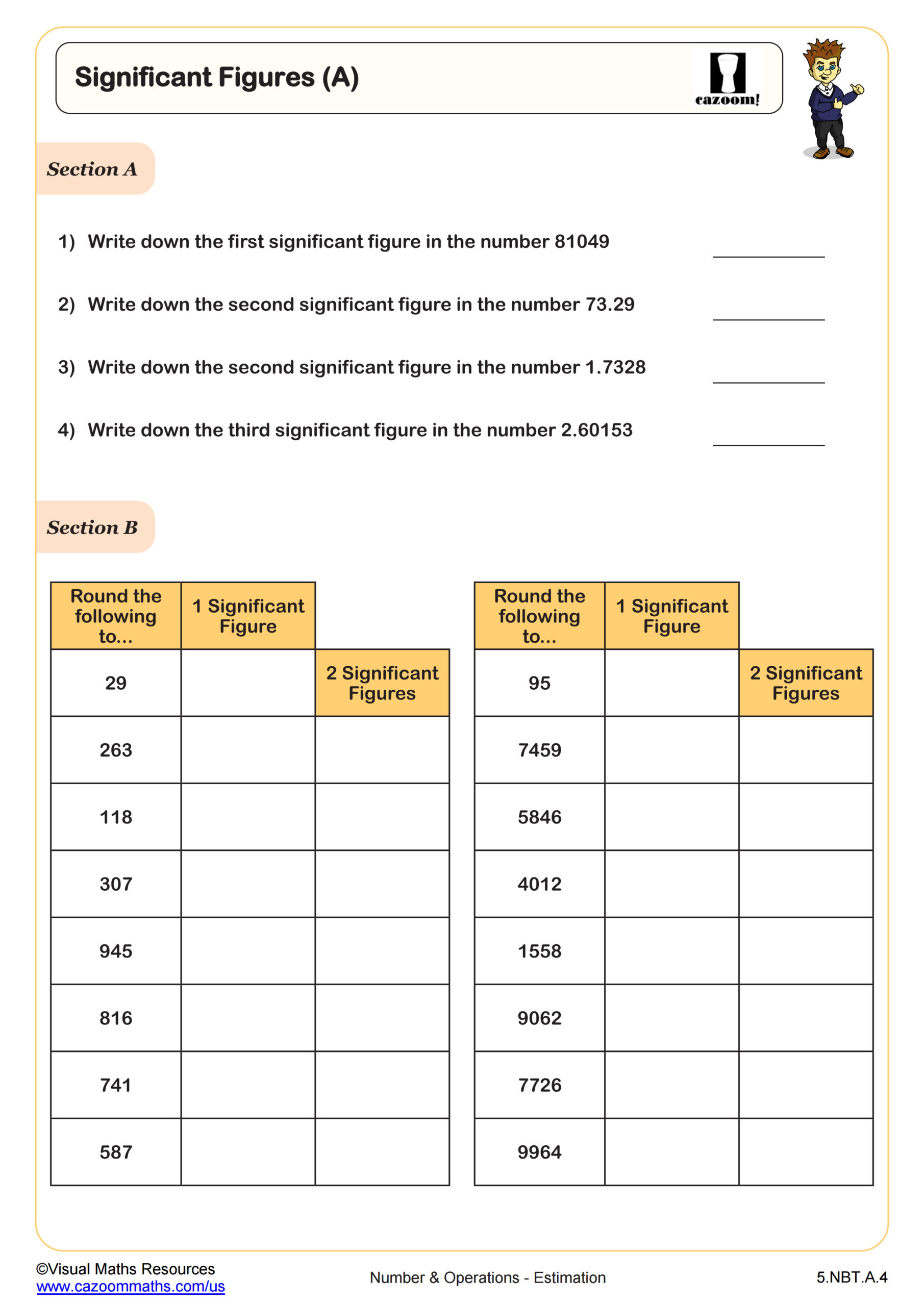
Significant Figures (A)
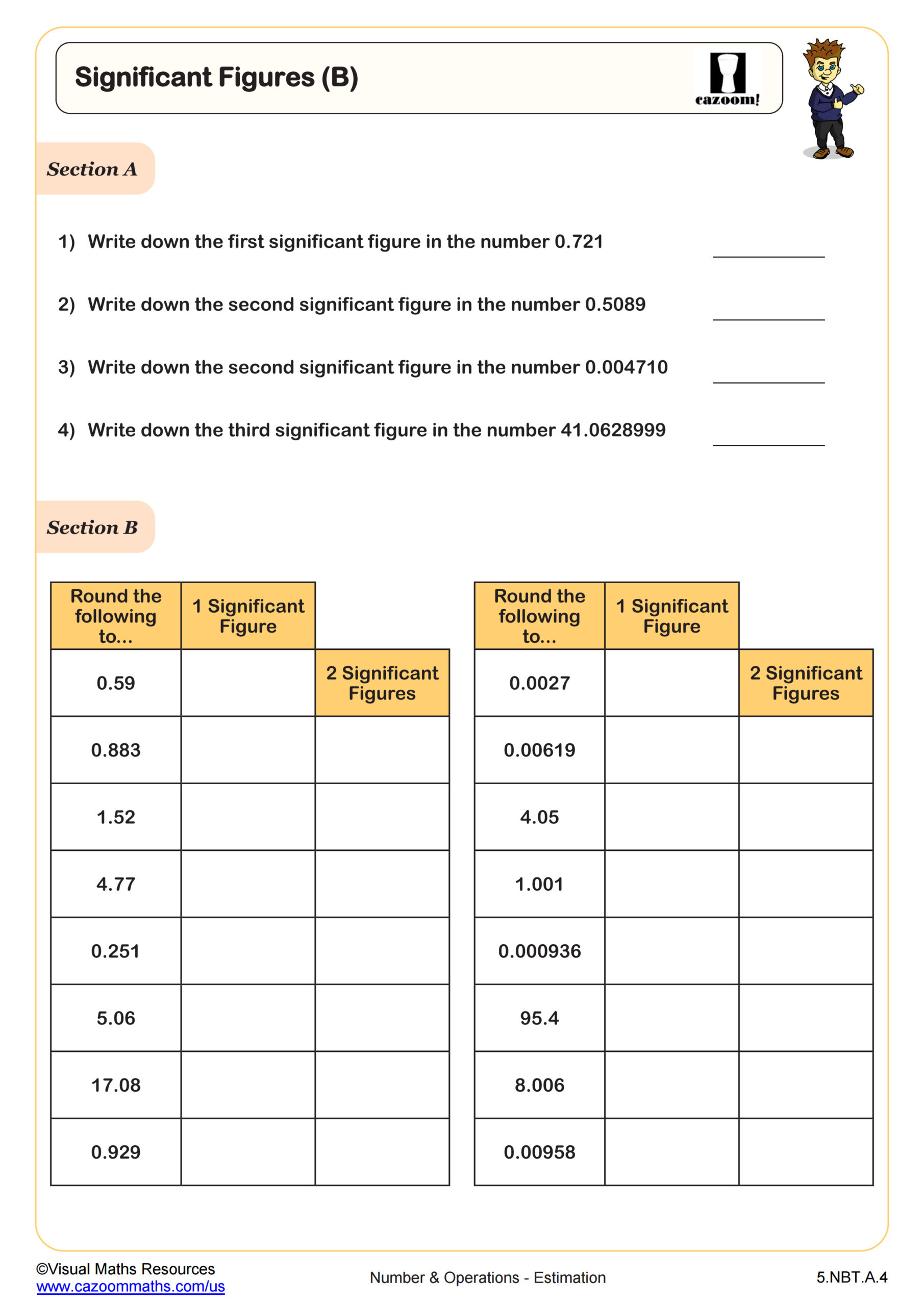
Significant Figures (B)
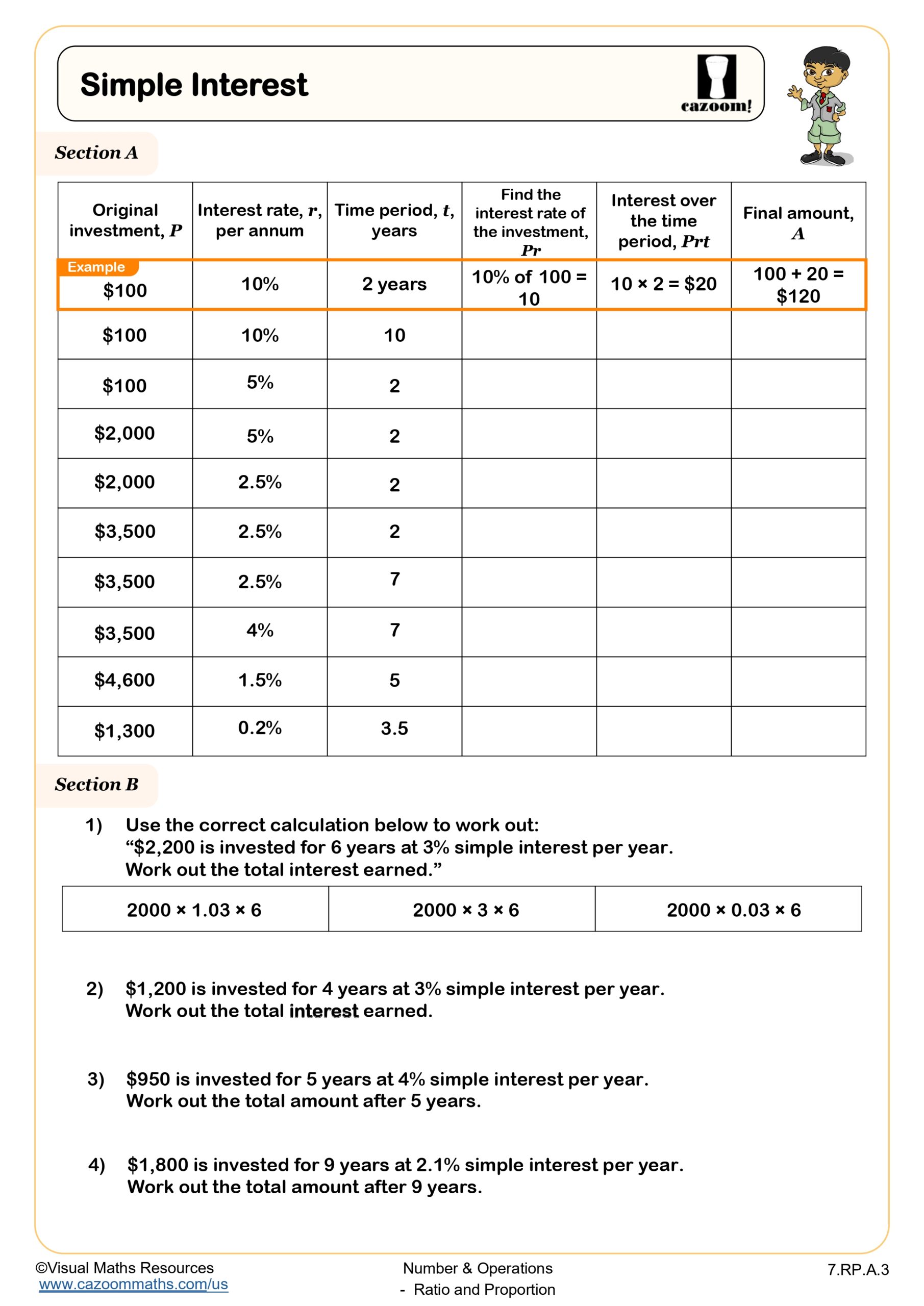
Simple Interest
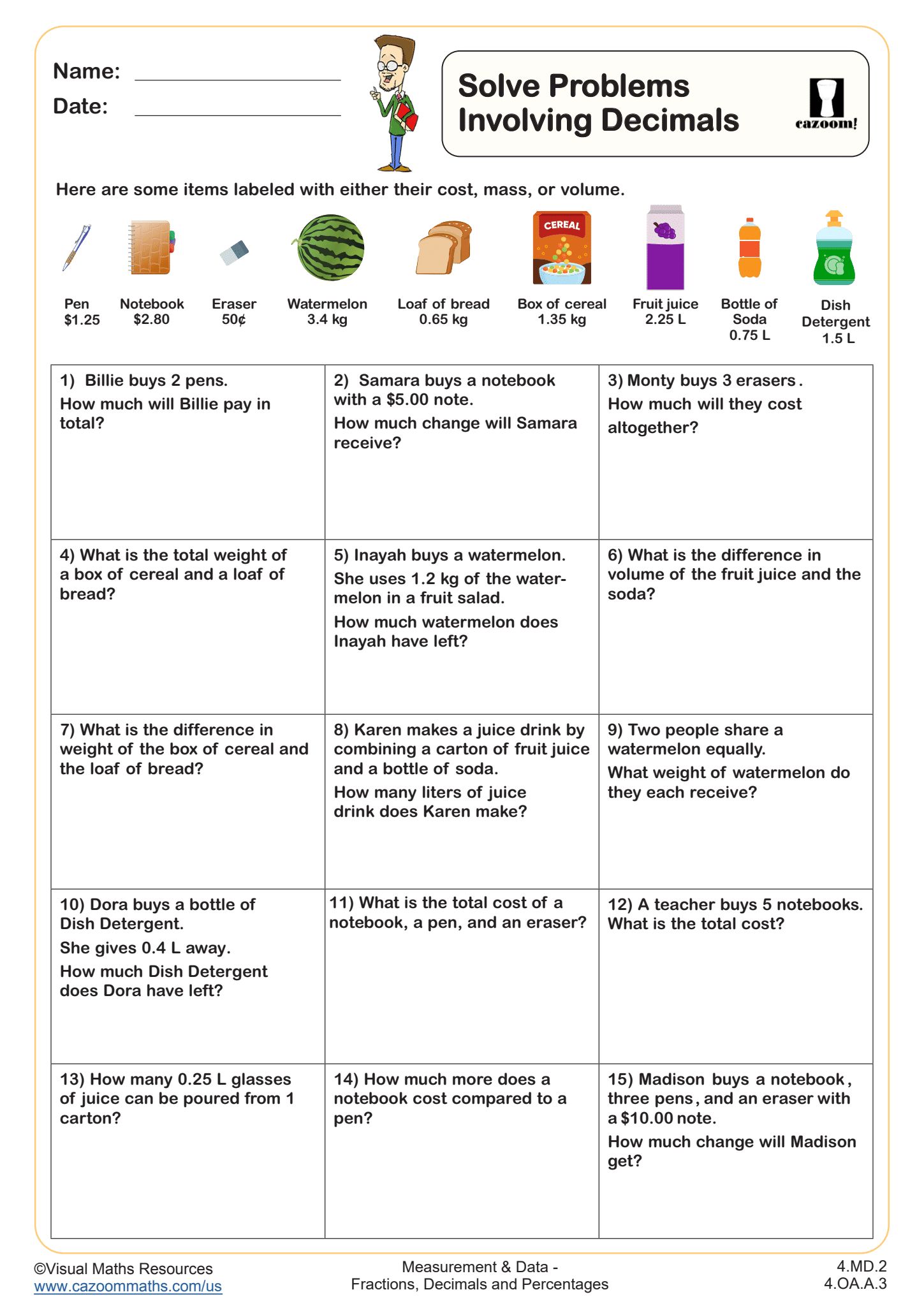
Solve Problems Involving Decimals
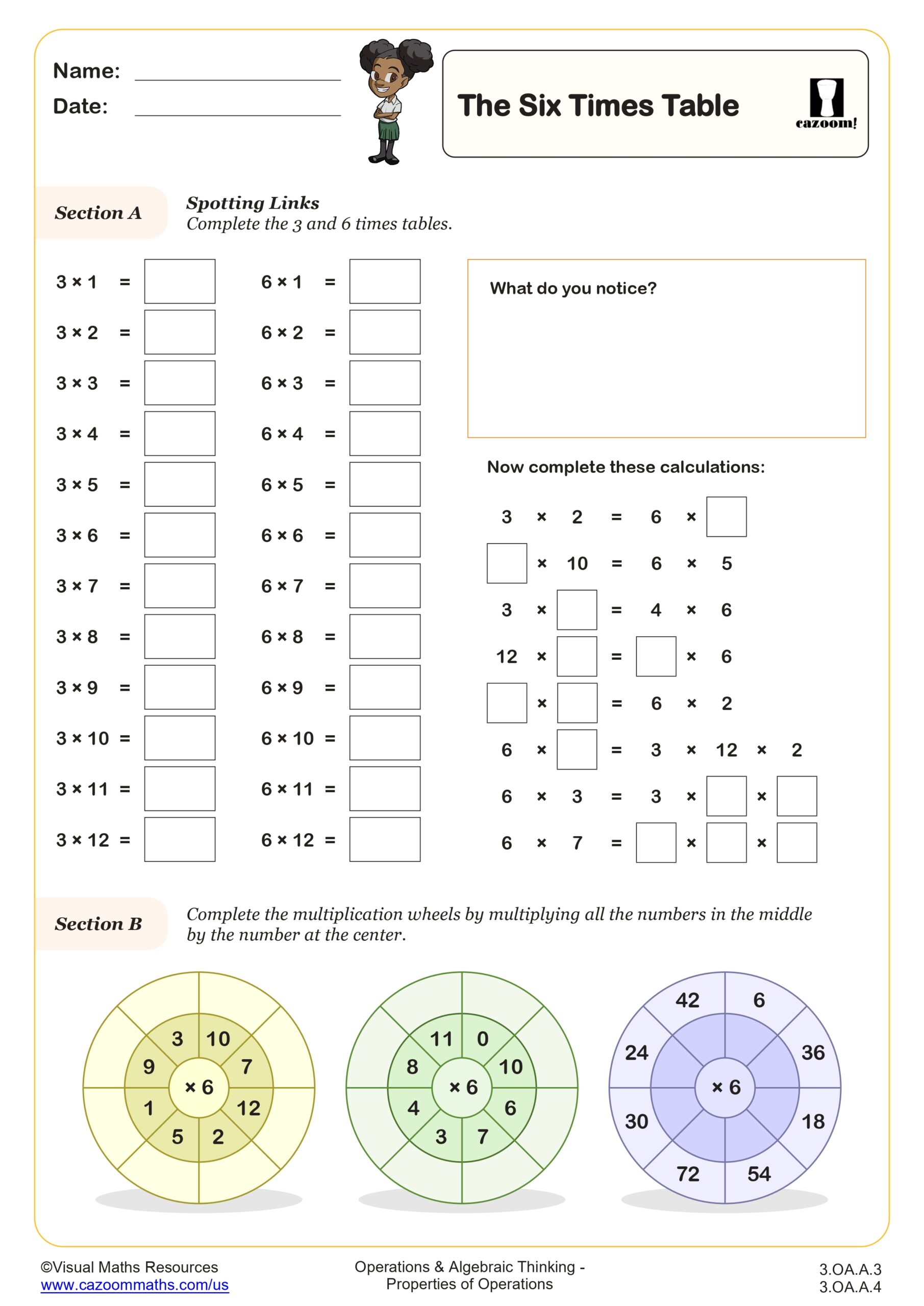
The Six Times Table
All worksheets are created by the team of experienced teachers at Cazoom Math.
Why Are Our Printable 1st Grade Number Resources Essential for Common Core Math?
Number sense develops through children's ability to link numbers to their written symbols and their understanding of the organization of the number system. These worksheets help students learn to count while teaching them about tens and ones through visual representations of numbers as groupings rather than individual units. Students develop their place-value reasoning and comparison abilities, as well as doubling fluency, through direct experience and consistent practice. The student develops mental calculation skills through this process, which replaces finger counting, builds their confidence and flexibility, and prepares them for future addition, subtraction, and problem-solving in higher grade levels.
Topics at a Glance: Place Value, Number Lines, and More
The worksheets use a concrete–pictorial–abstract method that helps students move from visual representations to symbolic mathematical concepts. The activities build confidence through systematic learning steps, including full answer keys to monitor student progress. Learners practice adding and subtracting tens, comparing and ordering numbers to 100 and 1000, and exploring number lines through skip counting. The combination of visual doubling activities with place-value exercises helps students build their reasoning and fluency skills, resulting in complete number understanding for all students at every learning level.
Why Parents and Teachers Trust These Elementary School Resources for Homework Help
Elementary educators need materials that work immediately without extensive preparation. The worksheets are designed to accommodate the various learning paces that students in the same classroom may have. Students have the ability to select their own degree of difficulty when they choose their learning activities. Clear formatting reduces visual overwhelm for beginning readers. The guides show students their complete mathematical reasoning process for solving problems, rather than just presenting the solutions. The worksheets contain quick assessment sections that are distributed across their entire length. The ready-to-print format provides teachers with an efficient system for managing their time effectively. The systematic approach helps parents who want to assist their children with their school assignments. The materials work well for both center rotation activities and intervention group work.
Practical Number and Operations Examples 1st Graders Meet Every Day
First graders encounter these number concepts constantly outside school. Mathematical thinking appears in their daily activities and play.
• Counting collections and toys
• Sharing snacks equally with friends
• Measuring growth on height charts
• Understanding calendar dates