2nd Grade Bar Charts and Line Graphs Worksheets
All worksheets are created by the team of experienced teachers at Cazoom Math.
What Are Bar Charts and Line Graphs for Second Grade?
Bar charts for second graders typically use single-unit scales where each block represents one item, making them easier to count than scaled graphs introduced in later grades. Students work with horizontal or vertical bars showing concrete data like favorite fruits, pets owned by classmates, or weather patterns over a week. Line graphs at this level are usually simple line plots (also called dot plots) rather than the continuous line graphs used for change over time in upper grades.
A common error occurs when students count the grid lines instead of the spaces between them on bar charts, leading to off-by-one mistakes. Teachers often scaffold this by having students color in each box while counting aloud, reinforcing that the filled rectangles represent the data values. Second graders should also practice creating their own simple bar charts from tally marks or picture graphs, connecting different representations of the same data set.
What Should 2nd Graders Know About Bar Charts and Line Graphs?
According to Common Core State Standards (2.MD.D.10), second grade students should draw picture graphs and bar graphs with single-unit scales to represent data sets with up to four categories. They must also solve simple addition and subtraction problems using information from these graphs, such as "How many more students chose apples than bananas?" Students at this level should identify the parts of a graph including the title, labels, and scale, though the scales remain simple at one-to-one correspondence.
This work builds directly on first grade picture graphs where students organized data into three categories. By mastering bar charts in second grade, students prepare for the scaled bar graphs and measurement data they'll encounter in third grade, where one square might represent five or ten units. The jump from counting individual blocks to interpreting scaled graphs proves challenging for many students, making solid second grade foundation work particularly important for future success with data interpretation.
How Do Block Diagrams Help Students Understand Data?
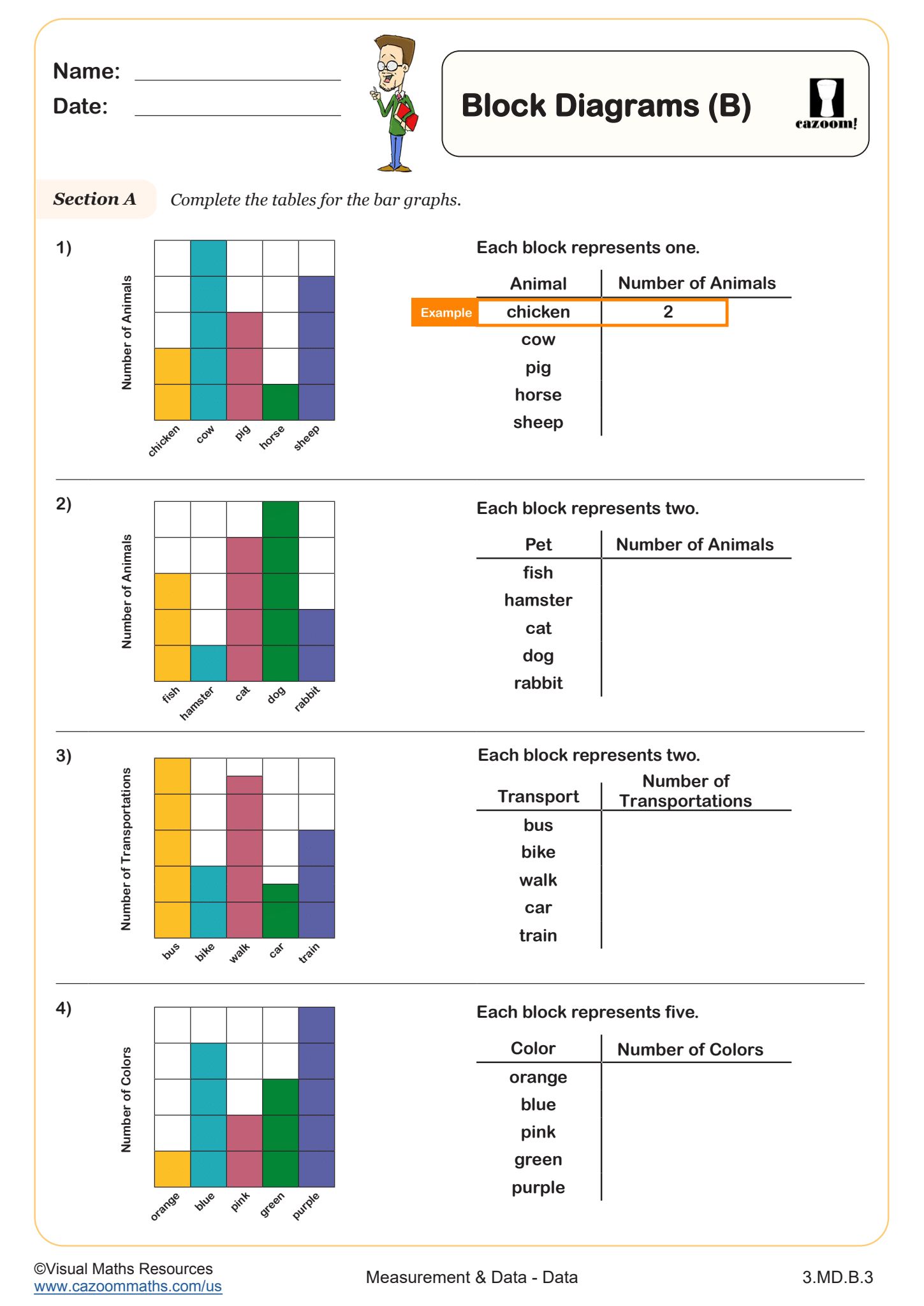
Block diagrams, also called bar models or tape diagrams in some curricula, use rectangular blocks to represent quantities in a visual format. For data representation, each block corresponds to one item in a category, creating a concrete visual students can count. This method bridges the gap between physical manipulatives (like connecting cubes) and abstract bar charts, giving second graders a transitional tool as they move from hands-on counting to reading symbolic graphs.
Block diagrams connect to real-world applications students encounter daily, from classroom jobs charts showing how many students have each role to tracking books read during a reading challenge. In STEM contexts, scientists and engineers use bar charts to compare experimental results, weather data, or survey responses. Even simple classroom graphs about favorite lunch choices mirror how restaurants track popular menu items or how school cafeterias plan food quantities based on student preferences, showing young learners that math connects directly to decision-making in their world.
How Can Teachers Use These Worksheets in the Classroom?
These worksheets provide structured practice after introducing bar charts and line graphs through hands-on activities with manipulatives or whole-class data collection. The block diagram format offers clear visual support, helping students who struggle with abstract number concepts see the data relationships. Answer keys allow teachers to quickly check student understanding and identify who needs reteaching on concepts like reading scales or comparing quantities between categories.
Many teachers use these worksheets during math centers or stations, pairing students to discuss their answers and explain their reasoning to each other. They work well as quick formative assessments before moving to more complex scaled graphs, or as homework that families can support without needing advanced math knowledge. Teachers also find them valuable for intervention groups, where students benefit from additional practice interpreting visual data before standardized assessments that include graph-reading questions in the measurement and data domain.