2nd Grade Factors and Multiples Worksheets
All worksheets are created by the team of experienced teachers at Cazoom Math.
What Are Factors and Multiples in 2nd Grade Math?
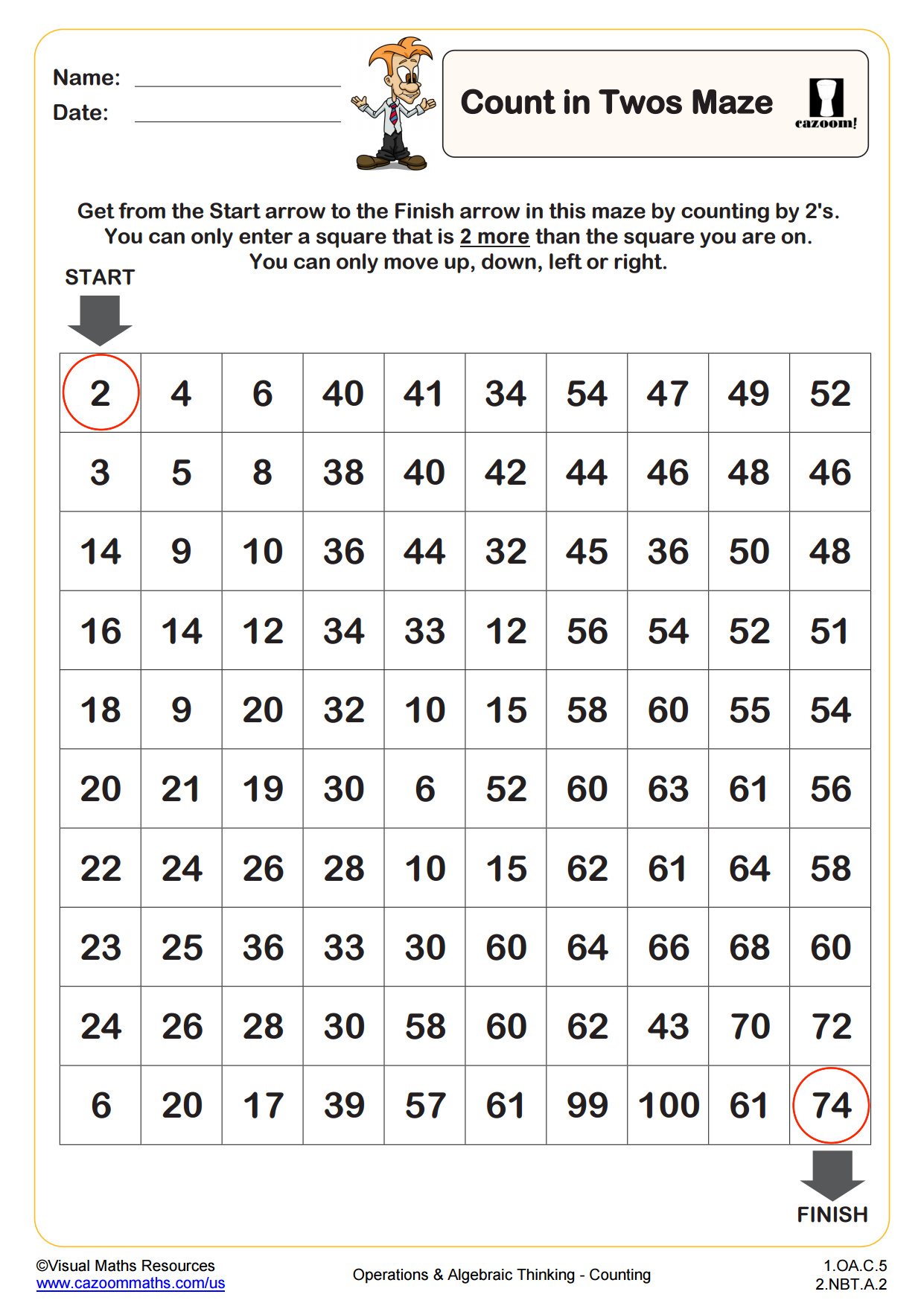
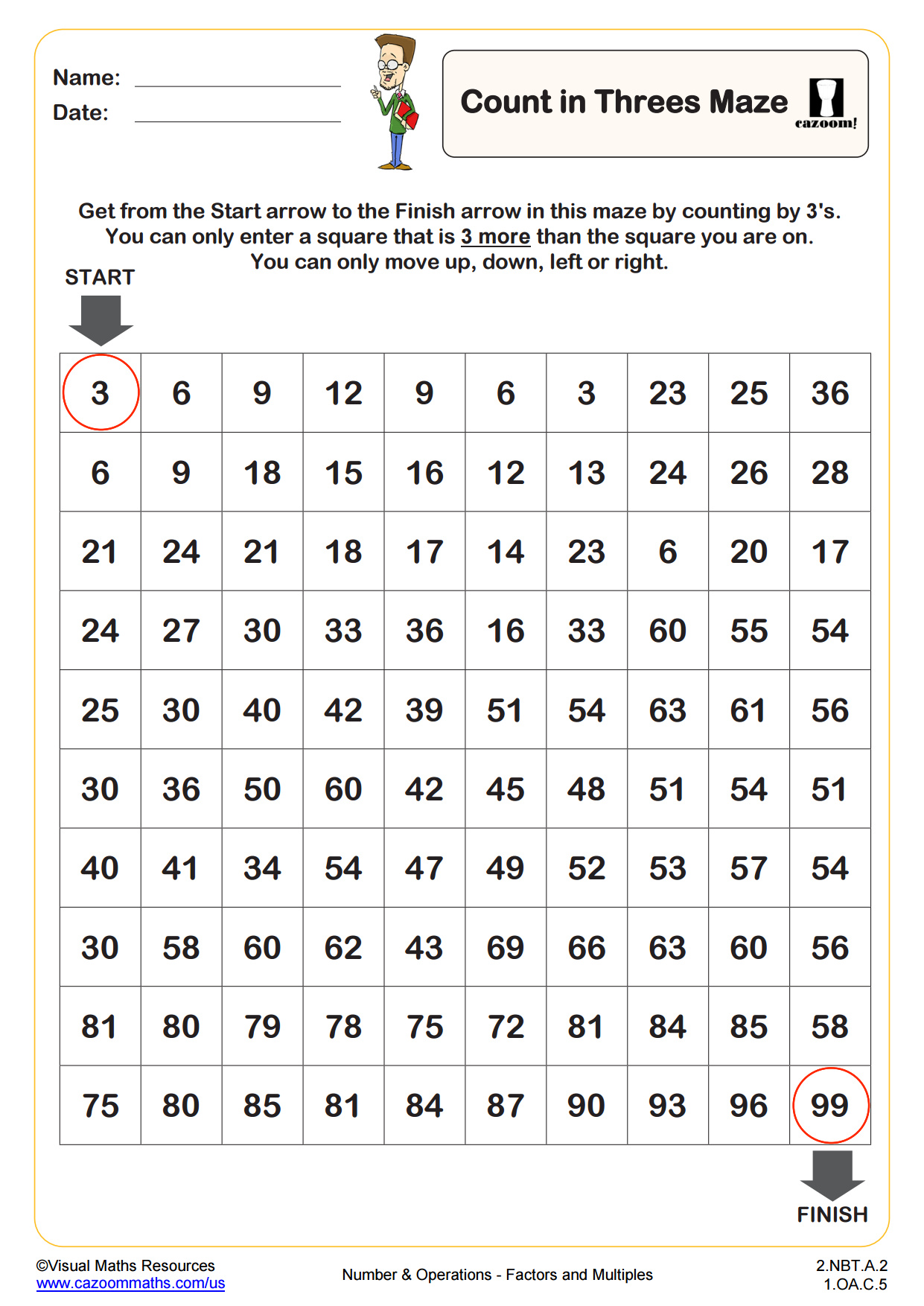
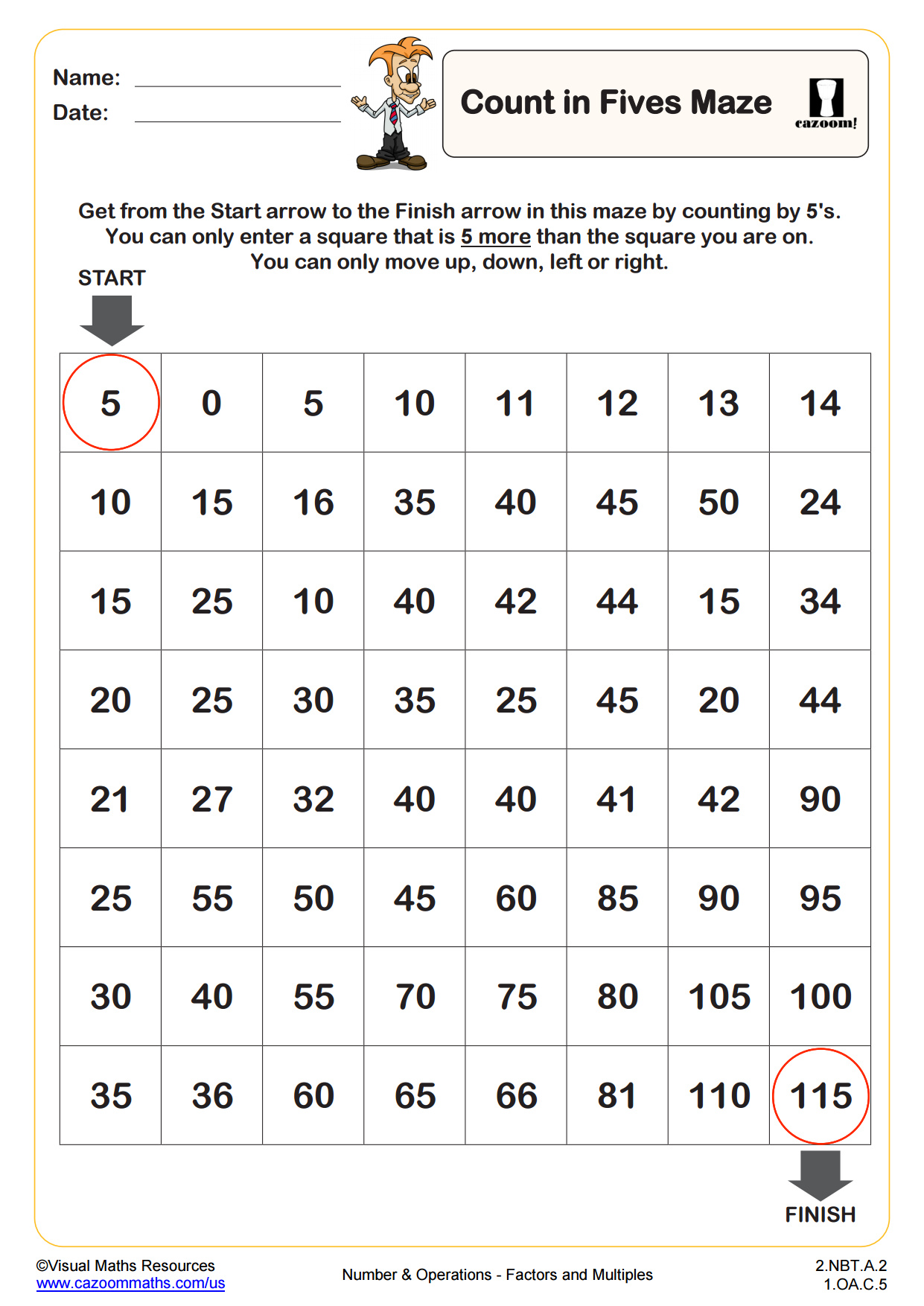
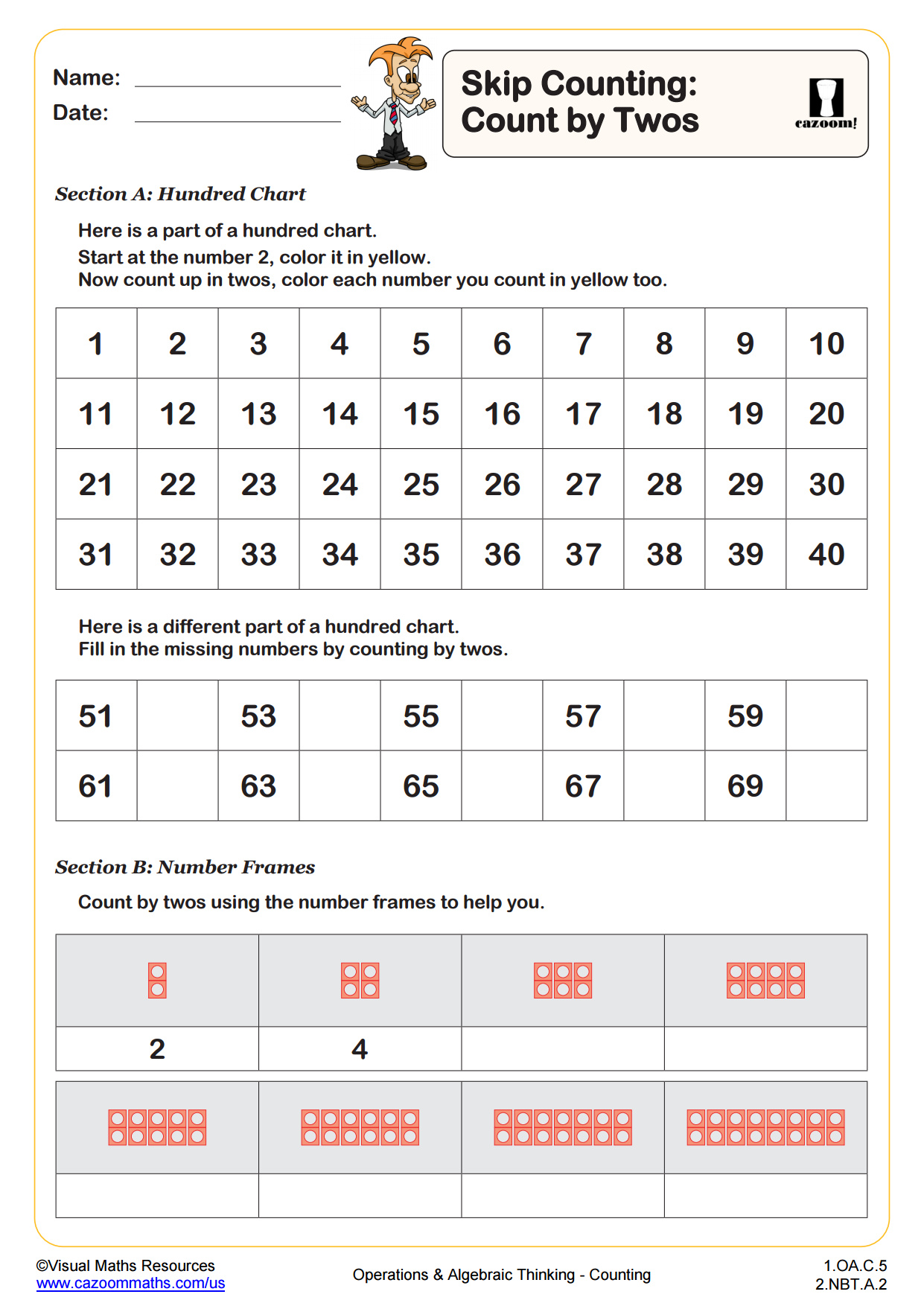
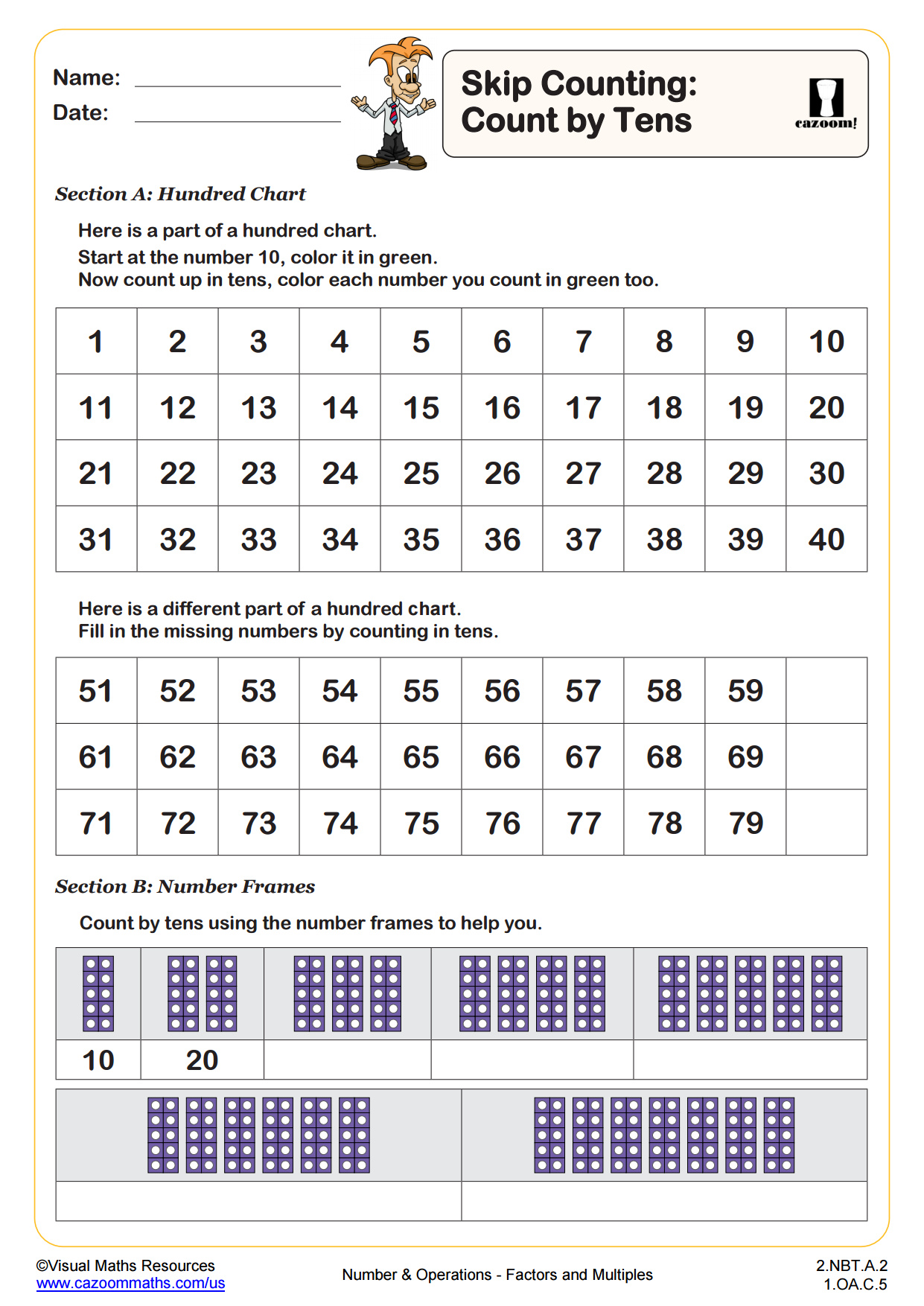
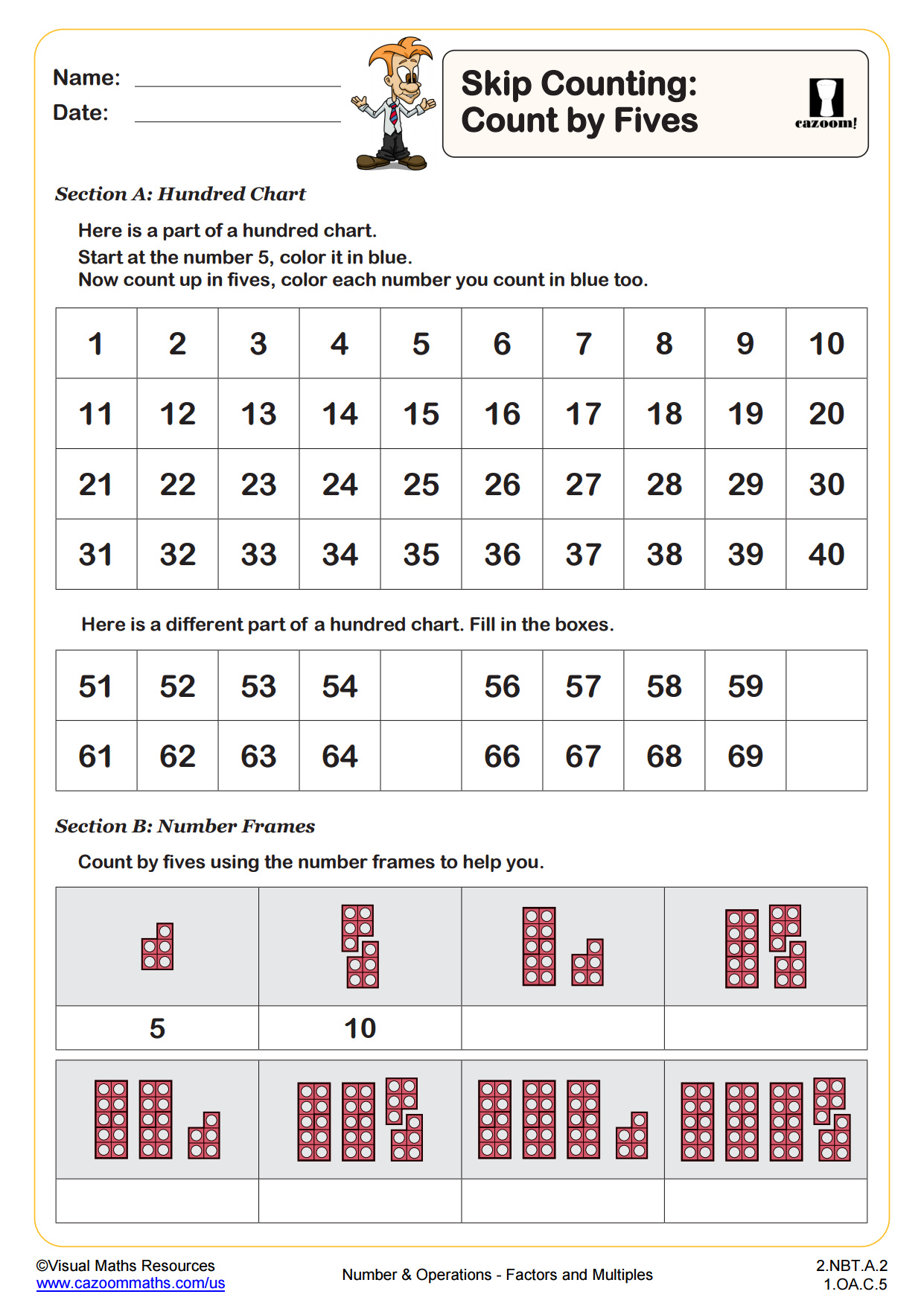
At the 2nd grade level, factors and multiples appear as skip counting activities rather than formal factorization. Students learn to count by 2s (2, 4, 6, 8), 5s (5, 10, 15, 20), 10s (10, 20, 30, 40), and 3s (3, 6, 9, 12), which builds the conceptual foundation for understanding multiples. These counting sequences align with Common Core State Standard 2.NBT.A.2, which requires students to count within 1000 and skip count by 5s, 10s, and 100s.
Many students initially struggle to maintain the skip counting pattern when numbers cross decade boundaries, such as continuing from 28 to 30 when counting by 2s. Teachers frequently use hundred charts as visual supports, where students color or circle the skip counting patterns to see how multiples create predictable arrangements. This visualization helps students internalize the rhythm of each counting sequence before moving to abstract multiplication in third grade.
What Should 2nd Graders Know About Skip Counting?
By the end of 2nd grade, students should confidently skip count by 2s, 5s, and 10s within 100, and many can extend these patterns beyond 100. They should recognize that skip counting creates patterns where certain numbers repeat in the ones place (like 0 when counting by 10s, or alternating between 0 and 5 when counting by 5s). Students at this level focus on fluency and accuracy with these sequences rather than understanding the multiplicative reasoning behind them.
This work builds directly on 1st grade counting by 1s and 10s within 120. The skip counting mastered in 2nd grade becomes the foundation for multiplication facts in 3rd grade, where students interpret 4 × 5 as four groups of five or four jumps of five on a number line. Teachers notice that students who achieve automaticity with skip counting sequences develop stronger fact fluency later because they have multiple strategies for finding products.
How Does Skip Counting Connect to Real-World Math?
Skip counting mirrors how we naturally group and count objects in daily life. Counting by 2s appears when pairing socks, counting shoes, or organizing items into pairs. Counting by 5s connects to telling time (five-minute intervals on a clock) and counting money (nickels are worth 5 cents each). Counting by 10s relates to our base-ten number system, dimes in money calculations, and how we organize numbers on hundred charts and number lines.
These patterns also appear in STEM contexts that young students encounter. Scientists count butterfly wings by 2s, gardeners plant seeds in rows using skip counting, and engineers use repeated patterns when designing structures. Students who recognize skip counting patterns develop stronger computational estimation skills, which help them quickly assess whether answers are reasonable. This real-world connection motivates students to see skip counting as a practical tool rather than just a classroom exercise.
How Can Teachers Use These Worksheets Effectively?
These worksheets provide structured practice with visual engagement through maze activities that require students to apply skip counting to navigate a path. The varied formats prevent students from memorizing rote sequences without understanding the underlying pattern. Teachers can differentiate by starting all students with counting by 10s and 2s, then introducing 5s and 3s as students demonstrate readiness, since counting by 3s typically requires more cognitive effort for second graders.
Many teachers use these worksheets during math centers or stations, pairing students so they can check each other's work using the answer keys. The mazes work particularly well as fast finisher activities or morning work that reviews previously taught content. Some teachers assign specific skip counting worksheets as homework to reinforce classroom instruction, while others use them for intervention with small groups who need additional practice bridging number sequences across decades. The answer keys allow teaching assistants or parent volunteers to support practice sessions without extensive preparation.