2nd Grade Geometry Worksheets
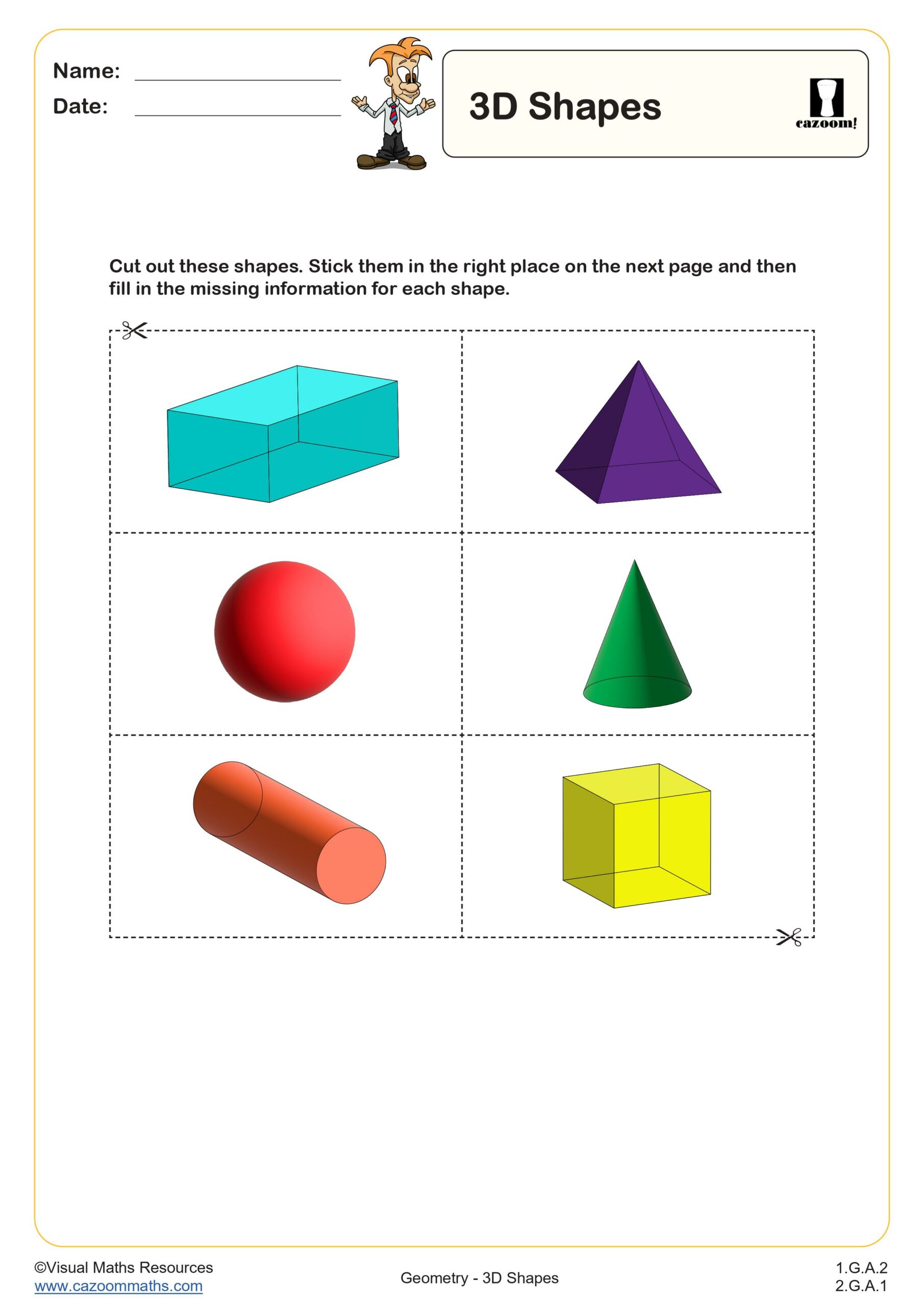
3D Shapes
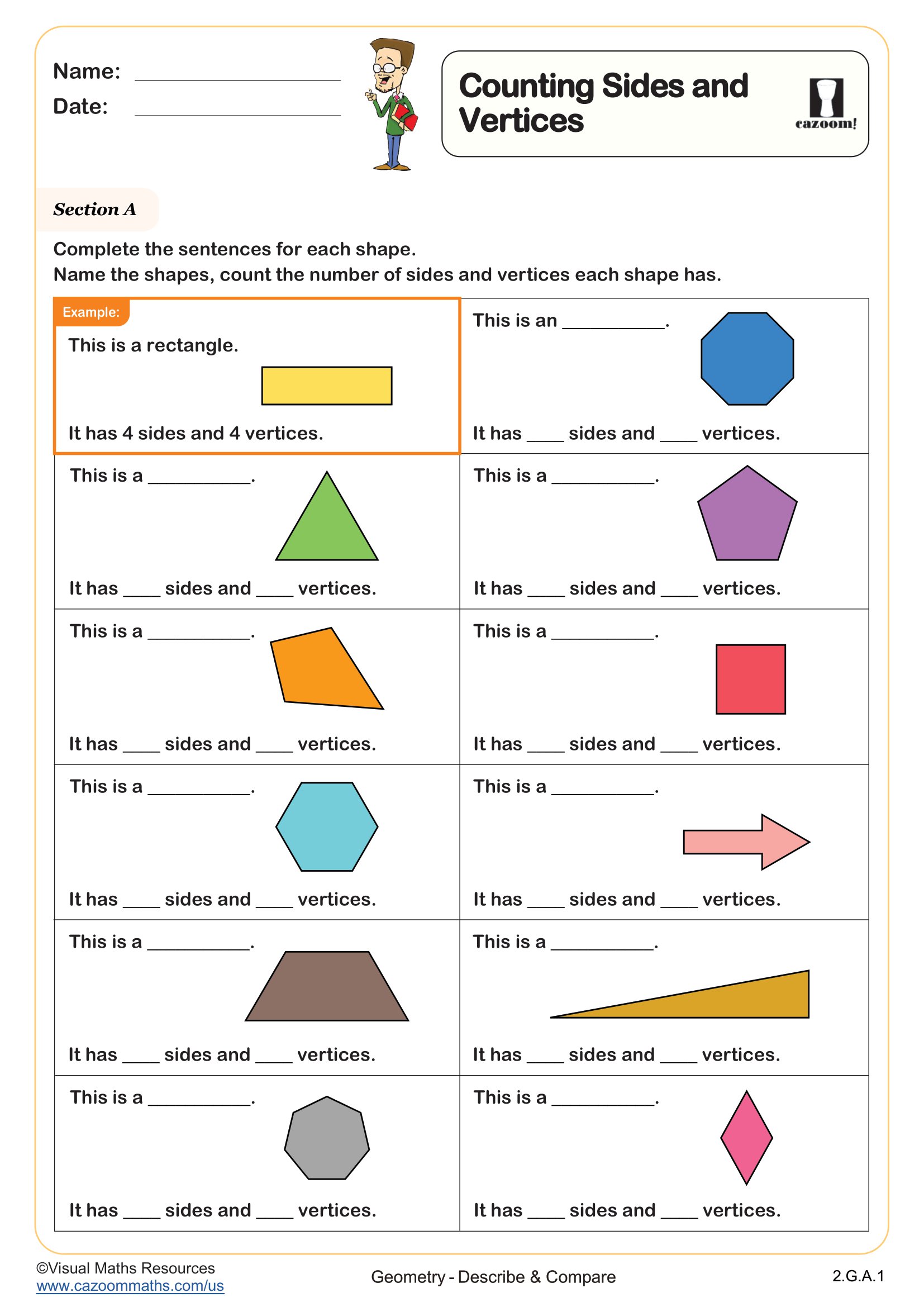
Counting Sides and Vertices
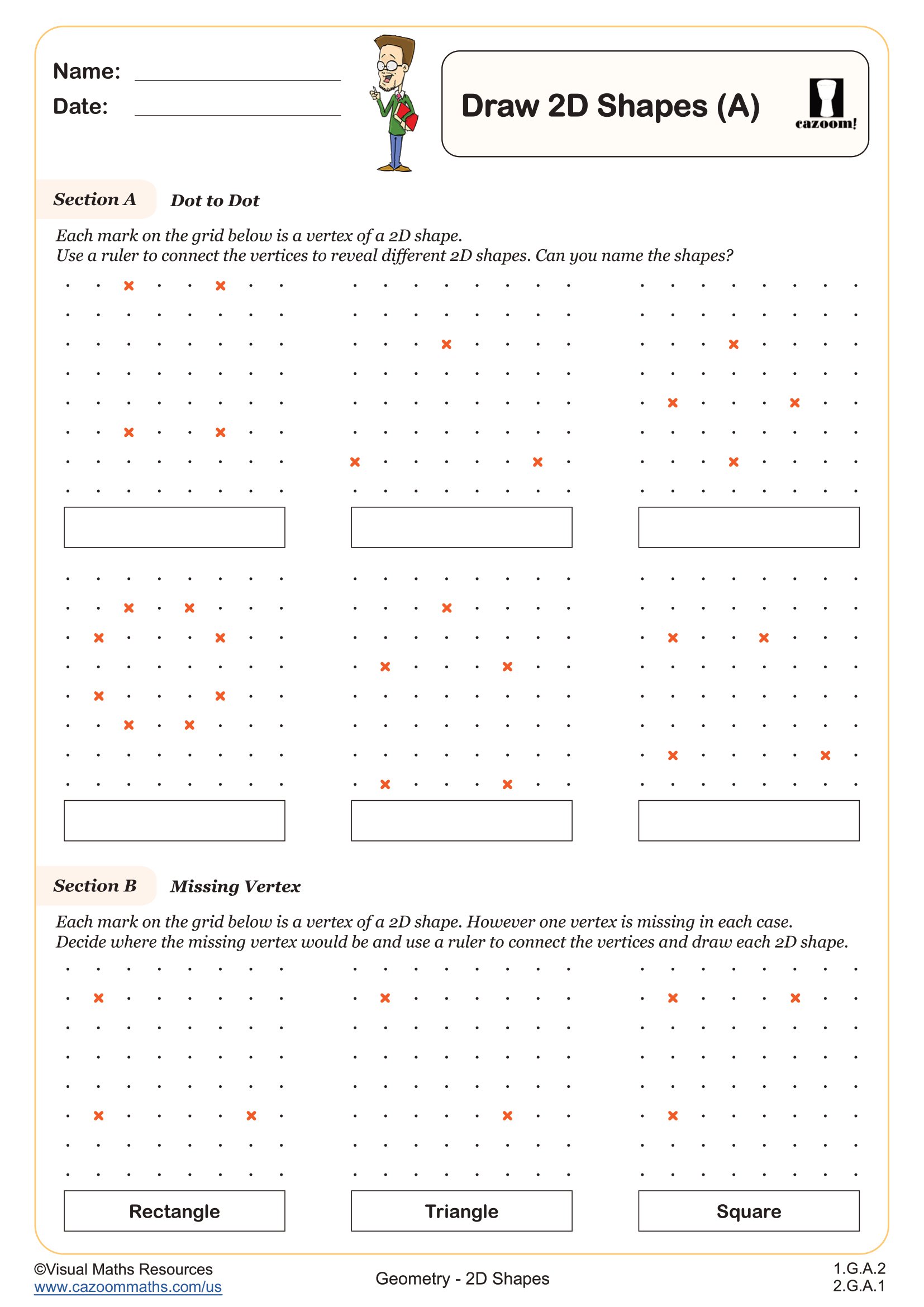
Draw 2D Shapes (A)
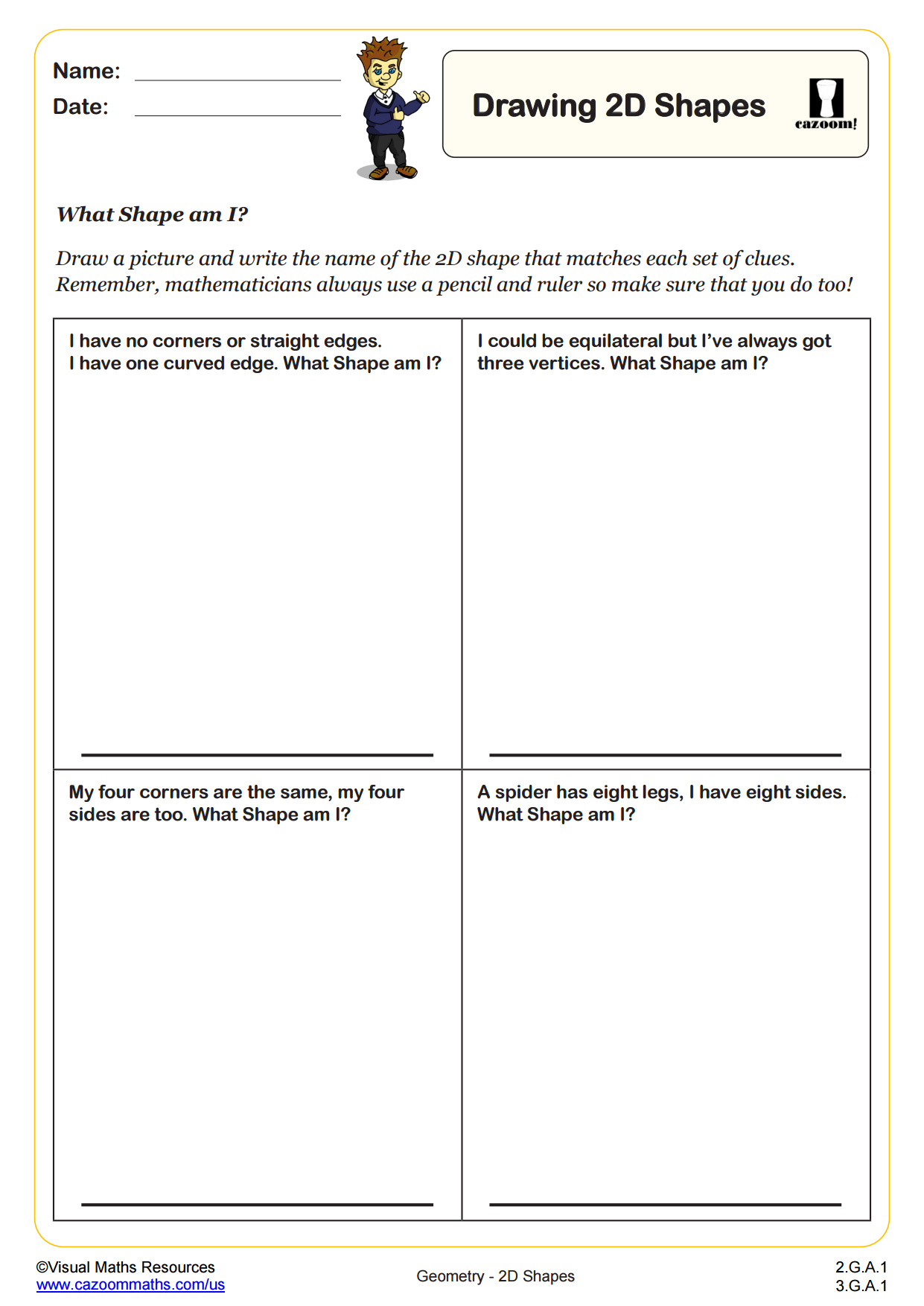
Drawing 2D Shapes
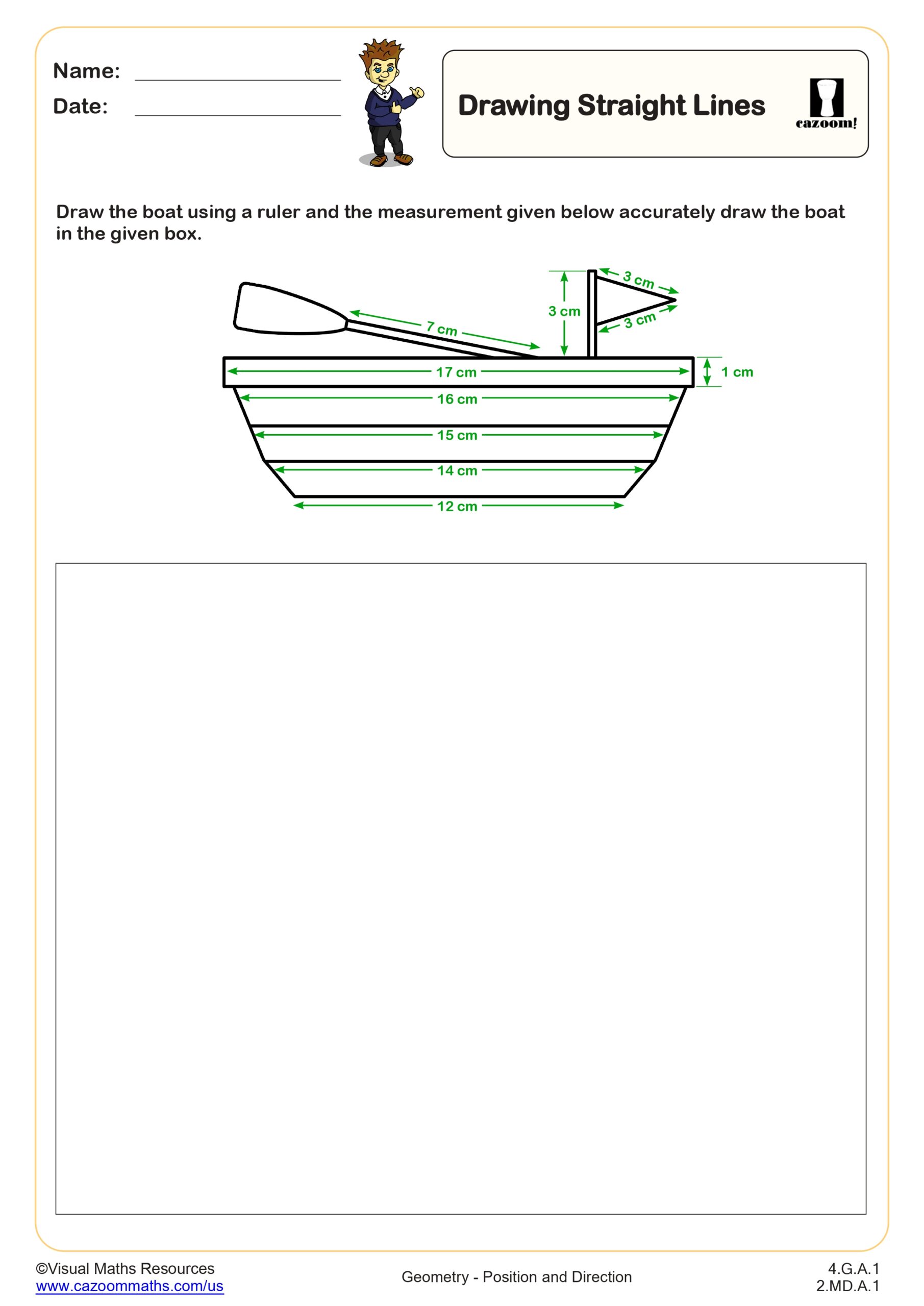
Drawing Straight Lines
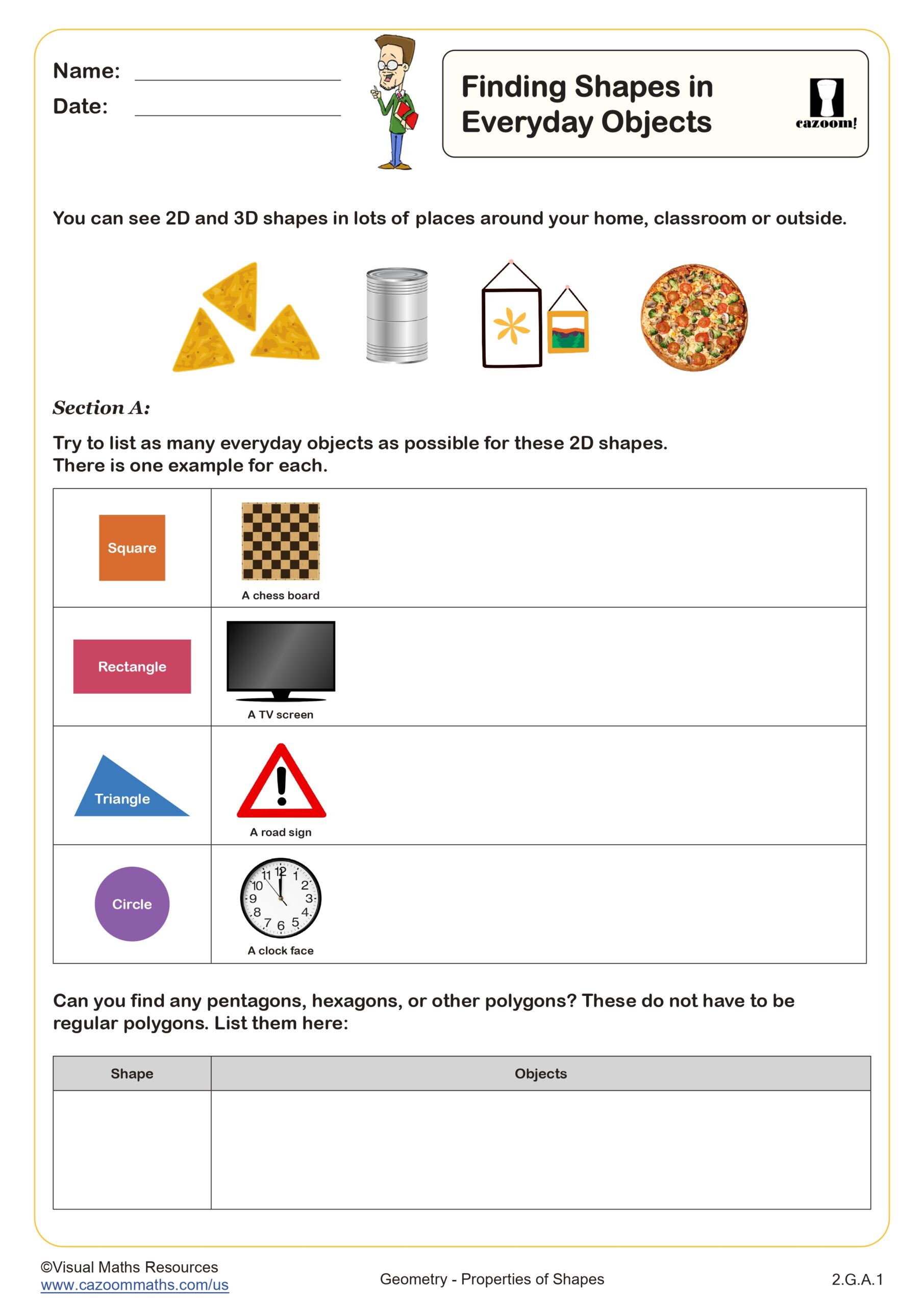
Finding Shapes In Everyday Objects
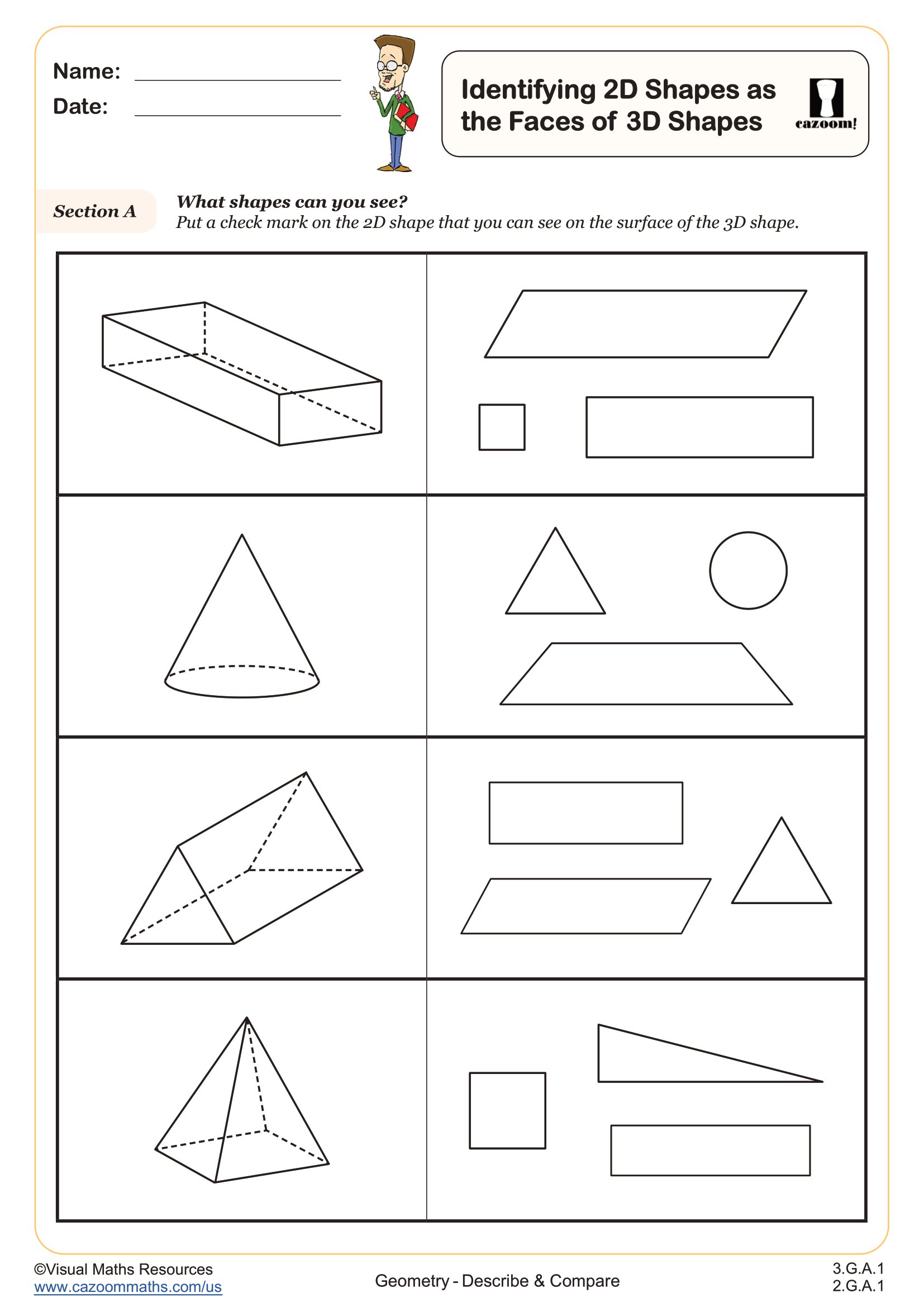
Identifying 2D Shapes as the Faces of 3D Shapes
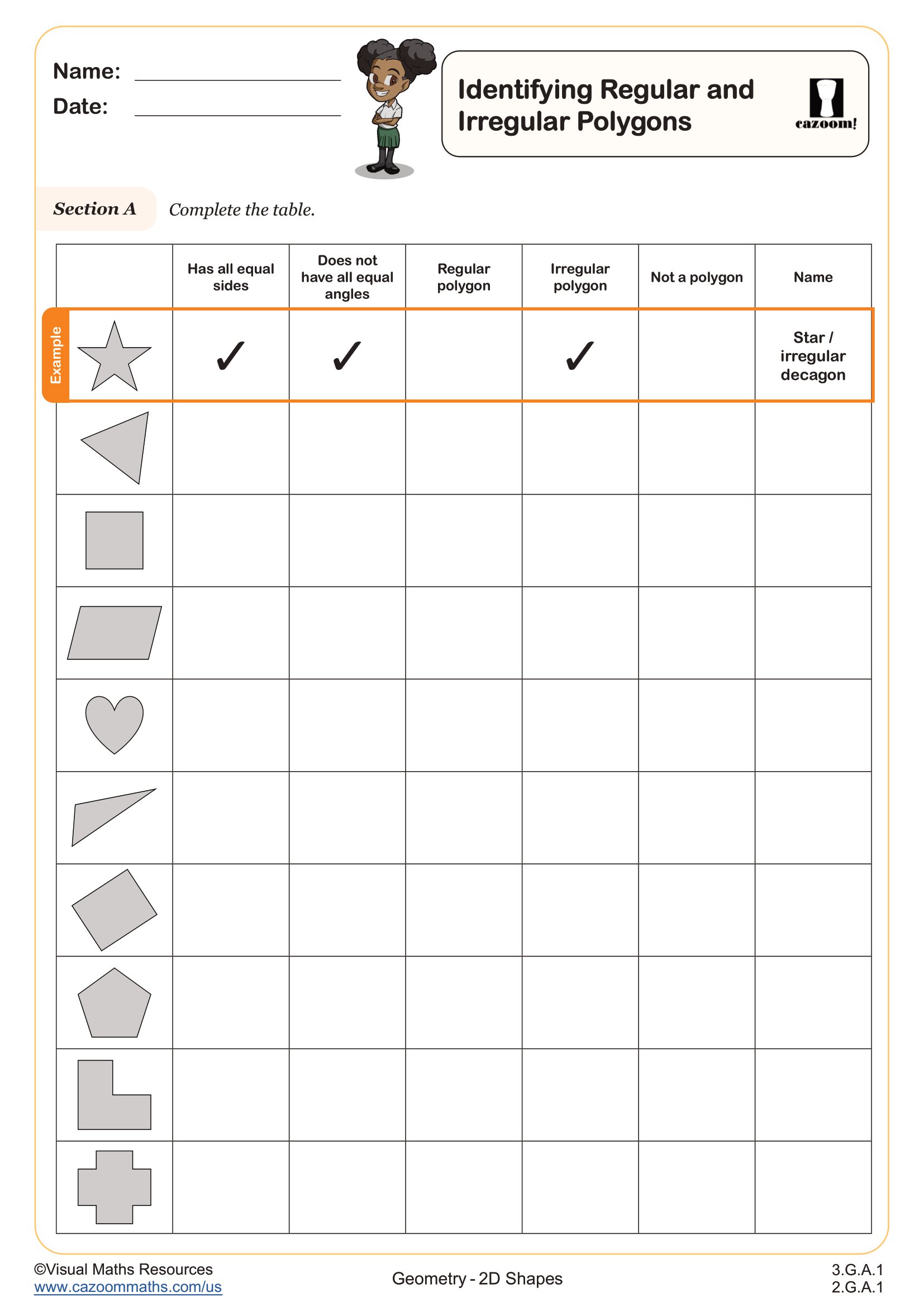
Identifying Regular and Irregular Polygons
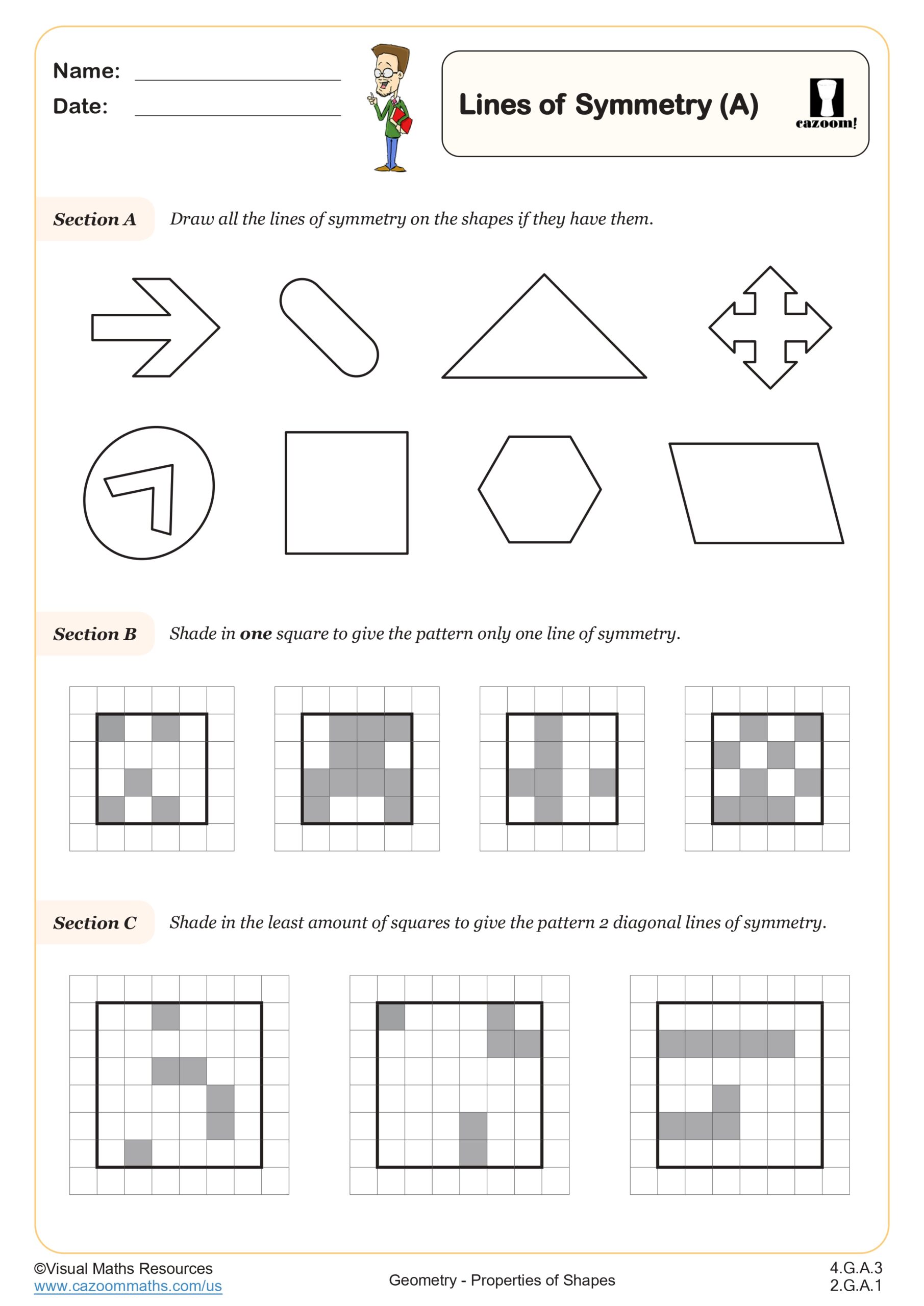
Lines of Symmetry (A)
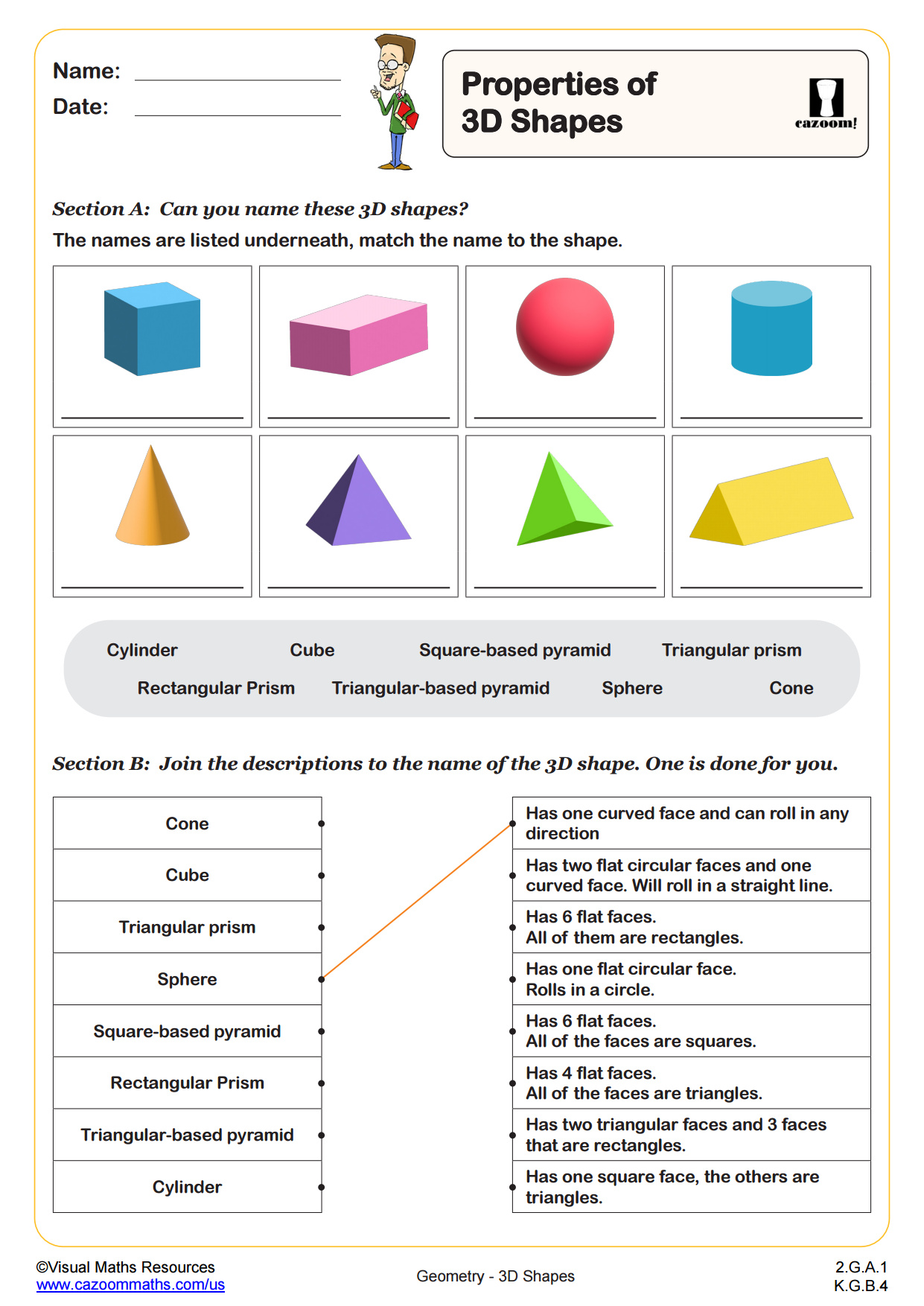
Properties of 3D Shapes
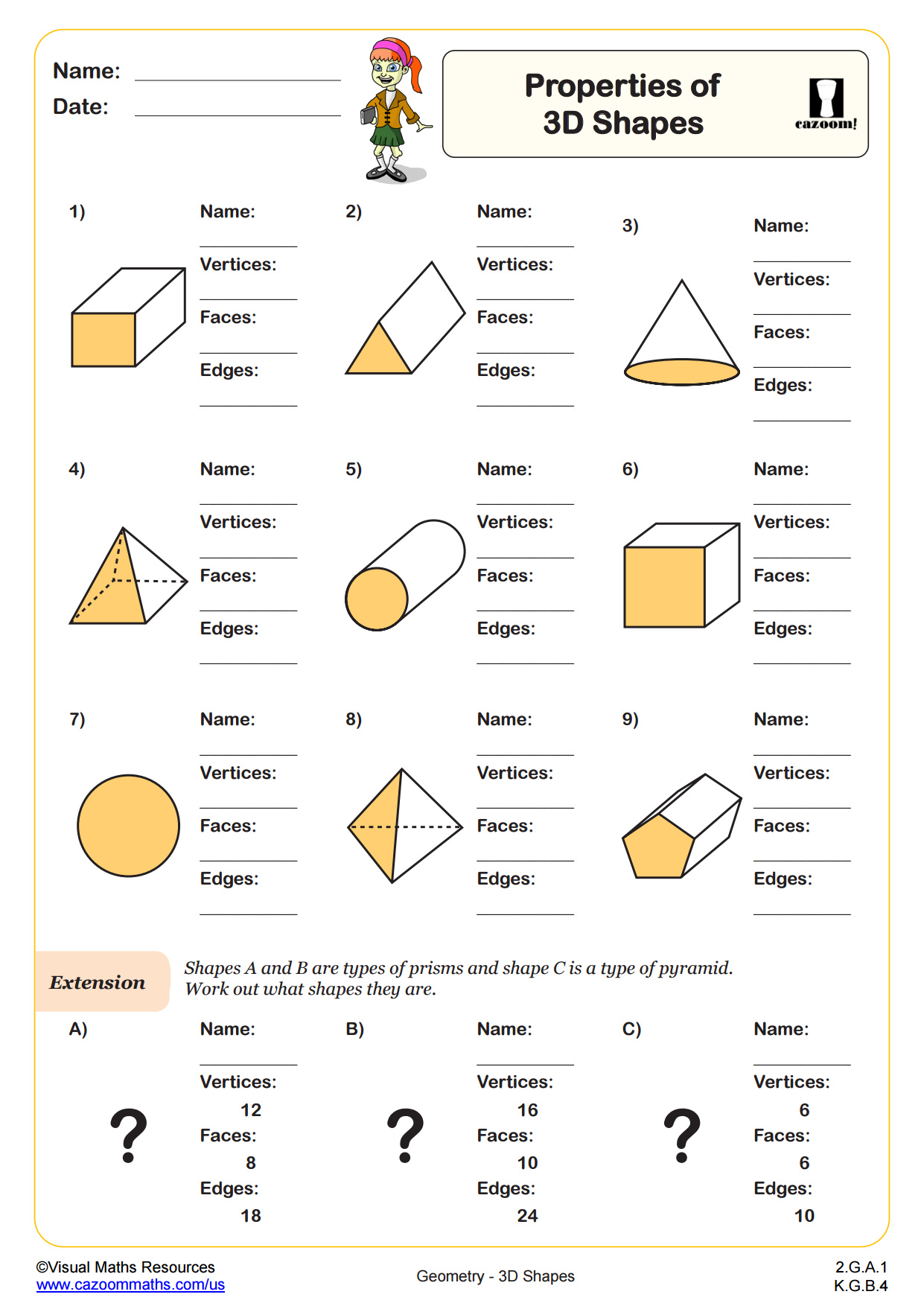
Properties of 3D Shapes
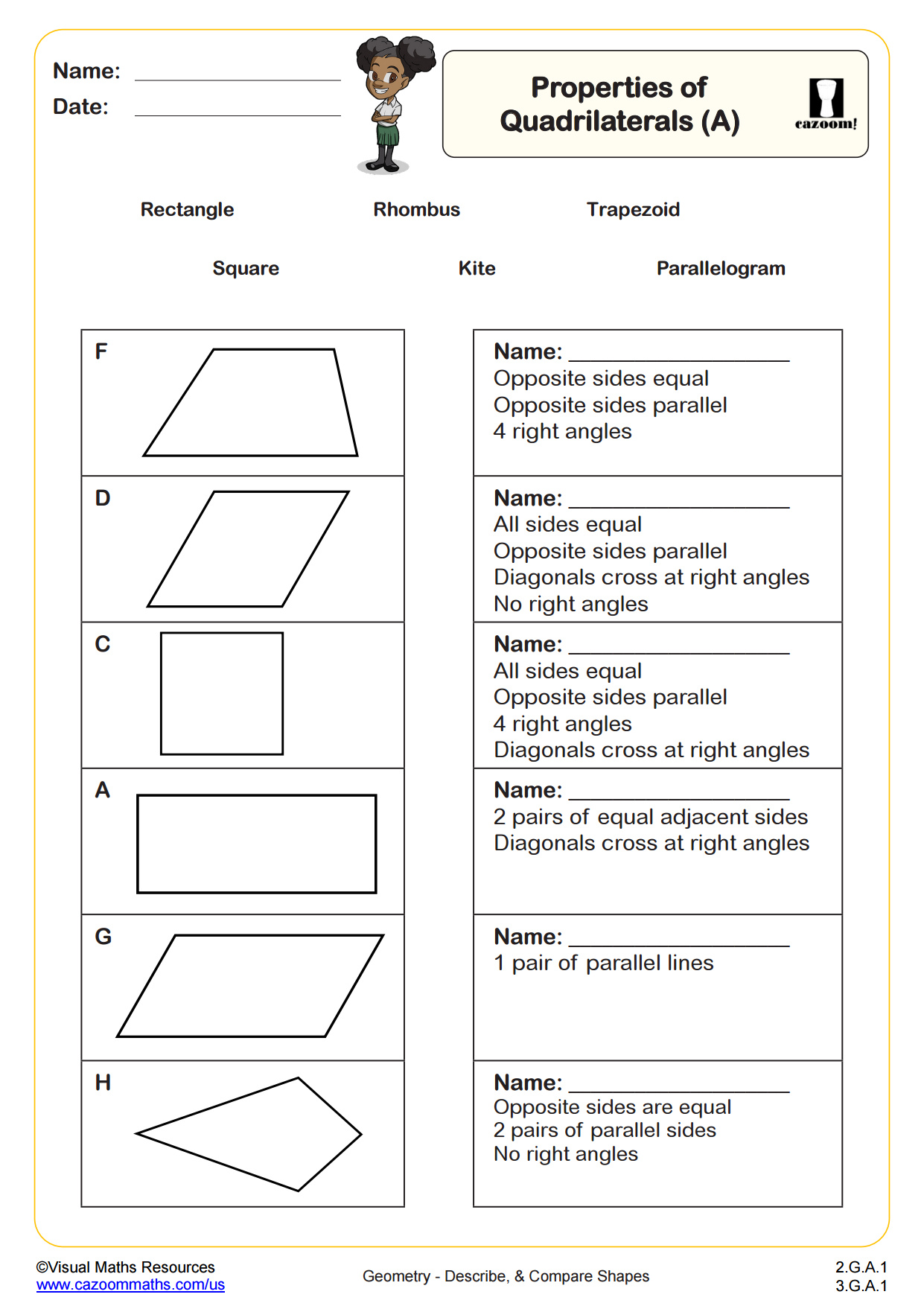
Properties of Quadrilaterals (A)
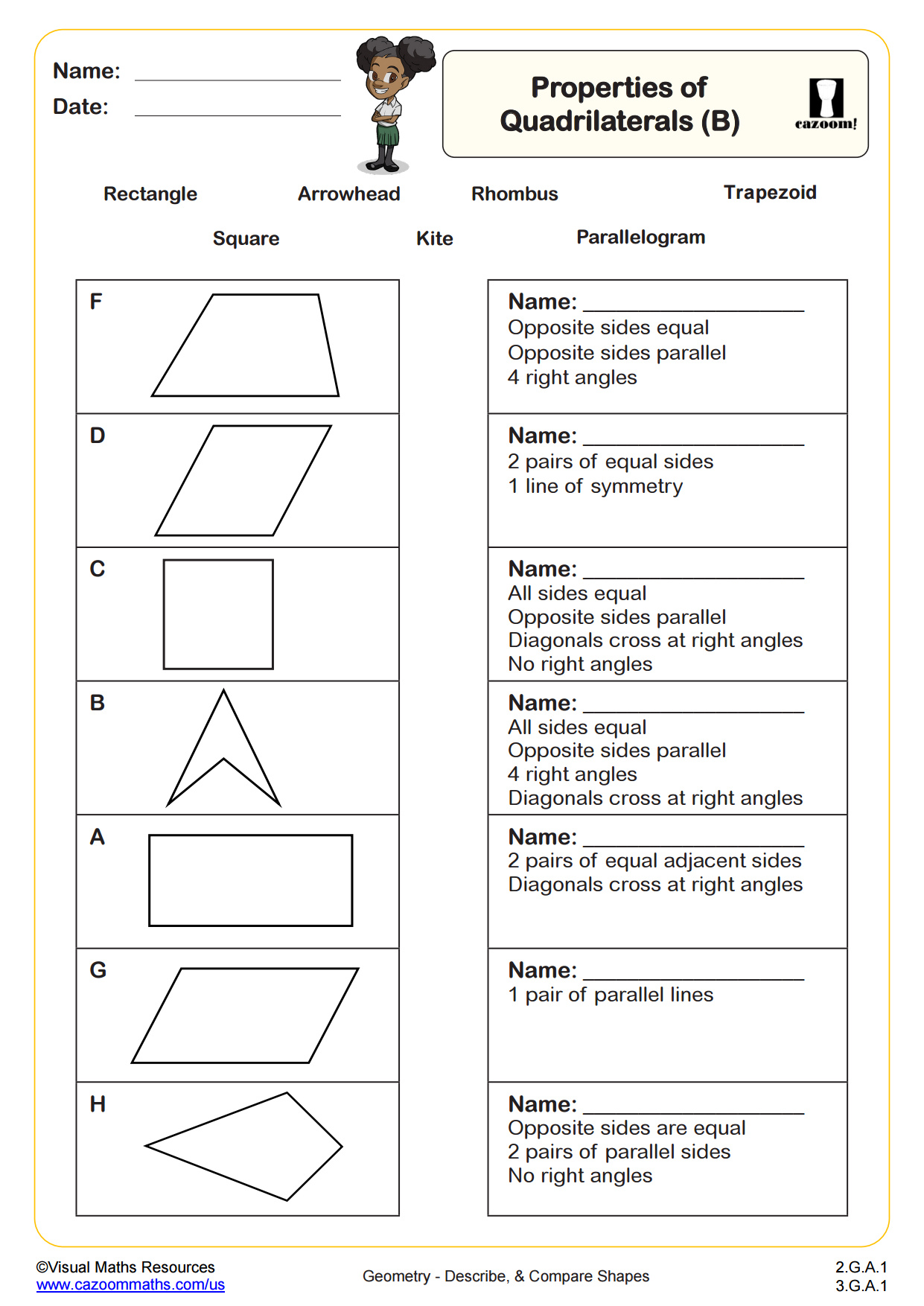
Properties of Quadrilaterals (B)
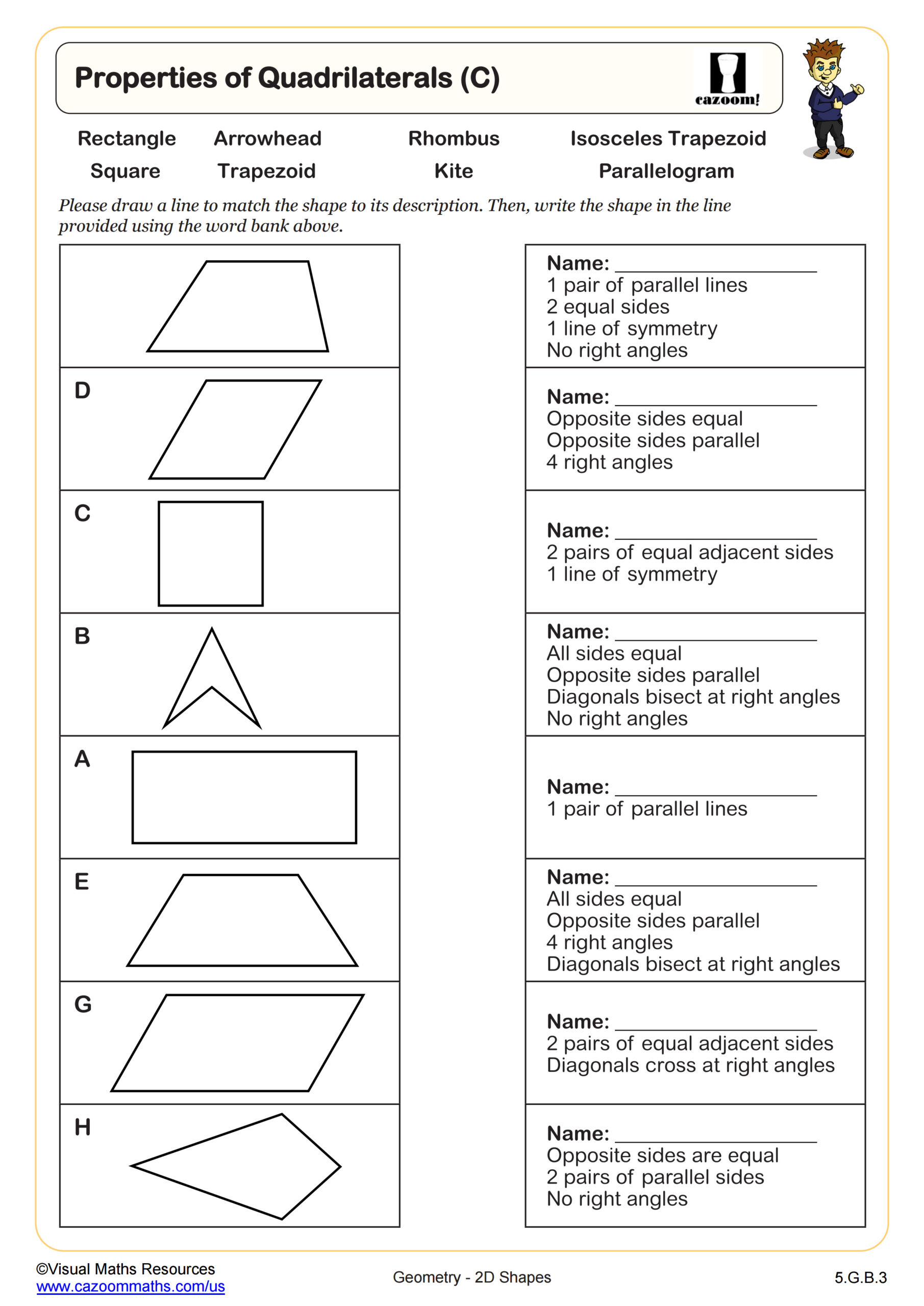
Properties of Quadrilaterals (C)
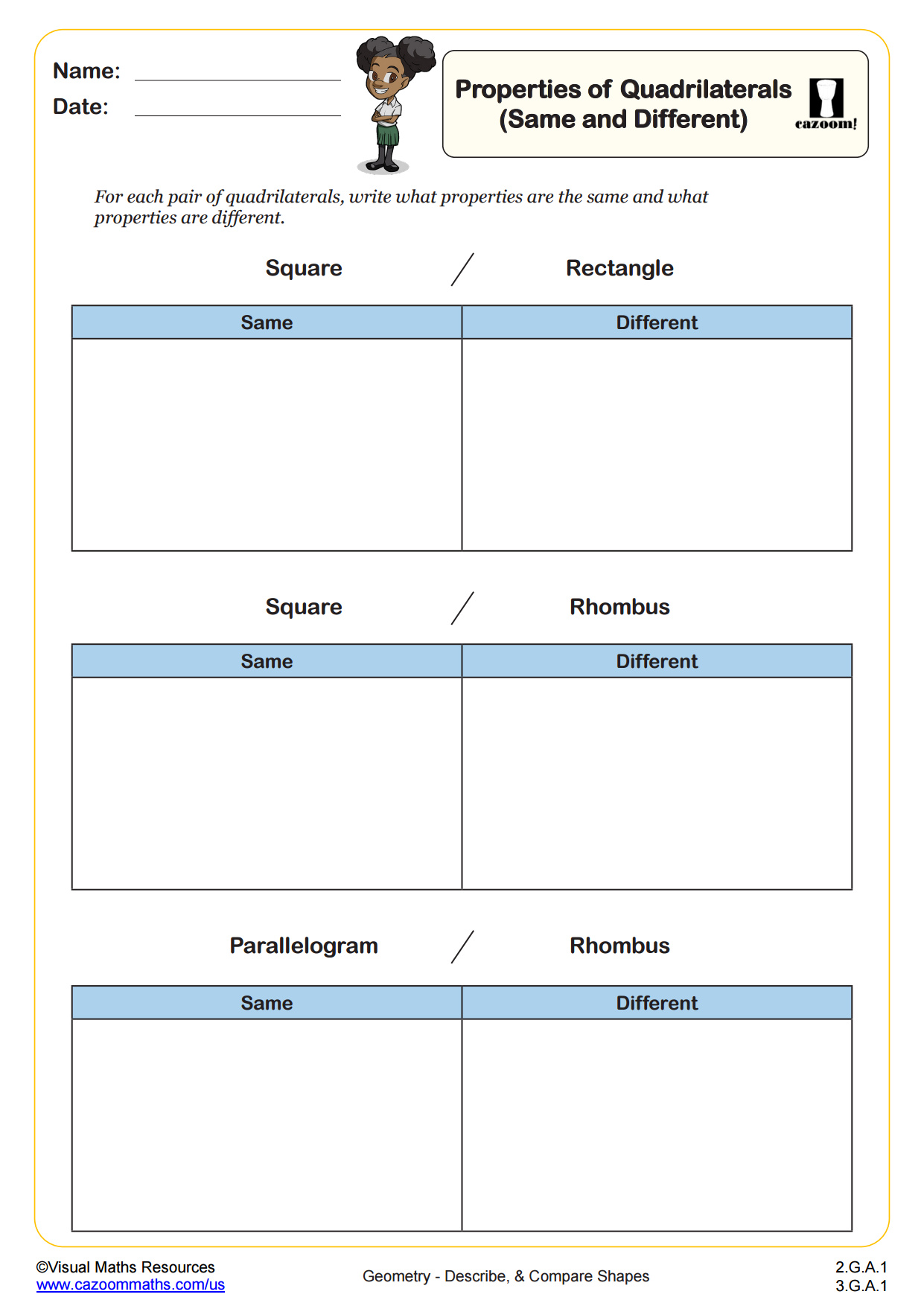
Properties of Quadrilaterals (Same and Different)
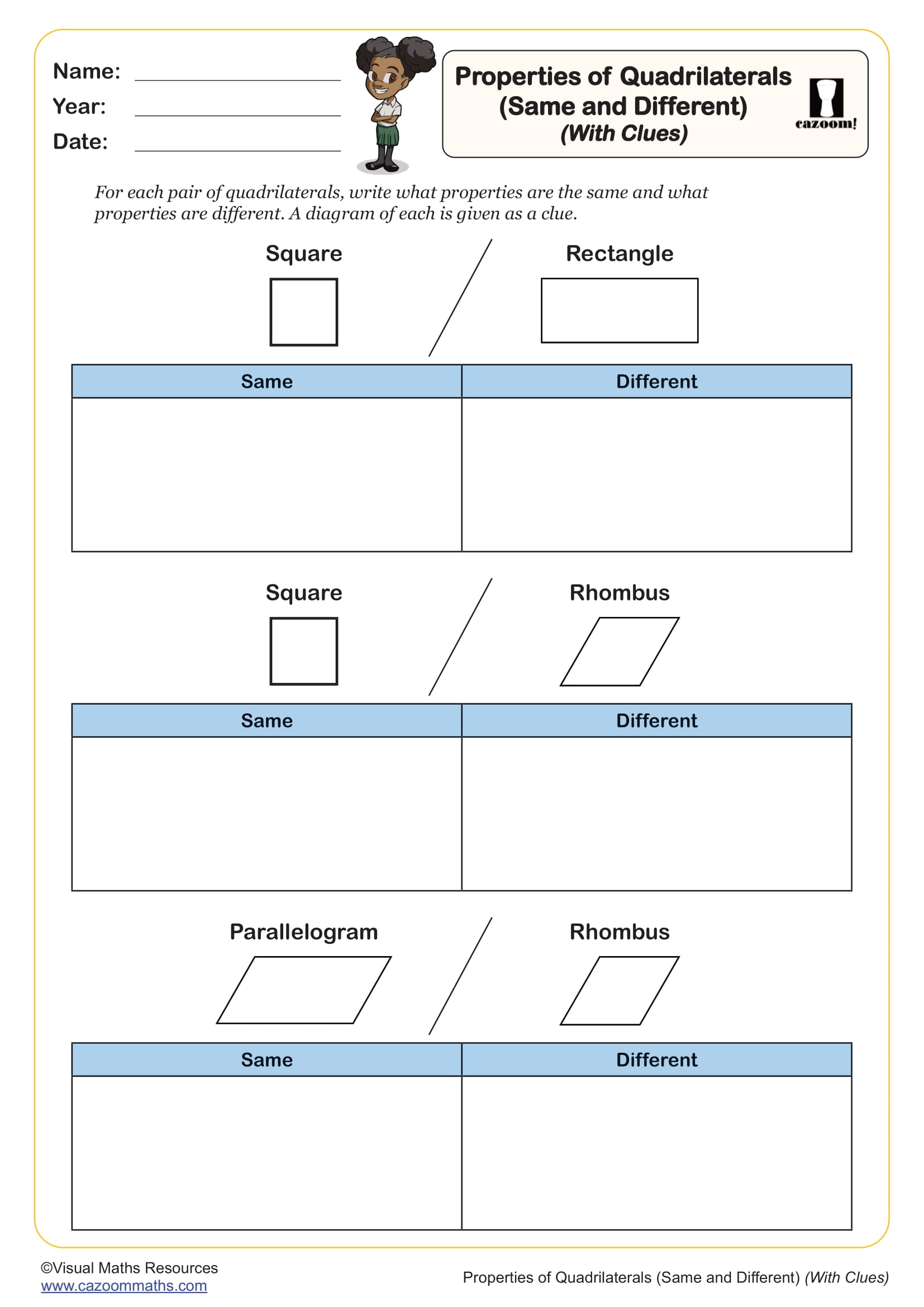
Properties of Quadrilaterals (Same and Different) (with clues)
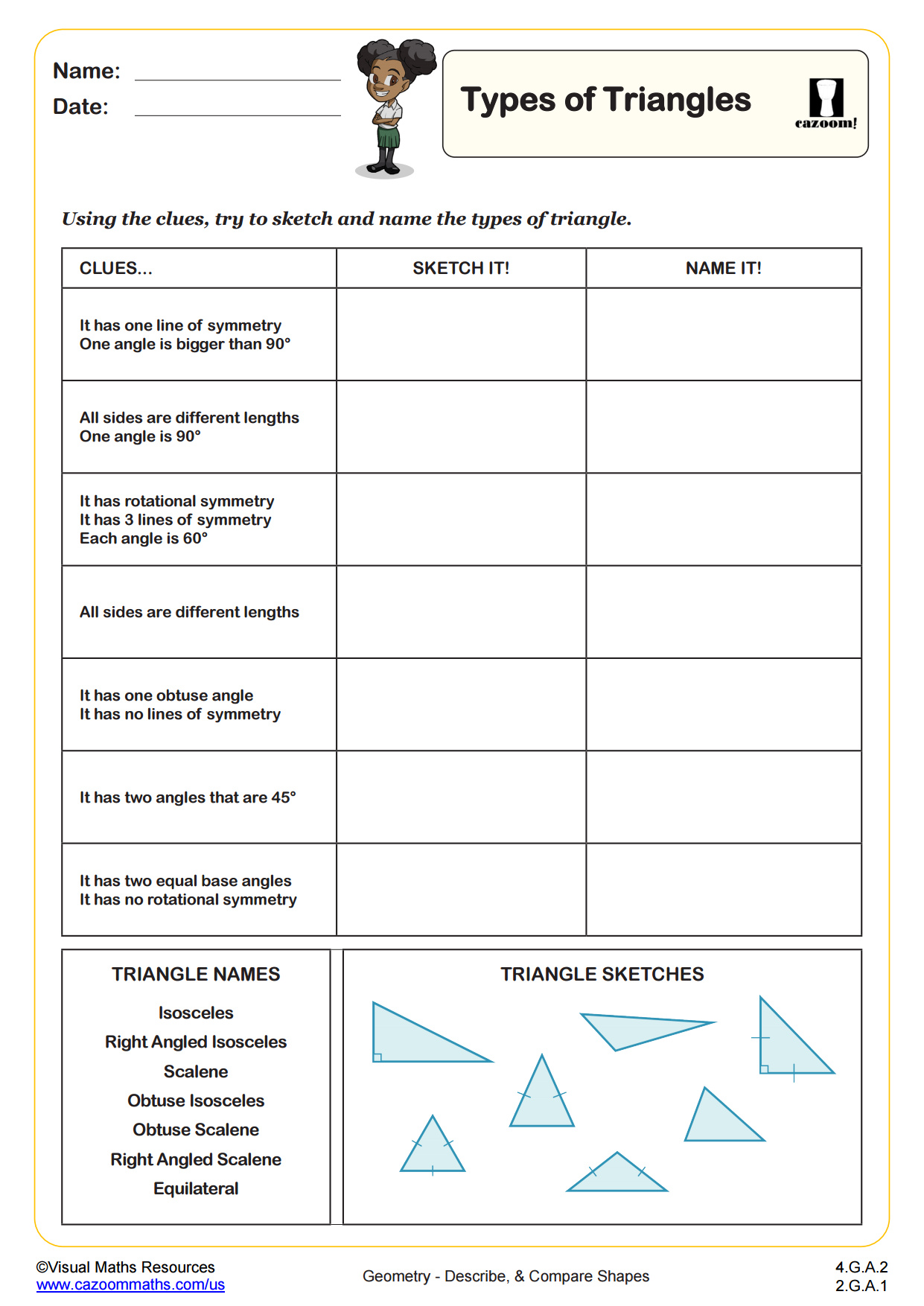
Types of Triangles
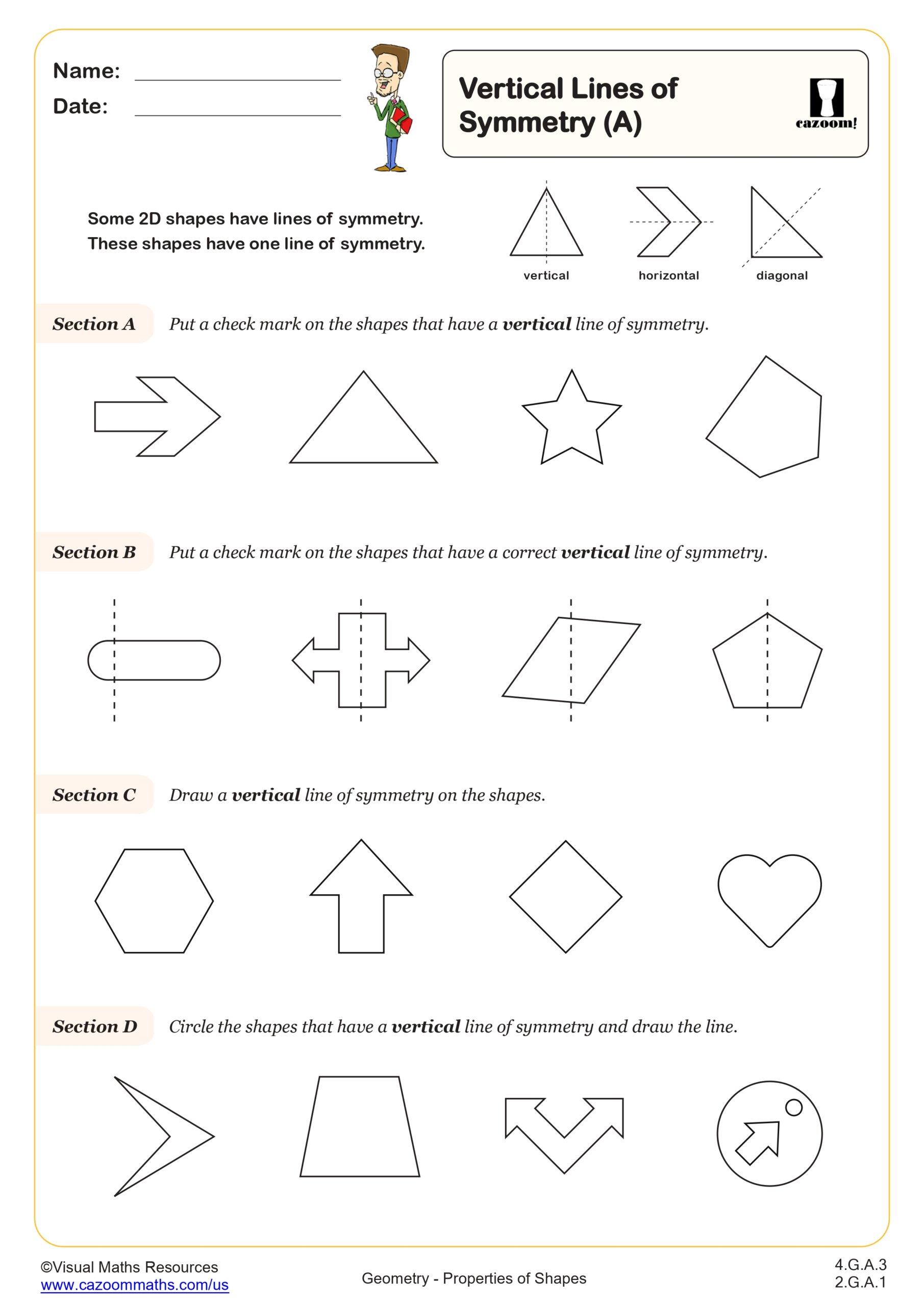
Vertical Lines of Symmetry (A)
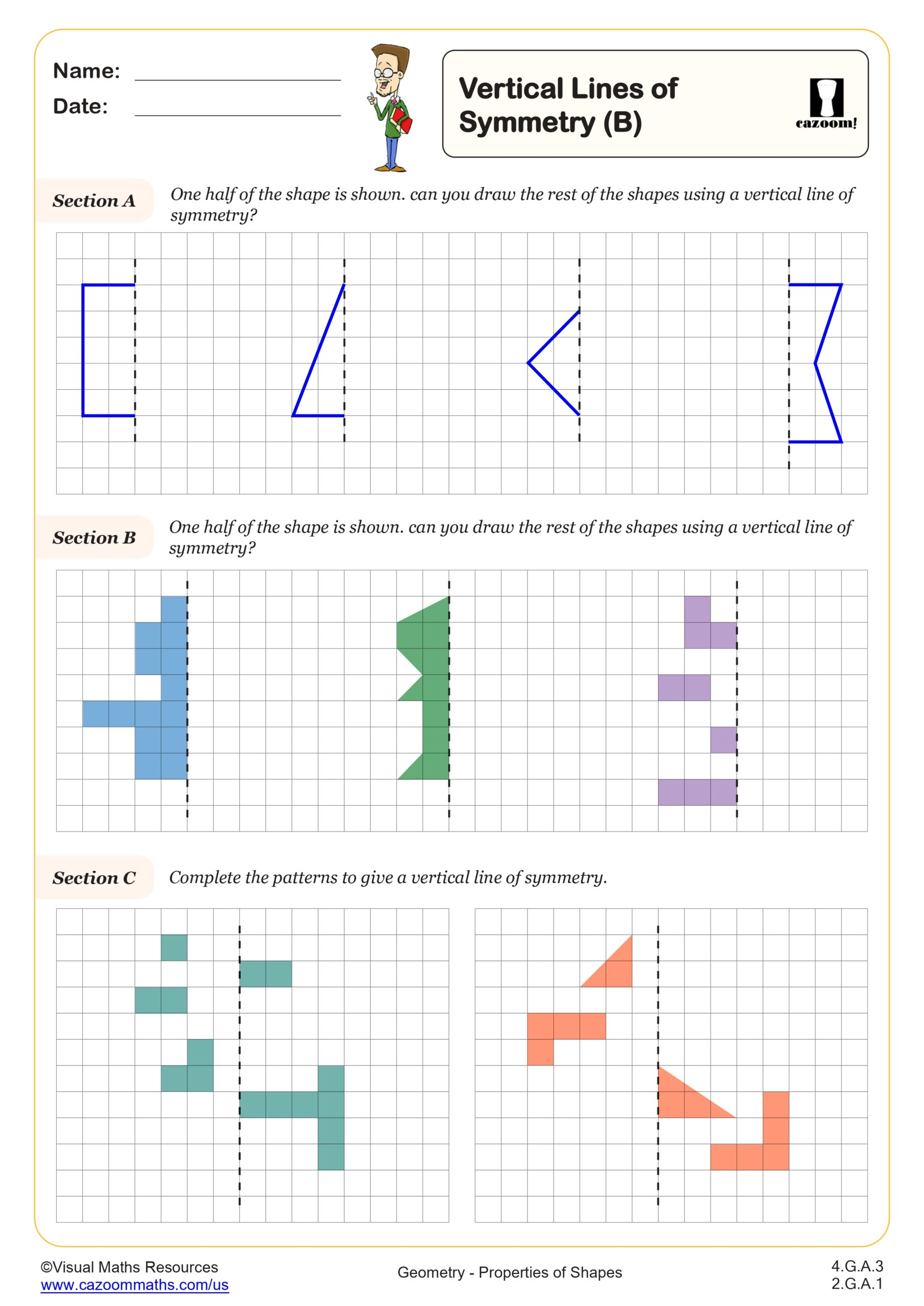
Vertical Lines of Symmetry (B)
All worksheets are created by the team of experienced teachers at Cazoom Math.
What topics do 2nd grade geometry worksheets cover?
Second grade geometry worksheets focus on recognizing and analyzing 2D shapes (triangles, squares, rectangles, circles, pentagons, hexagons) and 3D shapes (cubes, spheres, cones, cylinders). Students practice identifying attributes like the number of sides, vertices, and angles, while also exploring concepts like symmetry, pattern completion, and spatial relationships.
Teachers frequently observe that students confuse the terms 'sides' and 'corners' when describing shapes. Many second graders can visually identify a triangle but struggle to explain that it has three sides and three vertices. Grade 2 geometry worksheets address this by providing multiple opportunities to count, label, and describe shape attributes systematically.
Are these geometry worksheets appropriate for grade 2 skill levels?
These worksheets align specifically with 2nd grade Common Core geometry standards (2.G.1, 2.G.2, 2.G.3), focusing on skills that seven and eight-year-olds can developmentally handle. The activities emphasize visual recognition, basic attribute identification, and simple shape manipulation rather than complex geometric reasoning that appears in higher grades.
Second grade students work best with concrete, visual representations of geometric concepts. The worksheets use clear illustrations and step-by-step progression from basic shape identification to more challenging tasks like finding lines of symmetry or completing geometric patterns. This scaffolded approach helps students build confidence before moving to third grade geometry topics like area and perimeter.
How do these worksheets help students understand 3D shapes?
The 3D shape activities help second graders connect flat geometric drawings to real-world objects they encounter daily. Students learn to identify cubes, spheres, cylinders, and cones through visual exercises that show multiple perspectives and ask them to match shapes to common items like dice, balls, or ice cream cones.
Many teachers notice that students initially struggle to visualize how 2D faces relate to 3D objects. For example, they might not immediately recognize that a cube has square faces or that a cylinder has circular ends. These worksheets address this challenge by providing cut-and-fold activities and face-counting exercises that make the connection between 2D and 3D geometry more concrete and understandable.
How can teachers use these worksheets most effectively in the classroom?
Teachers find these 2nd grade shapes worksheets work best when combined with hands-on manipulatives like pattern blocks, geometric solids, or everyday objects. Students can trace real shapes, sort physical objects by attributes, then complete the corresponding worksheet activities to reinforce their learning through multiple modalities.
The answer keys allow teachers to quickly assess student understanding and identify common misconceptions during independent practice time. Many educators use these sheets for math centers, homework assignments, or as formative assessments before moving to new geometric concepts. The visual format also makes them valuable for students who need additional support or English language learners who benefit from picture-based mathematical content.