2nd Grade Lines and Angles Worksheets
All worksheets are created by the team of experienced teachers at Cazoom Math.
What Lines and Angles Concepts Do 2nd Graders Learn?
Second grade geometry standards focus on recognizing and drawing shapes with specific attributes, including understanding straight lines as the building blocks of two-dimensional figures. Students learn to identify line segments, measure their length using standard units (typically inches), and understand that a straight line is the shortest distance between two points.
Teachers often observe that students grasp the concept of straightness more easily when they compare crooked lines to straight ones in real classroom objects like the edge of a desk versus a curved jump rope. Many students lose points on assessments not from misunderstanding lines but from misreading the ruler, particularly when the line doesn't start at zero. Providing practice with lines positioned at various starting points on the ruler helps students develop flexible measurement skills rather than simply counting tick marks from the left edge.
How Do Lines and Angles Fit Into 2nd Grade Math Standards?
According to Common Core State Standards (2.MD.A.1), second graders should measure the length of objects using appropriate tools, including rulers. Lines and angles work builds directly on the shape recognition students developed in kindergarten and 1st grade, where they identified squares, triangles, and rectangles by counting sides. At this stage, students begin understanding that those sides are actually line segments with measurable length.
This foundational geometry prepares students for 3rd grade, when they'll classify shapes by properties and understand that angles are formed where two lines meet. Teachers notice that students who master precise line measurement in 2nd grade transition more smoothly to using protractors in 4th grade. The measurement skills practiced here also support fraction understanding, as students encounter half-inch marks and begin recognizing parts of a whole on the ruler's scale.
How Do Students Use Rulers to Measure Straight Lines Accurately?
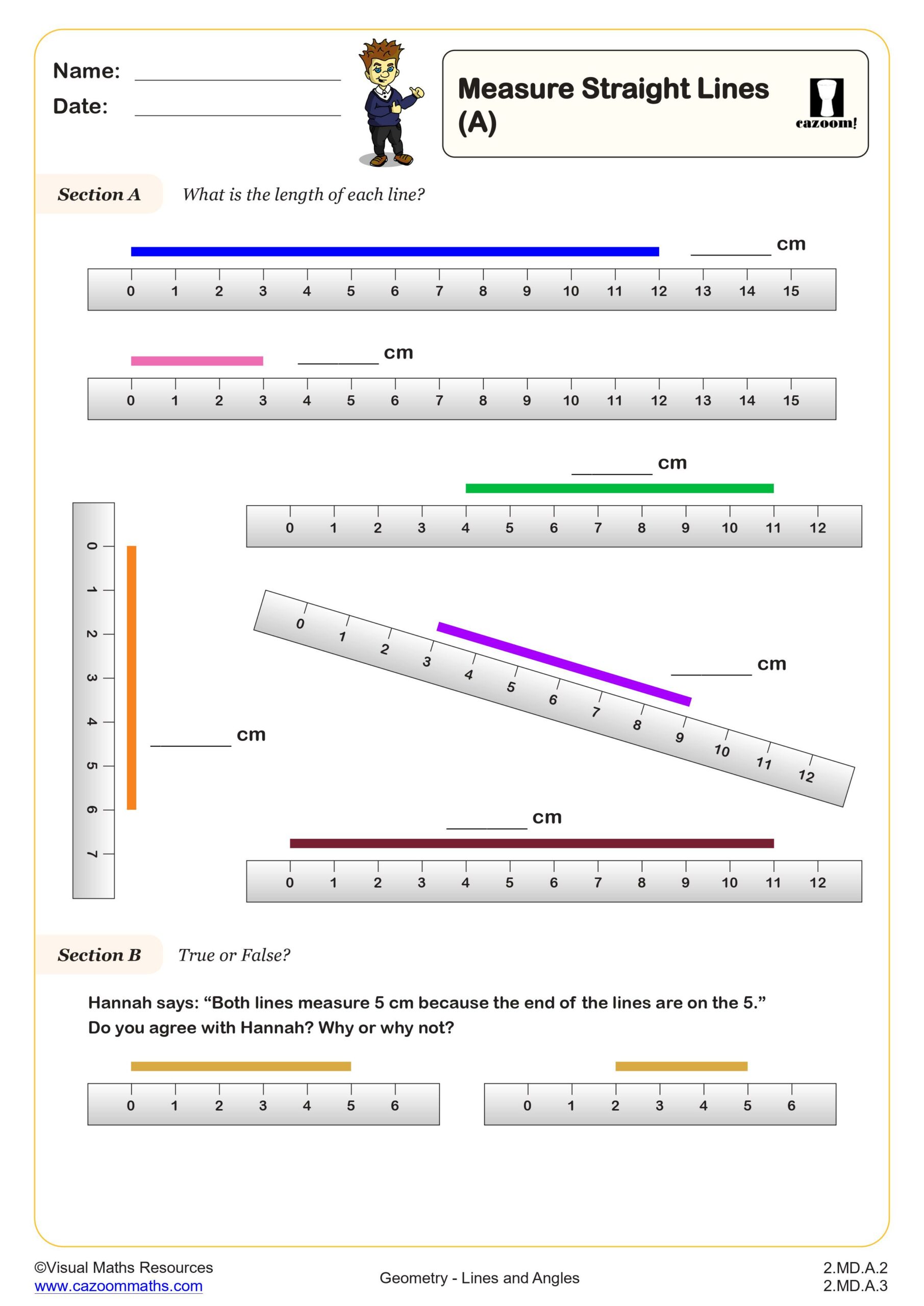
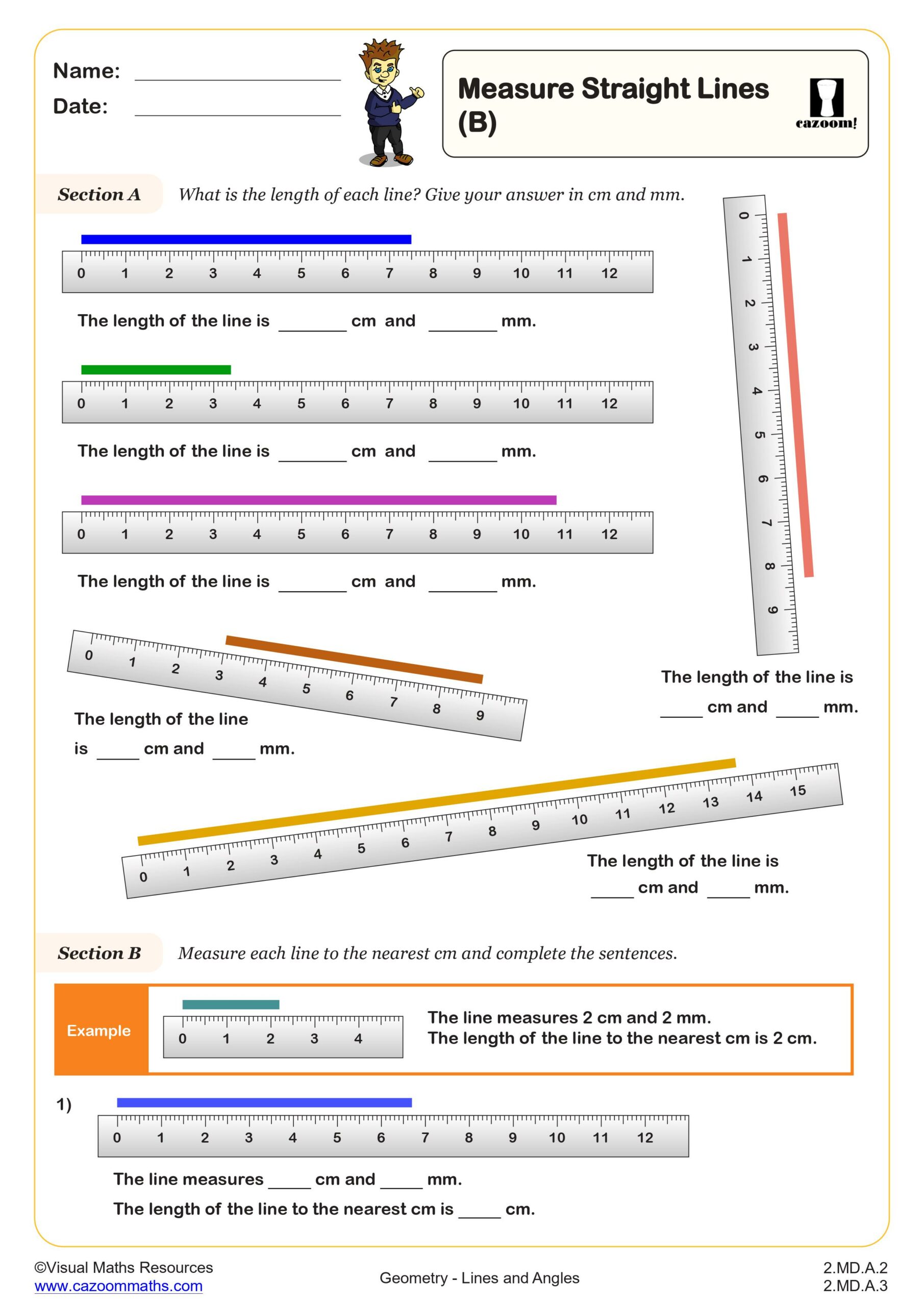
Measuring with a ruler requires students to align the zero mark with one endpoint of the line, keep the ruler steady and parallel to the line, and read the number at the opposite endpoint. Students must understand that they're counting the spaces between marks, not the marks themselves. Many teachers find that demonstrating with a transparent ruler on an overhead projector helps students see the alignment process clearly.
Measurement skills connect directly to real-world STEM applications that second graders encounter regularly. Architects measure lines when drawing building plans, scientists measure plant growth in experiments, and engineers measure materials before cutting them. Even everyday activities like measuring ingredients for recipes or determining if furniture fits in a space require the same ruler skills students develop through these worksheets. This practical relevance helps students understand why precision matters and why starting at zero produces accurate results.
How Can Teachers Use These Lines and Angles Worksheets Effectively?
These worksheets provide structured practice with multiple lines of varying lengths, allowing students to develop measurement fluency through repetition with variety. The answer keys enable quick checking during independent work time, helping teachers identify which students need additional support with ruler alignment or number reading. Students benefit from working through problems systematically, checking their answers, and understanding where measurement errors occurred.
Teachers often use these worksheets during math centers, pairing them with actual rulers and physical objects to measure, creating a connection between worksheet practice and hands-on measurement. They work well for homework when families have access to a standard ruler, reinforcing classroom learning. Some teachers assign one worksheet as a pre-assessment to identify students who need small-group instruction on ruler basics before moving forward. The worksheets also serve as valuable review material before standardized testing, ensuring students can demonstrate measurement proficiency when assessments require them to measure line segments accurately.