2nd Grade Measurement and Data Worksheets
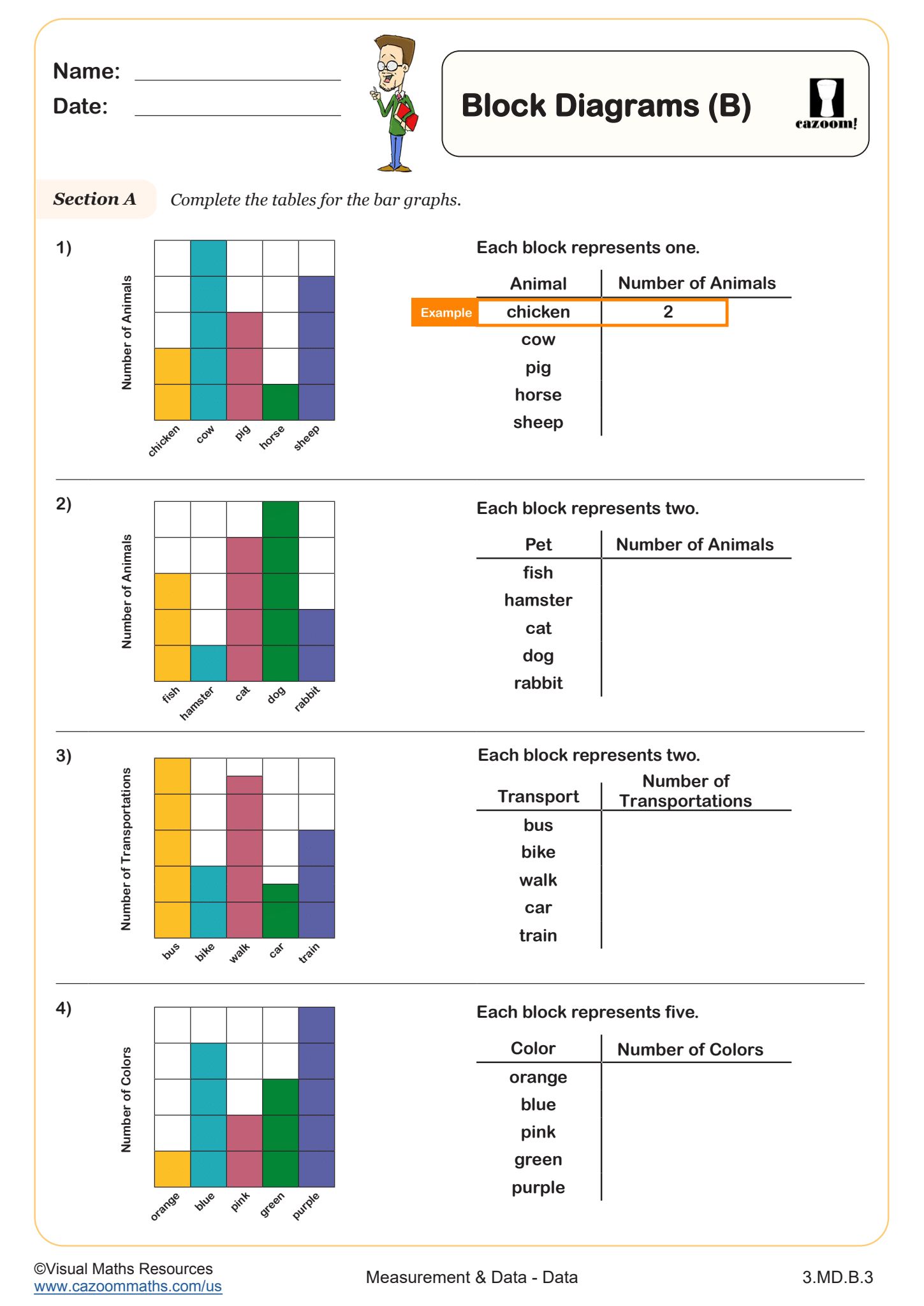
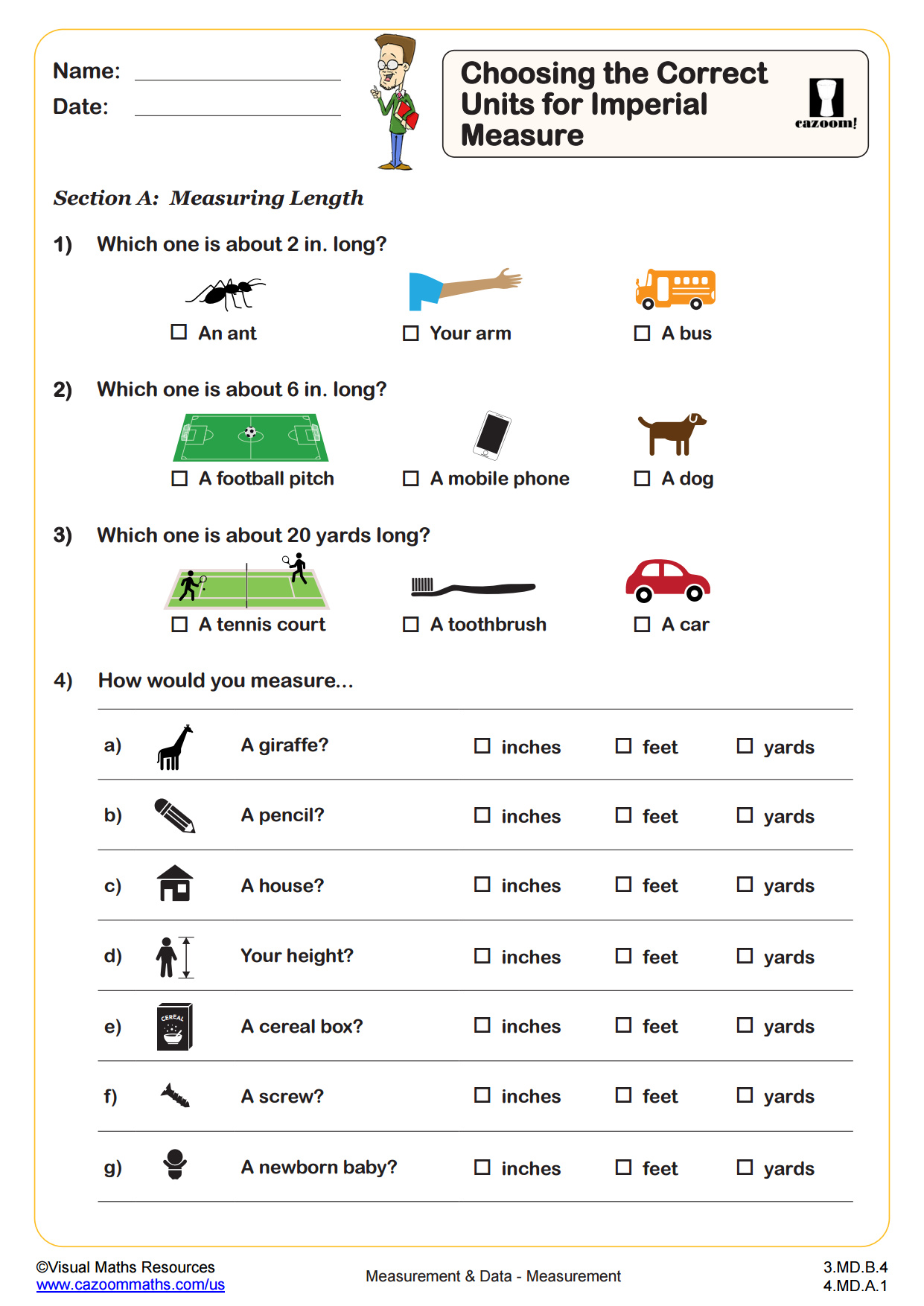
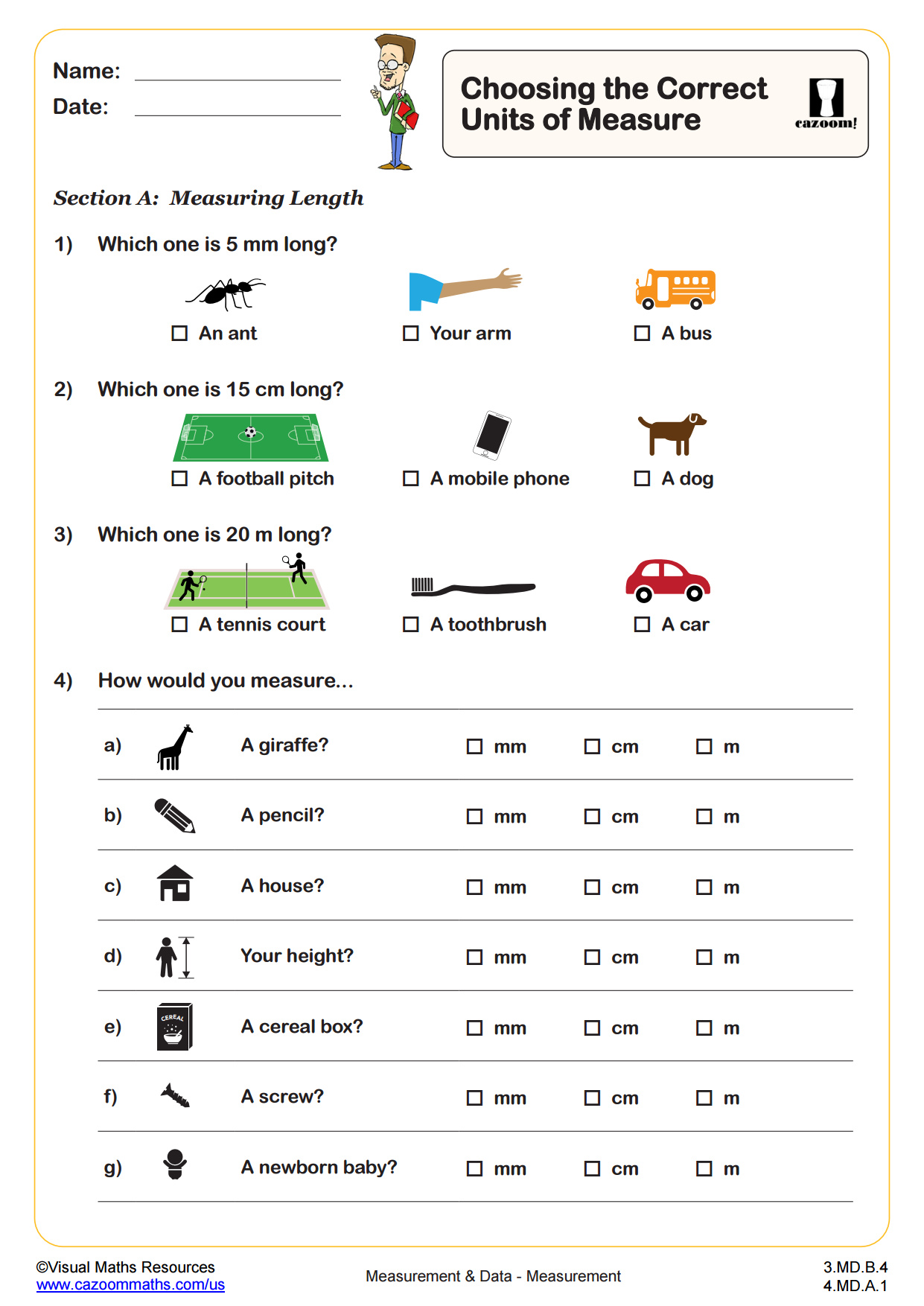
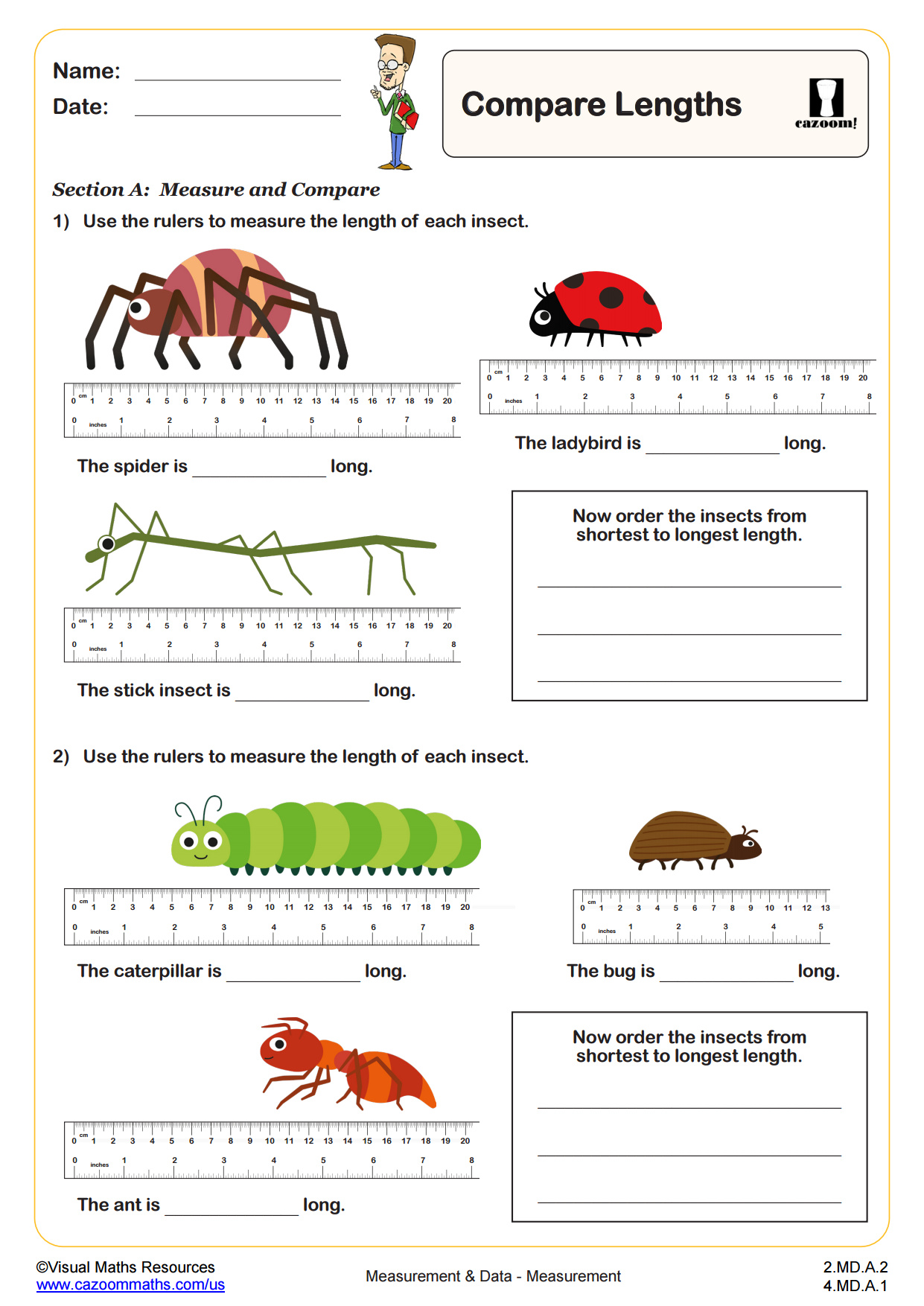
All worksheets are created by the team of experienced teachers at Cazoom Math.
What topics do 2nd grade measurement worksheets typically cover?
Measurement worksheets grade 2 pdf collections typically focus on length measurement using inches, feet, and centimeters, along with comparing and ordering objects by size. Students also work with time concepts including telling time to the nearest five minutes, elapsed time problems, and calendar skills. Weight and capacity activities introduce pounds, ounces, cups, and pints through hands-on comparison exercises.
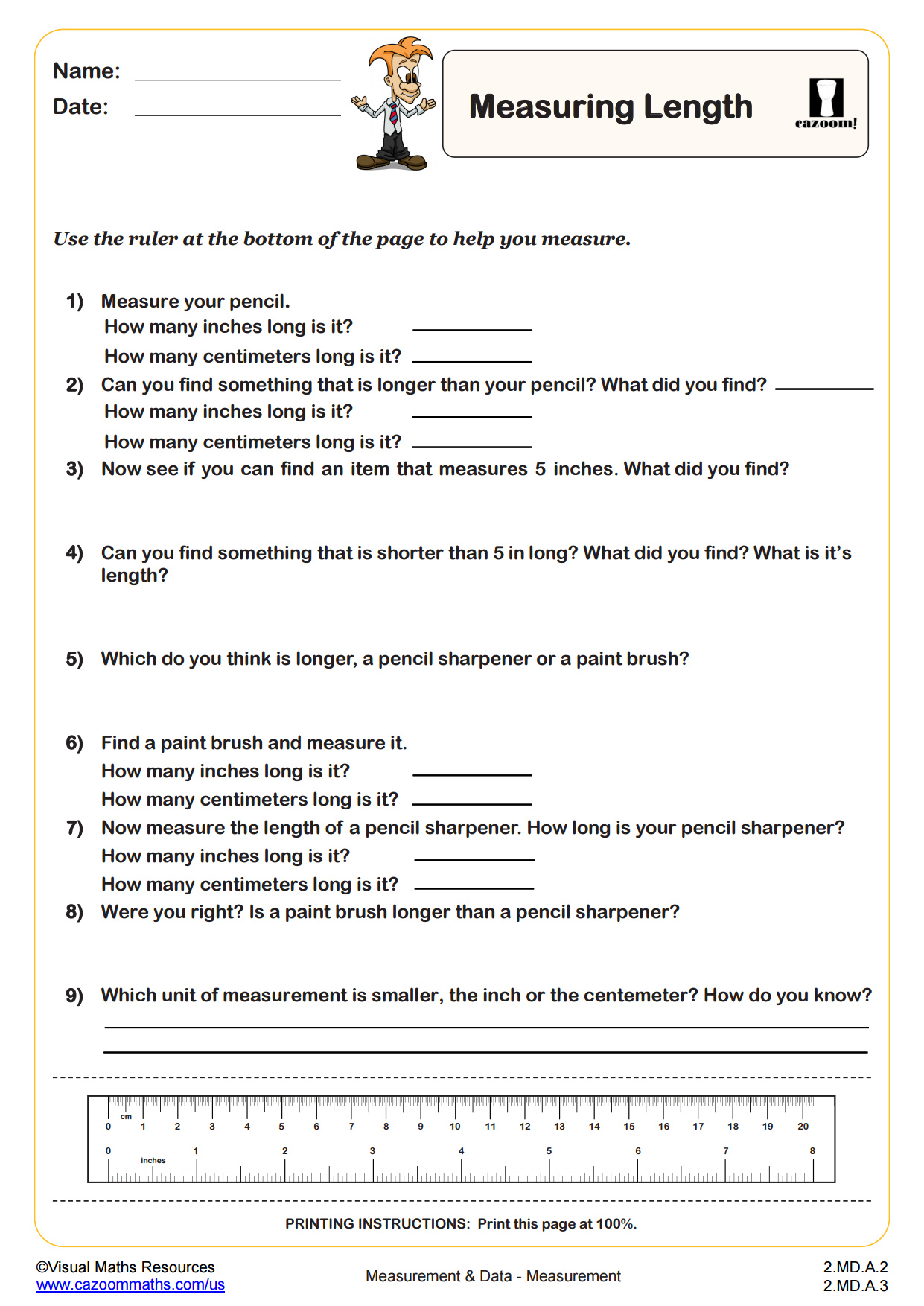
Teachers frequently observe that second graders confuse the starting point when using rulers, often beginning measurements at the 1-inch mark rather than zero. These worksheets address this misconception through guided practice activities that emphasize proper ruler placement and reading techniques, helping students develop accuracy in linear measurement tasks.
How do 2nd grade measurement skills build from 1st grade concepts?
Second grade measurement extends first grade's non-standard unit work by introducing standard measurement tools like rulers, measuring tapes, and scales. While first graders measure with paper clips or blocks, second graders learn to use inches, feet, and centimeters with proper tools. The progression includes more complex time concepts, moving from hour and half-hour recognition to five-minute intervals and simple elapsed time problems.
Measurement and data 2nd grade standards also introduce money skills that weren't emphasized in first grade, including counting coins and making change with quarters, dimes, nickels, and pennies. Teachers notice this transition requires significant scaffolding since students must coordinate multiple skills: recognizing coin values, skip counting, and addition strategies all within measurement contexts.
Why do students struggle with measurement estimation activities?
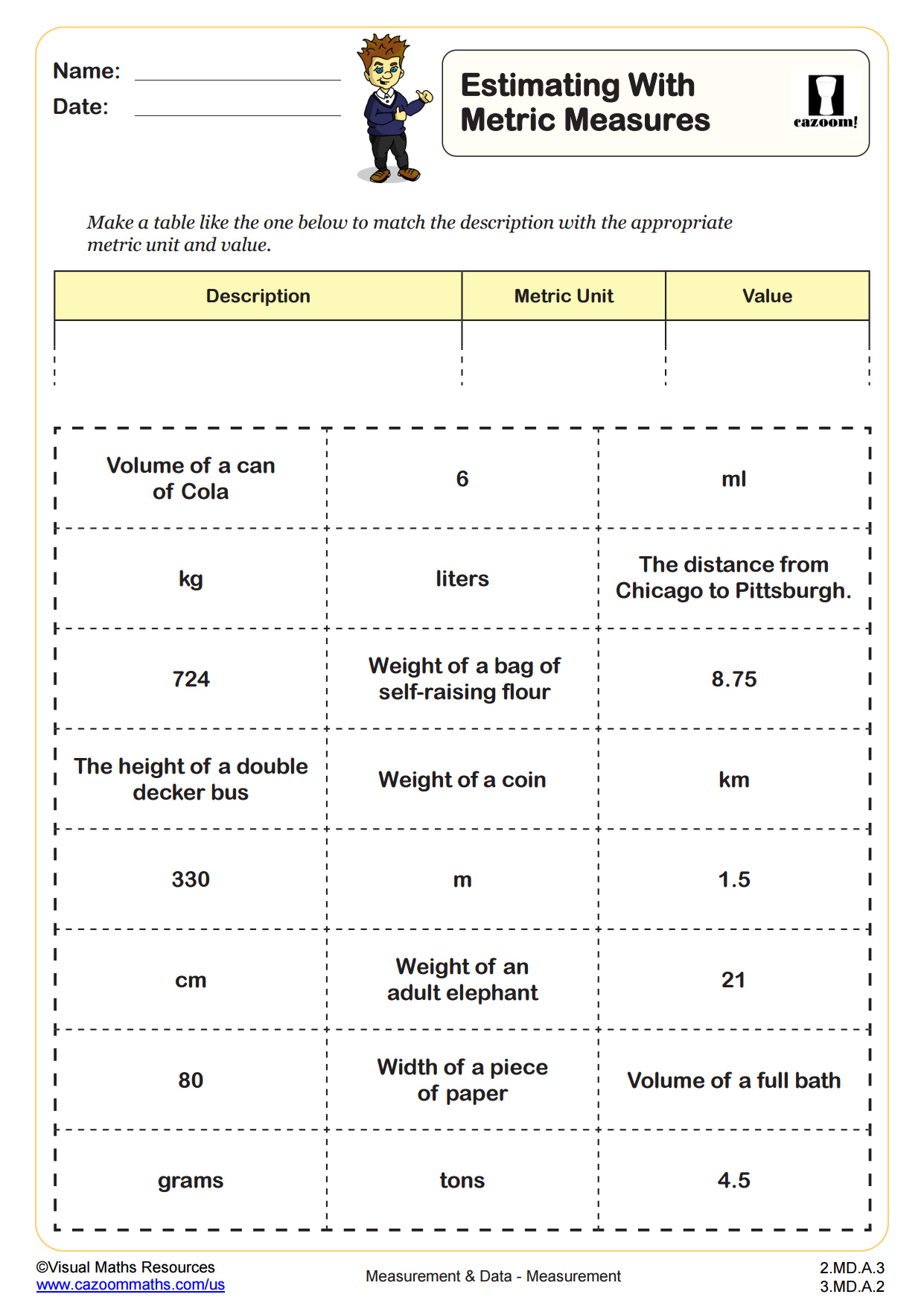
Students often lack reference points for common measurements, making estimation challenging without concrete comparisons. Teachers observe that many second graders estimate a pencil as 50 inches long or guess that their desk weighs 2 pounds because they haven't internalized what these units represent in real objects. Building estimation skills requires consistent practice connecting standard units to familiar items.
Measurement and data 2nd grade worksheets address this through benchmark activities where students learn that a paperclip is about one inch, their thumb width approximates one inch, and a gallon of milk weighs about 8 pounds. These reference points help students make reasonable estimates before measuring, developing number sense alongside measurement skills that transfer to science investigations and daily problem-solving situations.
How can teachers use these worksheets most effectively in math instruction?
Teachers find that combining worksheet practice with hands-on measurement activities reinforces concepts more effectively than paper-and-pencil work alone. Using worksheets as follow-up after students measure real classroom objects helps solidify understanding of standard units and proper tool usage. The answer keys allow for quick assessment and immediate feedback during independent work time.
2nd grade measurement and data worksheets work well in math centers, homework assignments, and intervention groups where students need additional practice with specific skills. Teachers often modify activities by having students estimate before completing worksheet problems, then compare their predictions to actual measurements, building both computational skills and mathematical reasoning in authentic measurement contexts.