2nd Grade Money and Time Worksheets
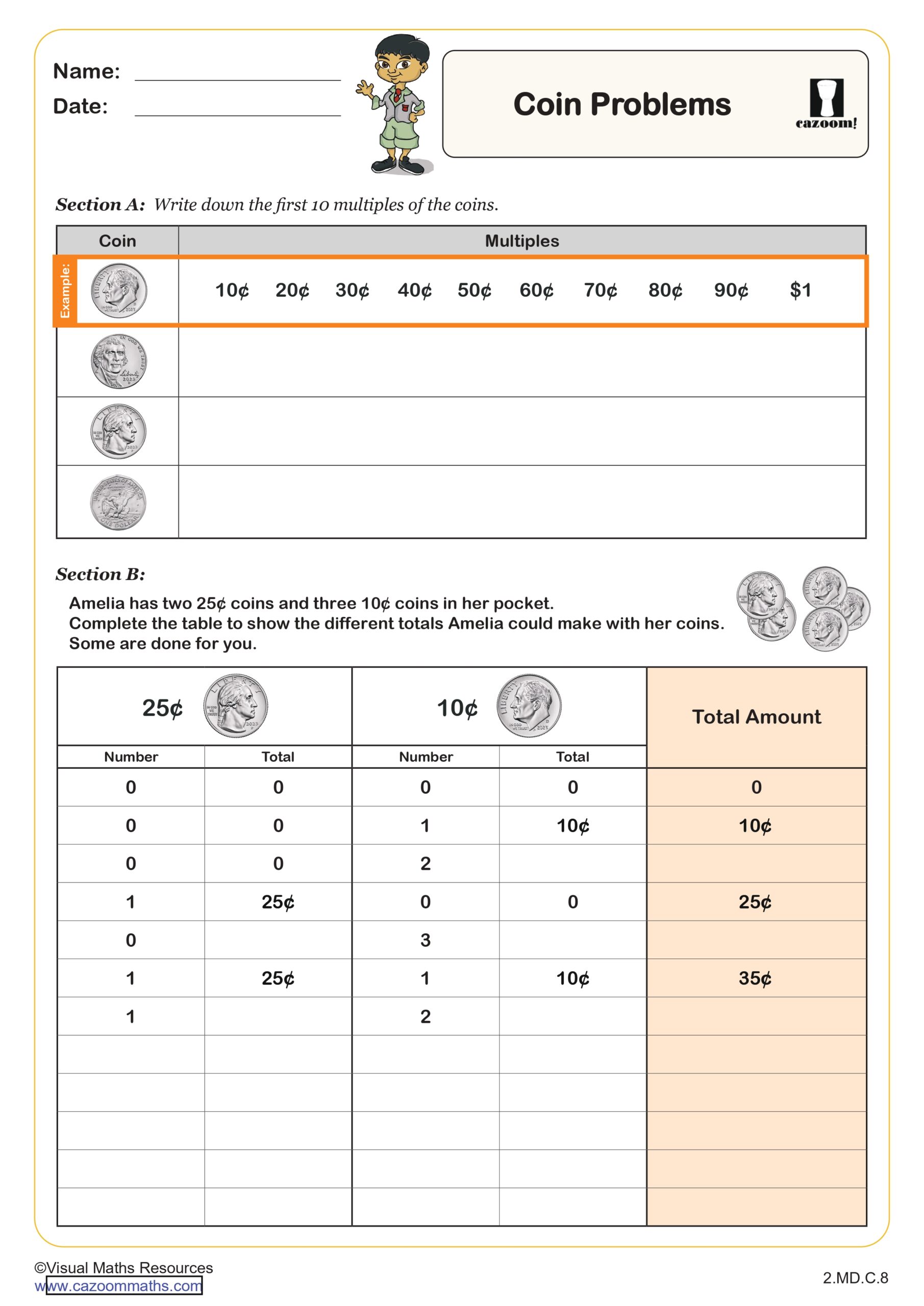
Coin Problems
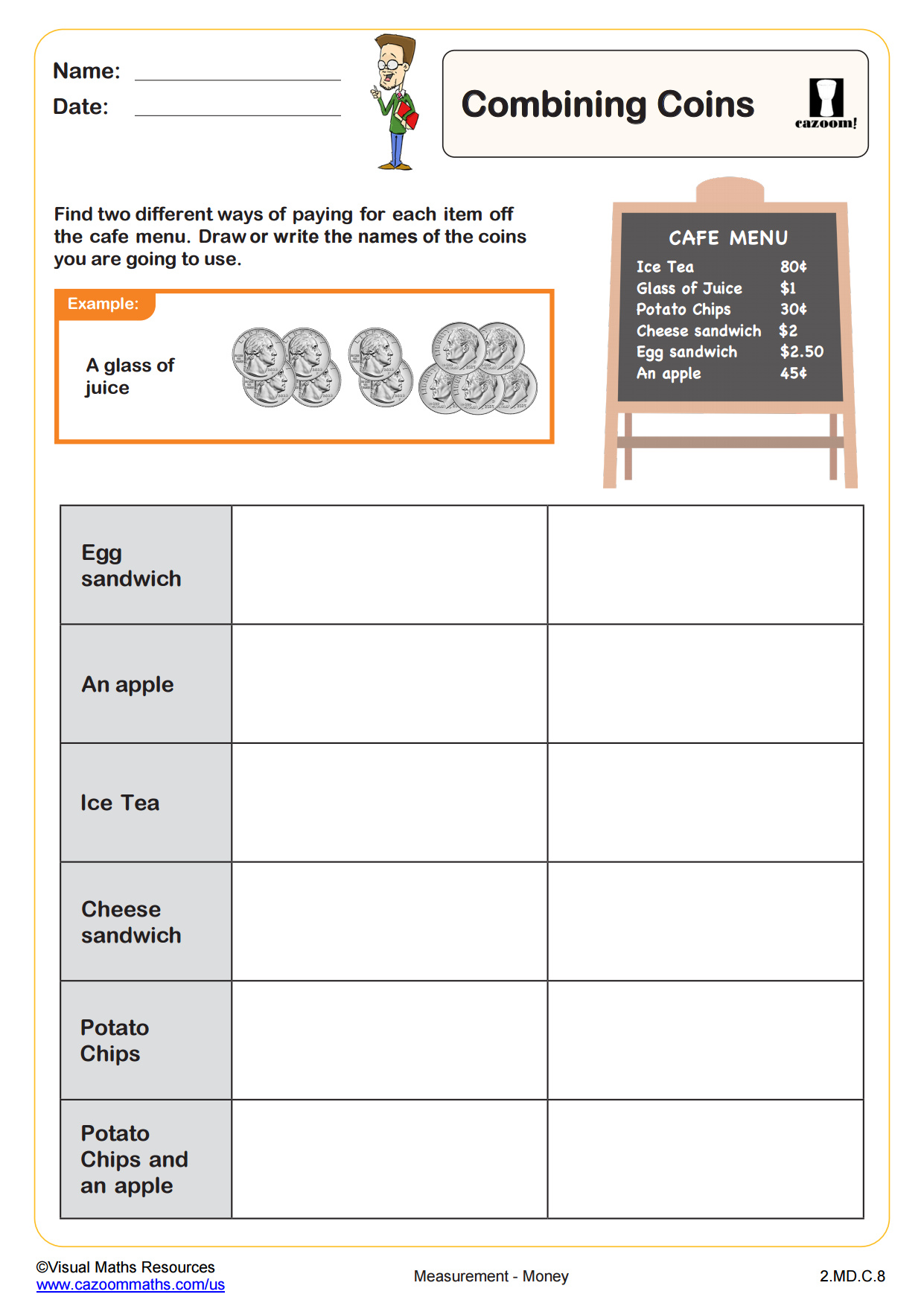
Combining Coins
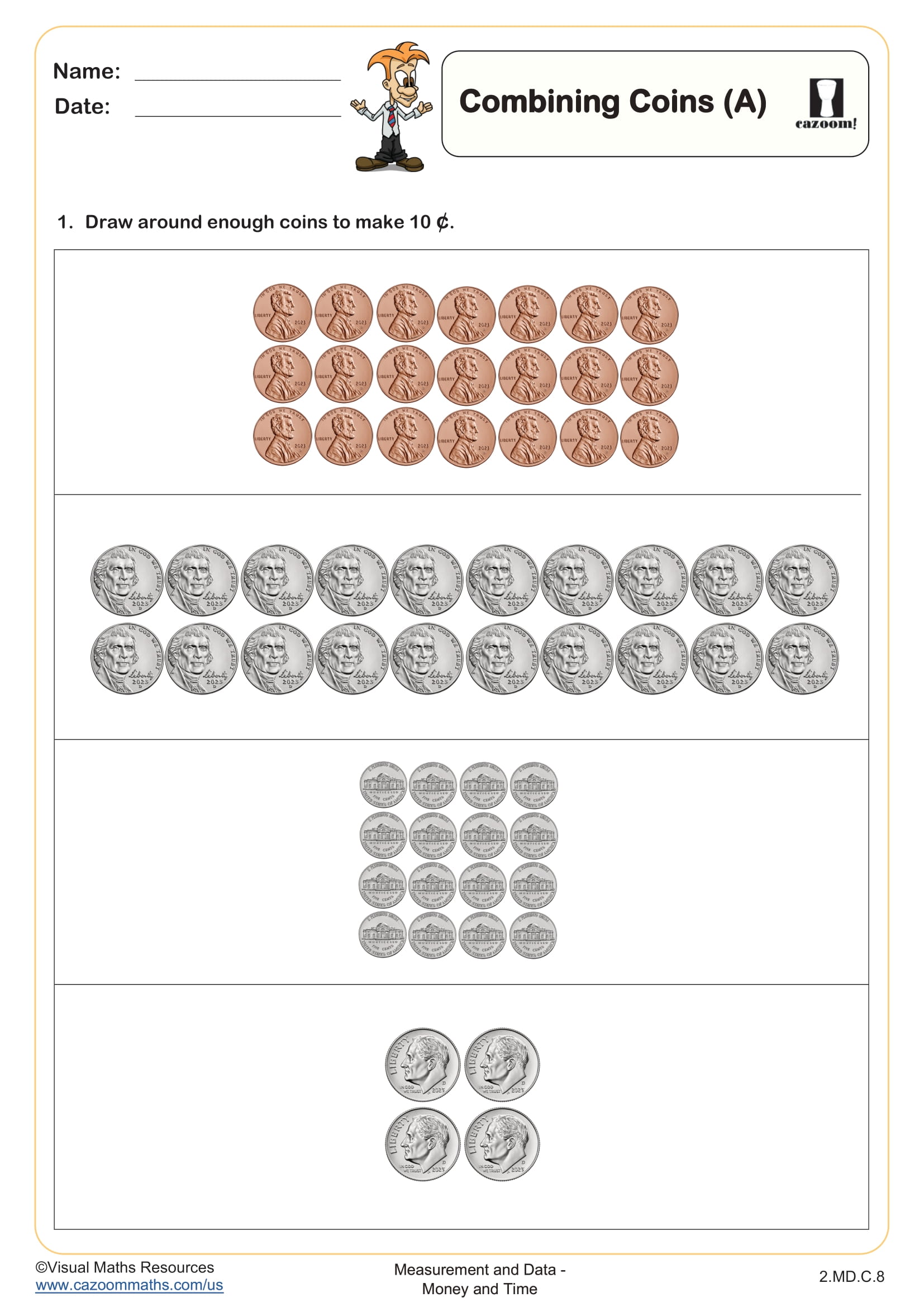
Combining Coins (A)
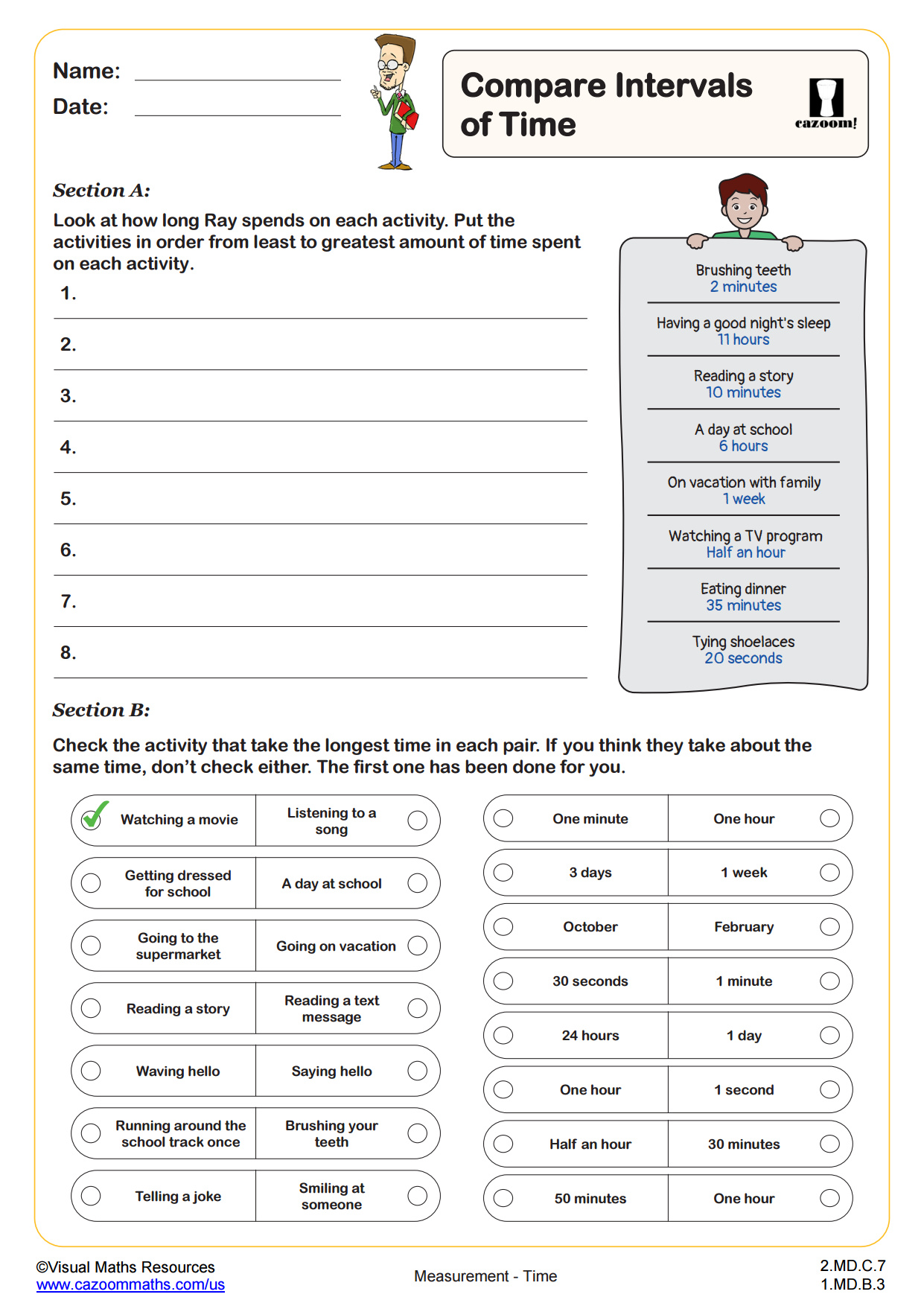
Compare Intervals of Time
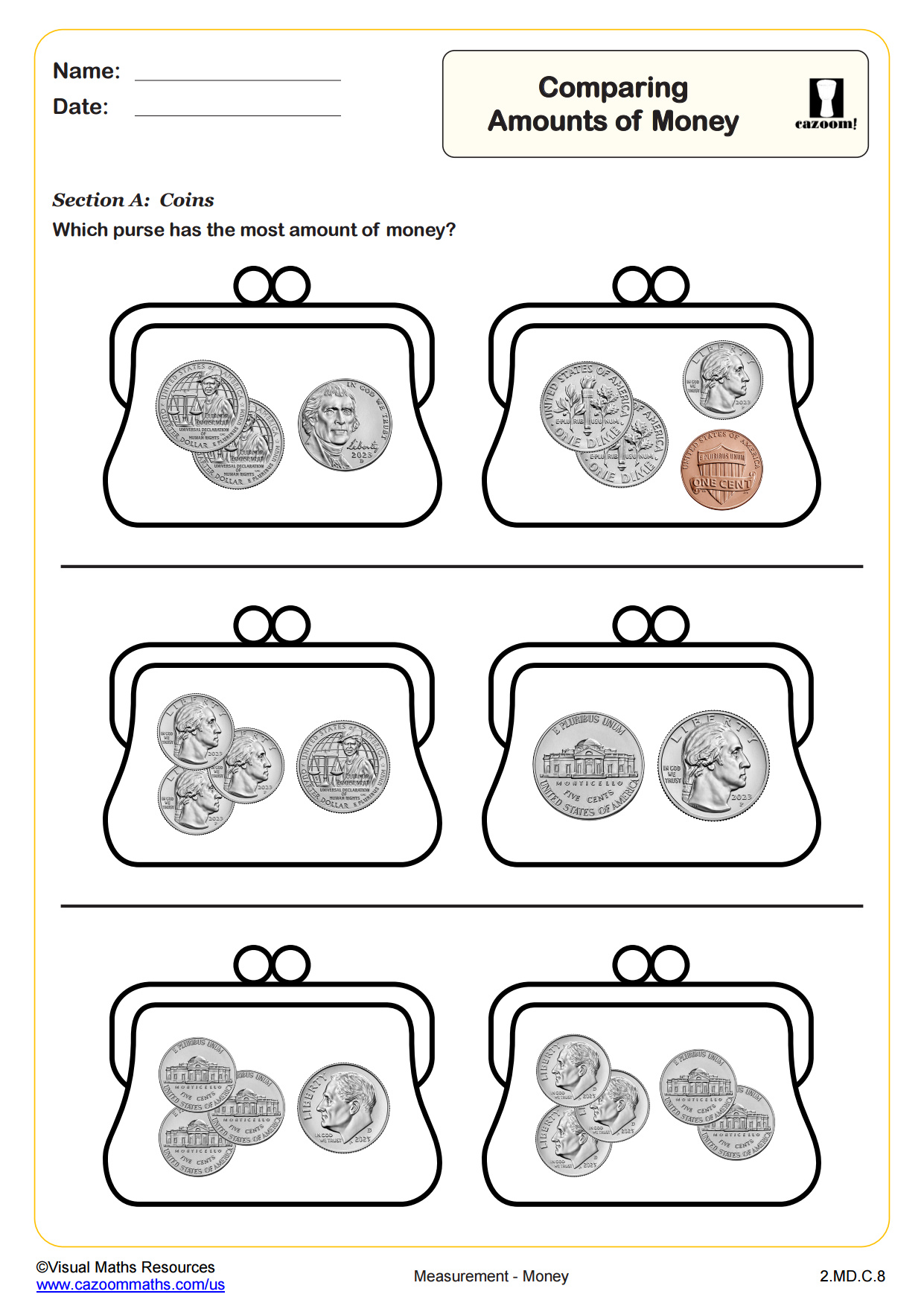
Comparing Amounts of Money
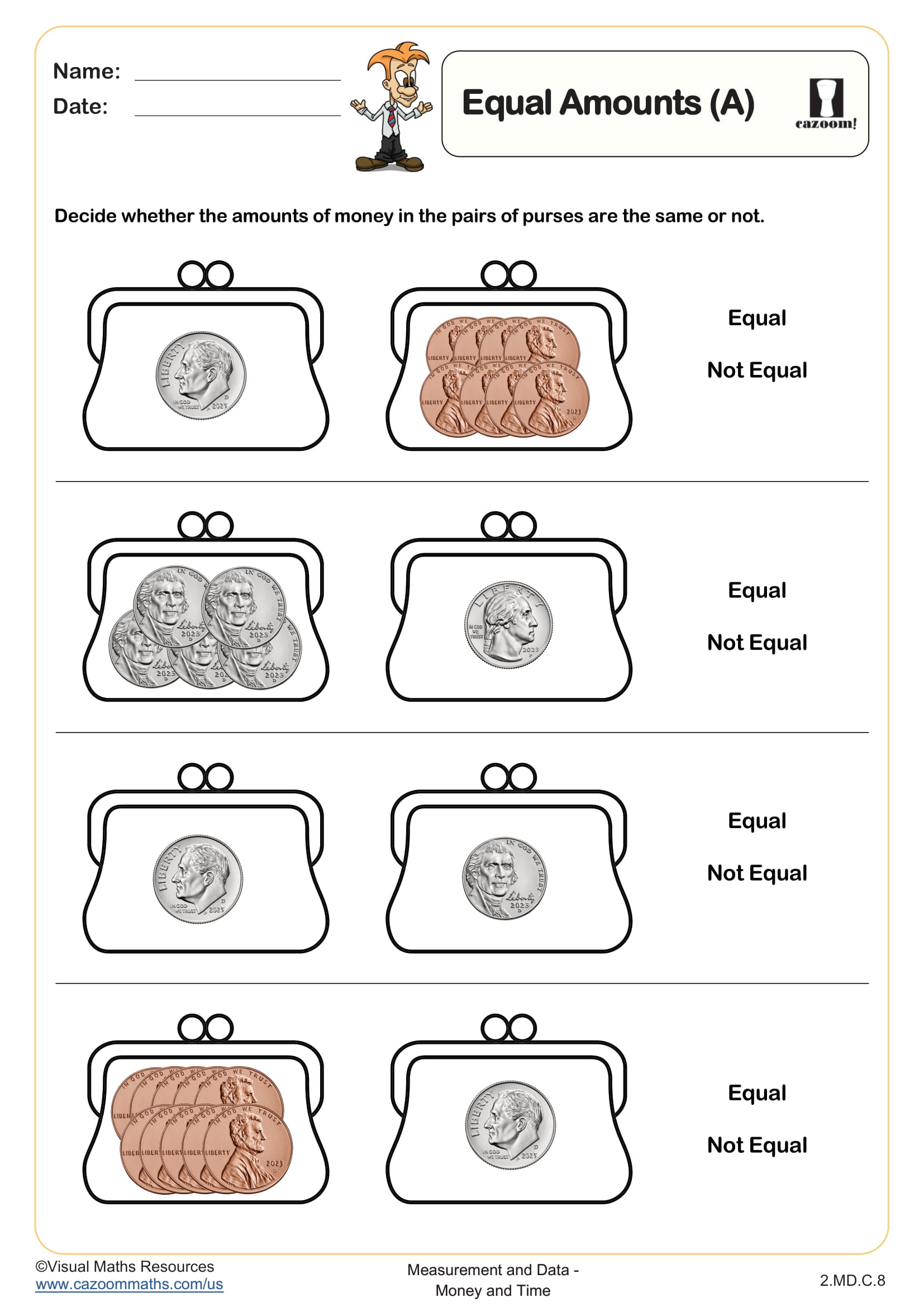
Equal Amounts (A)
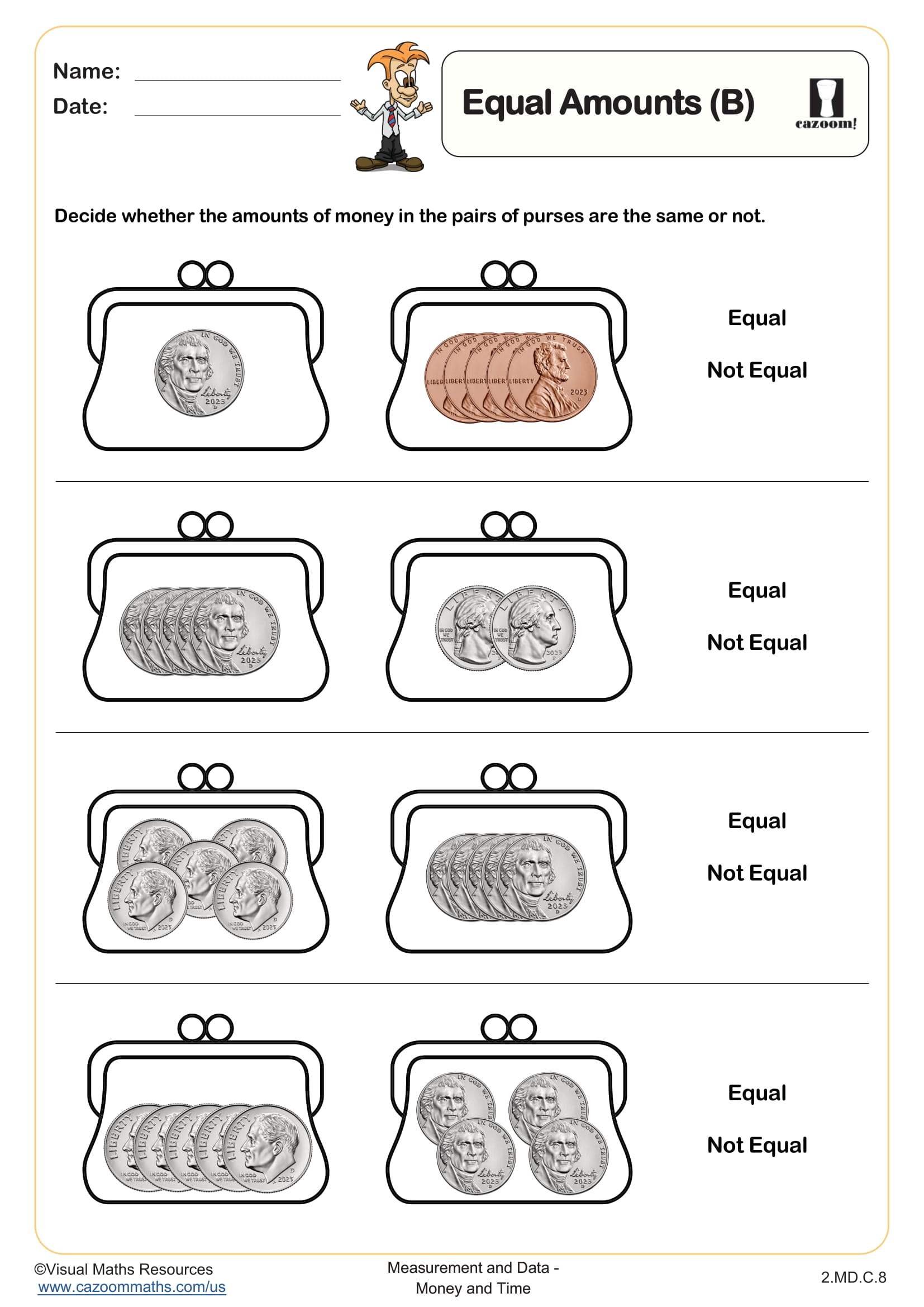
Equal Amounts (B)
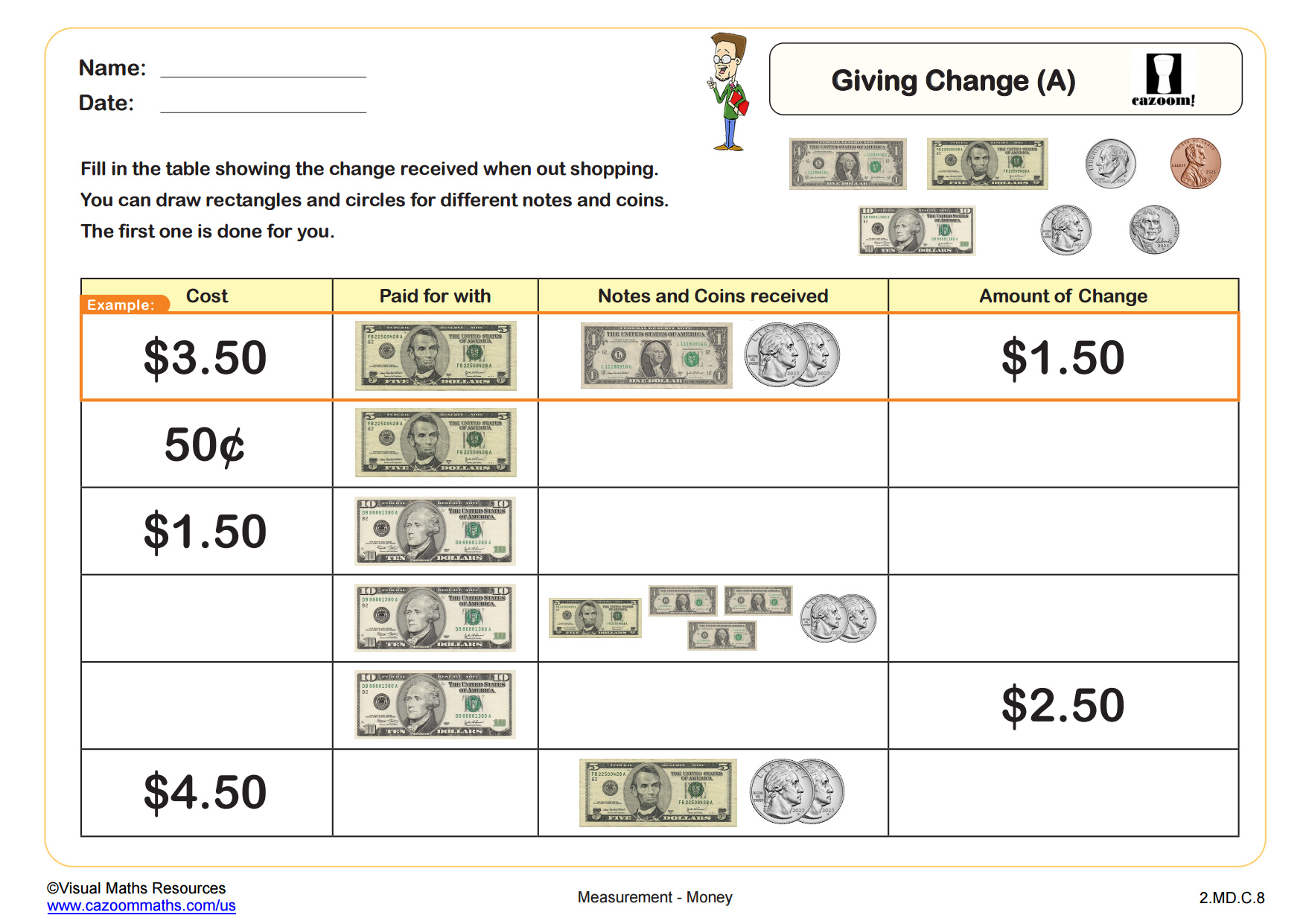
Giving Change (A)
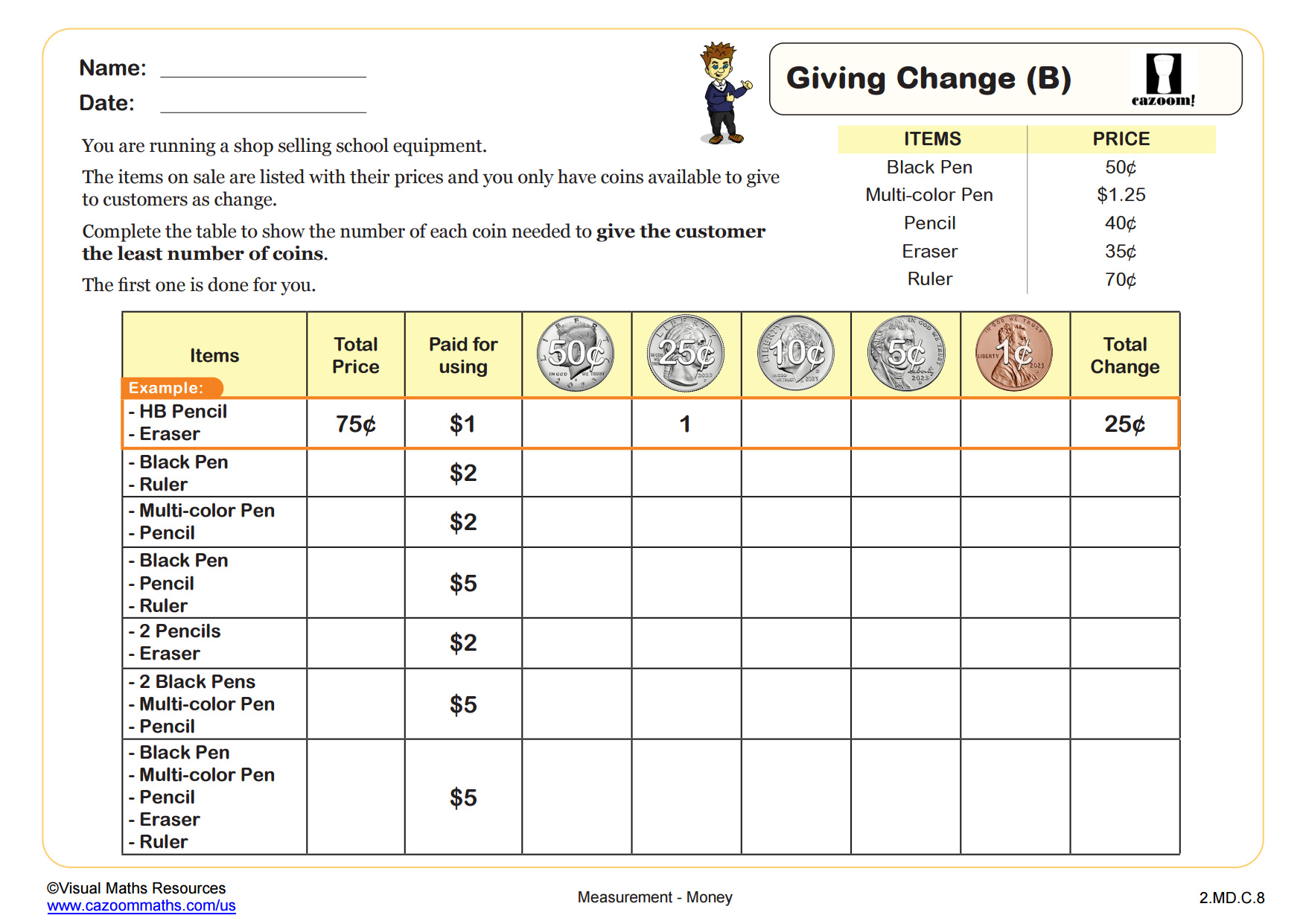
Giving Change (B)
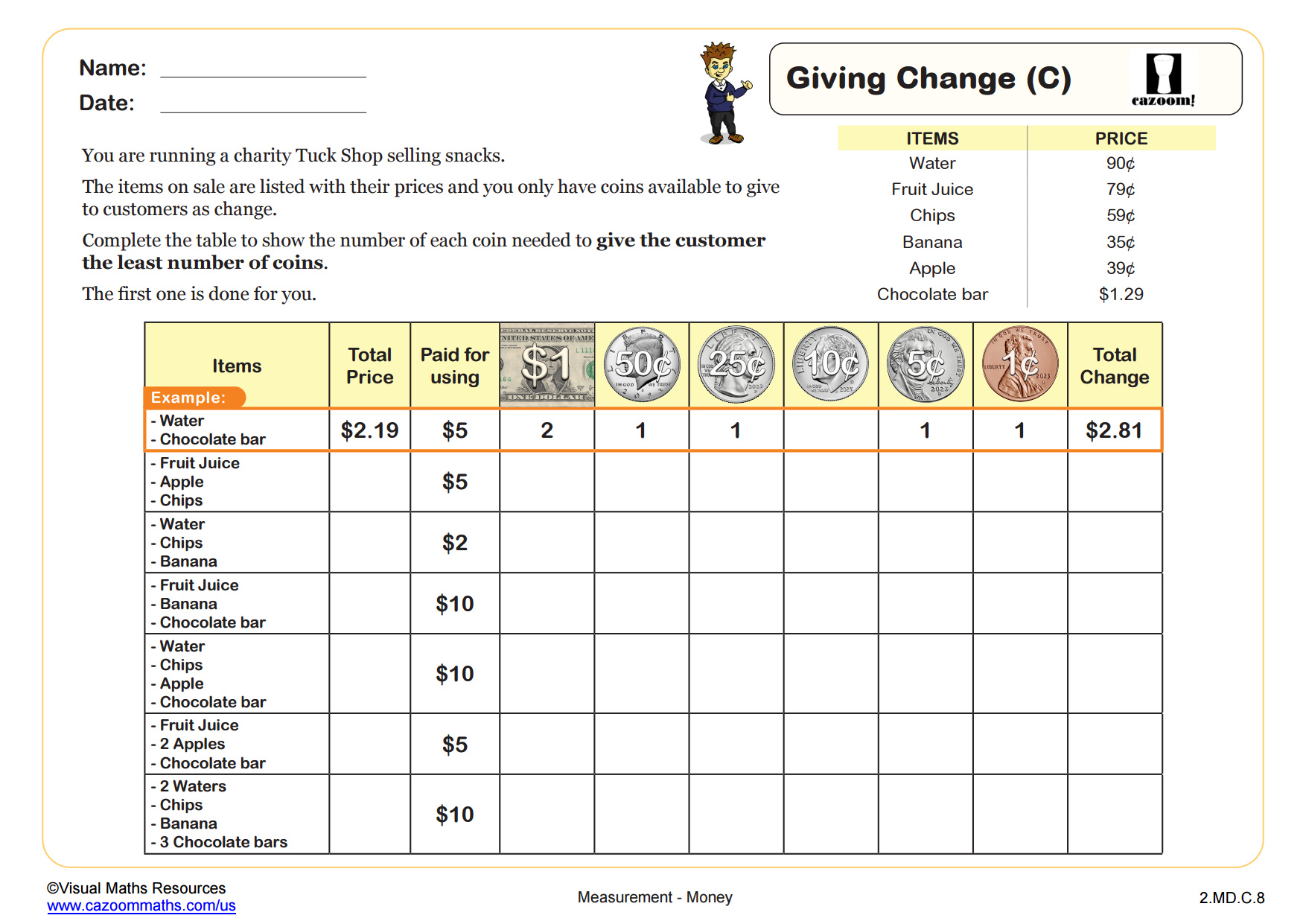
Giving Change (C)
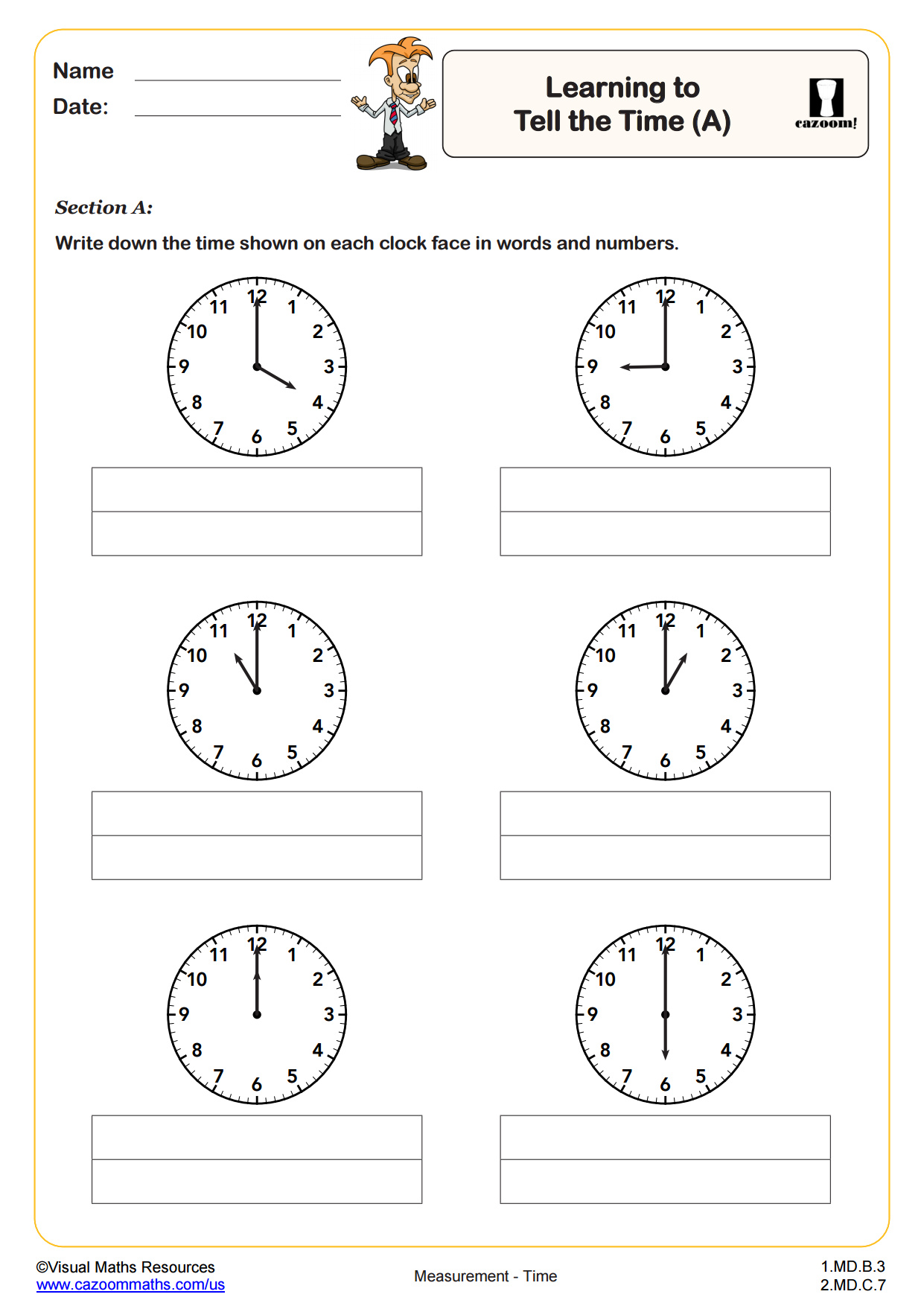
Learning to Tell the Time (A)
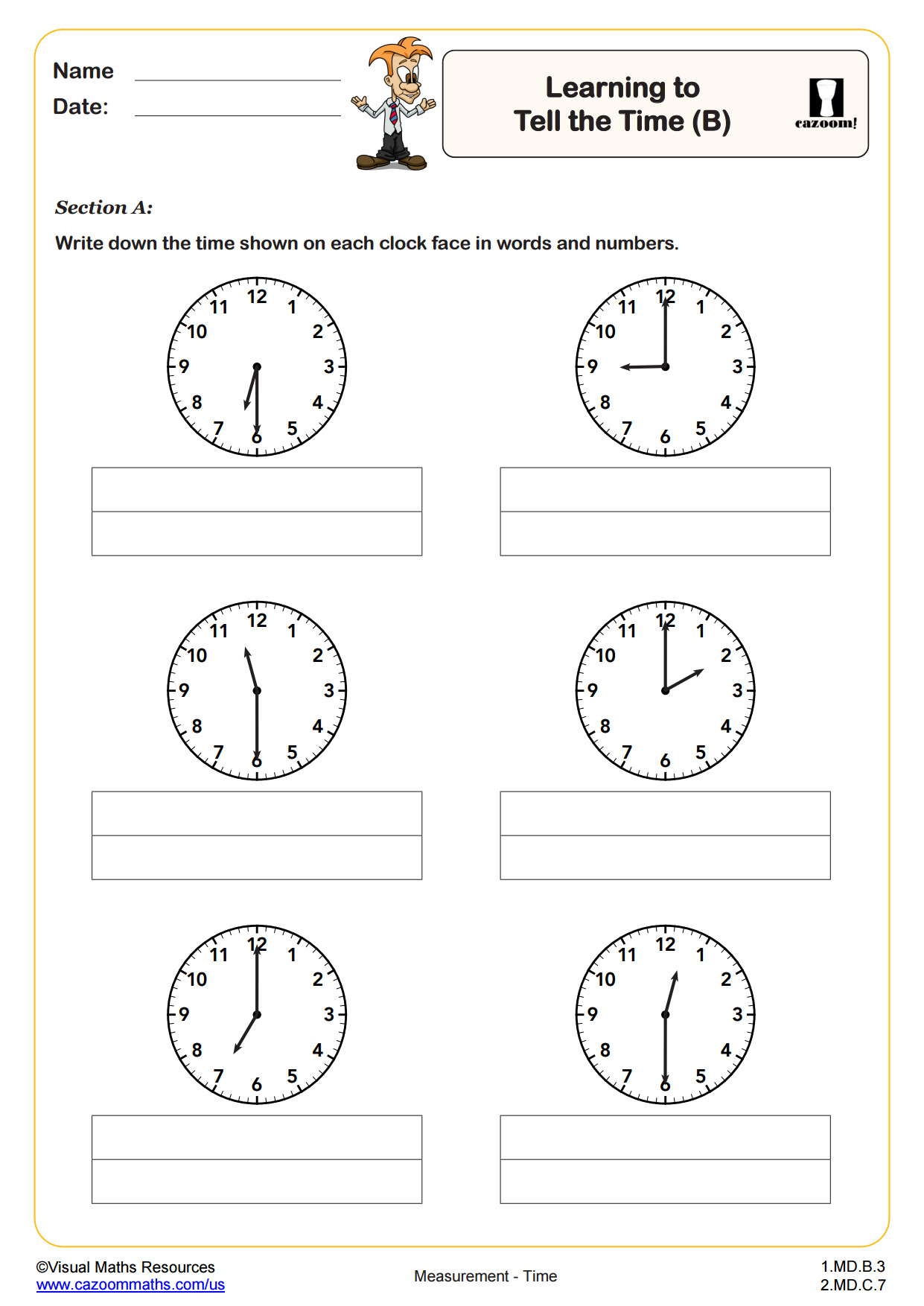
Learning to Tell the Time (B)
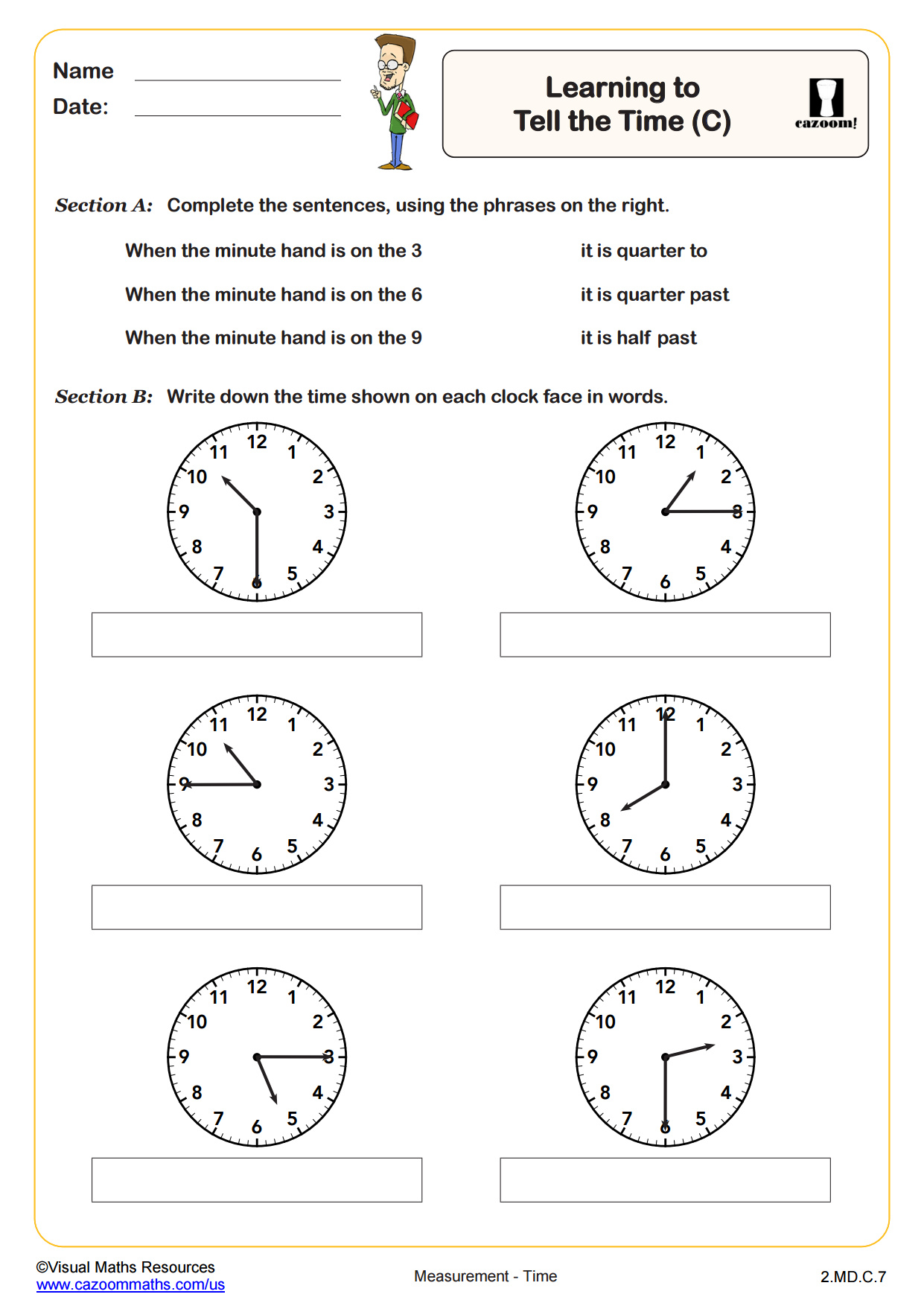
Learning to Tell the Time (C)
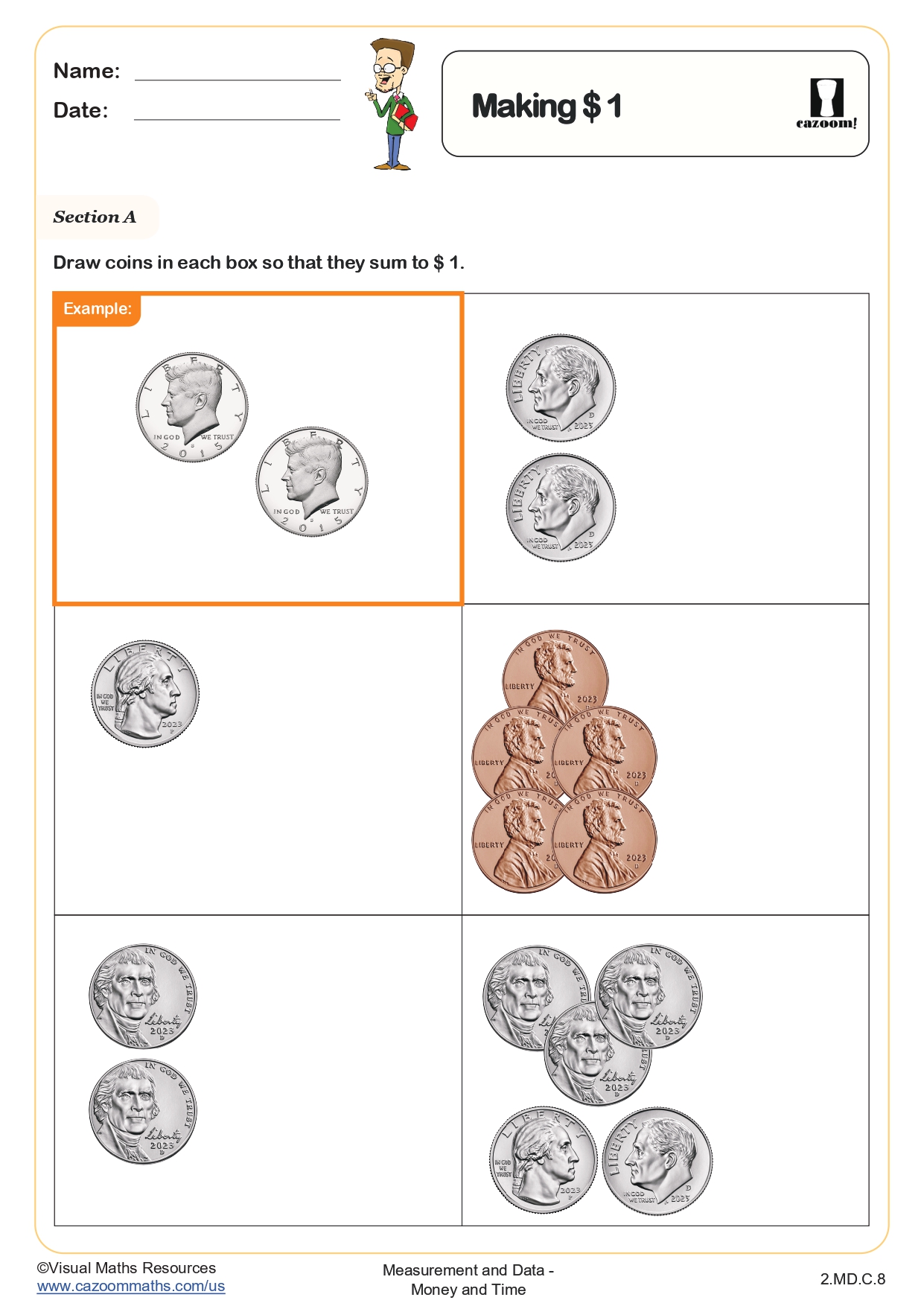
Making $1
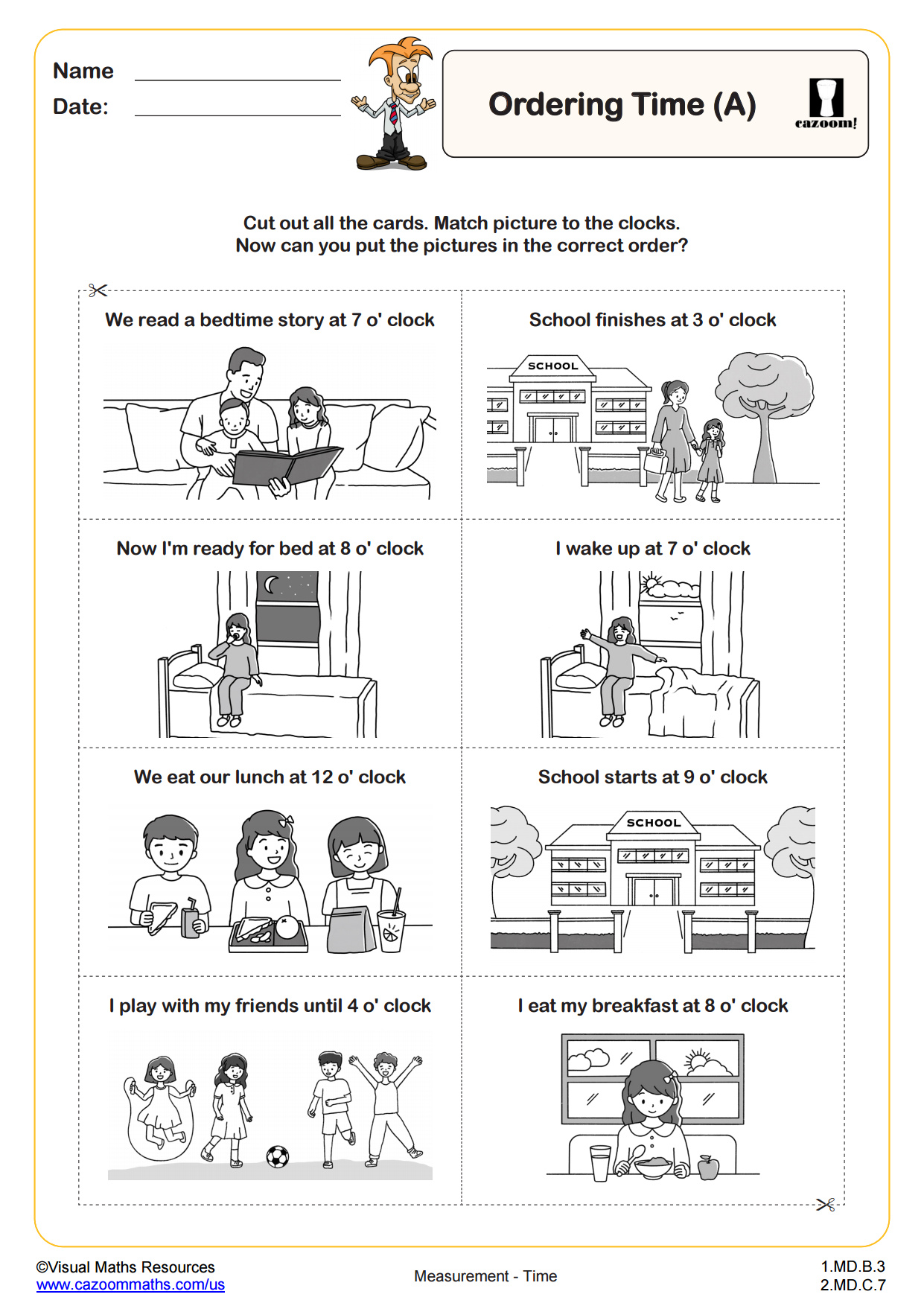
Ordering Time (A)
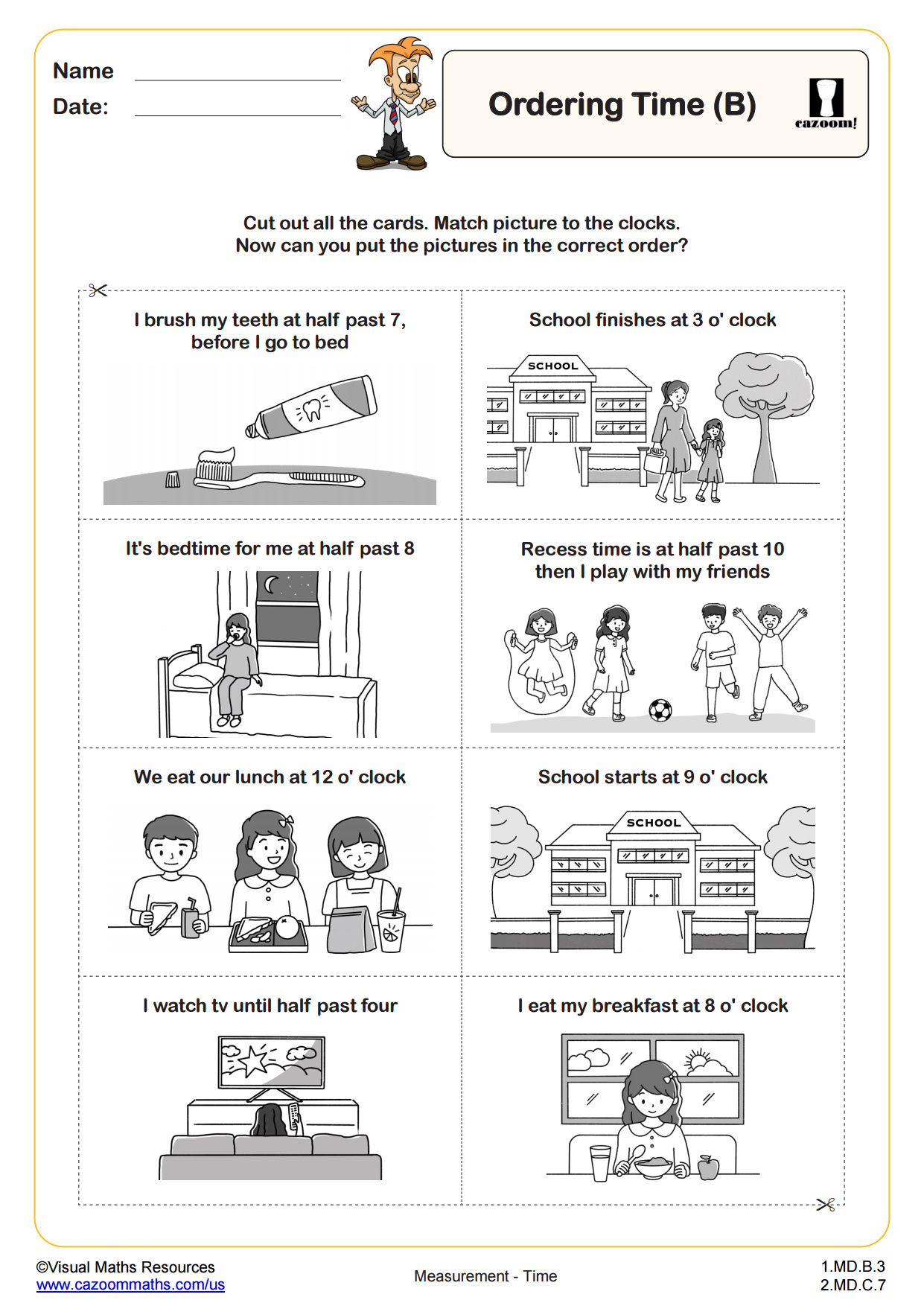
Ordering Time (B)
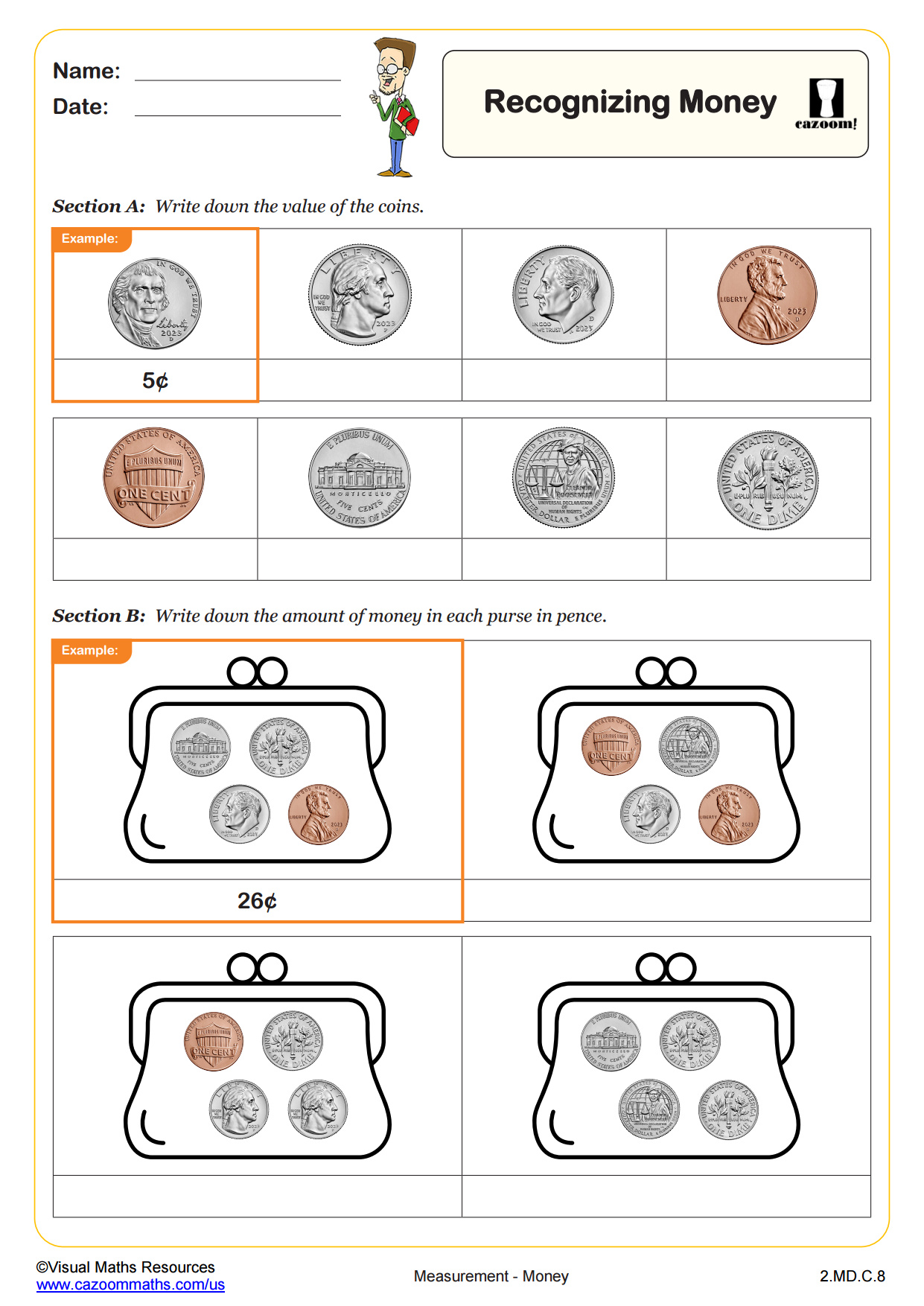
Recognising Money (A)
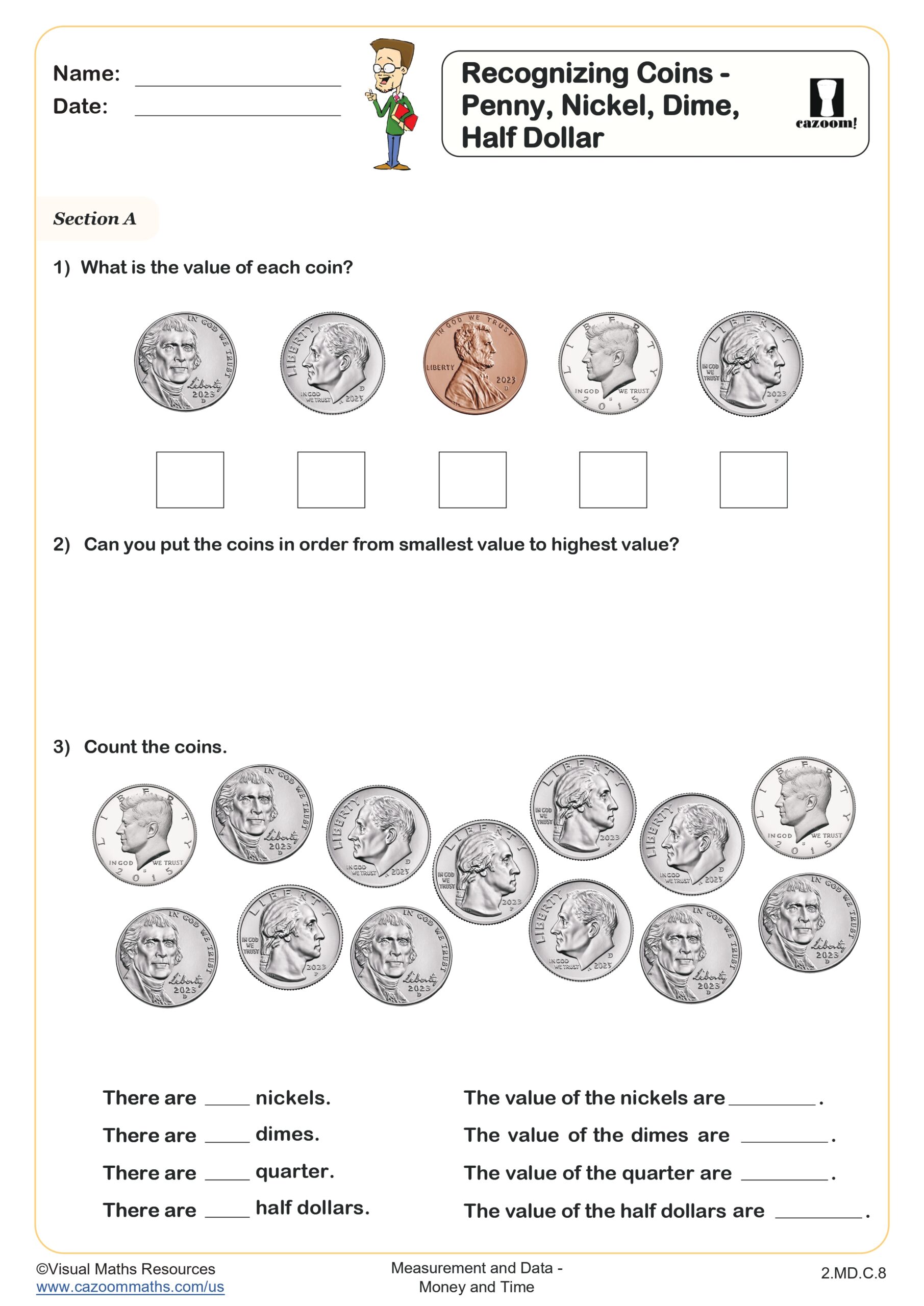
Recognizing Coins - Penny, Nickel, Dime, Half Dollar
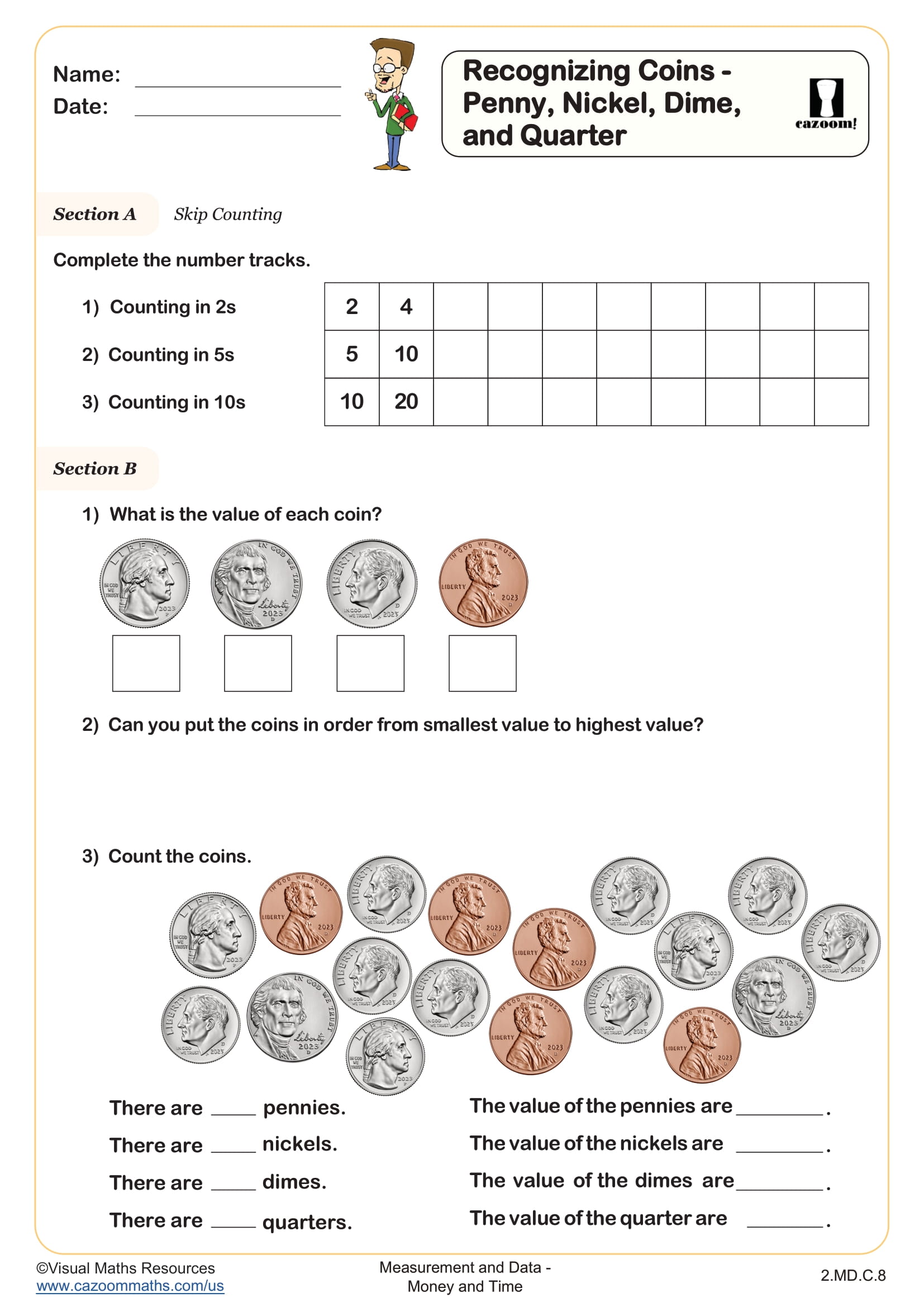
Recognizing Coins - Penny, Nickel, Dime, Quarter
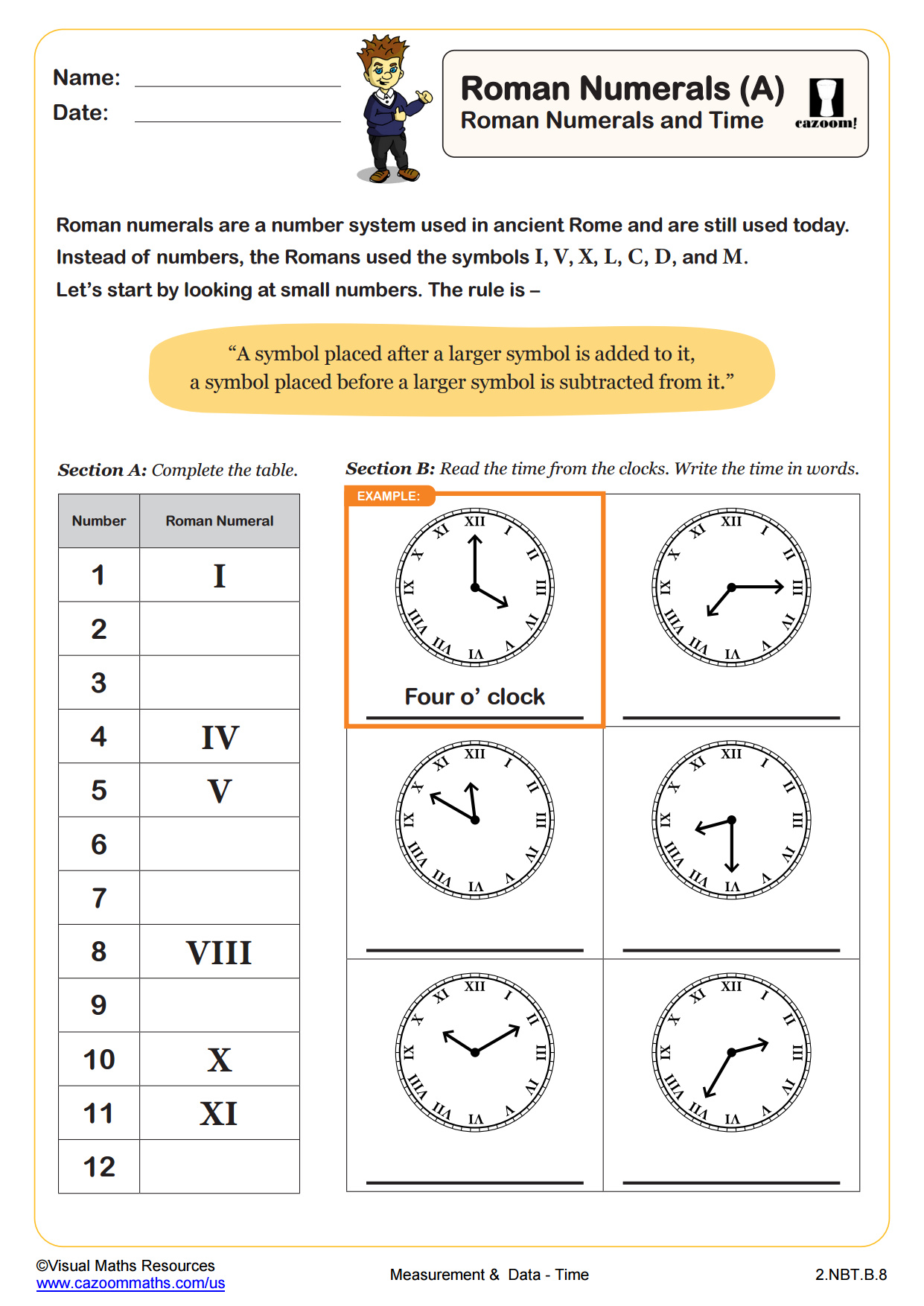
Roman Numerals (A)
Summer Activity Pack
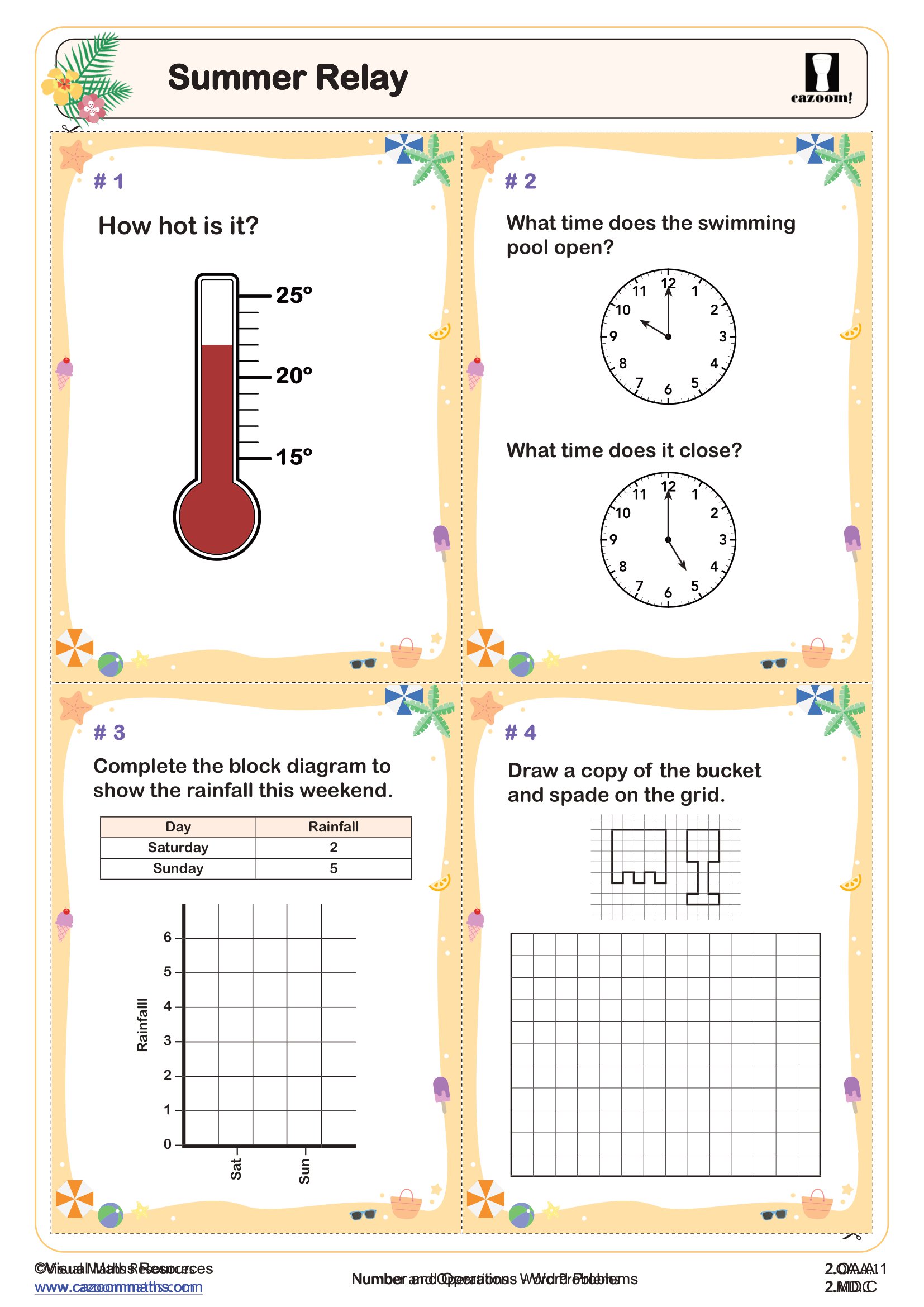
Summer Relay Pack 2nd Grade
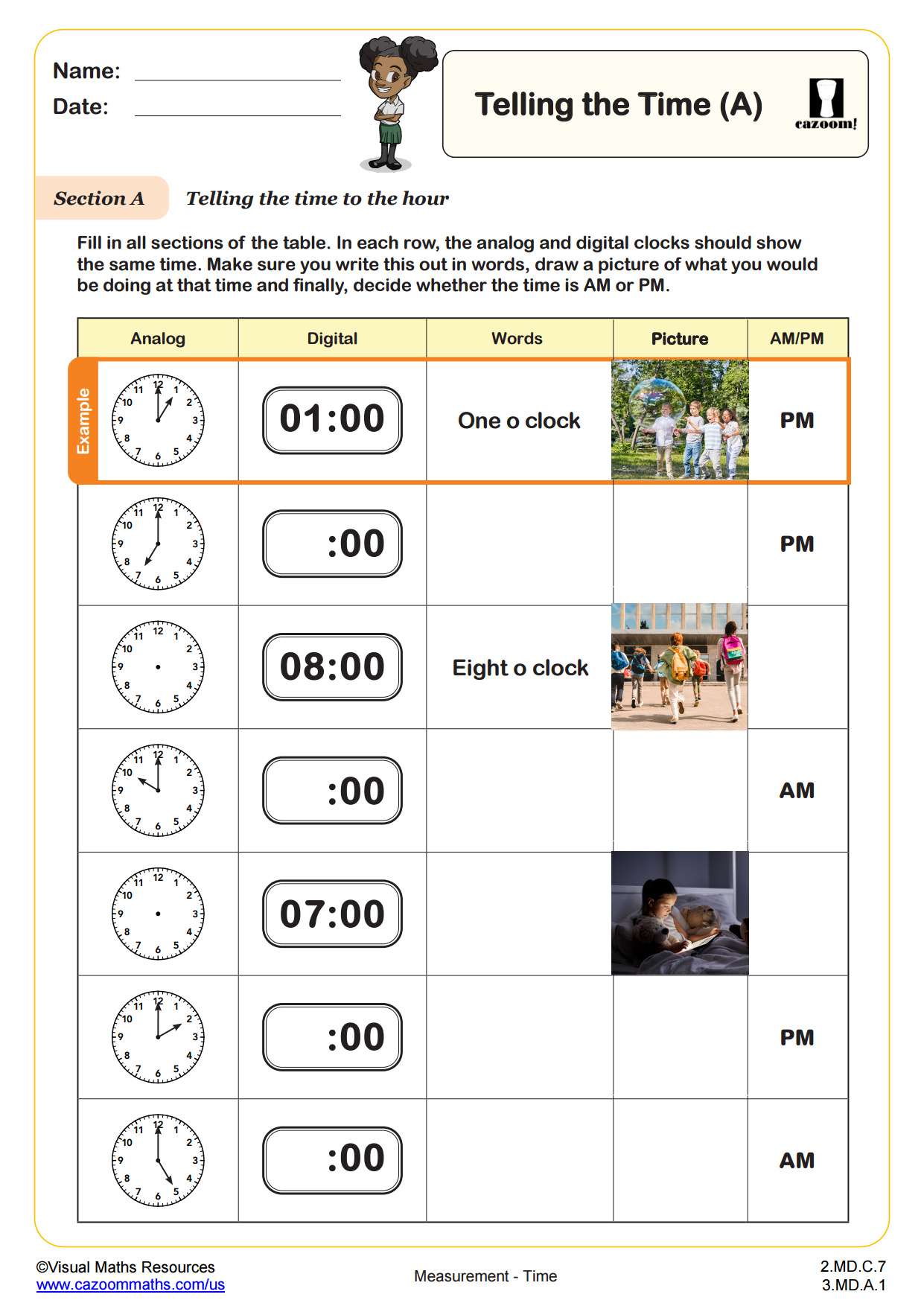
Telling the Time (A)
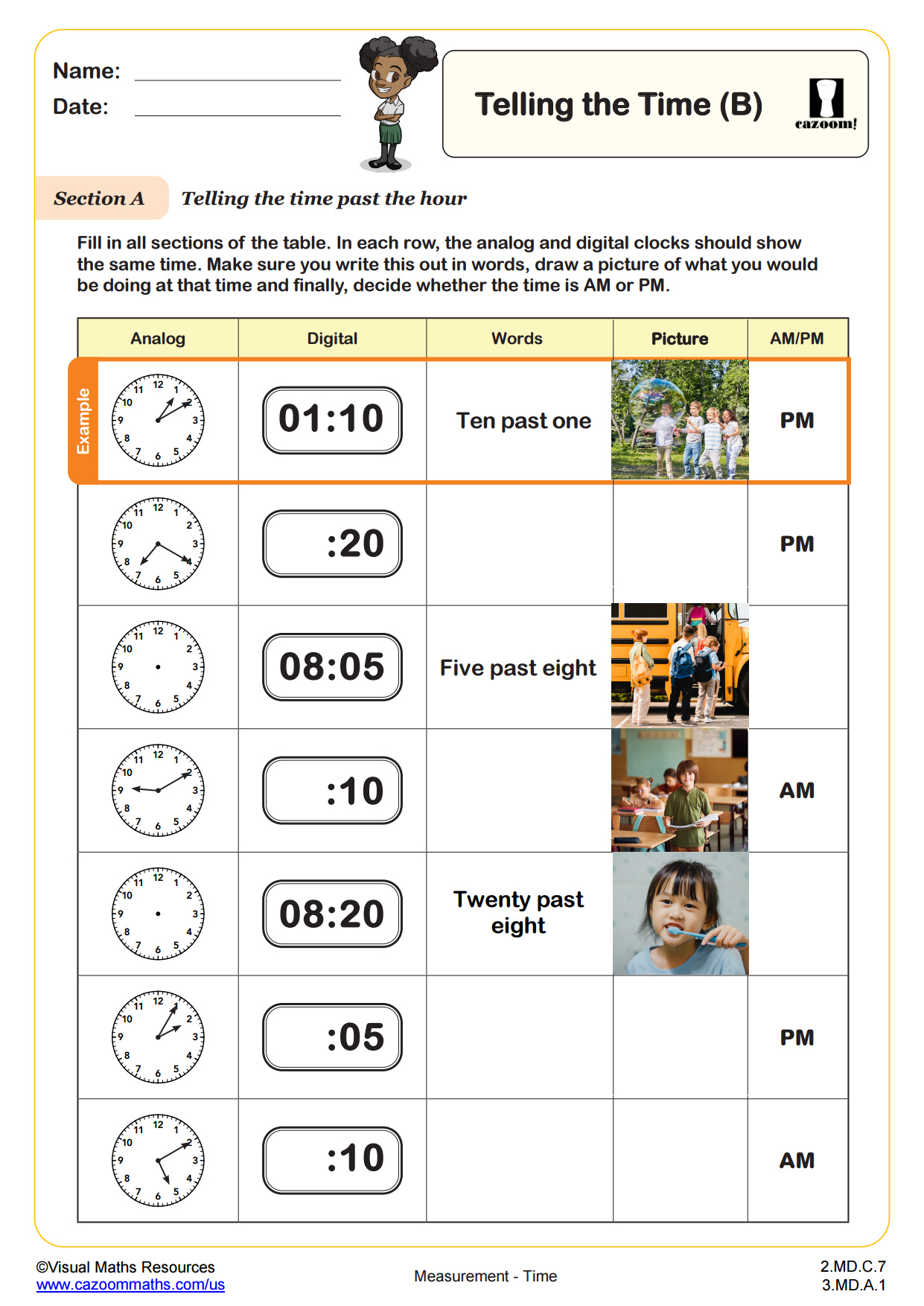
Telling the Time (B)
All worksheets are created by the team of experienced teachers at Cazoom Math.
What Money Skills Should 2nd Graders Learn?
Second graders should recognize and count pennies, nickels, dimes, and quarters, then apply these skills to find equivalent amounts and make change. The Common Core State Standards expect students to solve word problems involving dollar bills, quarters, dimes, nickels, and pennies using the cent symbol appropriately. Students work with amounts up to one dollar at this level.
A common mistake occurs when students count mixed coins by adding the number of coins rather than their values. Teachers frequently notice students counting three dimes and two nickels as five cents instead of forty cents. Providing visual representations where students circle groups of coins that make ten cents helps them transition from counting individual coins to recognizing value patterns that simplify mental math.
How Does 2nd Grade Money and Time Build on Earlier Learning?
In second grade, students connect their first grade experience with telling time to the hour and half hour to more precise time-telling at five-minute intervals. They also expand from simple coin identification in kindergarten and first grade to counting collections and solving problems involving money. This grade level bridges concrete coin manipulation with abstract value calculations.
These skills prepare students for third grade decimal work and multiplication. When students understand that four quarters equal one dollar, they're building foundational fraction concepts. Time-telling at five-minute intervals reinforces skip counting by fives, which directly supports multiplication tables introduced later. Students who master analog clock reading also develop stronger number line understanding, which benefits fraction work in upper elementary grades.
Why Is Learning to Make Change Important?
Making change requires students to think flexibly about numbers, combining subtraction skills with coin value knowledge. Students must determine the difference between a purchase price and the amount paid, then represent that difference using the fewest coins possible. This skill strengthens mental math and develops number sense about relationships between amounts.
Real-world applications appear daily when students purchase lunch, school supplies, or snacks. Beyond immediate usefulness, calculating change builds financial literacy that extends into budgeting and consumer math. Students lose points on standardized assessments when they correctly subtract to find change but select coins that don't match the calculated amount. In STEM fields, this type of constraint-based problem solving appears in engineering design when professionals must meet specifications using available resources.
How Do These Worksheets Support Different Learning Needs?
The worksheets provide graduated difficulty levels, starting with straightforward coin counting and time-telling before advancing to comparison tasks and problem-solving. Visual coin representations help students who need concrete references, while word problems challenge students ready for application. The answer keys allow students to check their work independently, building self-correction habits and mathematical confidence.
Teachers use these materials for differentiated instruction during math centers, assigning appropriate difficulty levels to individual students. The worksheets work well for morning work routines, homework reinforcement, or intervention sessions with students who need additional practice. Paired work proves particularly effective for time-telling activities, where one student sets a time on a practice clock while their partner writes the digital time, then they verify answers together using the key.