2nd Grade Multiplication Worksheets
All worksheets are created by the team of experienced teachers at Cazoom Math.
What multiplication concepts should 2nd graders learn?
Second grade multiplication focuses on pre-multiplication skills rather than formal multiplication facts. The Common Core State Standards expect students to work with equal groups, arrays, and skip counting as foundations for understanding multiplication in 3rd grade. Students explore doubling numbers, counting by twos, fives, and tens, and recognizing patterns in even and odd numbers through concrete and pictorial models.
A common misconception emerges when students confuse skip counting with simple counting—they may recite "2, 4, 6, 8" correctly but struggle to connect this sequence to "groups of two." Teachers notice that students who physically group objects (like counting pairs of shoes or arranging counters in rows of two) develop stronger conceptual understanding than those who only memorize skip counting sequences. This concrete experience becomes the bridge to true multiplicative thinking.
Is 2nd grade too early to introduce multiplication?
Second grade is the appropriate time to introduce multiplication concepts through informal experiences with equal groups and repeated addition. The grade-level standards don't require students to memorize multiplication tables or use the multiplication symbol, but they do expect students to build the conceptual groundwork. Activities like skip counting, working with arrays, and doubling numbers prepare students for formal multiplication instruction that begins in 3rd grade.
This foundation builds directly on 1st grade work with addition and understanding numbers to 100. Students who develop strong skip counting skills and pattern recognition in 2nd grade transition more smoothly to multiplication facts in 3rd grade. Teachers consistently observe that students who struggle with 3rd grade multiplication often missed these foundational experiences with equal groups and skip counting patterns during their 2nd grade year.
How does skip counting relate to multiplication?
Skip counting is the precursor to understanding multiplication as repeated addition. When students skip count by twos (2, 4, 6, 8, 10), they're actually counting groups of two, which lays the groundwork for recognizing that 5 groups of 2 equals 10. This pattern recognition helps students see multiplication as an efficient way to count equal groups rather than adding one at a time. Skip counting by twos specifically helps students distinguish between odd and even numbers, which strengthens number sense.
This skill connects directly to real-world situations students encounter daily. When setting the table, they might count pairs of shoes in the closet, count wheels on bicycles, or figure out how many eyes are in a group of friends. In early STEM contexts, skip counting appears when measuring (counting by inches or centimeters), organizing data in graphs with intervals of 2 or 5, or understanding patterns in nature like pairs of wings on insects.
How can teachers use these multiplication worksheets effectively?
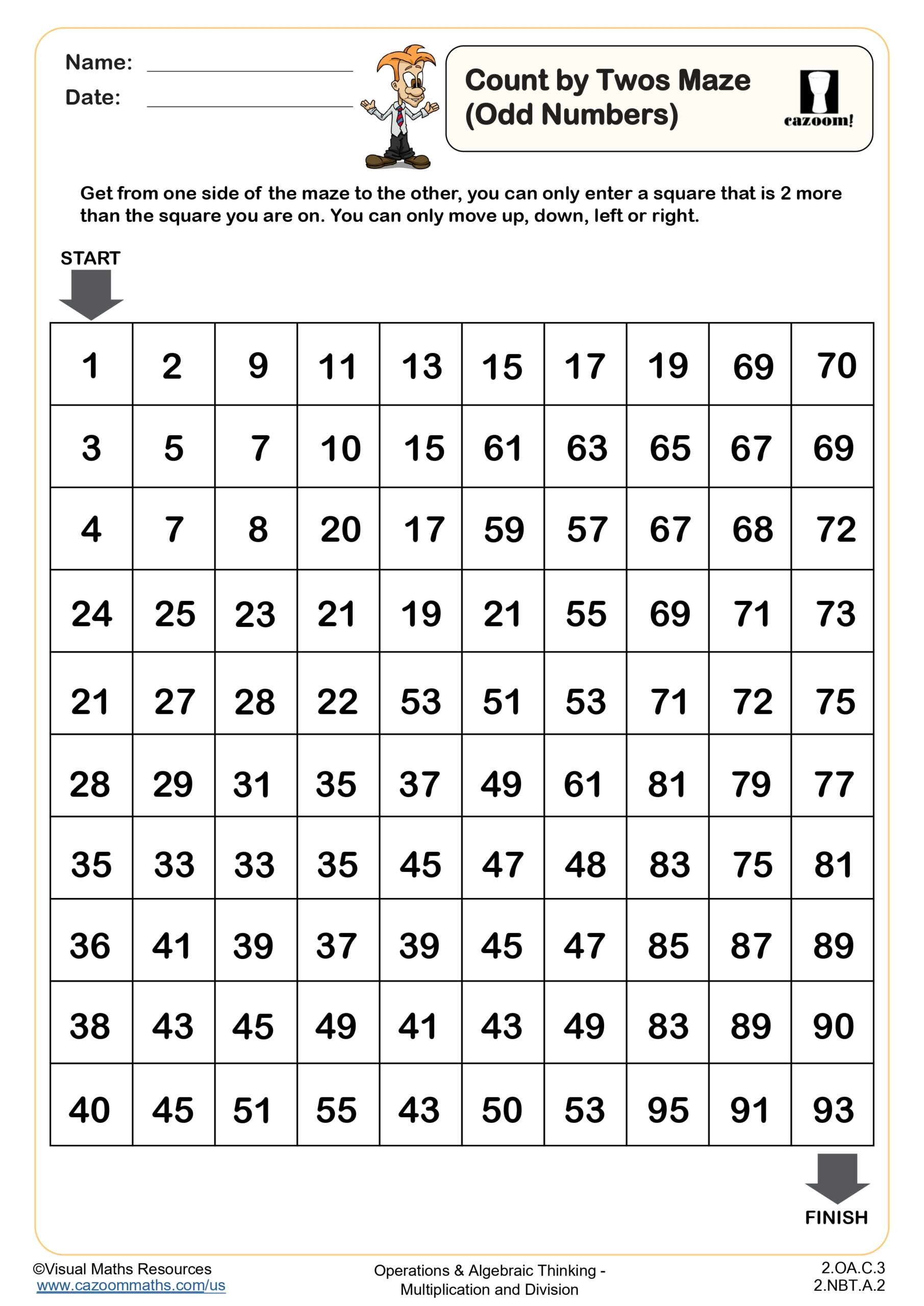
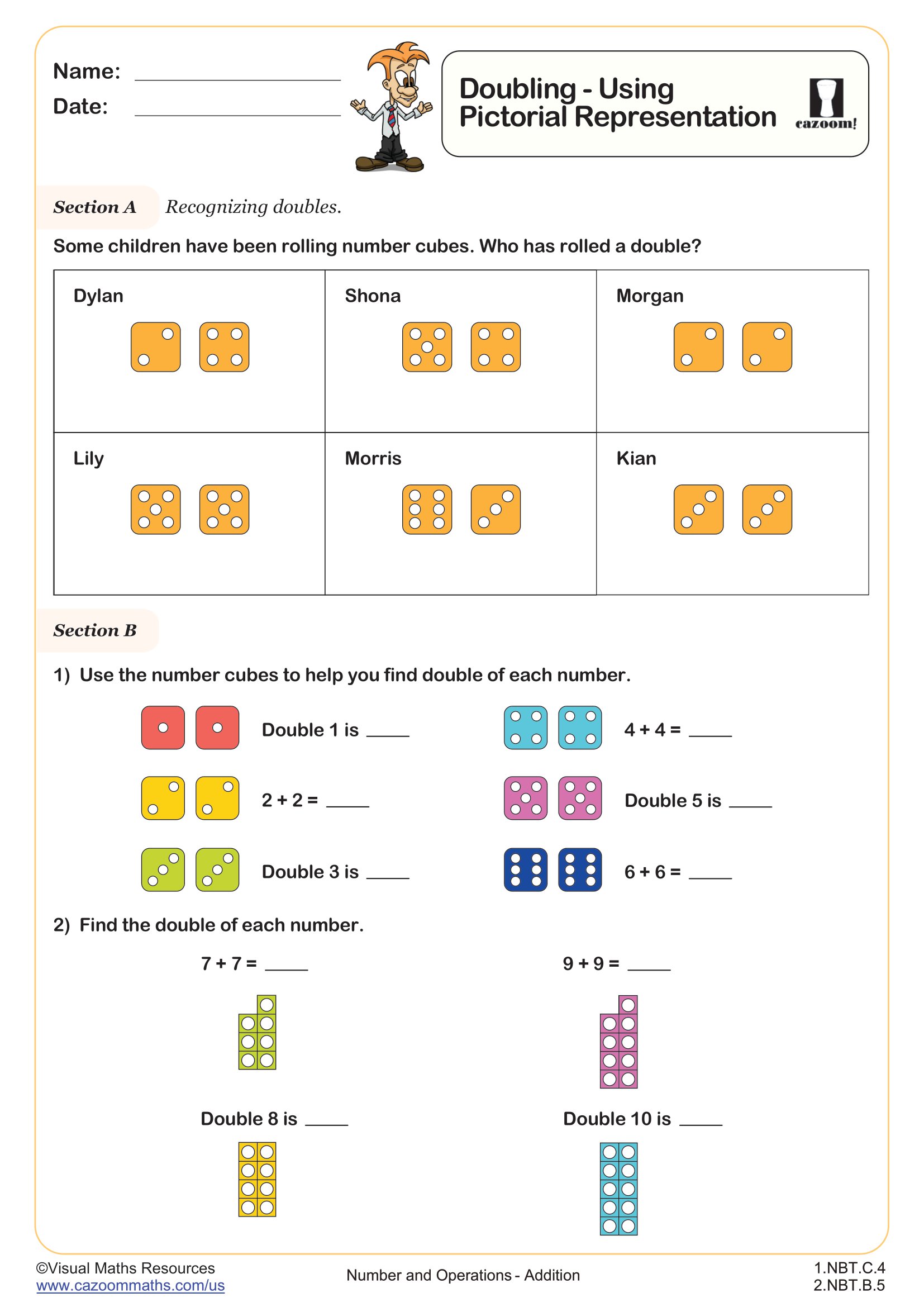
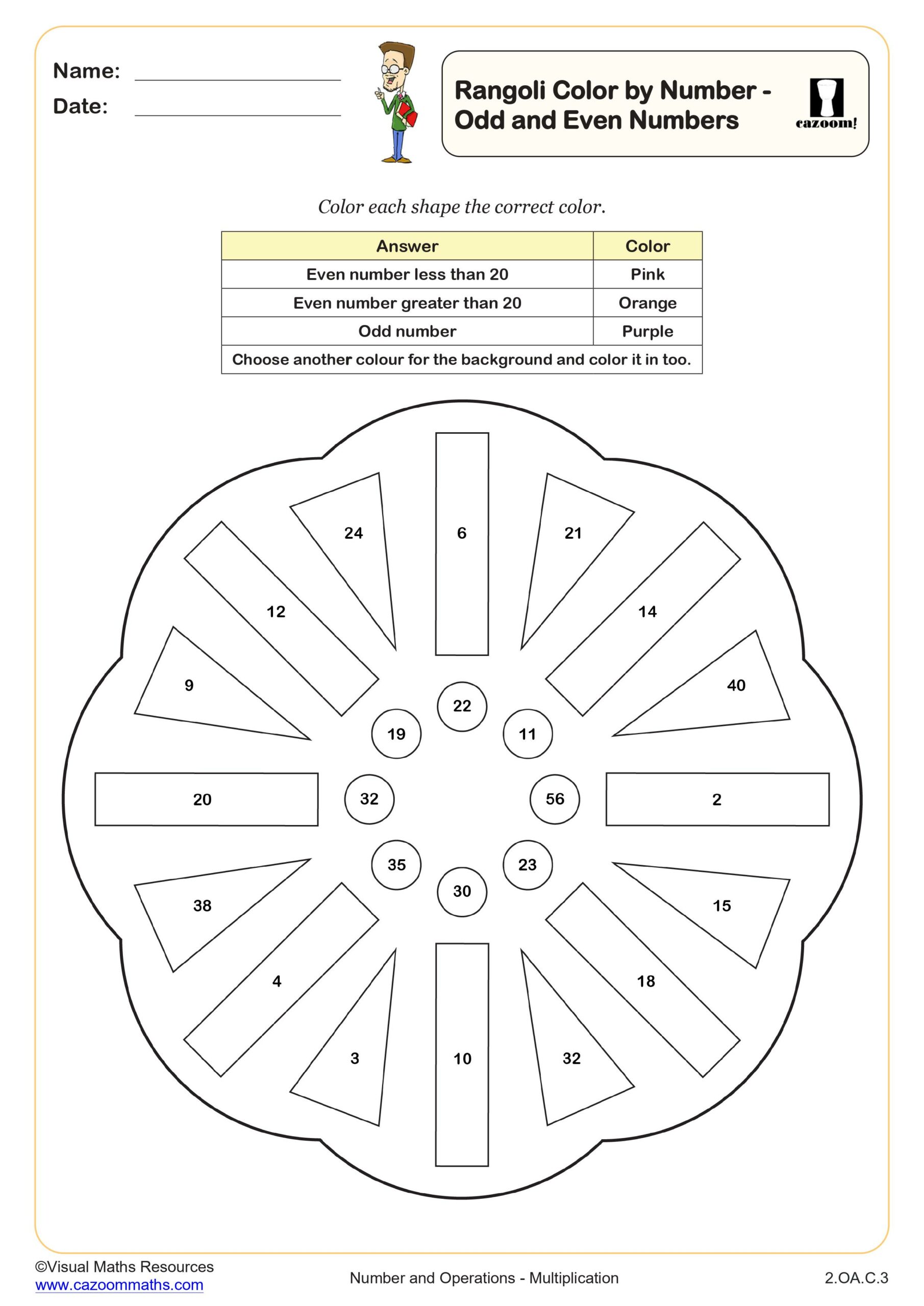
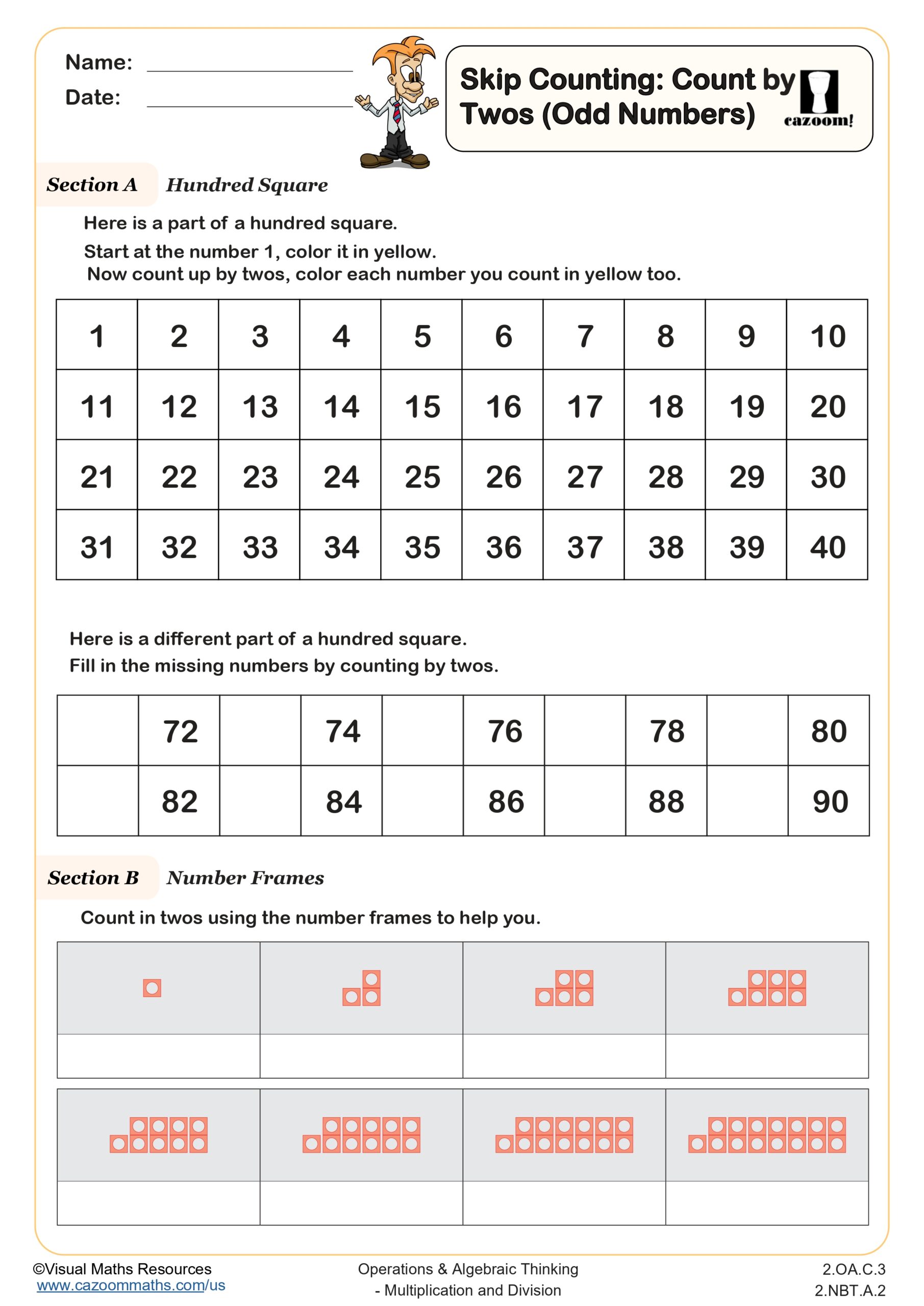
These worksheets provide varied entry points to pre-multiplication concepts through visual activities like color-by-number pages, mazes, and pictorial representations. The skip counting activities scaffold learning by providing number lines or sequences where students identify patterns, while doubling worksheets use pictures to make the concept of "twice as many" concrete. The engaging formats help maintain student focus during independent practice while building essential number sense.
Teachers often use these worksheets during math centers or small group instruction, where they can observe which students confidently skip count and which need additional support with manipulatives. The answer keys make these worksheets practical for morning work, early finisher activities, or homework assignments where families can check understanding. Many teachers pair these worksheets with hands-on activities first, then use the printed practice to assess whether students can apply skip counting and doubling concepts independently without physical manipulatives present.