2nd Grade Number and Operations in Base Ten Worksheets
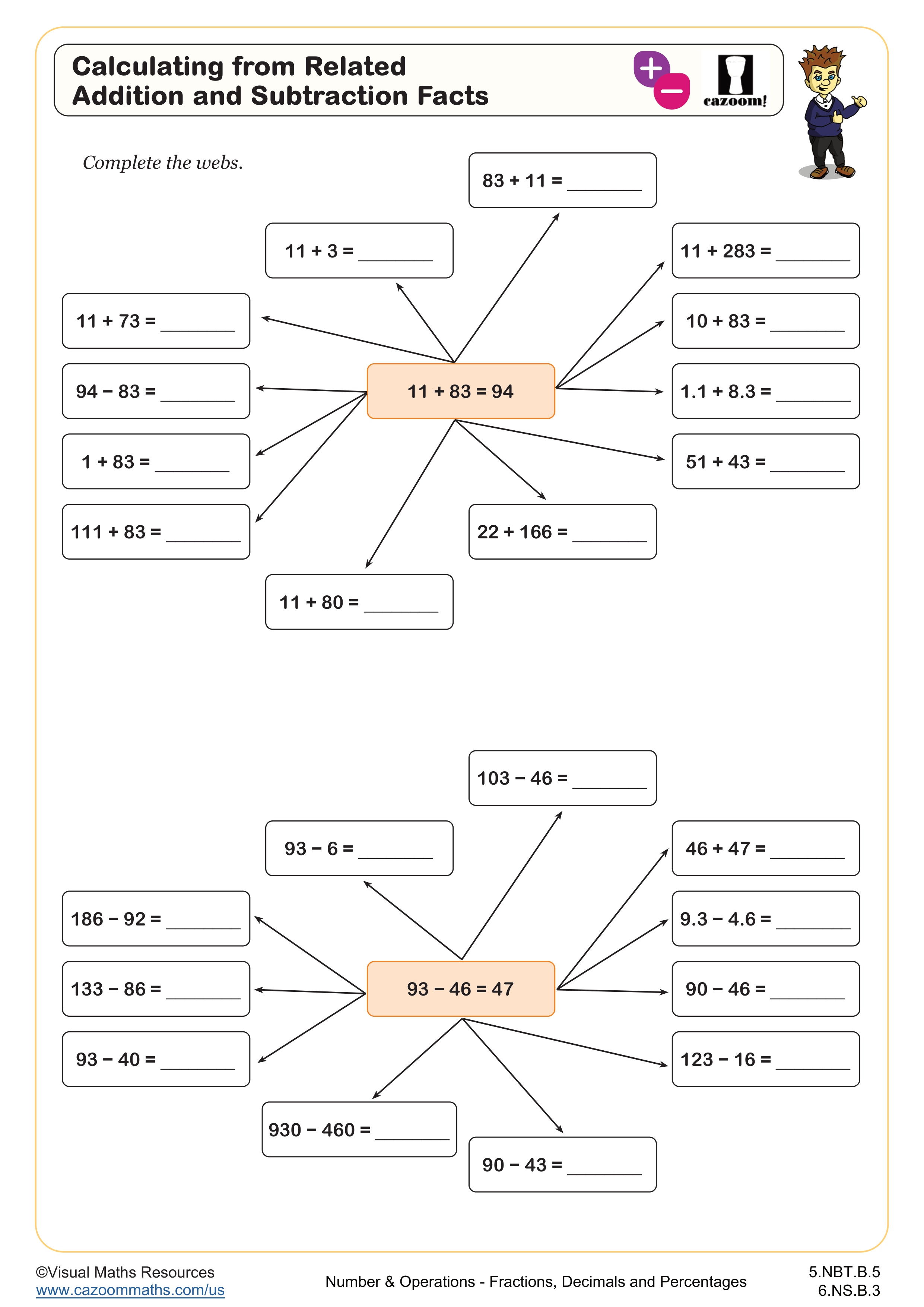
Calculating from Related Addition and Subtraction Facts
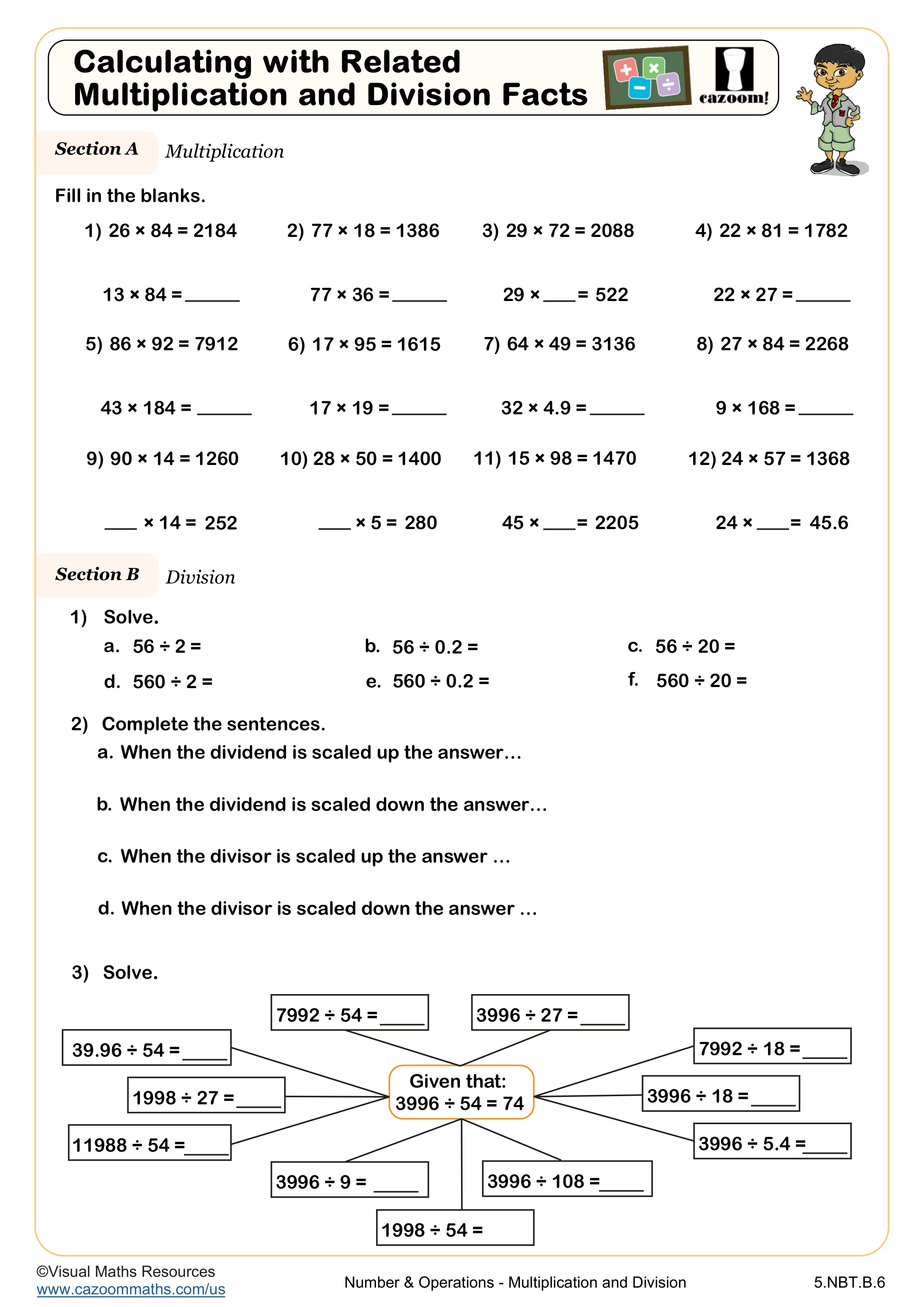
Calculating with Related Multiplication and Division Facts
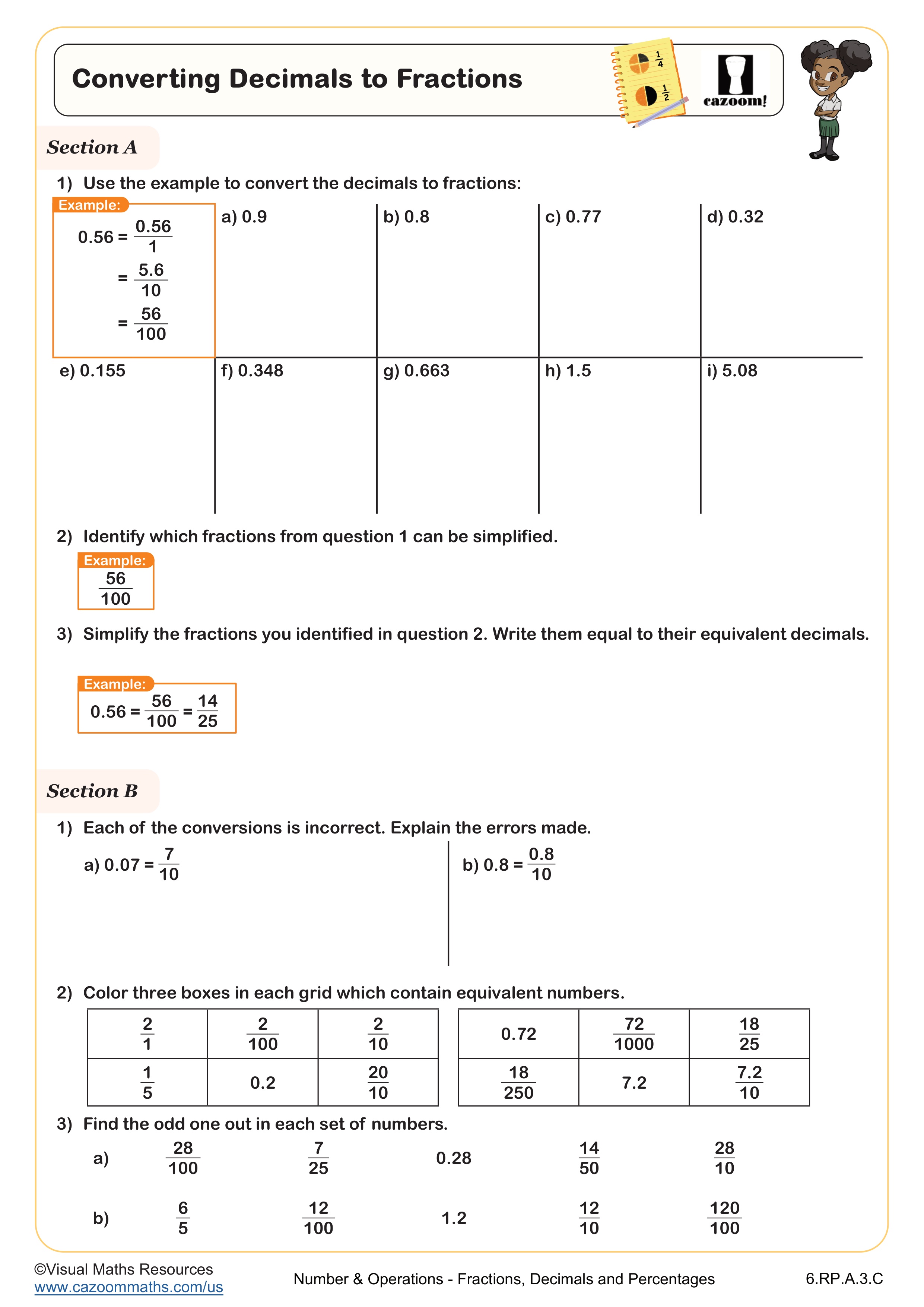
Converting Decimals to Fractions
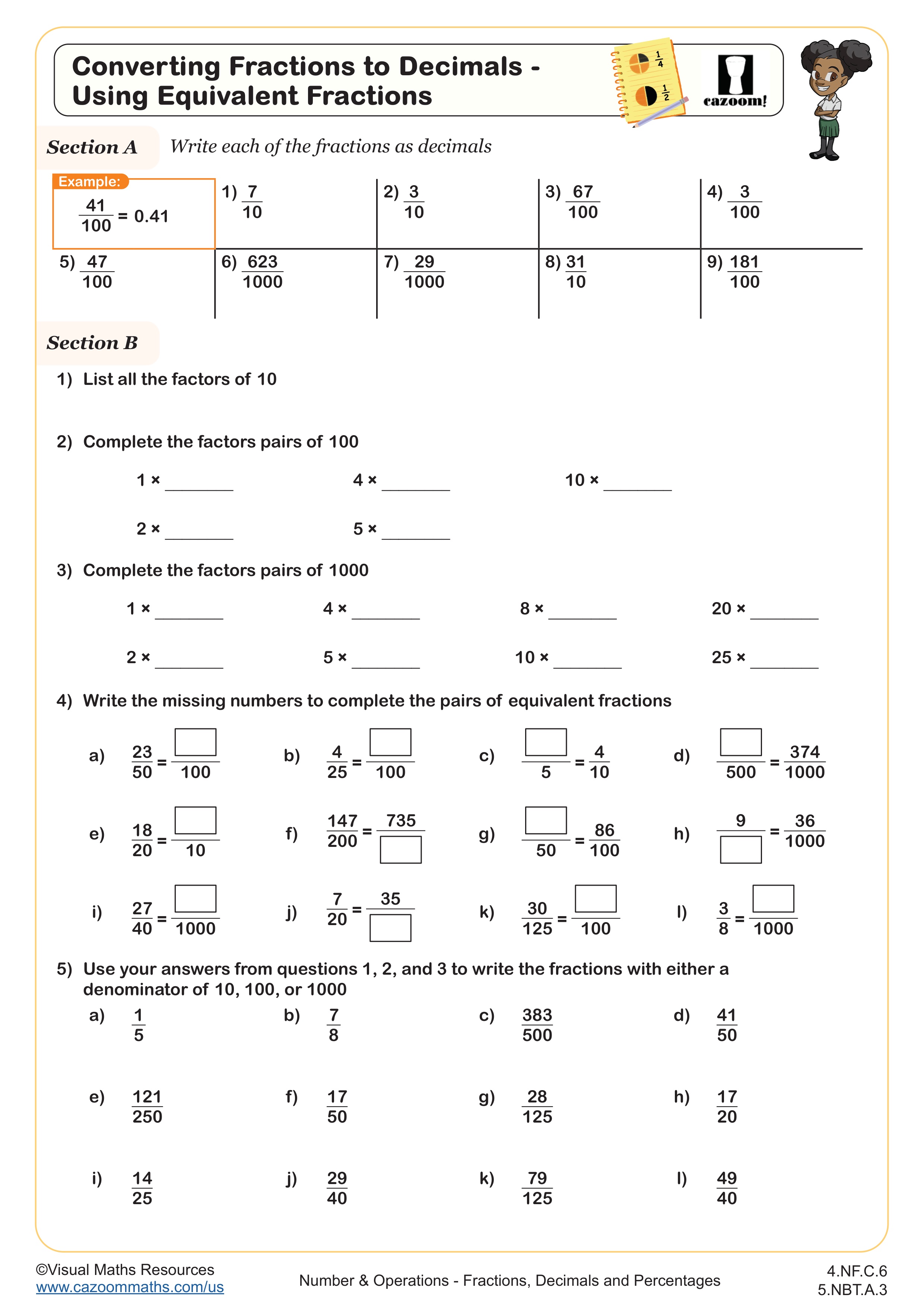
Converting Fractions to Decimals - Using Equivalent Fractions
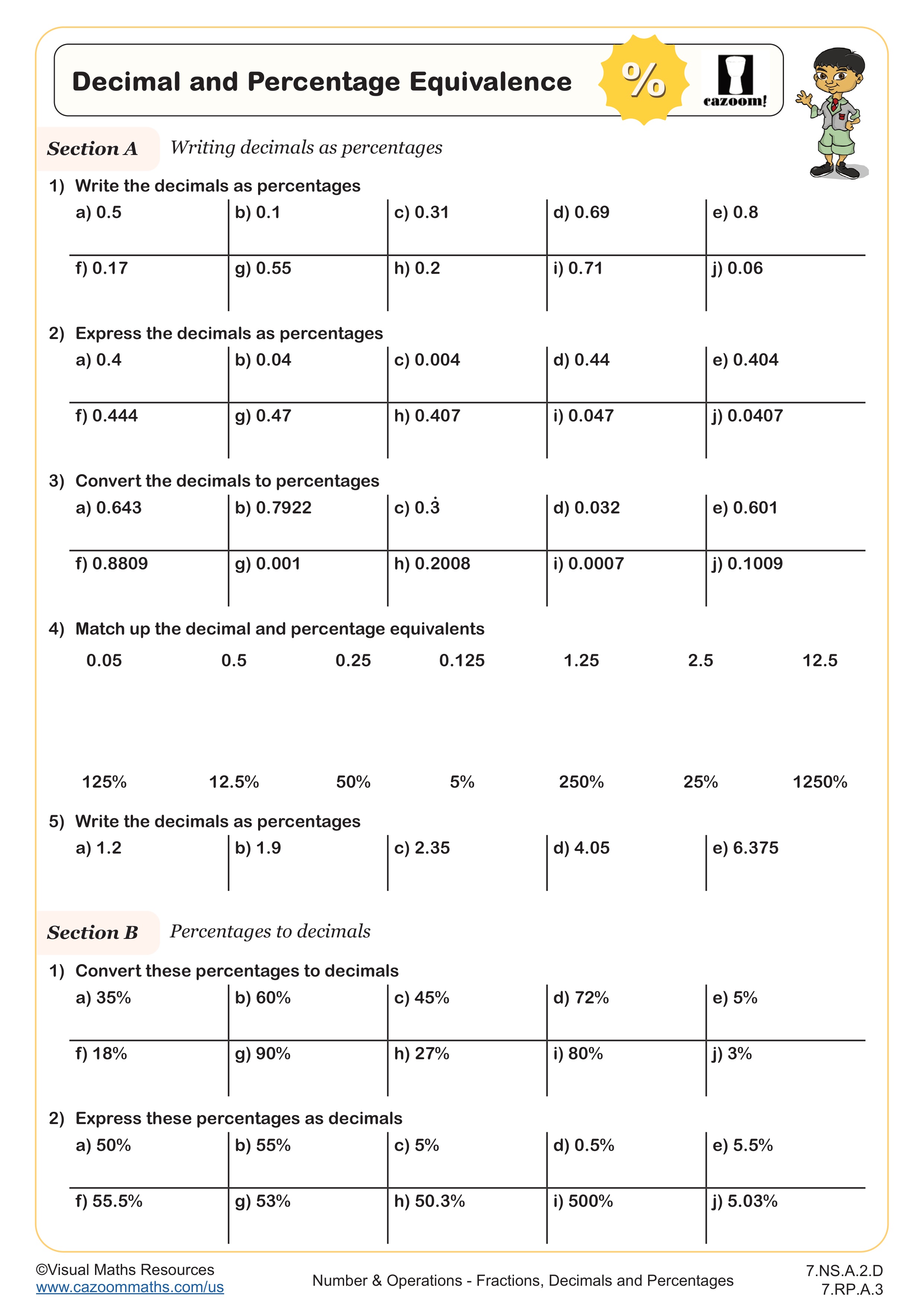
Decimal and Percentage Equivalence
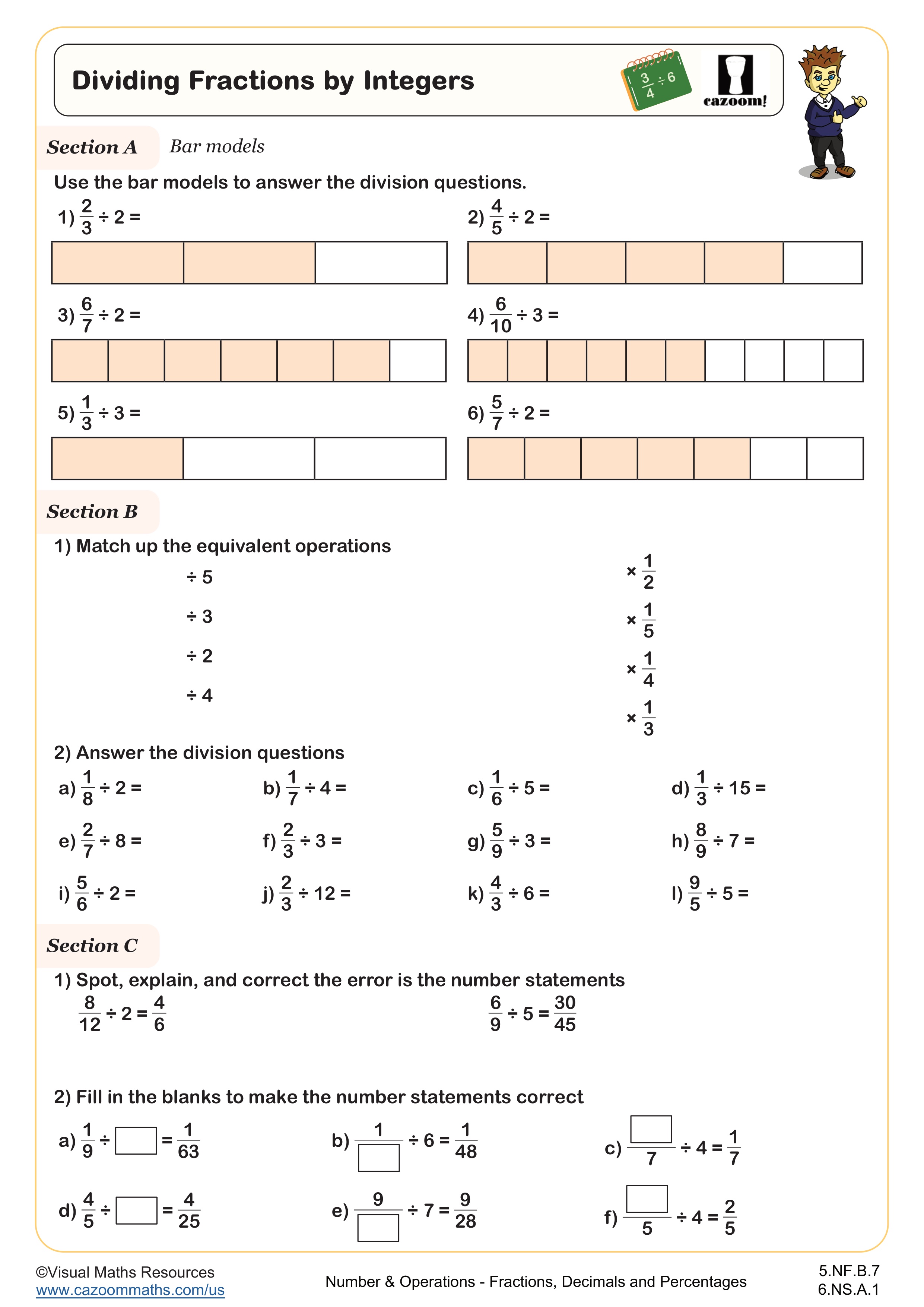
Dividing Fractions by Integers
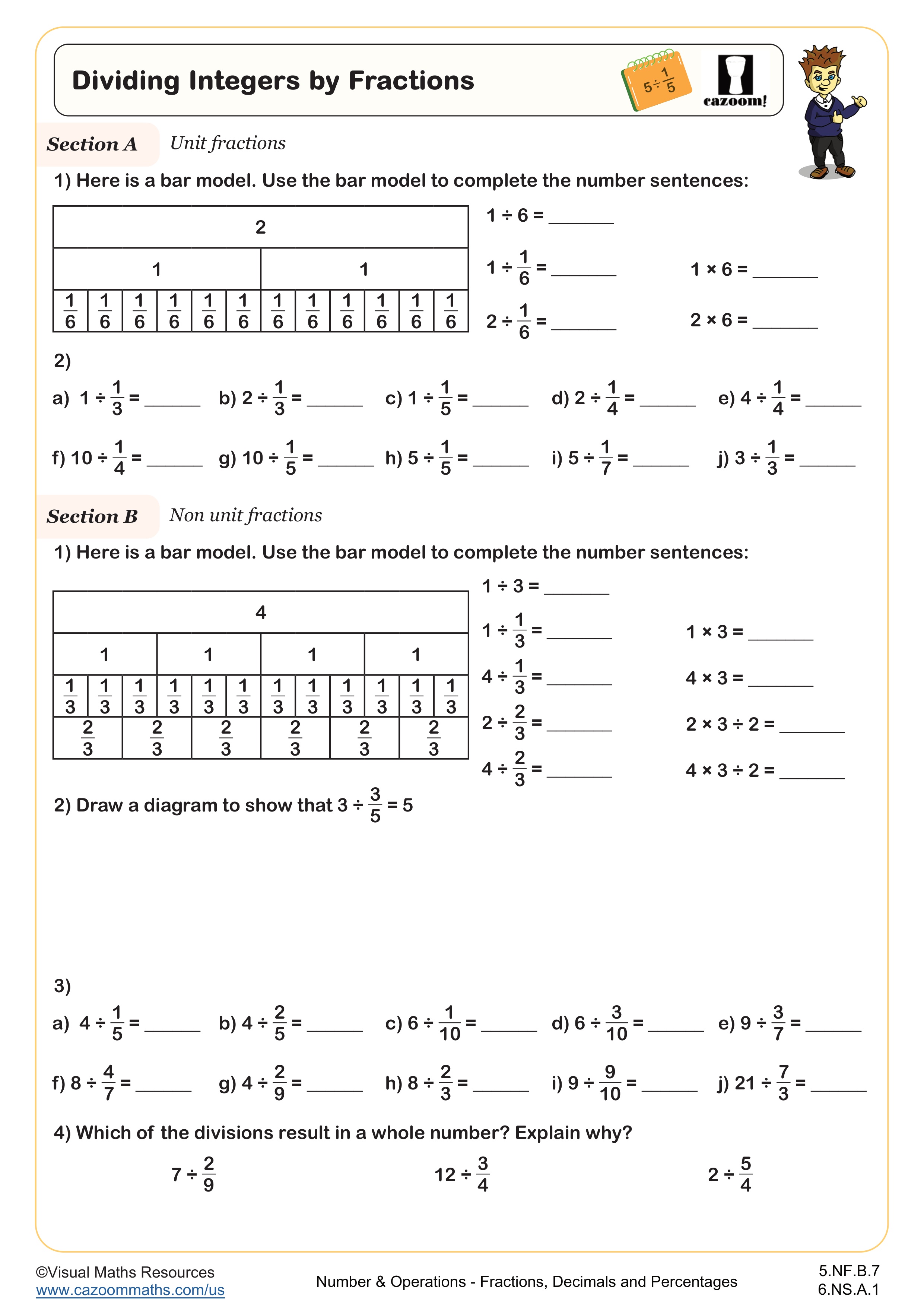
Dividing Integers by Fractions
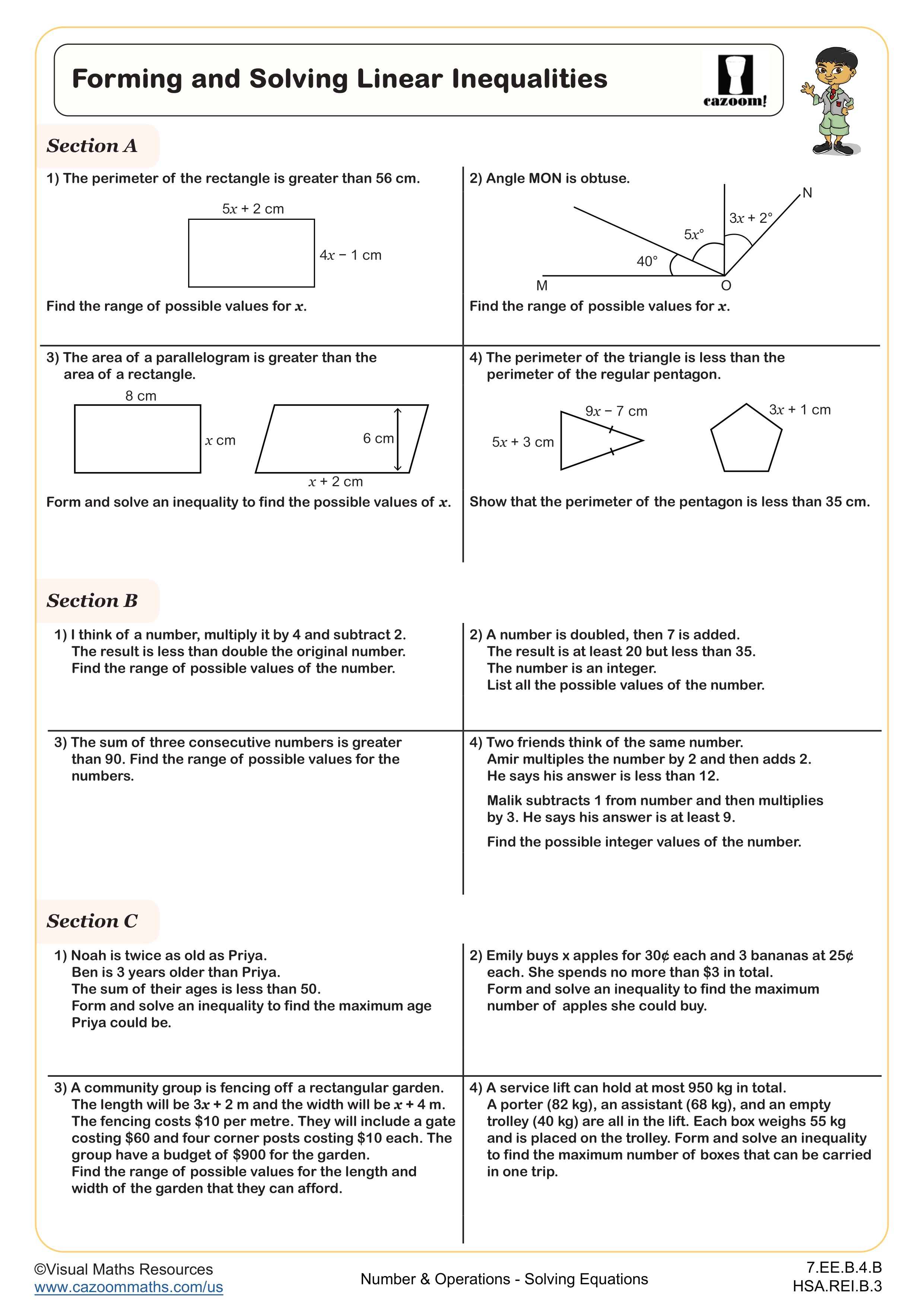
Forming and Solving Linear Inequalities
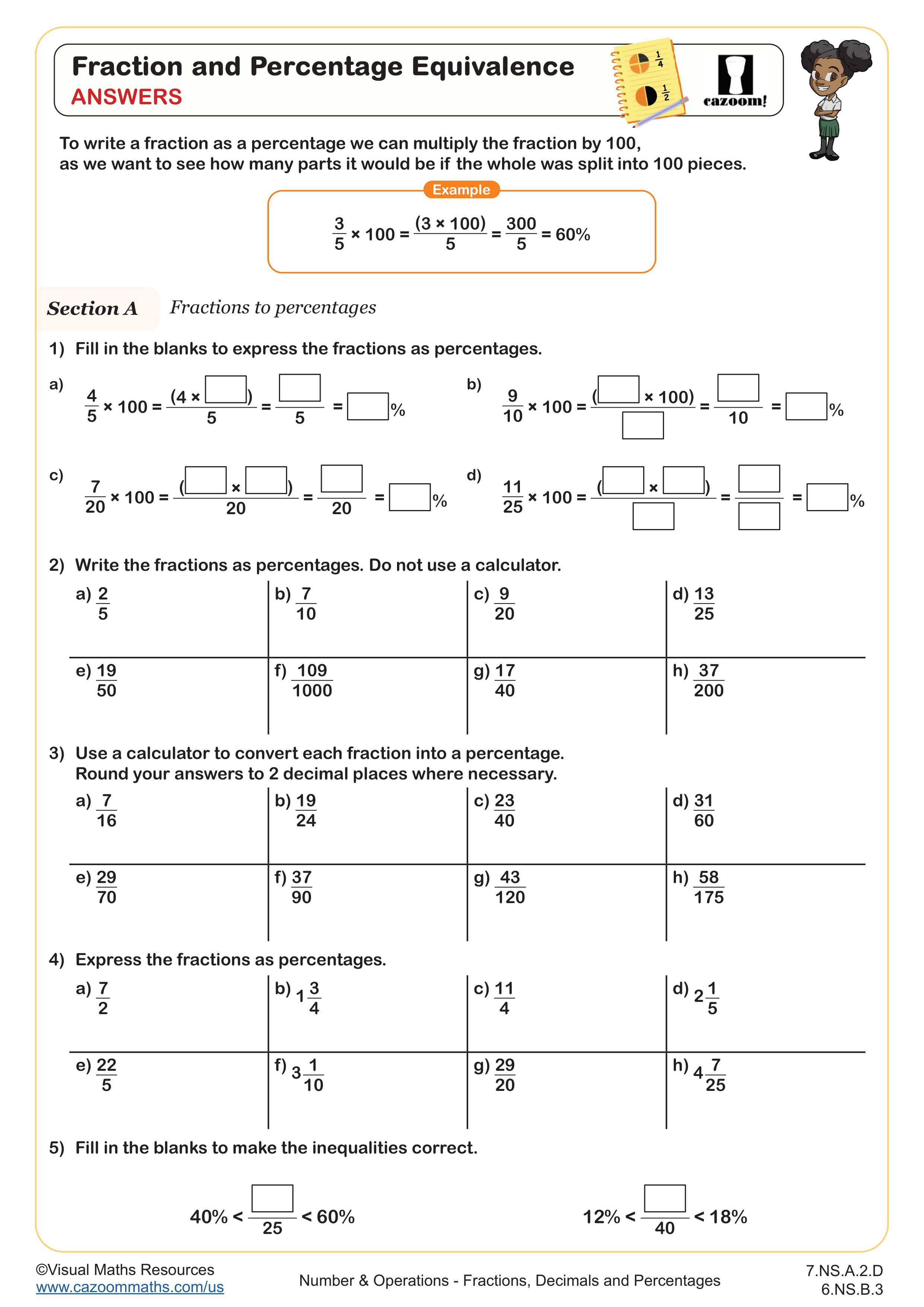
Fraction and Percentage Equivalence
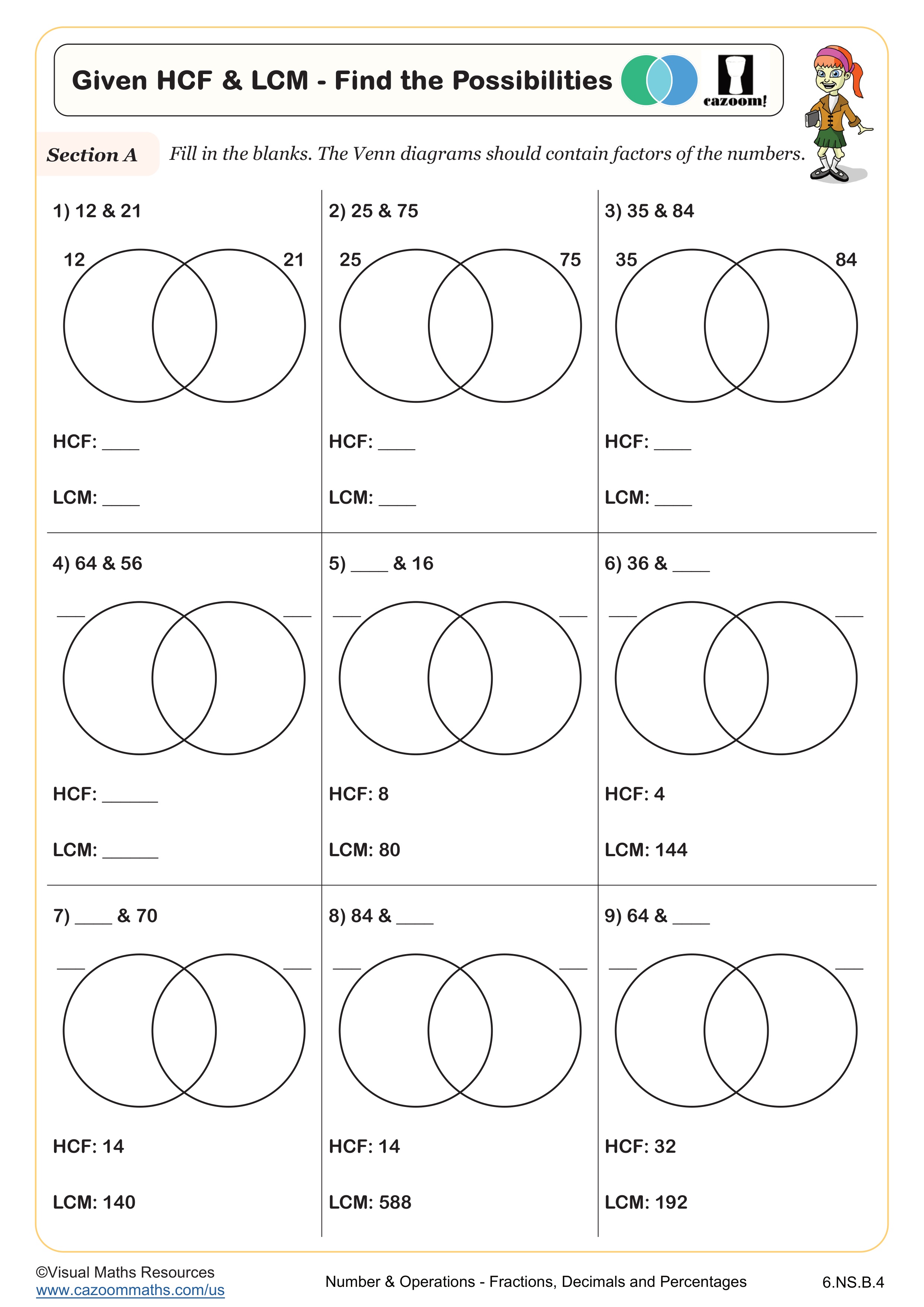
Given HCF & LCM - Find Possible Numbers
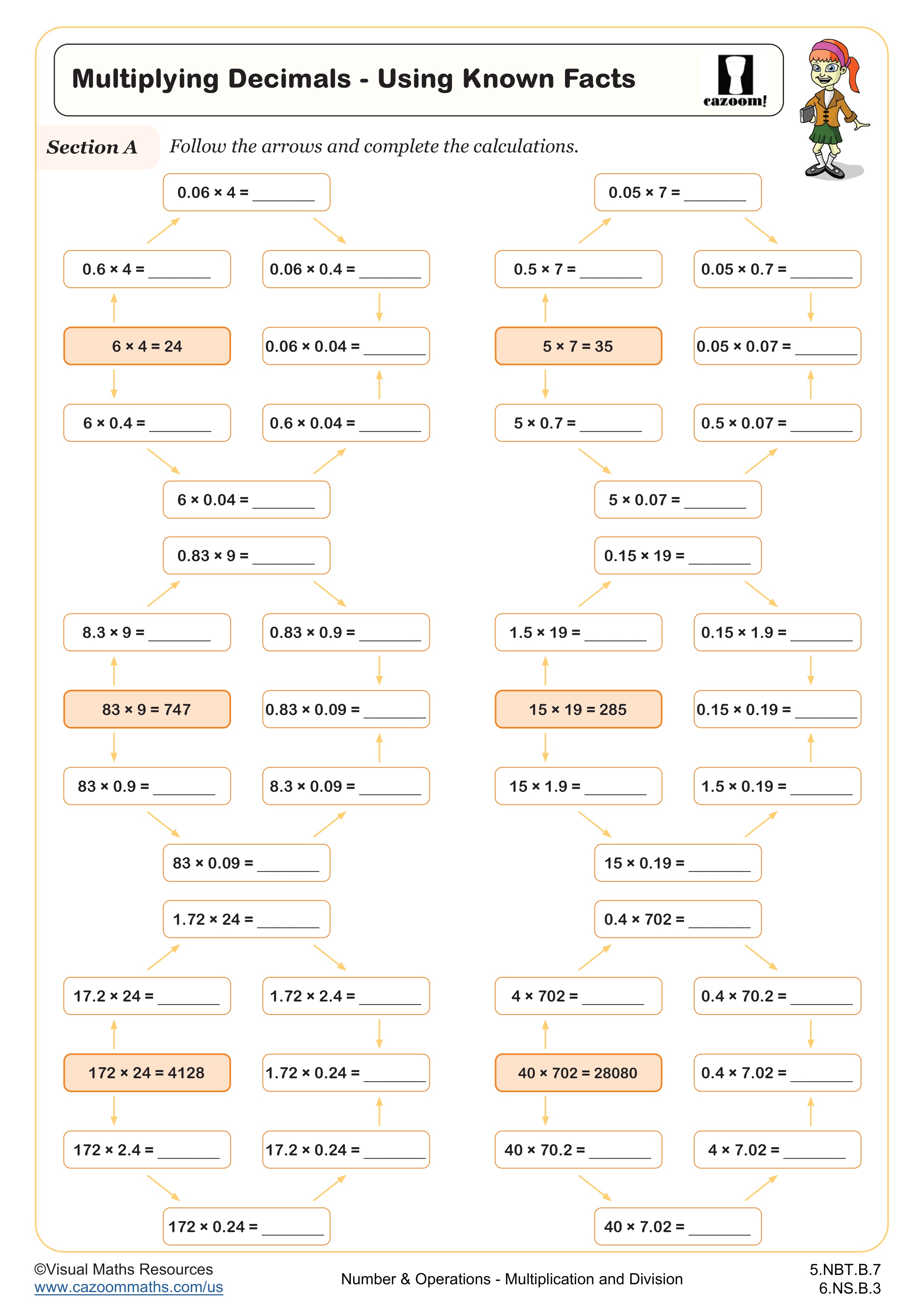
Multiplying Decimals - Using Known Facts
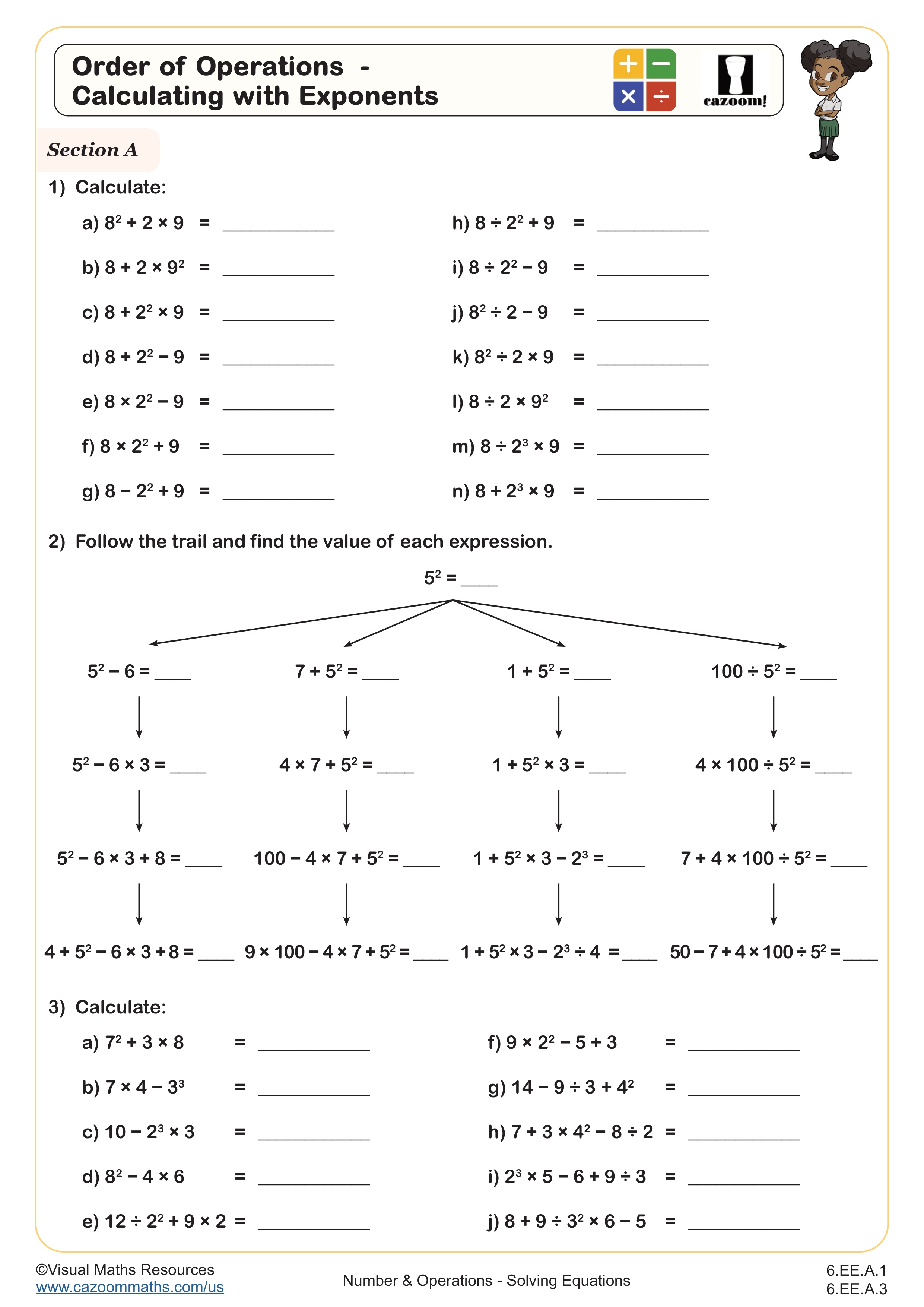
Order of Operations - Calculating with Exponents
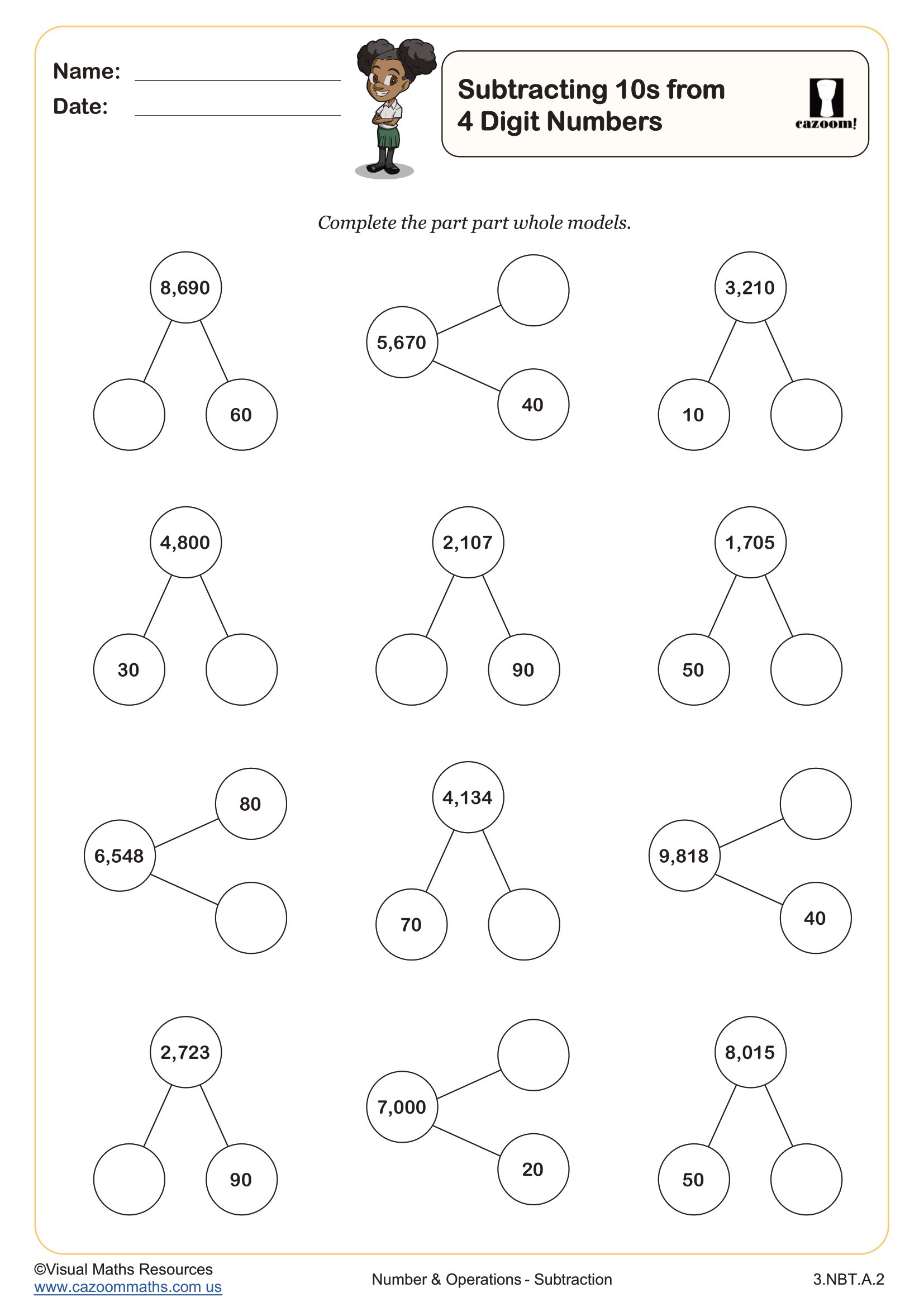
Subtracting 10s from 4 Digit Numbers
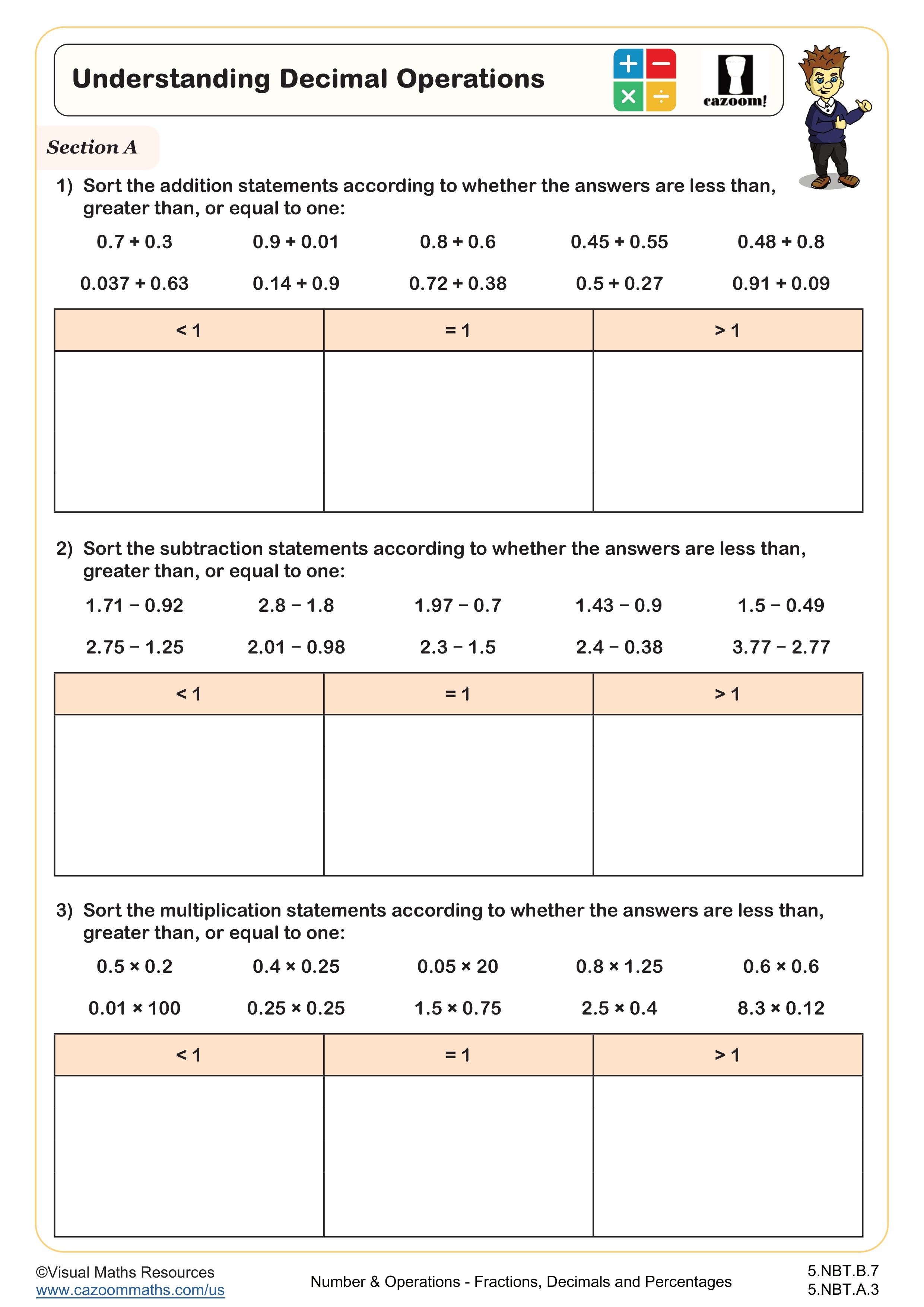
Understanding Decimal Operations
All worksheets are created by the team of experienced teachers at Cazoom Math.
What does number and operations in base ten grade 2 cover?
Number and operations in base ten grade 2 aligns with Common Core standards 2.NBT.1 through 2.NBT.9, focusing on place value understanding within 1,000, addition and subtraction within 100, and skip counting patterns. Students learn to read and write numbers using base-ten numerals, number names, and expanded form while comparing two three-digit numbers using place value understanding.
Teachers frequently observe that students can mechanically regroup but don't understand why they're borrowing or carrying. These worksheets address this by connecting concrete manipulative work with abstract symbols, helping students visualize why 23 + 19 requires regrouping the ones into a ten.
How do these worksheets prepare students for 3rd grade math?
Second grade base ten work creates the foundation for 3rd grade multiplication, division, and work with larger numbers up to 1,000. Students who master regrouping in addition and subtraction within 100 transition more smoothly to multi-digit multiplication algorithms and long division procedures in later grades.
Classroom teachers notice that students who struggle with place value in 2nd grade often hit a wall in 4th grade when working with decimals and fractions. The visual models and systematic practice in these worksheets help prevent those future difficulties by ensuring students truly understand what each digit represents in a multi-digit number.
What are making 10 strategies and why do 2nd graders need them?
Making 10 strategies teach students to decompose and recompose numbers to create friendly combinations that are easier to calculate mentally. For example, when solving 8 + 5, students learn to take 2 from the 5 to make 8 + 2 = 10, then add the remaining 3 to get 13. This strategy builds number sense and computational fluency.
Many teachers report that students initially resist these strategies because counting on fingers feels faster, but making 10 becomes crucial when working with larger numbers. Students who master these decomposition skills in 2nd grade show stronger mental math abilities and better understanding of the base ten system throughout elementary school.
How can teachers use these worksheets most effectively in instruction?
Teachers find success using these worksheets as guided practice after introducing concepts with manipulatives like base ten blocks or place value charts. The worksheets work well for differentiated instruction since teachers can assign different problems based on student readiness levels while maintaining the same core learning objectives.
Many educators use the answer keys for student self-checking during math stations or independent work time, which builds student responsibility and provides immediate feedback. The PDF format allows teachers to project problems for whole-class discussion or print specific pages for targeted intervention with small groups who need additional place value support.