2nd Grade Place Value Worksheets
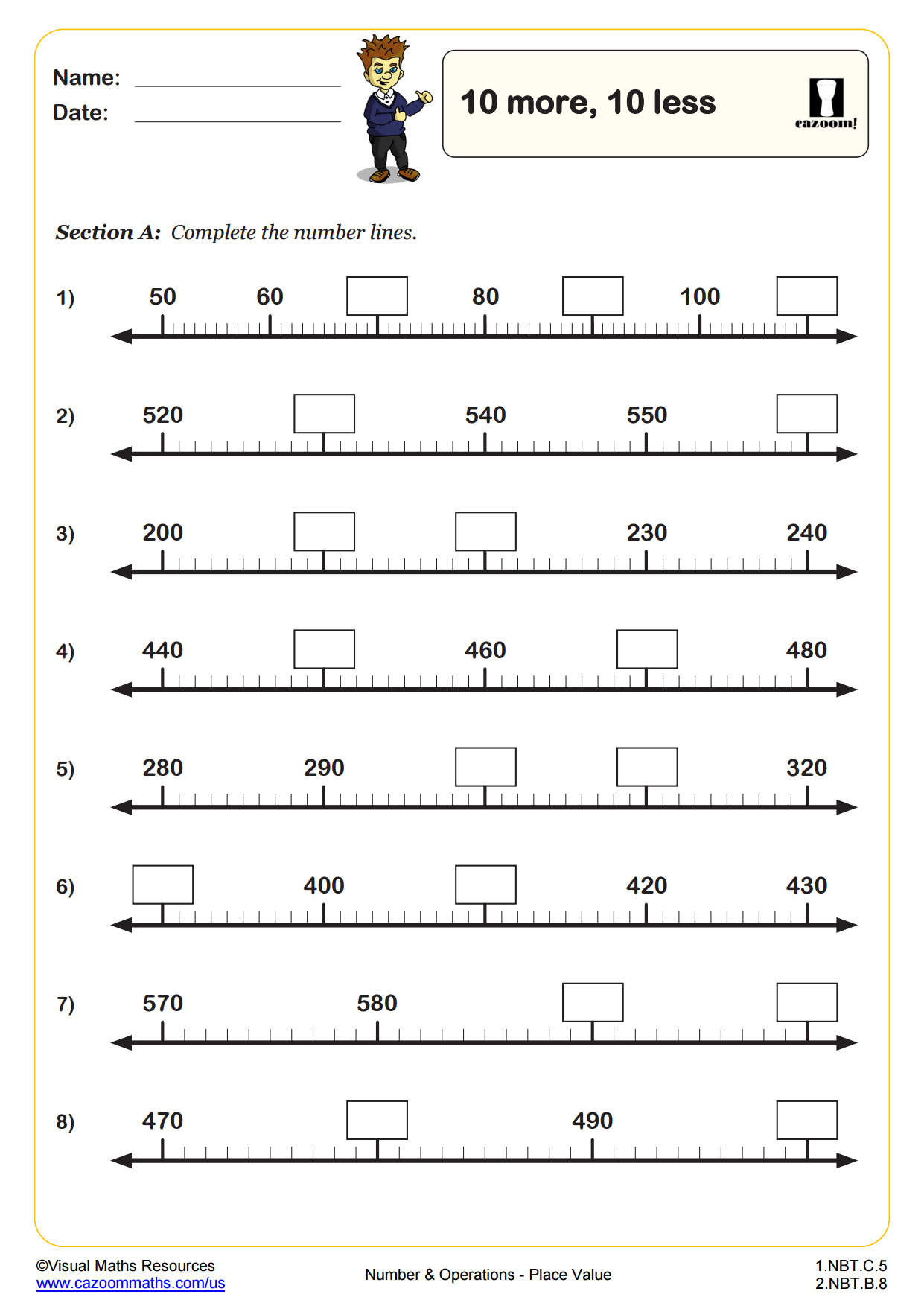
10 More 10 Less
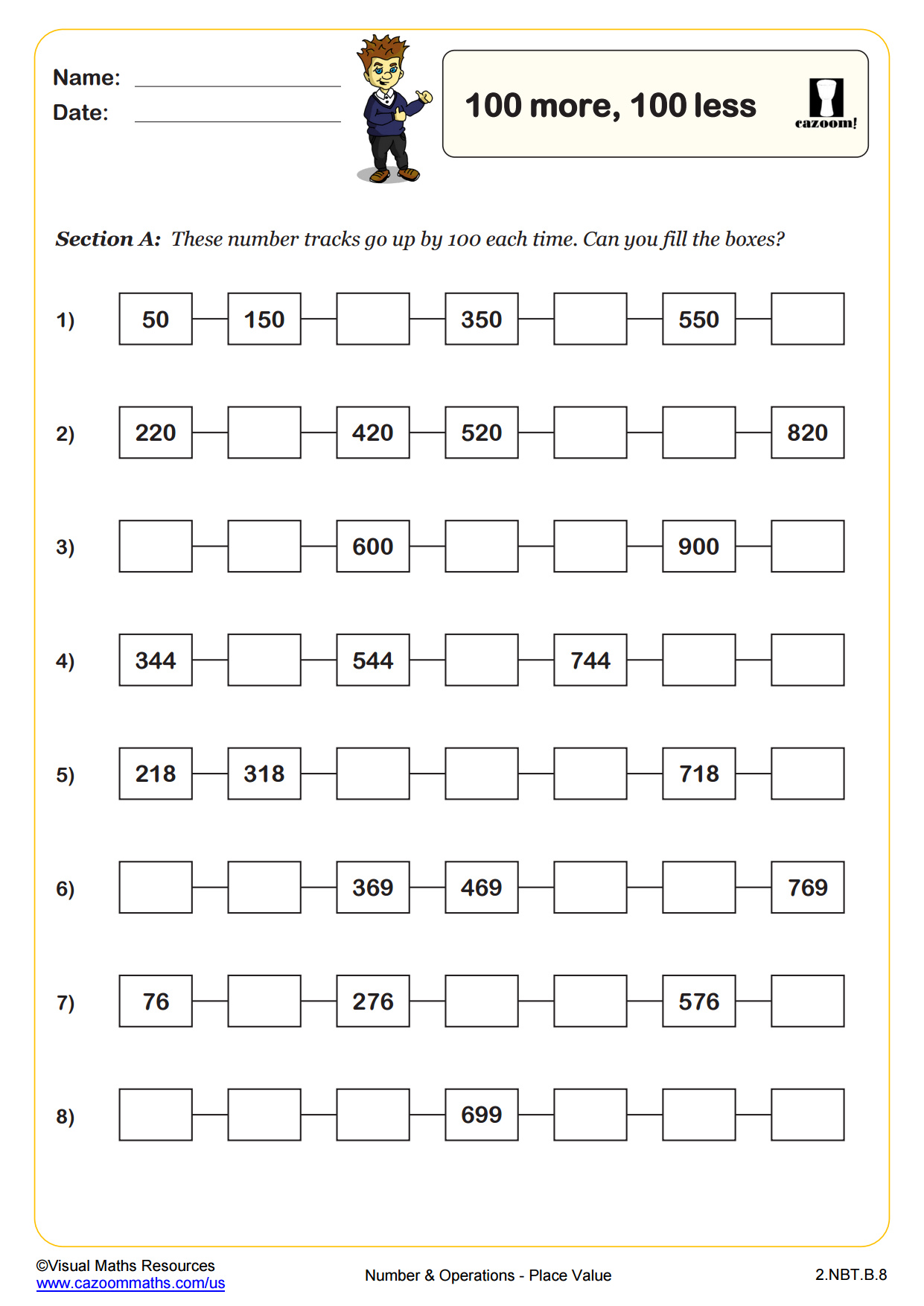
100 More 100 Less
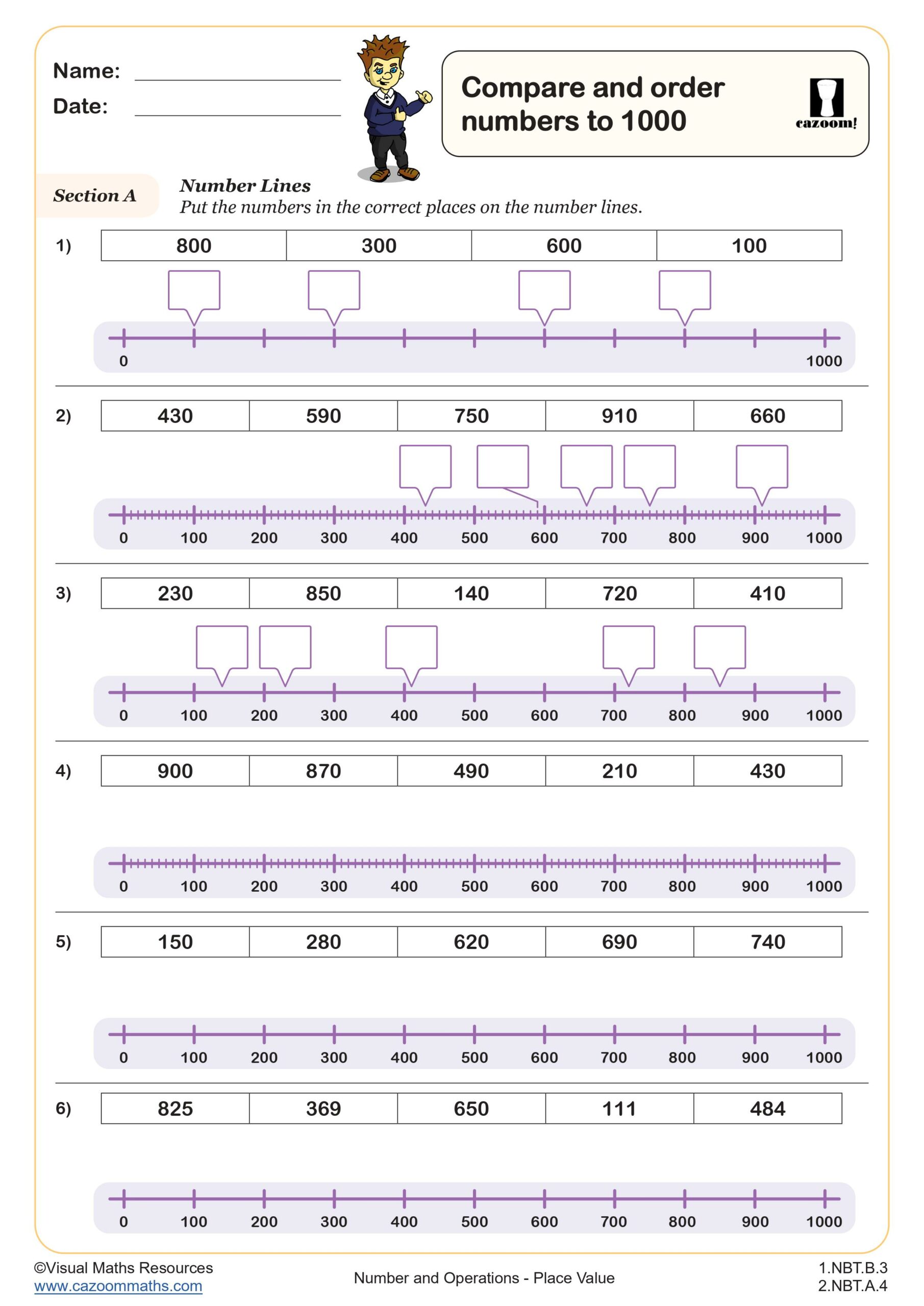
Compare and Order Numbers to 1000
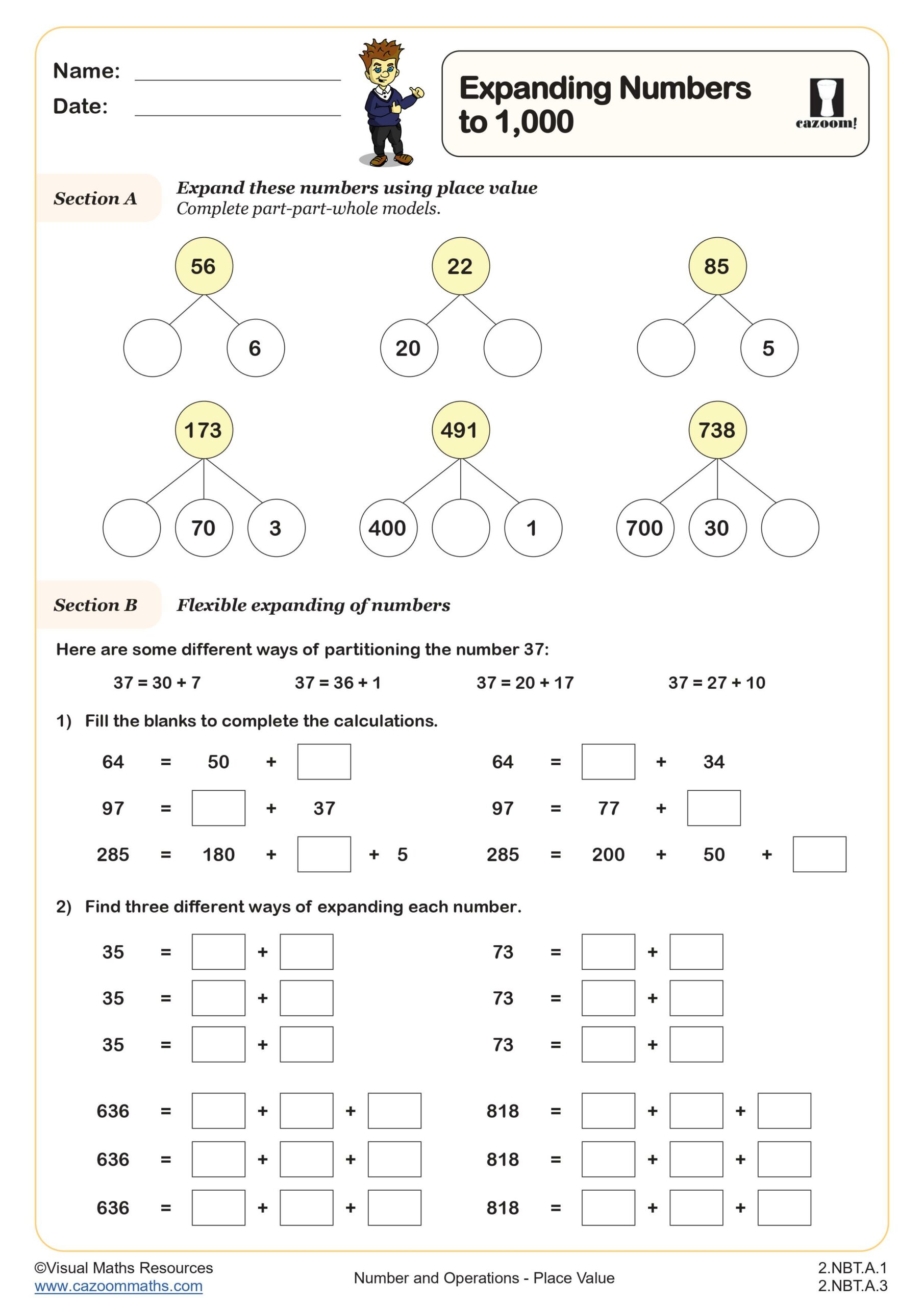
Expanding Numbers to 1,000
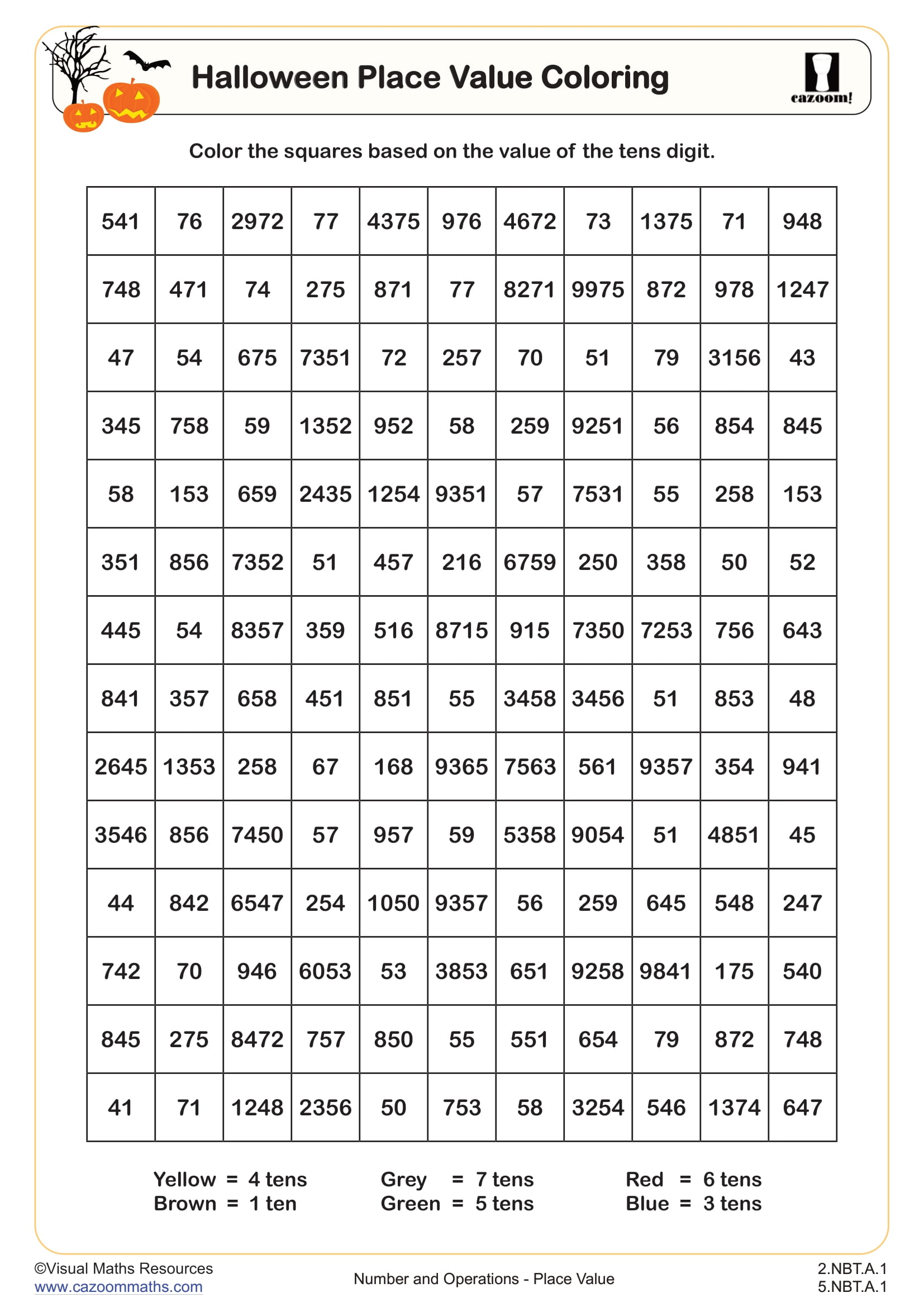
Halloween Place Value Coloring
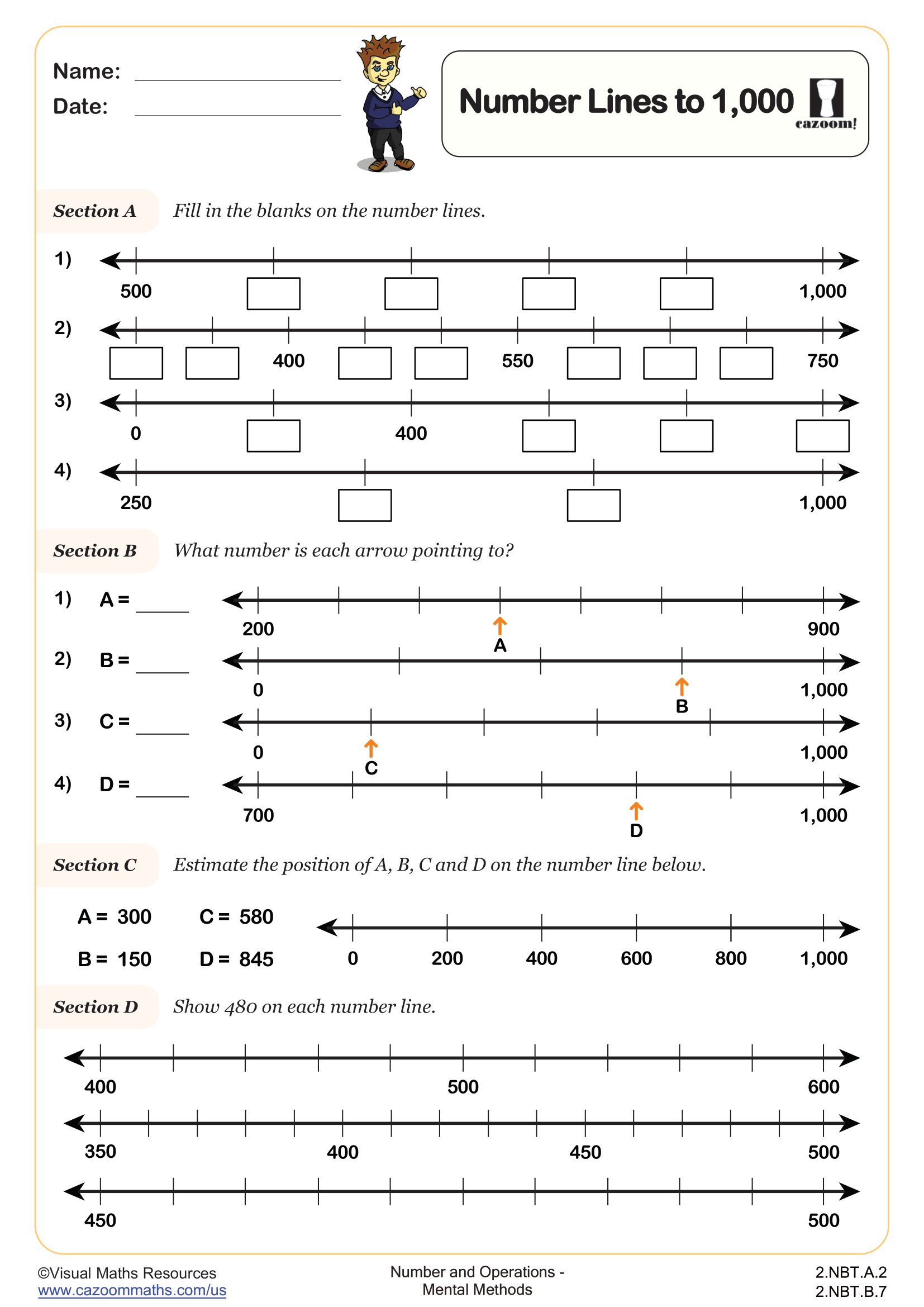
Number Lines to 1,000
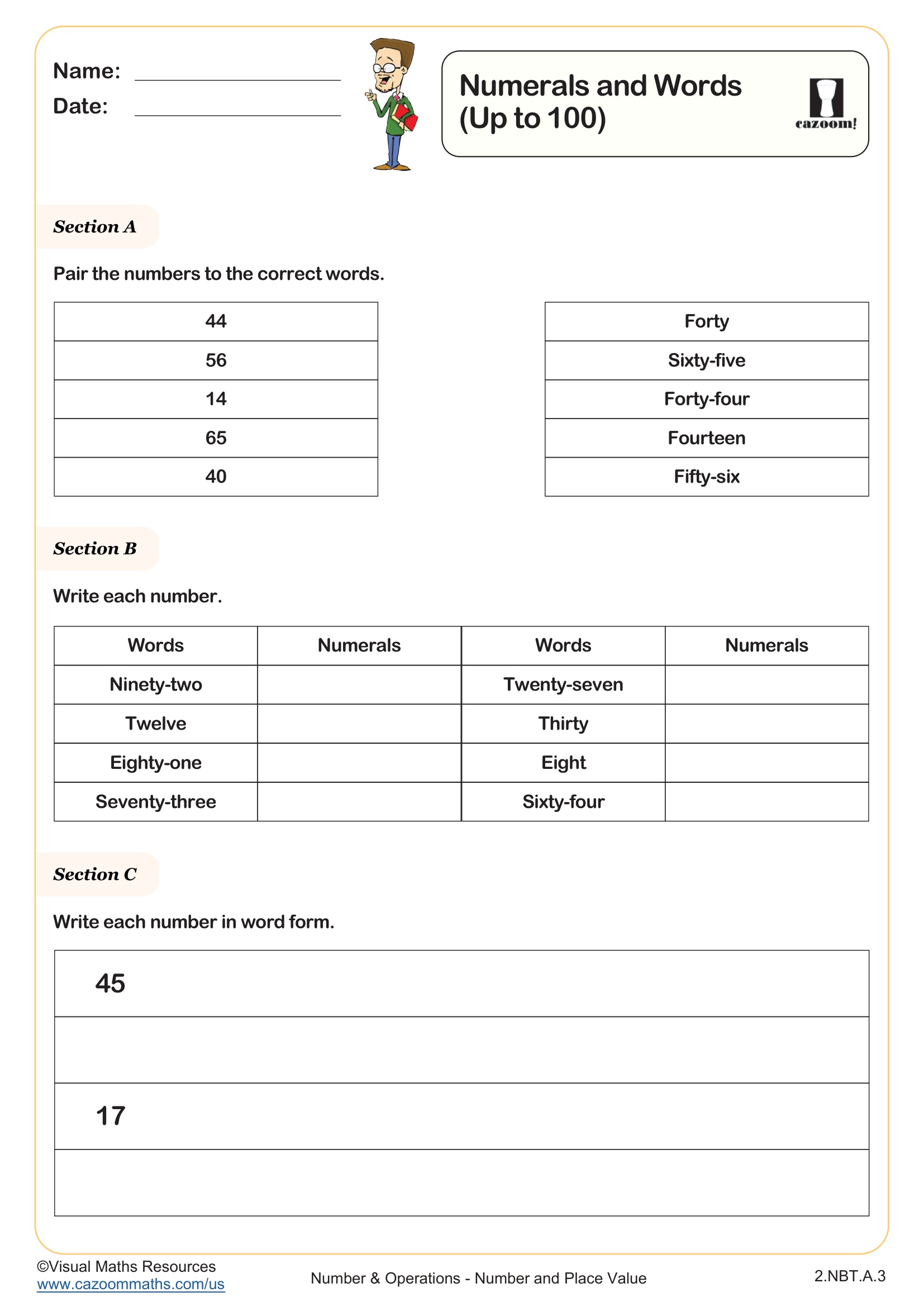
Numerals and Words (up to 100)
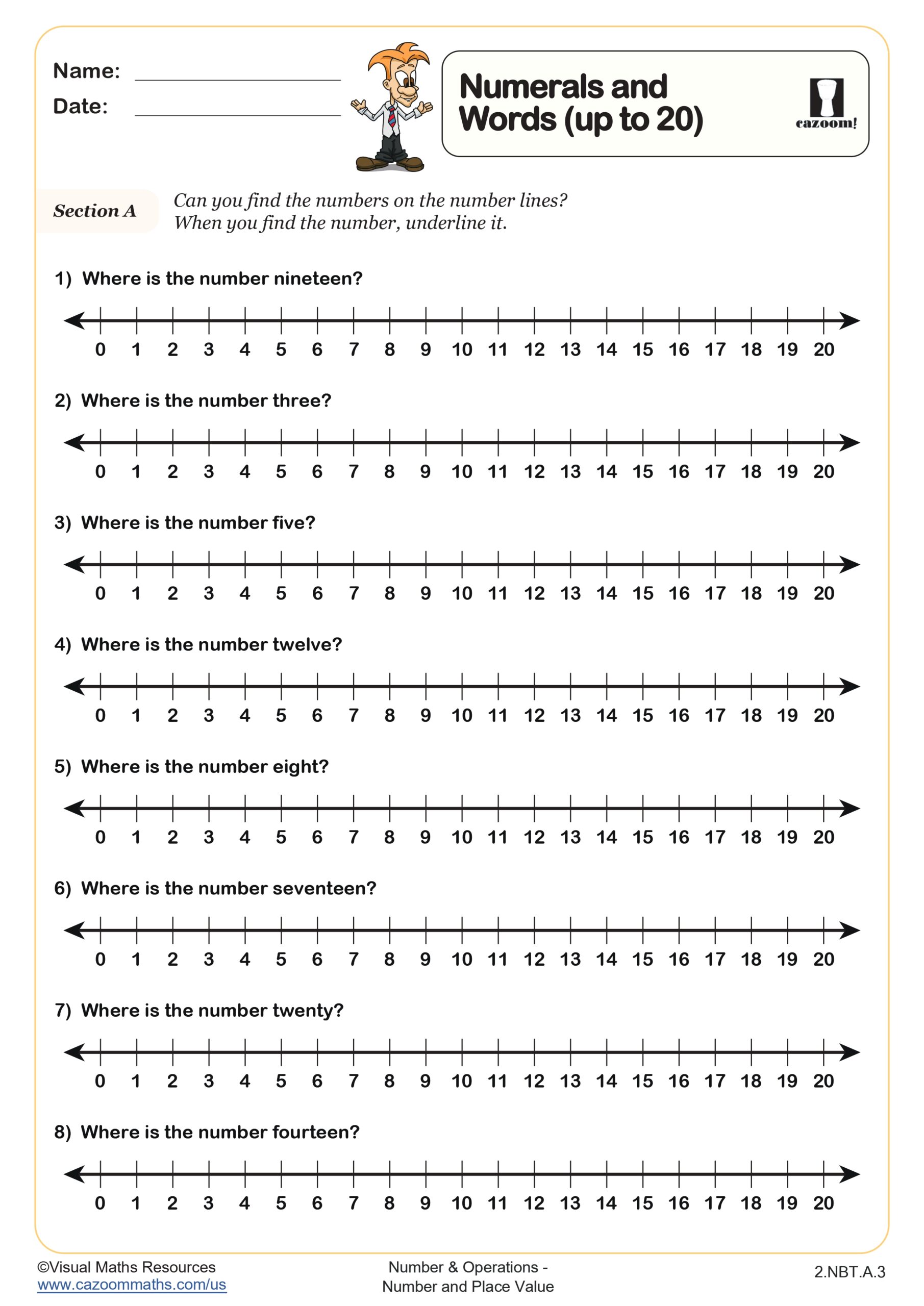
Numerals and Words (up to 20)
Place Value up to 100 (A)
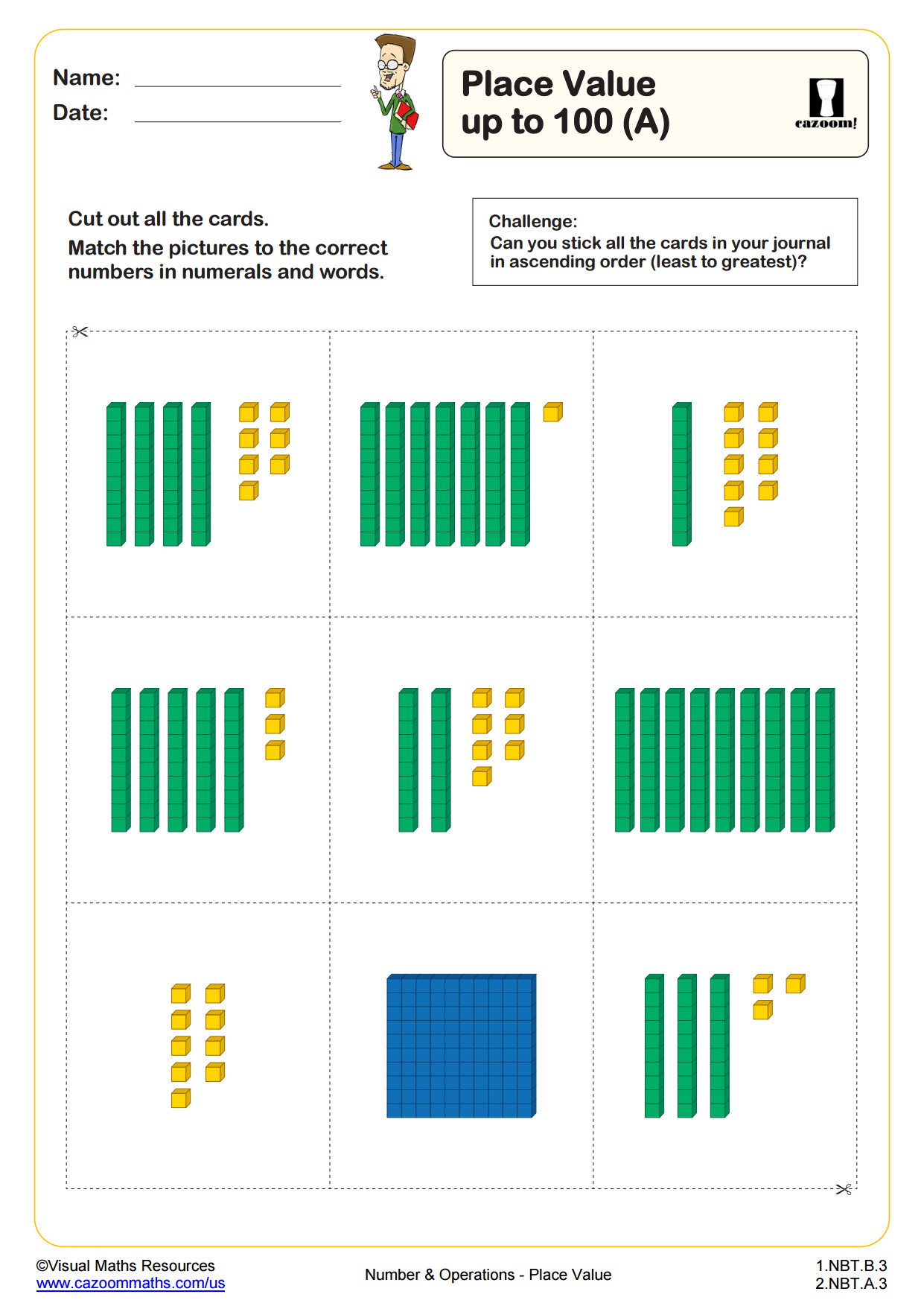
Place Value up to 100 (B)
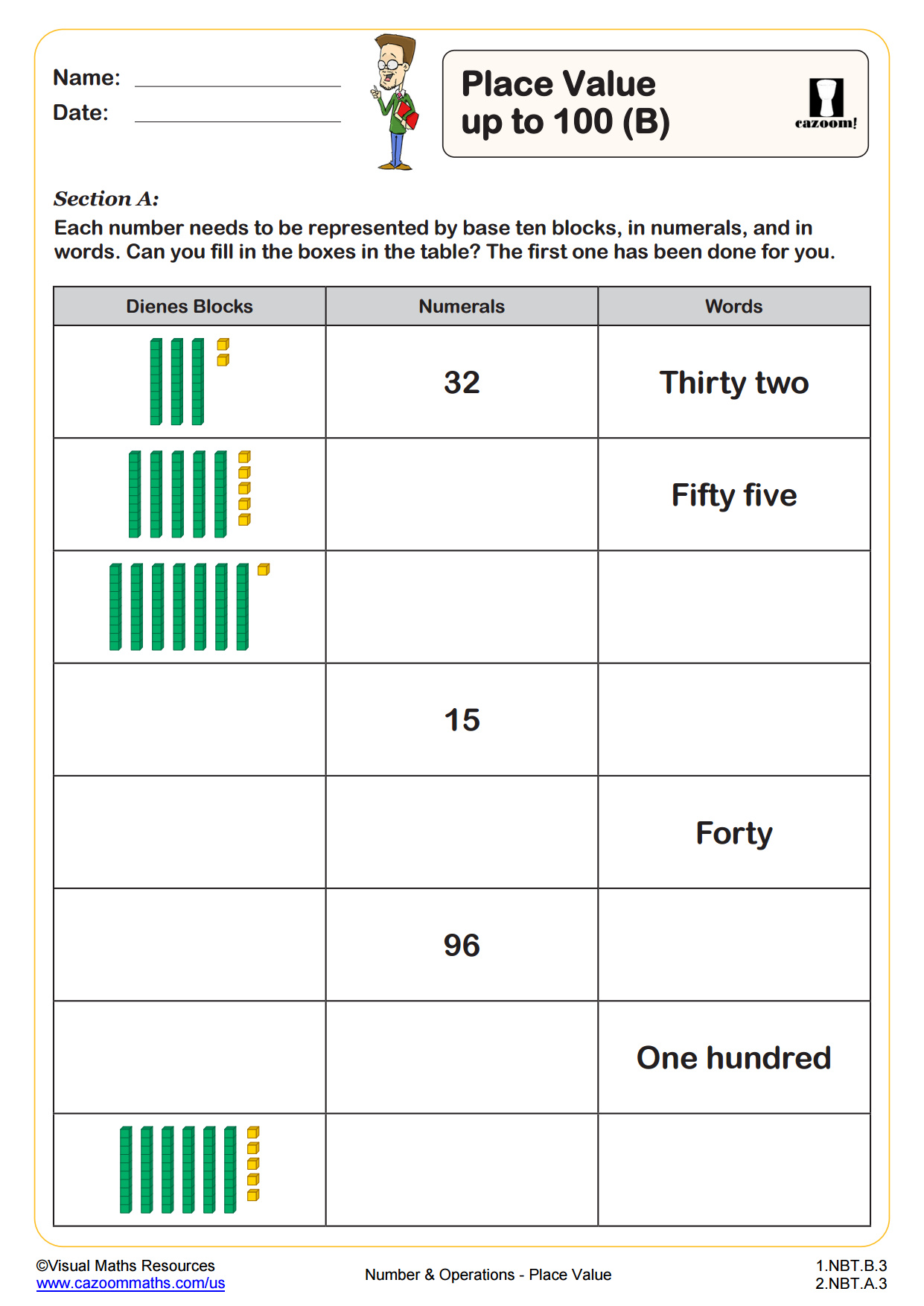
Place Value up to 1000
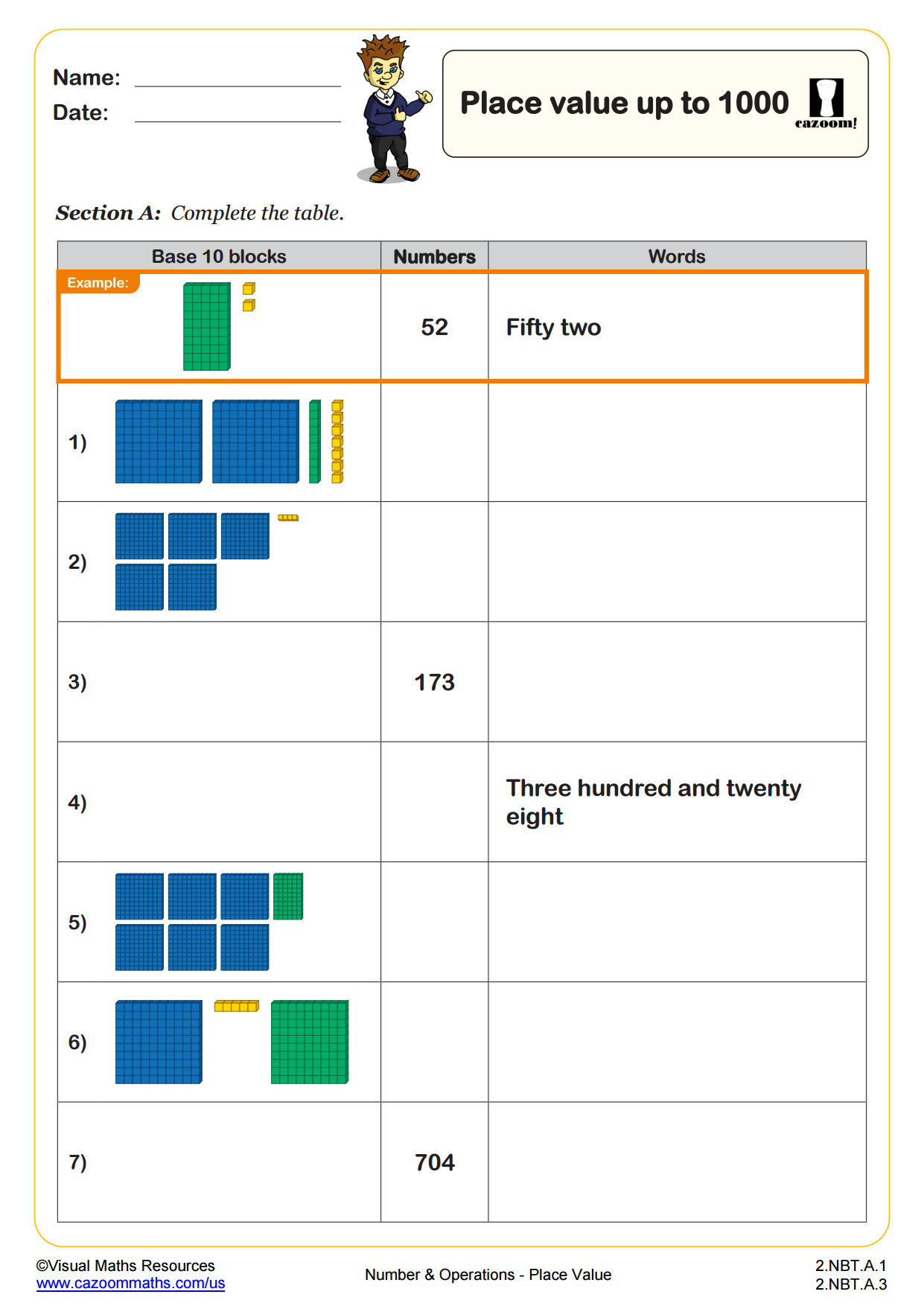
Place Value up to 1000
Rounding Numbers to the Nearest 10 Using Number Lines (A)
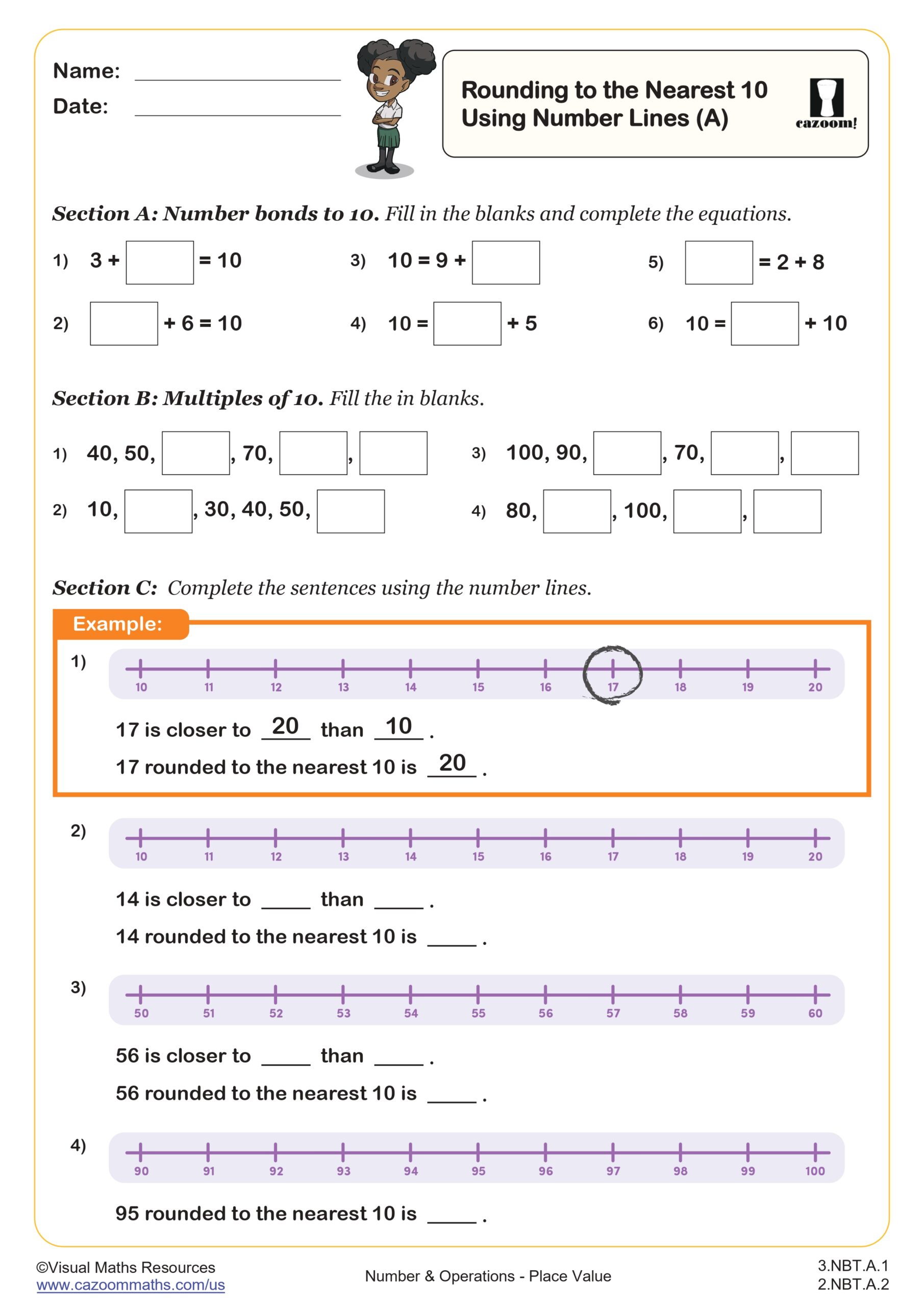
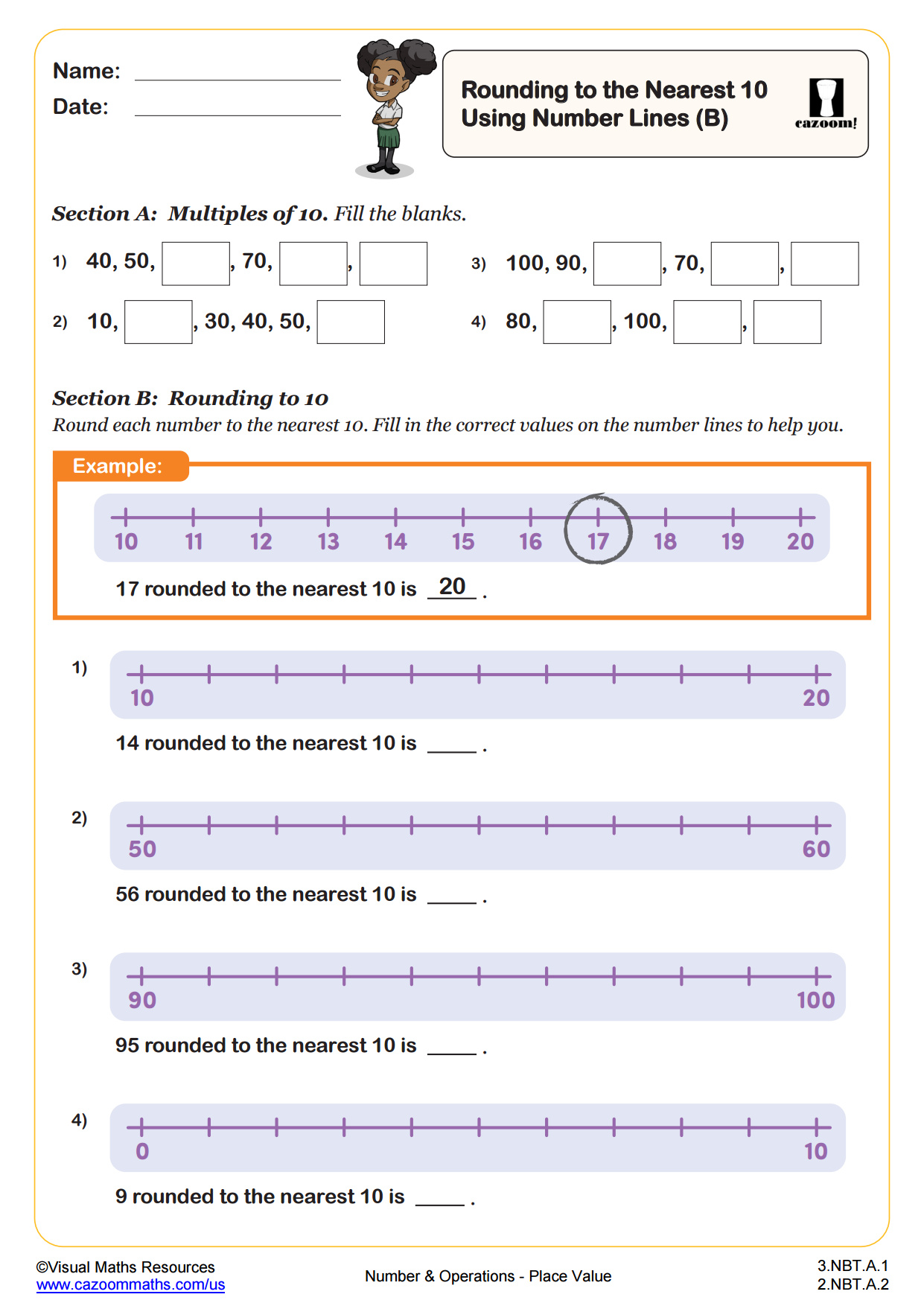
Rounding Numbers to the Nearest 10 Using Number Lines (B)
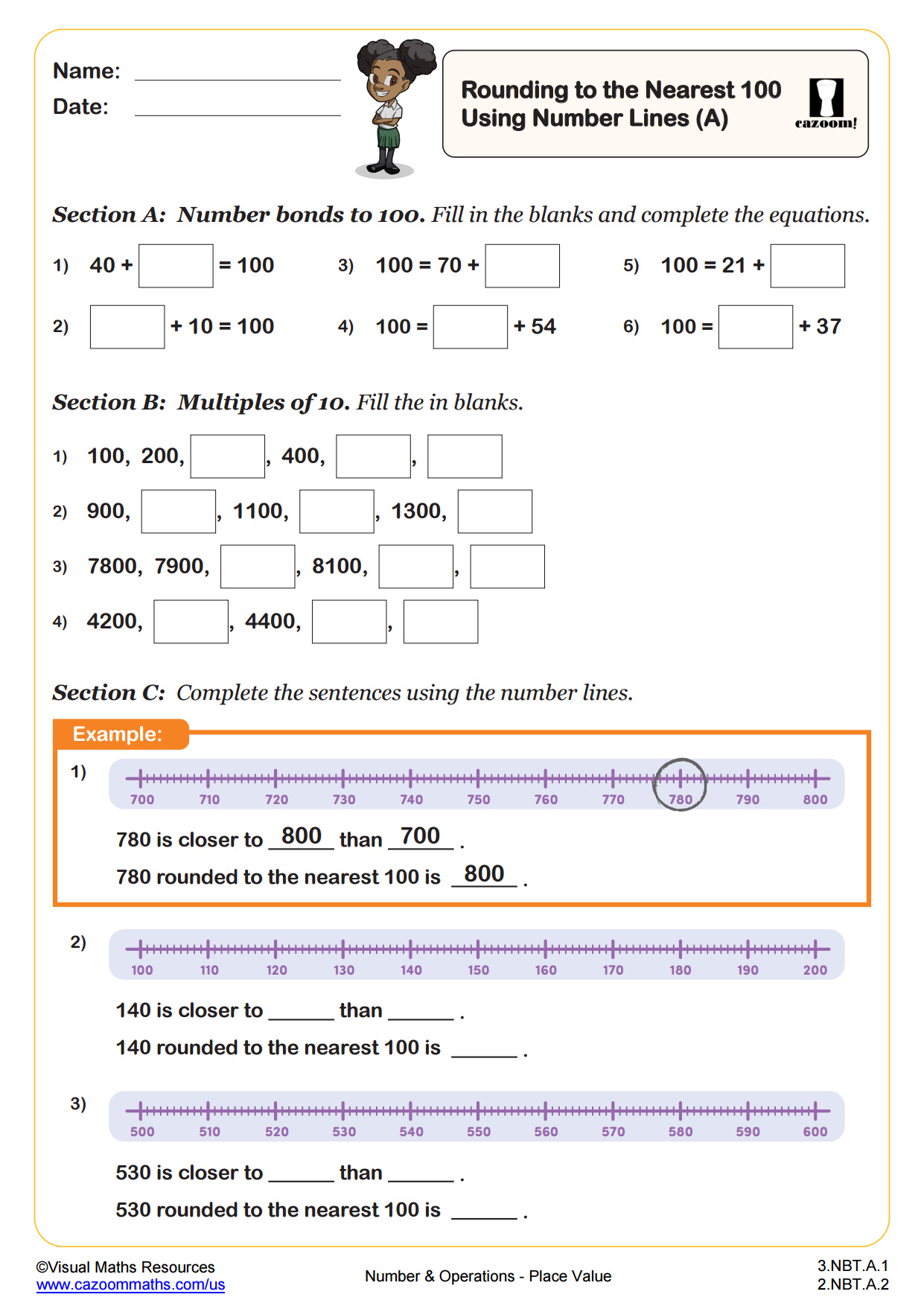
Rounding Numbers to the Nearest 100 Using Number Lines (A)
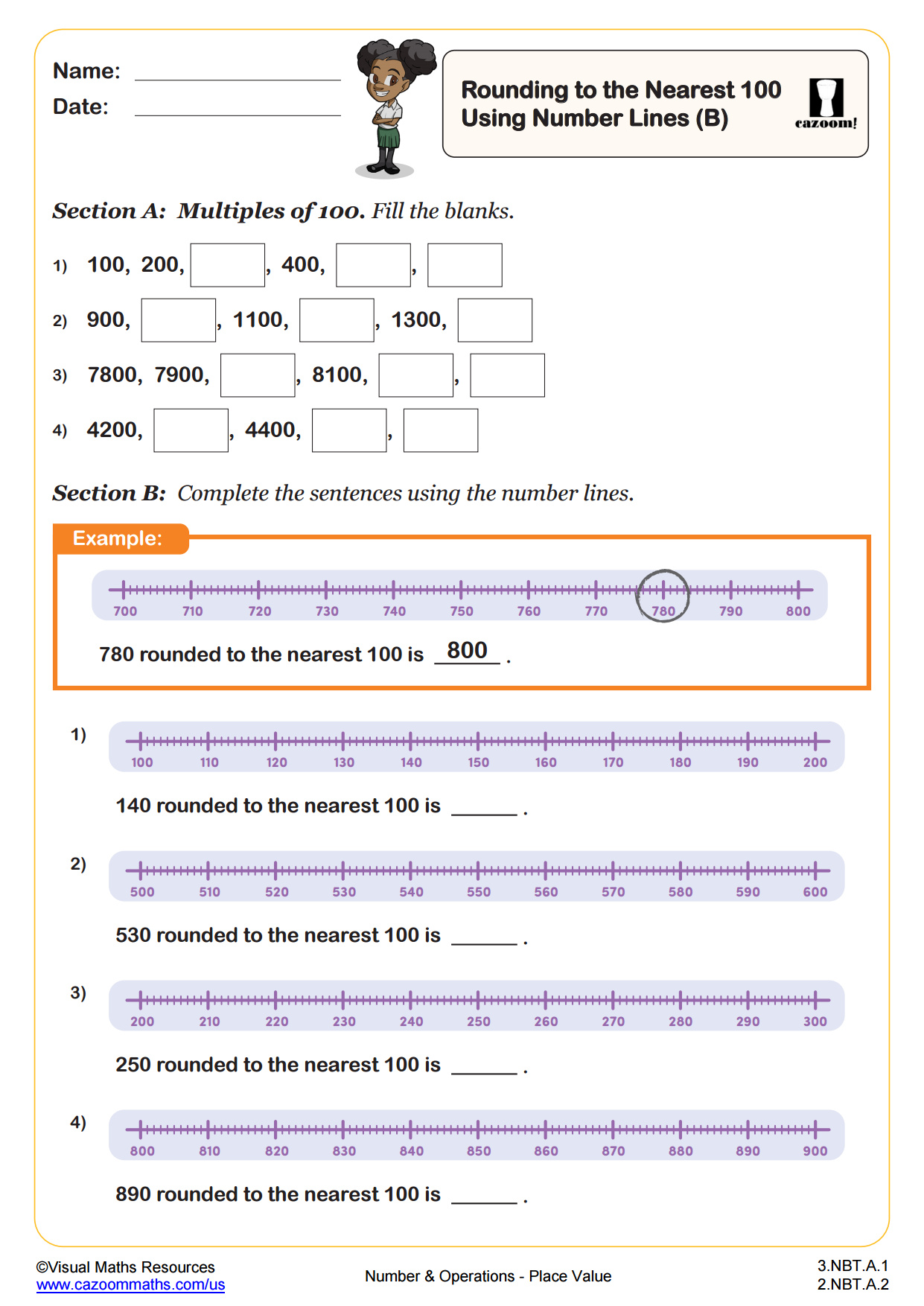
Rounding Numbers to the Nearest 100 Using Number Lines (B)
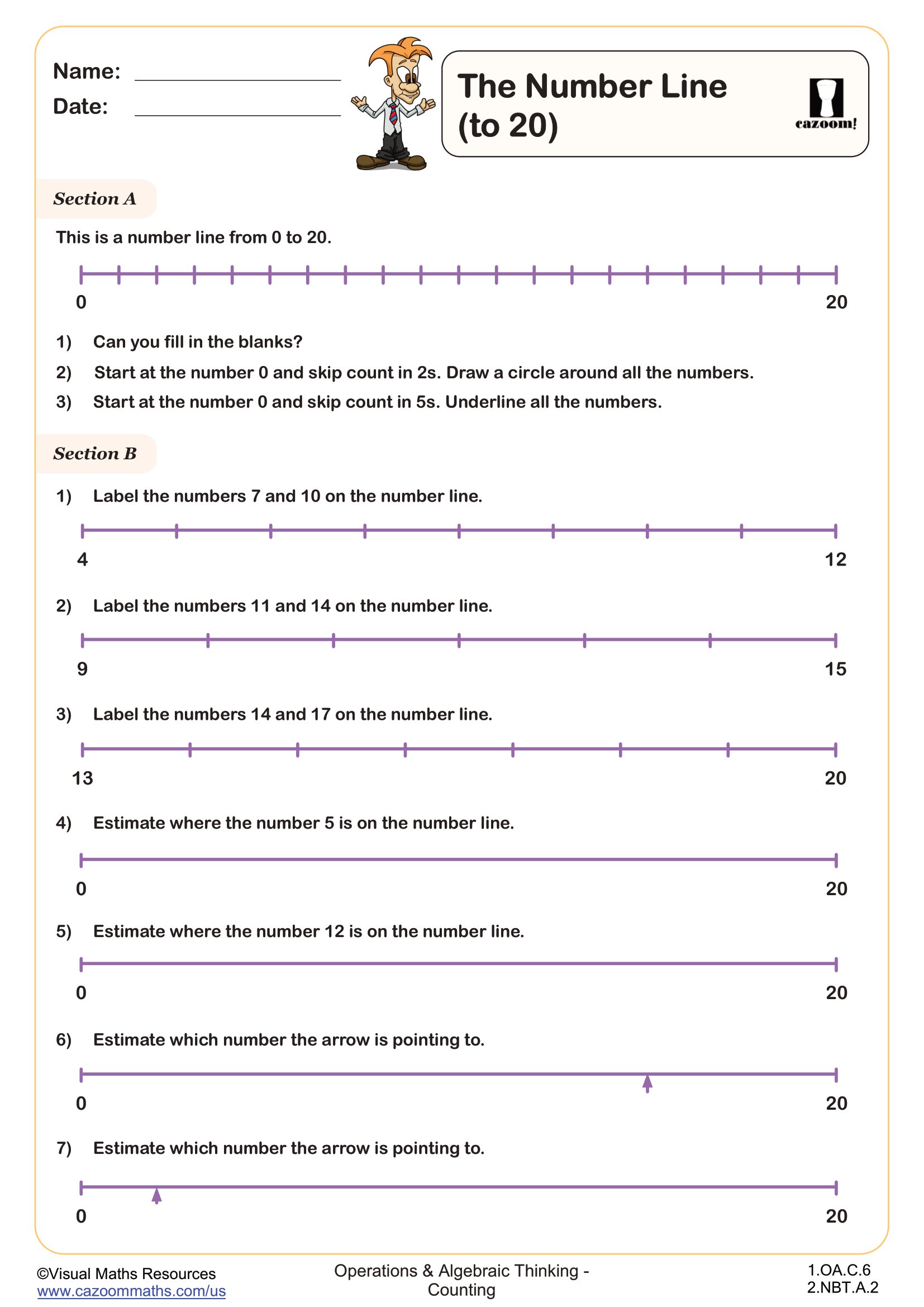
The Number Line (to 20)
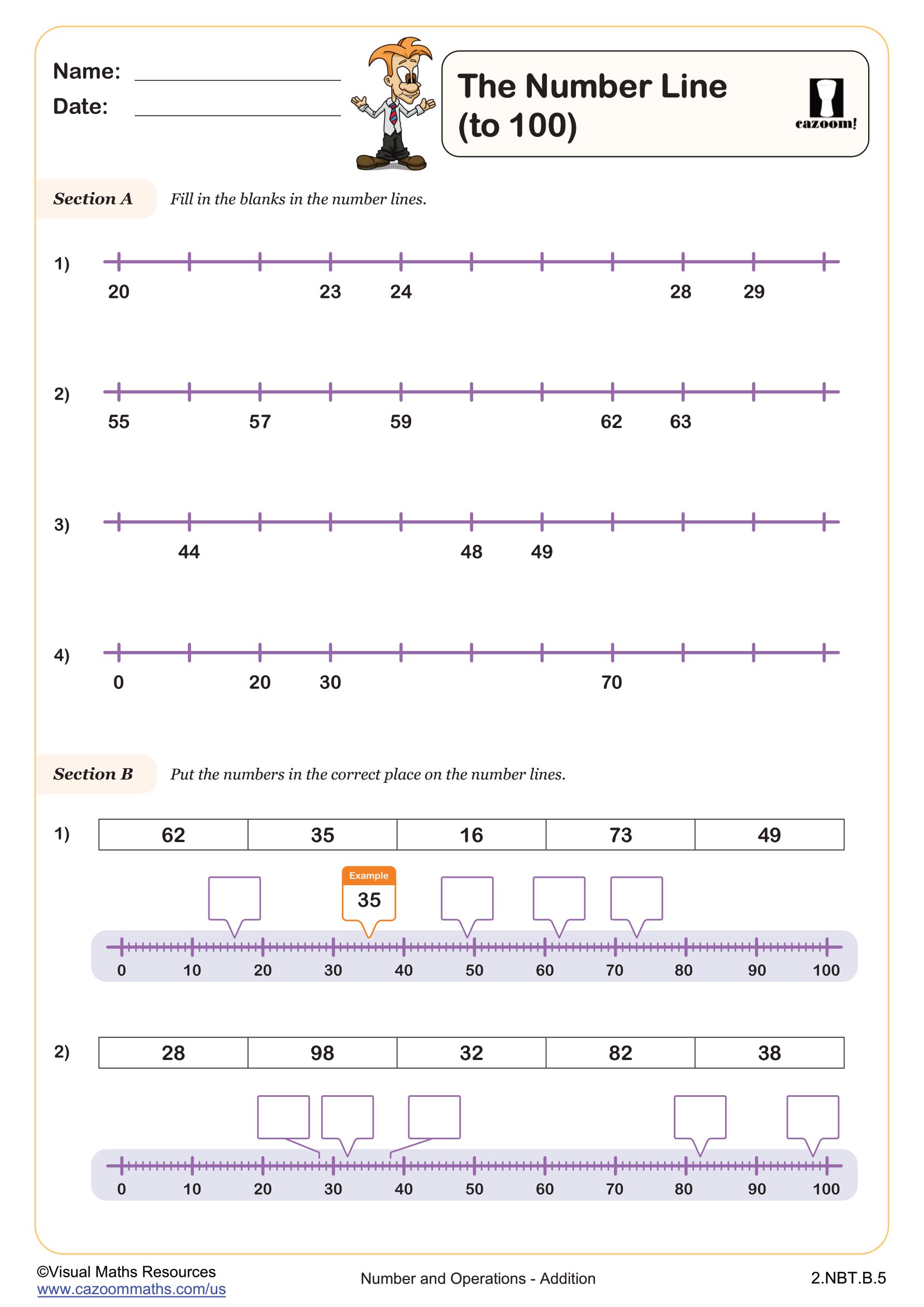
The Number Line to 100
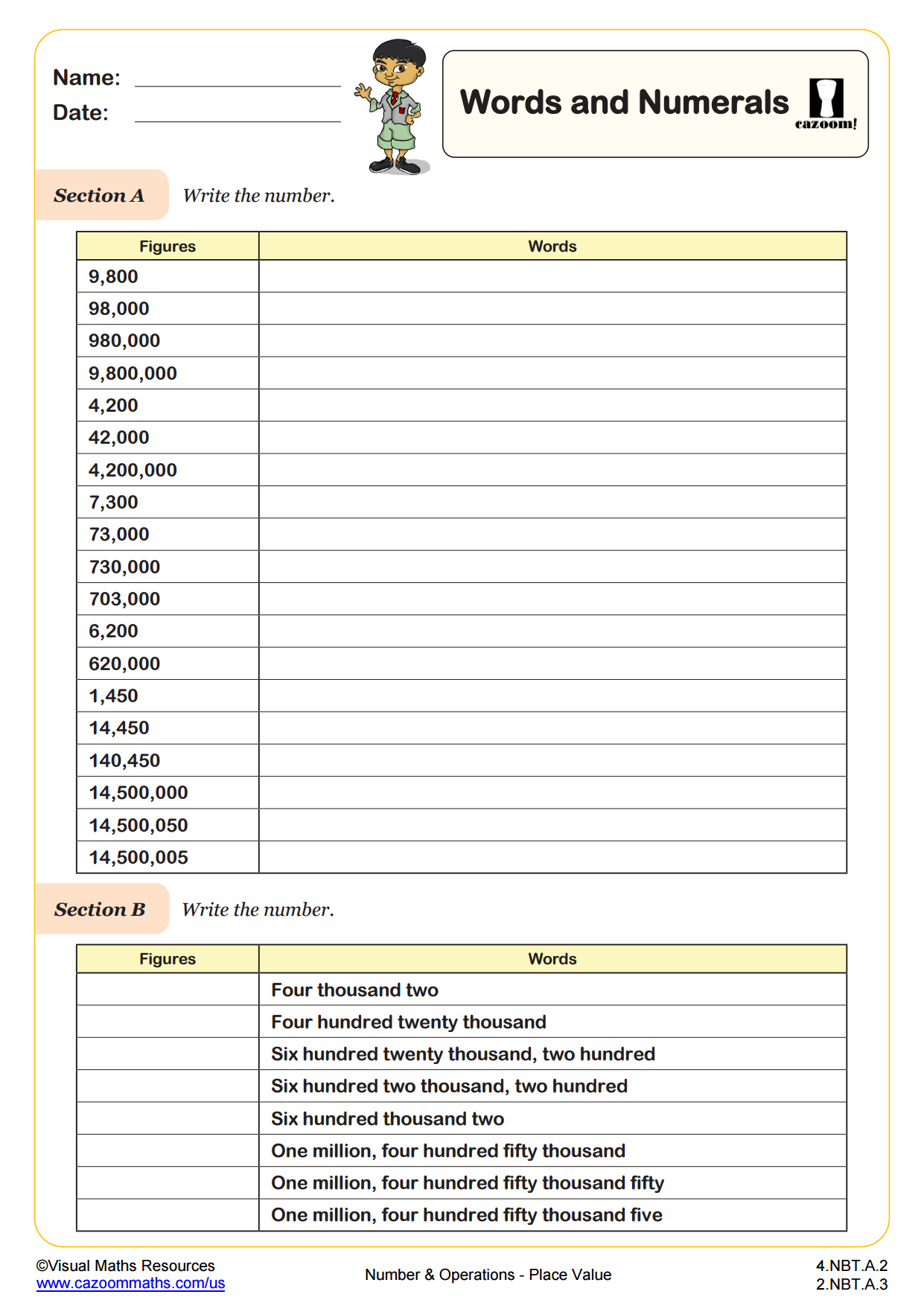
Words and Numerals
All worksheets are created by the team of experienced teachers at Cazoom Math.
What is place value and why does it matter in 2nd grade?
Place value is the understanding that a digit's position within a number determines its actual value. In the number 47, the 4 represents 40 (four tens) while the 7 represents 7 ones. Second grade students build on their first grade work with numbers to 20 by extending this understanding to 100 and practicing with three-digit numbers. This concept directly supports the Common Core State Standards for 2nd grade, specifically 2.NBT.A.1, which requires students to understand that the three digits of a three-digit number represent amounts of hundreds, tens, and ones.
Students often confuse the digit itself with the value it represents, writing 4 instead of 40 when asked for the value of the tens place. Teachers frequently use base-ten blocks during instruction, and worksheets that include visual representations alongside numerals help students make this abstract concept more concrete. Practice with expanded form (40 + 7 = 47) particularly helps students see how place value connects to the operations they'll perform throughout elementary school.
What place value skills should 2nd graders master?
By the end of 2nd grade, students should fluently read, write, and compare numbers up to 1,000, understanding that each place to the left represents ten times the value of the place to its right. They should decompose two-digit and three-digit numbers in multiple ways (47 as 4 tens and 7 ones, or 3 tens and 17 ones), count by fives, tens, and hundreds, and use place value understanding to compare numbers using inequality symbols. Second graders should also begin rounding numbers to the nearest 10 or 100, which requires solid place value comprehension.
This builds directly on 1st grade work with numbers to 120 and the concept of ten as a bundle of ones. Strong place value understanding in 2nd grade prepares students for 3rd grade multiplication and division, where they'll need to understand what happens when digits shift positions. Students who enter 3rd grade without solid place value skills typically struggle with regrouping in multi-digit addition and subtraction, making this foundational year critical for future success.
How does rounding to the nearest 100 work with number lines?
Rounding to the nearest 100 using number lines helps students visualize which hundred a number is closest to by plotting it on a line marked with multiples of 100. For example, when rounding 340, students locate it between 300 and 400 on the number line and see that it falls closer to 300. The midpoint of 350 serves as the decision point—numbers from 300 to 349 round down to 300, while 350 to 399 round up to 400. This visual approach makes the abstract rule about rounding more tangible, especially for students who struggle with numerical reasoning alone.
Rounding connects to real-world estimation skills that students encounter constantly. When a store advertises that 178 people attended an event, news reports might say "about 200 people came." Scientists round measurements to communicate data more efficiently, engineers estimate quantities when exact precision isn't necessary, and adults round prices while shopping to track approximate spending. Understanding rounding through number lines in 2nd grade builds the estimation skills students will apply throughout mathematics and STEM fields.
How can teachers use these place value worksheets effectively?
These worksheets scaffold learning by starting with concrete representations and progressing toward abstract numerical work. Some worksheets include visual models like base-ten blocks or number lines, while others focus on translating between numerals and words, helping students approach place value from multiple angles. The variety in difficulty levels allows teachers to differentiate instruction—students who grasp tens and ones quickly can move to three-digit numbers, while others can spend more time with foundational skills using worksheets that cover numbers to 20 or 100.
Many teachers use these worksheets during math centers, assigning different students appropriate difficulty levels based on formative assessment data. They work well for morning warm-ups that review previously taught concepts, homework that reinforces classroom instruction without introducing new material, or intervention sessions where small groups need targeted practice. The answer keys make them practical for student self-checking during independent work time, and teachers often have students work in pairs to discuss their reasoning, which surfaces misconceptions that wouldn't appear if students worked silently alone.