3rd Grade Geometry Worksheets
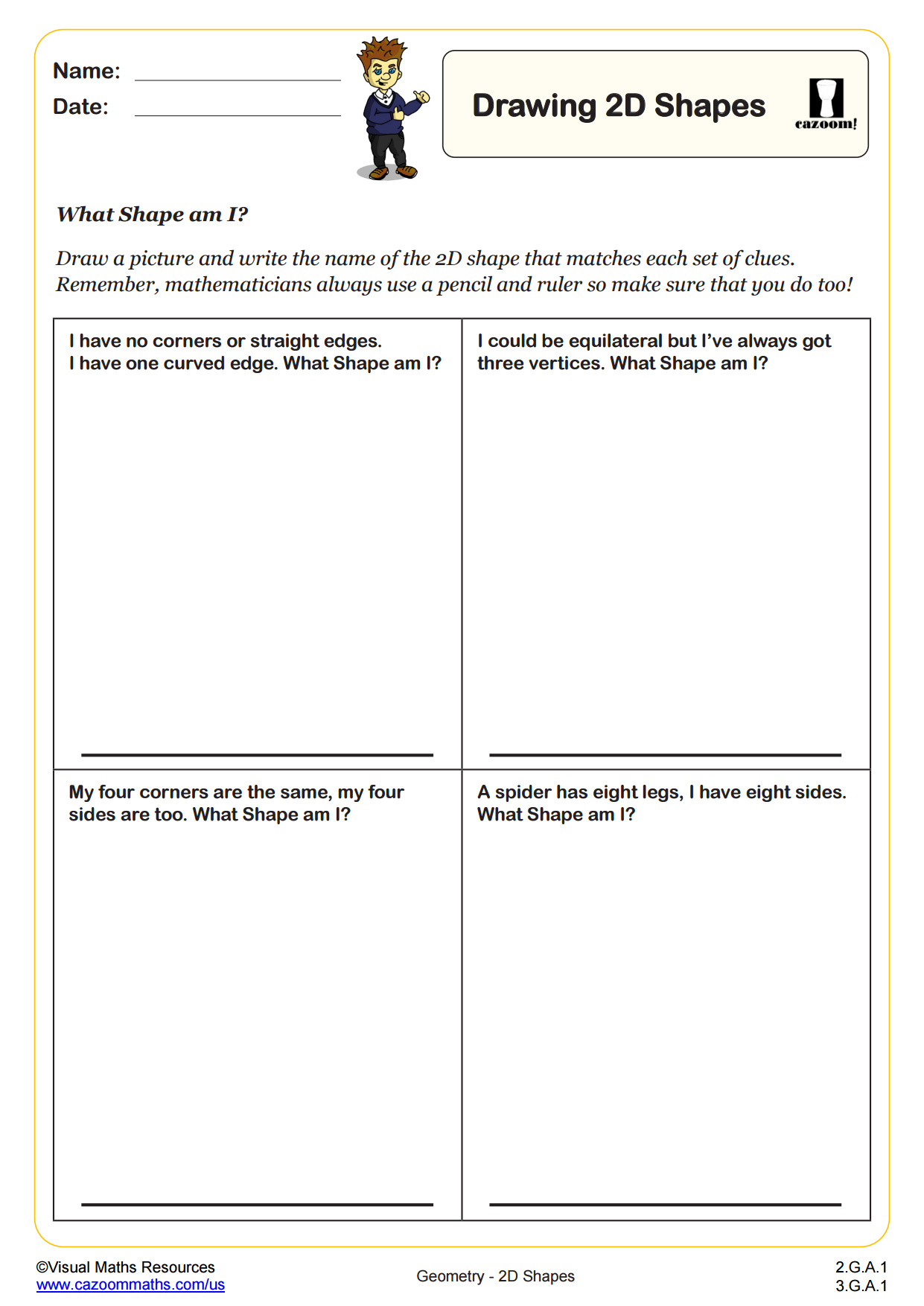
Drawing 2D Shapes
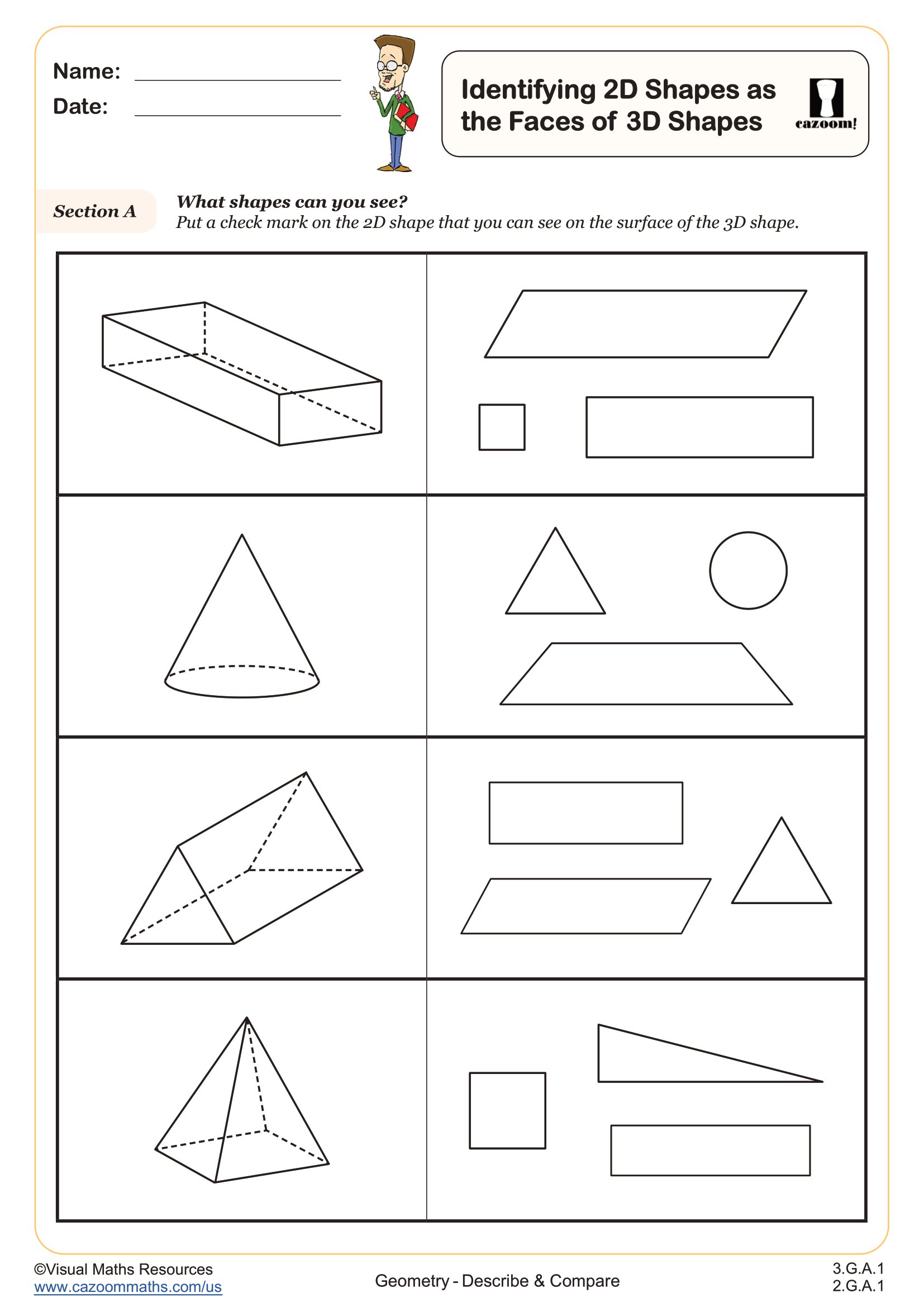
Identifying 2D Shapes as the Faces of 3D Shapes
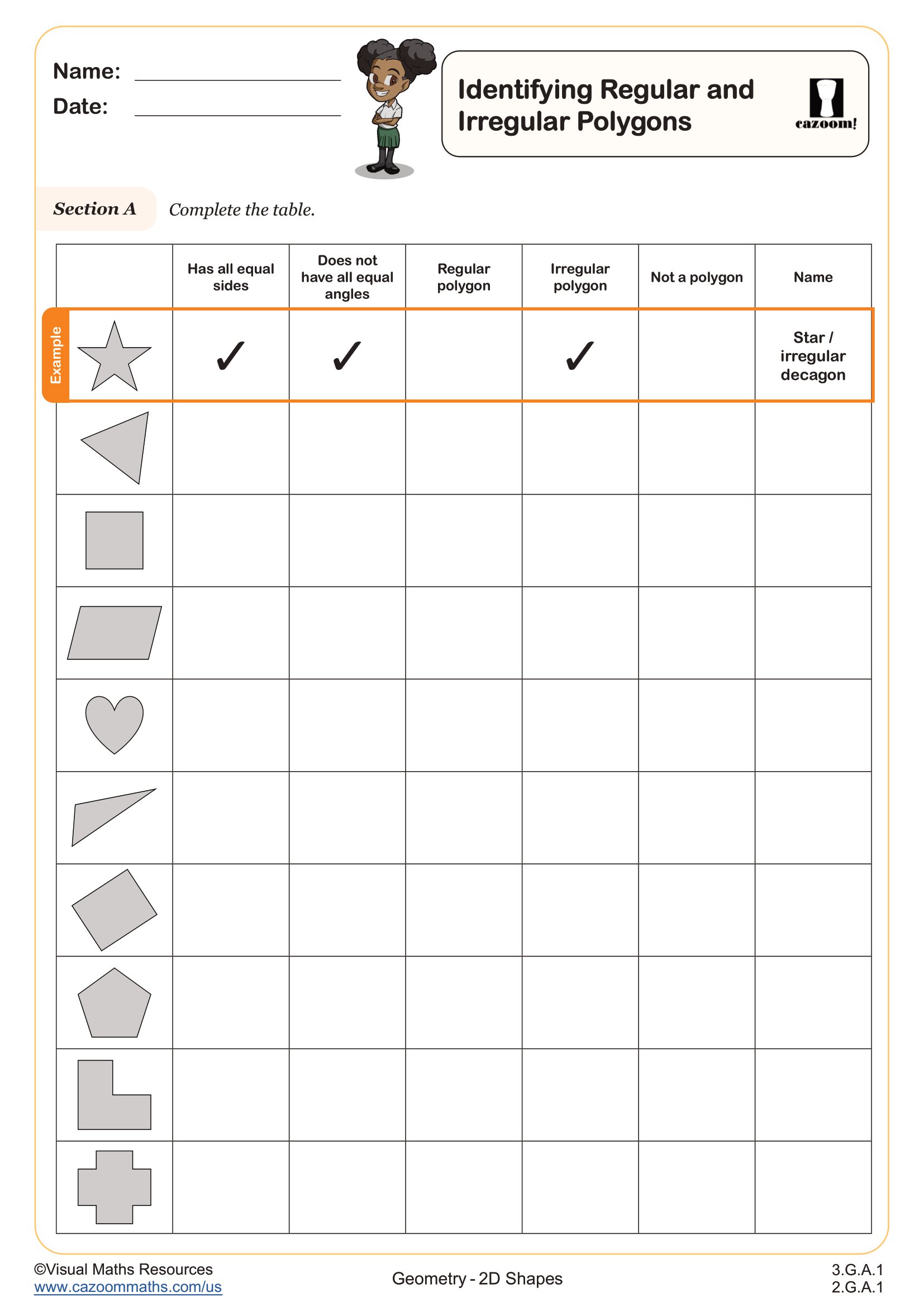
Identifying Regular and Irregular Polygons
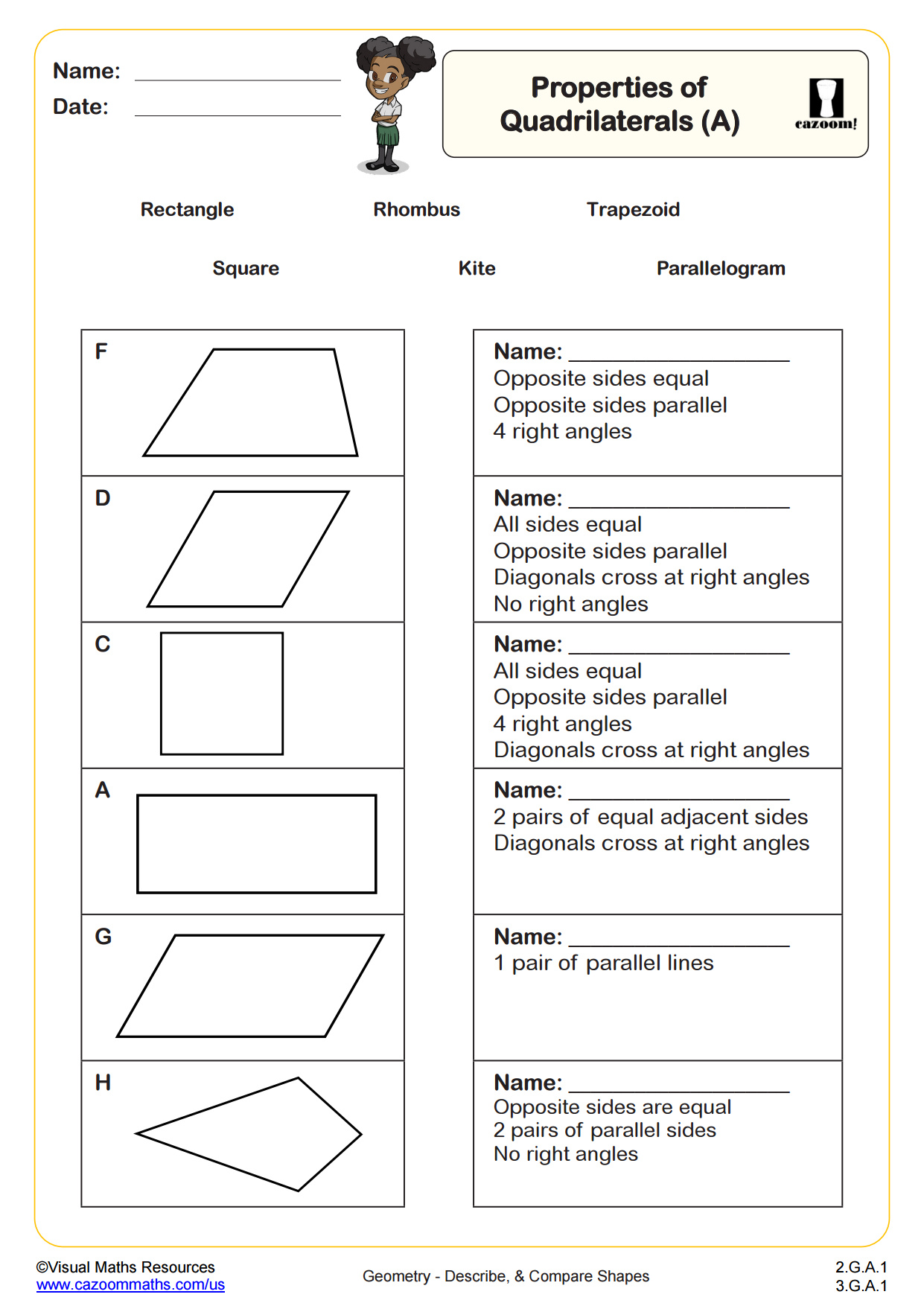
Properties of Quadrilaterals (A)
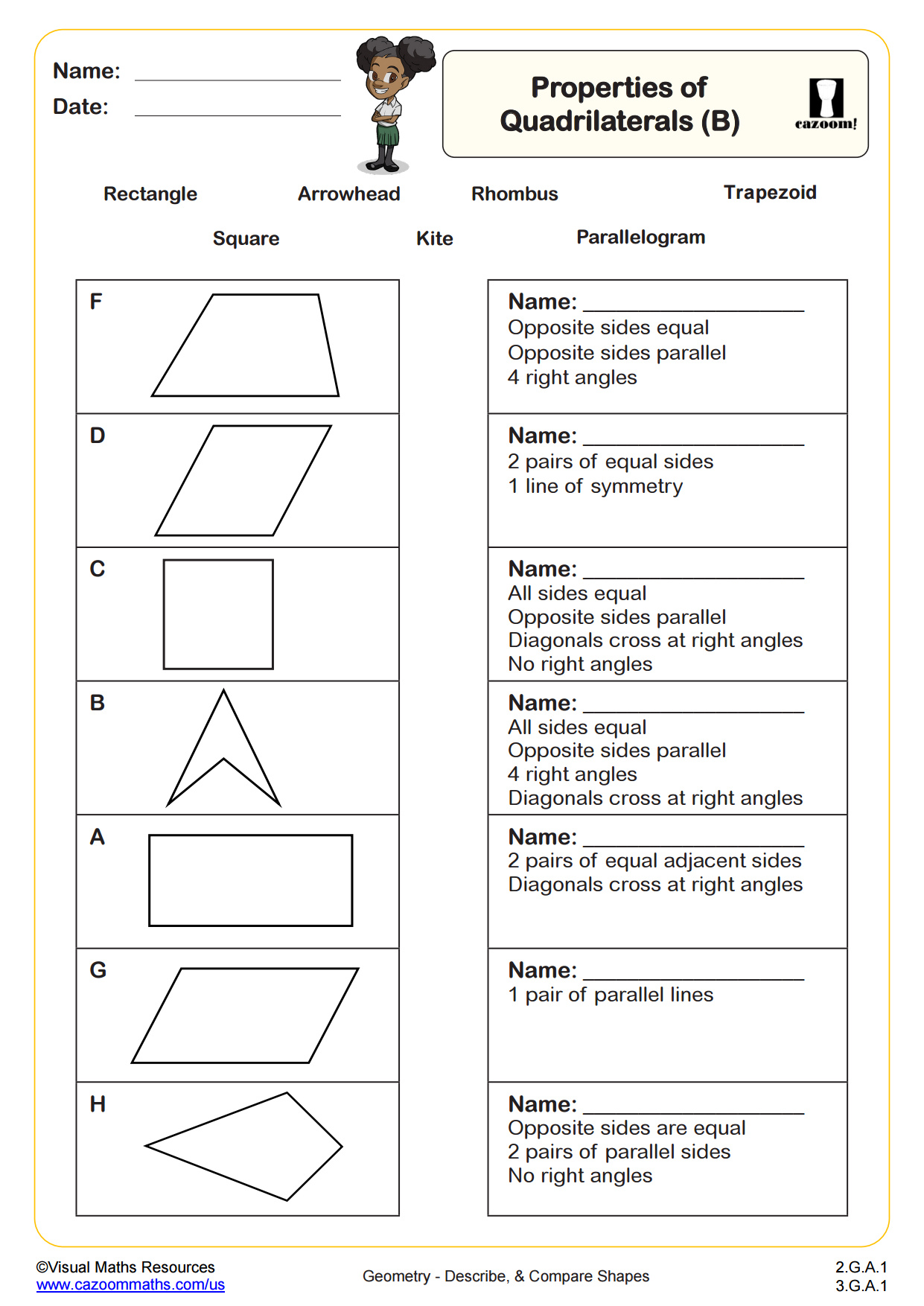
Properties of Quadrilaterals (B)
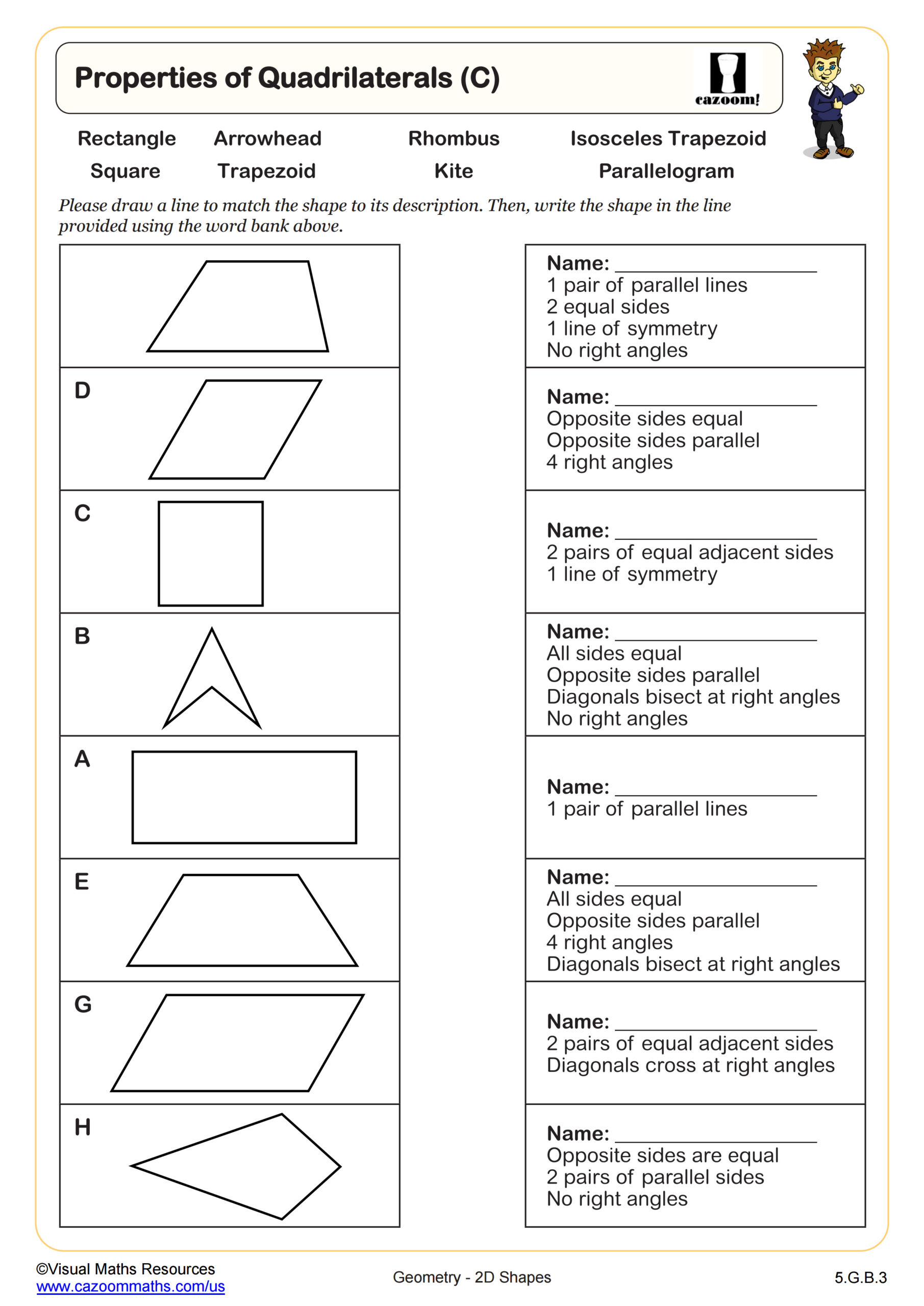
Properties of Quadrilaterals (C)
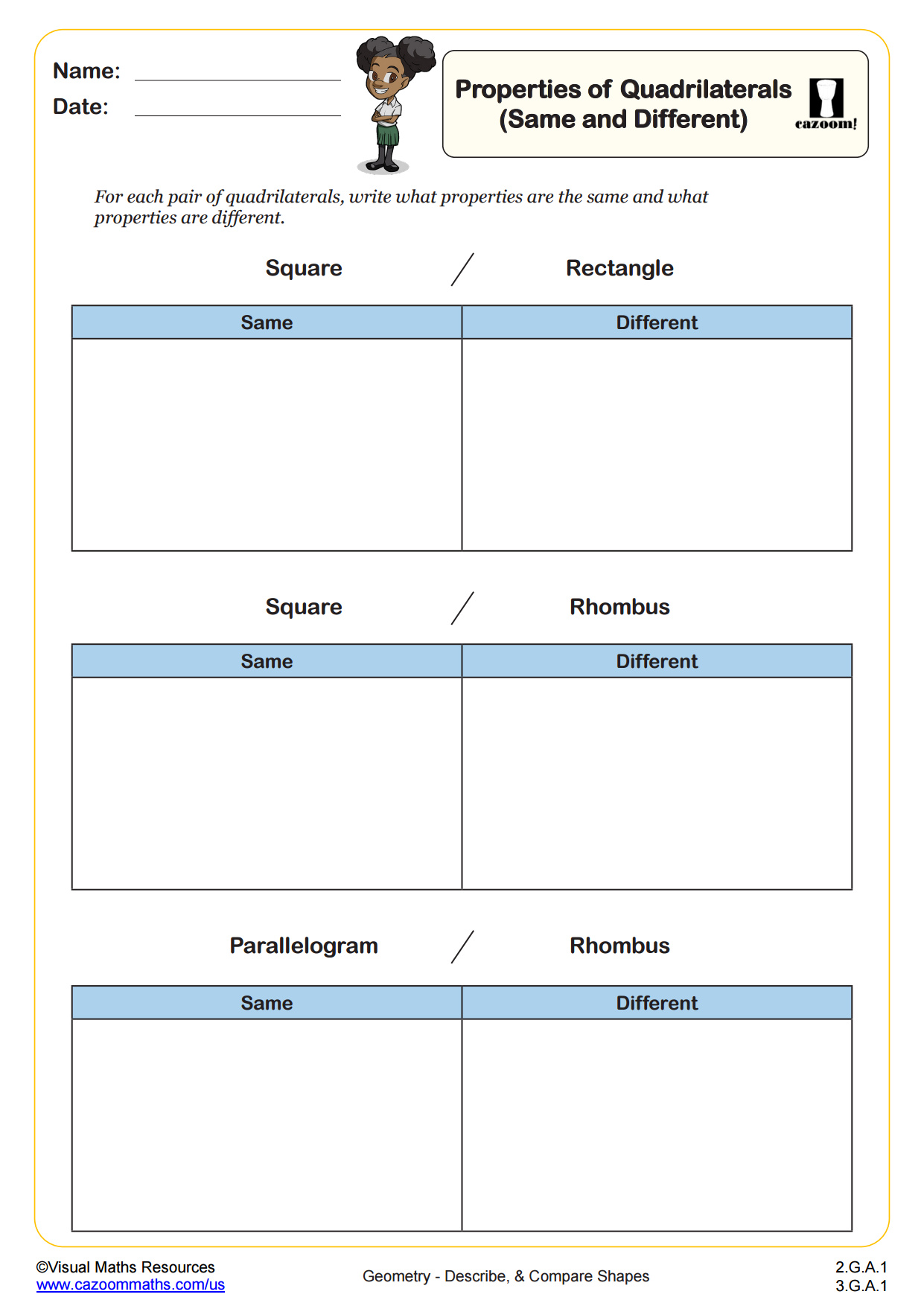
Properties of Quadrilaterals (Same and Different)
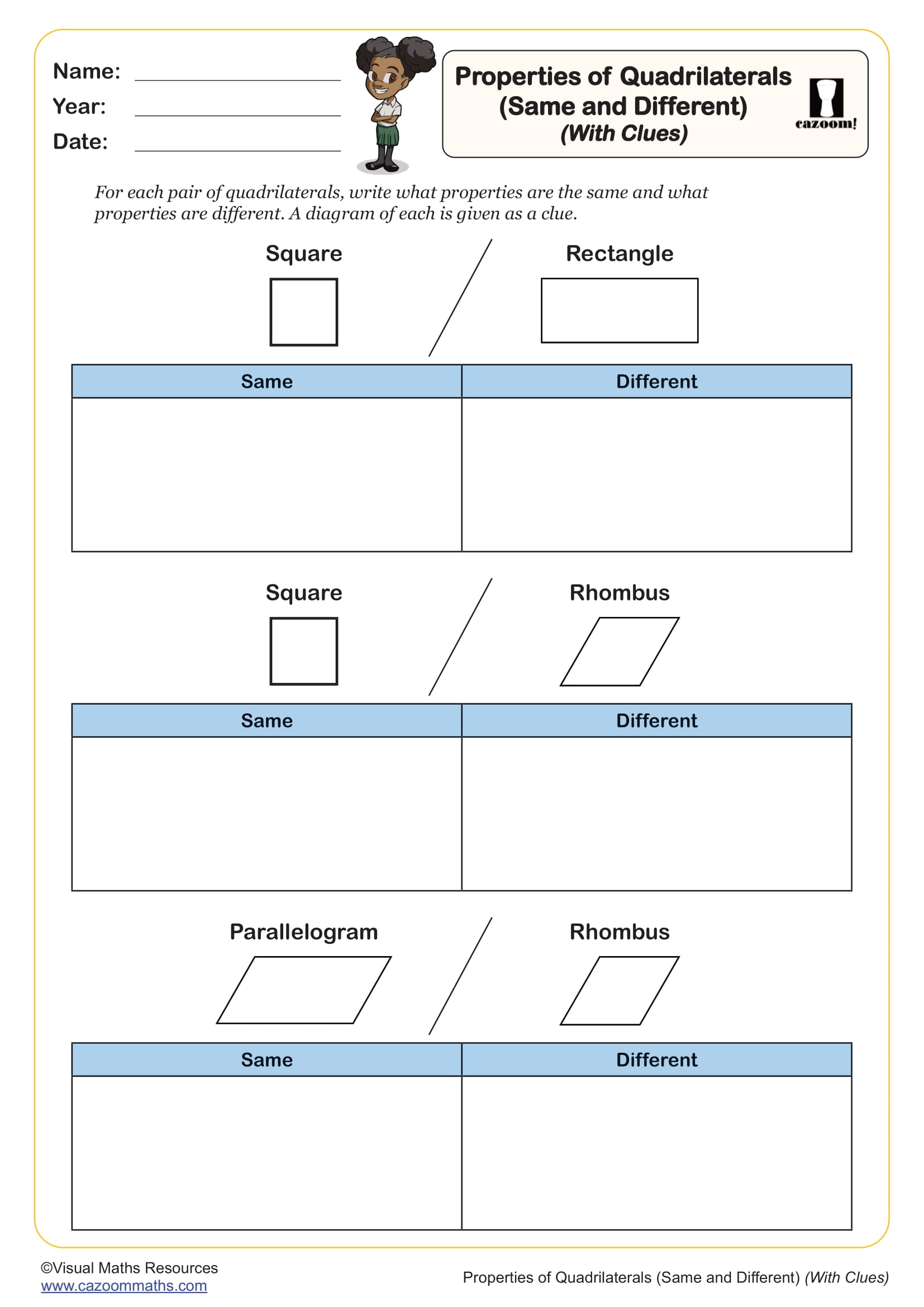
Properties of Quadrilaterals (Same and Different) (with clues)
All worksheets are created by the team of experienced teachers at Cazoom Math.
Unlock Faster Geometrical Problem Solving With Our 3rd Grade PDF Math Resources
Students in third grade learn advanced geometric properties after mastering basic shape identification. The worksheets enable students to practice measurement skills and calculate area and perimeter while learning to break shapes into their parts to understand shape relationships. Students learn spatial reasoning through continuous, hands-on activities that help them connect visual concepts to abstract mathematical ones. The activities that connect 2D and 3D shapes through fractional partitioning and estimation help students develop precision and flexibility, which become essential for their future success in measurement and geometry and in advanced problem-solving in upper grades.
Essential Elementary School Geometry Topics: From 2D Shapes to Estimating Area
These worksheets guide students from drawing shapes to calculating their area and perimeter with confidence. Visual models help children understand complex ideas by showing how measurement values relate to the geometric properties of shapes. Activities progress from identifying and partitioning shapes to comparing area and perimeter using both regular and irregular polygons. The worksheets include complete answer keys and step-by-step examples that help students learn independently while developing their problem-solving, spatial reasoning, and reasoning skills, which are essential for geometry mastery at this level.
Tired of Guesswork? 3rd Grade Geometry Resources Will Give Answers
Cazoom Math worksheets fit seamlessly into daily math blocks. Teachers quickly identify appropriate challenge levels for different learners. Materials span multiple skill levels for natural differentiation. Short exercises work well for morning warm-ups. Longer problems support deeper exploration during math centers. The structured progression enables educators to track student growth effectively. Instant feedback through detailed solutions reduces the time spent on grading. Parents appreciate the alignment with classroom instruction. Regular home practice reinforces school learning without confusion. Teachers save planning time with ready-to-use resources. Each worksheet targets specific learning objectives clearly.
Beyond Classrooms: Practical Applications of Third Grade Geometry Skills
Geometry concepts appear everywhere in students' daily experiences. Children use these mathematical skills constantly without realizing it.
• Building structures with blocks
• Creating artwork with geometric patterns
• Measuring garden plots for planting
• Understanding sports field dimensions