3rd Grade Geometry Worksheets
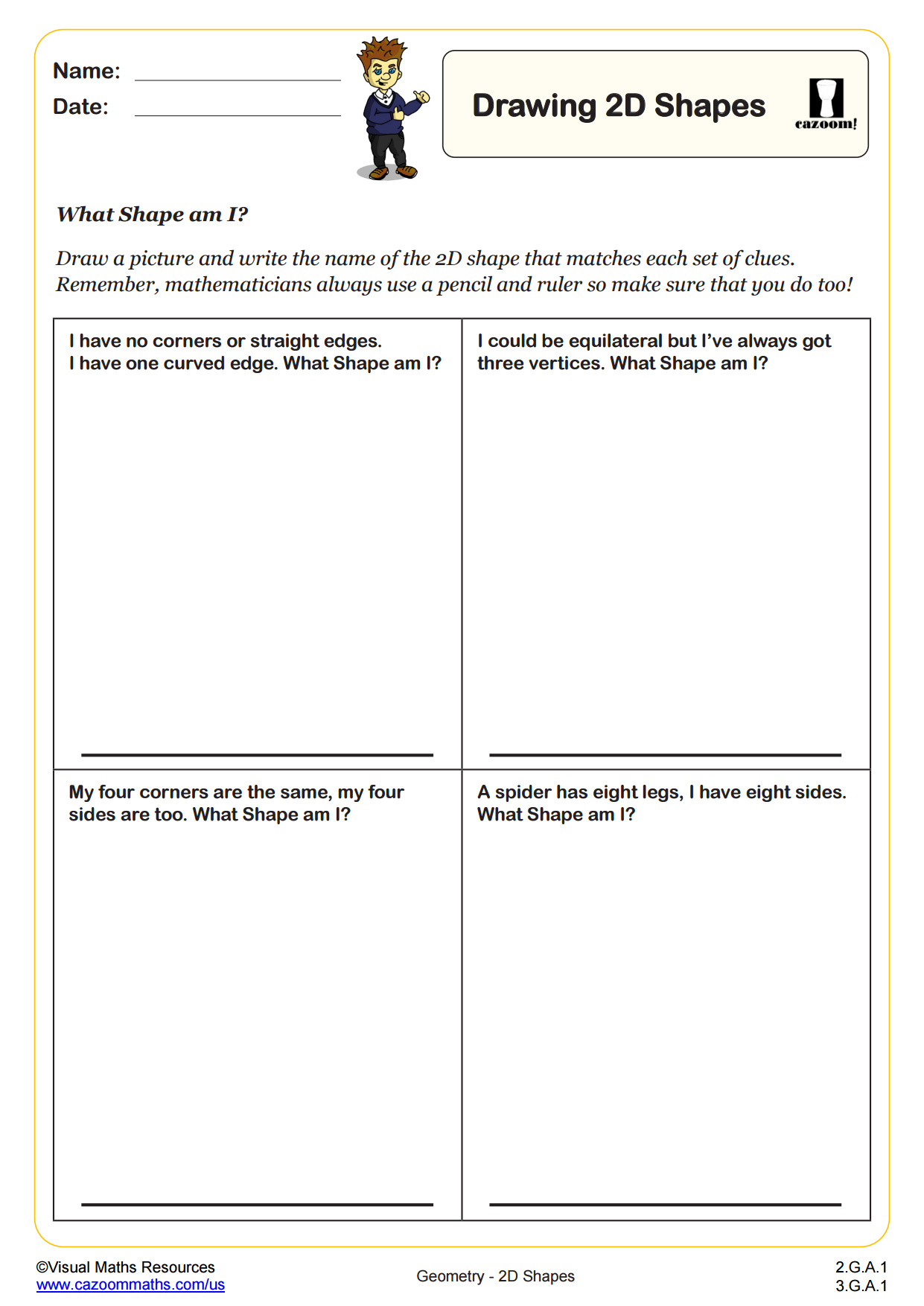
Drawing 2D Shapes
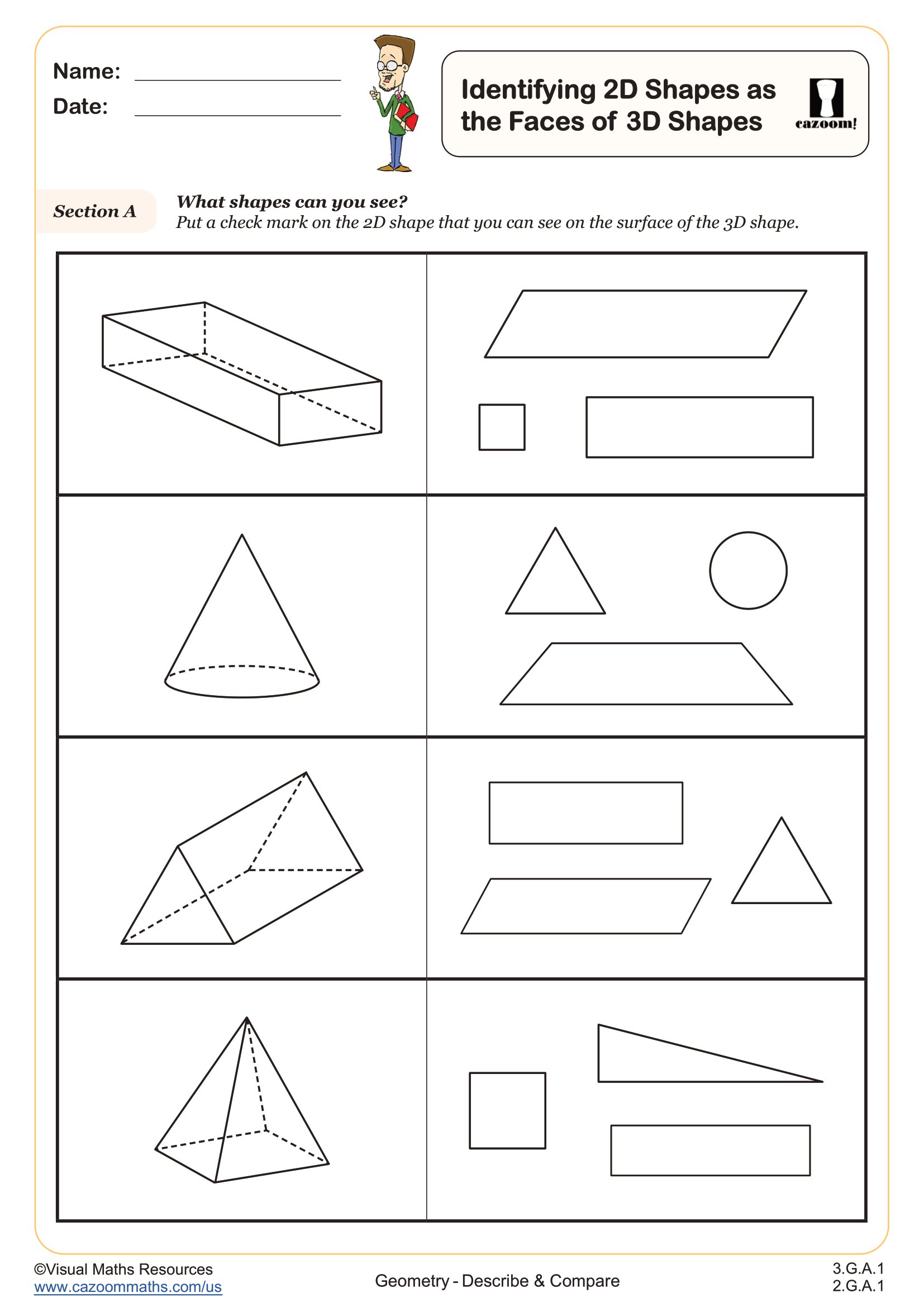
Identifying 2D Shapes as the Faces of 3D Shapes
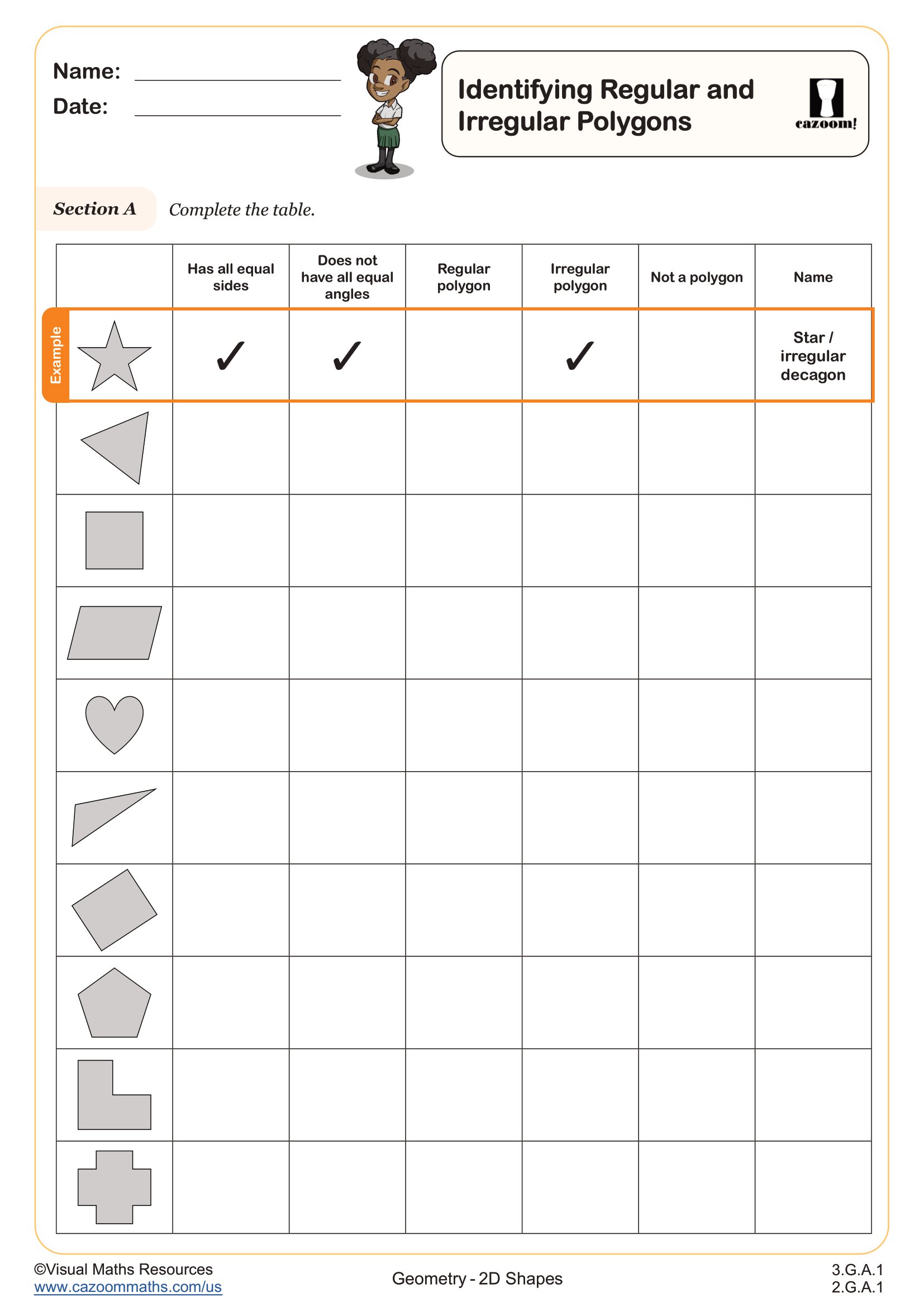
Identifying Regular and Irregular Polygons
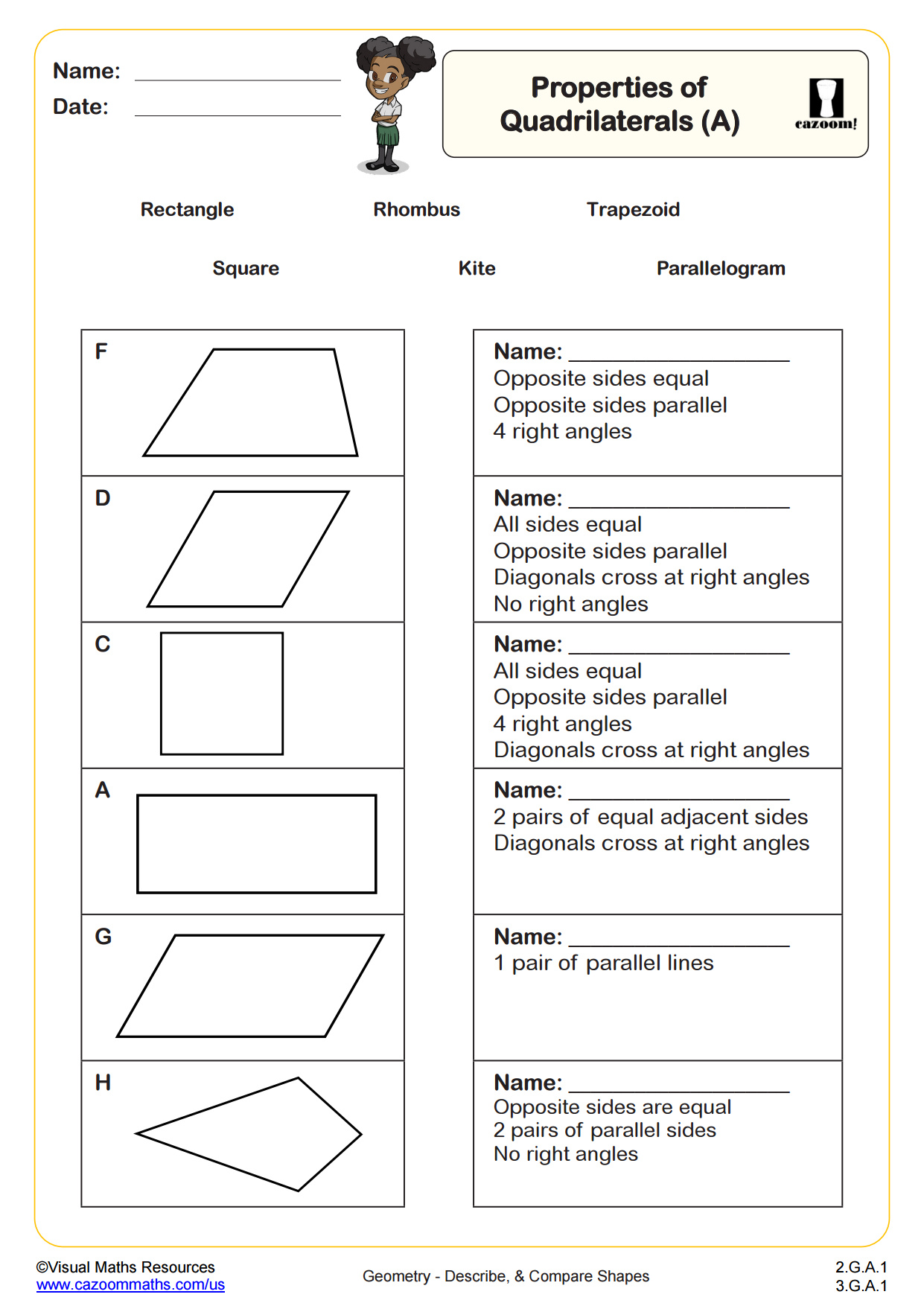
Properties of Quadrilaterals (A)
Properties of Quadrilaterals (B)
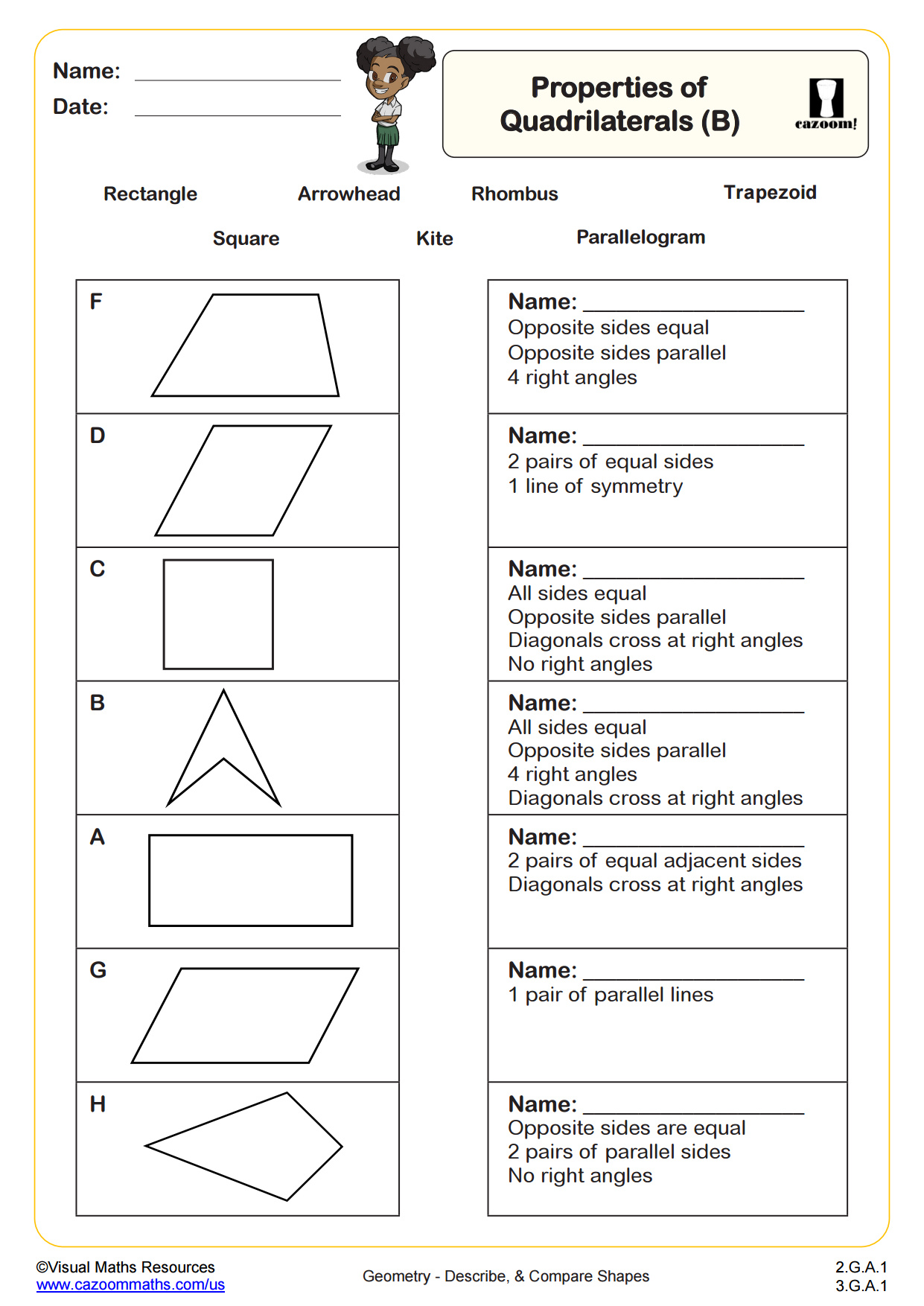
Properties of Quadrilaterals (C)
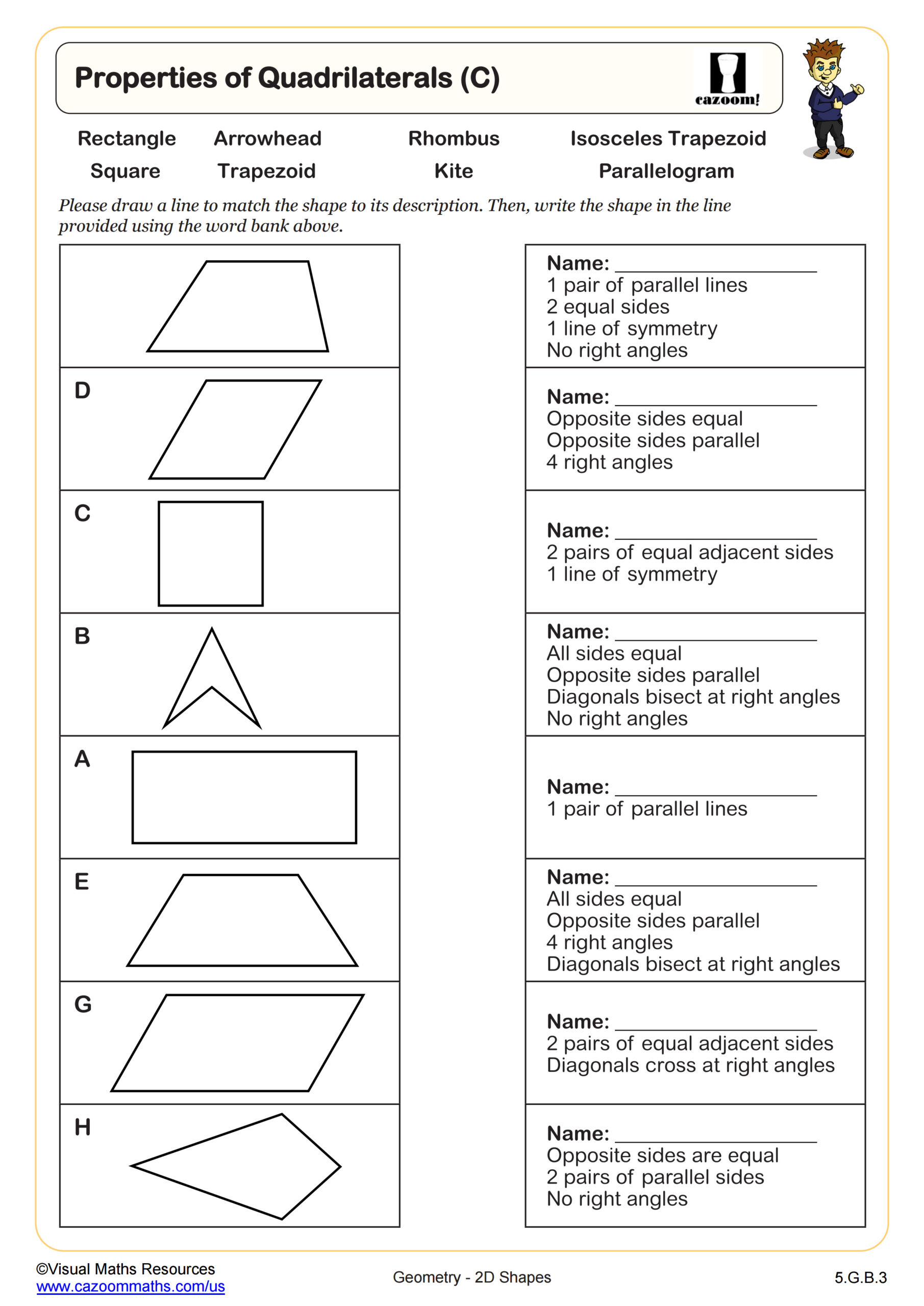
Properties of Quadrilaterals (Same and Different)
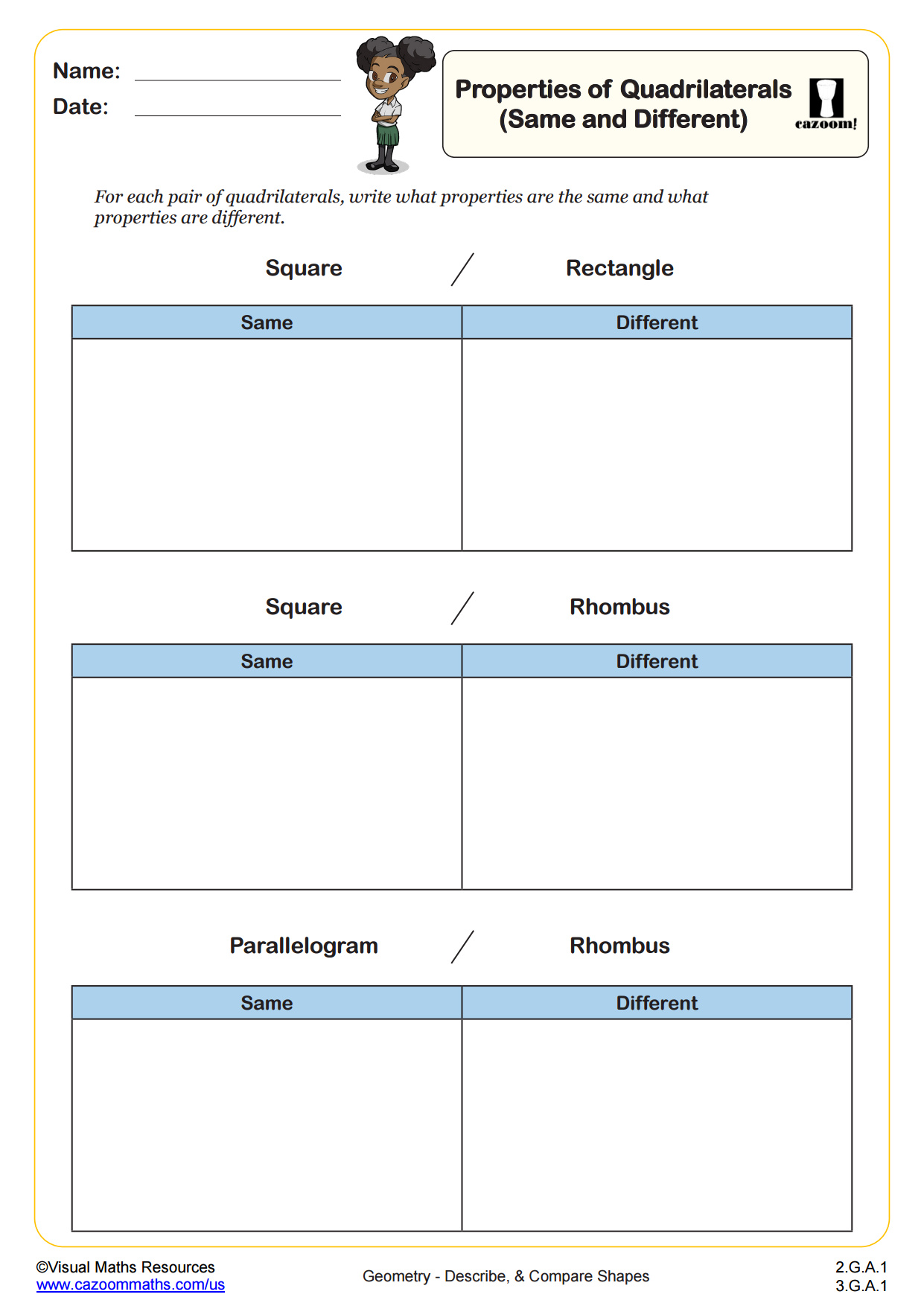
Properties of Quadrilaterals (Same and Different) (with clues)
All worksheets are created by the team of experienced teachers at Cazoom Math.
What topics are covered in 3rd grade shapes worksheets?
Third grade shapes worksheets typically cover identifying and classifying two-dimensional shapes (triangles, quadrilaterals, pentagons, hexagons) and three-dimensional figures (cubes, rectangular prisms, pyramids, cylinders, spheres). Students practice recognizing attributes like sides, angles, faces, edges, and vertices while learning to sort shapes by their properties according to Common Core standards 3.G.1 and 3.G.2.
Teachers frequently observe that students mix up the vocabulary for 3D shapes, calling faces 'sides' or confusing edges with vertices. The worksheets include visual exercises where students count and label these features, helping cement the correct terminology through repeated practice with immediate feedback from the answer keys.
Are these geometry worksheets appropriate for students above or below 3rd grade?
While designed for 3rd grade geometry standards, these worksheets can serve different purposes across grade levels. Advanced 2nd grade students or those in accelerated programs may benefit from the introductory activities, while struggling 4th grade students can use them for remediation and confidence building. The visual nature of geometry makes these concepts accessible to varied learners.
Teachers often use these materials for intervention groups where 4th or 5th grade students need to revisit foundational shape concepts before tackling more complex topics like area, perimeter, or coordinate geometry. The answer keys allow students to work independently while teachers focus on other groups during differentiated instruction time.
How do these worksheets help students understand shape attributes and classification?
The worksheets use sorting activities, attribute charts, and compare-and-contrast exercises to help students analyze what makes shapes similar or different. Students practice identifying parallel sides, right angles, and equal sides while learning to group shapes by shared characteristics. This builds the logical thinking skills needed for more advanced geometric reasoning.
Many teachers notice that students initially focus only on overall appearance rather than specific attributes when classifying shapes. The structured practice helps students move beyond 'it looks like a square' to more precise reasoning like 'this quadrilateral has four equal sides and four right angles, so it's a square.' This analytical approach prepares students for formal geometric proofs in later grades.
What's the best way to use these worksheets in classroom instruction?
These worksheets work well as guided practice after introducing new concepts through hands-on activities with pattern blocks, shape manipulatives, or real objects. Teachers can use them for station work, homework assignments, or quick warm-up activities to reinforce previously taught concepts. The answer keys make them ideal for self-checking activities or peer review sessions.
Experienced teachers often incorporate these worksheets into geometry centers where students rotate through different activities. Some use them as exit tickets to assess understanding before moving to the next lesson, while others assign specific problems that target misconceptions observed during class discussions. The PDF format allows easy printing for substitute teacher plans or parent communication about what students are learning.