3rd Grade Measurement and Data Worksheets
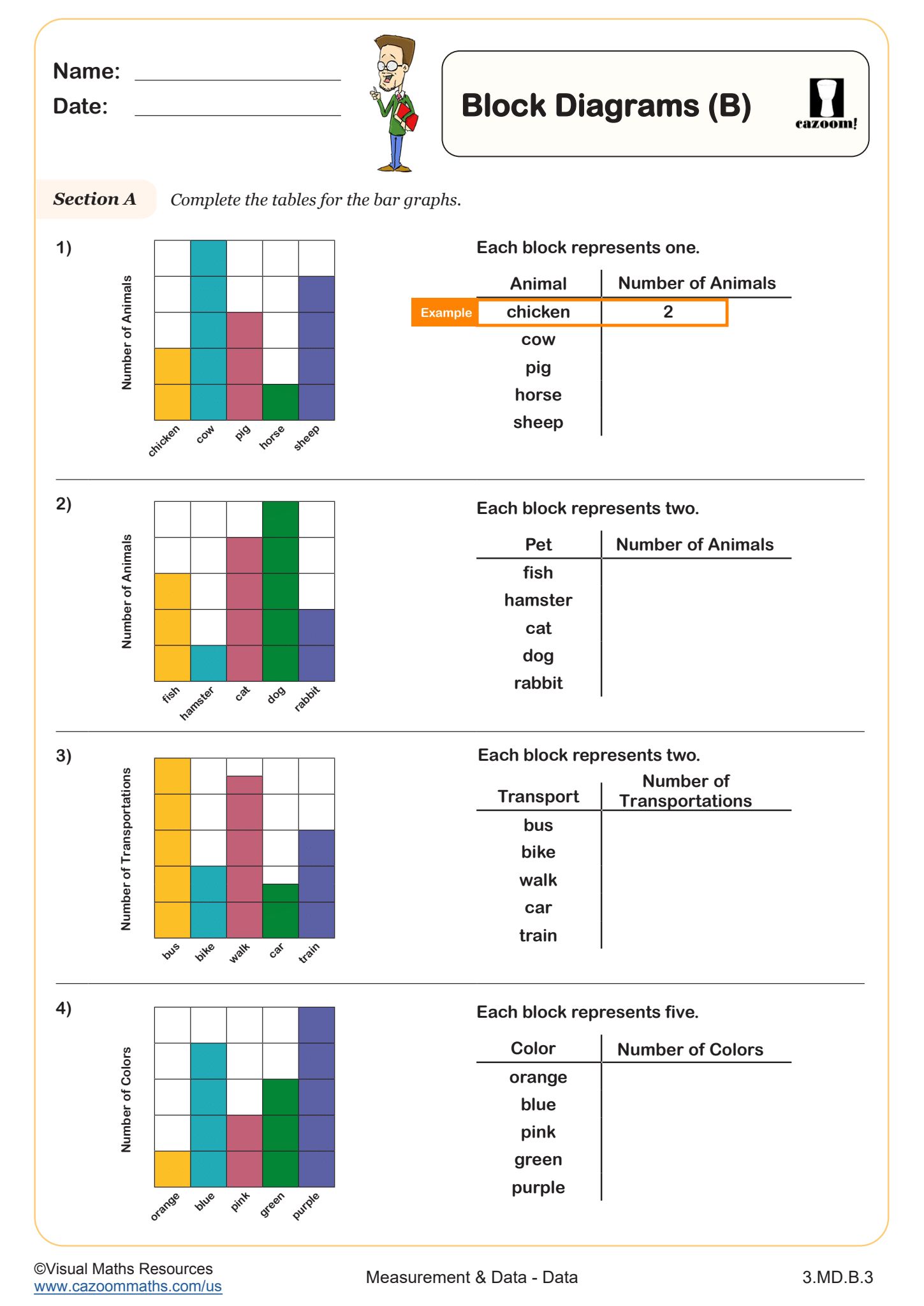
Block Diagrams (B)
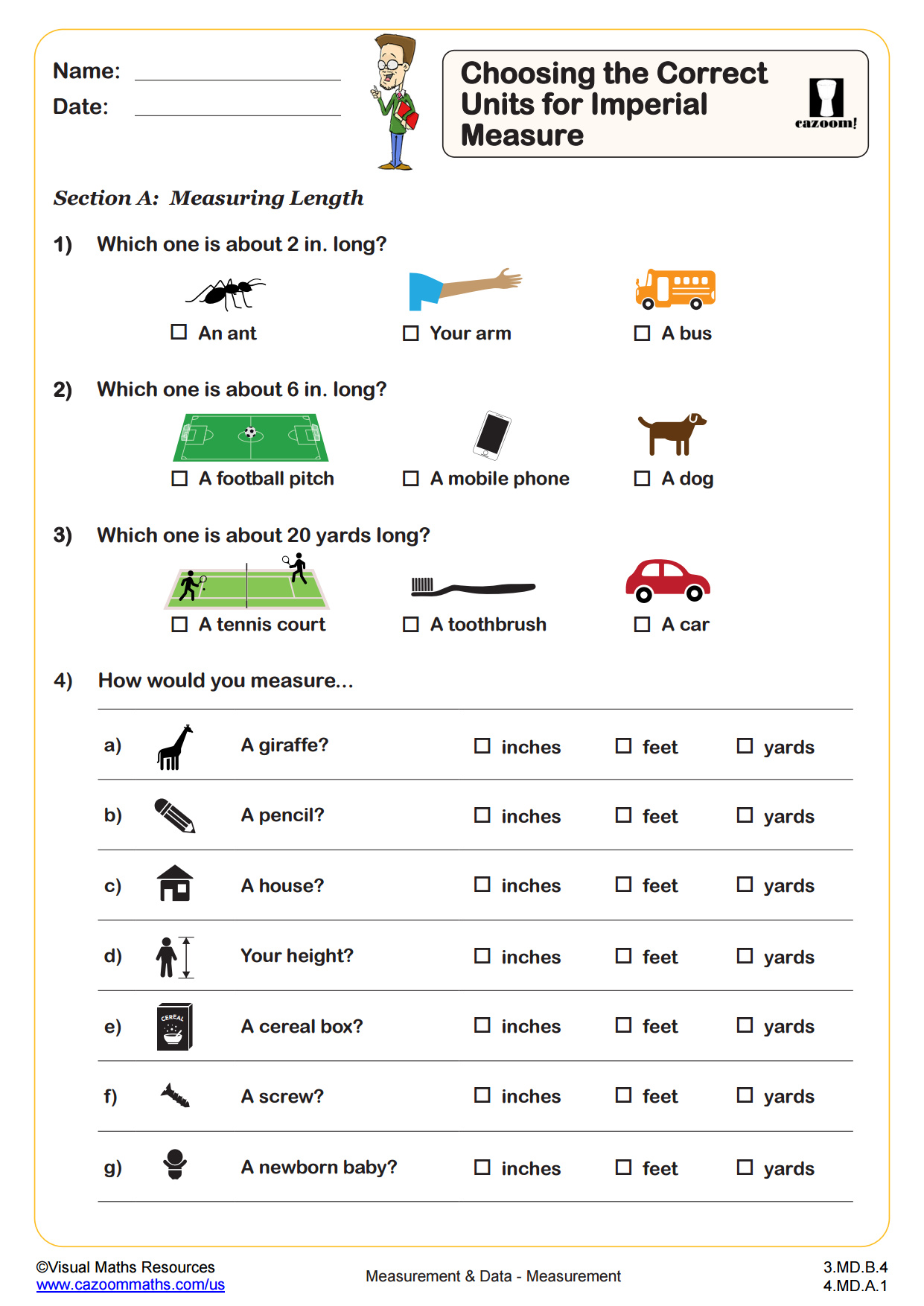
Choosing the Correct Units for Imperial Measure
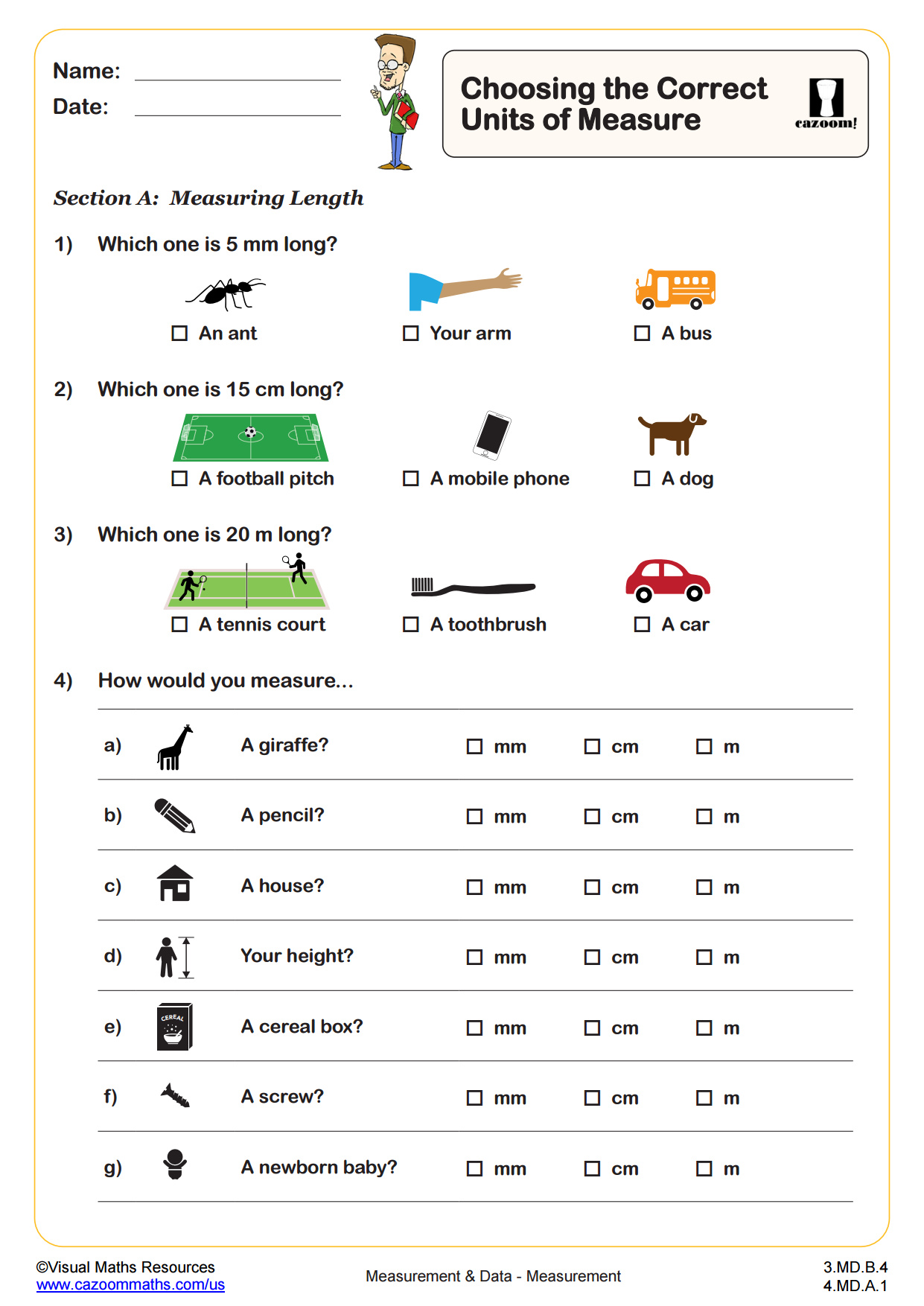
Choosing the Correct Units of Measure
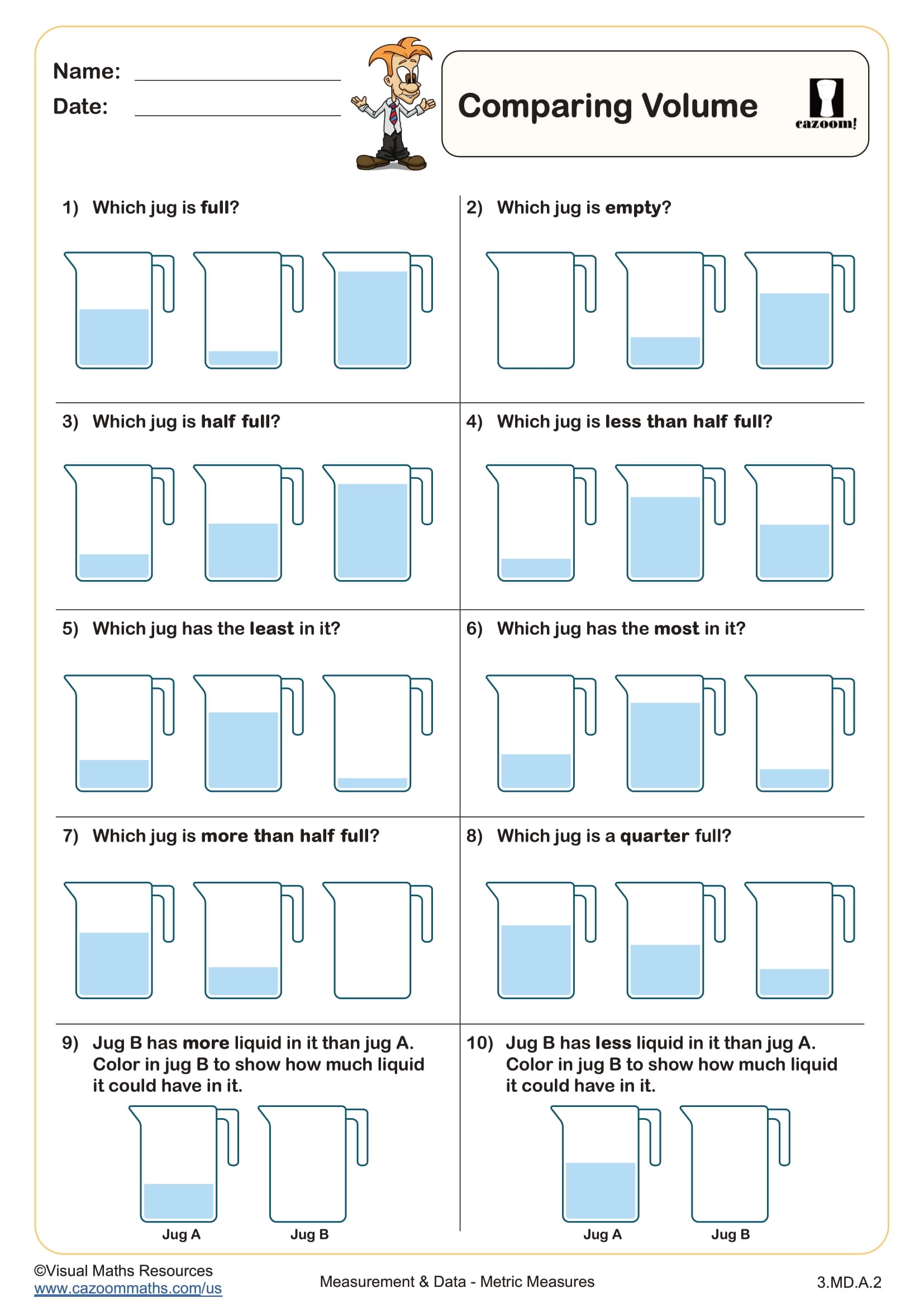
Comparing Volume
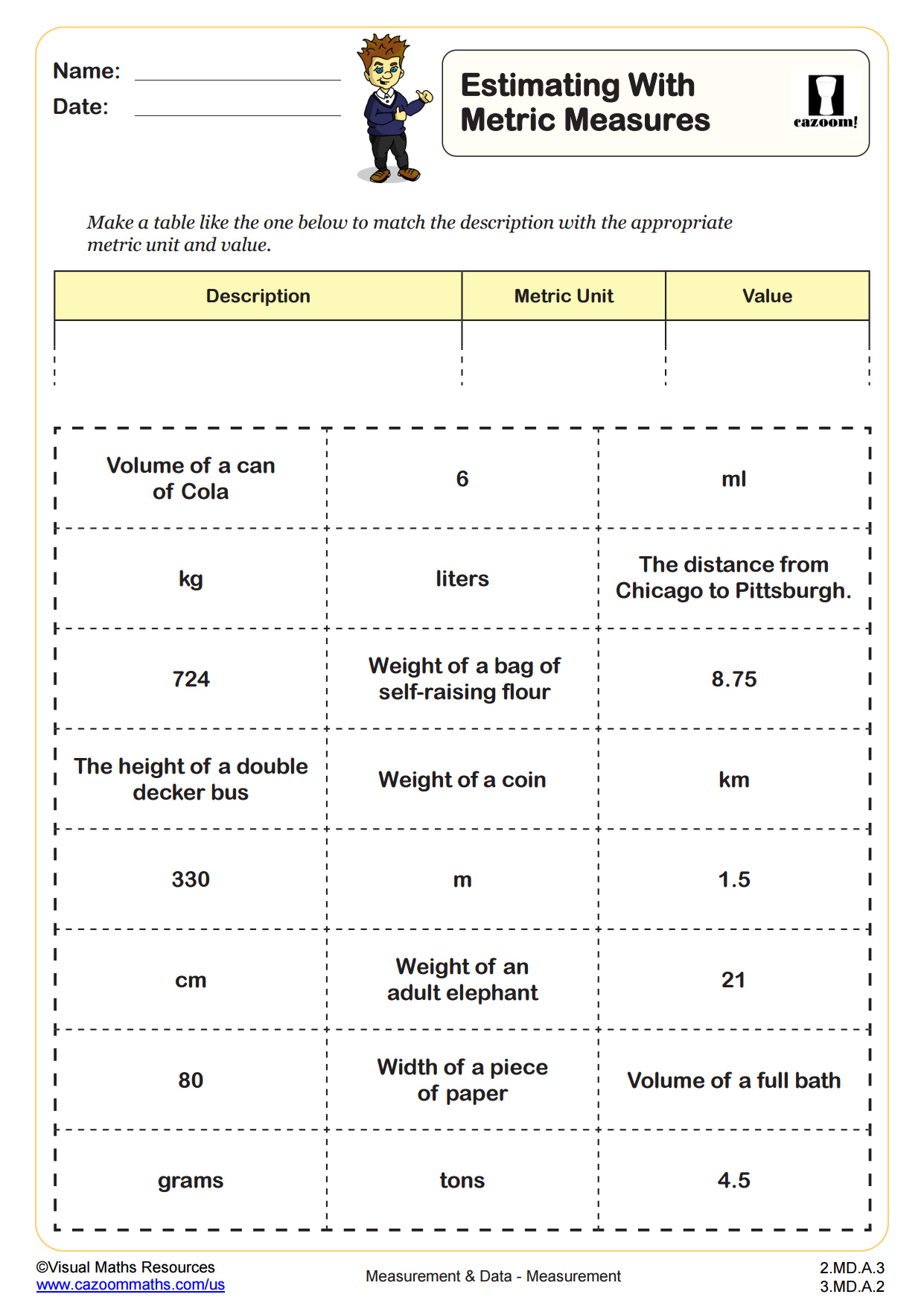
Estimating Metric Measures
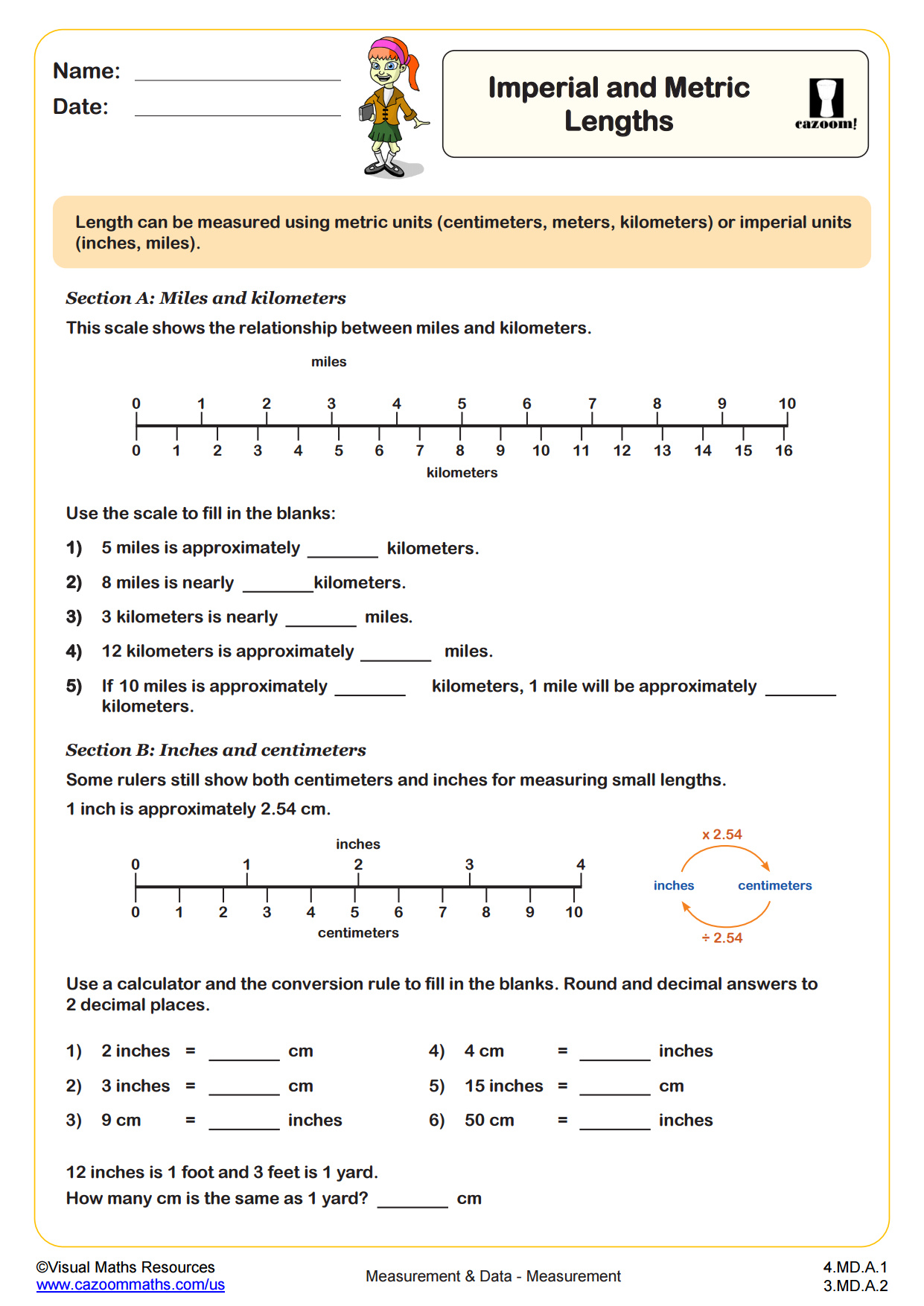
Imperial and Metric Lengths
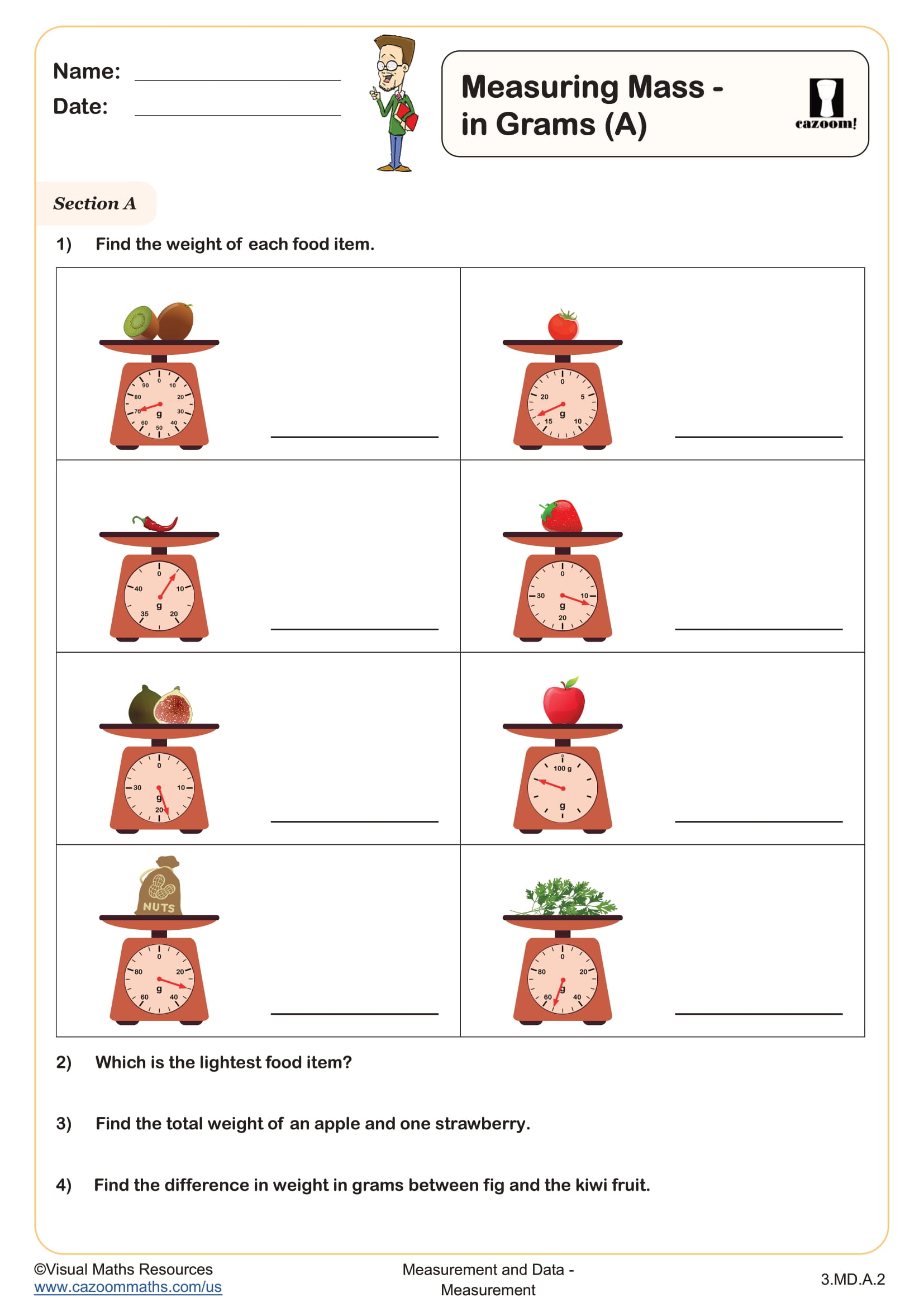
Measure Mass In Grams (A)
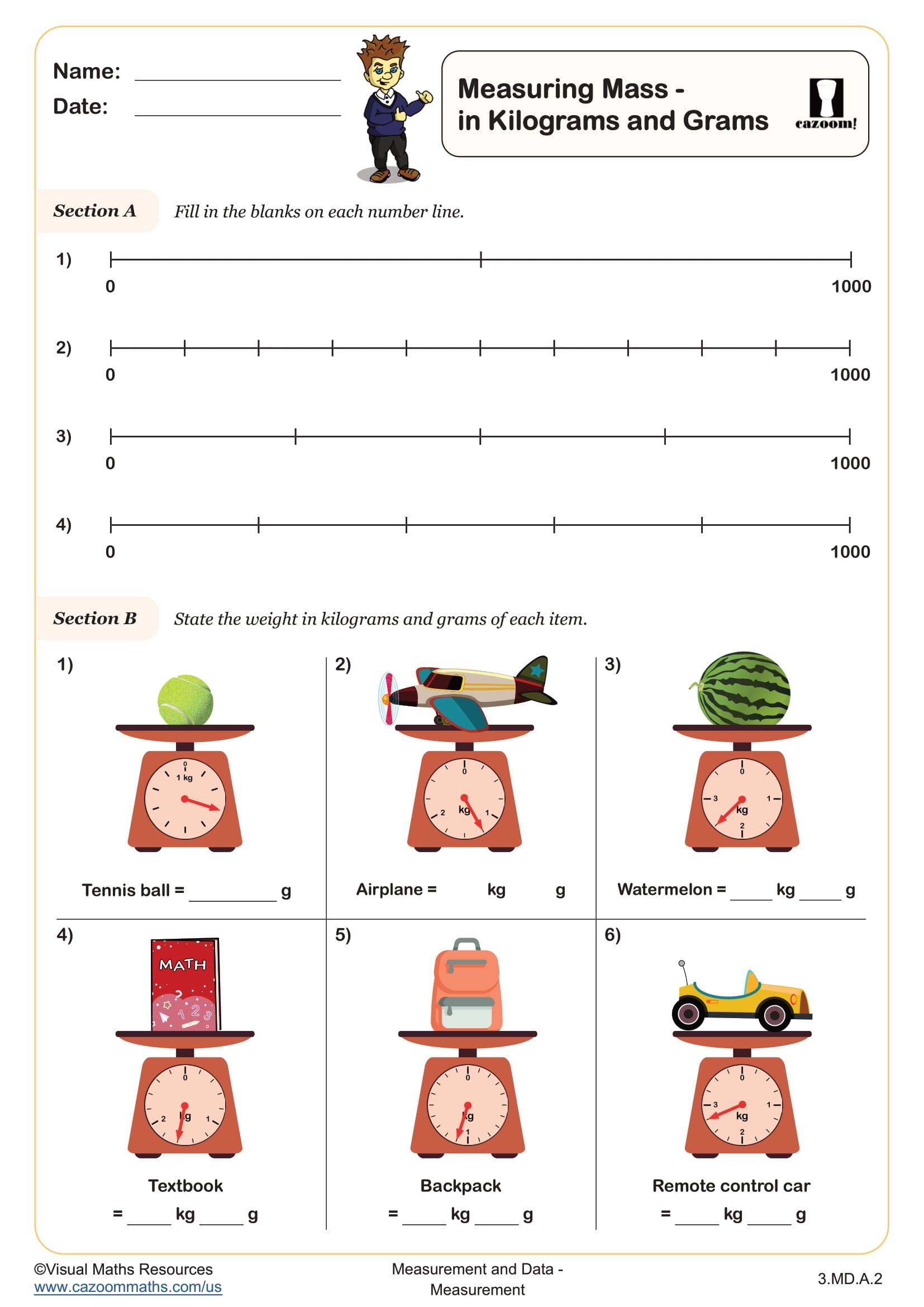
Measure Mass in Kilograms and Grams
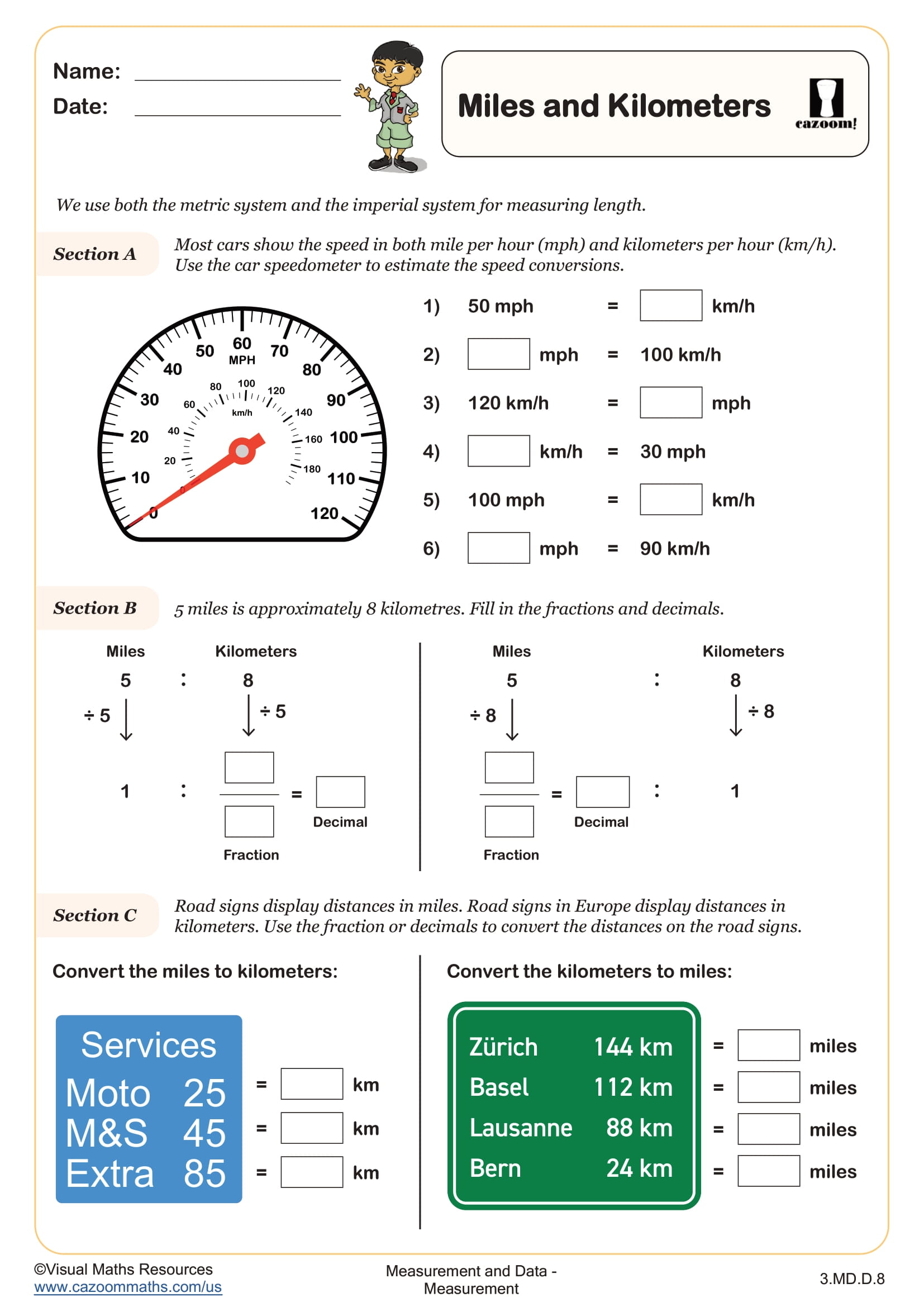
Measuring Mass (B)
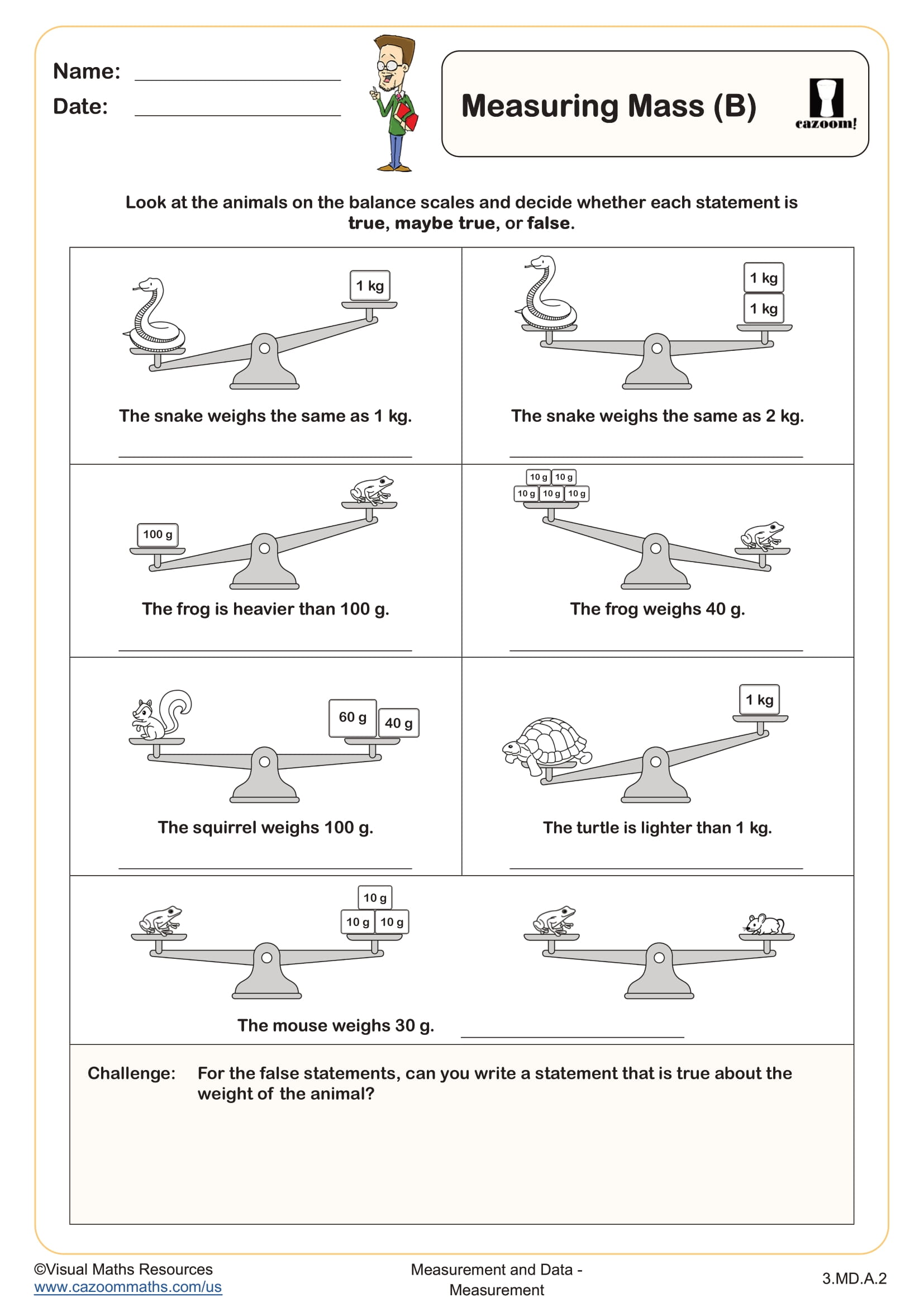
Measuring Volume (A)
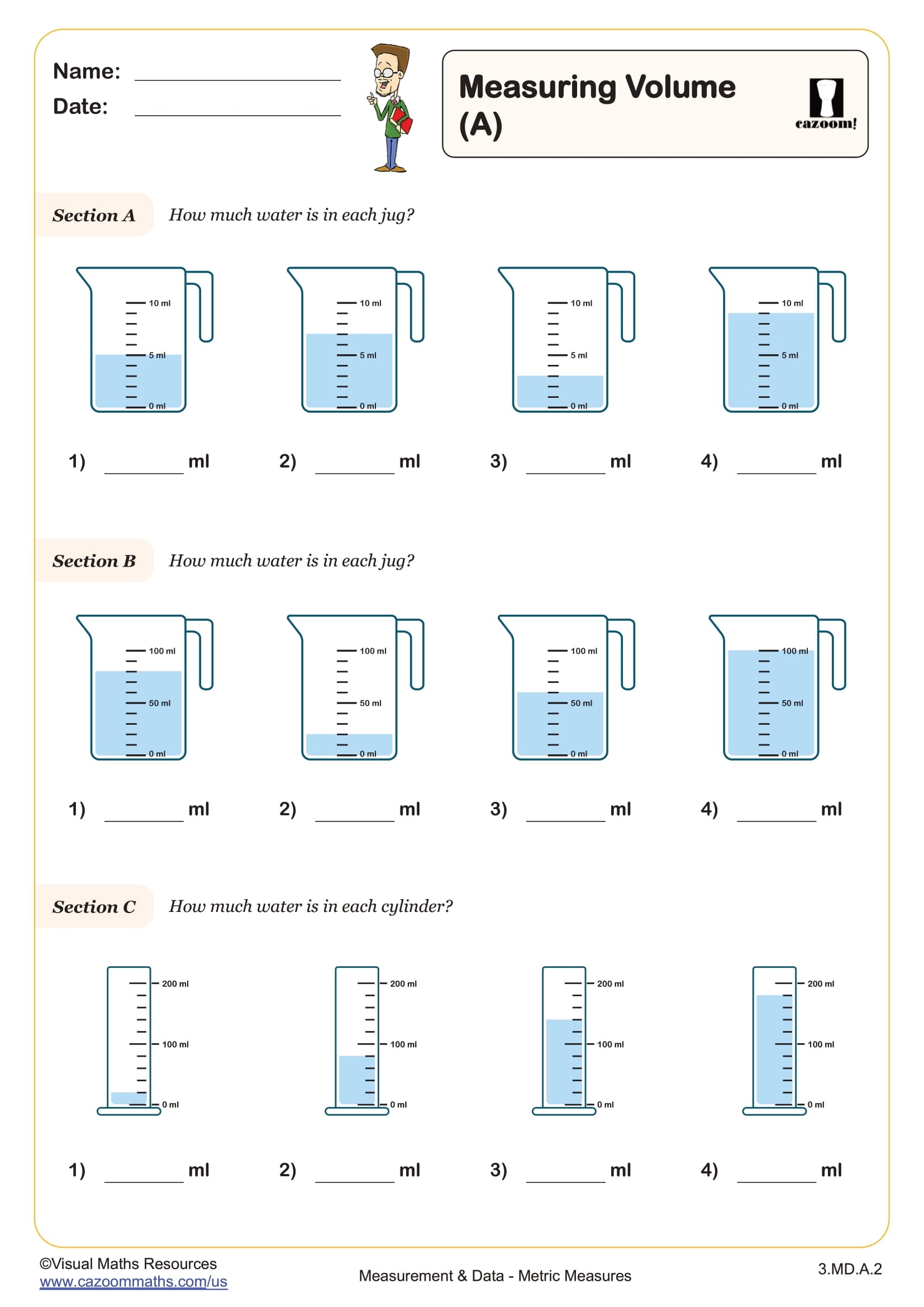
Measuring Volume (B)
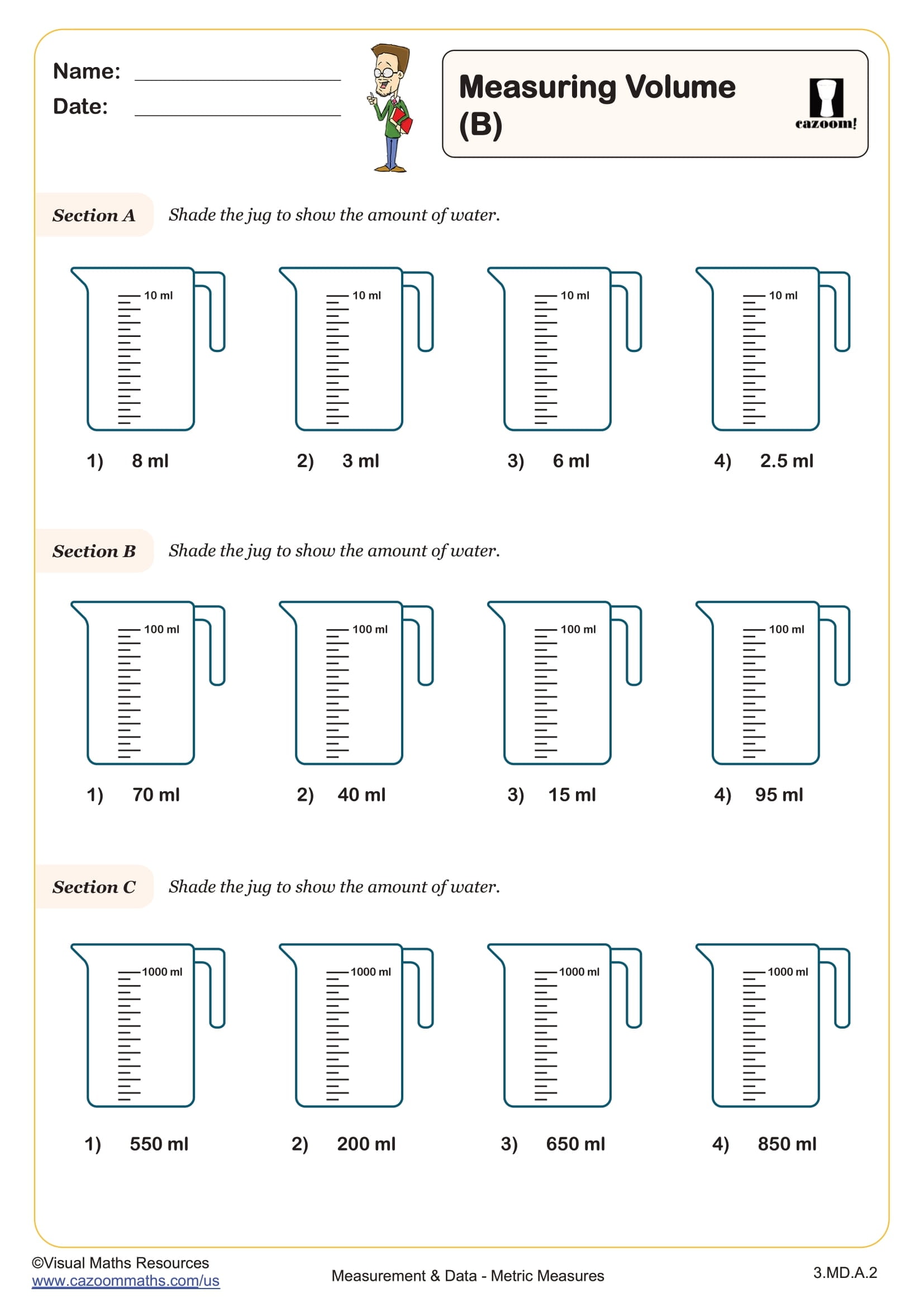
Miles and Kilometres
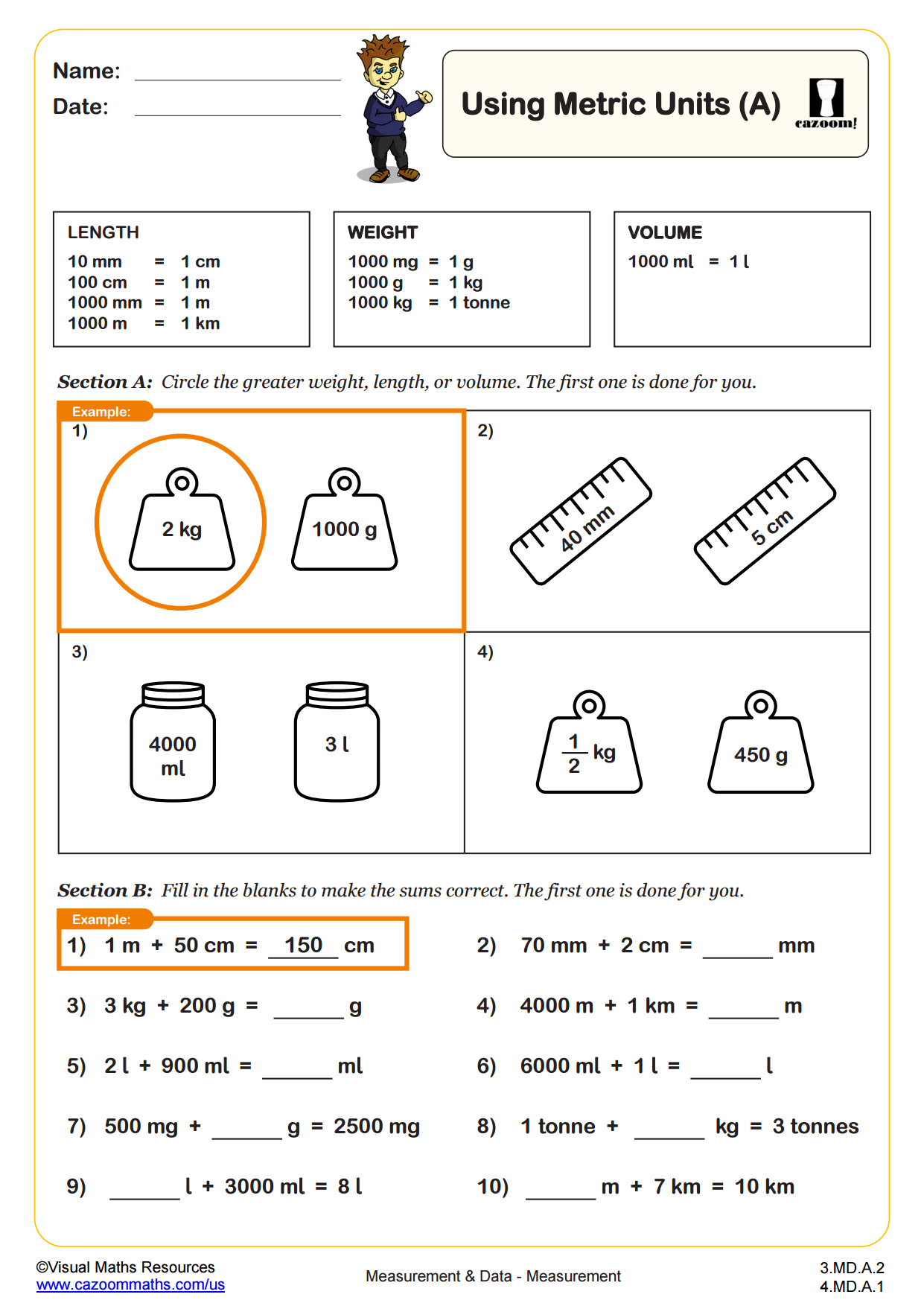
Using Metric Units (A)
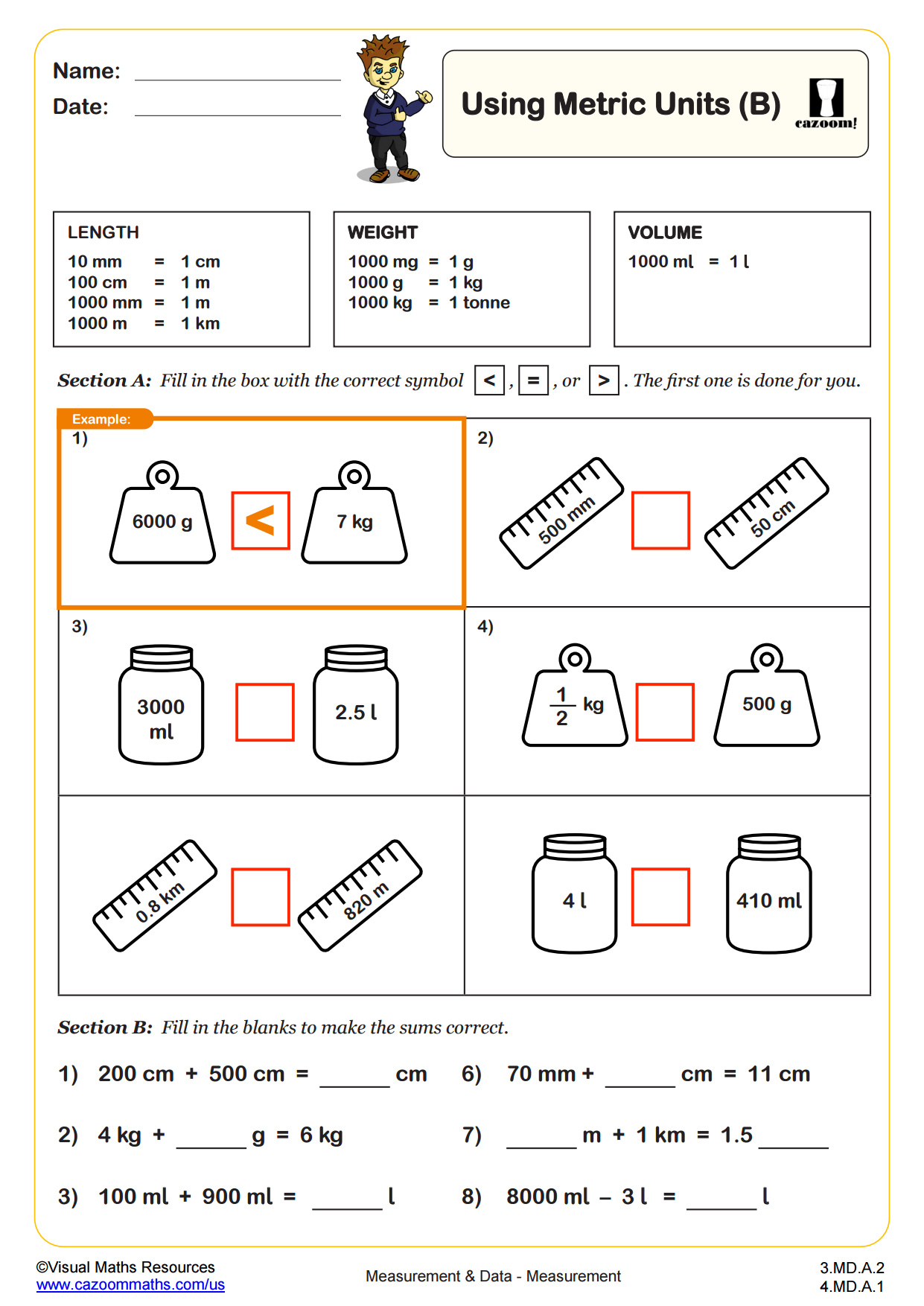
Using Metric Units (B)
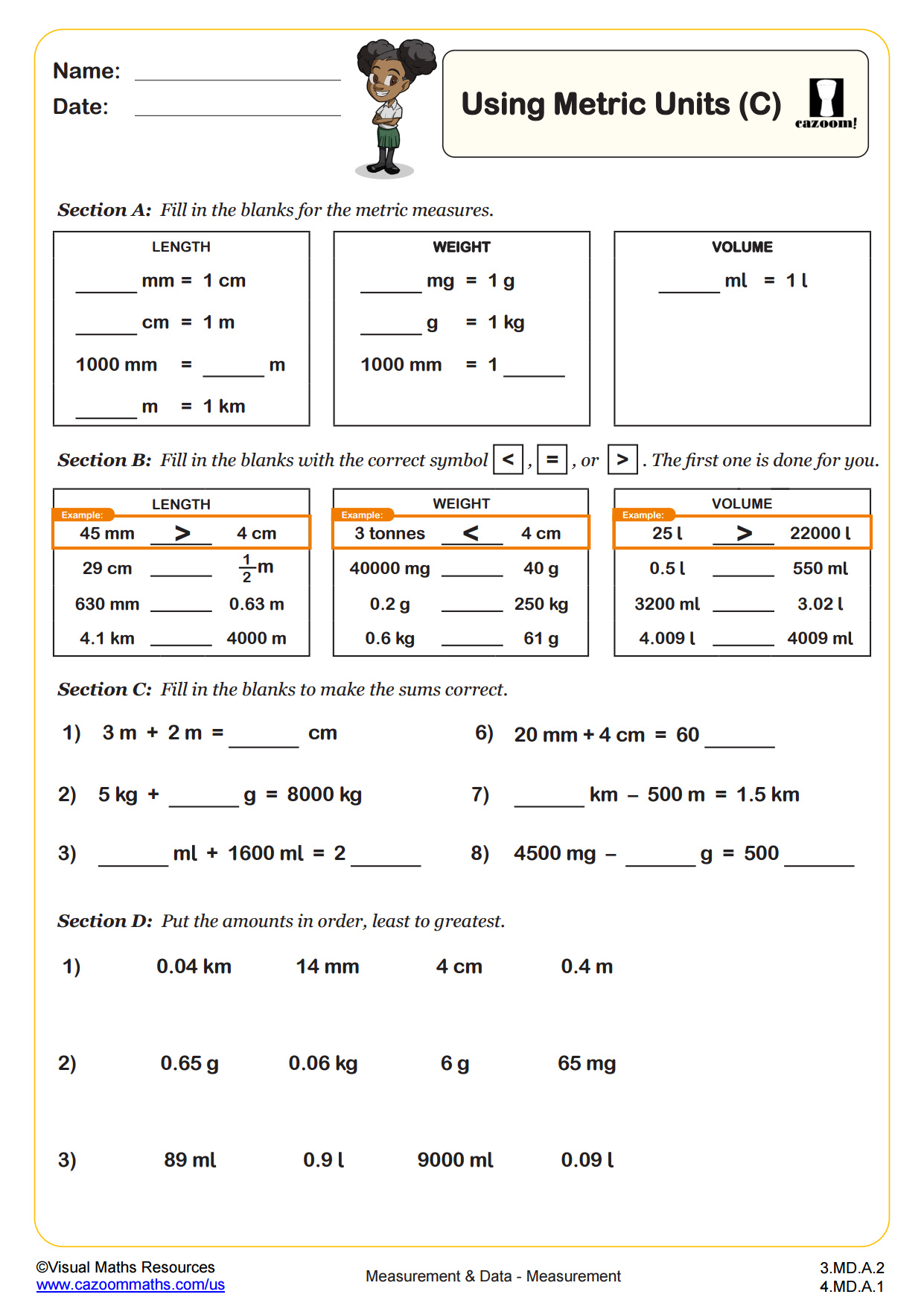
Using Metric Units (C)
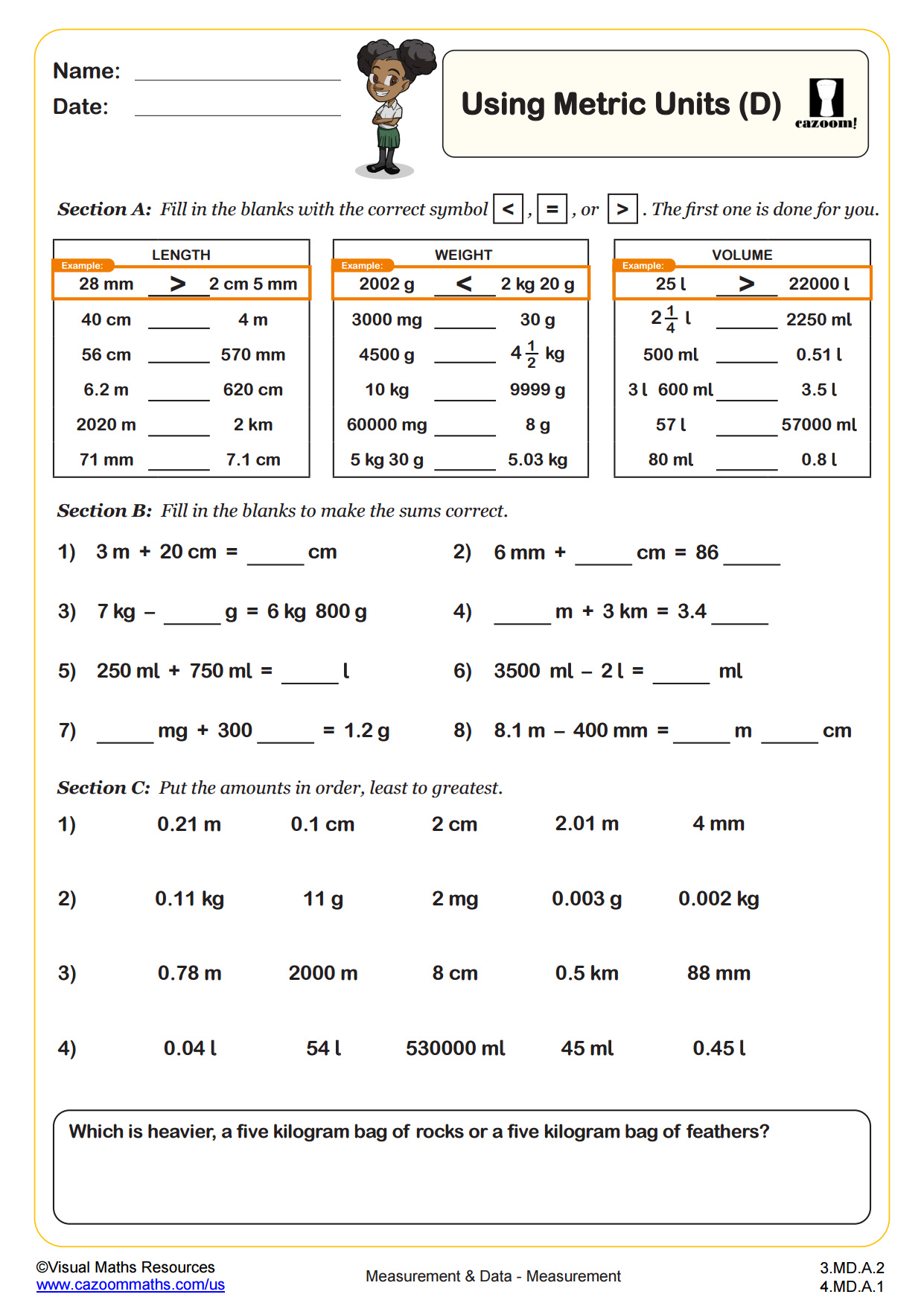
Using Metric Units (D)
All worksheets are created by the team of experienced teachers at Cazoom Math.
What topics do 3rd grade measurement worksheets typically cover?
Grade 3 measurement worksheets focus on linear measurement using both customary and metric units, including inches, feet, yards, centimeters, and meters. Students also practice measuring capacity with cups, pints, quarts, gallons, liters, and milliliters, plus weight and mass using ounces, pounds, grams, and kilograms. Time measurement extends to nearest minute intervals and elapsed time problems.
Teachers frequently observe that students confuse when to use different units within the same measurement system. For example, many third graders will measure a pencil in feet rather than inches, or estimate a water bottle's capacity in gallons instead of cups. These worksheets provide targeted practice to help students develop better number sense about appropriate unit selection.
How do these worksheets build on 2nd grade skills and prepare for 4th grade?
Third grade measurement bridges the gap between 2nd grade's basic length measurement and 4th grade's more complex conversions and area concepts. While second graders focus primarily on measuring length to the nearest inch or centimeter, third graders tackle fractional measurements like half-inches and quarter-inches, plus introduce weight, capacity, and more precise time intervals.
This progression prepares students for 4th grade topics like area measurement, converting between larger and smaller units within the same system, and solving multi-step measurement problems. Teachers notice that students who master 3rd grade unit recognition and estimation skills transition much more smoothly to 4th grade's conversion challenges and area formulas.
Why do students struggle with capacity measurement problems?
Capacity measurement presents unique challenges because students have limited real-world experience visualizing liquid volumes in standard units. Unlike length, which students can physically measure with rulers, capacity requires mental visualization of how much liquid different containers hold. Many students incorrectly assume that taller containers always hold more than shorter, wider ones.
Classroom teachers report that students benefit from hands-on activities before attempting worksheet problems. Having students pour water between measuring cups, estimate container capacities, and compare different shaped bottles helps build the spatial reasoning needed for worksheet success. This concrete experience makes abstract capacity problems much more manageable.
How should teachers use these measurement worksheets most effectively?
Teachers find the greatest success when they introduce measurement worksheets after hands-on exploration with actual measuring tools. Students need experience holding rulers, using measuring cups, and weighing objects before tackling paper-and-pencil problems. Starting each lesson with estimation activities helps students develop number sense about reasonable answers.
The answer keys allow teachers to quickly identify common error patterns across the class. Many teachers use a gradual release approach, completing the first few problems together, then having students work in pairs before attempting independent practice. This scaffolded approach helps students build confidence while allowing teachers to address misconceptions before they become ingrained habits.