3rd Grade Money and Time Worksheets
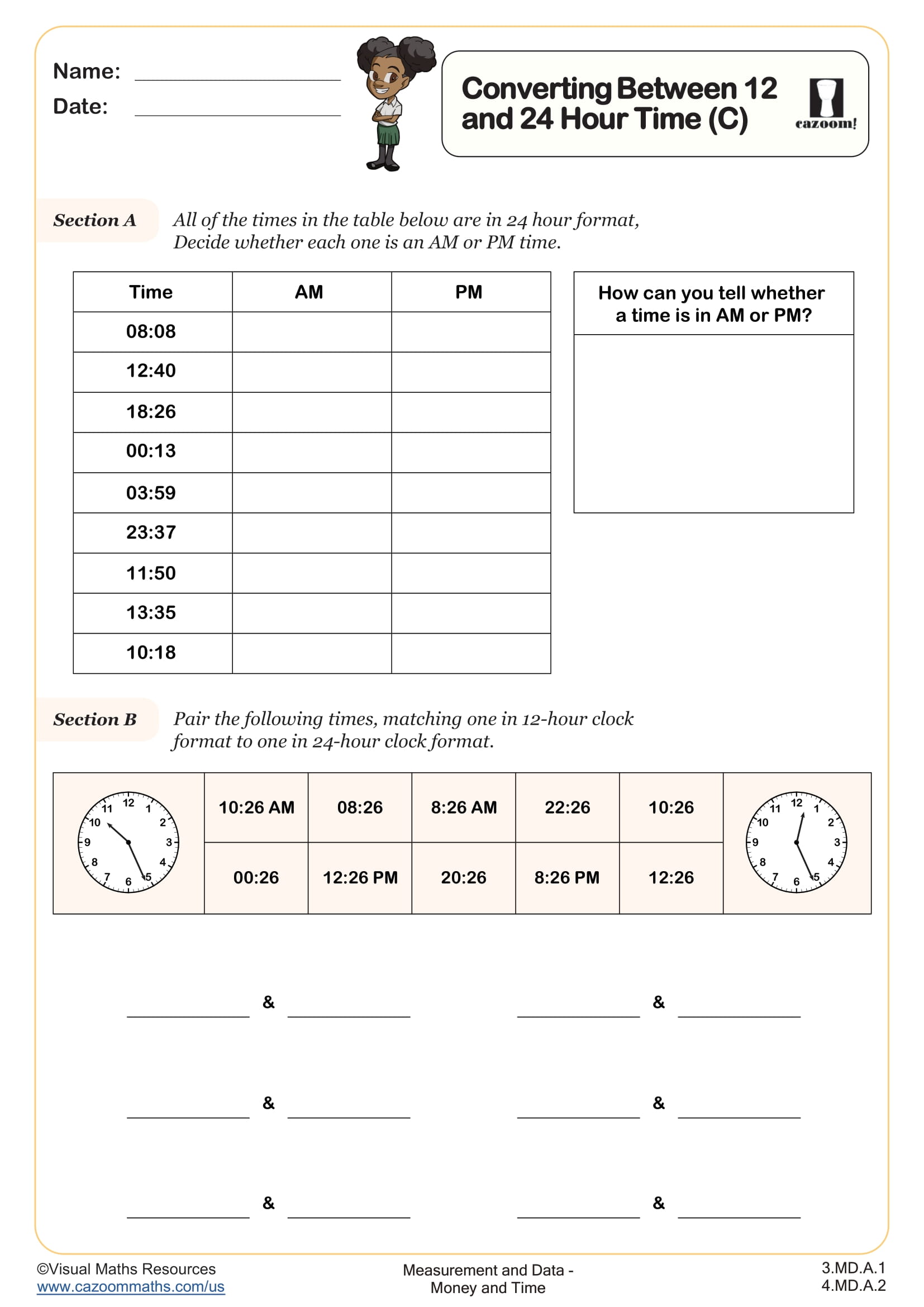
Adding Money In Dollars and Cents
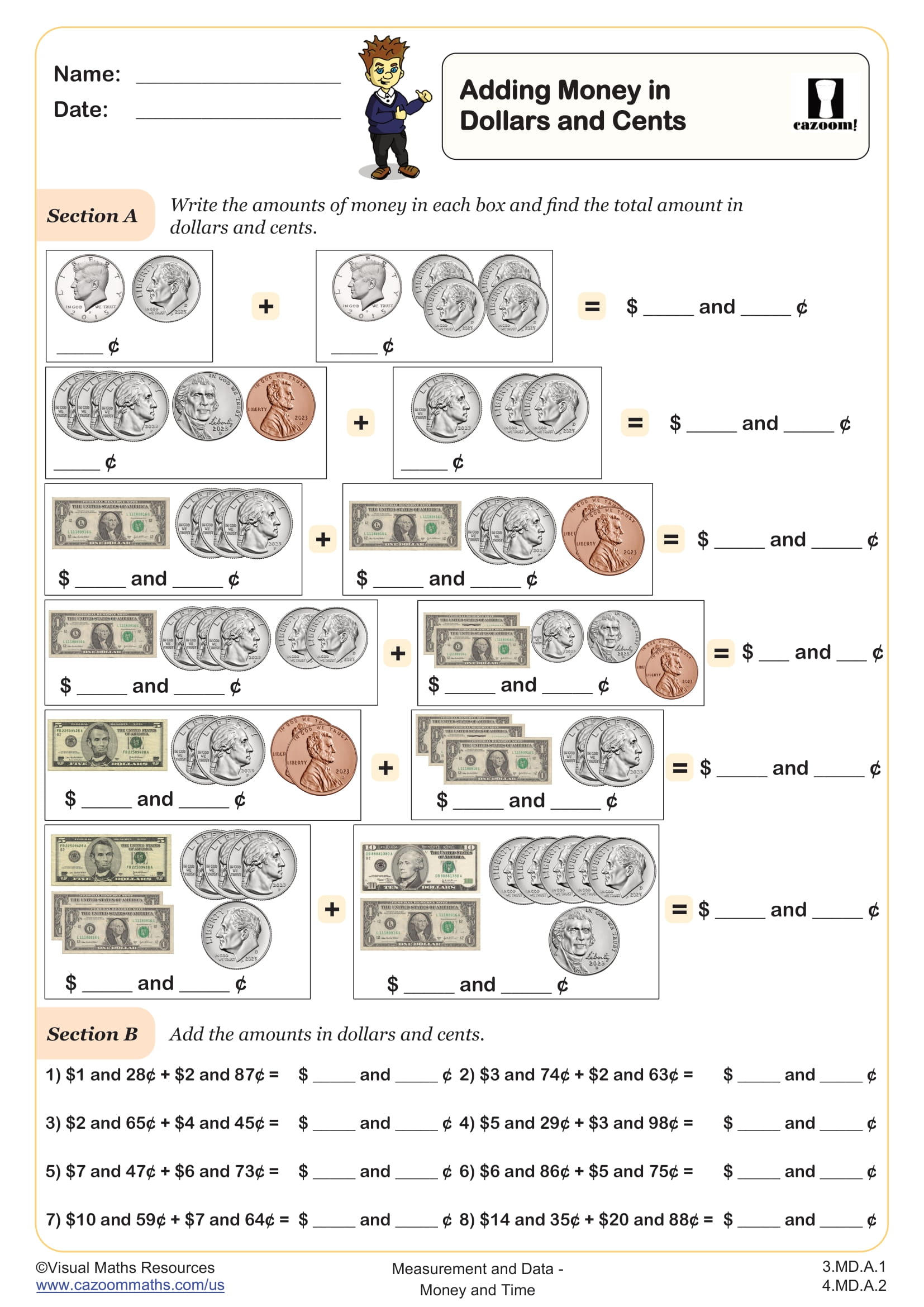
Converting Between 12 and 24 Hour Time (A)
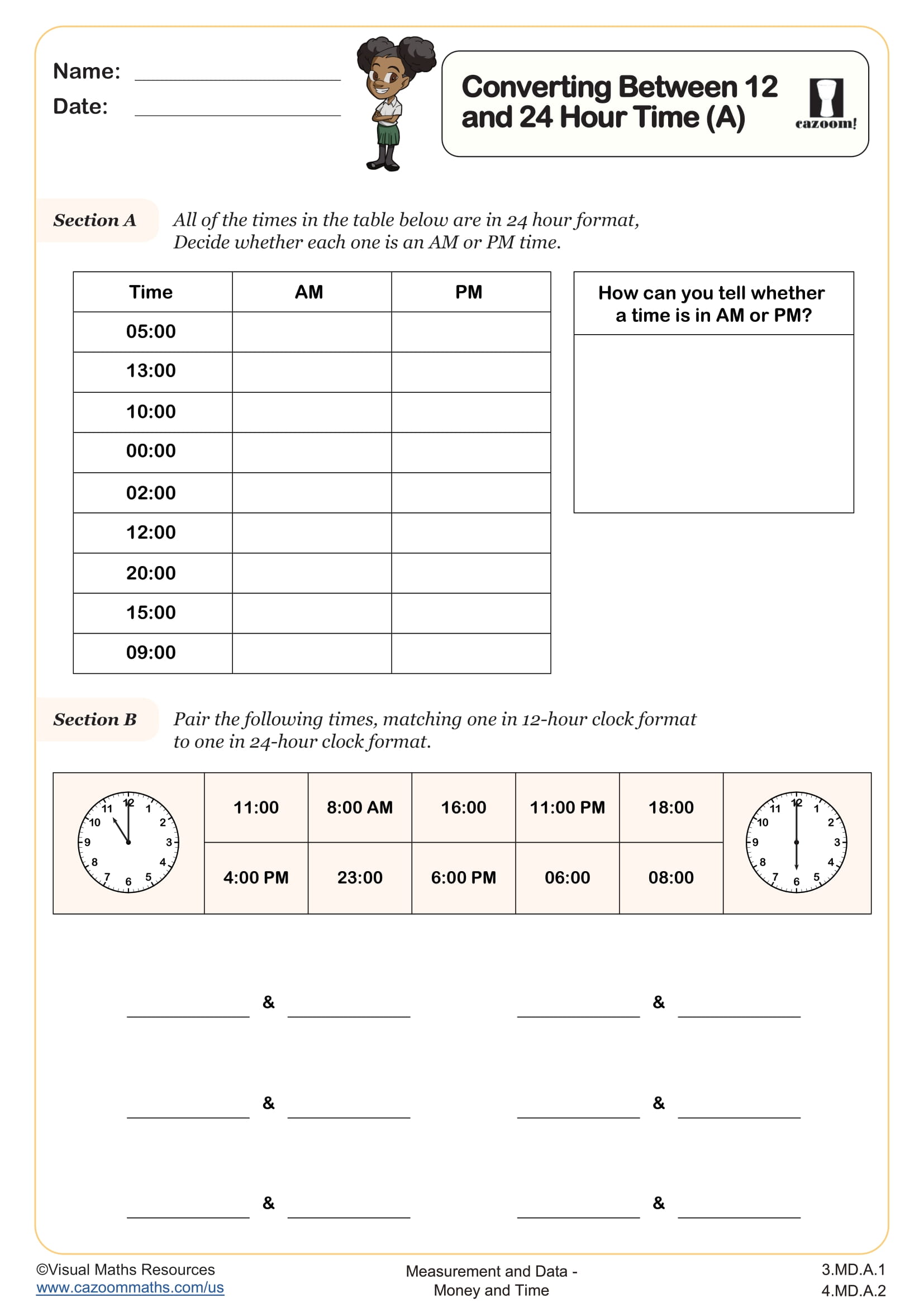
Converting Between 12 and 24 Hour Time (B)
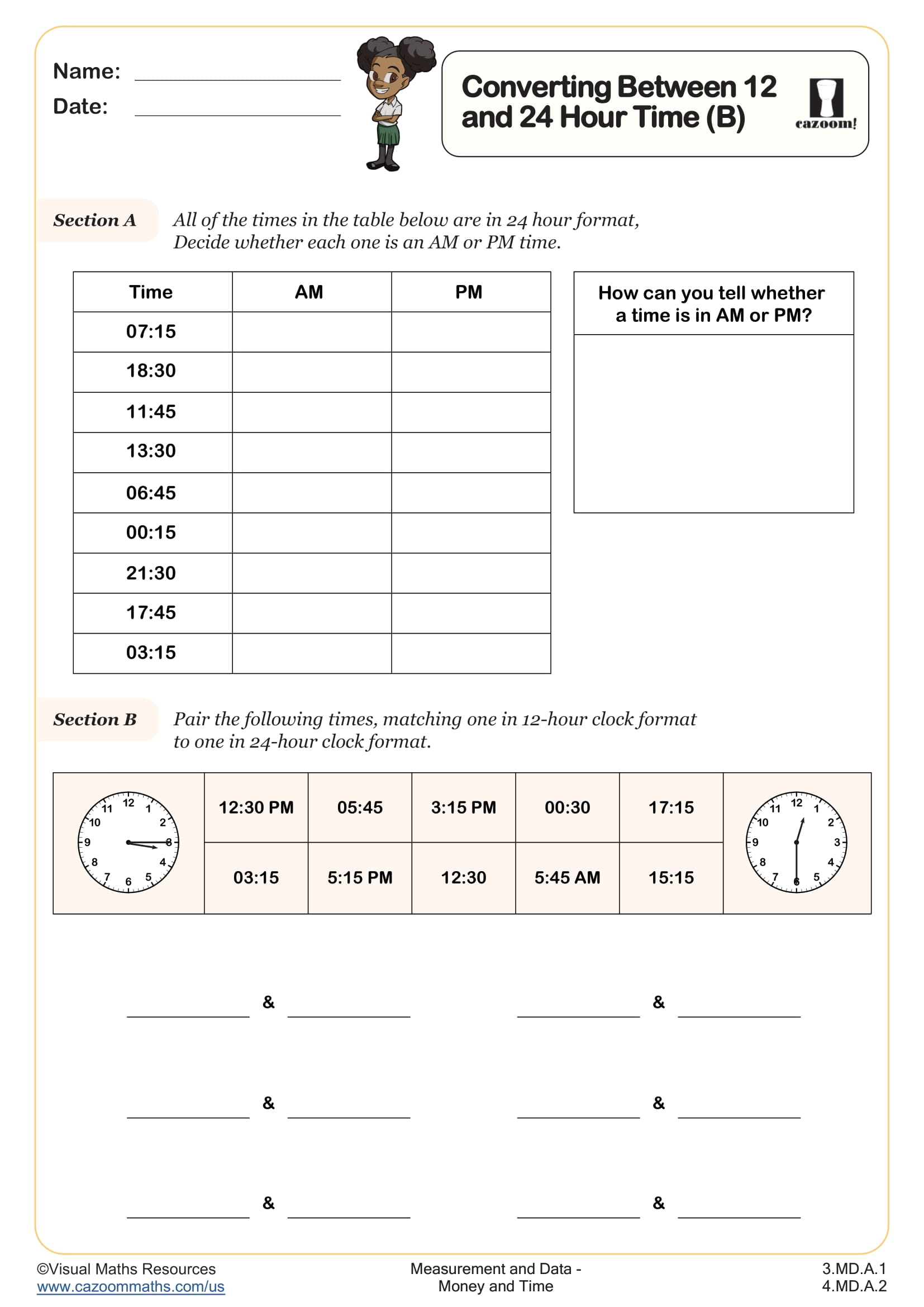
Converting Between 12 and 24 Hour Time (C)
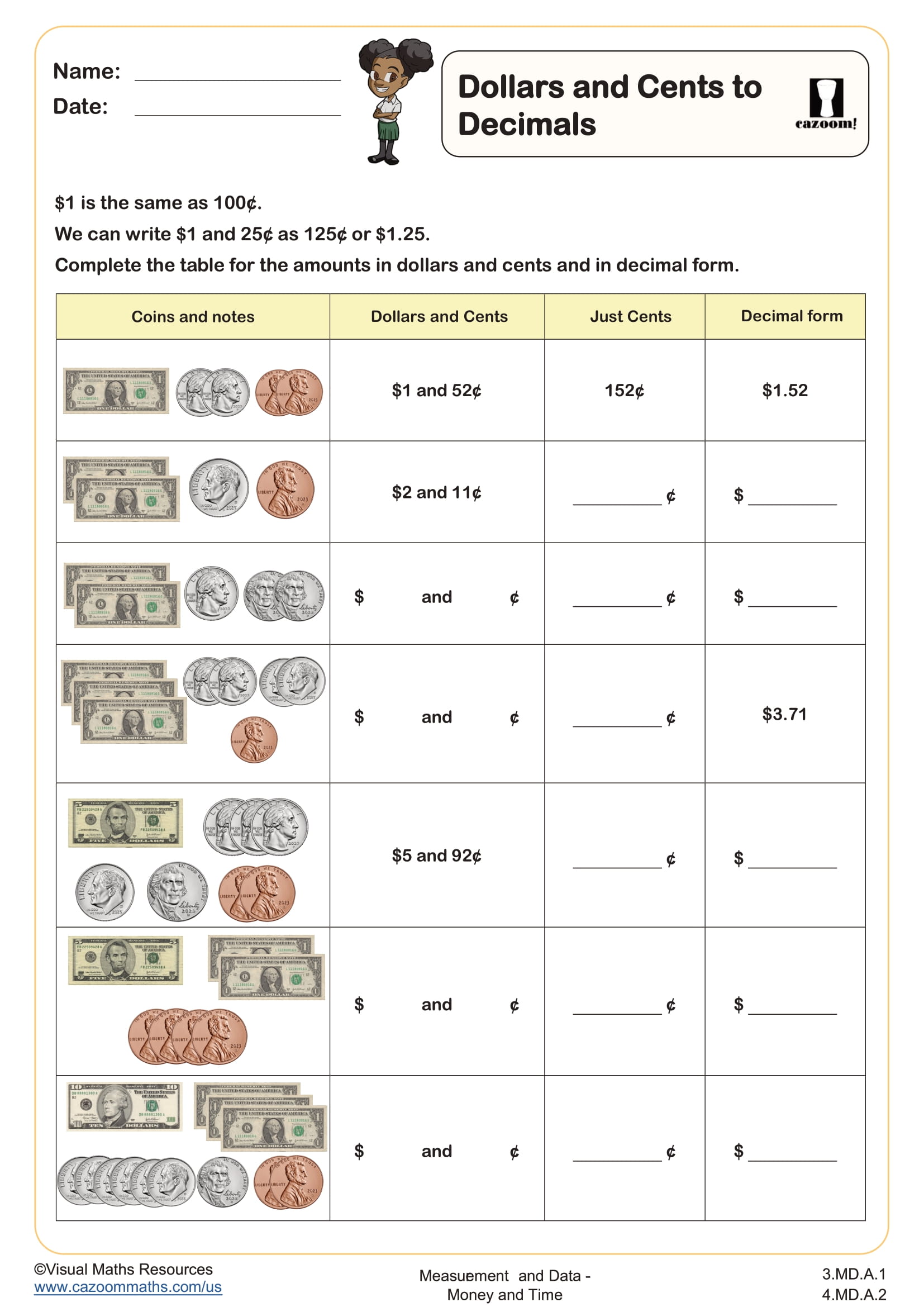
Dollars and Cents to Decimals
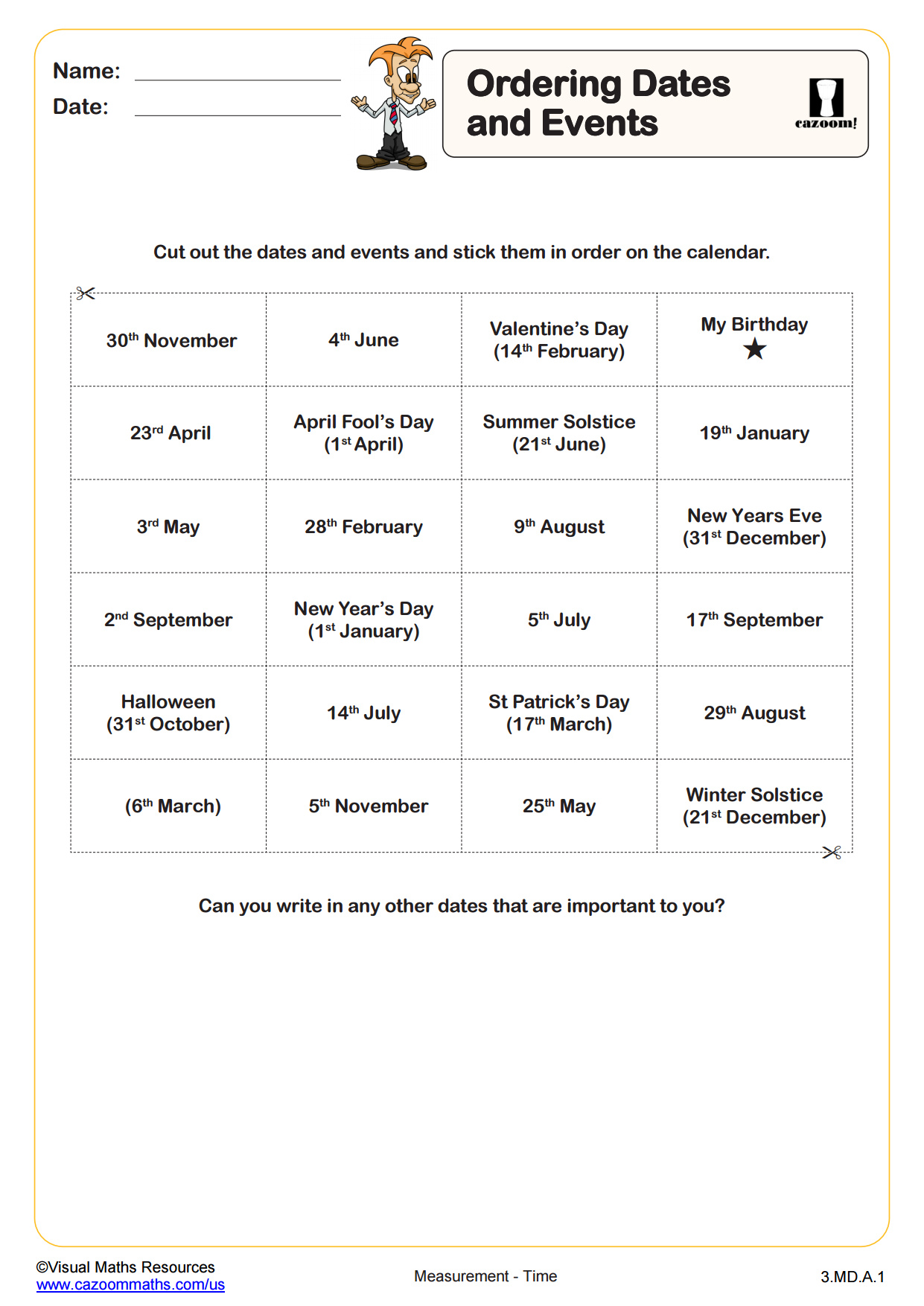
Ordering Dates and Events
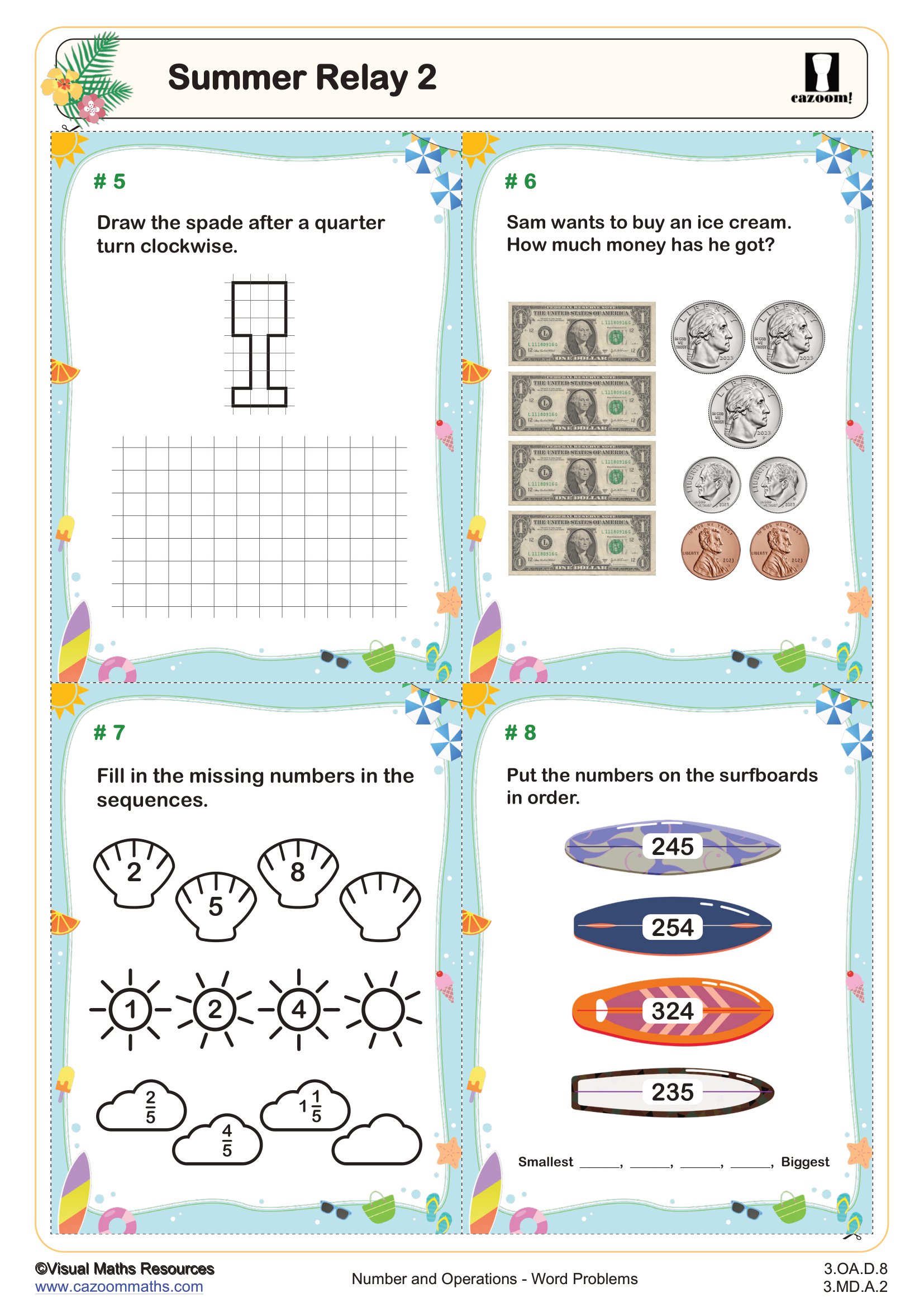
Summer Relay Pack 3rd Grade
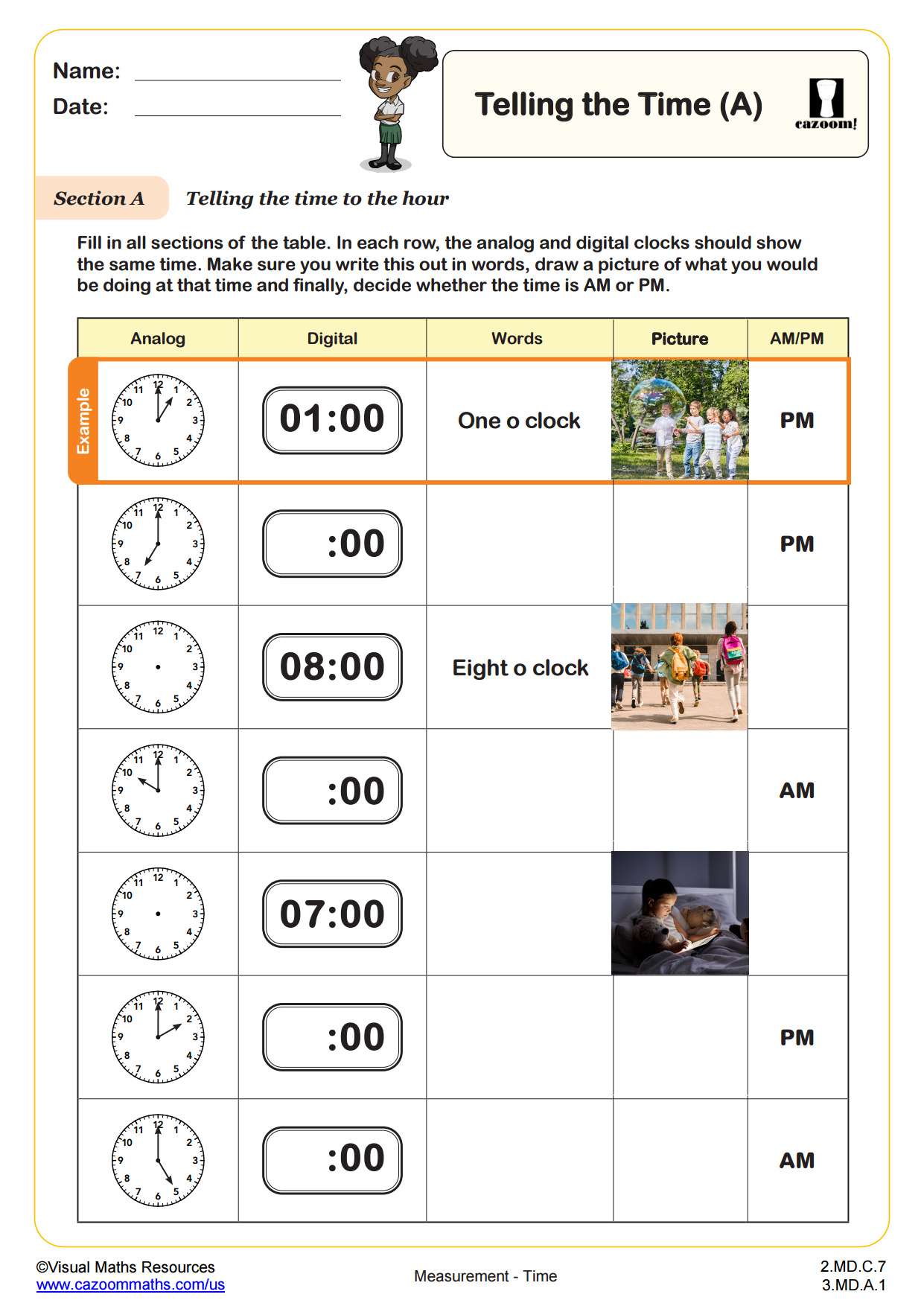
Telling the Time (A)
Telling the Time (B)
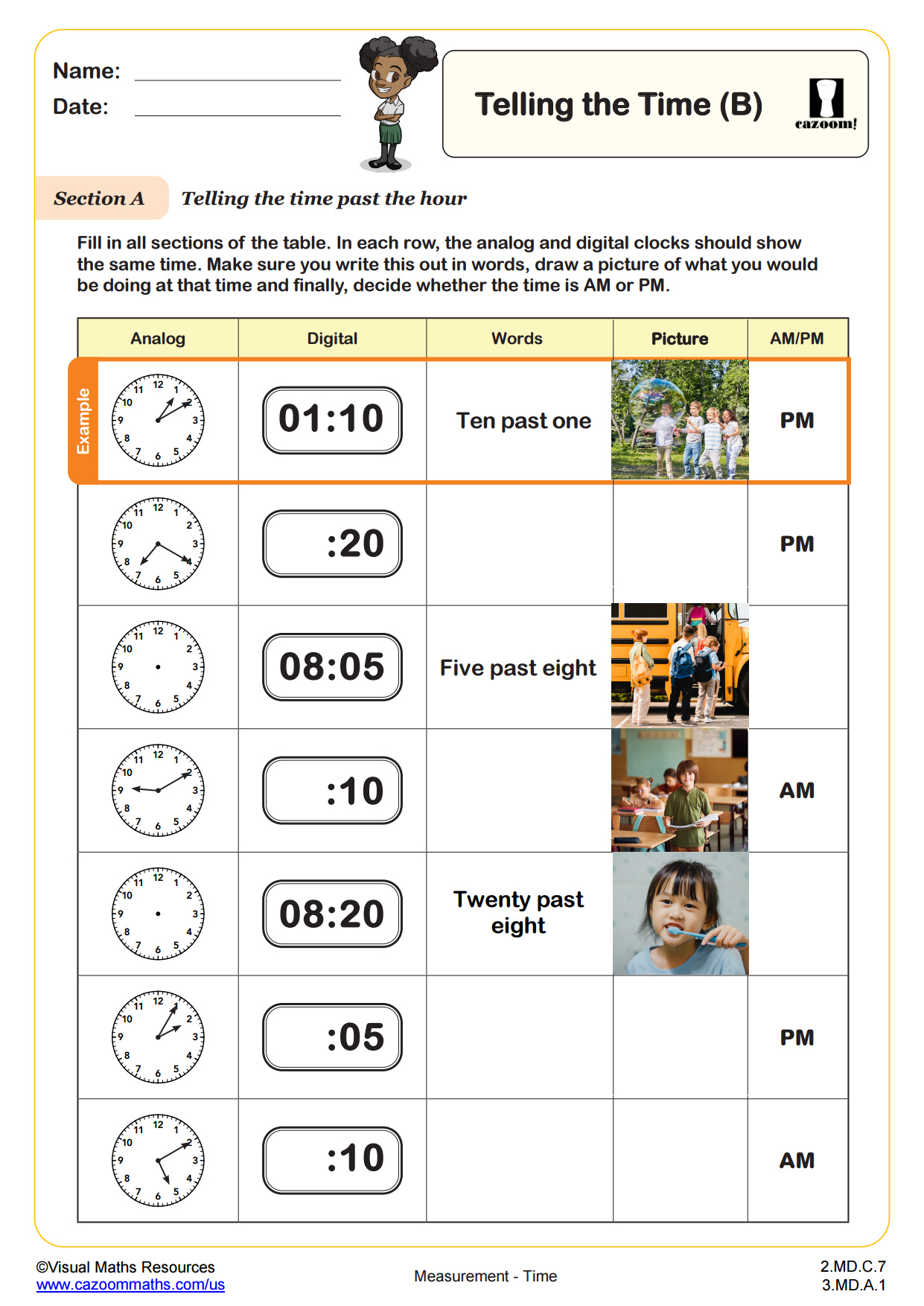
Telling the Time (C)
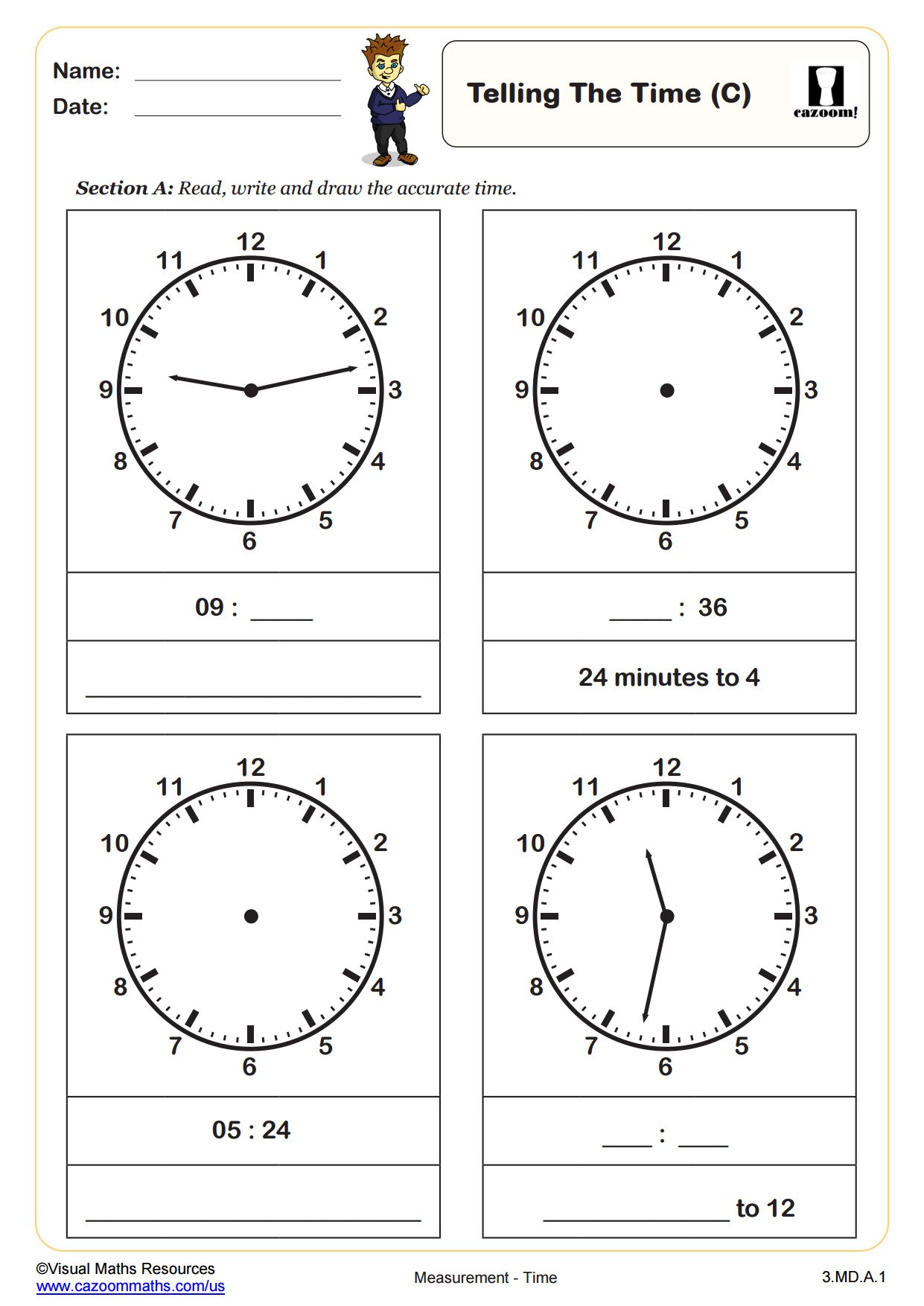
Time Calculations (A)
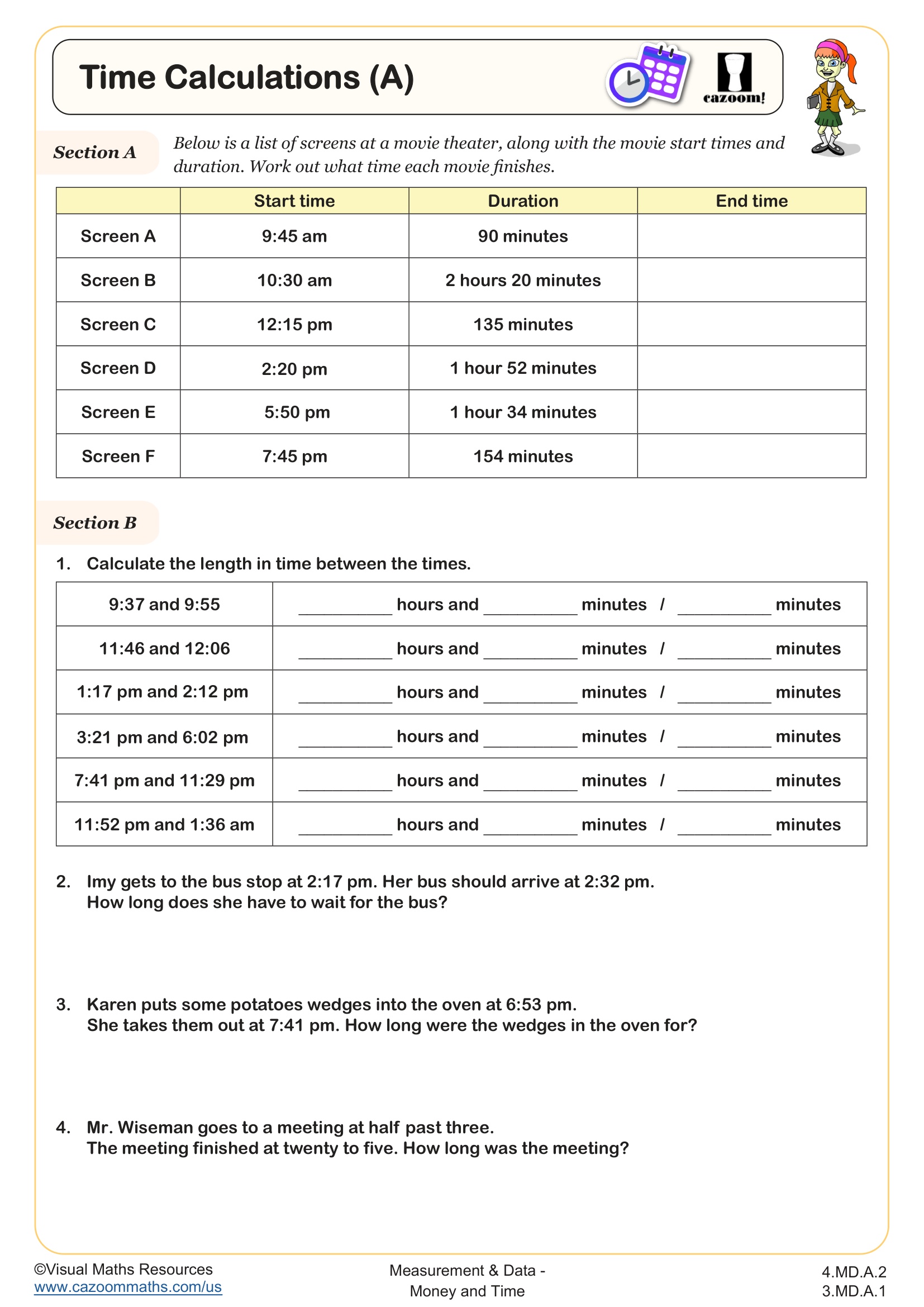
Units of Time (A)
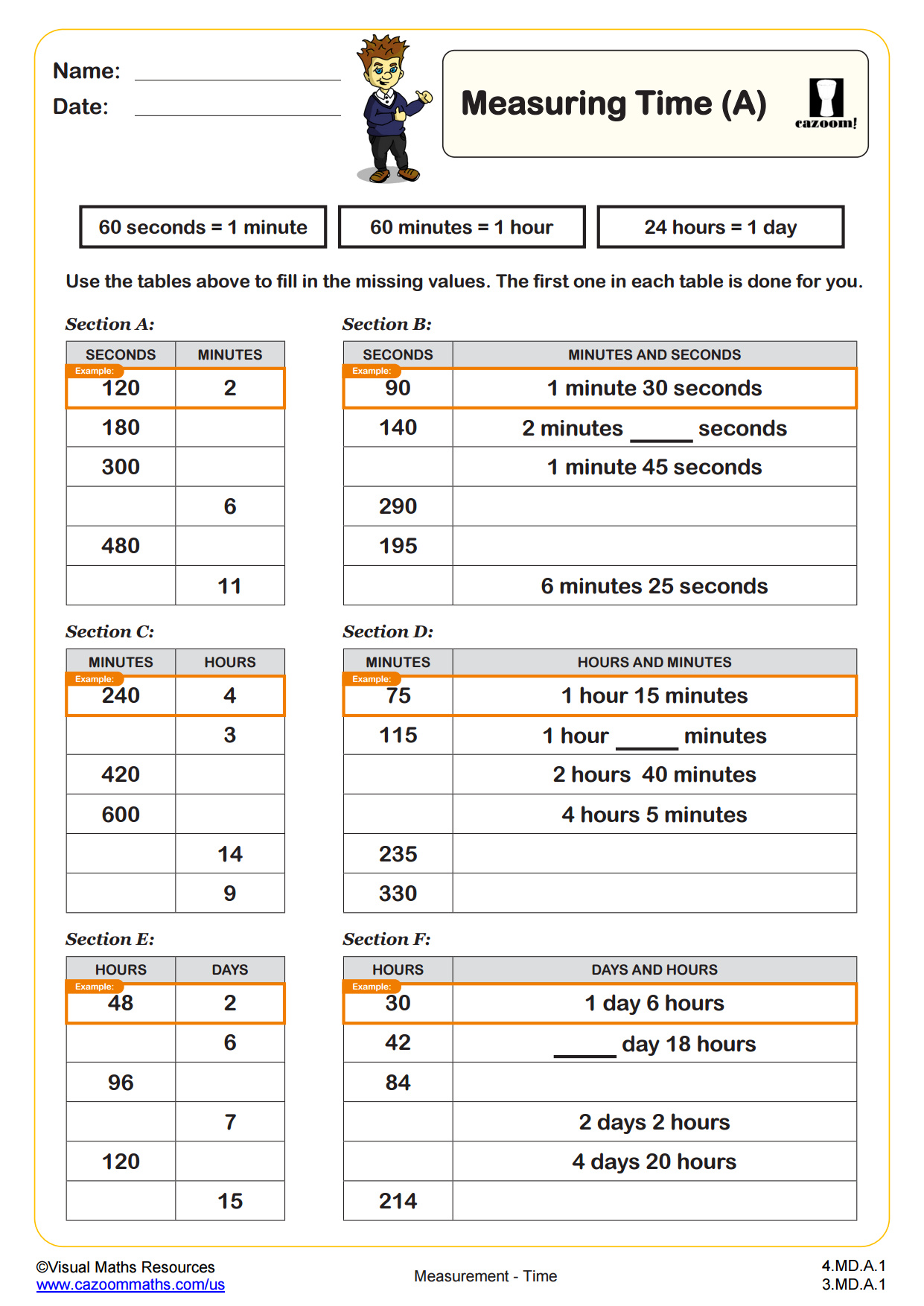
Units of Time (B)
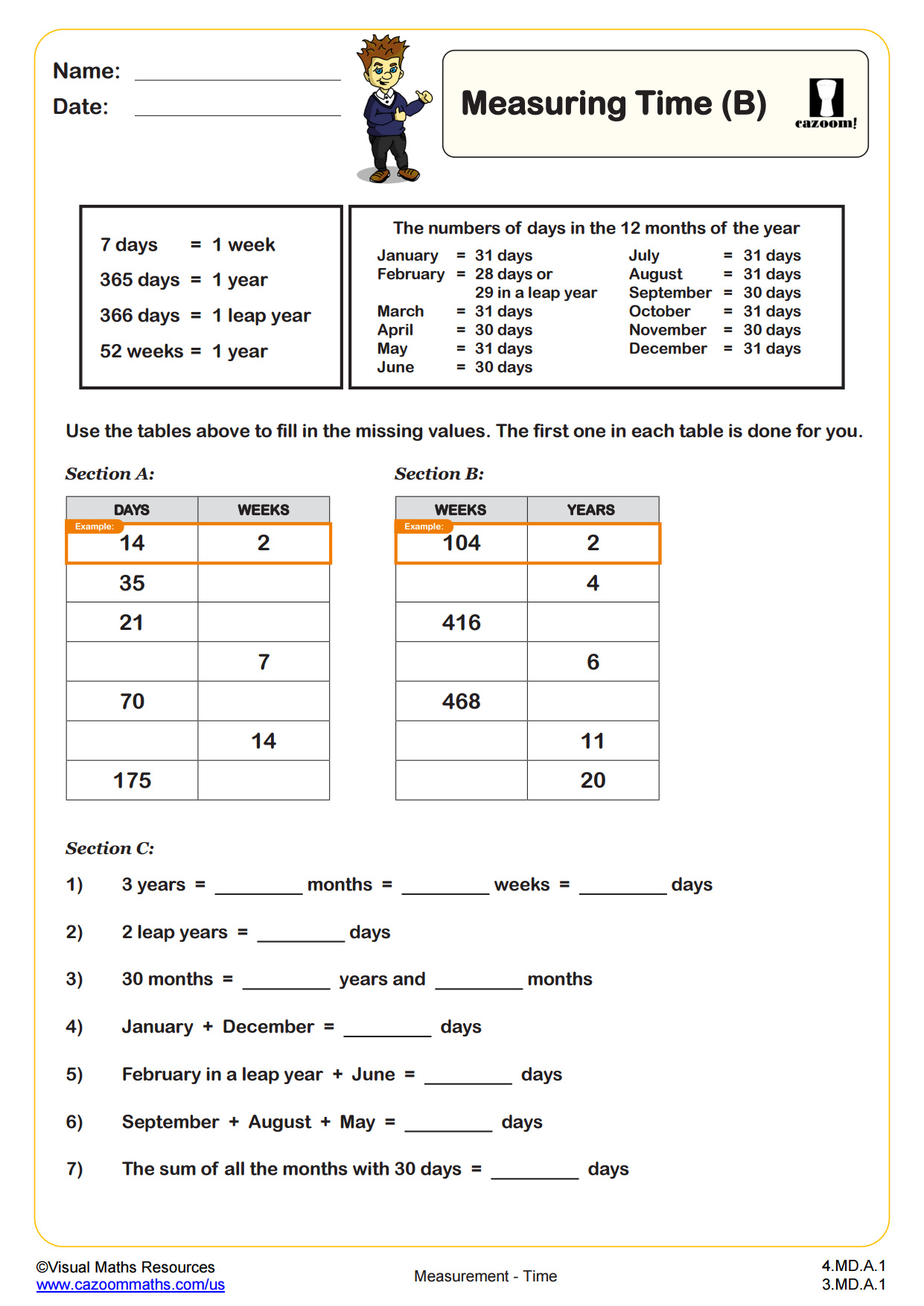
Units of Time (C)
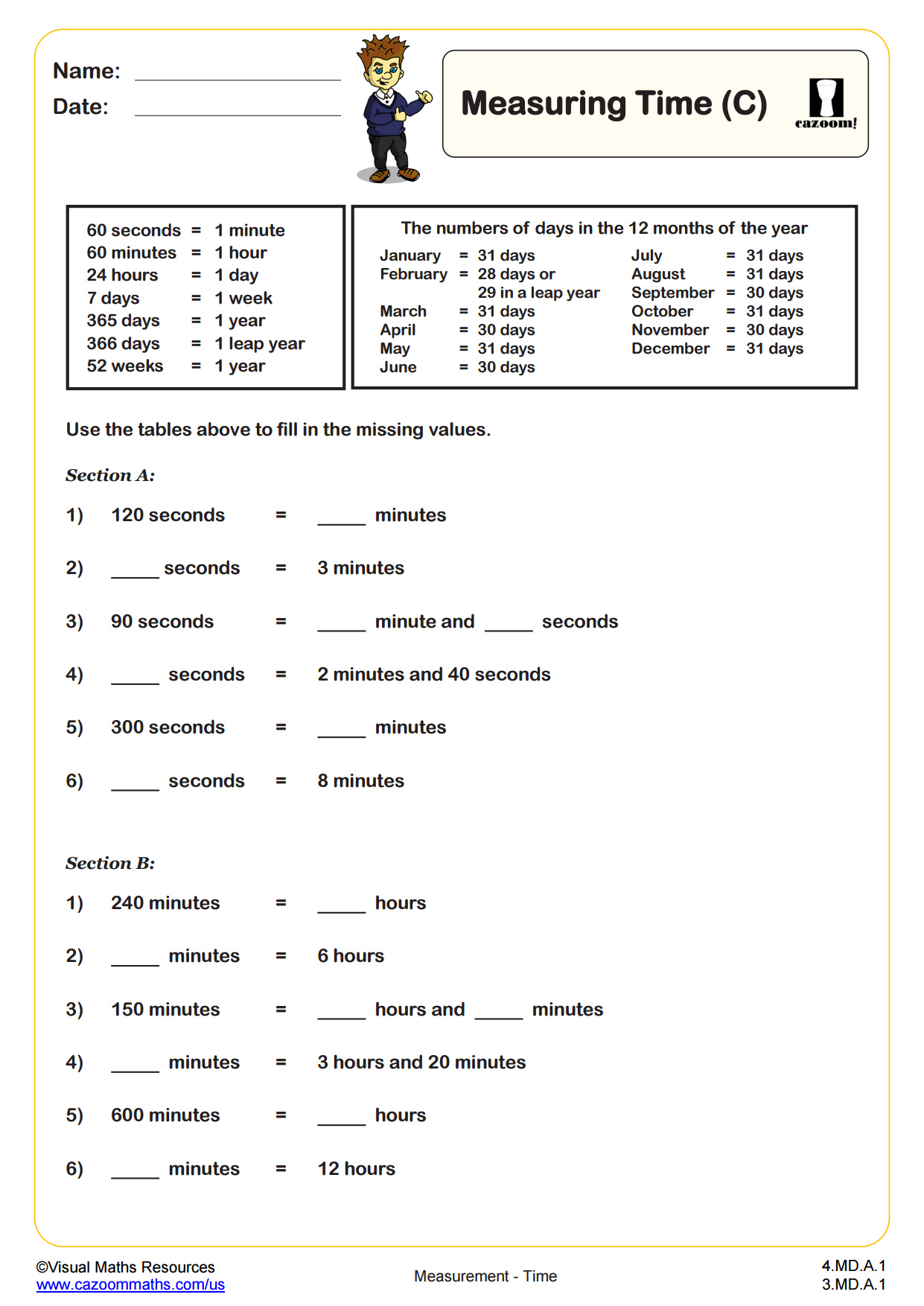
Using a Time Line to Find Time Duration
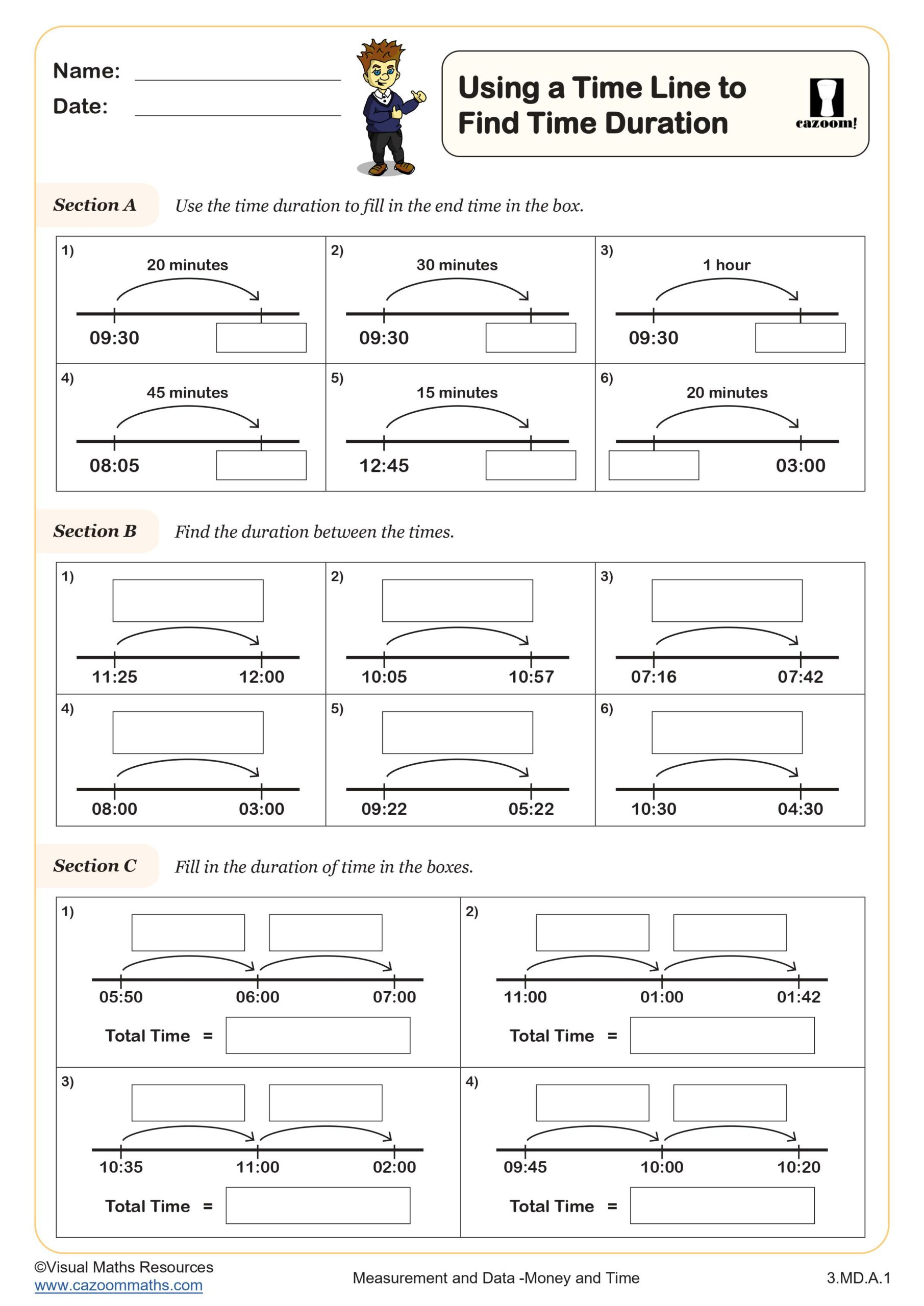
All worksheets are created by the team of experienced teachers at Cazoom Math.
Why do 3rd graders need practice with both money and time together?
Money and time represent two essential life skills that share underlying mathematical concepts, particularly place value, decimal notation, and measurement systems. Third graders are expected to count mixed collections of bills and coins, make change, and tell time to the nearest minute, all of which require understanding how units relate to one another. These skills align with Common Core Standard 2.MD.C.8 (introduced in 2nd grade) and 3.MD.1, which expect students to measure time intervals and solve word problems involving money.
A common error occurs when students write $1.5 instead of $1.50, not recognizing that cents require two decimal places. Similarly, students often confuse 3:45 with "three forty-five minutes" rather than understanding it as 45 minutes past 3 o'clock. Practice with both topics helps students recognize patterns in how we represent and calculate with different units in everyday contexts.
What should 3rd graders know about money and time by the end of the year?
By the end of 3rd grade, students should fluently count collections of coins and bills up to $20, write money amounts using decimal notation, and tell time to the nearest minute on both analog and digital clocks. They should also solve simple word problems involving adding and subtracting money amounts and determining elapsed time within the same hour. Many state assessments include questions that require students to calculate change from a purchase or identify the time shown on an analog clock face.
This work builds directly on 2nd grade skills, where students first learned to count coins and tell time to the nearest five minutes. The 3rd grade emphasis on precision (nearest minute rather than nearest five minutes) and decimal notation prepares students for 4th grade fraction work and more complex multi-step word problems. Students who master these concepts gain confidence with real-world applications they'll encounter throughout their lives.
How do students learn to convert between dollars and cents using decimals?
Converting between dollars and cents requires understanding that the decimal point separates whole dollars from fractional parts, with the first digit after the decimal representing dimes (tenths) and the second representing pennies (hundredths). Students learn that $2.35 means 2 dollars, 3 dimes, and 5 pennies, which reinforces place value concepts in a concrete context. Teachers often introduce this by having students physically count out money and then write the amount, helping them see the connection between coins and decimal notation.
This skill has direct STEM applications in fields like economics, retail, and data analysis. Scientists recording measurements use decimal notation the same way: 2.35 liters means 2 whole liters plus 35 hundredths of a liter. Understanding money as a decimal system helps students grasp why precision matters when recording any measurement and prepares them for working with metric units, percentages, and financial literacy concepts in later grades.
How can teachers use these worksheets effectively in the classroom?
These worksheets provide structured practice that progresses from basic skills to more complex applications, allowing teachers to differentiate instruction based on student readiness. Some worksheets focus exclusively on one skill, like telling time or counting money, while others integrate multiple concepts, such as ordering events by time or solving word problems involving purchases. The included answer keys allow for quick grading, self-checking stations, or peer review activities where students can immediately verify their work and identify error patterns.
Many teachers use these worksheets during math centers, assigning different students to appropriate skill levels while working with small groups on intervention or enrichment. They work well as warm-up activities to maintain skills throughout the year, homework assignments that connect to real-world experiences, or assessment preparation when state tests approach. Teachers also find them valuable for substitute teacher plans since the concepts are self-contained and the answer keys ensure accurate feedback even when the regular teacher is absent.