3rd Grade Number and Operations Worksheets
All worksheets are created by the team of experienced teachers at Cazoom Math.
What makes fractions of a set worksheets grade 3 different from other fraction activities?
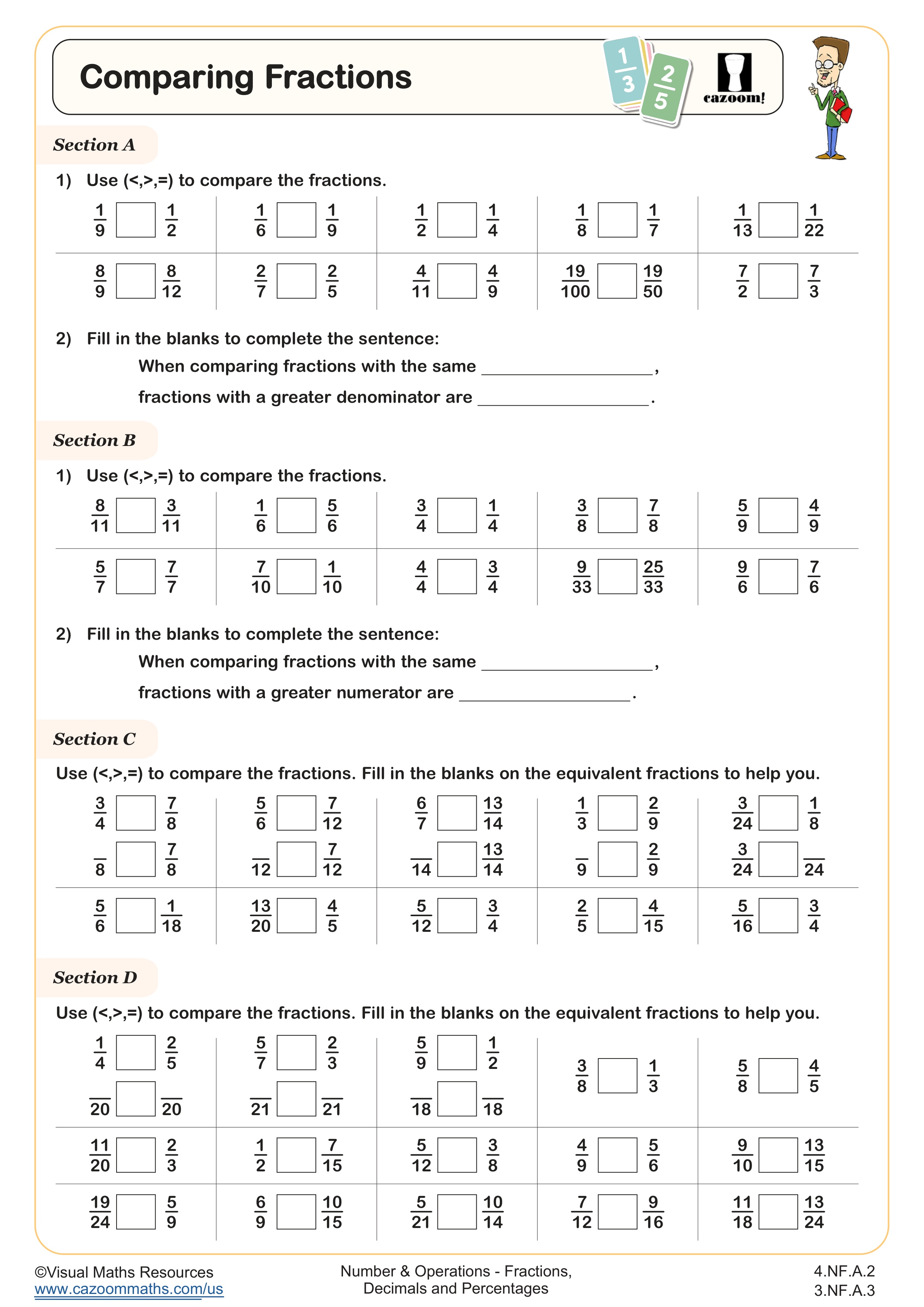
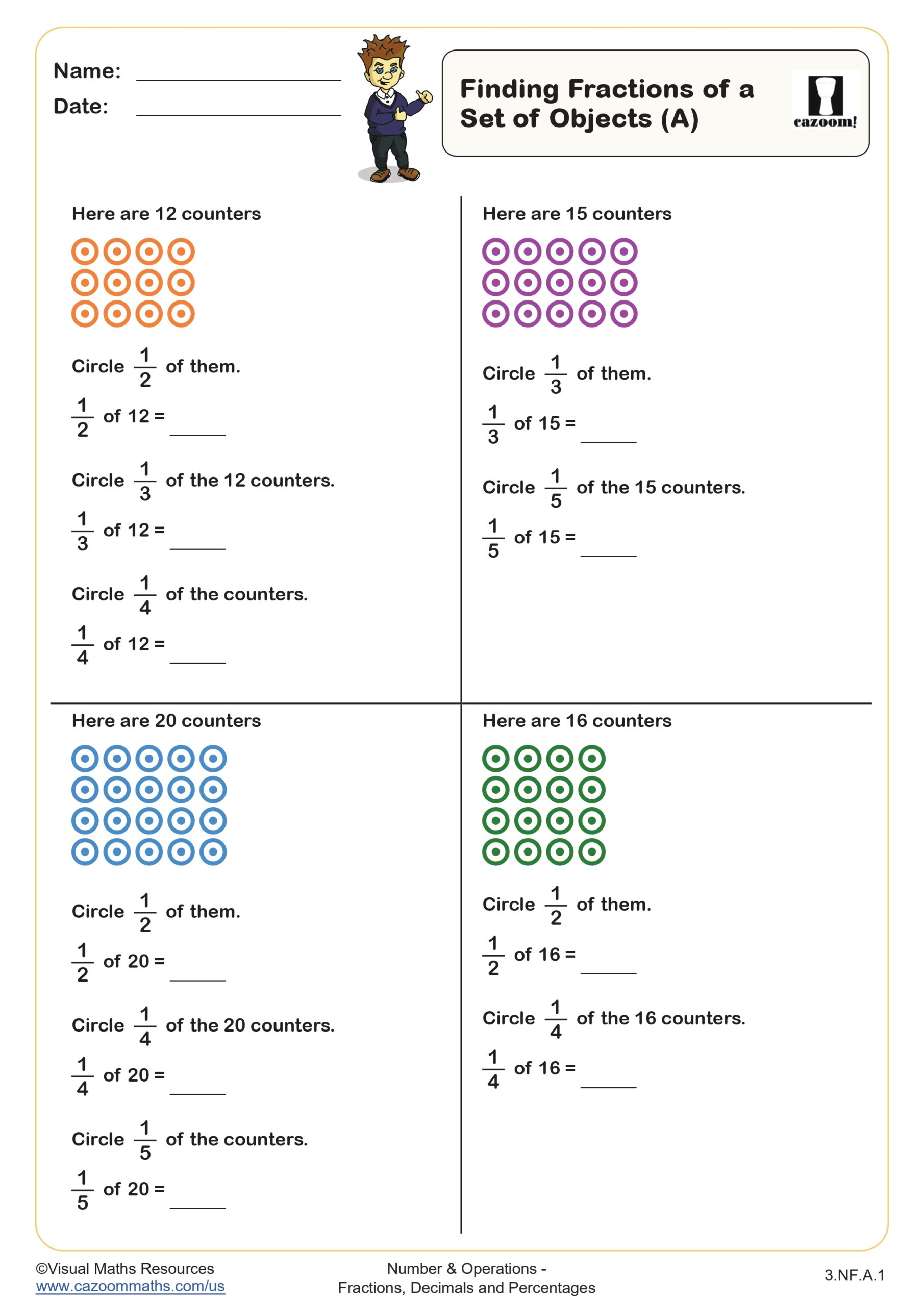
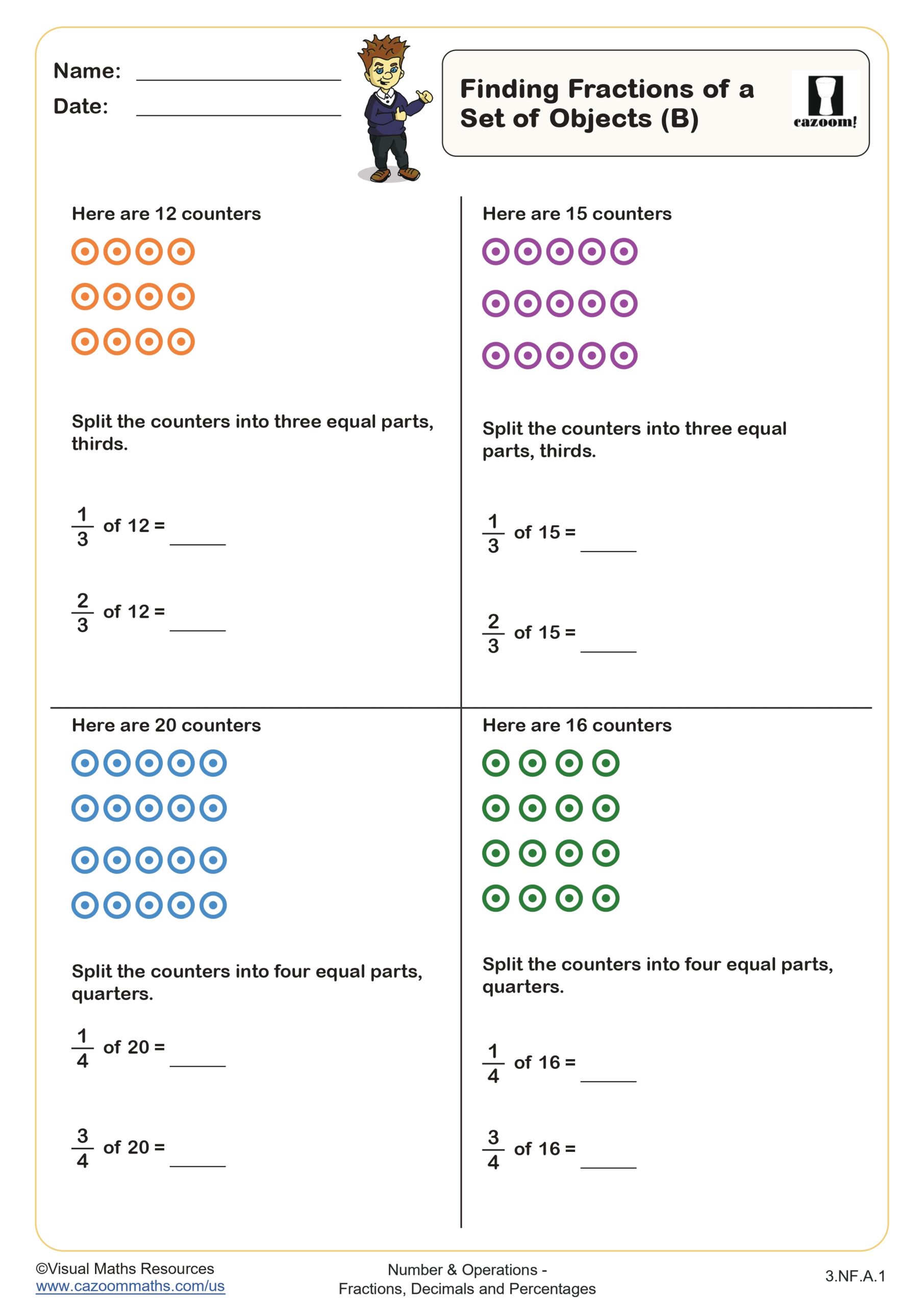
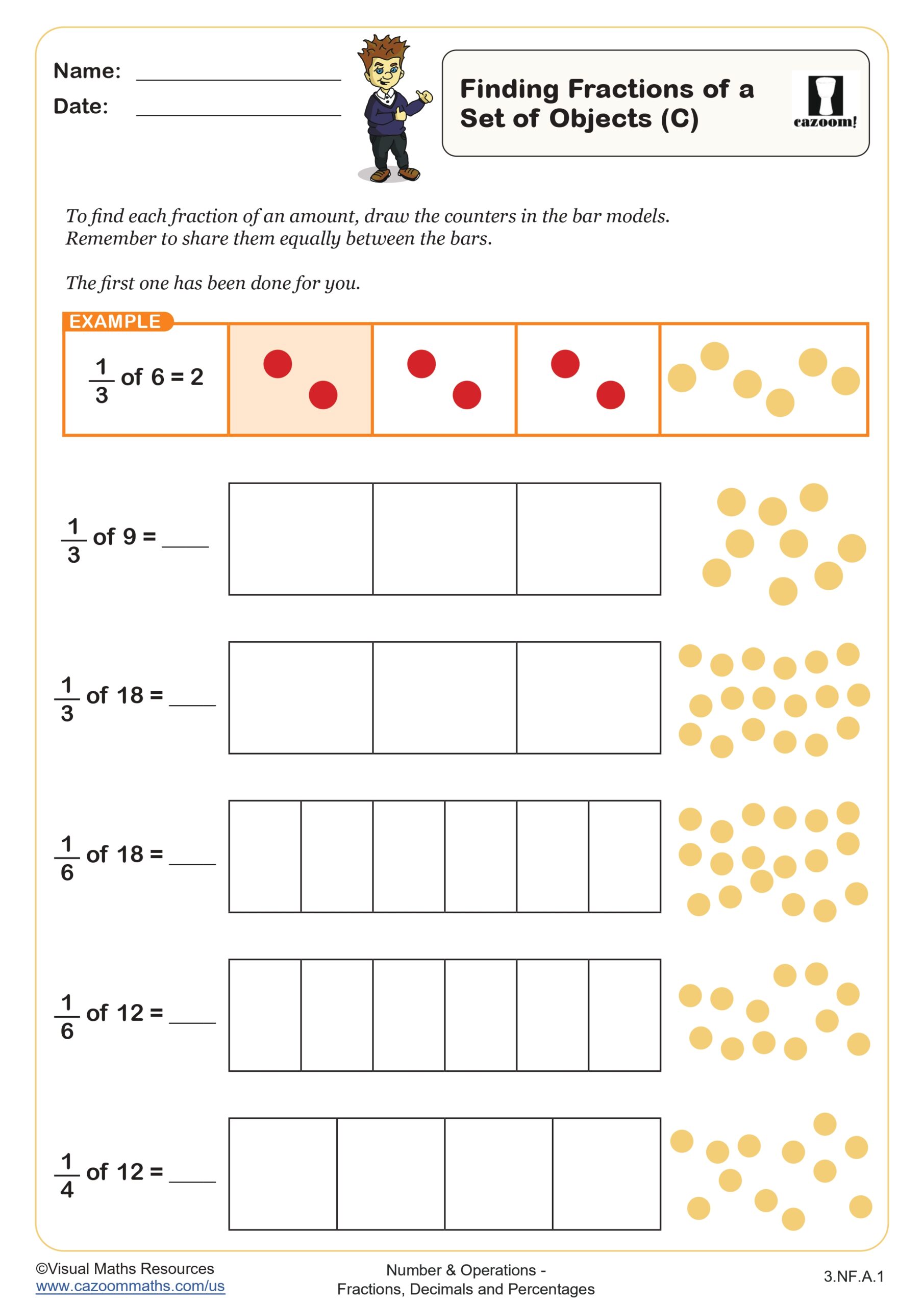
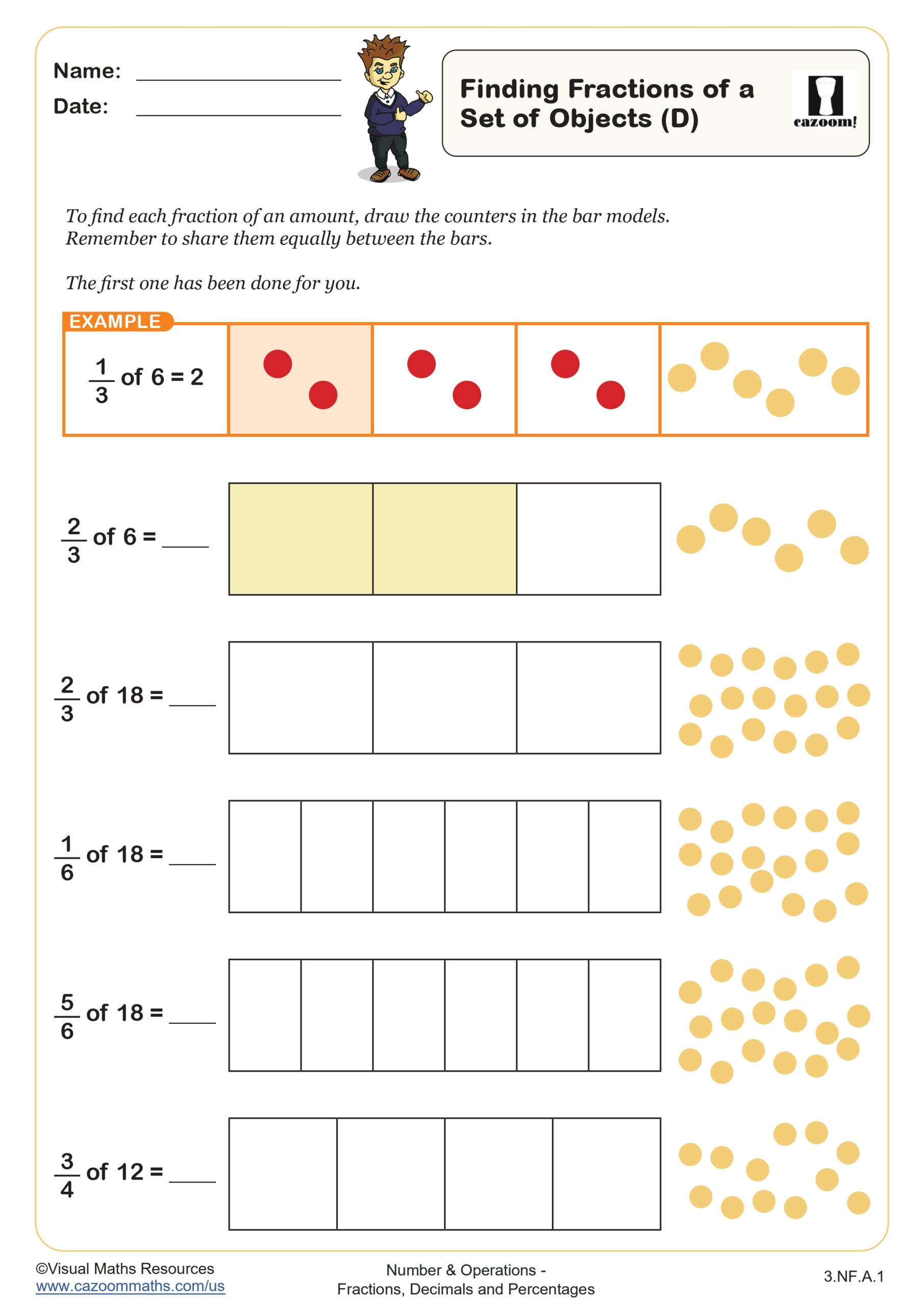
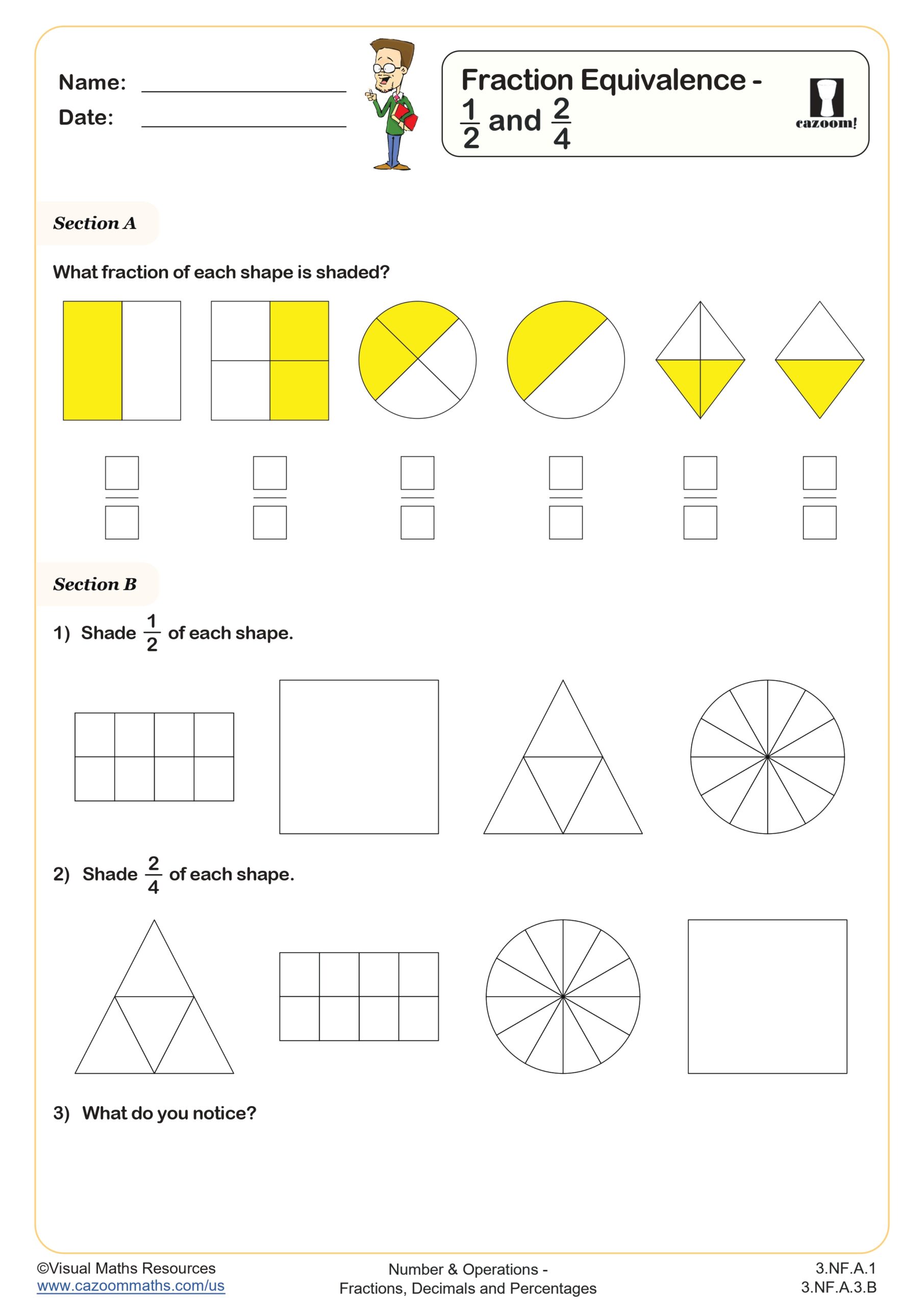
Fractions of a set worksheets grade 3 focus specifically on finding fractional parts of discrete collections rather than continuous wholes like pies or bars. These worksheets align with Common Core standard 3.NF.A.1, requiring students to understand fractions as numbers representing equal parts of a set. Students practice identifying fractions like 2/5 of 10 marbles or 3/4 of 12 cookies.
Teachers notice students often confuse "fraction of a set" with "fraction of a whole" initially. A common error occurs when students see 1/3 of 9 objects and incorrectly divide the collection into three unequal groups instead of finding three equal groups with three objects each. This concept builds key groundwork for later work with equivalent fractions and fraction operations.
How do number operations grade 3 worksheets build on earlier grade skills?
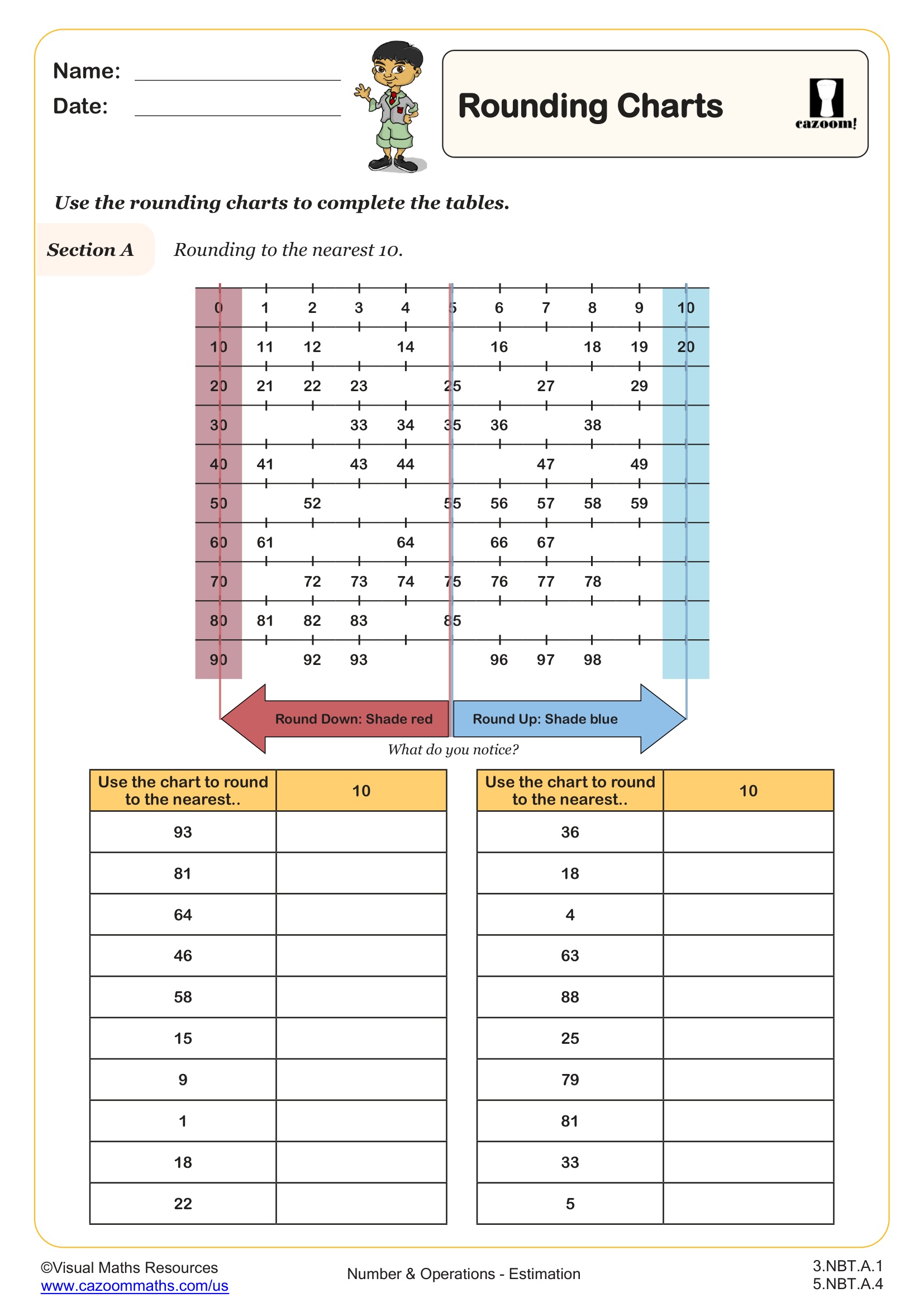
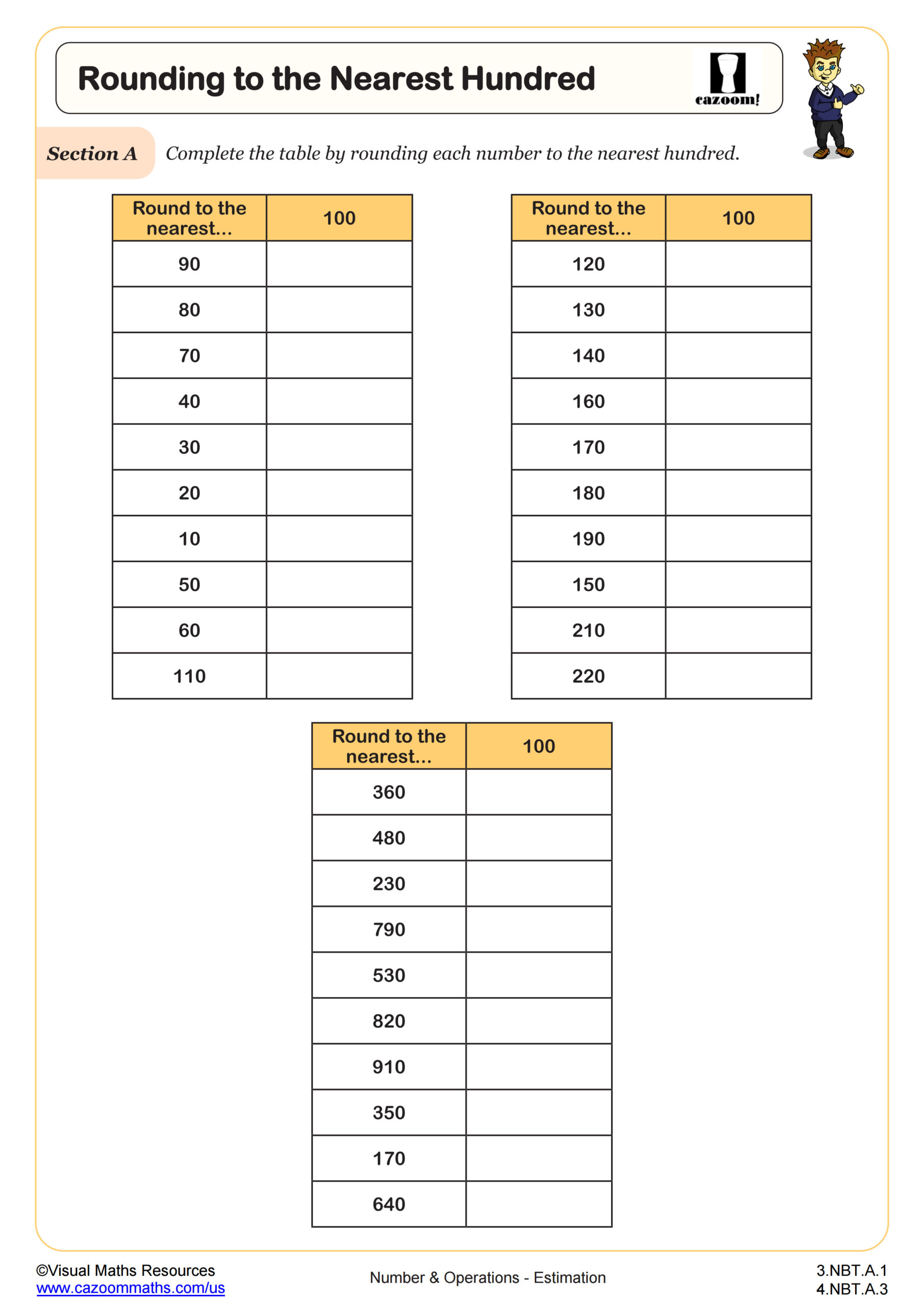
Number operations grade 3 worksheets extend second grade addition and subtraction within 100 to work within 1000, introducing multi-digit algorithms and place value strategies. Students transition from primarily concrete and pictorial representations to more abstract symbolic work. Third grade also introduces multiplication and division concepts, connecting repeated addition to multiplication arrays and equal sharing to division.
Many teachers observe that students who struggled with fact fluency in second grade face increased challenges with multi-digit operations. The worksheets provide systematic practice with place value understanding, helping students recognize why regrouping works rather than just memorizing steps. This foundation becomes crucial for fourth grade work with larger numbers and decimal operations.
Why do students find place value regrouping challenging in third grade?
Place value regrouping challenges students because it requires understanding that ten ones equals one ten, and ten tens equals one hundred - concepts that seem abstract without sufficient concrete experience. Third graders often mechanically follow regrouping steps without grasping the underlying place value relationships, leading to errors in problems like 304 - 167 where multiple zeros require regrouping.
Classroom observations show students frequently forget to reduce the tens place when regrouping ones, or they regroup unnecessarily when no regrouping is needed. The worksheets provide varied practice with both addition and subtraction requiring regrouping, helping students recognize when and why regrouping is necessary. This understanding connects directly to real-world applications like calculating change or measuring distances.
How can teachers use these worksheets most effectively for differentiation?
Teachers can differentiate number and operations worksheet use by starting with diagnostic assessment to identify specific skill gaps, then selecting targeted practice sheets rather than assigning entire packets. Some students may need additional work with place value concepts before attempting multi-digit operations, while others might benefit from challenge problems extending basic skills. The answer keys allow for quick identification of error patterns.
Many teachers find success using these worksheets for both intervention and enrichment simultaneously. Struggling students can work on foundational skills like single-digit multiplication facts, while advanced students tackle multi-step word problems involving the same operations. The variety within numbers and operations grade 3 topics allows teachers to maintain whole-class instruction while providing appropriately leveled independent practice for different learner needs.