3rd Grade Operations and Algebraic Thinking Worksheets
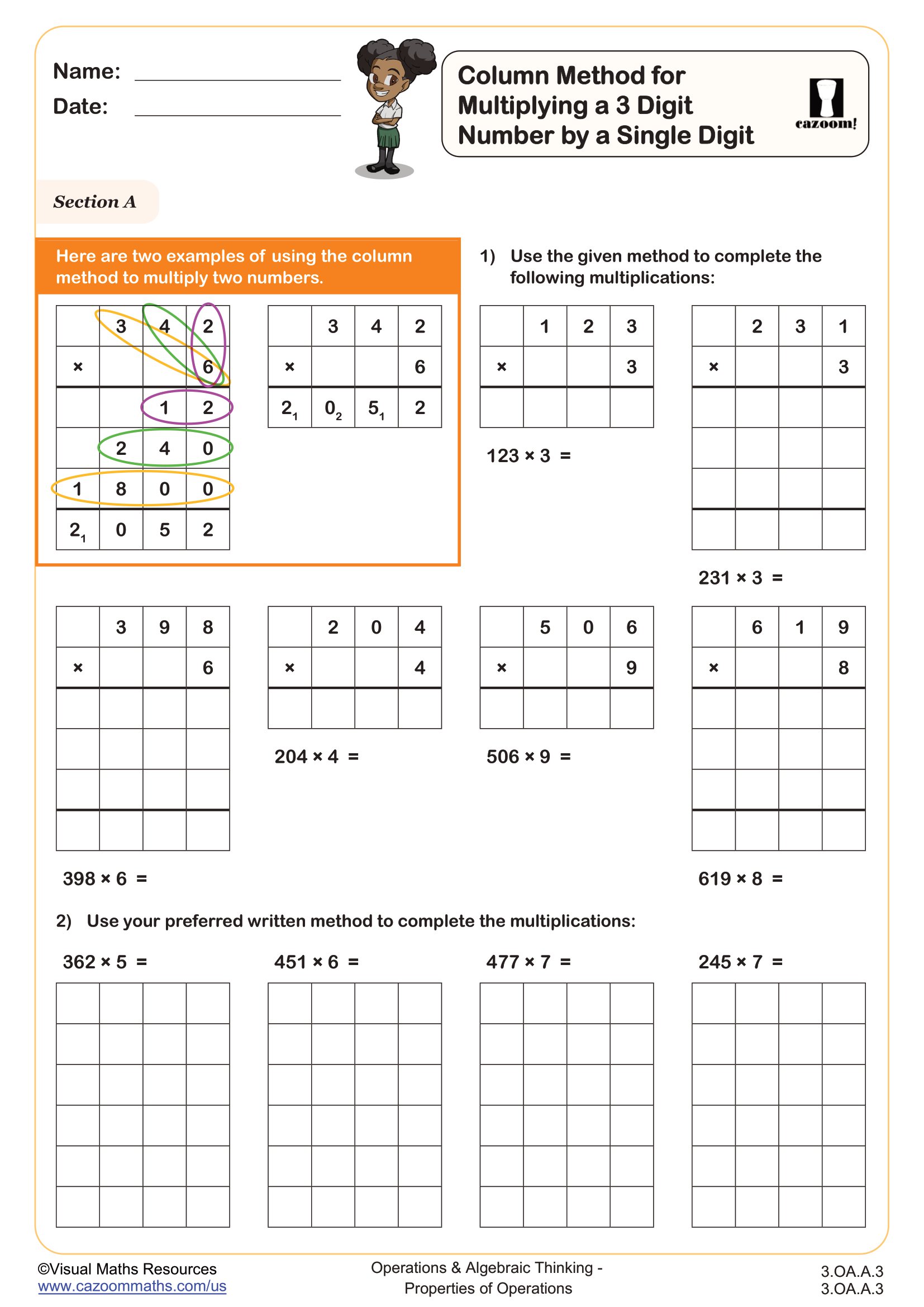
Column Method for Multiplying a 3 Digit Number by a Single Digit
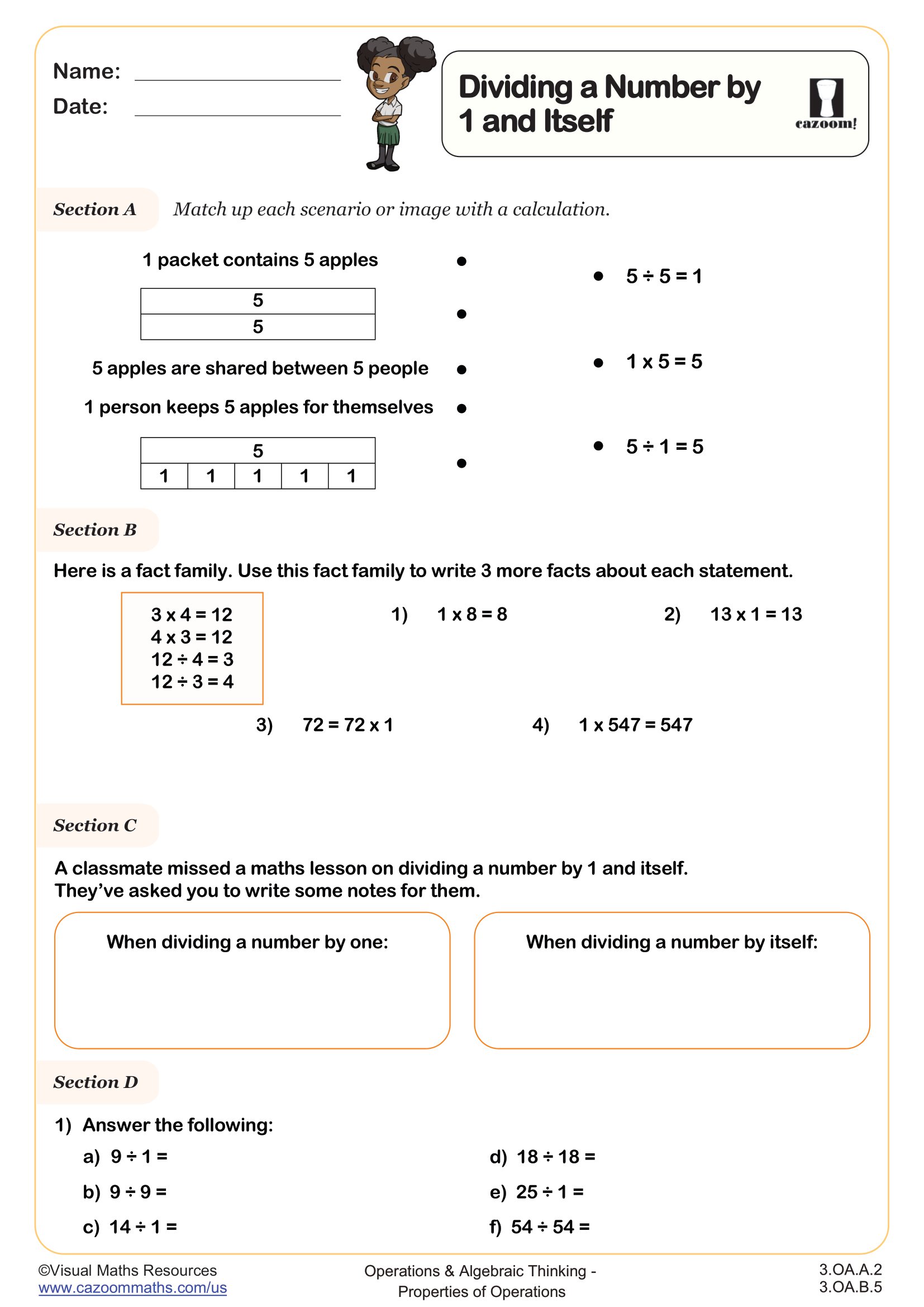
Dividing a Number by 1 and Itself
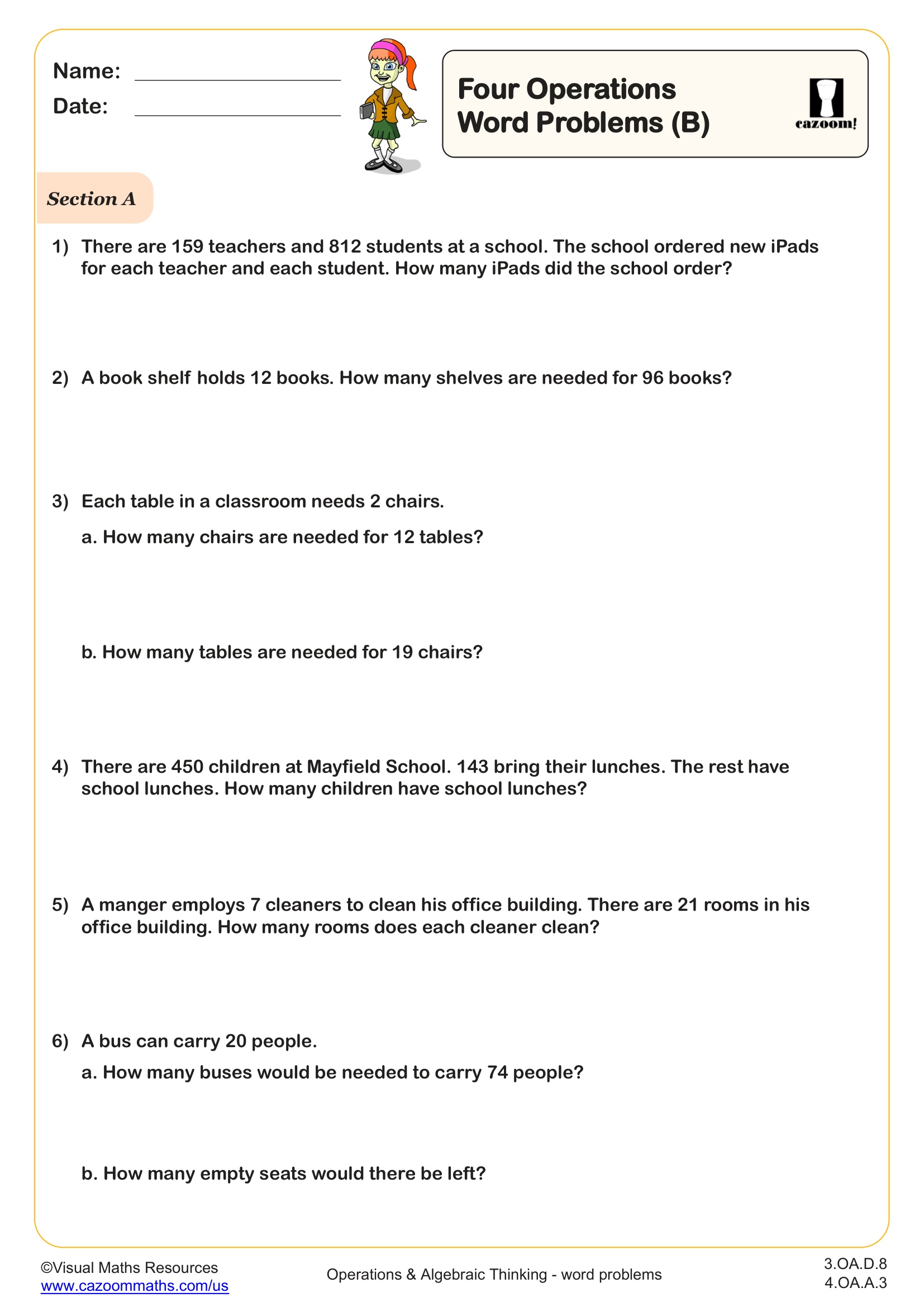
Four Operation Word Problems (B)
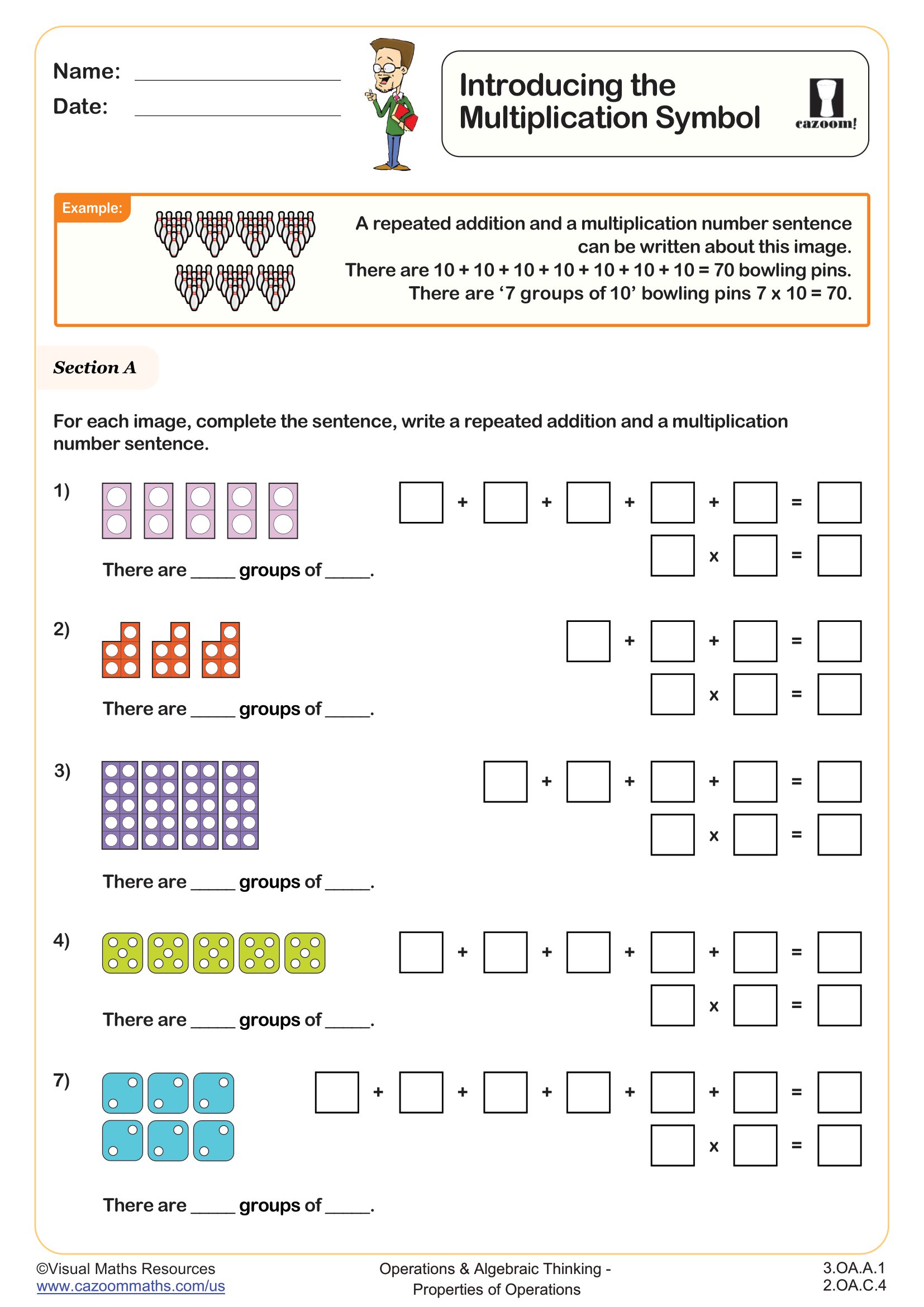
Introducing the Multiplication Symbol
Making Arrays
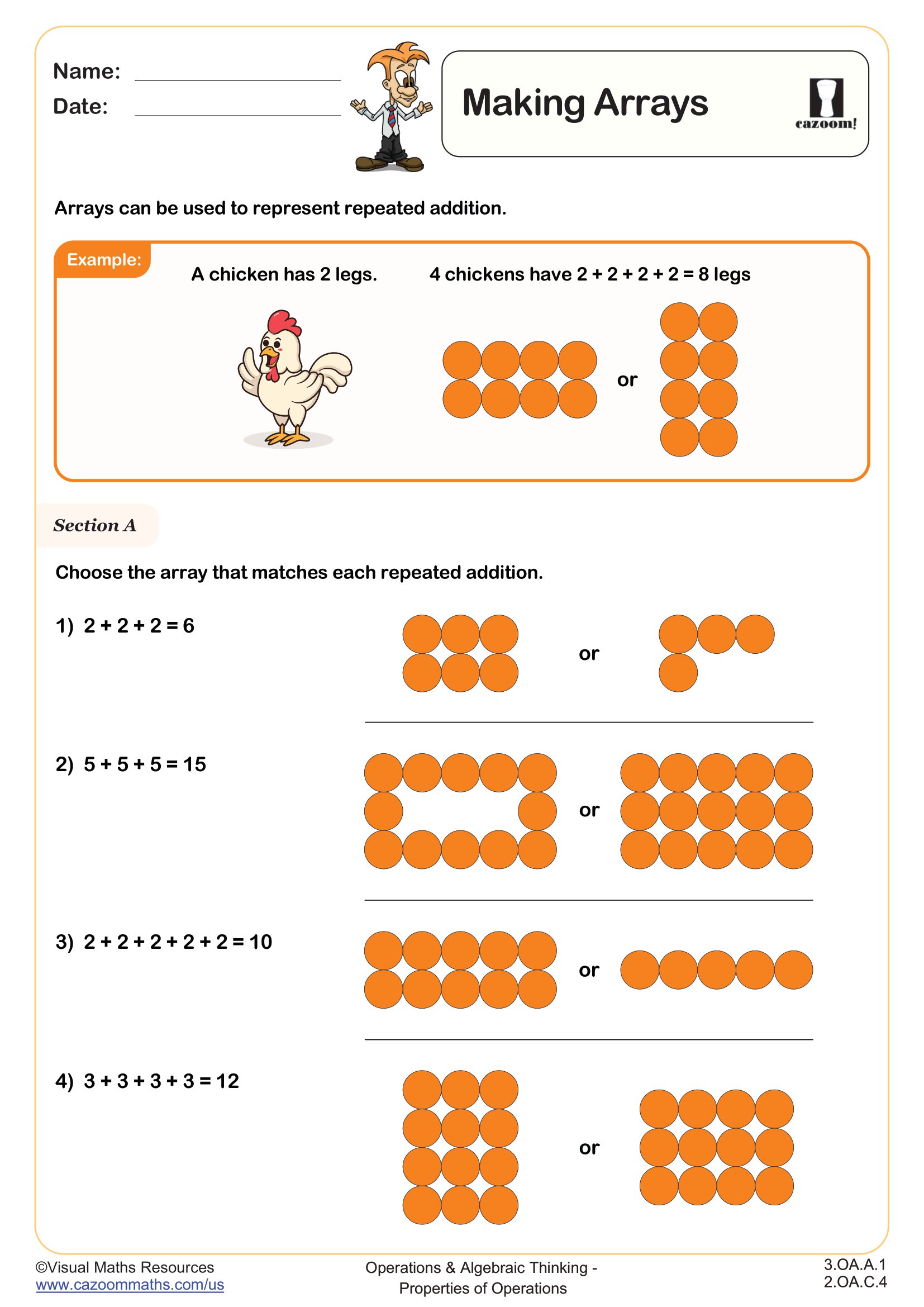
Multiplication Arithmagons
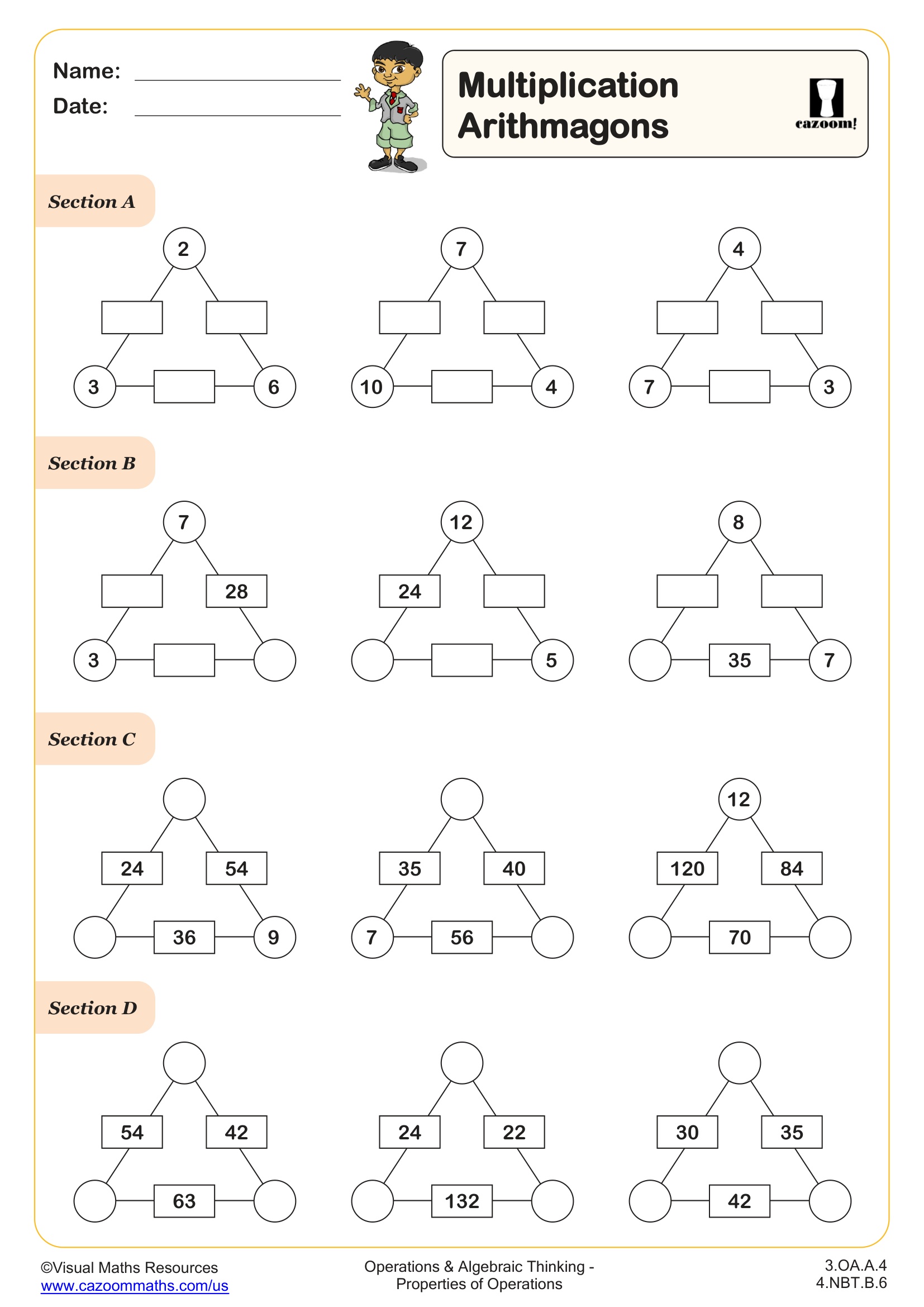
Multiplying by 1 and 0 (A)
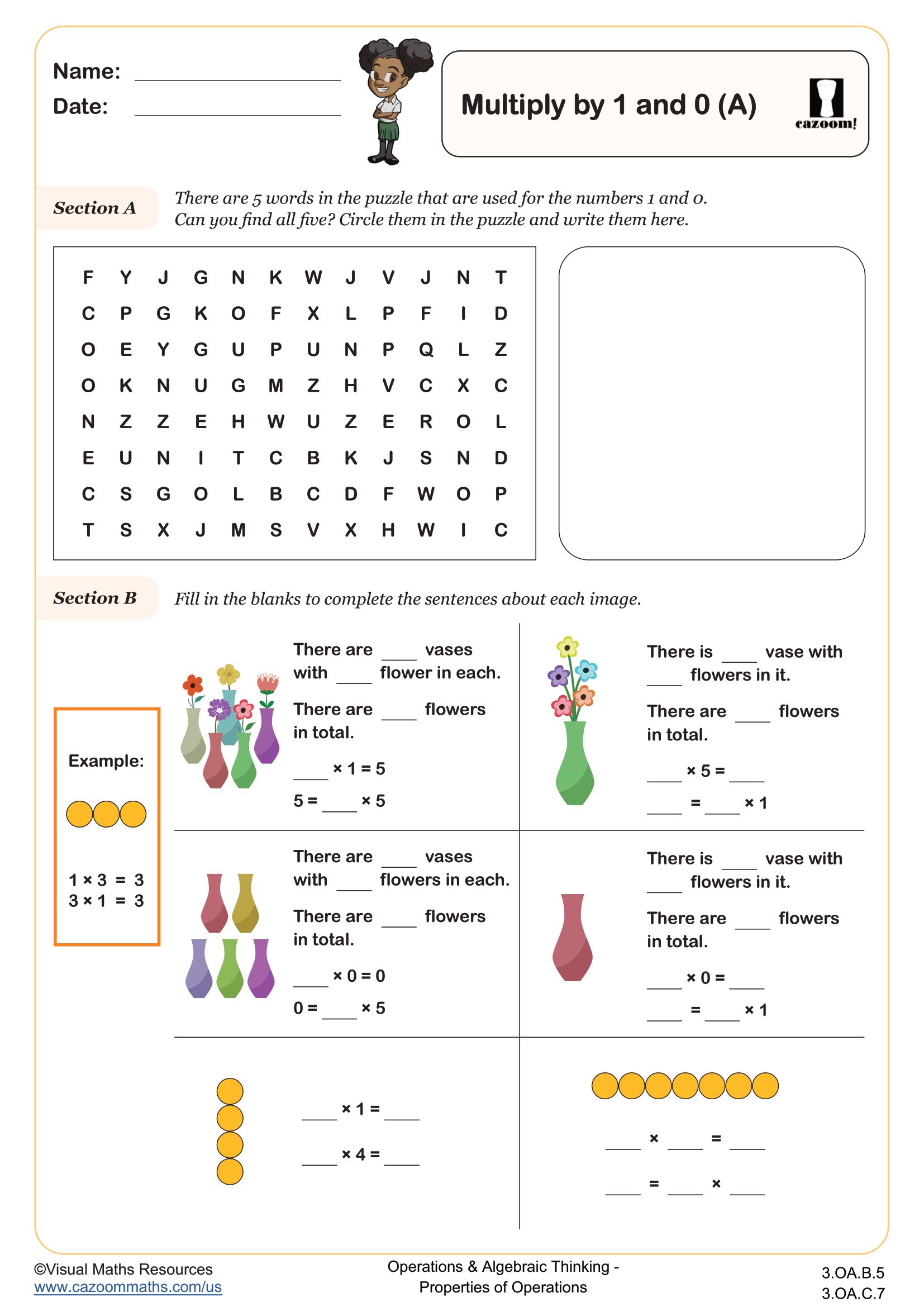
Multiplying by 1 and 0 (B)
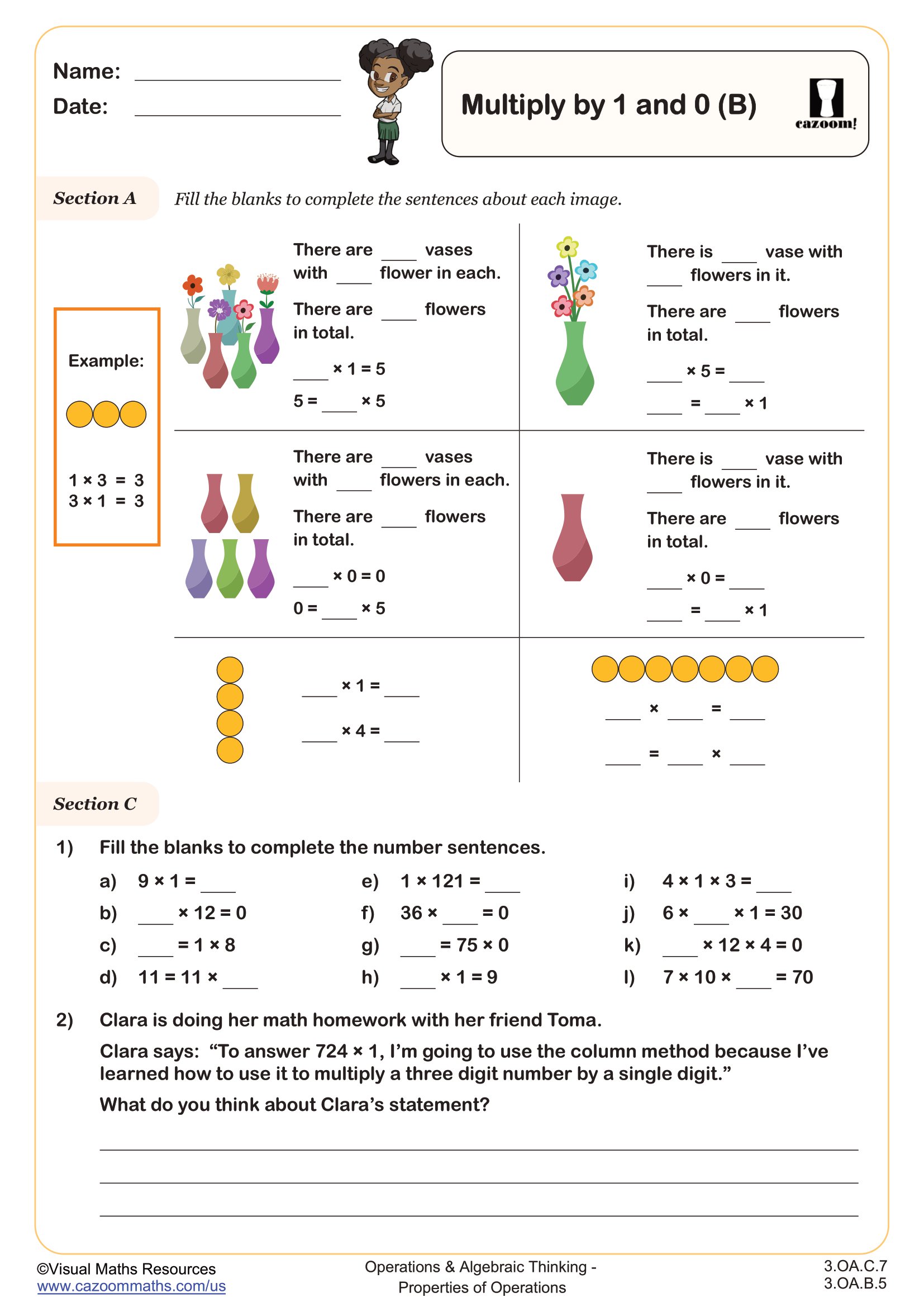
Multiplying Three Numbers Together
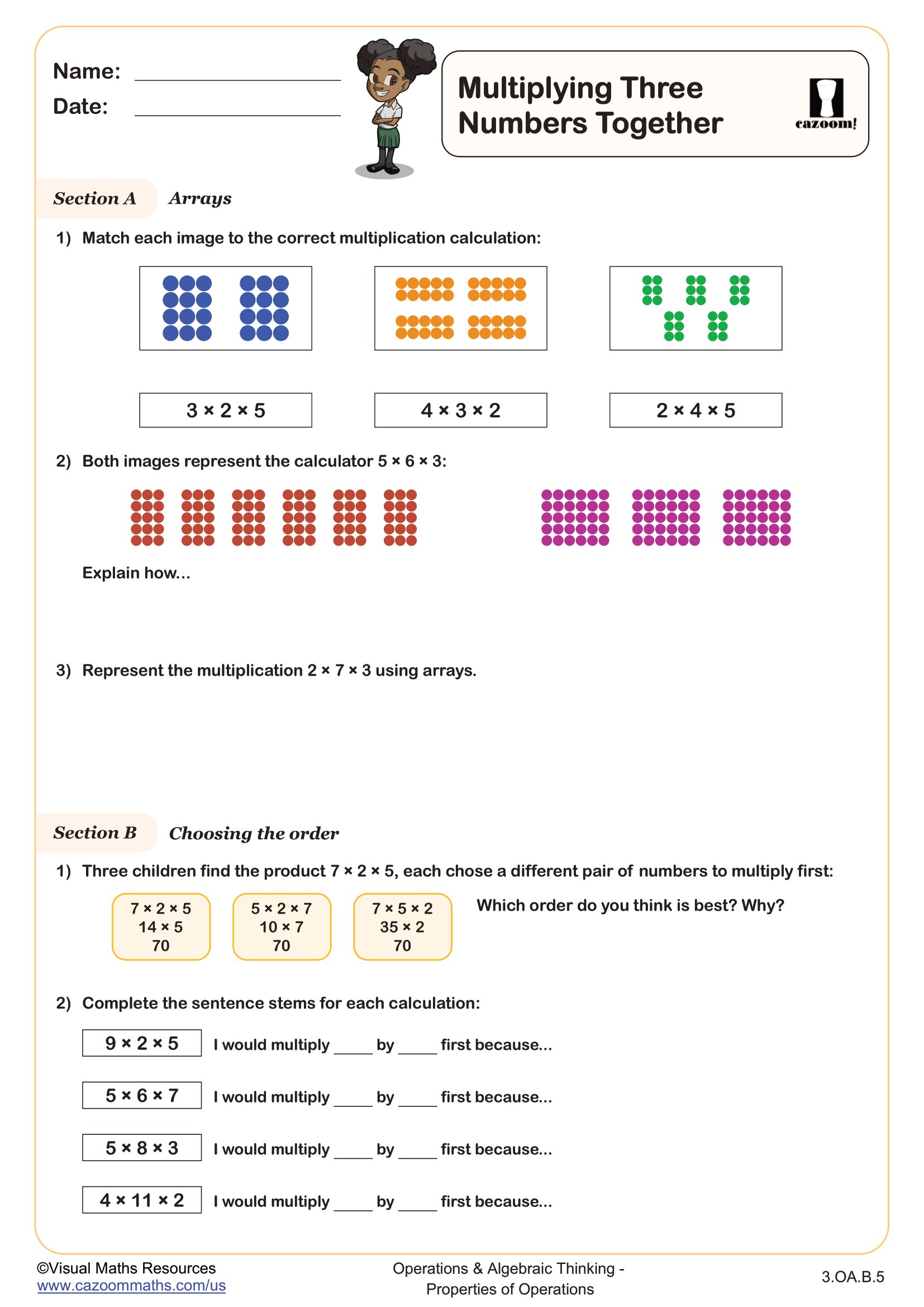
Selecting the Correct Inverse
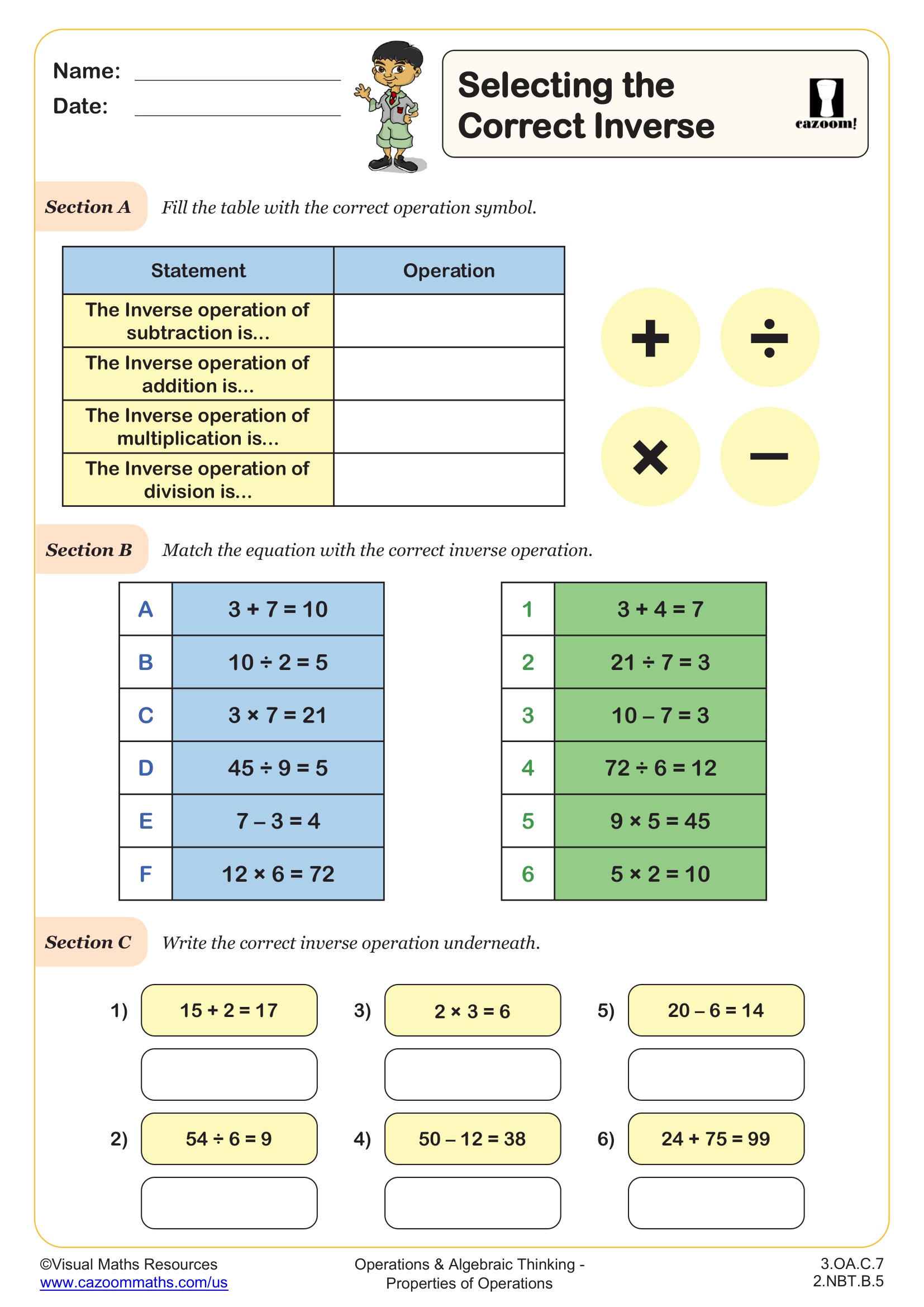
The 12 Times Table
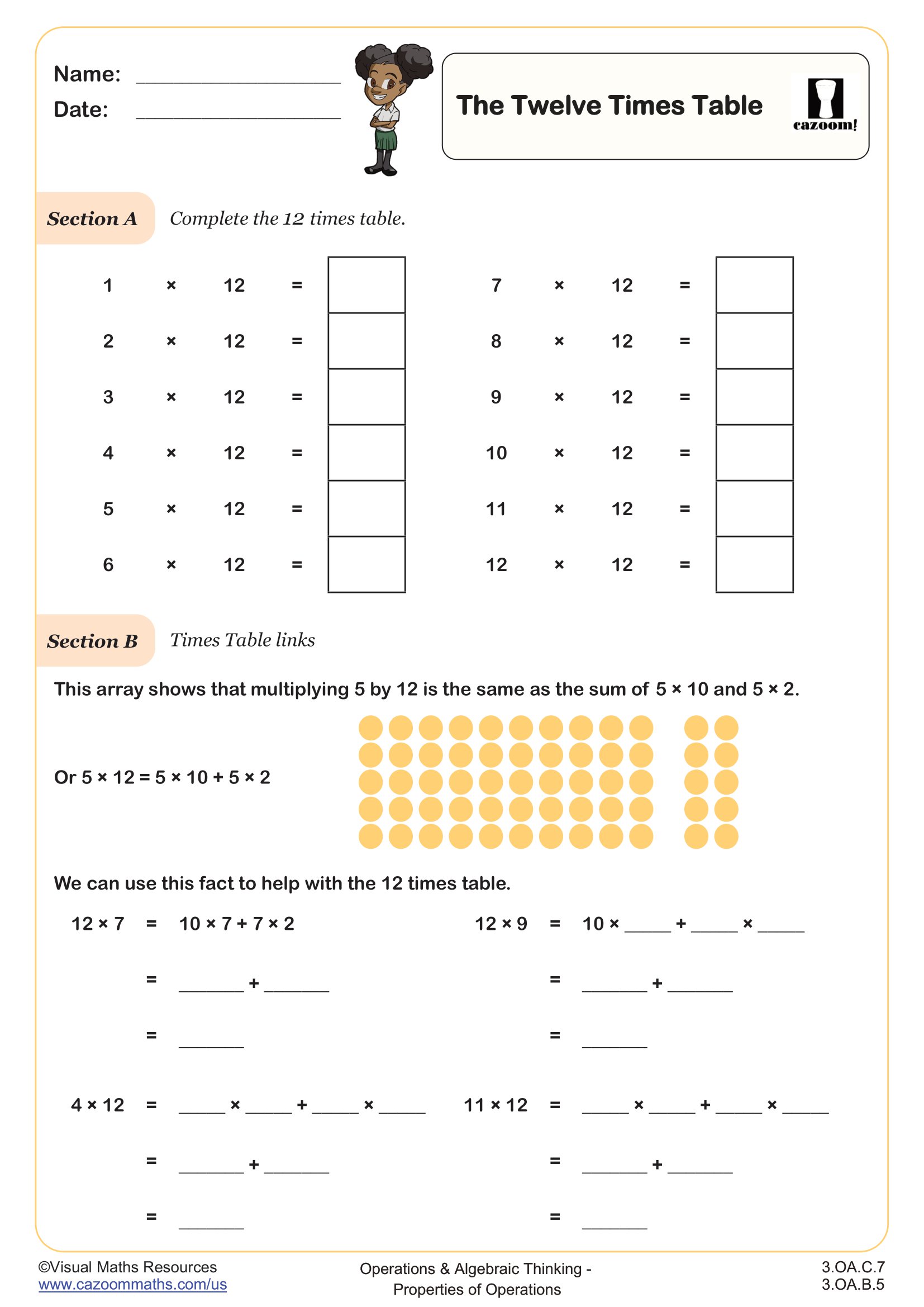
The 9 Times Table
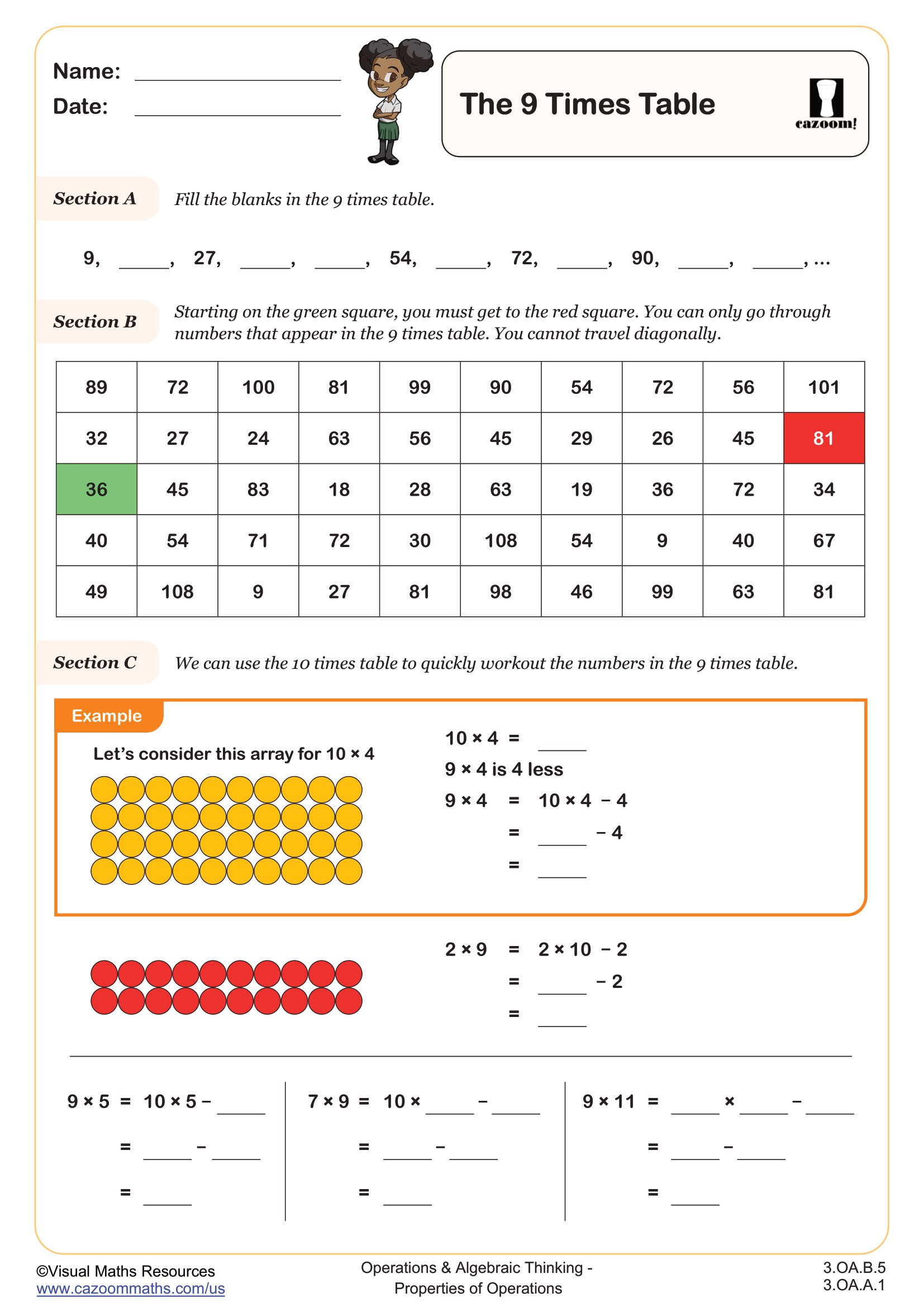
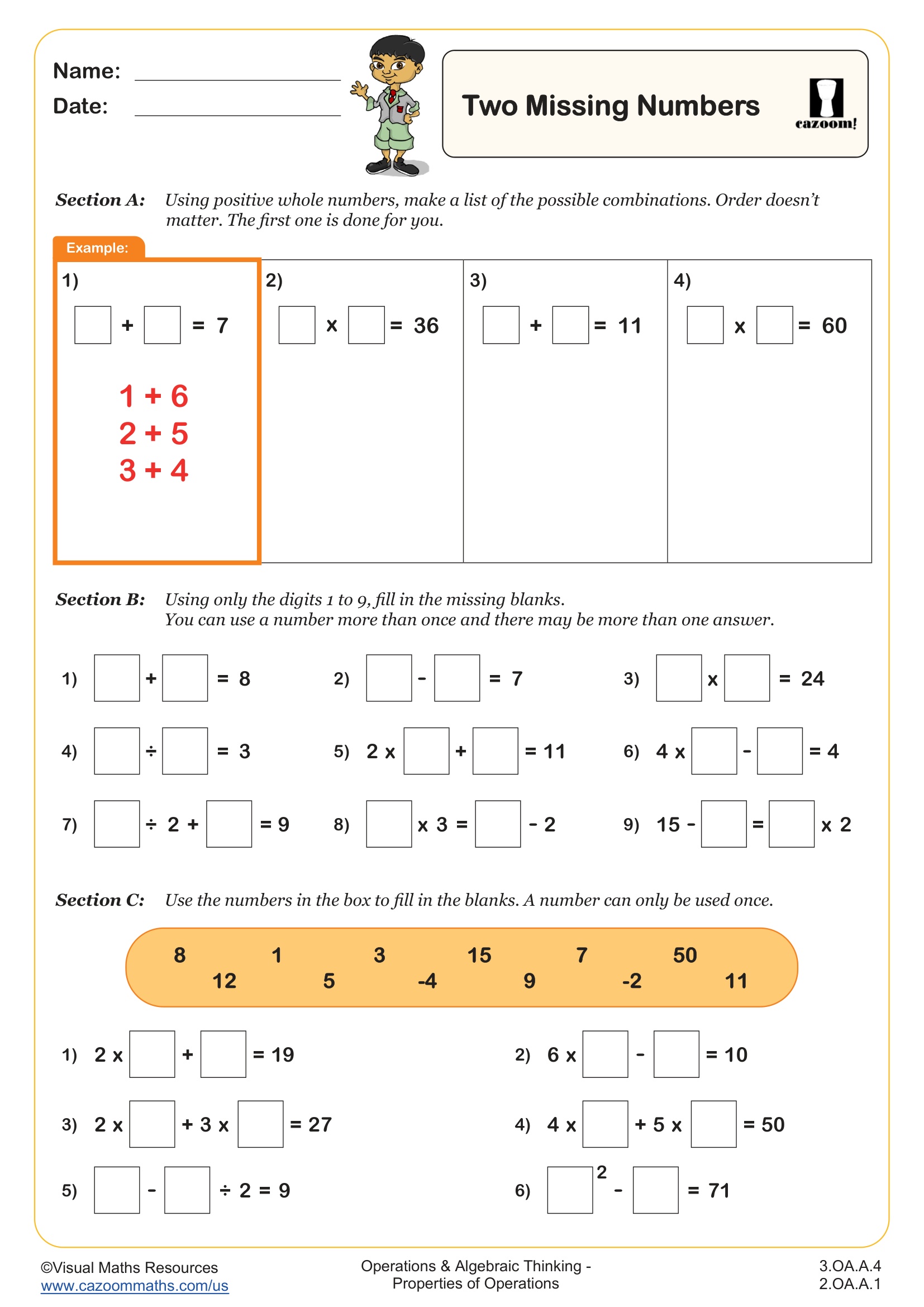
Two Missing Numbers
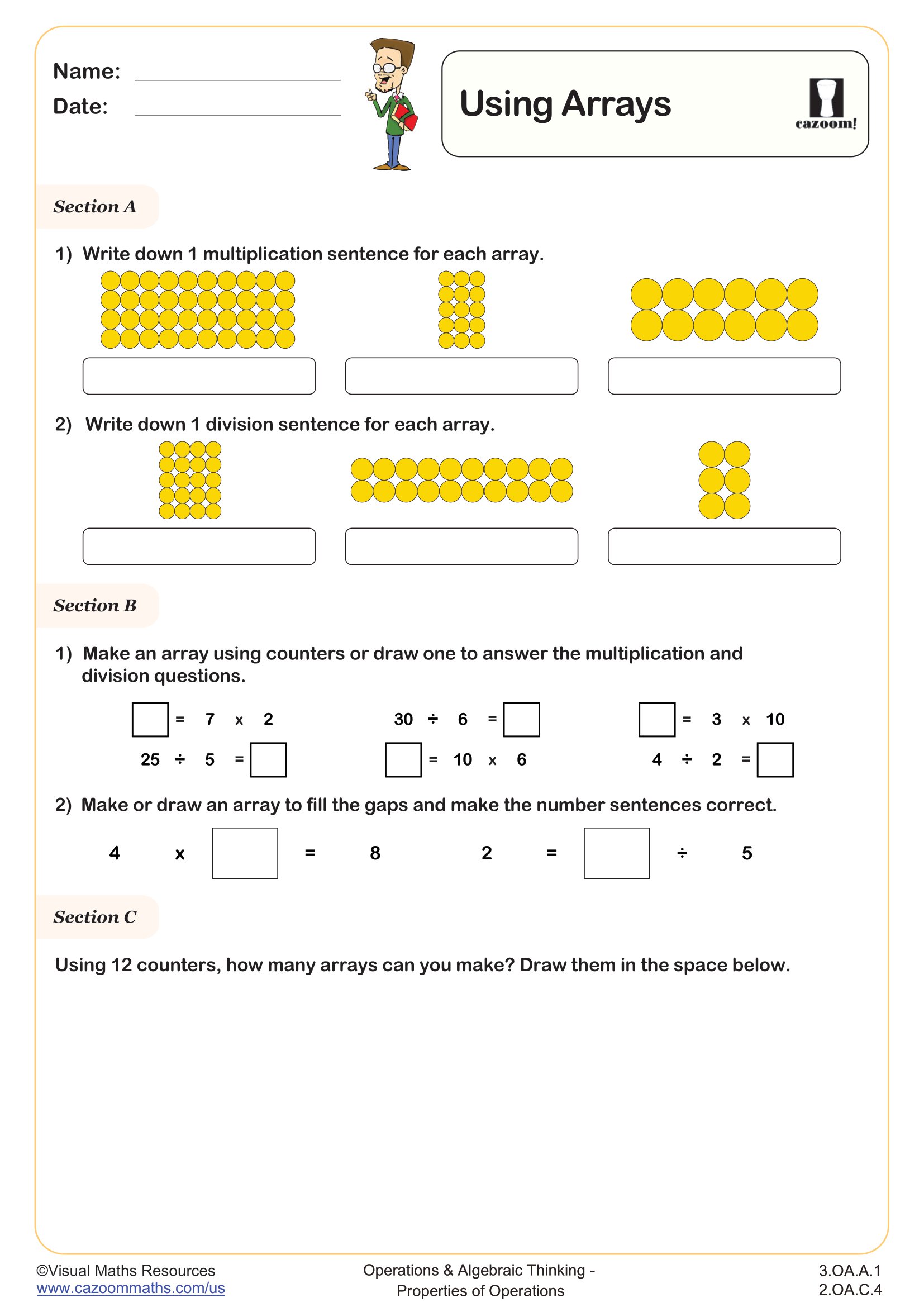
Using Arrays
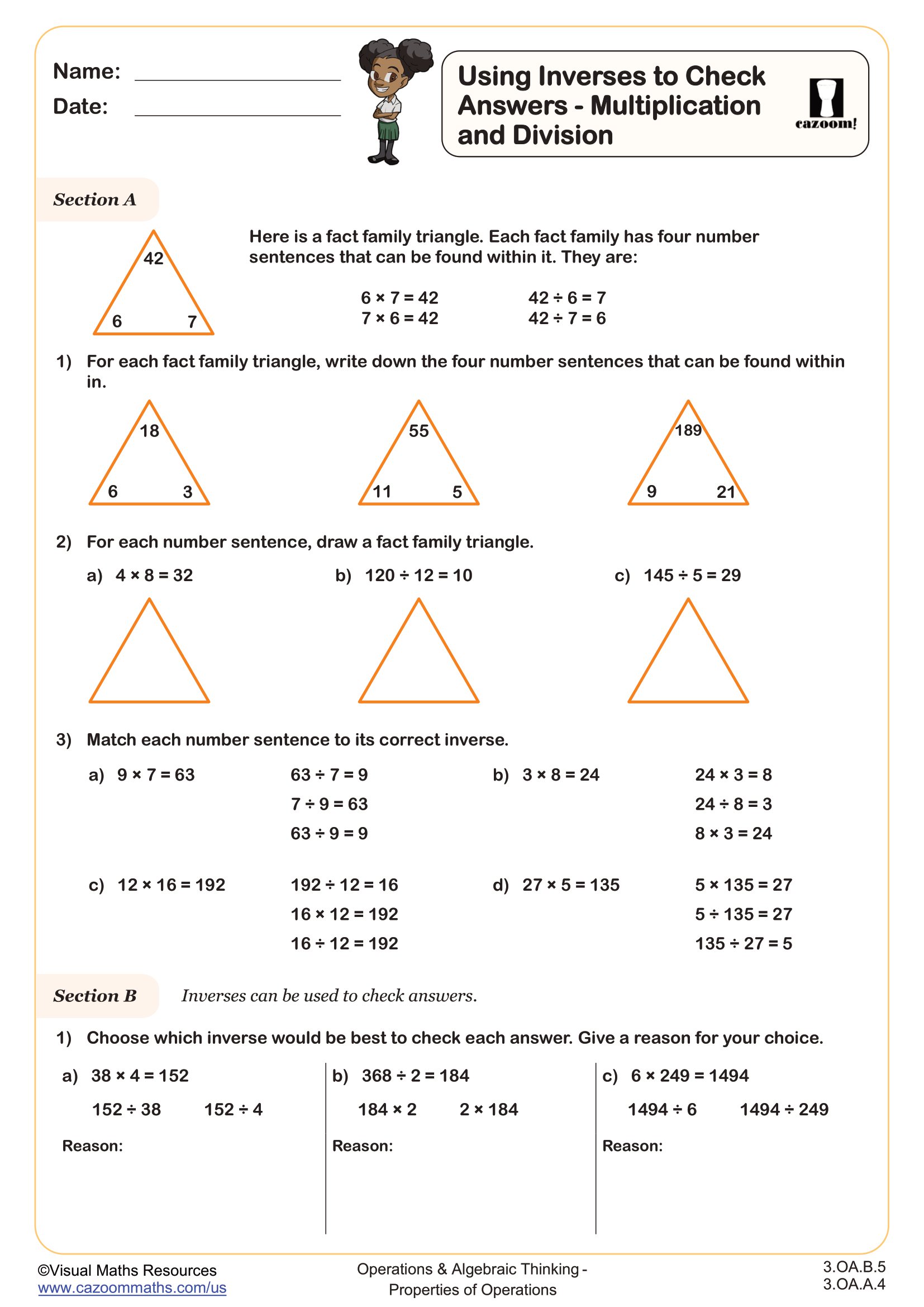
Using Inverses to Check Answers - Multiplication and Division
All worksheets are created by the team of experienced teachers at Cazoom Math.
What topics are covered in operations and algebraic thinking grade 3 worksheets?
Operations and algebraic thinking grade 3 worksheets align with Common Core standard 3.OA and cover multiplication and division within 100, solving two-step word problems, and identifying arithmetic patterns. Students work with properties of operations, understanding the relationship between multiplication and division, and applying these concepts to solve real-world problems.
Teachers frequently observe that students master basic multiplication facts but struggle when these same facts appear in word problems or pattern sequences. The worksheets provide structured practice that bridges this gap, helping students recognize when to apply multiplication versus division and how to represent their thinking mathematically.
How do third grade algebraic thinking skills prepare students for future math?
Third grade algebra concepts establish the foundation for formal algebraic reasoning that students encounter in middle school. At this level, students learn to identify patterns, understand the equal sign as representing balance rather than just 'find the answer,' and work with unknown quantities in simple equations like 8 × ? = 48.
Classroom observations show students who master these early algebraic thinking skills demonstrate stronger problem-solving abilities in fourth and fifth grade. They're better equipped to handle multi-step problems and can more easily transition to using variables and solving equations when they reach middle school mathematics courses.
What multiplication and division strategies do these worksheets emphasize?
The worksheets focus on multiple strategies including arrays, equal groups, repeated addition and subtraction, and fact families to help students understand multiplication and division conceptually. Students practice using these visual and numerical methods to solve problems rather than just memorizing isolated facts.
Teachers notice that students who learn multiple strategies become more flexible problem solvers and can check their work using different approaches. For example, a student might solve 6 × 4 using an array, then verify the answer by thinking of it as 4 groups of 6 or by using the related division fact 24 ÷ 6 = 4.
How can teachers effectively use these worksheets in their instruction?
Teachers find these worksheets work best when integrated with manipulatives and visual models during initial instruction, then used for independent practice once students understand the concepts. The answer keys allow for immediate feedback and help teachers identify specific areas where students need additional support.
Many educators use these worksheets for differentiated instruction, assigning different problem sets based on student readiness levels. Some teachers also incorporate the worksheets into math centers or homework assignments, using the detailed answer keys to facilitate parent involvement in supporting their child's mathematical thinking at home.