4th Grade Adding 2 Digit Numbers to 100 Worksheets
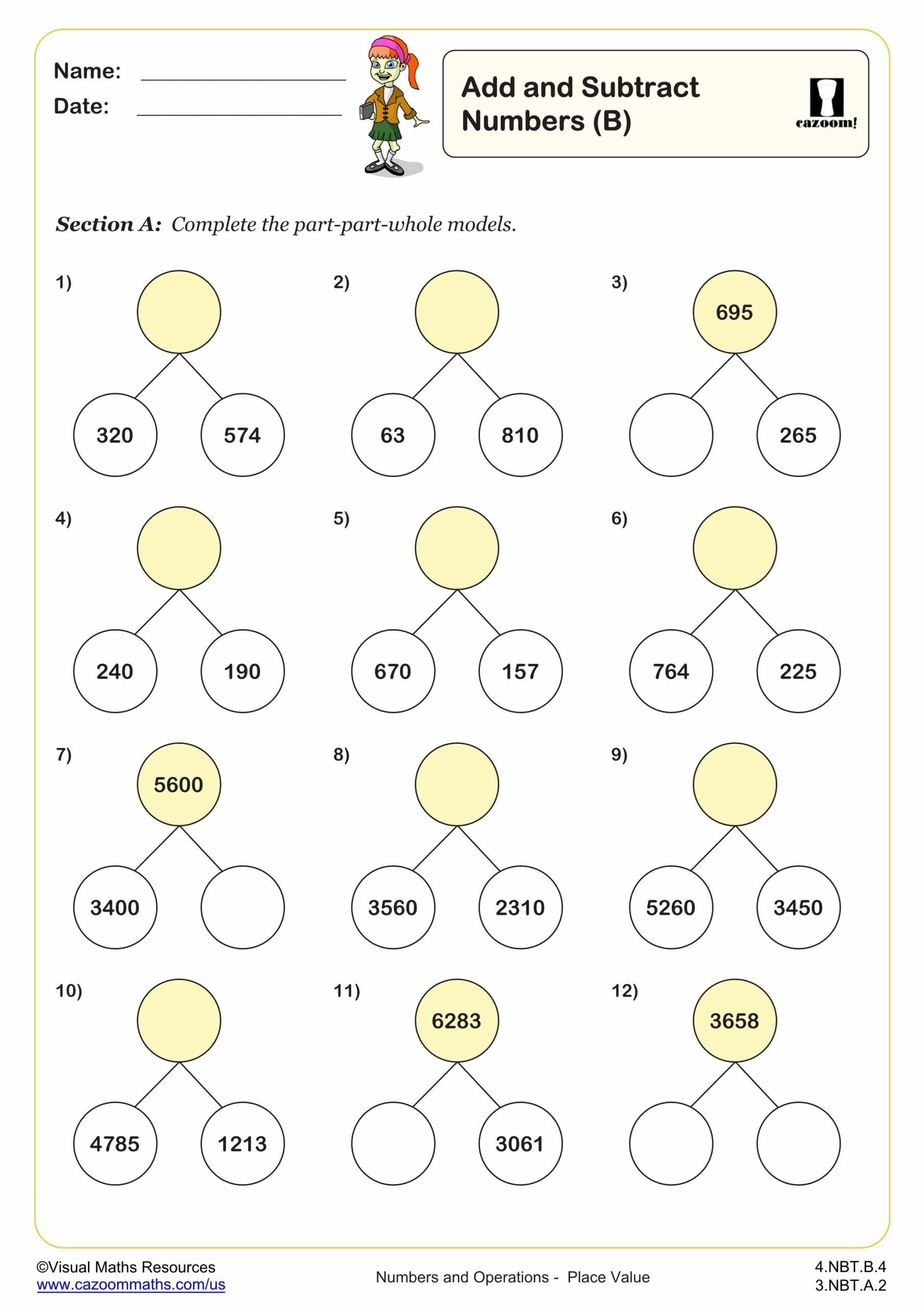
All worksheets are created by the team of experienced teachers at Cazoom Math.
What strategies help students add 2-digit numbers accurately?
Successful addition of 2-digit numbers relies on understanding place value and knowing when to regroup. Students should align numbers vertically by place value, add the ones column first, and carry any ten to the tens column when necessary. Many teachers find that explicitly teaching students to circle or mark when regrouping is needed helps reduce careless errors.
A common mistake occurs when students add the larger digit first regardless of place value position, treating 47 + 28 as if it were 7 + 8 and 4 + 2 separately without considering regrouping. Students who master decomposing numbers into tens and ones before adding typically show stronger accuracy. For example, recognizing that 47 + 28 can be thought of as 40 + 20 + 7 + 8 gives students multiple pathways to the correct sum of 75.
What should 4th graders know about adding 2-digit numbers?
By 4th grade, students should fluently add 2-digit numbers with and without regrouping, understanding that the process extends the single-digit addition facts they mastered in earlier grades. The Common Core State Standards expect 4th graders to use place value understanding and properties of operations to perform multi-digit arithmetic, with 2-digit addition serving as foundational practice. Students at this level should recognize when a problem requires regrouping and execute the process accurately.
This skill builds directly on 2nd and 3rd grade work with 2-digit addition and prepares students for adding larger multi-digit numbers later in 4th grade. Teachers notice that students who still struggle with basic addition facts often falter with 2-digit problems, suggesting that fact fluency review may be necessary before advancing. Strong performance with numbers to 100 creates confidence for tackling 3-digit and 4-digit addition in the coming months.
How does mental math support 2-digit addition?
Mental math strategies for 2-digit addition include making tens, using compatible numbers, and compensation methods. For instance, when adding 38 + 47, students might recognize that adding 2 to 38 makes 40, then add 45 more to reach 85. This approach reduces reliance on paper-and-pencil algorithms and builds number sense. Students who develop mental math flexibility often perform better on timed assessments and standardized tests.
These skills appear constantly in everyday situations where written calculation isn't practical. When budgeting lunch money, calculating game scores, or estimating distances on a map, students use mental addition of 2-digit numbers. In STEM fields, scientists and engineers regularly perform quick mental calculations to check if computer-generated results make sense. Teaching students to estimate before calculating exact answers helps them catch errors and builds the habit of mathematical reasoning that extends well beyond elementary school.
How can teachers use these worksheets effectively in the classroom?
The worksheets provide structured practice that helps students build automaticity with 2-digit addition through repeated exposure to varied problems. Teachers can use them to assess which students have mastered regrouping and which need additional intervention. The answer keys allow for quick grading during class, enabling teachers to identify struggling students immediately and provide targeted support before misconceptions solidify.
Many teachers use these worksheets as warm-up activities at the start of math class or as exit tickets to check daily understanding. They work well for differentiated instruction, with some students completing problems independently while others work through similar problems with teacher guidance in small groups. The worksheets also serve as effective homework assignments because parents can check answers without needing to solve each problem themselves. During test preparation season, these make valuable review materials that mirror the format students encounter on state assessments.