4th Grade Adding 2 Digit Numbers to 1000 Worksheets
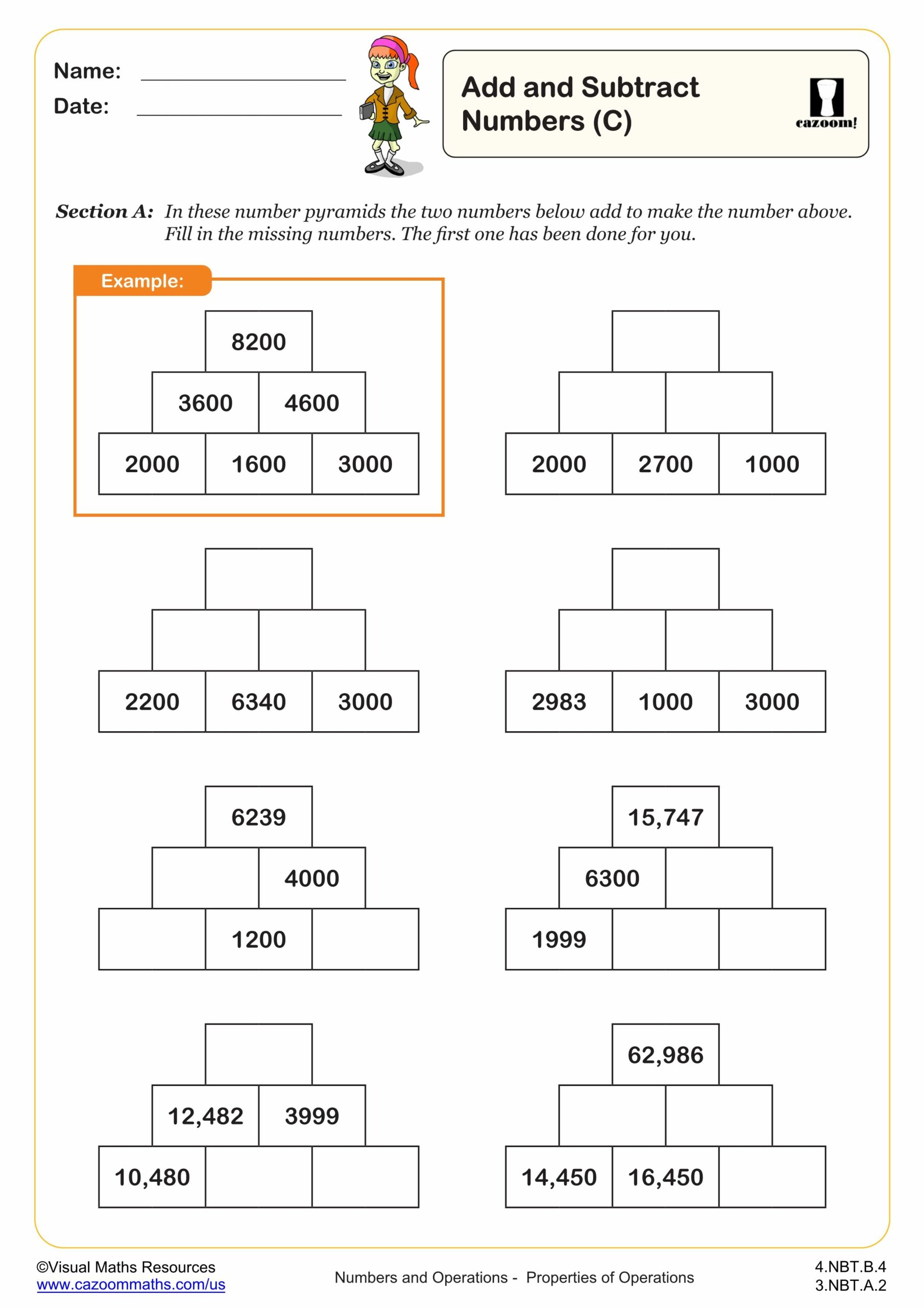
All worksheets are created by the team of experienced teachers at Cazoom Math.
What Are Common Mistakes When Adding 2-Digit Numbers?
The most frequent error occurs when students forget to regroup or carry over to the next place value. Many students correctly add the ones column and get a two-digit sum like 14, but then write both digits in the ones place rather than carrying the 1 to the tens column. This mistake becomes particularly common when adding numbers like 67 + 48, where both place values require attention.
Another pattern teachers observe is students adding only one column and forgetting the other entirely, especially when working quickly through problems. Students also sometimes add the larger digit to the smaller one regardless of position (adding 8 + 6 when the problem shows 68 + 24), revealing confusion about place value. Consistent practice with visual place value charts helps students catch these errors before they become habits.
What Should 4th Graders Know About Adding 2-Digit Numbers?
By 4th grade, students should fluently add two-digit numbers with and without regrouping, understanding that the process applies place value principles consistently. The Common Core State Standards expect 4th graders to use the standard algorithm while also being able to explain their reasoning, not just mechanically follow steps. Students at this level should recognize when regrouping is necessary and complete these problems accurately within reasonable time limits.
This skill builds directly on 3rd grade work with addition within 1000 and prepares students for adding larger multi-digit numbers later in 4th grade. Mastery here creates confidence for tackling three-digit and four-digit addition, where the same place value concepts apply but with additional columns. Students who solidify this foundation find decimal addition in 5th grade much more accessible since the regrouping logic remains identical.
How Does Mental Math Help With 2-Digit Addition?
Mental math strategies like breaking numbers into tens and ones (decomposing 47 + 38 into 40 + 30 and 7 + 8) help students understand why the standard algorithm works rather than just memorizing steps. Teachers notice that students who can mentally estimate sums catch errors more readily, since they recognize when a written answer doesn't match their approximation. Friendly number strategies, where students adjust one addend to make a multiple of ten (changing 47 + 38 to 50 + 35), build flexibility with numbers.
These skills connect directly to real-world situations like calculating costs while shopping or combining measurements in cooking. In STEM fields, engineers and scientists regularly estimate calculations before using precise methods, catching input errors or unreasonable results. When students practice mental addition alongside written algorithms, they develop both computational fluency and the number sense needed for problem-solving across mathematical contexts.
How Can Teachers Use These Worksheets Most Effectively?
The worksheets provide structured practice that allows teachers to observe whether students apply the standard algorithm correctly and identify specific error patterns. Using the answer keys, teachers can quickly pinpoint whether mistakes stem from regrouping confusion, place value misunderstandings, or basic fact gaps. The consistent format helps students focus on the mathematical process rather than decoding new instructions with each problem.
Many teachers use these worksheets during small group instruction to provide targeted support while other students work independently. The resources work well as homework that reinforces classroom lessons without introducing new concepts, or as warm-up activities that activate prior knowledge before introducing three-digit addition. Some teachers assign the same worksheet twice with a week between attempts, allowing students to see their own progress and build confidence through demonstrated improvement.