4th Grade Algebra Expressions Equations and Functions Worksheets
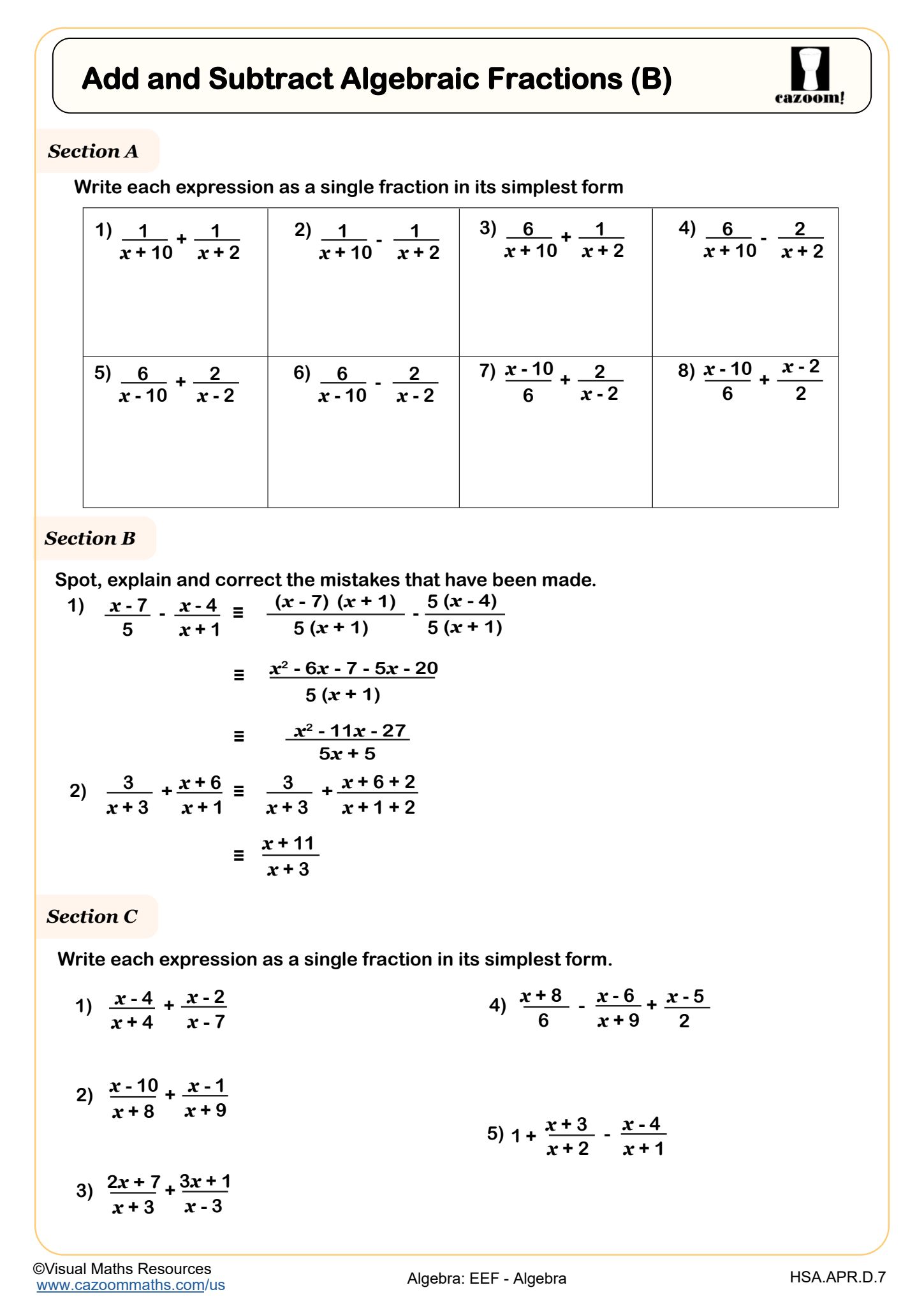
Add and Subtract Algebraic Fractions (B)
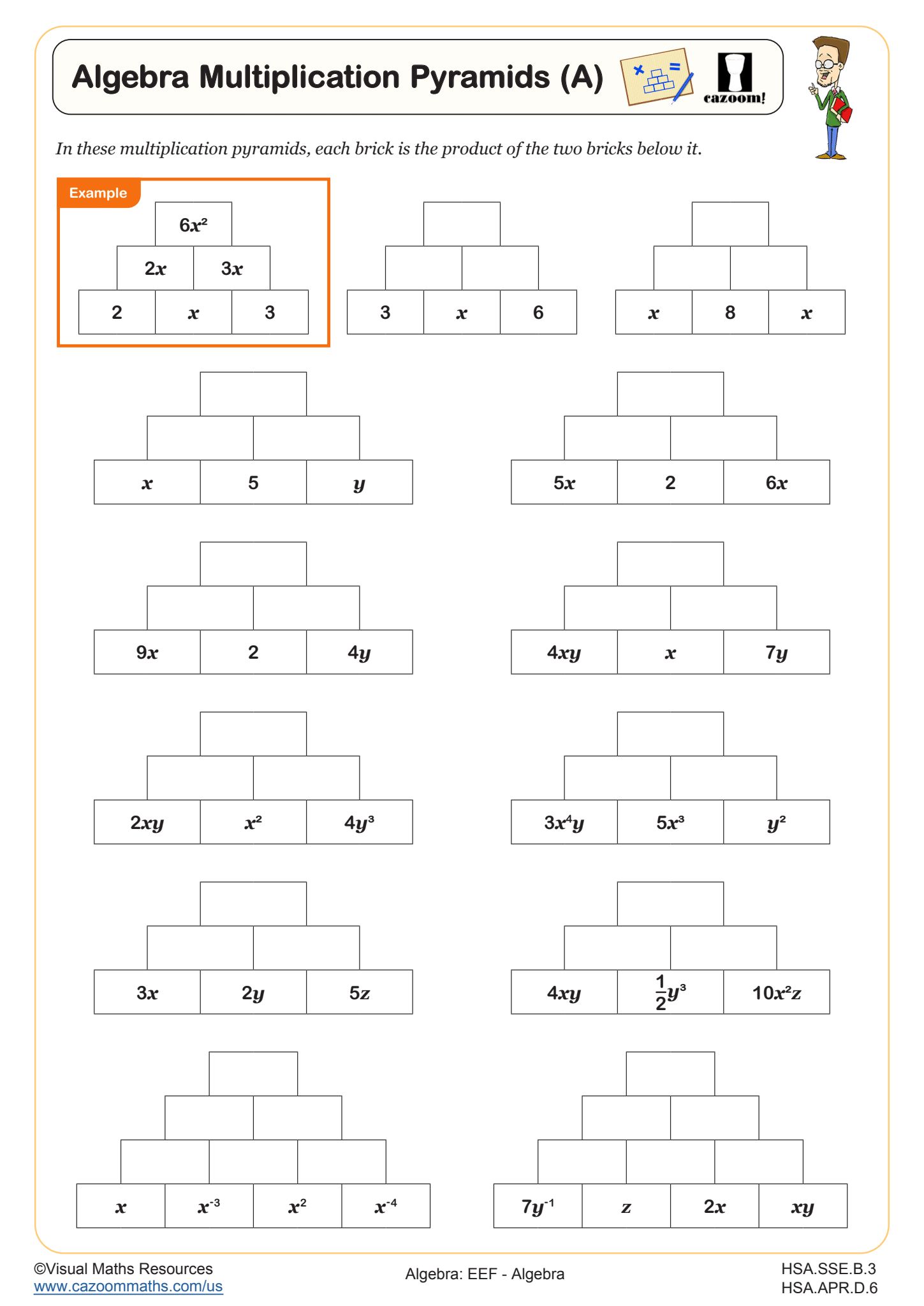
Algebra Multiplication Pyramids (A)
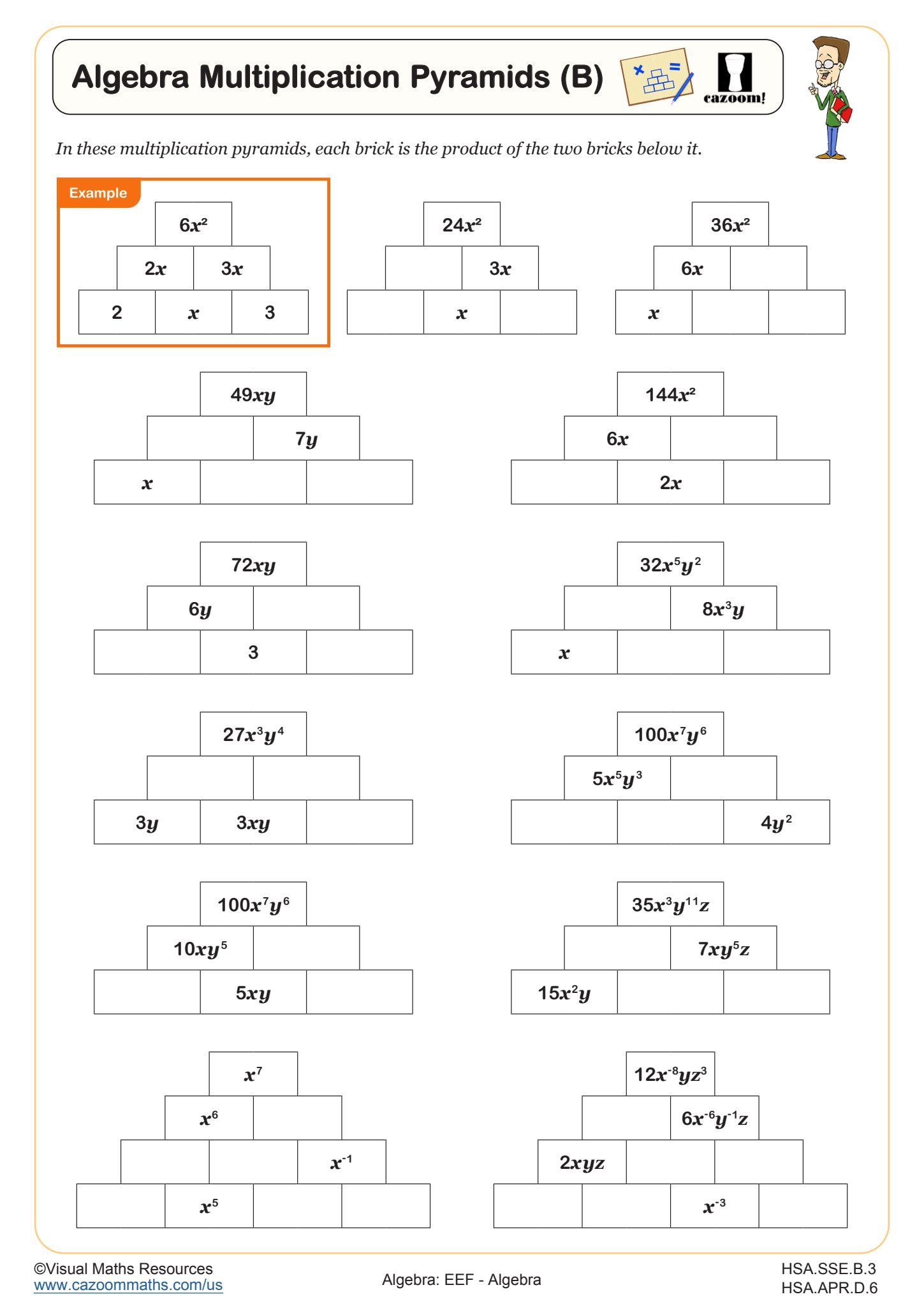
Algebra Multiplication Pyramids (B)
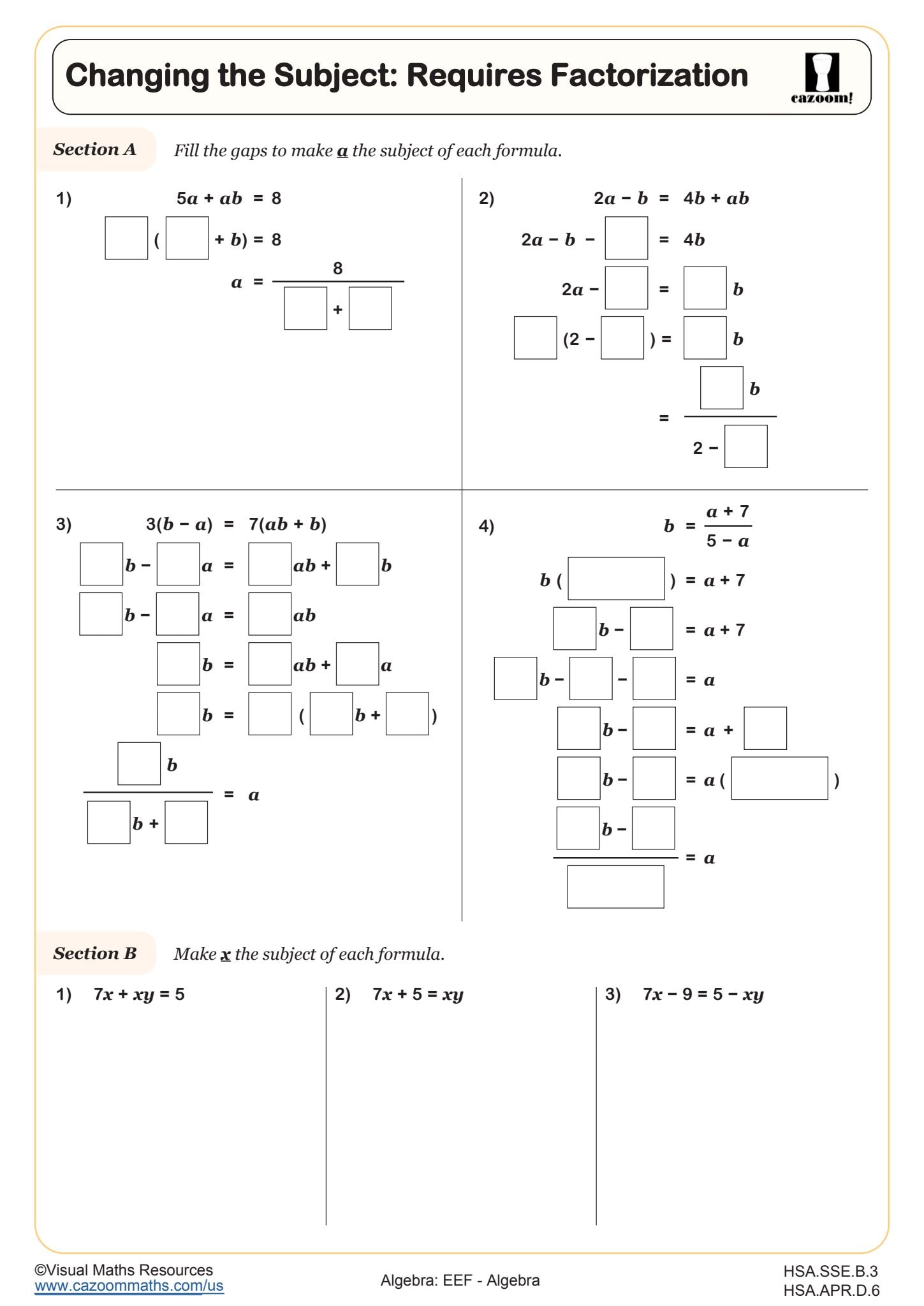
Changing the Subject: Requires Factorization
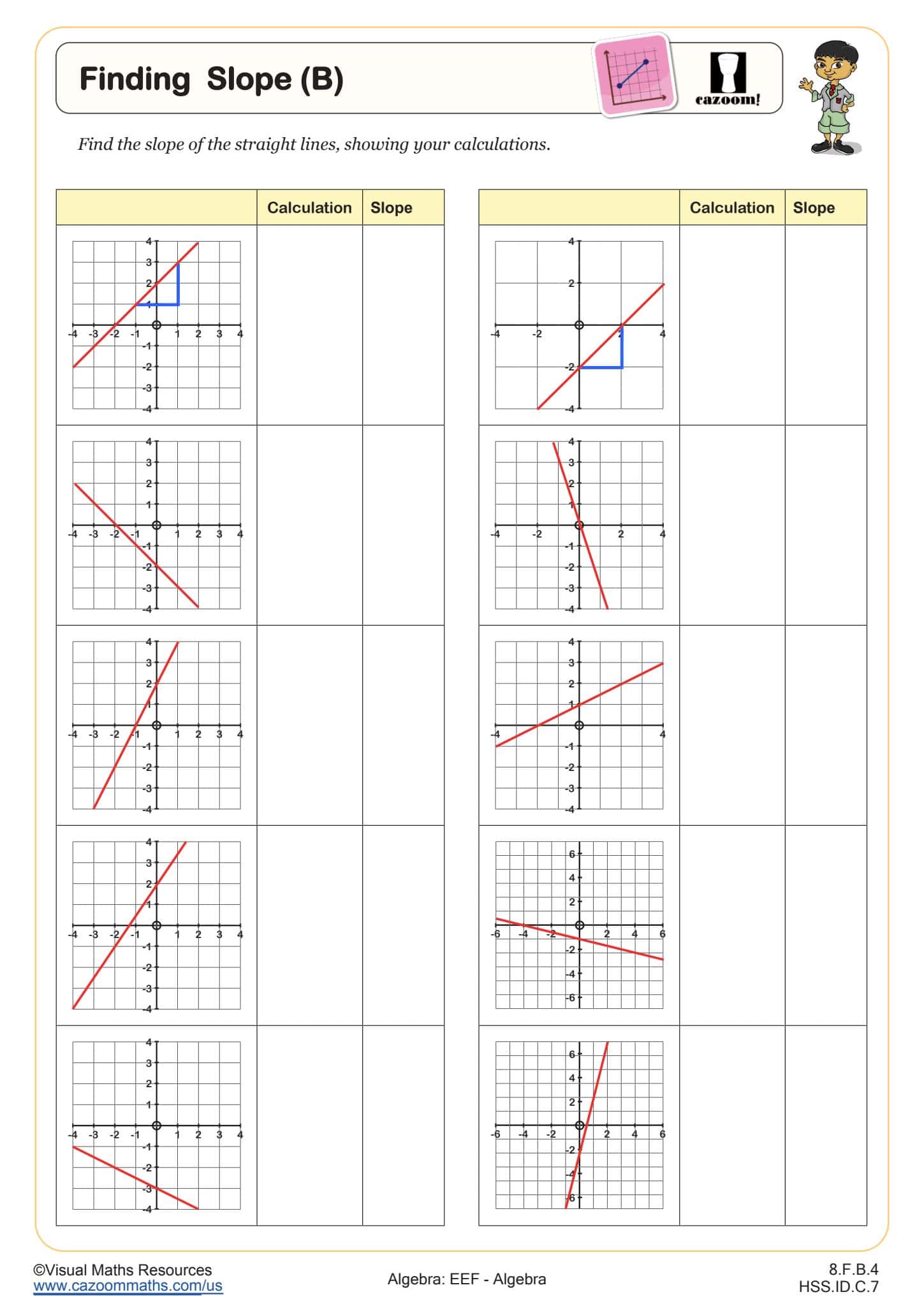
Finding Inverse Functions - Using Function Machines
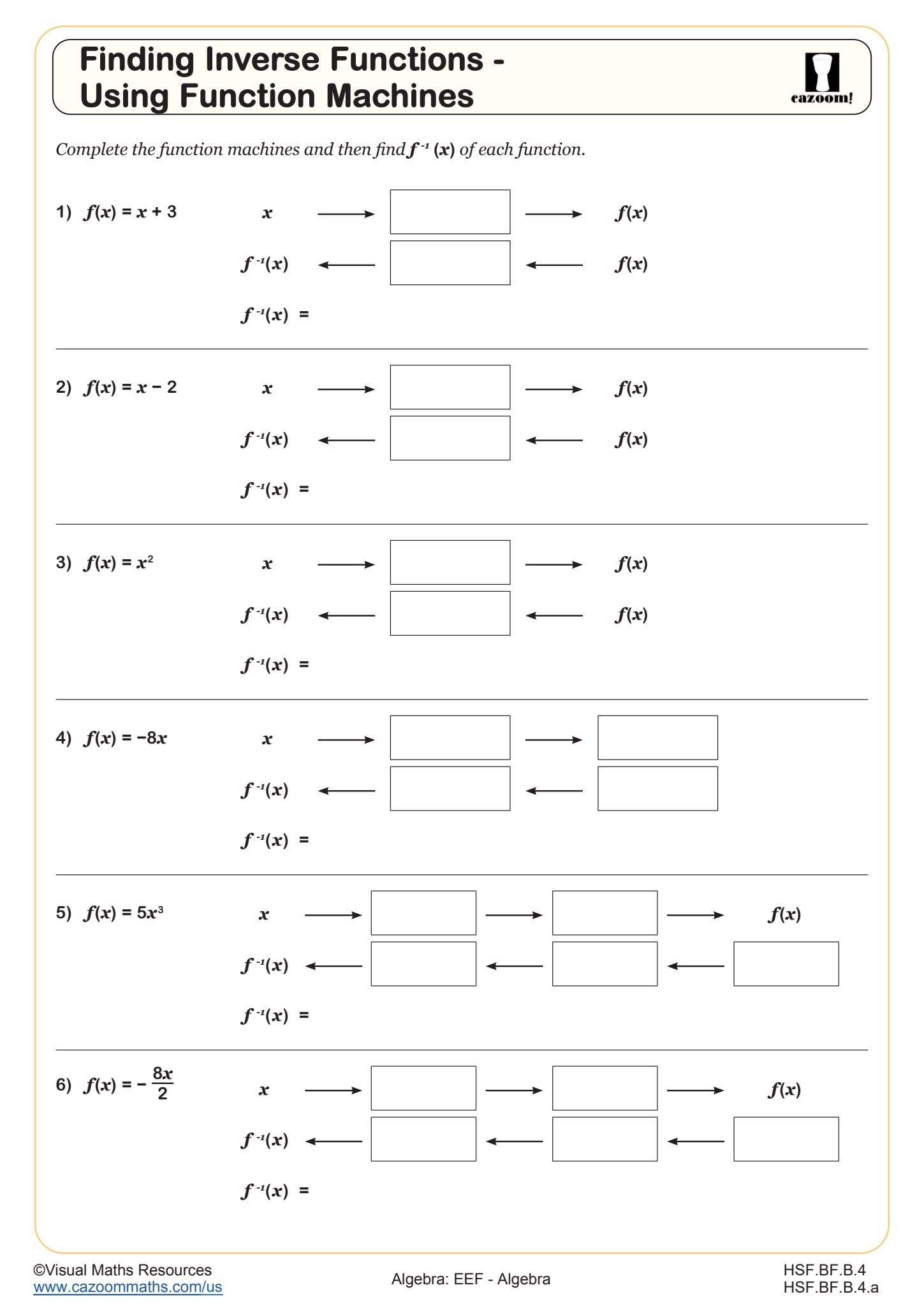
Finding Quadratic Sequence nth Terms
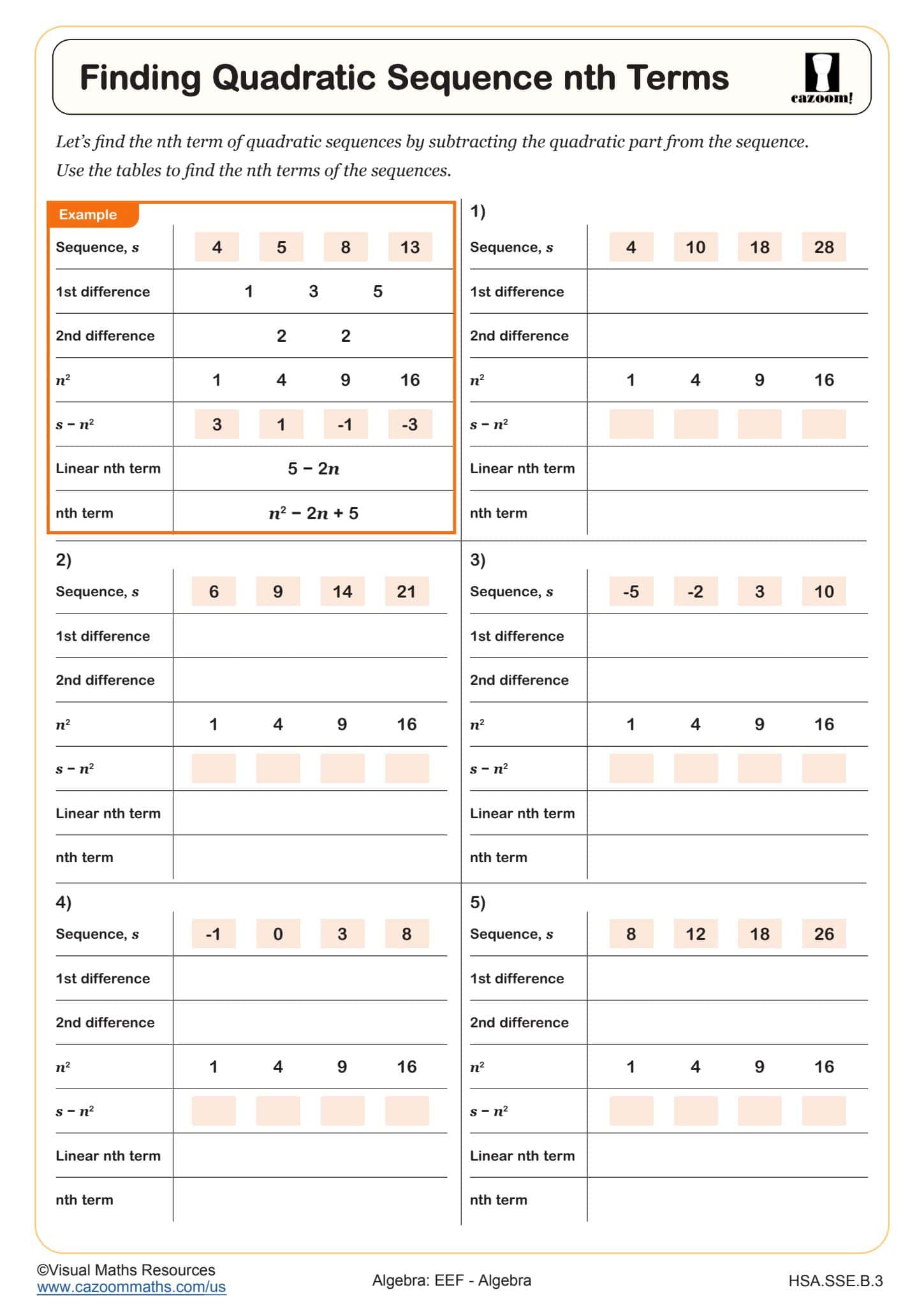
Finding Slope (A)
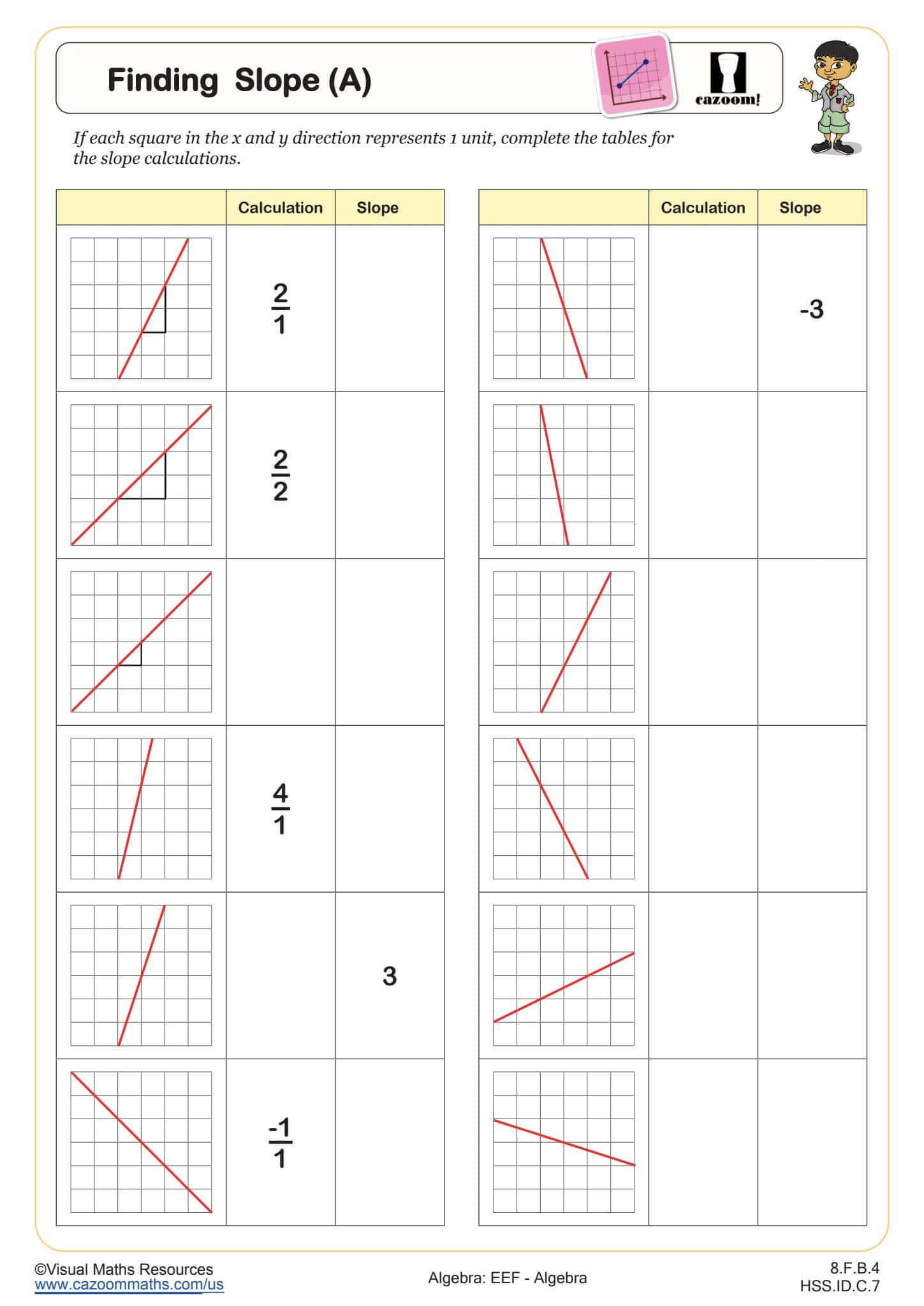
Finding Slope (B)
Finding Slope (C)
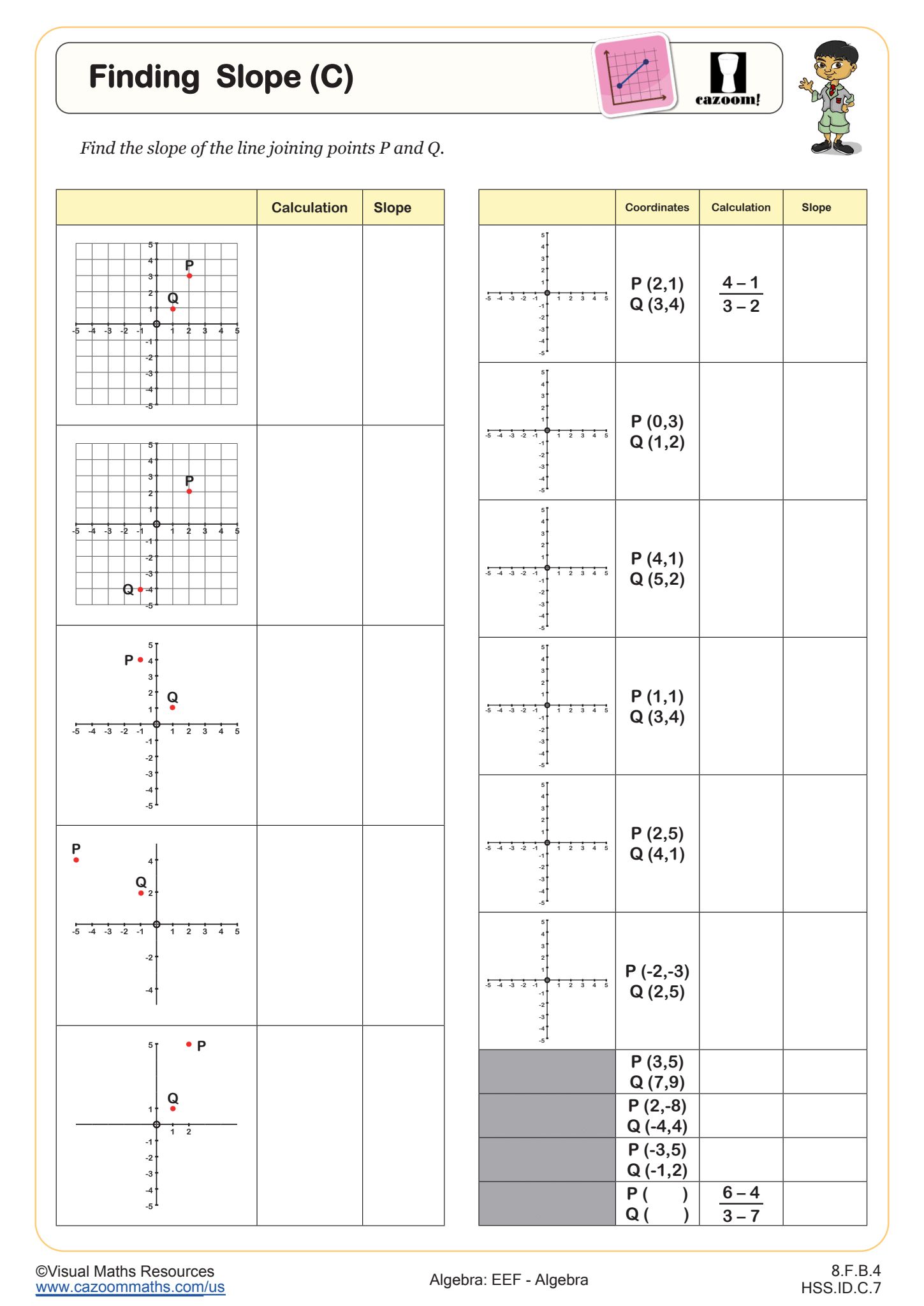
Form and Solve Linear Simultaneous Equations
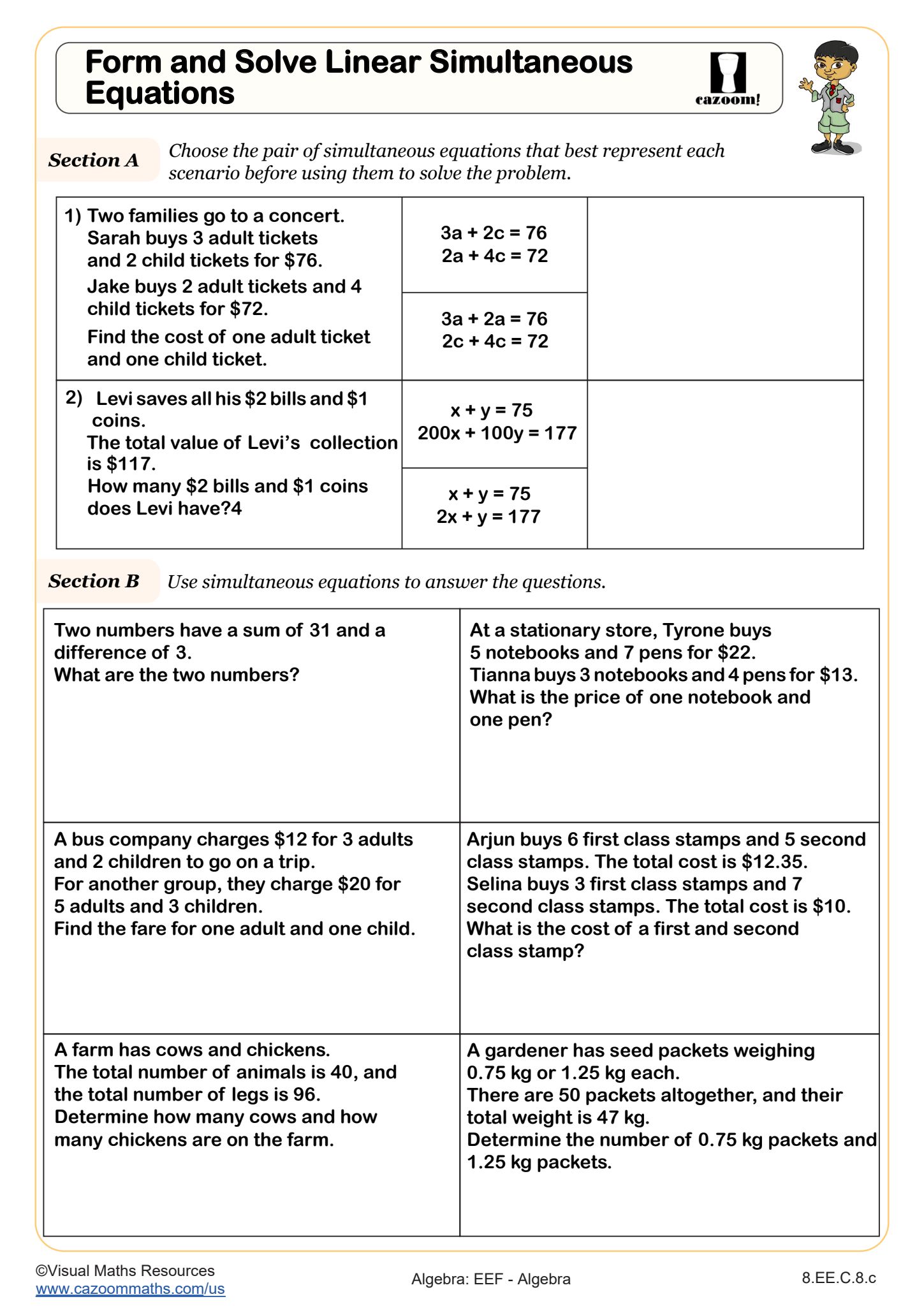
Forming Two Step Equations
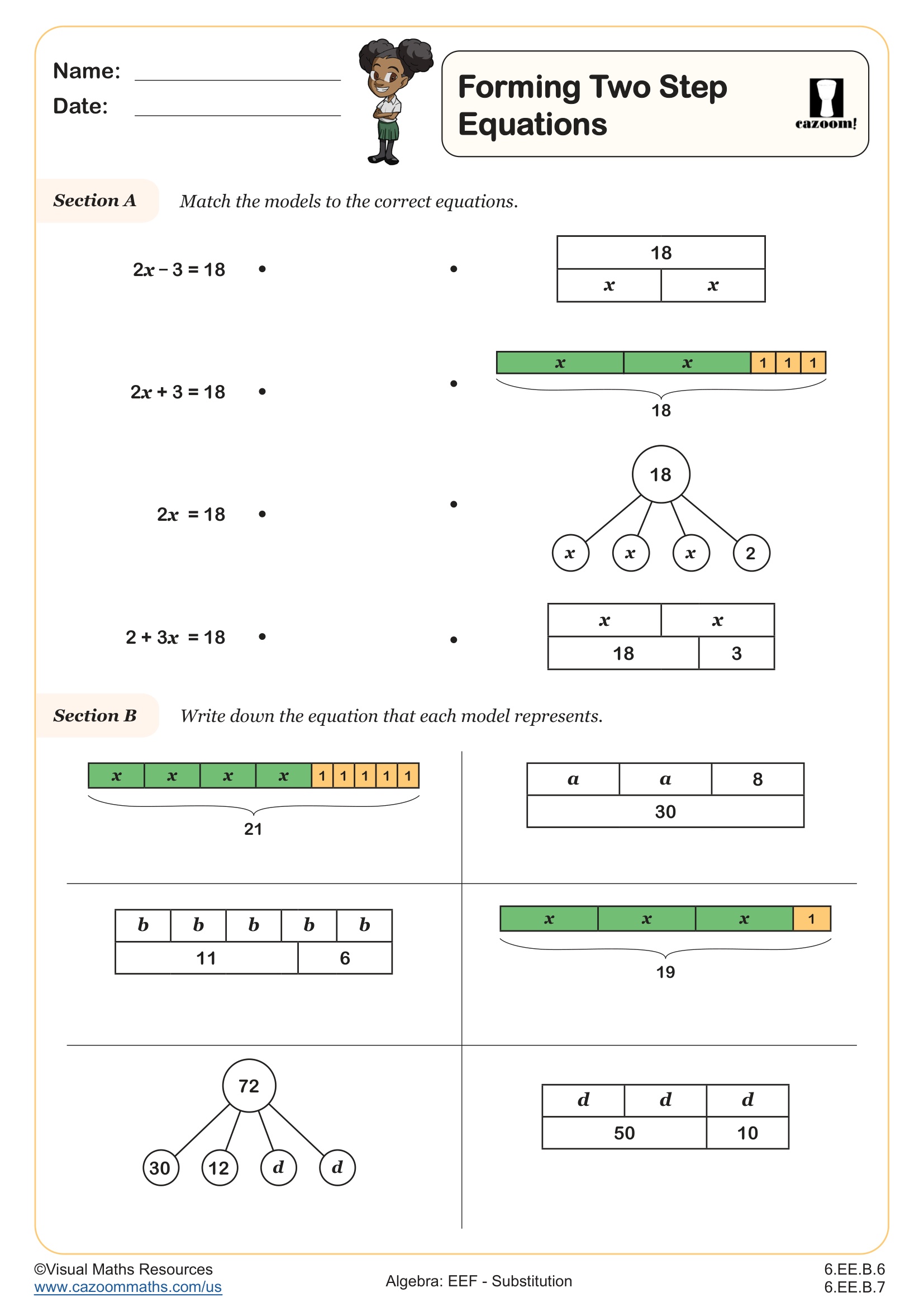
Identifying Parallel and Perpendicular Lines
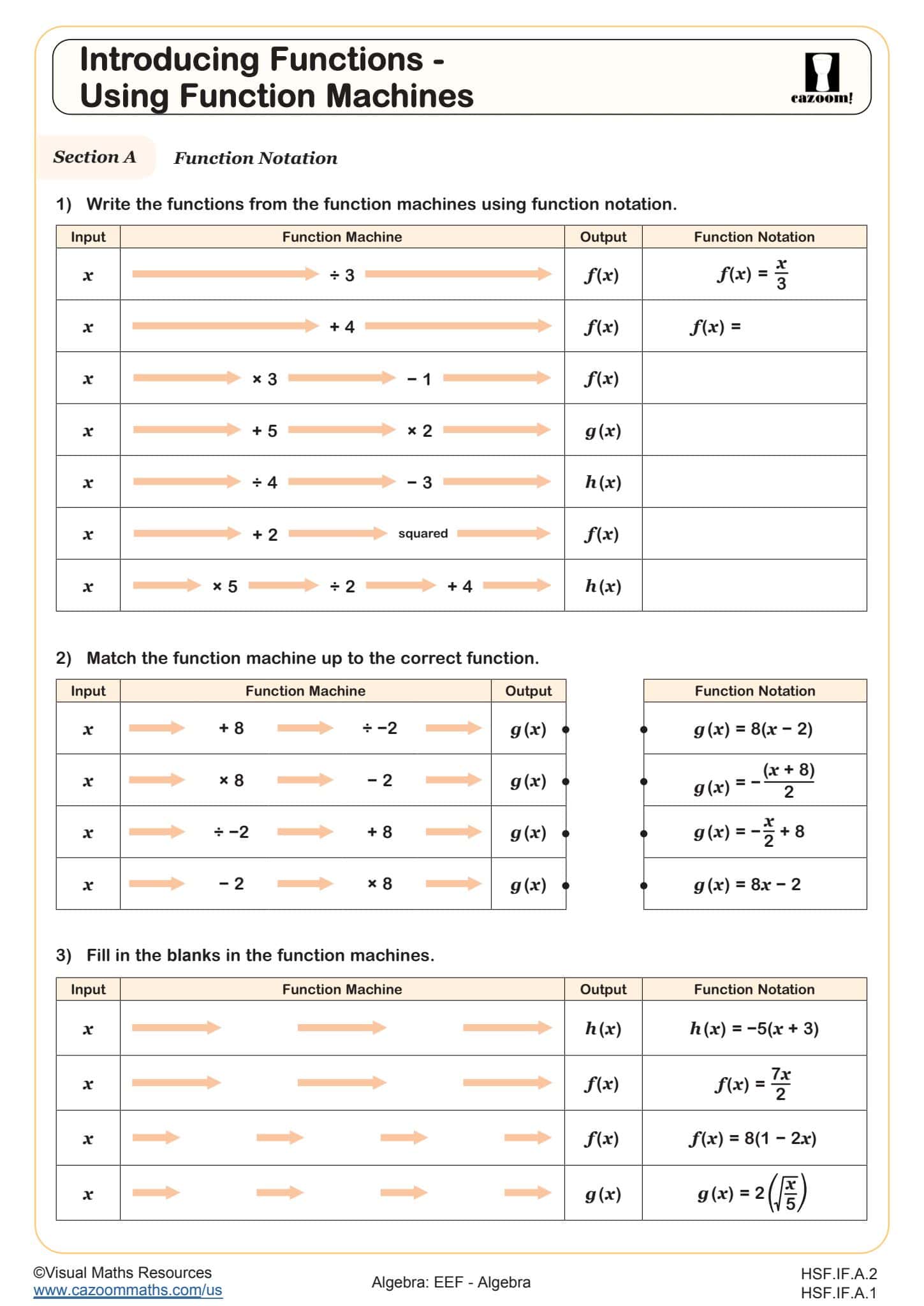
Introducing Functions - Using Function Machines
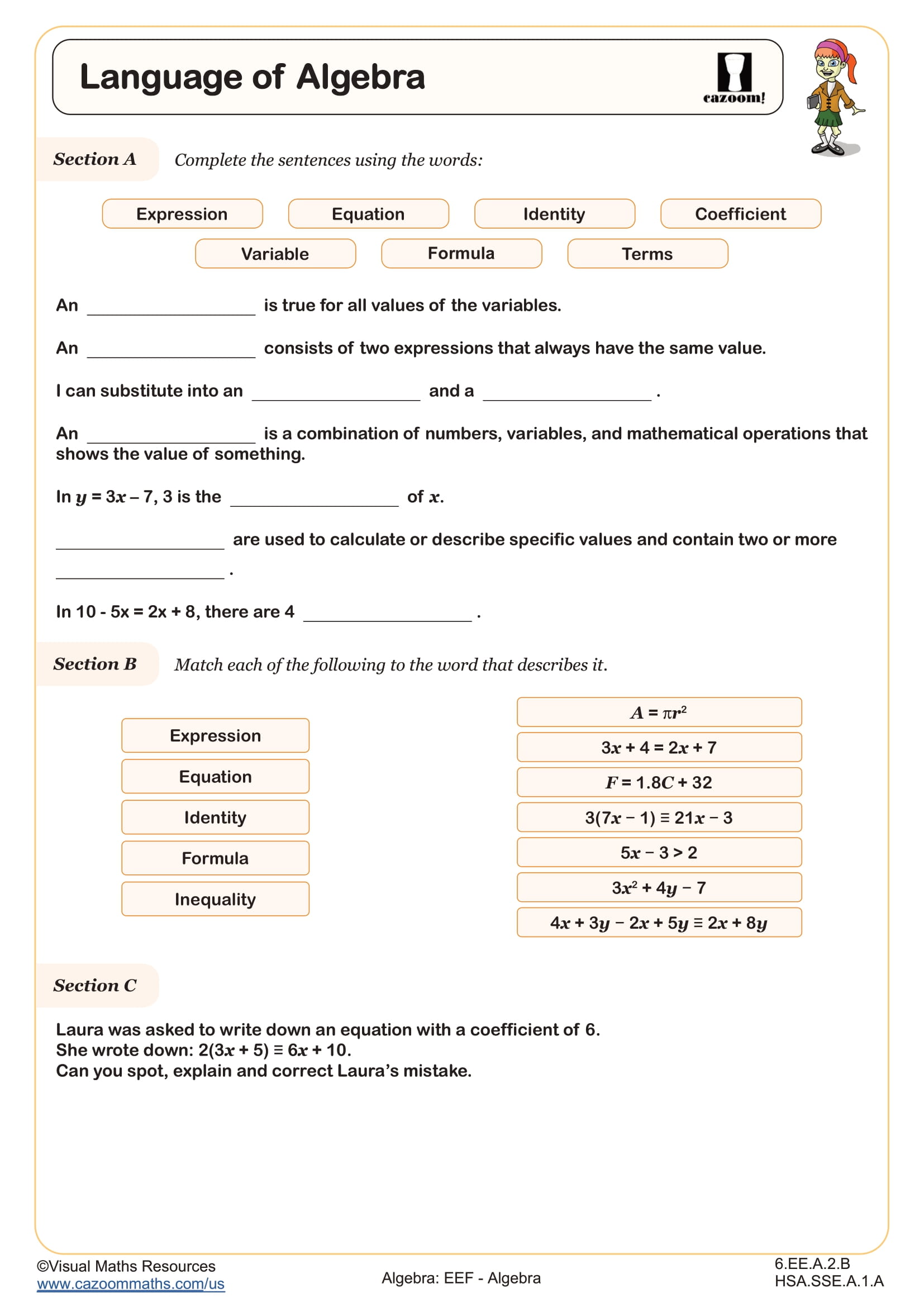
Language of Algebra
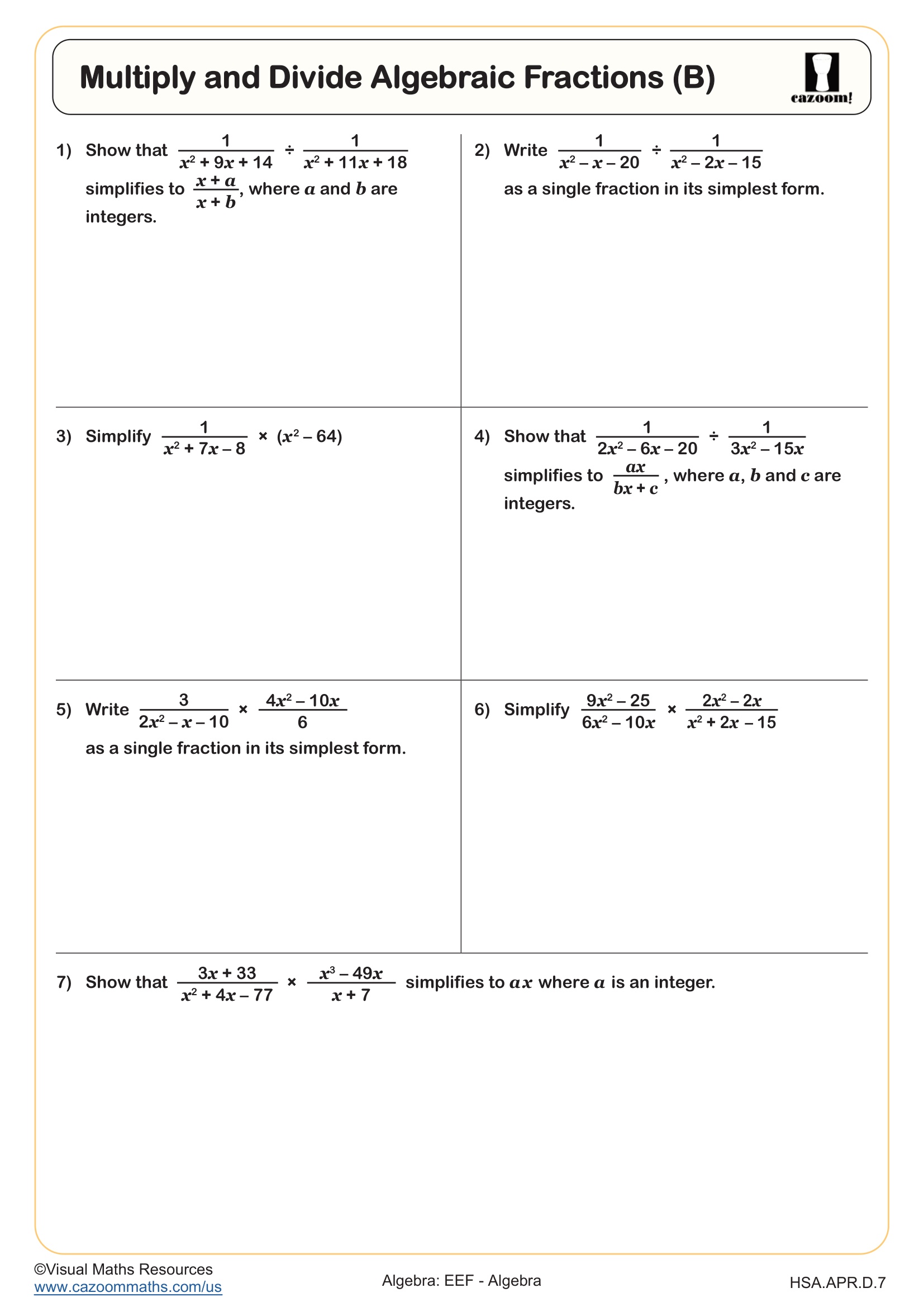
Multiply and Divide Algebraic Fractions (B)
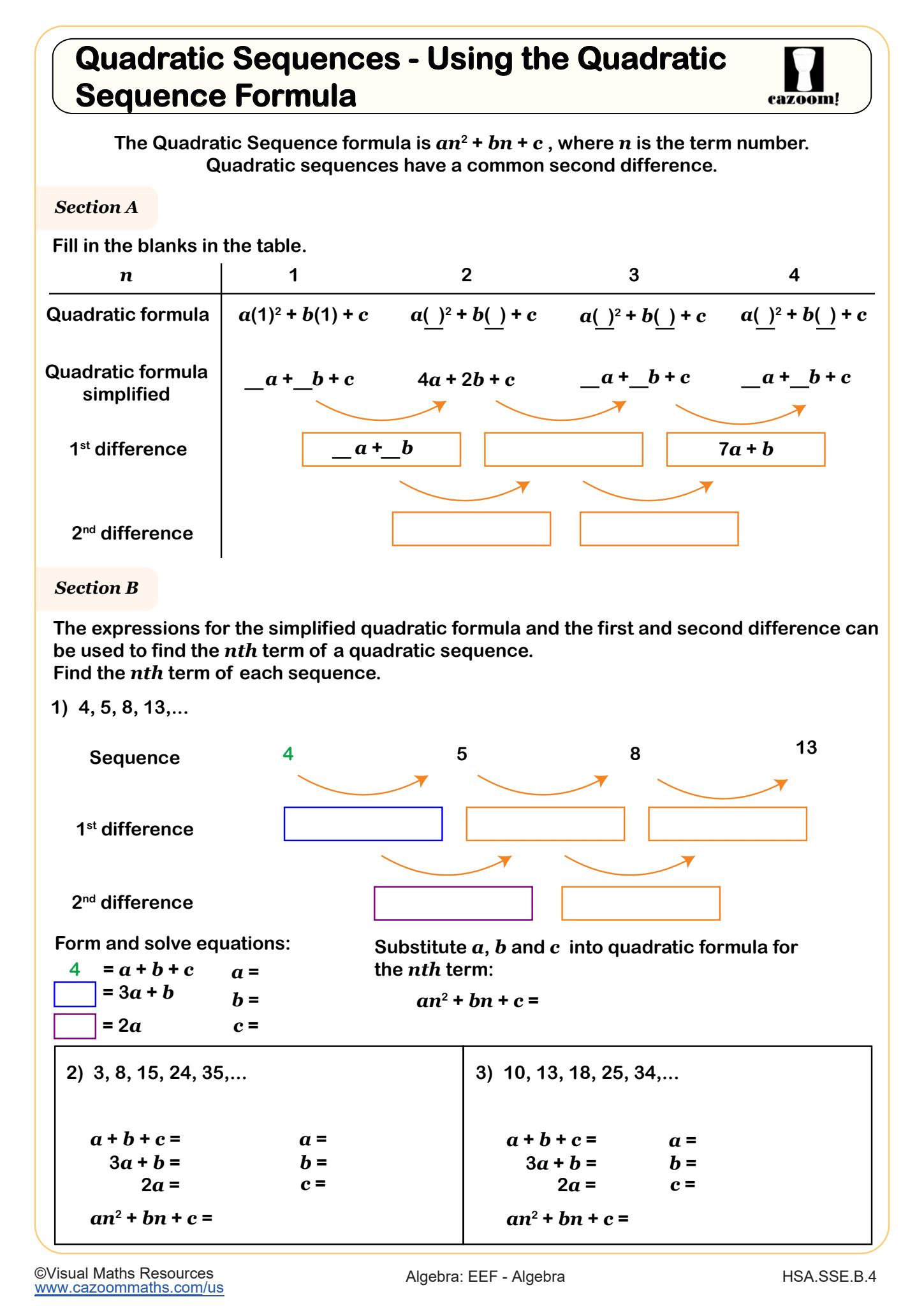
Quadratic Sequences - Using the Quadratic Sequence Formula
Rationalizing the Denominator - First Steps

Rationalizing the Denominator - with Binomial Numerators
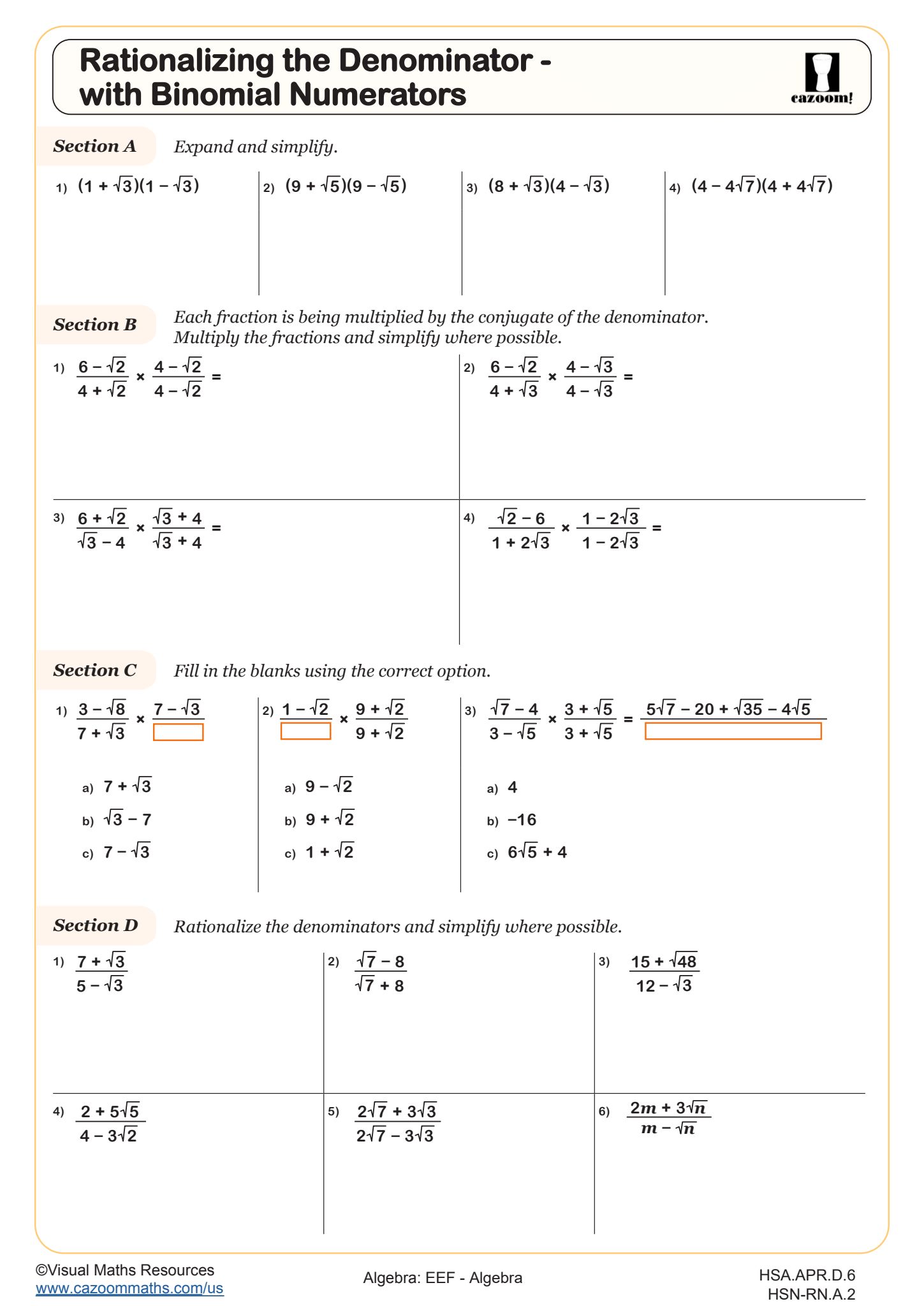
Simplify Algebraic Fractions (A)
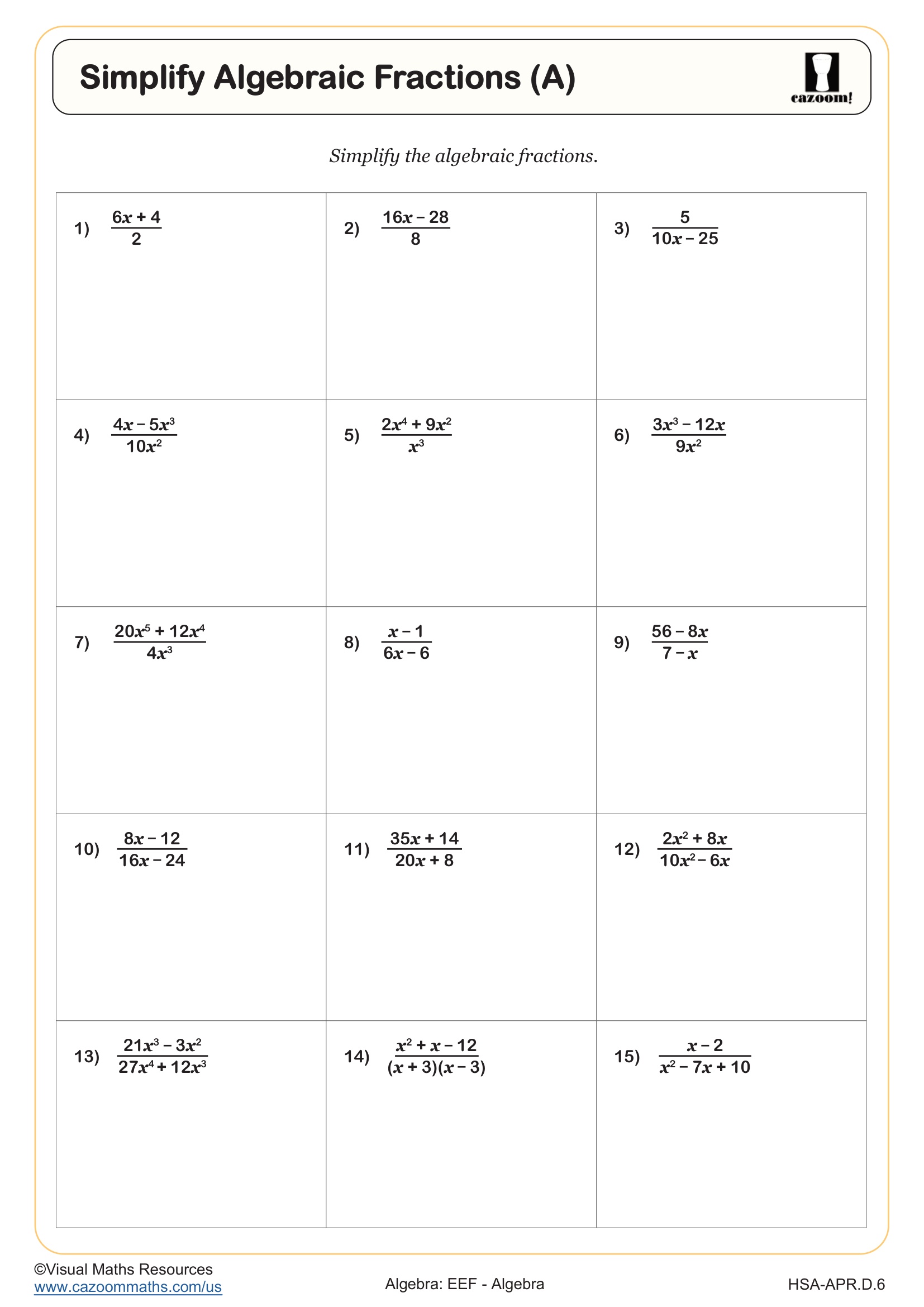
Simplify Algebraic Fractions (B)
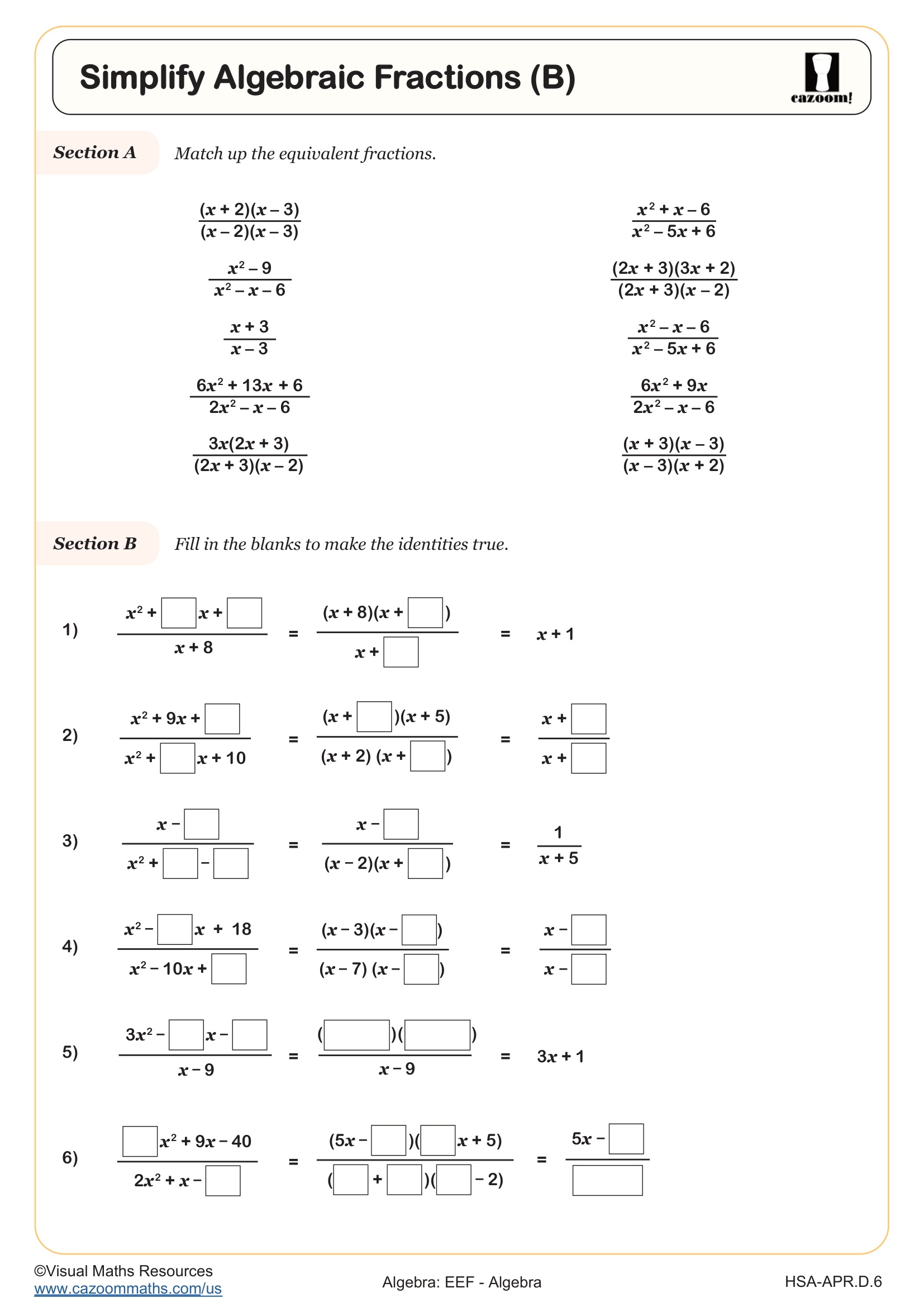
Solving a System of Linear Equations - Three Methods
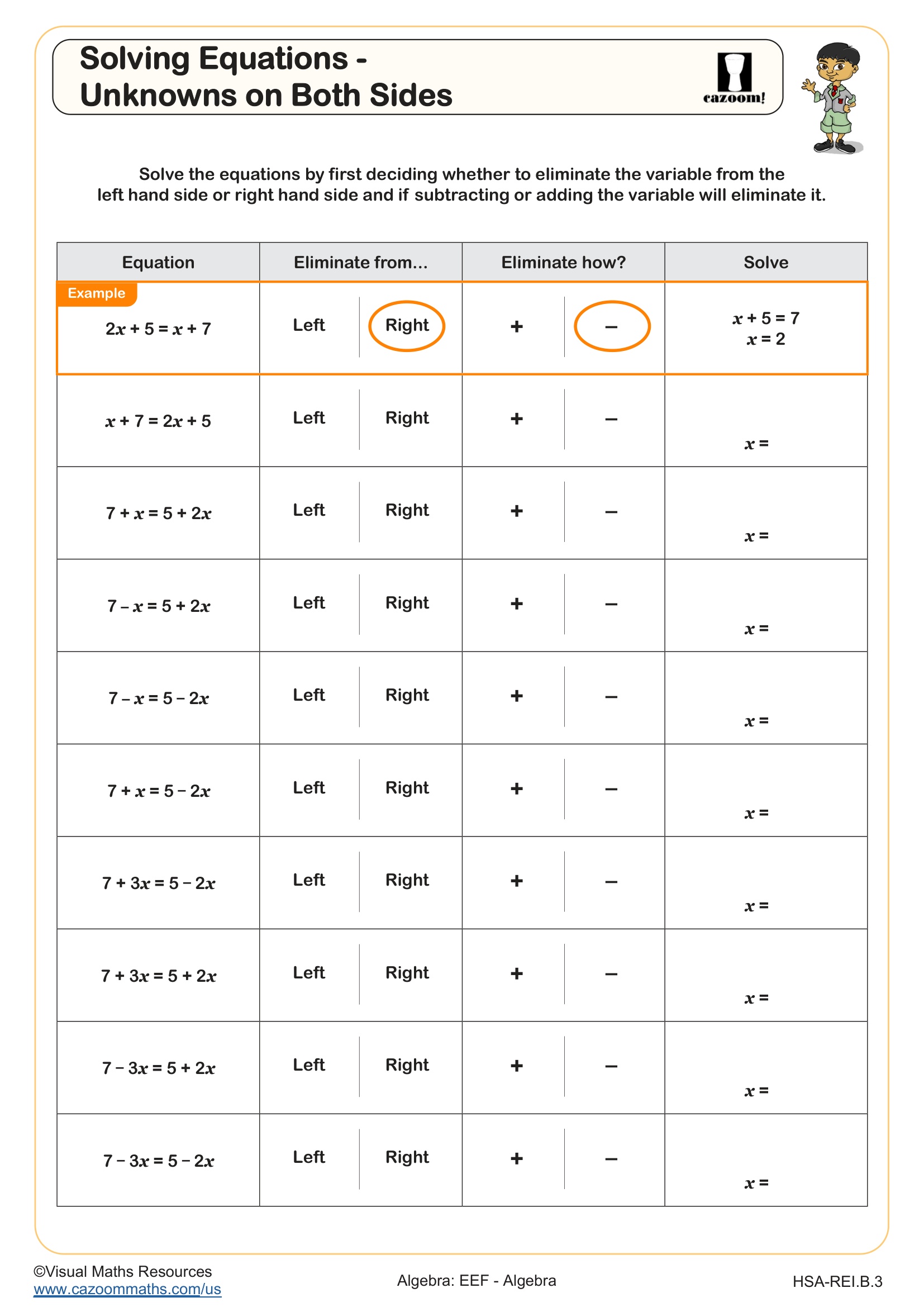
Solving Equations - Unknowns on Both Sides
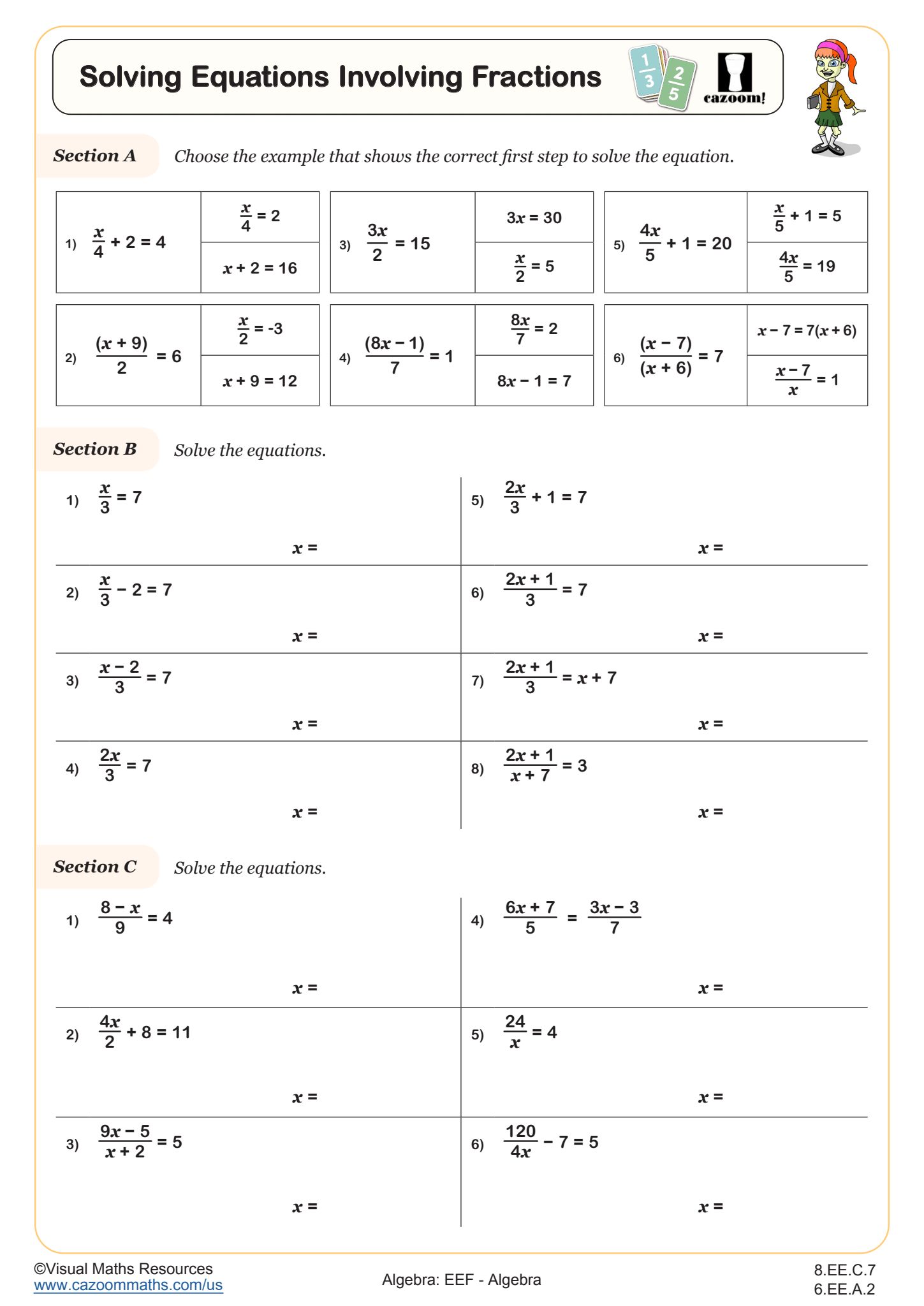
Solving Equations Involving Fractions
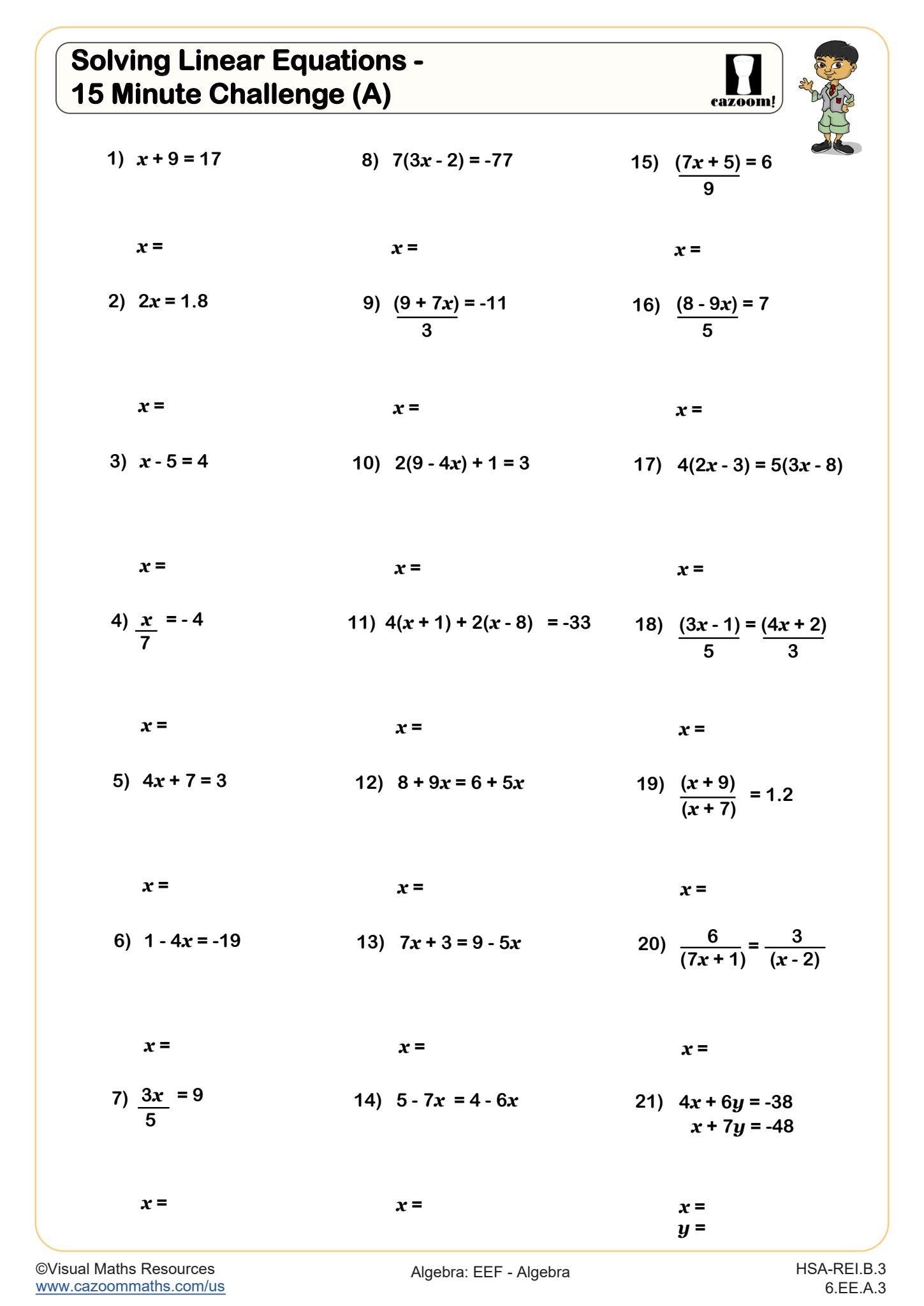
Solving Linear Equations - 15 Minute Challenge (A)
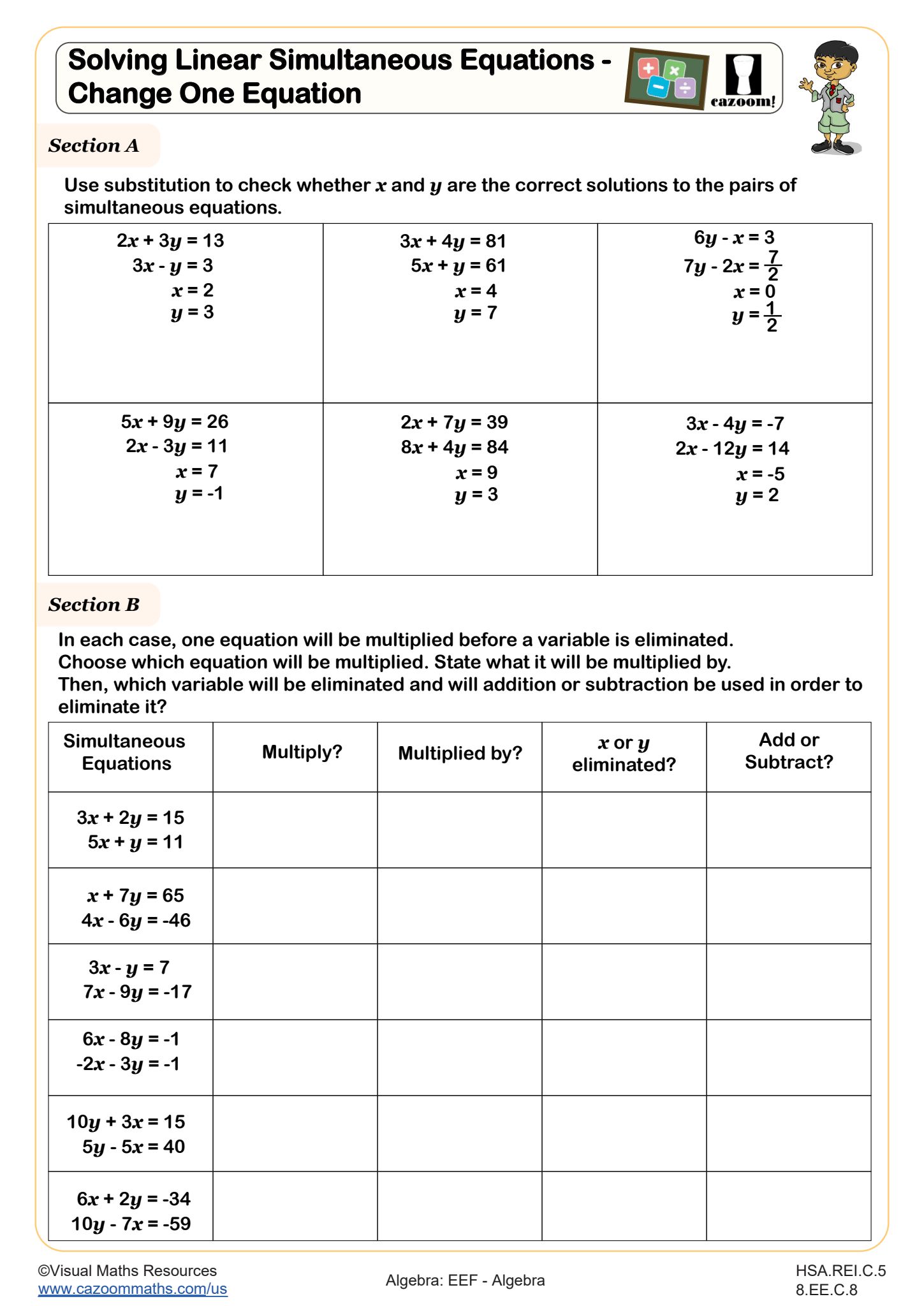
Solving Linear Simultaneous Equations - Change One Equation
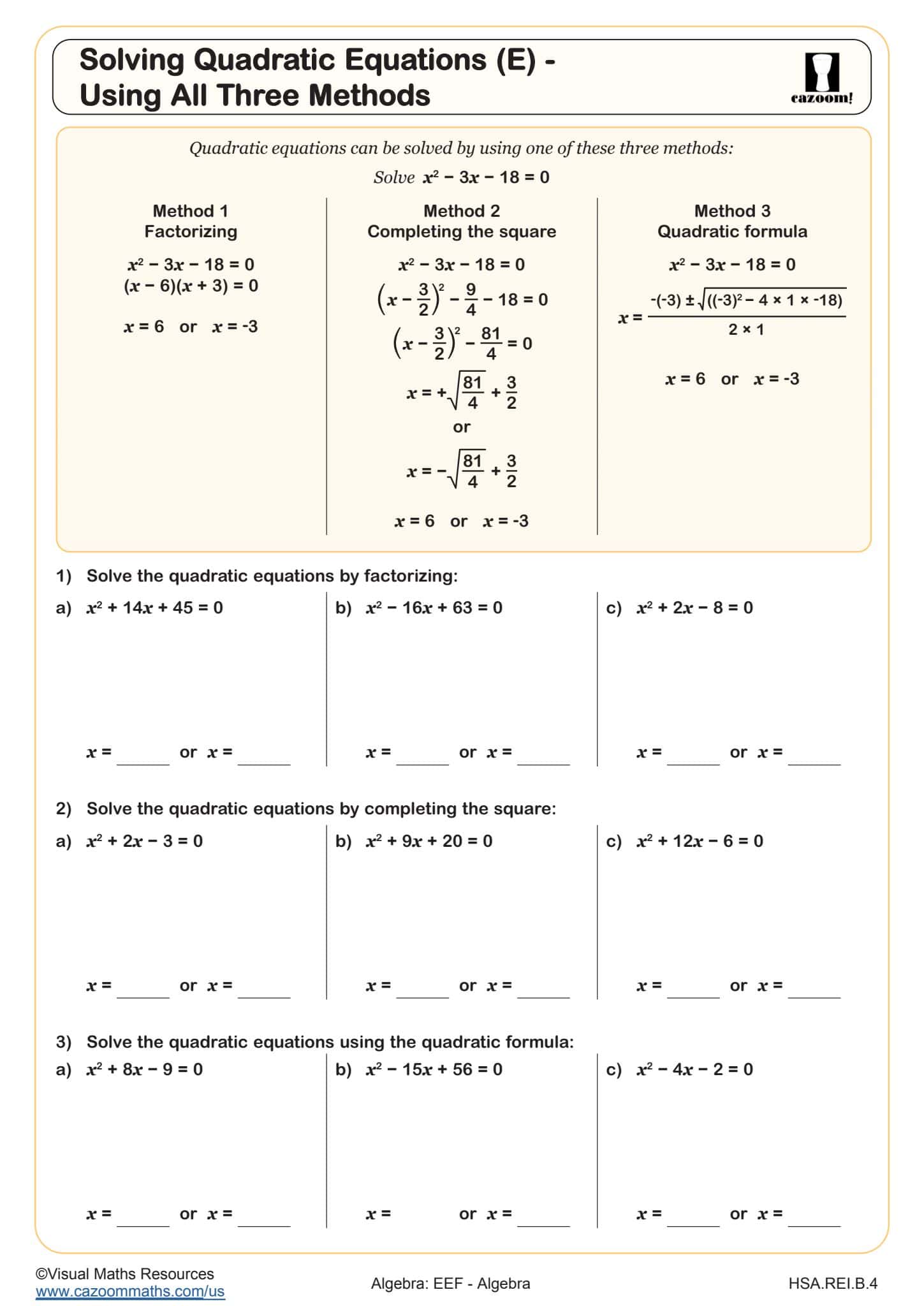
Solving Quadratic Equations (E) - Using all Three Methods
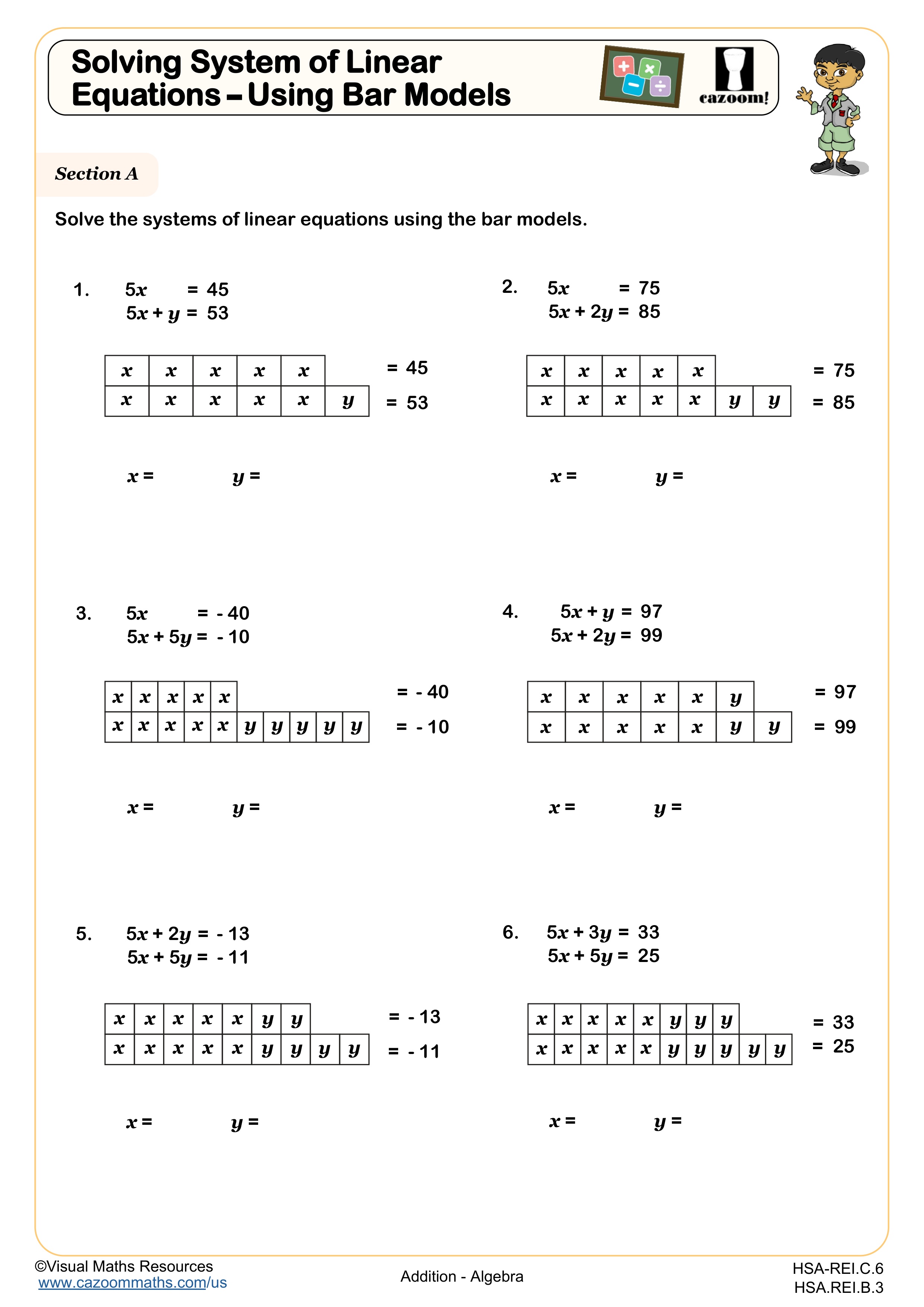
Solving Systems of Linear Equations - Using Bar Models
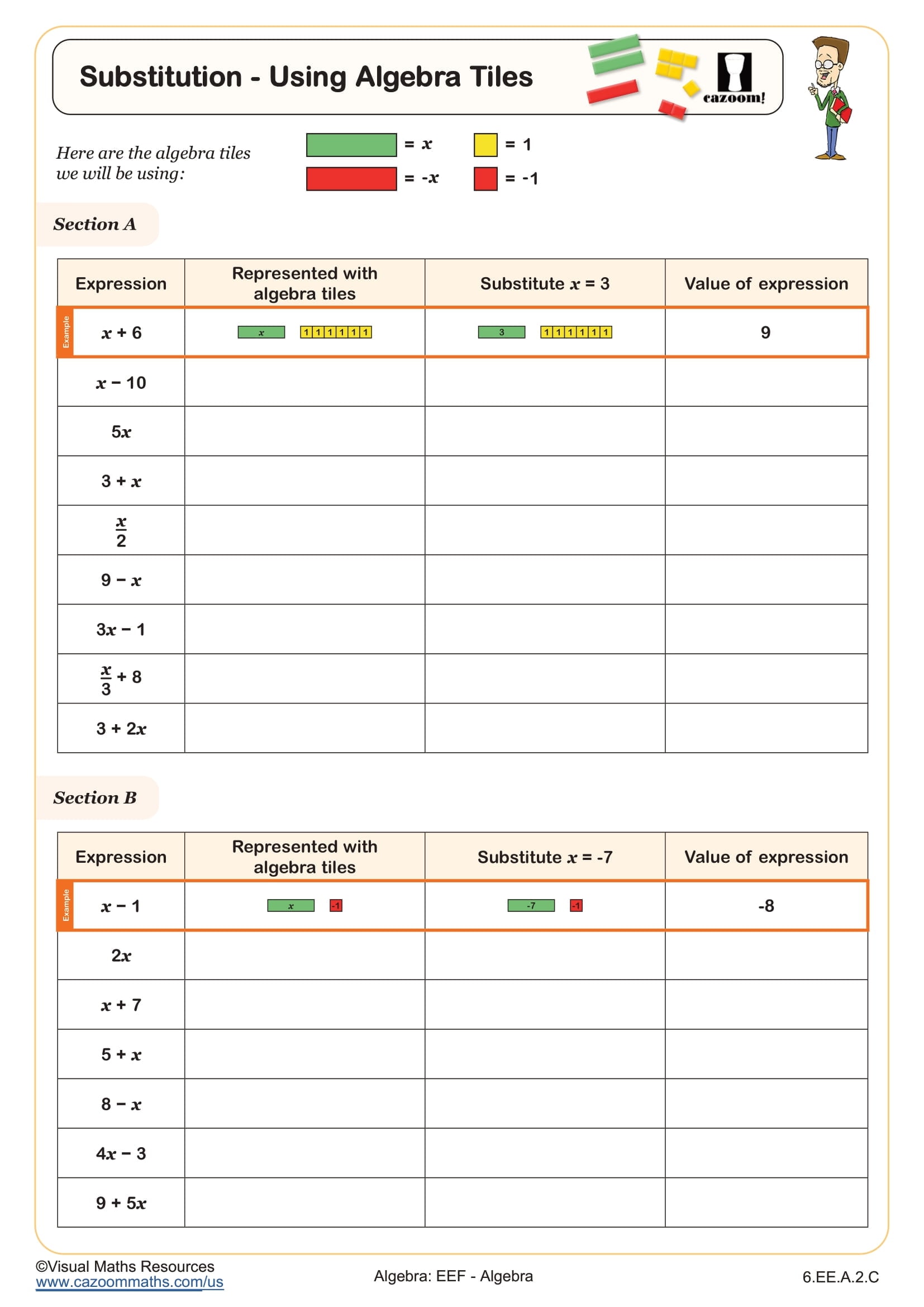
Substitution - Using Algebra Tiles
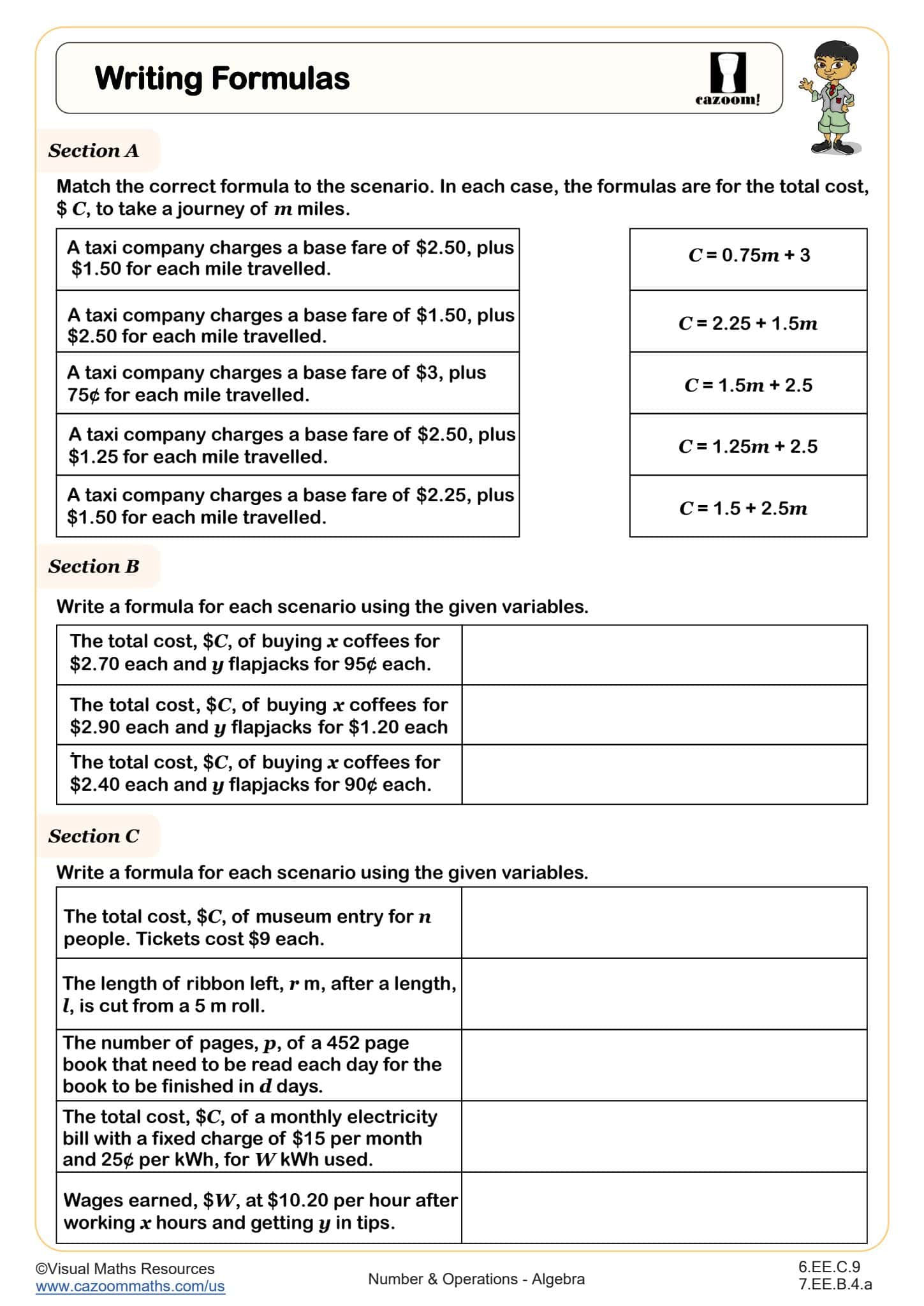
Writing Formulas
All worksheets are created by the team of experienced teachers at Cazoom Math.
What topics are covered in grade 4 algebra worksheets?
Algebra worksheets grade 4 typically cover introductory algebraic concepts aligned with Common Core standards 4.OA.1 through 4.OA.3. Students work with simple expressions using variables, solve basic equations with missing numbers, identify and extend number patterns, and understand the relationship between operations. These foundational skills prepare students for more complex algebraic thinking in higher grades.
Teachers frequently observe that fourth graders excel at pattern recognition but struggle when transitioning from arithmetic to algebraic thinking. Many students initially treat variables as specific numbers rather than placeholders, so worksheets often include exercises where students substitute different values into the same expression to build understanding of this abstract concept.
Is 4th grade algebra appropriate for elementary students?
Yes, algebra grade 4 concepts are developmentally appropriate and align with Common Core State Standards expectations. Fourth grade algebra focuses on algebraic thinking rather than formal algebra procedures, introducing students to variables, expressions, and equations through concrete examples and visual models. These early experiences build mathematical reasoning skills that support later success in middle and high school algebra courses.
Elementary teachers find that students at this level benefit from hands-on activities combined with worksheet practice. The algebraic concepts taught in fourth grade connect directly to real-world problem solving, such as calculating costs for school fundraisers or determining materials needed for classroom projects, making the mathematics meaningful and engaging for young learners.
How do students learn to write number sentences in grade 4?
Number sentence grade 4 instruction begins with translating word problems into mathematical expressions using numbers, operation symbols, and variables. Students learn to identify unknown quantities in real-world situations and represent them with letters or symbols. They practice writing equations that model simple relationships, such as "The total cost is the price per item times the number of items."
Many teachers notice that students initially write number sentences that are too literal, trying to include every detail from a word problem rather than focusing on the practical mathematical relationship. Effective instruction emphasizes identifying the key question and the mathematical operation needed, helping students develop the skill of abstracting mathematical relationships from contextual situations.
How should teachers use these 4th grade algebra worksheets effectively?
Teachers find success when using 4th grade algebra worksheets as follow-up practice after introducing concepts through manipulatives and visual models. The worksheets work best when students have already explored the algebraic thinking through hands-on activities, allowing the written practice to reinforce understanding rather than introduce new concepts. Having answer keys available enables immediate feedback during independent work time.
Classroom observations show that students benefit from working through a few problems together before attempting worksheets independently. Teachers often use the answer keys to facilitate peer checking activities, where students compare solutions and discuss different approaches to solving the same problem, deepening their understanding of algebraic relationships and building mathematical communication skills.