4th Grade Factors and Multiples Worksheets
All worksheets are created by the team of experienced teachers at Cazoom Math.
What Are Factors and Multiples in 4th Grade Math?
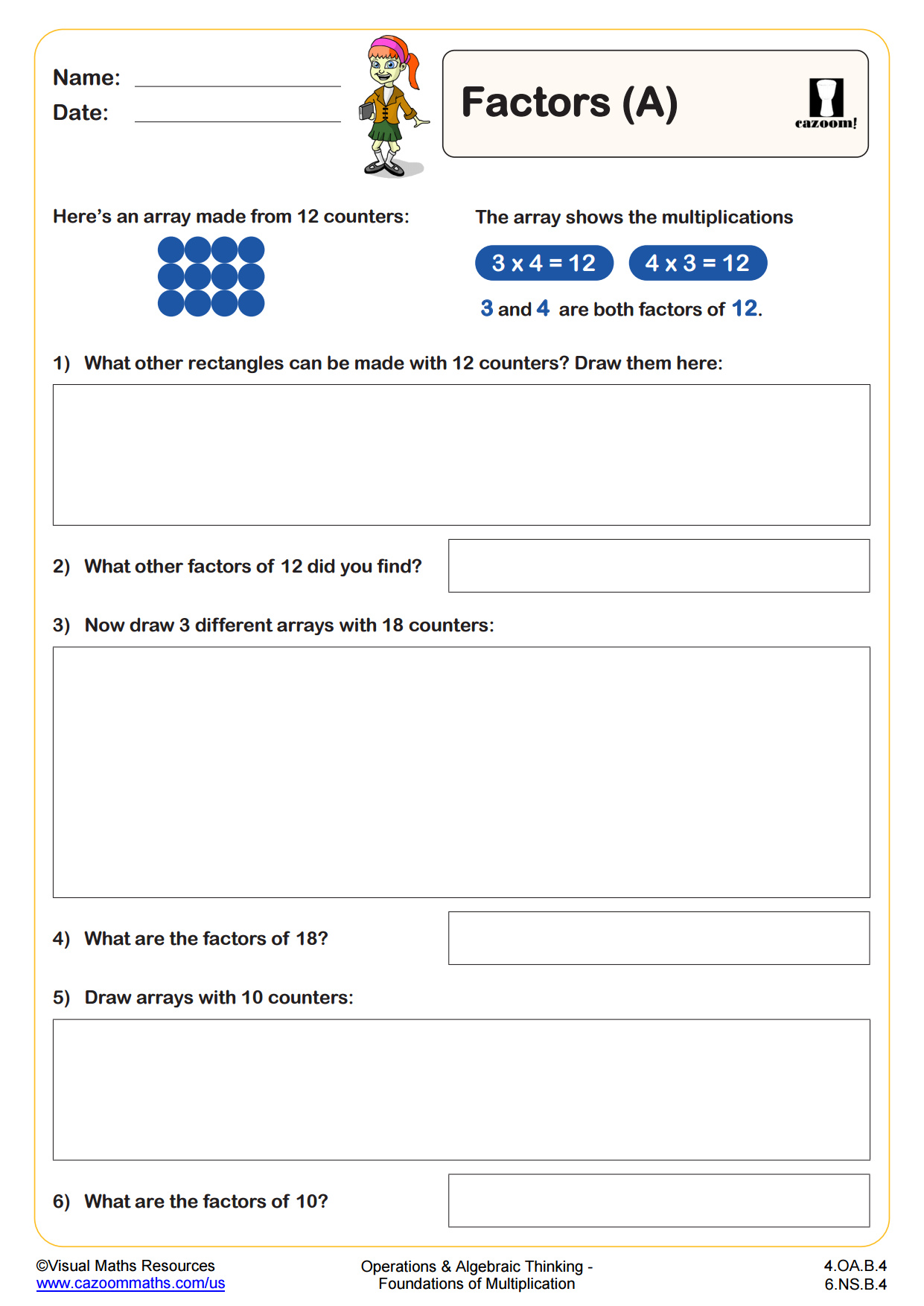
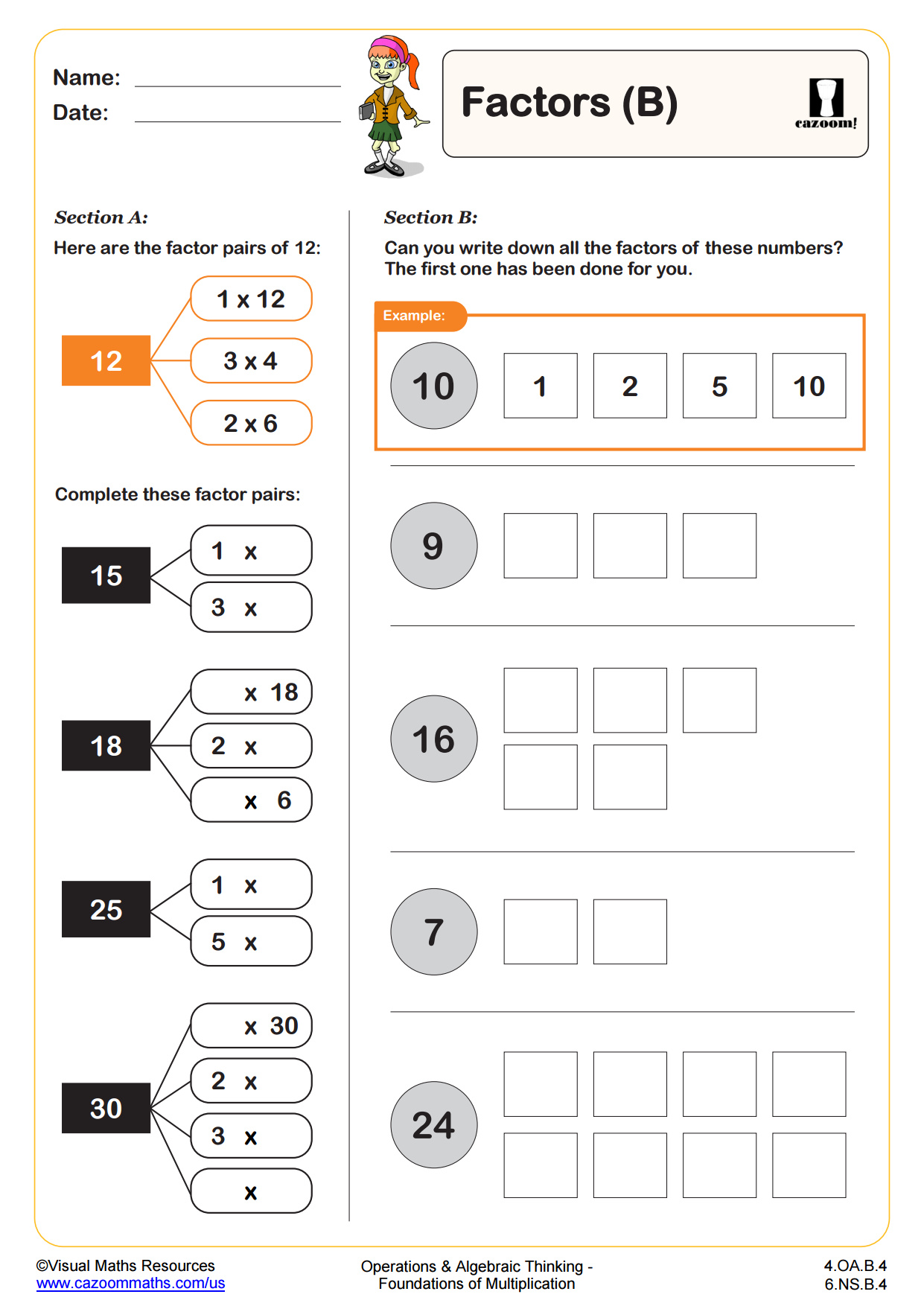
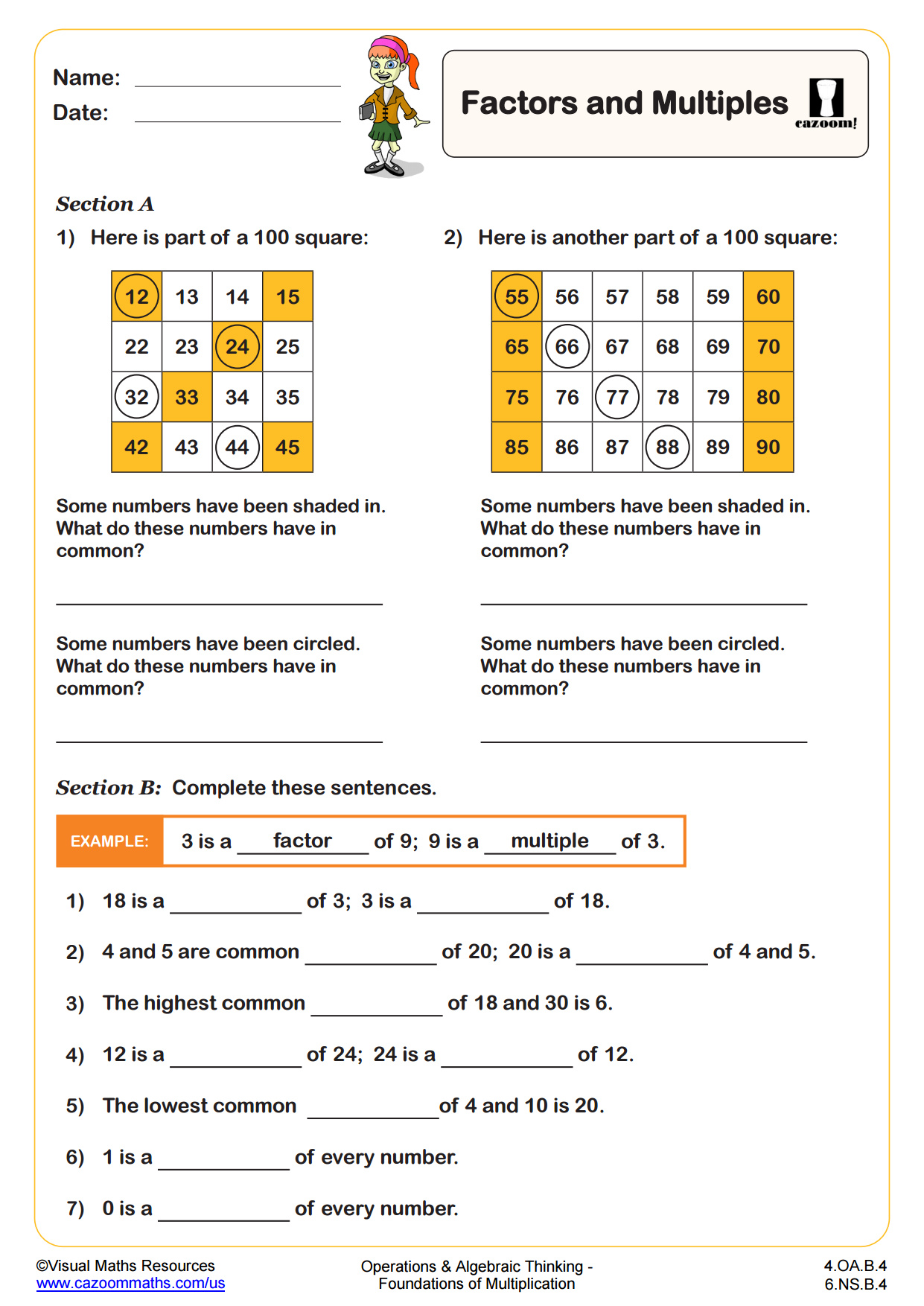
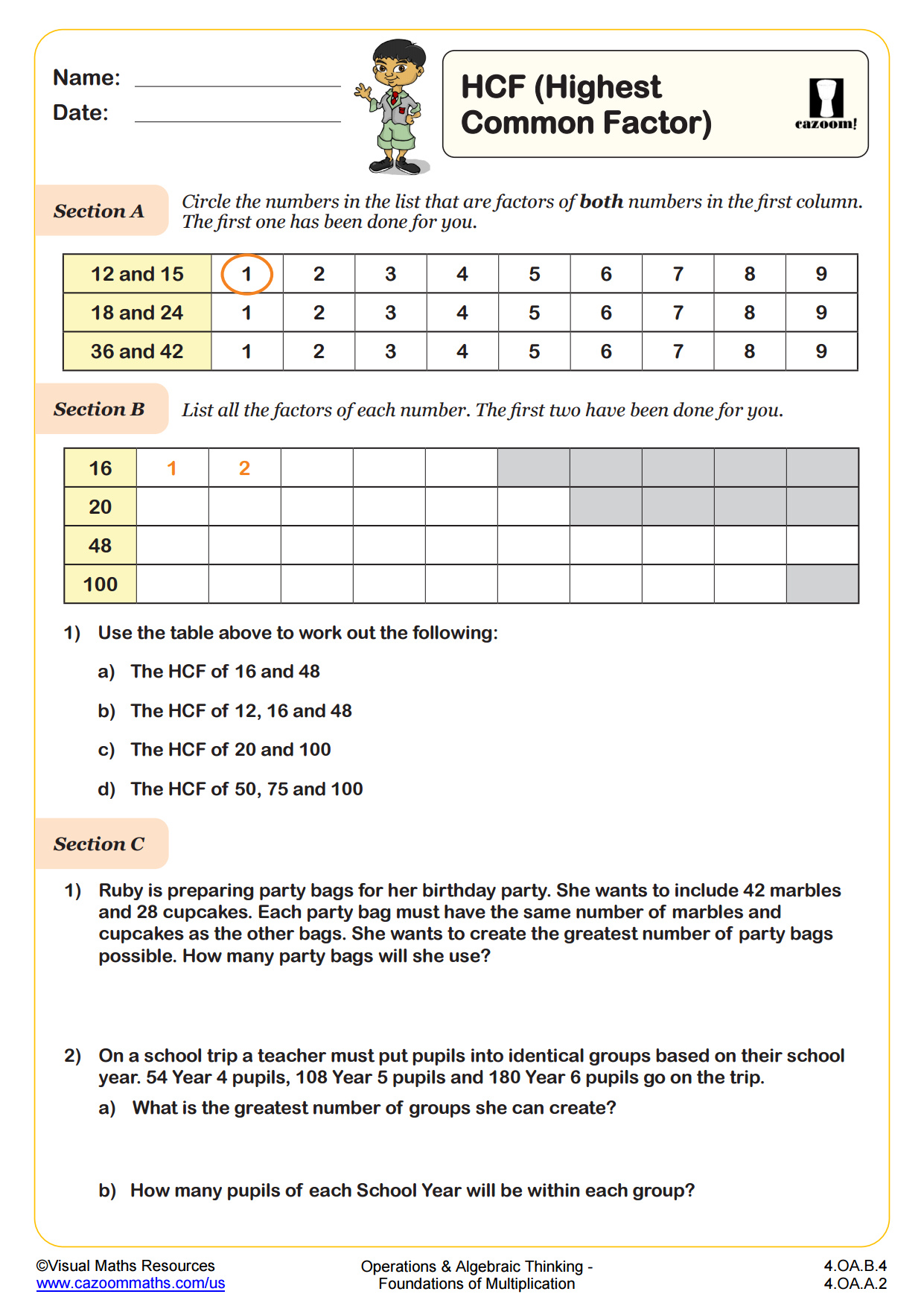
Factors are whole numbers that divide evenly into another number without leaving a remainder, while multiples are the products created when multiplying a number by whole numbers. In 4th grade, students learn to identify all factor pairs for numbers up to 100 and recognize multiples within 100, aligning with Common Core Standard 4.OA.B.4. This foundational work prepares students for more advanced topics like fraction operations and algebraic thinking in later grades.
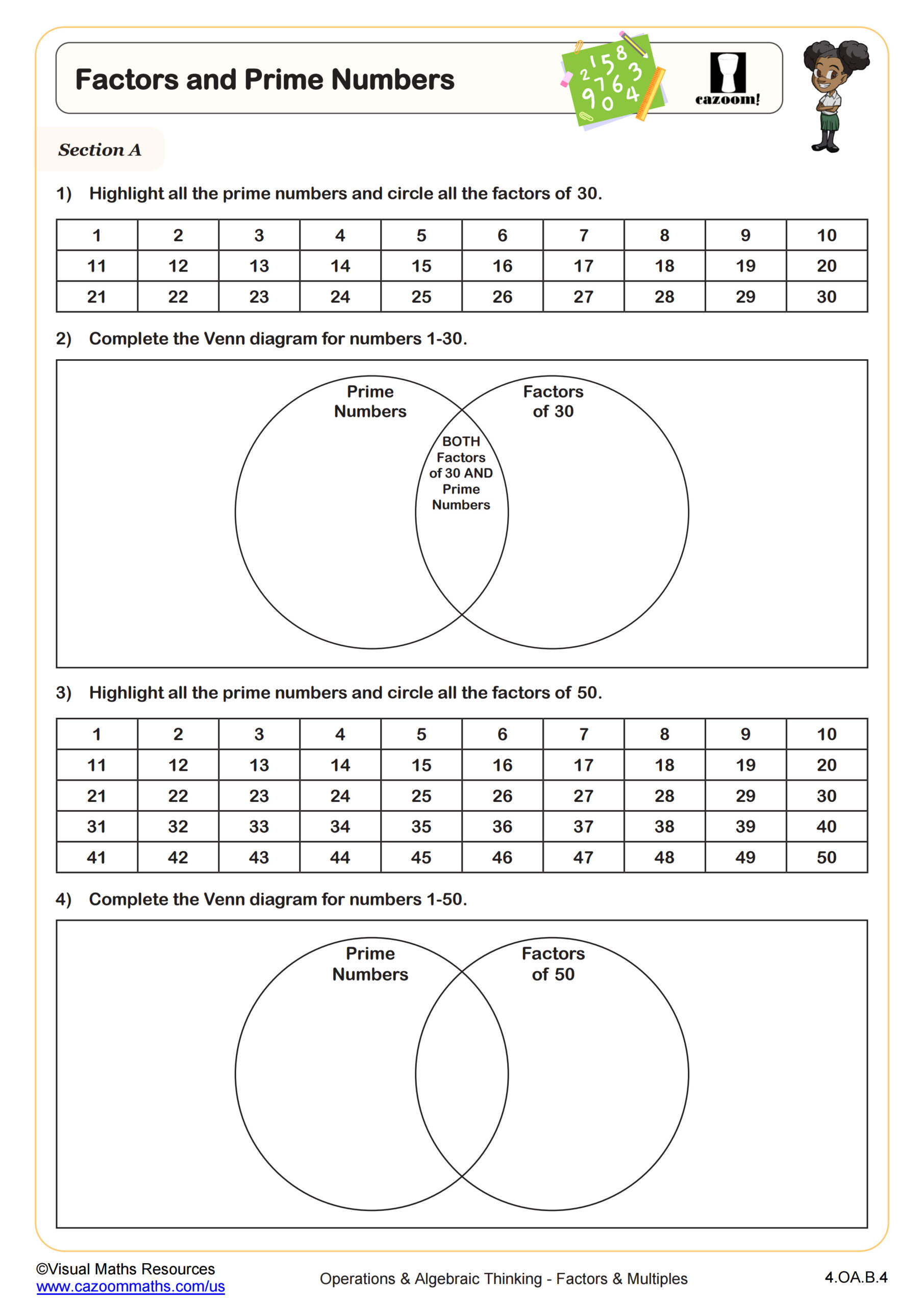
Many students initially think larger numbers always have more factors than smaller numbers, but teachers notice a breakthrough when students discover that 12 has six factors while 13 has only two. Providing systematic practice with factor lists helps students recognize patterns, such as how square numbers always have an odd number of factors because one factor pairs with itself. This understanding prevents common errors on standardized tests where students must distinguish prime from composite numbers.
What Should 4th Graders Know About Factors and Multiples?
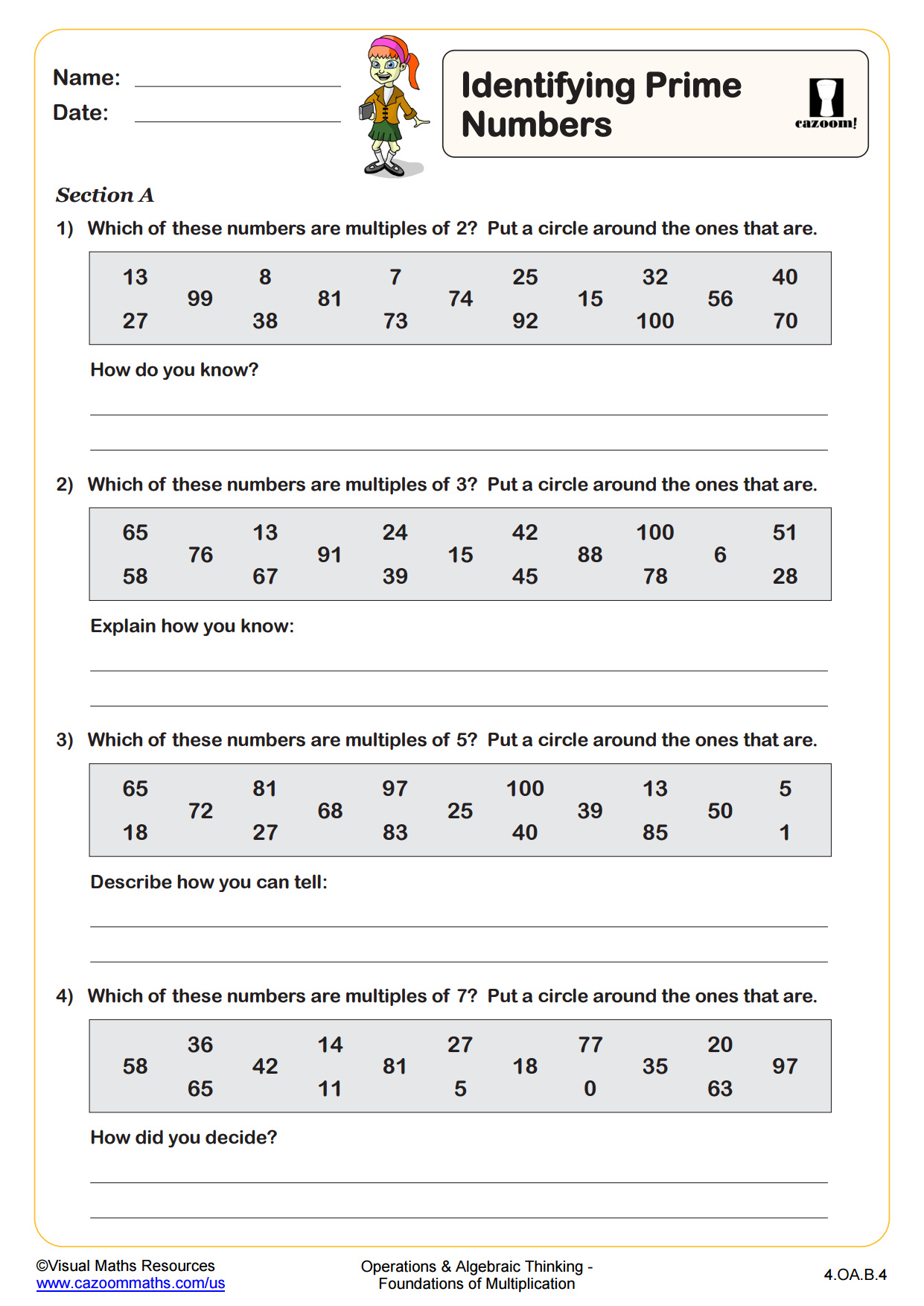
By the end of 4th grade, students should confidently find all factor pairs for any whole number from 1 to 100 and determine whether numbers are prime or composite. They should recognize that every number is both a factor and multiple of itself, understand that 1 is a factor of every number, and identify multiples by skip-counting or using multiplication facts. State assessments typically ask students to list factors in organized pairs and identify patterns in multiplication tables that reveal multiples.
This work builds directly on 3rd grade multiplication and division fluency, where students mastered basic facts and understood the inverse relationship between operations. Teachers notice that students who struggle with factors and multiples often need to revisit multiplication automaticity first. Looking ahead, this foundation becomes critical in 5th grade when students add and subtract fractions with unlike denominators, requiring them to find least common multiples to determine common denominators, and in 6th grade algebra when factoring expressions becomes routine.
How Do Students Find the Least Common Multiple?
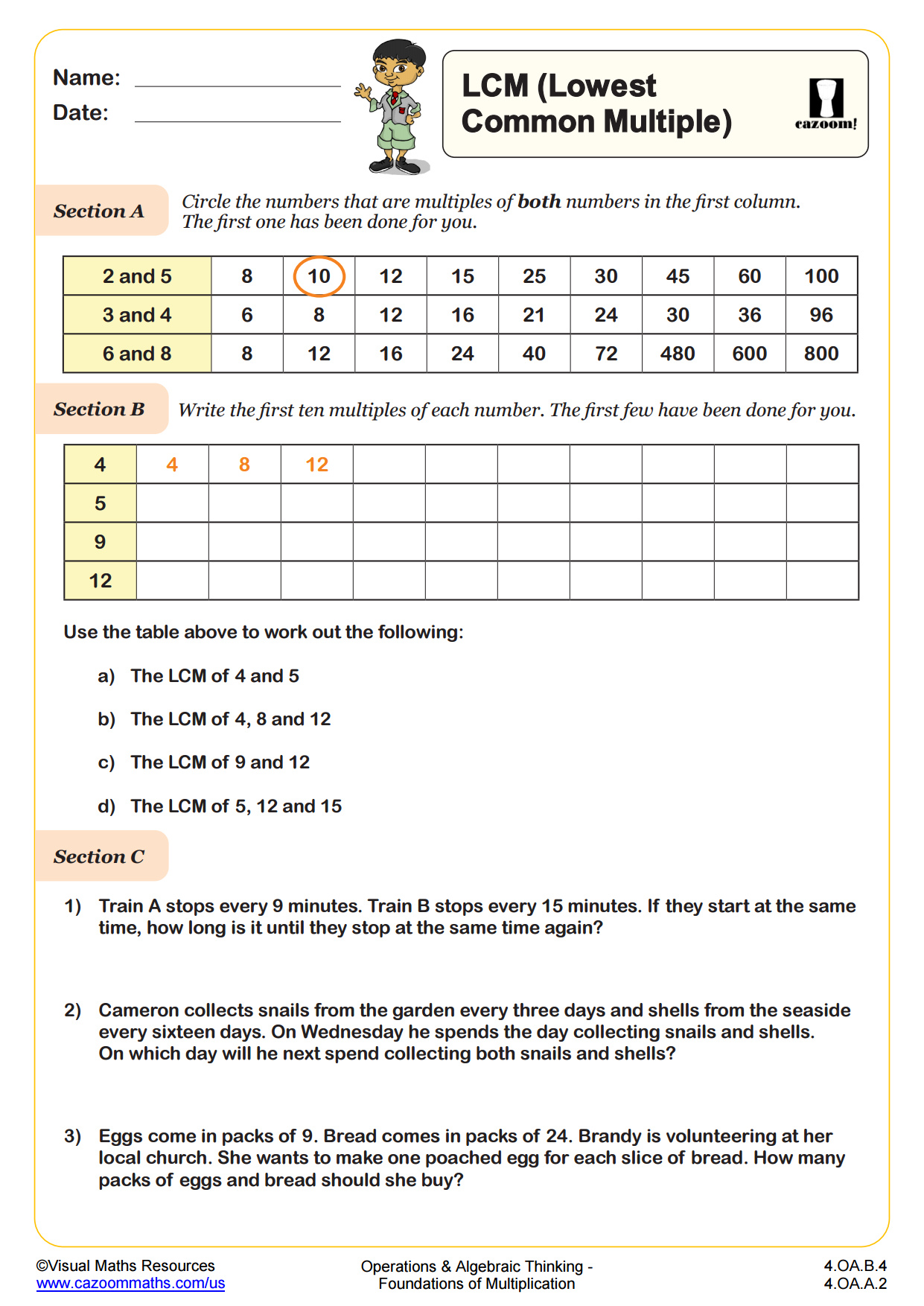
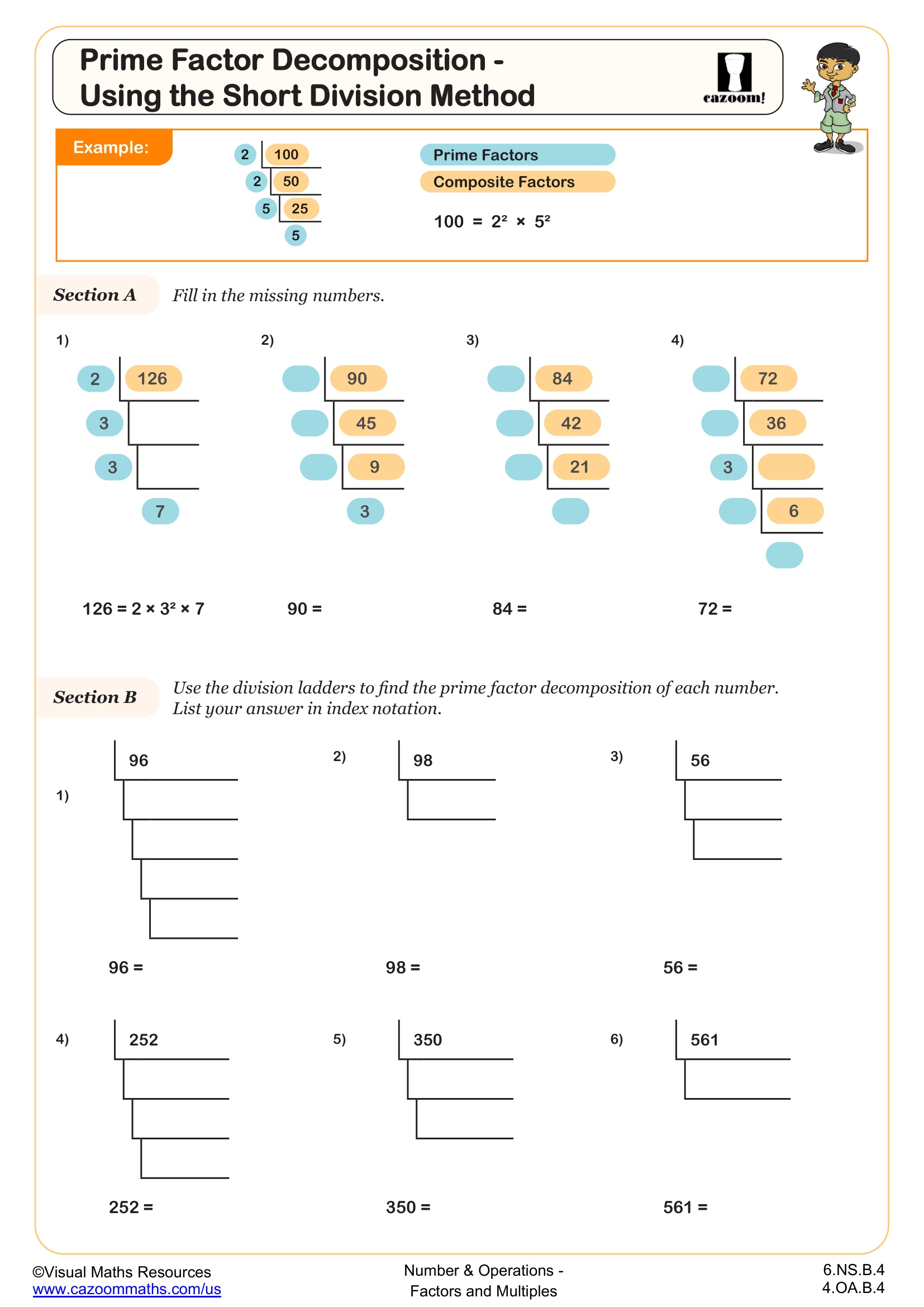
The least common multiple (LCM) is the smallest number that appears in the multiple lists of two or more numbers. Students typically learn two methods: listing multiples of each number until finding the first match, or using prime factorization for larger numbers. For example, to find the LCM of 6 and 8, students list multiples of 6 (6, 12, 18, 24...) and multiples of 8 (8, 16, 24...), identifying 24 as the first common multiple. This systematic approach helps students avoid the common error of simply multiplying the two numbers together, which doesn't always yield the smallest common multiple.
Understanding LCM connects directly to real-world scheduling problems that students encounter in STEM contexts. If one machine completes a cycle every 6 minutes and another every 8 minutes, the LCM tells when both machines will complete cycles simultaneously. Students also see this concept when coordinating repeating events like bus schedules or determining when planets align in astronomy simulations, making abstract number theory suddenly relevant and engaging for elementary learners.
How Can Teachers Use These Factors and Multiples Worksheets?
The worksheets progress from basic factor identification through more complex applications like finding HCF and LCM, allowing teachers to differentiate instruction based on student readiness. Worked examples on many sheets model the systematic listing method that prevents students from missing factors, while varied problem formats keep practice from becoming repetitive. Teachers can assign specific worksheets targeting the exact skill students need, whether reinforcing factor pairs or challenging advanced learners with prime number investigations.
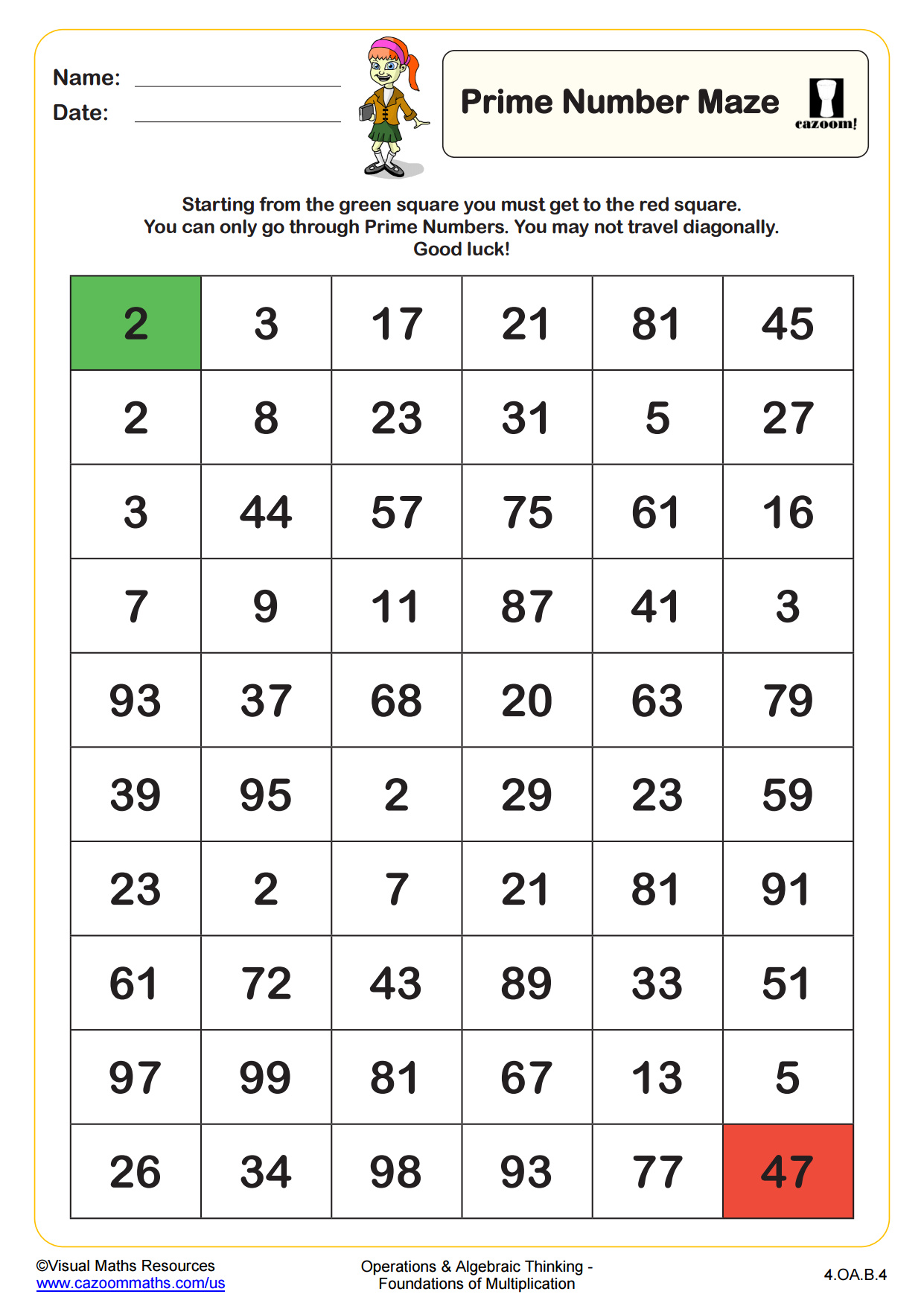
These worksheets work effectively for small group intervention when students need extra support with number relationships, as morning work to activate prior knowledge before fractions units, or as homework that parents can support using the included answer keys. Many teachers use the prime number maze as a fast-finisher challenge or math center activity that makes practicing number classification engaging rather than tedious. The complete answer keys save significant grading time while still allowing teachers to quickly identify which students need reteaching on specific concepts before moving forward.