4th Grade Fractions Worksheets
Add and Subtract Fractions (A)
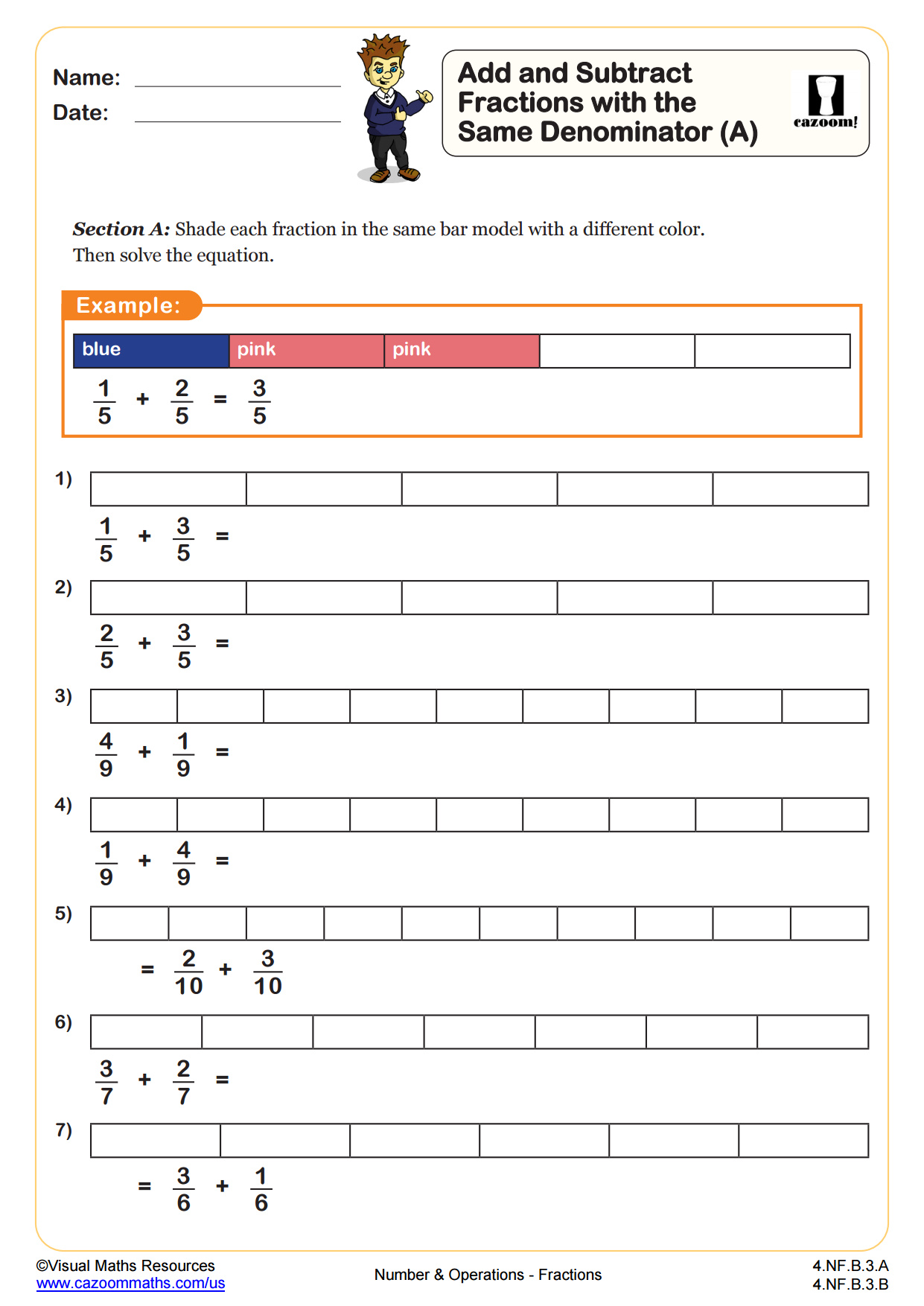
Add and Subtract Fractions (B)
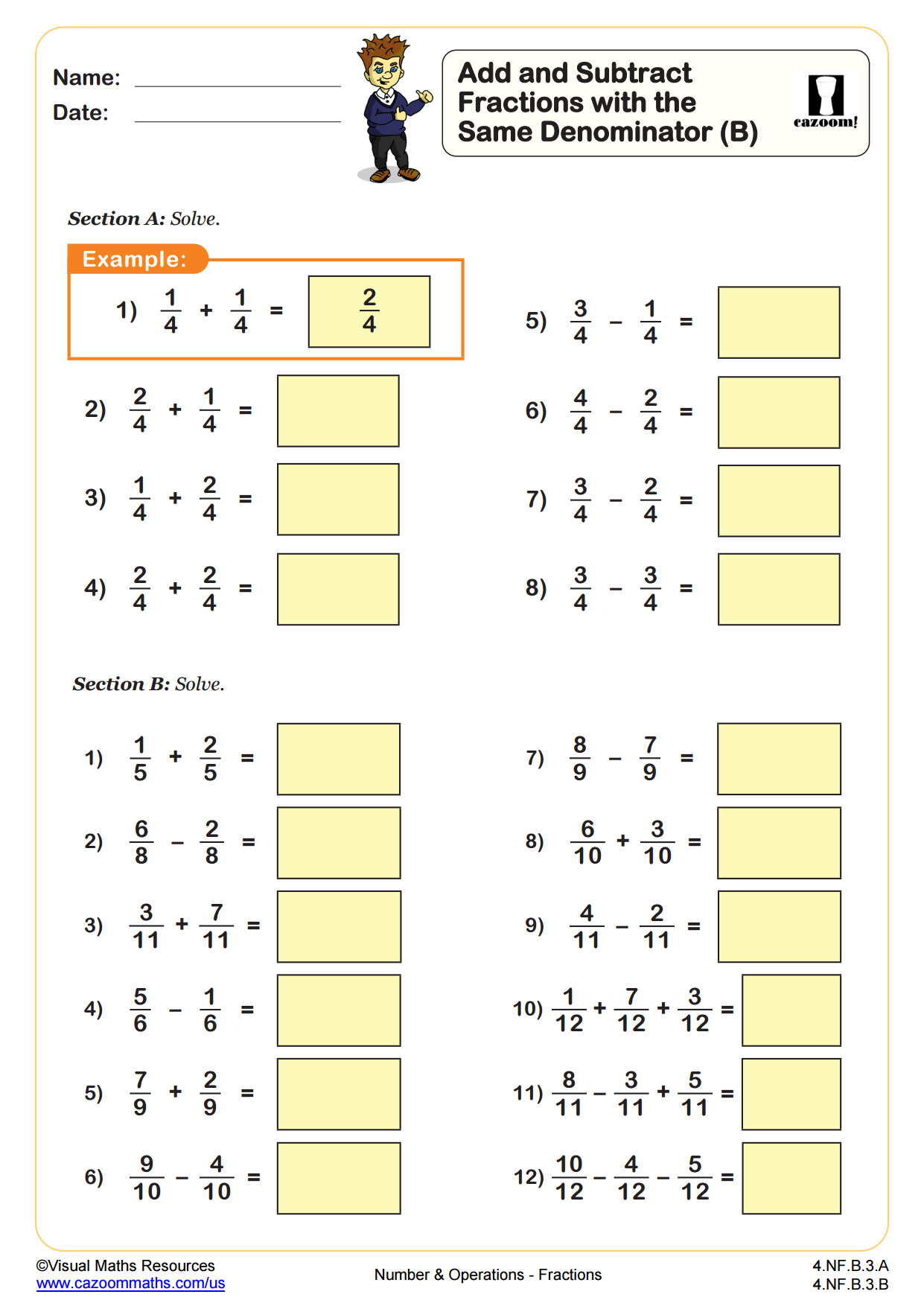
Add and Subtract Fractions (C)
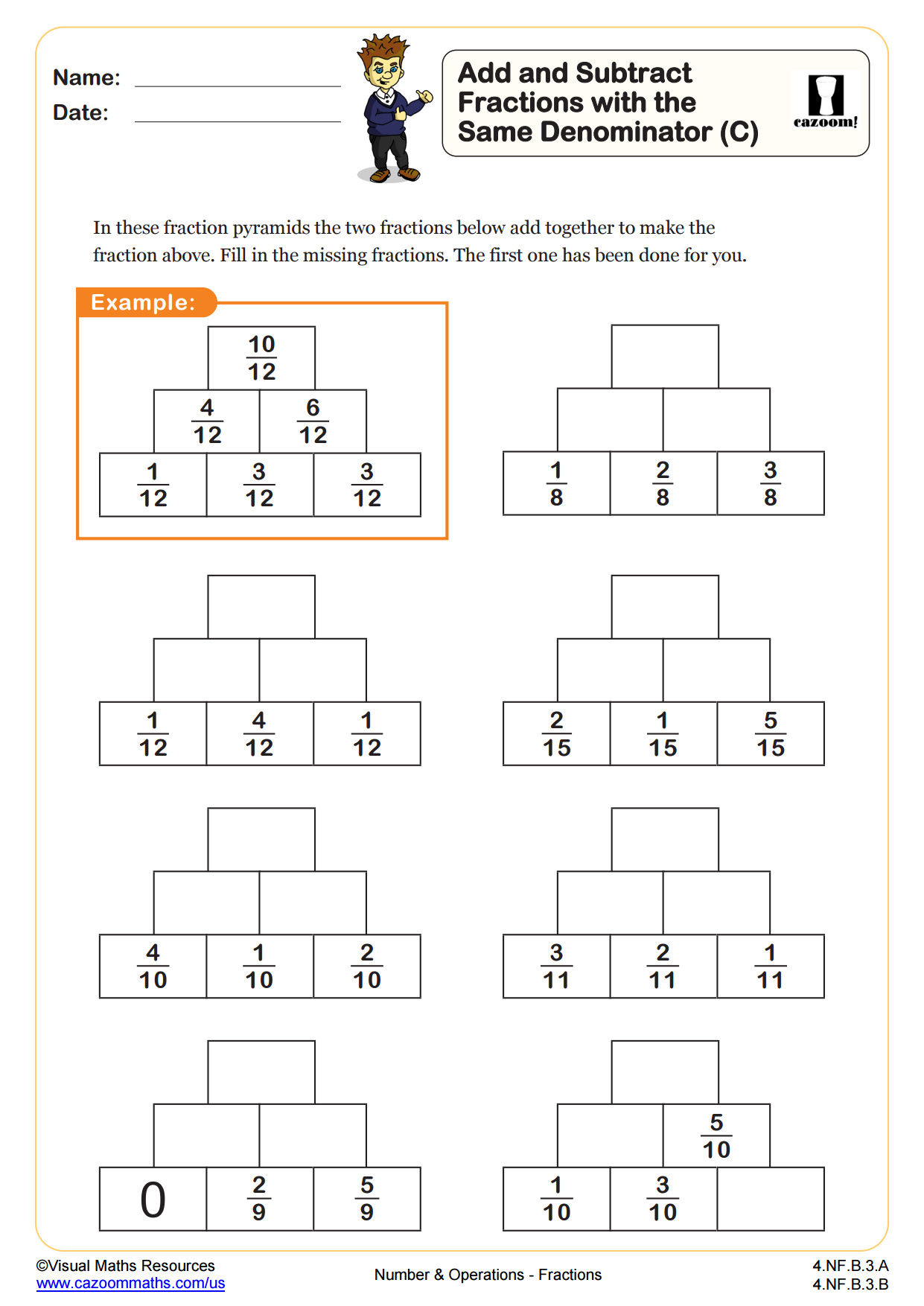
Adding Fractions and Mixed Numbers with the Same Denominator
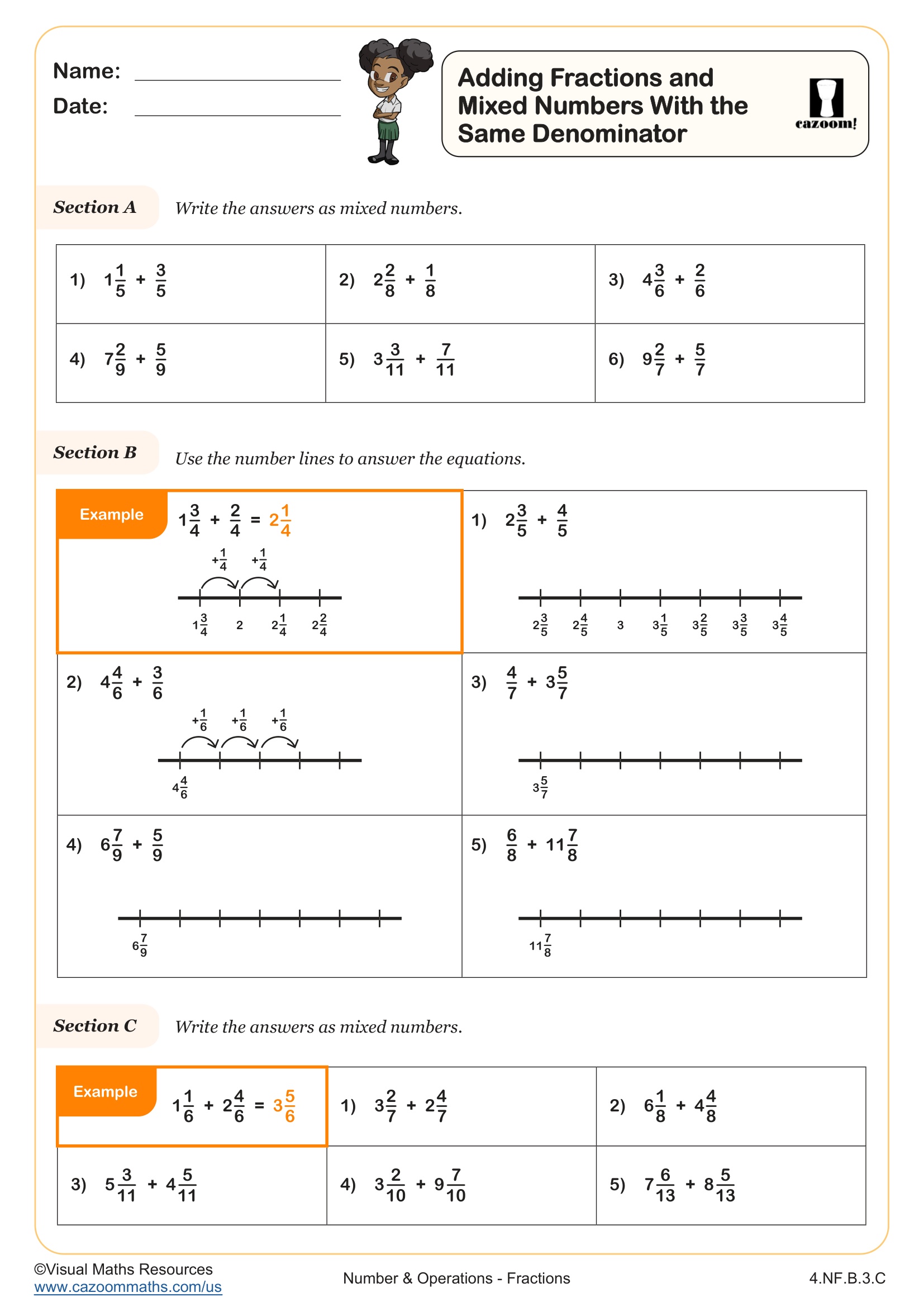
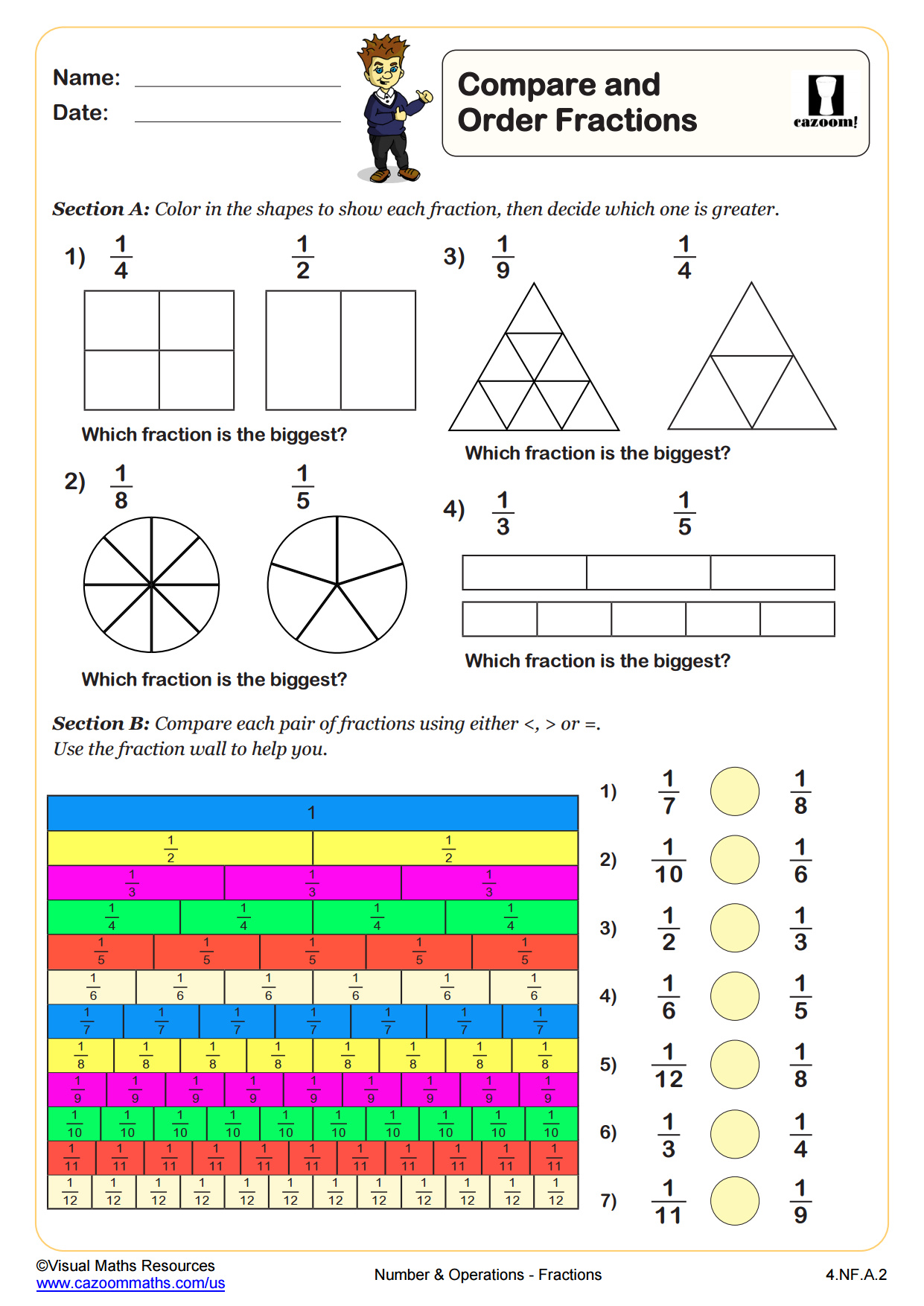
Compare and Order Fractions
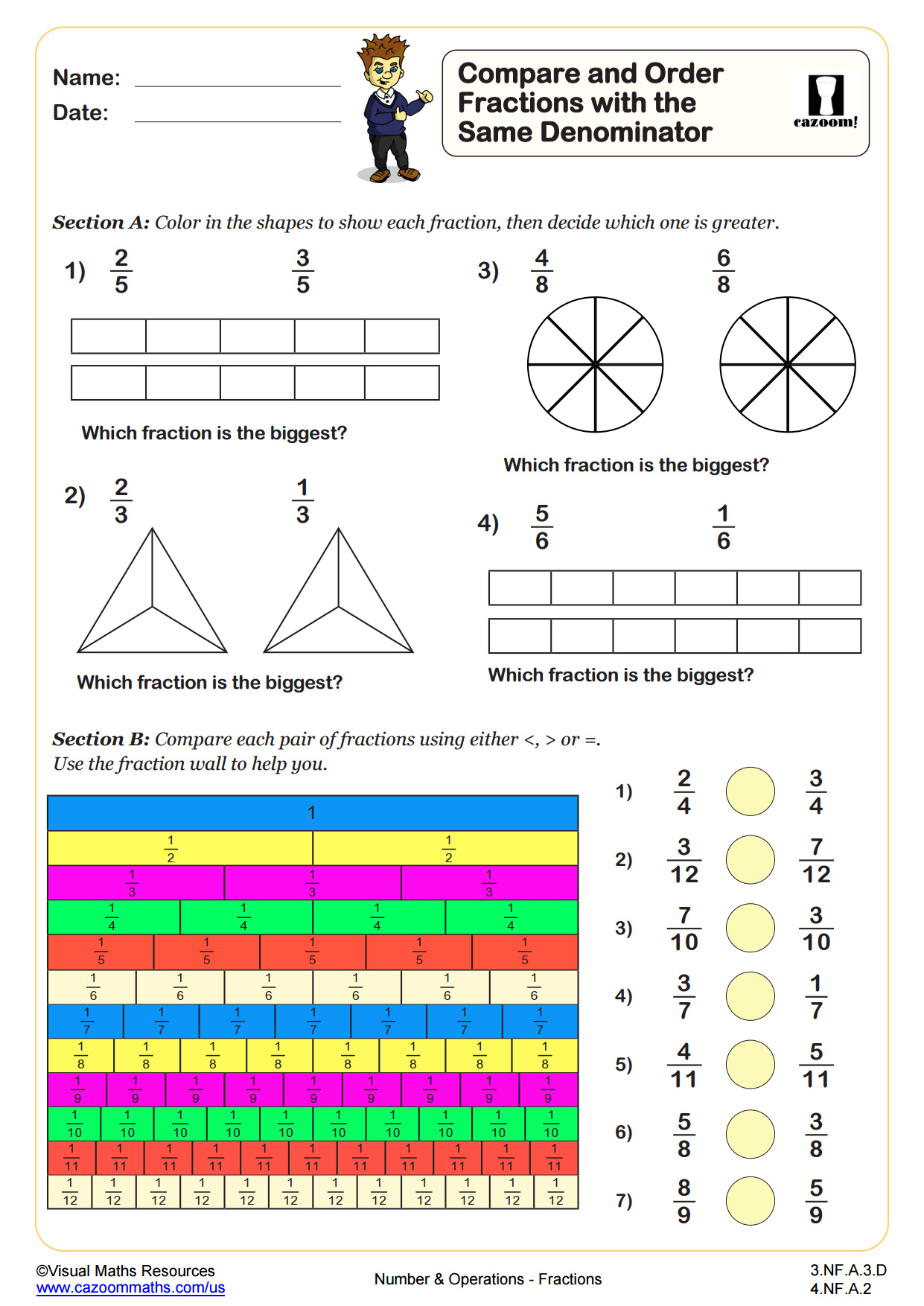
Compare and Order Fractions with the Same Denominator
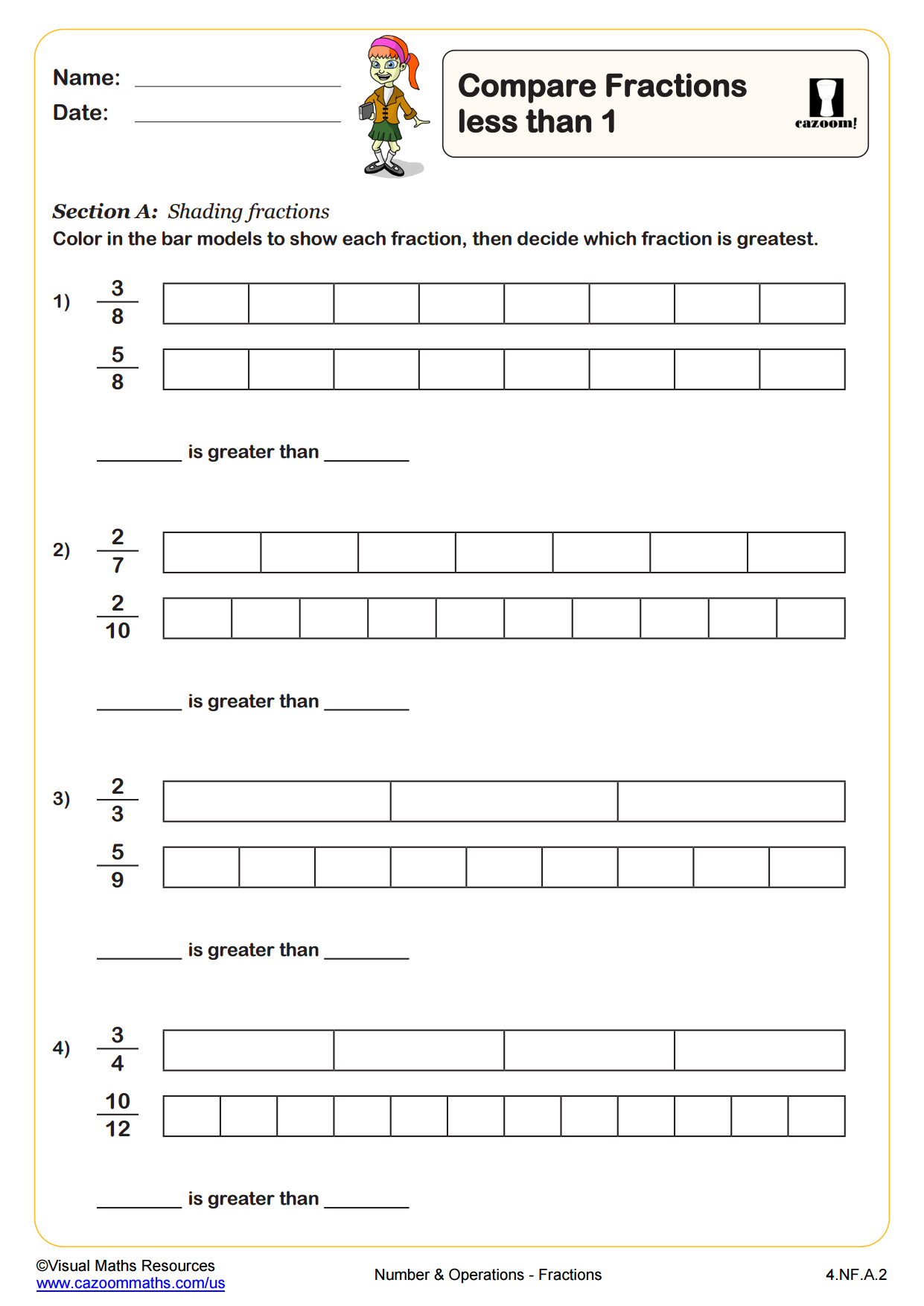
Compare Fractions Less Than 1
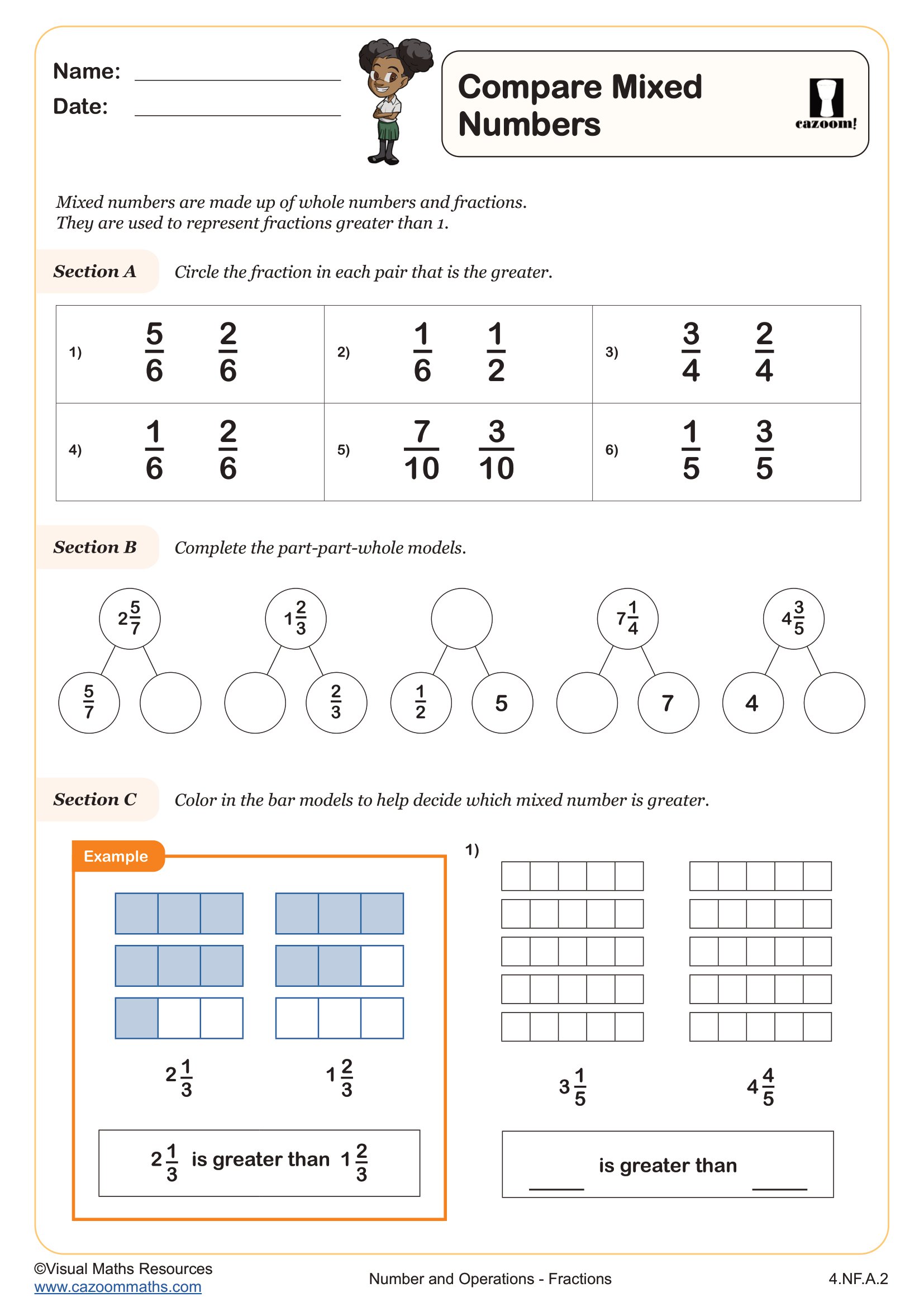
Compare Mixed numbers
Crack the Code - Fractions
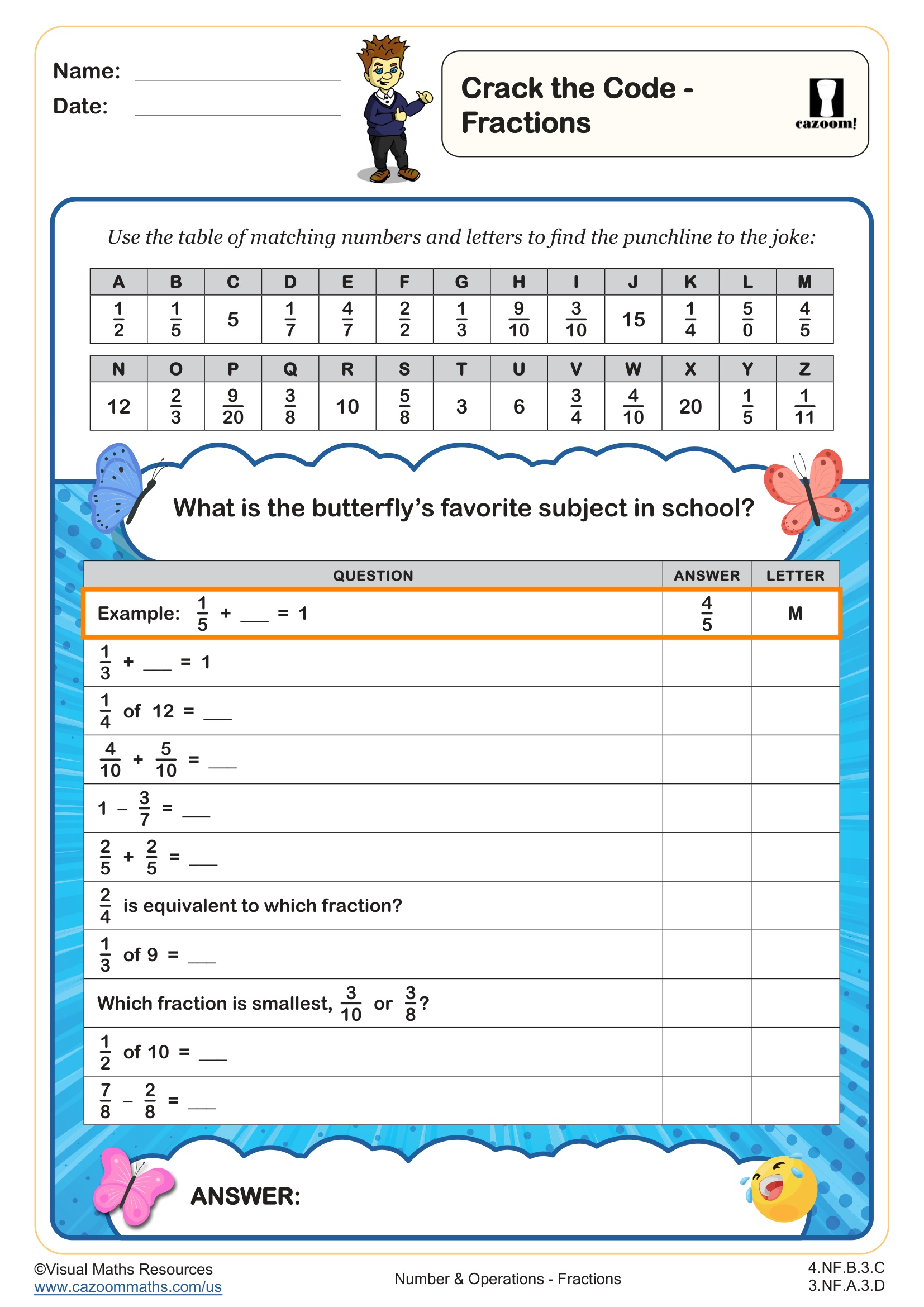
Decimal Place Value - Tenths and Hundredths
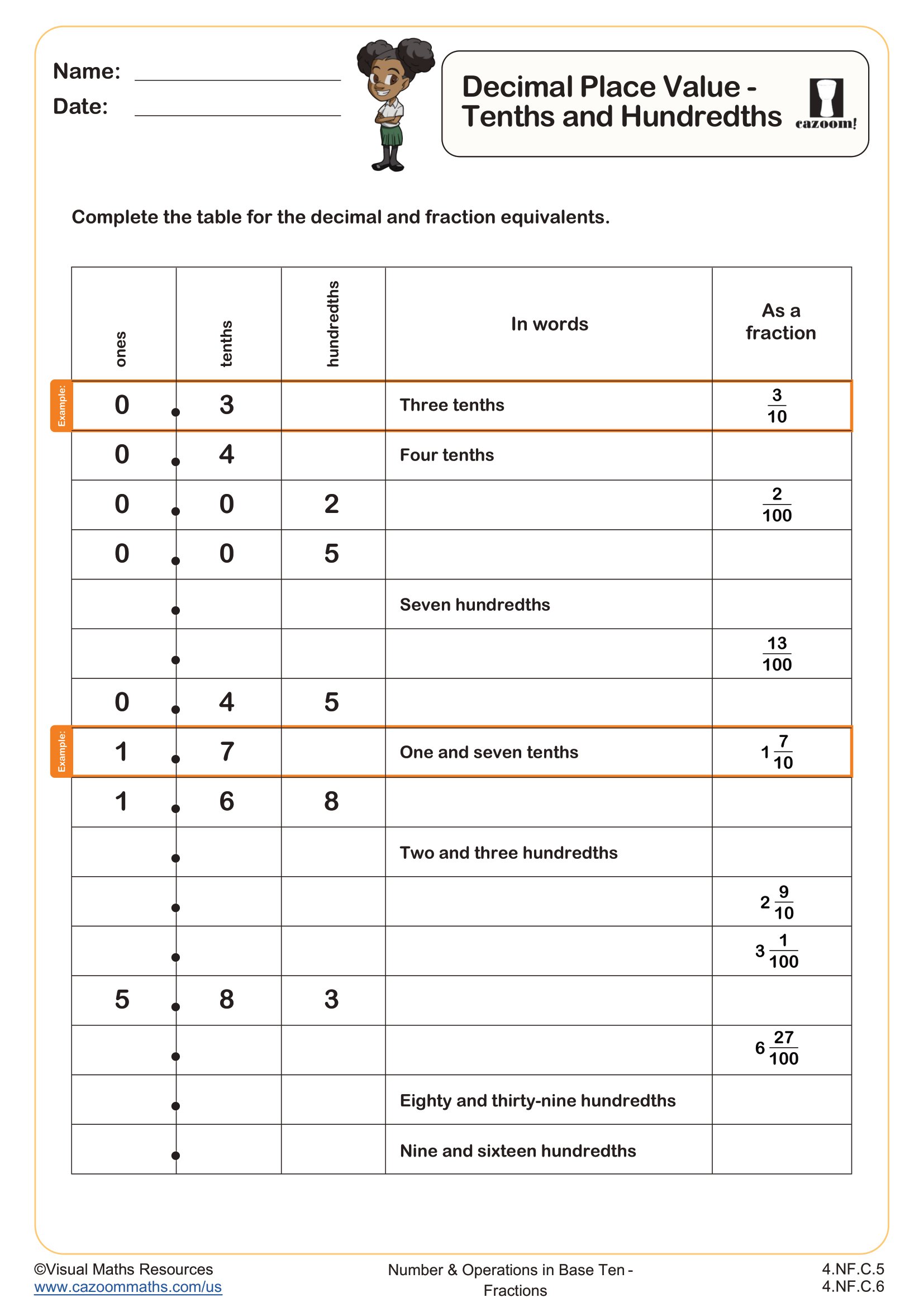
Decimal Place Value - Tenths, Hundredths and Thousandths
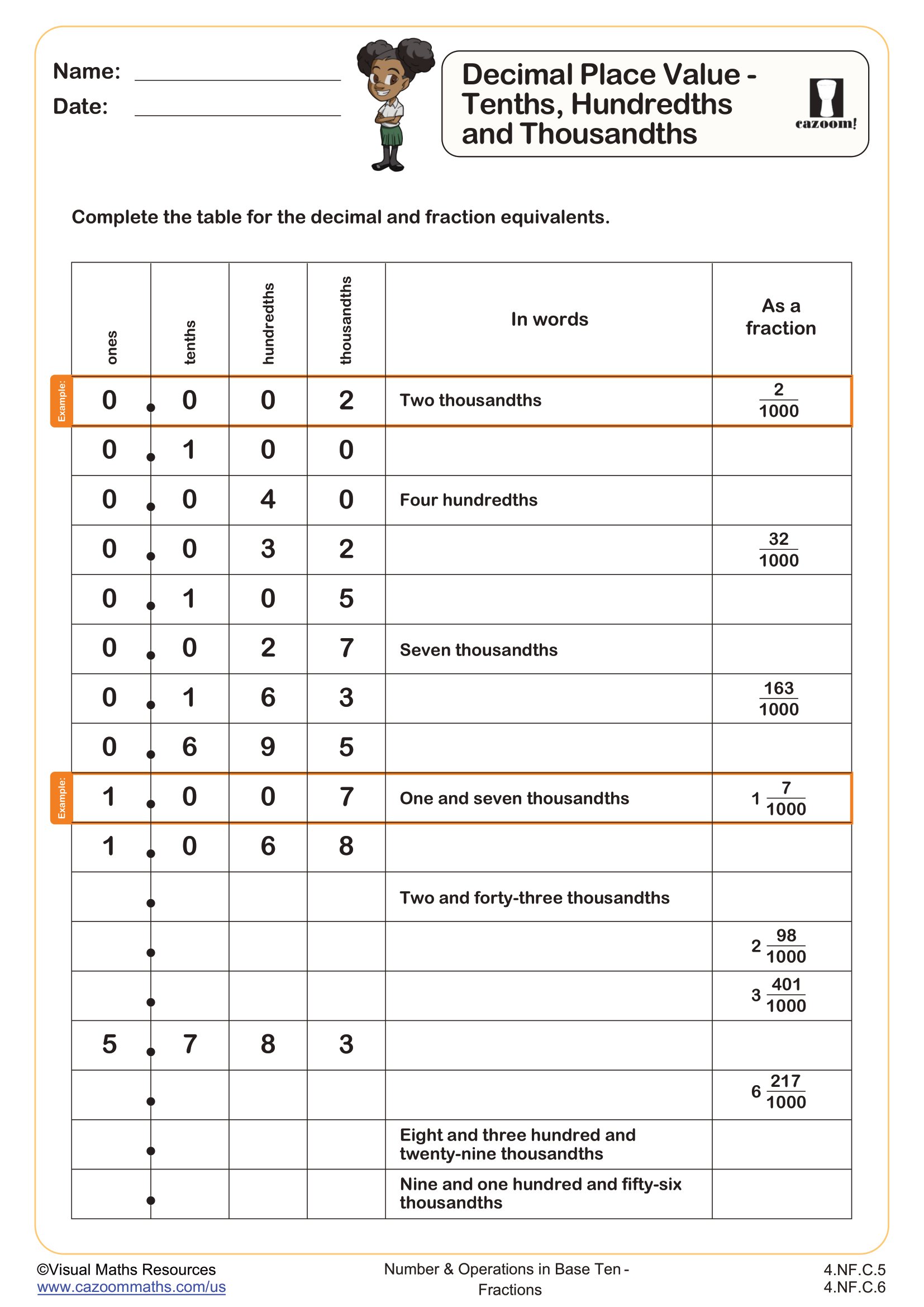
Equivalent Fractions (A)
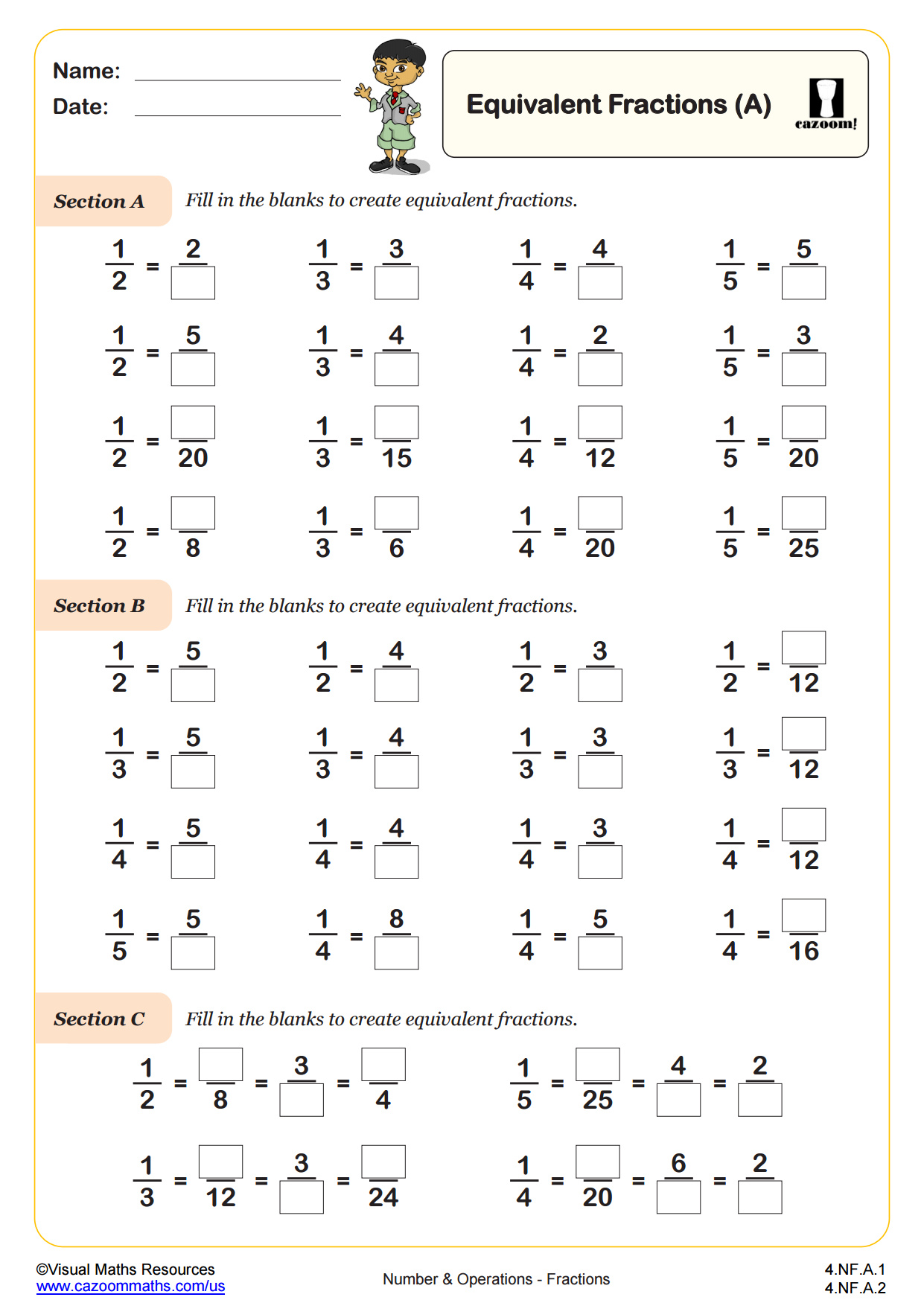
Equivalent Fractions (B)
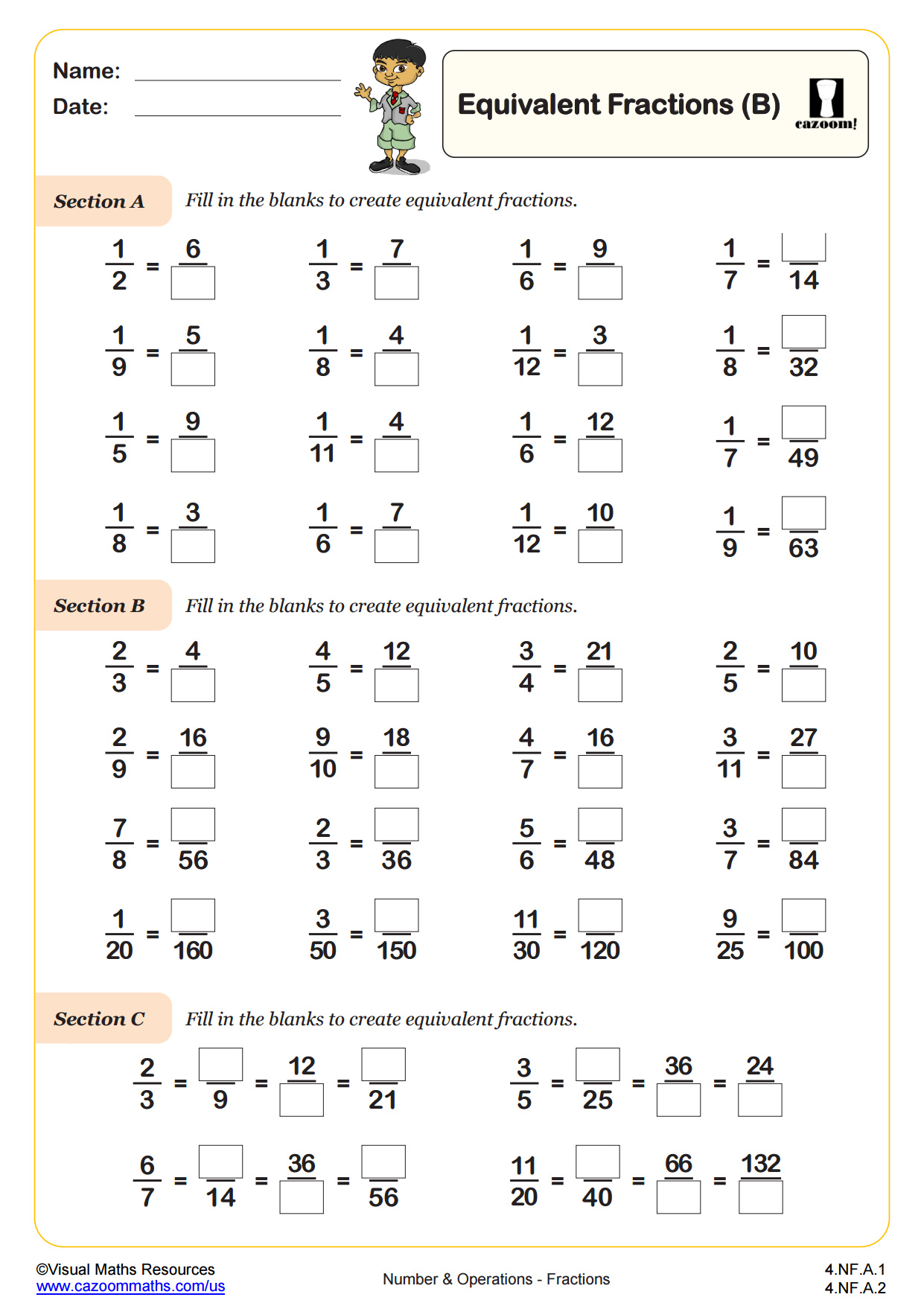
Equivalent Fractions (C)
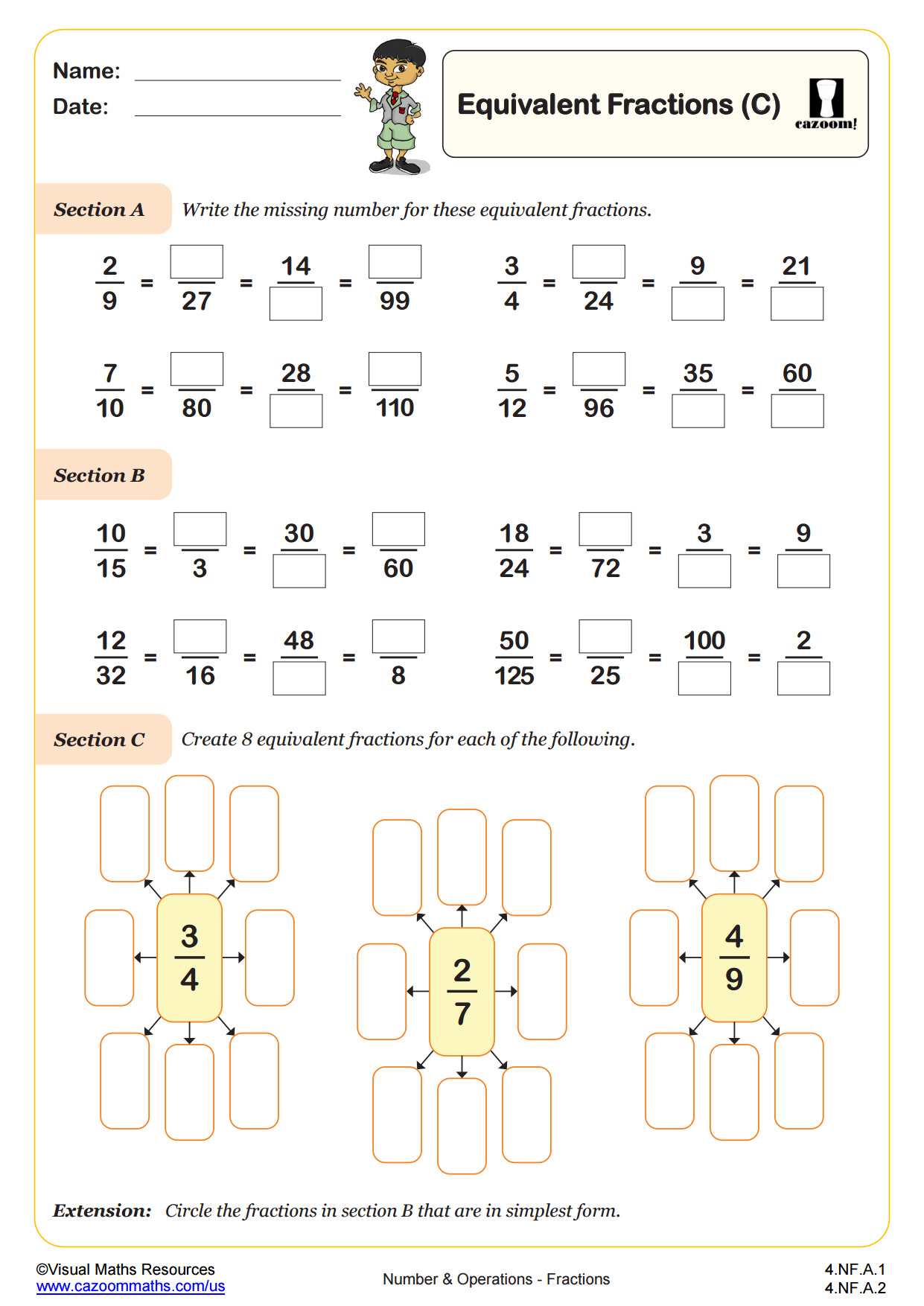
Equivalent Fractions Using a Fraction Wall (B)
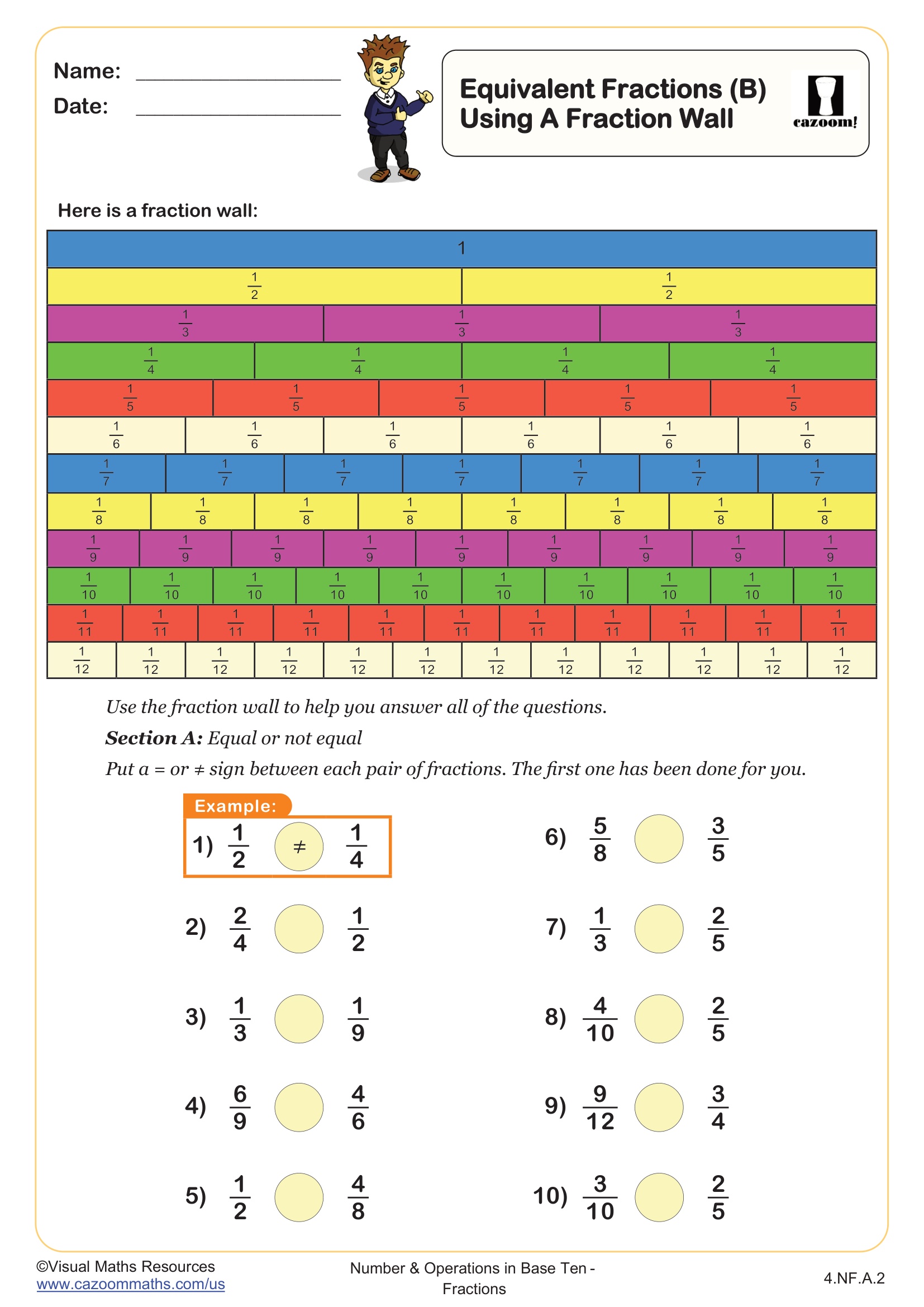
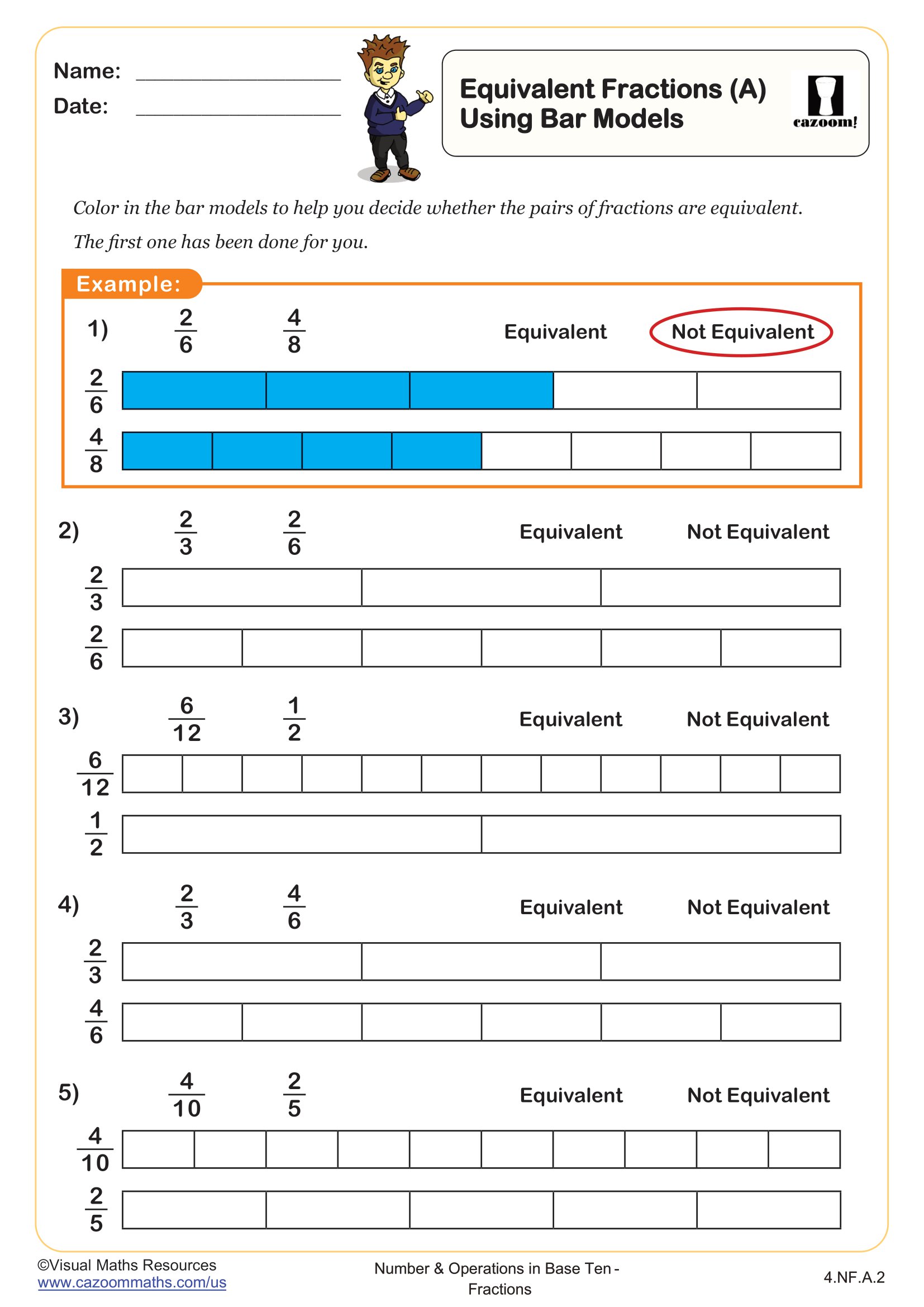
Equivalent Fractions Using Bar Models (A)
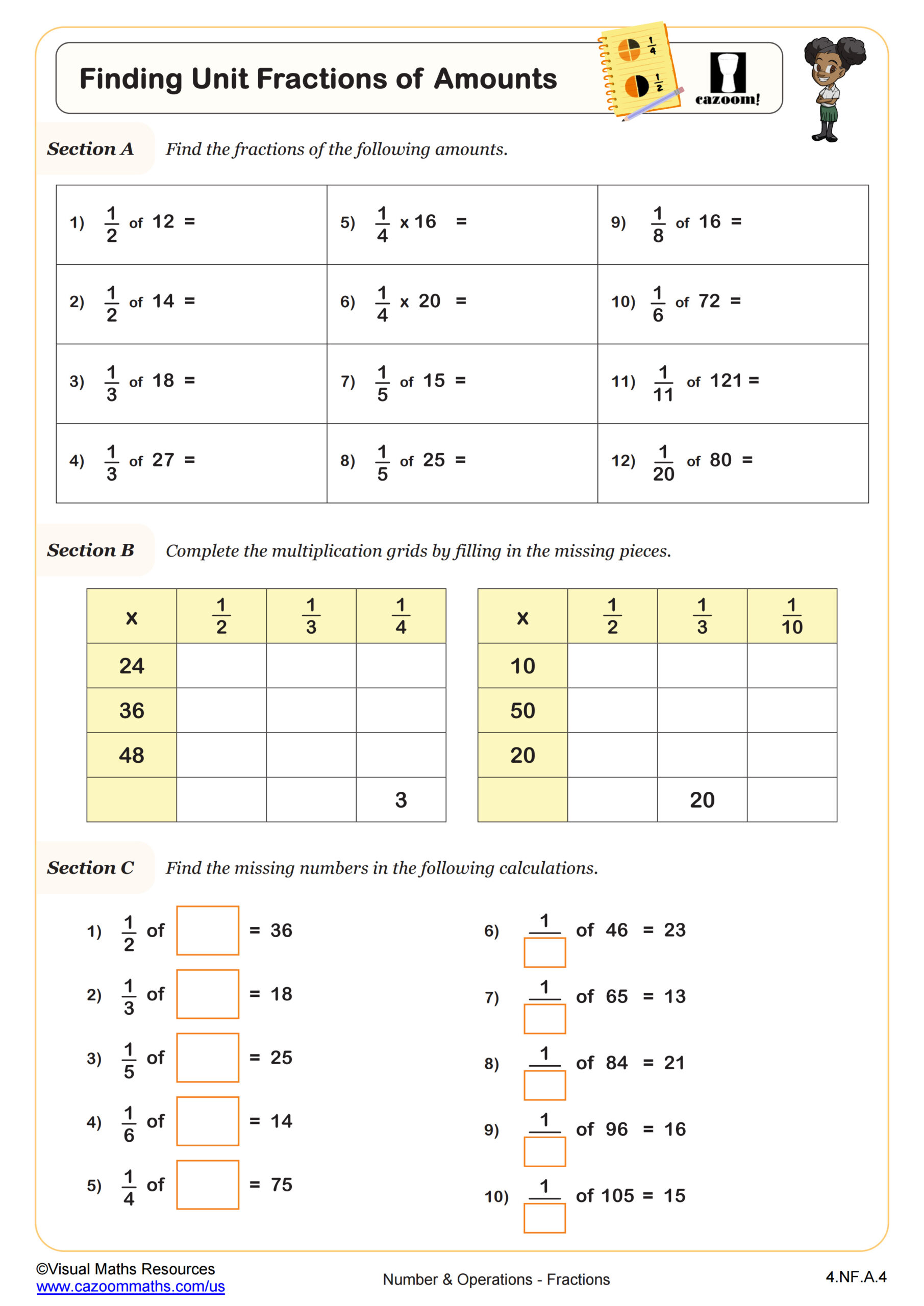
FInding Unit Fractions of Amounts
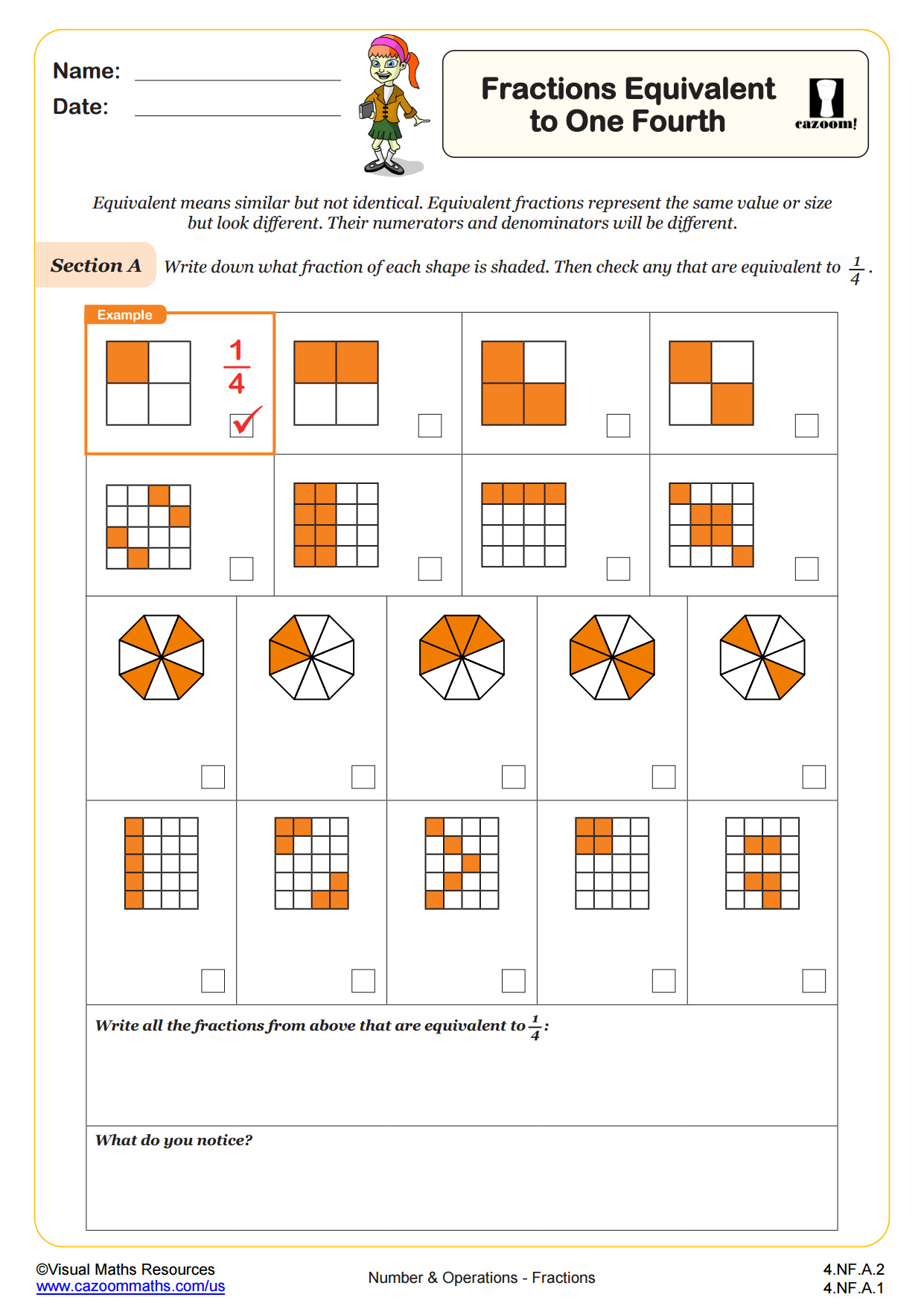
Fractions Equivalent to One Forth
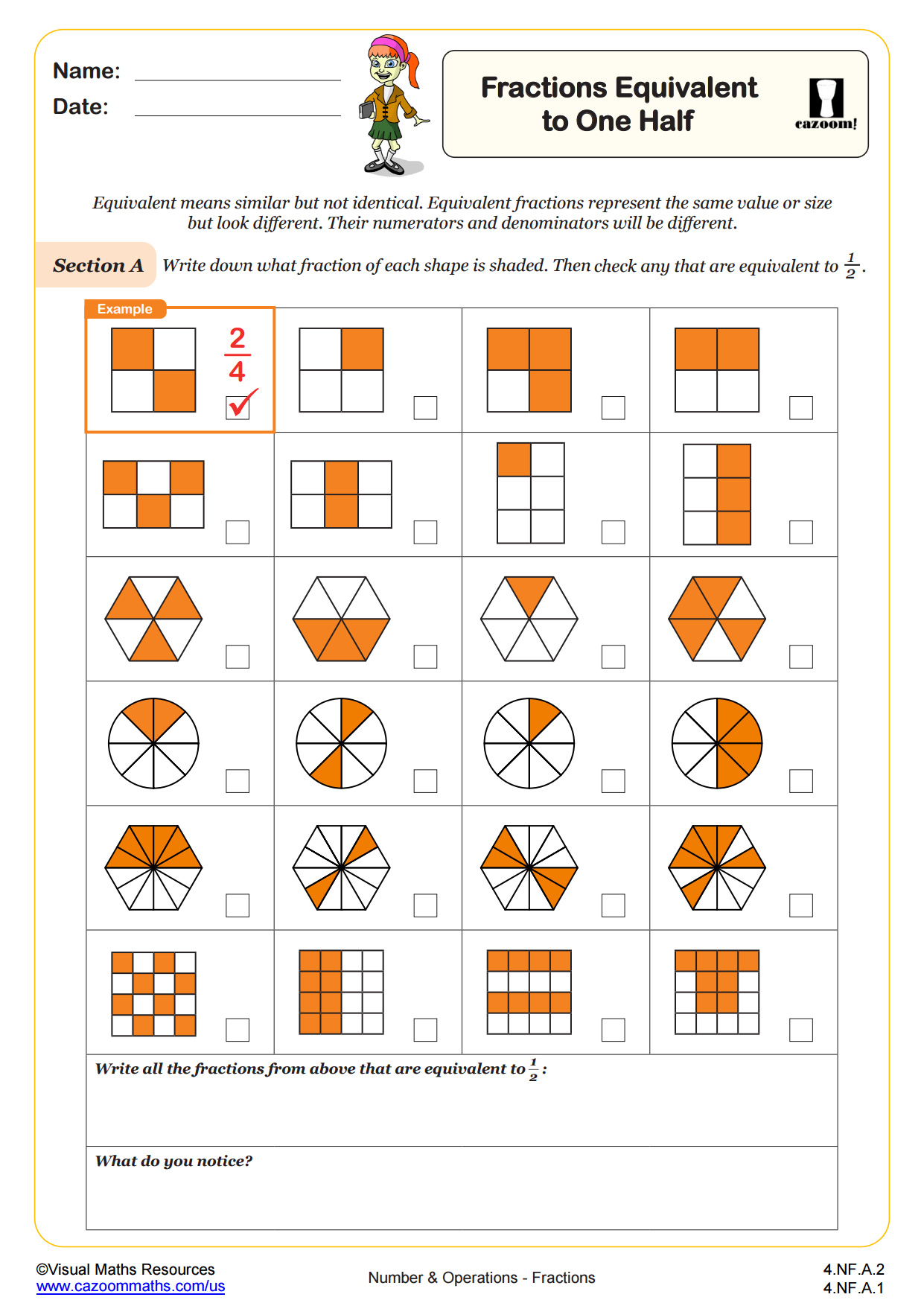
Fractions Equivalent to One Half
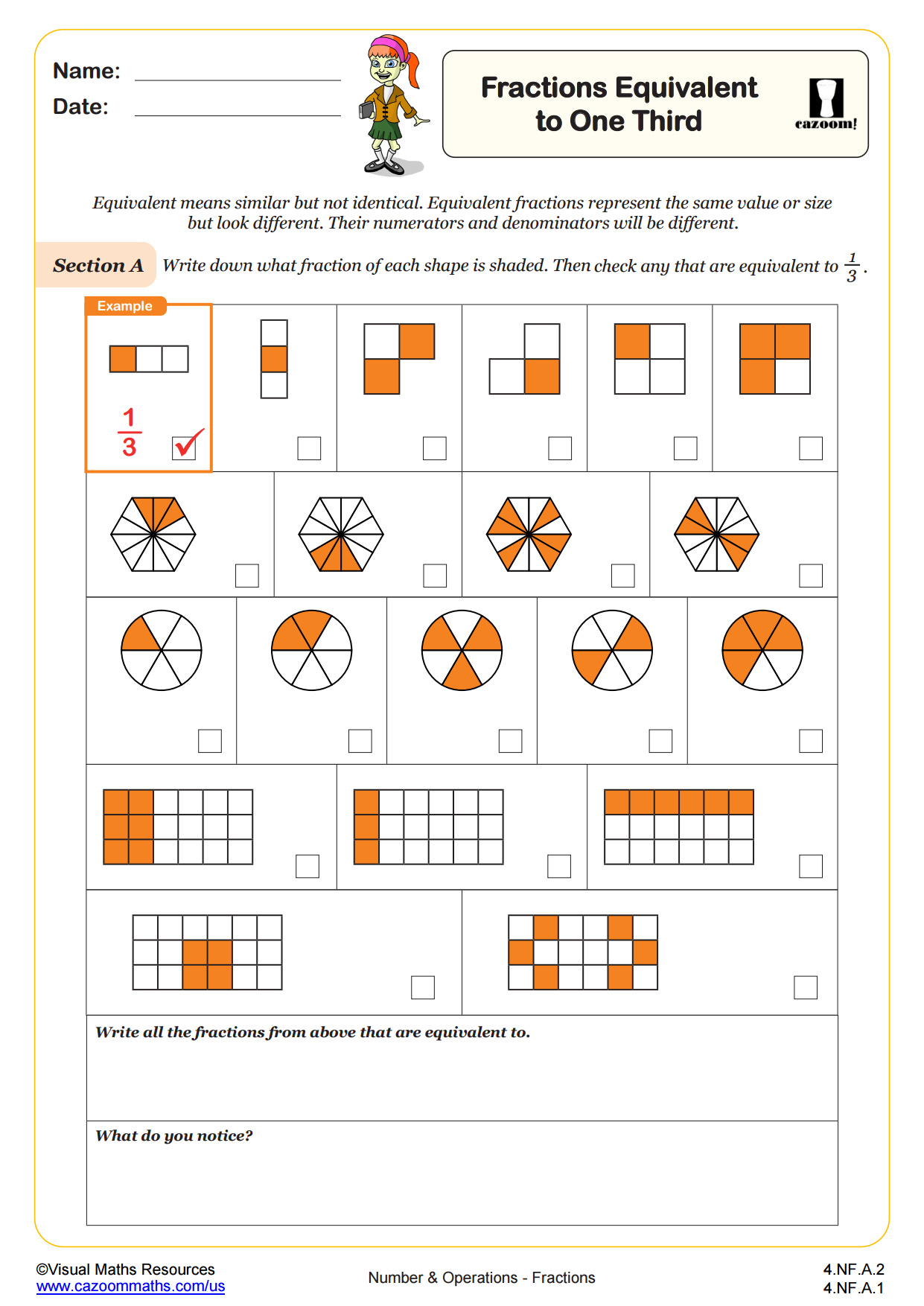
Fractions Equivalent to One Third
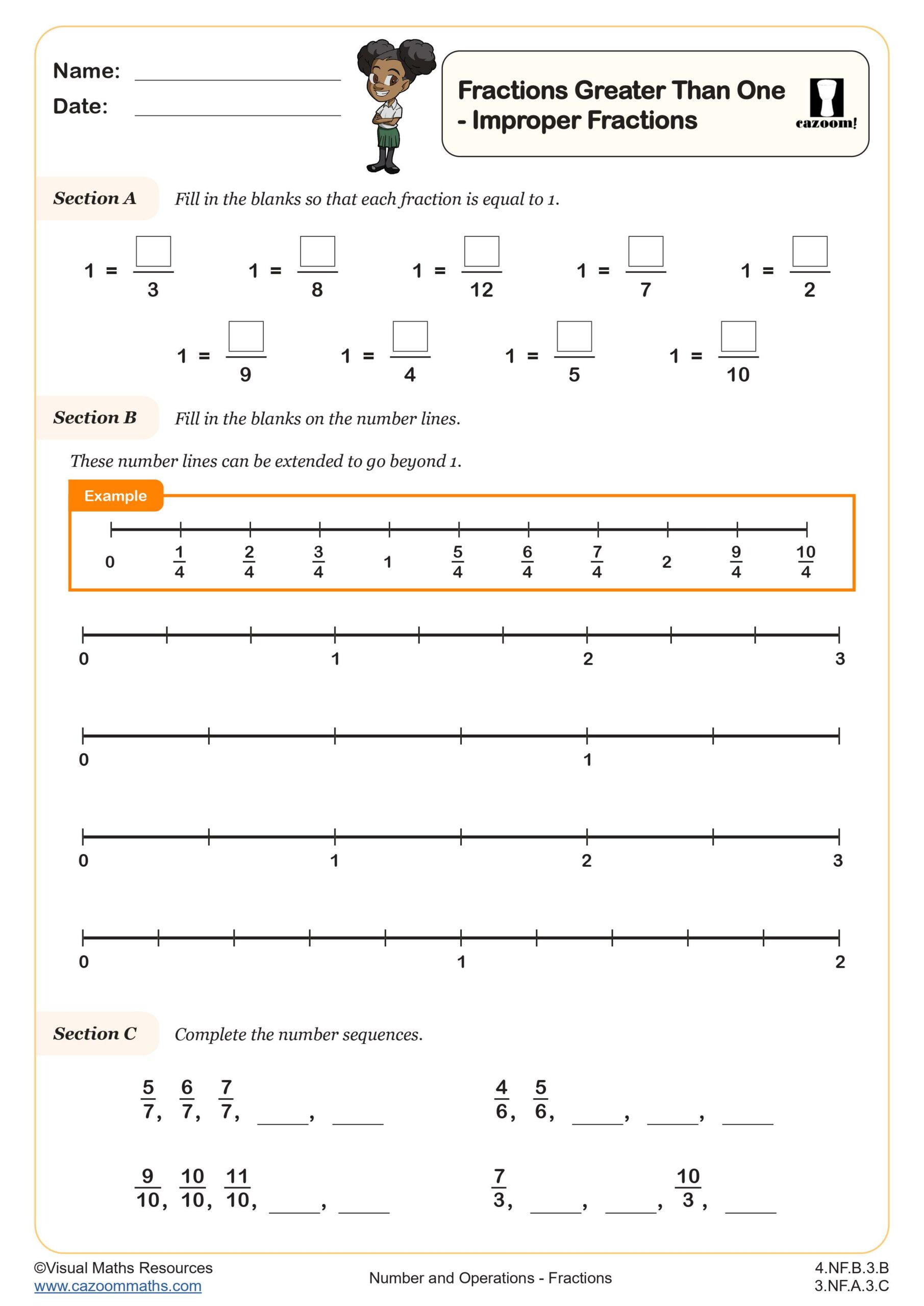
Fractions Greater Than One - Improper Fractions
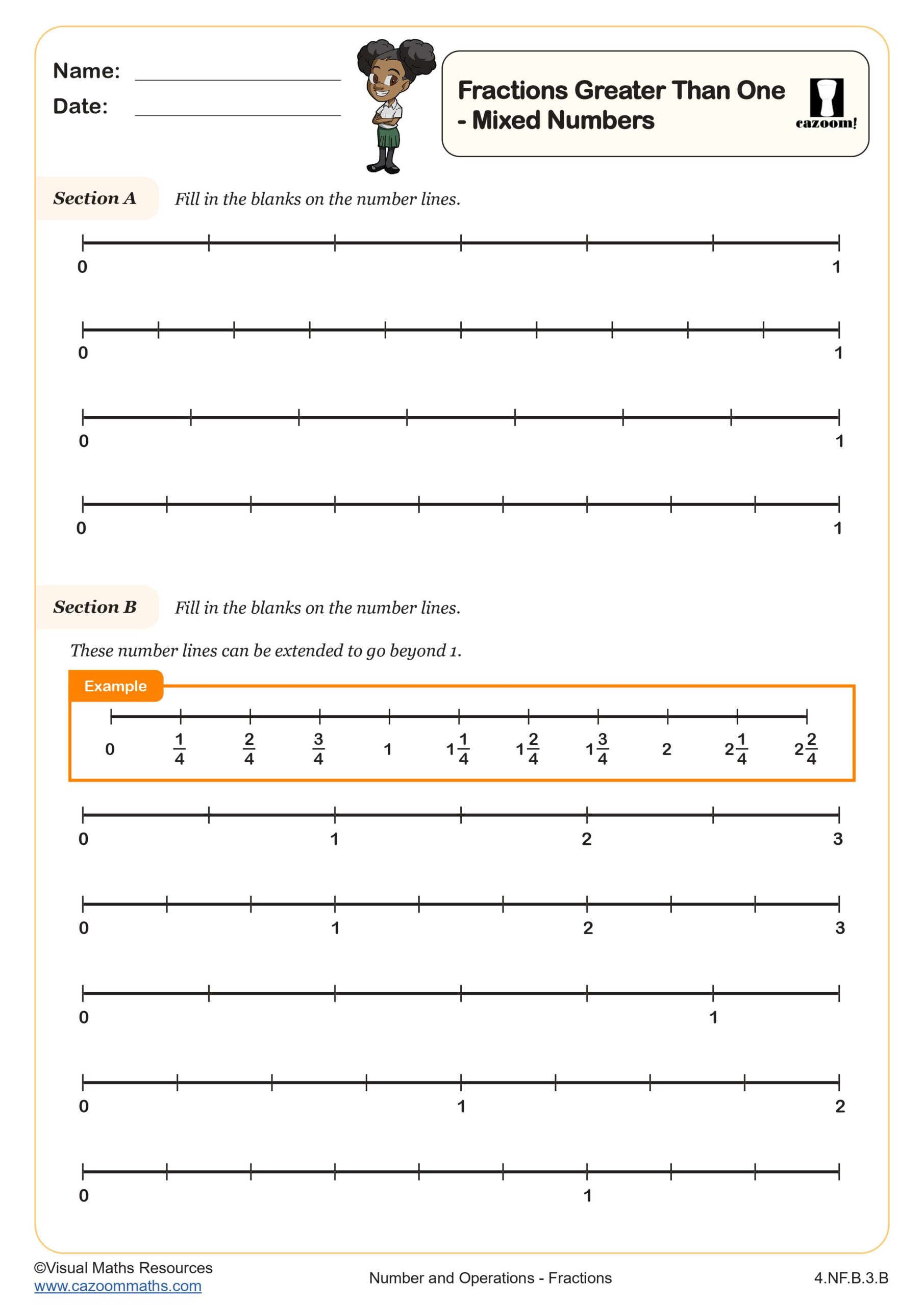
Fractions Greater Than One - Mixed Numbers
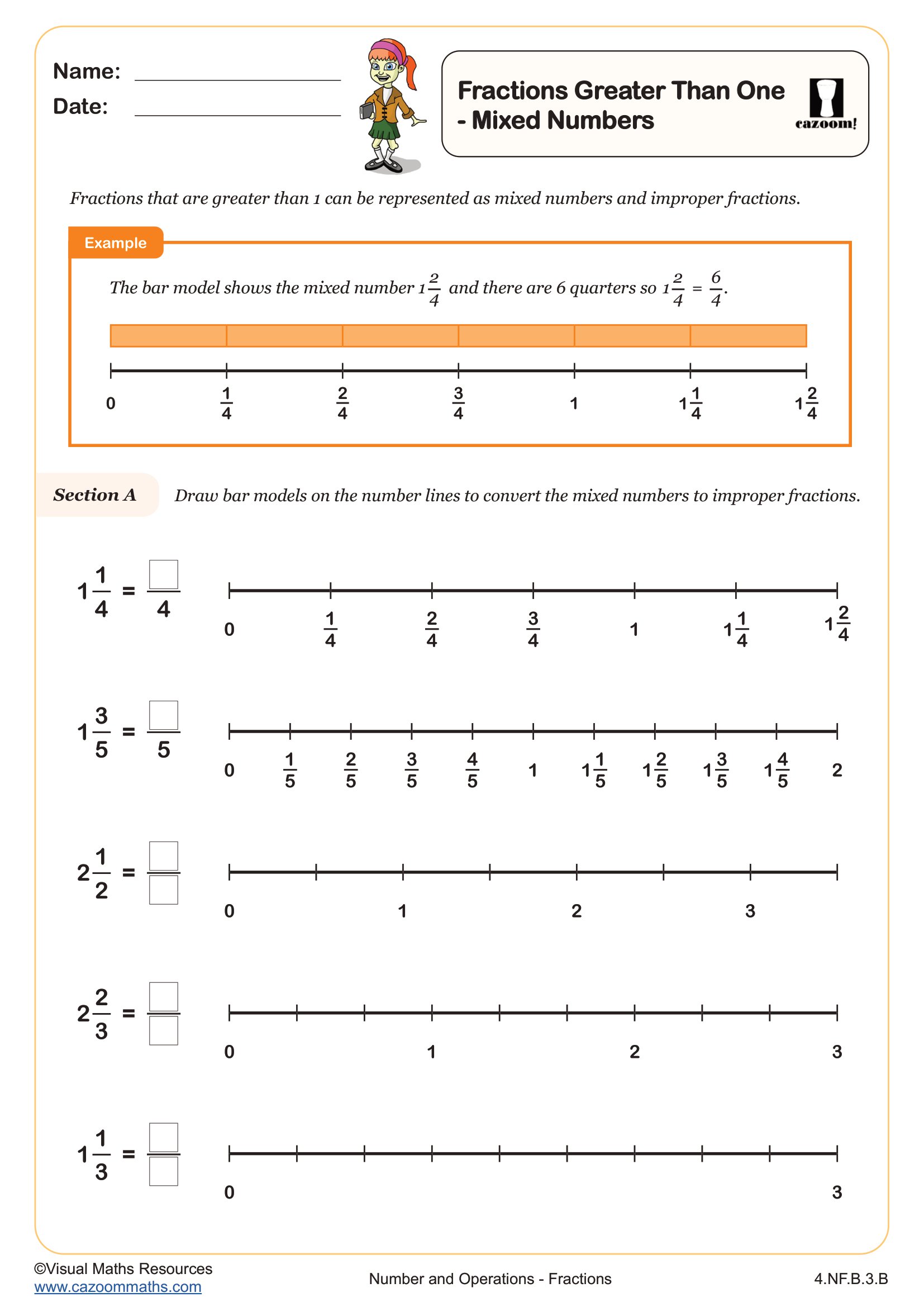
Fractions Greater Than One - Mixed Numbers and Improper Fractions
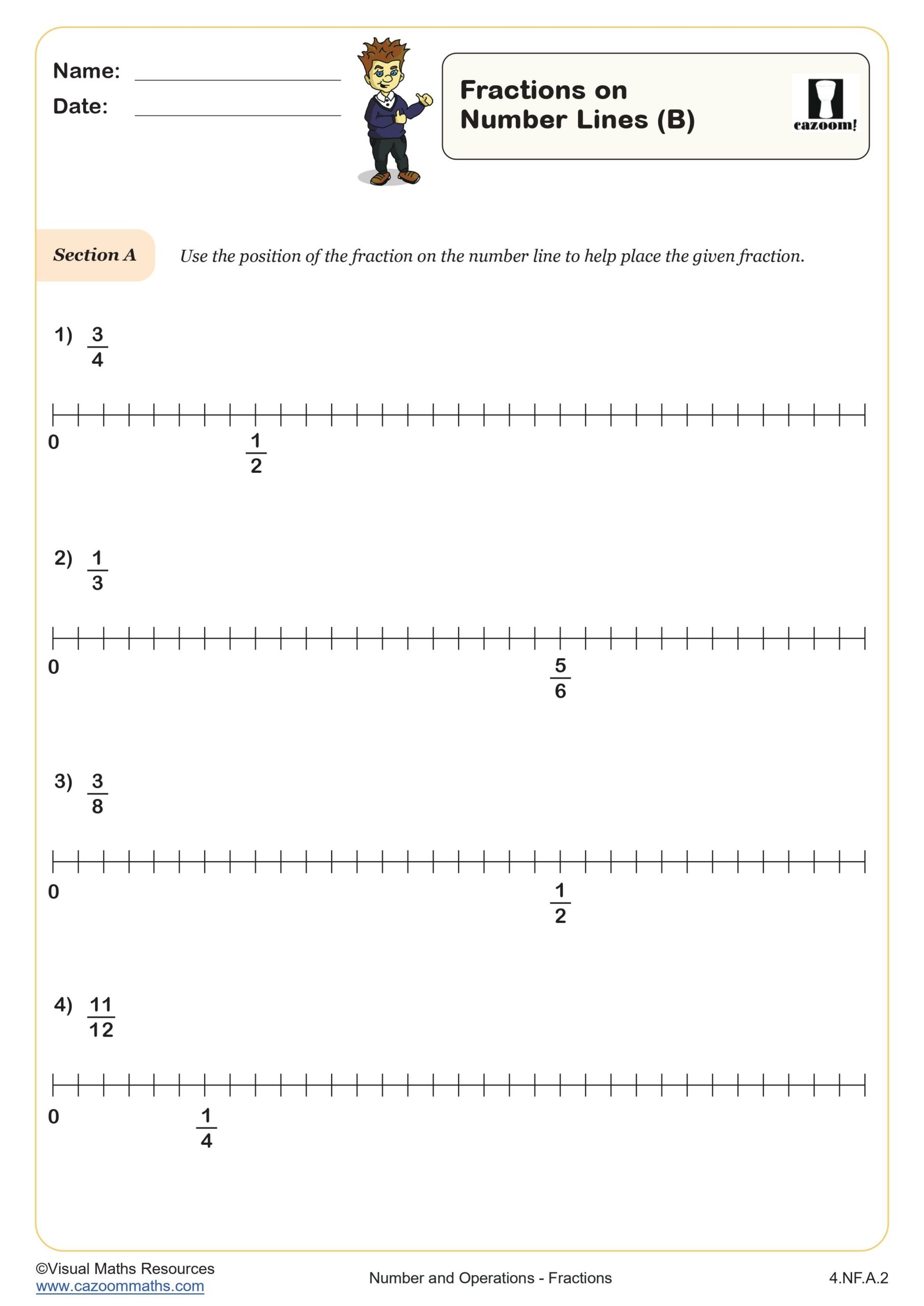
Fractions on Number Lines (B)
Halving 2 Digit Even Numbers
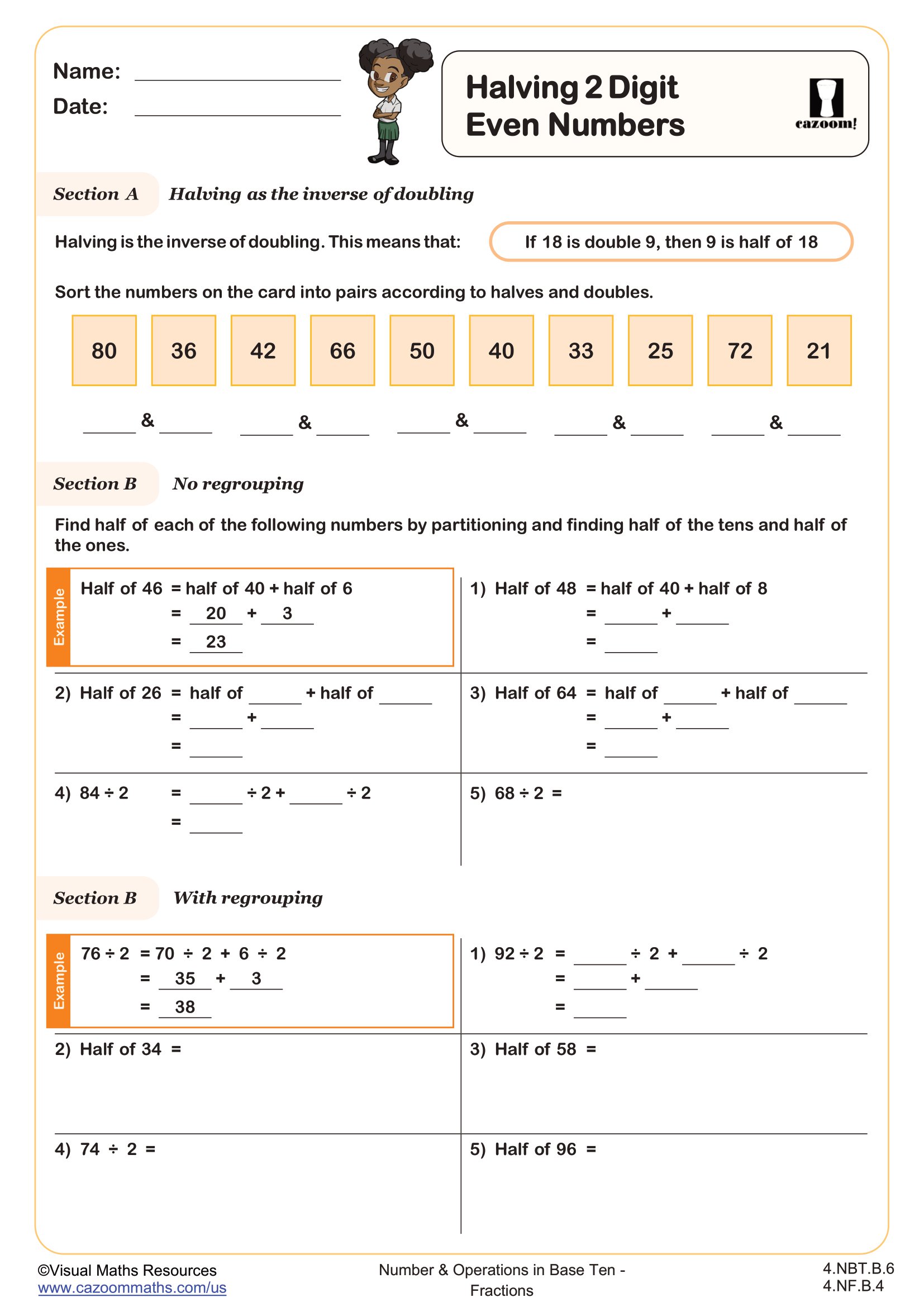
Halving Numbers to 20
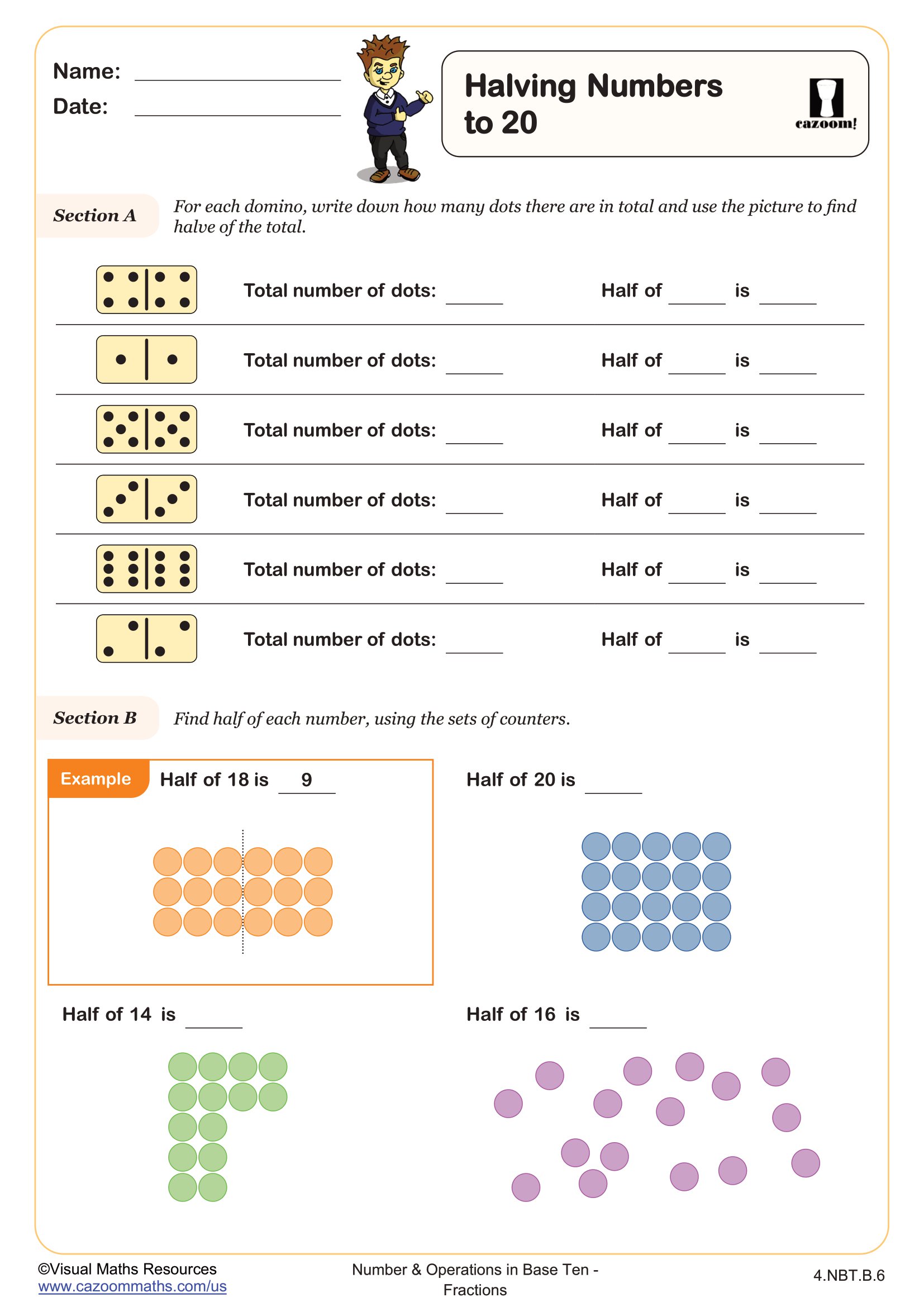
Halving Odd Numbers by Halving One Less
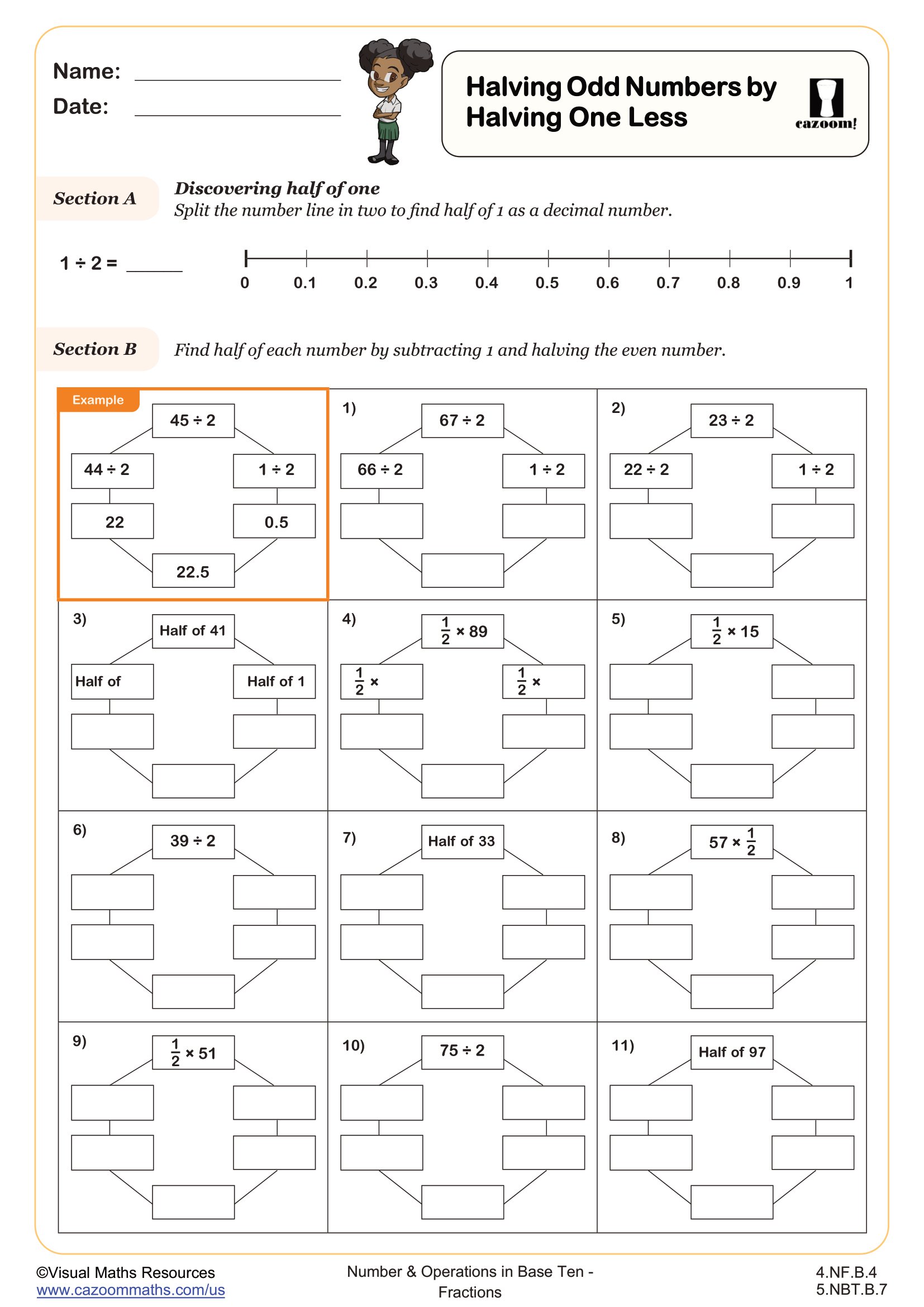
Halving Odd Numbers Partition Tens and Ones
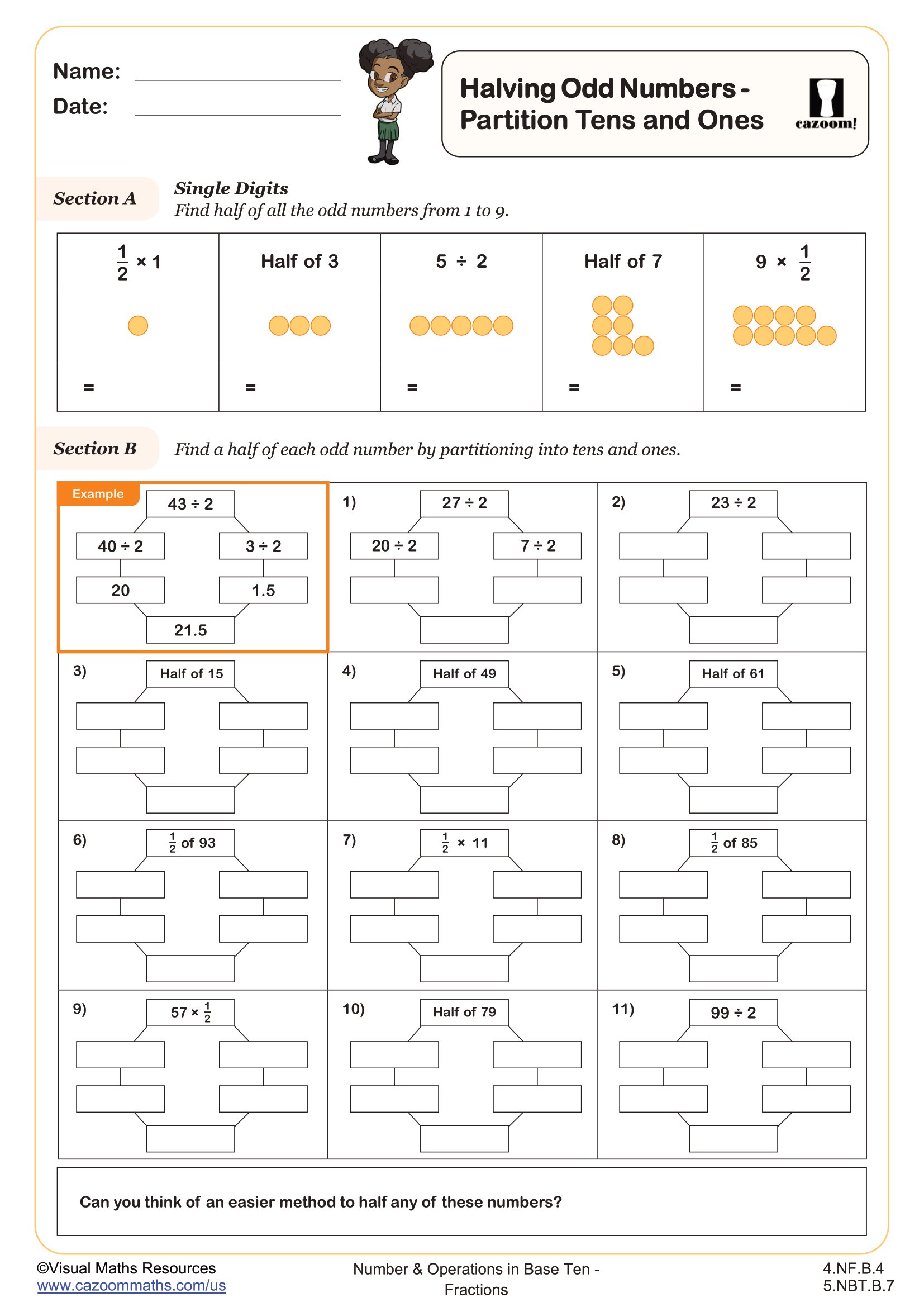
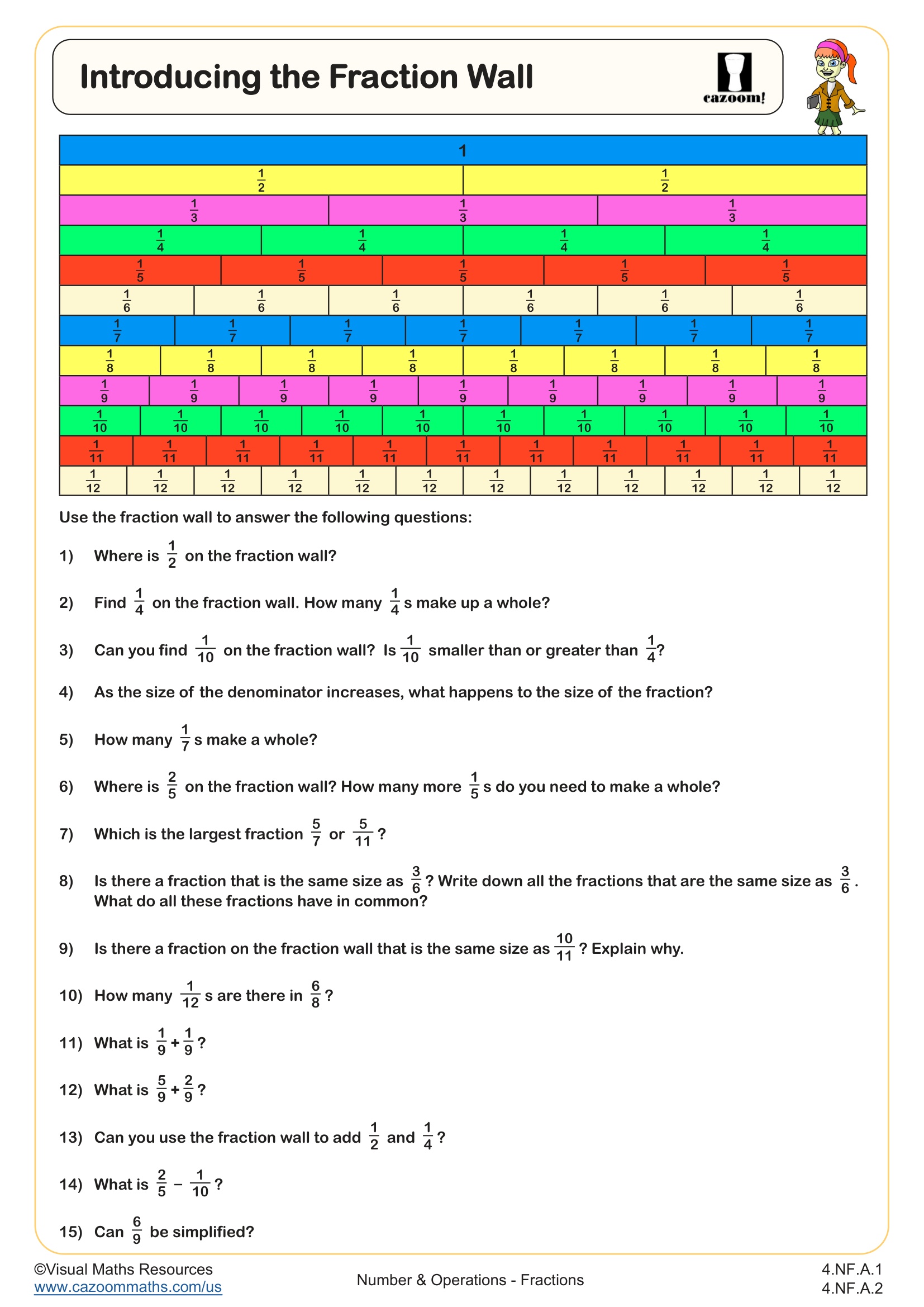
Introducing the Fraction Wall
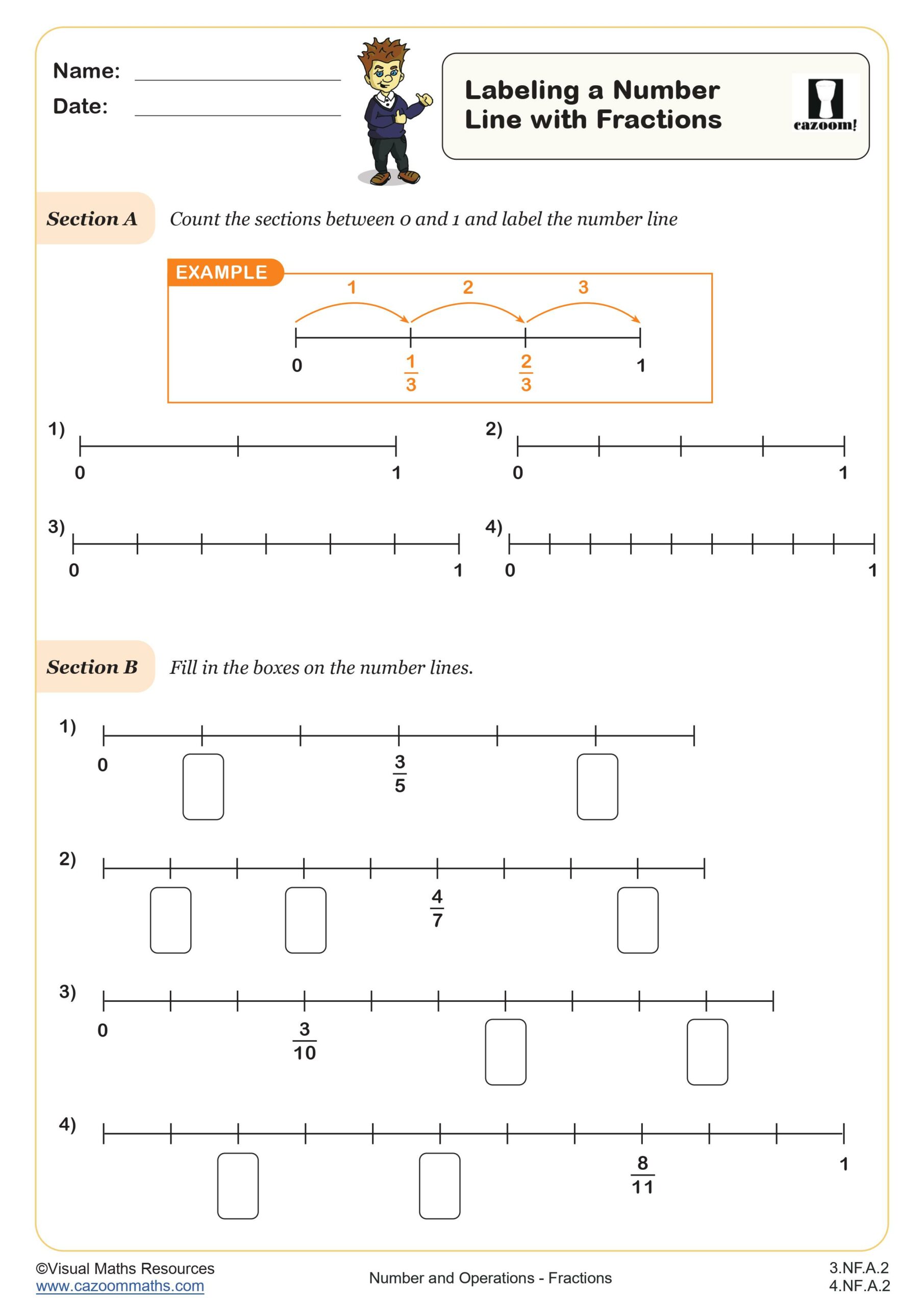
Labeling a Number Line with Fractions
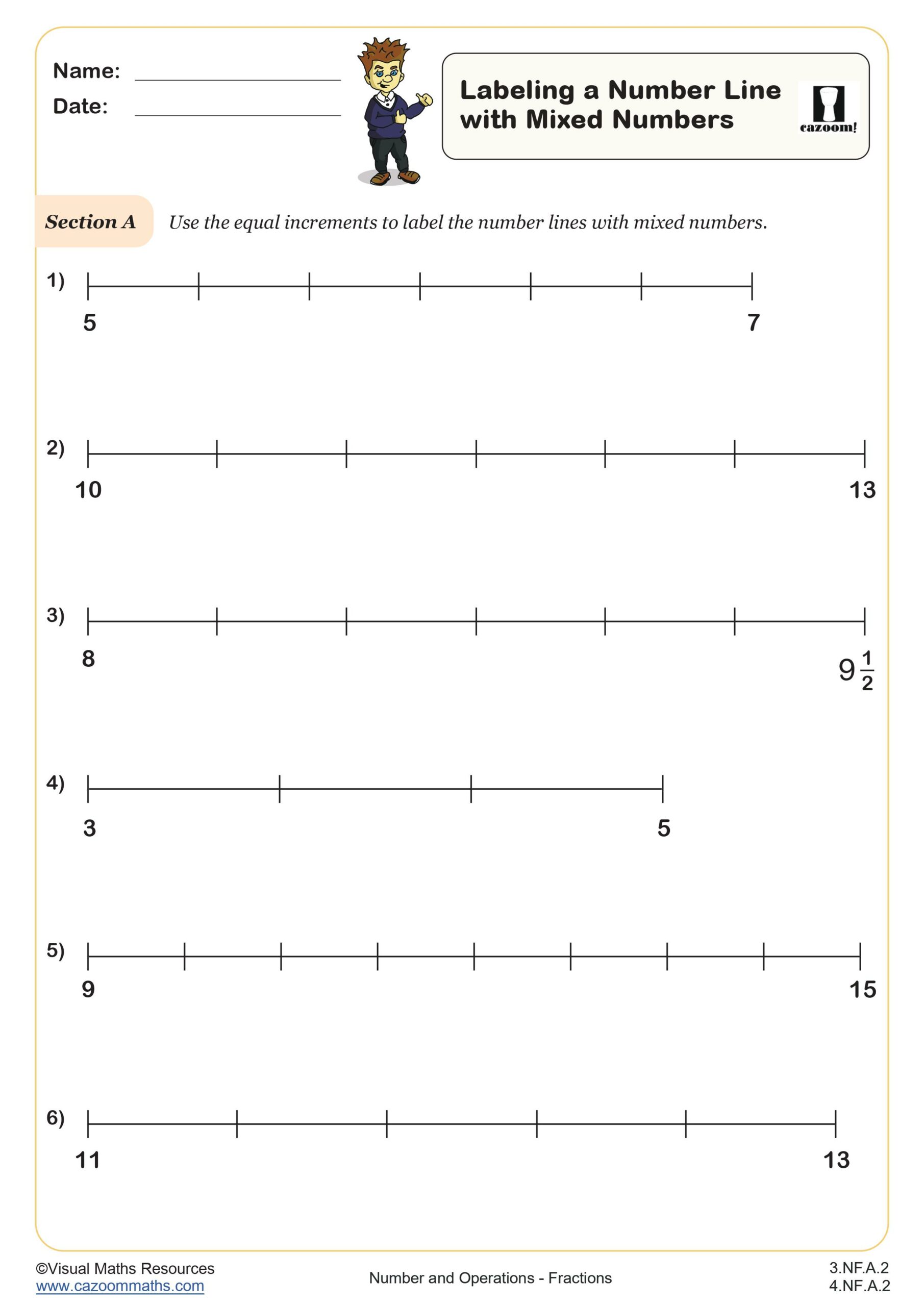
Labeling a Number Line with Mixed Numbers
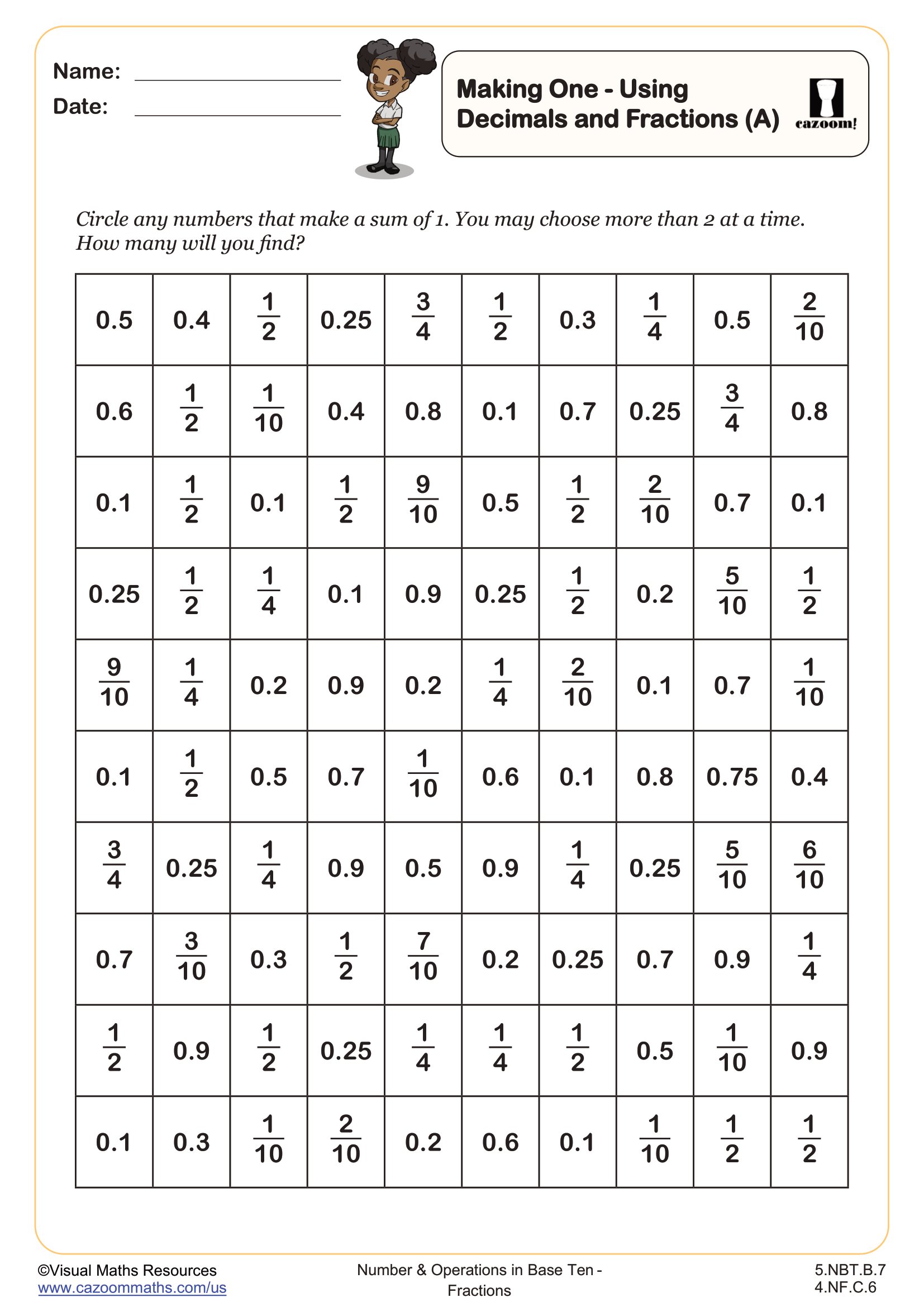
Making One Using Decimals and Fractions (A)
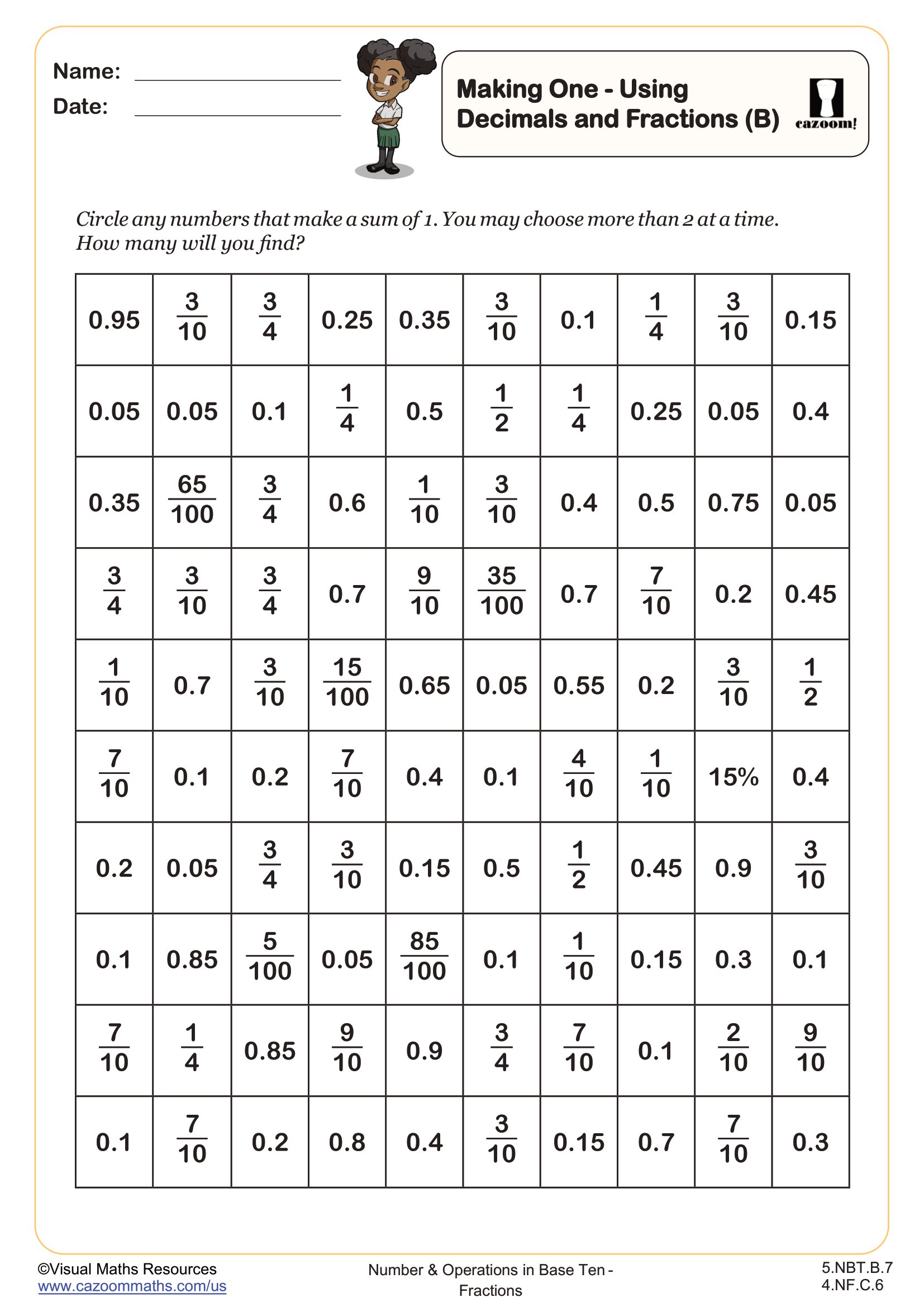
Making One Using Decimals and Fractions (B)
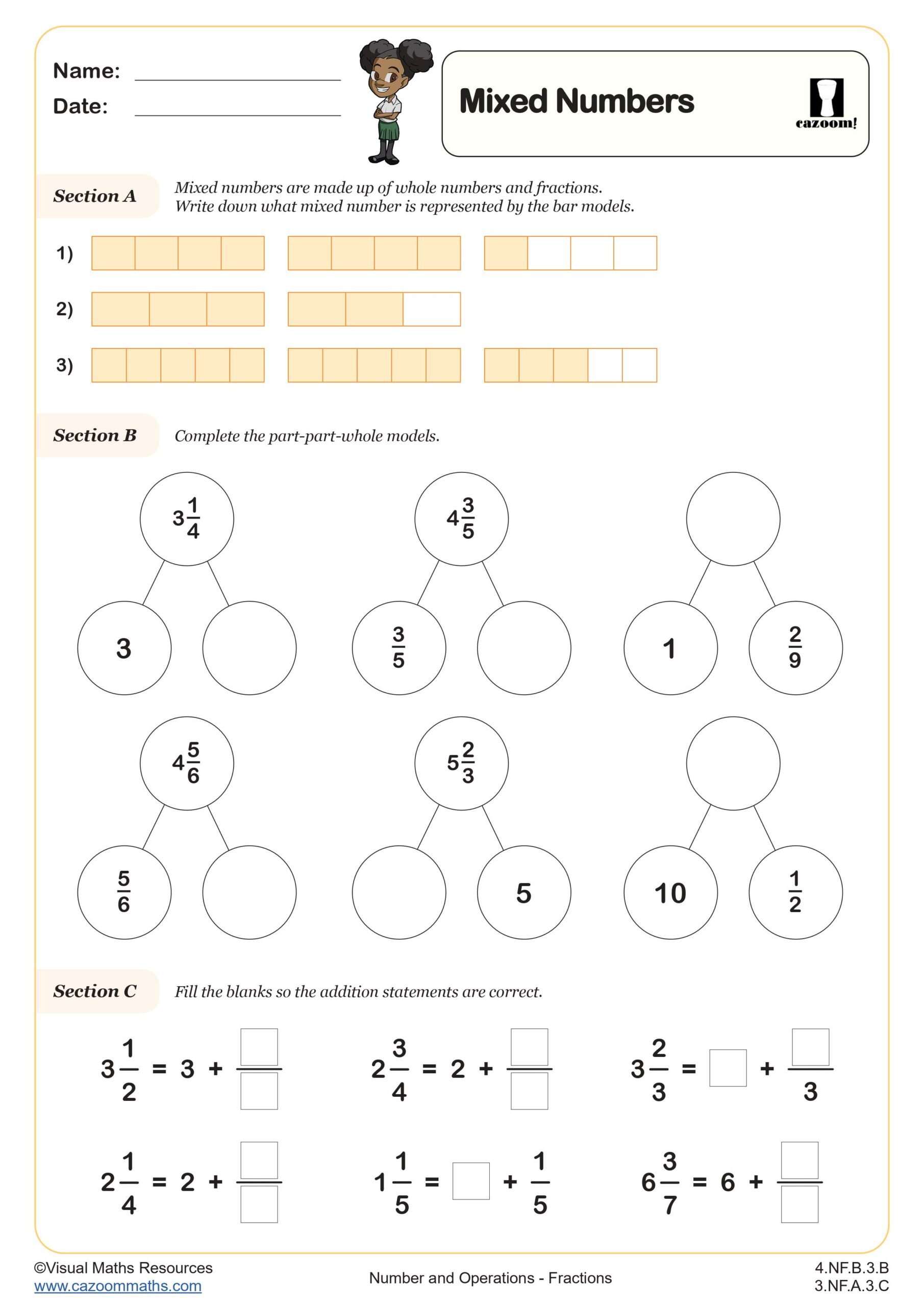
Mixed Numbers
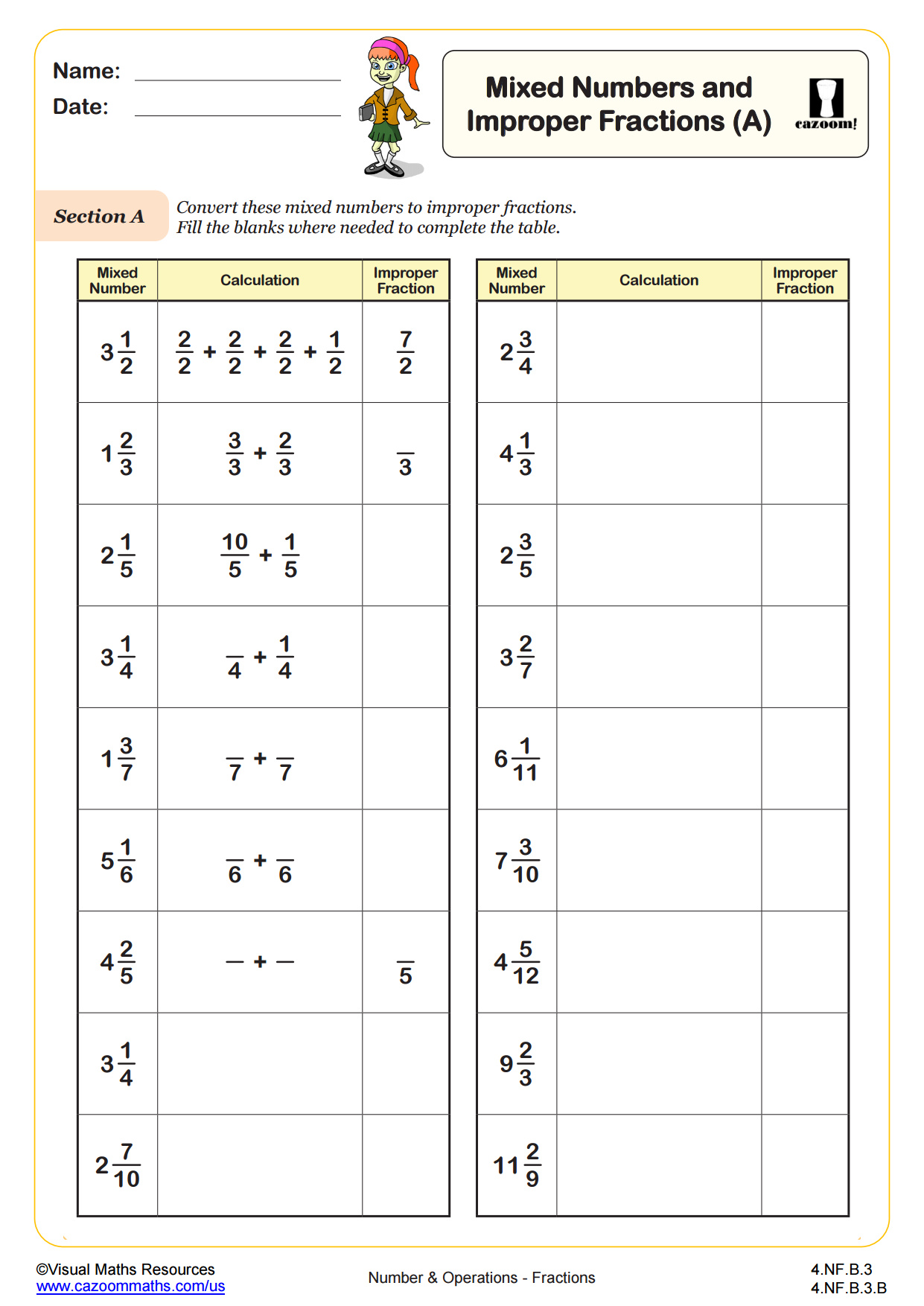
Mixed Numbers & Improper Fractions (A)
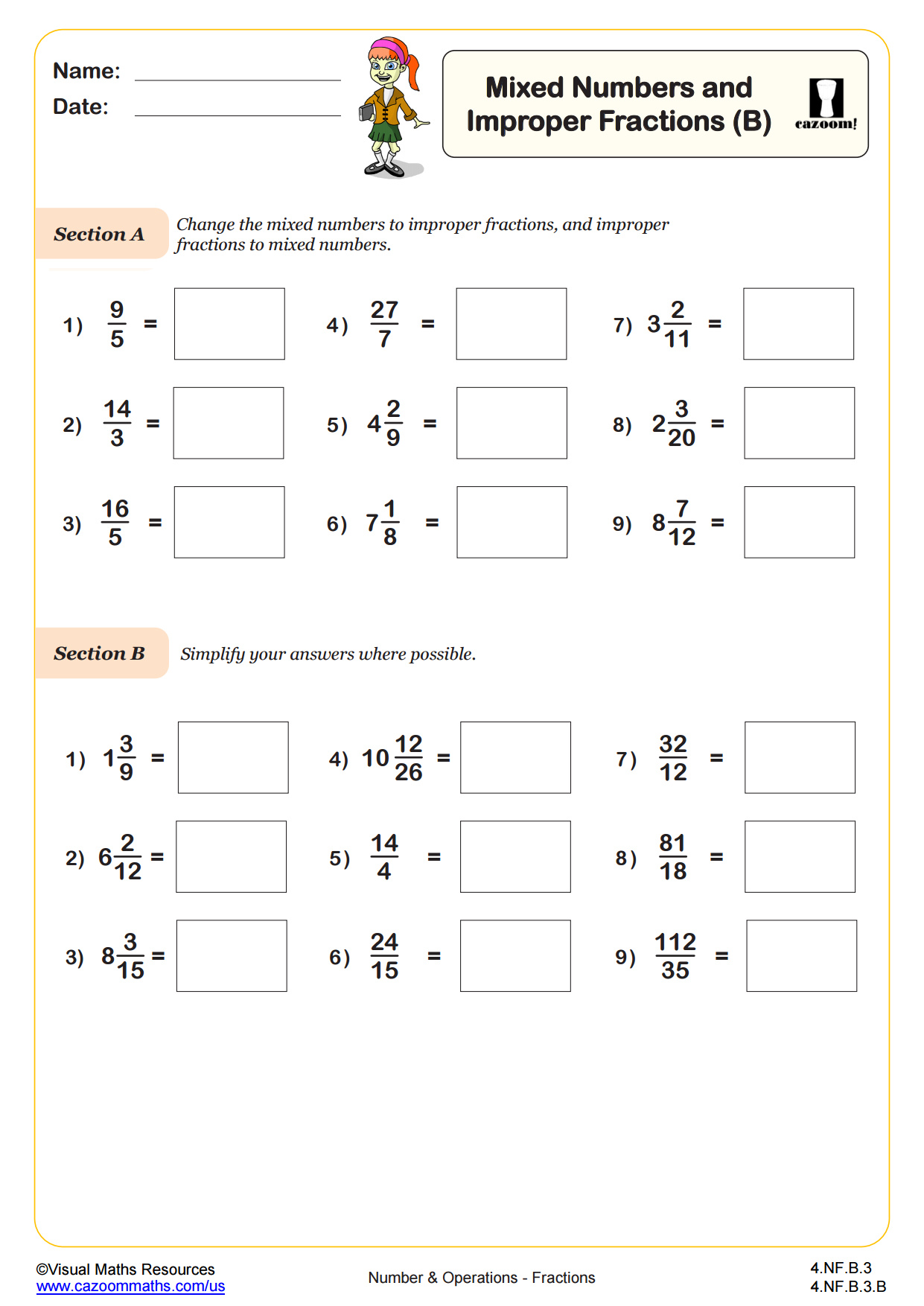
Mixed Numbers & Improper Fractions (B)
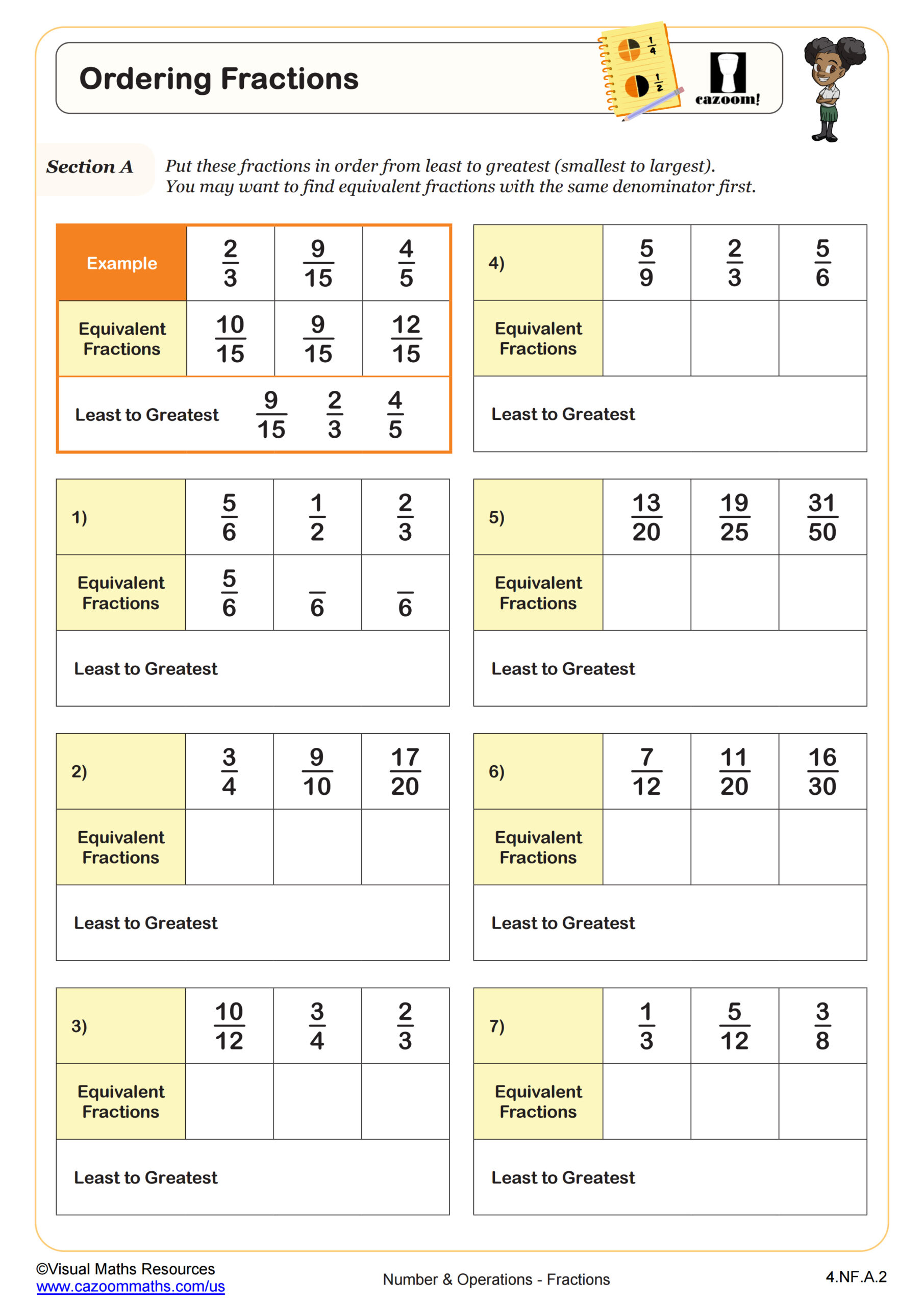
Ordering Fractions
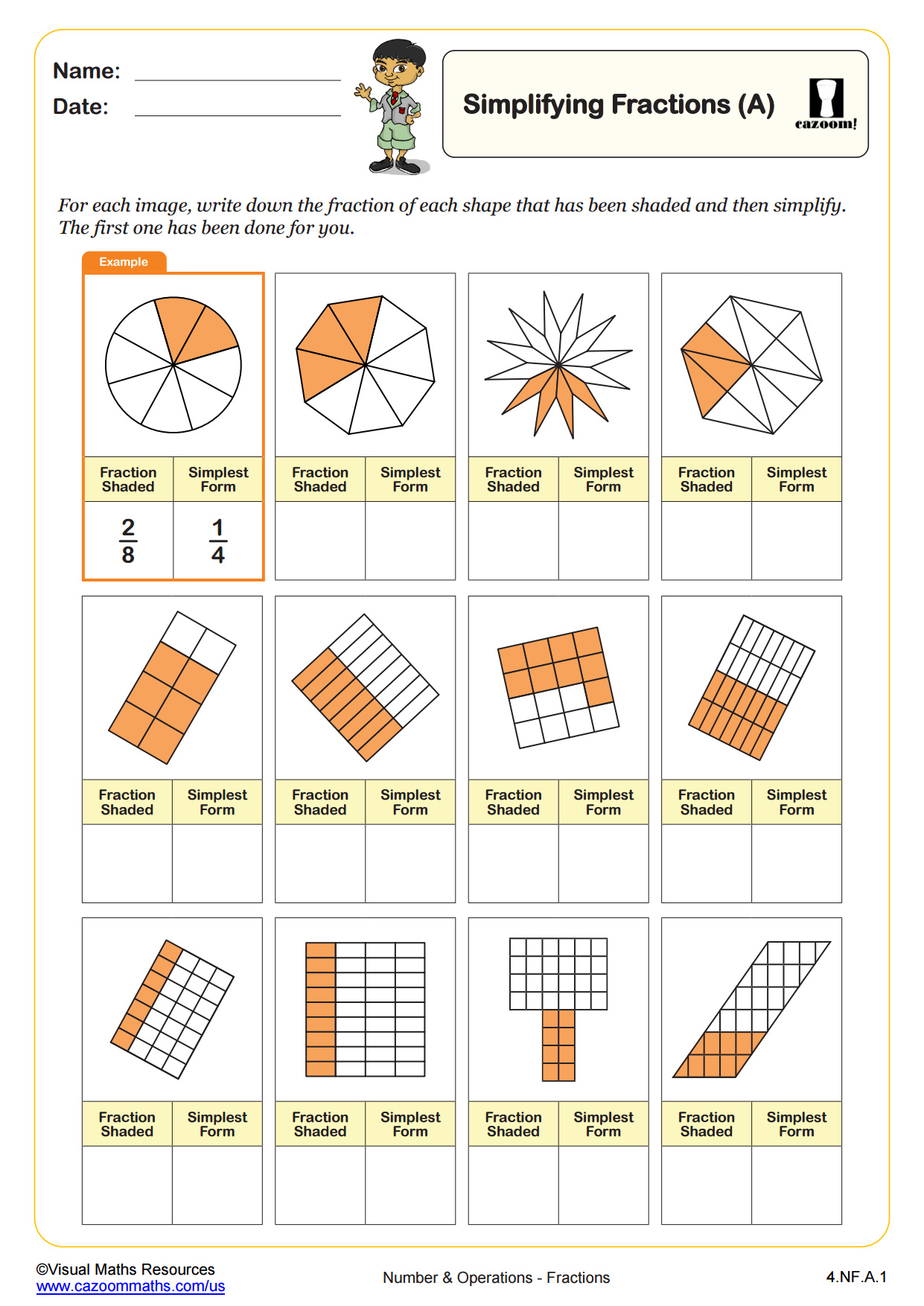
Simplifying Fractions (A)
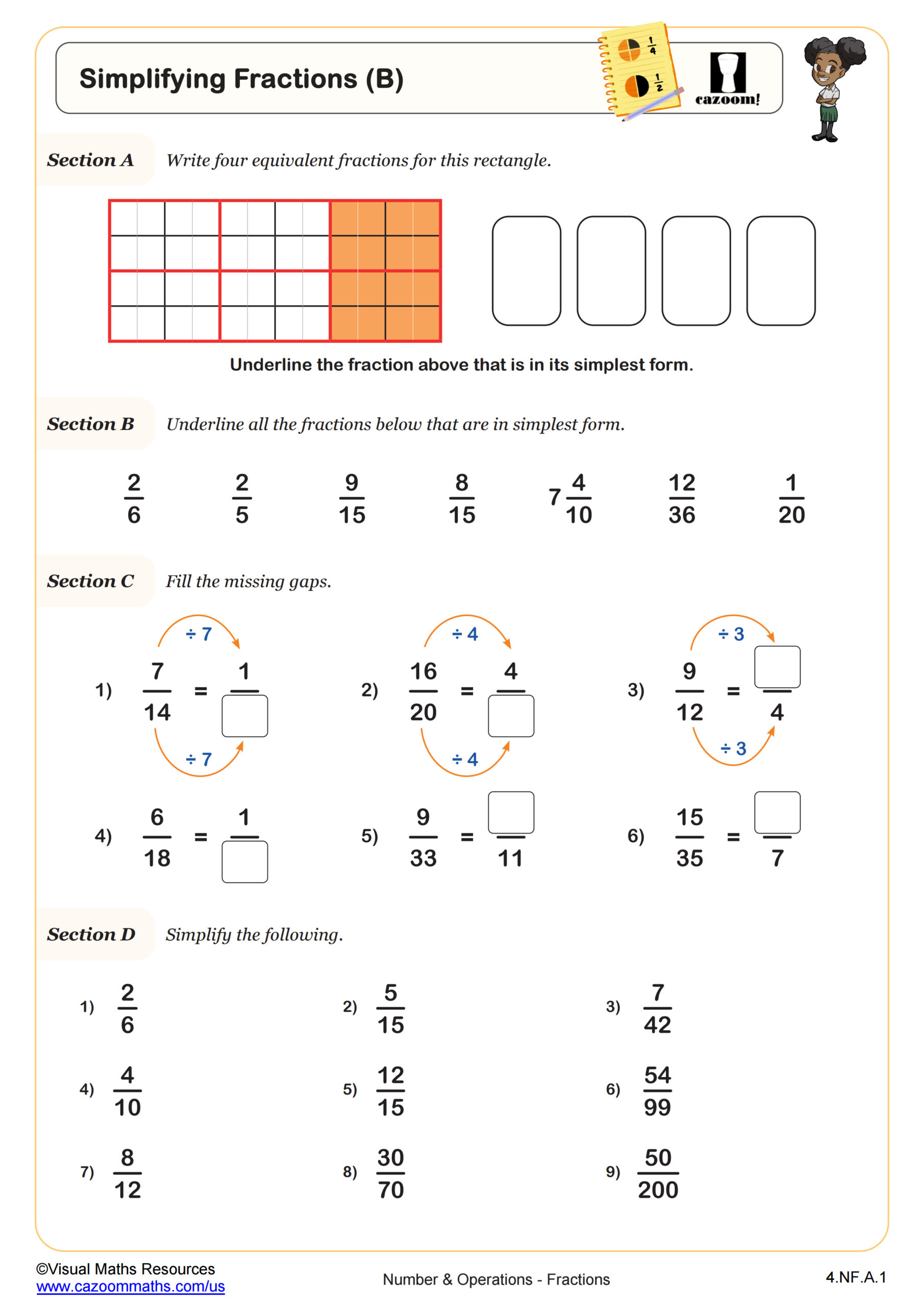
Simplifying Fractions (B)
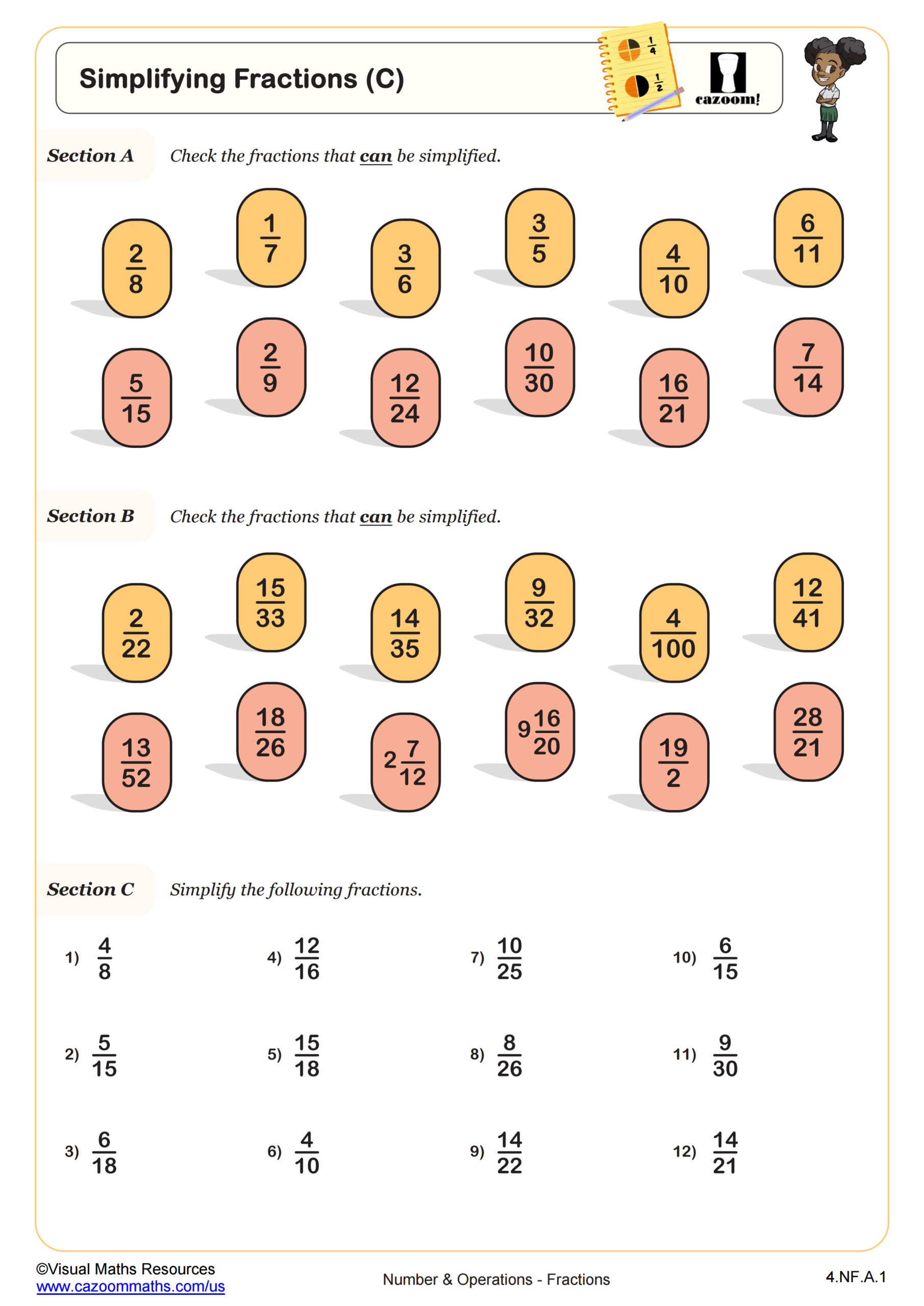
Simplifying Fractions (C)
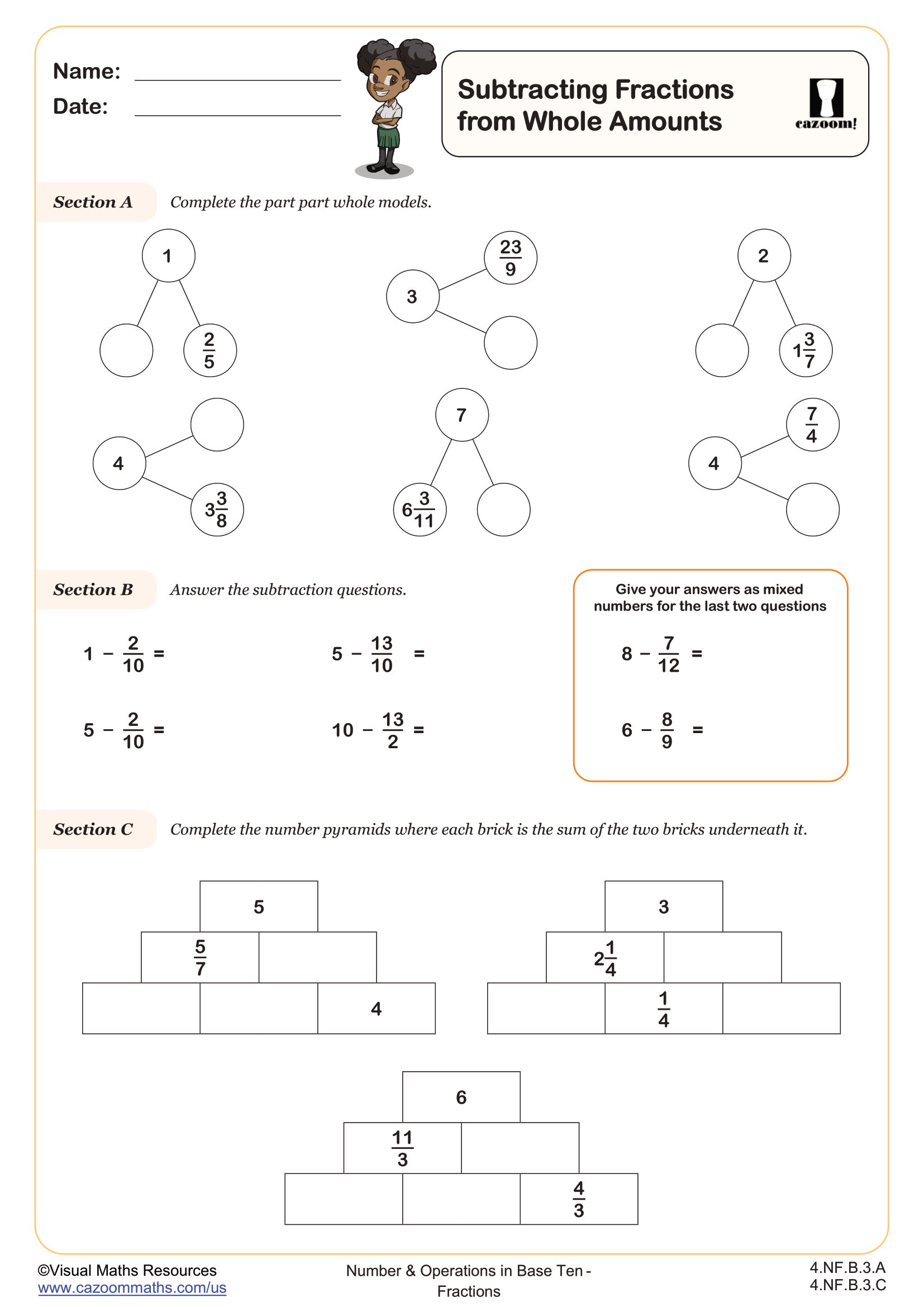
Subtracting Fractions from Whole Amounts
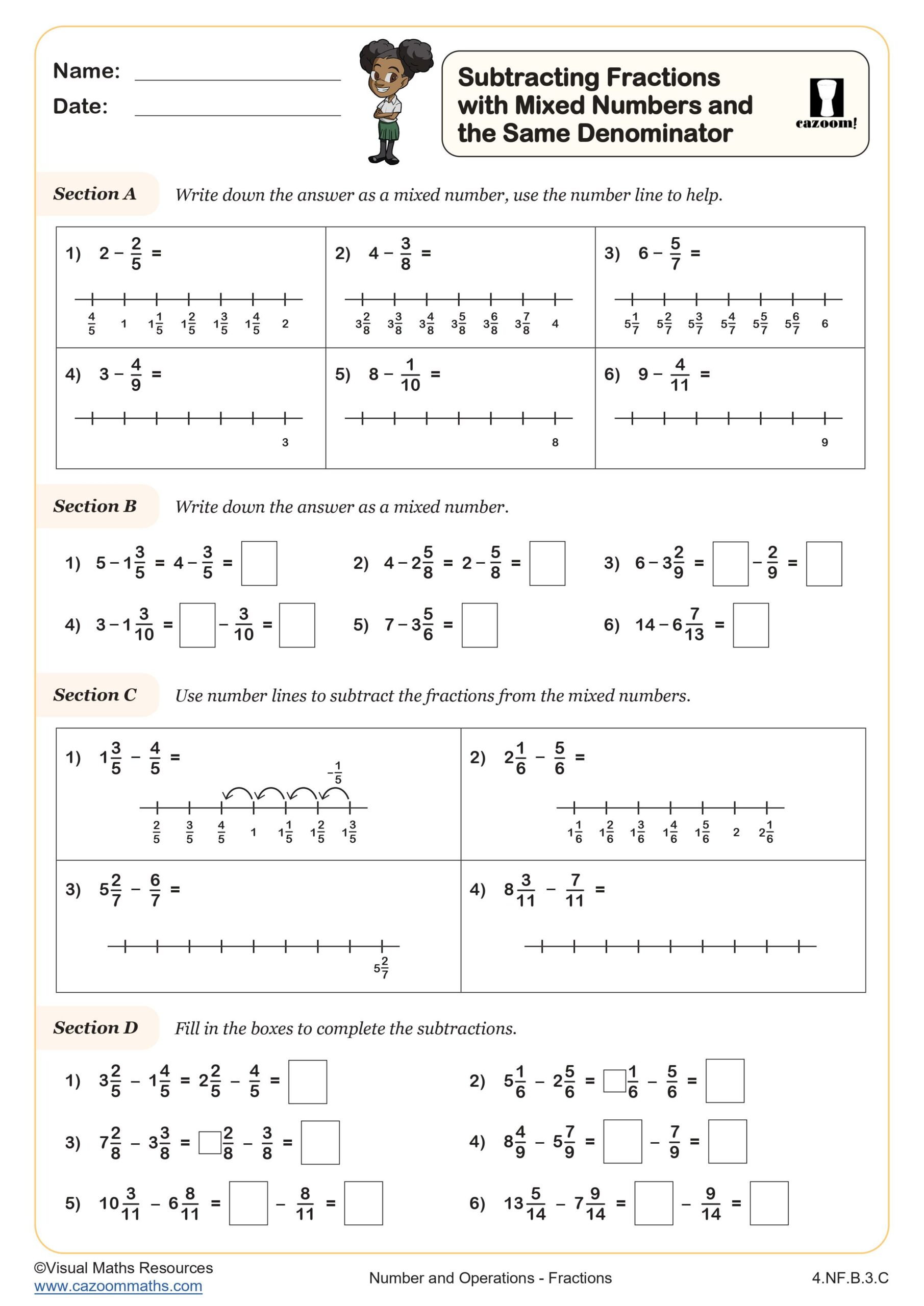
Subtracting Fractions with Mixed Numbers and the Same Denominator
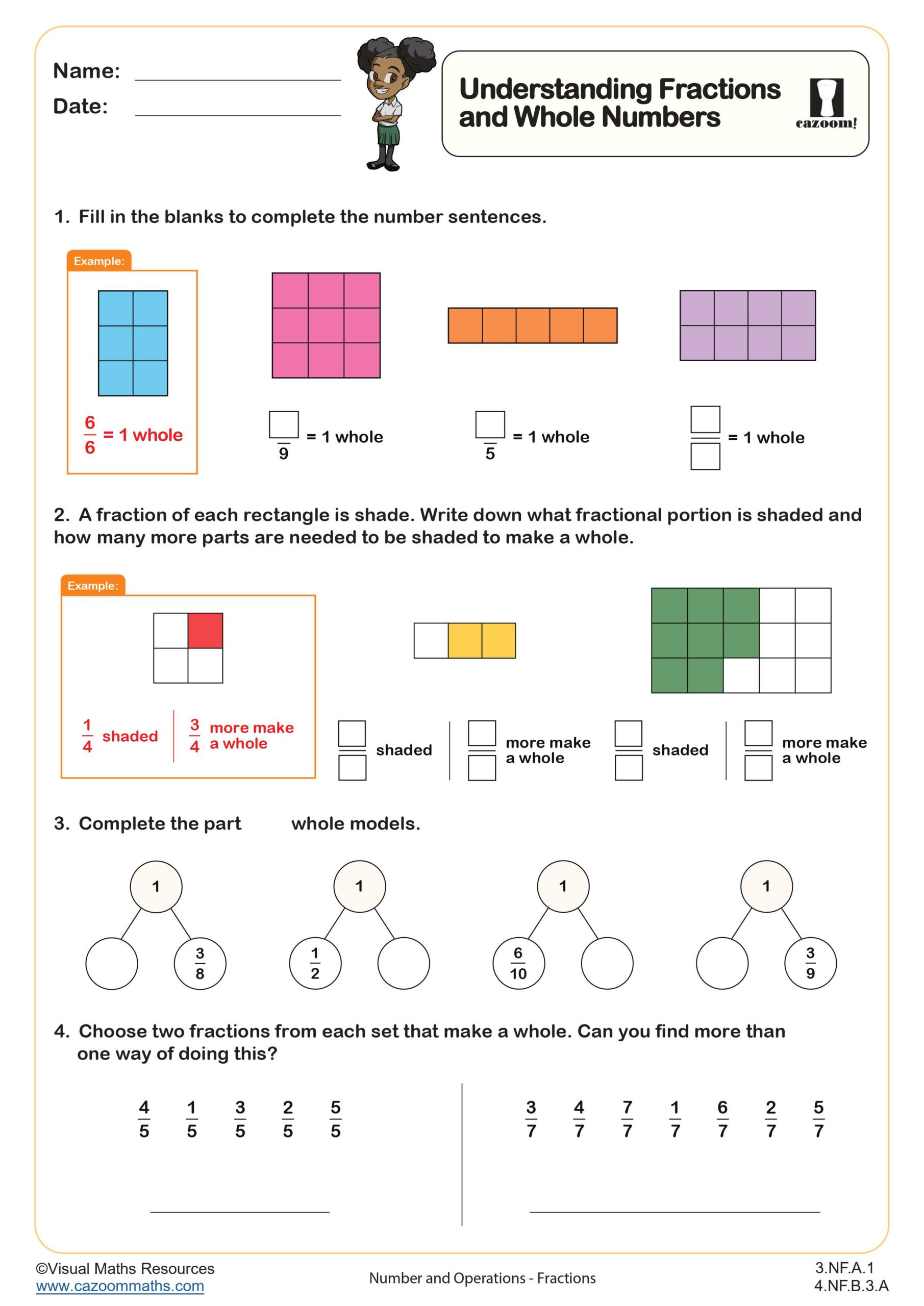
Understanding Fractions and Whole Numbers
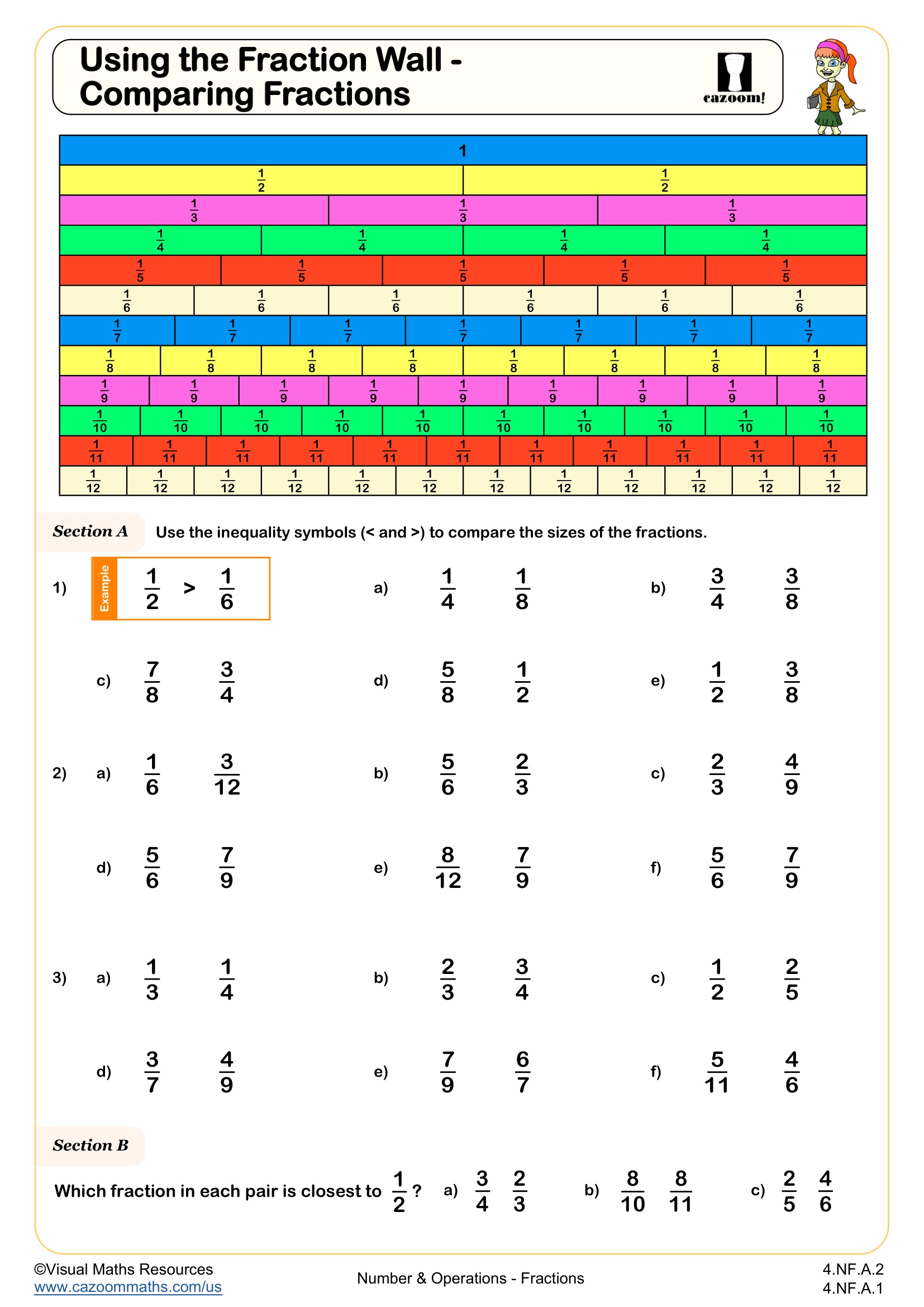
Using a Fraction Wall - Comparing Fractions
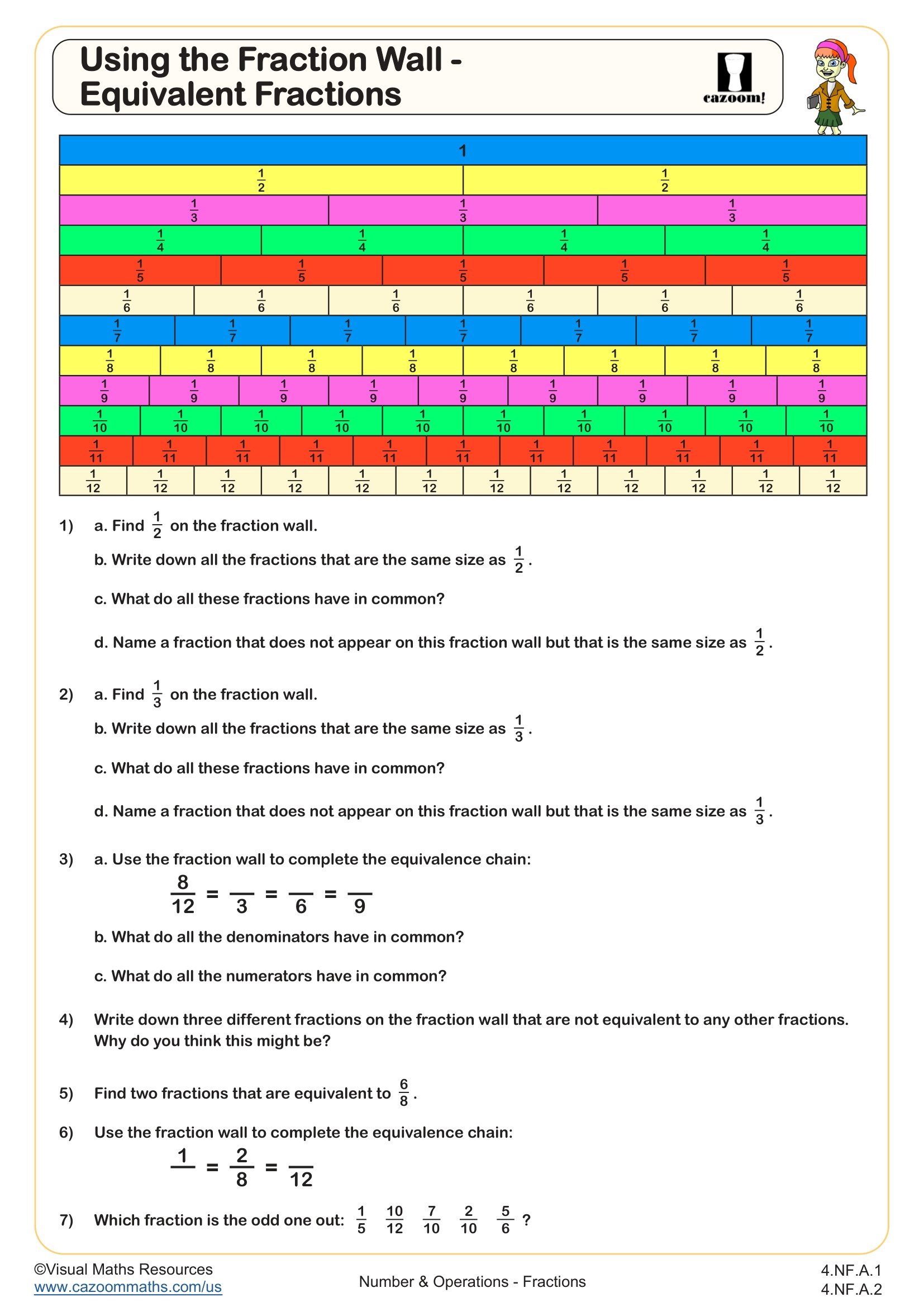
Using a Fraction Wall - Equivalent Fractions
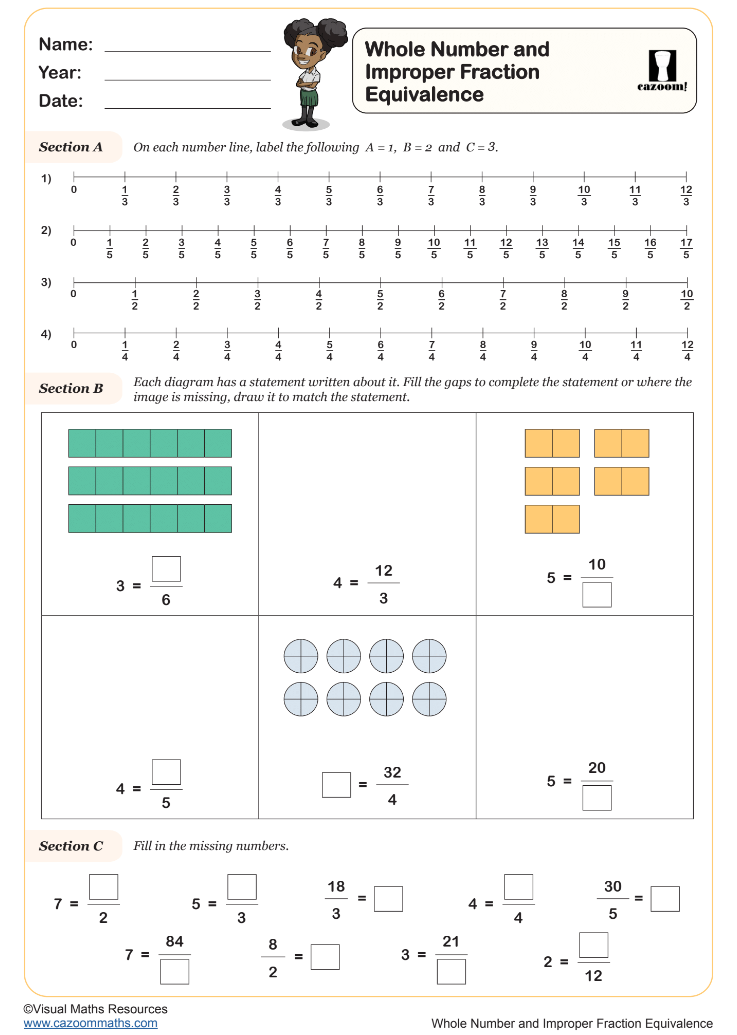
Whole Number and Improper Fraction Equivalence
All worksheets are created by the team of experienced teachers at Cazoom Math.
Make Math Click Instantly With Our Printable PDF 4th Grade Number Resources
Fourth grade marks a significant transition in fraction understanding. Students move from basic fraction recognition to comparing, ordering, and computing with fractions. Previous grades introduced simple fractions through visual models. Now students work with equivalent fractions, mixed numbers, and decimal connections. Regular practice with varied problems helps students recognize patterns and develop flexibility. Visual supports gradually fade as abstract thinking strengthens. Daily fraction work helps prevent gaps that can complicate future algebra learning.
Through consistent practice, students master equivalent fraction relationships and develop mental computation strategies for working with parts of wholes. They learn to connect fractions to decimal notation while building accurate comparison skills. These worksheets strengthen number line reasoning as students position fractions and visualize their relationships. The varied problem formats prepare students for standardized test questions they'll encounter throughout the year. This systematic approach lays a foundation for ratio concepts and proportional reasoning, which become essential in middle school mathematics. Each practice session reinforces both conceptual understanding and procedural skills needed for fraction fluency.
Core Math Areas Strengthened by These Elementary School Fraction Worksheets
The worksheets help students develop their skills in moving from visual fraction models to abstract reasoning by building confidence. The learning sequence begins with fraction walls and bar models before students move on to conversion skills, equivalence, and mixed-number operations. The worksheets include complete, step-by-step answer keys that allow students to work independently, while teachers can use them to streamline their work. The activities become progressively more challenging yet remain within reach, helping students build their comprehension skills. Students develop their fraction fluency through hands-on activities with visual aids and number lines, as well as problem-solving exercises that link their visual understanding to standard mathematical notation.
Why Schools Choose Cazoom Math Grade 4 Fraction Activities for Easy Learning
Teachers appreciate worksheets that adapt to different learning speeds. Quick finishers tackle extension problems while others work at their own pace. Clear formatting reduces prep time and copying costs. Problems progress logically within each worksheet and across the collection. Answer sheets reveal solution methods rather than just final answers. This transparency enables teachers to identify misconceptions quickly. Differentiation becomes manageable when resources offer multiple entry points. Five-minute warm-ups work as effectively as complete lessons. Homework assignments reinforce classroom learning without overwhelming families. Regular spiral review maintains skills throughout the school year.
The Real-World Math That Starts With 4th Grade Fraction Worksheets
Fourth graders apply their knowledge in numerous daily situations. Understanding fractions makes real-world mathematics accessible and meaningful. For example-
• Measuring ingredients for recipes
• Dividing pizza or treats fairly
• Calculating distances on maps
• Comparing prices and discounts