4th Grade Geometry Worksheets
All worksheets are created by the team of experienced teachers at Cazoom Math.
What topics are covered in a geometry worksheet for class 4?
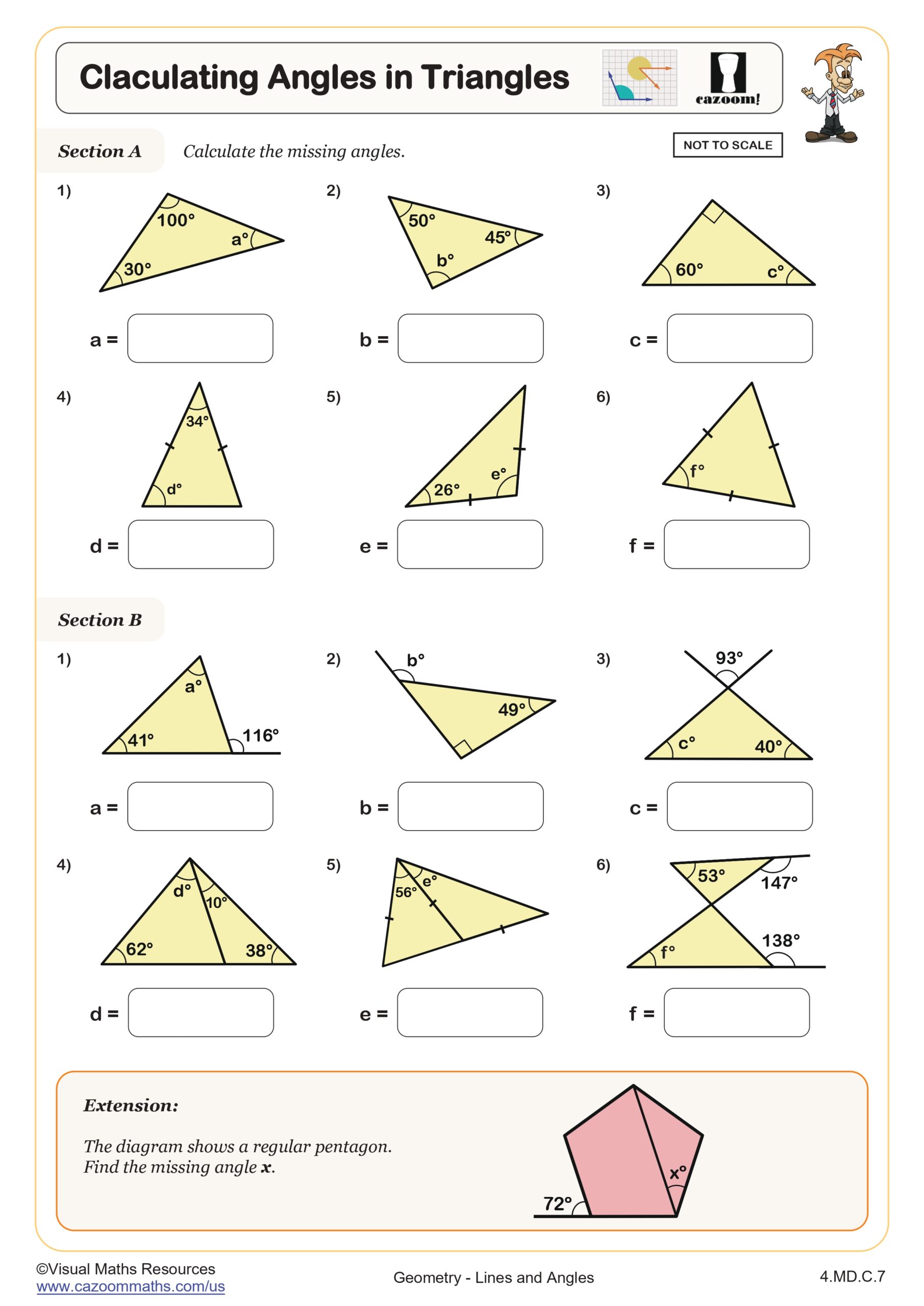
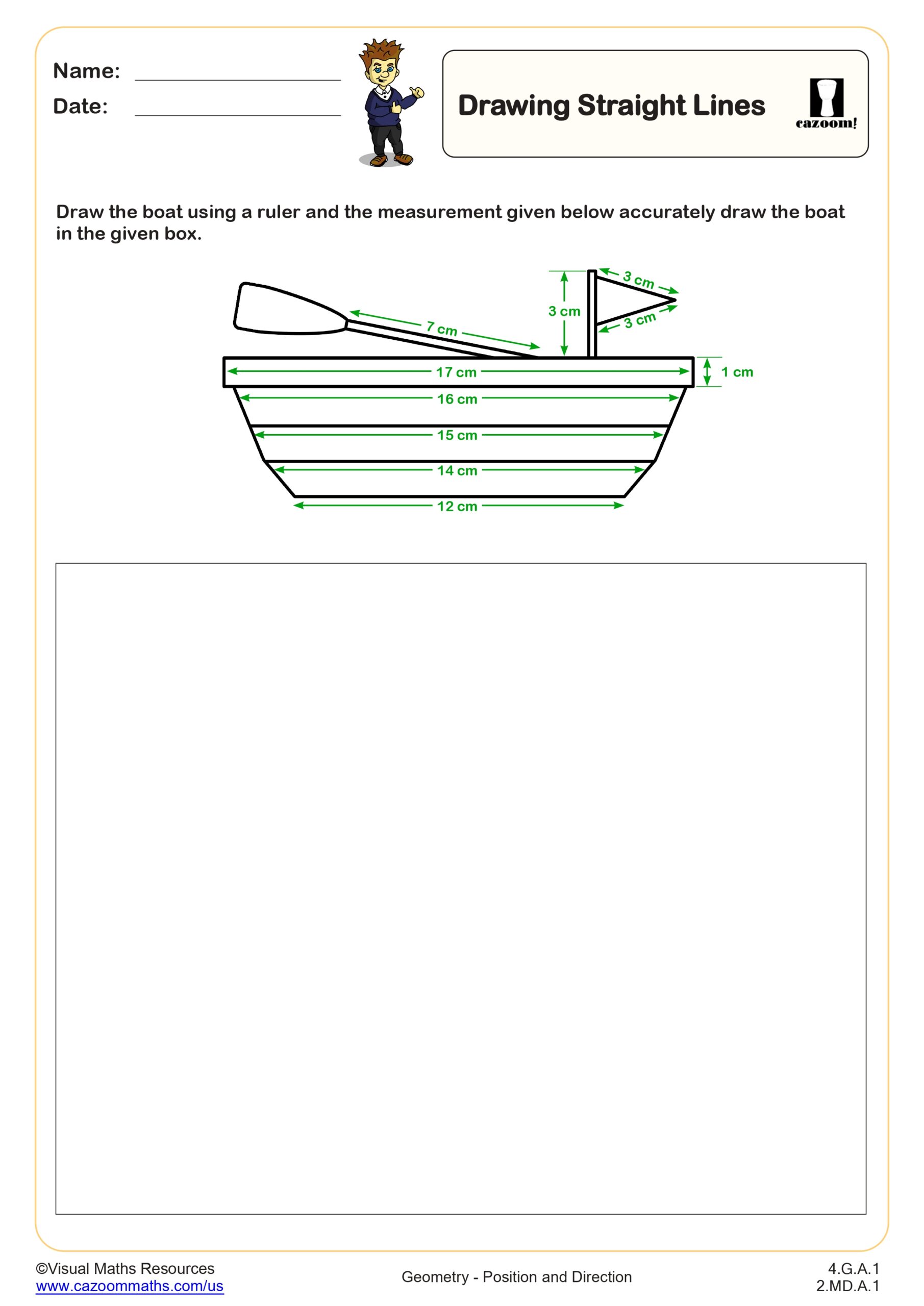
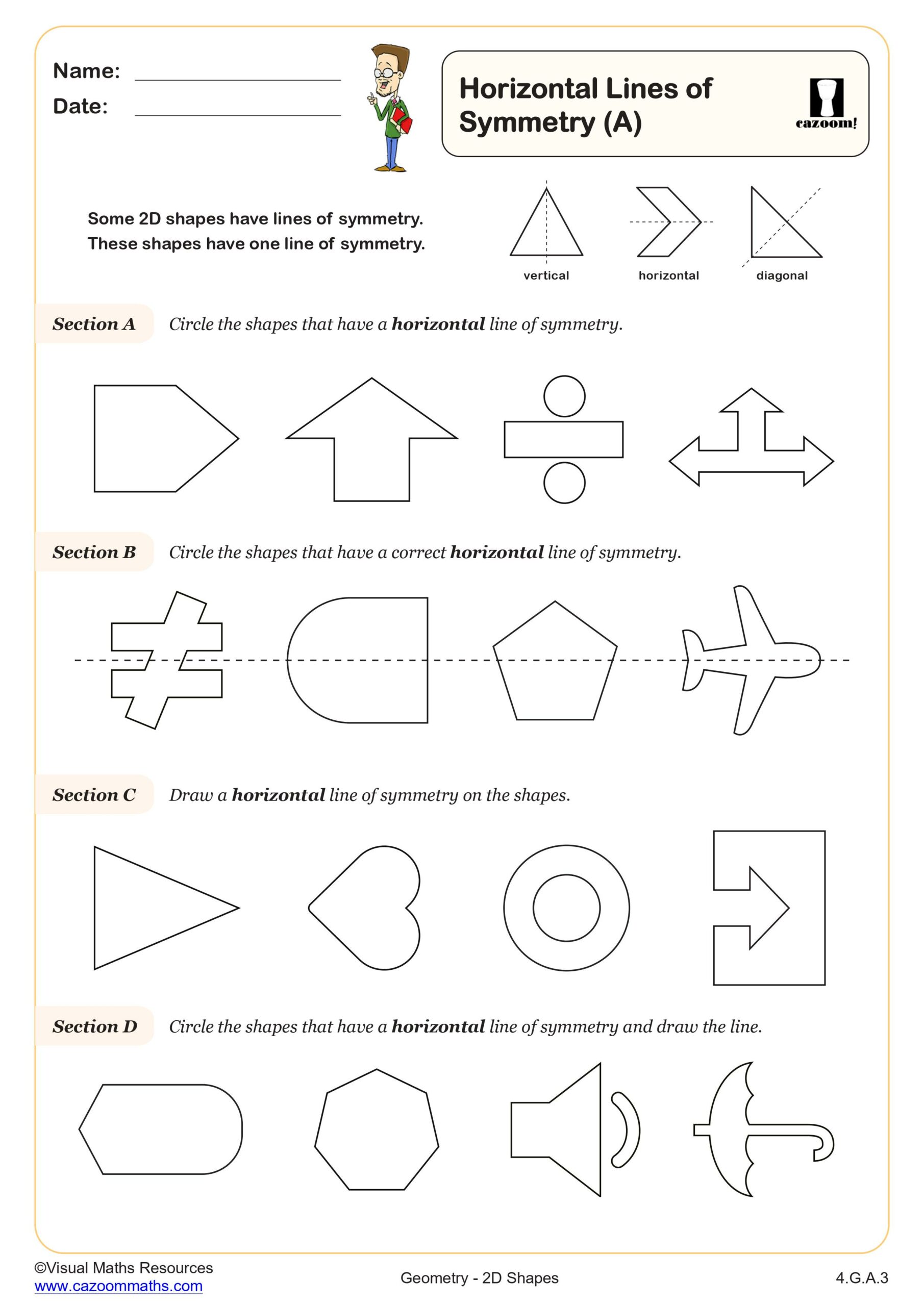
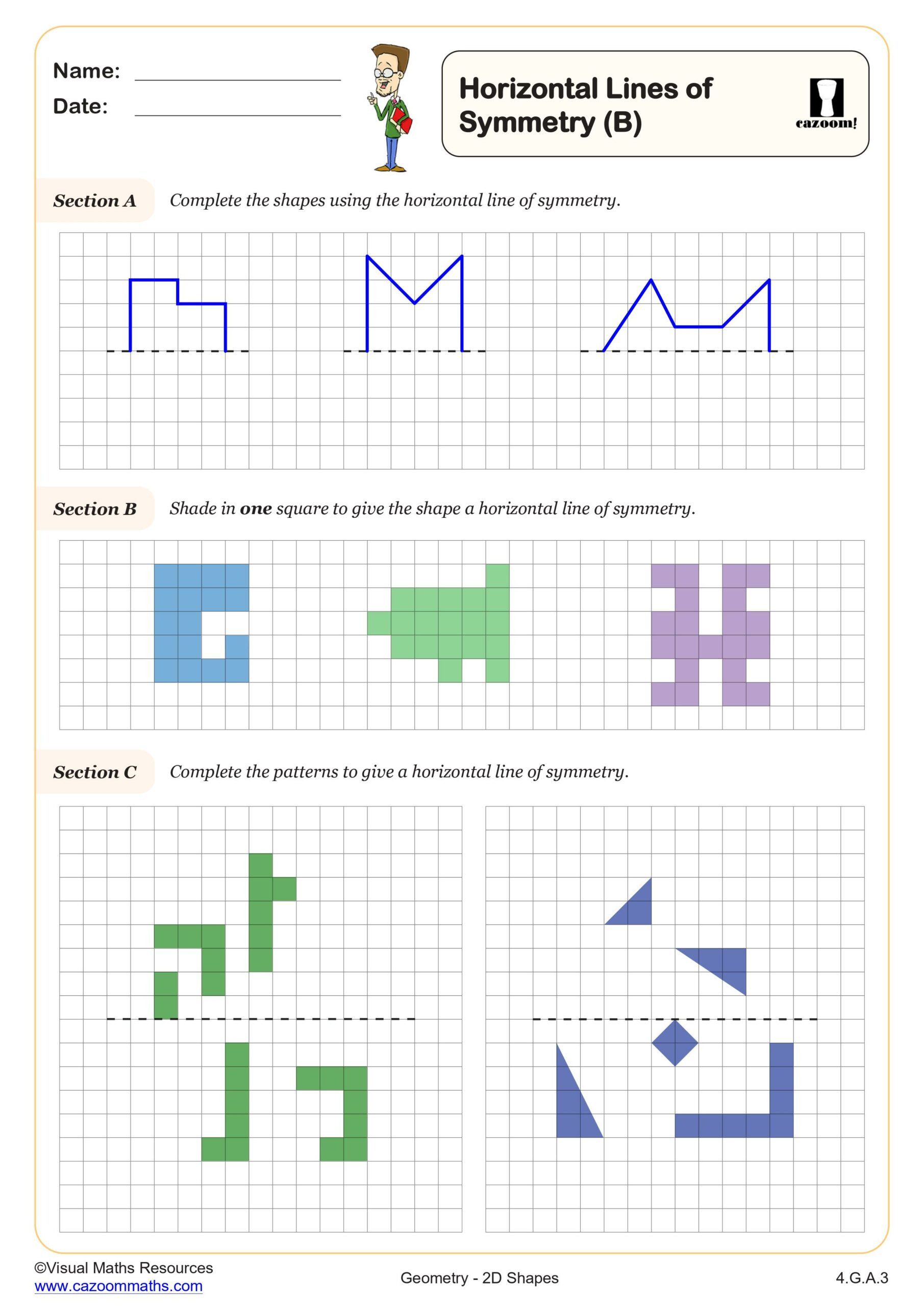
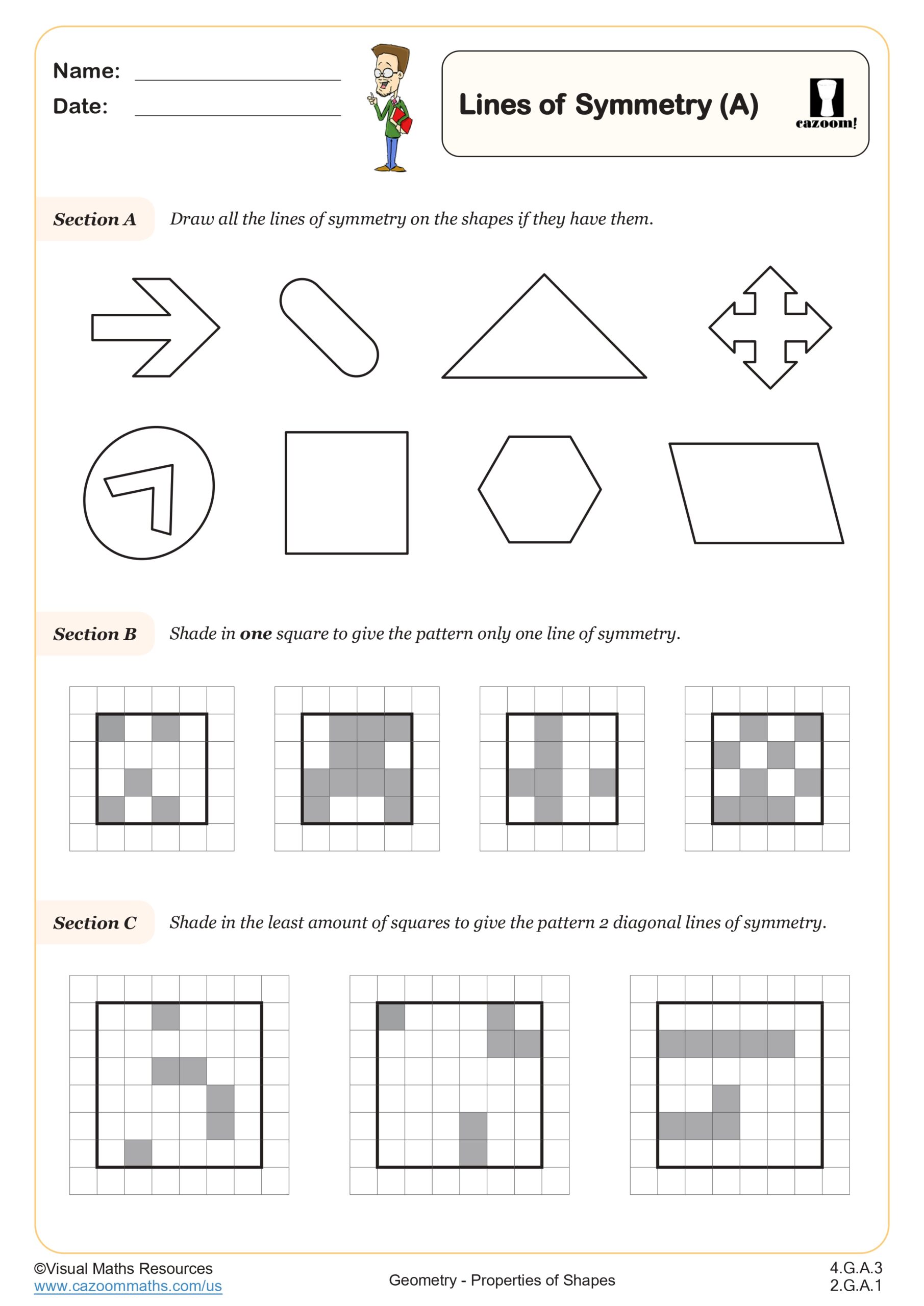
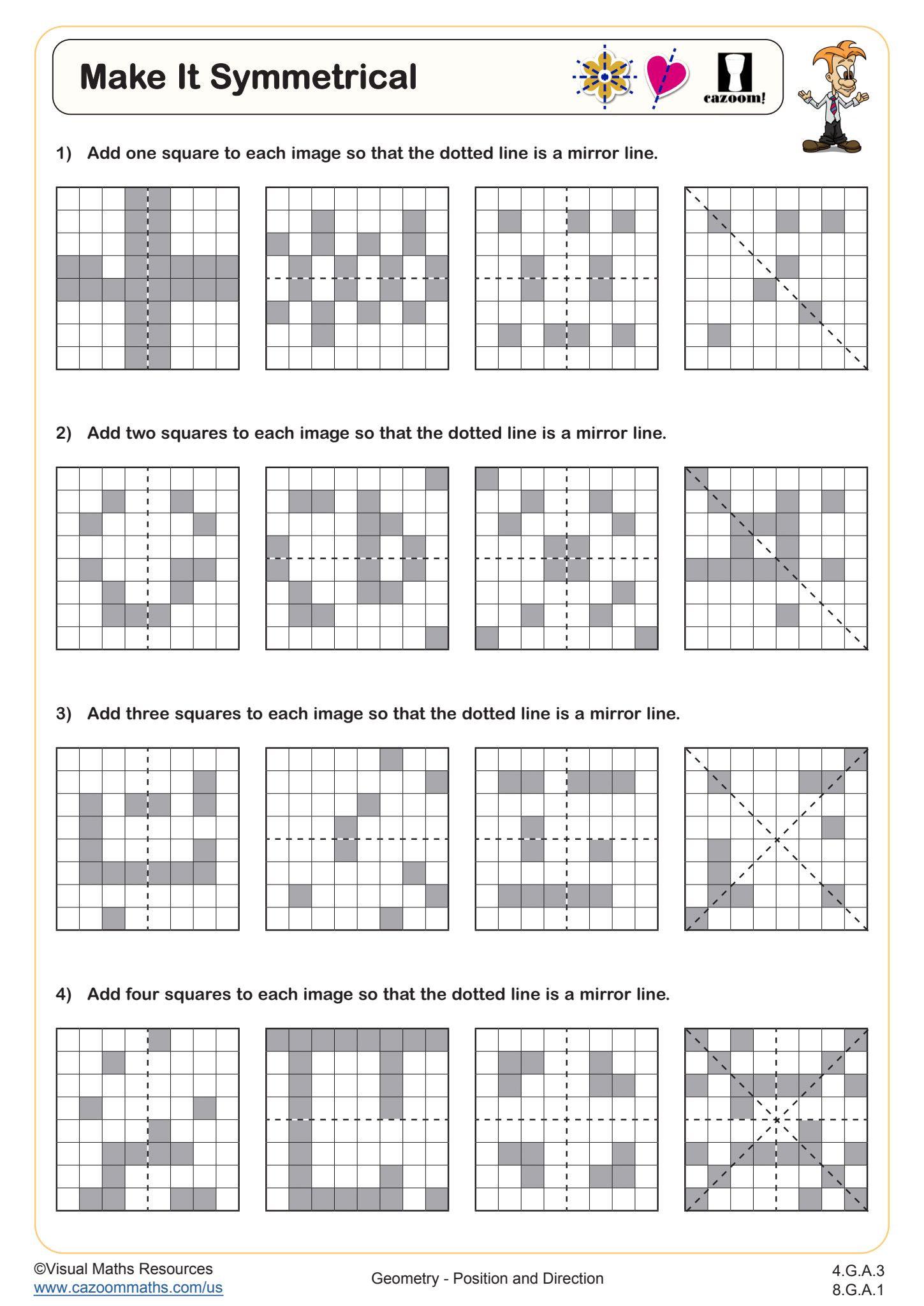
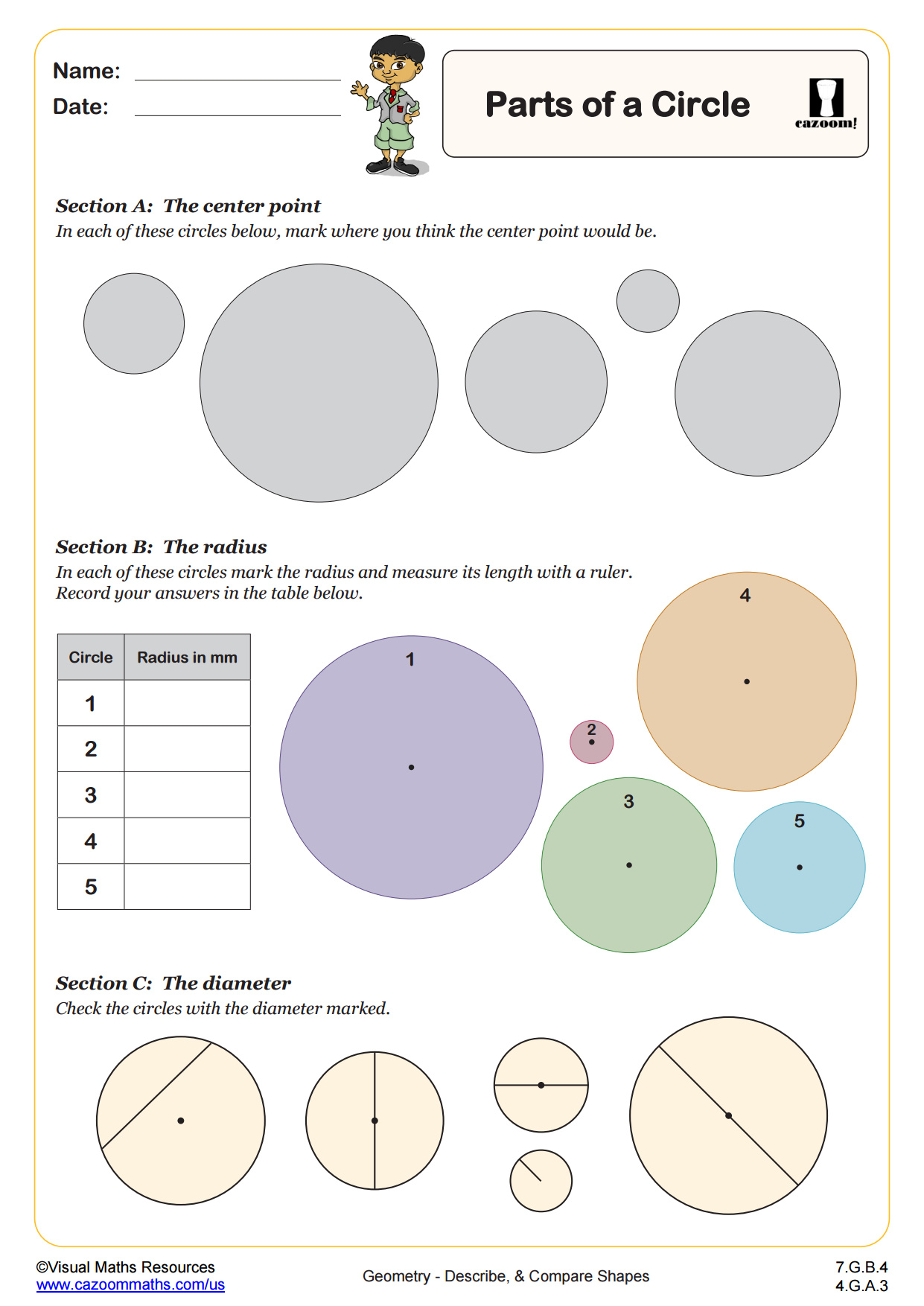
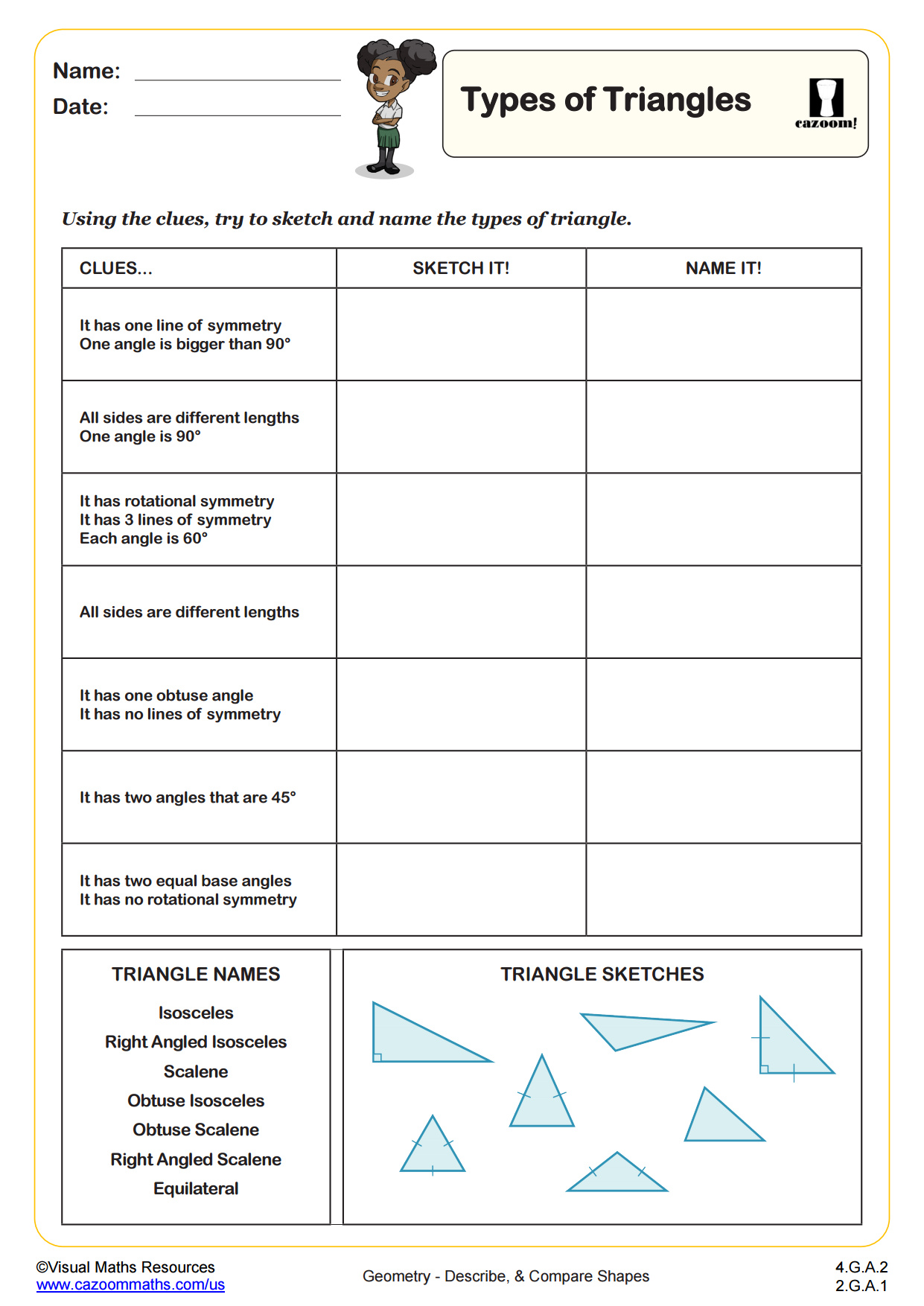
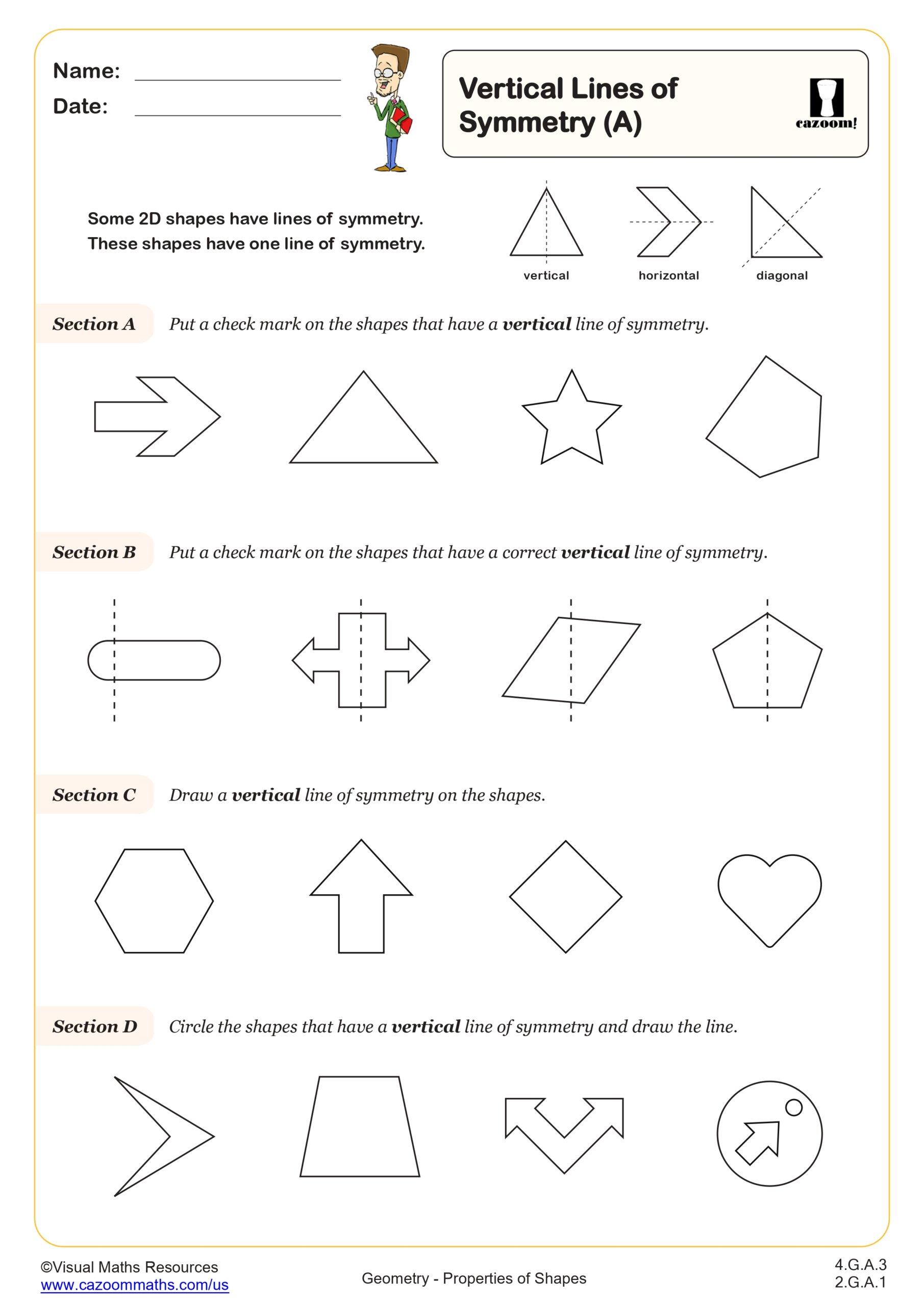
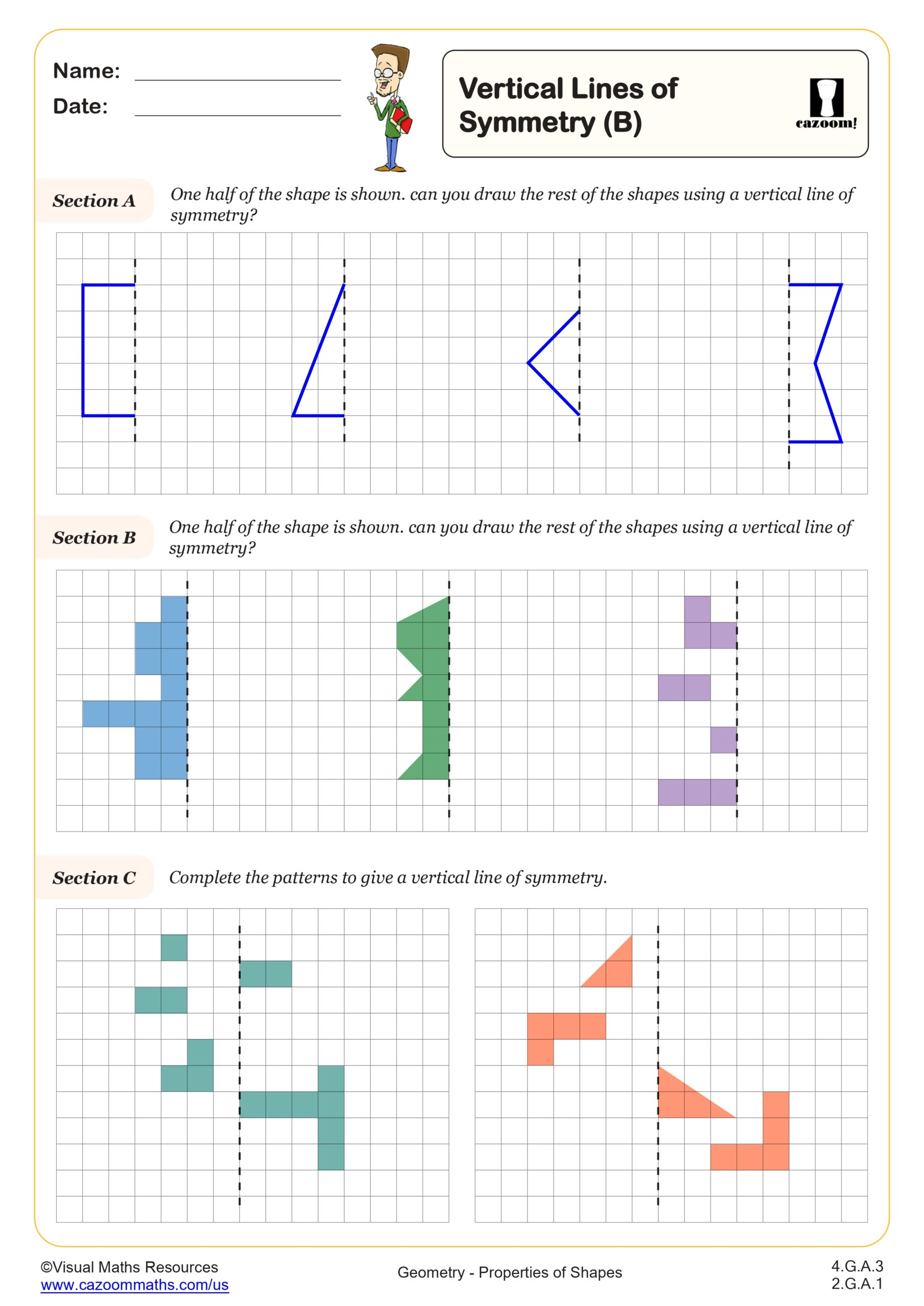
A geometry worksheet for class 4 typically covers the four main Common Core geometry standards: drawing and identifying points, lines, line segments, rays, angles, and perpendicular and parallel lines; classifying two-dimensional figures based on properties; recognizing lines of symmetry; and understanding that shapes can have multiple lines of symmetry. These worksheets align with standards 4.G.1, 4.G.2, and 4.G.3.
Teachers frequently observe that students make errors when identifying obtuse versus acute angles, often guessing based on visual appearance rather than understanding the 90-degree benchmark. Many grade 4 geometry worksheets include angle measurement practice using protractors, though some focus on visual estimation to build intuitive understanding before introducing precise measurement tools.
Are 4th grade geometry worksheets appropriate for students at different skill levels?
4th grade geometry worksheets work well for students performing at grade level, but teachers often need to differentiate for varying abilities. Advanced students benefit from worksheets that include coordinate plane introduction or multi-step problems combining several geometric concepts. Struggling students may need worksheets that focus on one concept at a time with larger visual aids.
Many teachers use these worksheets with 3rd graders who show readiness for geometric reasoning or with 5th graders who need reinforcement before tackling coordinate geometry. The visual nature of geometry makes these worksheets particularly effective for English language learners, as the concepts often translate across languages more easily than algebraic thinking.
How do students typically struggle with symmetry on 4th grade geometry worksheets?
Students commonly assume that shapes have only vertical or horizontal lines of symmetry, missing diagonal possibilities entirely. Teachers notice this misconception most clearly when students work with squares, diamonds, or regular polygons. Many students also confuse rotational symmetry with line symmetry, thinking that if a shape looks the same when rotated, it must have a line of symmetry.
Effective worksheets include activities where students fold paper shapes to physically test for lines of symmetry. This hands-on approach helps students understand that symmetry means one half mirrors the other exactly. Teachers find that connecting symmetry to real objects like butterfly wings, building facades, or car designs helps students recognize symmetry beyond worksheet examples.
How should teachers use answer keys with 4th grade geometry worksheets?
Answer keys work best when teachers use them to identify patterns in student errors rather than just marking right or wrong. When students consistently miss parallel line identification problems, teachers can address the underlying misconception about parallel lines needing to be horizontal. Answer keys also help teachers quickly identify which geometric vocabulary terms need reinforcement.
Many teachers find success having students self-check certain sections using answer keys, particularly when practicing basic shape classification or angle identification. This immediate feedback helps students catch errors in reasoning before they become habits. However, teachers should review student work on complex problems like multi-step symmetry identification to ensure students understand the process, not just the final answer.