4th Grade Methods for Addition Worksheets
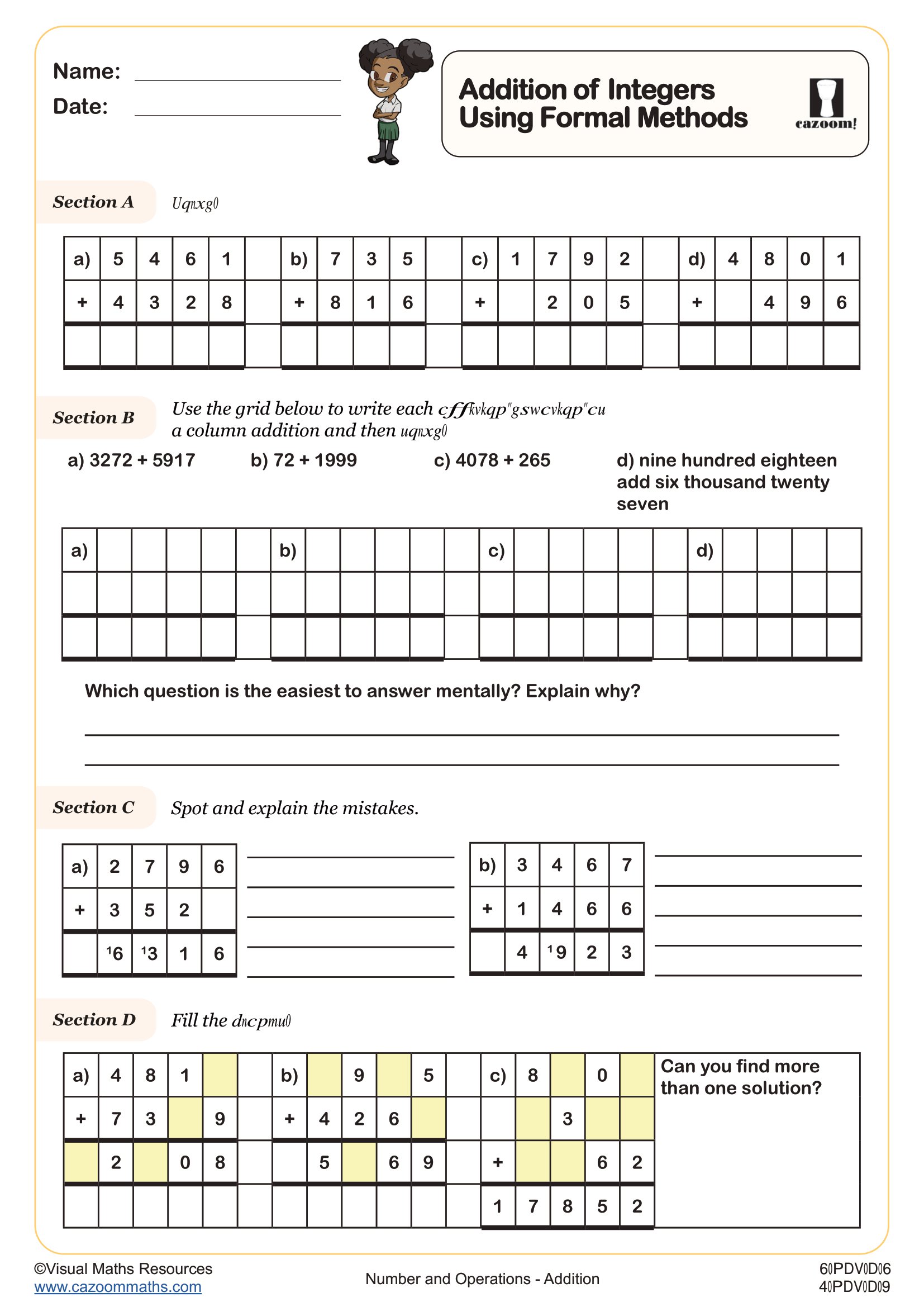
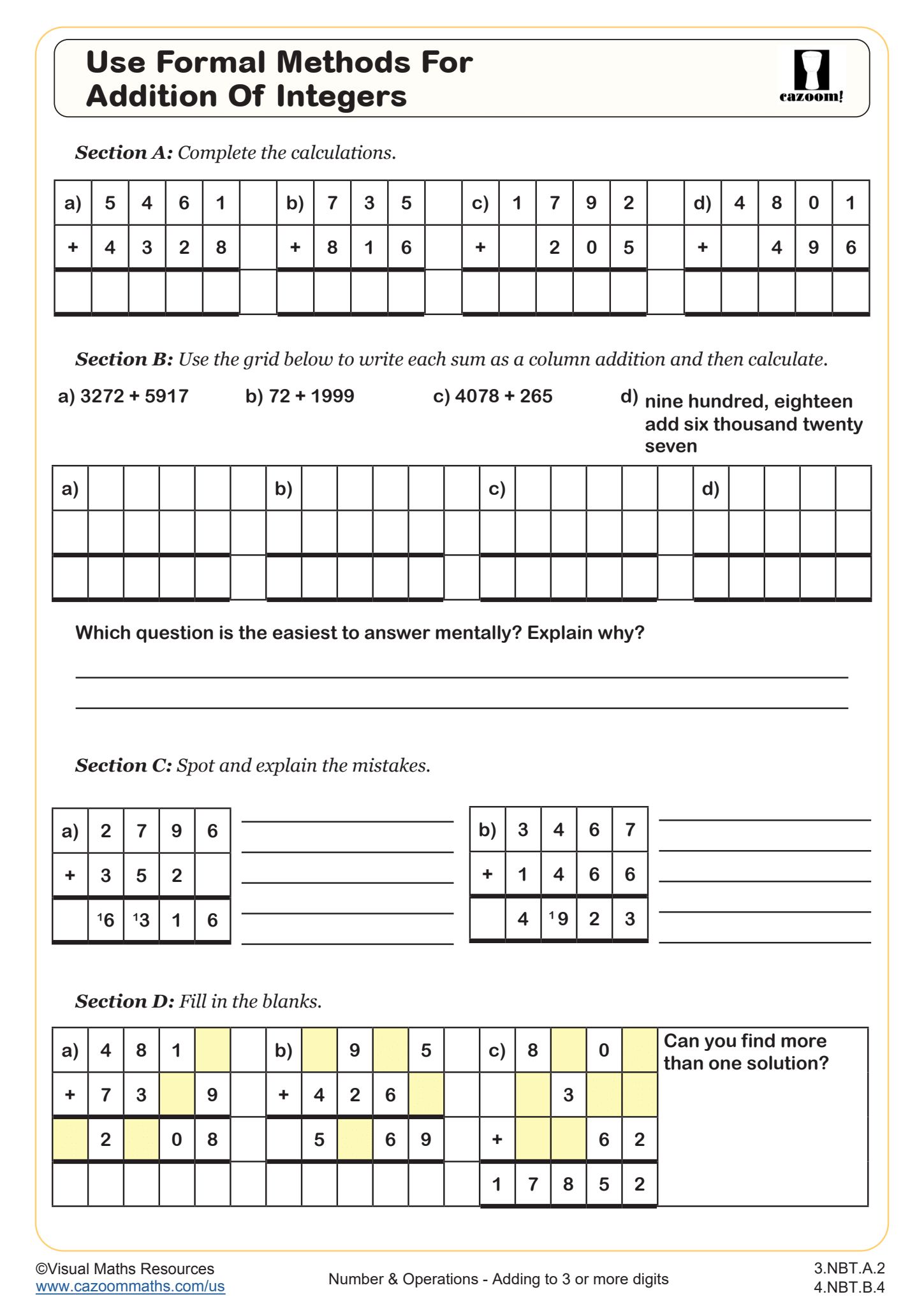
All worksheets are created by the team of experienced teachers at Cazoom Math.
What Are Formal Methods for Addition?
Formal methods for addition refer to the standard algorithm taught in elementary schools, where students add numbers column by column from right to left, regrouping (carrying) when necessary. This systematic approach works with any size numbers and provides a reliable strategy that students can apply consistently. The method emphasizes place value understanding as students recognize that regrouping ten ones creates one ten, or ten tens creates one hundred.
Many students initially confuse where to write the regrouped digit, placing it in the answer row instead of above the next column. Teachers notice this error disappears when students use small, clear notation above each column and verbalize the process: "twelve ones equals one ten and two ones." Practicing with graph paper helps students maintain column alignment, which prevents place value errors that lead to incorrect sums.
What Should 4th Graders Know About Addition Methods?
By fourth grade, students should fluently add multi-digit whole numbers using the standard algorithm, including problems that require multiple regrouping steps across different place values. The Common Core State Standards expect fourth graders to add numbers into the millions place and explain why the algorithm works based on place value and properties of operations. Students at this level should recognize when regrouping is necessary and execute it accurately without relying on manipulatives.
This skill builds directly on third grade work with addition within 1,000 and prepares students for fifth grade decimal addition, where the same formal method applies with careful attention to decimal point alignment. Students who struggle with formal addition methods in fourth grade often lack automaticity with single-digit addition facts, making it difficult to focus on the regrouping process. Strengthening basic fact fluency alongside algorithm practice yields the best results.
How Does the Standard Addition Algorithm Work?
The standard addition algorithm breaks multi-digit addition into manageable steps by adding one place value column at a time, starting with the ones place and moving left. When a column's sum reaches ten or more, students regroup by writing the ones digit in the answer and carrying the tens digit to the next column. This process continues through each place value until all columns are complete, with the final answer reading from left to right.
This method connects directly to real-world applications where precise calculations matter, from calculating total costs when shopping to determining distances in map work or measuring combined quantities in science experiments. Engineers and architects rely on this same foundational algorithm when using computer programs to add measurements, demonstrating how elementary math skills scale up to professional STEM work. Understanding why the algorithm works, not just memorizing steps, helps students adapt the method to new contexts like adding measurements with different units.
How Can Teachers Use These Addition Worksheets Effectively?
These worksheets provide structured practice with formal addition methods, allowing students to build procedural fluency through repeated application of the standard algorithm. The consistent format helps students focus on the mathematical process rather than decoding varied problem layouts. Answer keys enable students to self-check their work and identify exactly where errors occurred, promoting metacognitive awareness of their calculation process.
Teachers find these worksheets valuable for differentiated instruction, using them with small groups who need additional practice while other students work on enrichment activities. They work well as warm-up exercises to maintain algorithm proficiency, homework assignments that reinforce classroom instruction, or intervention materials for students who struggle with multi-digit addition. Pairing students to complete worksheets together encourages mathematical discussion as they compare strategies and catch each other's regrouping errors before checking against the answer key.