4th Grade Methods for Subtraction Worksheets
All worksheets are created by the team of experienced teachers at Cazoom Math.
What Are the Standard Methods for Subtraction in 4th Grade?
Fourth grade students use the standard algorithm for subtraction, which involves aligning numbers by place value and regrouping when necessary. This method requires subtracting digits from right to left, starting with the ones place and moving through tens, hundreds, and thousands. Students also learn to check their work using addition, confirming that the difference plus the subtrahend equals the minuend.
Many students lose points on assessments when they forget to reduce the digit after regrouping, leaving the original number in the next place value. For example, when solving 503 - 278, students may correctly regroup the hundreds and tens but forget to show the 4 in the hundreds place after borrowing. Worksheets that include problems with multiple regrouping steps help students develop the habit of adjusting each place value systematically.
What Should 4th Graders Know About Subtraction Methods?
By fourth grade, students should subtract multi-digit whole numbers fluently using the standard algorithm, including problems that require regrouping across zeros. The Common Core State Standards expect fourth graders to subtract numbers up to 1,000,000, though most instruction focuses on three and four-digit problems to build confidence. Students should also explain their reasoning and verify answers using estimation or inverse operations.
This work builds directly on third grade subtraction within 1,000 and prepares students for fifth grade decimal subtraction. Teachers often observe that students who master regrouping with whole numbers transition more smoothly to subtracting decimals, as the underlying place value logic remains consistent. The practice with larger numbers also strengthens number sense, helping students recognize when answers are reasonable in multi-step word problems.
Why Is Regrouping Across Zeros Challenging?
Regrouping across zeros requires students to borrow from a place value that itself needs regrouping, creating a chain reaction across multiple columns. For example, in 4,002 - 1,856, students must regroup from the thousands to create ten hundreds, then from the hundreds to create ten tens, and finally from the tens to the ones. This multi-step process challenges students who think of regrouping as a single action rather than a sequential procedure.
This skill connects directly to financial literacy and budgeting scenarios. When calculating change from purchases or determining account balances, situations like subtracting $18.56 from $40.02 require the same logical process. Engineers and scientists also use these methods when calculating measurements, tolerances, and material quantities, making accurate subtraction across zeros a practical workplace skill beyond elementary mathematics.
How Can These Worksheets Support Subtraction Practice?
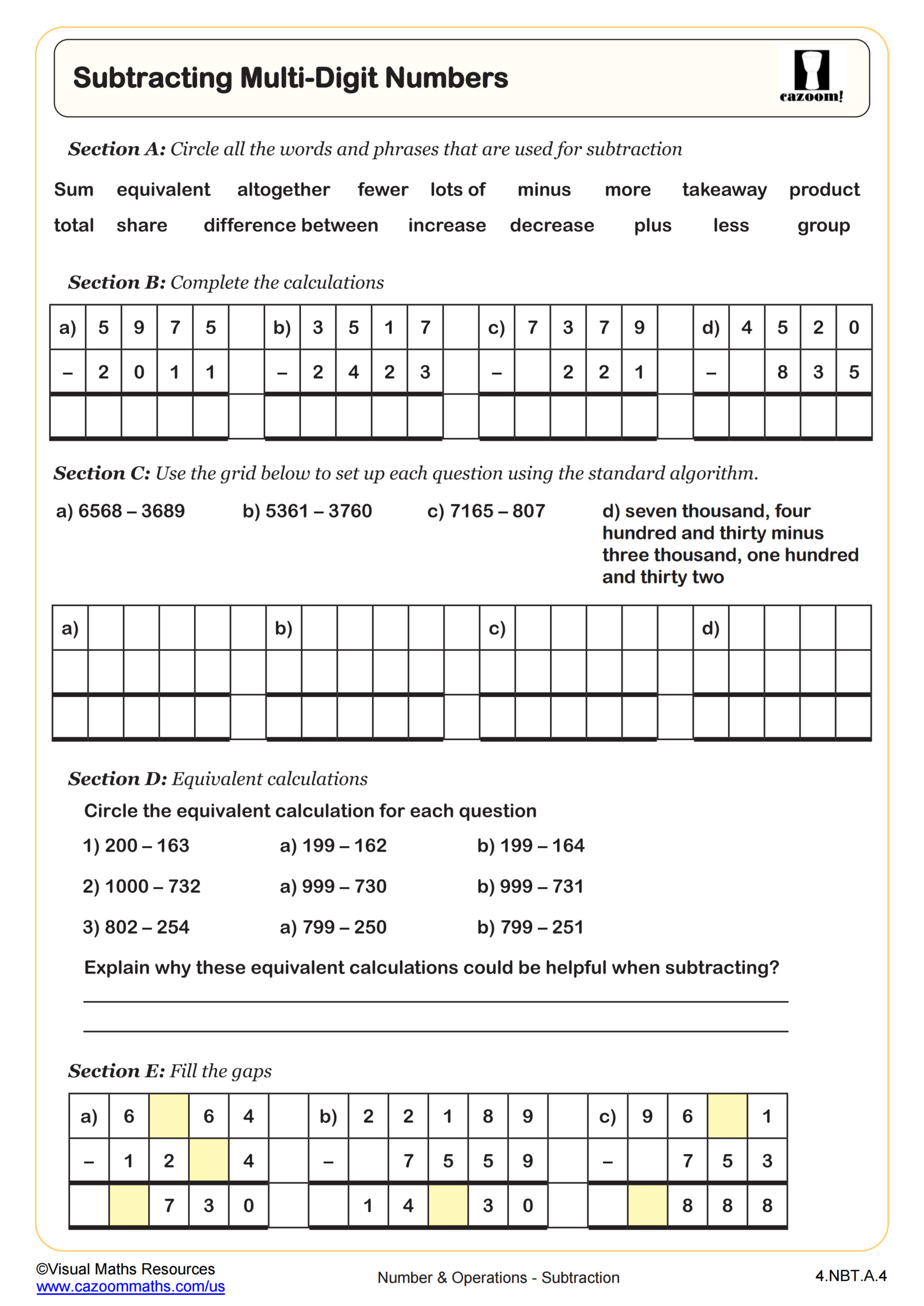
The worksheets provide structured practice with multi-digit subtraction problems that systematically increase in complexity, allowing students to build confidence before tackling more challenging regrouping scenarios. Problems are carefully sequenced to help students recognize patterns in the regrouping process, and the answer keys enable immediate feedback so students can identify and correct errors before they become habits.
Teachers use these worksheets effectively during math workshop rotations, pairing them with manipulatives like base-ten blocks for students who need visual support. They also work well as warm-up activities to maintain computational skills throughout the year or as targeted intervention for students who struggle with standardized test items involving subtraction. Some teachers assign them as homework with parent guides, while others use them for paired work where students check each other's regrouping steps.