4th Grade Pie Charts and Bar Charts Worksheets
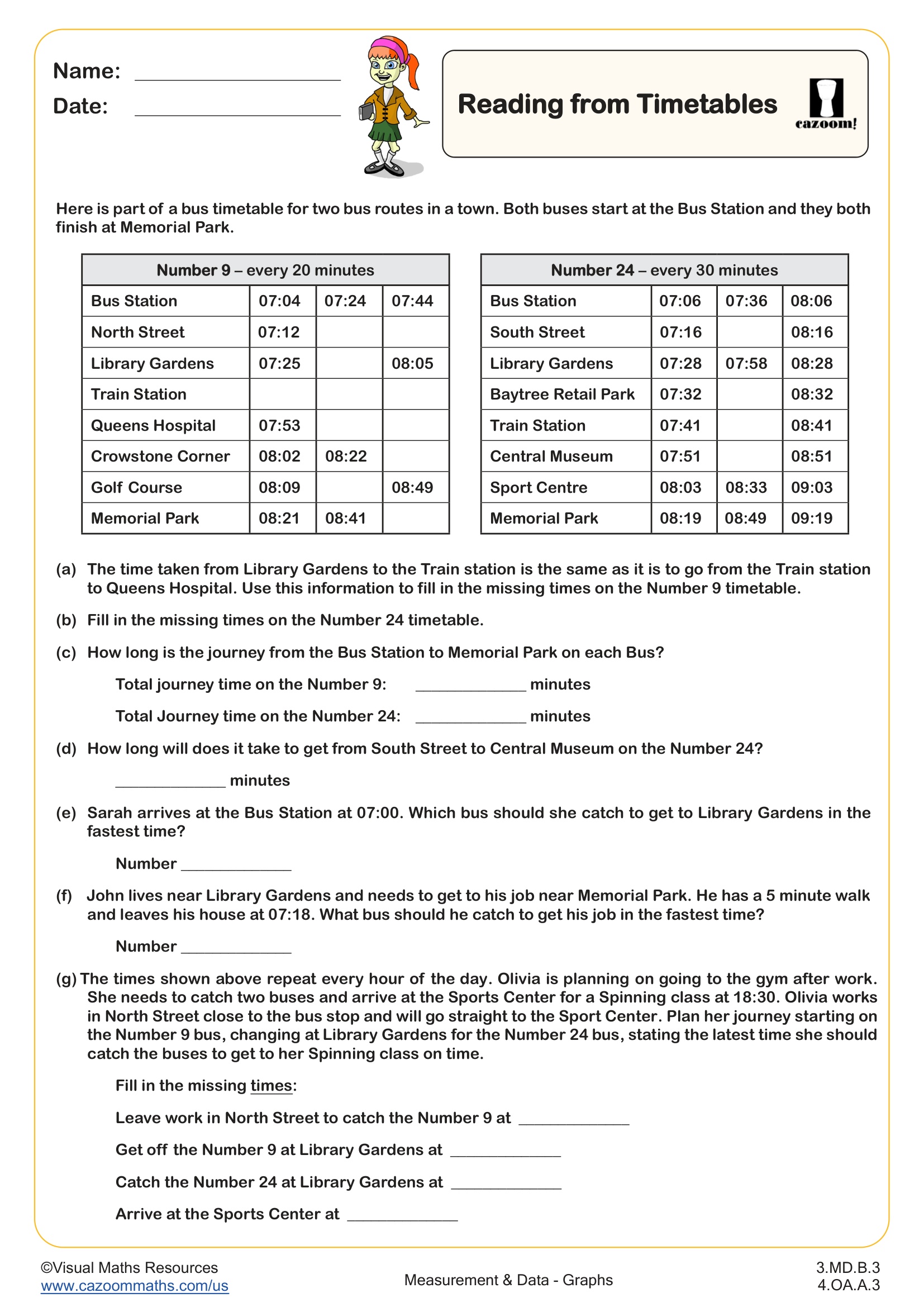
All worksheets are created by the team of experienced teachers at Cazoom Math.
What's the difference between pie charts and bar charts for 4th graders?
Pie charts show parts of a whole using a circle divided into sections, while bar charts compare separate categories using rectangular bars of different heights. Fourth graders learn that pie charts work best when showing how something is divided up (like favorite ice cream flavors in a class), whereas bar charts excel at comparing quantities across different groups (like book sales across four months). Both appear regularly in Common Core-aligned assessments and require students to read scales, interpret keys, and extract specific information.
Students lose points on standardized tests when they confuse the two chart types or try to add pie chart sections as if they were independent values rather than parts of one whole. A common error occurs when students see a pie chart section labeled 25% and a bar chart value of 25 students, then incorrectly assume these represent the same amount. Teachers often use side-by-side examples showing the same data in both formats to help students recognize when each visualization makes sense.
What should 4th grade students know about reading charts?
By 4th grade, students should accurately extract information from both pie charts and bar charts, including reading scales that increase by intervals other than one, interpreting legends and keys, and answering questions that require comparing two or more data points. They should recognize that pie charts always represent 100% of something and that larger sections mean greater portions. Students at this level also begin making simple predictions or drawing conclusions based on the data displayed rather than just reading individual values.
This builds directly on 3rd grade work with scaled picture graphs and bar graphs, adding the complexity of circular representations and more sophisticated comparison questions. The skills developed here prepare students for 5th grade line plots and coordinate graphing, where interpreting visual data becomes even more abstract. Students who master chart reading in 4th grade find fraction work easier because they've already internalized the concept of parts within a whole through pie chart interpretation.
How do students read percentages and fractions in pie charts?
Students learn to connect the visual size of a pie chart section to its numerical value, whether expressed as a fraction, percentage, or both. A section taking up one-quarter of the circle represents 25% or 1/4, while half the circle shows 50% or 1/2. Many teachers find that students grasp this concept more quickly when they first estimate the section size (about a quarter, about half) before looking at the label, building their visual sense of proportional reasoning. The breakthrough typically happens when students recognize that all sections must add up to 100% or one whole.
This skill connects directly to real-world data literacy, from understanding nutrition labels that show daily value percentages to interpreting election results or budget breakdowns in news reports. Scientists use pie charts to show composition of materials, population distributions, or how research funding is allocated across different projects. Students who understand pie charts can critically evaluate whether visual representations they encounter in media accurately reflect the data being presented, an increasingly valuable skill in our data-driven world.
How can teachers use these pie chart worksheets effectively?
The worksheets provide structured practice that moves students from reading simple data points to making comparisons and drawing conclusions about the information displayed. Each problem set includes answer keys, allowing students to self-check during independent work or enabling quick feedback during small group instruction. The format works well for identifying specific misunderstandings, whether students struggle with scale reading, percentage interpretation, or the conceptual difference between the two chart types.
Teachers use these worksheets in multiple contexts: as warm-up activities before introducing new data concepts, as targeted intervention for students who scored low on data interpretation questions, or as homework that reinforces classroom learning. They work particularly well in paired practice, where one student explains their reasoning to a partner before checking the answer key. Some teachers assign these after students create their own charts from collected class data, helping students transition between being data producers and data consumers, both critical mathematical practices.