5th Grade Geometry Worksheets
All worksheets are created by the team of experienced teachers at Cazoom Math.
What topics are covered in 5th grade geometry worksheets?
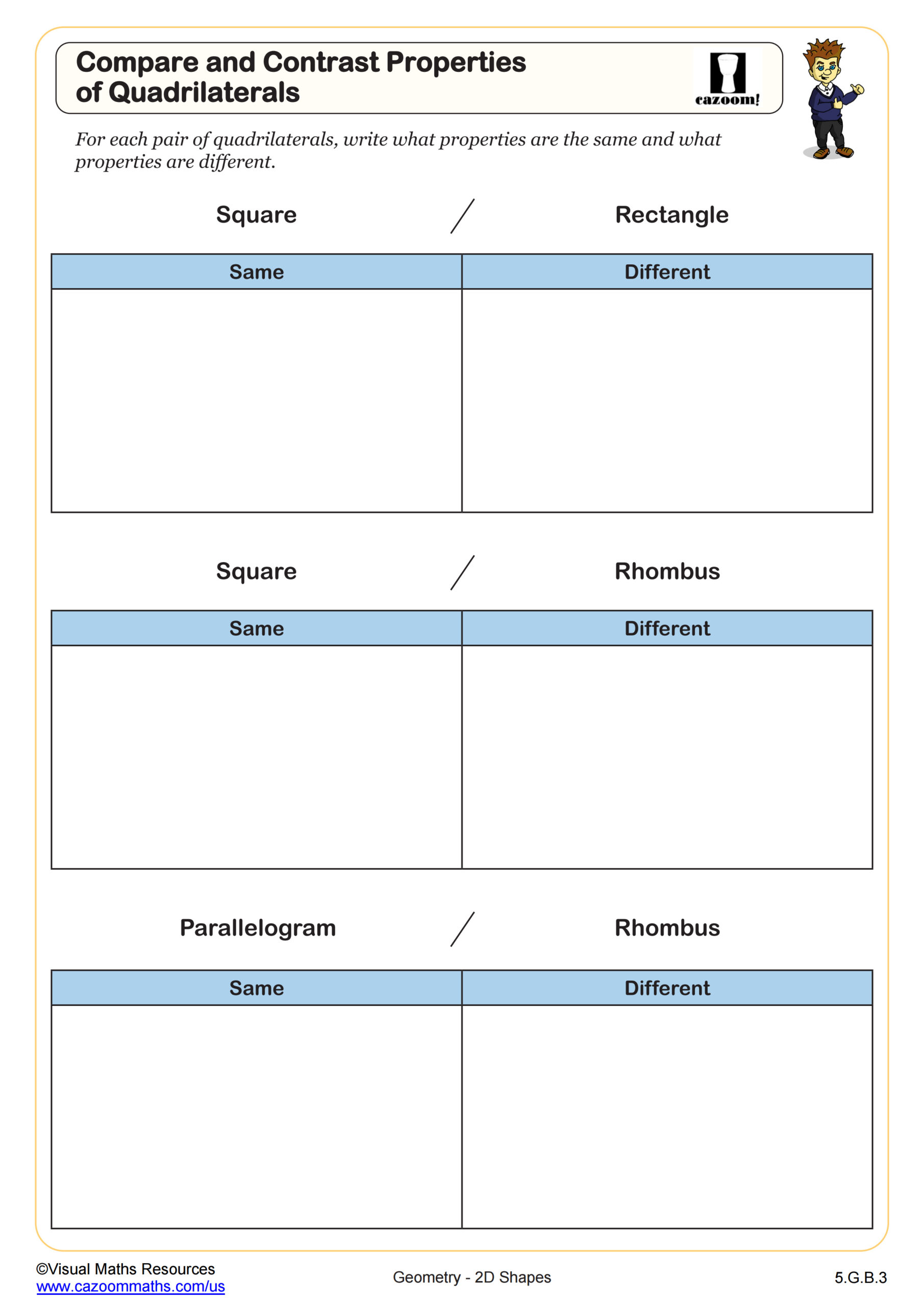
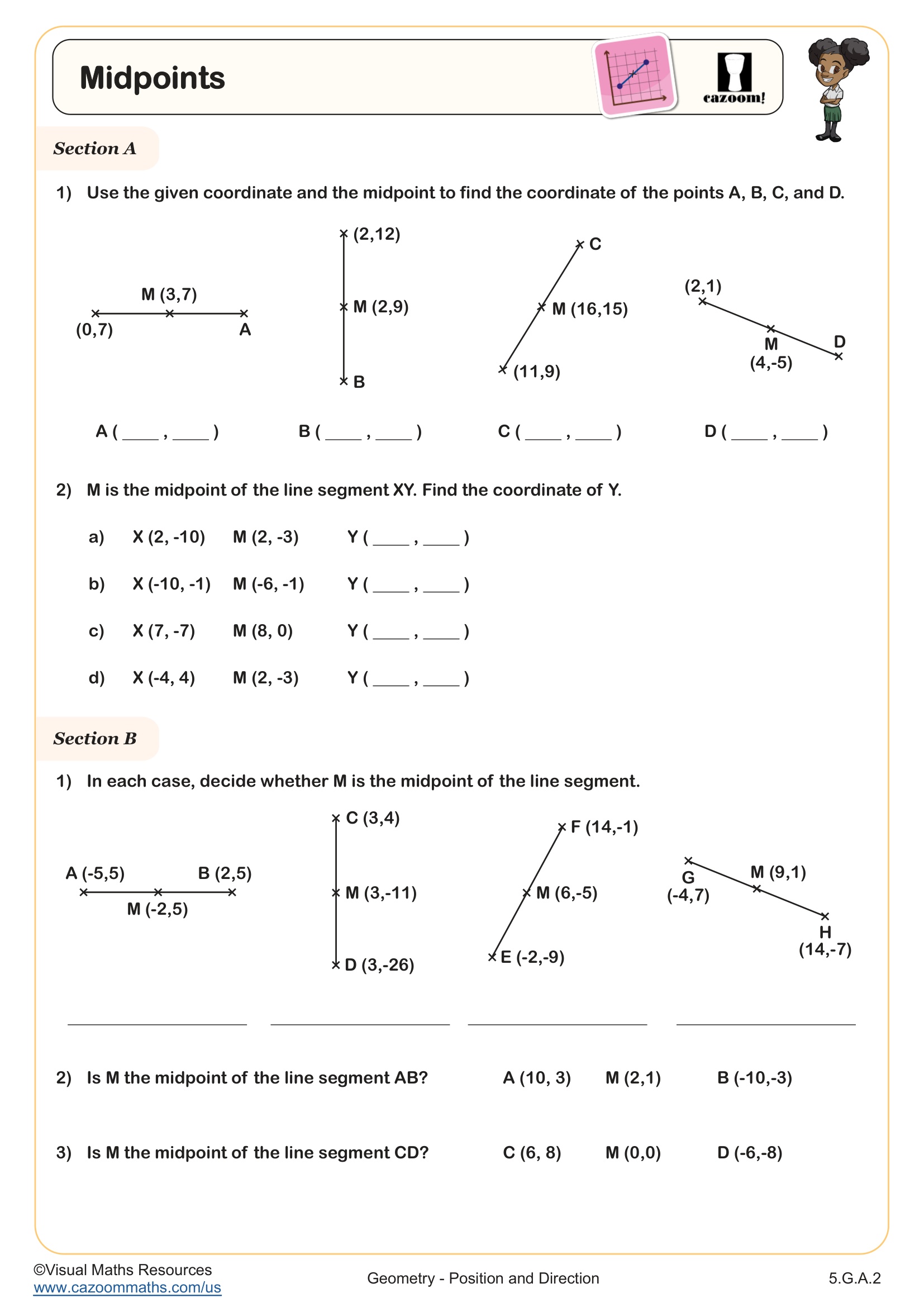
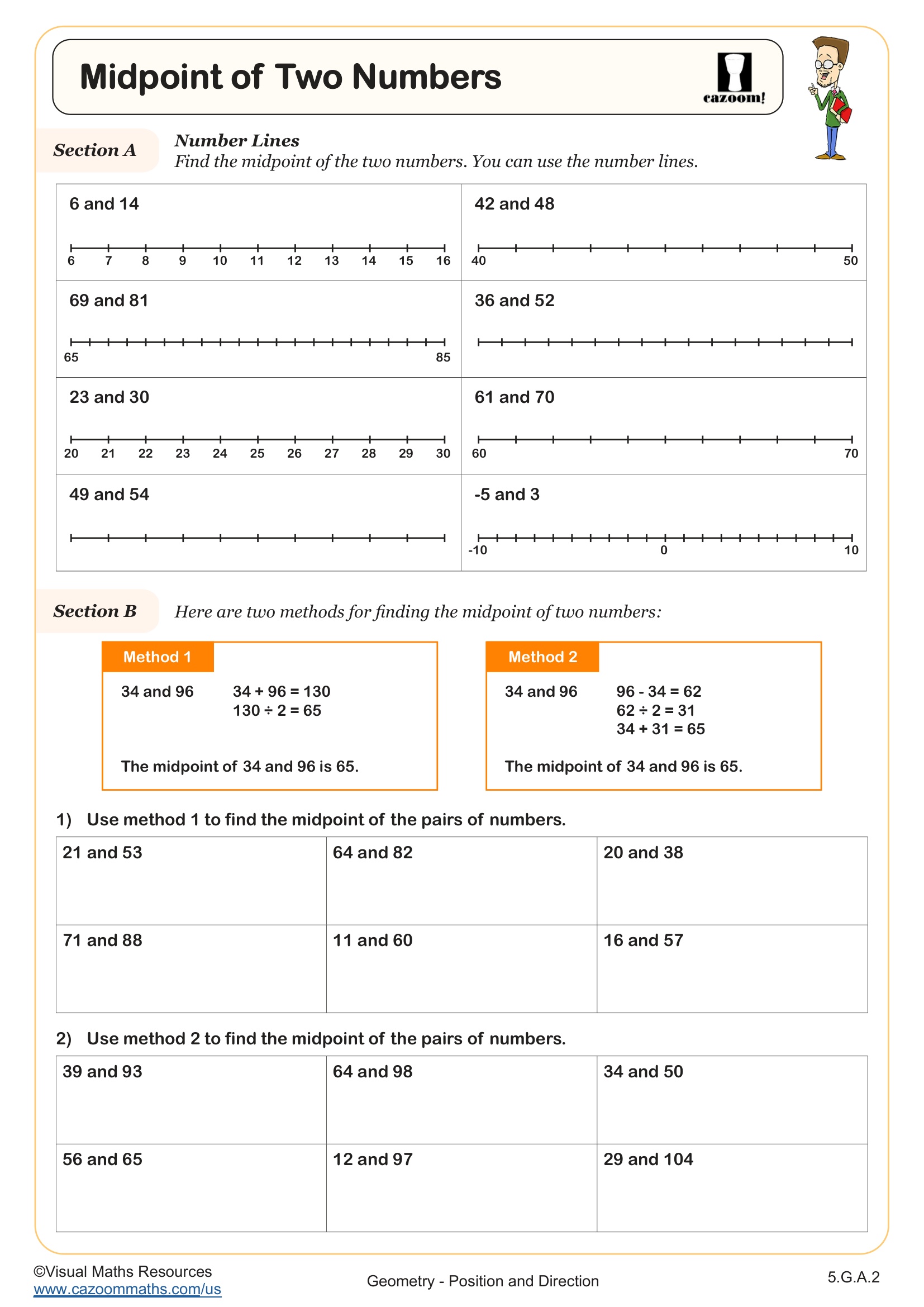
Grade 5 geometry worksheets align with Common Core standards 5.G.1 through 5.G.4, covering coordinate plane plotting, shape classification, and volume calculations. Students work with ordered pairs on coordinate grids, identify properties of quadrilaterals and triangles, and find volume of rectangular prisms using the formula length × width × height.
Many teachers observe that students initially struggle with the coordinate plane, often reversing x and y coordinates or forgetting to start from the origin. The worksheets provide systematic practice with plotting points and identifying coordinates, helping students build confidence before moving to more complex applications like graphing patterns or real-world coordinate mapping used in GPS systems.
How do these worksheets prepare students for middle school geometry?
Fifth grade geometry serves as a bridge between elementary shape recognition and the formal geometric proofs students will encounter in middle school. These worksheets develop spatial visualization skills and introduce mathematical reasoning about properties and relationships between shapes.
Teachers notice that students who master coordinate plane concepts in fifth grade show greater success with linear equations in sixth and seventh grades. The volume work with rectangular prisms also prepares students for more complex three-dimensional geometry, including surface area calculations and working with cylinders and spheres in later grades.
Why do students find volume problems challenging?
Volume calculations present unique challenges because students must visualize three-dimensional objects and apply multiplication across three dimensions. Many fifth graders initially treat volume problems like area problems, forgetting to account for height or depth in their calculations.
Classroom observations show that students benefit from hands-on practice with unit cubes before attempting abstract volume problems. The worksheets progress from counting unit cubes to applying the volume formula, helping students connect the conceptual understanding with procedural fluency. This foundation proves valuable in real-world contexts like calculating storage capacity or understanding measurements in construction projects.
How can teachers use these worksheets most effectively?
Teachers find these grade 5 geometry worksheets work best when integrated with manipulatives and visual demonstrations. Starting lessons with concrete examples using geometric solids or coordinate grids helps students grasp abstract concepts before moving to paper-and-pencil practice.
The answer keys allow for immediate feedback during guided practice, which proves crucial for geometry concepts where misconceptions can compound quickly. Many teachers use selected problems as warm-ups or exit tickets, focusing on one concept per session rather than mixing multiple geometry topics. This targeted approach helps students build confidence and prevents the cognitive overload that often occurs when too many geometric concepts are introduced simultaneously.