5th Grade Measurement and Data Worksheets
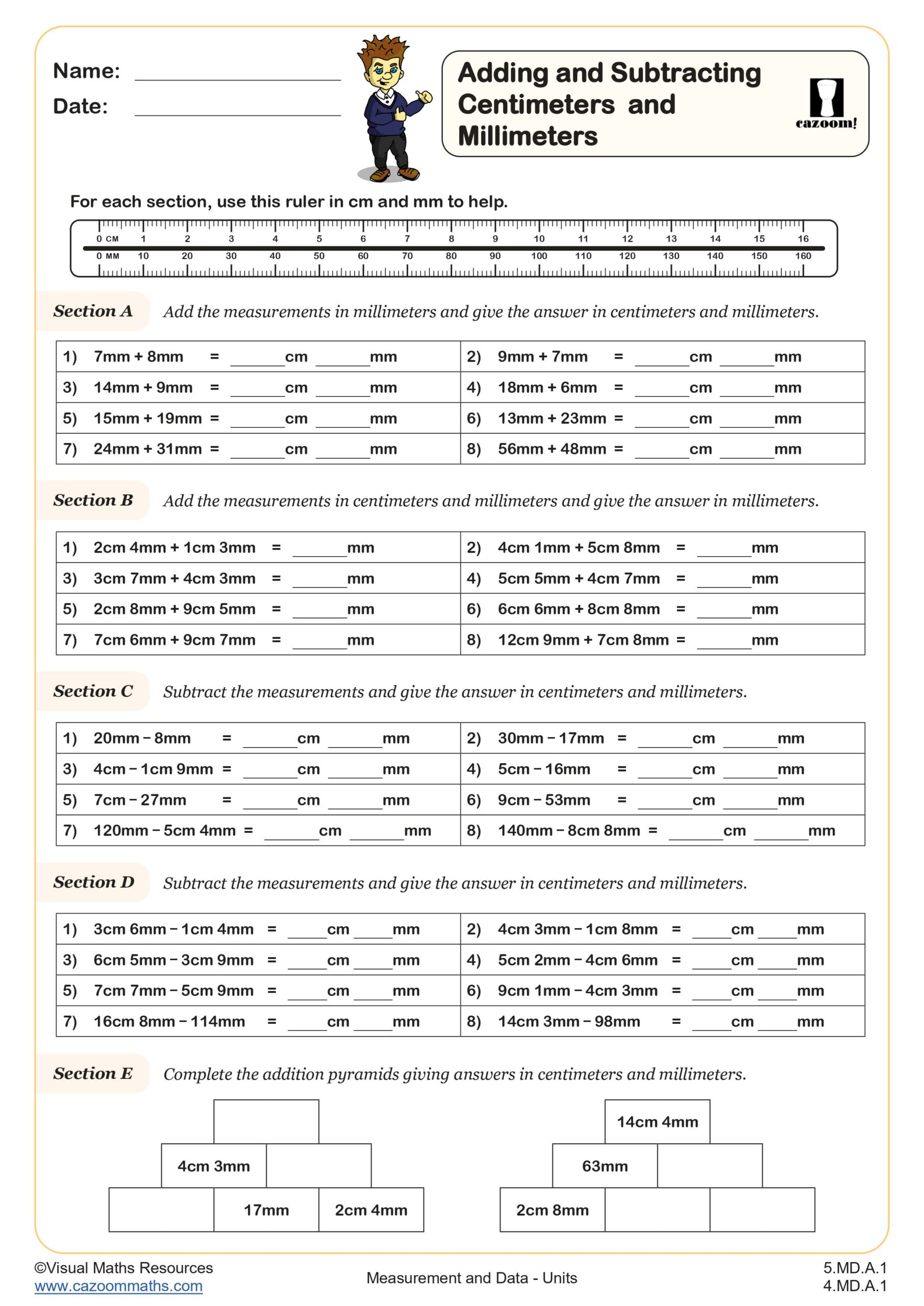
Adding and Subtracting Centimeters and Millimeters
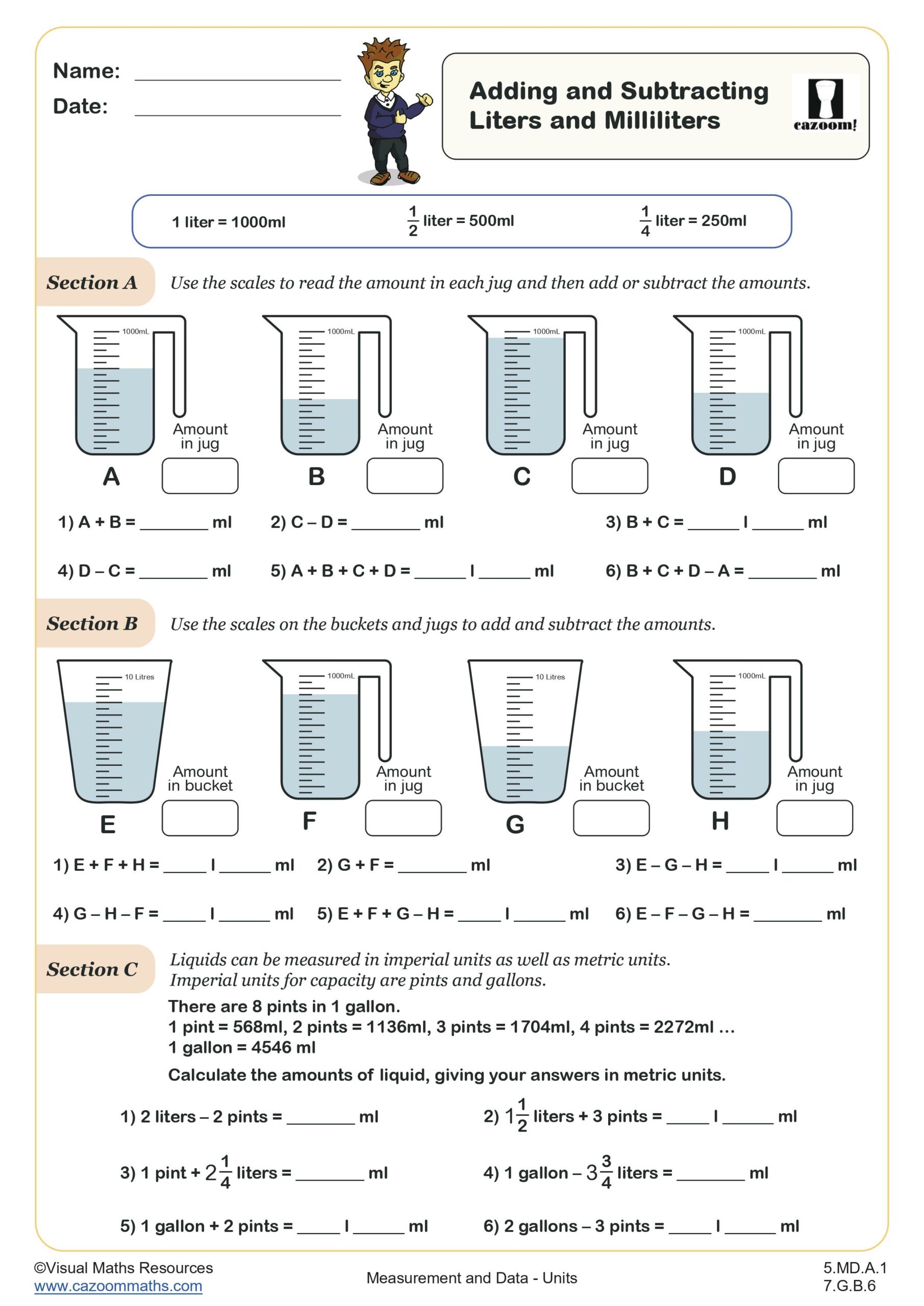
Adding and Subtracting Liters and Milliliters
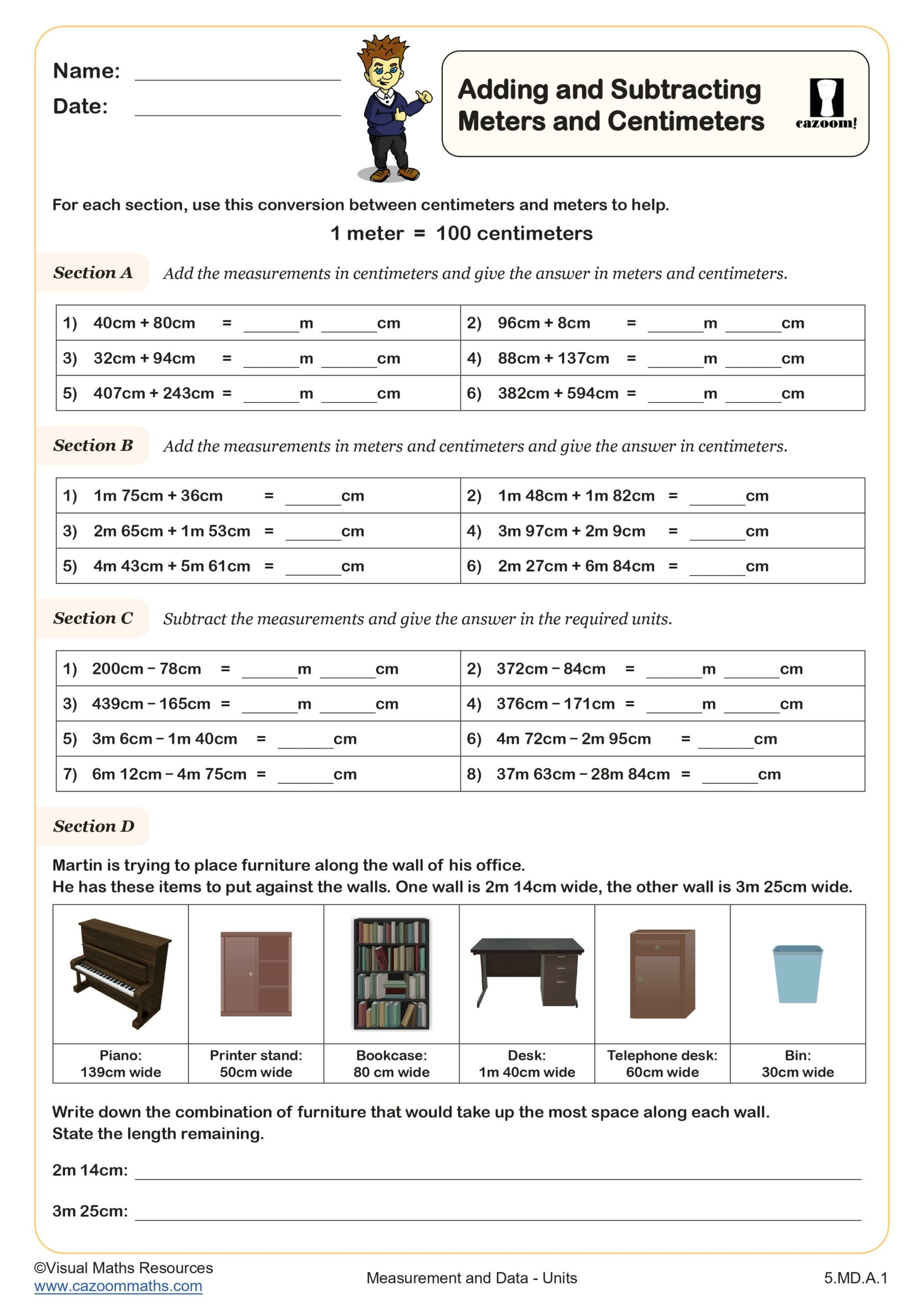
Adding and Subtracting Meters and Centimeters
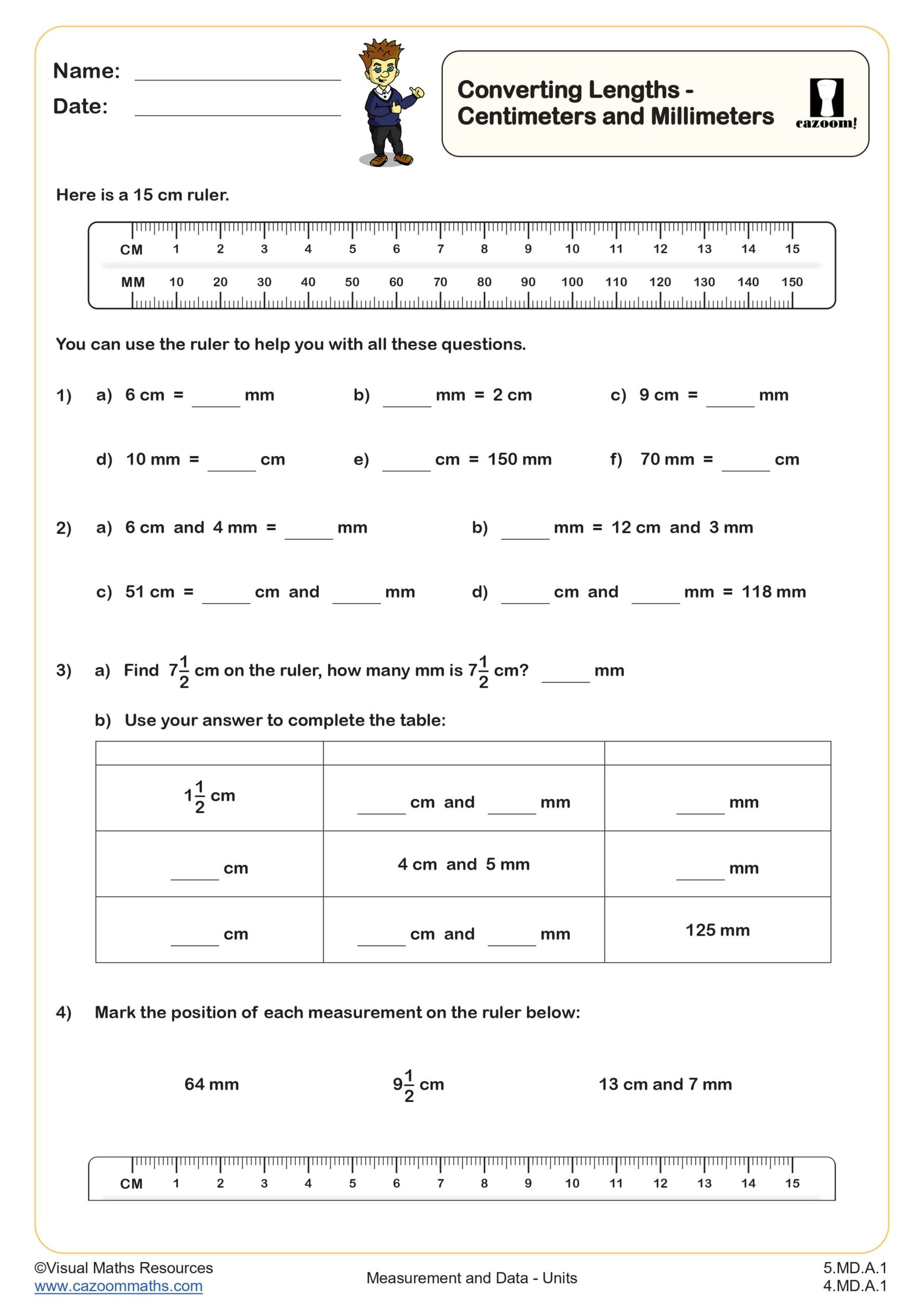
Converting Lengths - Centimeters and Millimeters
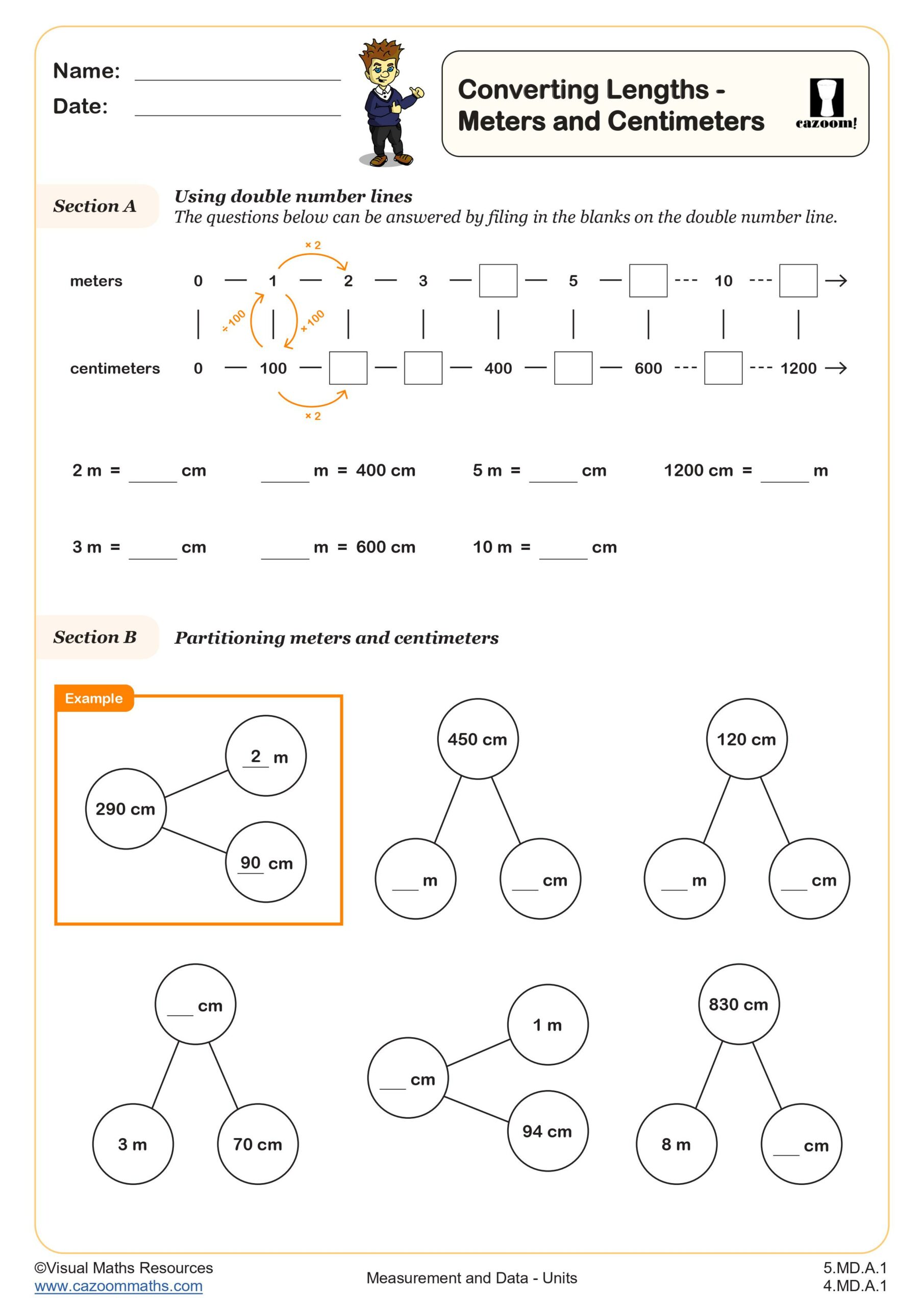
Converting Lengths - Meters and Centimeters
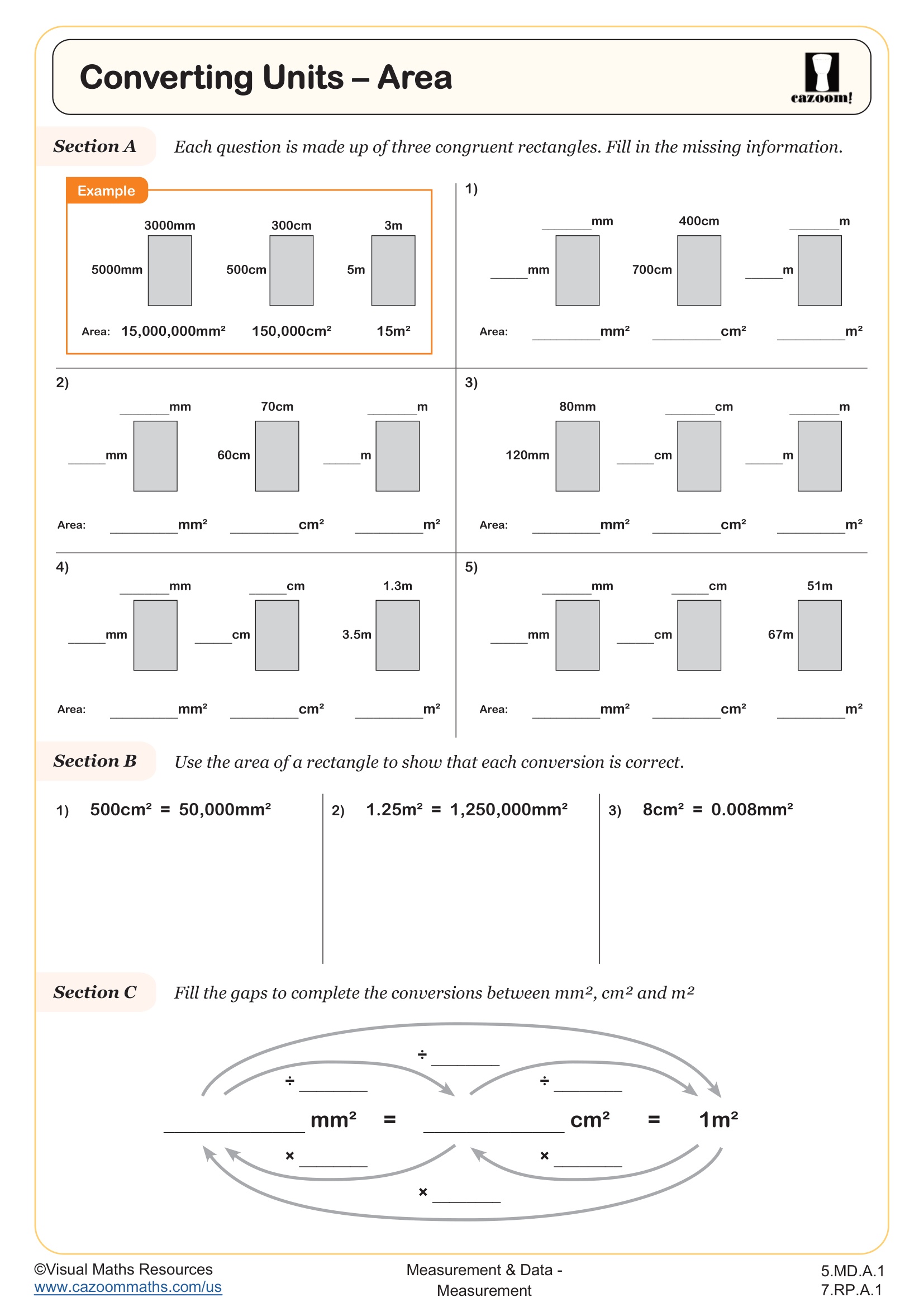
Converting Units - Area
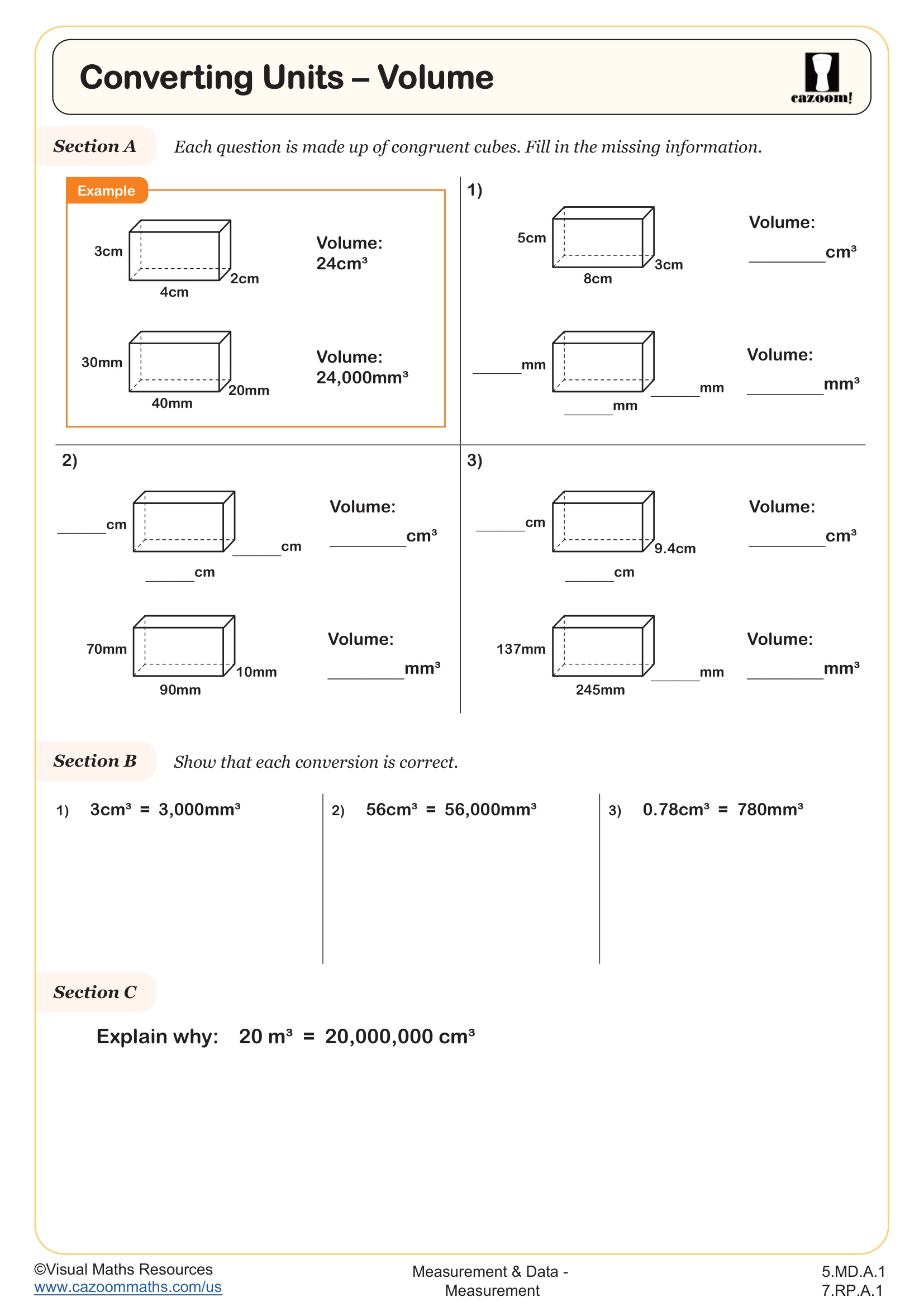
Converting Units - Volume
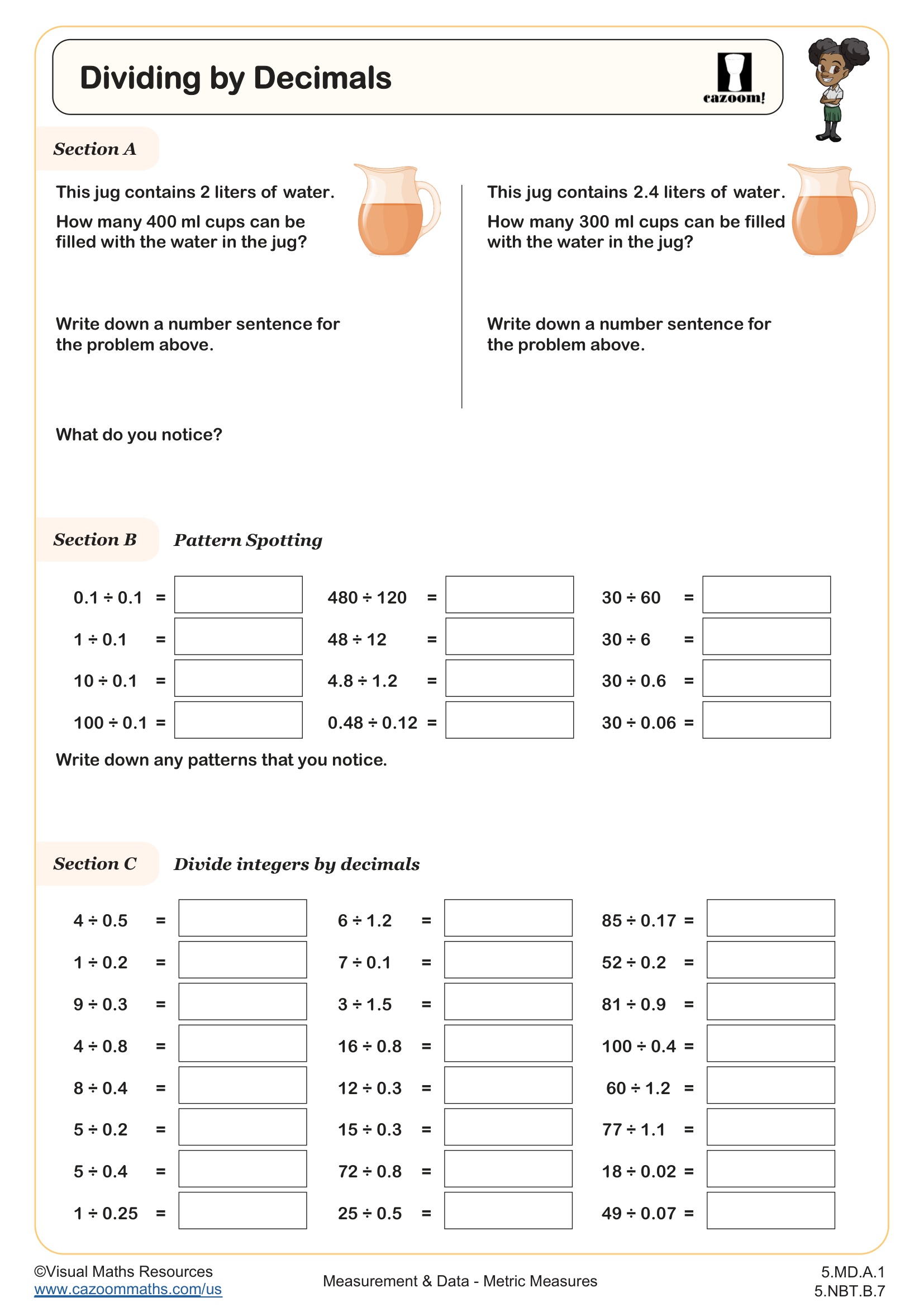
Dividing by Decimals
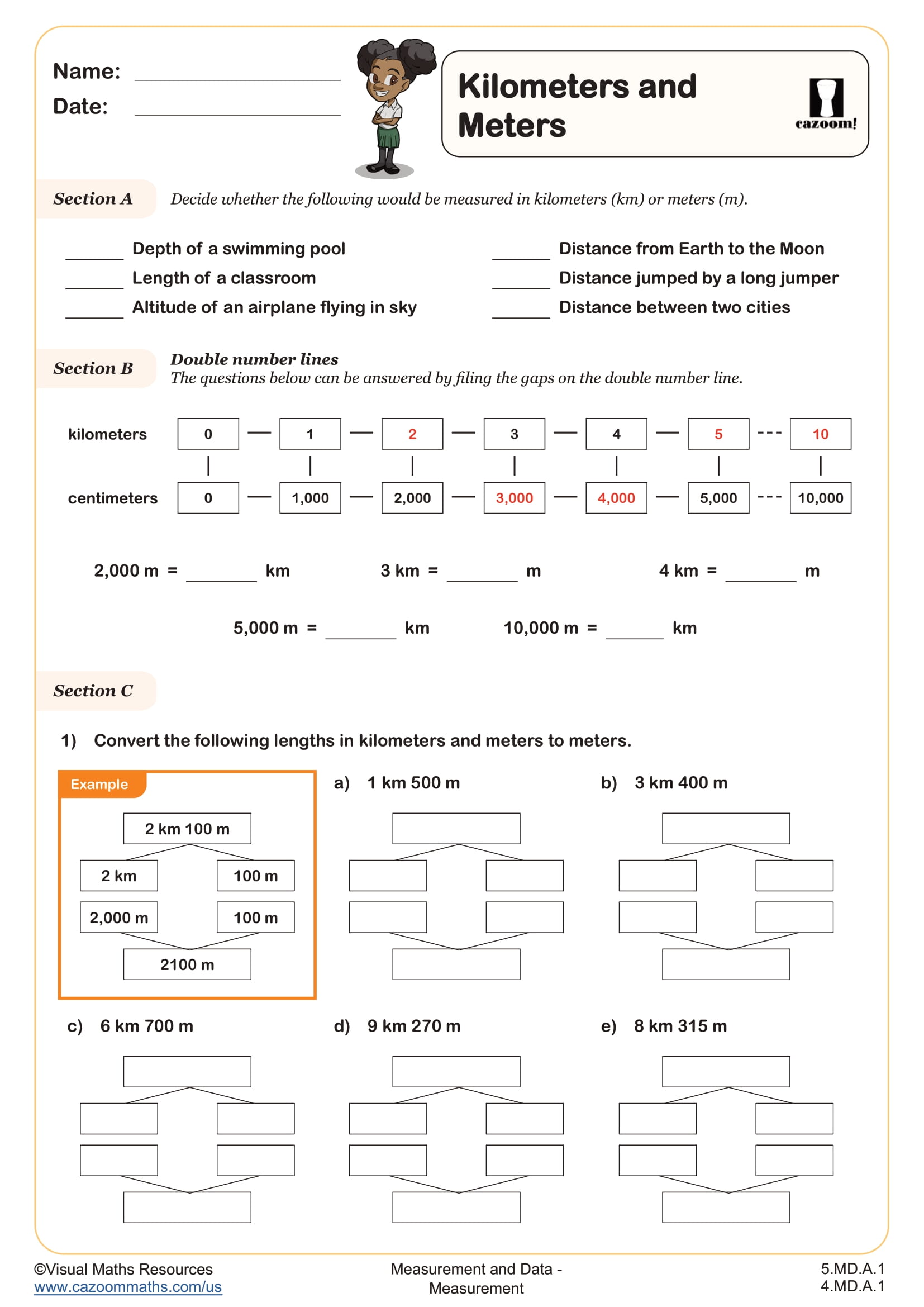
Kilometers and Meters
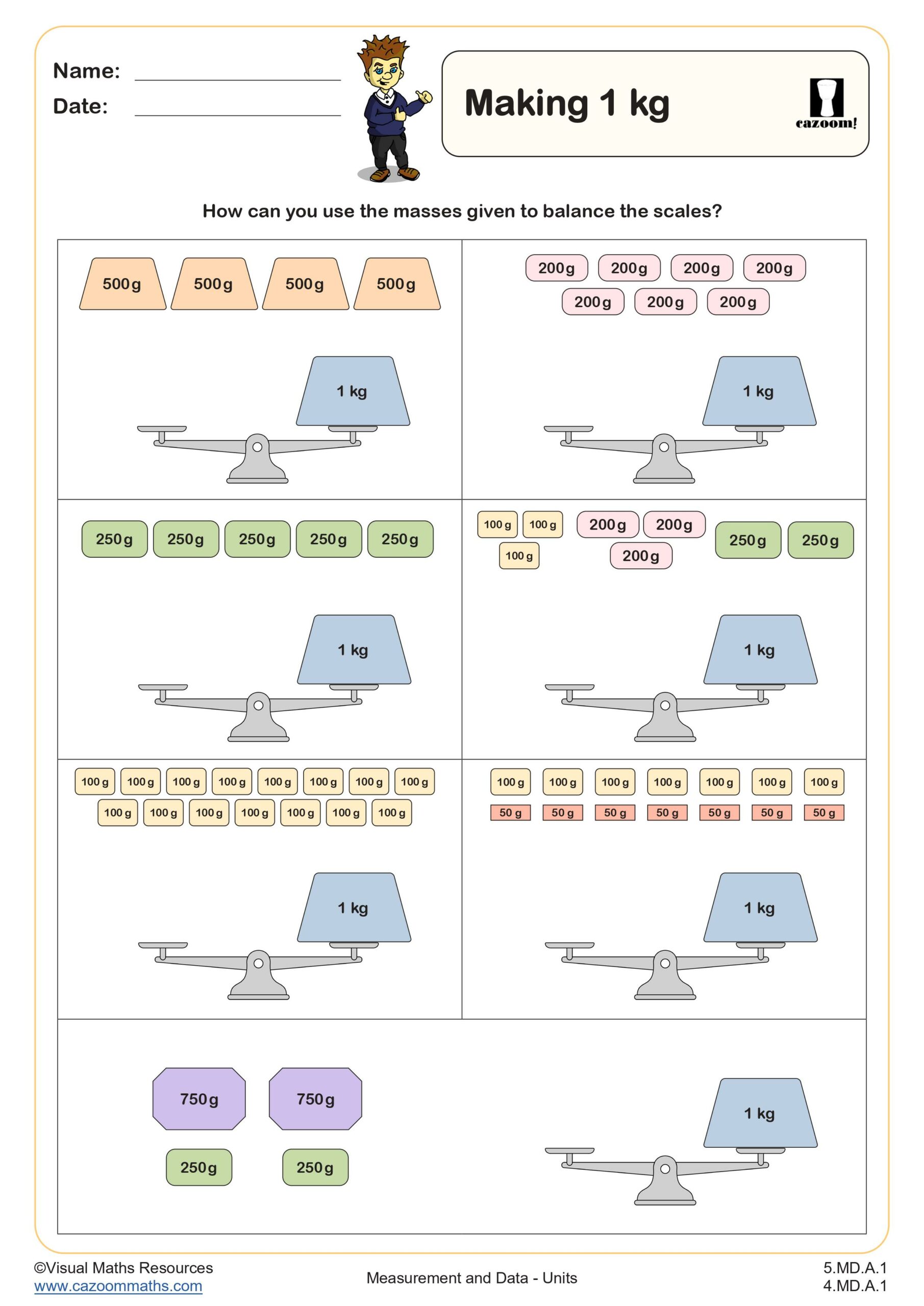
Making 1 kg
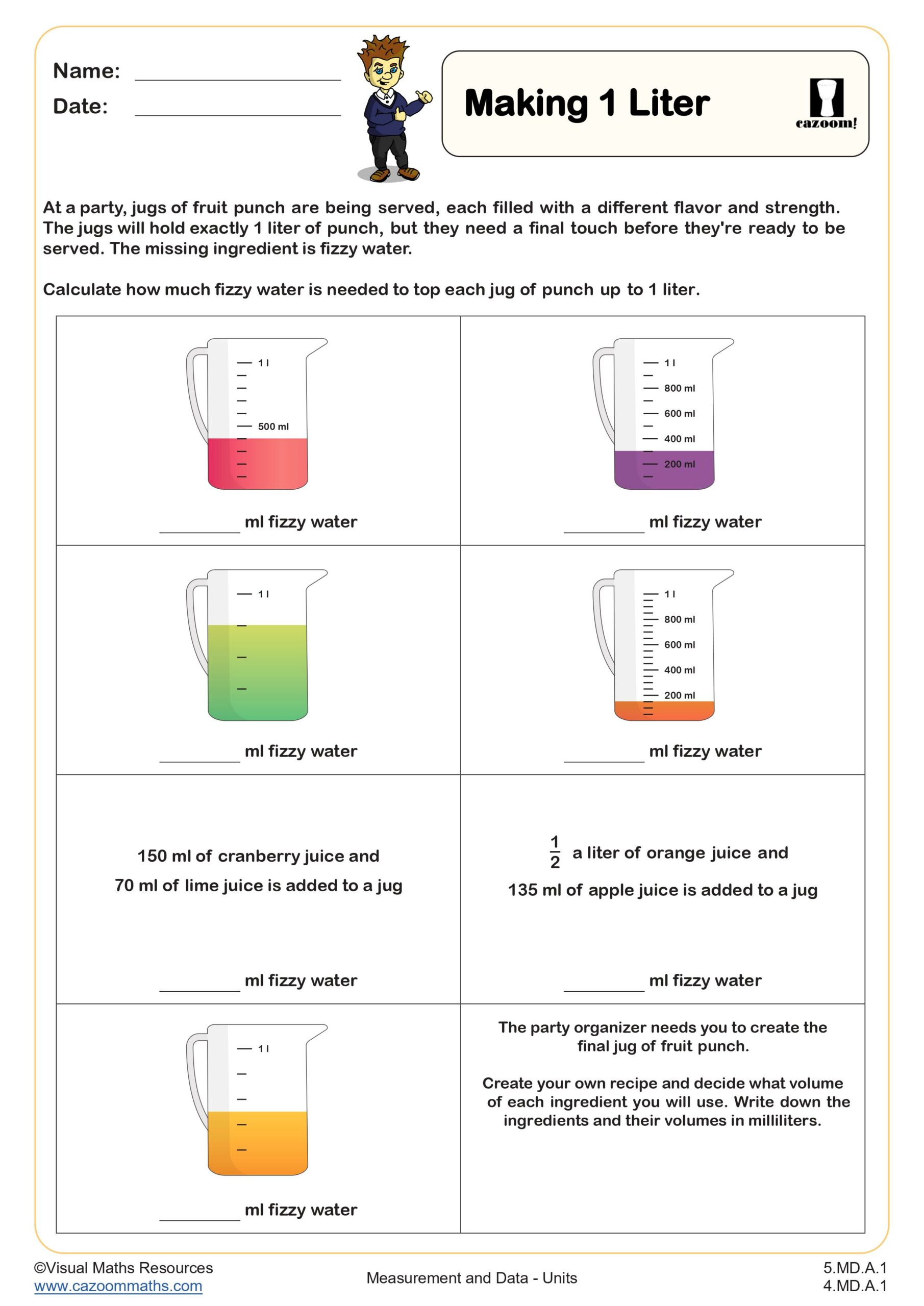
Making 1 l
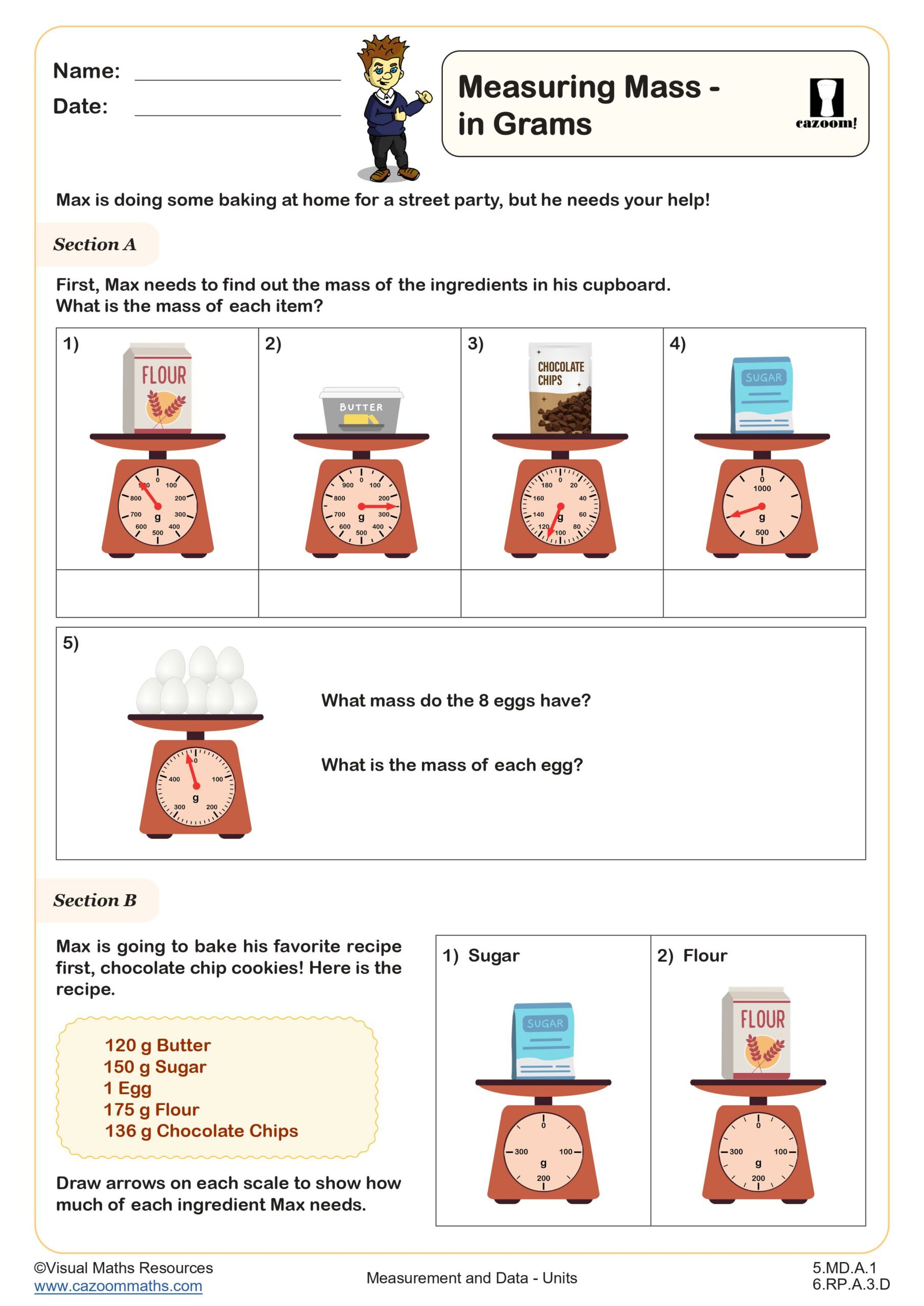
Measure Mass - in Grams
All worksheets are created by the team of experienced teachers at Cazoom Math.
Why Students Actually Enjoy Practicing Measurement Skills With Our Printable Math Activities
These worksheets directly bridge the gaps between 4th-grade and 5th-grade measurement skills. Students expand their understanding from basic units to complex conversions. They learn to work with decimal measurements and multi-step problems. practice with different unit types strengthens number sense and calculation skills.
Regular practice with measurement problems develops mathematical reasoning. Students discover patterns in metric relationships and conversion factors. They prepare for sixth-grade work with ratios and proportional thinking. Each worksheet builds skills students need for geometry and science classes.
Curriculum Coverage: What Measurement Topics Do 5th Graders Need to Master
The worksheets enable students to develop measurement fluency through a progression from direct hands-on activities to more complex abstract problem-solving tasks. The process begins with students measuring everyday objects, followed by creating diagrams of unit relationships, and then receiving instruction on official conversion methods. The worksheets include complete answer keys that show the whole calculation process for each problem. Students develop their knowledge of metric units —time, mass, and volume — through progressive practice while learning to read data and graphs, which enhances their accuracy and real-world application and reasoning skills.
Why Do Teachers Trust Cazoom Math Measurement Worksheets for Daily Lessons
Teachers save planning time with ready-to-use worksheets for any lesson. Different difficulty levels allow instructors to differentiate instruction for various learners. Extension problems challenge advanced students while support options help struggling learners succeed. The clear format makes independent work and homework assignments simple.
Answer keys show each calculation step, revealing the mathematical thinking process. Teachers spot misconceptions quickly when reviewing student work. Built-in retrieval practice reinforces previous learning while introducing new concepts. Grading becomes faster with detailed solutions that explain each method clearly. Regular assessment opportunities track student progress throughout the unit.
When Do Students Use Measurement Skills Outside the Classroom
Students use measurement and data skills every day outside school. They estimate distances, compare prices, and track time for activities. These mathematical tools help them solve practical problems independently. Real-world applications make abstract concepts meaningful and memorable.
• Measure ingredients and adjust servings
• Calculate trip distances on maps
• Compare product sizes and prices
• Track sports and fitness data