5th Grade Number and Operations in Base Ten Worksheets
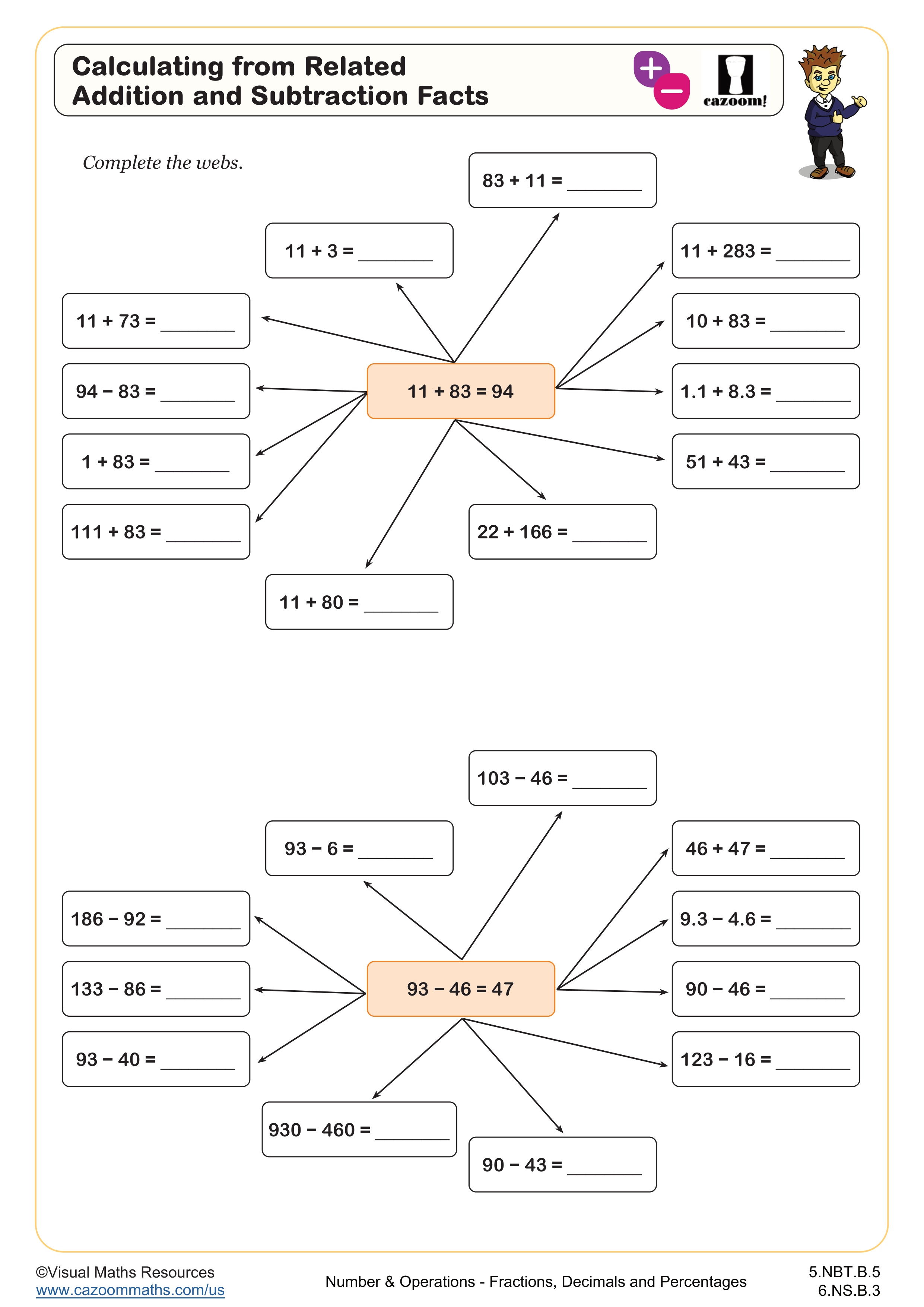
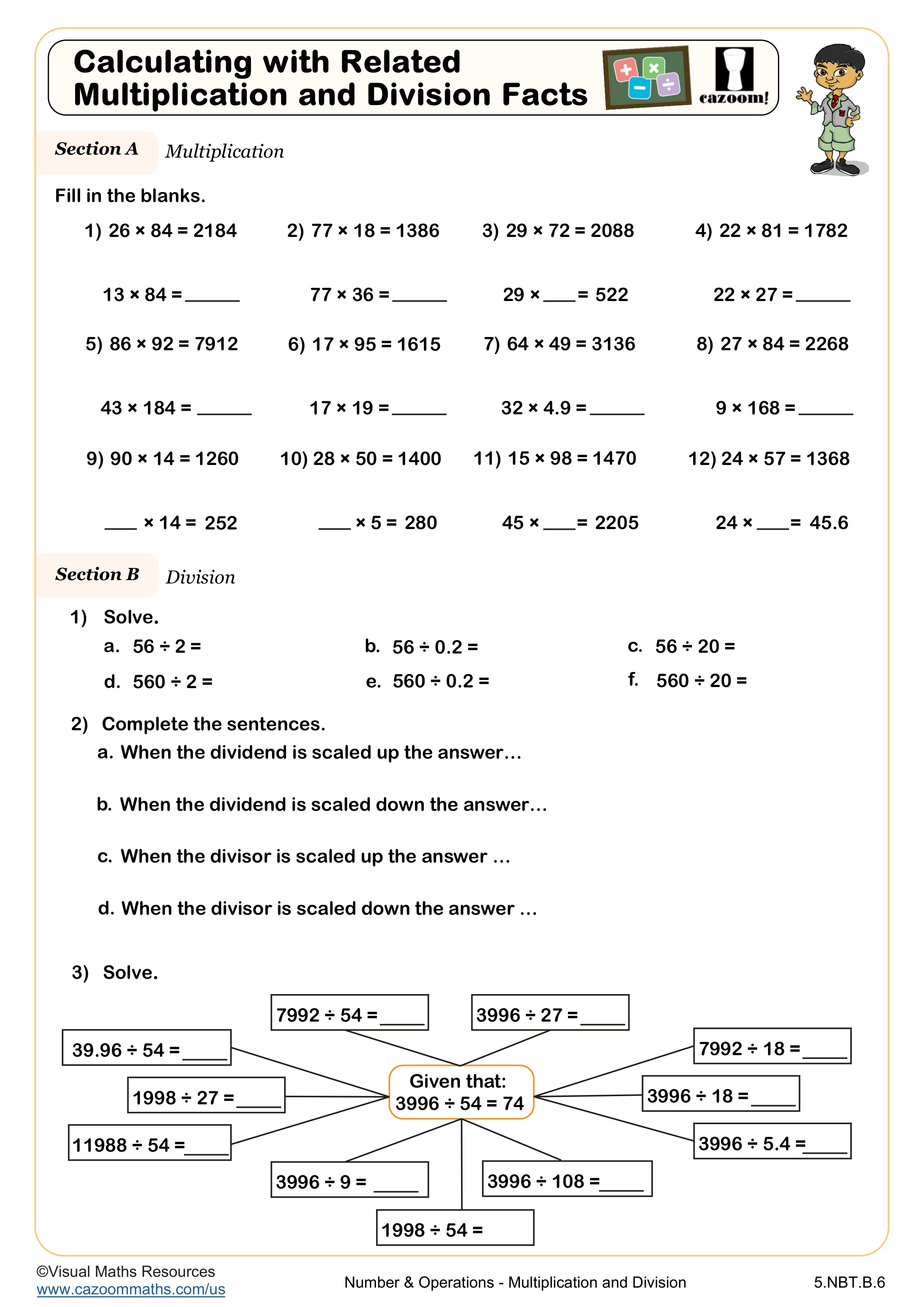
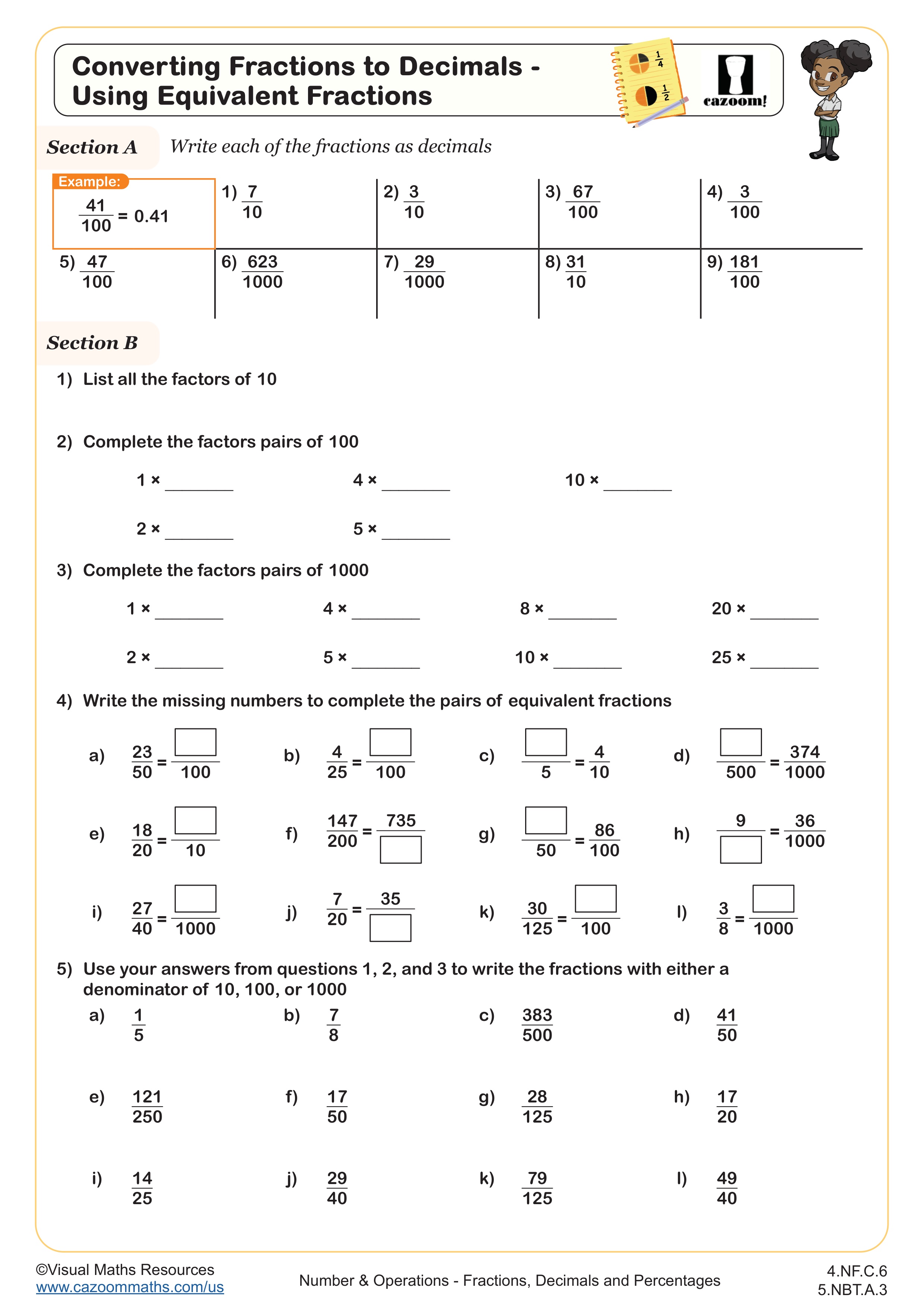
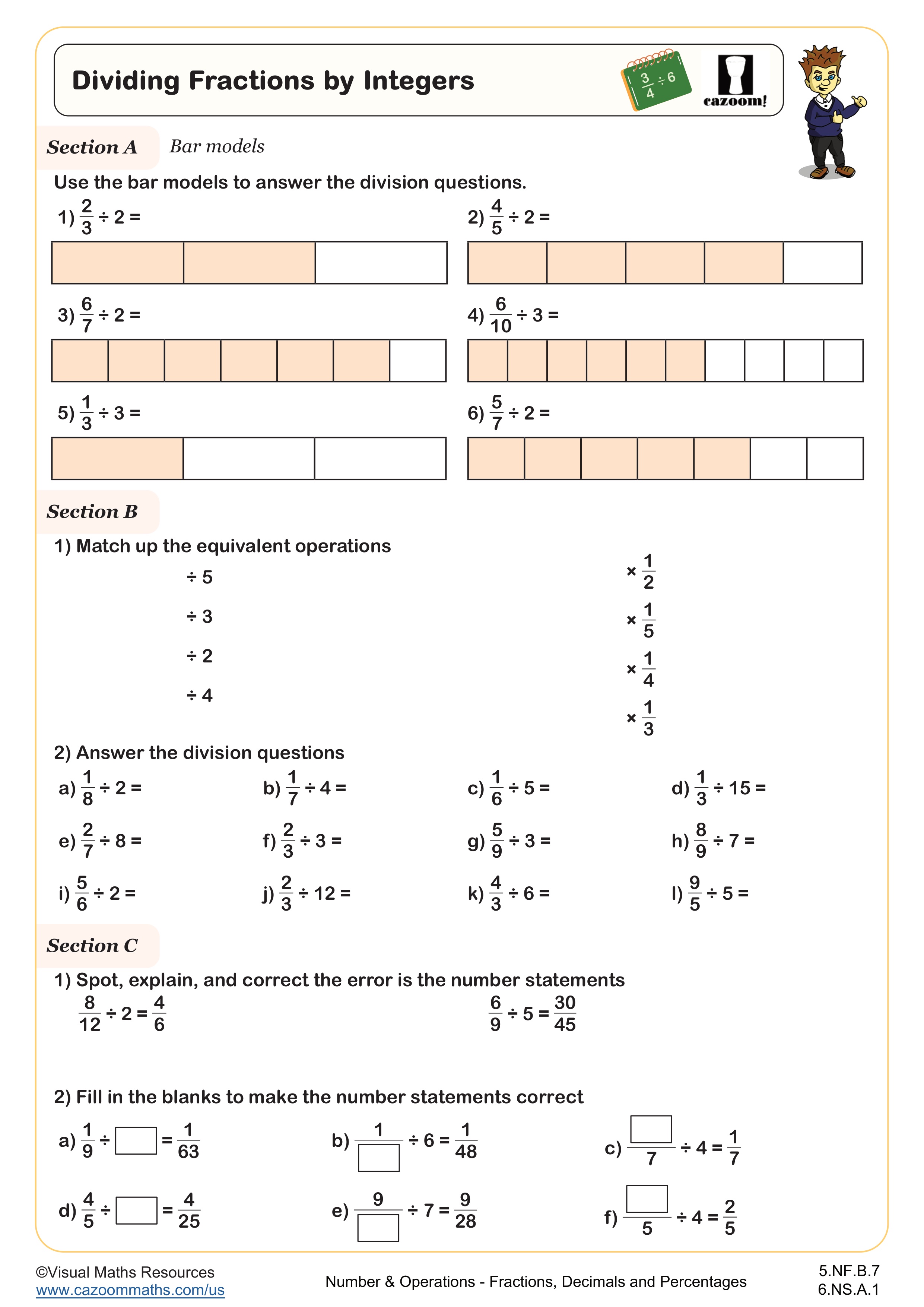
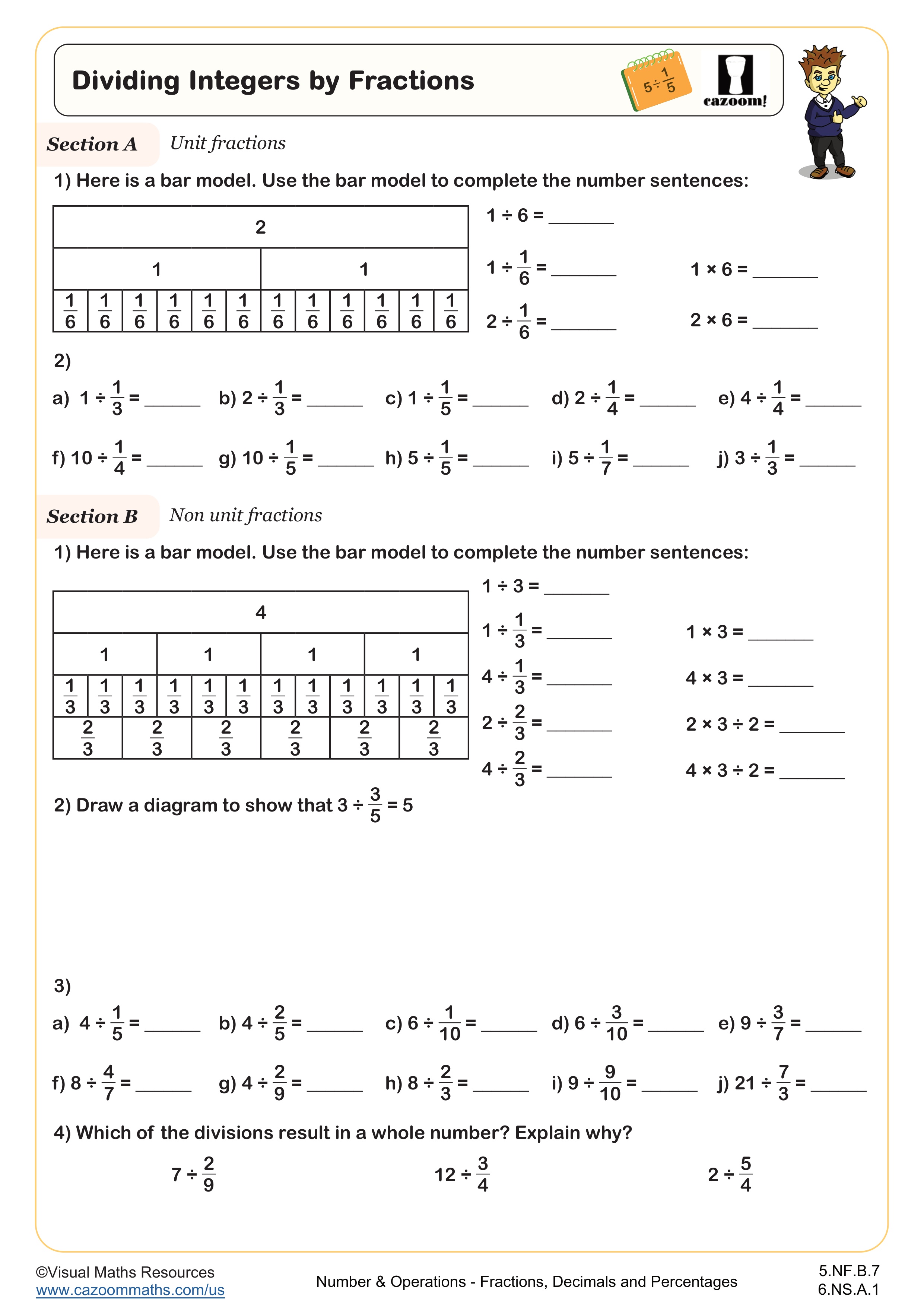
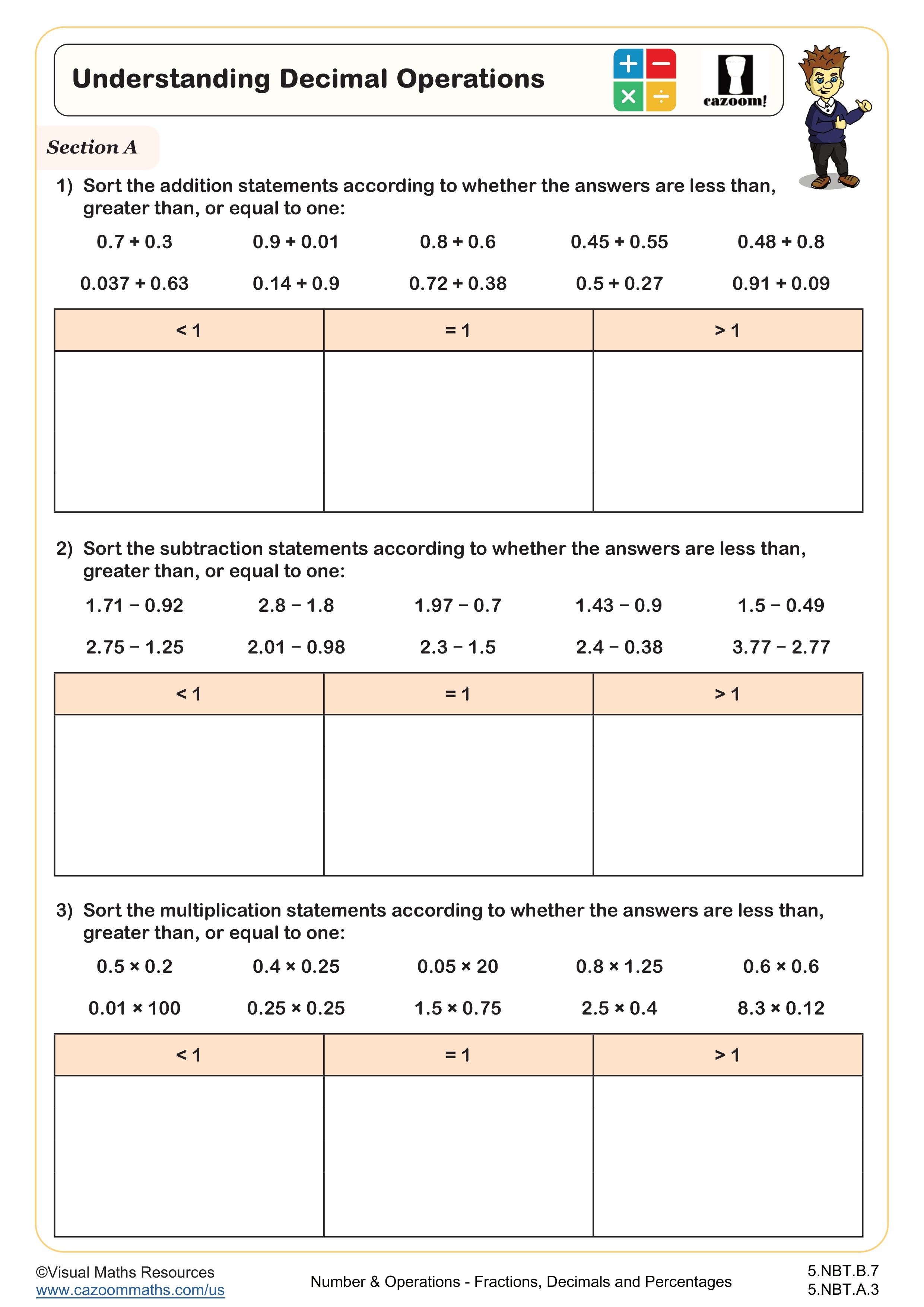
All worksheets are created by the team of experienced teachers at Cazoom Math.
What should a number base worksheet include for 5th grade students?
A thorough number base worksheet for 5th grade should align with Common Core Standard 5.NBT, covering place value understanding through the millions place, reading and writing numbers in various forms, and comparing multi-digit numbers. The worksheet should include exercises on standard form, expanded form, and word form conversions, along with place value identification activities.
Teachers notice that students often confuse the value of a digit with its face value, especially when working with larger numbers. For example, many students will say the 3 in 345,678 represents 3 rather than 300,000. Effective worksheets address this by providing visual place value charts and requiring students to identify both the digit and its actual value in different positions.
How do 5th grade number base concepts differ from earlier grades?
Fifth grade extends place value understanding to much larger numbers, typically working with whole numbers through the millions place and decimals to the thousandths. Unlike 4th grade where students work primarily with numbers up to 100,000, 5th graders must grasp the relationships between places that are separated by multiple positions, such as understanding that 10 thousands equal 1 ten thousand.
The complexity increases significantly when students begin working with decimal place values alongside whole number places. Many teachers find that students who seemed confident with place value in earlier grades suddenly struggle when asked to compare numbers like 4.567 and 4.57, not understanding that 4.570 helps clarify the comparison.
What are common mistakes students make with expanded form notation?
Students frequently write incomplete expanded forms or include unnecessary zeros when breaking down numbers. For instance, when expanding 403,275, many students write 400,000 + 3,000 + 200 + 70 + 5 instead of recognizing that there are no ten-thousands, so the correct form is 400,000 + 0 + 3,000 + 200 + 70 + 5, or more commonly, just omitting the zero place entirely.
Another persistent error occurs when students mix up exponential notation with standard expanded form. Teachers observe that some students attempt to write 4 × 10⁵ + 3 × 10³ when they should be writing 400,000 + 3,000, creating confusion between different mathematical representations that aren't typically introduced until later grades.
How can teachers use these worksheets most effectively in the classroom?
Teachers find success using these worksheets as diagnostic tools before beginning new place value units, helping identify which students need additional support with foundational concepts. The answer keys allow for quick assessment and immediate feedback, while also helping teachers spot patterns in student errors across the classroom.
Many educators use these worksheets in small group rotations, pairing stronger students with those who need support, since place value concepts build naturally through peer discussion. Teachers also report success using select problems as warm-up activities or exit tickets, particularly problems involving number comparison or identifying place values, since these skills connect directly to real-world applications like understanding population data or scientific measurements.