6th Grade Factors and Multiples Worksheets
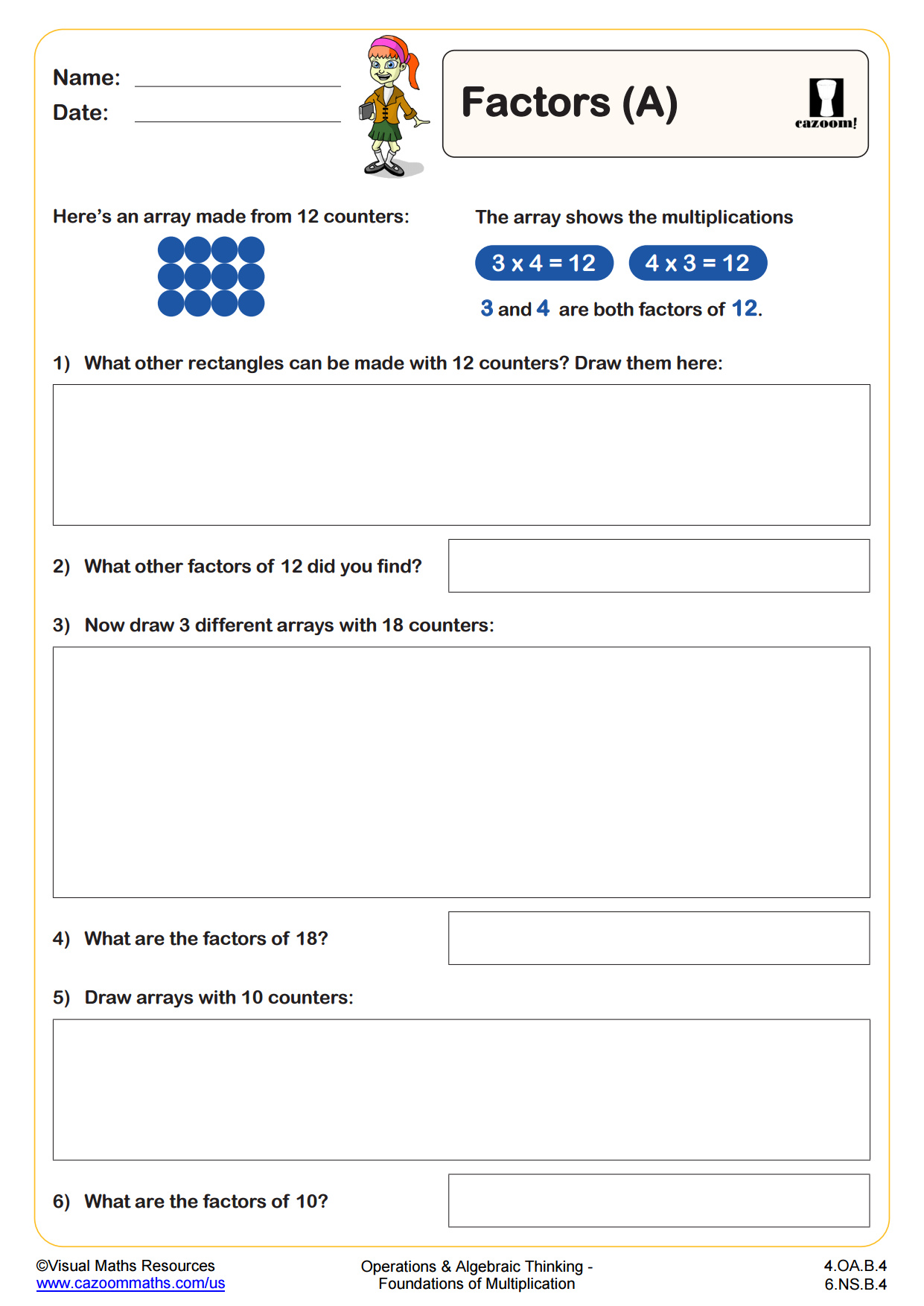
Factors (A)
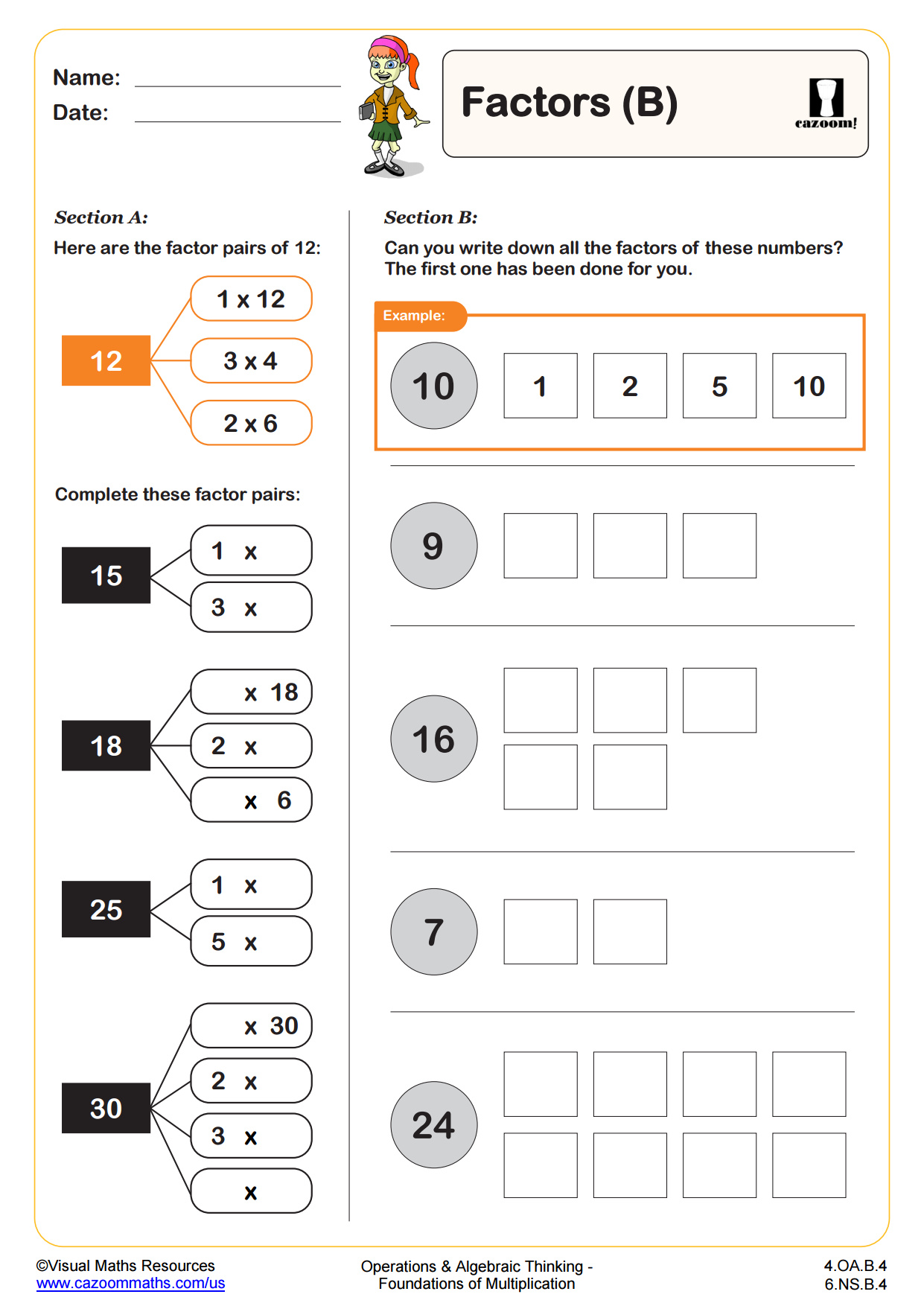
Factors (B)
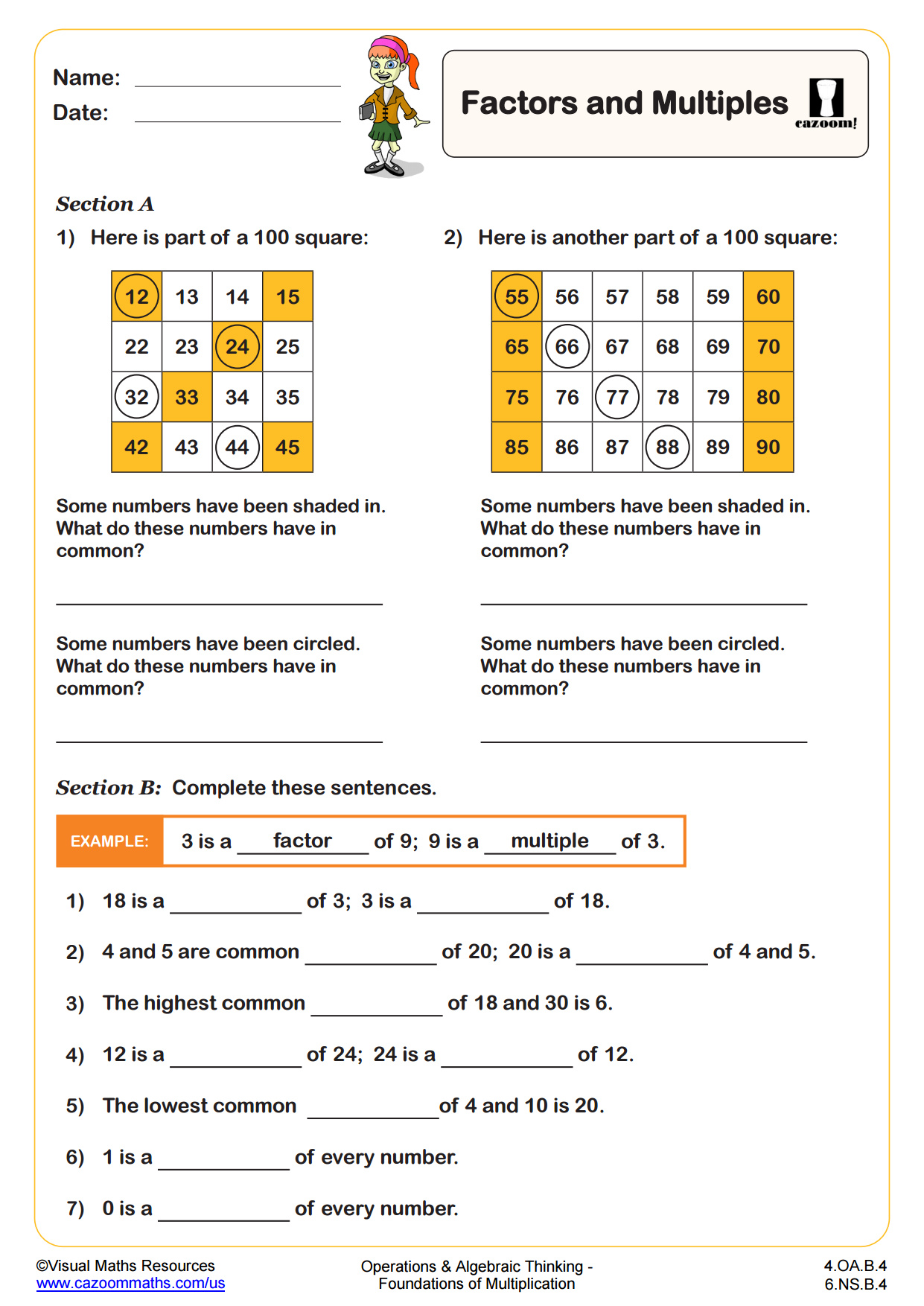
Factors and Multiples
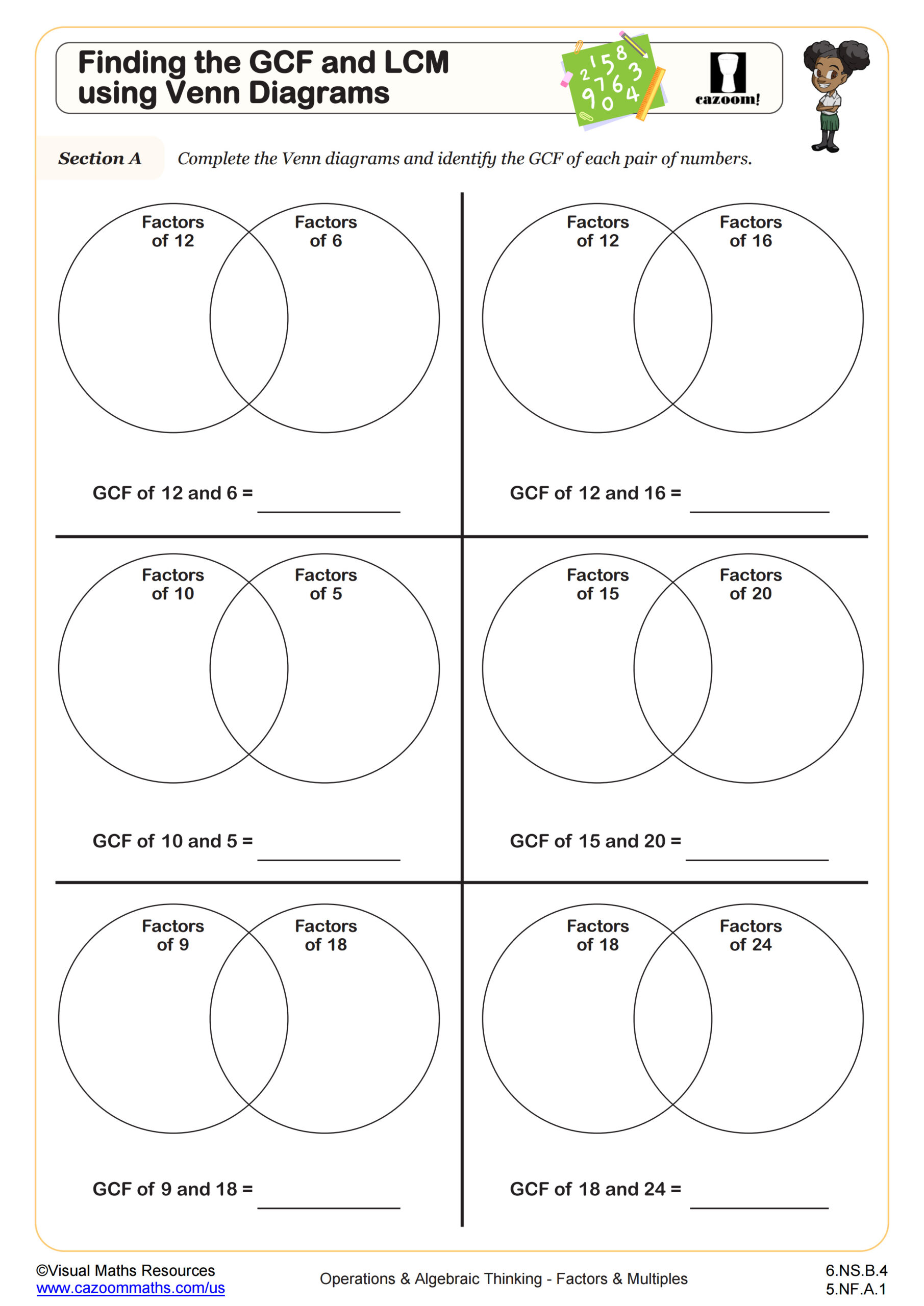
Finding the GCF and LCM using Venn Diagrams
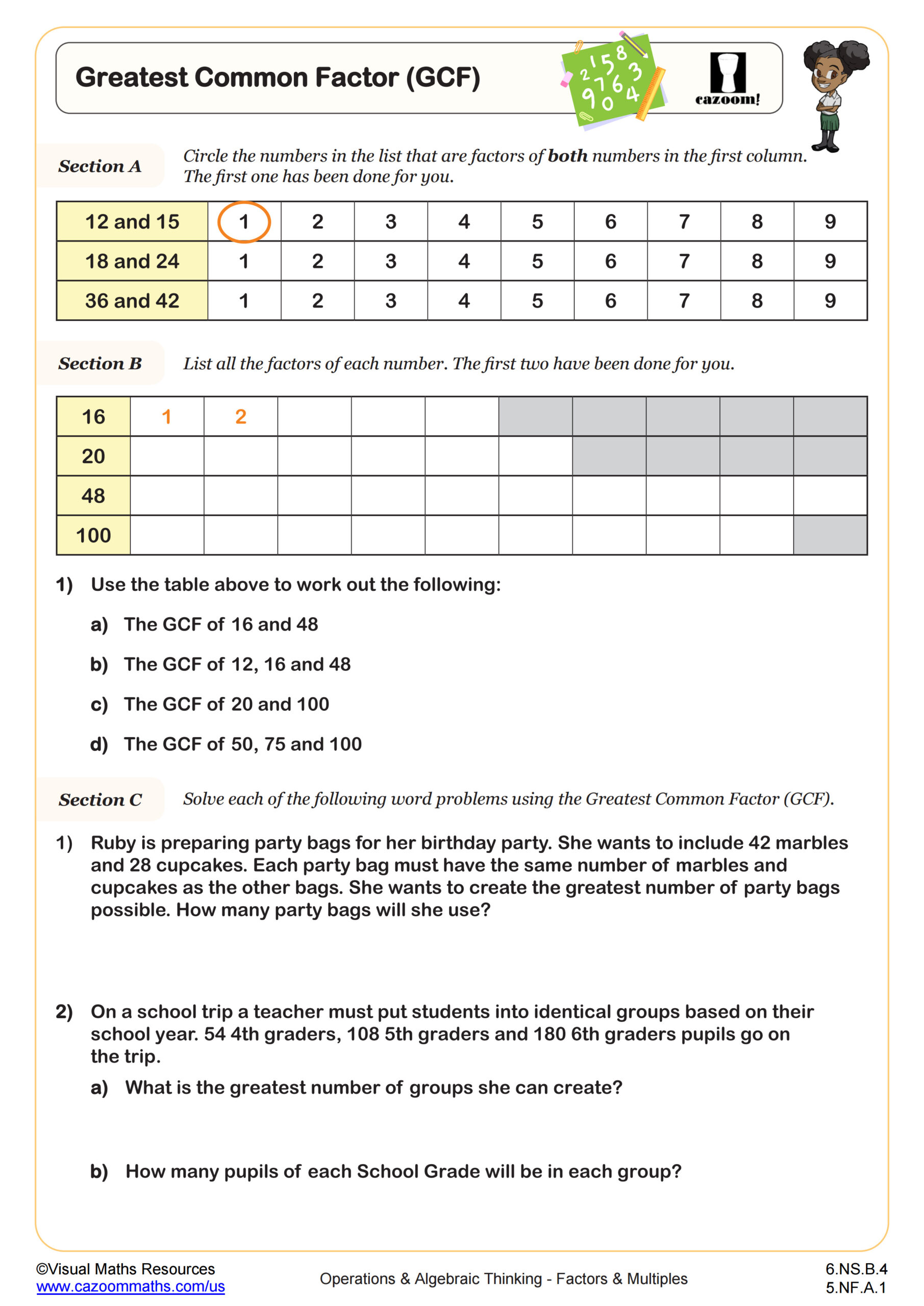
Greatest Common Factor (GCF)
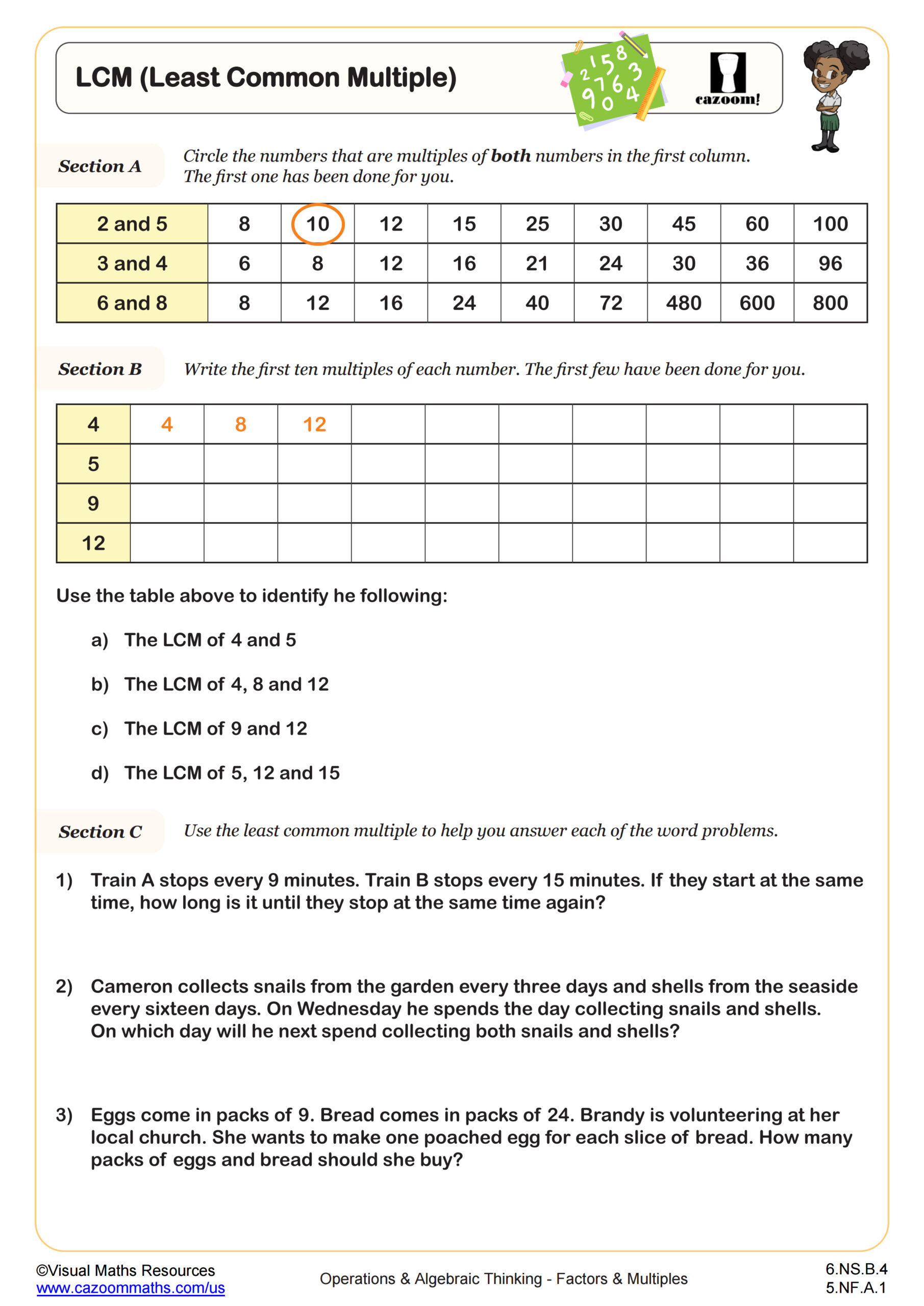
Least Common Multiple (LCM)
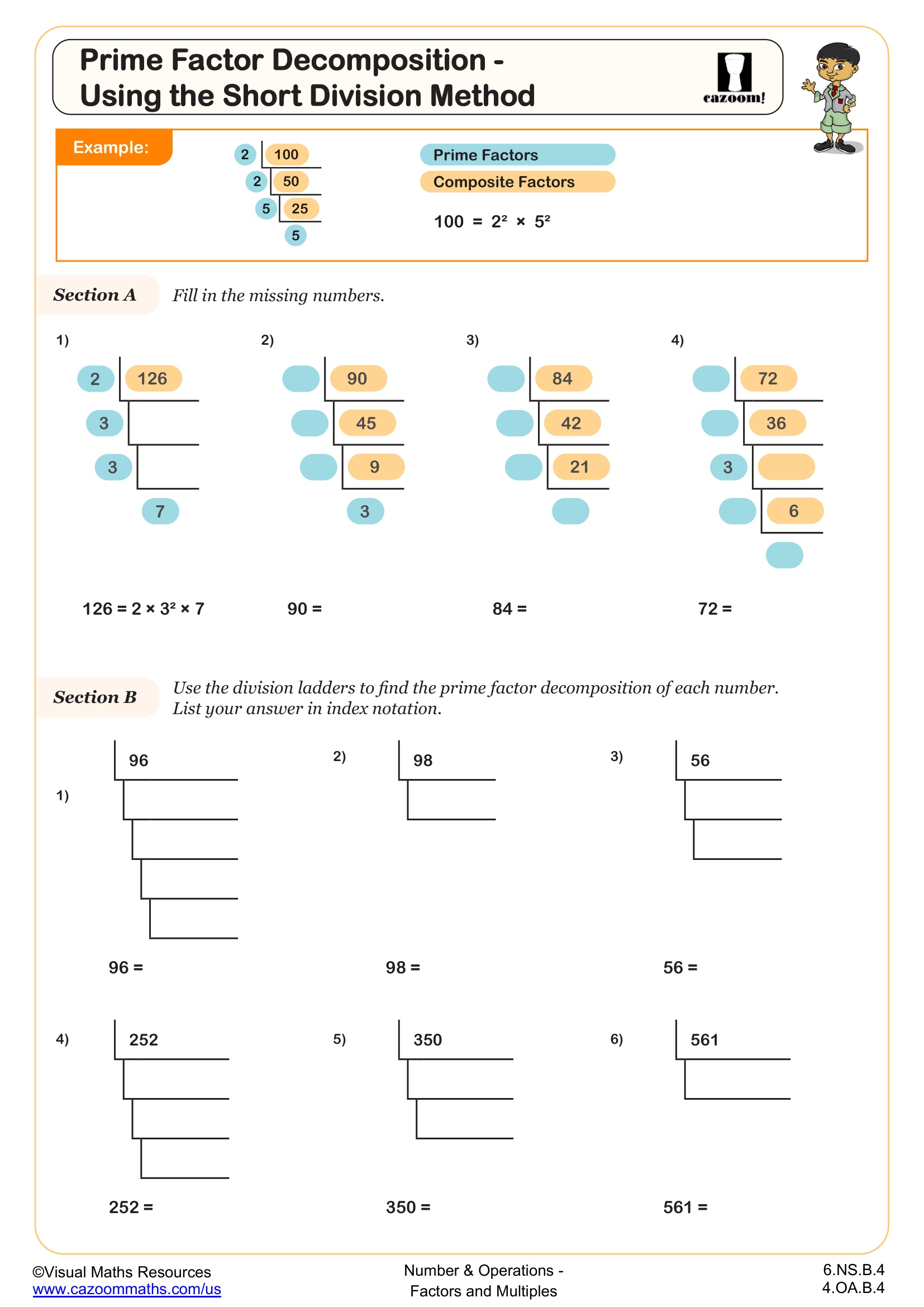
Prime Factor Decomposition - Using the Short Division Method
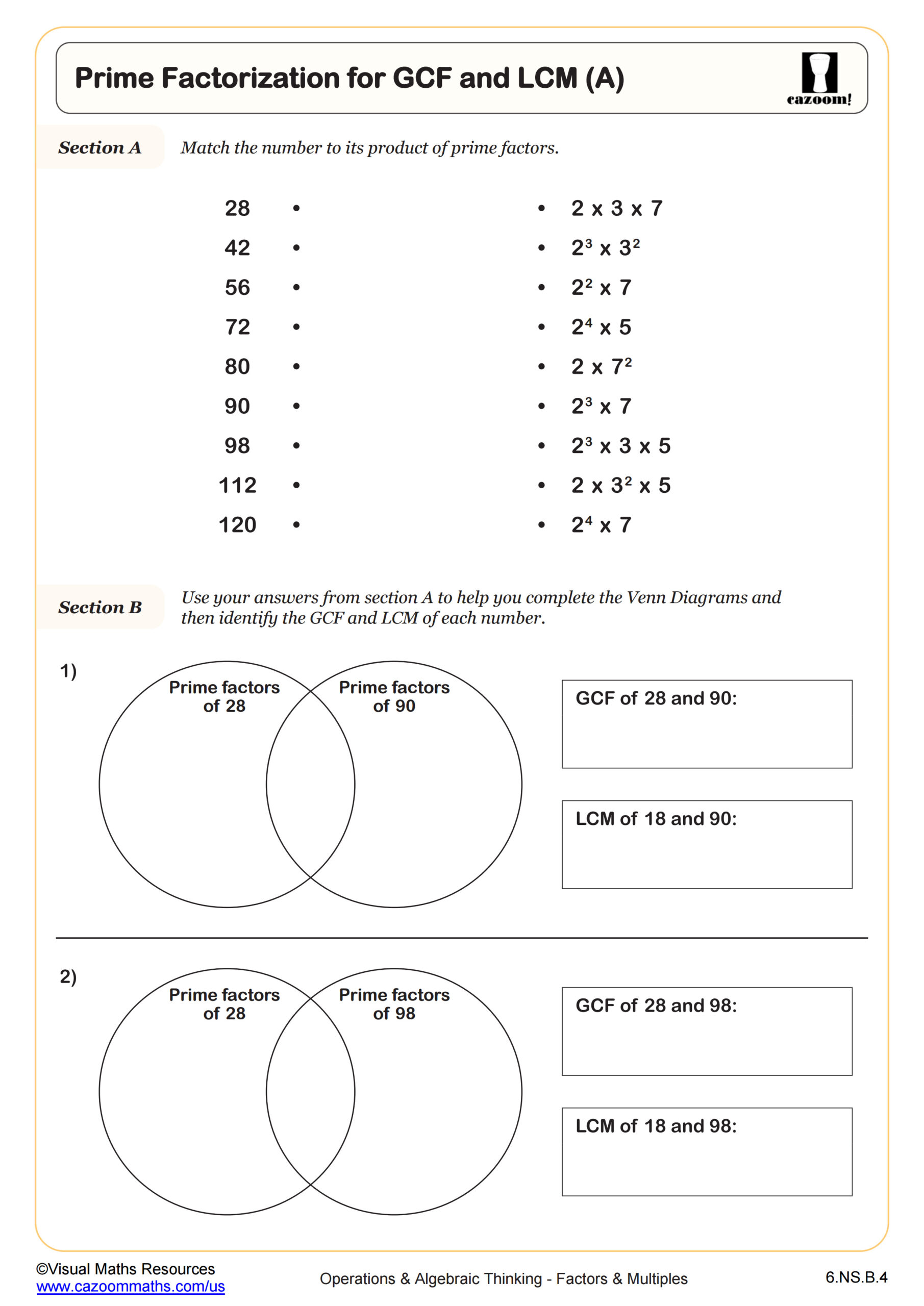
Prime Factorization for GCF and LCM (A)
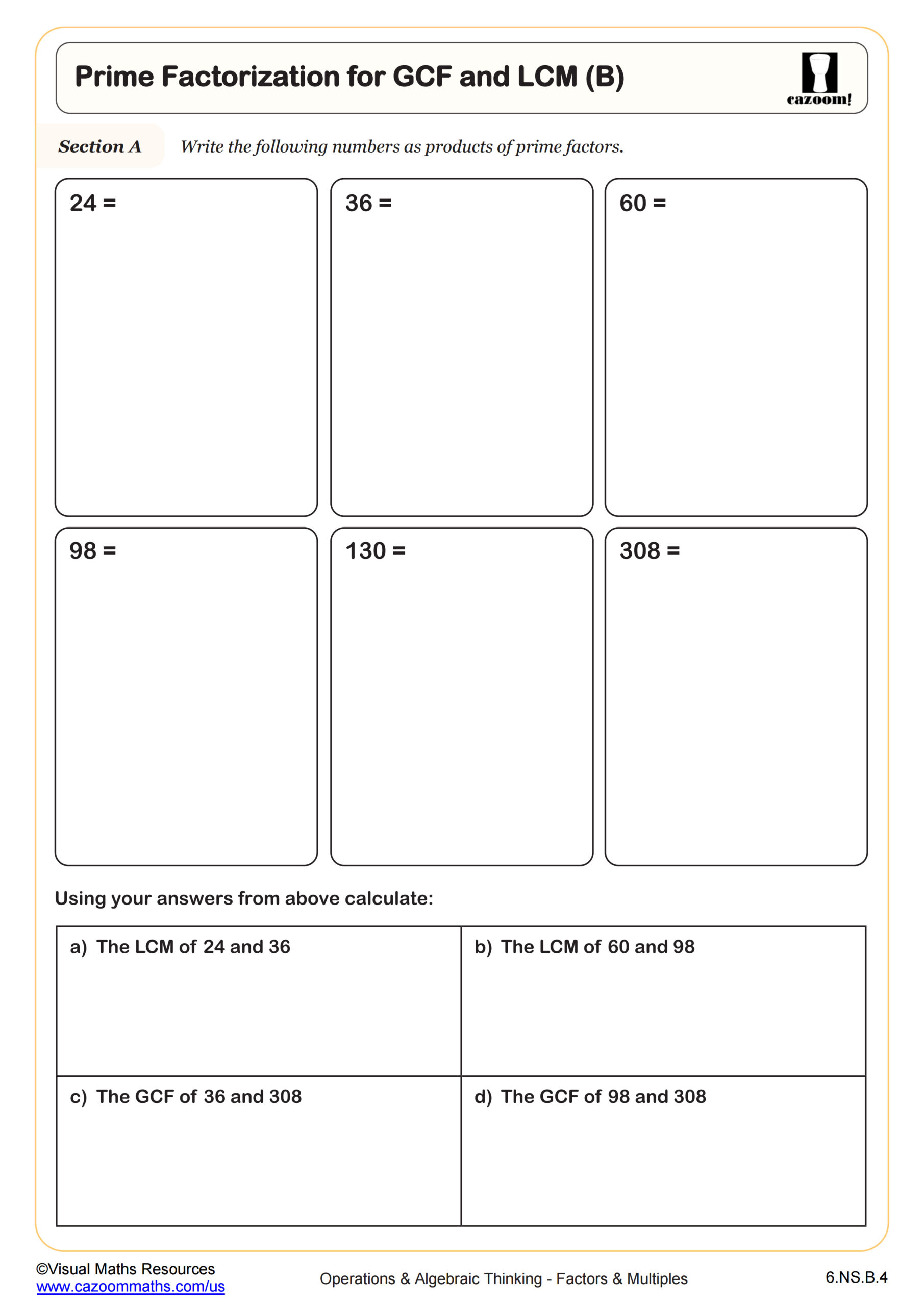
Prime Factorization for GCF and LCM (B)
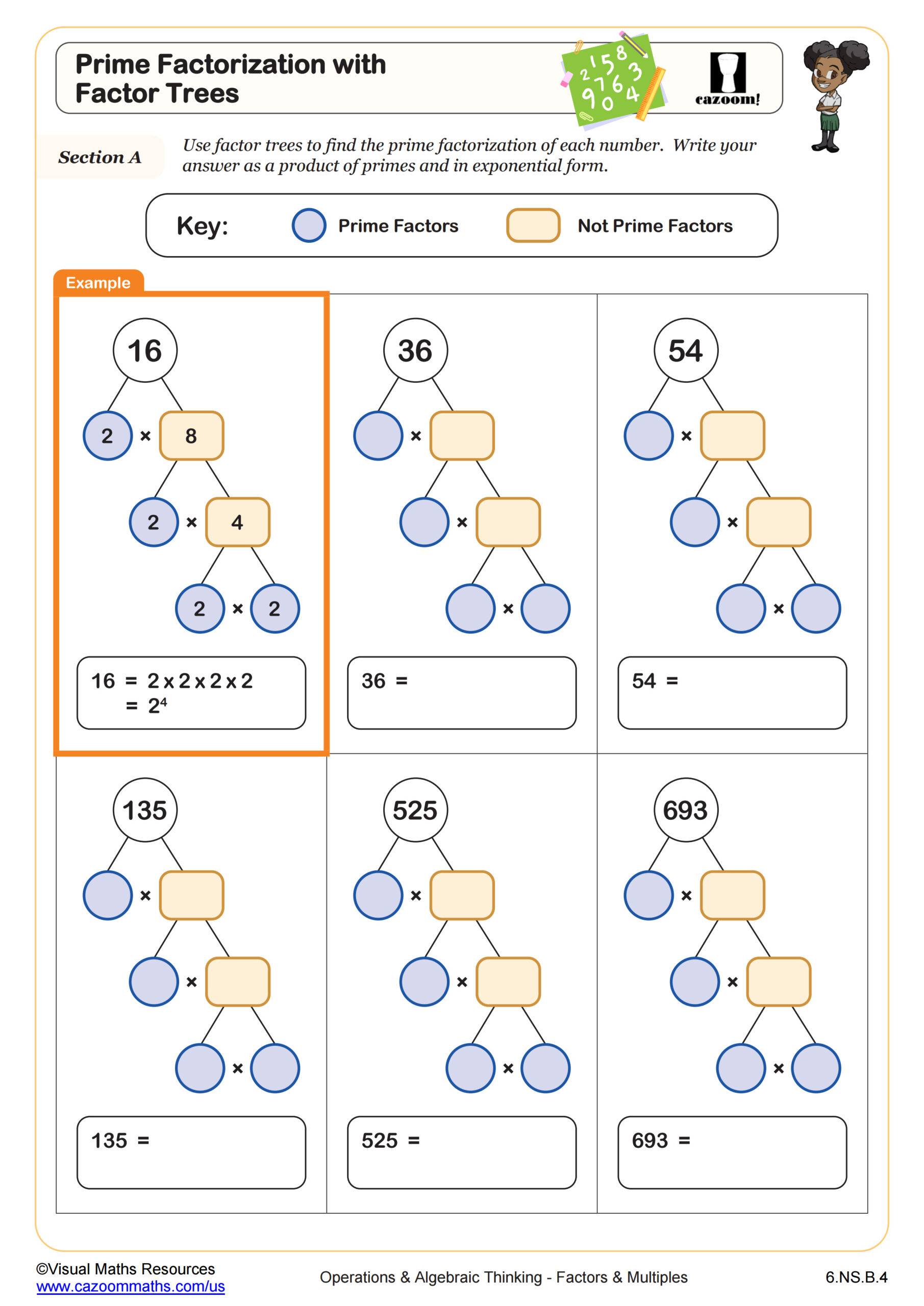
Prime Factorization with Factor Trees
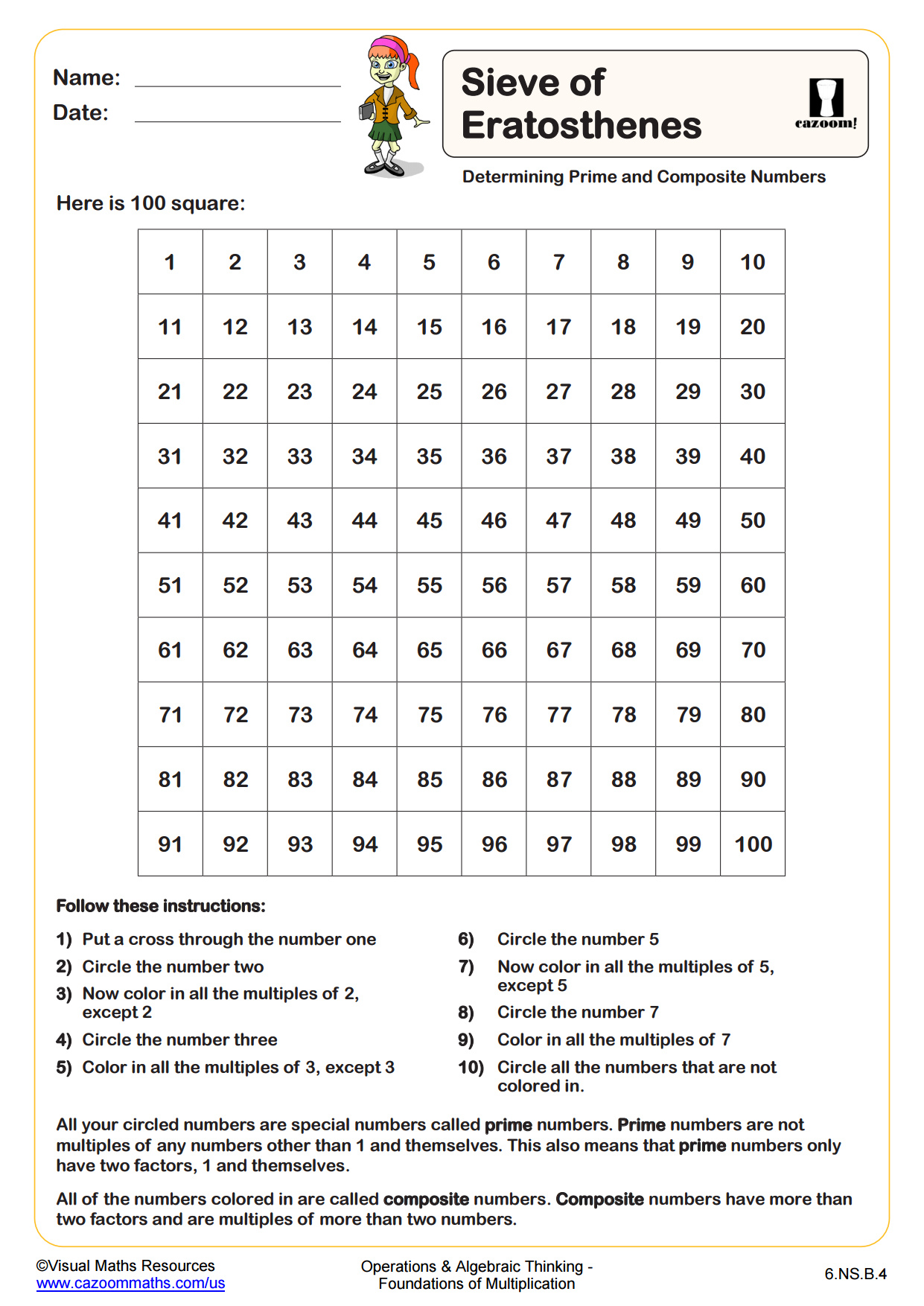
Sieve of Eratosthenes
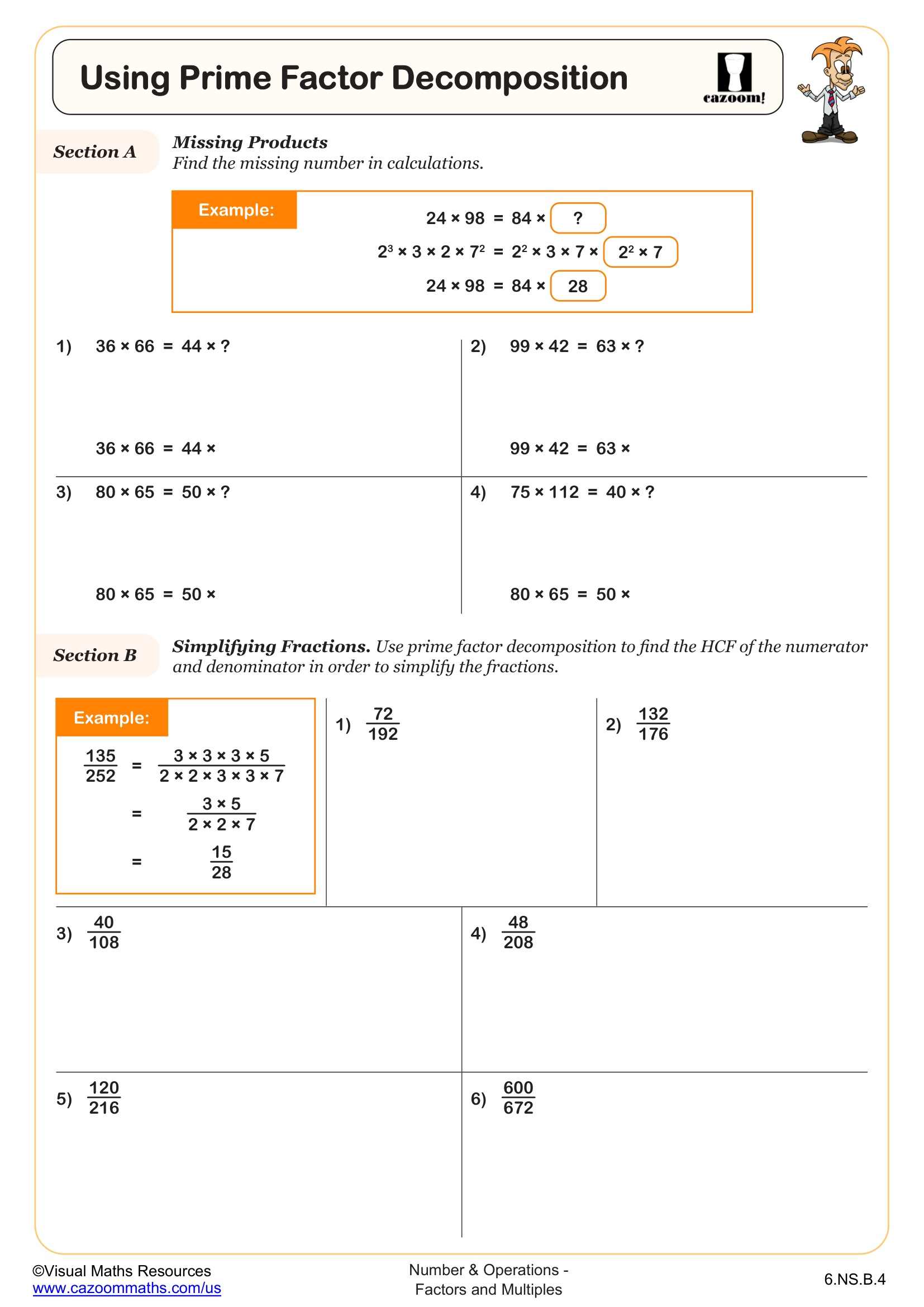
Using Prime Factor Decomposition
All worksheets are created by the team of experienced teachers at Cazoom Math.
Get Higher Math Scores Using Our Ready-to-Print 6th Grade Factors and Multiples Worksheets
These worksheets expand the multiplication knowledge students developed in elementary grades. Students discover relationships between factors, multiples, and divisibility rules. They learn to decompose numbers systematically using various methods. This deep understanding prepares them for fraction operations and algebraic thinking.
Daily practice with these concepts increases both speed and accuracy. Students recognize number patterns that simplify complex calculations. Working through varied problems develops flexible thinking strategies. The skills transfer directly to ratio reasoning and proportional relationships in seventh grade.
Topics at a Glance: Factors, LCM, GCF, and More
These worksheets take students on a structured journey from visual exploration to abstract reasoning with factors and multiples. The learning sequence starts with arrays, factor trees, and Venn diagrams to help students see relationships before they learn prime factorization and division methods. The worksheets contain complete answer keys that present detailed step-by-step answers to all problems. The problem set begins with basic factor identification, which progresses to GCF and LCM through prime decomposition to develop number sense, logical thinking, and basic arithmetic fluency.
Why Teachers Choose Cazoom Math Middle School Factors and Multiples Activities
Teachers appreciate how quickly these worksheets can be integrated into lesson plans. Each sheet targets specific skills at different difficulty levels. Differentiation becomes simple with varied complexity within the same topic. Advanced students tackle challenge problems while others reinforce fundamentals.
The solutions reveal mathematical reasoning behind each step. Students understand why methods work rather than memorizing procedures. Teachers save grading time with clear explanations of common errors. Quick five-minute warm-ups activate prior knowledge before new lessons.
The systematic approach helps identify gaps in understanding immediately. Cazoom Math worksheets are ideal for homework, assessments, or classroom practice. Teachers use these sheets for both intervention groups and enrichment activities. The consistent format helps students focus on mathematical thinking rather than instructions.
Everyday Math: Where These Skills Show Up in Real Life
Students use factors and multiples when dividing resources fairly among groups. They apply these concepts to solve scheduling problems and organize data. Understanding prime numbers is essential for computer programming and cryptography basics. These fundamental skills appear in engineering, architecture, and financial planning.
• Arrange desks in equal rows
• Calculate servings for recipes
• Plan tournament brackets
• Create repeating art patterns