6th Grade Fractions Worksheets
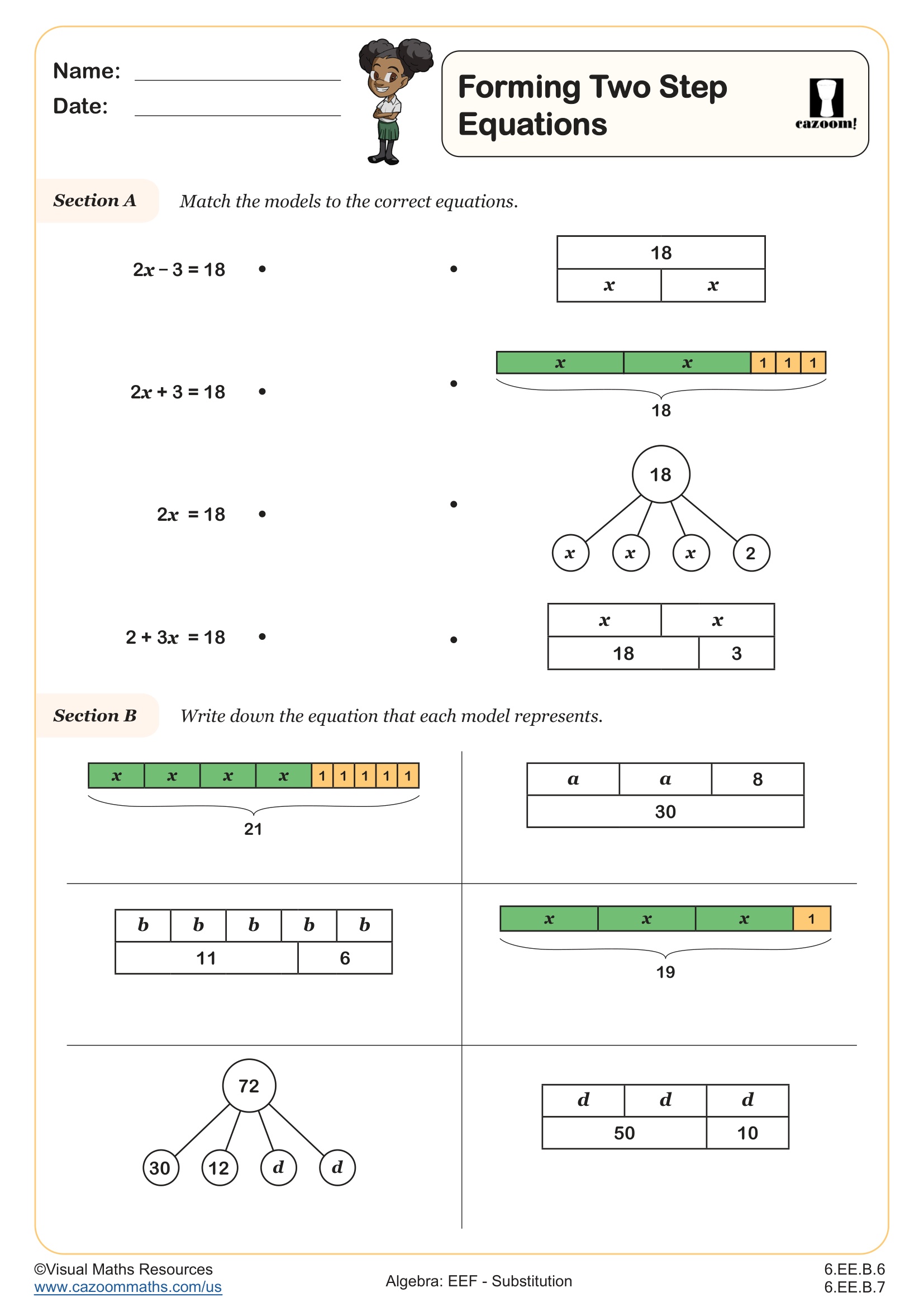
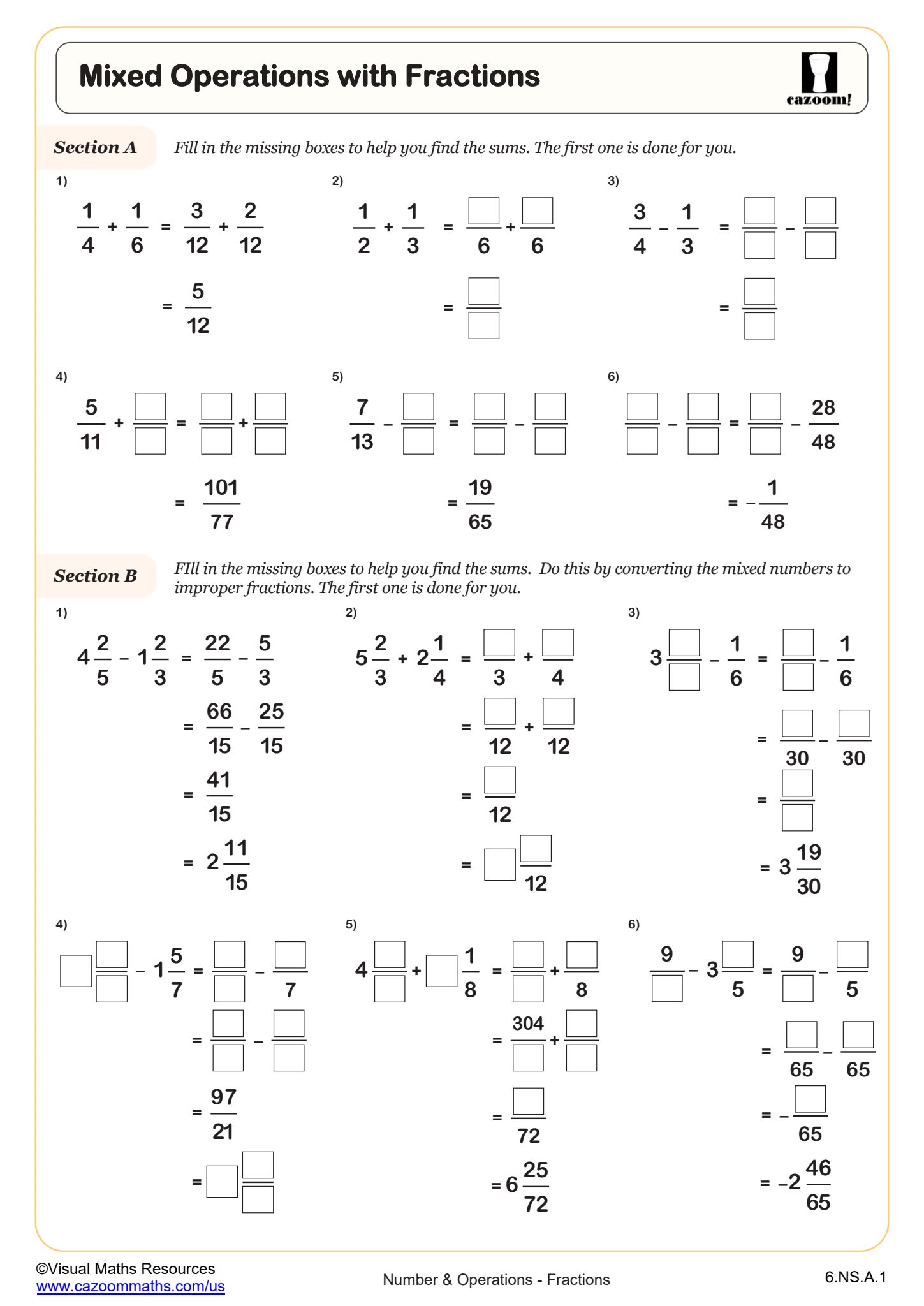
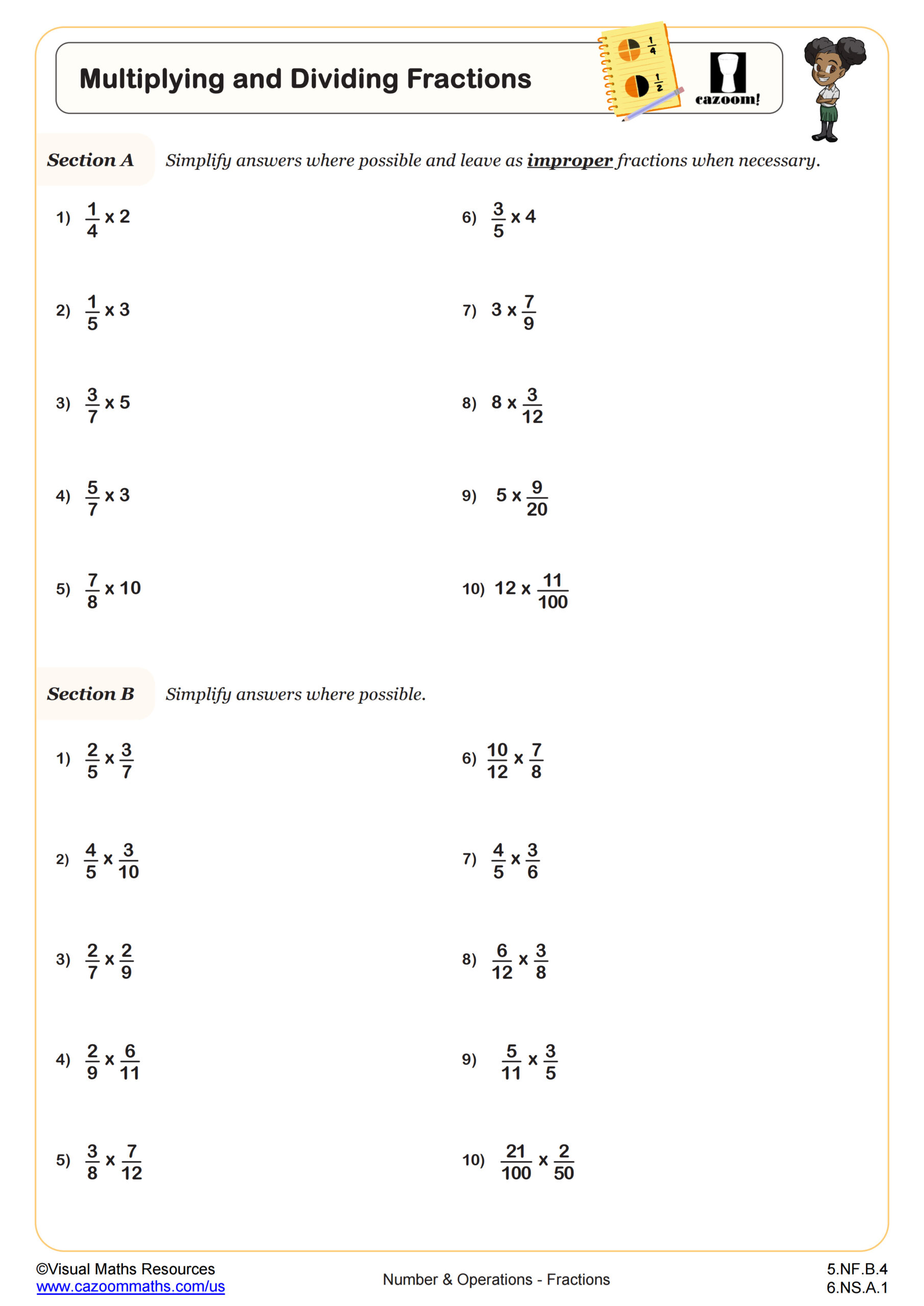
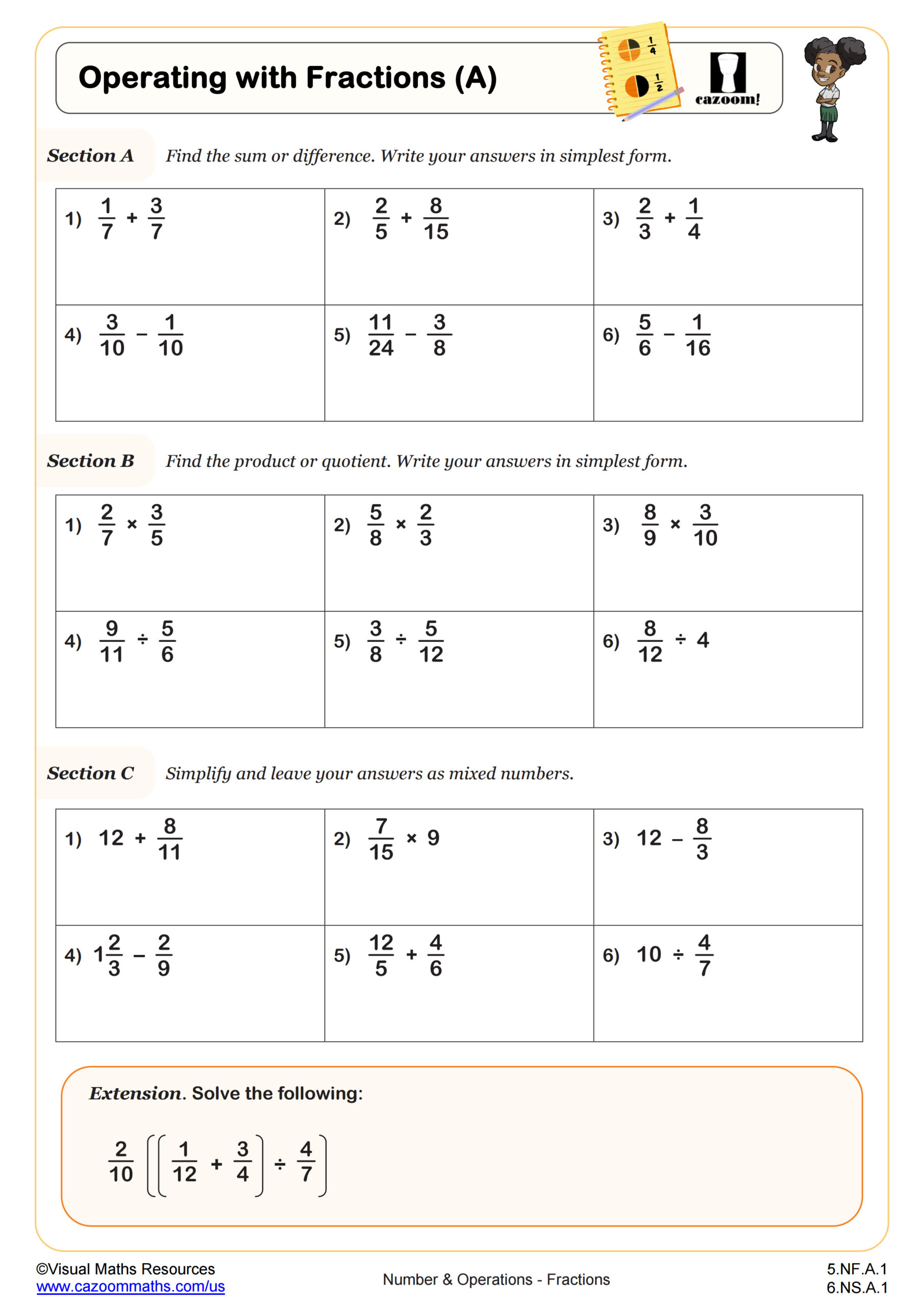
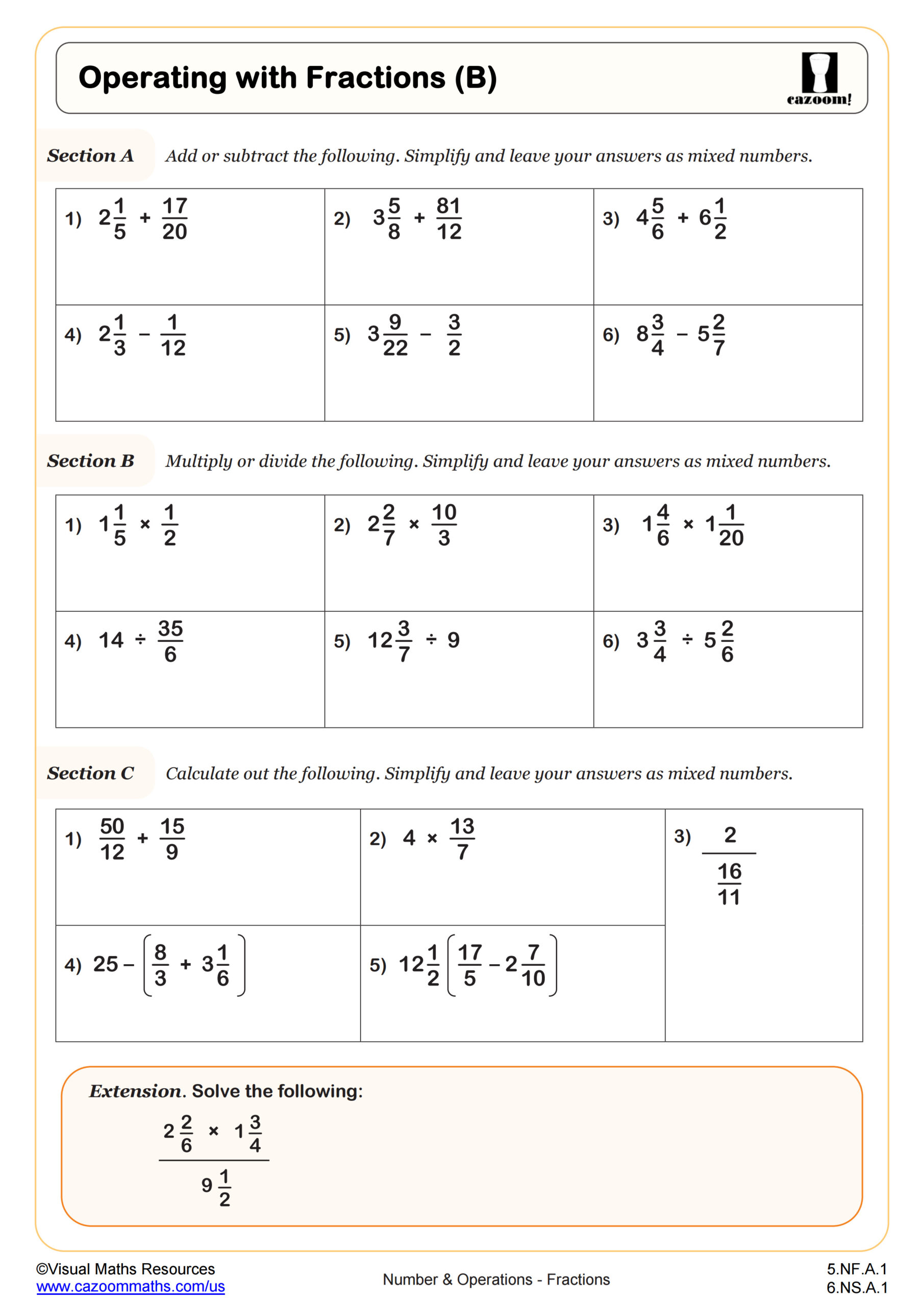
All worksheets are created by the team of experienced teachers at Cazoom Math.
What makes grade 6 fractions worksheets with answers effective for classroom use?
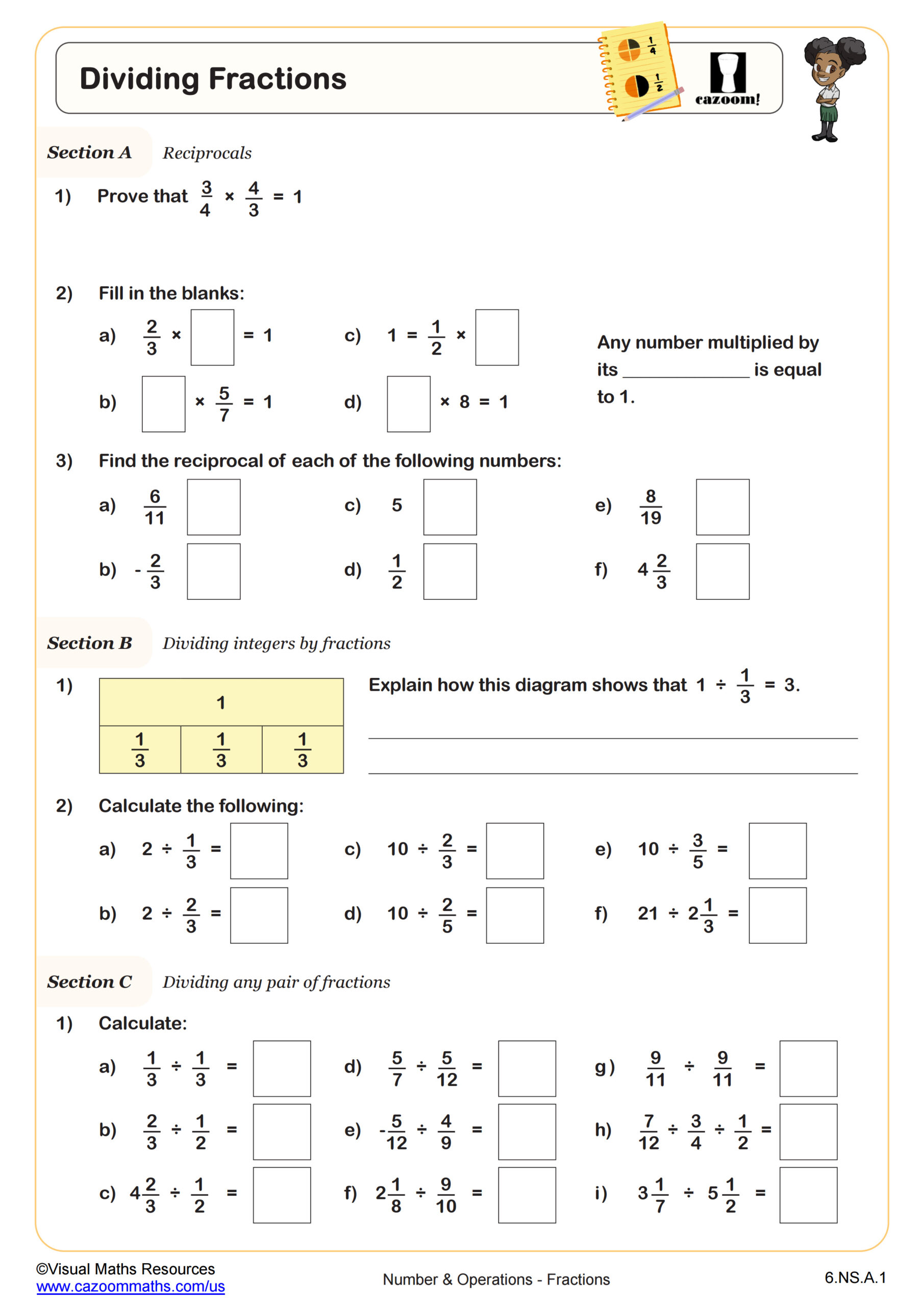
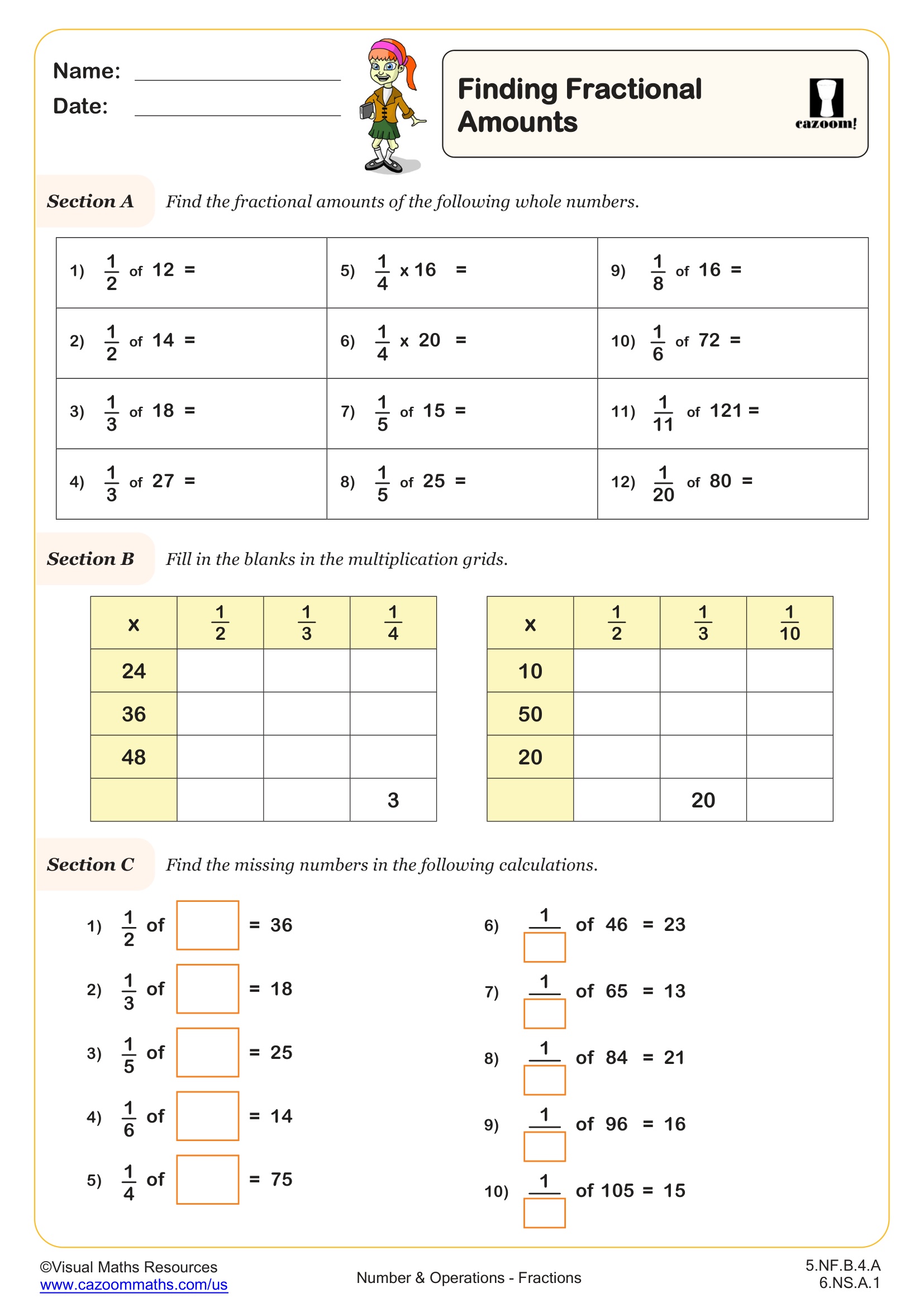
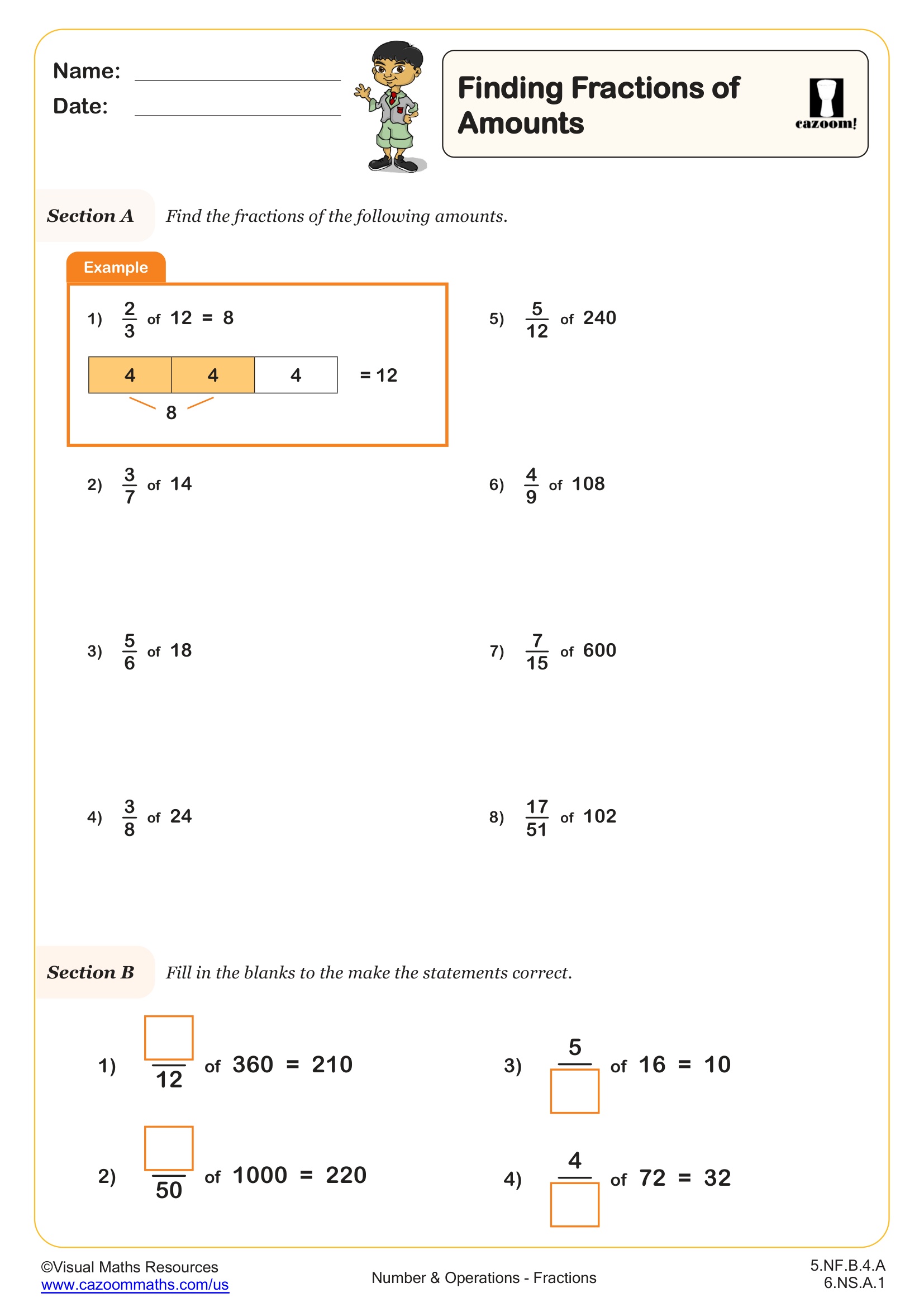
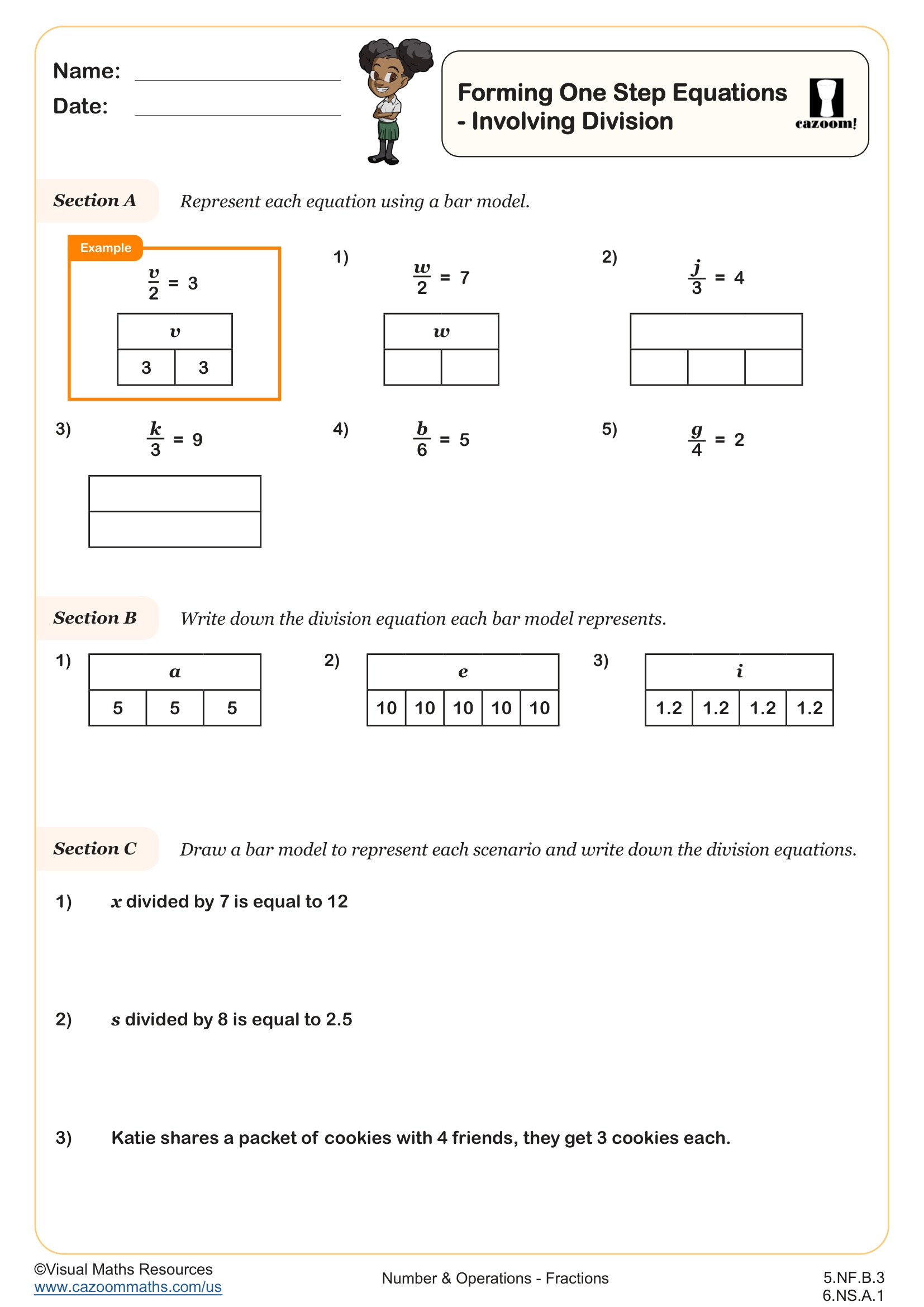
Grade 6 fractions worksheets with answers align with Common Core Standards 6.NS.1 through 6.NS.4, covering division of fractions, multi-digit decimal operations, and finding common factors. The answer keys allow teachers to quickly identify which students need additional support and which concepts require reteaching before moving forward.
Teachers frequently observe that students make systematic errors when dividing fractions, often multiplying by the reciprocal of the wrong fraction or forgetting to flip the second fraction entirely. Having detailed solutions helps educators trace where misconceptions develop and address them through targeted intervention rather than general review.
How do 6th grade fraction worksheets differ from 5th grade fraction practice?
Sixth grade fraction worksheets introduce division of fractions and focus heavily on applying fraction operations to solve multi-step word problems. While 5th graders work primarily with addition and subtraction of fractions with like and unlike denominators, 6th graders must master all four operations and understand when to use each in problem-solving contexts.
The complexity shifts from procedural fluency to conceptual application, with problems requiring students to determine which operation to use based on context clues. Teachers notice that students who excelled at computational practice in 5th grade sometimes struggle with the reasoning demands of 6th grade fraction word problems.
Why do students struggle with dividing fractions in 6th grade?
Division of fractions challenges students because the 'multiply by the reciprocal' rule seems counterintuitive when they expect division to make numbers smaller. Many students memorize the algorithm without understanding that dividing by a fraction less than one actually increases the quotient, creating confusion when checking their answers for reasonableness.
Teachers find success using visual models like area diagrams or number lines before introducing the standard algorithm. When students can see that dividing 2 by 1/4 means finding how many quarter-pieces fit into 2 whole units, the result of 8 makes intuitive sense and connects to real-world situations like recipe scaling.
How should teachers use fractions worksheets grade 6 level for differentiated instruction?
Fractions worksheets grade 6 level work best when teachers pre-assess to determine which students need review of prerequisite skills versus those ready for grade-level challenges. Students who still struggle with equivalent fractions benefit from worksheets with visual fraction models, while advanced students can tackle complex word problems involving multiple fraction operations.
Teachers often create mixed-ability pairs where stronger students explain their reasoning to classmates, reinforcing their own understanding while supporting struggling learners. The answer keys help teachers verify that student explanations are mathematically sound and identify misconceptions that need addressing during small group instruction.