6th Grade Number and Operations Worksheets
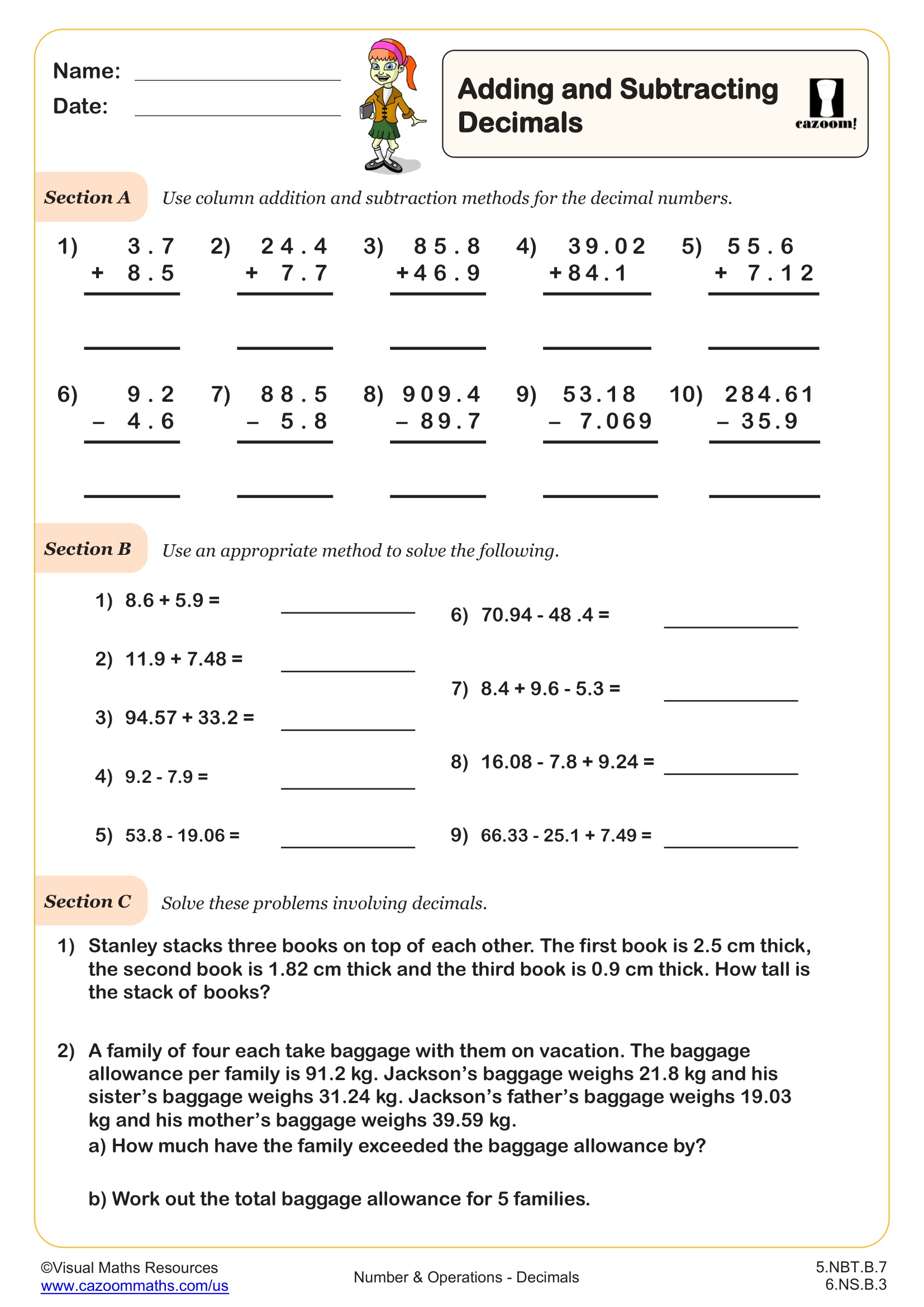
Adding and Subtracting Decimals
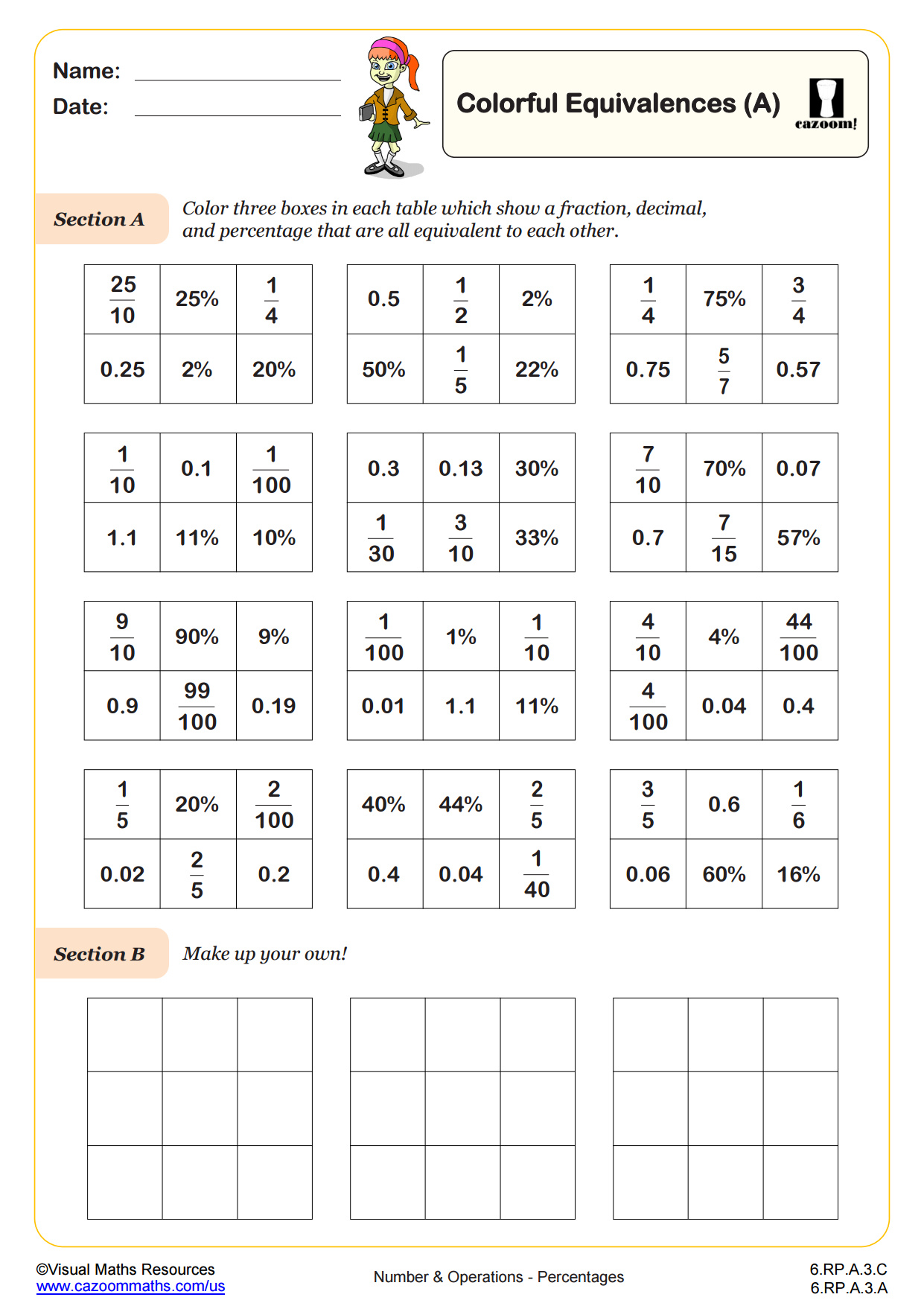
Colourful Equivalances (A)
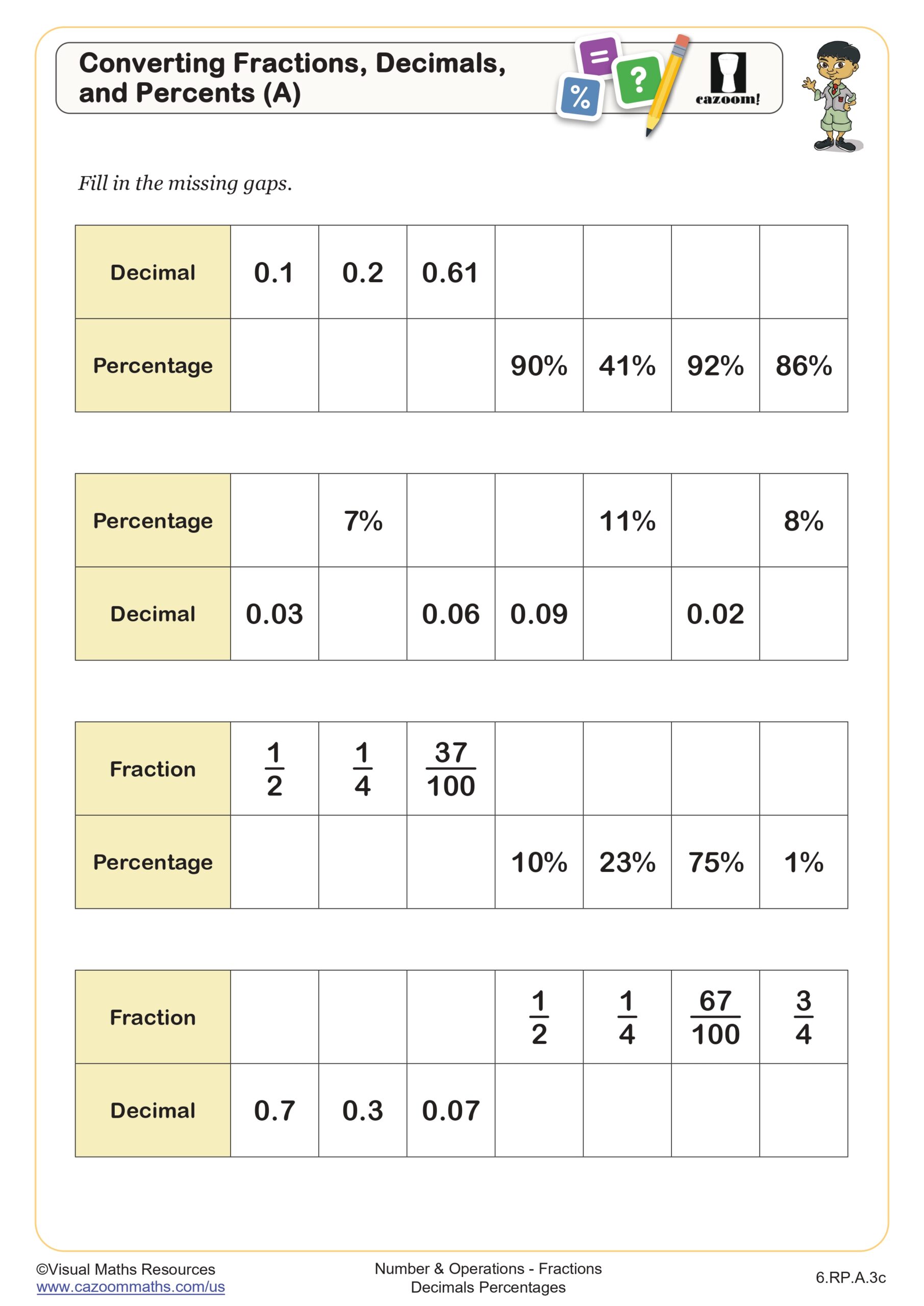
Converting Fractions, Decimals, and Percents (A)
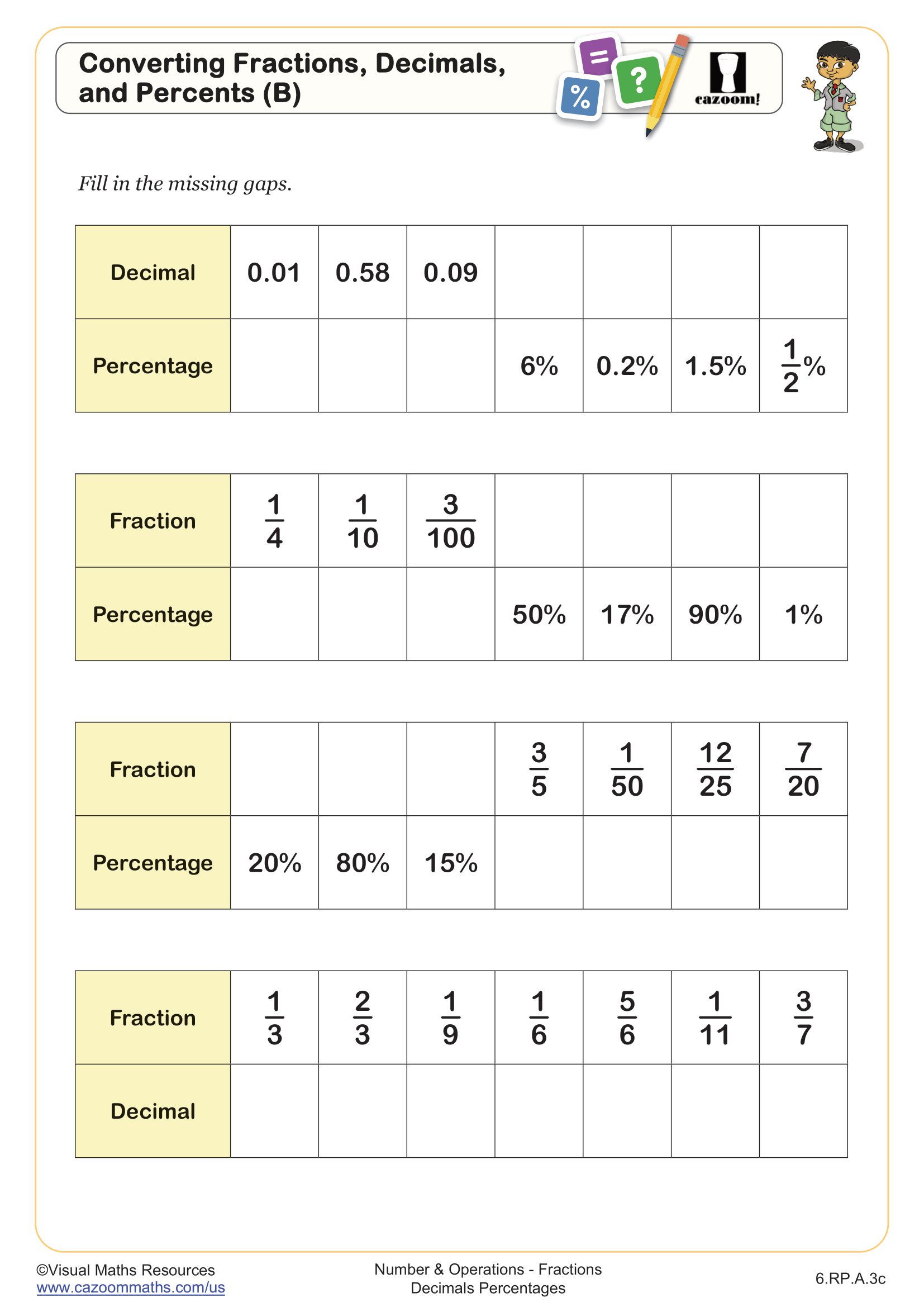
Converting Fractions, Decimals, and Percents (B)
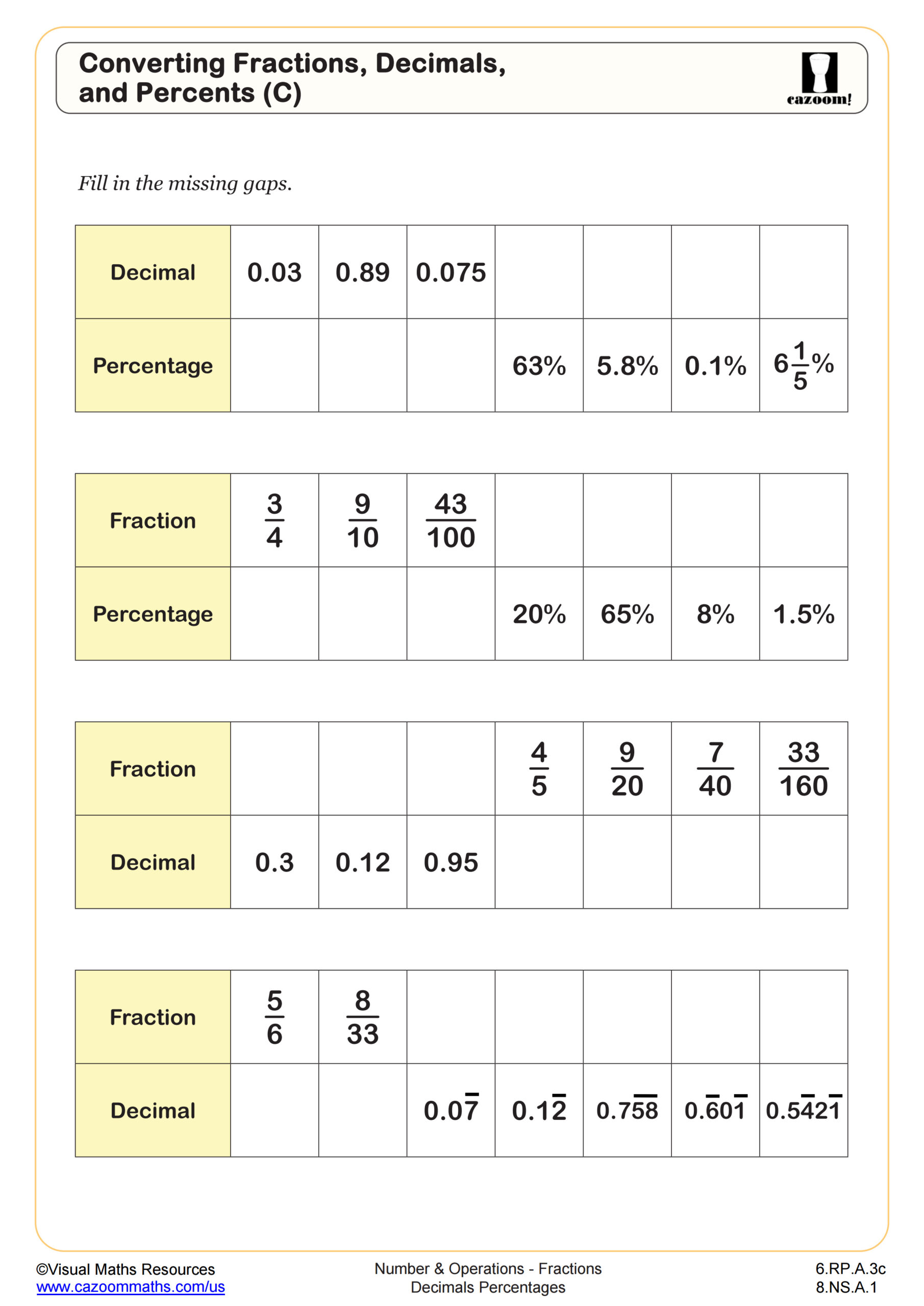
Converting Fractions, Decimals, and Percents (C)
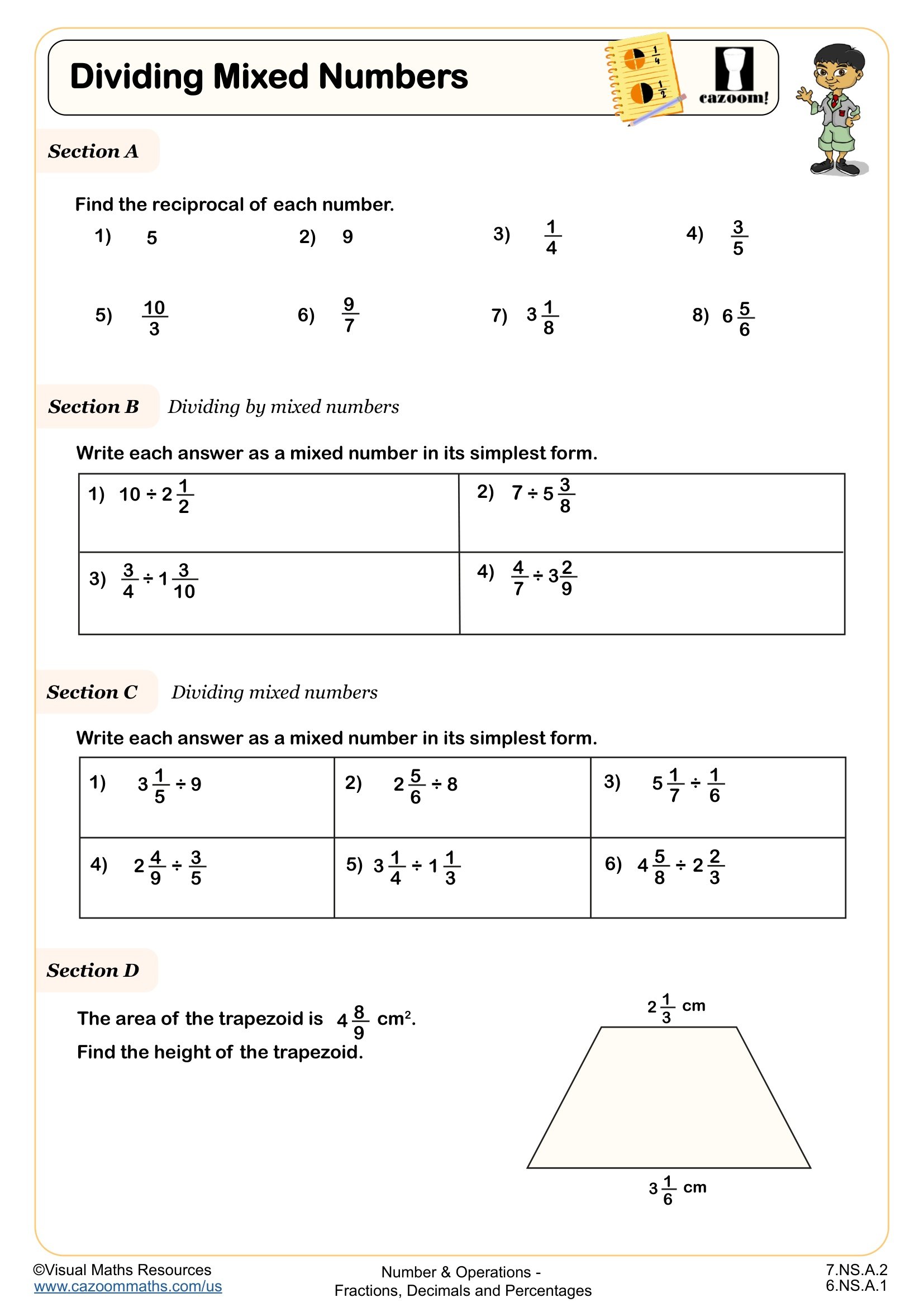
Dividing Mixed Numbers
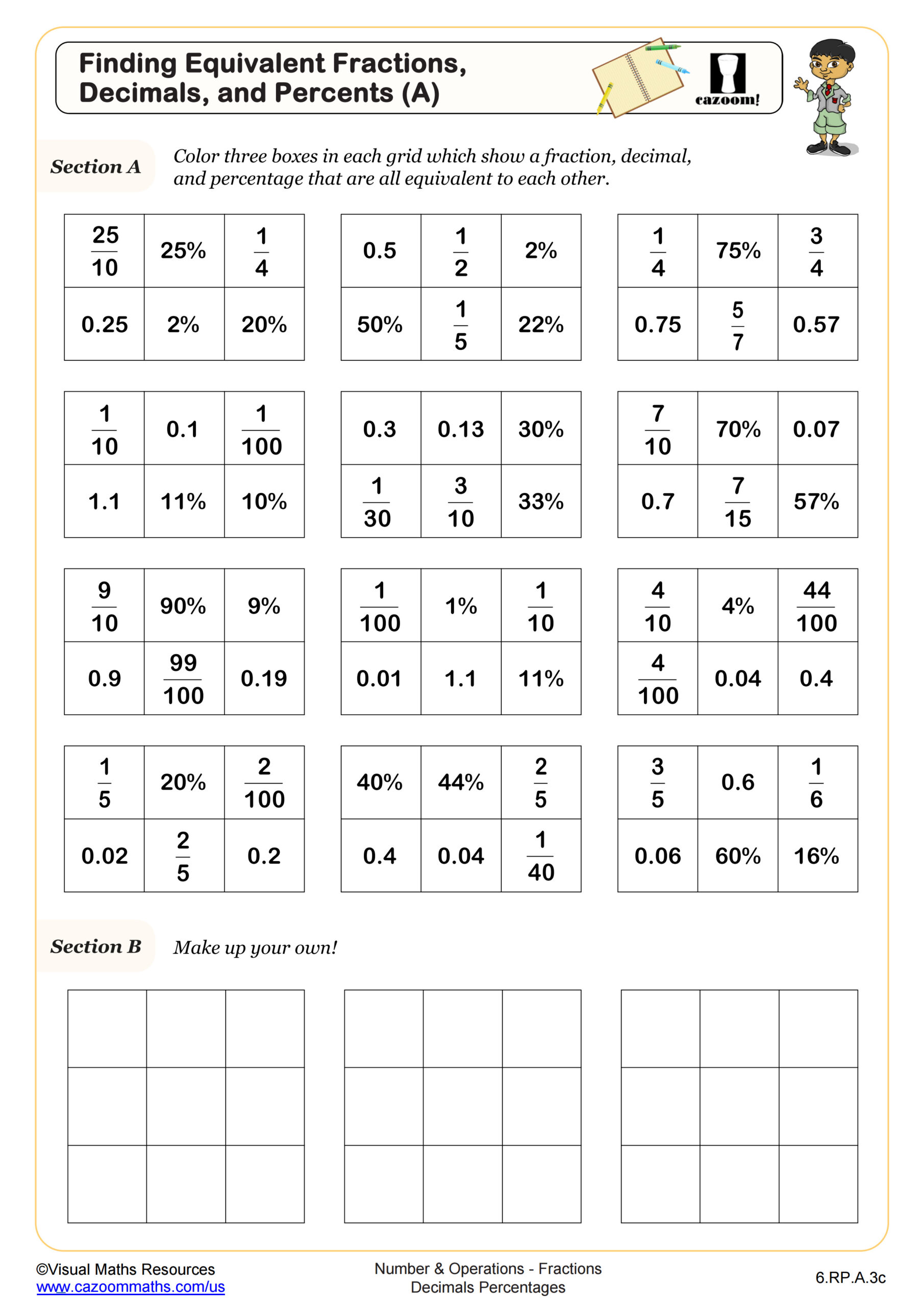
Finding Equivalent Fractions, Decimals, and Percents (A)
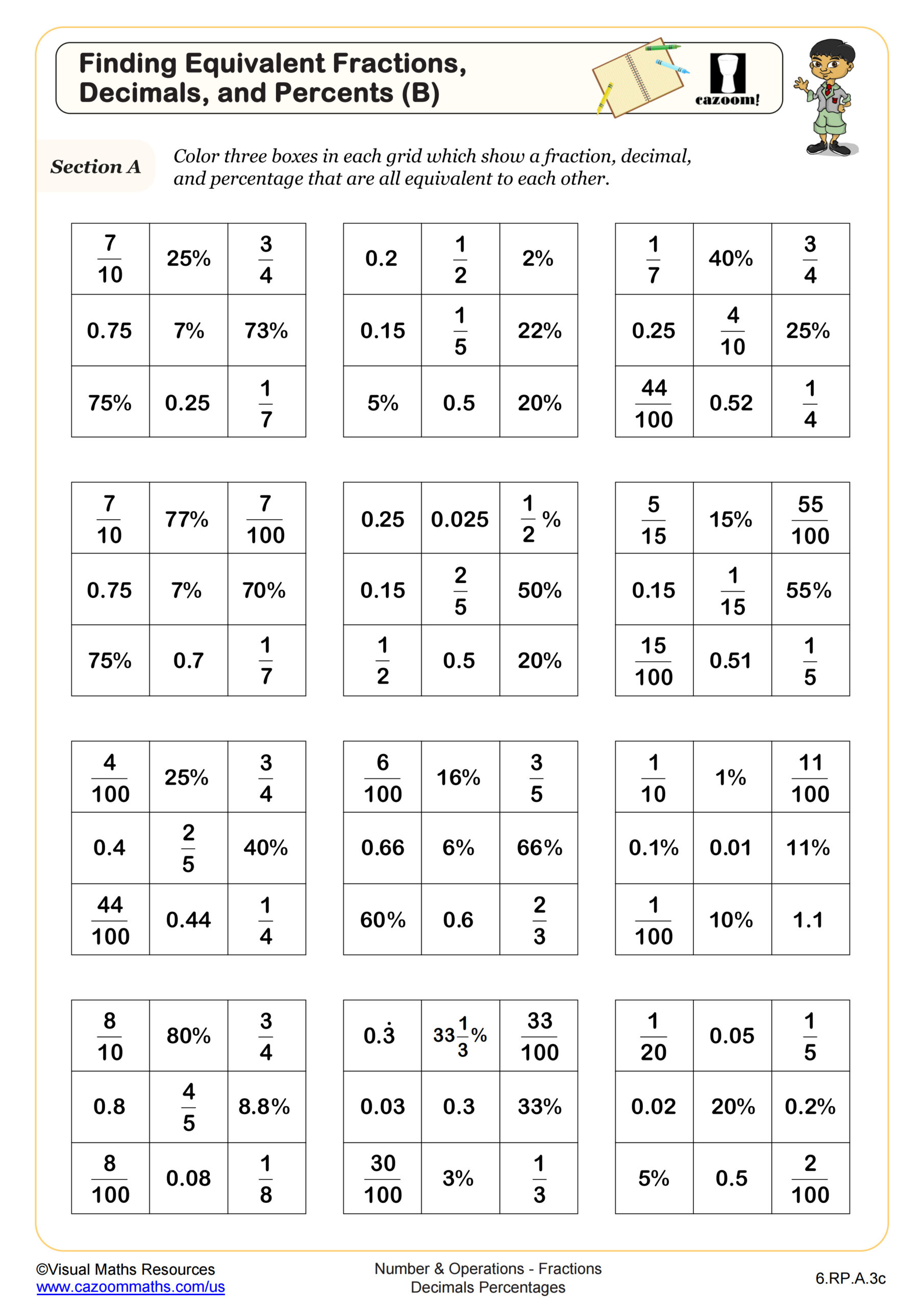
Finding Equivalent Fractions, Decimals, and Percents (B)
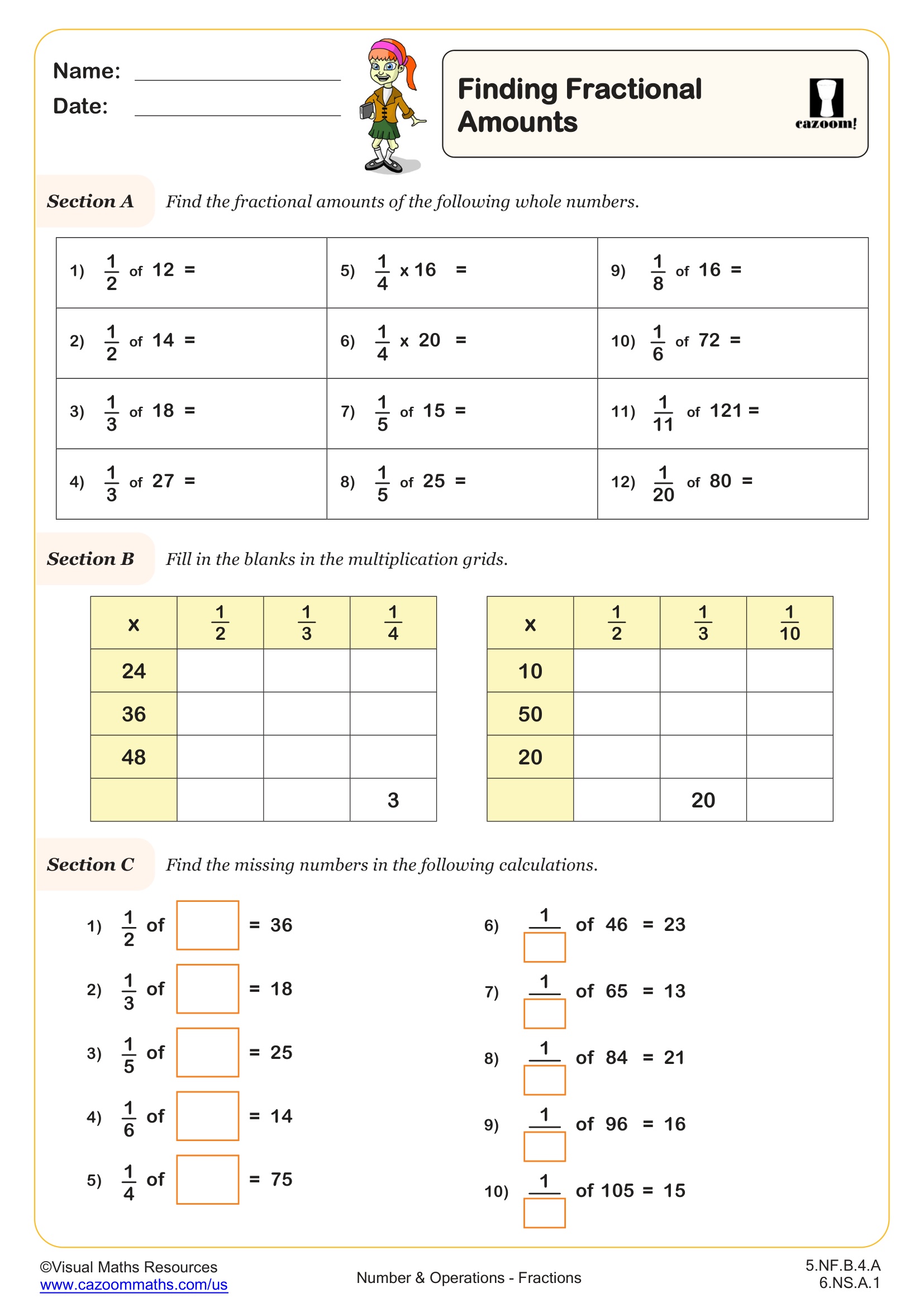
Finding Fractional Amounts
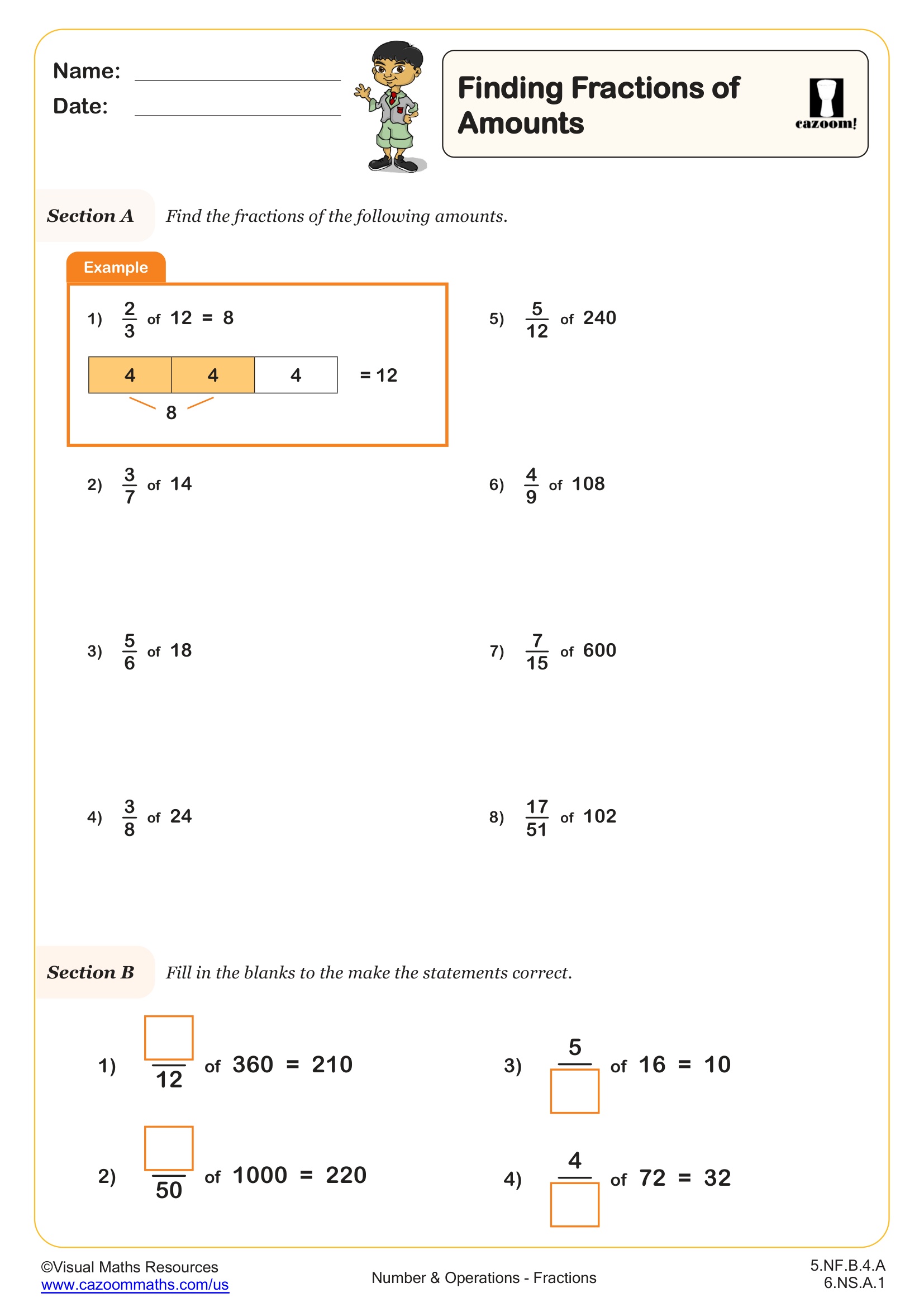
Finding Fractions of Amounts
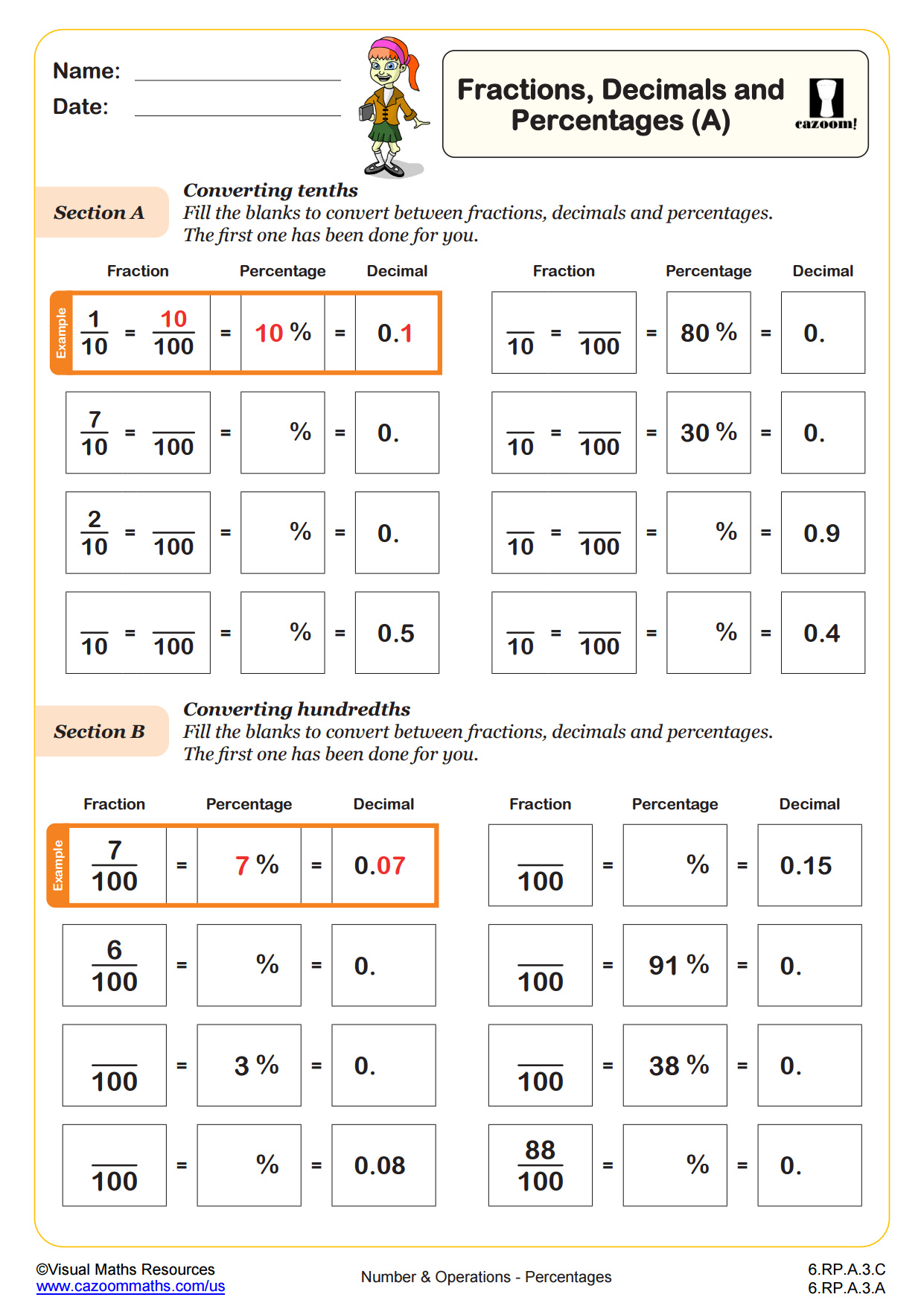
Fractions, Decimals and Percentages (A)
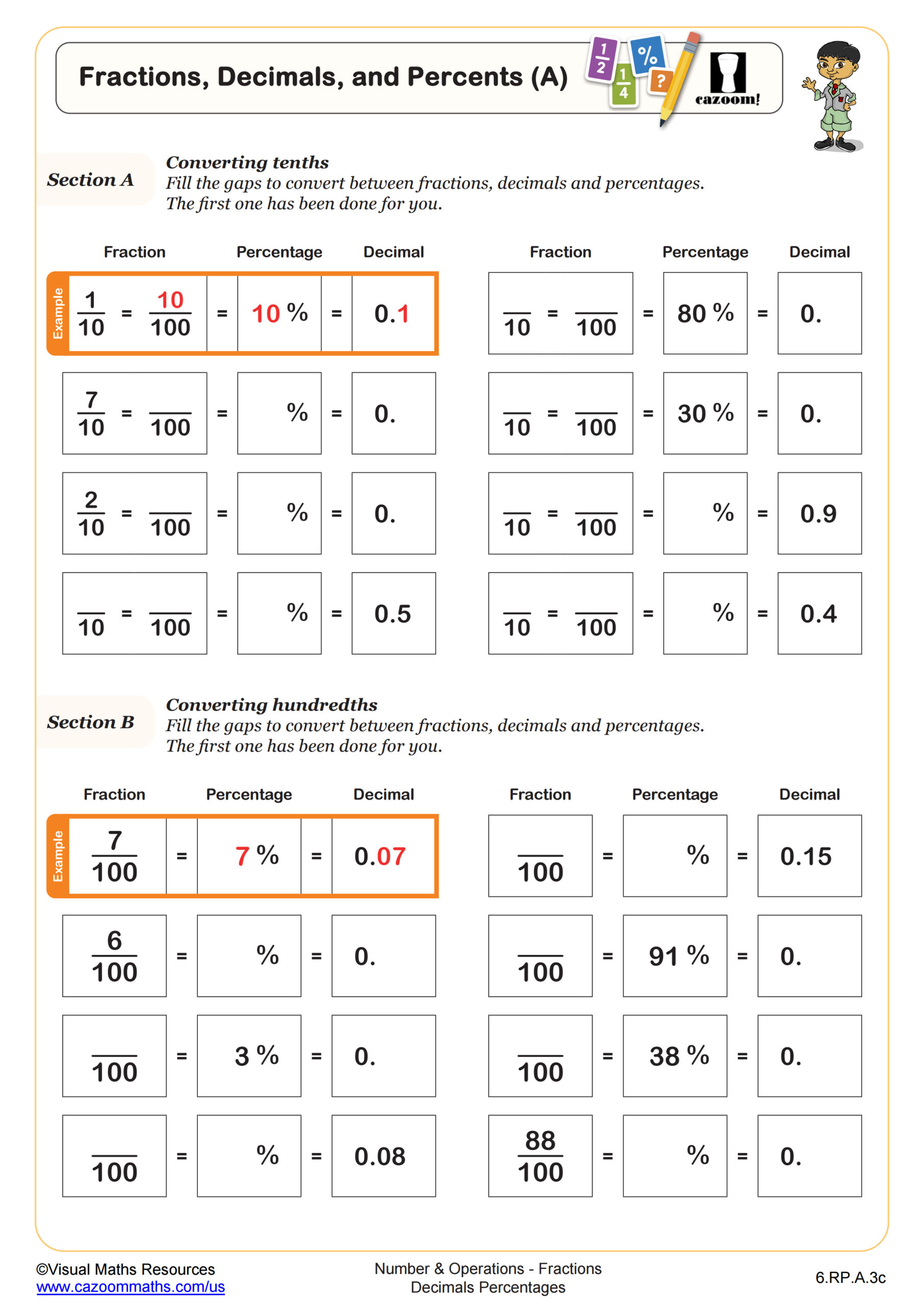
Fractions, Decimals, and Percents (A)
Fractions, Decimals, and Percents (B)
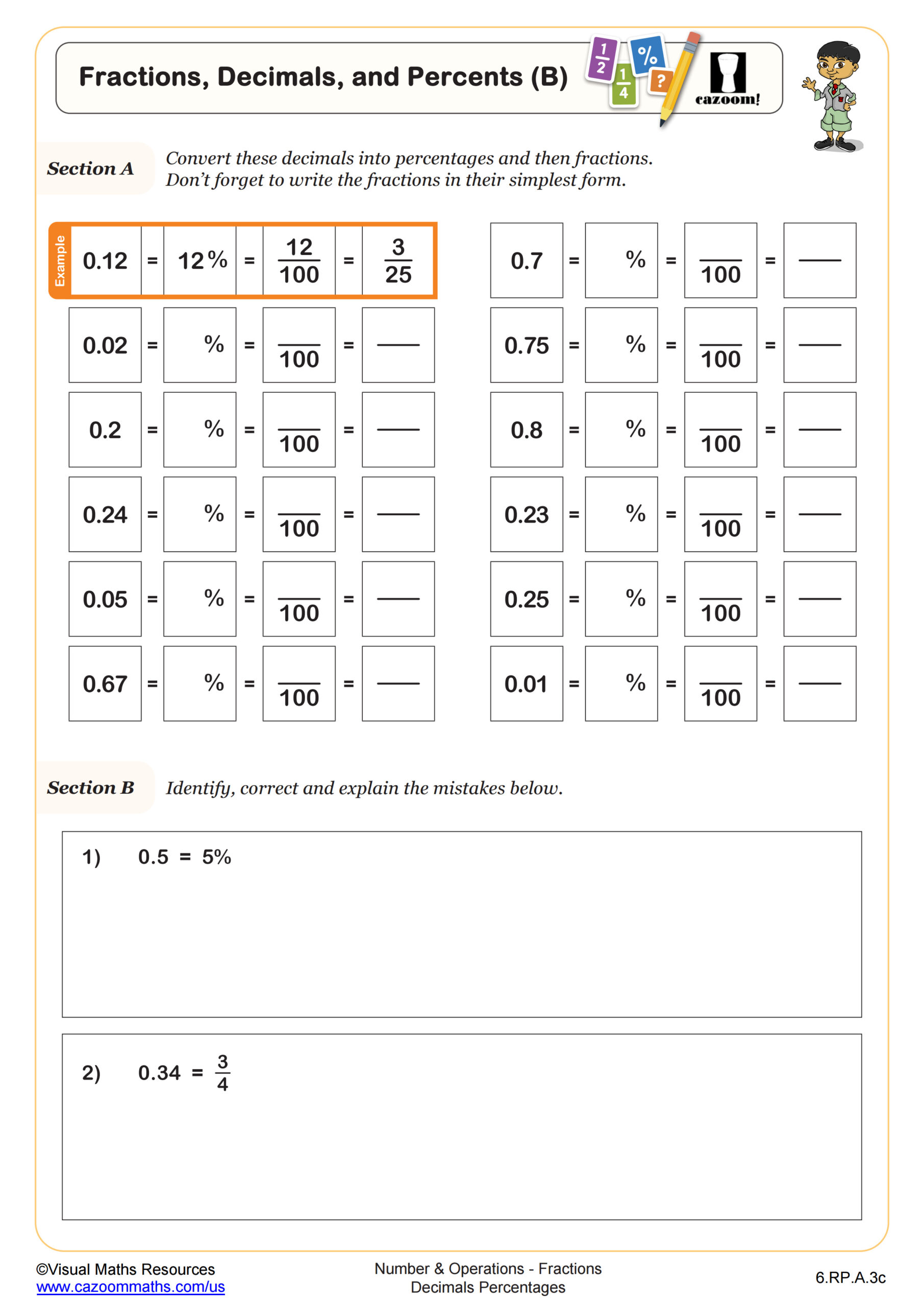
Fractions, Decimals, and Percents (C)
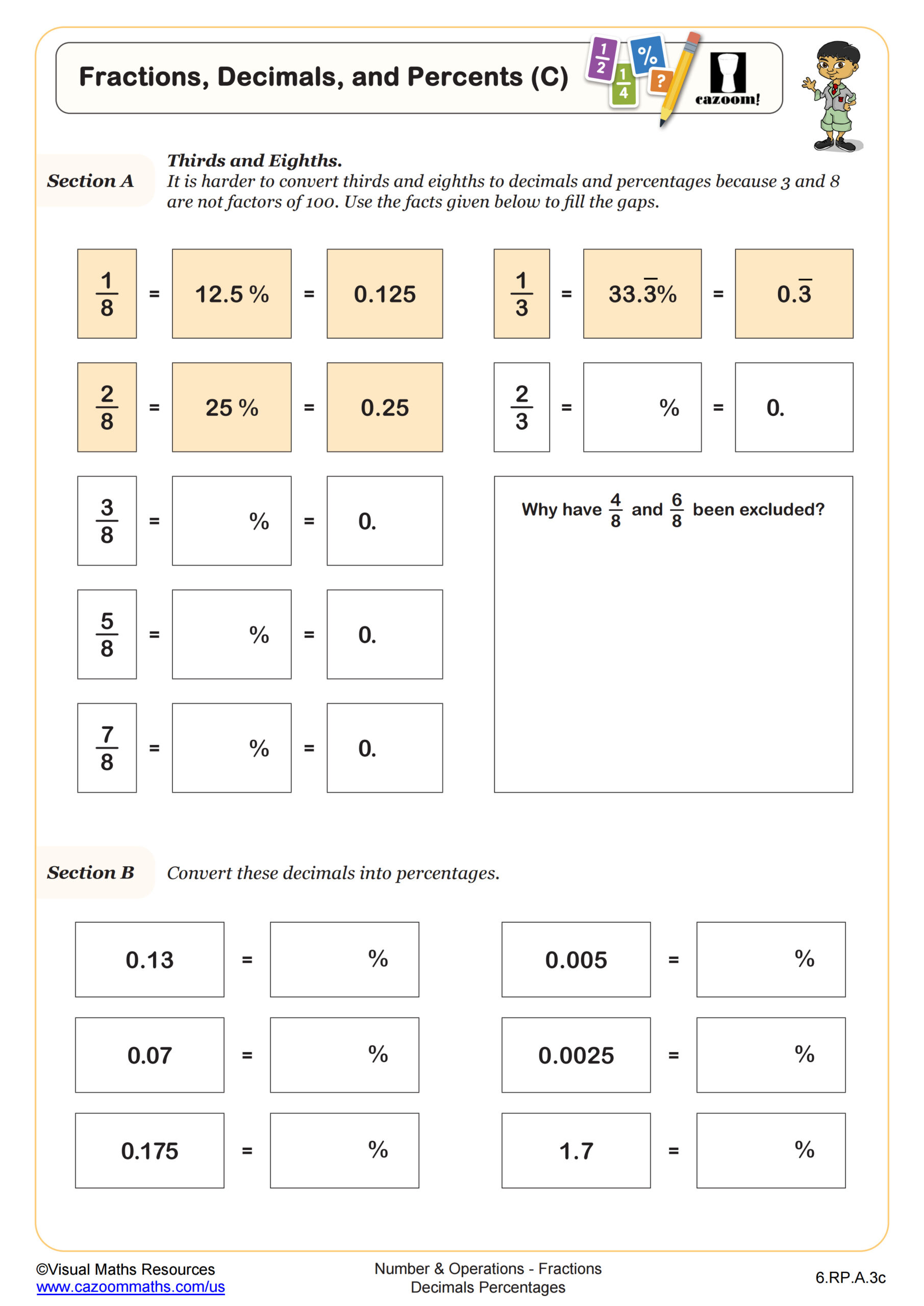
Fractions, Decimals, and Percents (D)
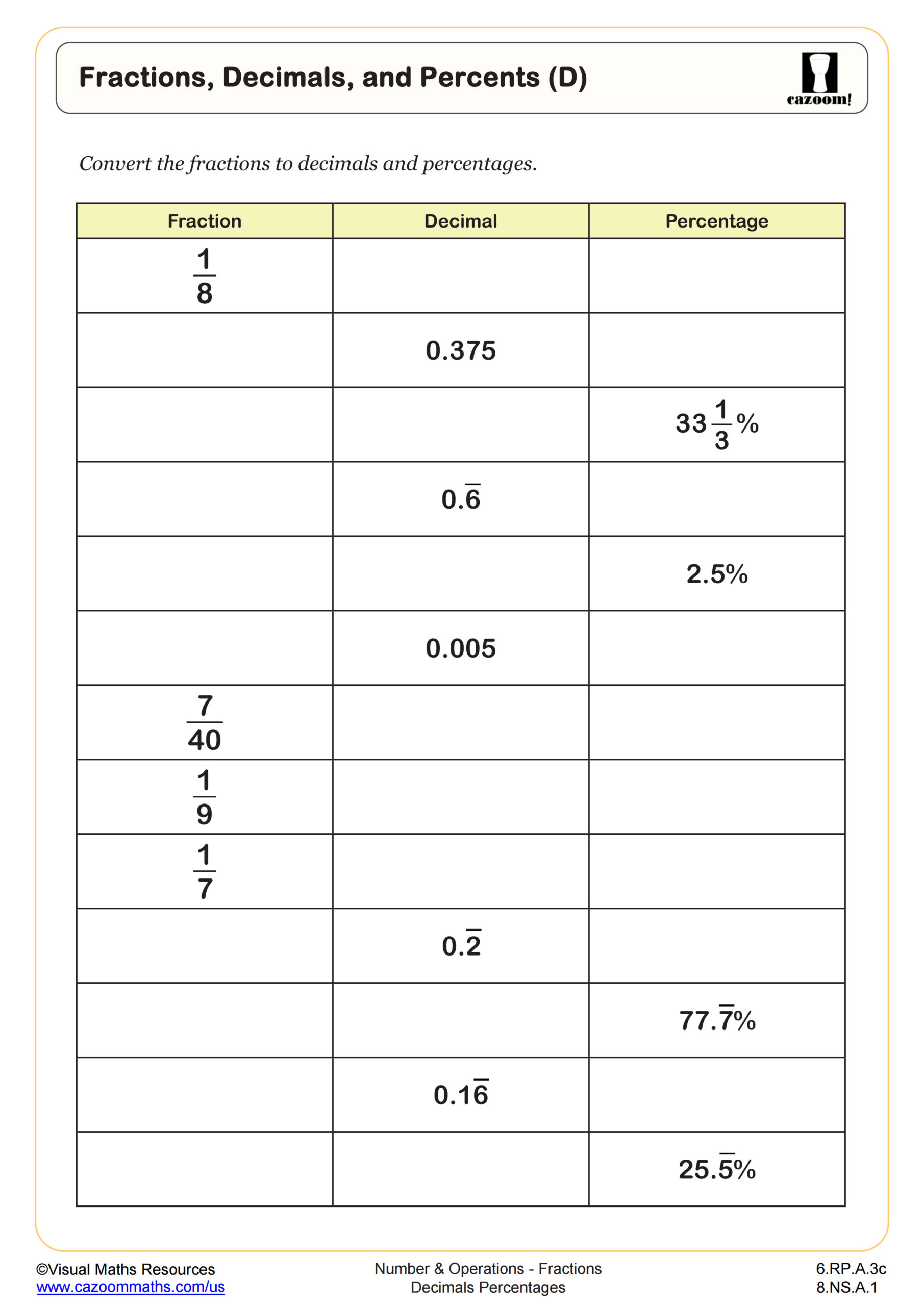
Fractions, Decimals, and Percents Word Problems
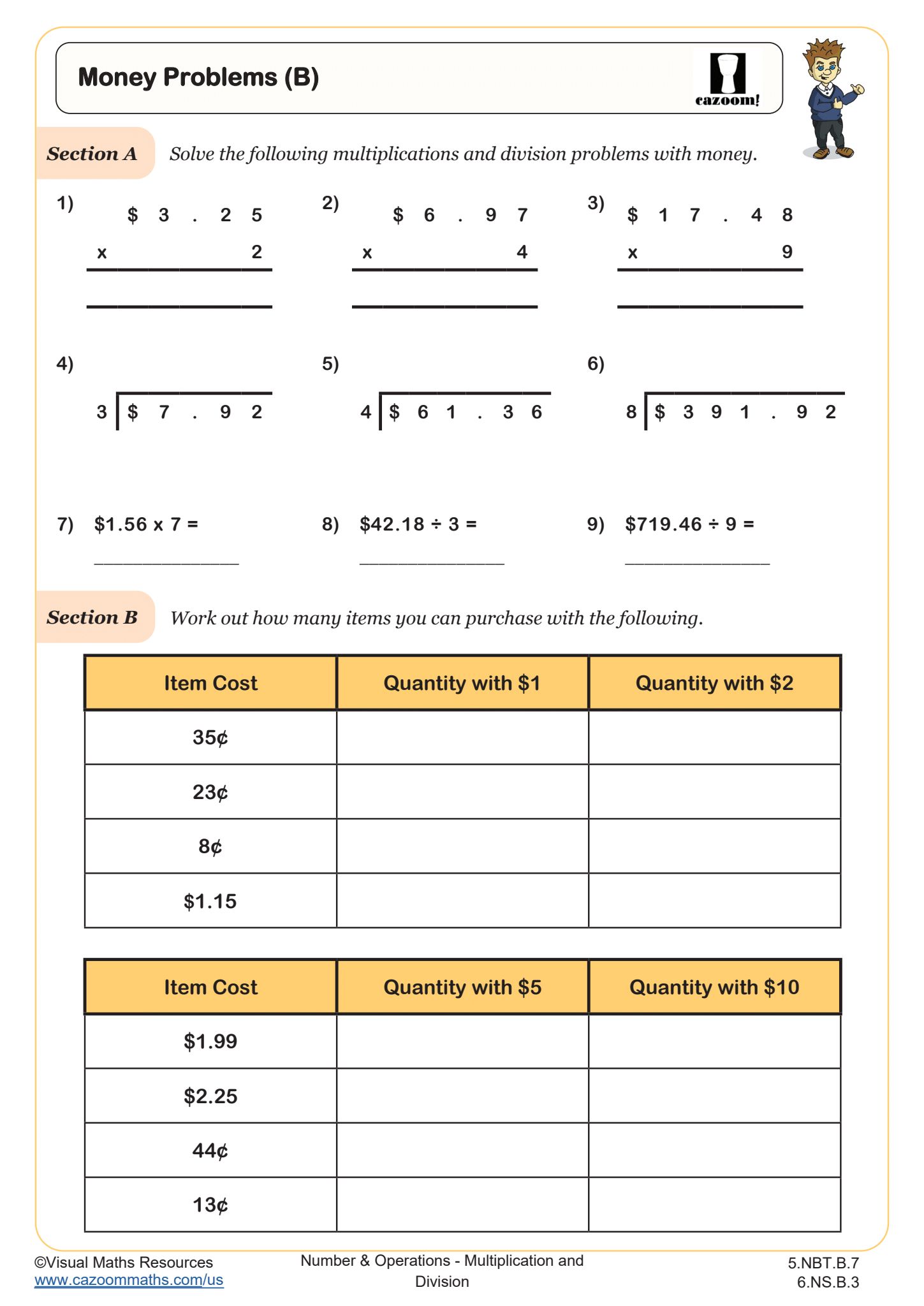
Money Problems (B)
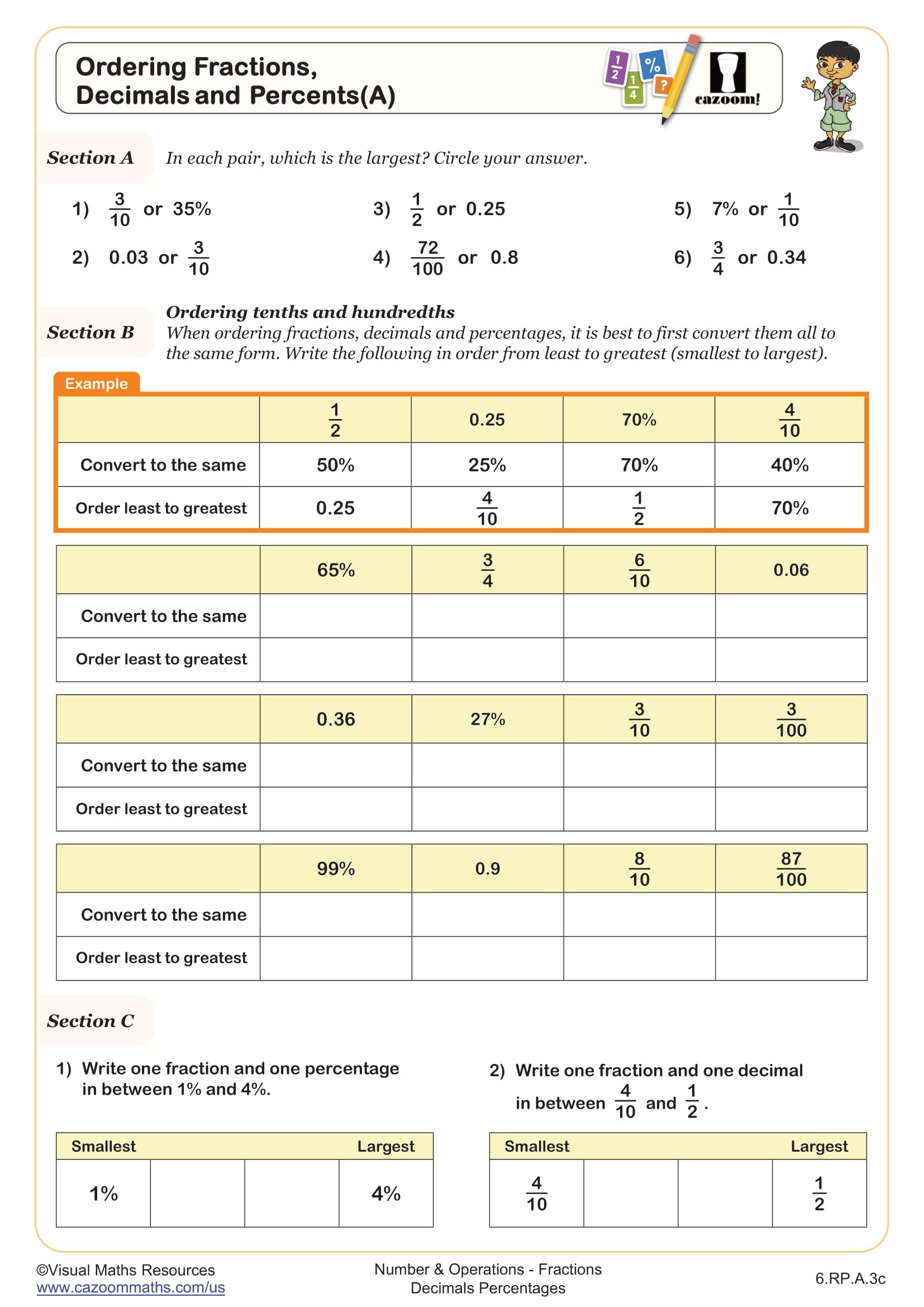
Ordering Fractions, Decimals, and Percents (A)
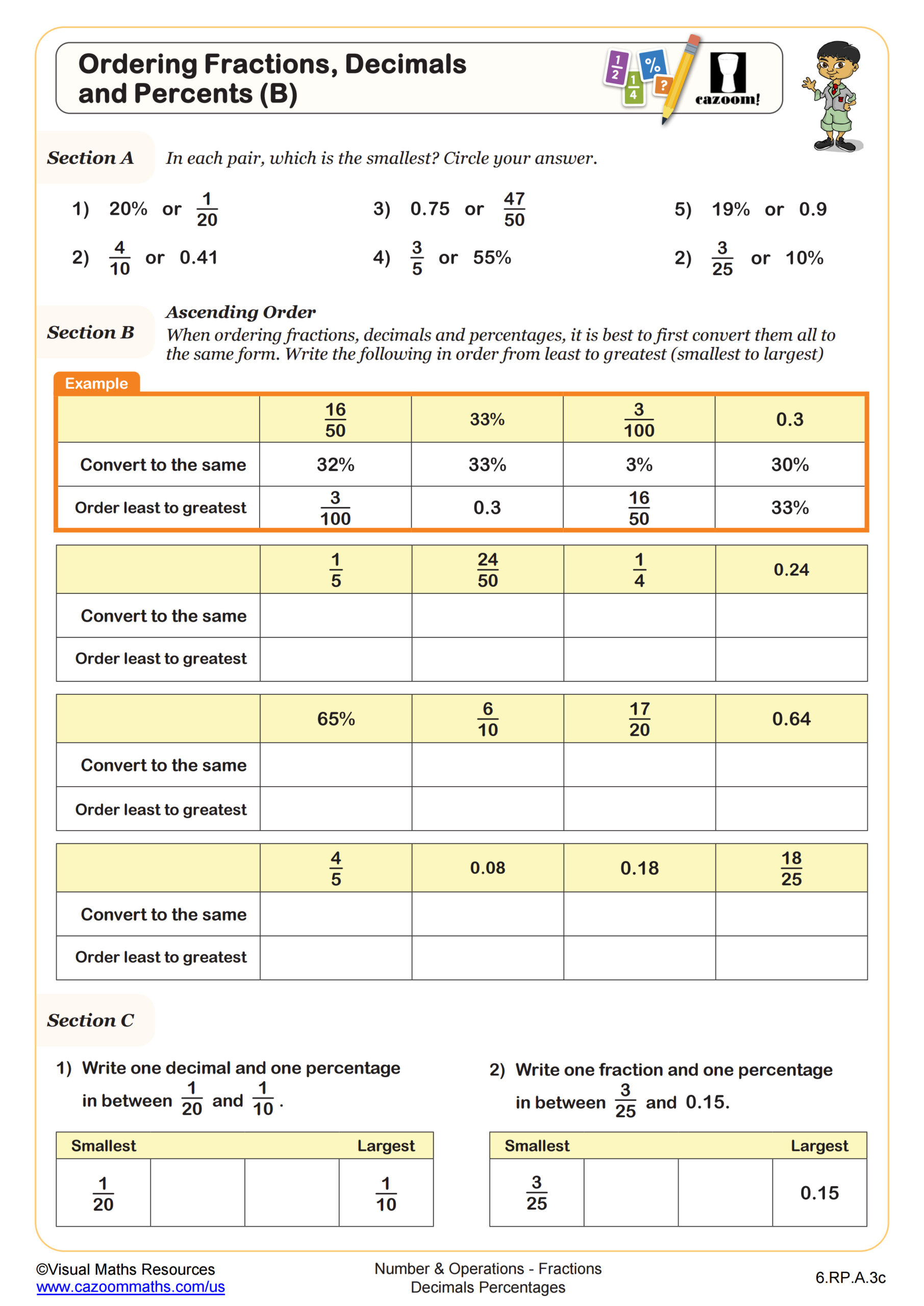
Ordering Fractions, Decimals, and Percents (B)
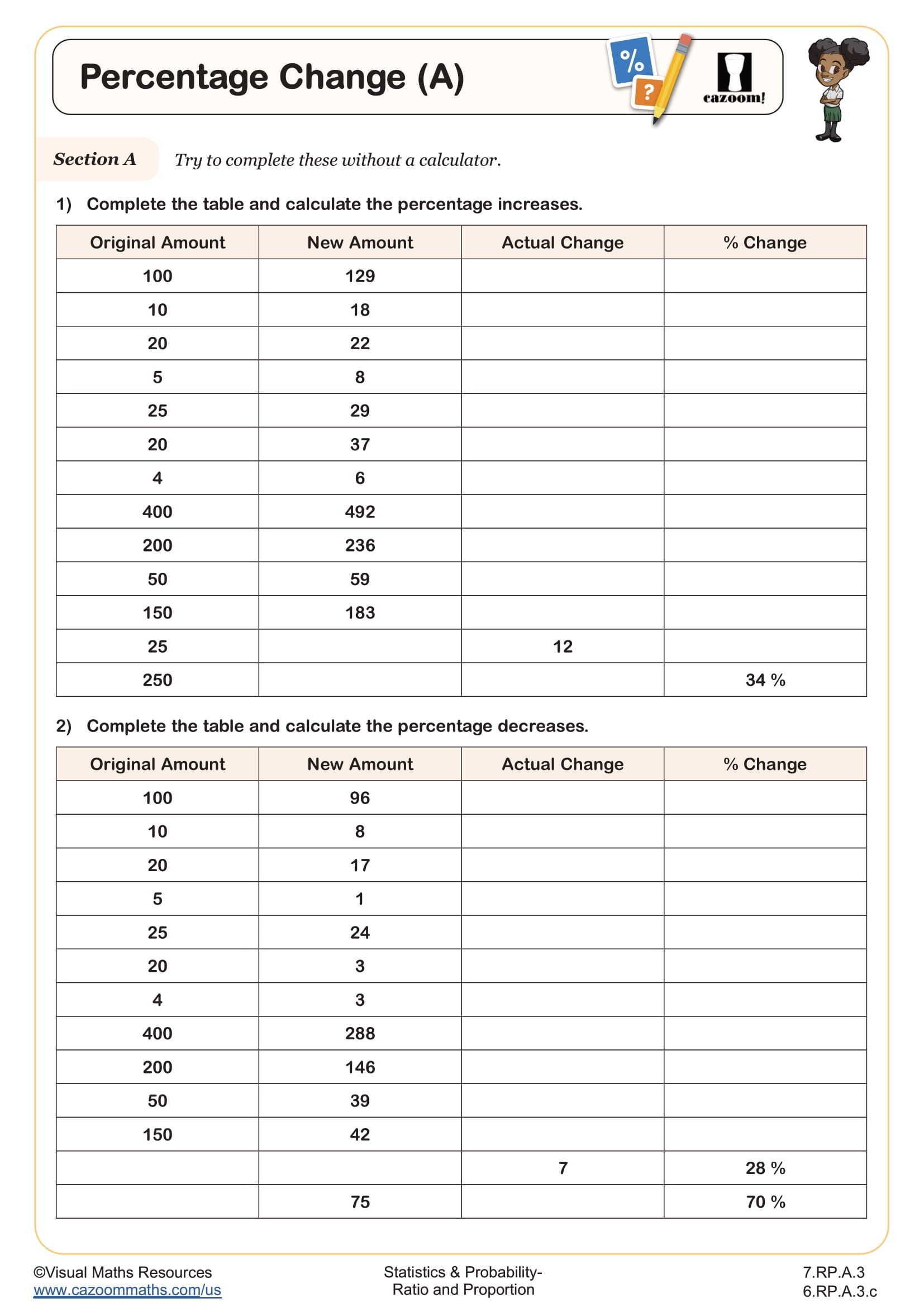
Percentage Change (A)
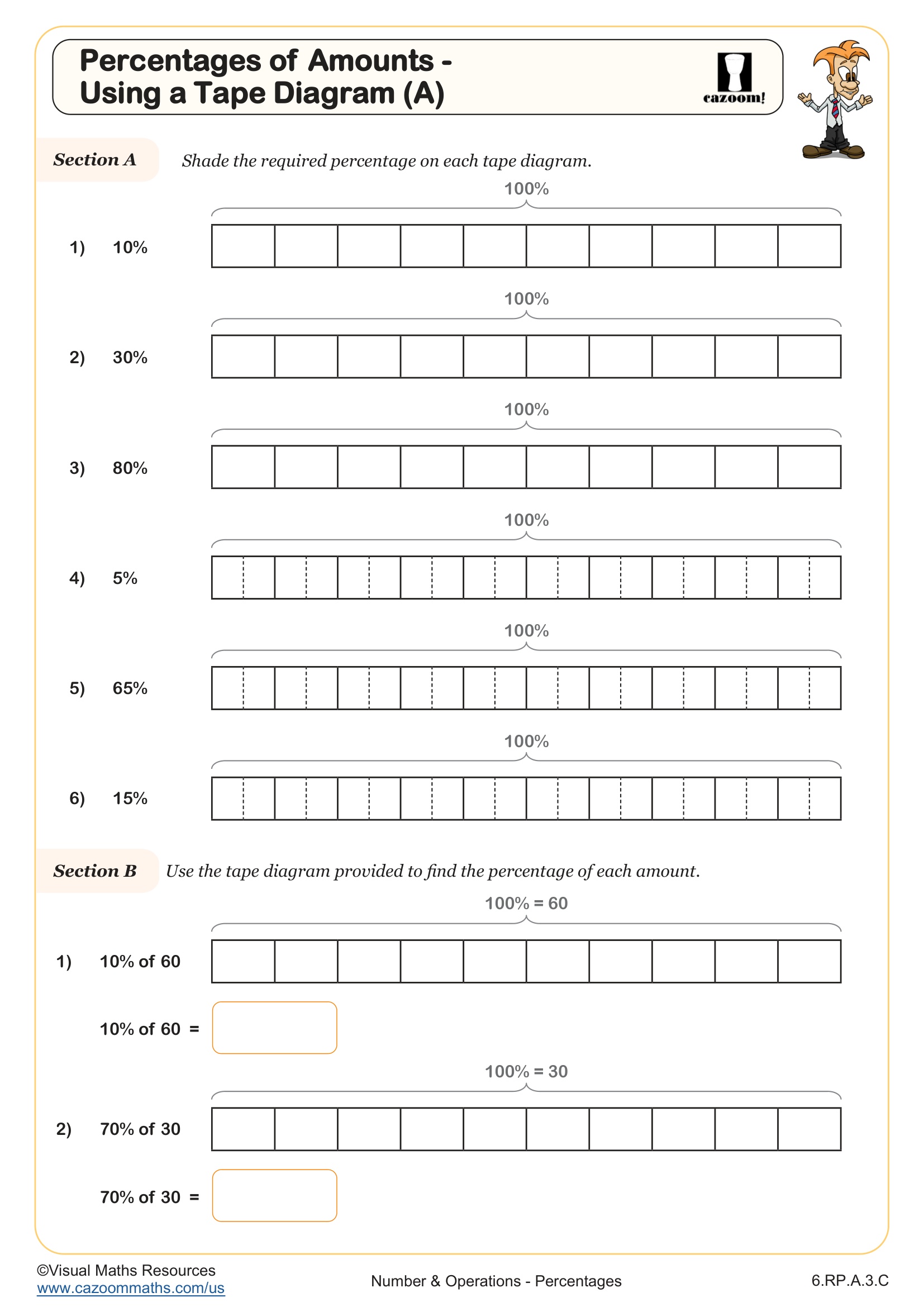
Percentages of Amounts - Using a Tape Diagram (A)
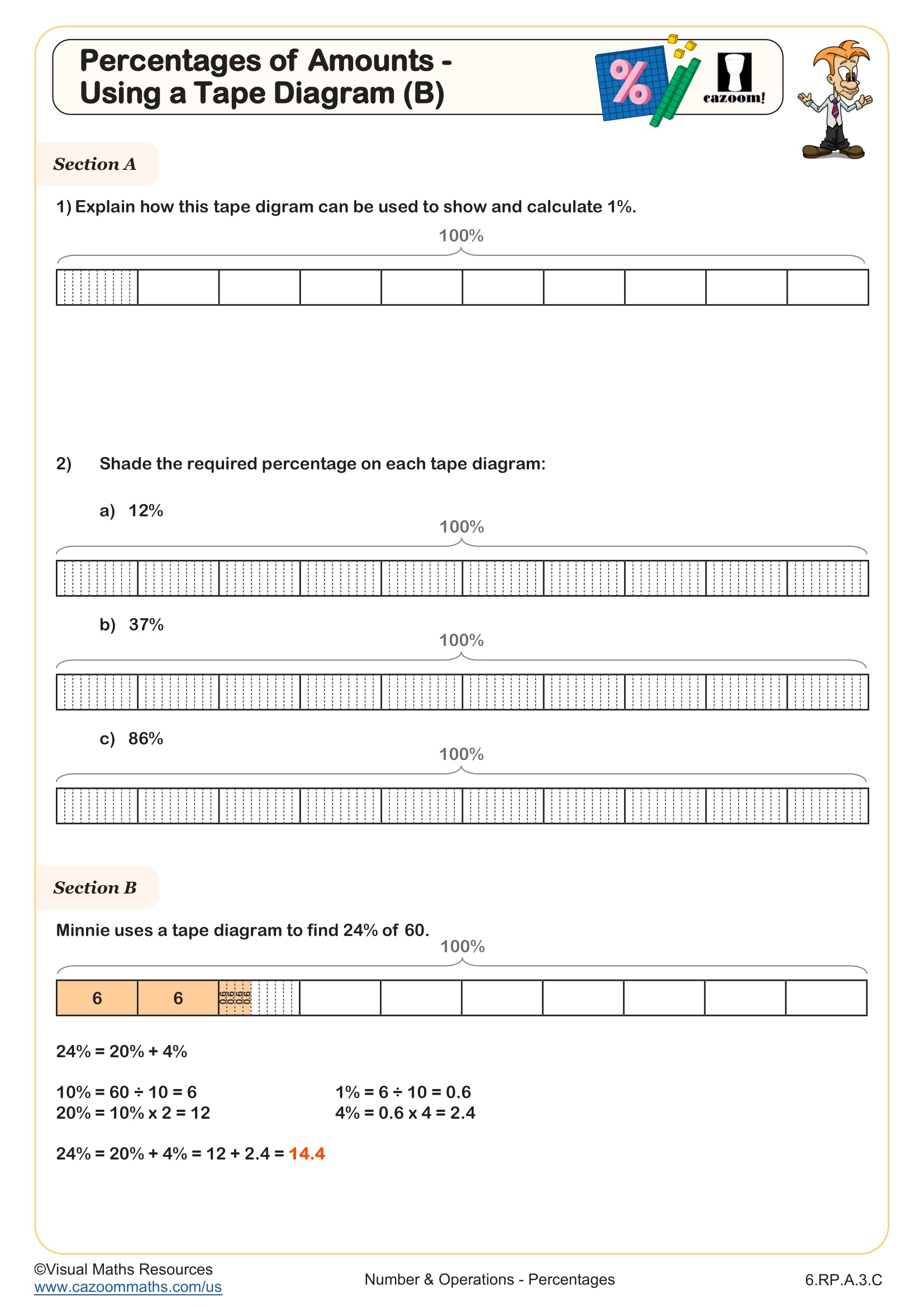
Percentages of Amounts - Using a Tape Diagram (B)
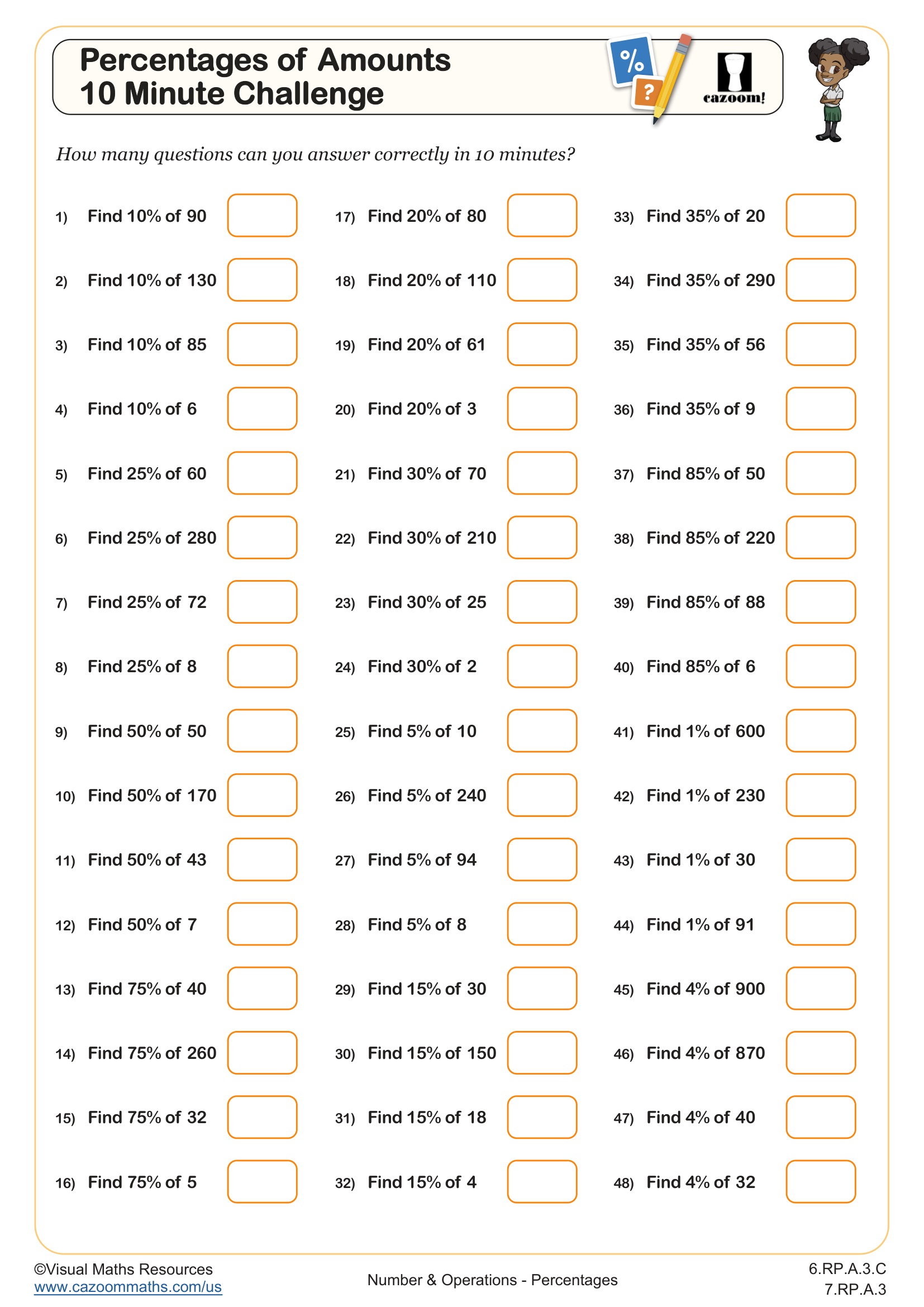
Percentages of Amounts 10 Minute Challenge
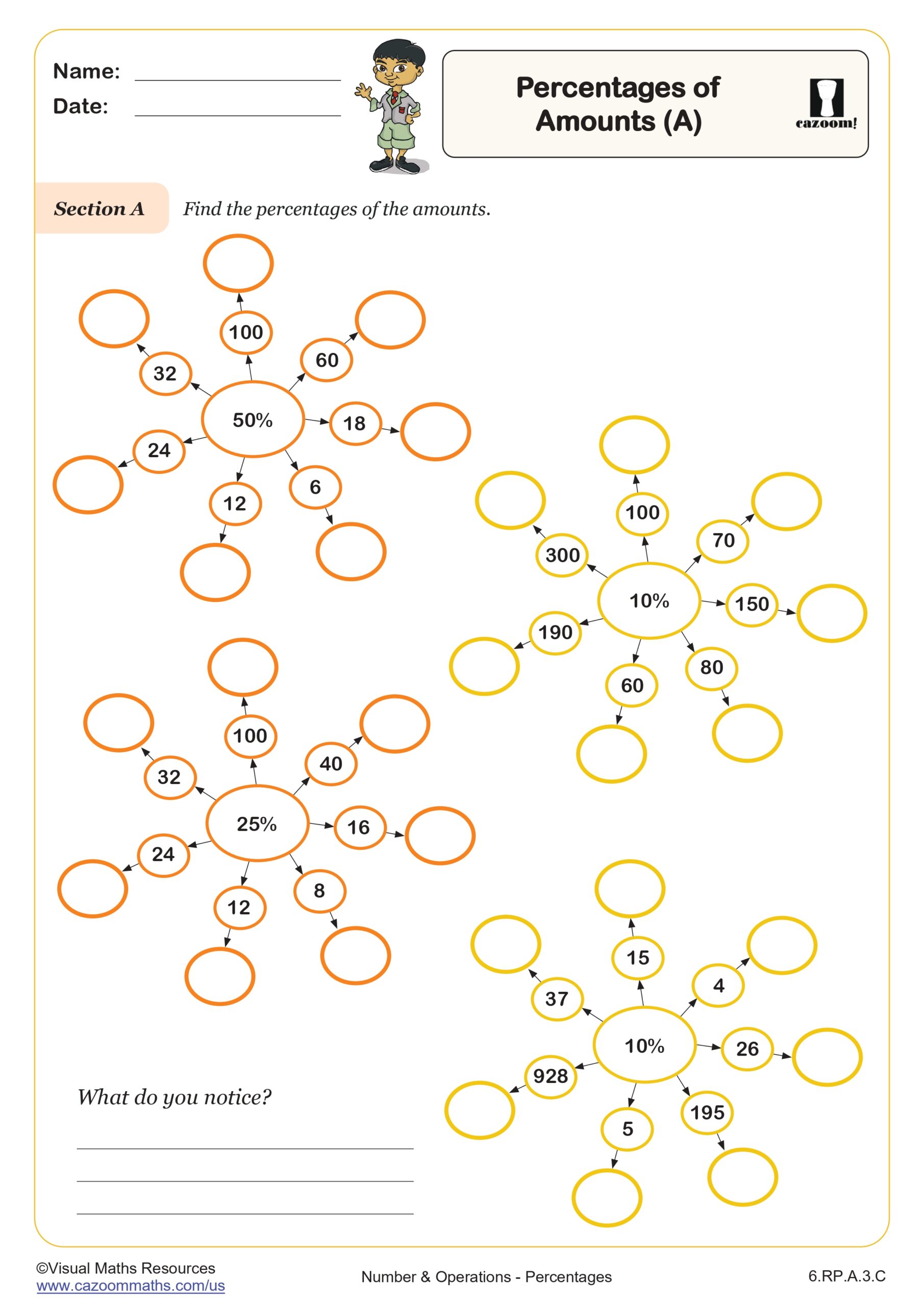
Percents of an Amount (A)
Percents of an Amount (B)
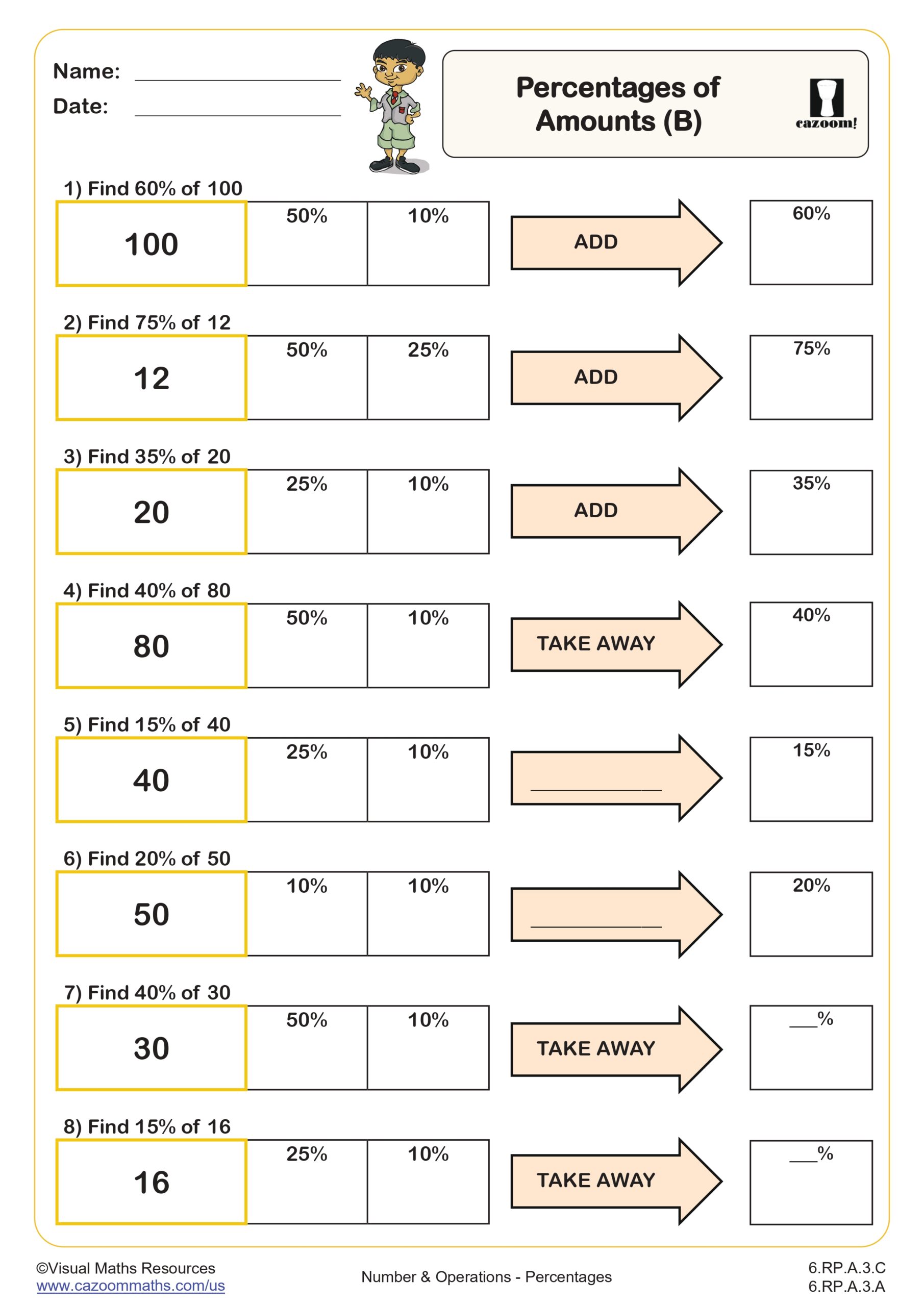
Percents of an Amount (C)
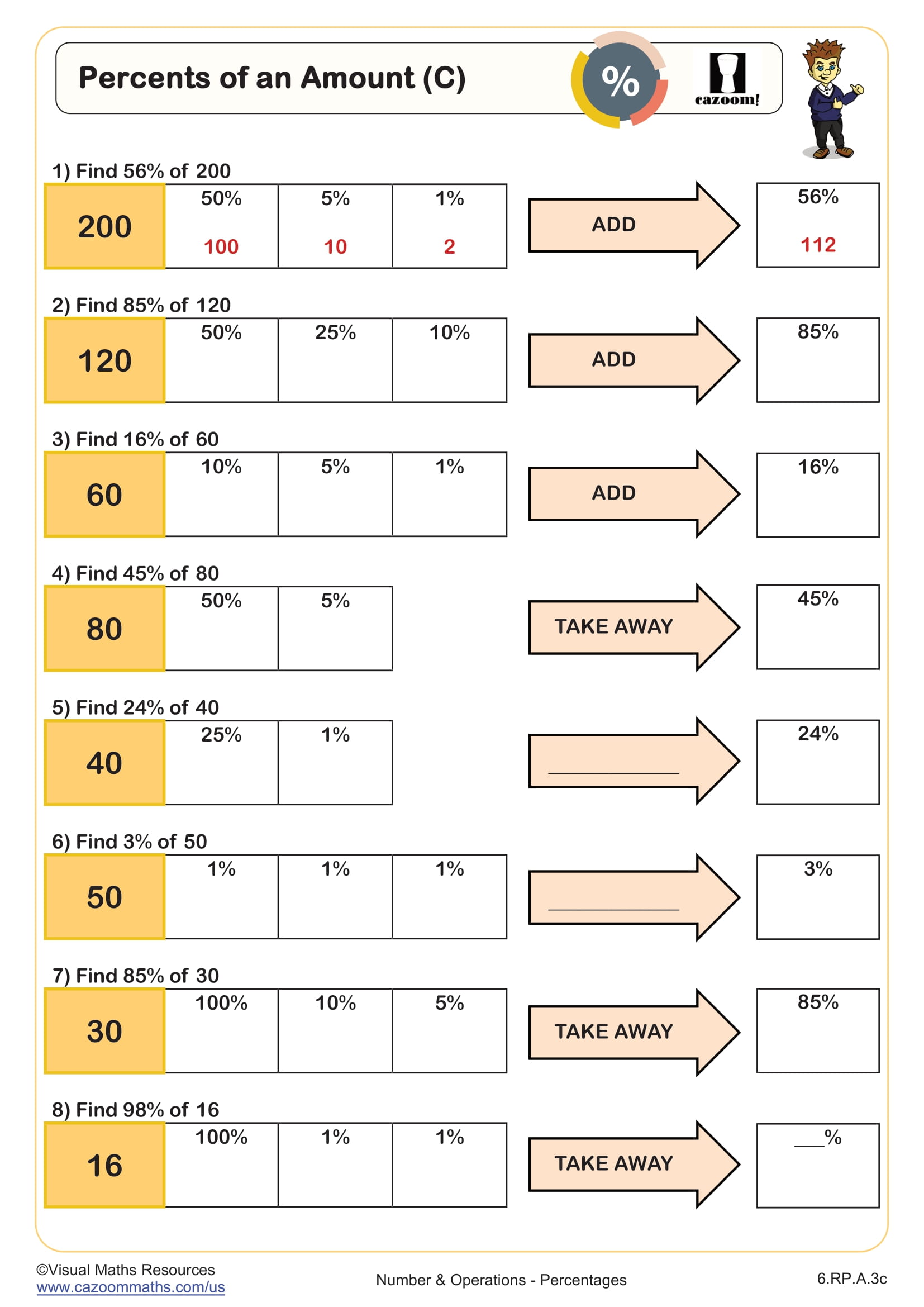
Percents of an Amount (D)
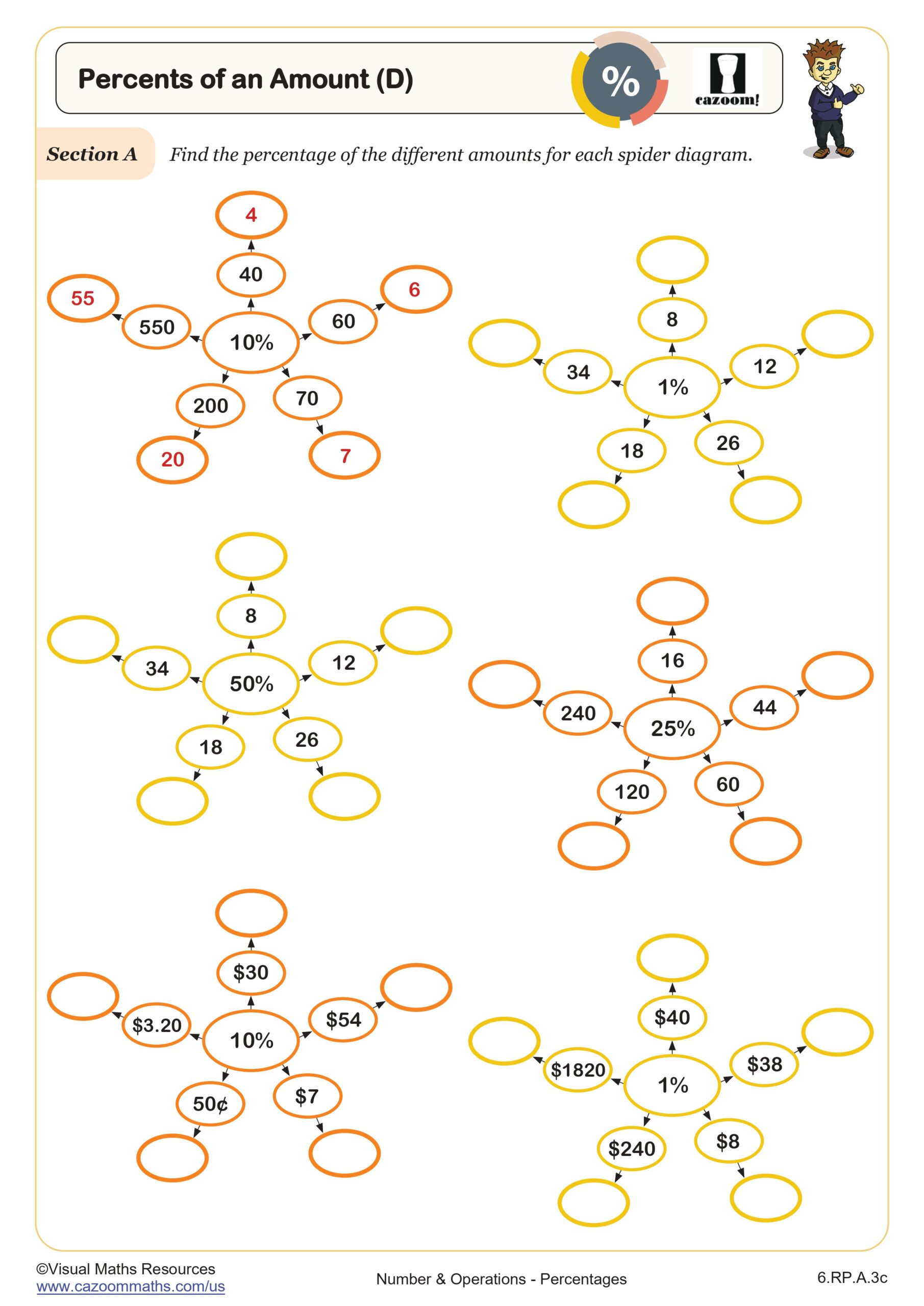
Percents of an Amount (E)
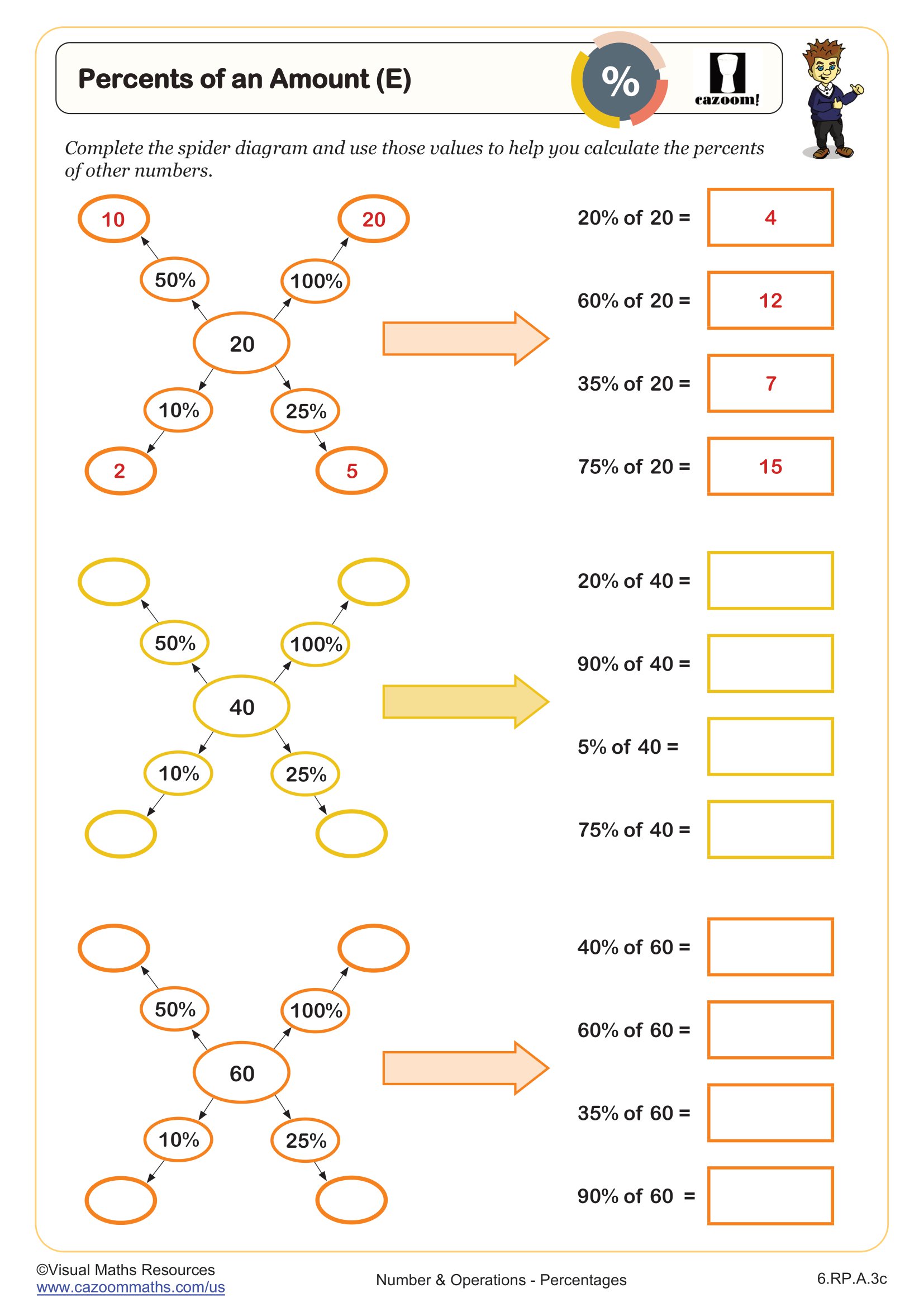
Percents of an Amount (F)
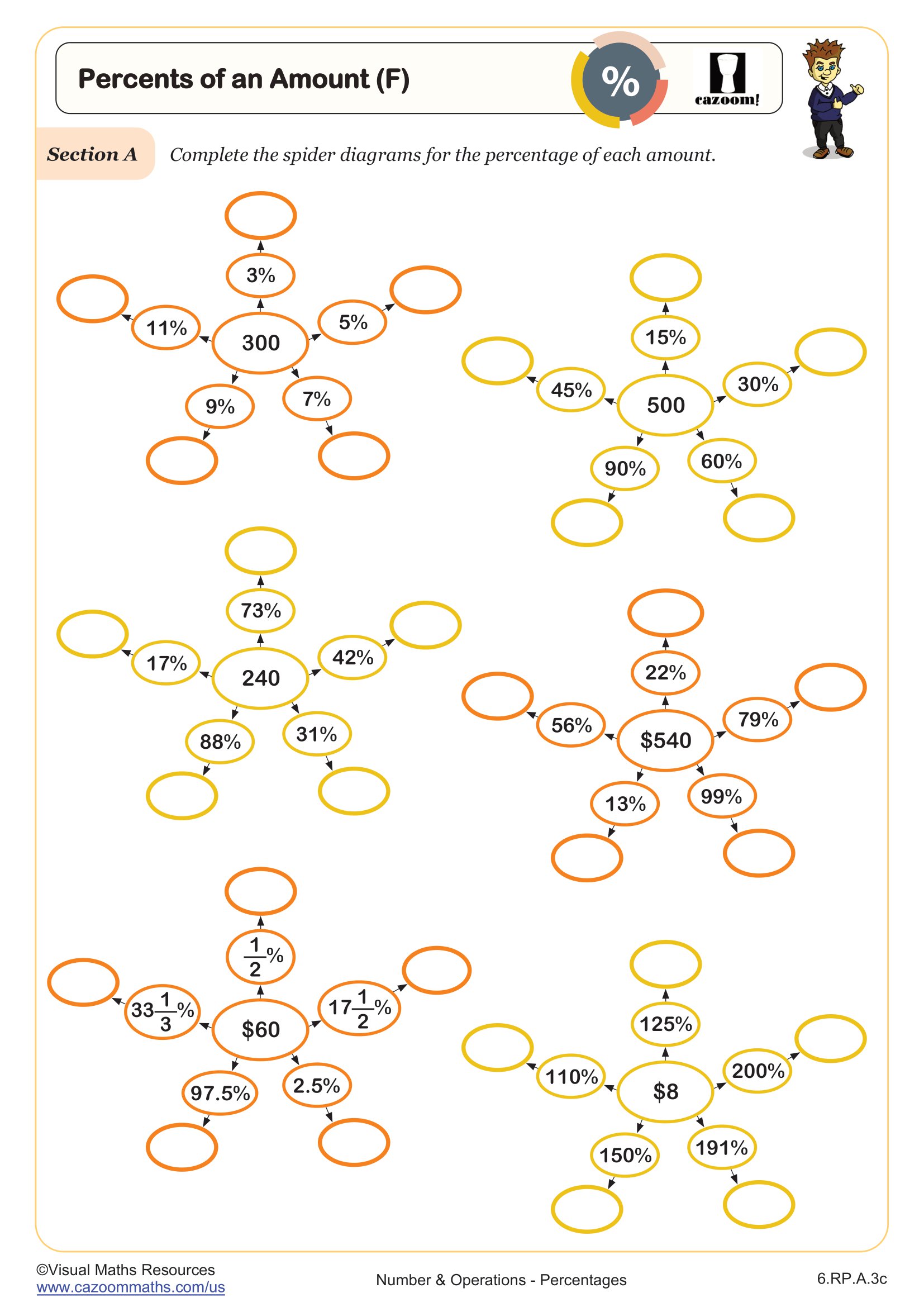
Searching for Equivalent Fractions, Decimals, and Percents (A)
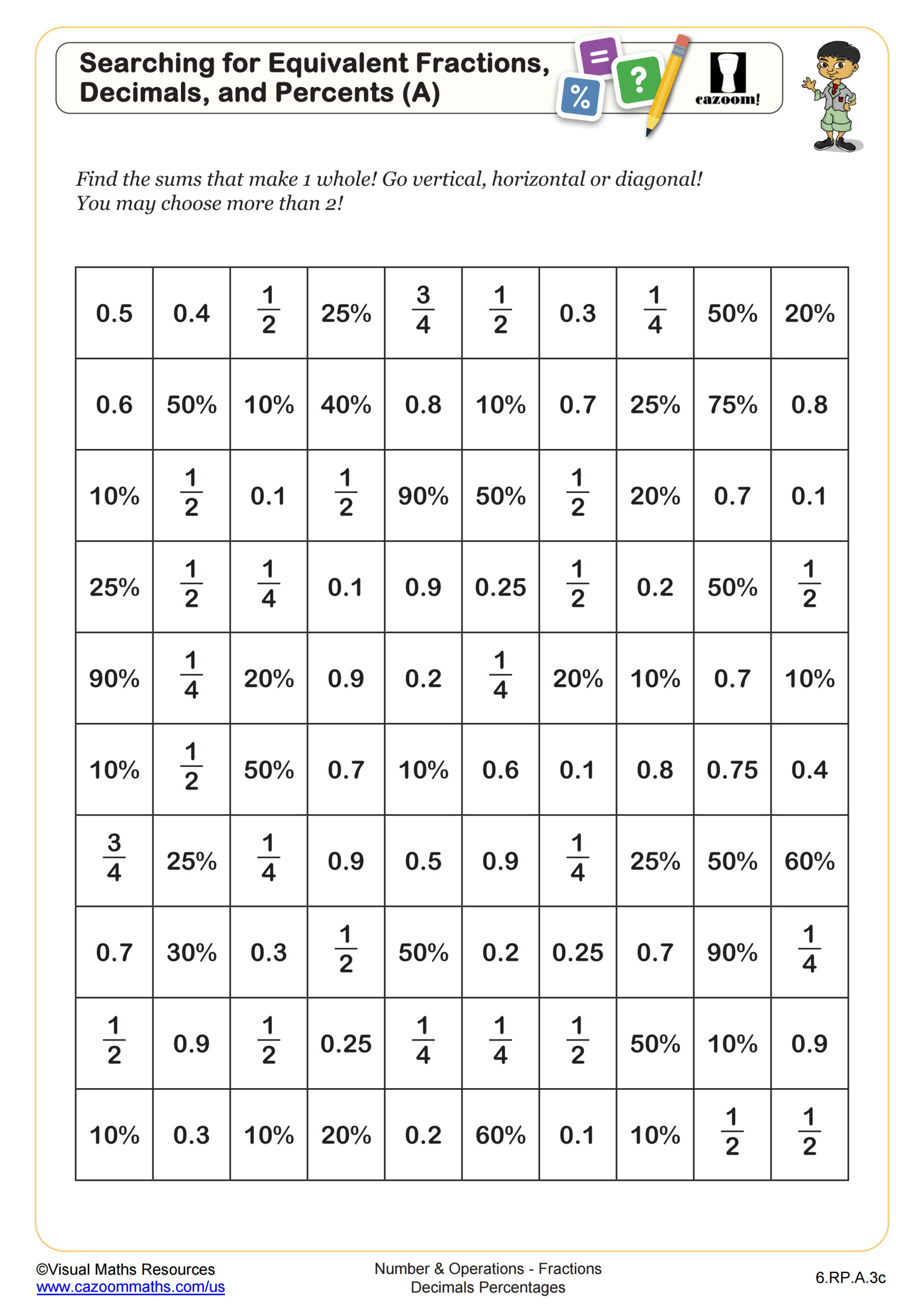
Searching for Equivalent Fractions, Decimals, and Percents (B)
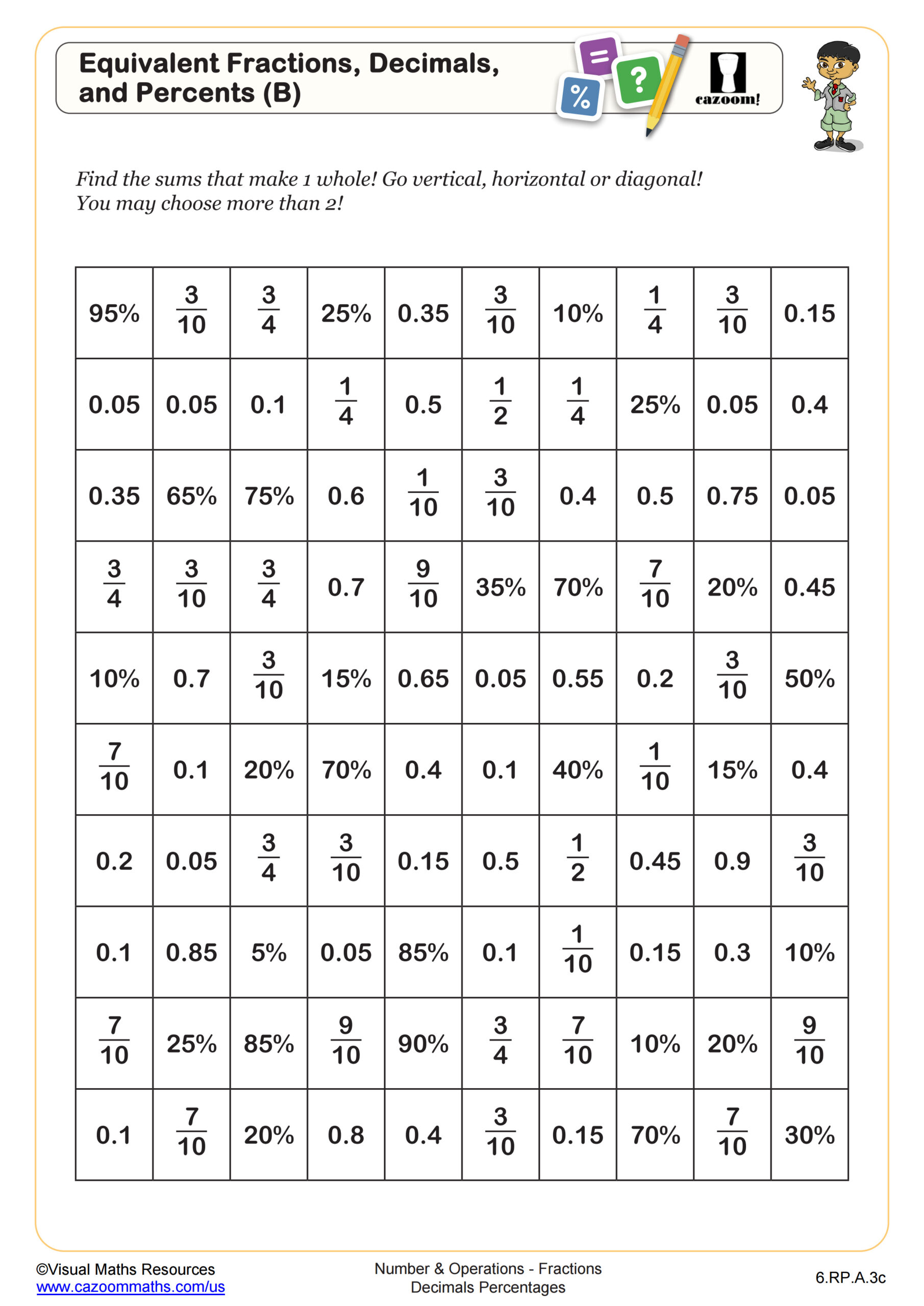
Searching for Equivalent Fractions, Decimals, and Percents (C)
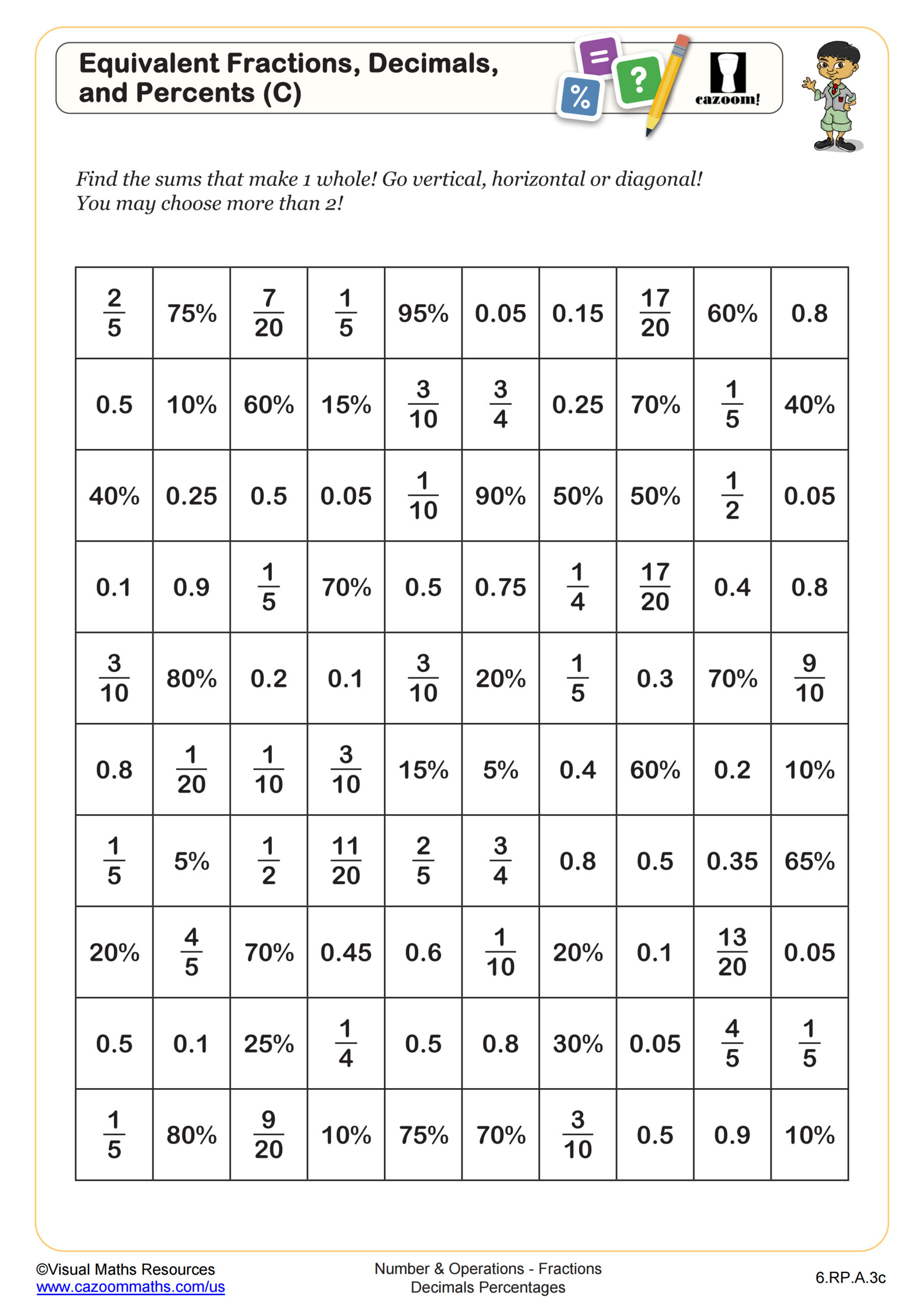
All worksheets are created by the team of experienced teachers at Cazoom Math.
What topics are covered in 6th grade math number and operations?
Sixth grade math number and operations covers the Common Core standards 6.NS (Number System) and 6.EE (Expressions and Equations), focusing on rational number fluency, integer operations, and percentage calculations. Students work extensively with fraction division, decimal operations, and develop understanding of negative numbers through real-world contexts.
Teachers frequently observe that students who master fraction division using the standard algorithm often struggle to explain why they multiply by the reciprocal. The worksheets include visual models and word problems that help students connect the procedural steps to conceptual understanding, particularly important for students preparing for pre-algebra concepts.
How do these worksheets prepare students for 7th grade mathematics?
These number and operations worksheets build the rational number fluency required for 7th grade proportional reasoning and algebraic thinking. Students who struggle with fraction operations or percentage grade 6 calculations often find themselves unprepared for solving proportions and working with linear relationships in seventh grade.
The integer operations practice proves especially valuable since seventh graders immediately apply these skills to solving equations with negative coefficients. Teachers notice that students who enter 7th grade without solid computational fluency spend significantly more time on mechanics rather than focusing on problem-solving strategies and mathematical reasoning.
Why do students find percentage problems challenging in 6th grade?
Percentage problems challenge sixth graders because they require flexible thinking about the relationship between fractions, decimals, and percents, plus strong proportional reasoning skills. Students often memorize conversion procedures without understanding that percentages represent parts of 100, leading to confusion about when to multiply or divide.
Teachers observe that students frequently struggle with percentage increase and decrease problems, often adding the percentage directly to the original value instead of calculating the percentage of the value first. The worksheets include scaffolded practice that helps students visualize percentages using models before moving to abstract calculations, connecting to real applications like sales tax and discounts.
How can teachers use these worksheets most effectively in their classrooms?
These worksheets work best when teachers use them strategically rather than as independent practice without support. The answer keys allow teachers to quickly identify common error patterns and address misconceptions through targeted mini-lessons before students practice similar problems independently.
Many teachers find success using these worksheets for differentiated instruction, assigning different problem sets based on student readiness levels while maintaining focus on the same mathematical concepts. The PDF format makes it easy to project selected problems for whole-class discussion or to create customized practice sets by combining problems from multiple worksheets based on individual student needs.