6th Grade Place Value Worksheets
All worksheets are created by the team of experienced teachers at Cazoom Math.
Why does place value matter in 6th grade math?
Place value forms the foundation for every operation students perform with multi-digit numbers, decimals, and integers in middle school. By 6th grade, students apply place value understanding to solve problems with numbers in the millions and thousandths, manipulate negative integers, and recognize patterns that simplify computation. This understanding connects directly to scientific notation, which students encounter later in the year when working with extremely large or small measurements in science classes.
Teachers frequently notice that students who struggle with integer operations often have gaps in place value reasoning rather than procedural knowledge. When students truly understand that -200 is further left on the number line than -20, they stop making comparison errors that cost points on assessments. Pattern spotting activities reveal whether students recognize how place value affects sums and differences, which becomes particularly important when standardized tests present problems without explicit step-by-step directions.
What place value skills should 6th graders have?
Sixth graders should confidently read, write, and compare numbers through the millions place and thousandths place in decimal form. They should recognize that each place value position represents ten times the position to its right and understand how this pattern extends infinitely in both directions. Students at this level work extensively with negative integers, placing them correctly on number lines and comparing their values, which requires understanding that place value principles apply regardless of a number's sign.
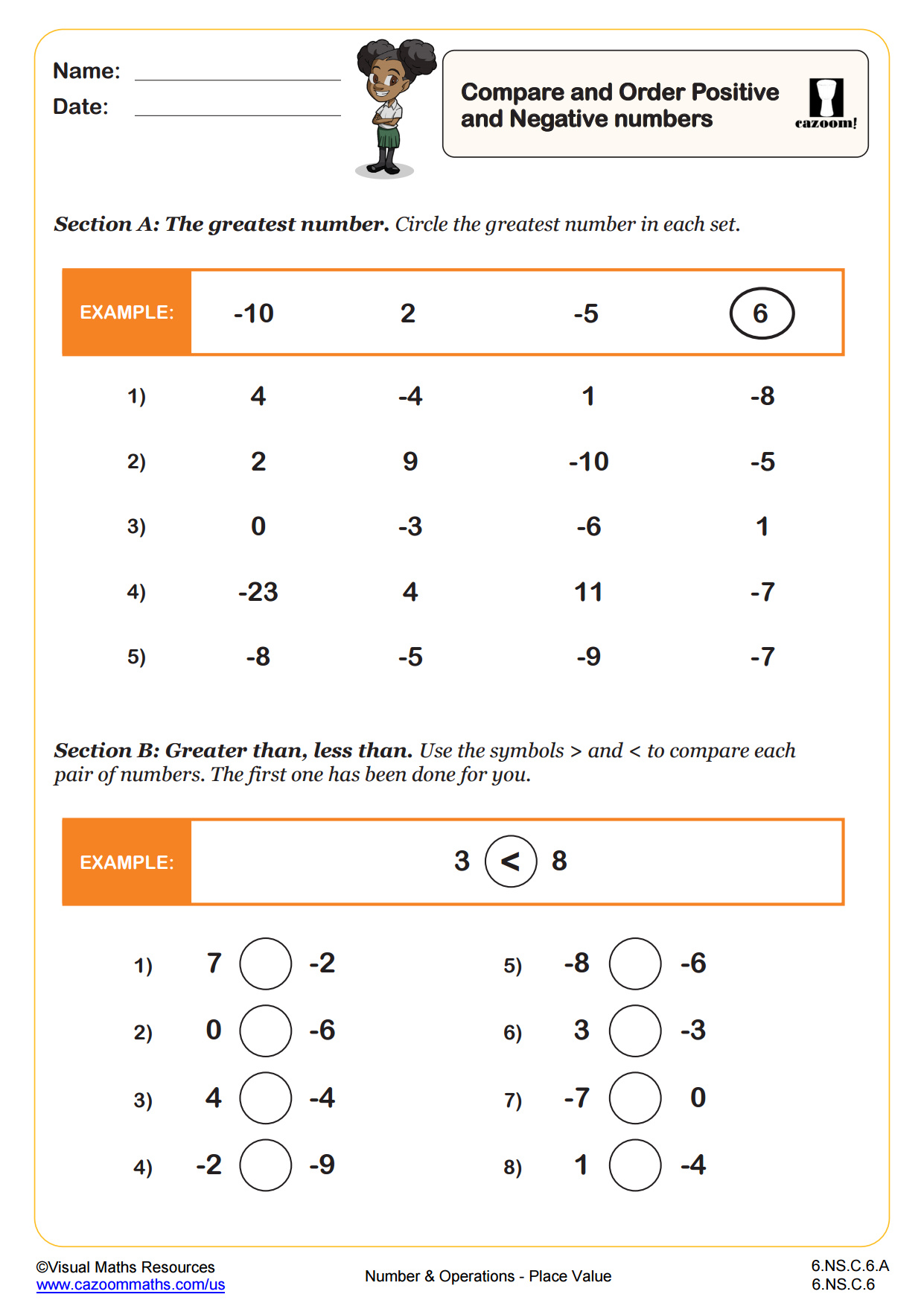
This builds directly on 5th grade work with decimal place value and extends toward 7th grade operations with rational numbers. Students who master 6th grade place value concepts handle fraction-to-decimal conversions more fluently and transition smoothly into solving equations with negative coefficients. Many teachers find that students who can explain why -0.5 is greater than -0.8 demonstrate the deep place value understanding needed for success in pre-algebra and algebra courses.
How does pattern spotting strengthen place value understanding?
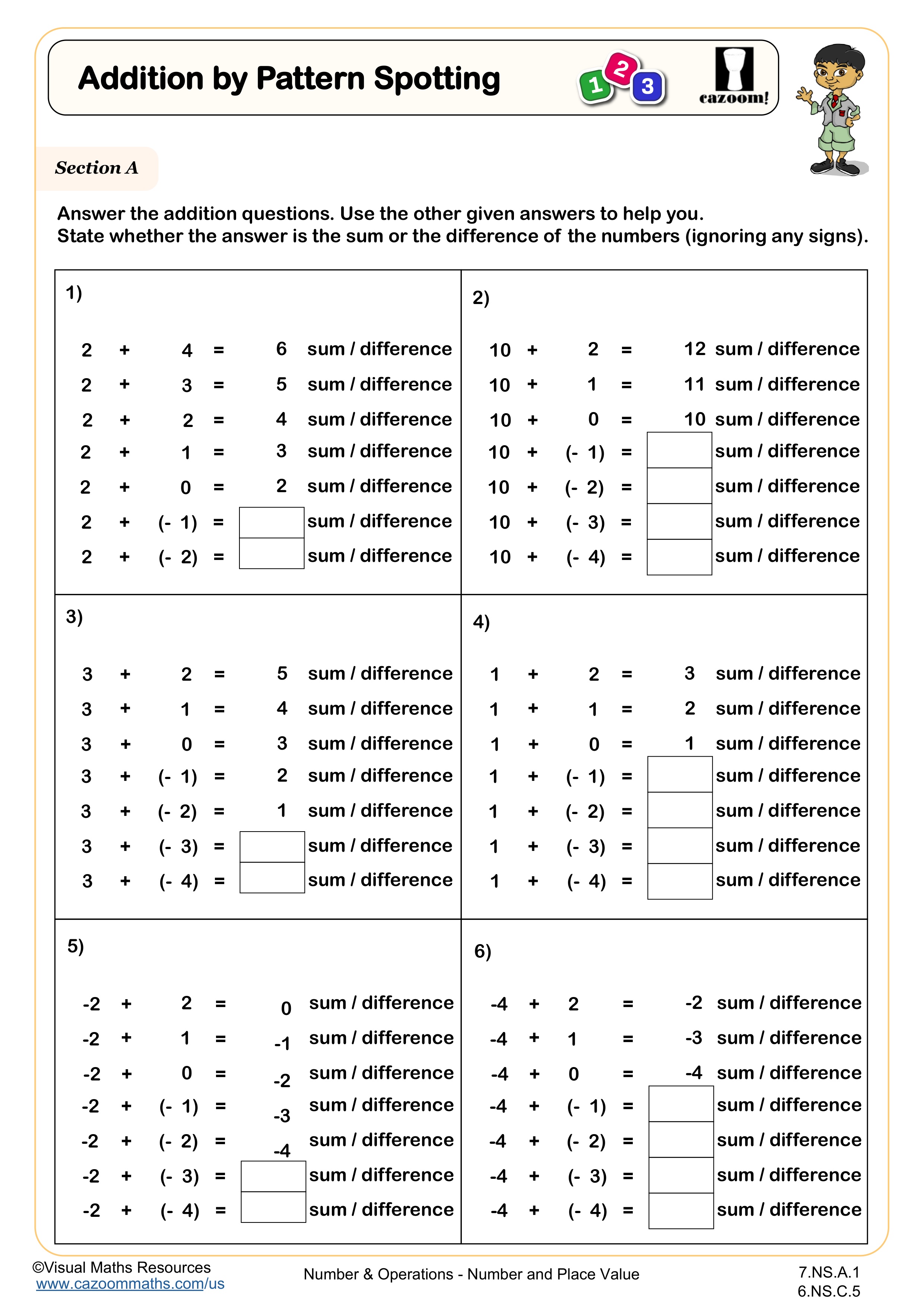
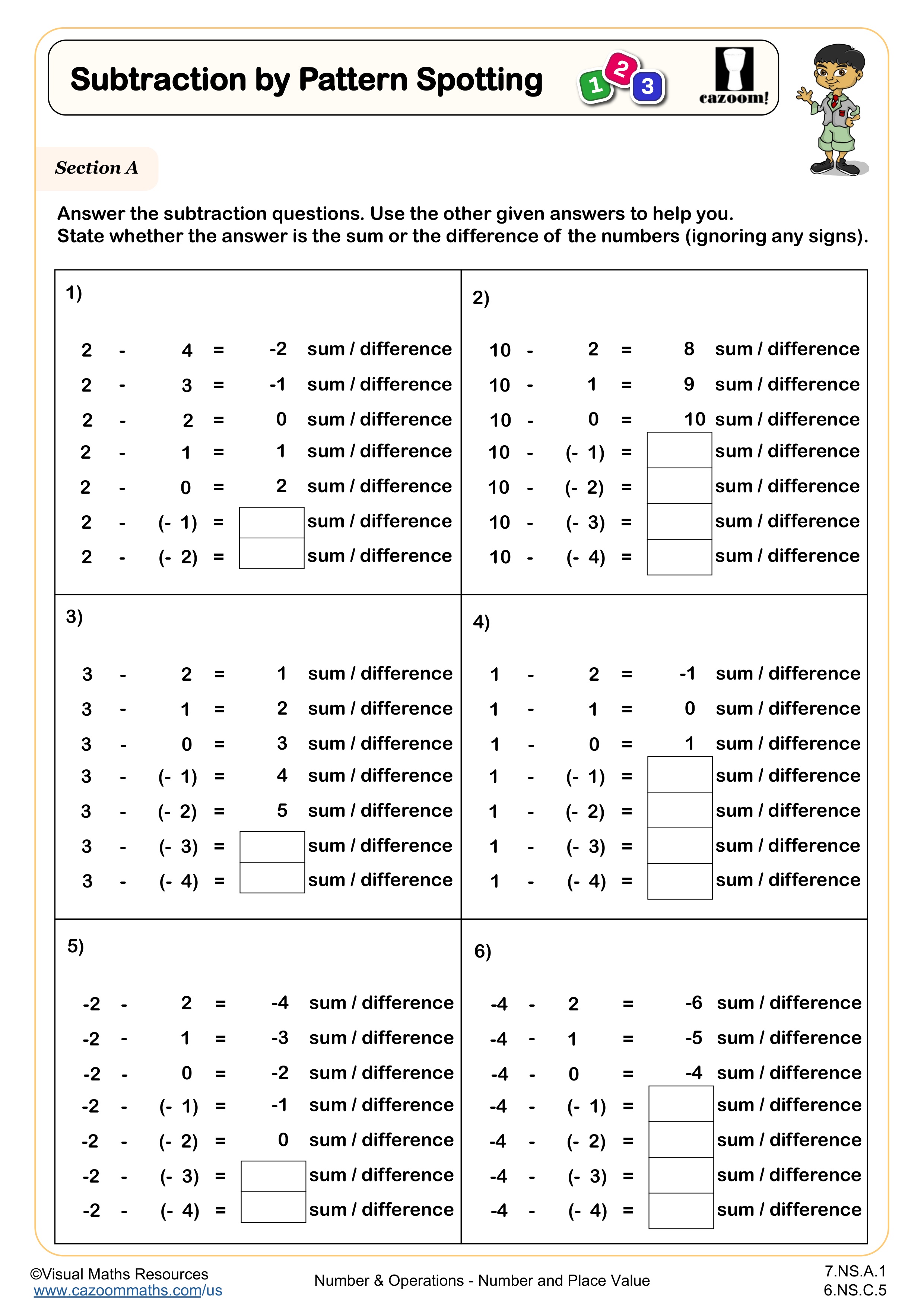
Pattern spotting in addition and subtraction helps students recognize how place value governs computational results without requiring tedious step-by-step calculations for every problem. When students notice that adding 100 repeatedly shifts only the hundreds place or that subtracting 0.01 affects only the hundredths position, they develop number sense that makes mental math faster and error-checking more intuitive. This recognition helps students estimate whether answers are reasonable before they even complete calculations.
Engineers and data analysts rely on pattern recognition to catch computational errors when working with large datasets or measurements. A student who recognizes that a temperature drop of 10 degrees repeated six times equals a 60-degree total change demonstrates the same pattern-spotting skill that meteorologists use when analyzing climate data. Students confidently tackle multi-step word problems once they recognize these patterns, reducing cognitive load and allowing them to focus on problem-solving strategy rather than basic computation.
How can teachers use these place value worksheets effectively?
These worksheets provide targeted practice with specific place value applications rather than general computation drills. The pattern spotting activities encourage students to analyze number relationships before calculating, while the comparing and ordering exercises with positive and negative numbers address a common weak spot in middle school curricula. Teachers can use the included answer keys to quickly assess which students grasp the underlying concepts versus those who arrive at correct answers through memorized procedures without understanding.
Many teachers assign these worksheets during intervention blocks for students who struggle with integer operations or use them as warm-up activities to reinforce concepts before moving to more complex rational number work. The worksheets also work well for partner activities where students compare their pattern-spotting strategies and justify their thinking when ordering negative numbers. Some teachers find them valuable as quick formative assessments before unit tests, since the answer keys allow for immediate feedback that helps students correct misconceptions while the content is still fresh.