7th Grade Area and Perimeter Worksheets
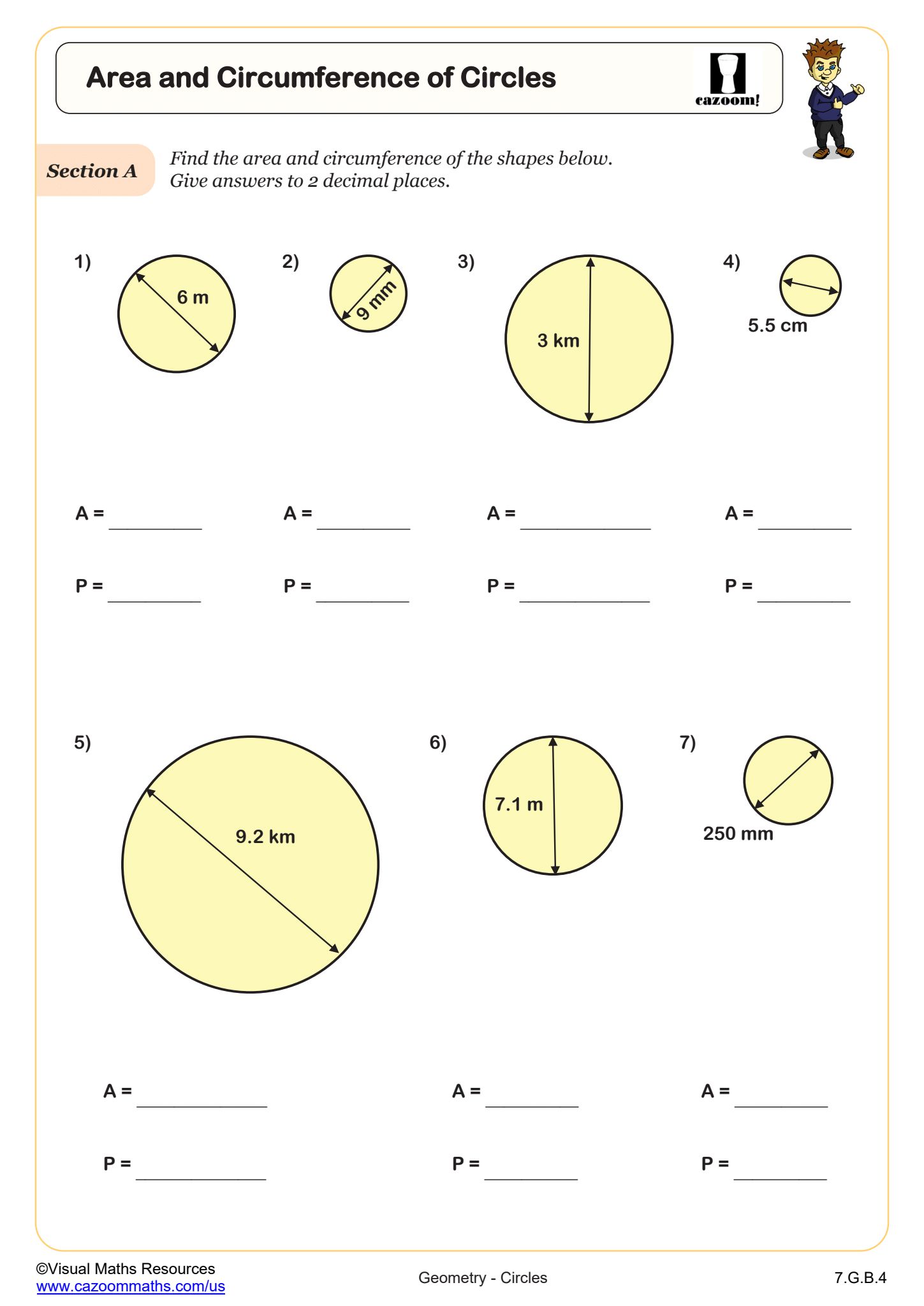
Area and Circumference of Circles
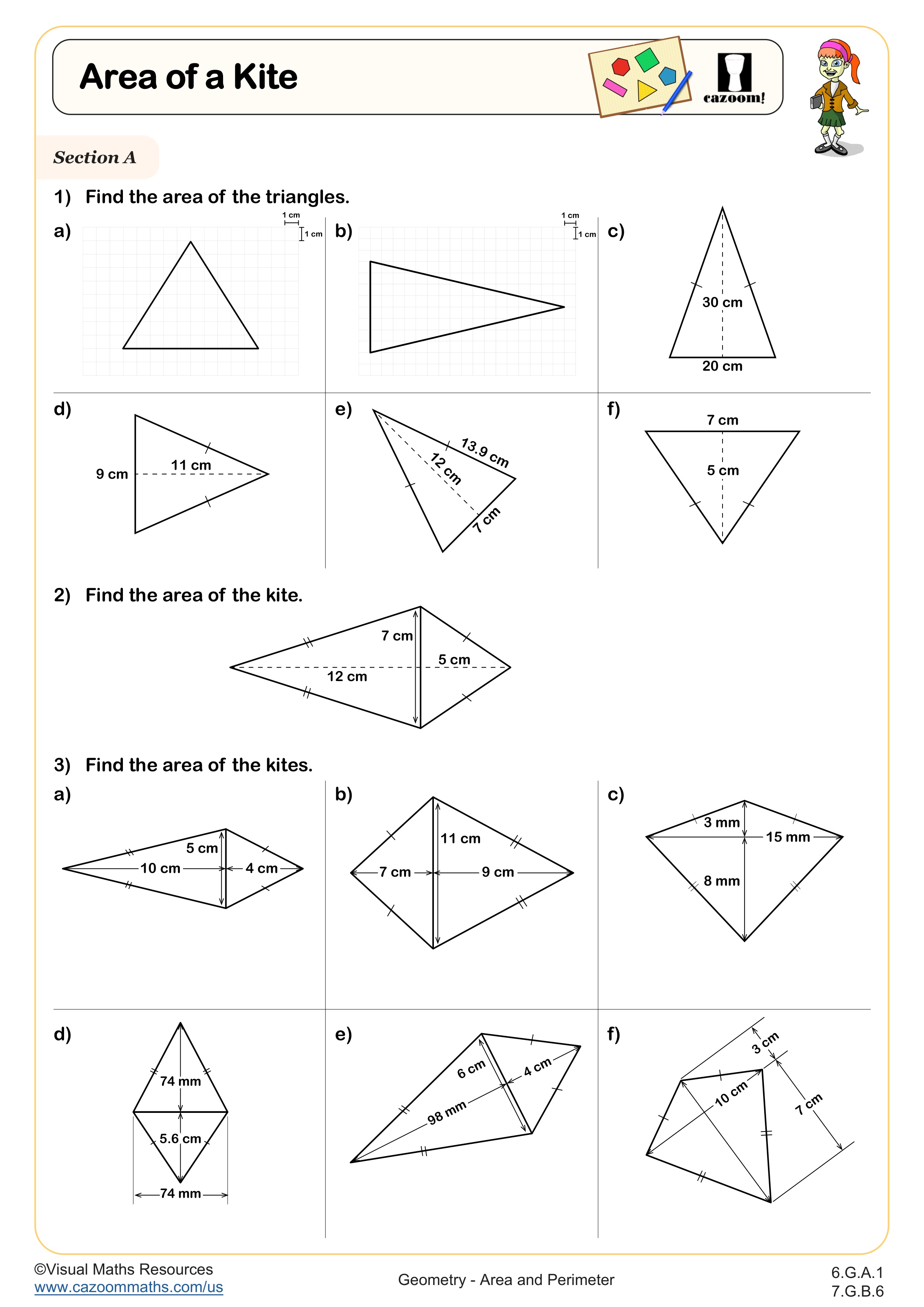
Area of a Kite
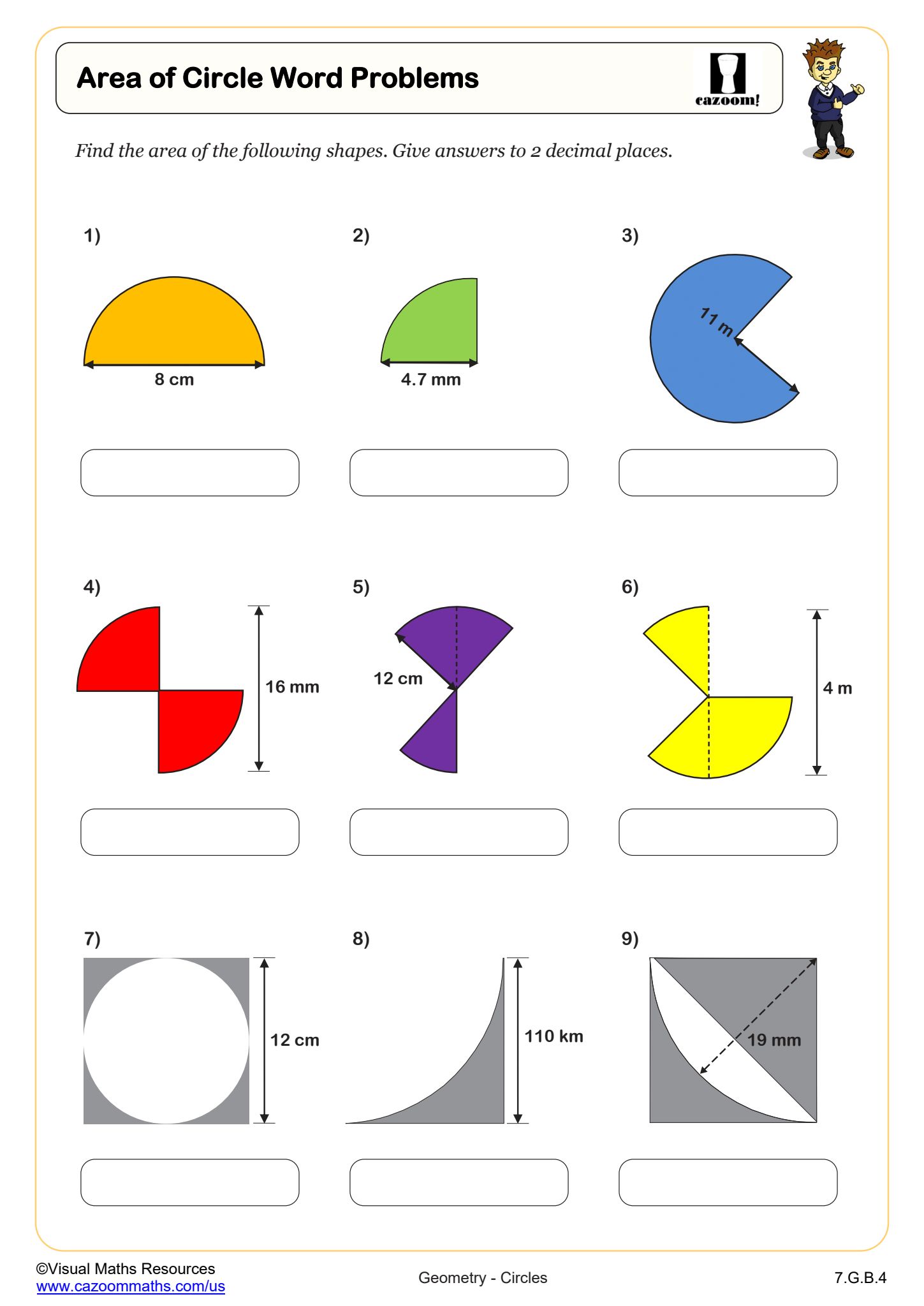
Area of Circle Word Problems
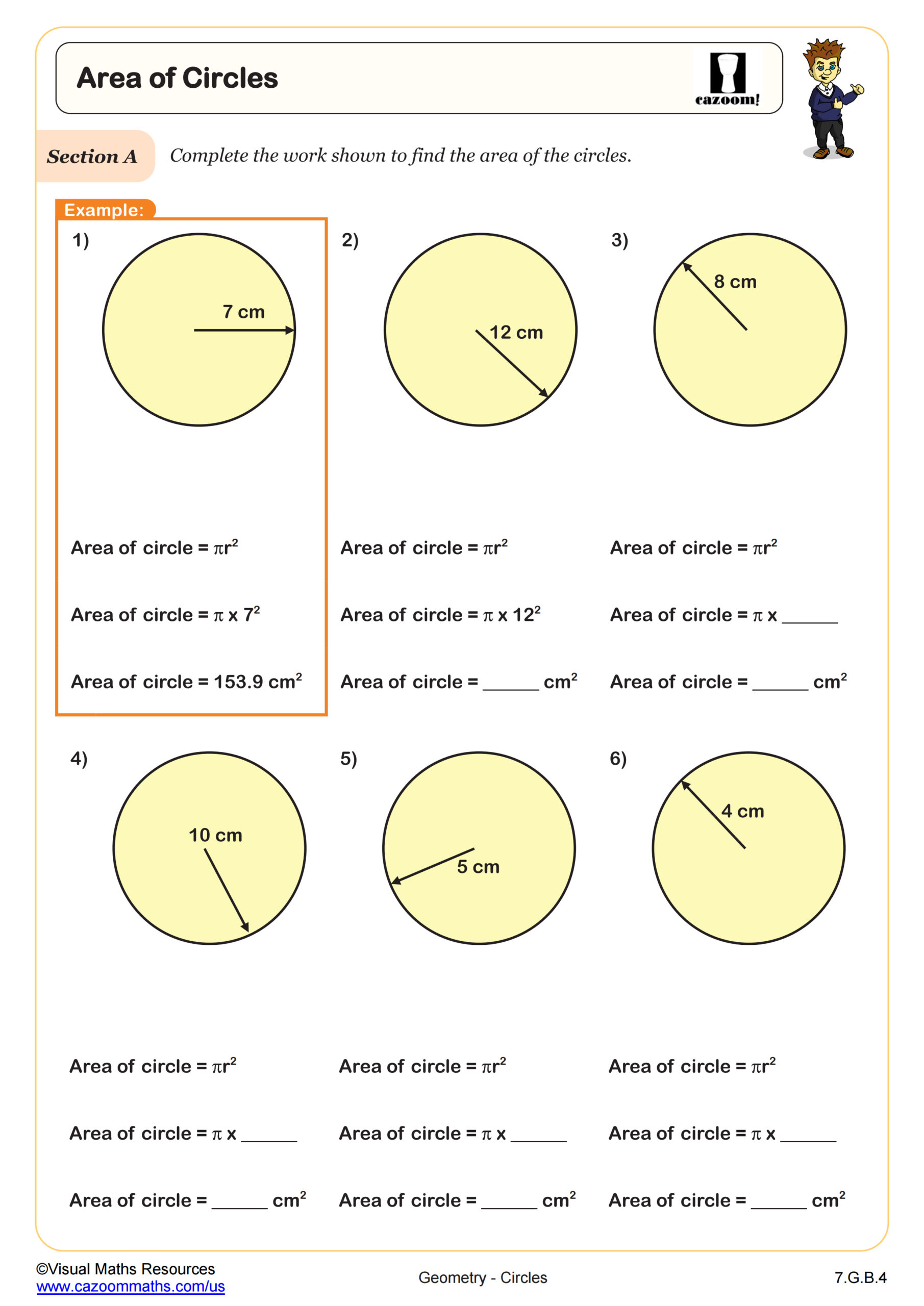
Area of Circles
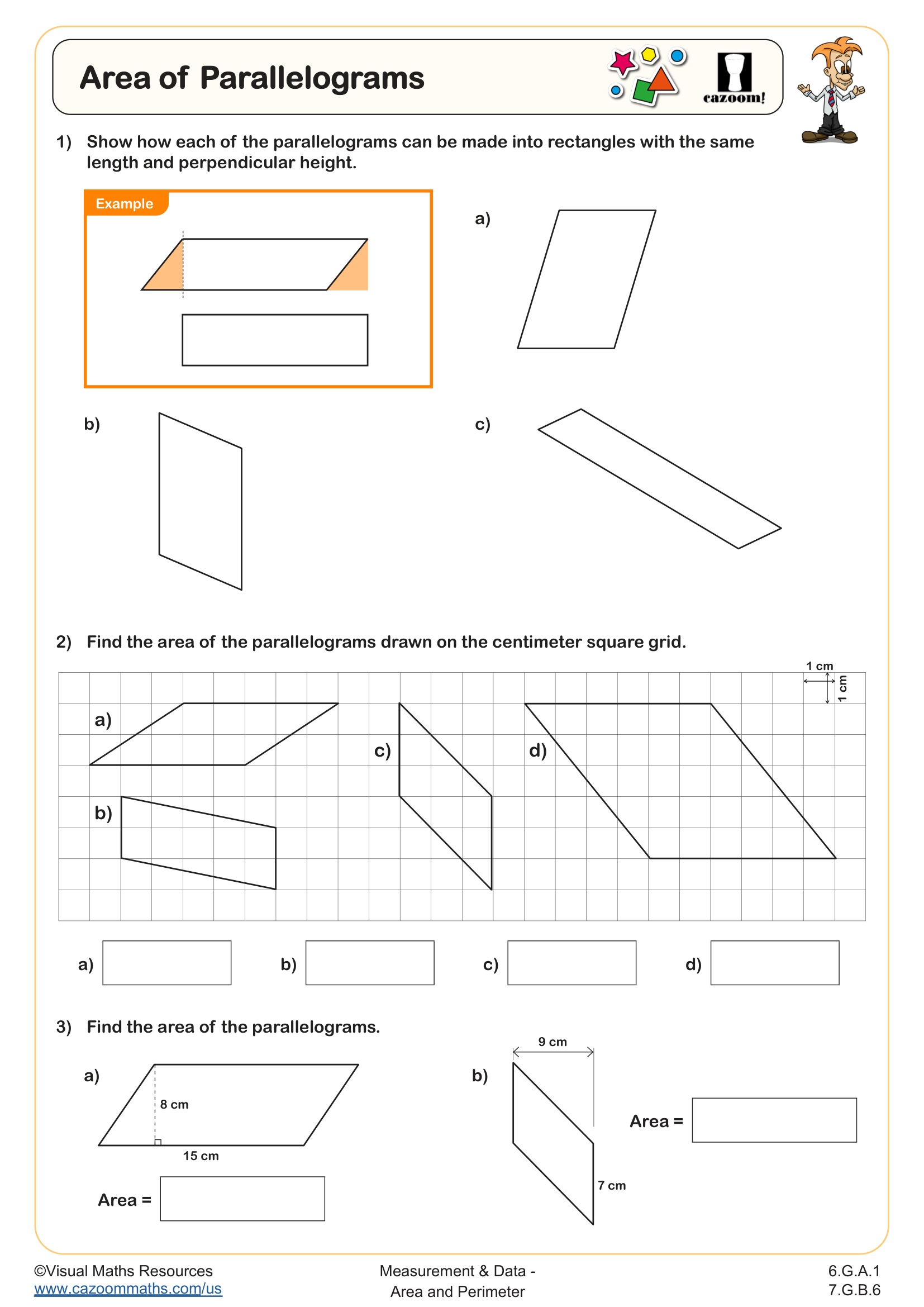
Area of Parallelograms
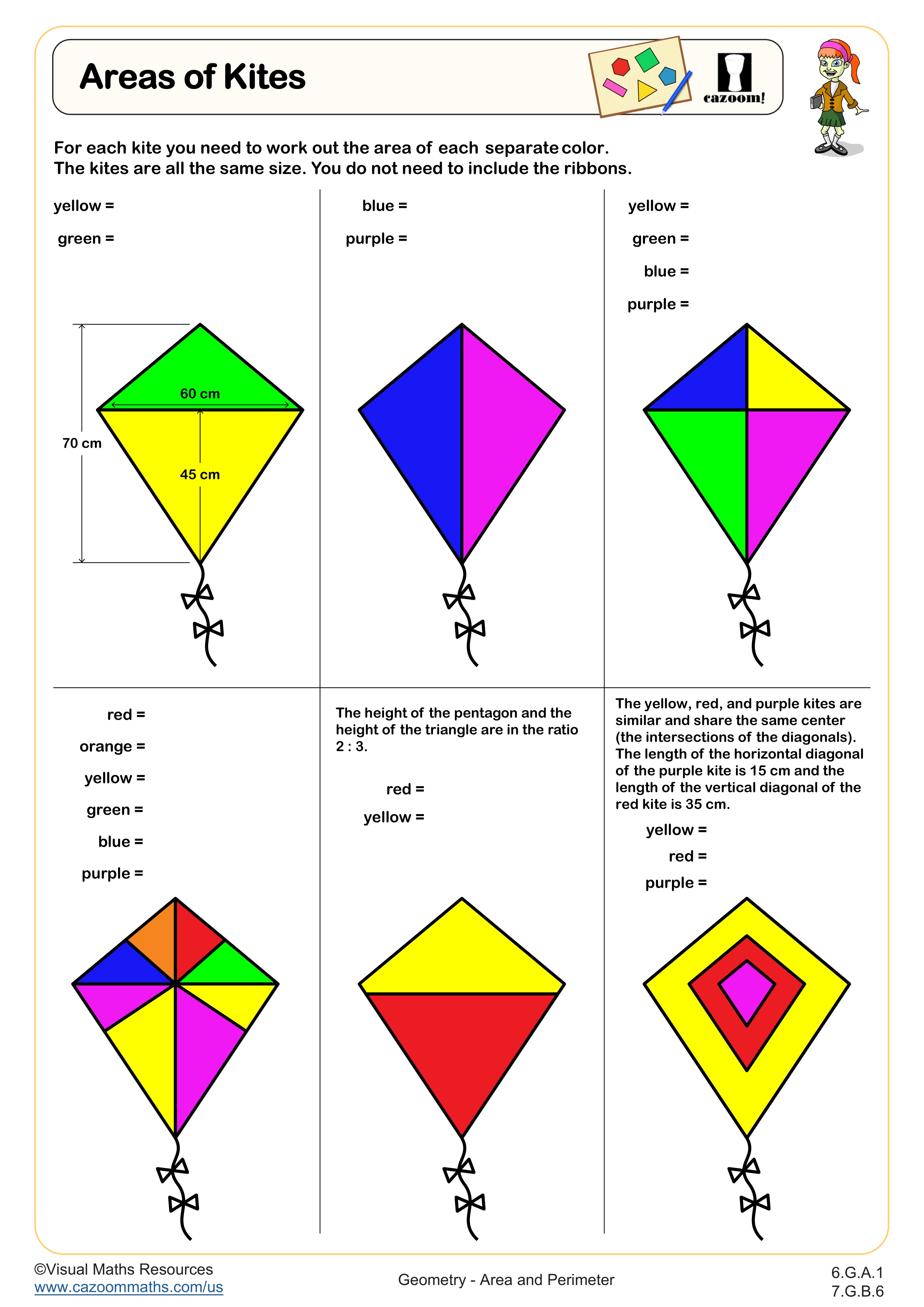
Areas of Kites
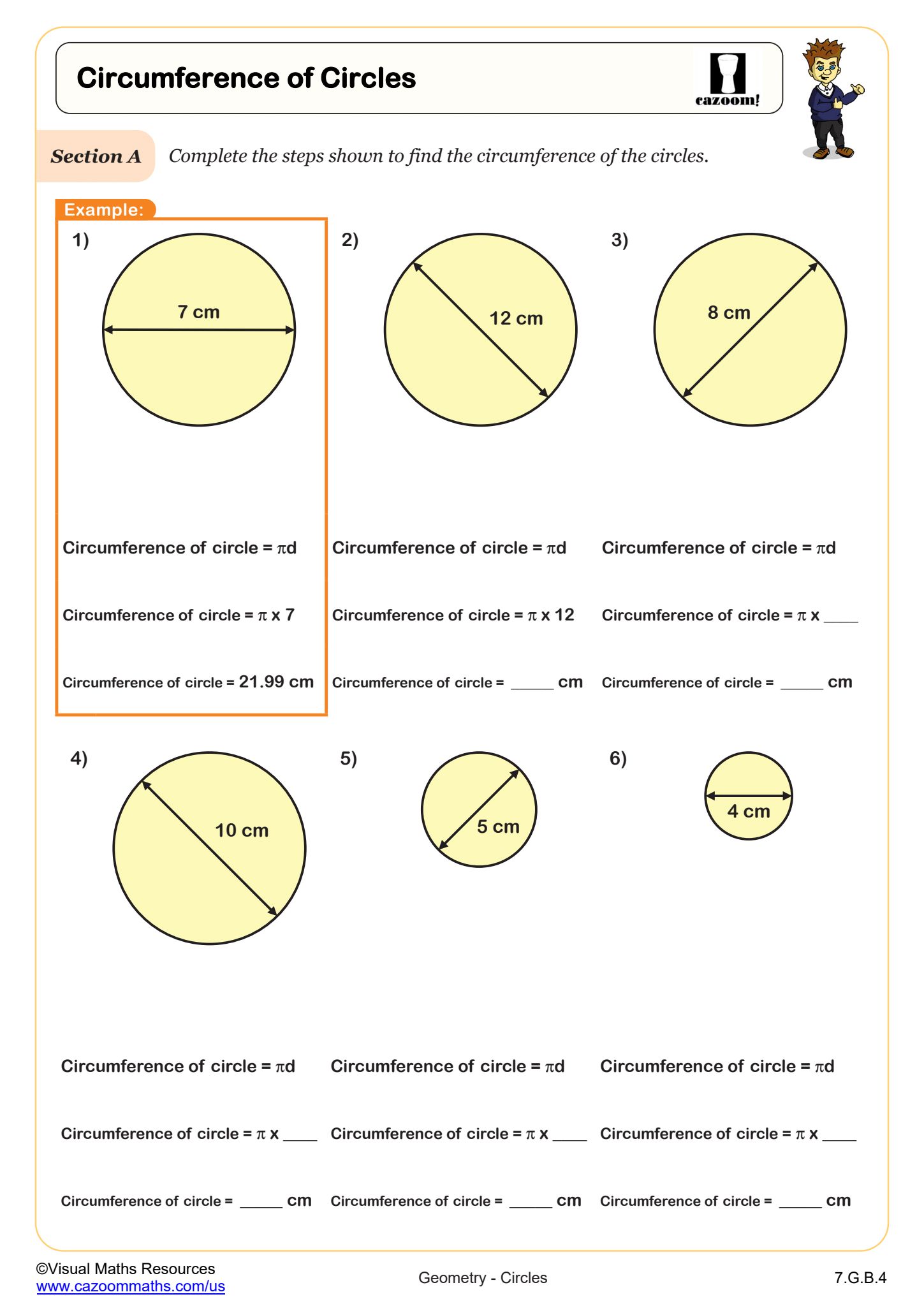
Circumference of Circles
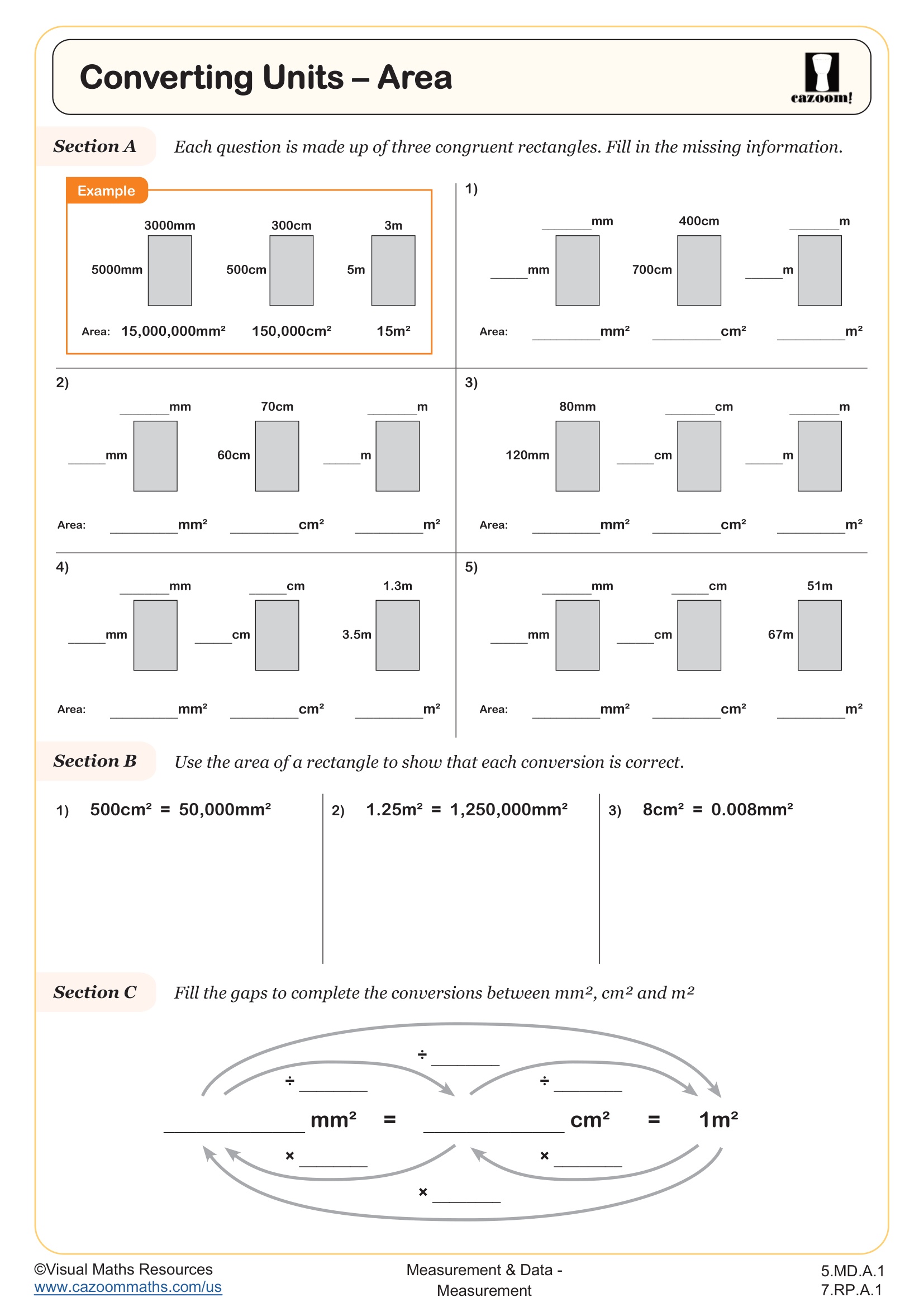
Converting Units - Area
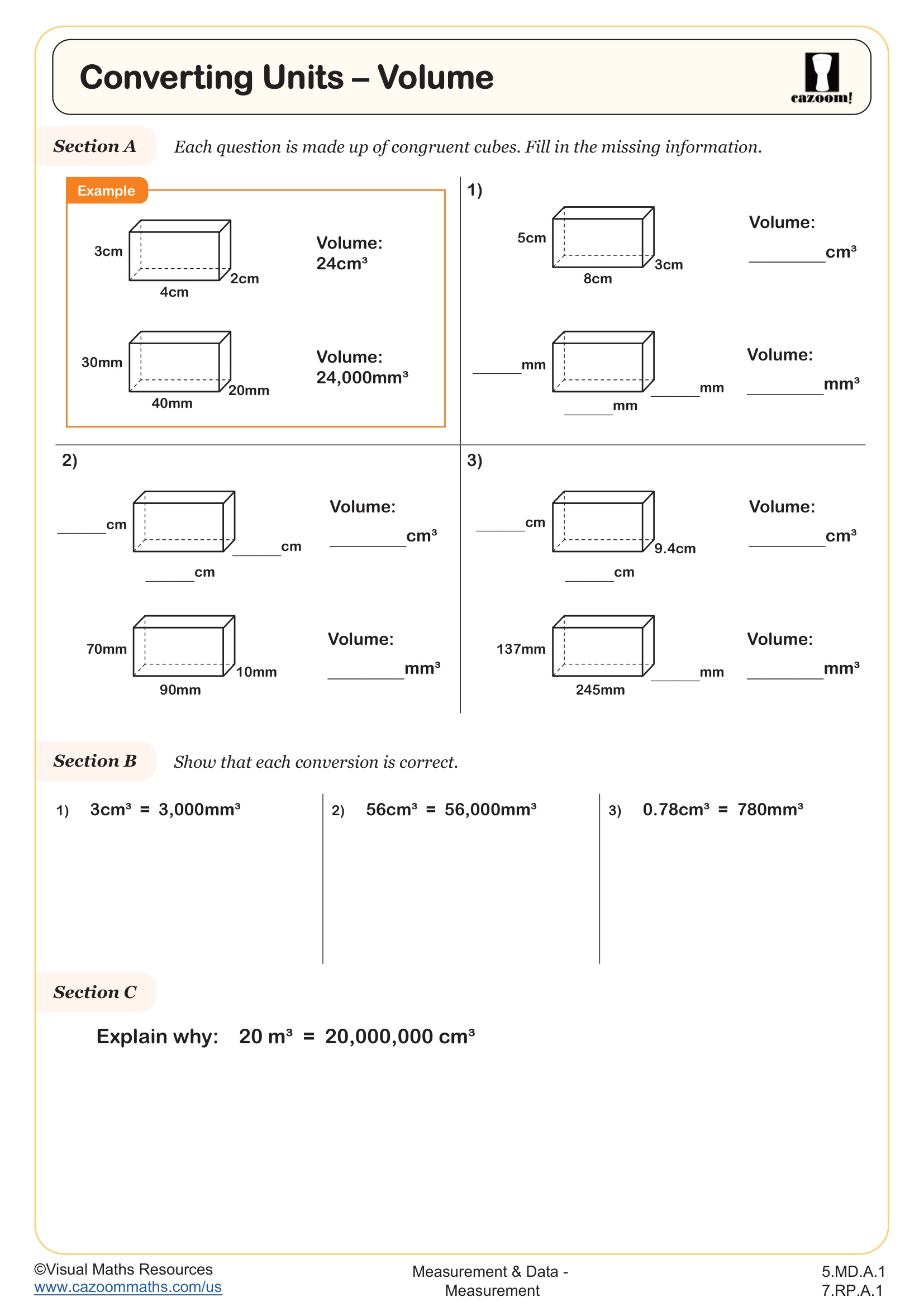
Converting Units - Volume
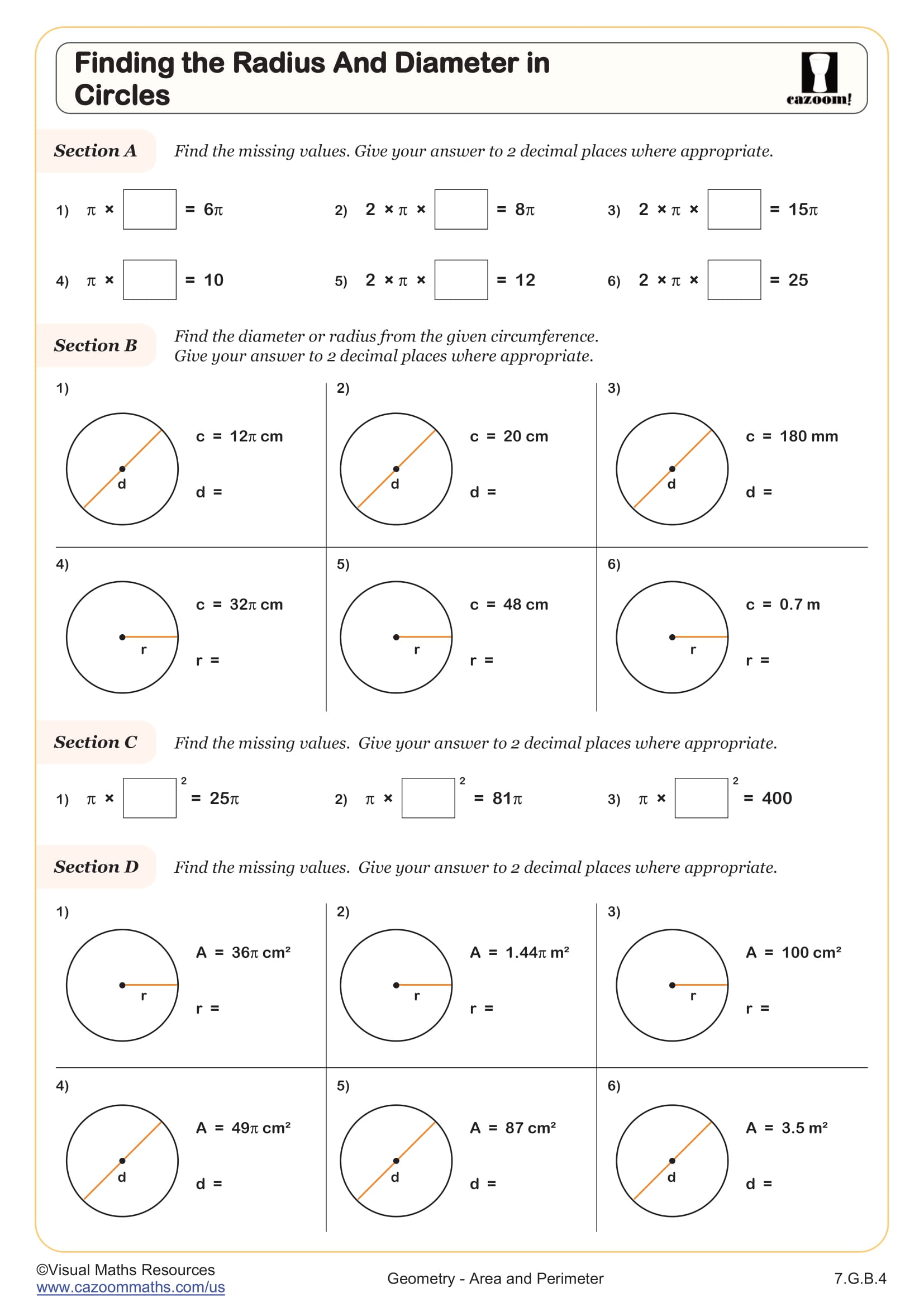
Finding the Radius and Diameter in Circles
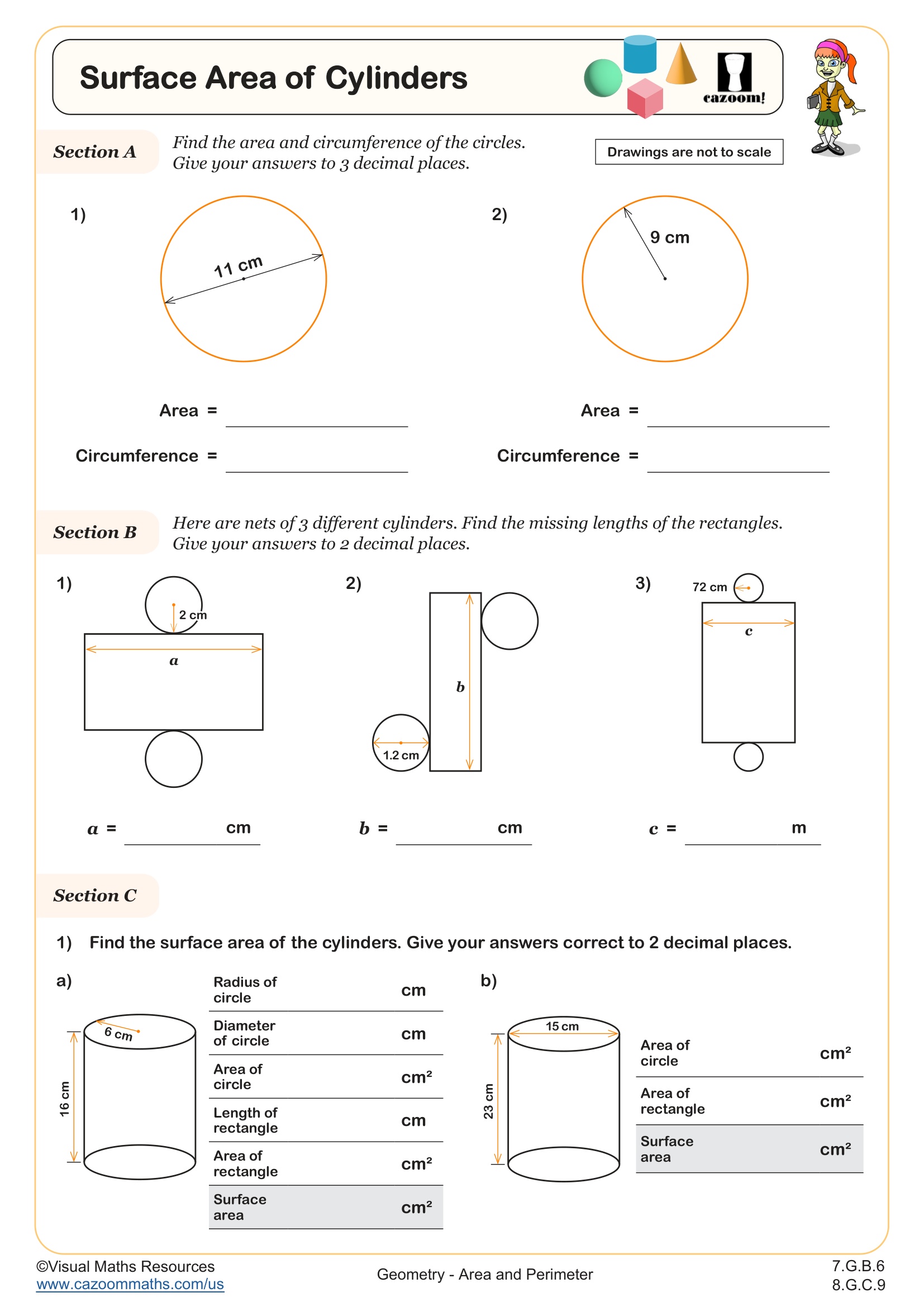
Surface Area of Cylinders
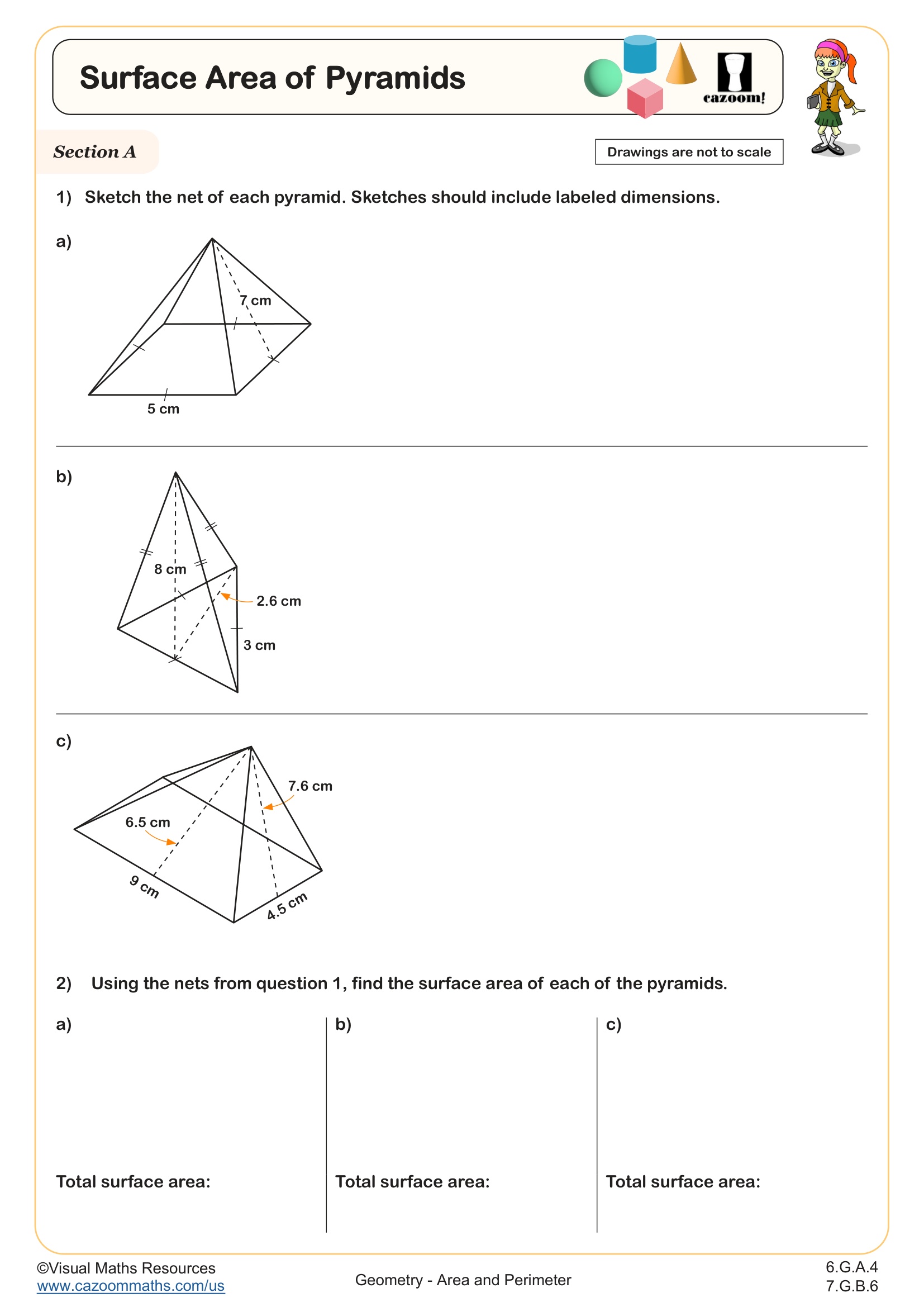
Surface Area of Pyramids
Volume of a Cylinder
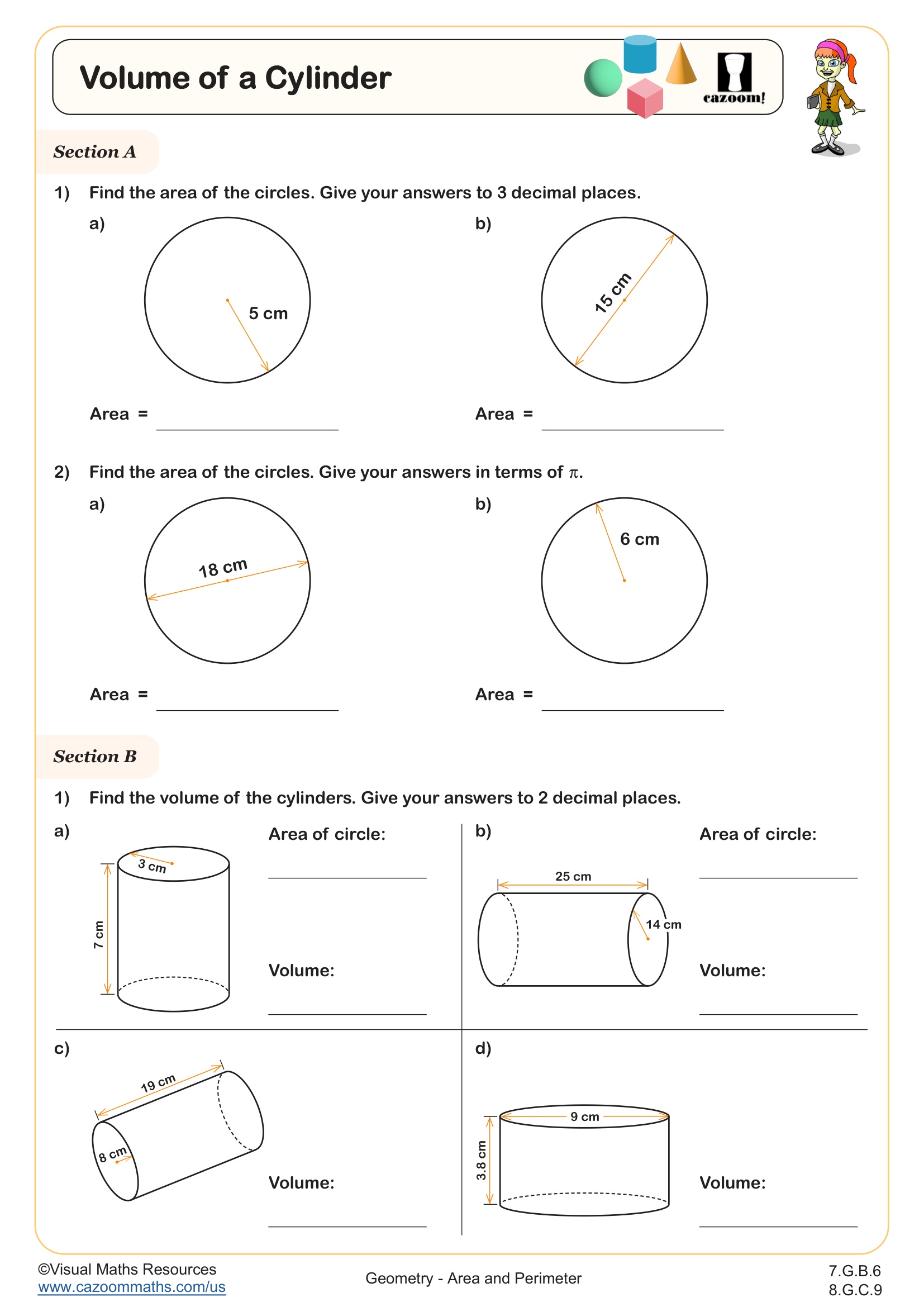
All worksheets are created by the team of experienced teachers at Cazoom Math.
What Area and Perimeter Concepts Do 7th Graders Need to Master?
Seventh grade students should demonstrate mastery of area and perimeter formulas for circles, triangles, trapezoids, and composite shapes. The Common Core State Standards emphasize solving real-world problems involving these measurements, which means students must select appropriate formulas, substitute values correctly, and interpret their answers in context. This grade level also introduces calculating circumference and understanding the relationship between radius, diameter, and pi.
A common error pattern appears when students confuse area and perimeter formulas, particularly mixing up 2πr (circumference) with πr² (area) for circles. Students lose points on standardized tests when they apply formulas mechanically without checking whether their answer makes sense for the question asked. Providing a formula sheet initially helps students focus on the problem-solving process before memorizing becomes the priority.
What Grade Level Are These Area and Perimeter Worksheets For?
These worksheets target 7th grade students in middle school, aligning with the geometry and measurement standards typically covered during this year. Seventh grade represents a critical transition point where students move beyond basic rectangles and squares to work with circles, trapezoids, and irregular composite figures that combine multiple shapes. This level expects students to handle problems requiring multiple steps and strategic thinking about which formulas to apply.
The progression from 6th grade builds on students' understanding of simple polygons and introduces circular measurement, while preparing them for 8th grade geometry that includes volume, surface area, and the Pythagorean theorem. Students who master area and perimeter of 2D shapes in 7th grade find the jump to 3D surface area calculations significantly easier because they've developed the spatial reasoning and formula application skills that transfer directly to more complex geometry.
How Do You Calculate the Area of Shaded Regions in Circles?
Calculating the area of shaded regions requires students to identify which shapes overlap or combine, then subtract the smaller area from the larger area. For circles, this typically means finding the area of a full circle and subtracting the area of a smaller circle, semicircle, or inscribed polygon. Students must recognize that these problems involve two separate calculations before performing the final subtraction, and they need to track which measurements belong to which shape.
Architects and landscape designers regularly use shaded region calculations when planning circular features like fountains, garden beds, or paved areas. A landscape architect designing a circular patio with a circular flower bed in the center needs to calculate the shaded region (the actual patio area) to determine how much paving material to order. This same mathematical thinking appears in engineering when calculating the cross-sectional area of pipes or designing circular components with hollow centers.
How Can Teachers Use These Area and Perimeter Worksheets Effectively?
The worksheets provide scaffolded practice that starts with formula identification and progresses toward multi-step problem solving with composite figures. Including a formula sheet allows students to focus on selecting and applying the correct formula rather than struggling to recall memorized equations. The answer keys enable students to check their work immediately, helping them identify calculation errors before misconceptions become ingrained, which is particularly valuable for self-paced learning or homework assignments.
Teachers find these worksheets effective for differentiated instruction during guided practice, allowing students who grasp concepts quickly to move ahead while others receive targeted support. The variety of subtopics makes them useful for spiral review throughout the unit, warm-up activities to activate prior knowledge before introducing surface area, or intervention sessions for students who performed poorly on formative assessments. Paired work with one worksheet between two students encourages mathematical discussion about strategy selection before calculation.