7th Grade Geometry Worksheets
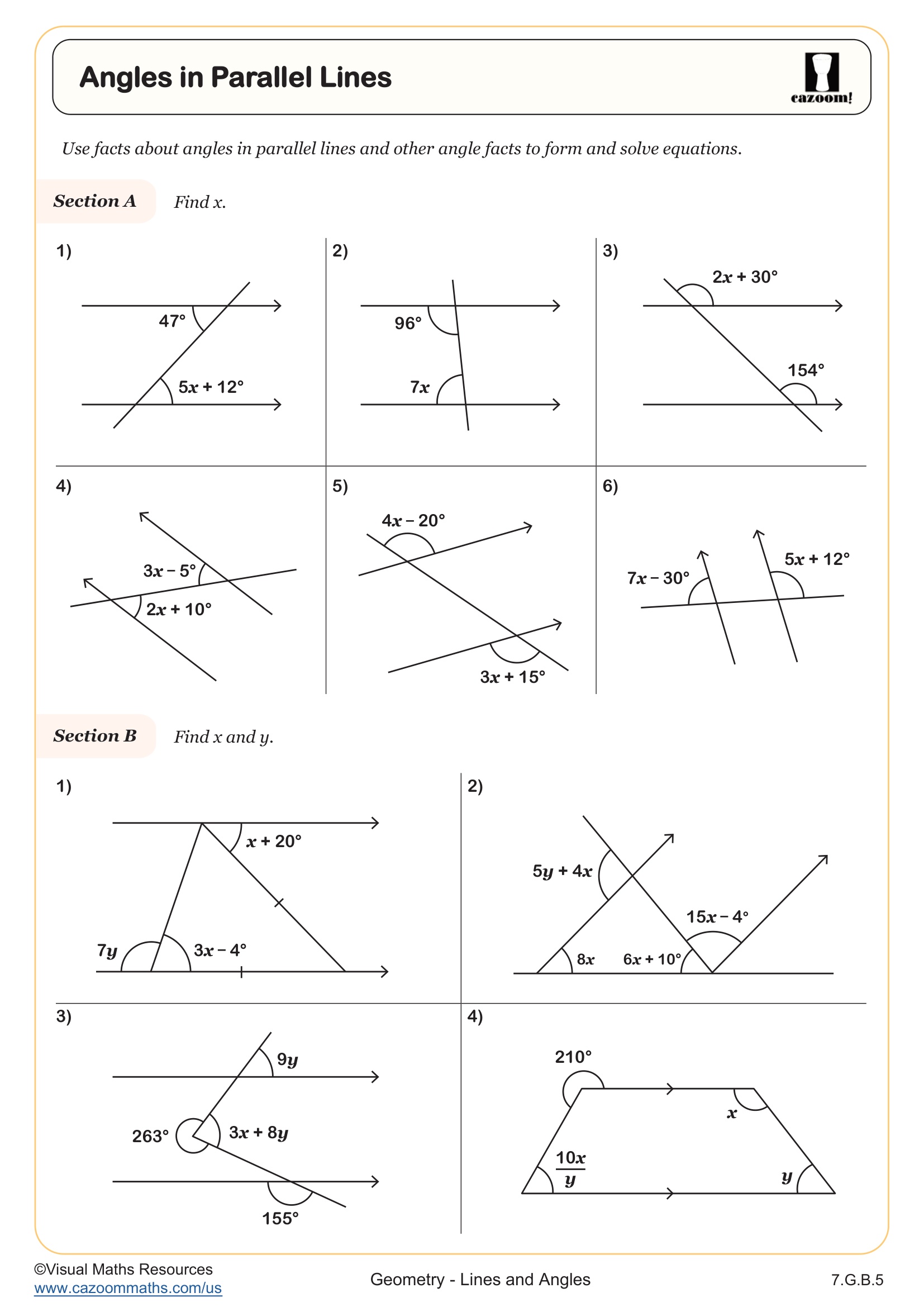
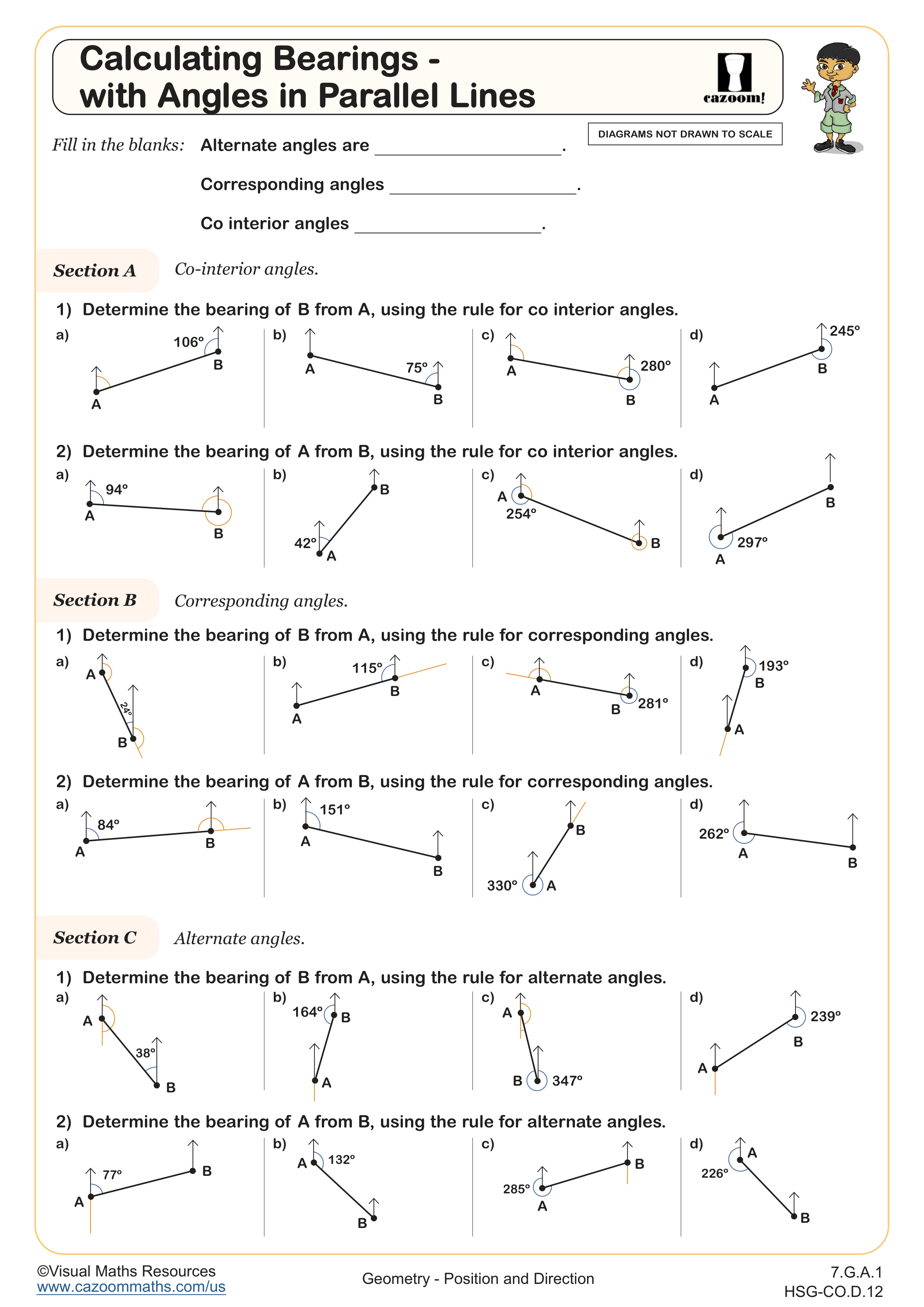
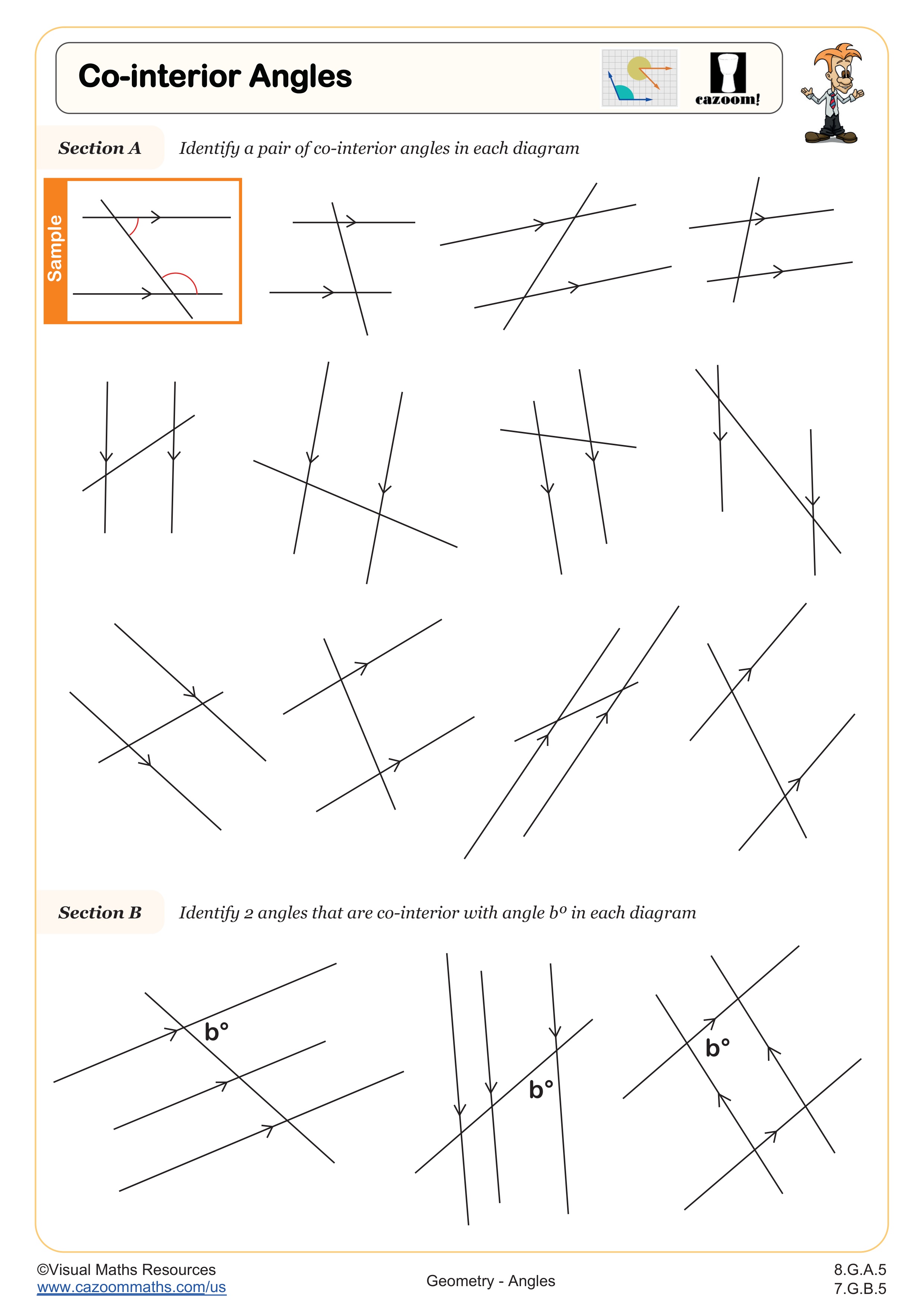
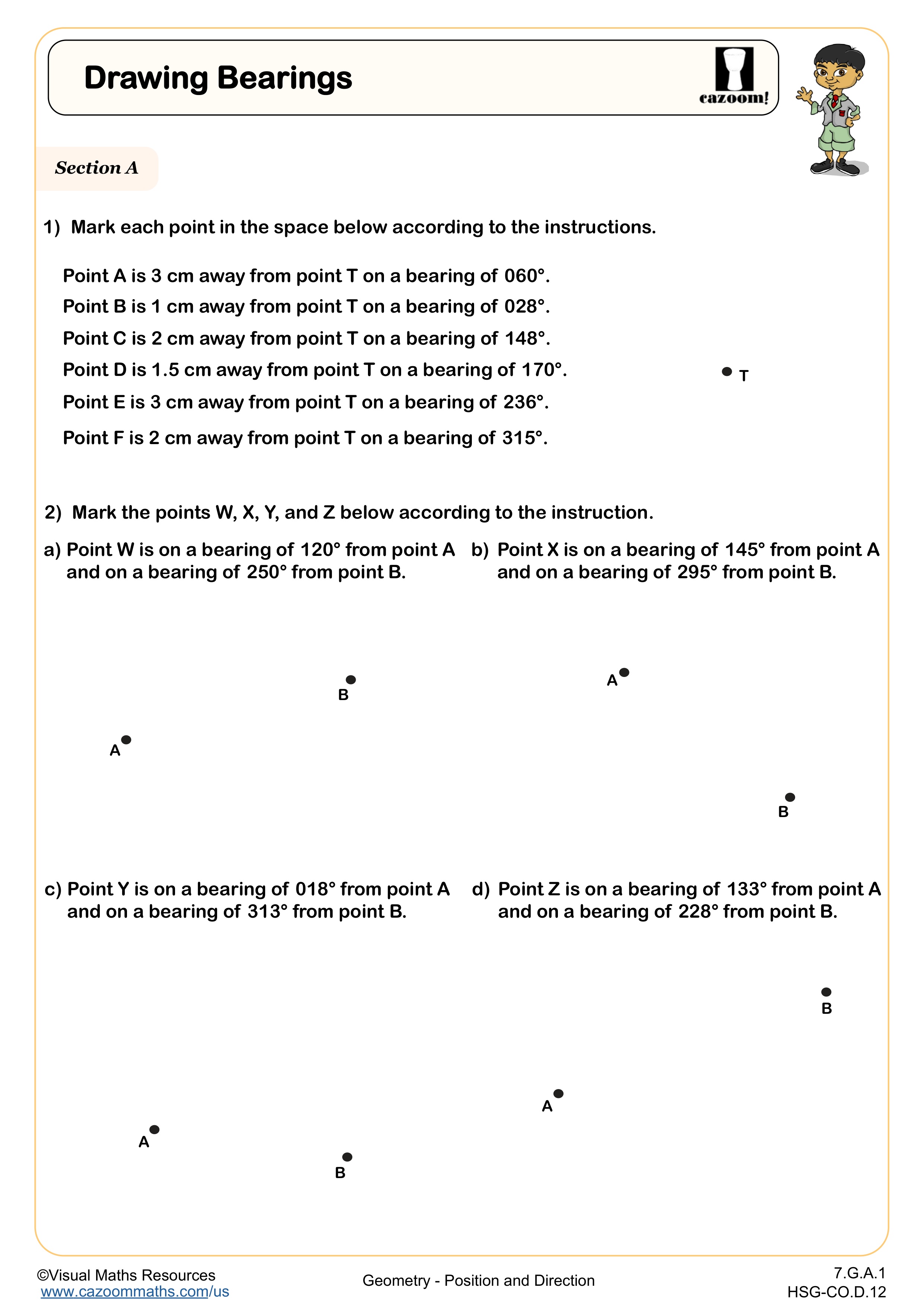
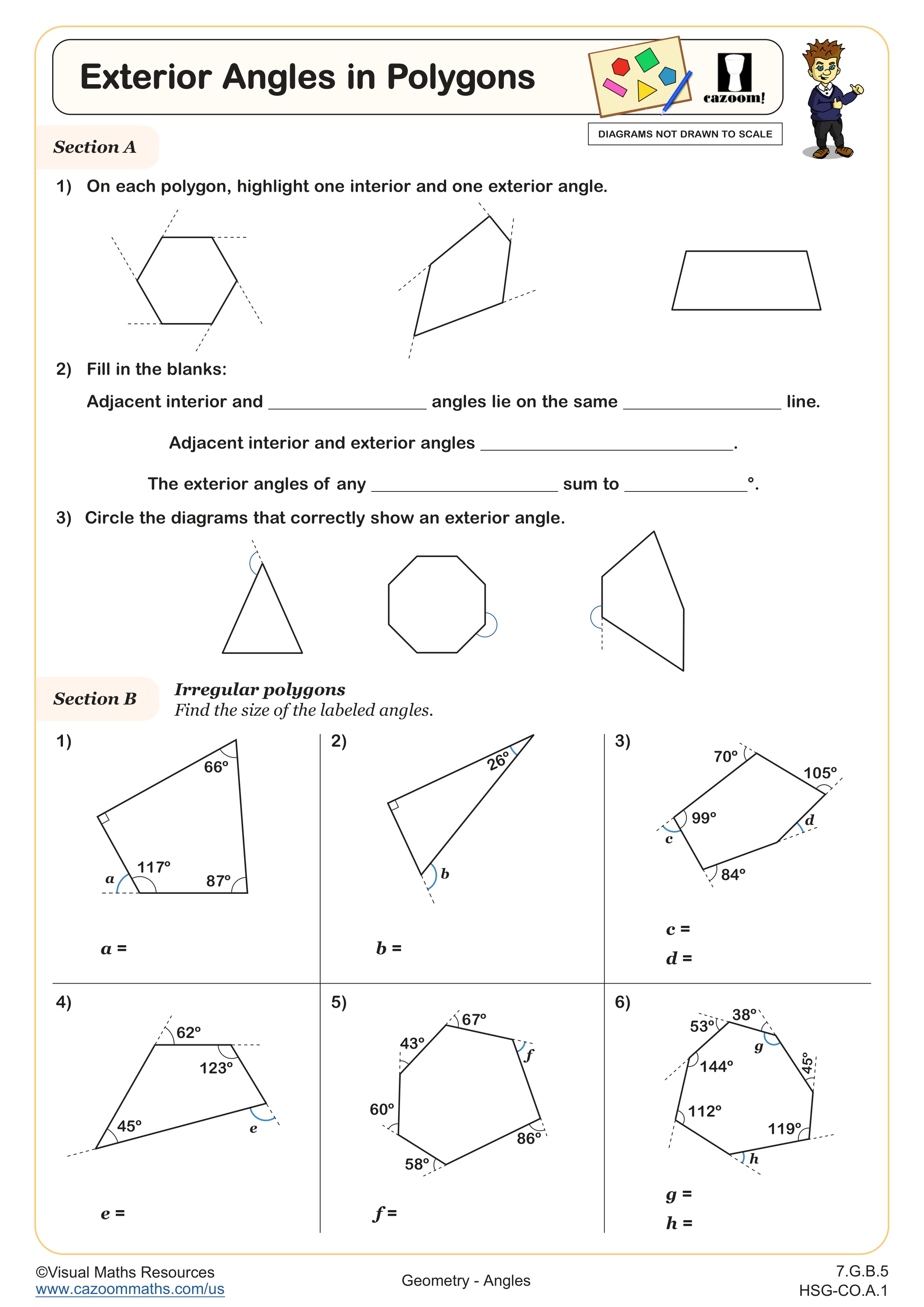
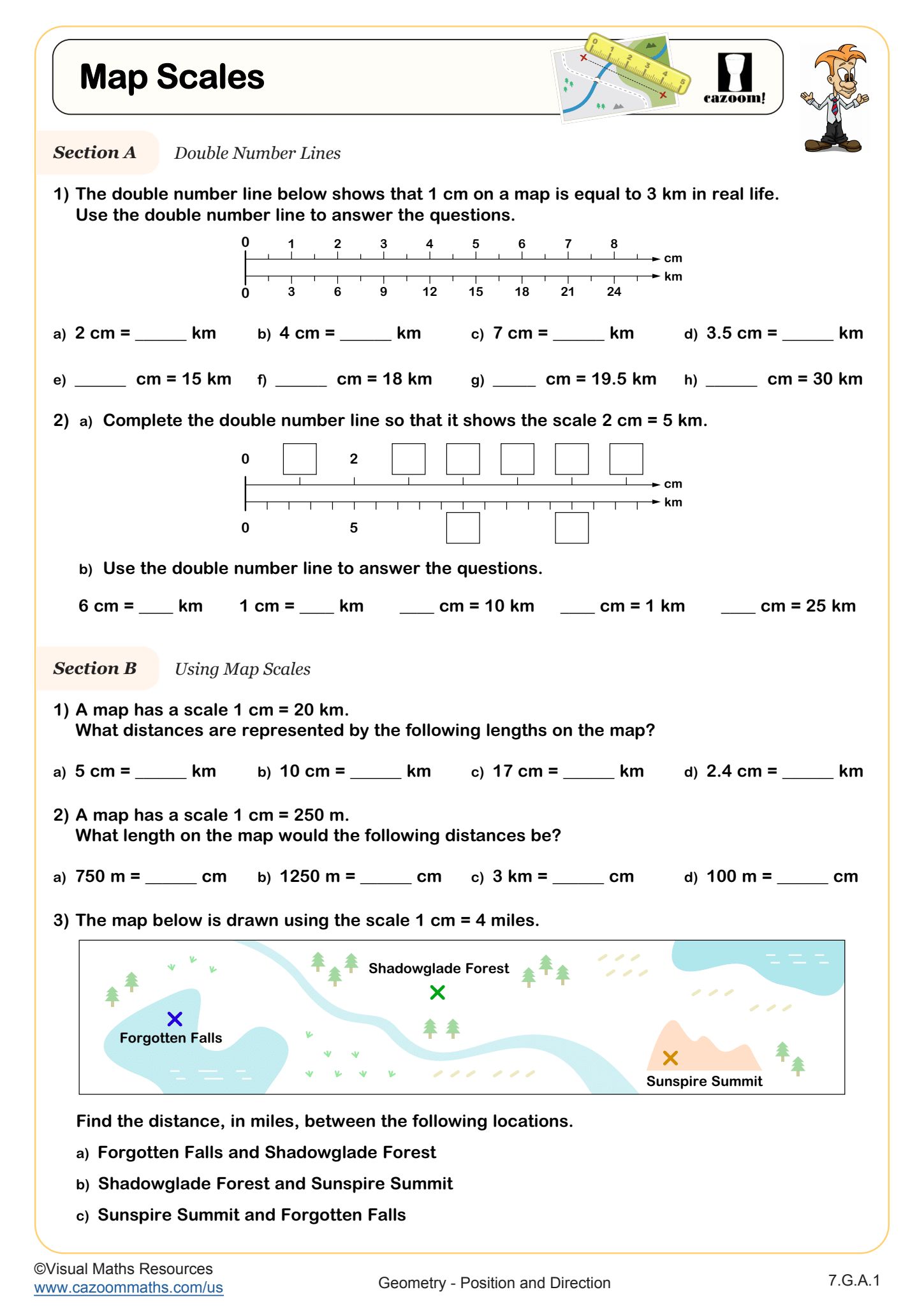
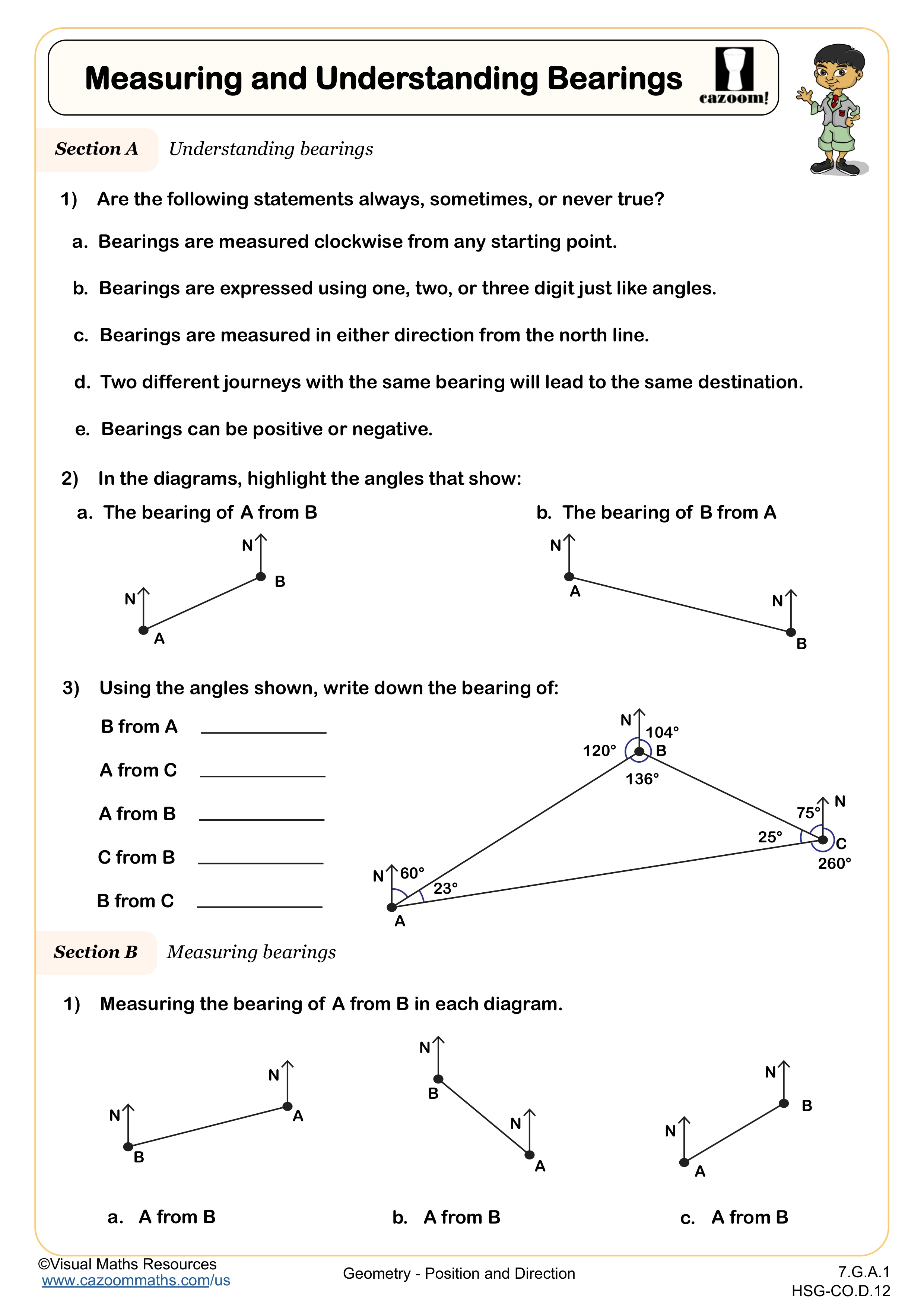
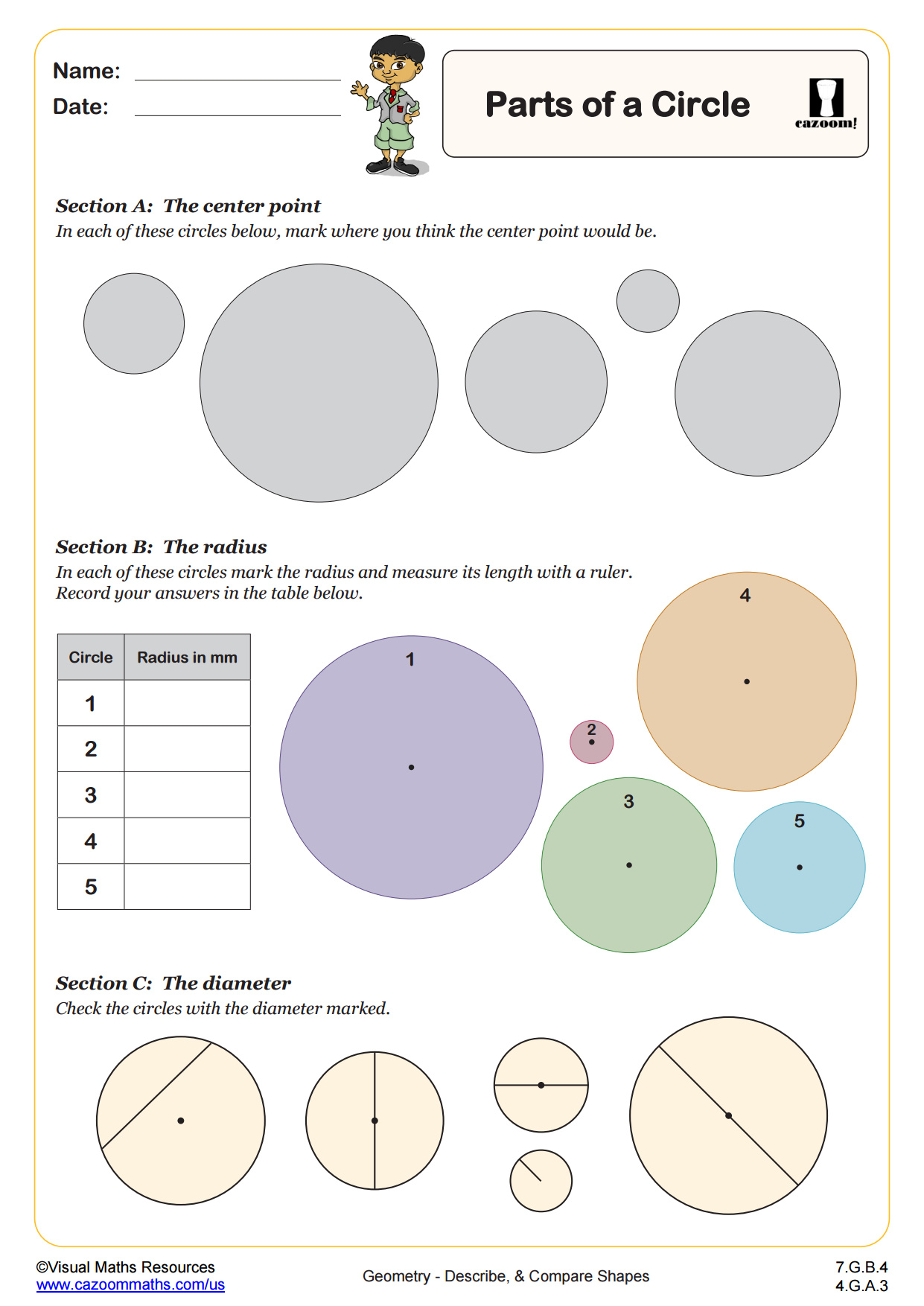
All worksheets are created by the team of experienced teachers at Cazoom Math.
Why Should Teachers Start With Our Printable 7th Grade Geometry Resources?
Seventh-grade geometry connects directly to the coordinate plane work from sixth grade. Students now explore more complex angle relationships and three-dimensional thinking. They learn to calculate missing angles using algebraic reasoning. These skills prepare them for geometric proofs in eighth grade.
Regular practice with these worksheets helps students better visualize spatial relationships. They develop systematic approaches to solving multi-step problems. The structured progression from concrete shapes to abstract theorems mirrors how mathematical thinking naturally develops. Students who work through these exercises consistently strengthen their logical reasoning abilities.
Topics at a Glance: Pythagoras, Calculating Angles, and More
The geometry worksheets lead students through a progression from visual learning activities to complex abstract problem-solving. Students begin their learning journey with diagrams, nets, and coordinate models before advancing to algebraic applications and geometric theorems. The worksheets include complete answer keys that show all steps of the calculations in detail. The collection of problems develops spatial reasoning and accuracy while building confidence in applying geometric principles to visual and algebraic problems, focusing on Pythagoras’ theorem and 3D shapes and angle relationships in parallel lines and triangles.
Trusted by Educators: Why Parents Value Cazoom Math 7th Grade Geometry Worksheets
Teachers appreciate how quickly these worksheets fit into lesson plans. The varied difficulty levels make differentiation simple during class. Advanced students tackle challenging vector problems while others strengthen foundational skills. Each worksheet targets specific learning objectives clearly.
The detailed solutions demonstrate mathematical reasoning at every step. Students learn to write geometric explanations correctly by seeing modeled examples. The structured format enables teachers to identify common misconceptions promptly. Cazoom Math worksheets align perfectly with district pacing guides and state standards.
The consistent layout reduces instruction time for new activities. Students know exactly where to show their work and organize calculations. This familiarity lets them focus on learning geometry rather than figuring out worksheet formats.
Beyond Classrooms: Where These Geometry Skills Apply in Daily Life
Students use geometry concepts when estimating distances and navigating spaces. They apply angle knowledge in various fields, including construction, design, and engineering. Understanding three-dimensional relationships is helpful in multiple aspects, from efficiently packing boxes to interpreting technical drawings. These mathematical tools become essential for careers in architecture, gaming, and manufacturing.
• Plan room layouts and furniture setups
• Read maps and calculate real distances
• Create art with symmetry and patterns
• Build models using architectural drawings