7th Grade Geometry Worksheets
Algebraic Angles in Parallel Lines

Angles in Isosceles Triangles
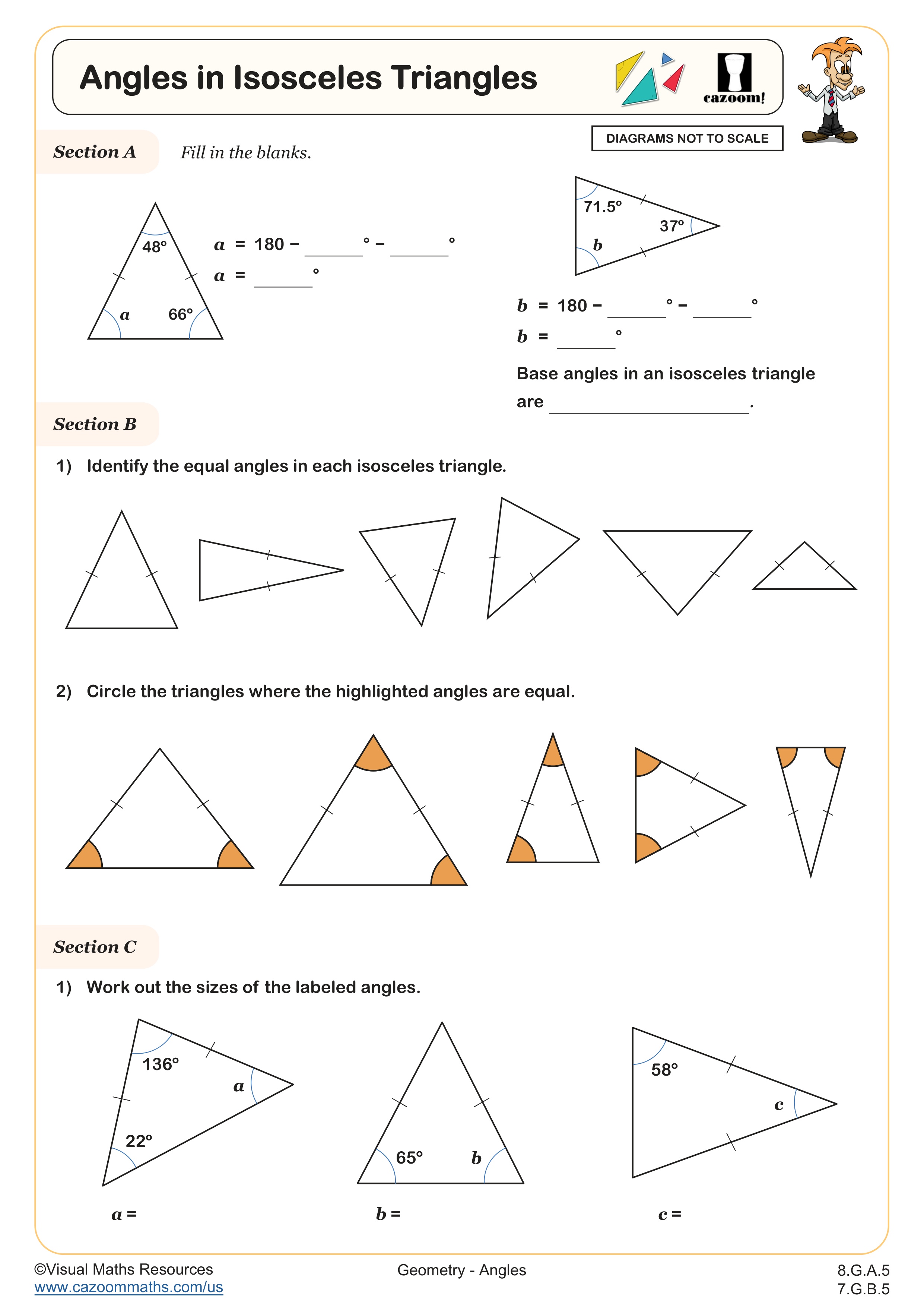
Angles in Kites
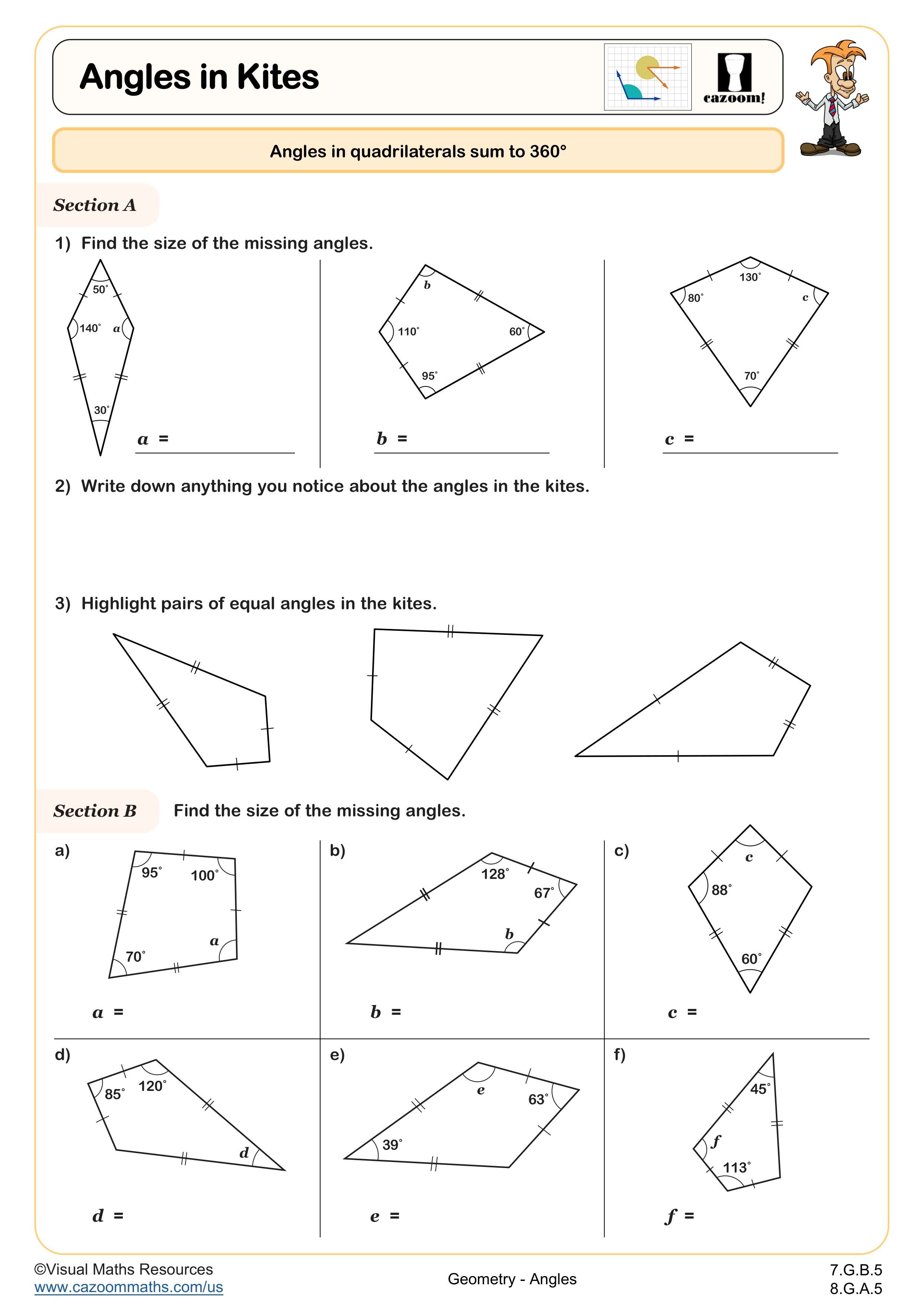
Calculating Angles in Triangles (A)
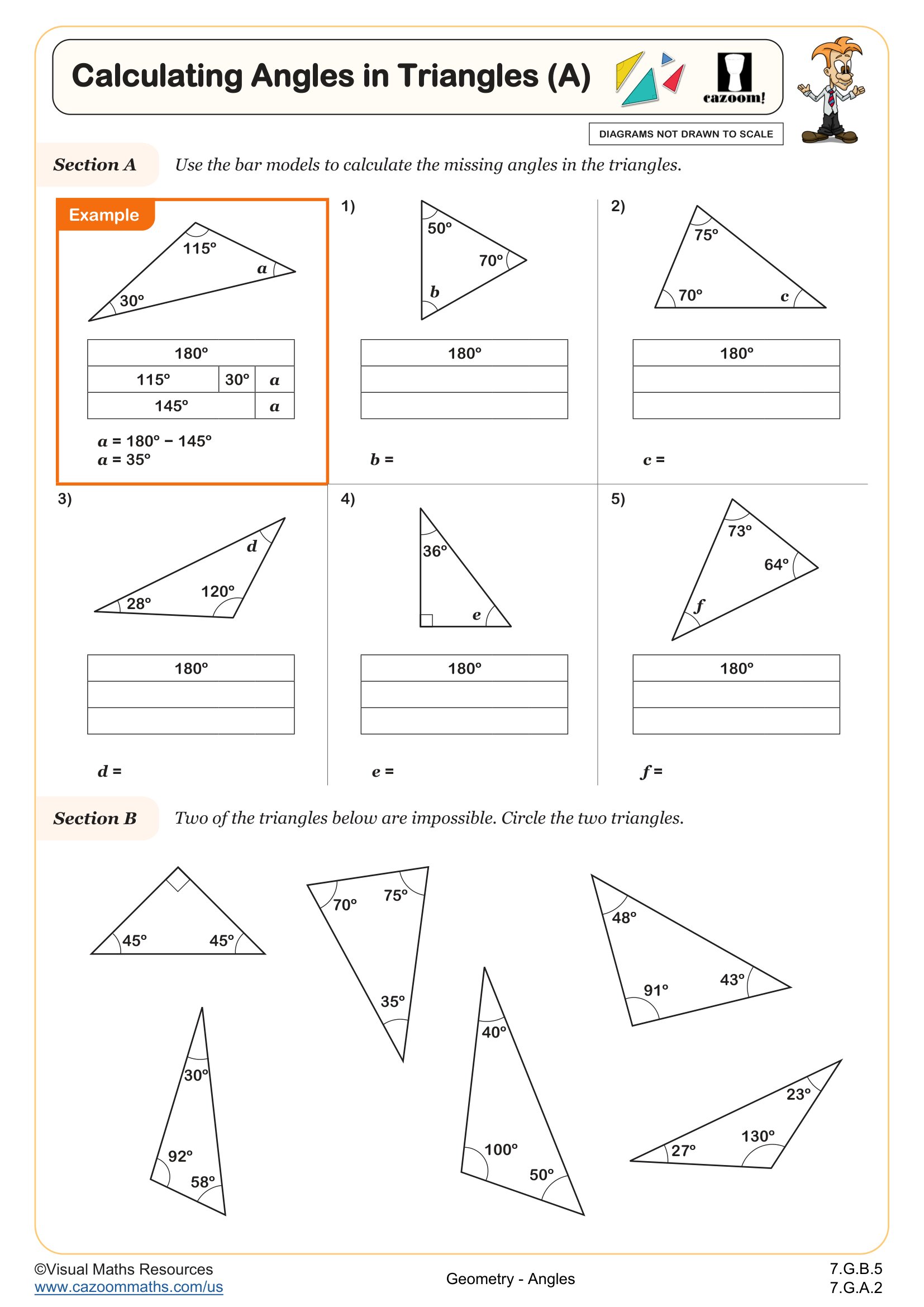
Calculating Bearings - with Angles in Parallel Lines
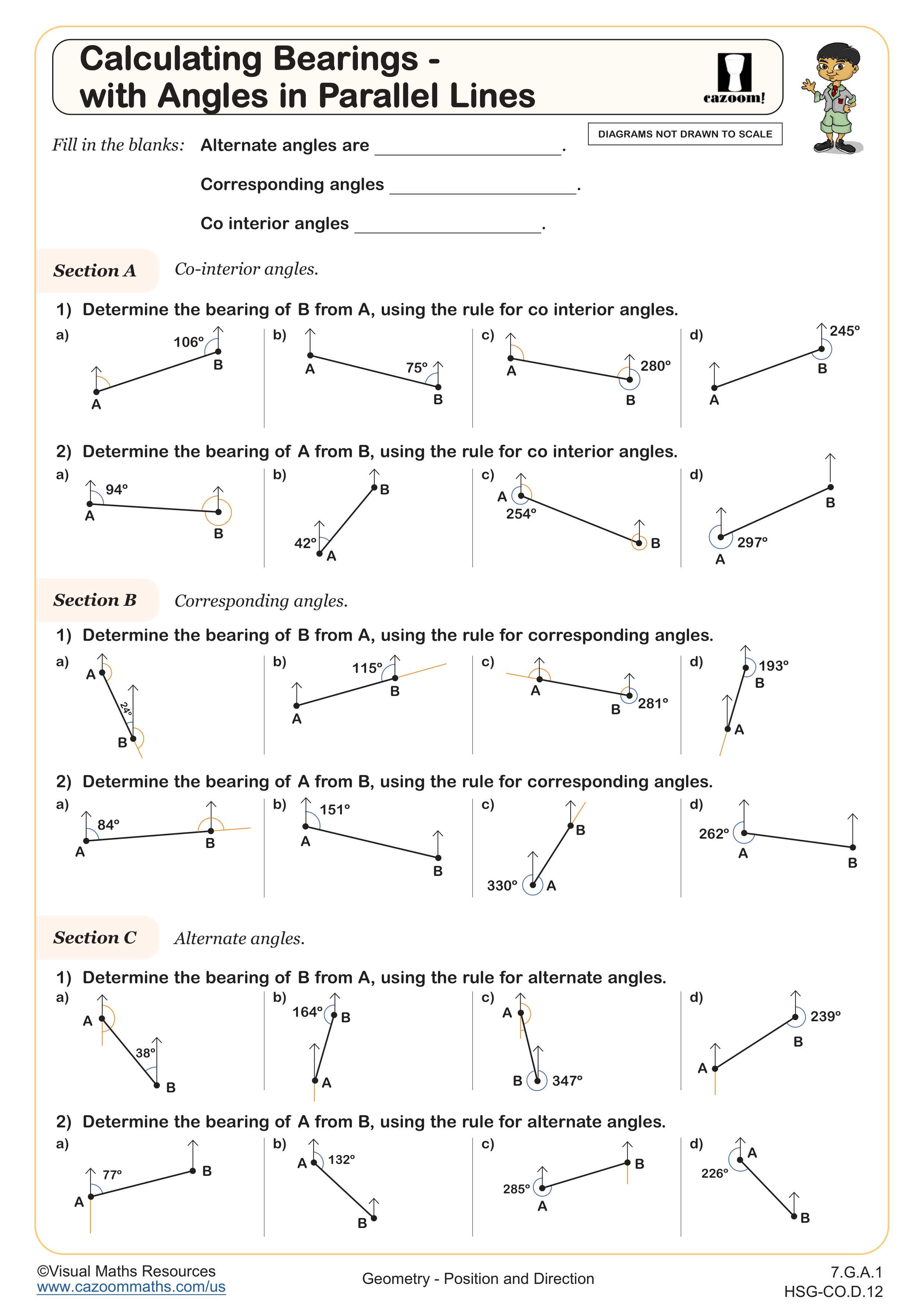
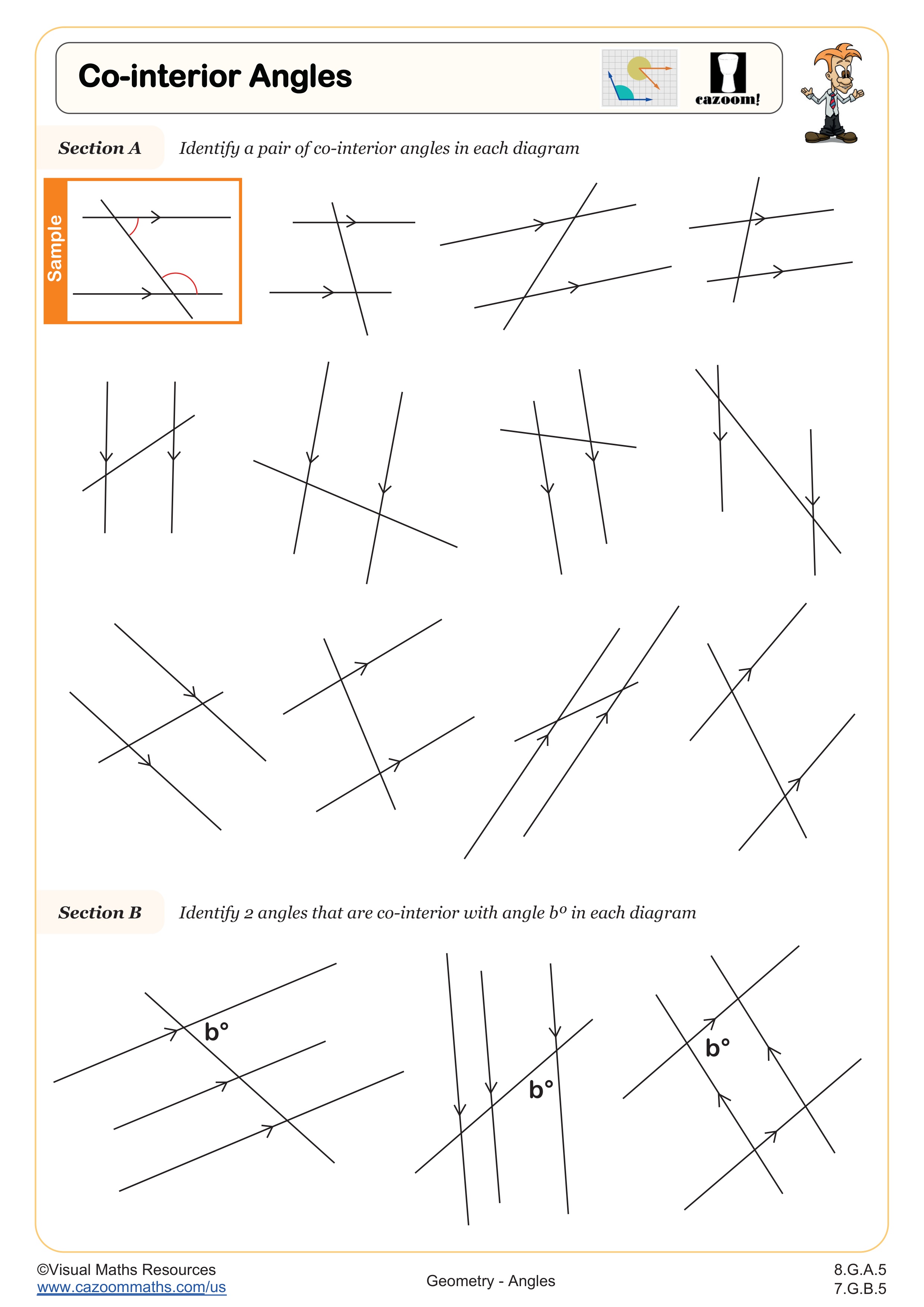
Co-interior Angles
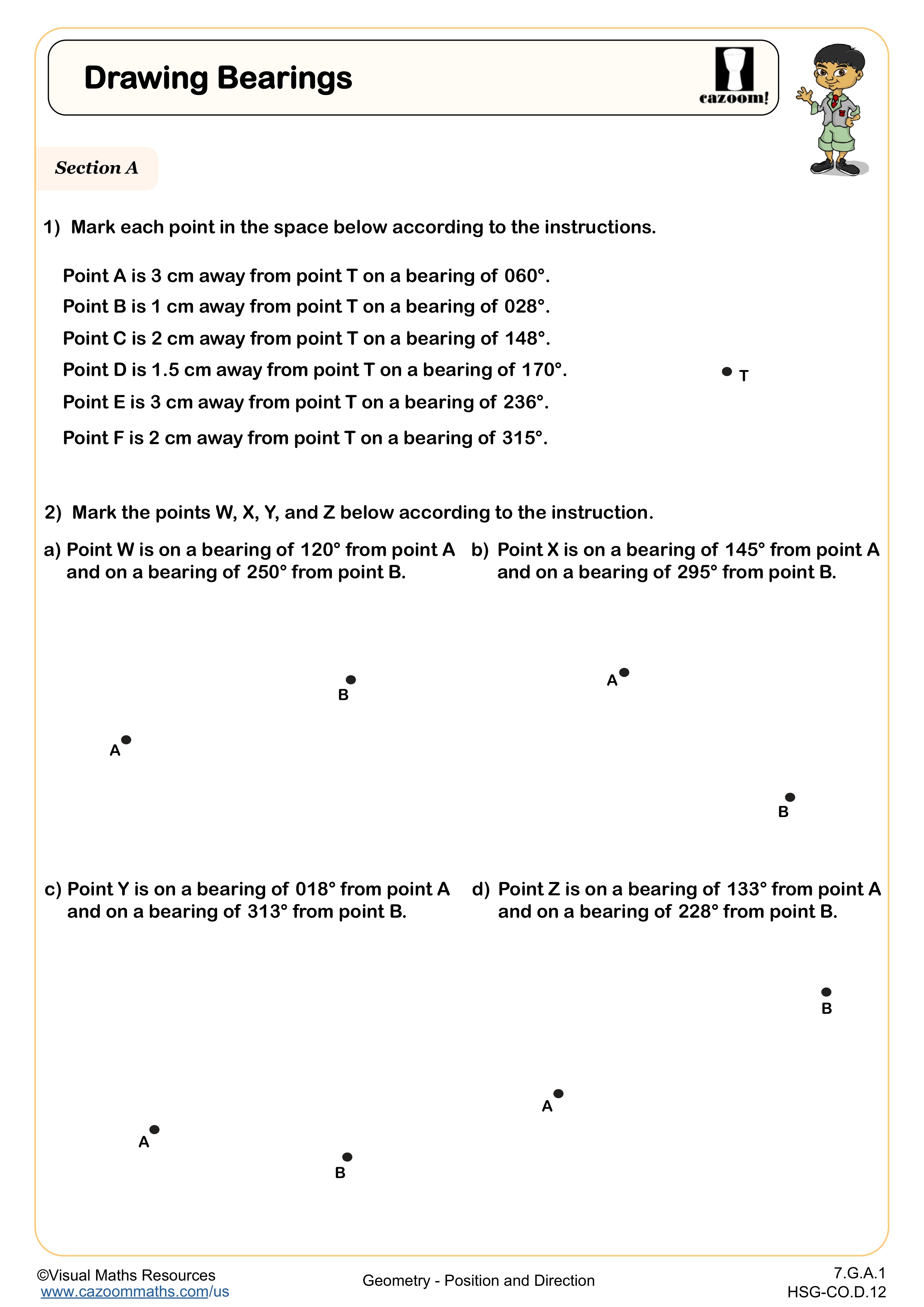
Drawing Bearings
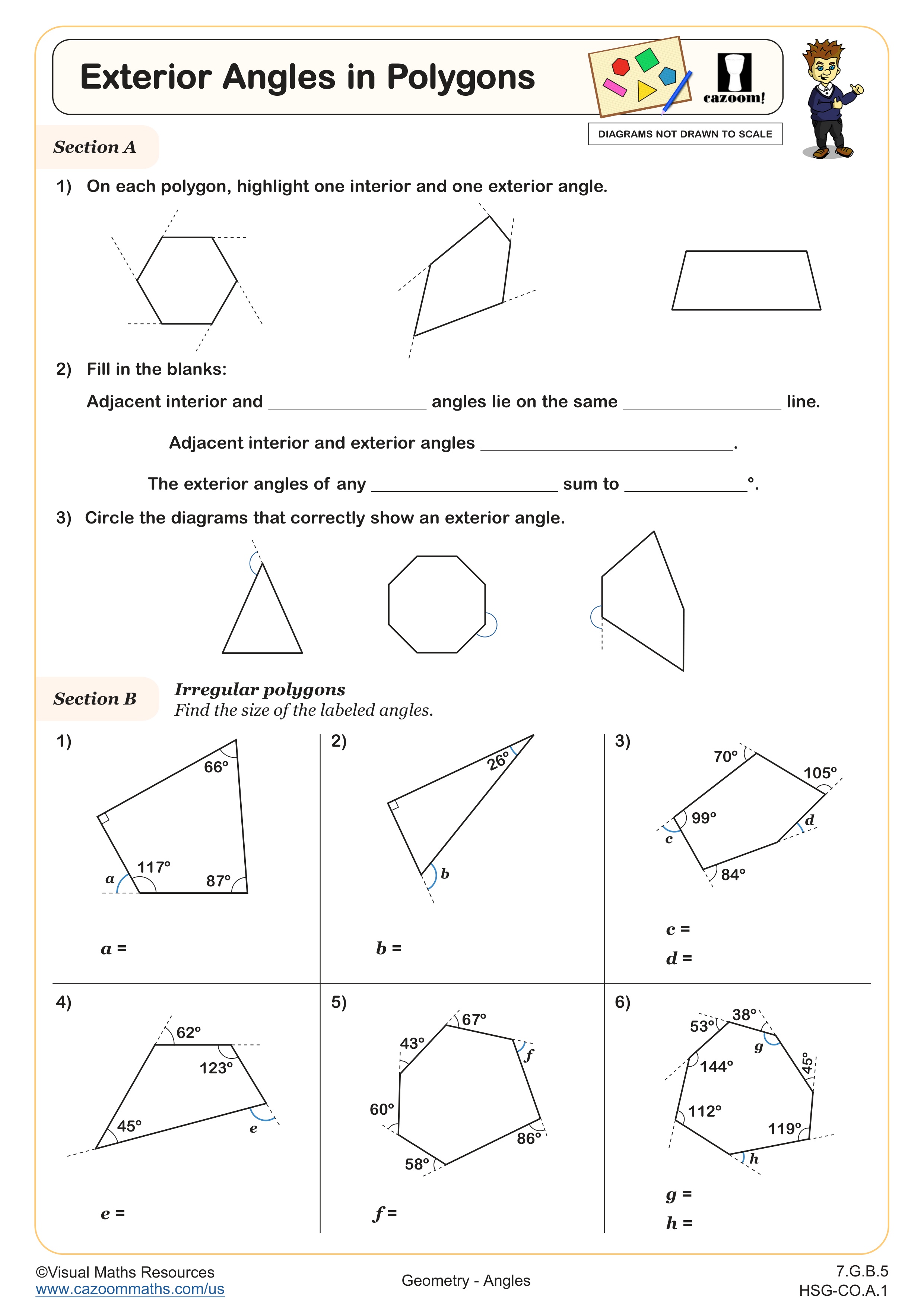
Exterior Angles in Polygons
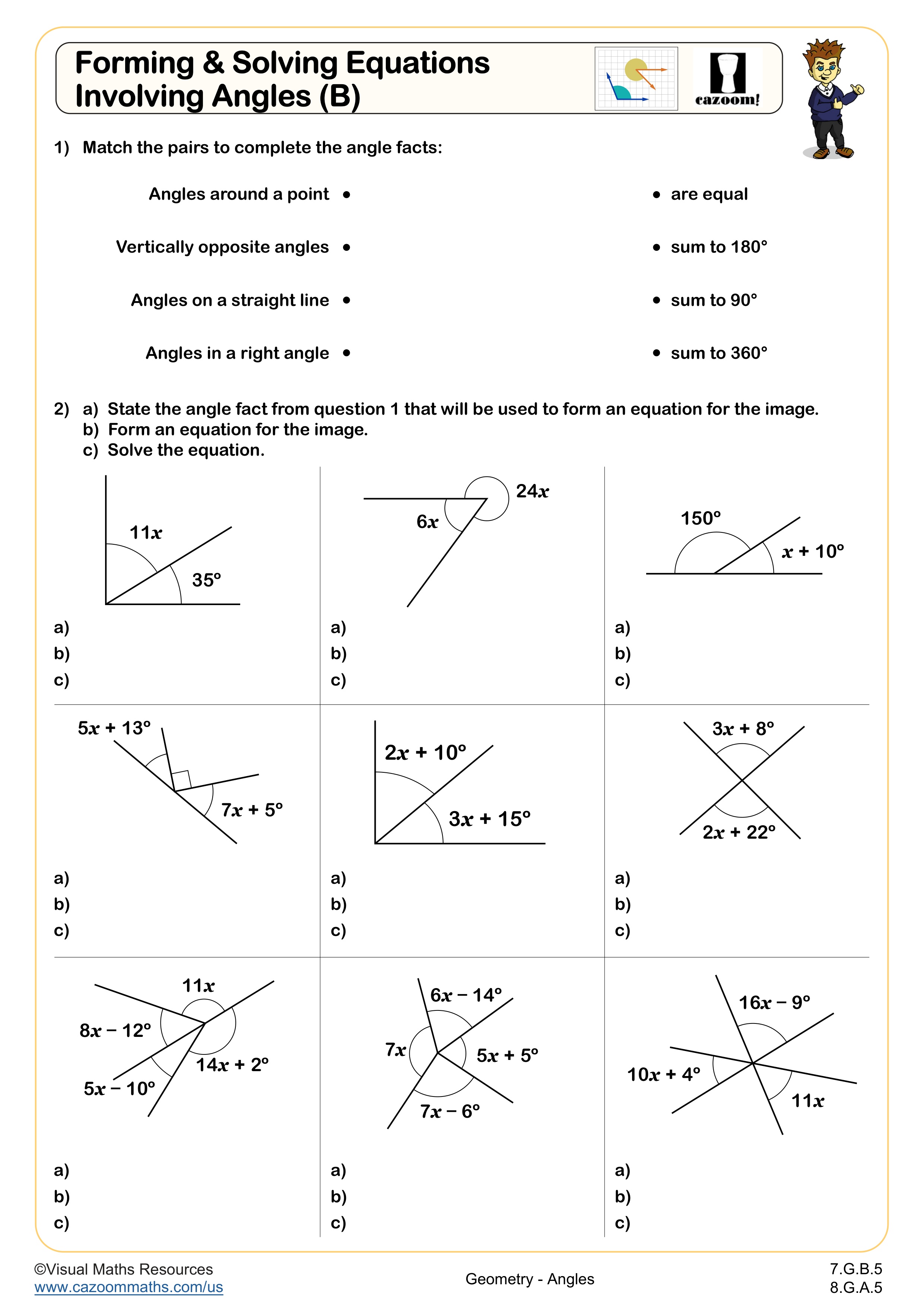
Forming and Solving Equations Involving Angles (B)
Map Scales

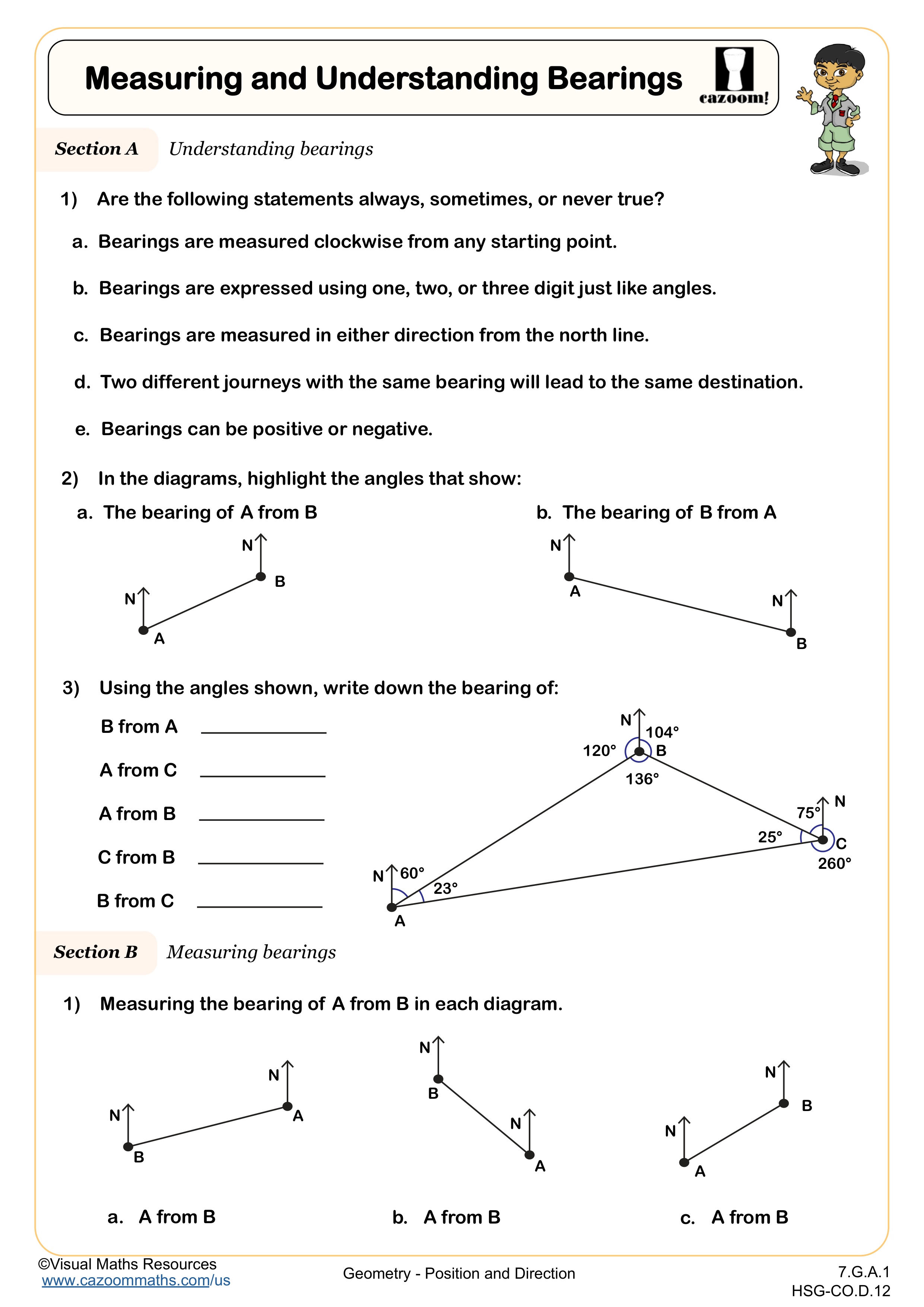
Measuring and Understanding Bearings
Parts of a Circle

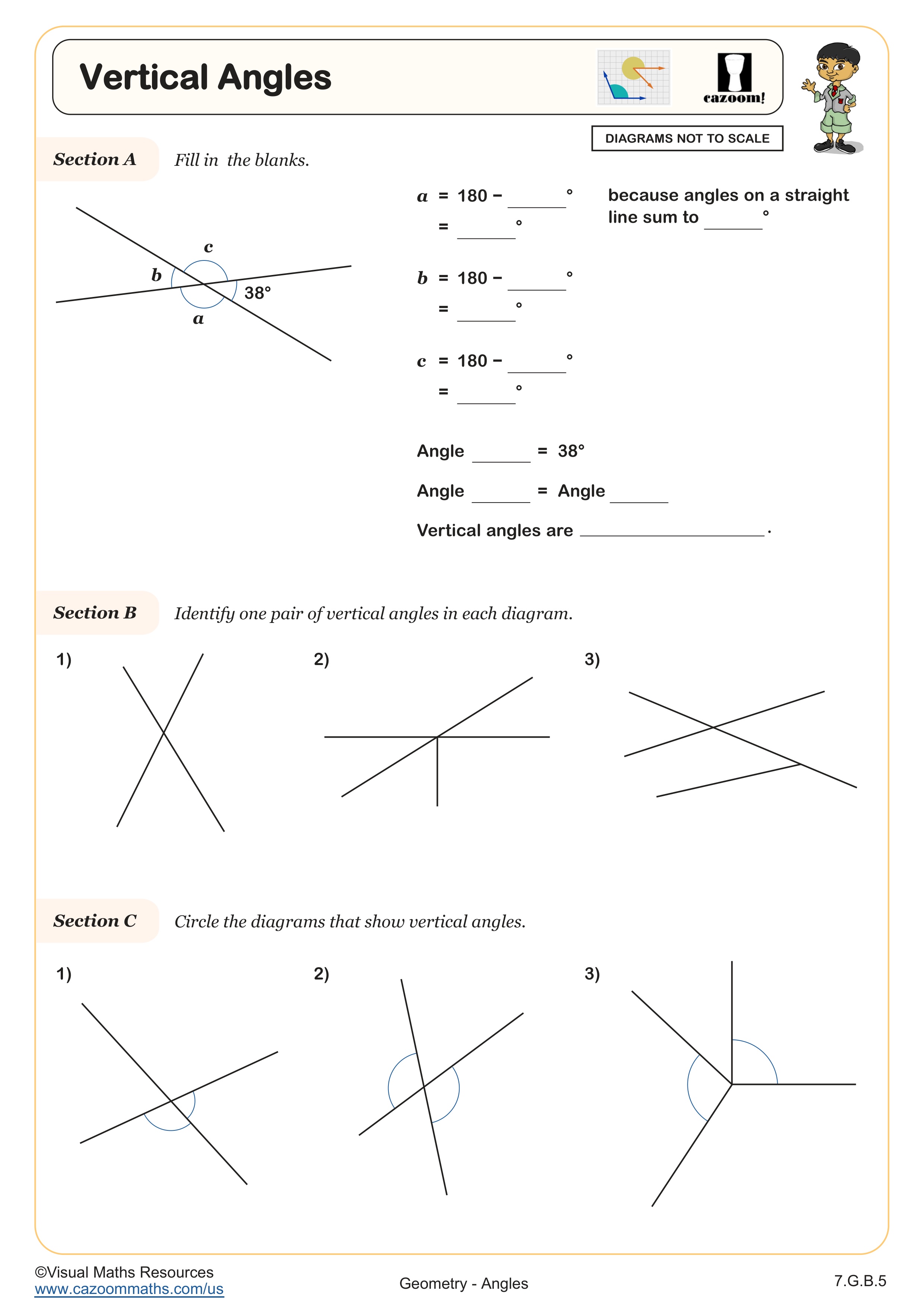
Vertical Angles
All worksheets are created by the team of experienced teachers at Cazoom Math.
What topics do 7th grade geometry worksheets typically cover?
Grade 7 geometry worksheets focus on angle relationships, properties of triangles and quadrilaterals, area and perimeter of polygons, circumference and area of circles, and basic coordinate geometry. These topics align with Common Core standards 7.G.1 through 7.G.6, building students' spatial reasoning and measurement skills.
Teachers notice that students often confuse complementary and supplementary angles when working through geometry worksheets grade 7 pdf collections. Many students memorize the definitions but struggle to apply them in context, especially when angles are represented algebraically rather than with specific degree measures.
How do 7th grade geometry skills build from 6th grade concepts?
Seventh grade geometry extends 6th grade area and perimeter work by introducing more complex polygons and composite figures. Students move from basic rectangle and triangle calculations to working with parallelograms, trapezoids, and irregular shapes that require decomposition strategies.
The transition also includes formal introduction of angle relationships and triangle properties. While 6th graders work primarily with right angles and basic shapes, 7th graders must understand acute, obtuse, and straight angles, plus how angles within triangles and other polygons relate to each other mathematically.
Why do students struggle with coordinate plane geometry problems?
Students often treat coordinate plane work as separate from other geometry concepts, failing to connect plotting points with calculating distances and areas. Many students can plot individual points accurately but struggle when asked to find the area of a triangle or rectangle using coordinate methods.
Teachers observe that students frequently forget to apply the distance formula correctly or mix up the process for finding area on a coordinate plane versus standard geometric formulas. The 7th grade geometry problems involving coordinates require students to visualize shapes while performing calculations, which challenges both spatial and algebraic reasoning simultaneously.
How can teachers use these worksheets most effectively in class?
Teachers find success using these worksheets as differentiated practice tools, assigning specific problems based on individual student needs rather than requiring all students to complete every problem. The answer keys allow for quick self-assessment and peer tutoring opportunities during independent work time.
Many teachers use the grade 7 math geometry worksheets pdf format for digital assignments, enabling students to annotate directly on tablets or print specific sections for targeted practice. This flexibility supports both in-person and remote learning environments while maintaining consistent formatting and answer key accessibility.