Algebra I Algebra Worksheets
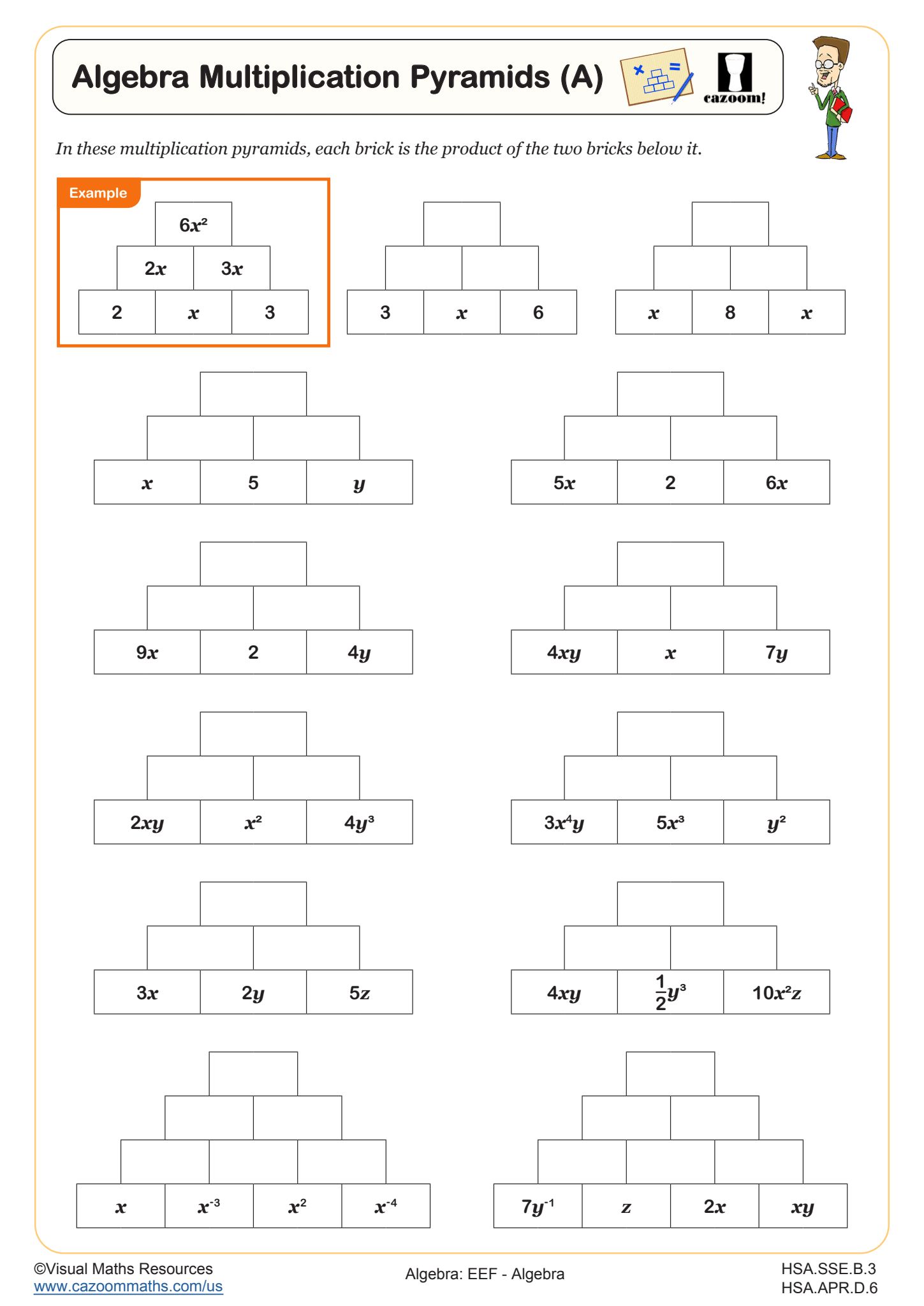
Algebra Multiplication Pyramids (A)
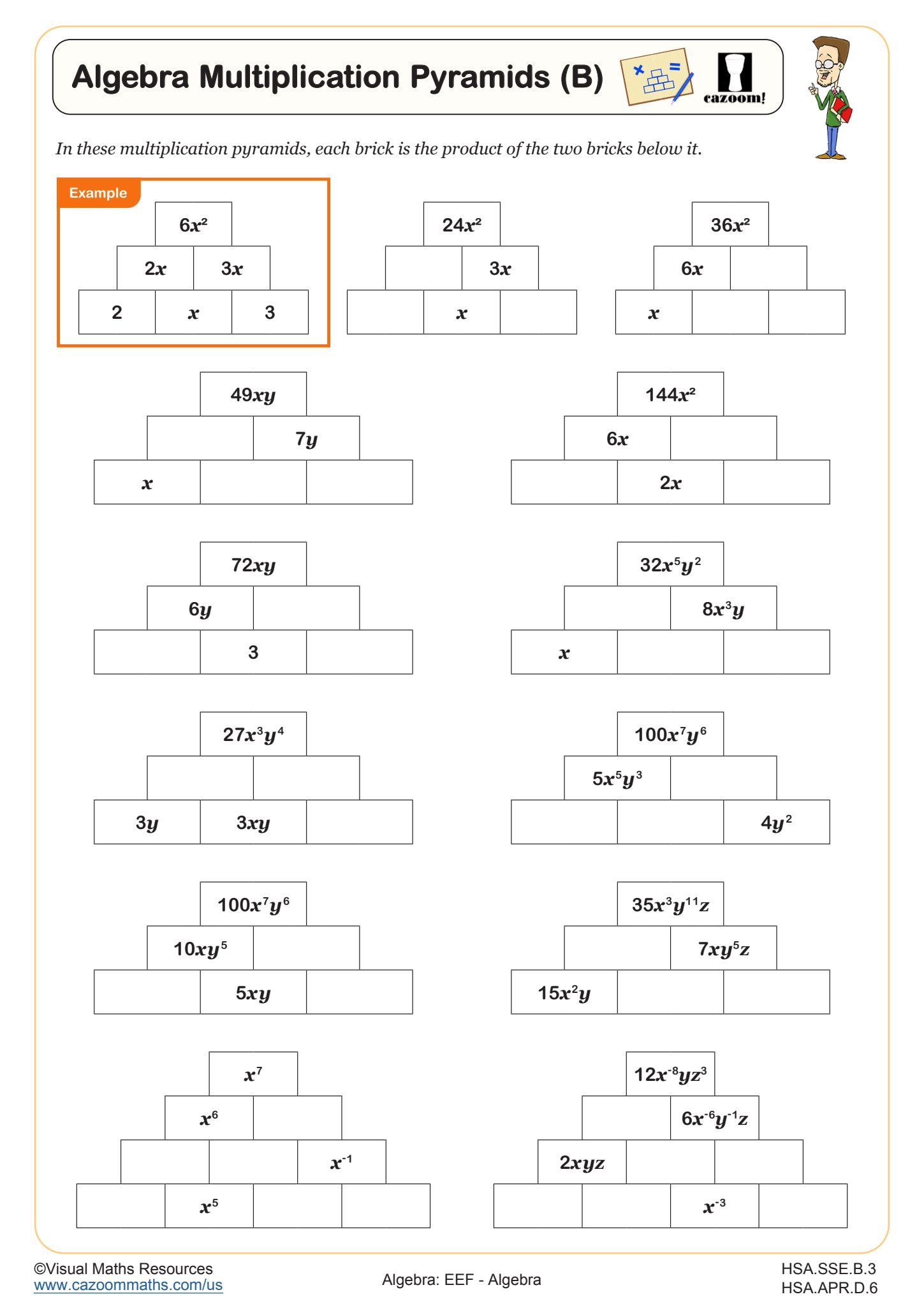
Algebra Multiplication Pyramids (B)
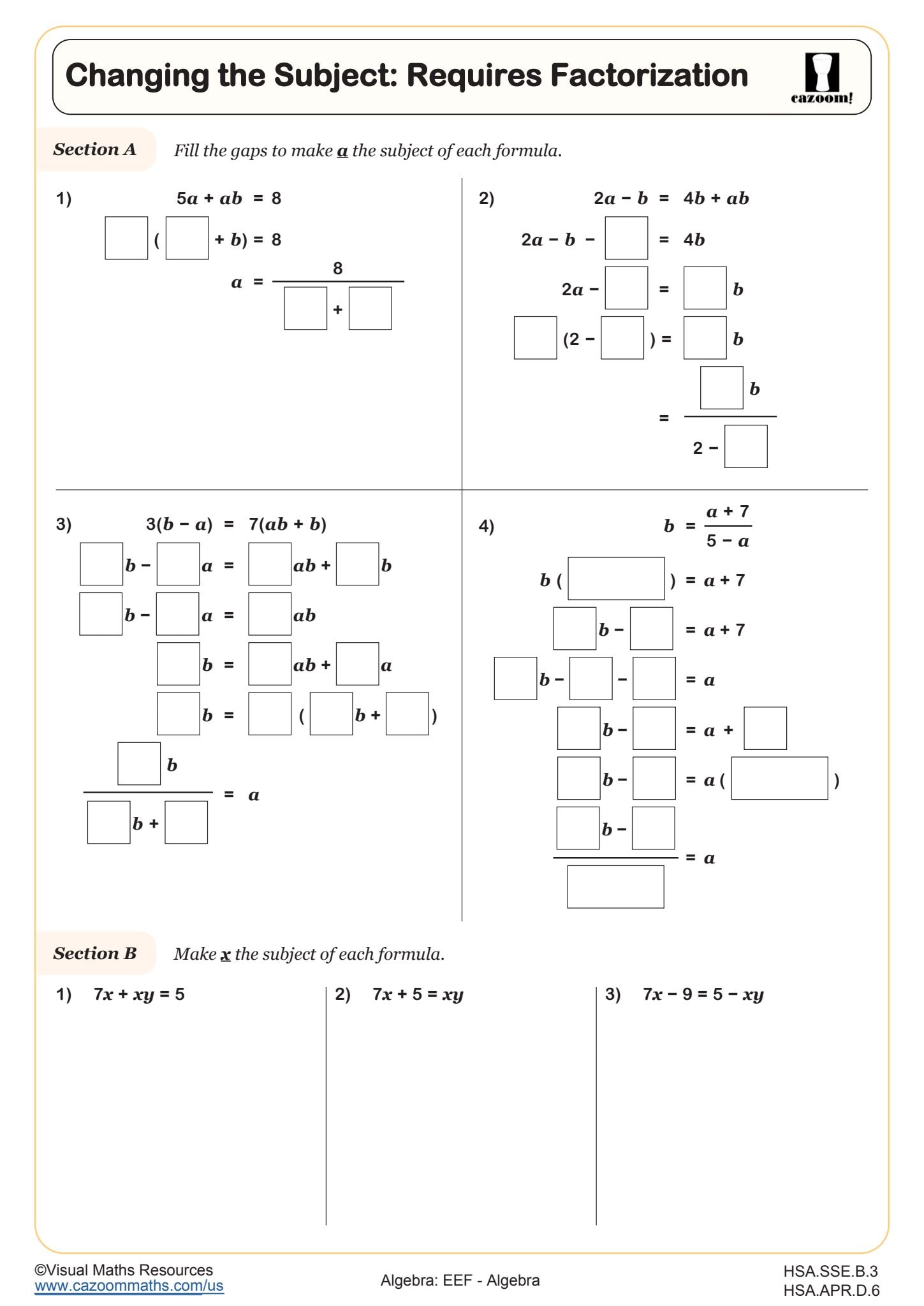
Changing the Subject: Requires Factorization
Rationalizing the Denominator - First Steps

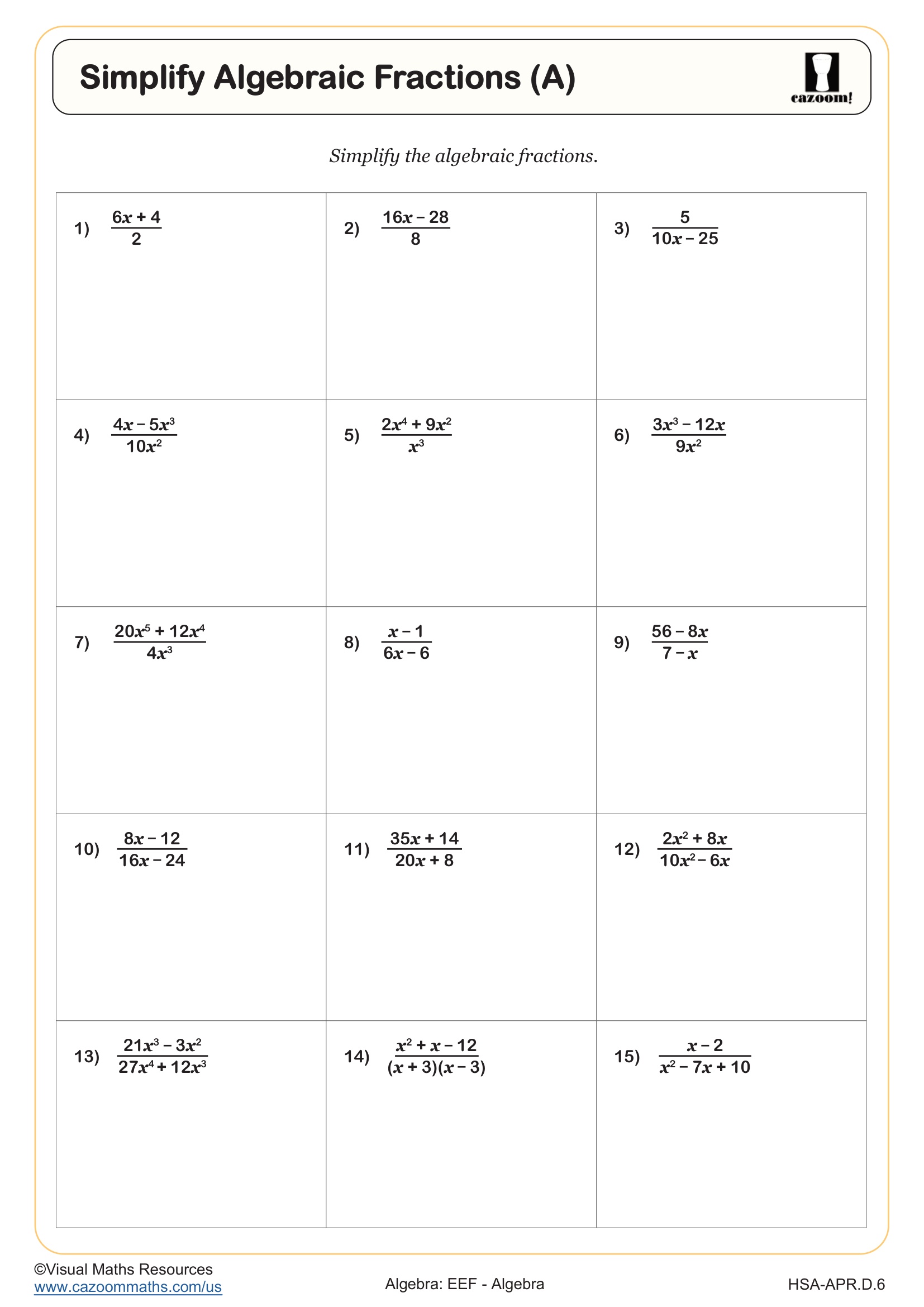
Simplify Algebraic Fractions (A)
Simplify Algebraic Fractions (B)
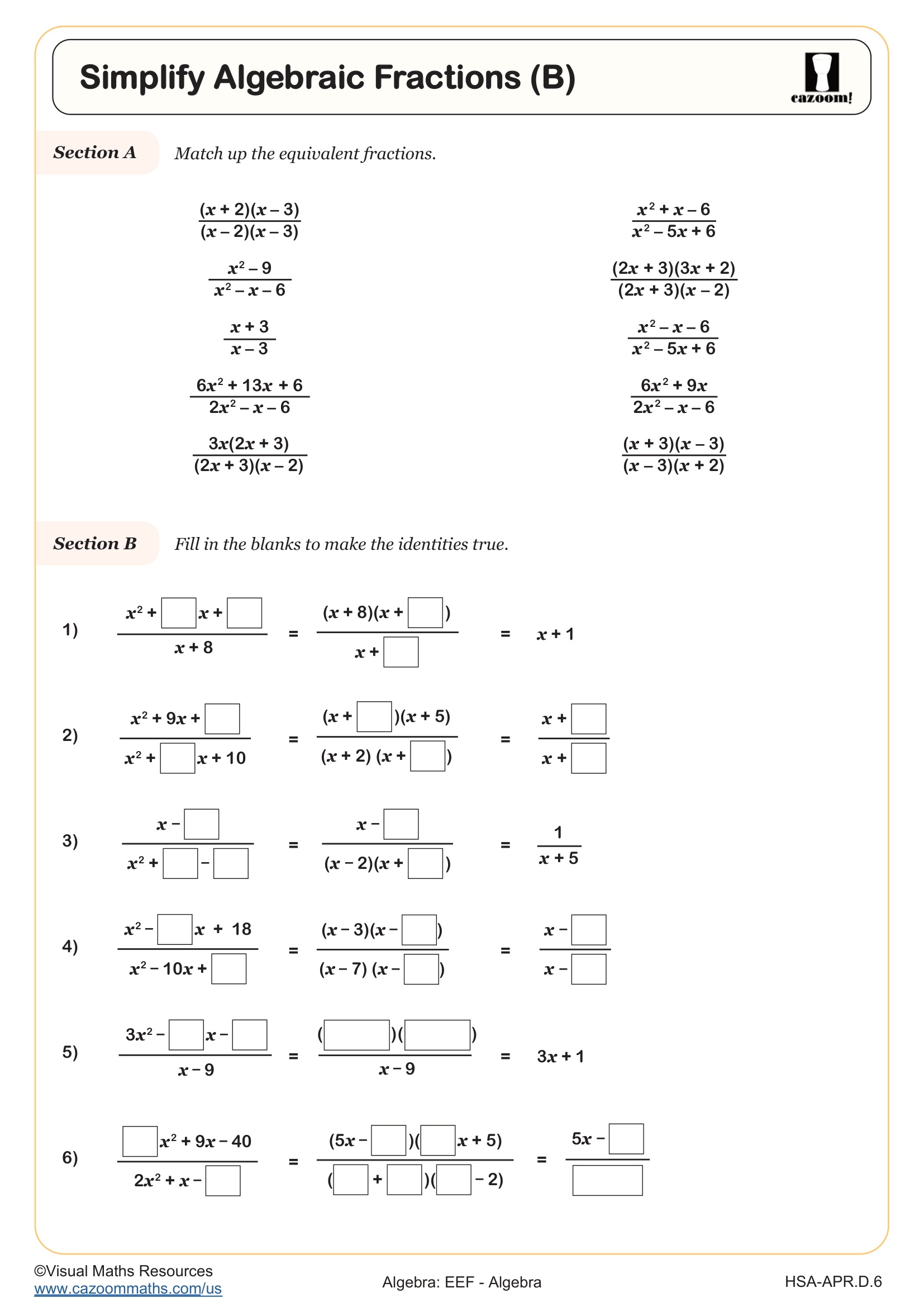
Solving a System of Linear Equations - Three Methods
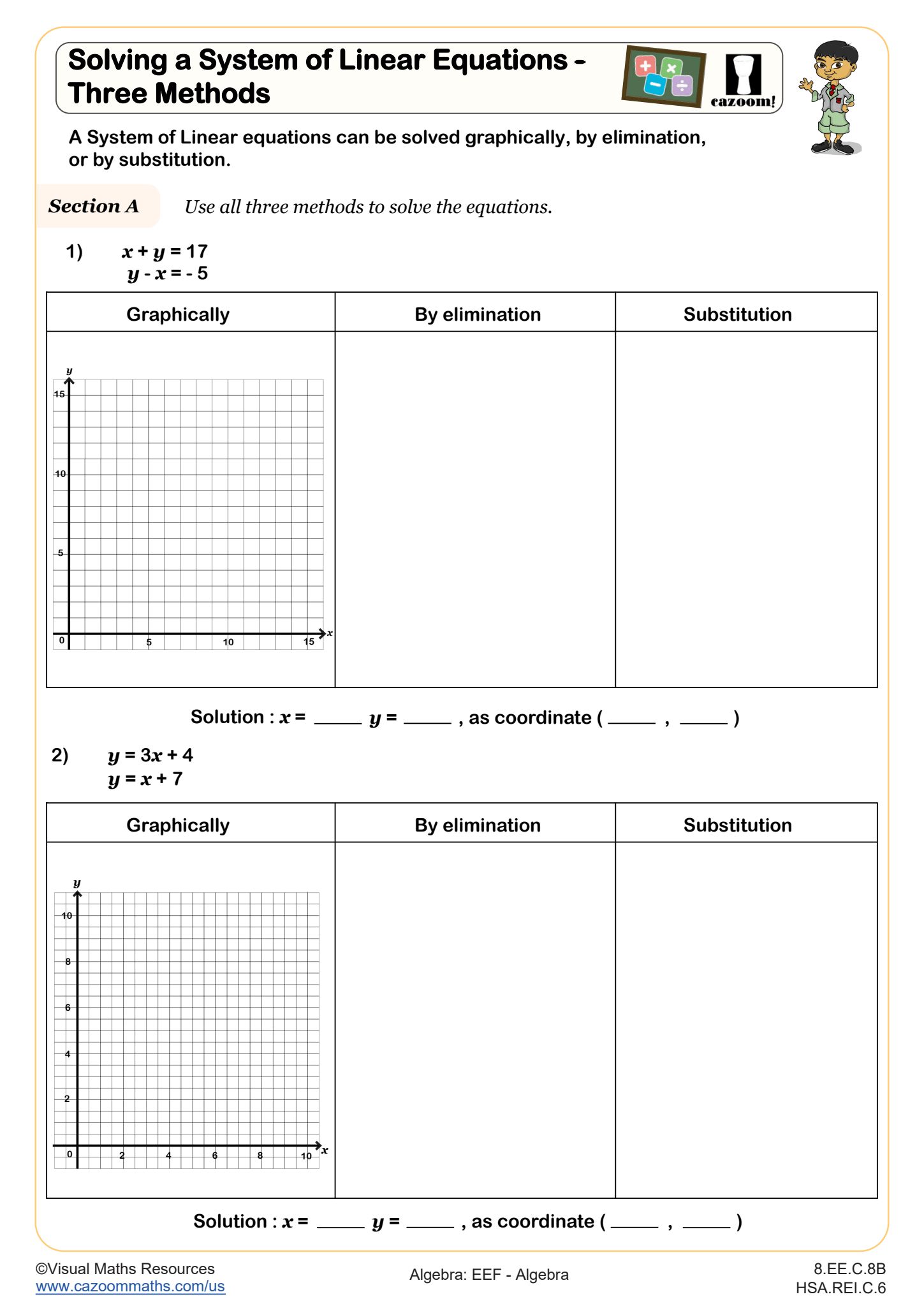
Solving Equations - Unknowns on Both Sides
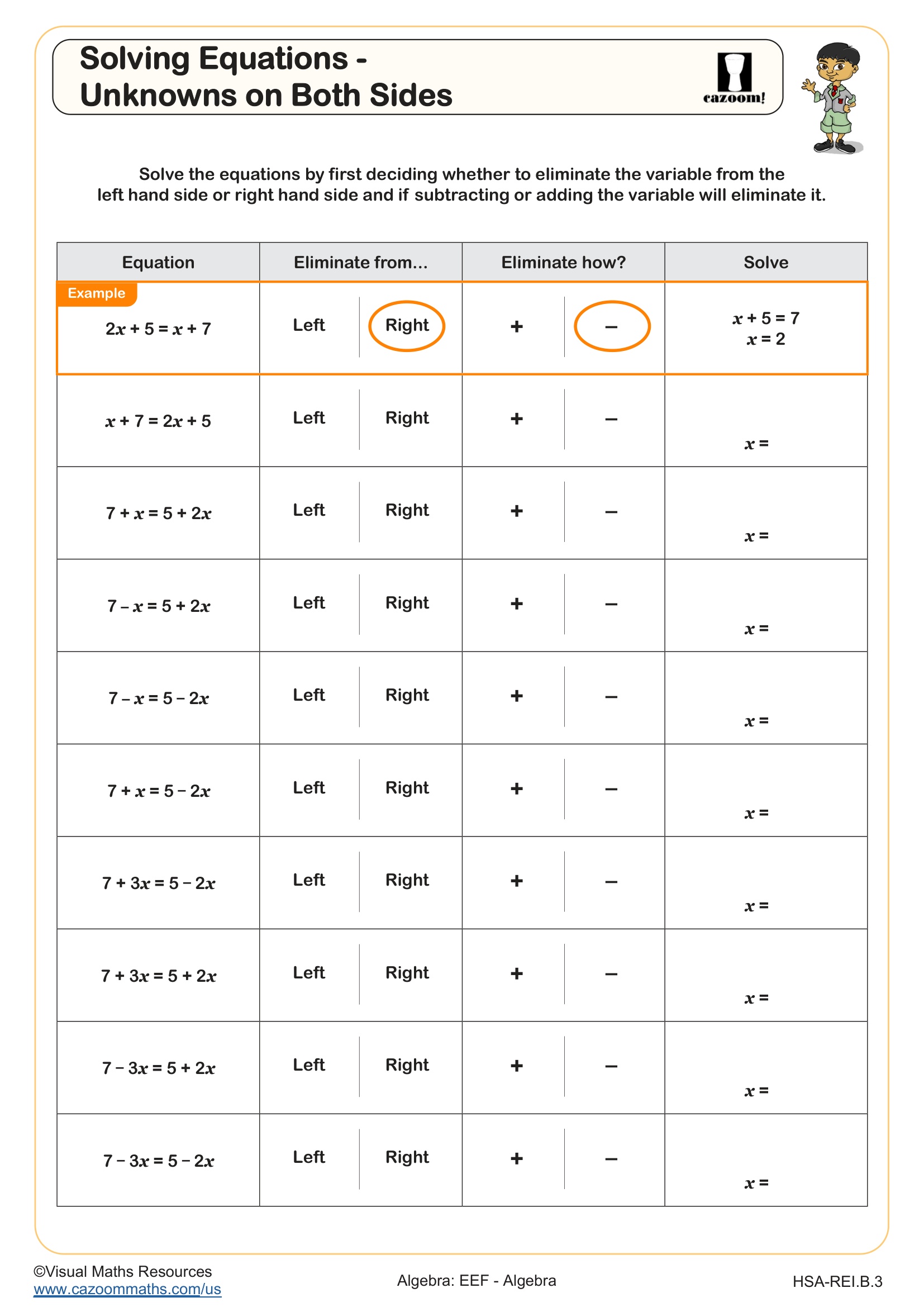
Solving Linear Equations - 15 Minute Challenge (A)
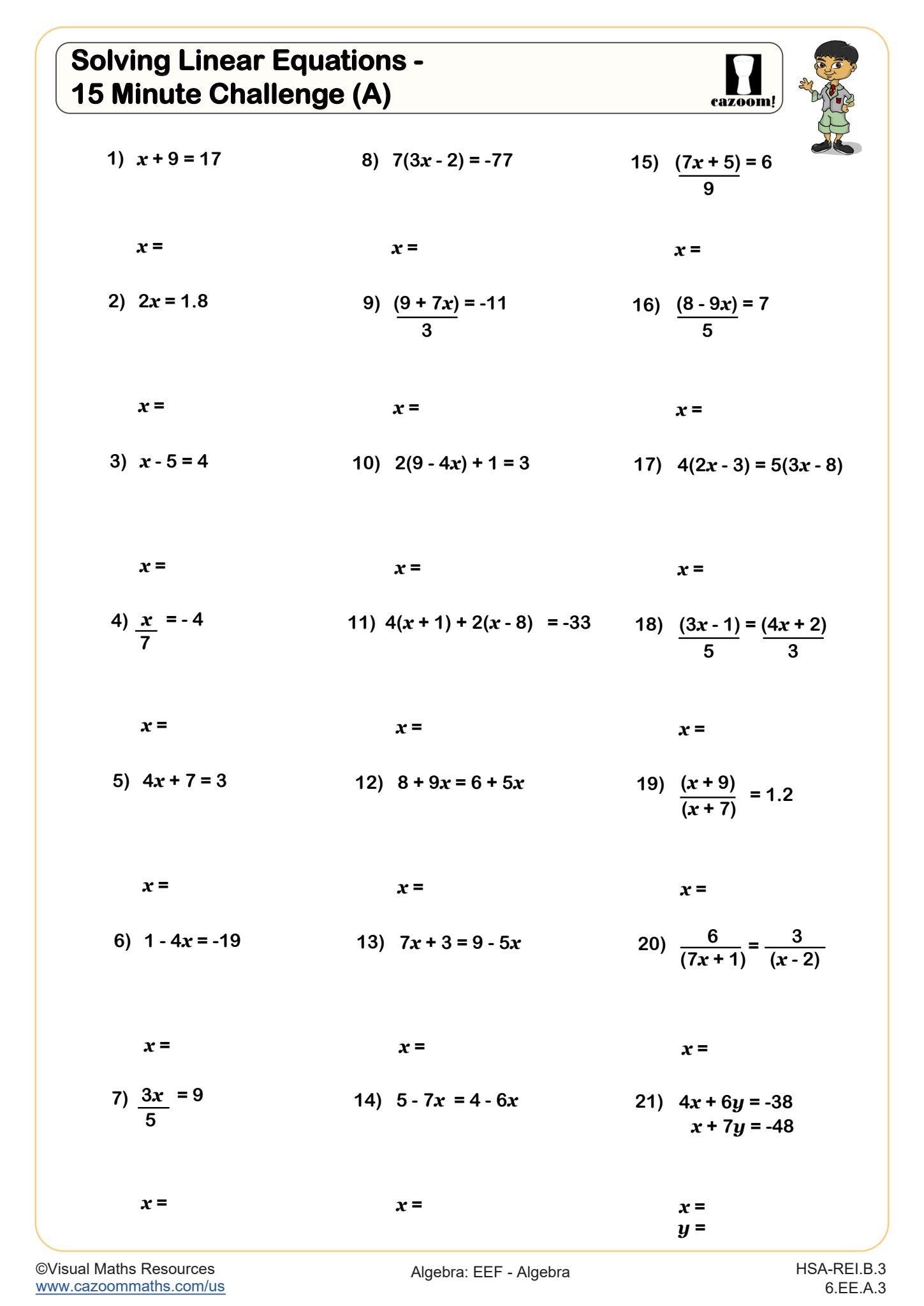
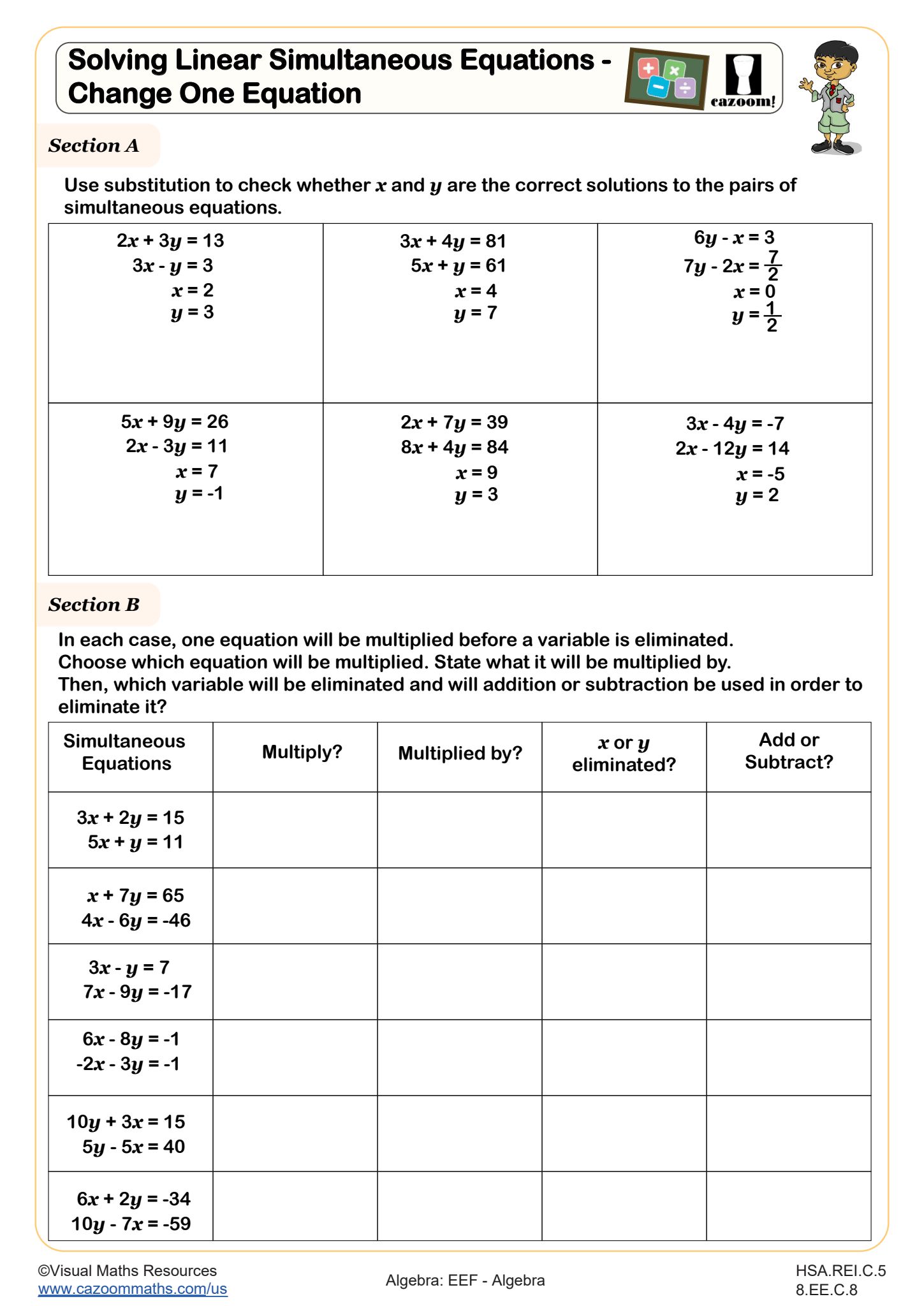
Solving Linear Simultaneous Equations - Change One Equation
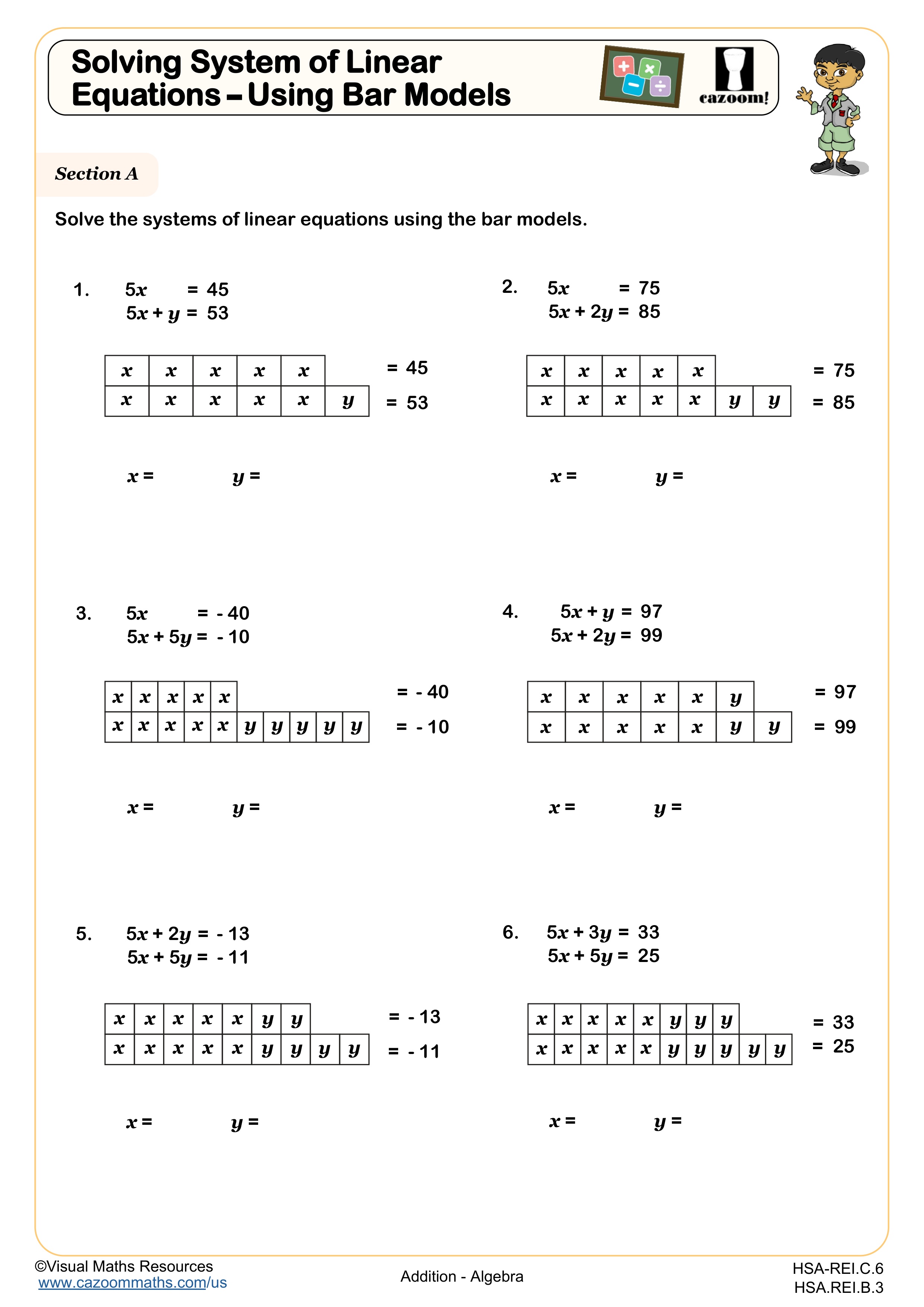
Solving Systems of Linear Equations - Using Bar Models
All worksheets are created by the team of experienced teachers at Cazoom Math.
What algebra skills do these worksheets cover for Algebra I?
This collection addresses core Algebra I standards including solving linear equations in one variable, simplifying algebraic expressions and fractions, and solving systems of linear equations using multiple methods. The worksheets align with Common Core standards for expressions and equations (CCSS.MATH.CONTENT.HSA-REI), giving students structured practice with the algebraic manipulation skills they'll use throughout high school math.
Teachers often observe that students confidently tackle complex equations once they recognize that the same inverse operations apply regardless of equation complexity. The bar model approach to systems of equations helps visual learners see the relationship between two equations before diving into algebraic methods like substitution or elimination, creating a conceptual bridge that strengthens procedural understanding.
How do these algebra topics appear on the SAT and ACT?
Standardized tests like the SAT and ACT heavily emphasize linear equations and systems, with roughly 30% of SAT Math questions involving algebraic problem-solving. Students need to demonstrate fluency in solving equations quickly, choosing efficient solution strategies, and translating word problems into algebraic representations. The ACT particularly tests whether students can recognize when a system has one solution, no solution, or infinitely many solutions.
Students lose points when they solve equations correctly but fail to answer what the question actually asks. For example, if a problem asks for the value of 3x + 2 after finding x = 4, students who write x = 4 as their final answer receive no credit. Time pressure also causes students to skip verification steps, leading to careless errors that could be caught by substituting solutions back into original equations.
What are algebraic fractions and why do students find them challenging?
Algebraic fractions contain variables in the numerator, denominator, or both, requiring students to apply fraction rules alongside algebraic principles. Simplifying these expressions means factoring polynomials and canceling common factors, which builds directly on skills from factoring and fraction arithmetic. Many students make the connection between simplifying numeric fractions and algebraic fractions once they see that the process mirrors reducing 12/18 to 2/3 by canceling the common factor of 6.
This skill appears constantly in STEM fields, particularly when working with formulas in physics and chemistry. Engineers simplify rational expressions when calculating electrical resistance in parallel circuits or optimizing cost functions in manufacturing. College-bound students encounter algebraic fractions extensively in precalculus and calculus when working with rational functions, making early mastery a significant advantage for advanced coursework.
How can teachers use these Algebra I worksheets effectively in class?
The worksheets provide varied practice formats that serve different instructional purposes. The 15-minute challenge format works well as warm-ups or exit tickets to assess fluency, while the multiplication pyramids offer puzzle-like engagement that reinforces order of operations and algebraic thinking. The bar model approach to systems gives teachers a visual scaffold for students who struggle with abstract algebraic methods, creating an entry point before introducing substitution or elimination.
Teachers frequently use these worksheets for differentiated instruction, assigning the bar model method to students who need visual support while challenging stronger students with the timed equation-solving activities. The complete answer keys make the worksheets ideal for independent practice during intervention blocks or for homework assignments where students can self-check their work. Paired work sessions allow students to compare solution strategies, particularly valuable when multiple methods exist for solving systems of equations.