Algebra II Algebra Worksheets
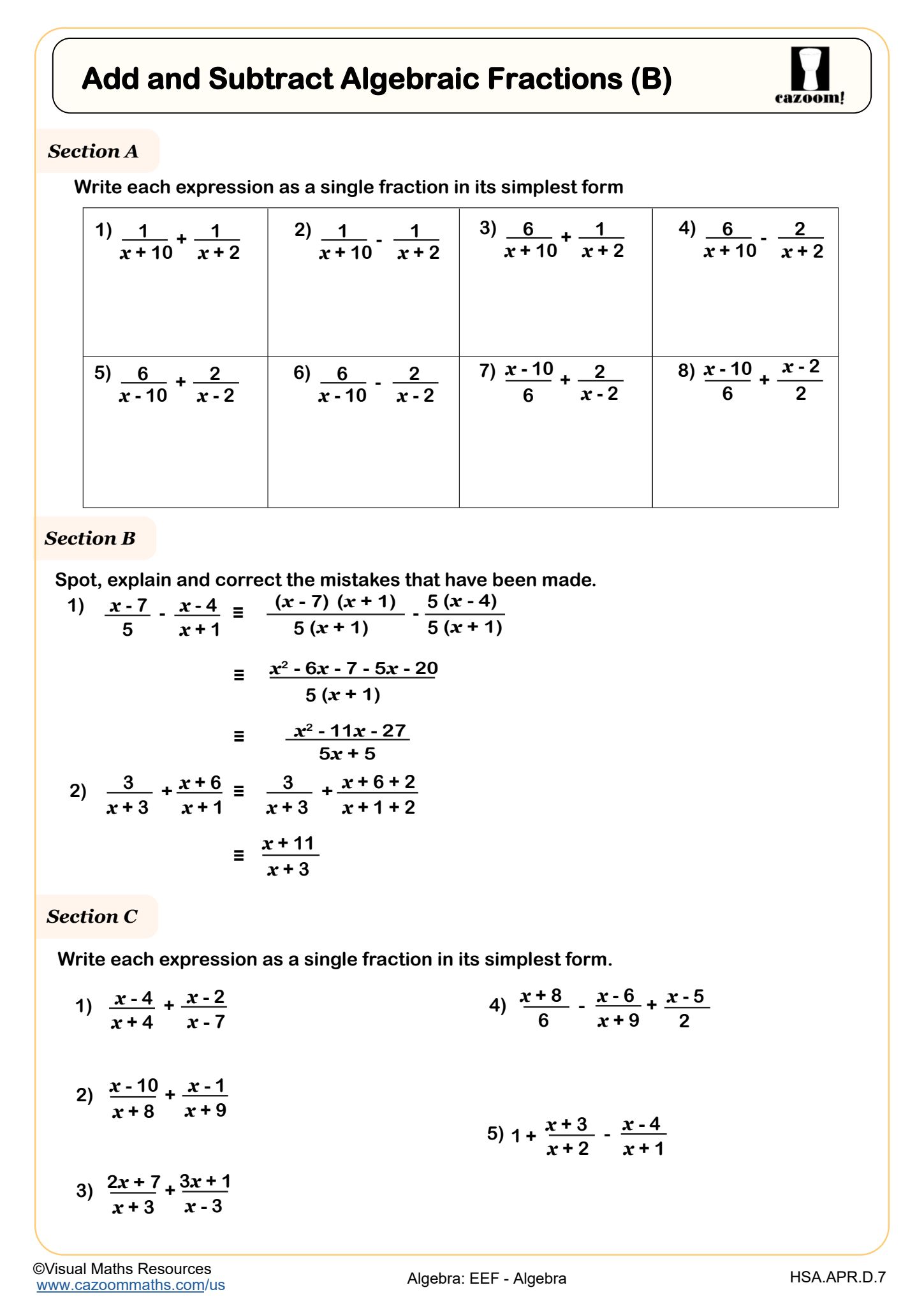
Add and Subtract Algebraic Fractions (B)
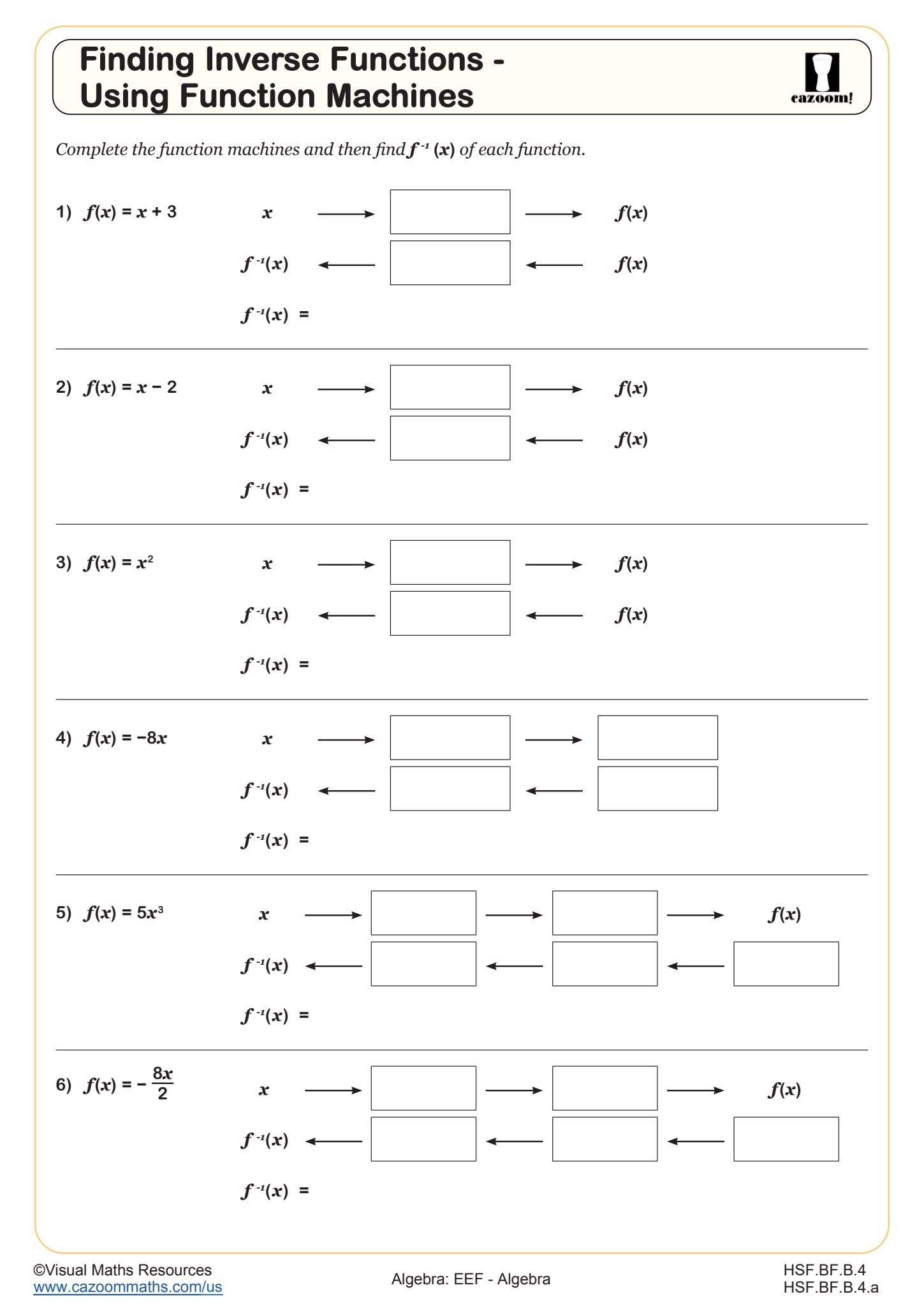
Finding Inverse Functions - Using Function Machines
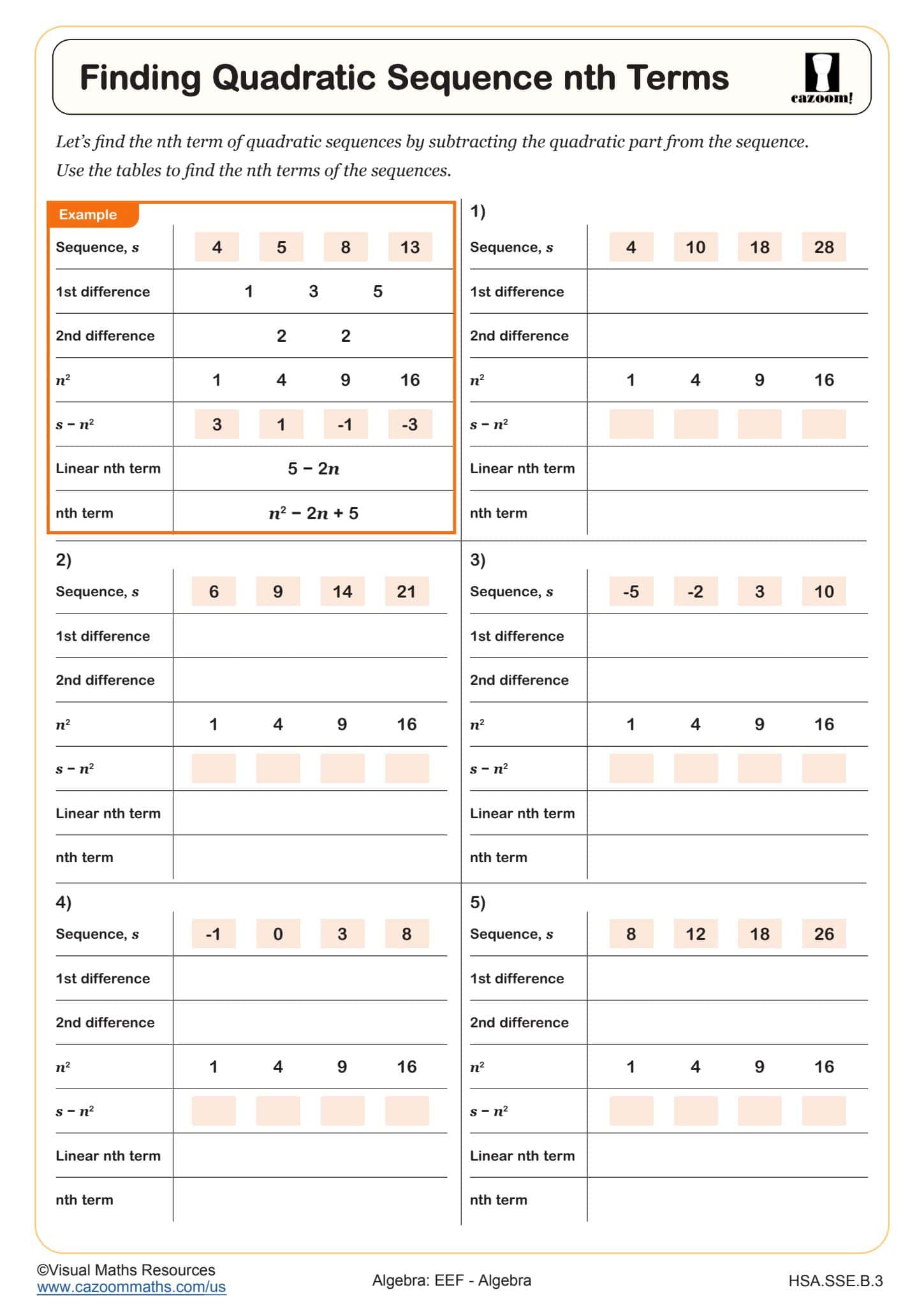
Finding Quadratic Sequence nth Terms
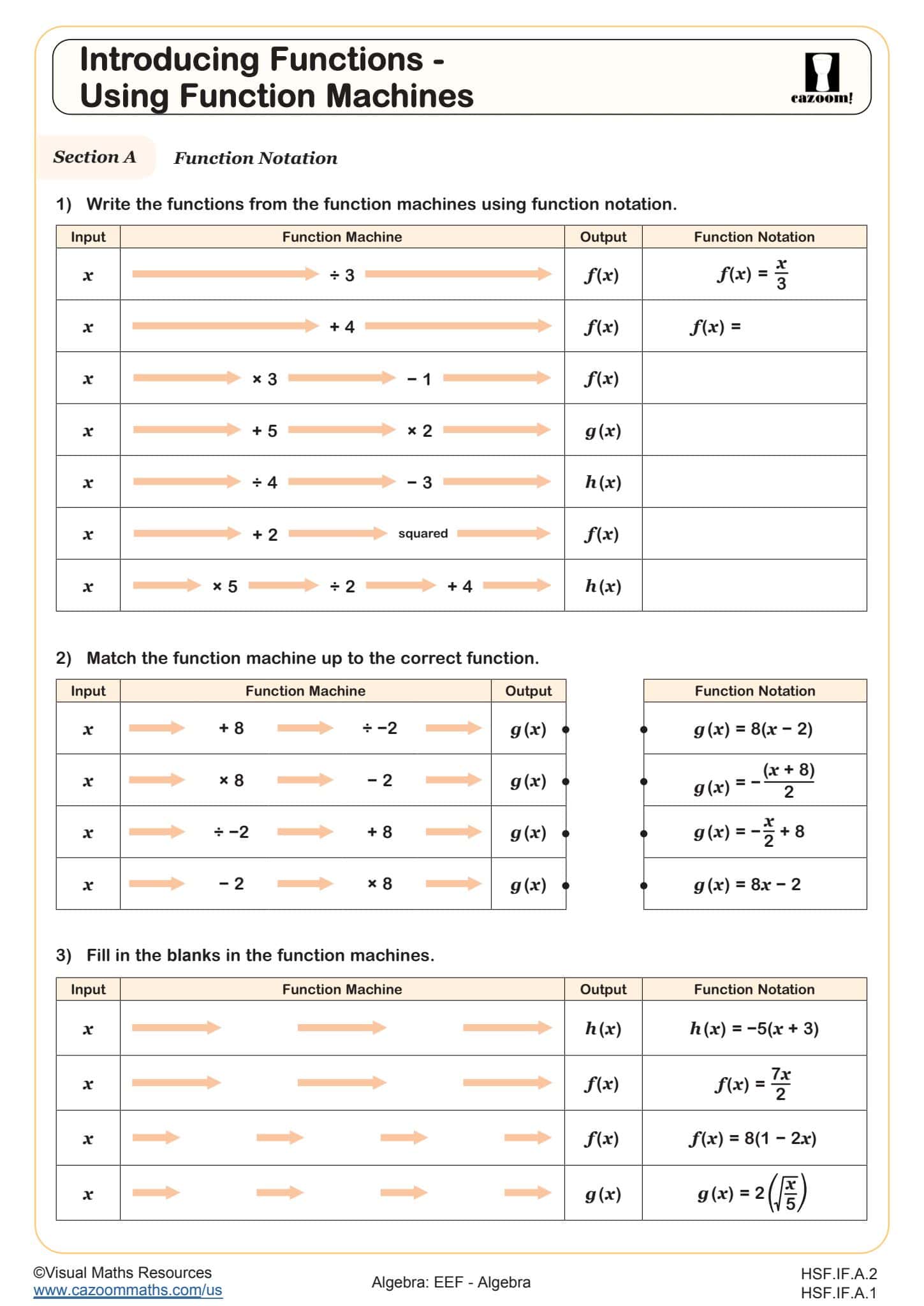
Introducing Functions - Using Function Machines
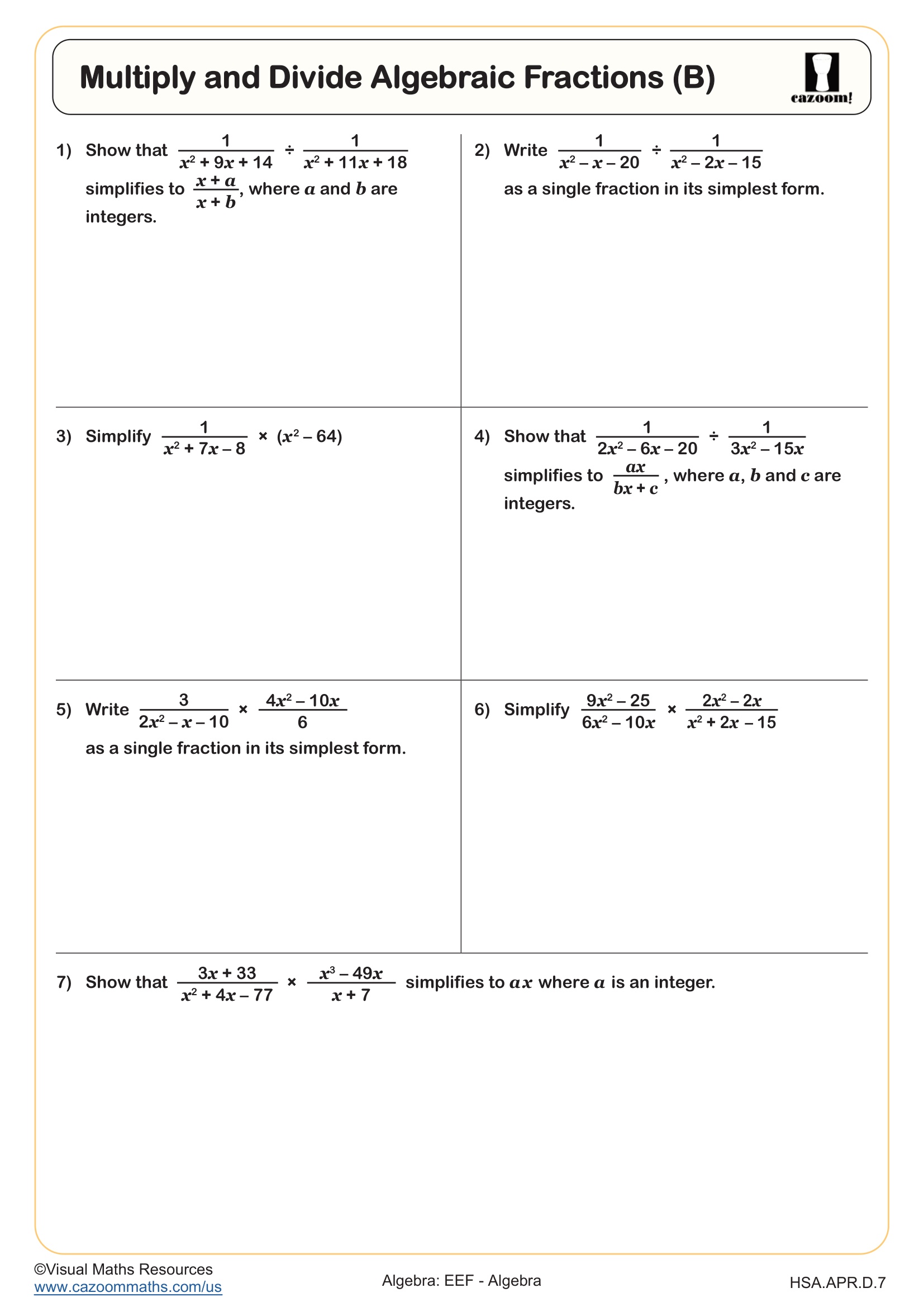
Multiply and Divide Algebraic Fractions (B)
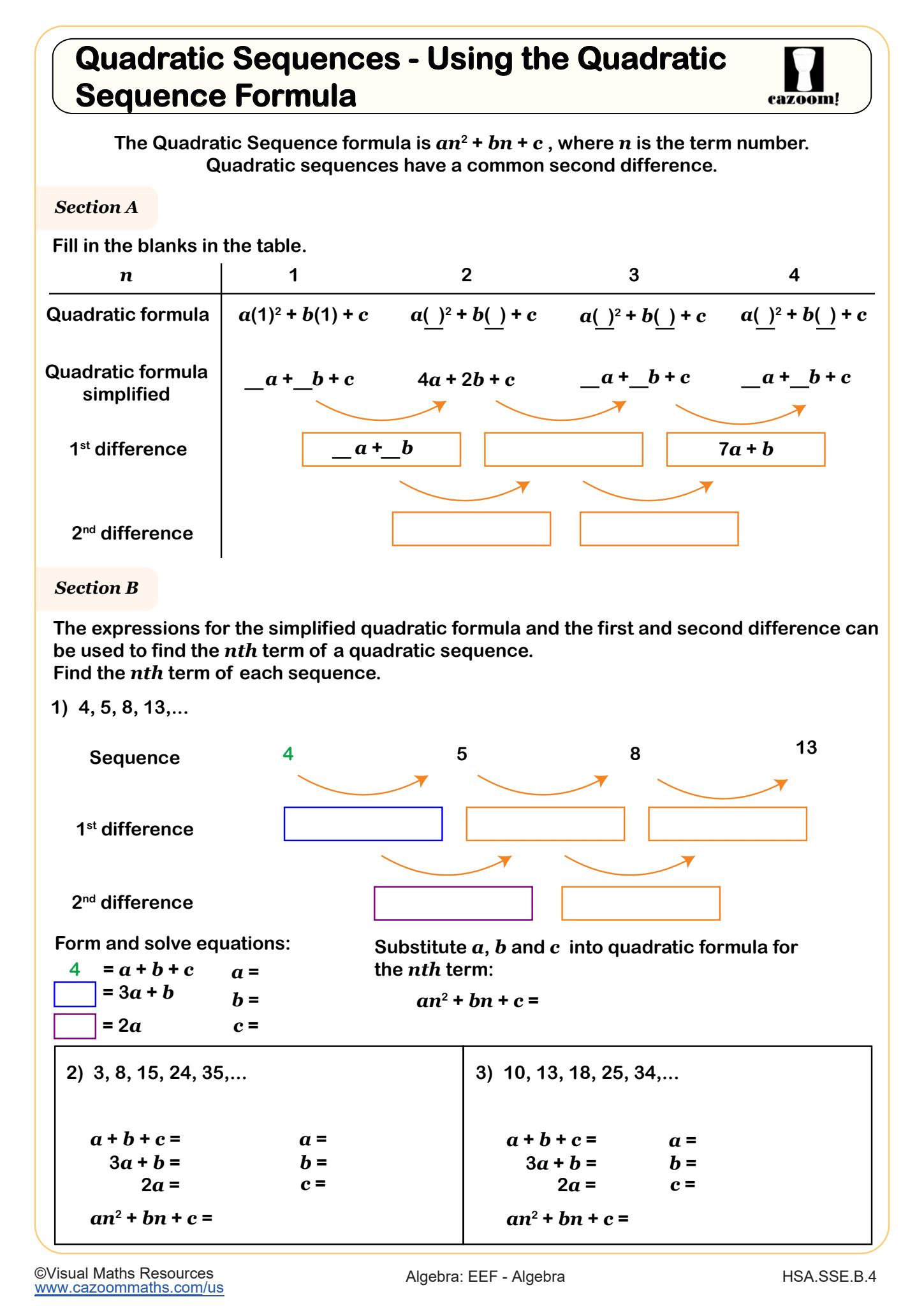
Quadratic Sequences - Using the Quadratic Sequence Formula
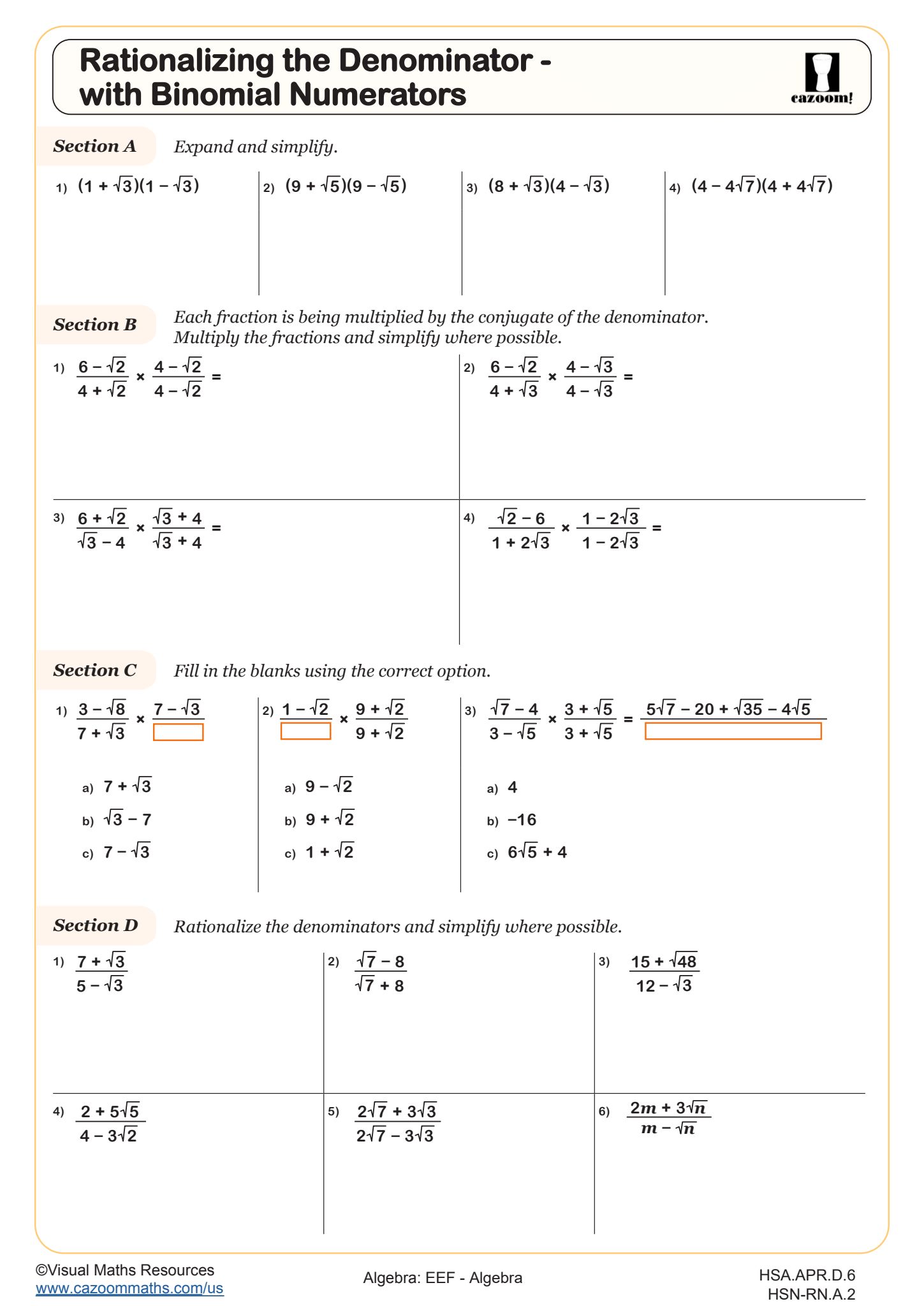
Rationalizing the Denominator - with Binomial Numerators
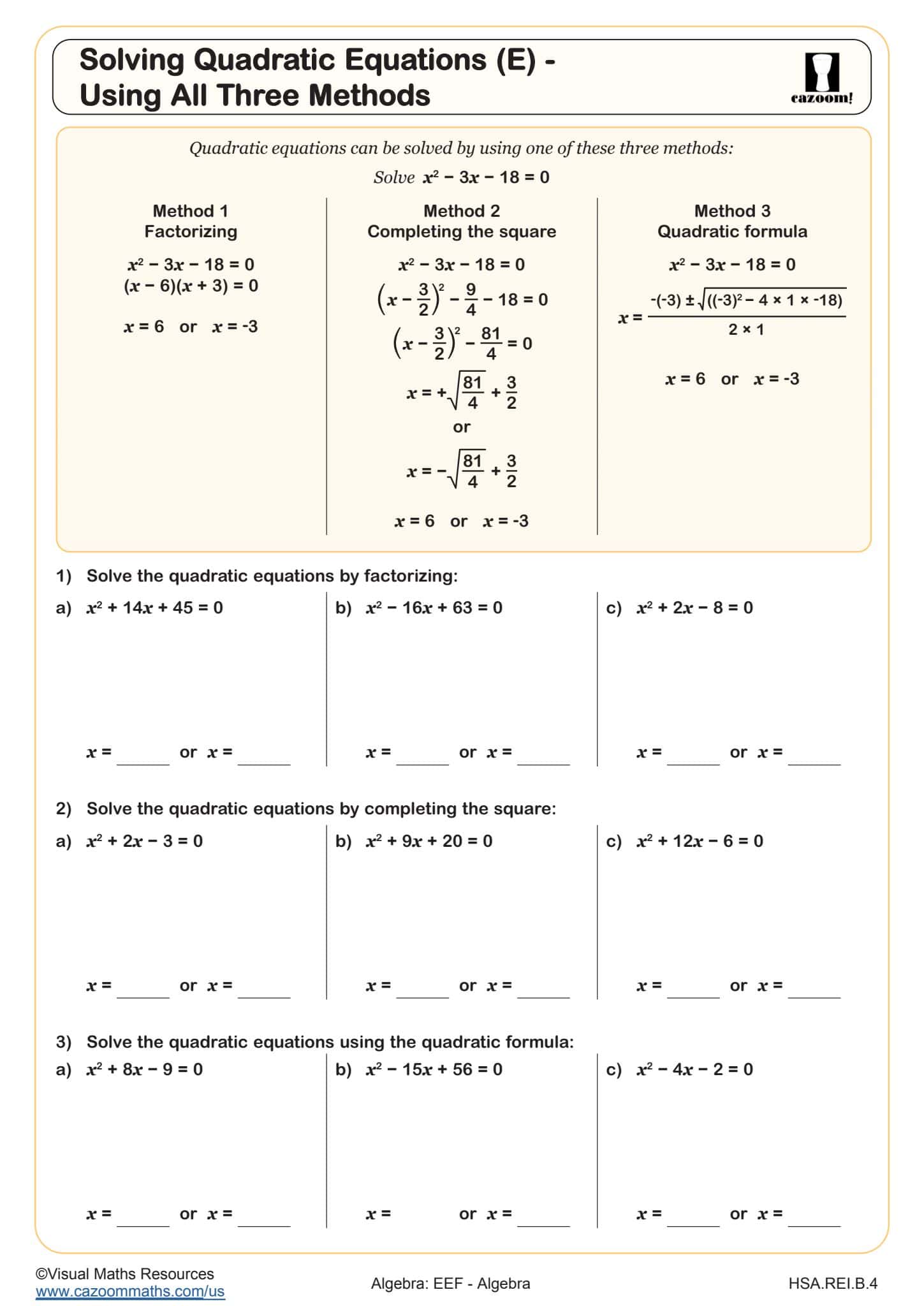
Solving Quadratic Equations (E) - Using all Three Methods
All worksheets are created by the team of experienced teachers at Cazoom Math.
What Algebra Skills Do These Worksheets Cover?
These worksheets focus on advanced algebraic manipulation that extends beyond Algebra I foundations. Students work with quadratic sequences, determining nth term formulas by recognizing second-order patterns. The algebraic fraction worksheets require students to factor expressions, identify common denominators, and simplify complex rational expressions. Teachers often observe that students who rush through factoring make preventable errors when adding or subtracting algebraic fractions.
The function notation worksheets use function machines to make abstract concepts concrete. Students learn to evaluate functions, compose functions, and find inverse functions using visual models before transitioning to pure algebraic notation. This approach helps students understand that functions represent input-output relationships, not just equations to manipulate. College-bound students encounter these concepts repeatedly in Pre-Calculus, Calculus, and STEM coursework.
How Do These Topics Appear on the SAT and ACT?
Standardized tests like the SAT and ACT regularly test algebraic fractions and function notation, often embedding them within word problems or multi-step questions. Students lose points when they forget to check for restricted values in rational expressions or when they confuse function composition with multiplication. The SAT Math section expects students to manipulate complex fractions fluently without calculators on certain sections.
Function inverse problems appear frequently in the calculator-permitted sections, where students must demonstrate understanding of the relationship between a function and its inverse. Teachers notice that students who practice finding inverses using function machines develop stronger conceptual understanding than those who only memorize the algebraic procedure. Test designers intentionally create problems where procedural mistakes lead to answer choices, rewarding students who verify their work systematically.
Why Do Students Struggle with Algebraic Fractions?
A common misconception occurs when students try to add algebraic fractions by adding numerators and denominators separately, applying whole number thinking to rational expressions. Students confidently tackle algebraic fractions once they recognize the parallel between numeric fractions and algebraic ones. Teachers frequently notice that reviewing LCD techniques with numerical examples before introducing variables reduces confusion significantly.
Another breakthrough typically happens when students understand that factoring must come before simplifying or combining fractions. Students who skip factoring often produce unnecessarily complicated answers or miss opportunities to cancel common factors. The multiplying and dividing practice helps students recognize when to factor versus when to multiply across, building the discrimination skills necessary for more complex rational equations in Pre-Calculus.
How Should Teachers Use These Worksheets Effectively?
These worksheets work best when teachers assign them after introducing concepts through guided practice, not as the initial learning tool. Students benefit from completing one worksheet at a time with immediate feedback using the answer keys rather than working through multiple sheets without checking. Teachers often use these as homework assignments, warmup activities, or differentiated practice for students who need additional reinforcement.
Many teachers notice that mixing worksheet practice with real-world applications maintains student engagement. For example, after practicing quadratic sequences, students might explore population growth models or profit optimization problems. The answer keys allow for self-paced learning, which helps during test review sessions when different students need practice on different concepts. This targeted practice approach prepares students more effectively than reviewing entire chapters at once.