Elementary School 2D Shapes Worksheets
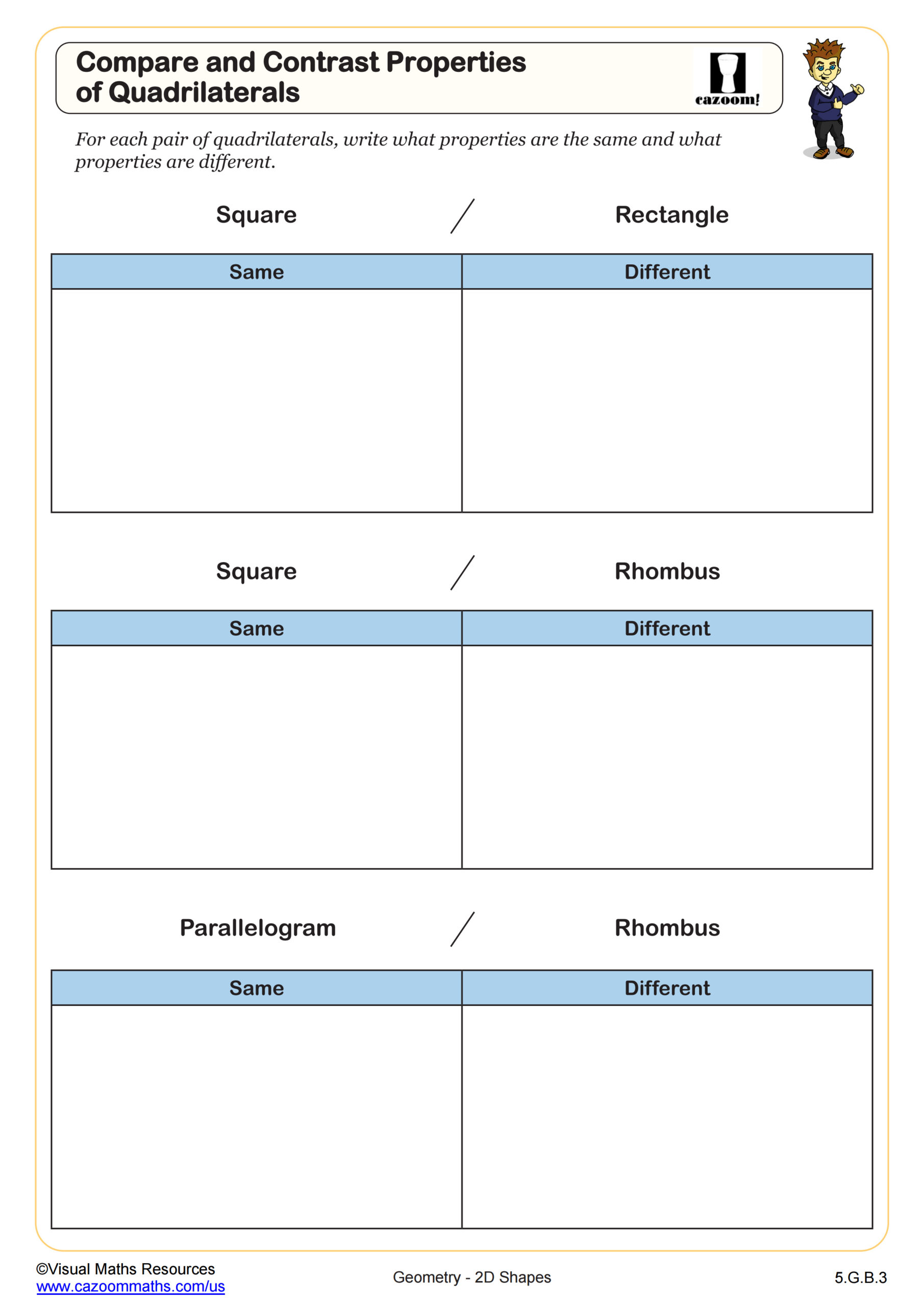
Compare and Contrast Properties of Quadrilaterals
Draw 2D Shapes (A)
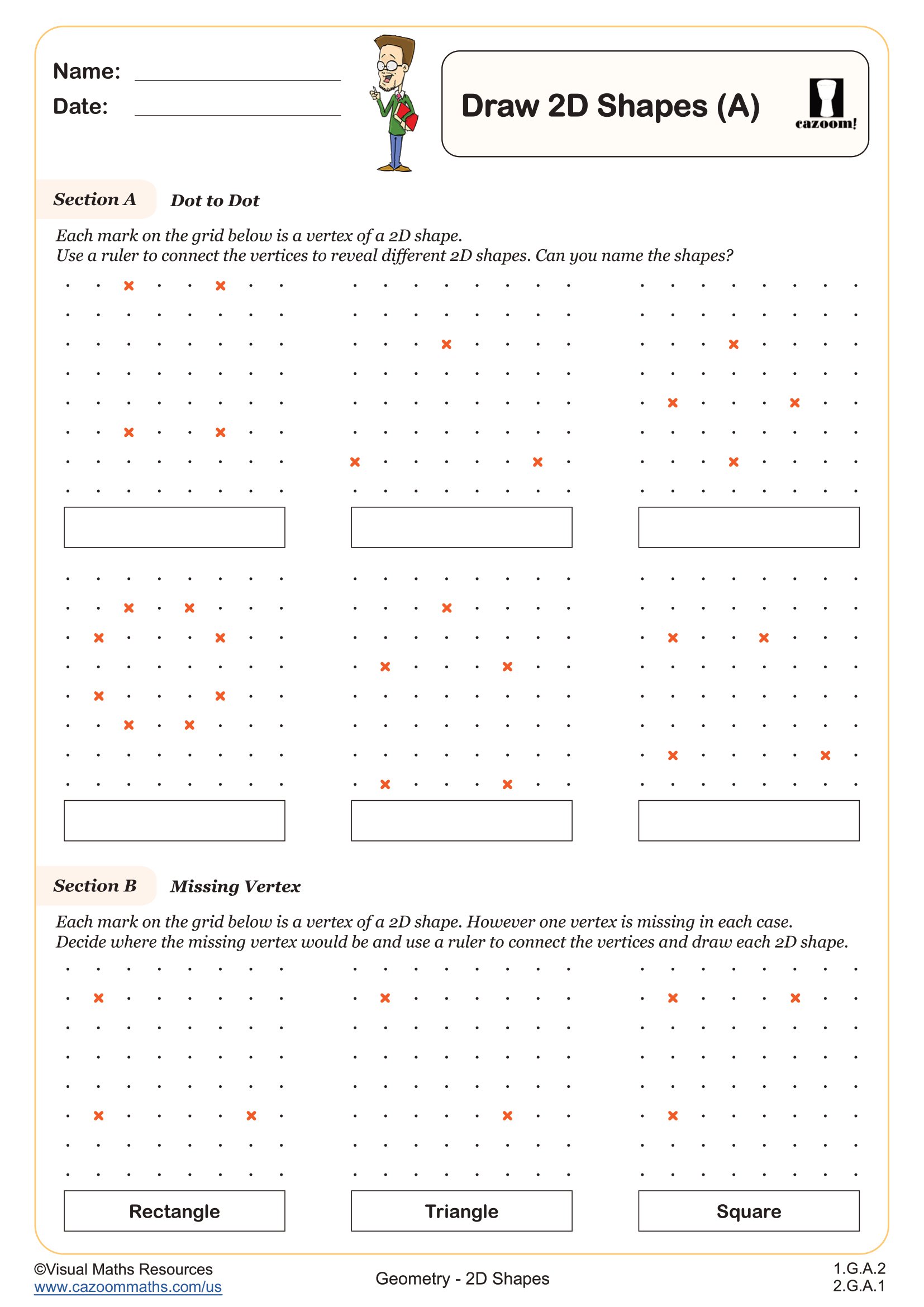
Drawing 2D Shapes
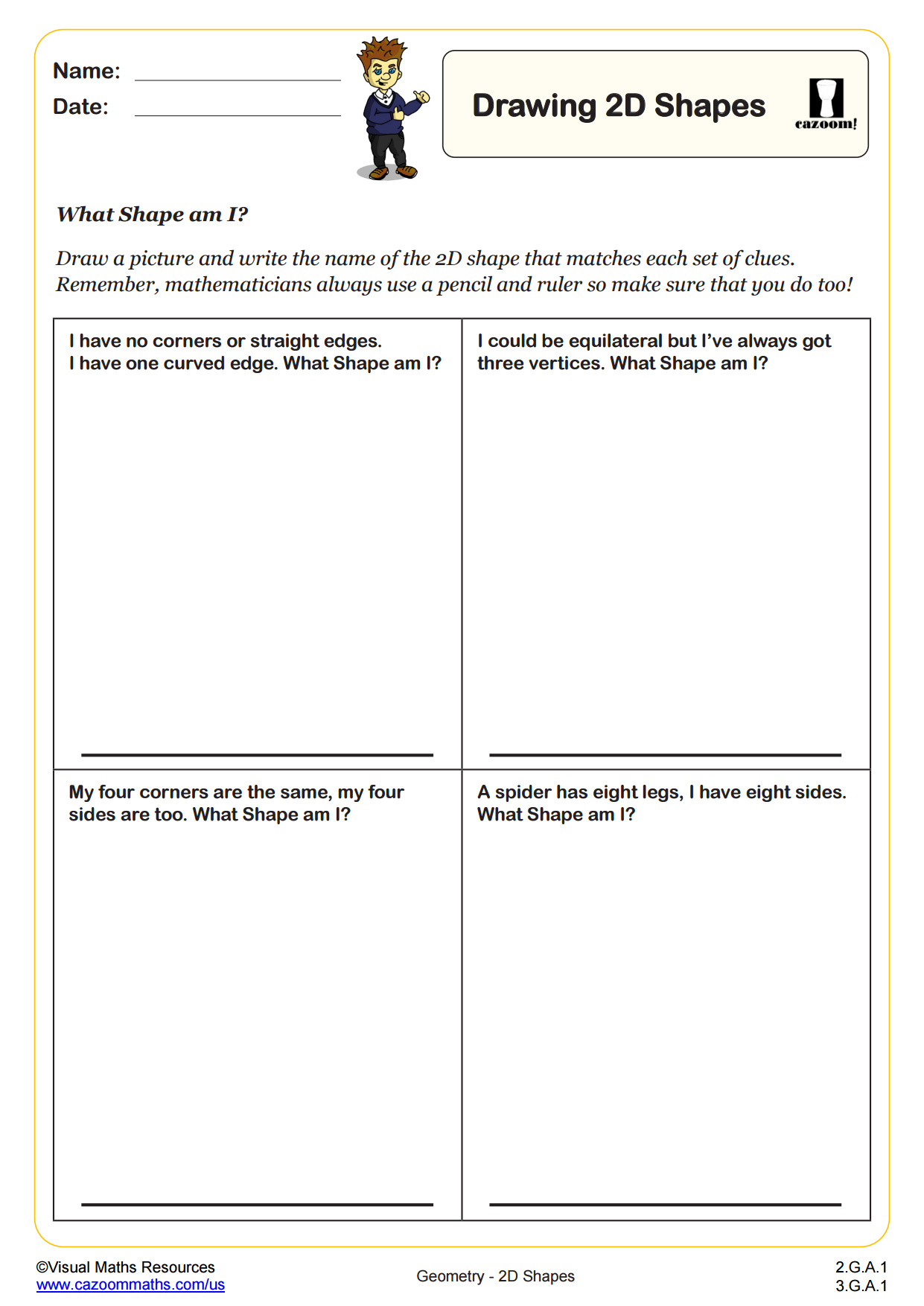
Finding Shapes In Everyday Objects
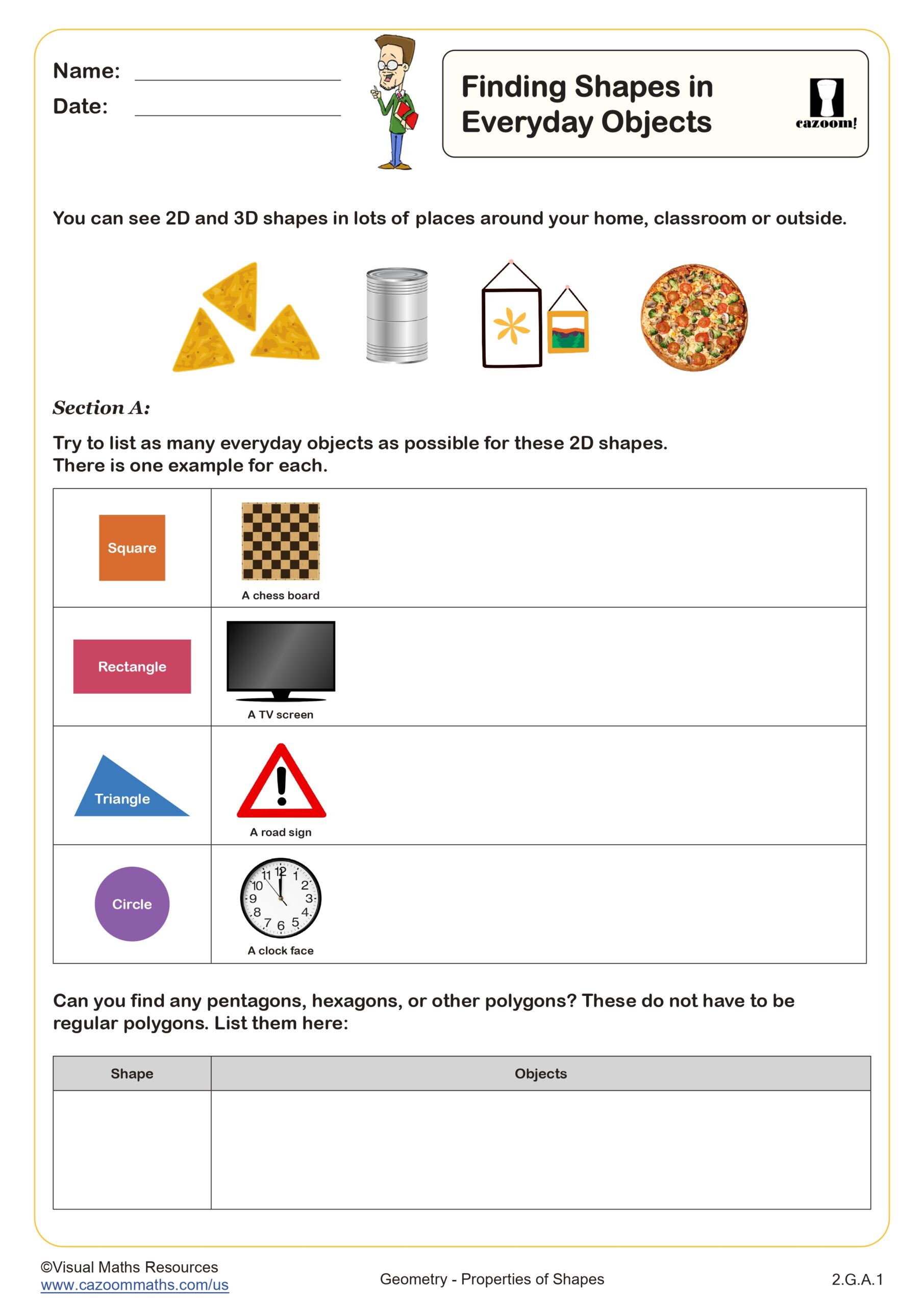
Horizontal Lines of Symmetry (A)
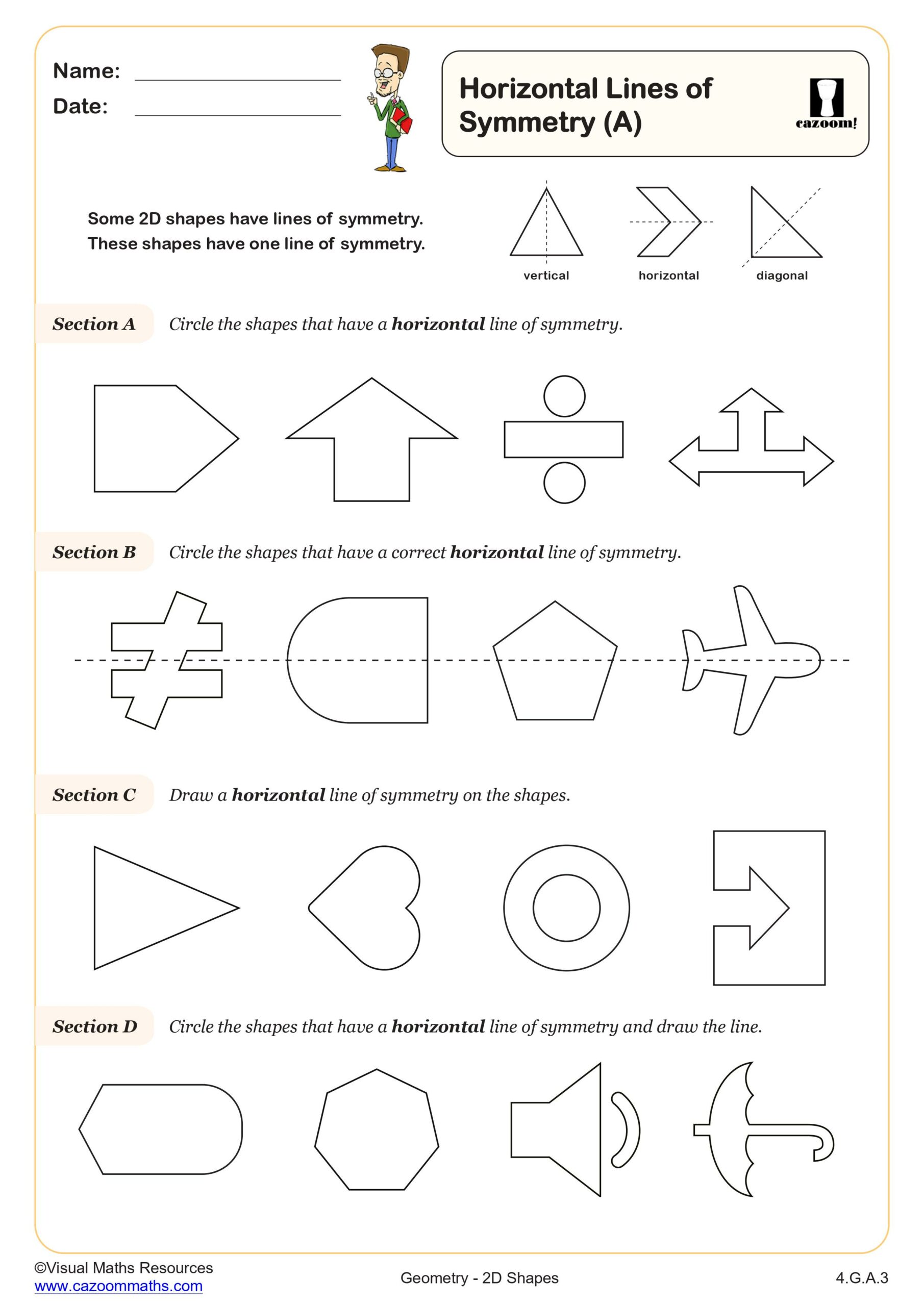
Horizontal Lines of Symmetry (B)
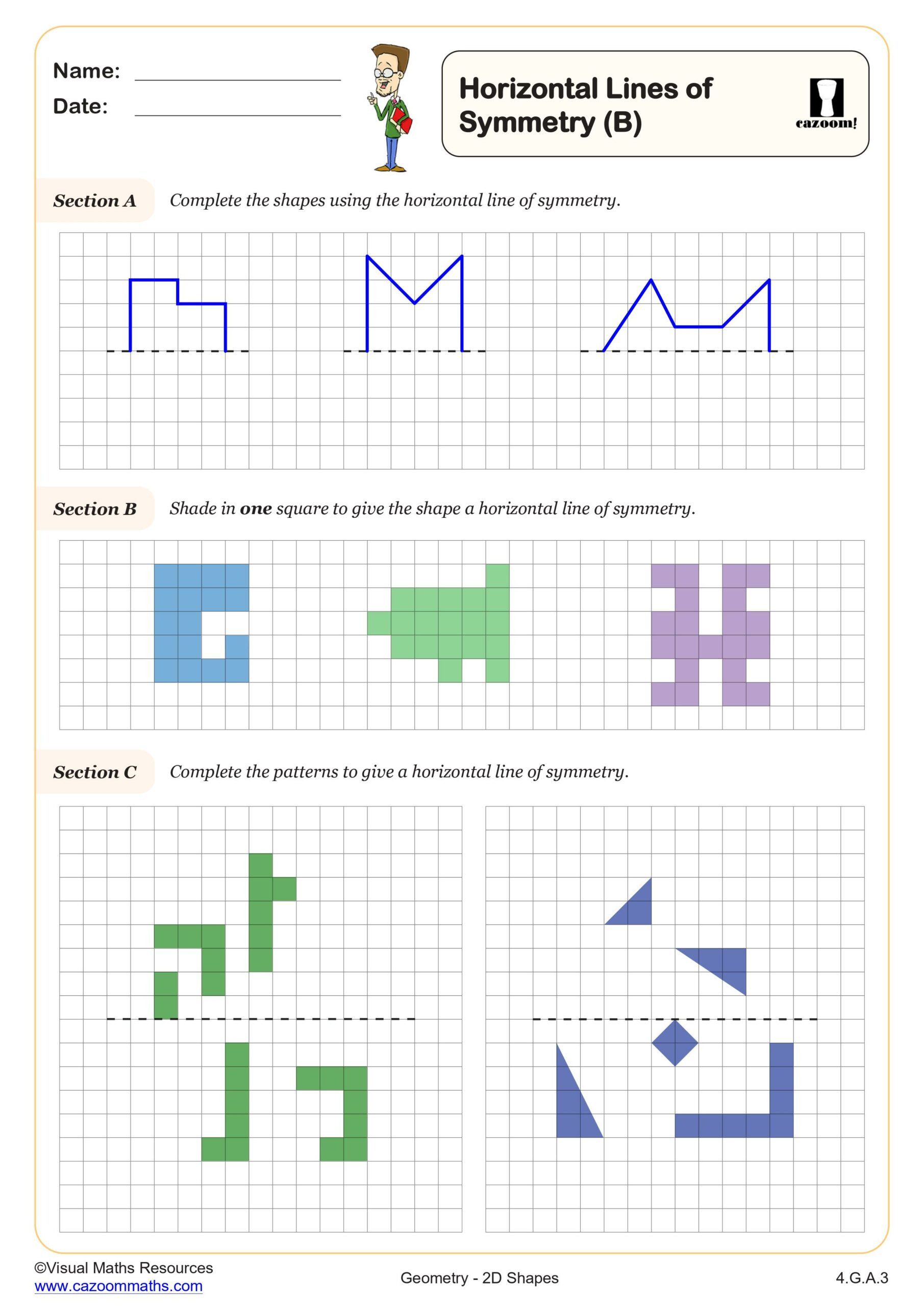
Identifying Regular and Irregular Polygons
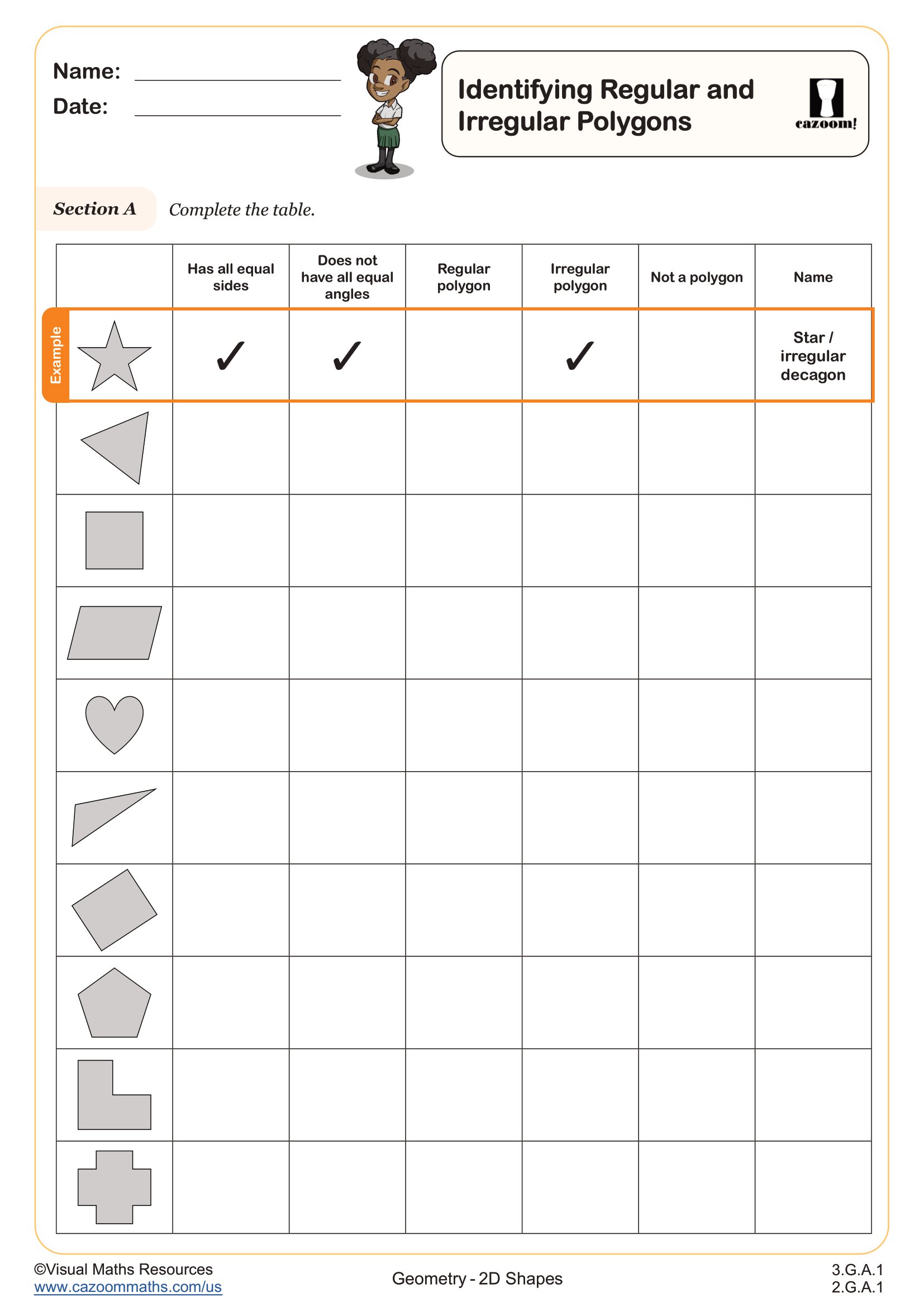
Lines of Symmetry (A)
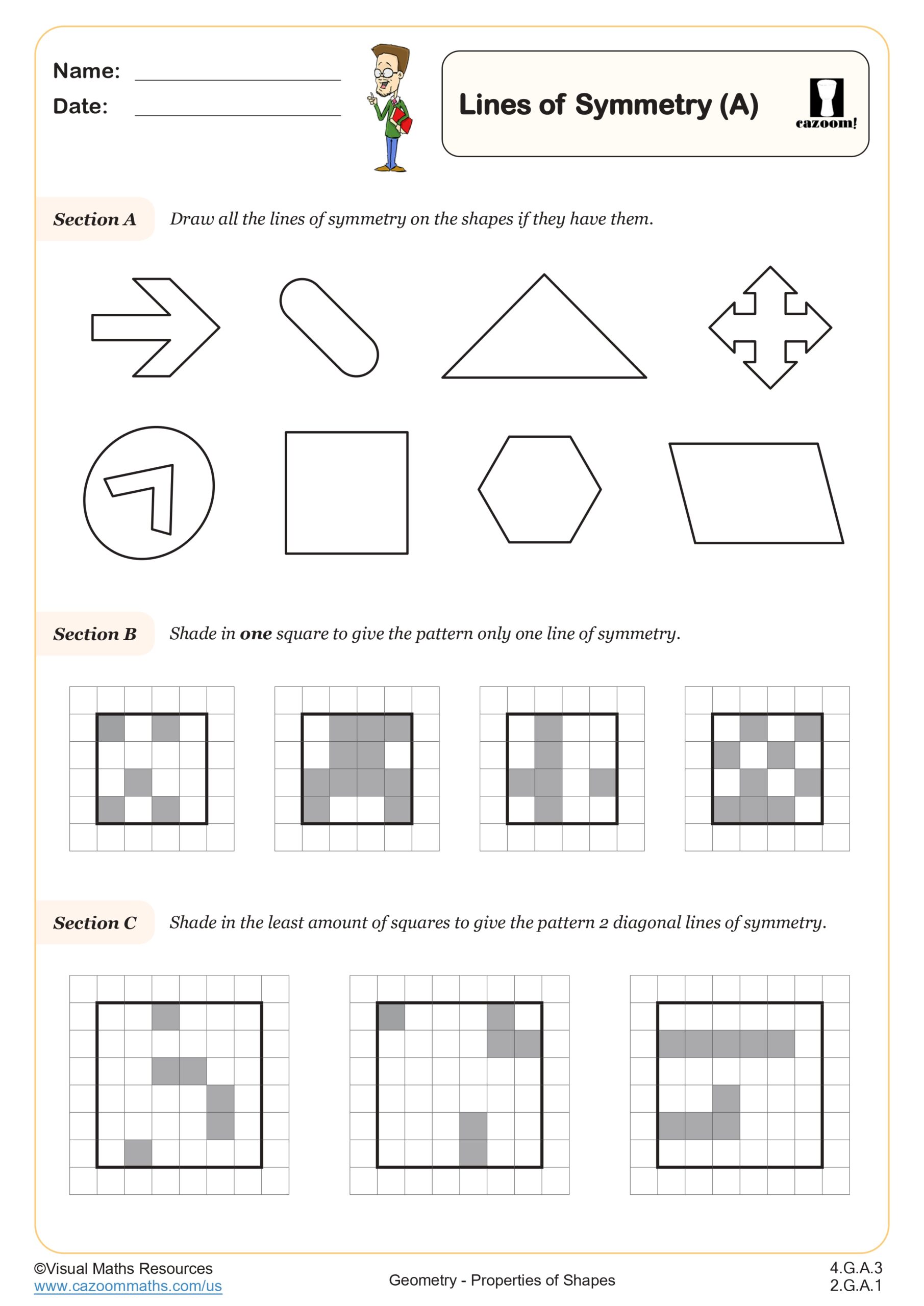
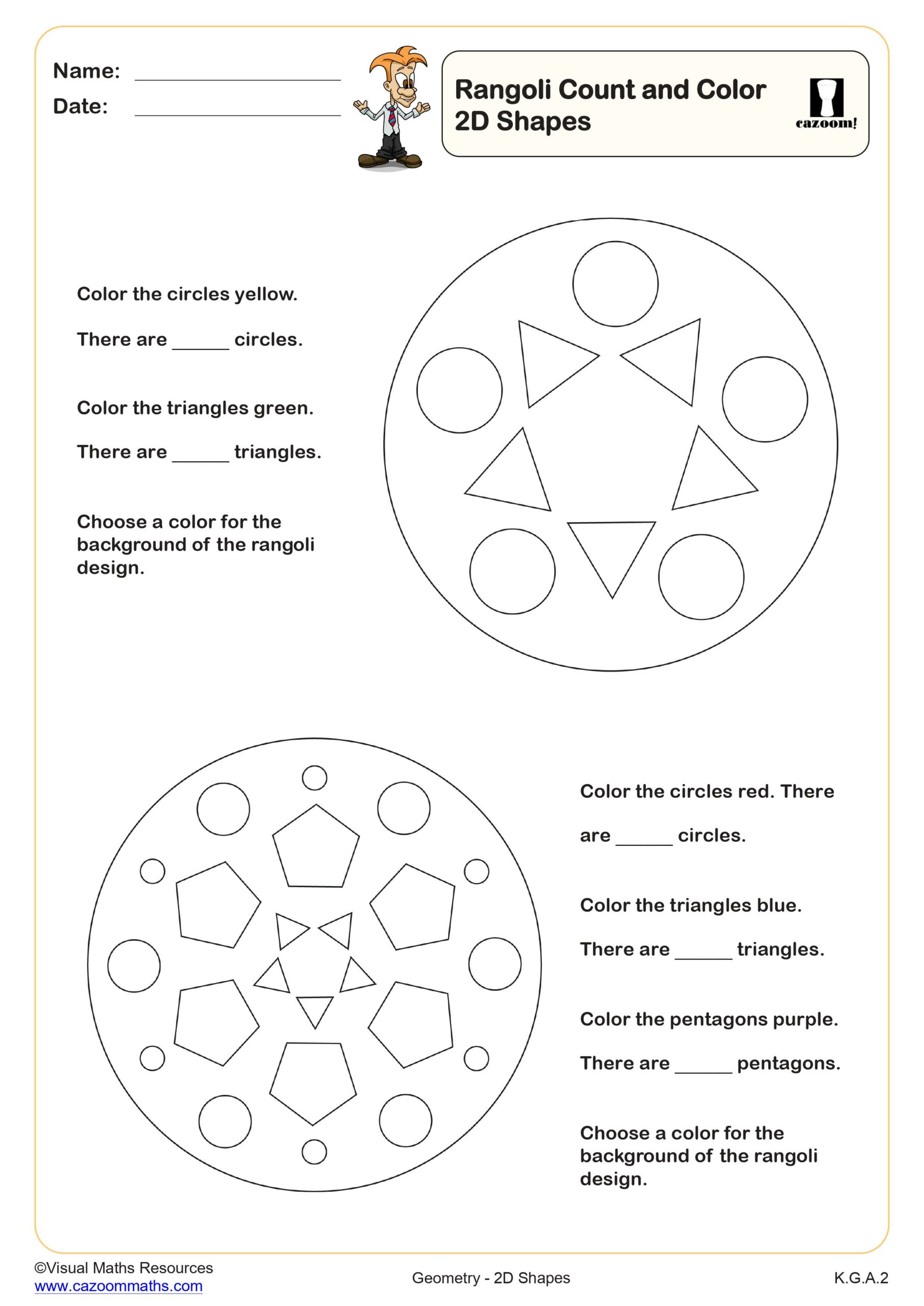
Rangoli Count and Color 2D Shapes
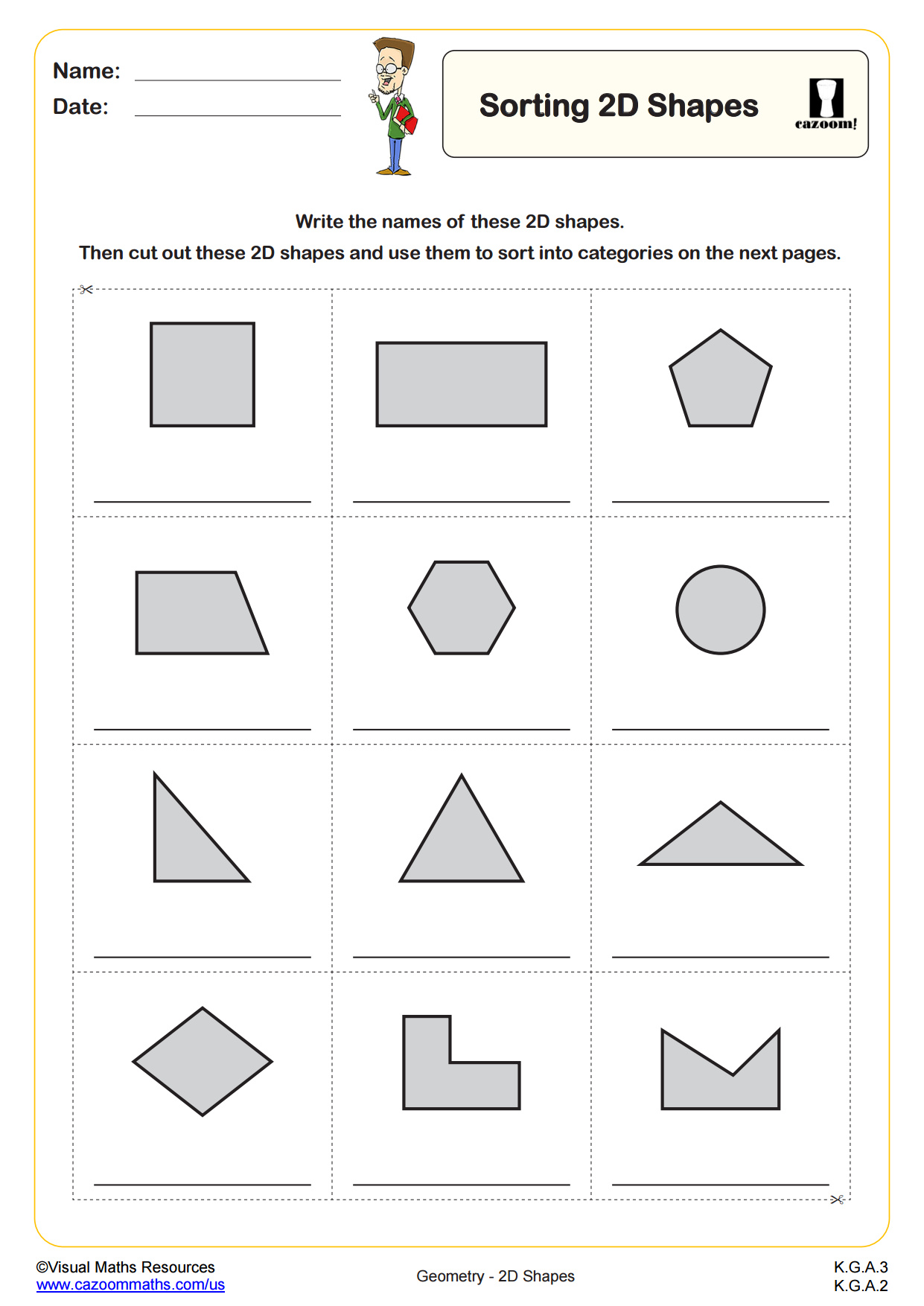
Sorting 2D Shapes
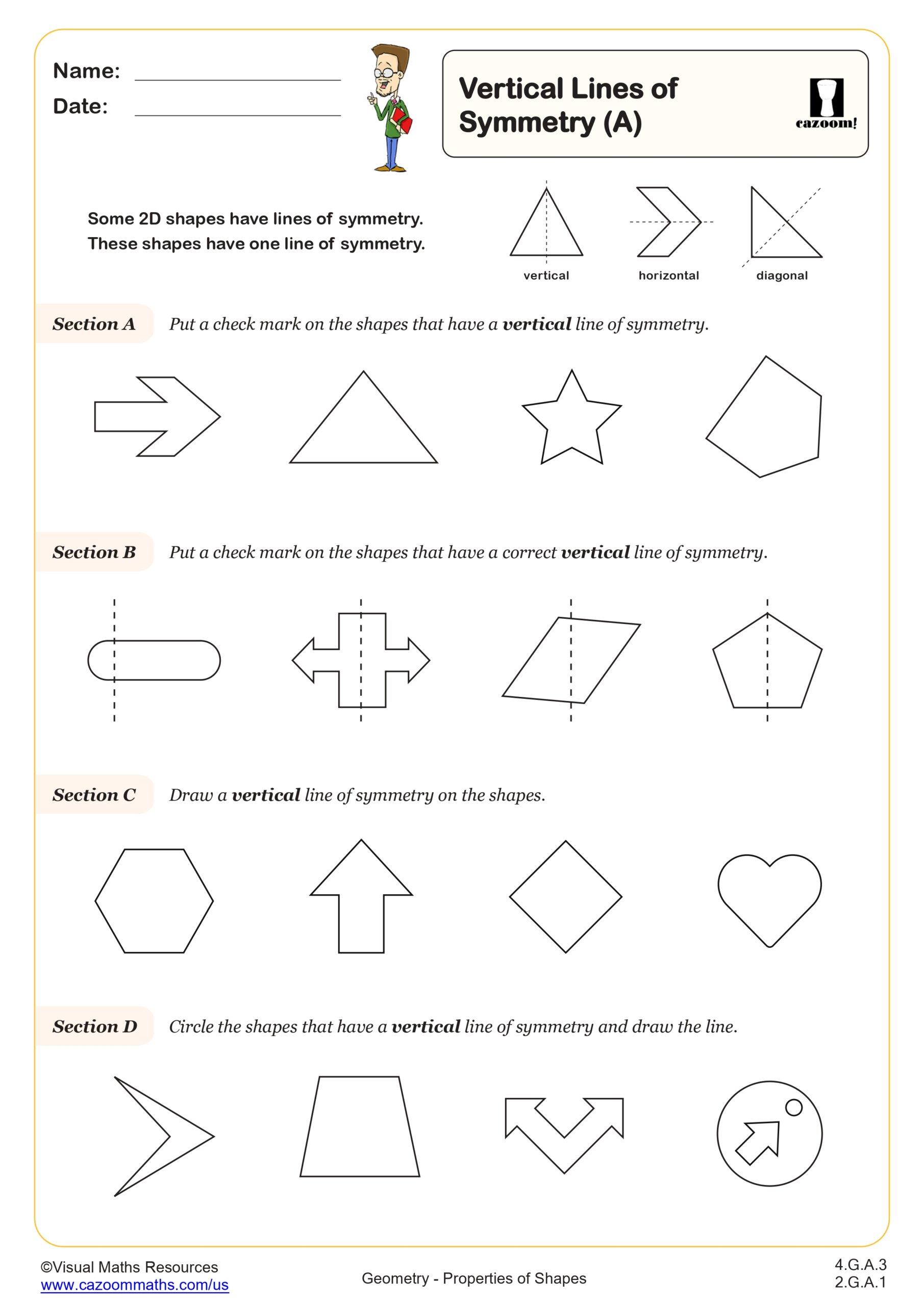
Vertical Lines of Symmetry (A)
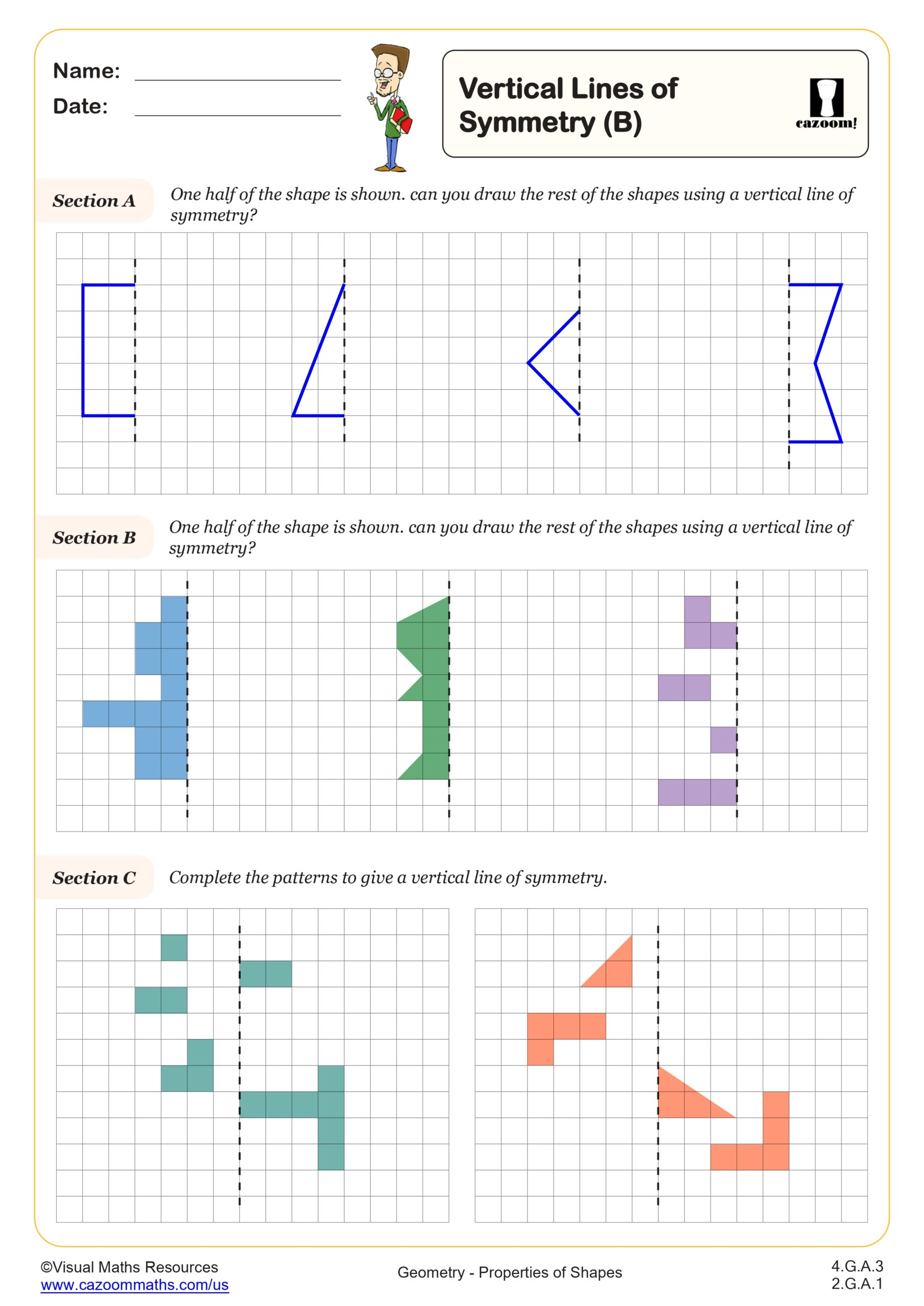
Vertical Lines of Symmetry (B)
All worksheets are created by the team of experienced teachers at Cazoom Math.
What Are 2D Shapes and Why Do Students Learn Them?
Two-dimensional shapes are flat figures with length and width but no depth, forming the foundation of geometry instruction from kindergarten onward. Students learn to identify common 2D shapes like circles, triangles, squares, rectangles, pentagons, and hexagons while understanding their defining attributes such as number of sides, vertices, and angles. This early geometry work builds spatial reasoning skills that support fraction concepts, area and perimeter calculations, and eventually coordinate graphing in later grades.
Many students initially confuse the terms "sides" and "corners," particularly in kindergarten and first grade. Teachers find that having students physically trace shapes with their fingers while counting aloud helps solidify the difference between edges (sides) and meeting points (vertices). This tactile experience creates lasting understanding that purely visual instruction often misses.
Which Grade Levels Use These 2D Shape Worksheets?
These worksheets cover kindergarten through 5th grade elementary school mathematics. Kindergarten and 1st grade students focus on recognizing and naming basic shapes, while 2nd and 3rd graders begin analyzing shape properties and categorizing figures by attributes. By 4th and 5th grade, students compare and contrast more complex polygons and understand the relationships between different quadrilaterals.
The progression across elementary grades builds systematically. Early worksheets feature large, clear shape outlines for recognition and tracing, helping younger students develop fine motor skills alongside geometry vocabulary. Upper elementary worksheets introduce property comparison charts where students must identify whether quadrilaterals have parallel sides, right angles, or equal side lengths. This scaffolding ensures students move from simple identification to sophisticated classification aligned with Common Core geometry standards.
How Do Students Compare Properties of Quadrilaterals?
Comparing quadrilateral properties requires students to analyze characteristics like parallel sides, perpendicular sides, equal side lengths, and angle measures. Students examine squares, rectangles, parallelograms, trapezoids, and rhombuses to identify shared and unique attributes. This classification work develops logical thinking as students learn that a square is always a rectangle, but a rectangle isn't always a square. Understanding these hierarchical relationships prepares students for more advanced geometry proofs in middle school.
Architects and engineers rely heavily on quadrilateral properties when designing structures. Rectangles provide stability in building frames, while parallelograms appear in bridge trusses to distribute weight efficiently. When students recognize that a doorway is a rectangle because opposite sides are parallel and equal, they begin connecting geometry vocabulary to the constructed world around them, making abstract properties concrete and memorable.
How Can Teachers Use These Worksheets Most Effectively?
These worksheets provide structured practice that moves from visual recognition to analytical thinking. The printable shape templates work well as manipulatives when students cut them out and sort by attributes, transforming static worksheets into interactive activities. Teachers can project the answer keys during whole-class review, asking students to explain why certain shapes share properties or what makes one quadrilateral different from another. This discussion builds mathematical vocabulary more effectively than silent independent work alone.
Many teachers use these worksheets for differentiated instruction within the same classroom. Younger students or those needing intervention benefit from the large shape printables that emphasize basic recognition, while advanced learners tackle the quadrilateral comparison activities that require higher-level classification skills. The worksheets also function well as early finisher activities, homework reinforcement, or stations during geometry units, giving teachers flexibility to address diverse learning needs without creating entirely separate lesson plans.