Elementary School 3D Shapes Worksheets
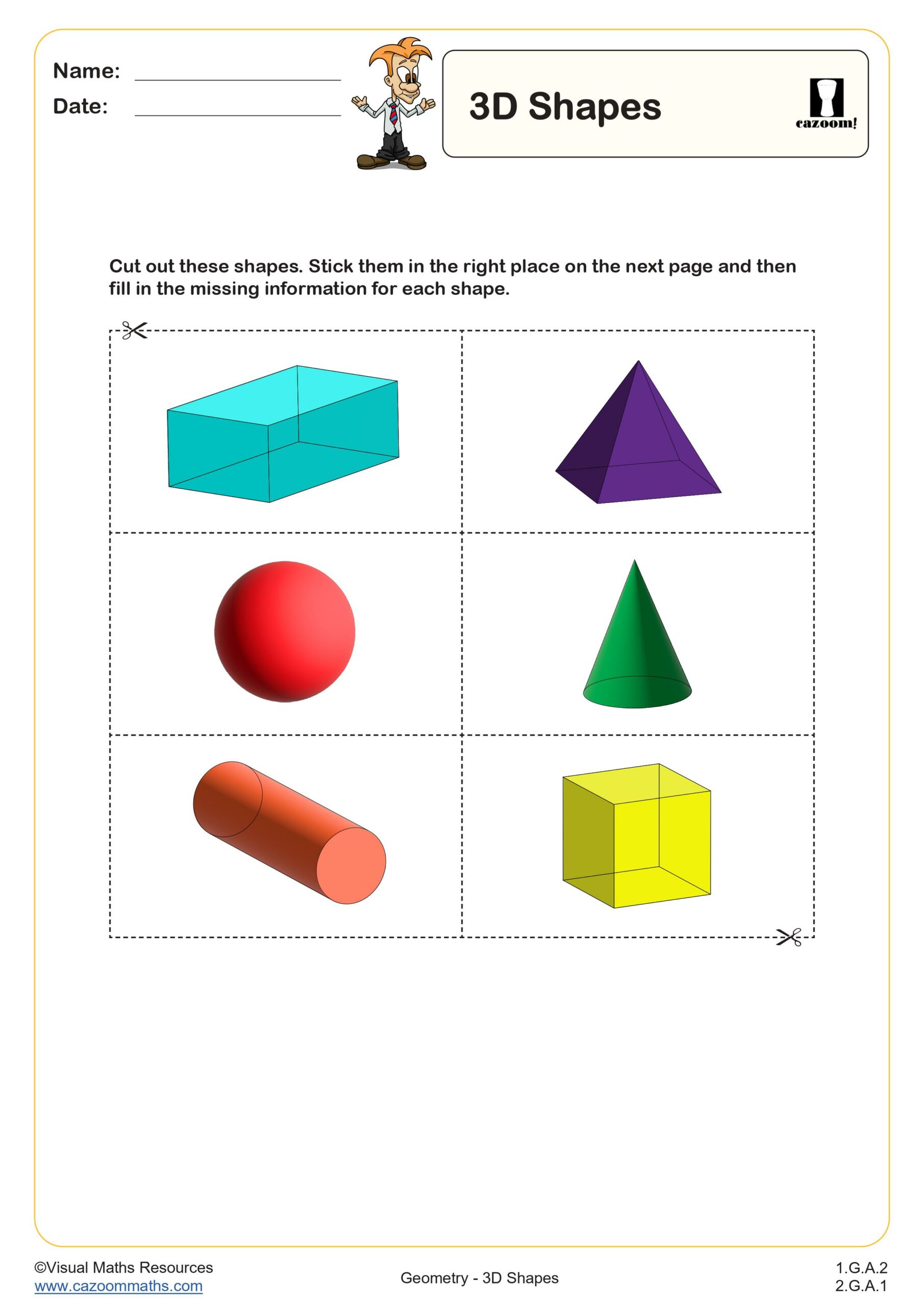
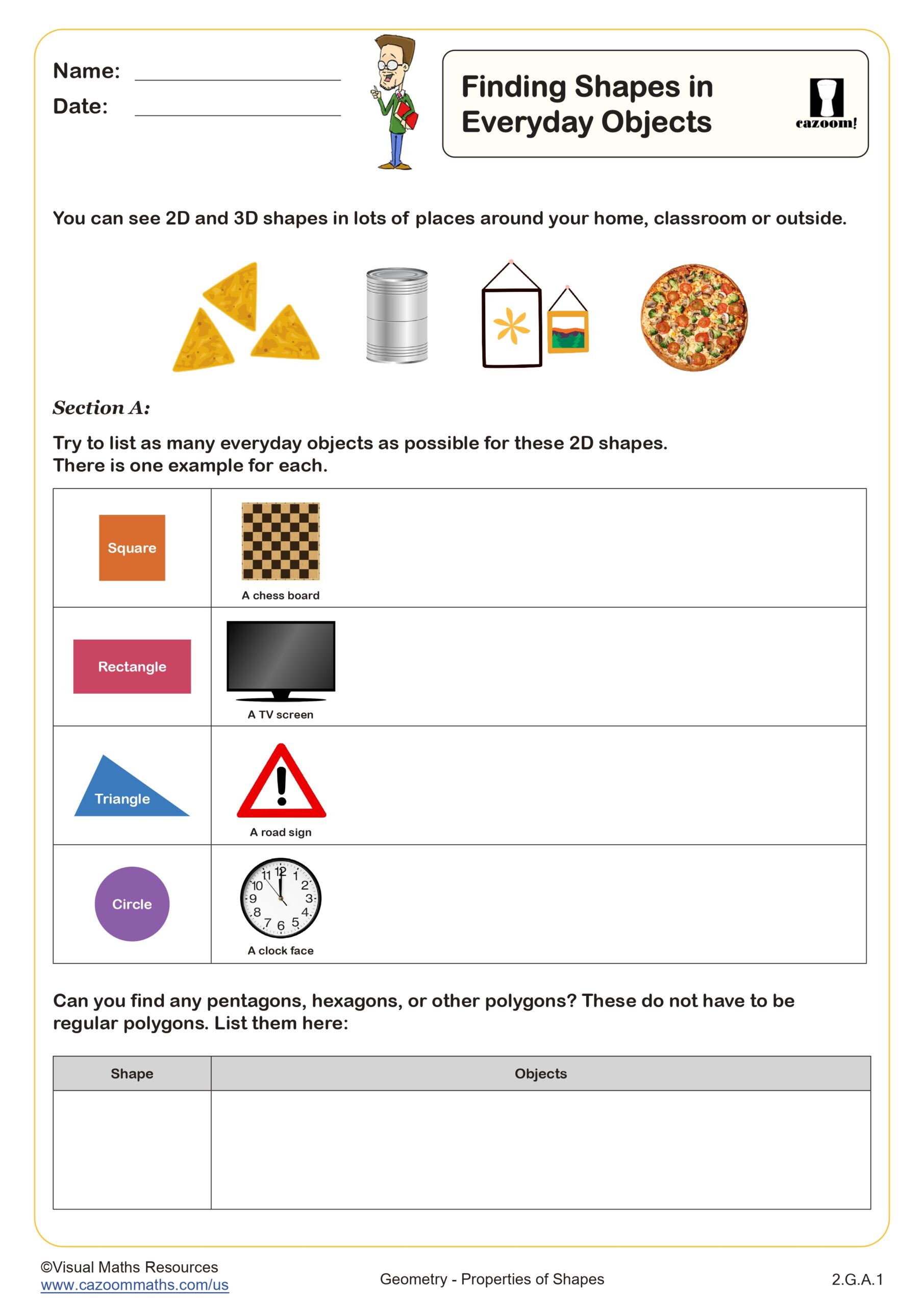
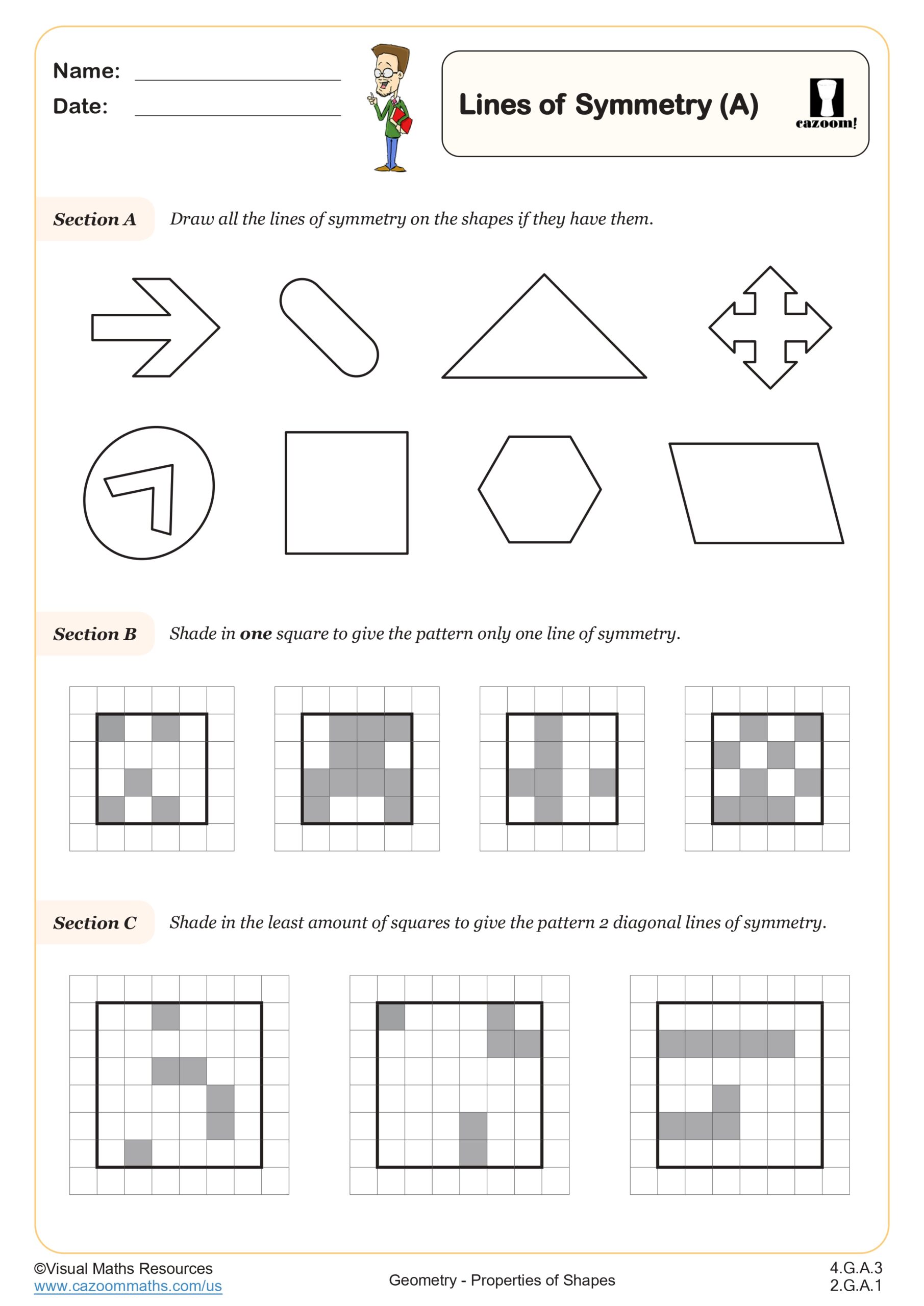
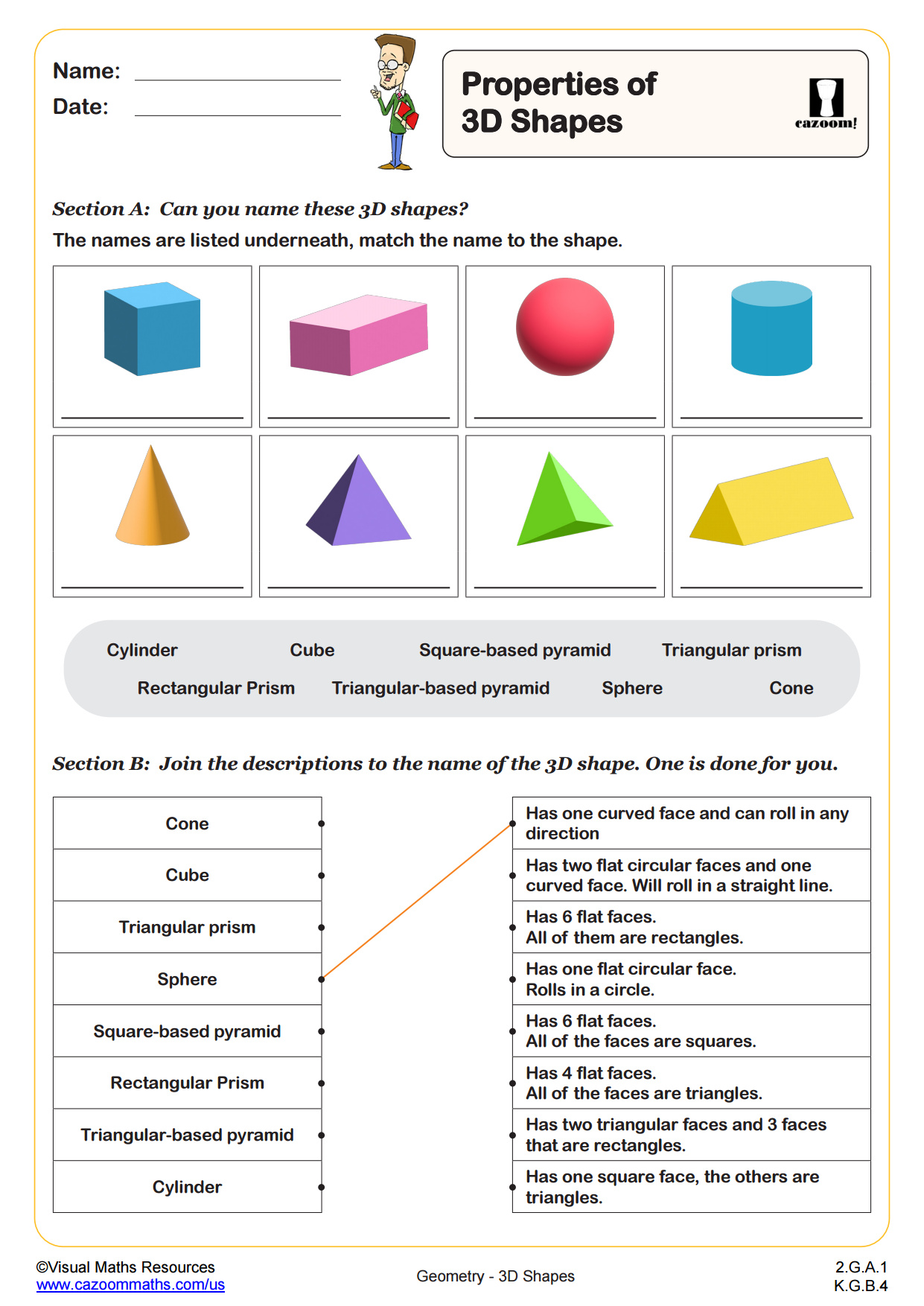
All worksheets are created by the team of experienced teachers at Cazoom Math.
What 3D Shape Skills Do Elementary Students Learn?
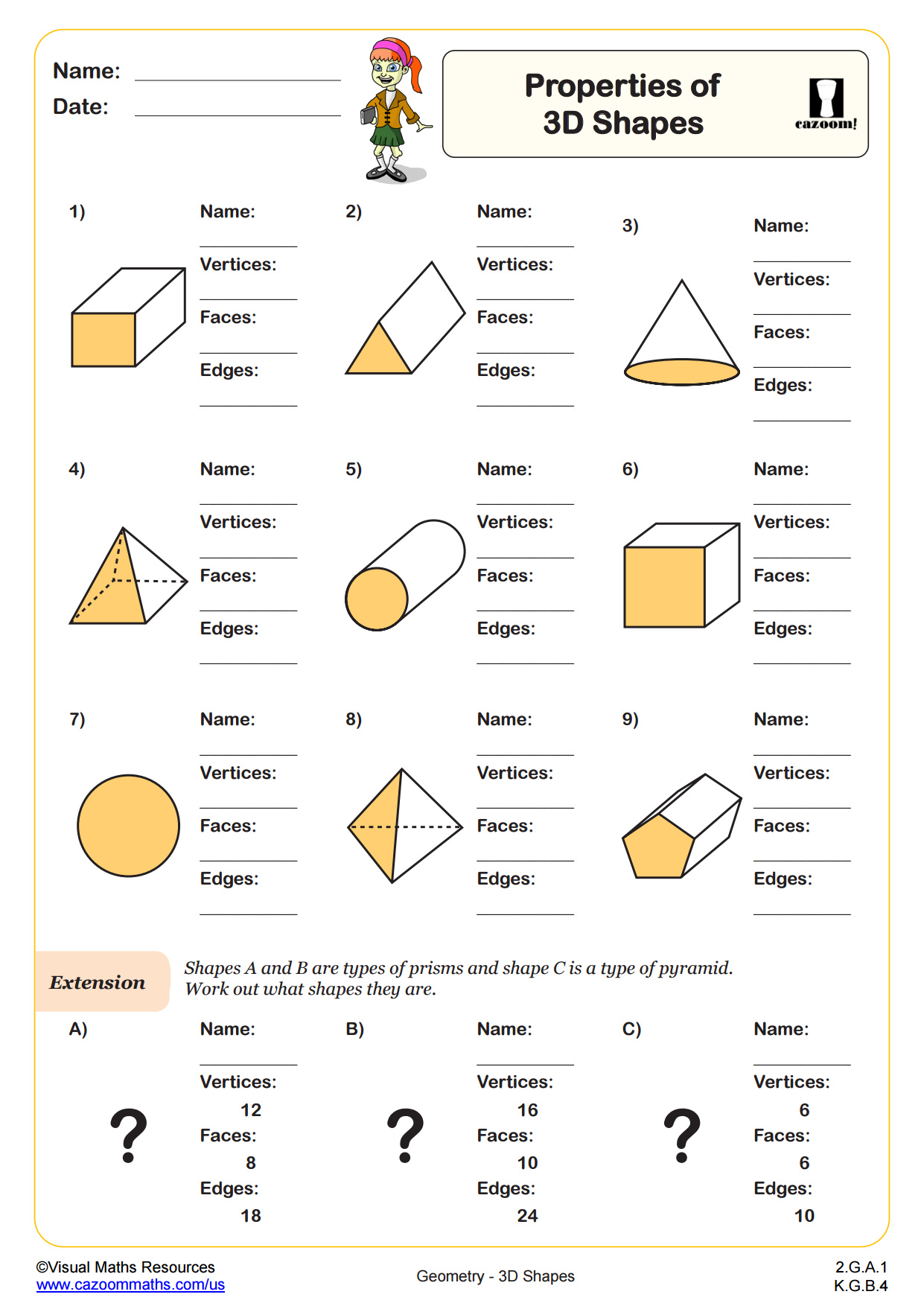
Elementary students progress from simple identification of 3D shapes like cubes and spheres to analyzing their properties, including faces, edges, and vertices. Students learn to distinguish between prisms, pyramids, and curved solids while developing spatial vocabulary that supports mathematical communication. The curriculum builds from recognizing shapes in everyday objects toward more formal geometric reasoning required in middle school.
Teachers frequently notice students confuse the terms "face" and "side" when describing 3D shapes, particularly with rectangular prisms where the words seem interchangeable in casual conversation. Students also struggle to visualize how 2D nets fold into 3D objects until they physically manipulate paper models. Providing concrete experiences with real objects—blocks, food containers, balls—before introducing worksheet representations significantly improves comprehension and retention of geometric properties.
Which Grade Levels Use These 3D Shapes Worksheets?
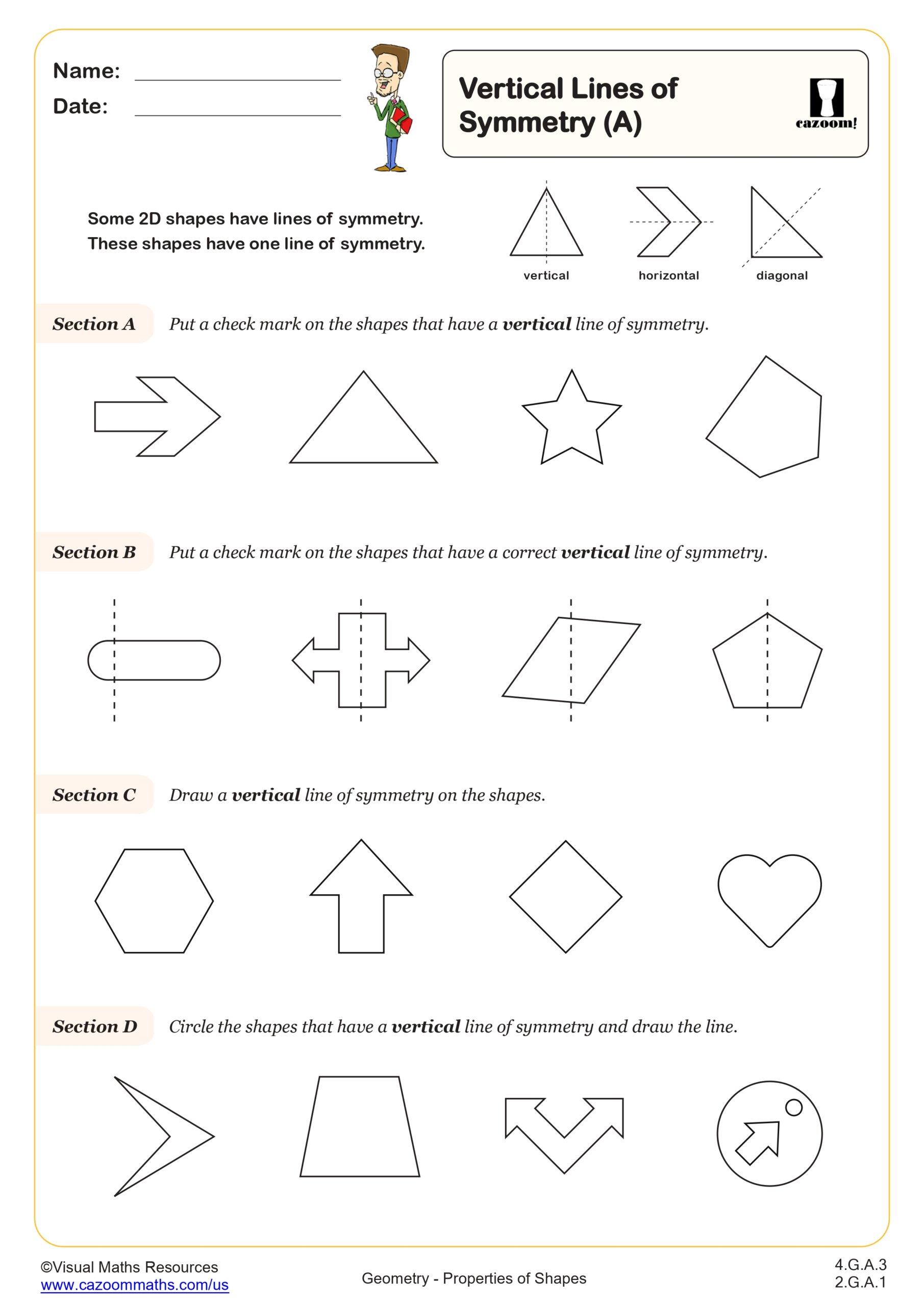
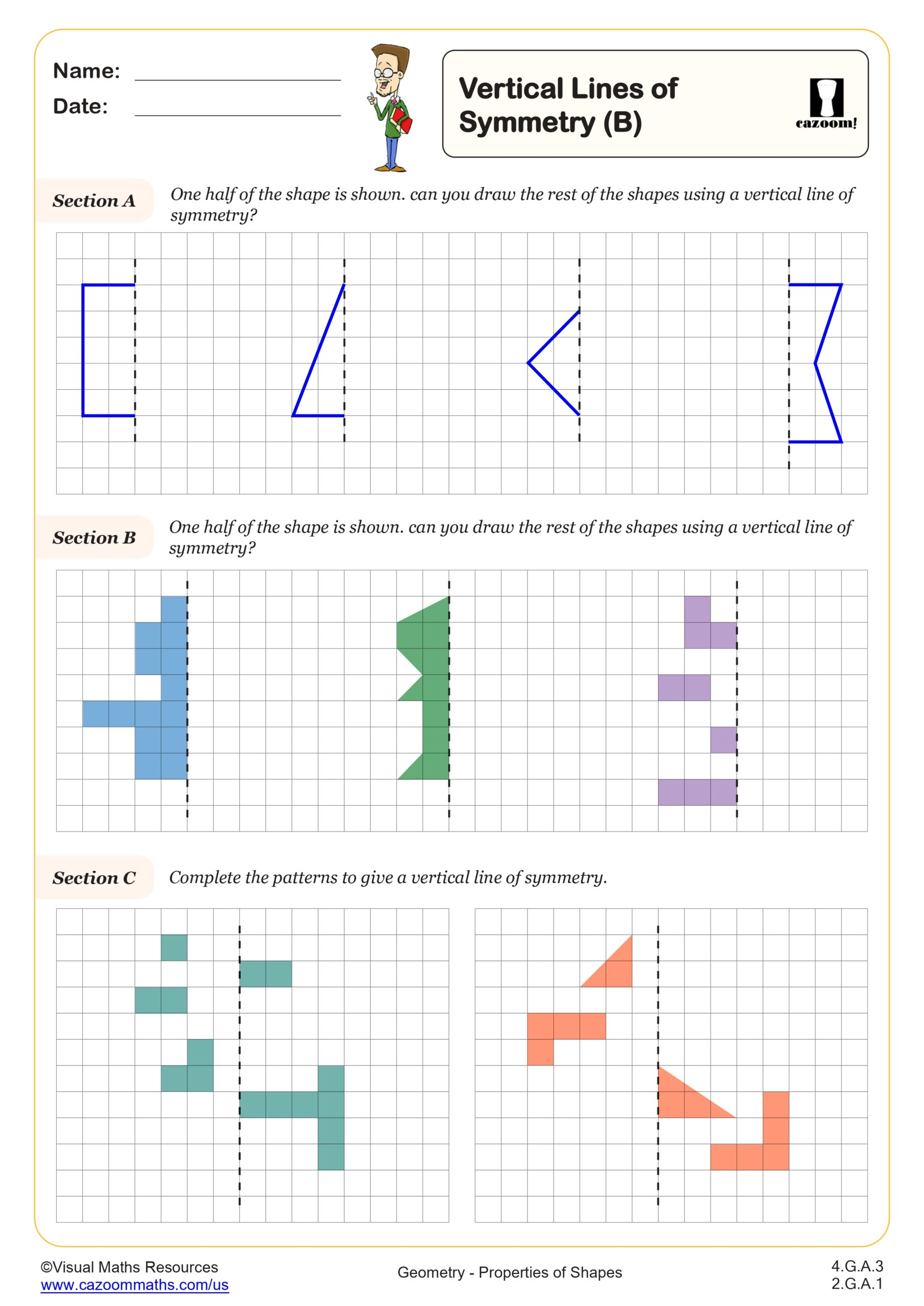
These worksheets span kindergarten through fifth grade, covering the full elementary school range. Kindergarten and first grade focus on identifying and naming common 3D shapes in the environment, while second and third grade introduce counting faces, edges, and vertices. Fourth and fifth grade students tackle more sophisticated concepts including symmetry, multiple representations, and spatial visualization using isometric drawings.
The progression reflects how spatial reasoning develops alongside abstract thinking skills. Early elementary students need concrete, visual references and real-world connections to understand that a can of soup is a cylinder. Upper elementary students can work with schematic representations, analyze plans and elevations of 3D structures, and use specialized grid paper to create accurate drawings. This scaffolded approach prepares students for the coordinate geometry and volume calculations they'll encounter in middle school.
How Do Plans and Elevations Connect to Real-World Applications?
Plans and elevations teach students to represent 3D objects using multiple 2D views—the top view (plan), front view, and side view (elevations). This skill requires students to mentally rotate objects and understand how a three-dimensional shape appears from different perspectives. The worksheets guide students through interpreting these views and matching them to the correct 3D shape, building critical spatial visualization abilities.
Architects, engineers, and designers use plans and elevations daily to communicate building designs, product specifications, and construction details. When students learn to read a floor plan (top view) and exterior elevations of a house, they're developing the same visual literacy that STEM professionals use to transform ideas into physical structures. This foundational skill appears in fields from video game design to medical imaging, where professionals must interpret 2D scans to understand 3D anatomy.
How Can Teachers Use These 3D Shapes Worksheets Most Effectively?
These worksheets work best when paired with hands-on exploration using physical 3D shapes that students can hold, turn, and examine from all angles. The isometric and triangle grid paper provides structured space for students to practice drawing 3D representations, while the symmetry and everyday objects worksheets reinforce recognition skills. Answer keys allow for self-checking during independent practice or make grading quick for teachers managing multiple assignments.
Many teachers use these worksheets during math centers, where students rotate between manipulative work and paper practice. The worksheets also function well for morning work, homework reinforcement, or intervention with students who need additional practice identifying shape properties. Teachers often assign the finding shapes in everyday objects worksheet as a home-school connection activity, asking students to photograph real examples or bring items from home that match specific 3D shapes before completing the corresponding worksheet.