Elementary School Adding 0-20 Worksheets
Adding 1 (10 questions)
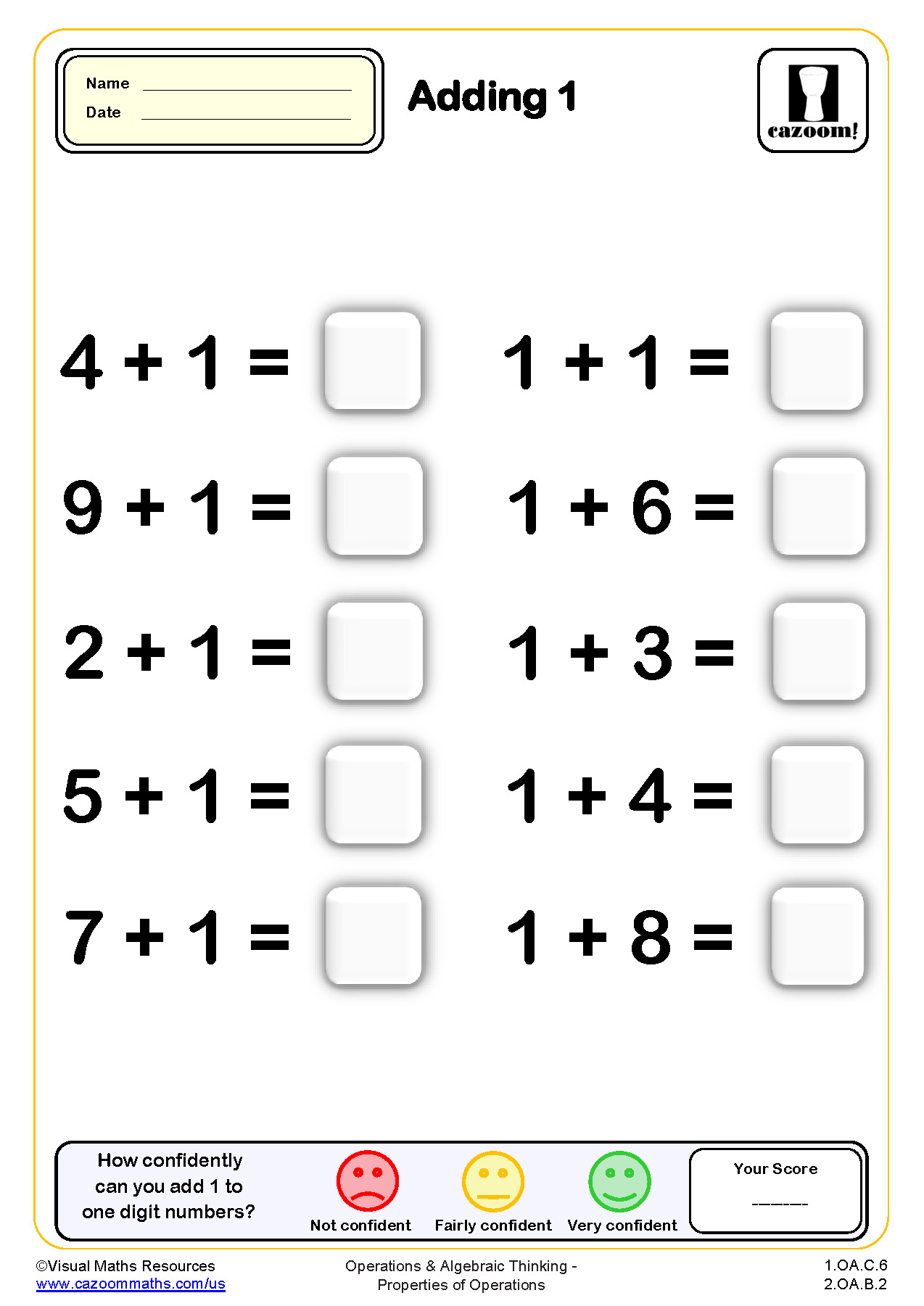
Adding 1 (20 questions)
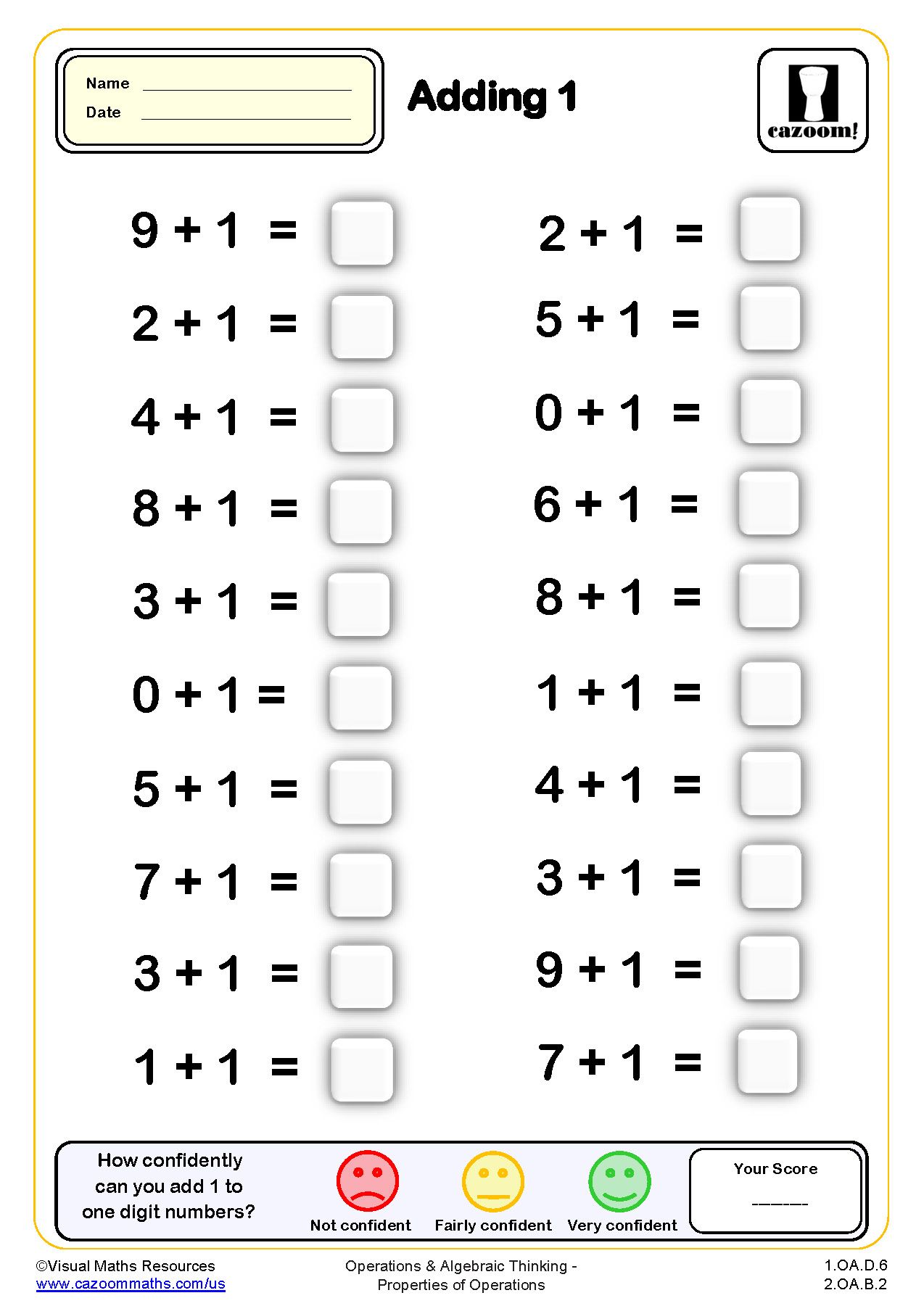
Adding 1 (50 questions)
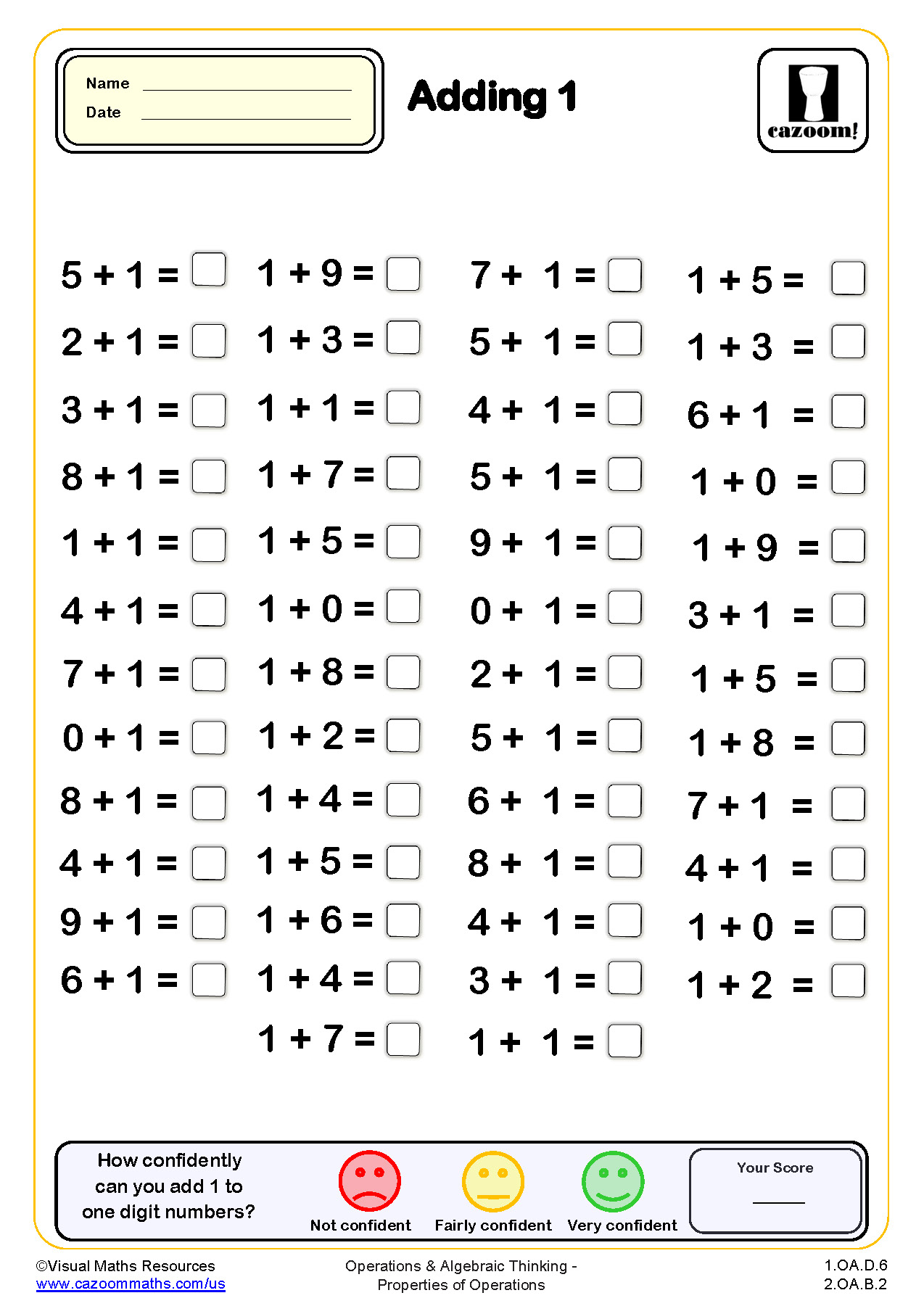
Adding 2 (10 questions)
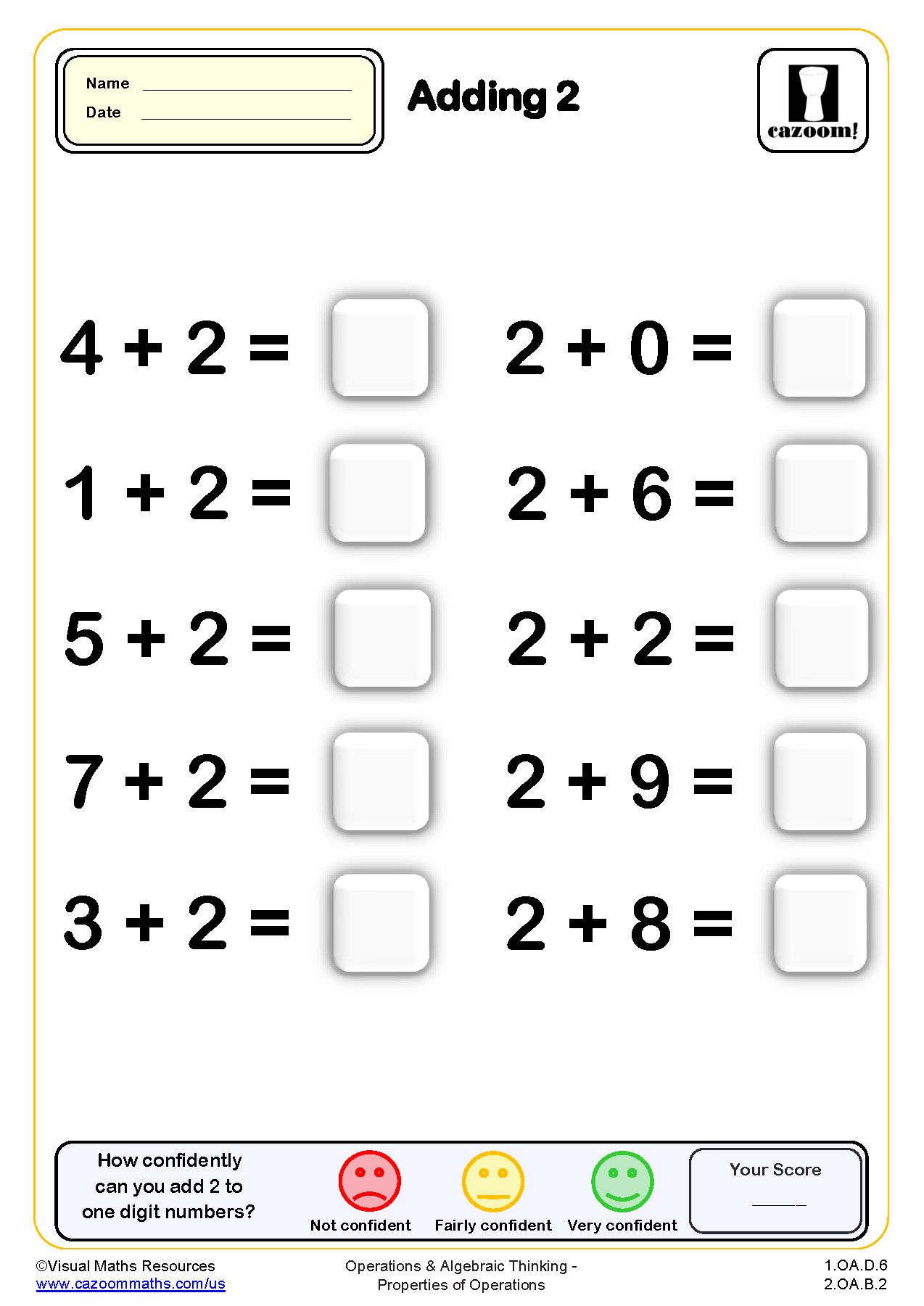
Adding 2 (20 questions)
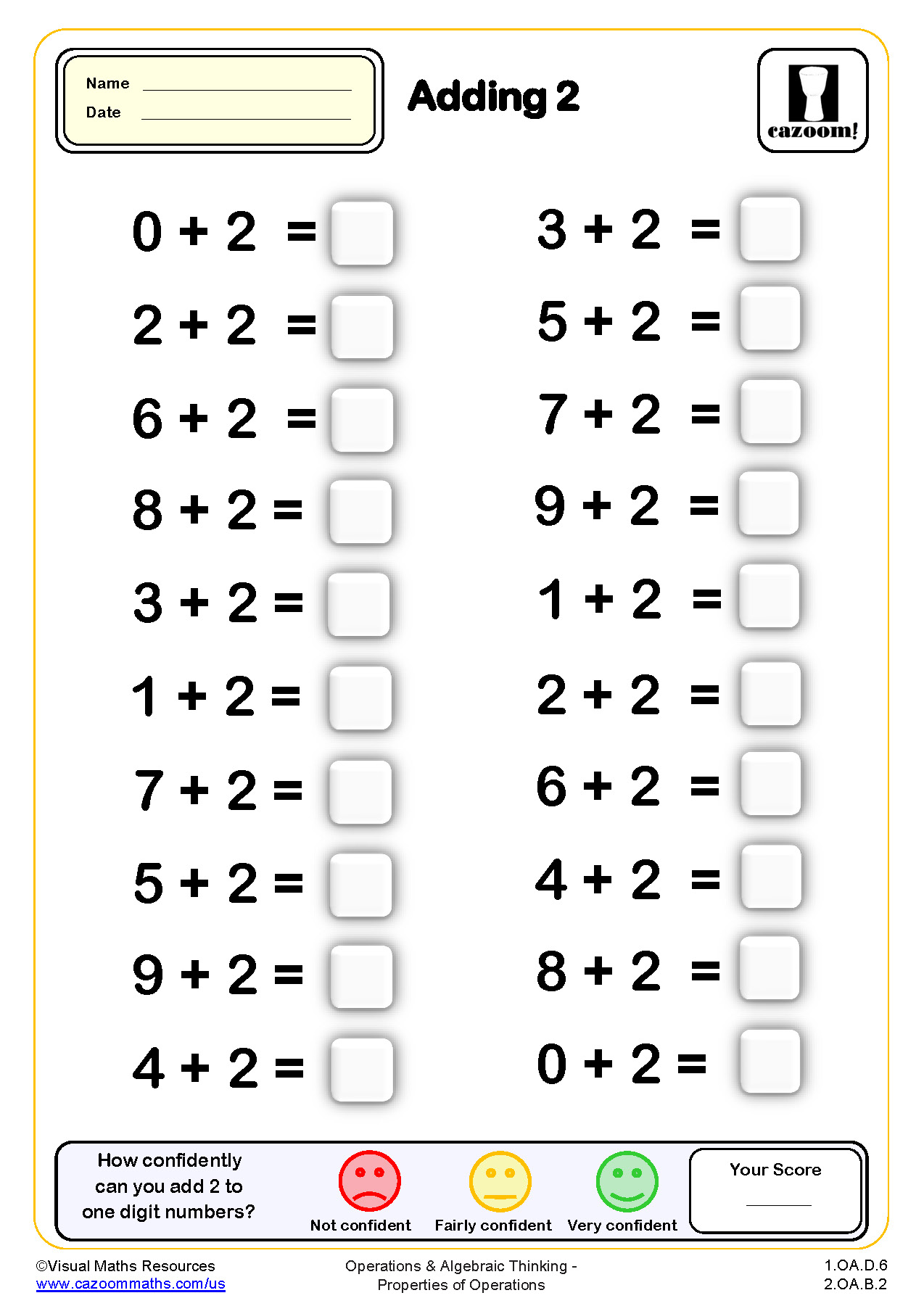
Adding 2 (50 questions)
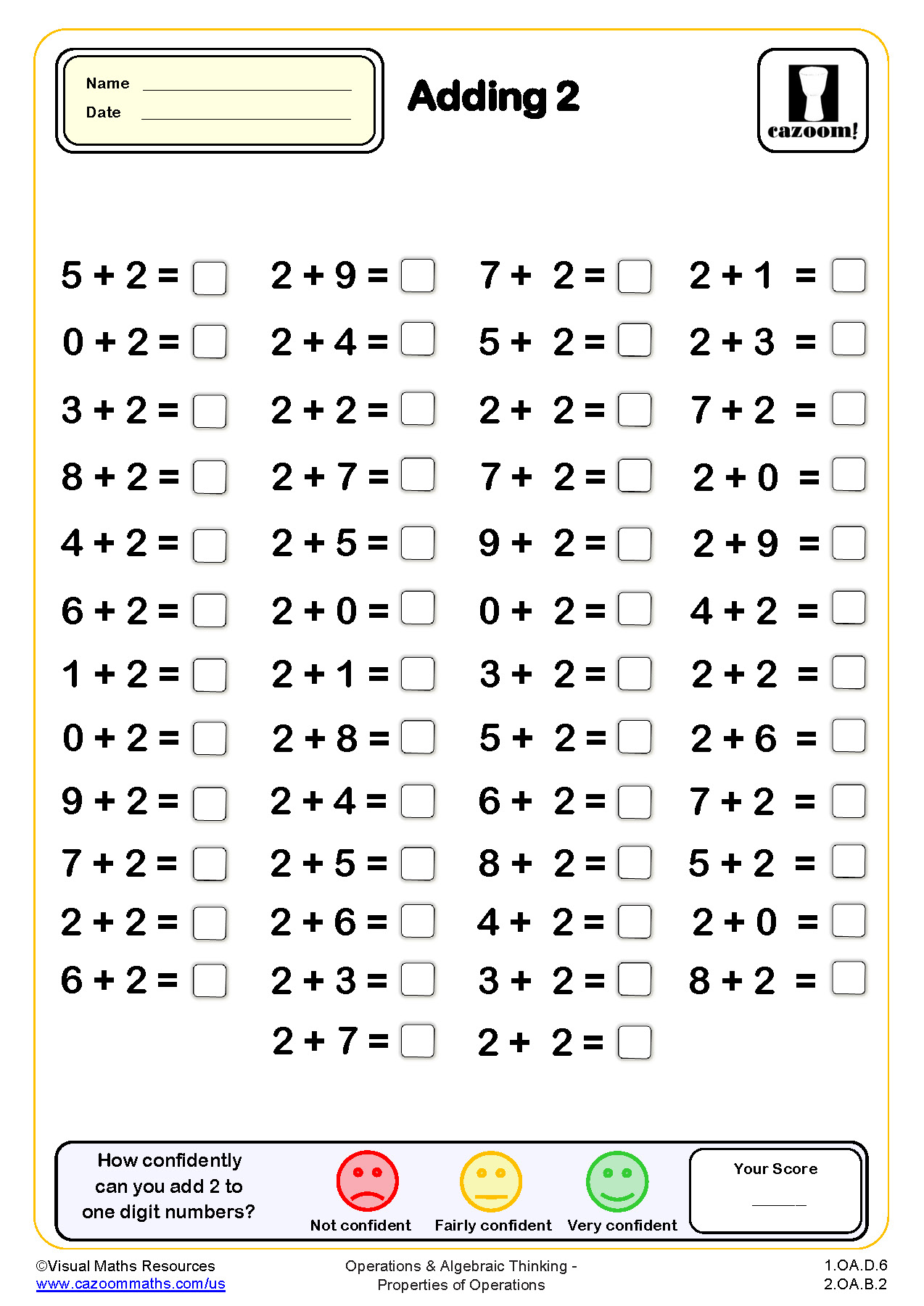
Adding 3 (10 questions)
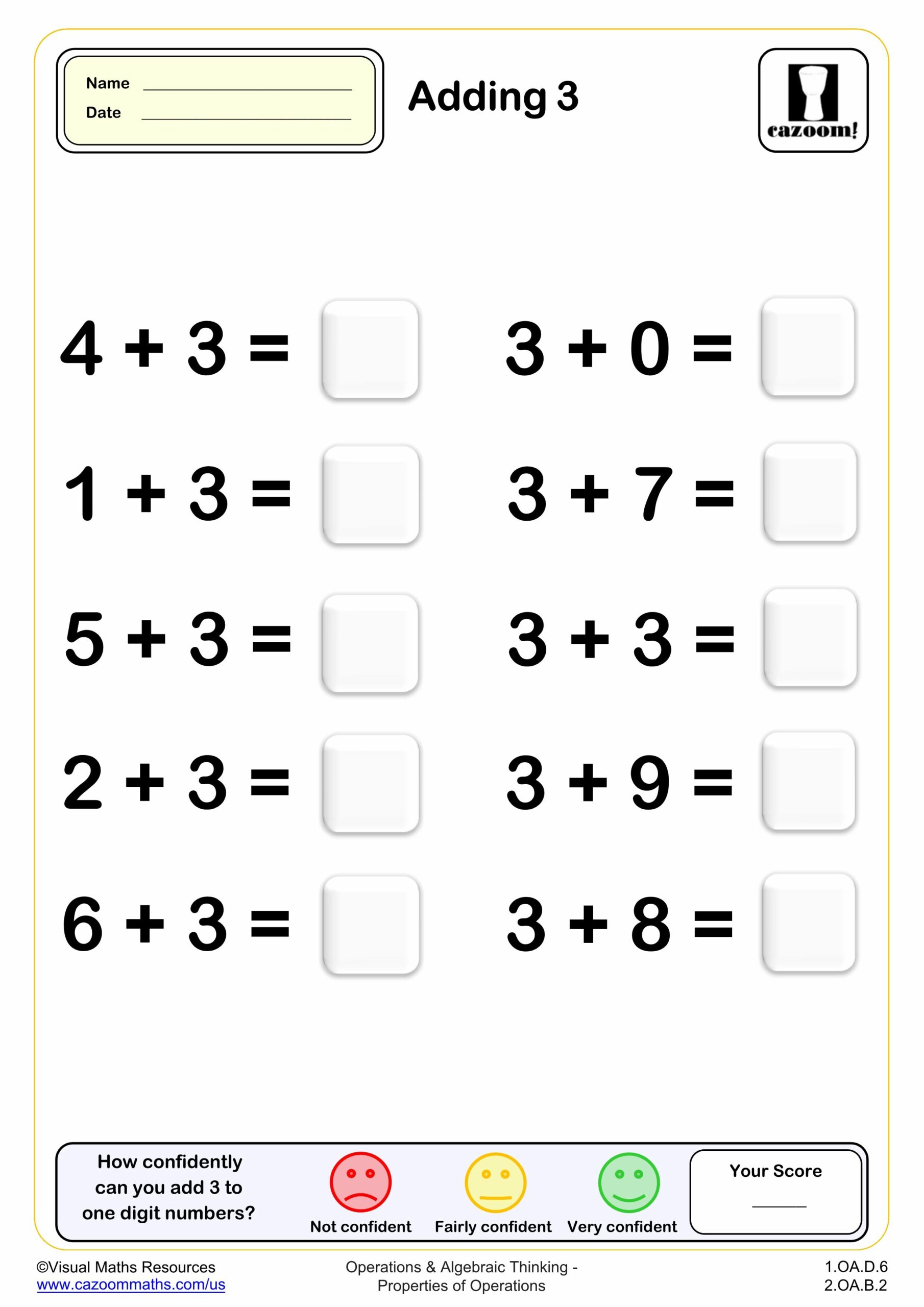
Adding 3 (20 questions)
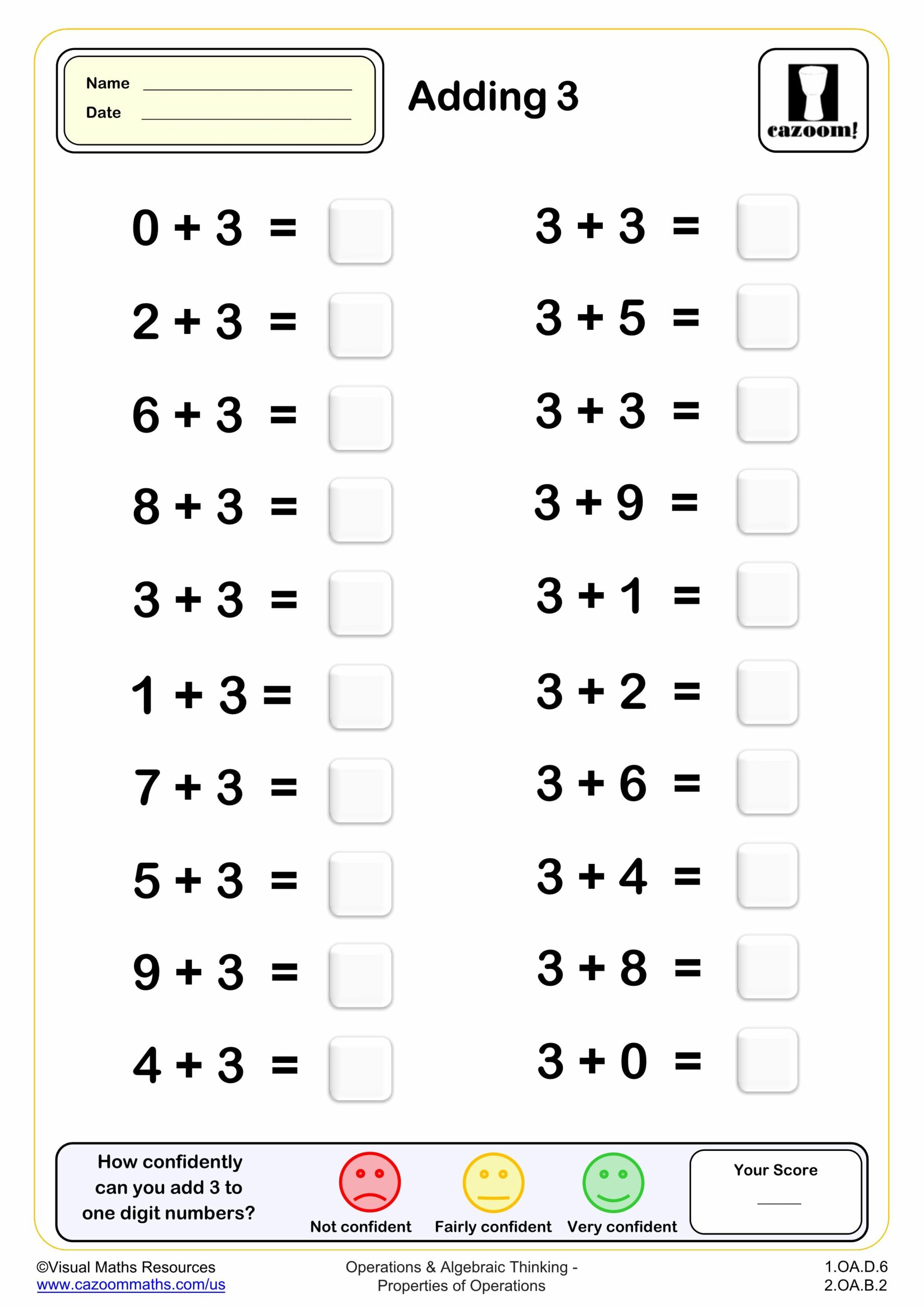
Adding 3 (50 questions)
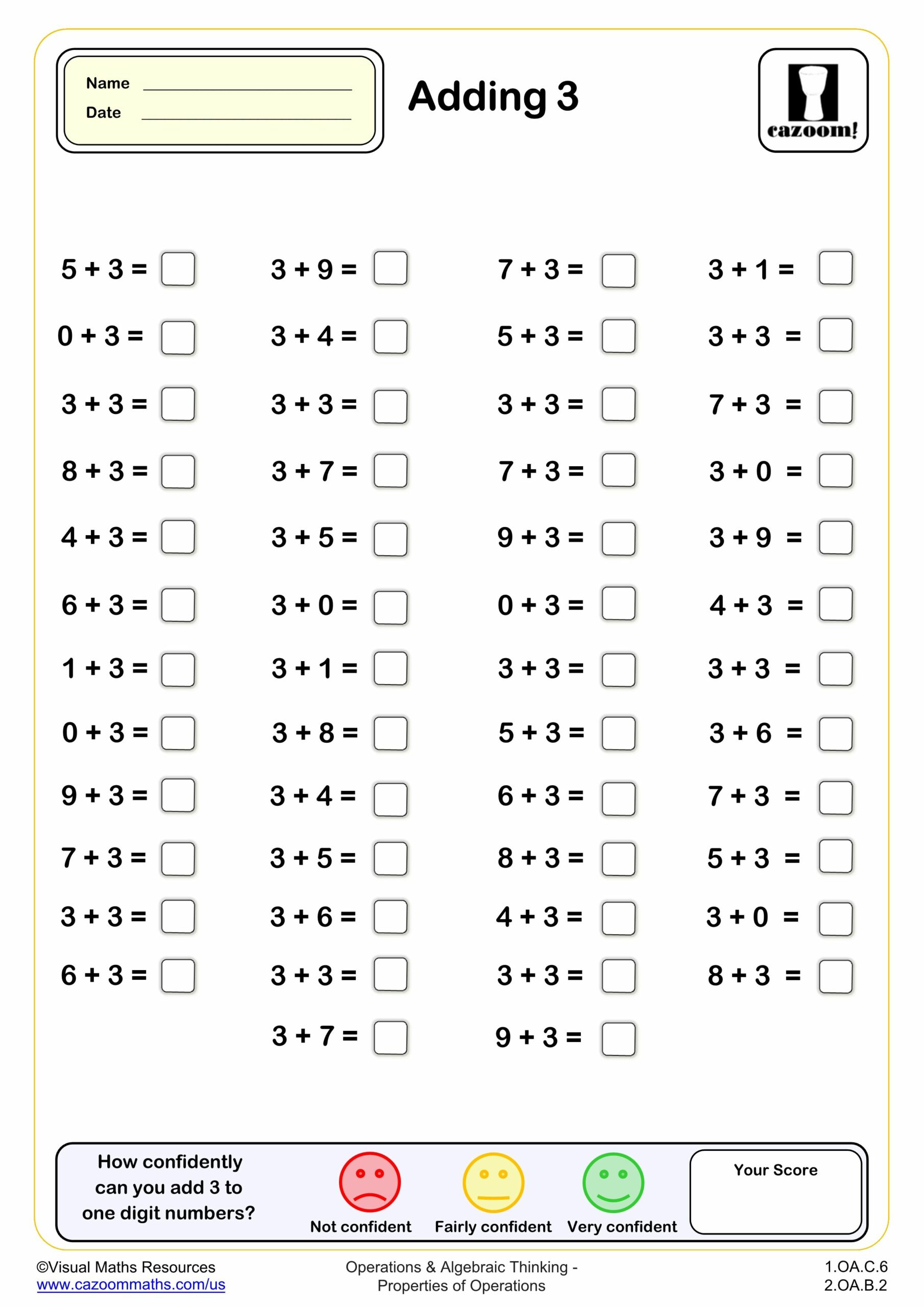
Adding 4 (10 questions)
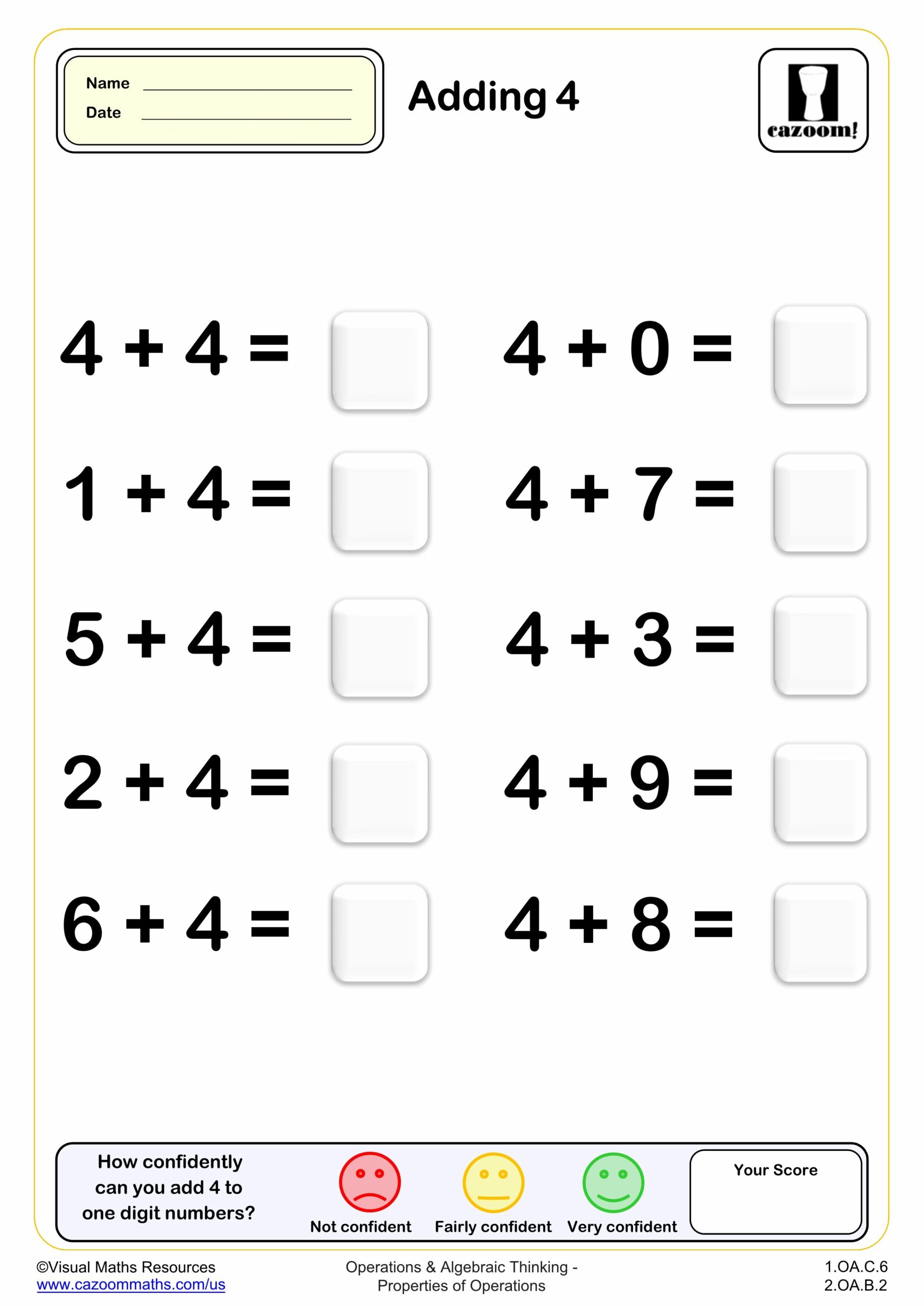
Adding 4 (20 questions)
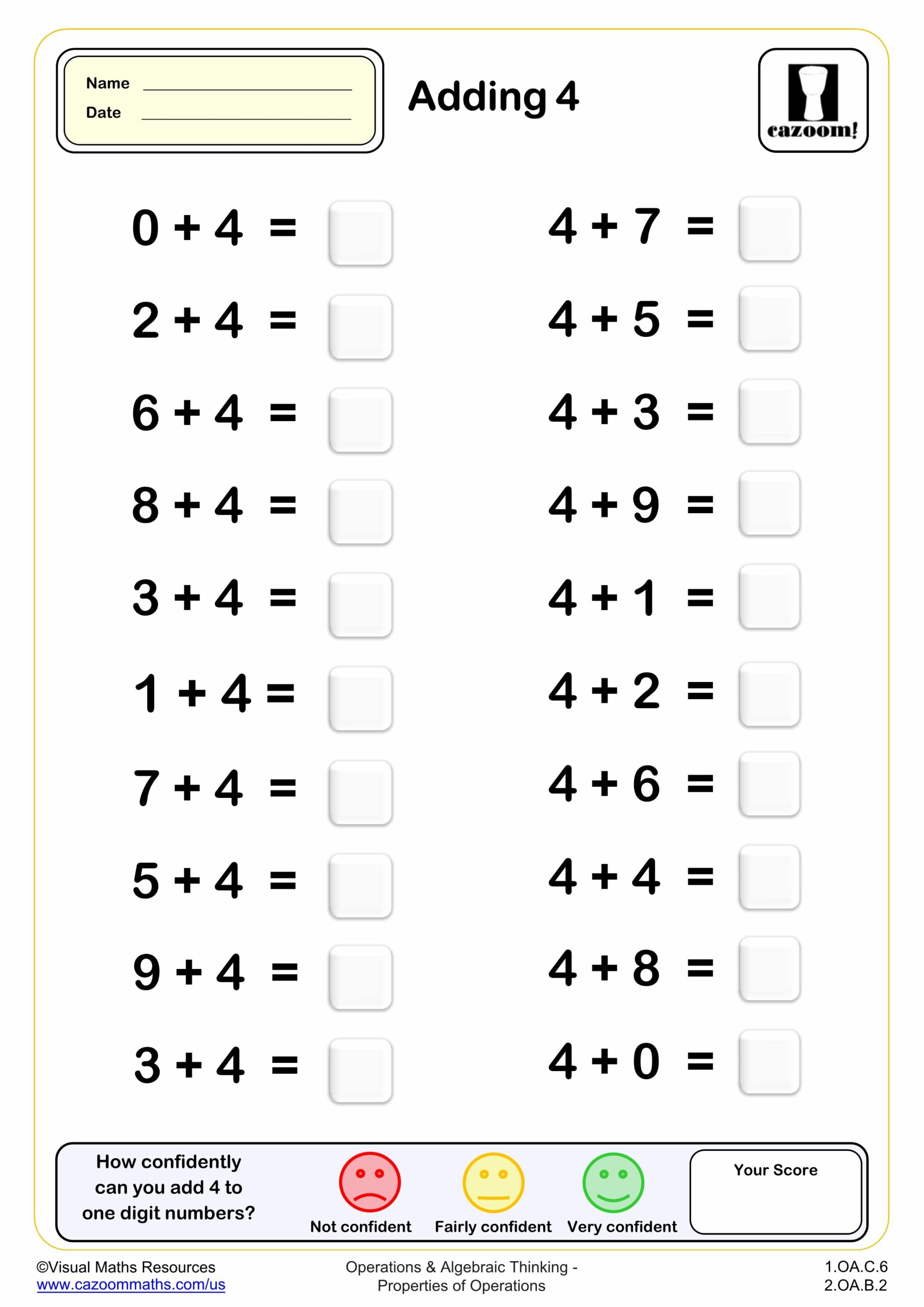
Adding 4 (50 questions)
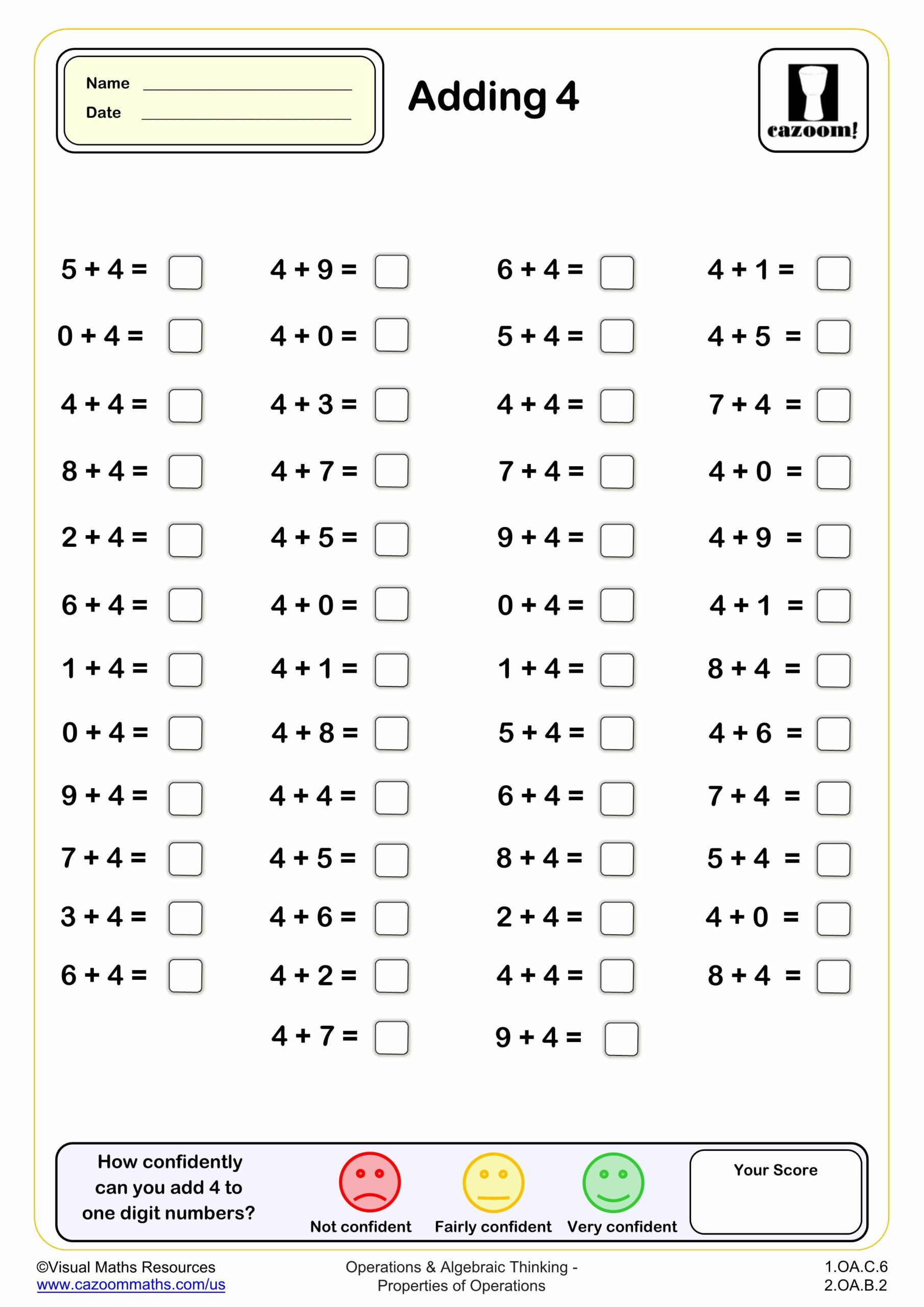
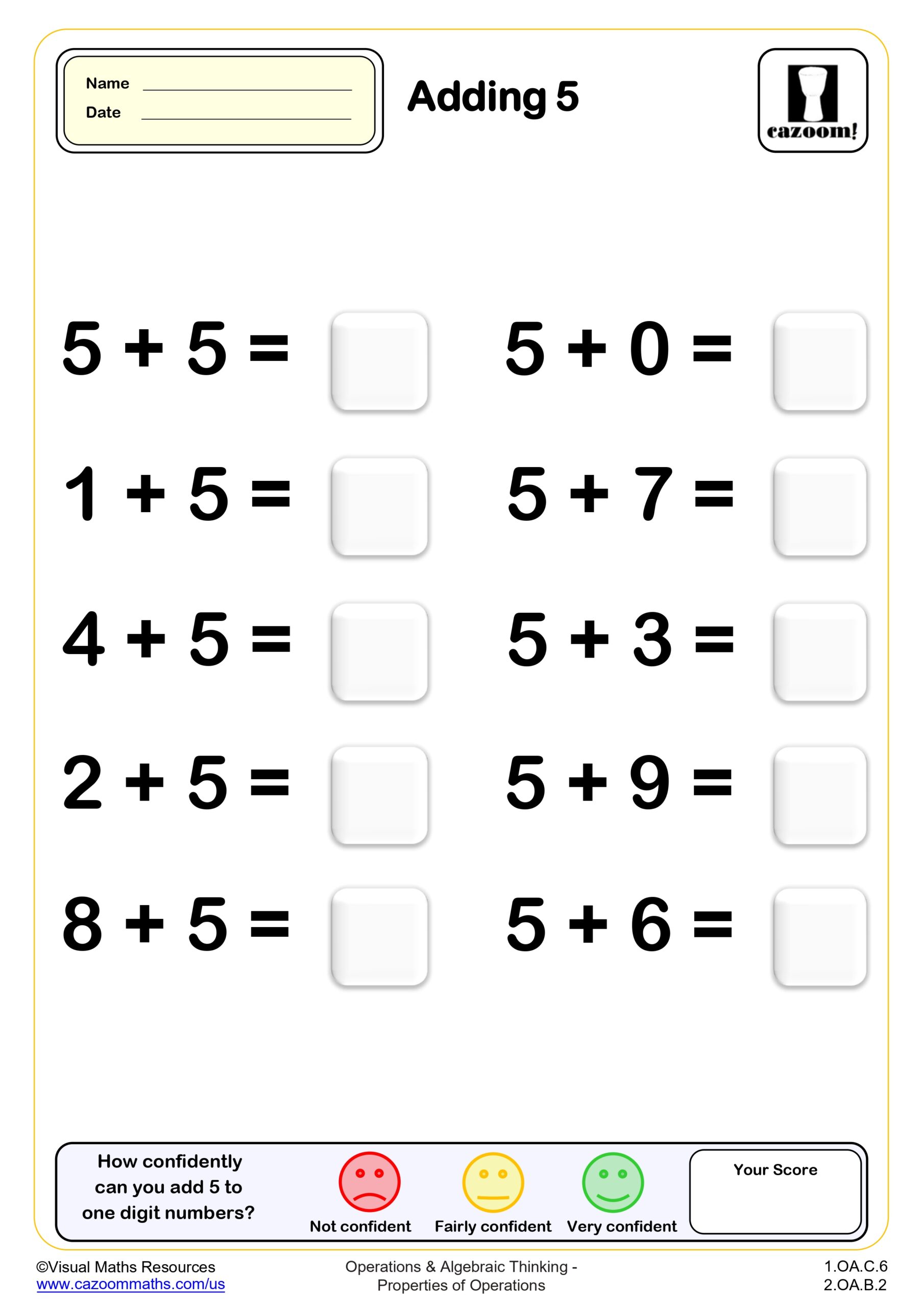
Adding 5 (10 questions)
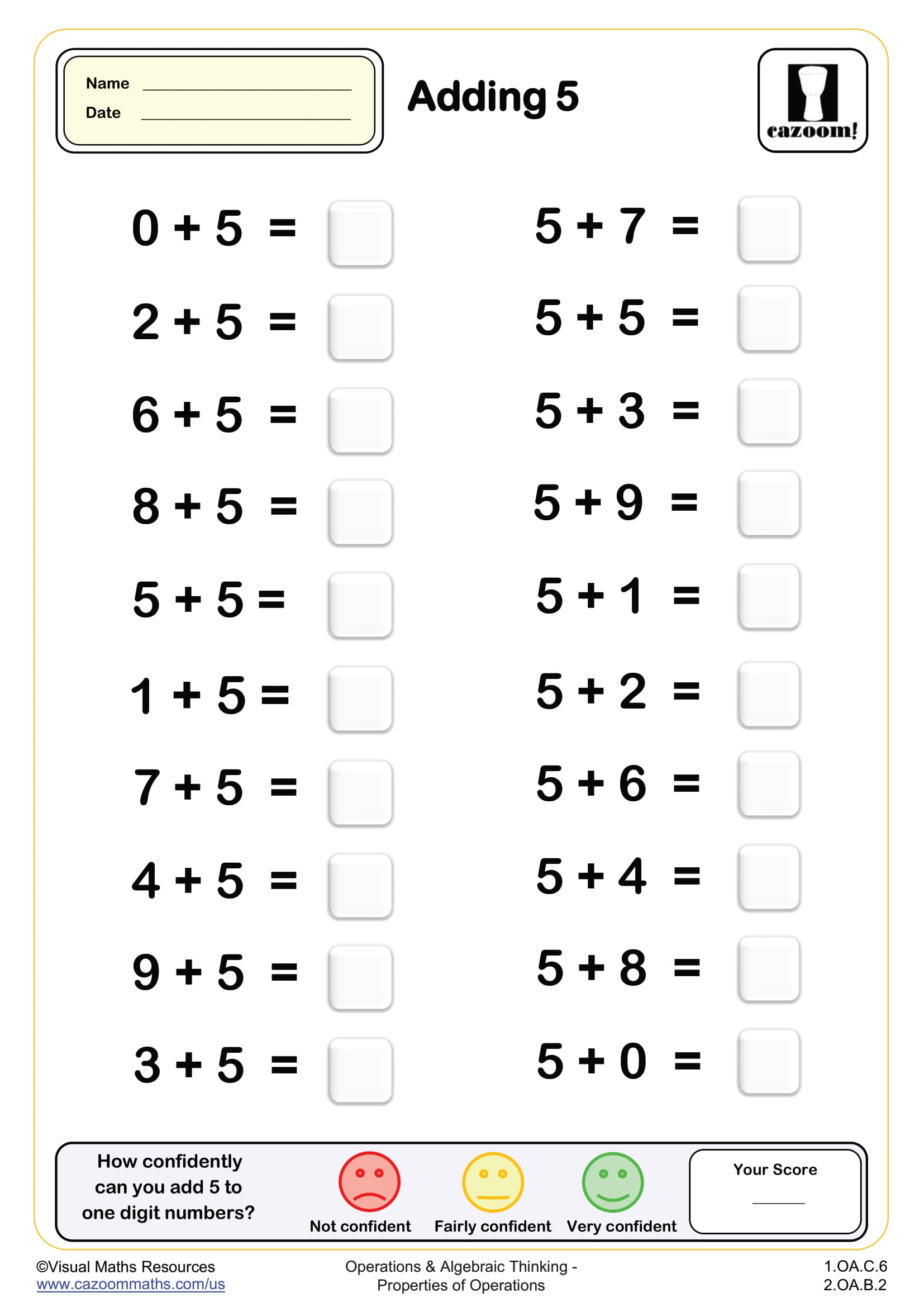
Adding 5 (20 questions)
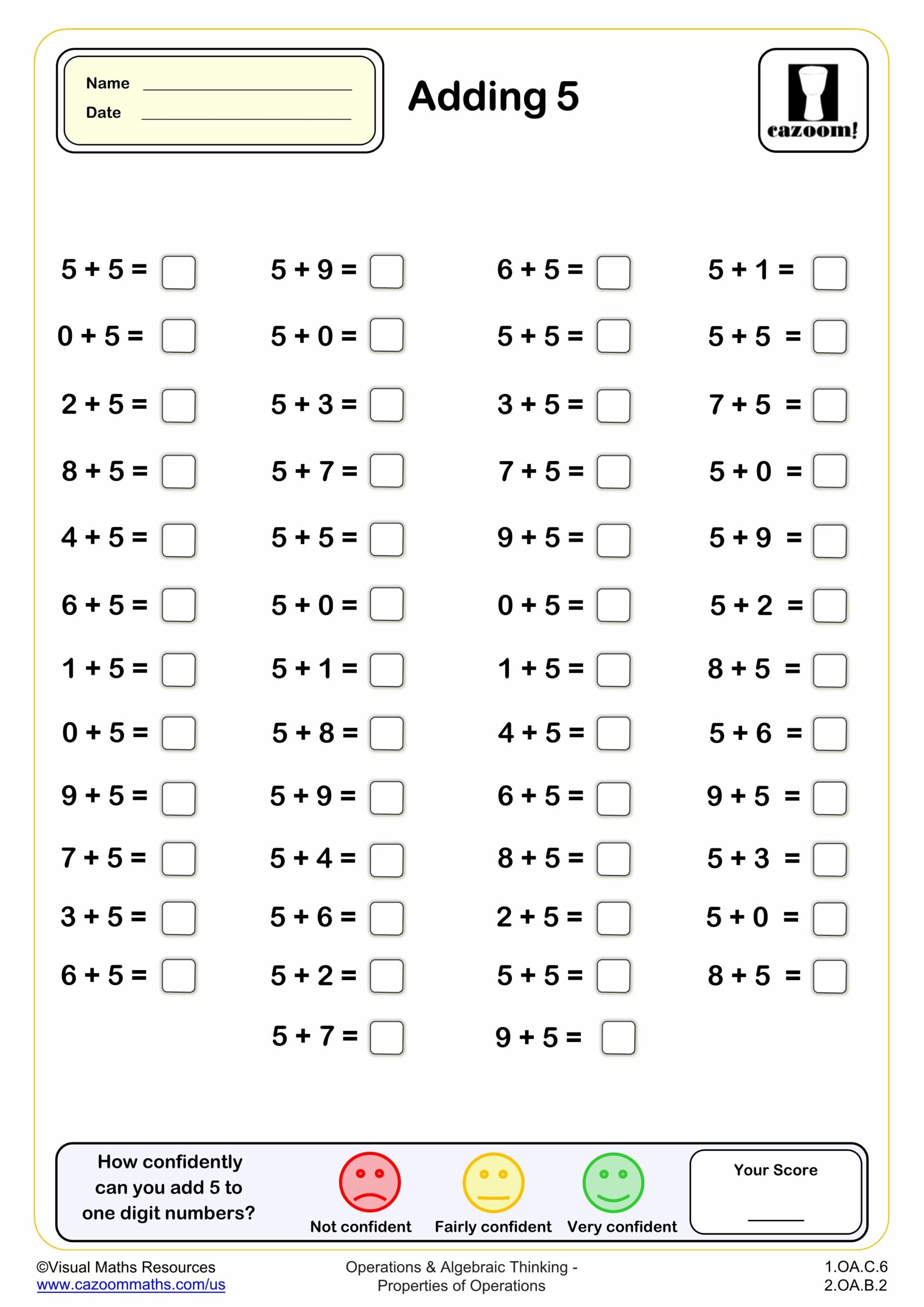
Adding 5 (50 questions)
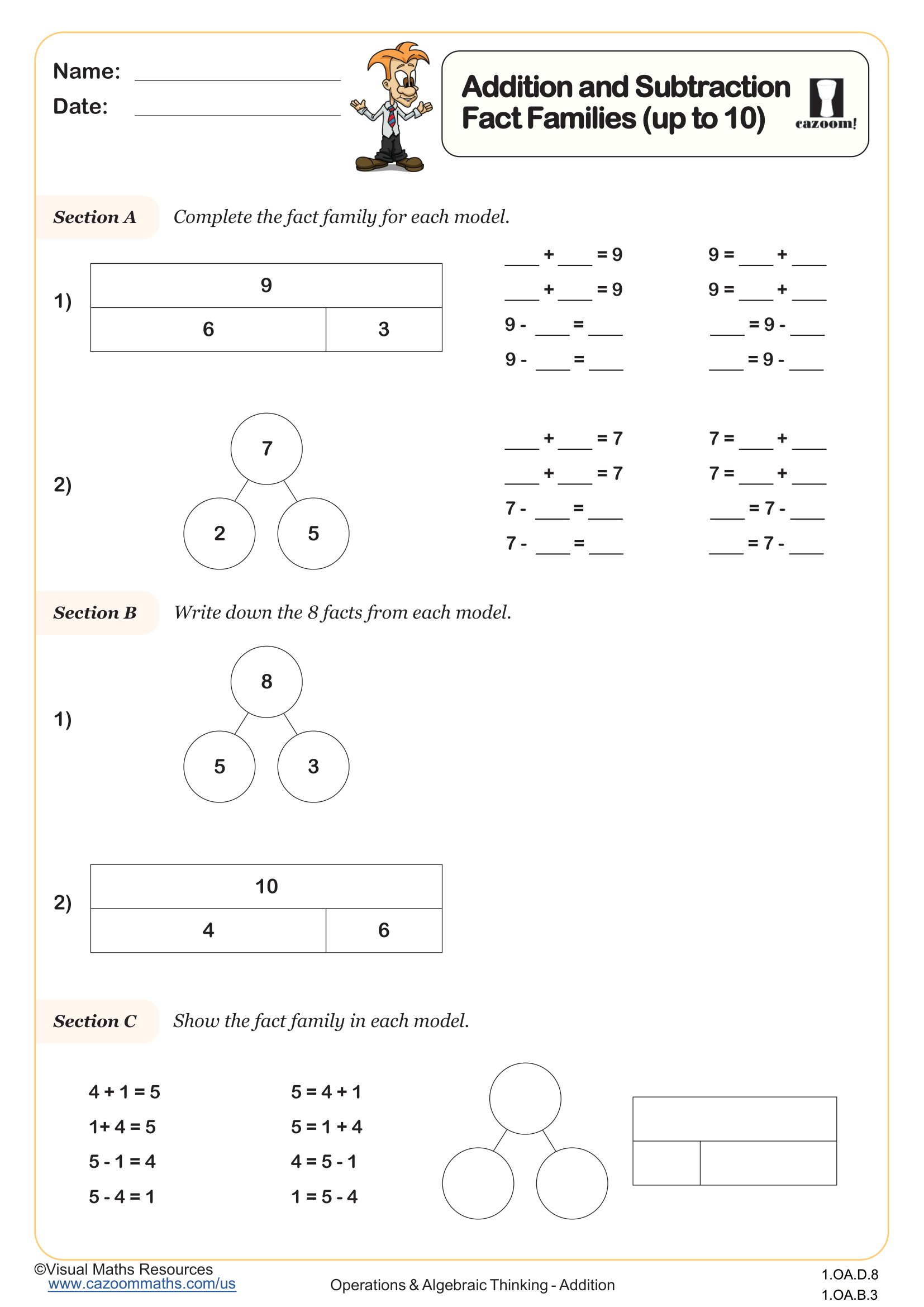
Addition and Subtraction Fact Families (up to 10)
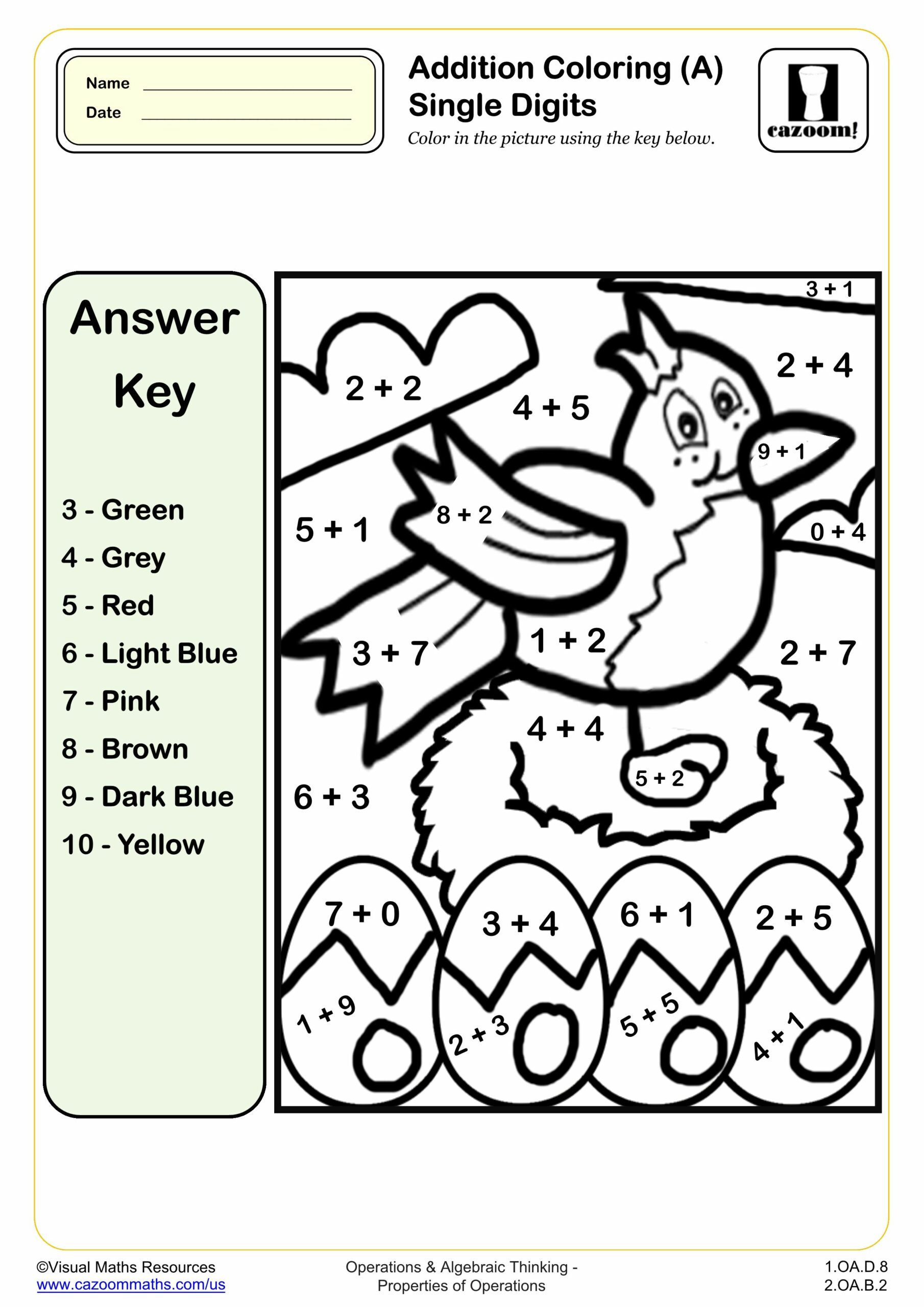
Addition Coloring (A) Single Digits
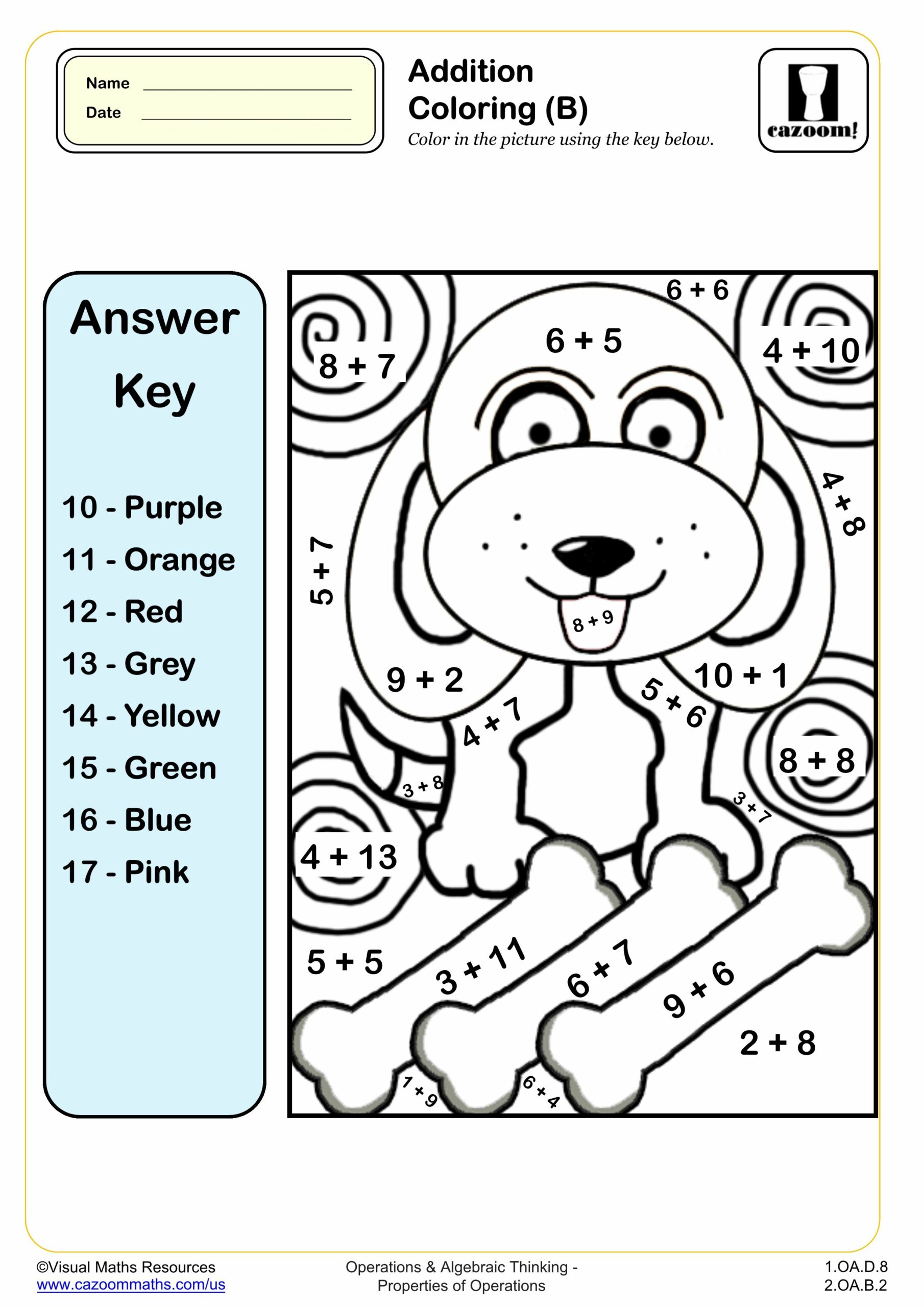
Addition Coloring (B)
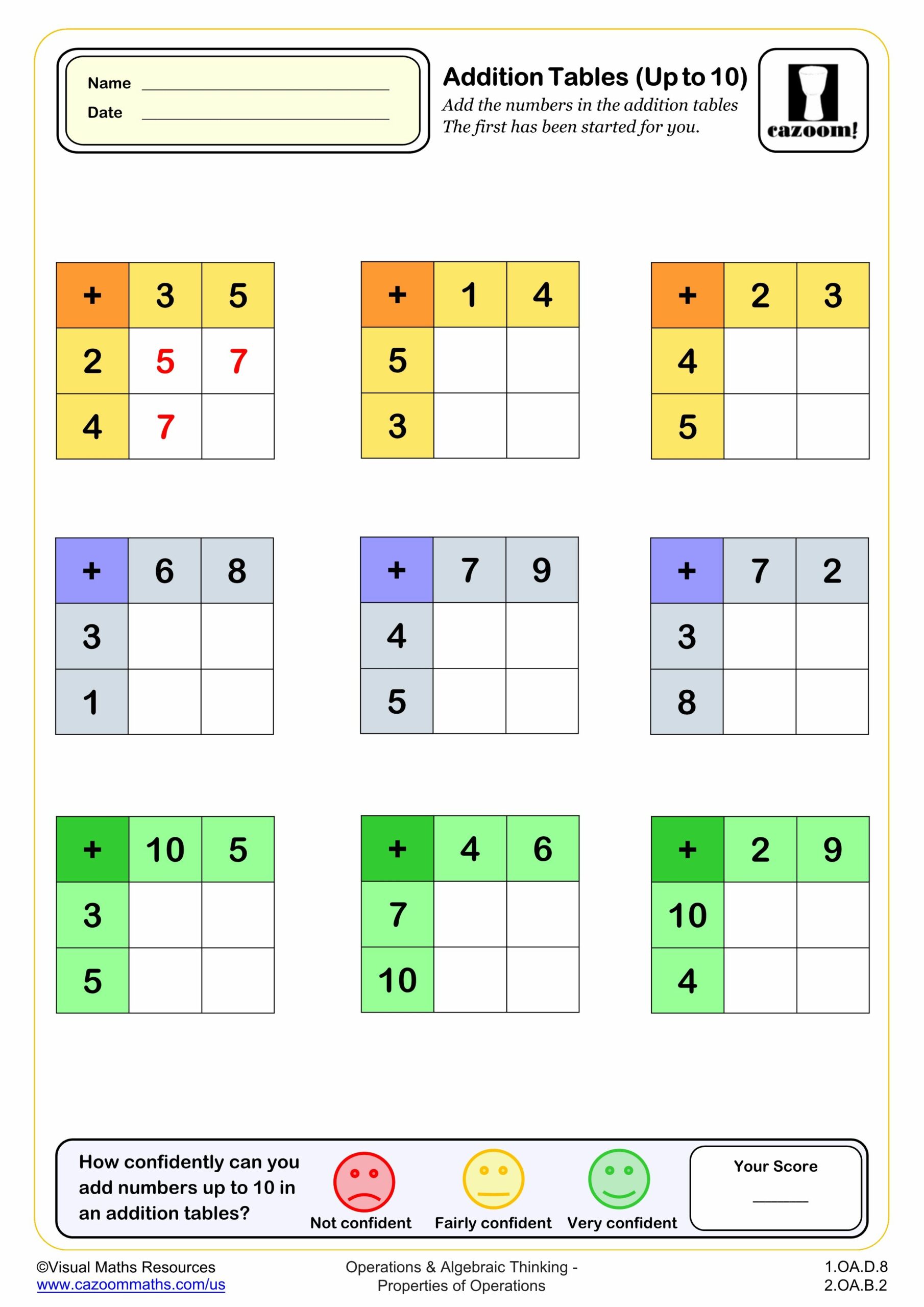
Addition Tables up to 10
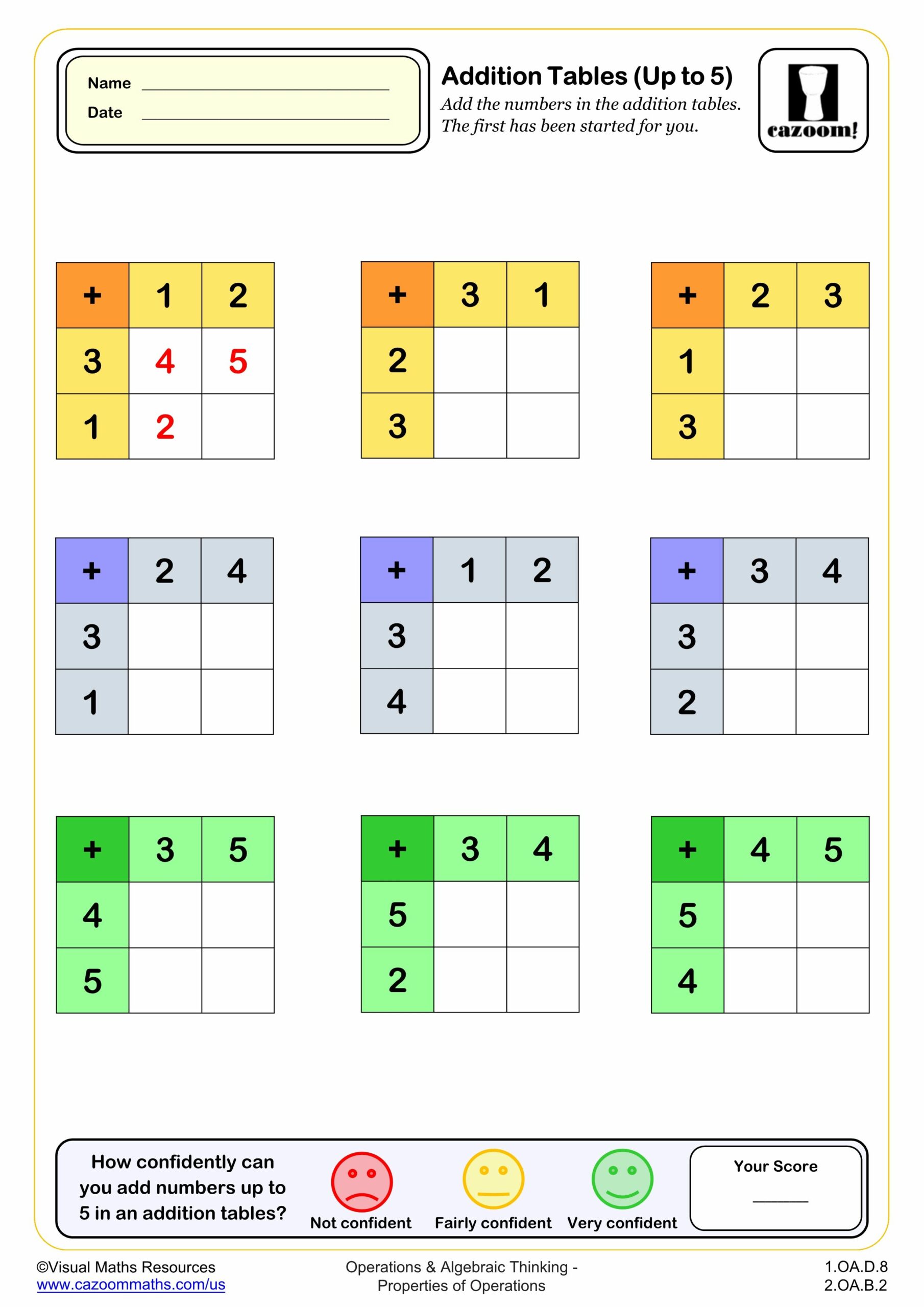
Addition Tables up to 5
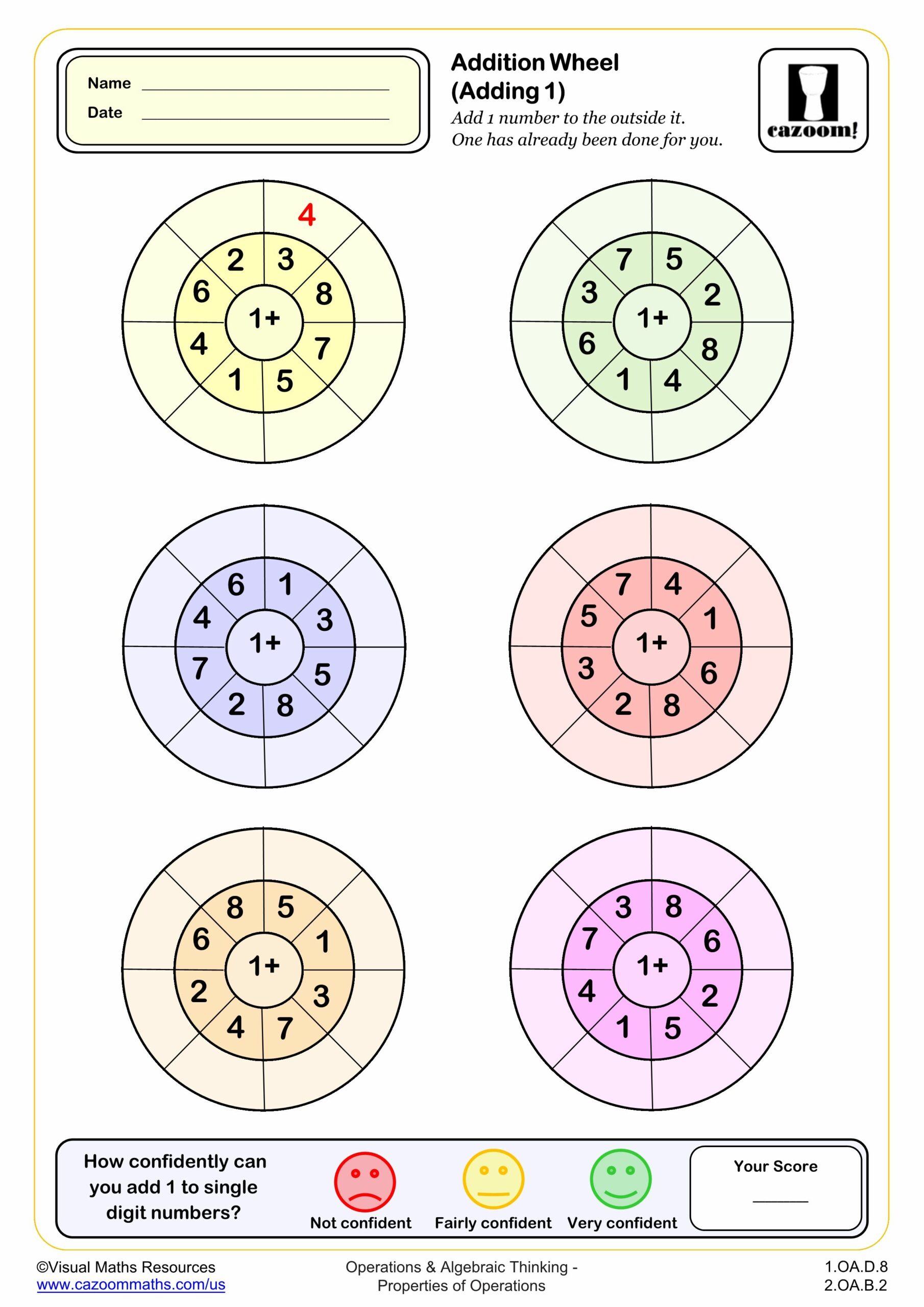
Addition Wheels (adding 1)
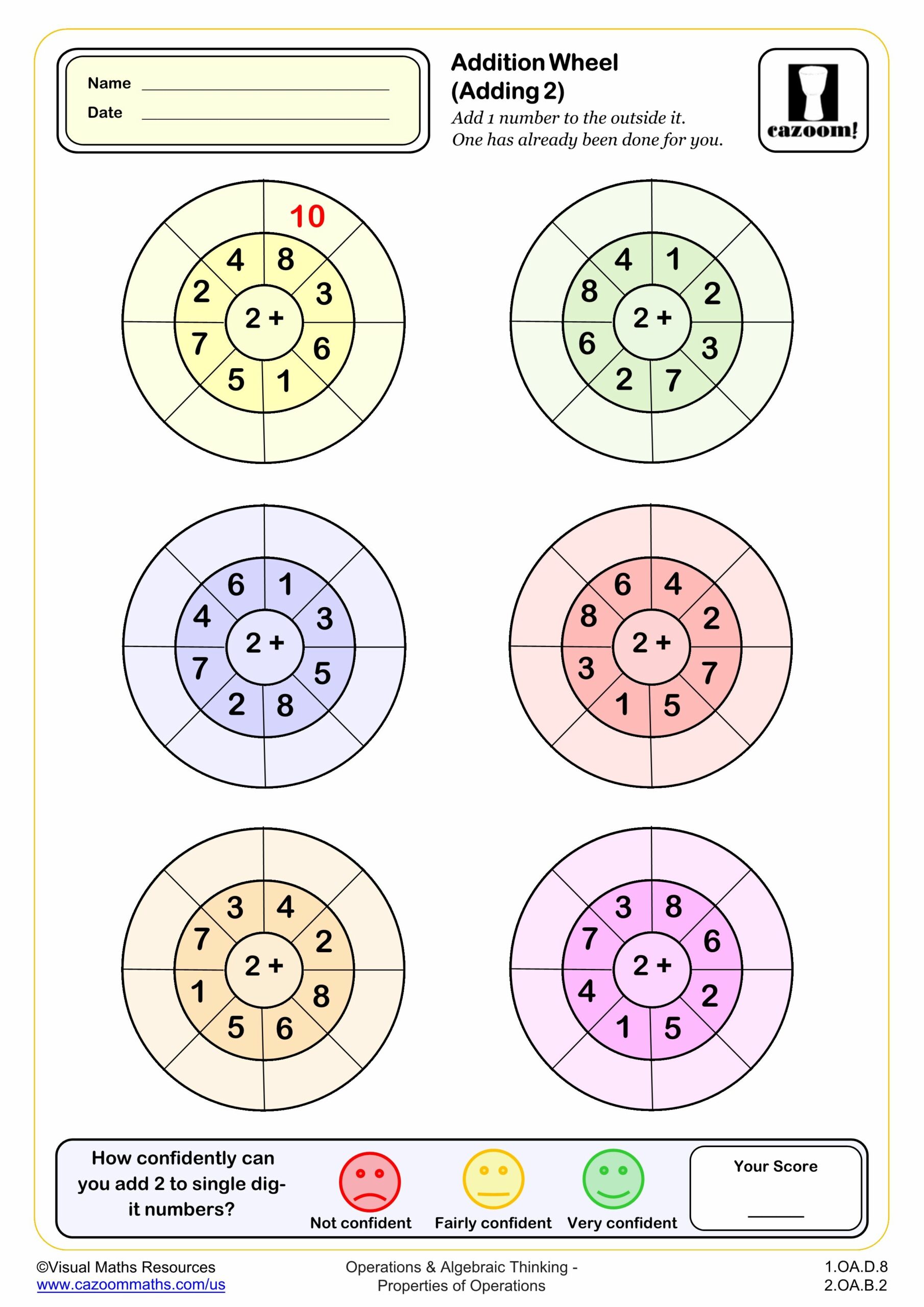
Addition Wheels (adding 2)
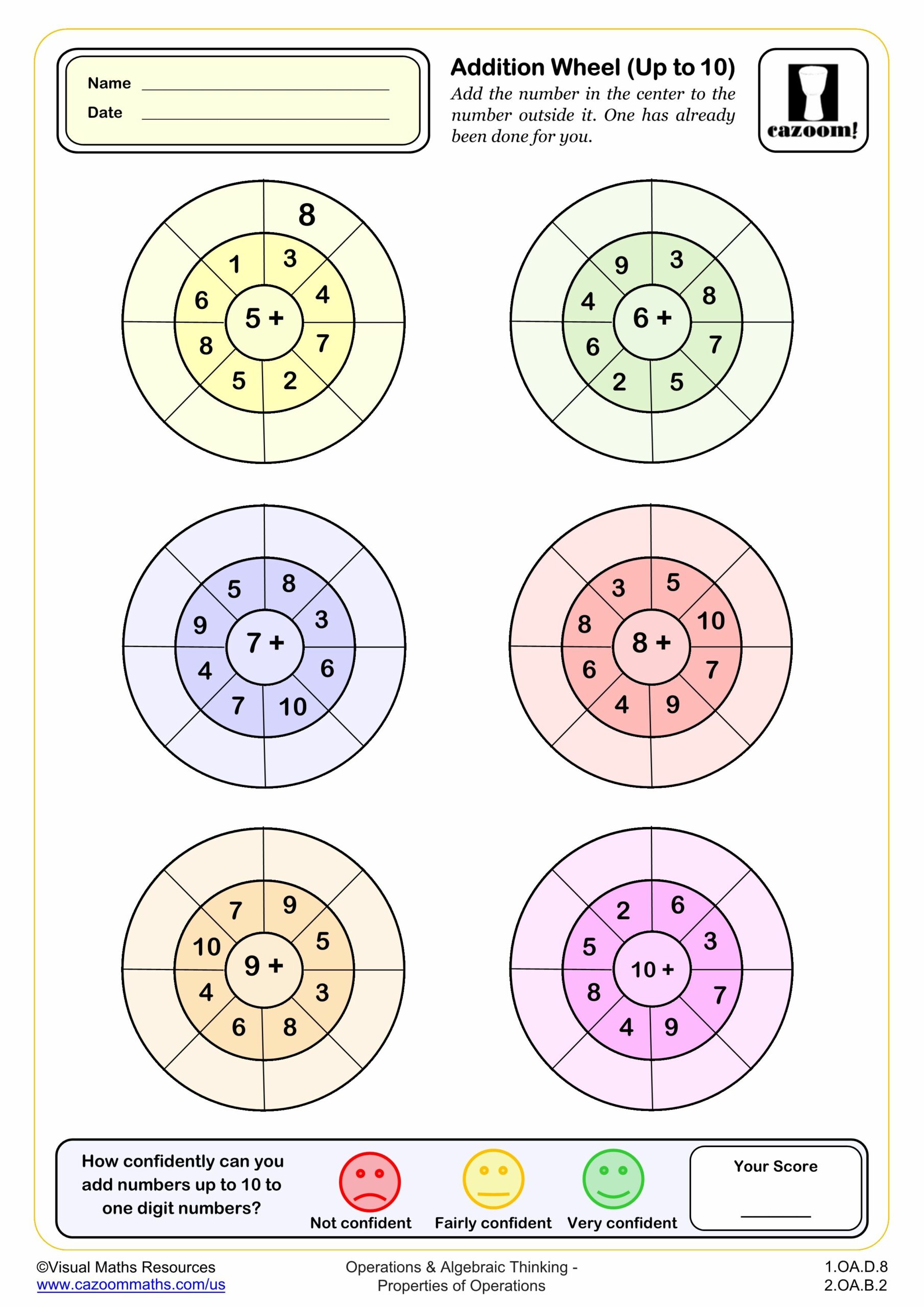
Addition Wheels (Up to 10)
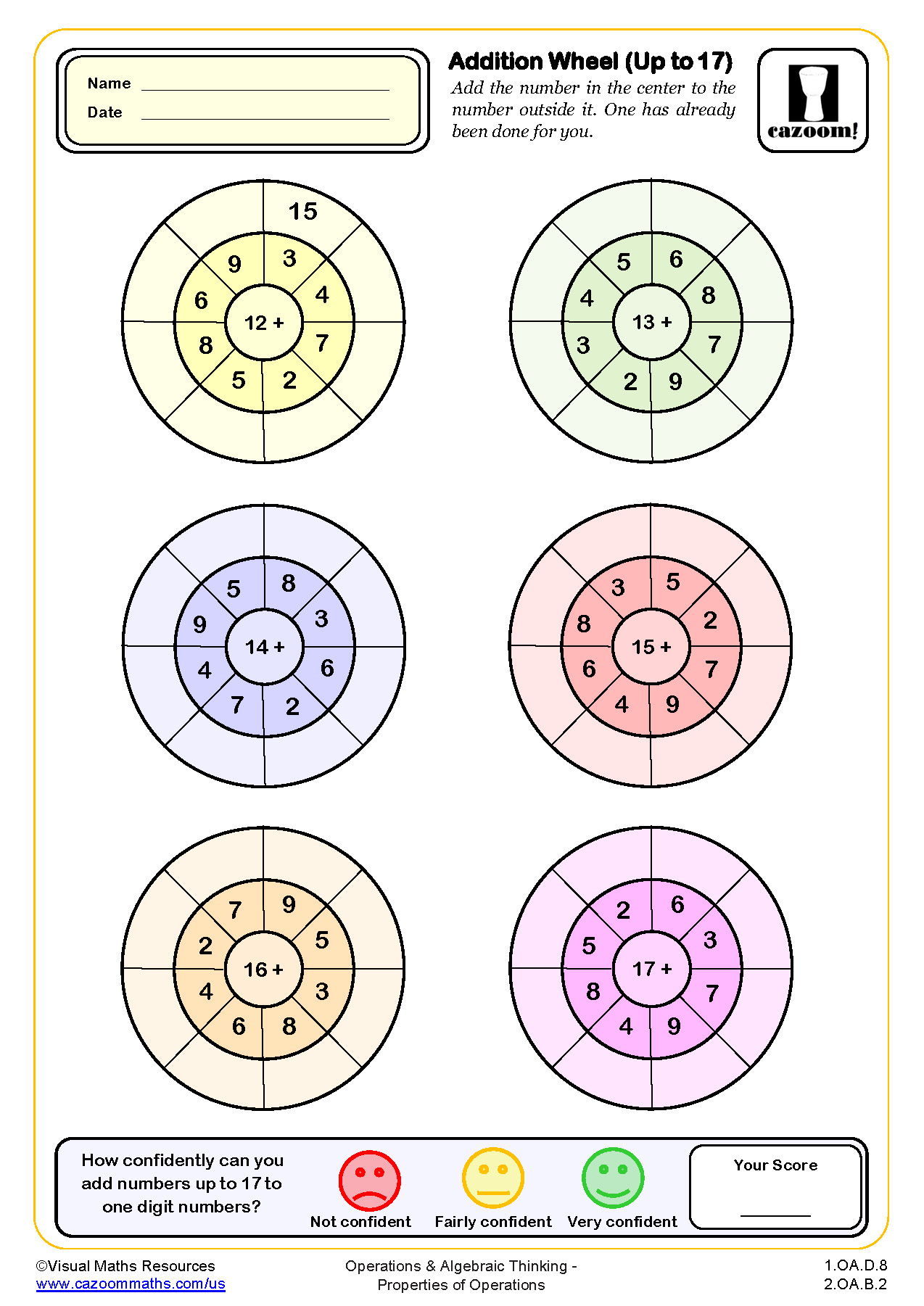
Addition Wheels (Up to 17)
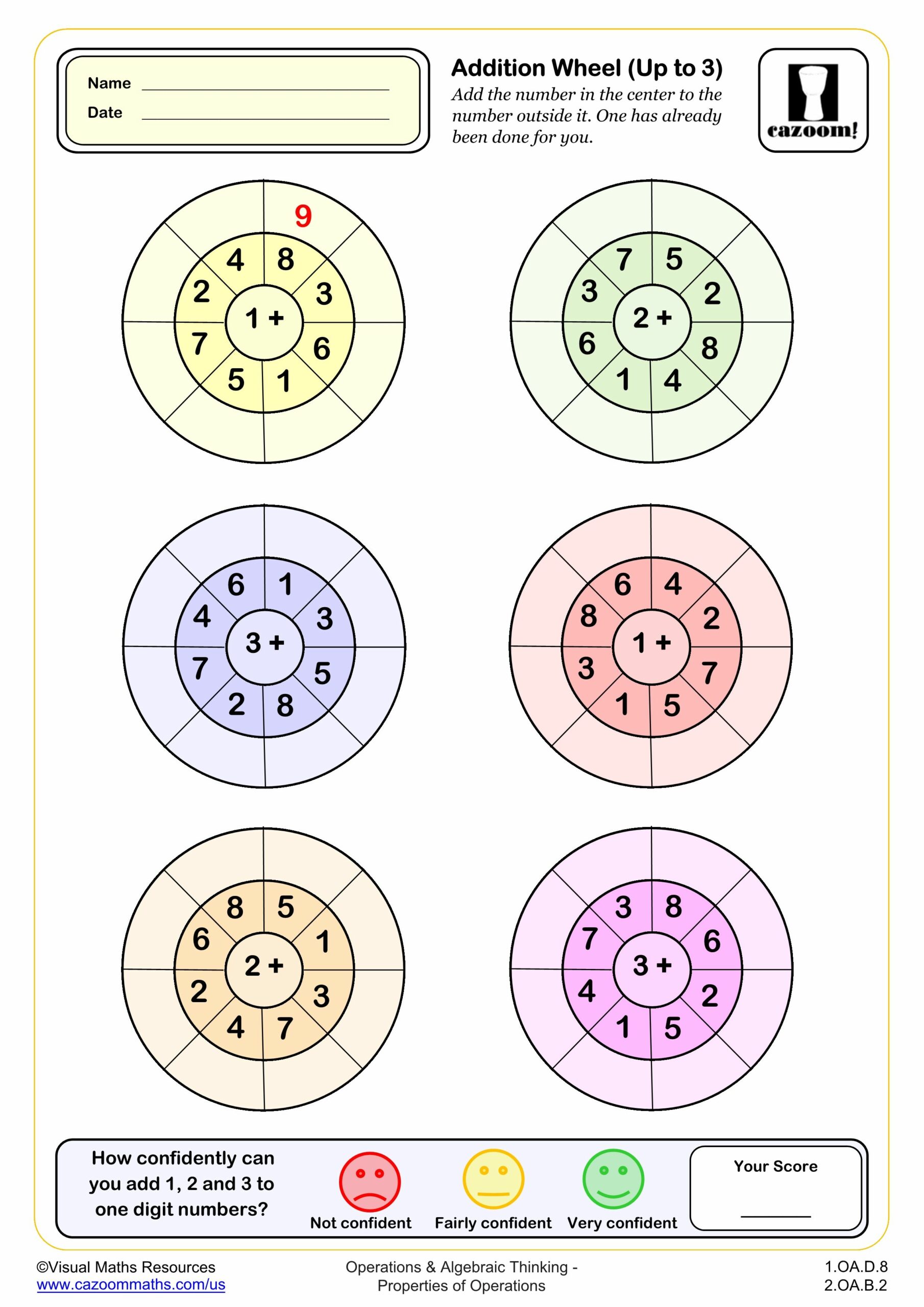
Addition Wheels (Up to 3)
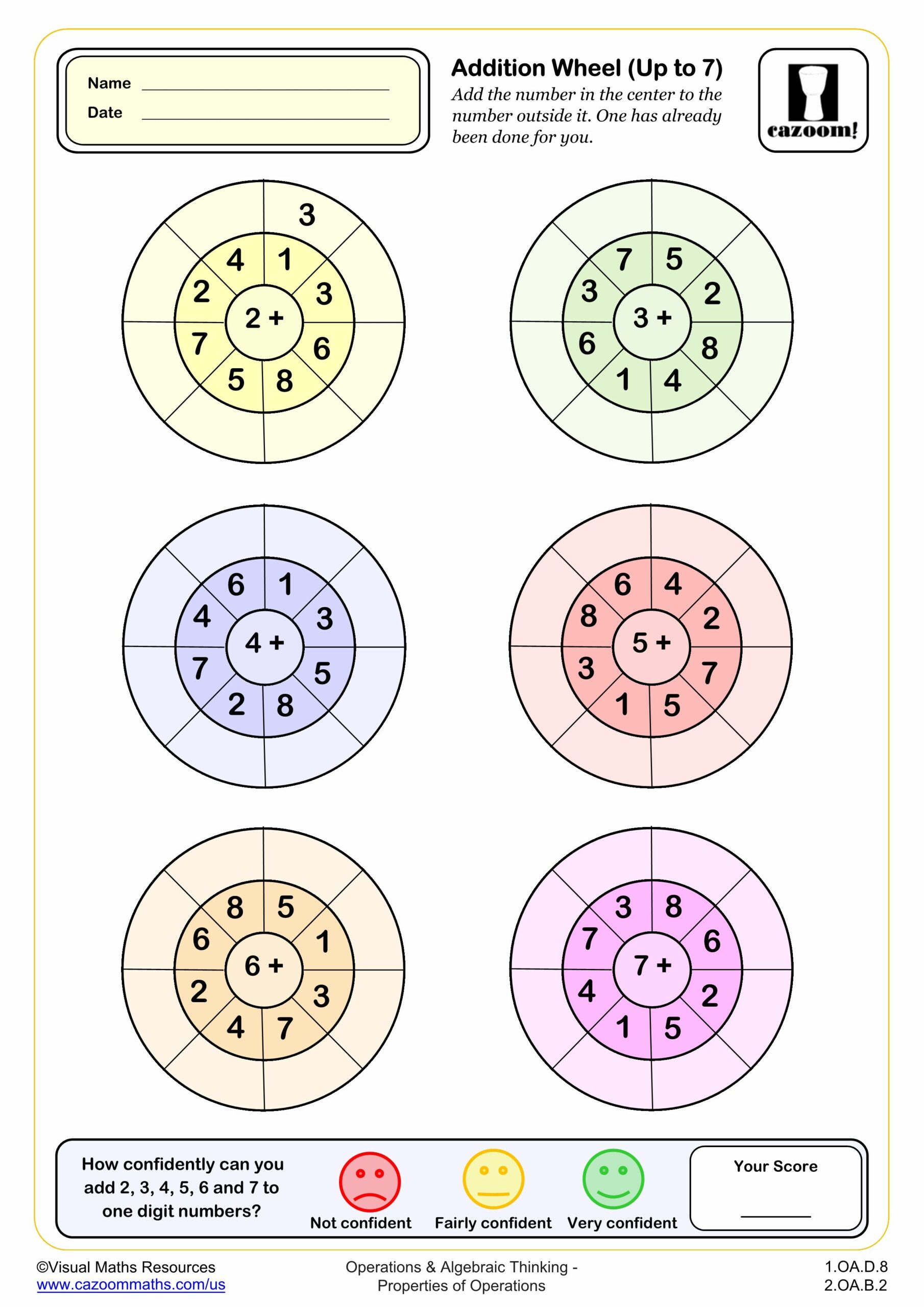
Addition Wheels (Up to 7)
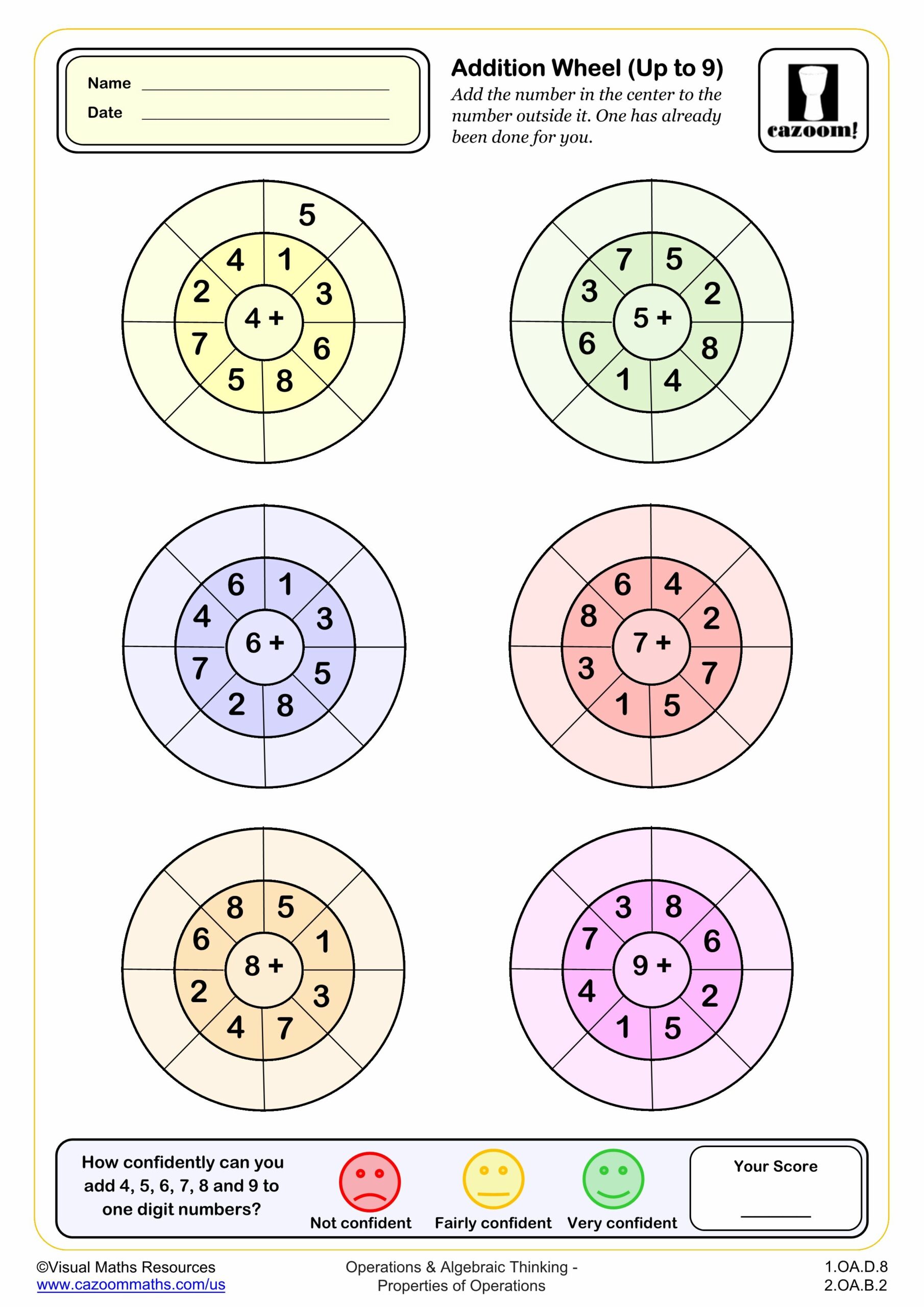
Addition Wheels (Up to 9)
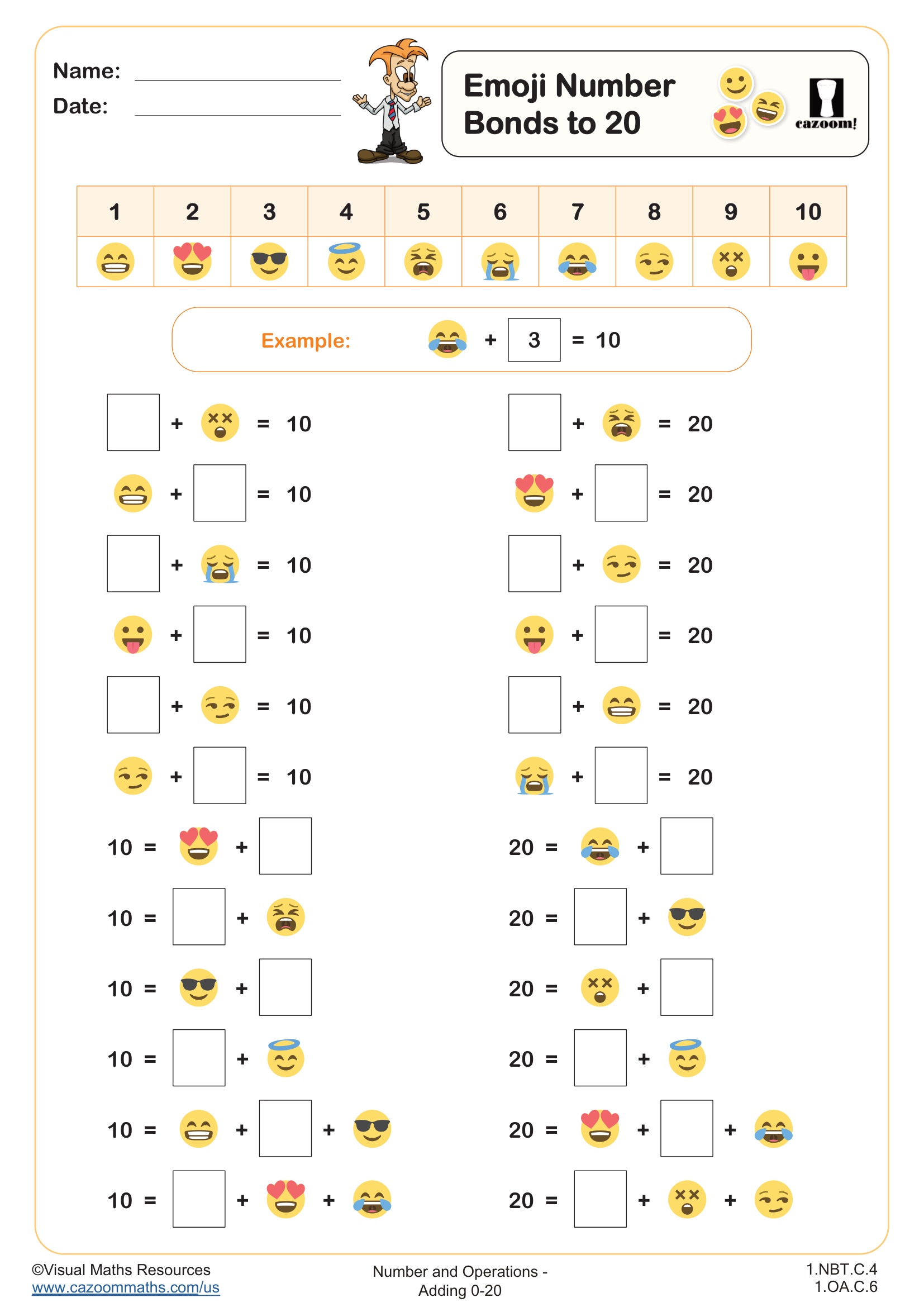
Emoji Number Bonds to 20
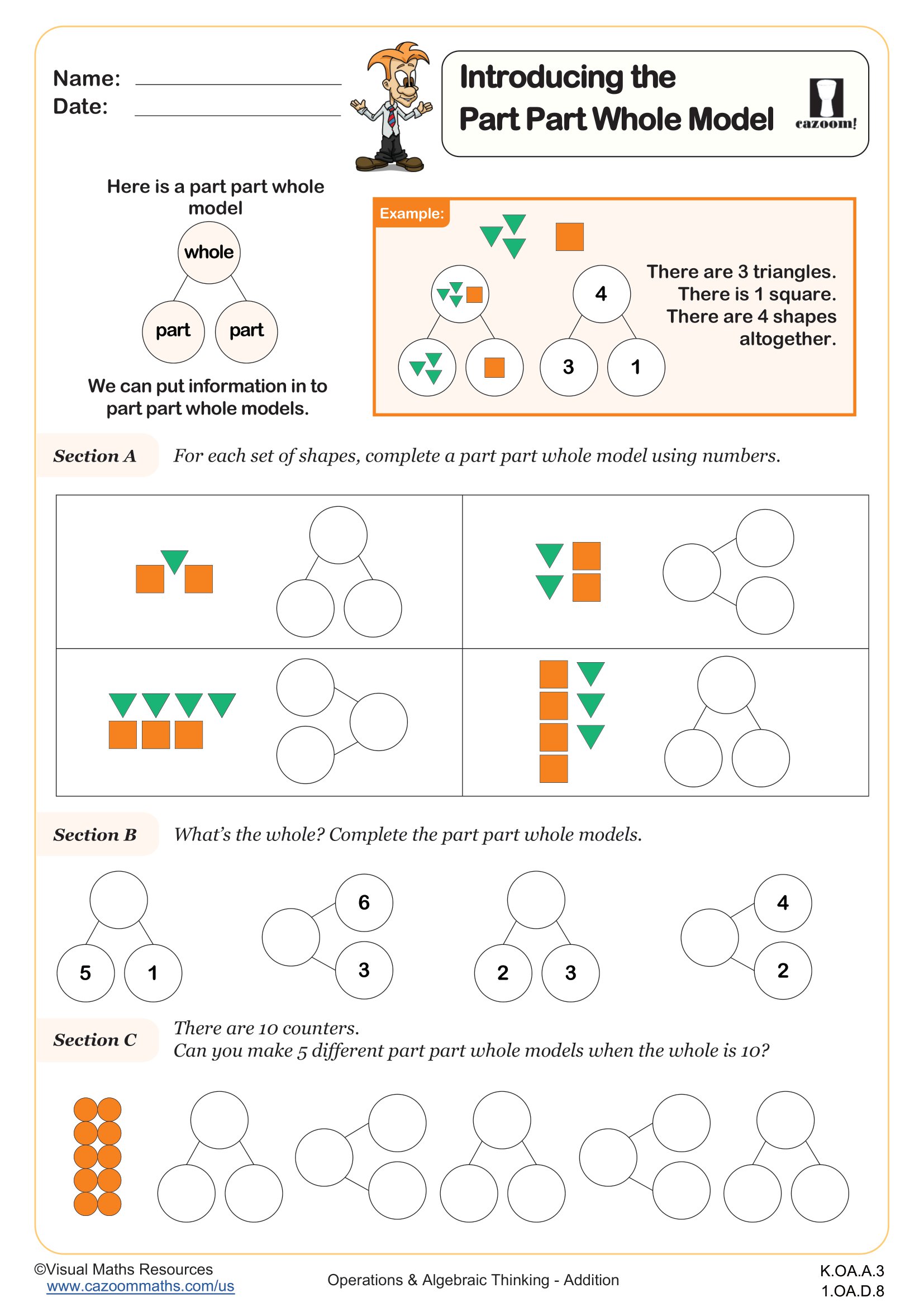
Introducing the Part Part Whole Model
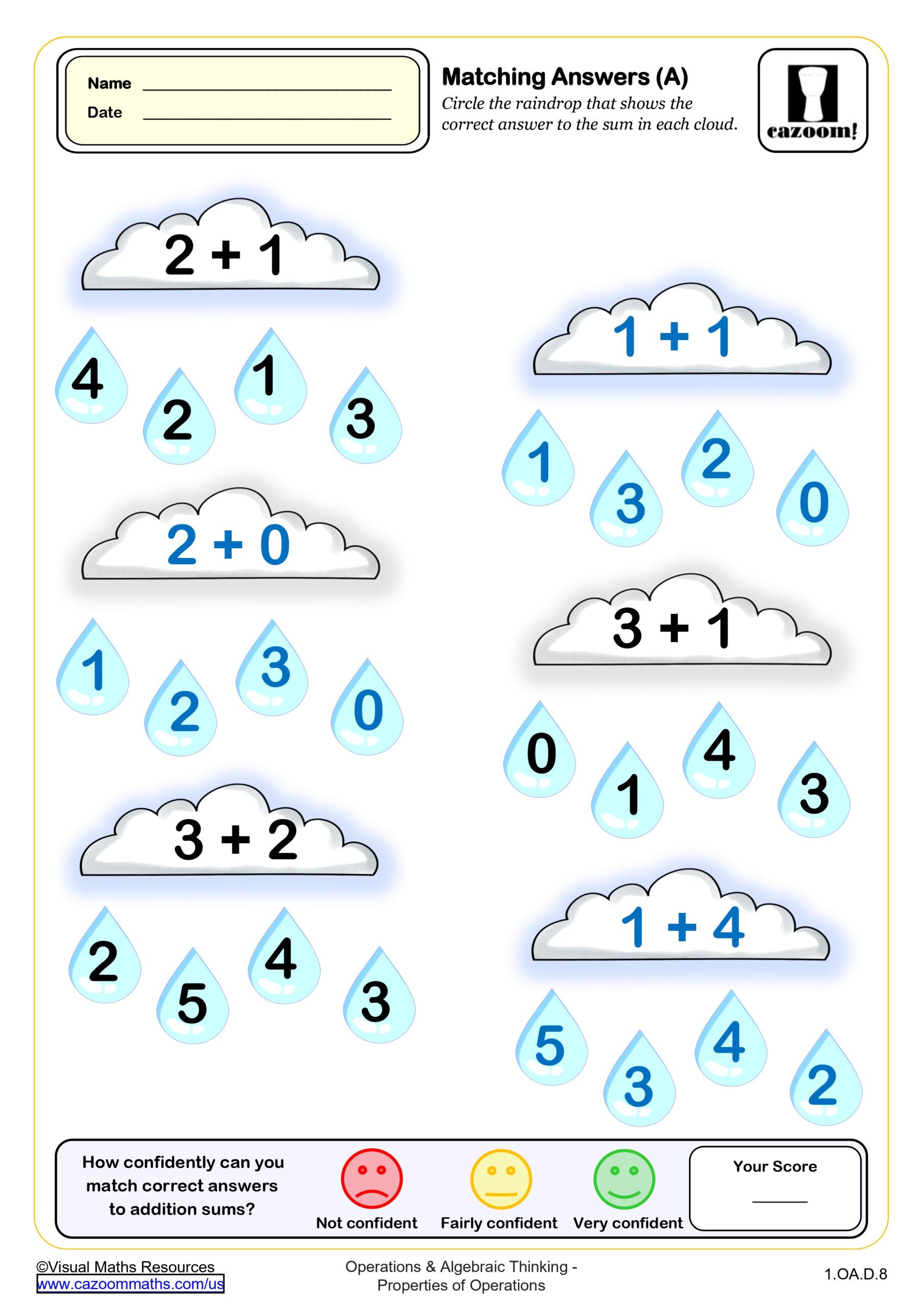
Matching Answers (A)
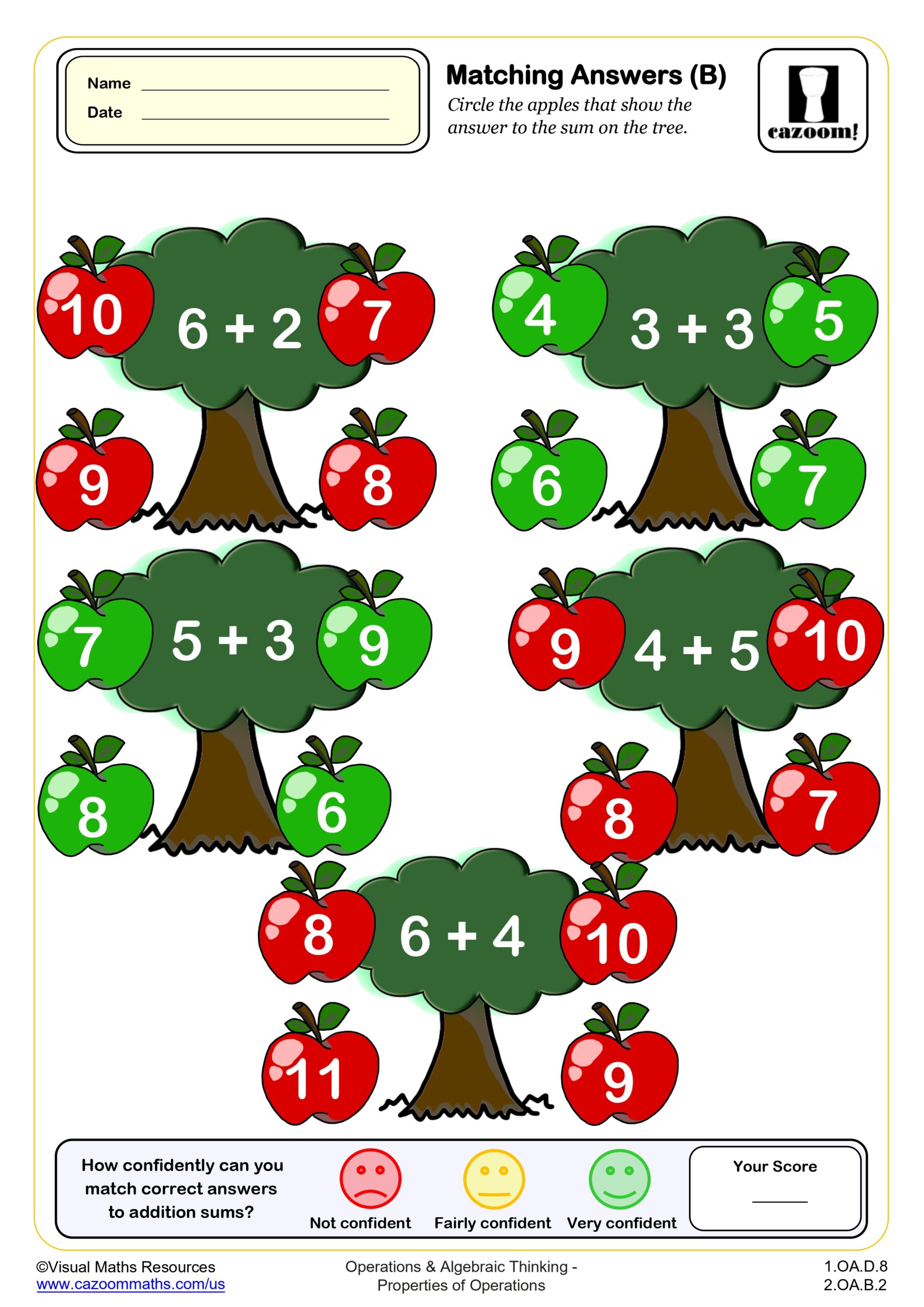
Matching Answers (B)
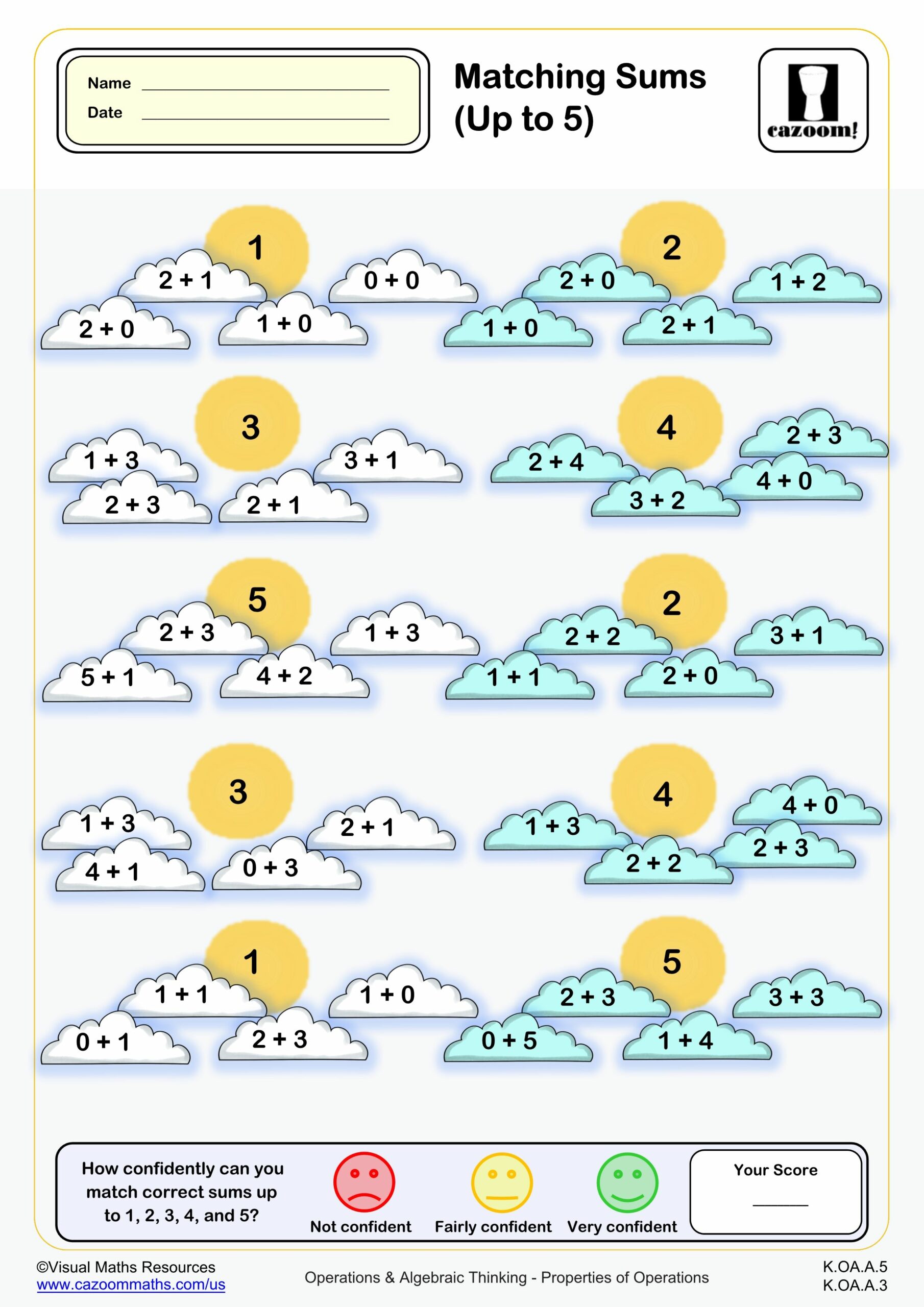
Matching Sums (up to 5)
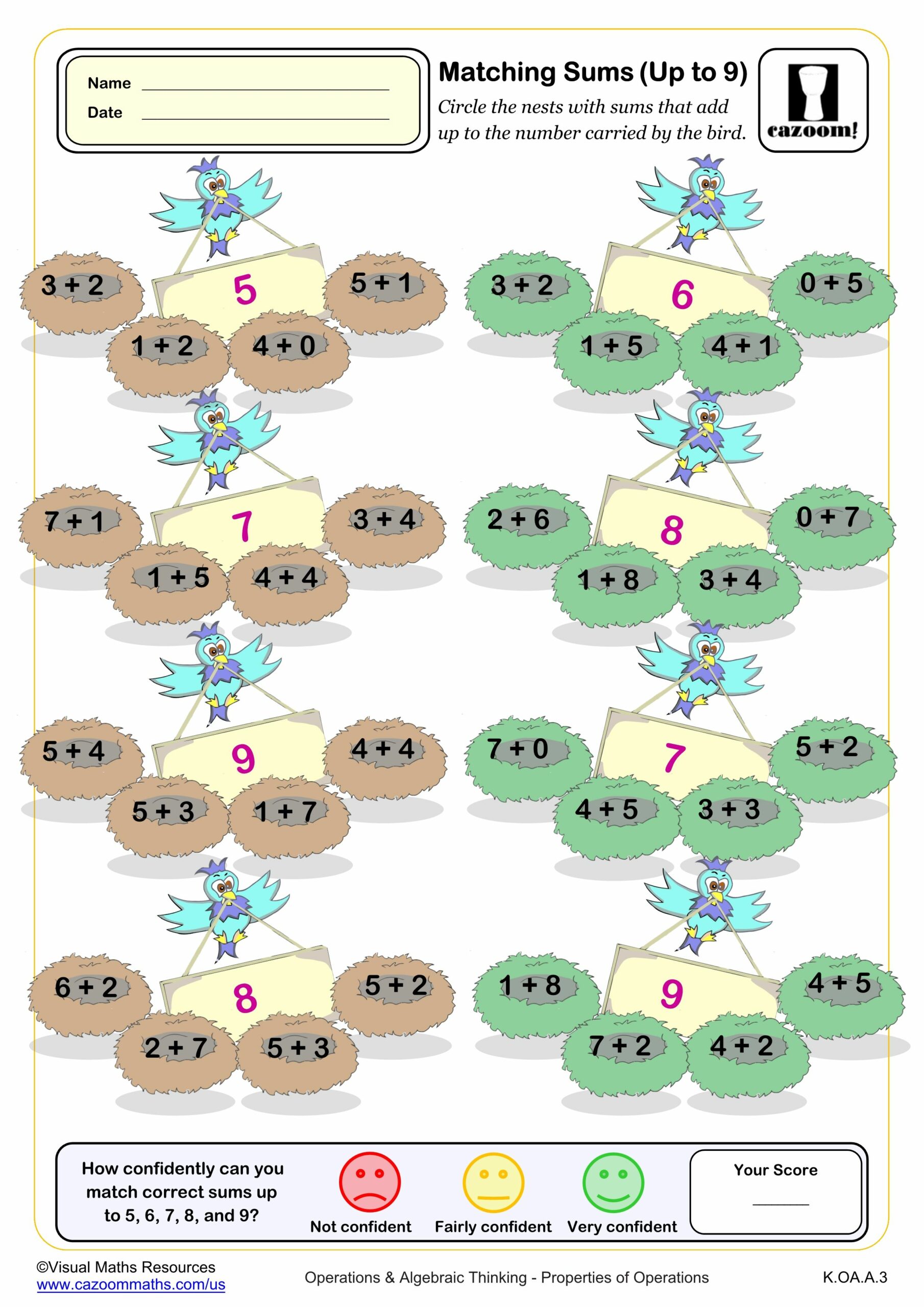
Matching Sums (up to 9)
All worksheets are created by the team of experienced teachers at Cazoom Math.
What Are Addition Facts Within 20?
Addition facts within 20 include all single-digit number combinations and their sums up to 20, such as 9 + 8 = 17 or 7 + 6 = 13. These facts align with Common Core State Standards for early elementary grades, where students progress from concrete counting strategies to automatic recall. Mastering these facts reduces cognitive load during more complex problem-solving, allowing students to focus on mathematical reasoning rather than basic computation.
A common misconception occurs when students rely exclusively on counting by ones rather than recognizing patterns like doubles (6 + 6) or making ten (8 + 7 = 8 + 2 + 5). Students lose valuable time on assessments when they haven't moved beyond finger counting, particularly as timed fluency checks become more common in second and third grade. Teaching students to recognize friendly number relationships transforms their computational efficiency.
What Grade Levels Practice Adding Numbers 0-20?
These worksheets support students in kindergarten, first grade, second grade, third grade, fourth grade, and fifth grade across elementary school. While kindergarten and first grade students typically encounter these problems as new learning, older students use them for fluency practice, intervention, or quick warm-up activities. The foundation established through this work directly supports multi-digit addition and mental math strategies in later grades.
The difficulty progression varies by grade expectations. Kindergarten students might work with sums to 10 using pictures or manipulatives, while first graders tackle all combinations to 20. By second grade, students focus on speed and automaticity. Third through fifth grade students encountering these worksheets typically need targeted intervention or are building confidence before tackling more complex operations. Teachers often notice that upper elementary students who struggle with fractions or multi-digit problems benefit from returning to these basics to fill foundational gaps.
How Does Adding Smaller Numbers Like 1, 2, and 4 Help Students?
Practicing addition with specific addends like +1, +2, and +4 helps students recognize predictable patterns that accelerate mental math. Adding one simply means identifying the next number in sequence, while adding two involves skip counting or visualizing two jumps forward. Adding four often connects to doubles of two, helping students see relationships between facts. These structured practice sets build automaticity with specific number families before mixing all facts together.
These patterns appear constantly in measurement contexts across STEM fields. When reading a ruler, each mark represents adding one-eighth or one-sixteenth inch. In computer science, binary code relies on repeatedly adding powers of two. Scientists tracking plant growth add daily measurements, often in small increments. Students who quickly compute small additions can focus their attention on the scientific observation or engineering problem rather than getting stuck on arithmetic, making these foundational skills directly applicable to real-world STEM work.
How Can Teachers Use These Addition Worksheets Effectively?
The worksheets provide varied problem sets that allow teachers to scaffold instruction from guided practice to independent mastery. The subtopics focusing on specific addends let teachers isolate particular facts students find challenging, while mixed practice sheets assess overall fluency. Having answer keys readily available means teachers can quickly check work during one-on-one conferences or allow students to self-check during partner activities, building metacognitive skills alongside computational fluency.
Many teachers use these worksheets for math center rotations, pairing them with manipulatives for students who need concrete support. They work well as timed fluency checks to track progress toward automaticity goals or as homework that reinforces classroom instruction without requiring parent expertise. During intervention blocks, teachers often assign specific subtopic sheets to address individual fact gaps identified through formative assessment. The worksheets also serve as effective pre-assessments, helping teachers identify which students need additional support before moving to more complex addition strategies.