Elementary School Adding 2 Digit Numbers to 100 Worksheets
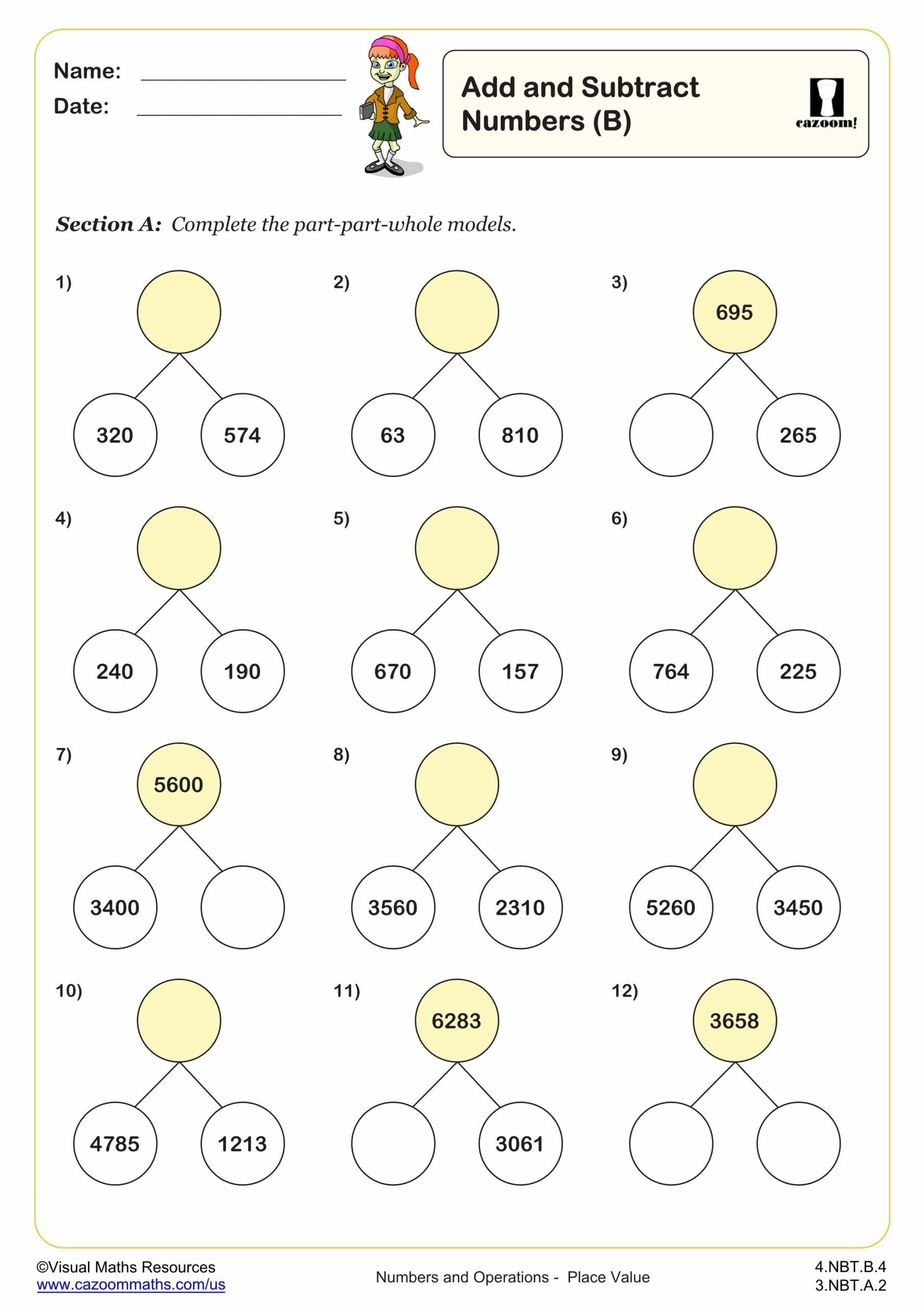
Add and subtract numbers (B)
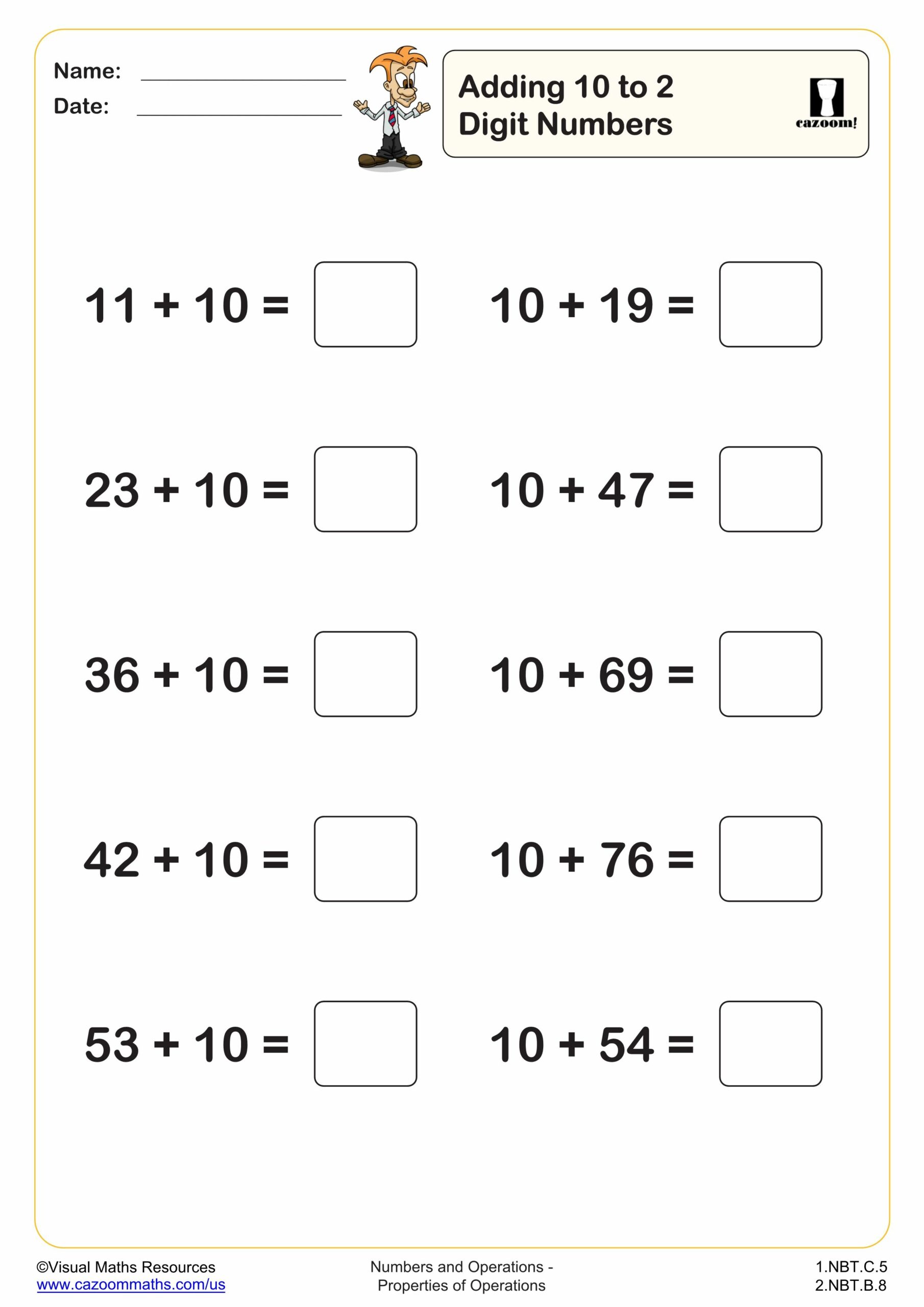
Adding 10 to 2 digit numbers (10 questions)
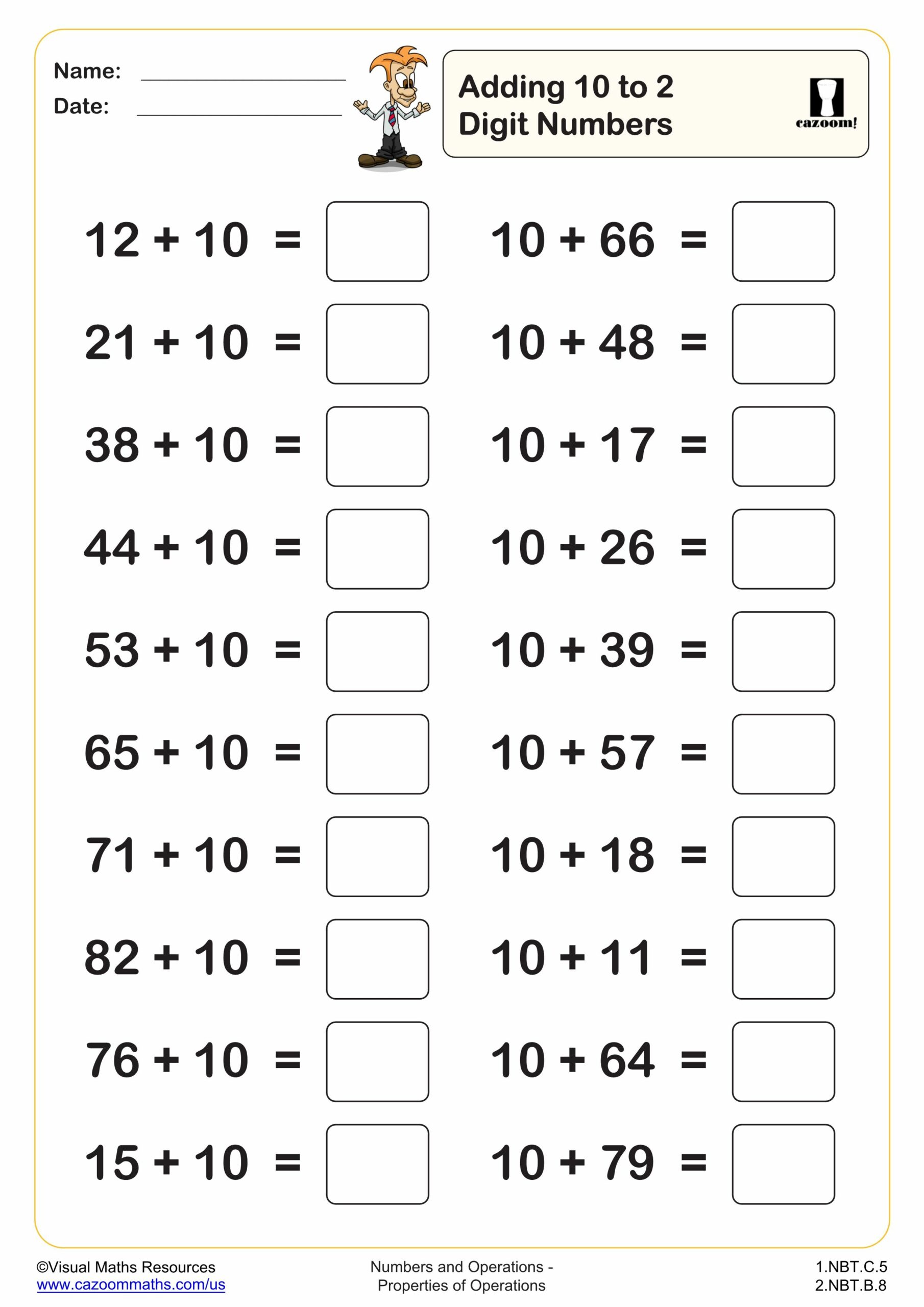
Adding 10 to 2 digit numbers (20 questions)
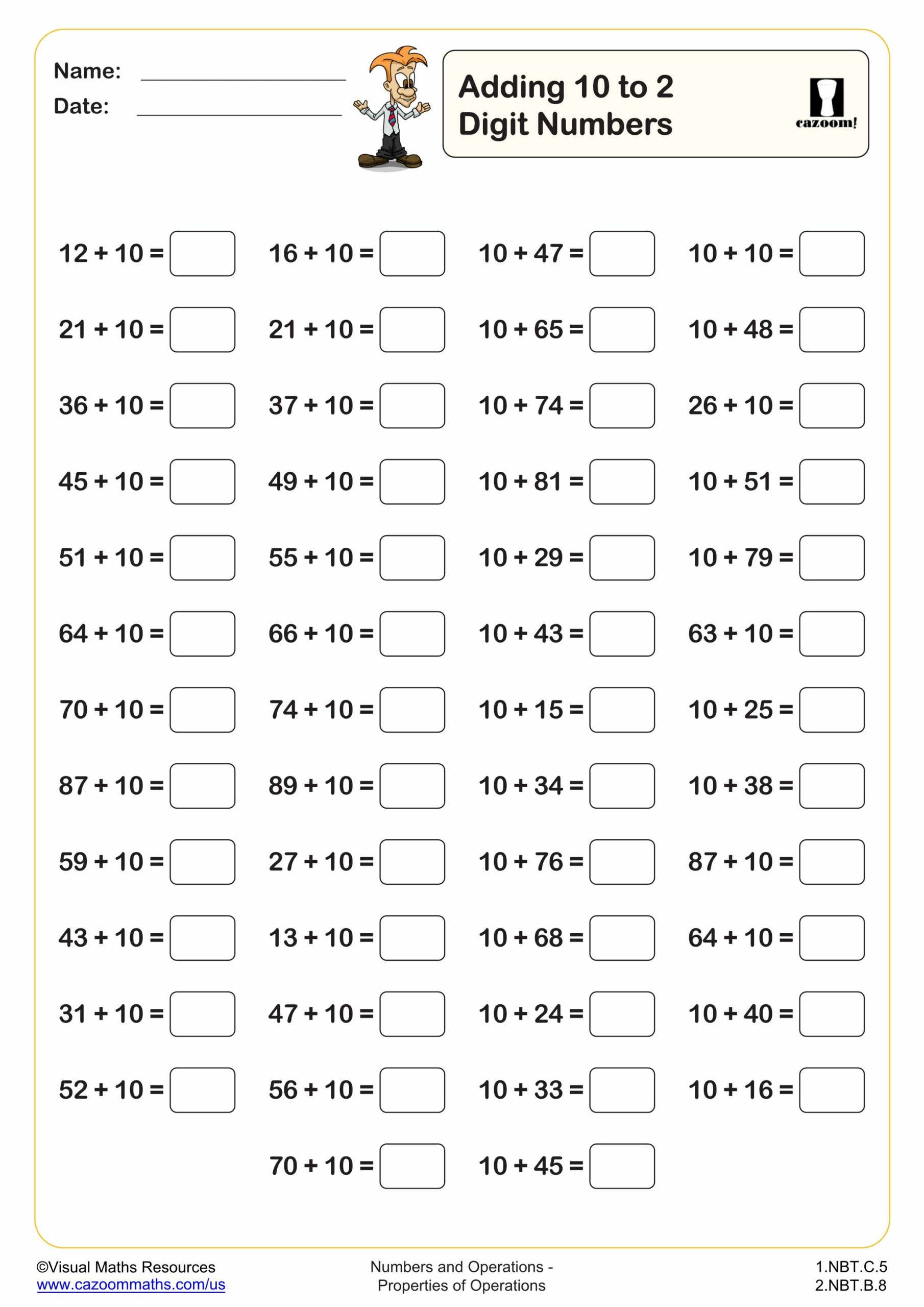
Adding 10 to 2 digit numbers (50 questions)
Adding 11 to 2 digit numbers (10 questions)
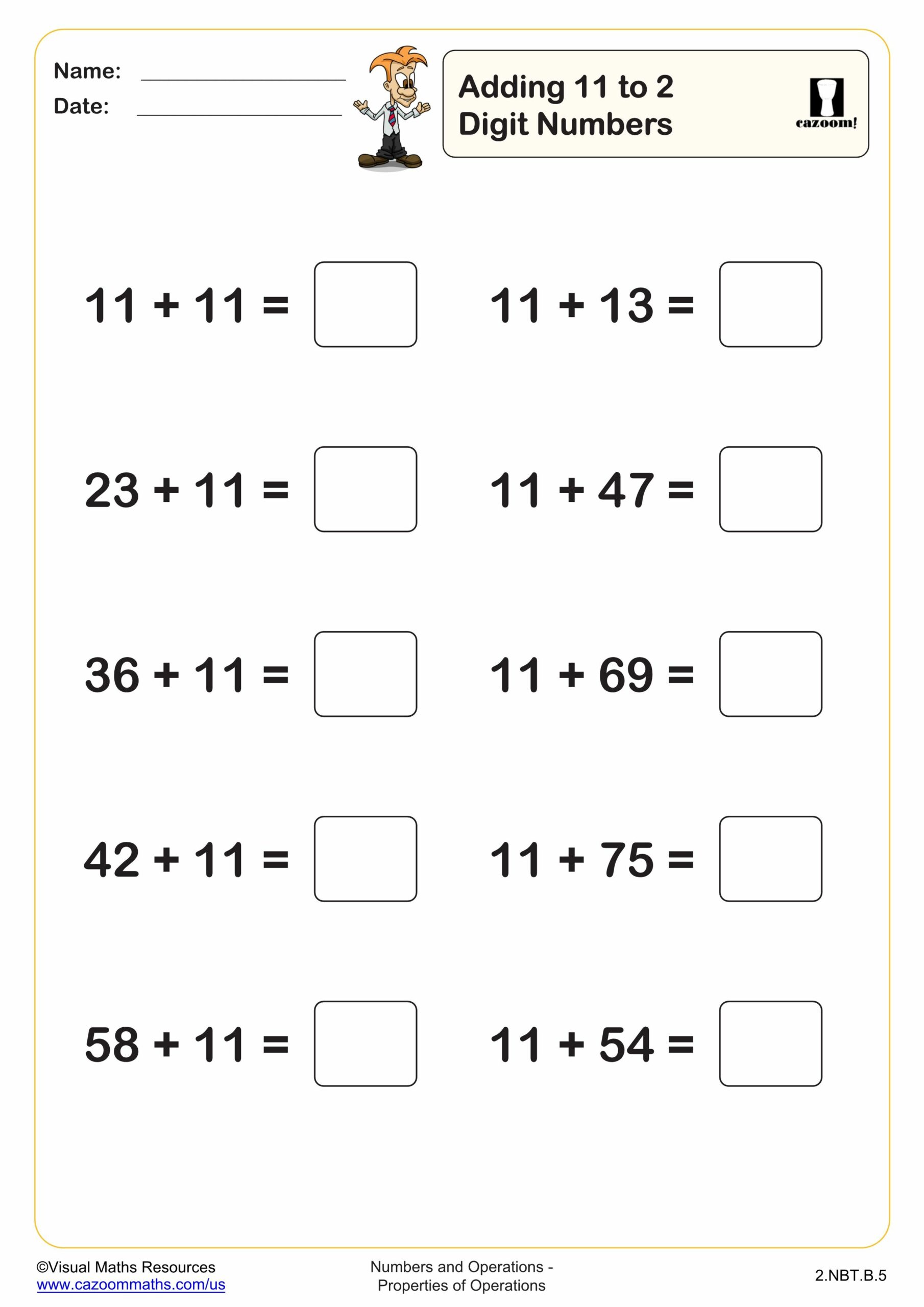
Adding 11 to 2 digit numbers (20 questions)
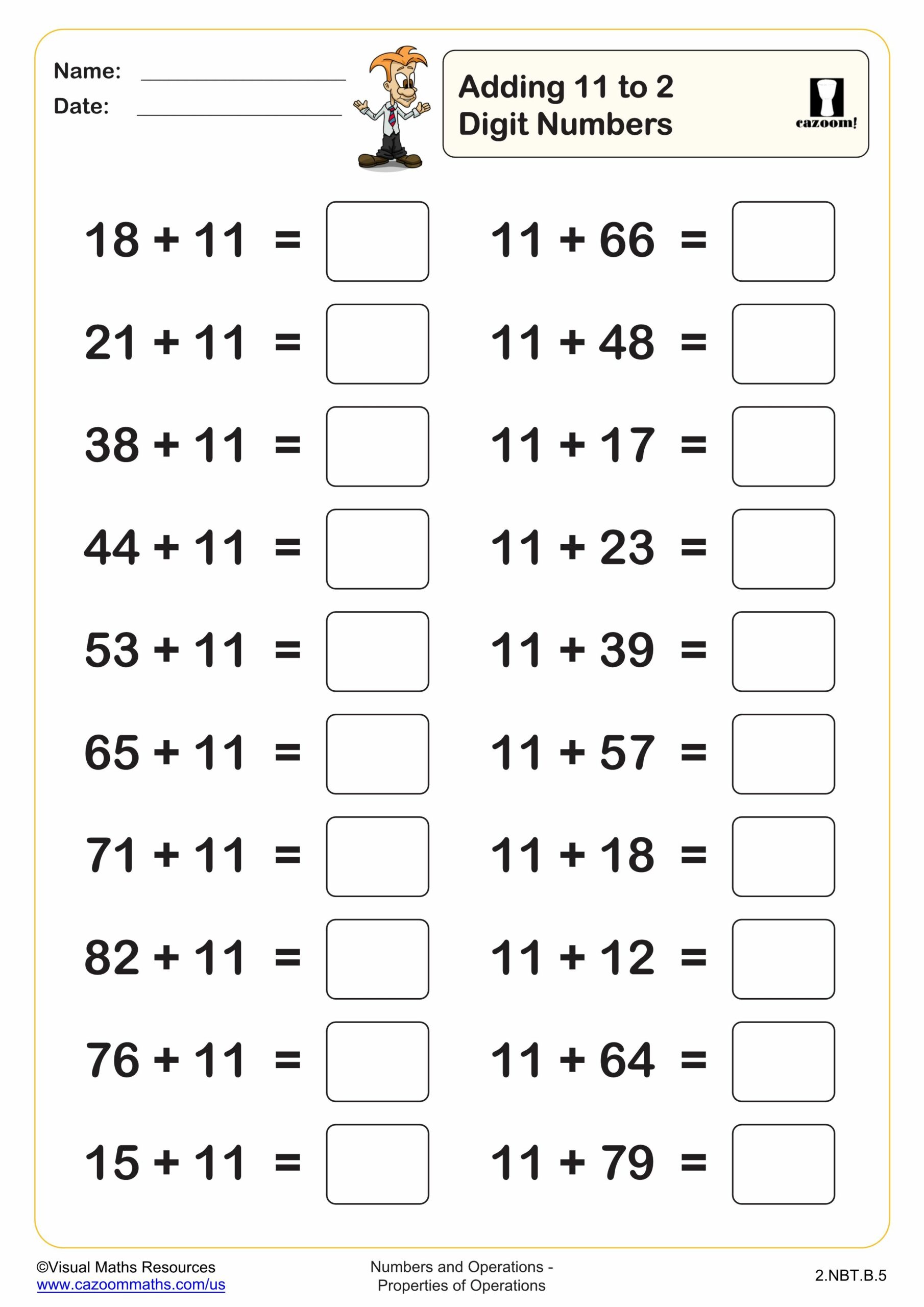
Adding 11 to 2 digit numbers (50 questions)
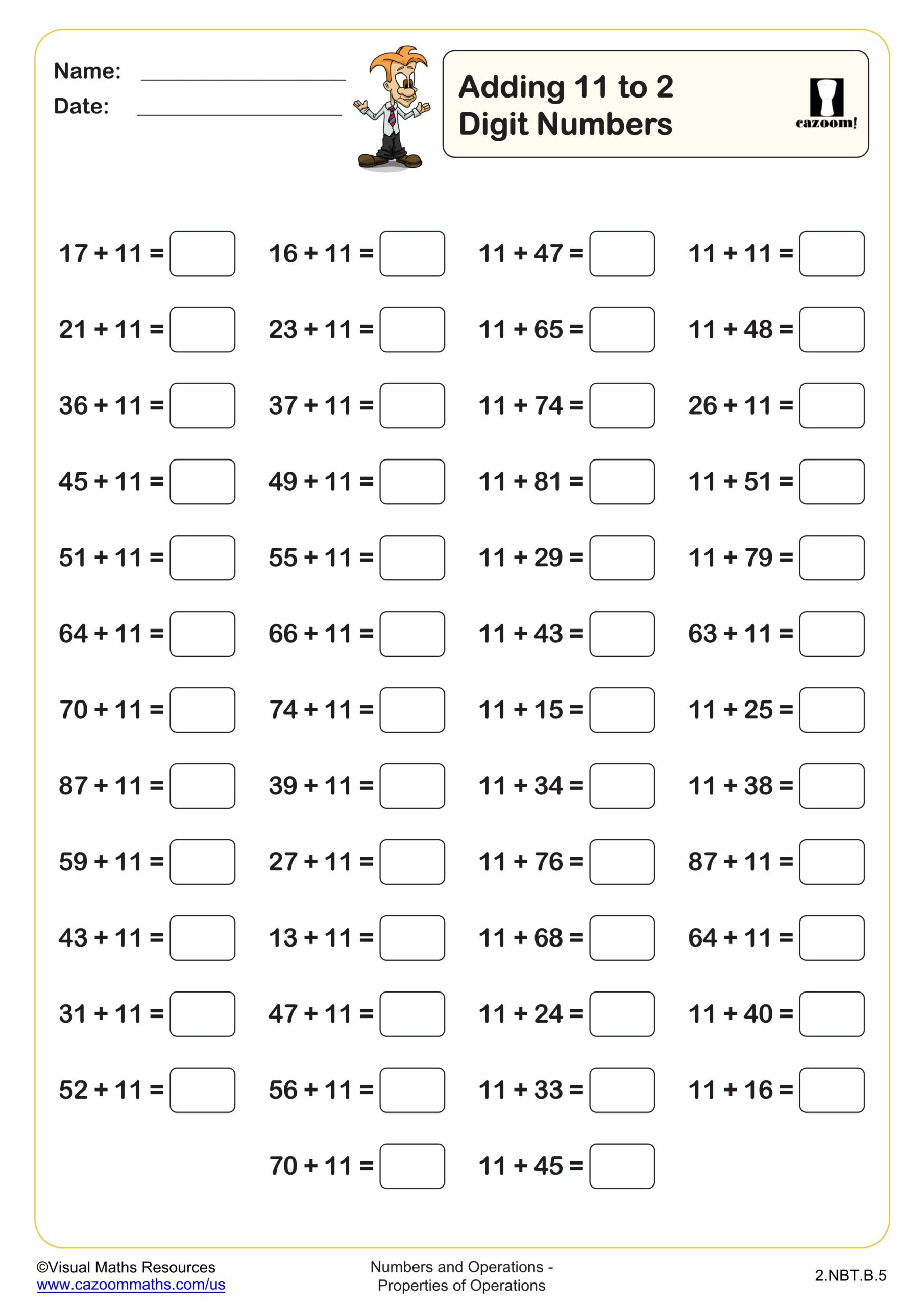
Adding 2 digit numbers without regrouping (10 questions)
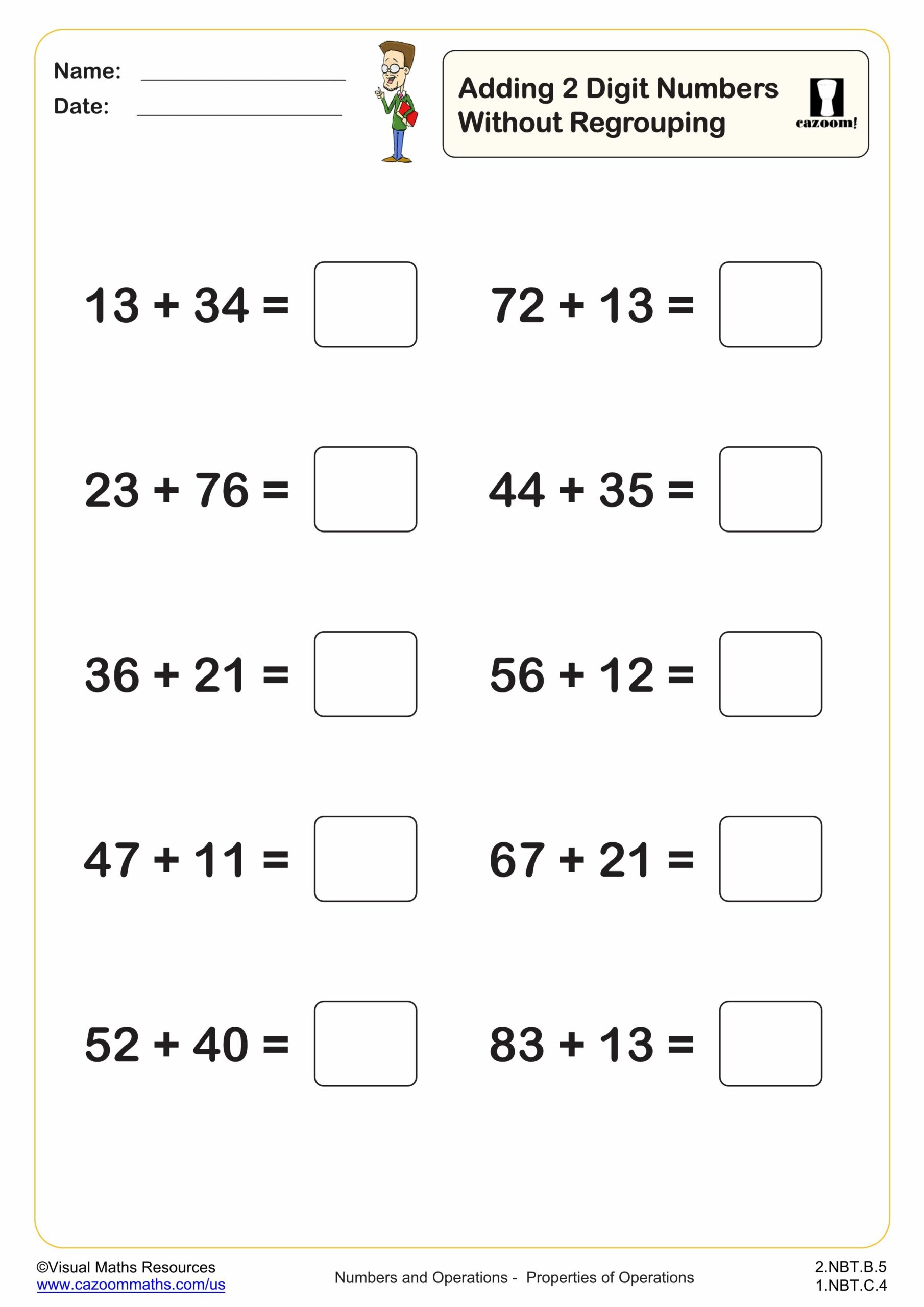
Adding 2 digit numbers without regrouping (20 questions)
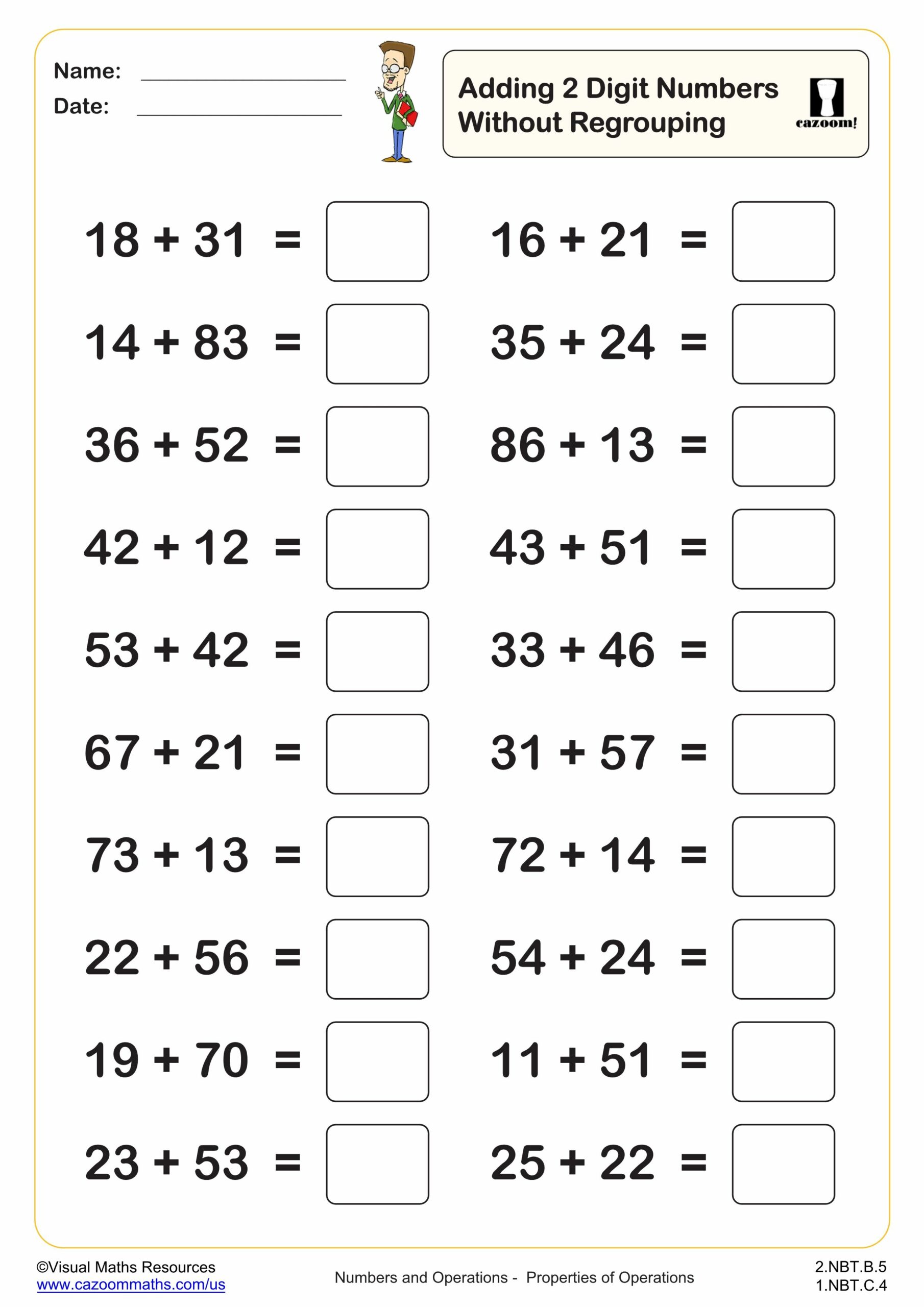
Adding 2 digit numbers without regrouping (50 questions)
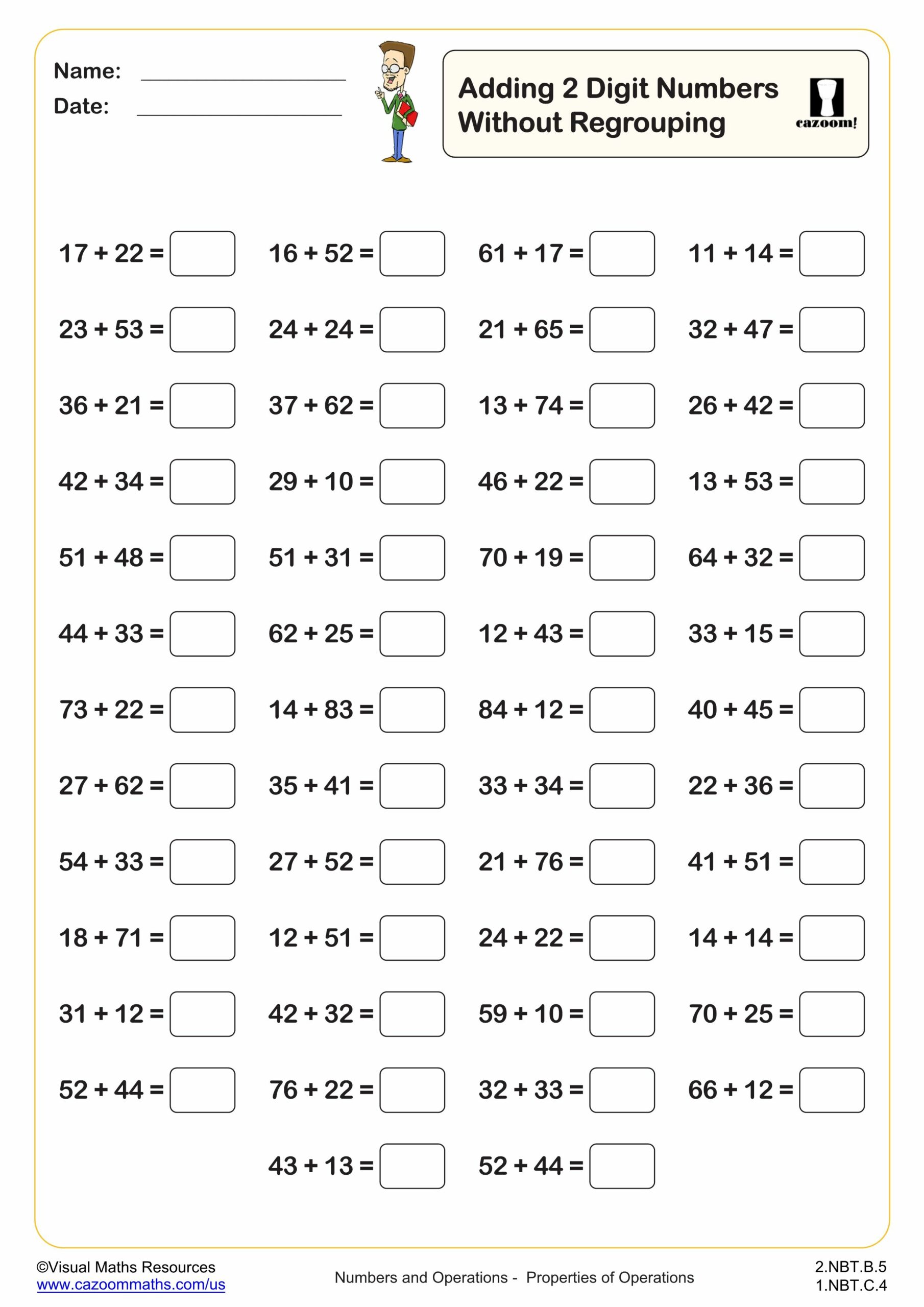
Adding 5 to 2 digit numbers (10 questions)
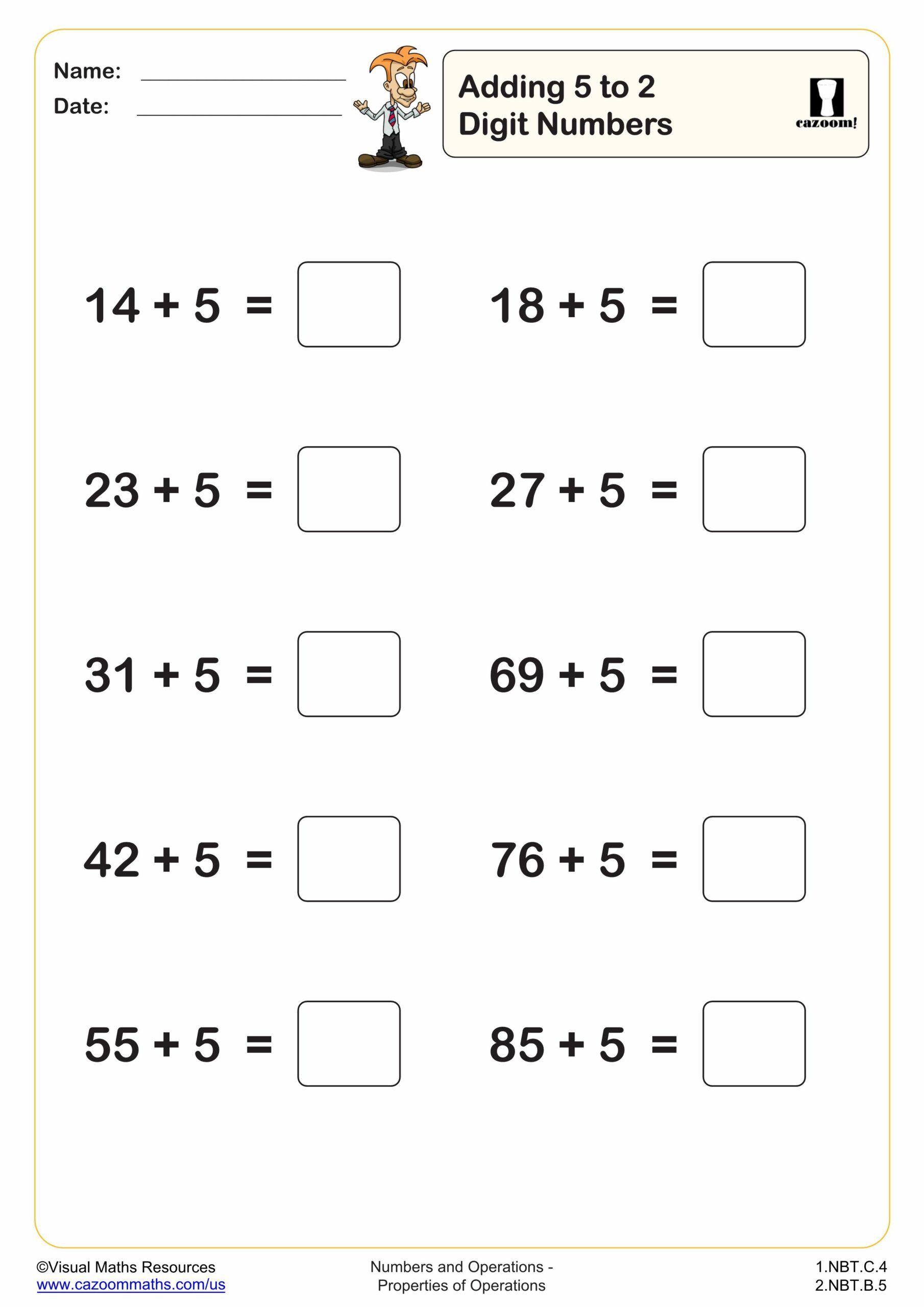
Adding 5 to 2 digit numbers (50 questions)
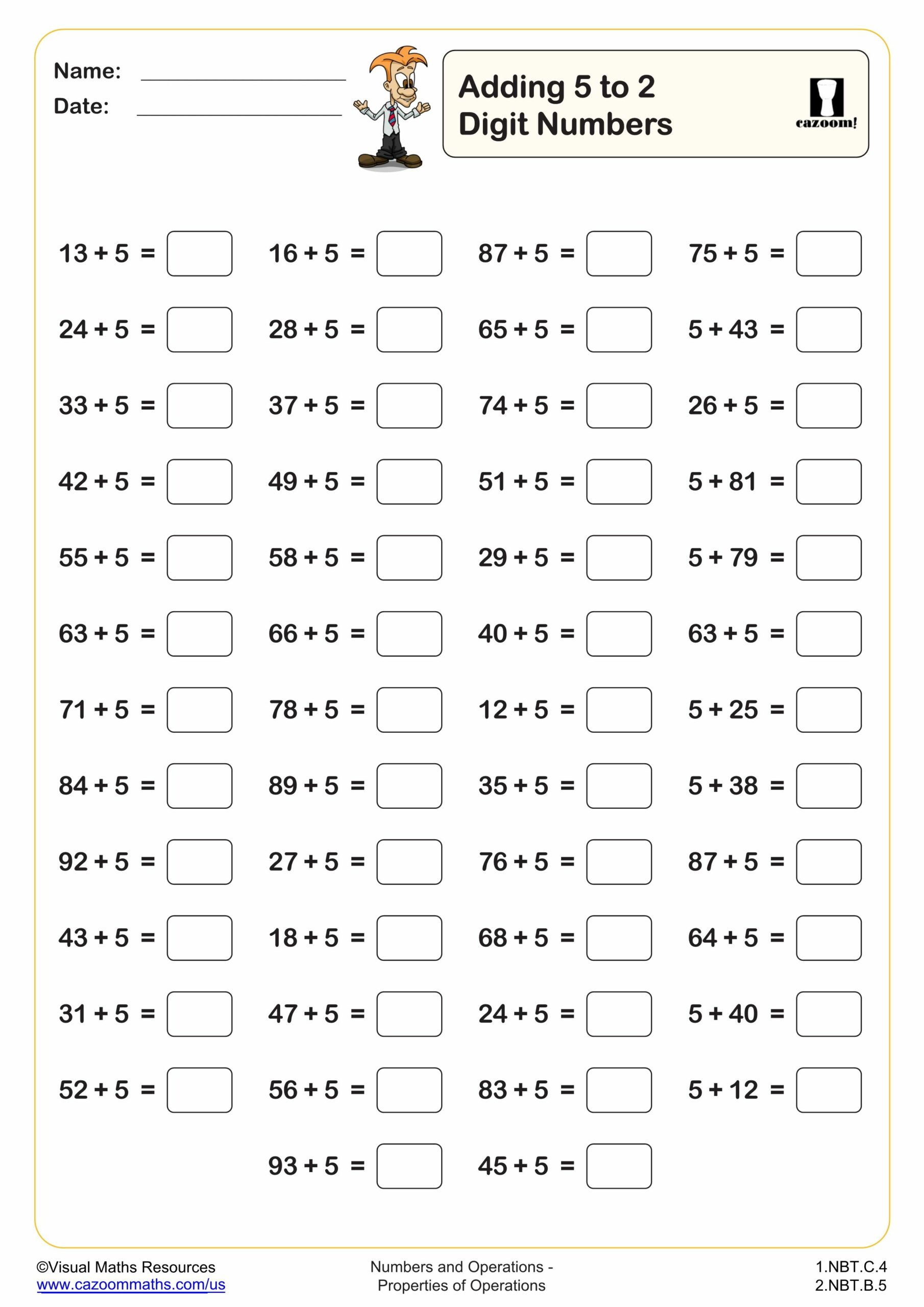
Adding 6 to 2 digit numbers (10 questions)
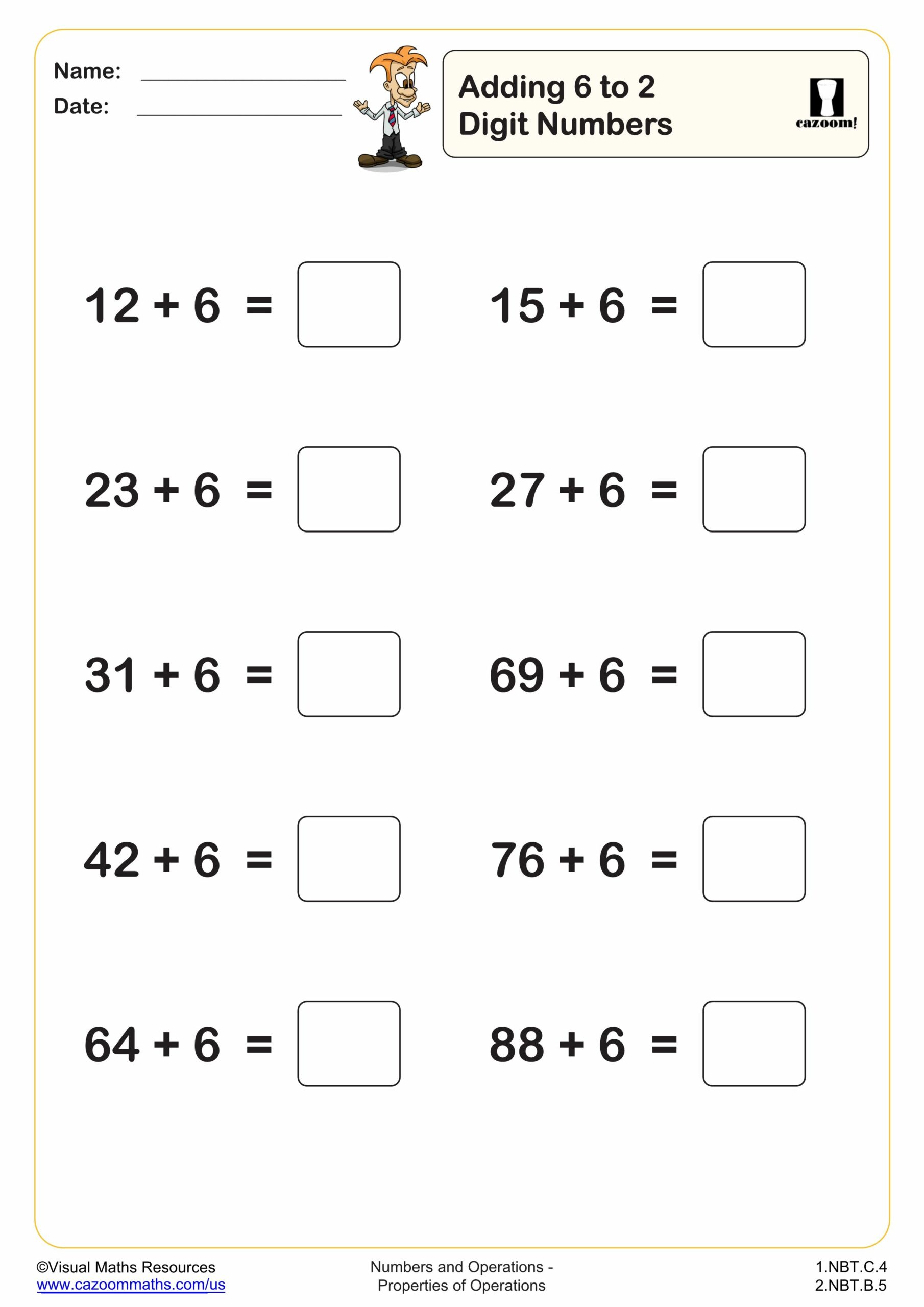
Adding 6 to 2 digit numbers (20 questions)
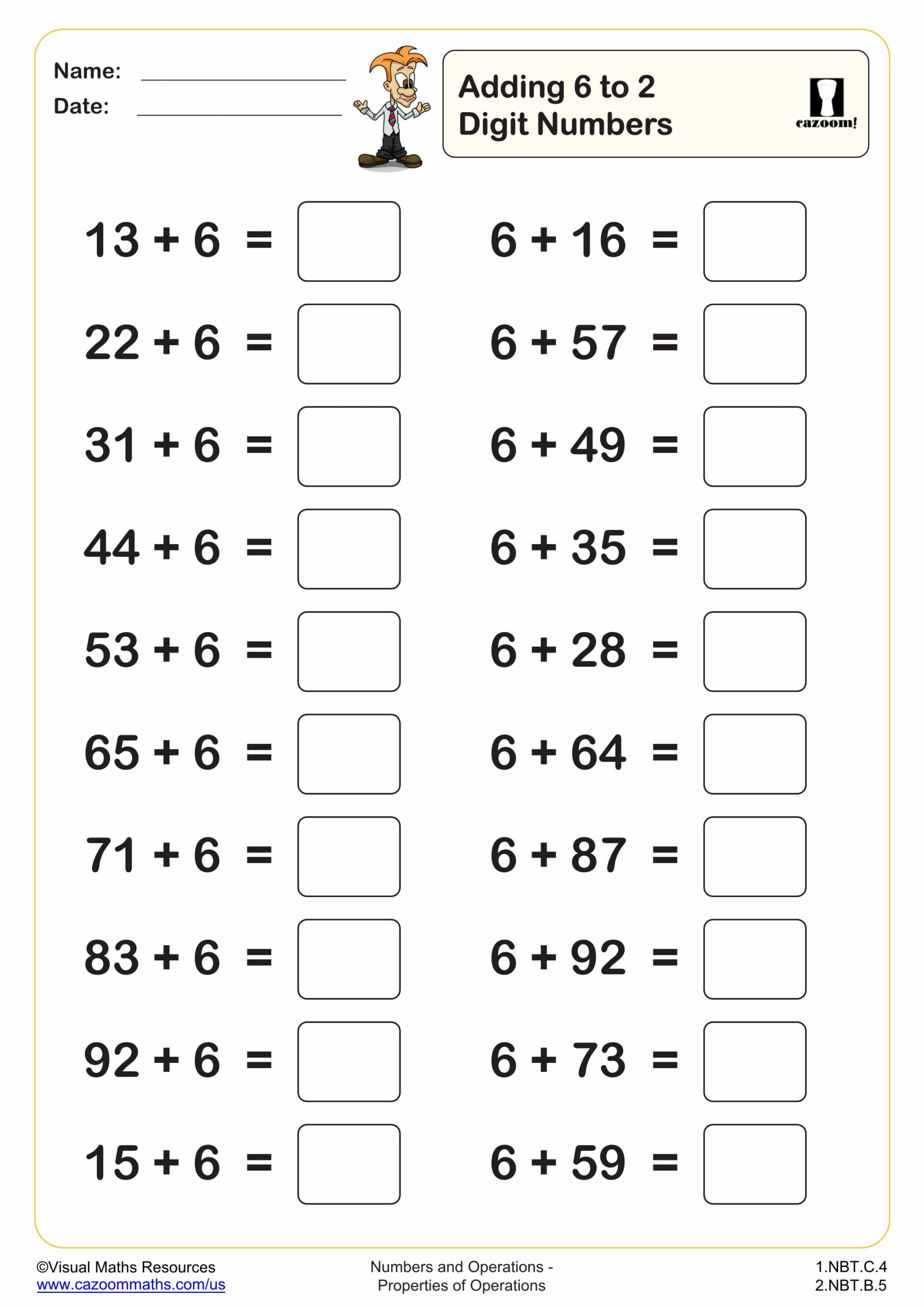
Adding 6 to 2 digit numbers (50 questions)
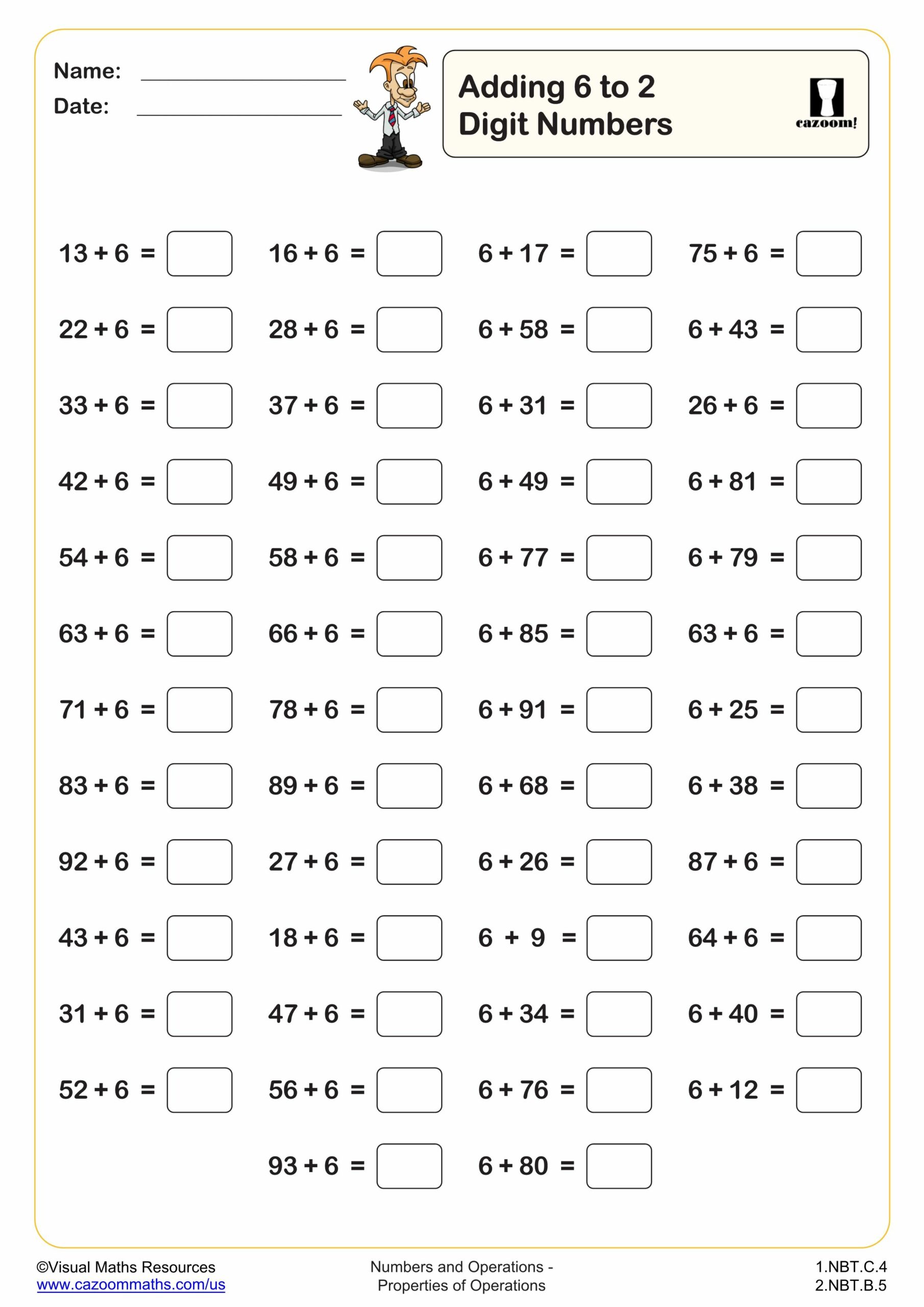
Adding 7 to 2 digit numbers (10 questions)
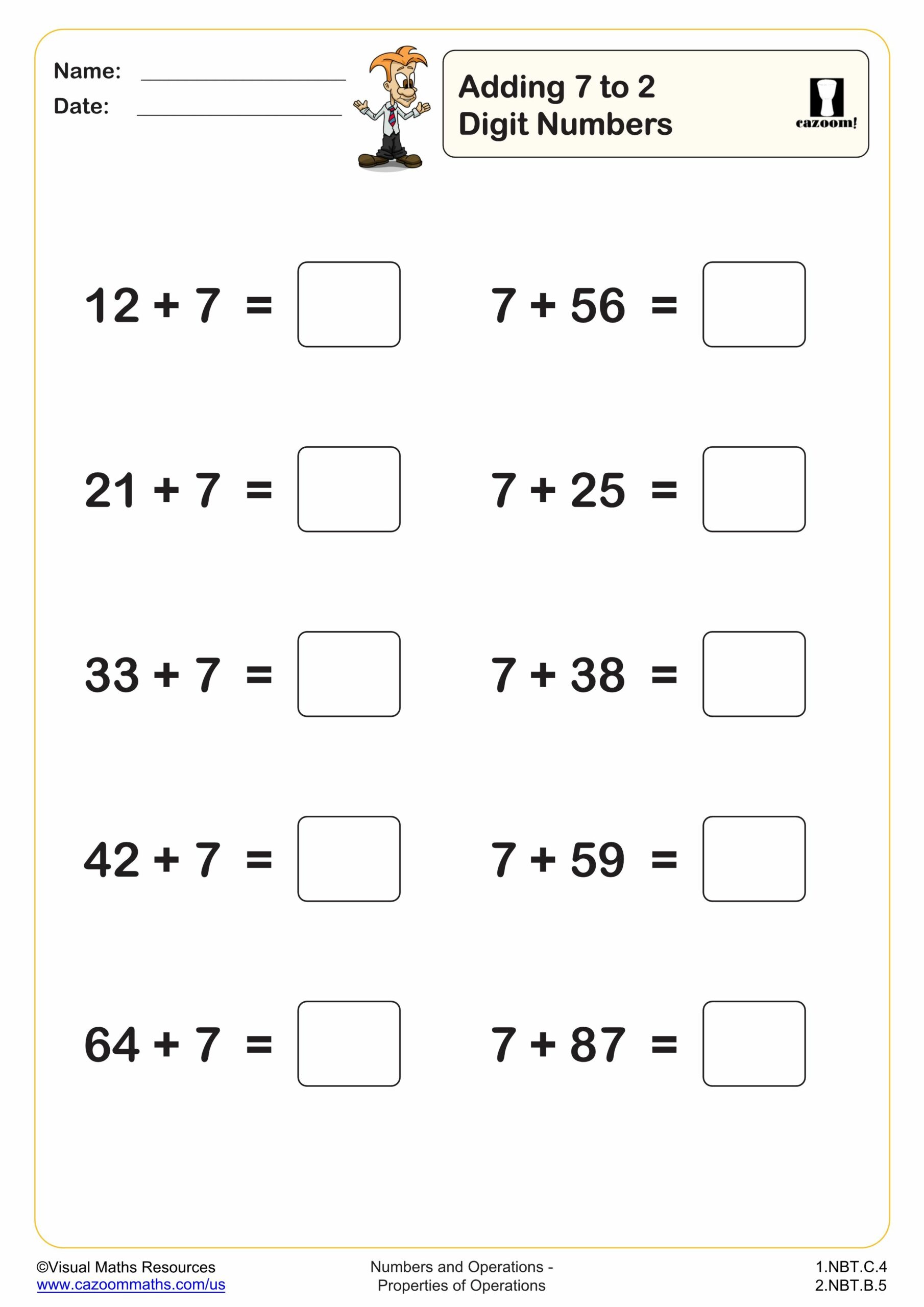
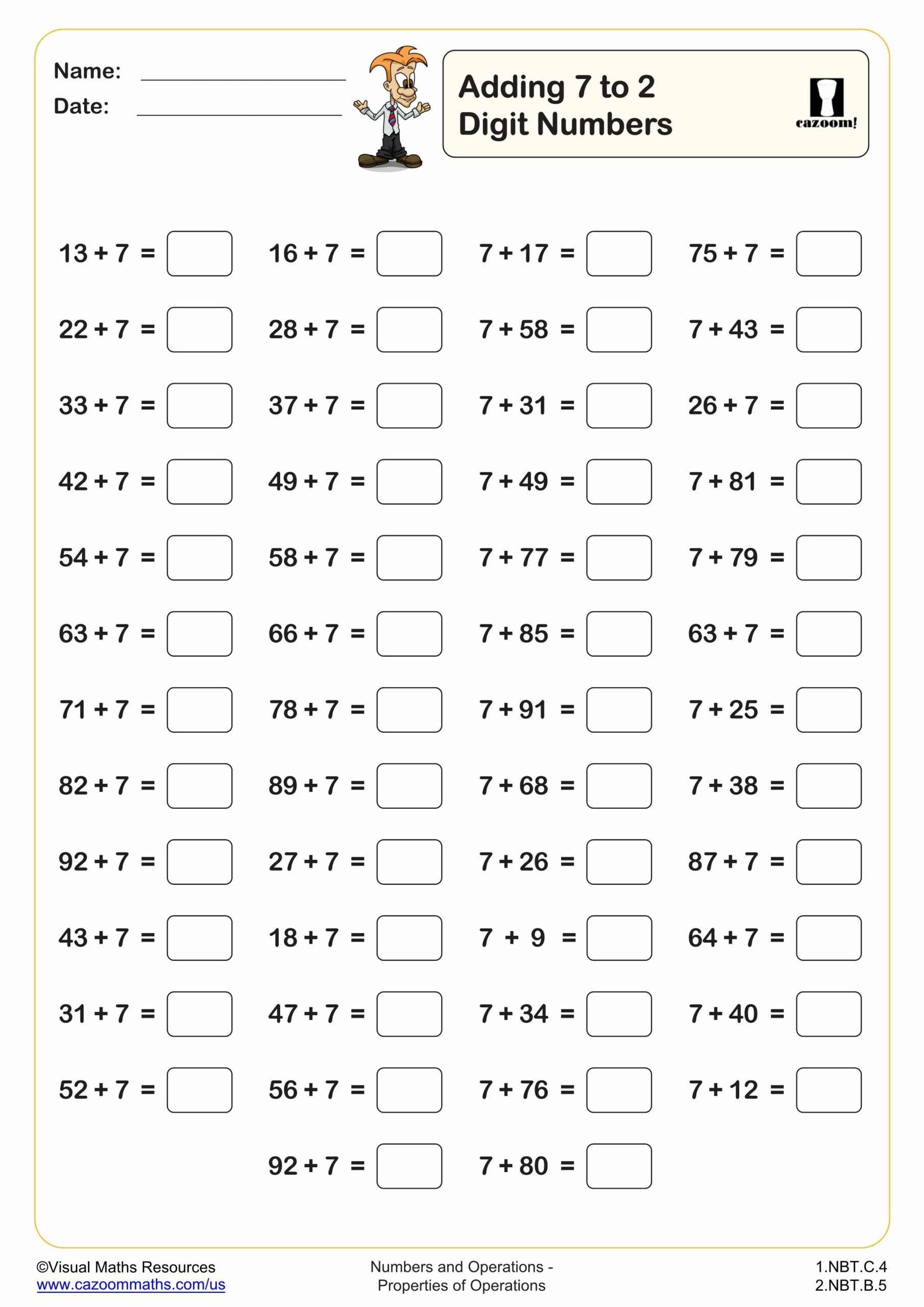
Adding 7 to 2 digit numbers (20 questions)
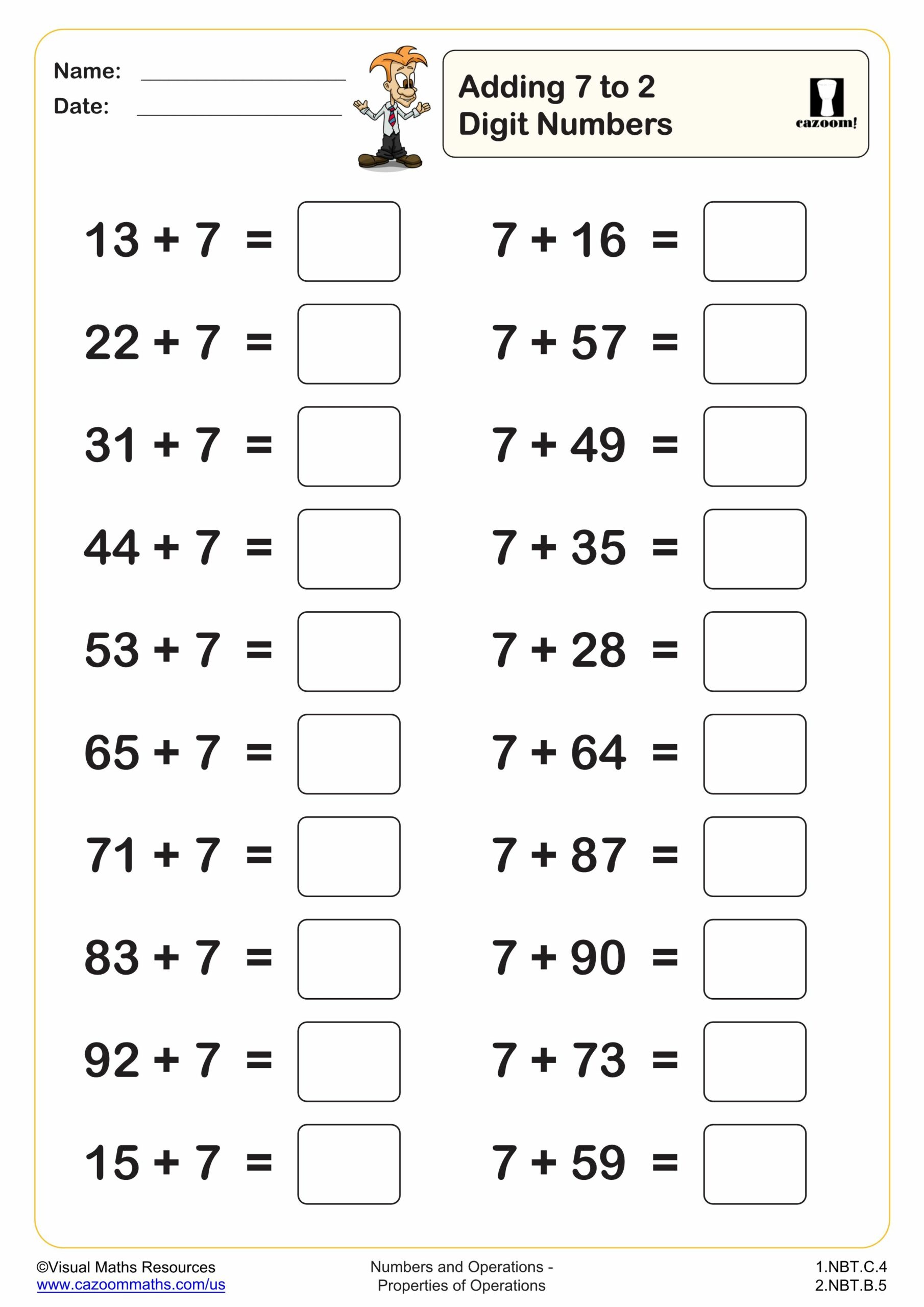
Adding 7 to 2 digit numbers (50 questions)
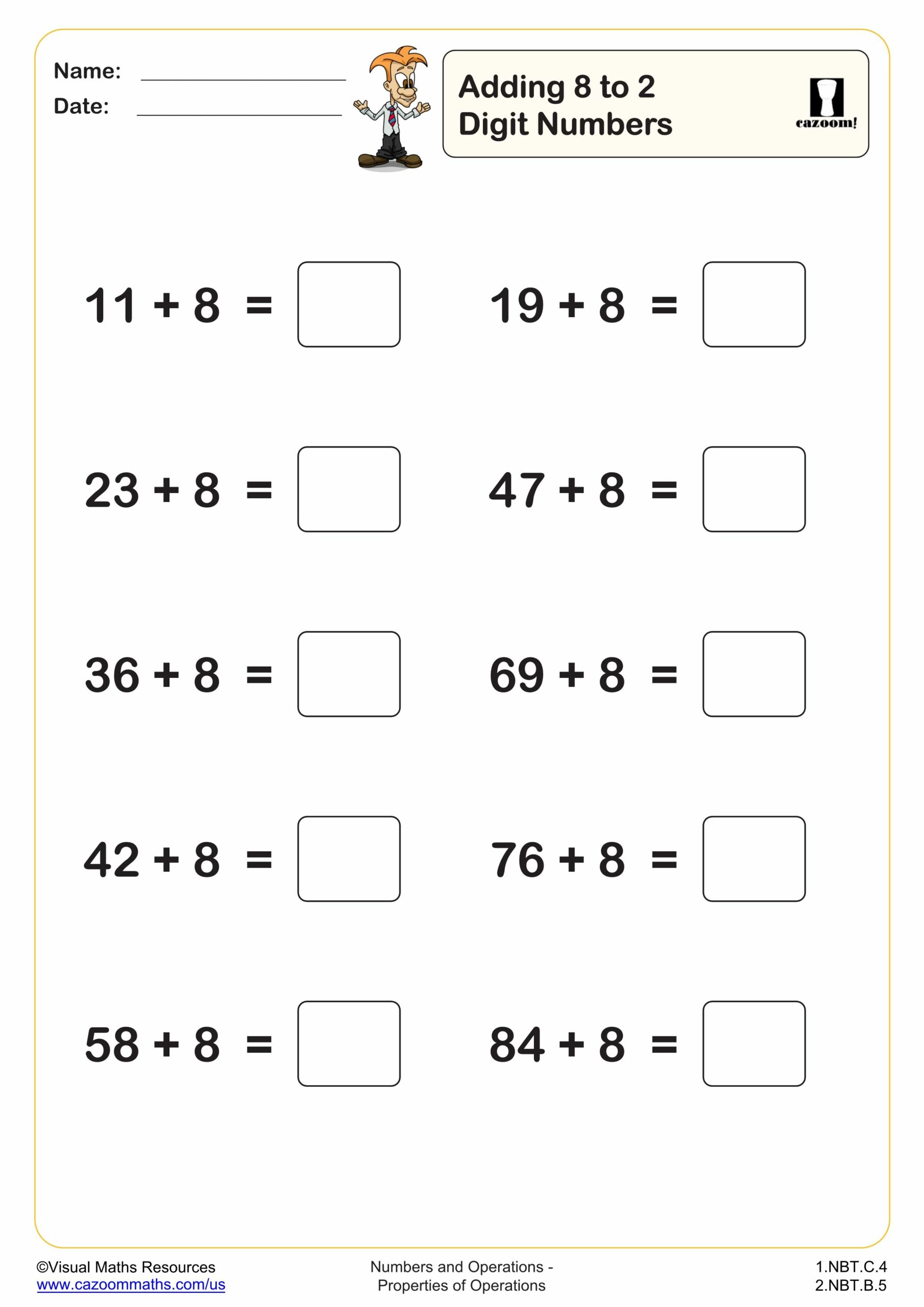
Adding 8 to 2 digit numbers (10 questions)
Adding 8 to 2 digit numbers (20 questions)
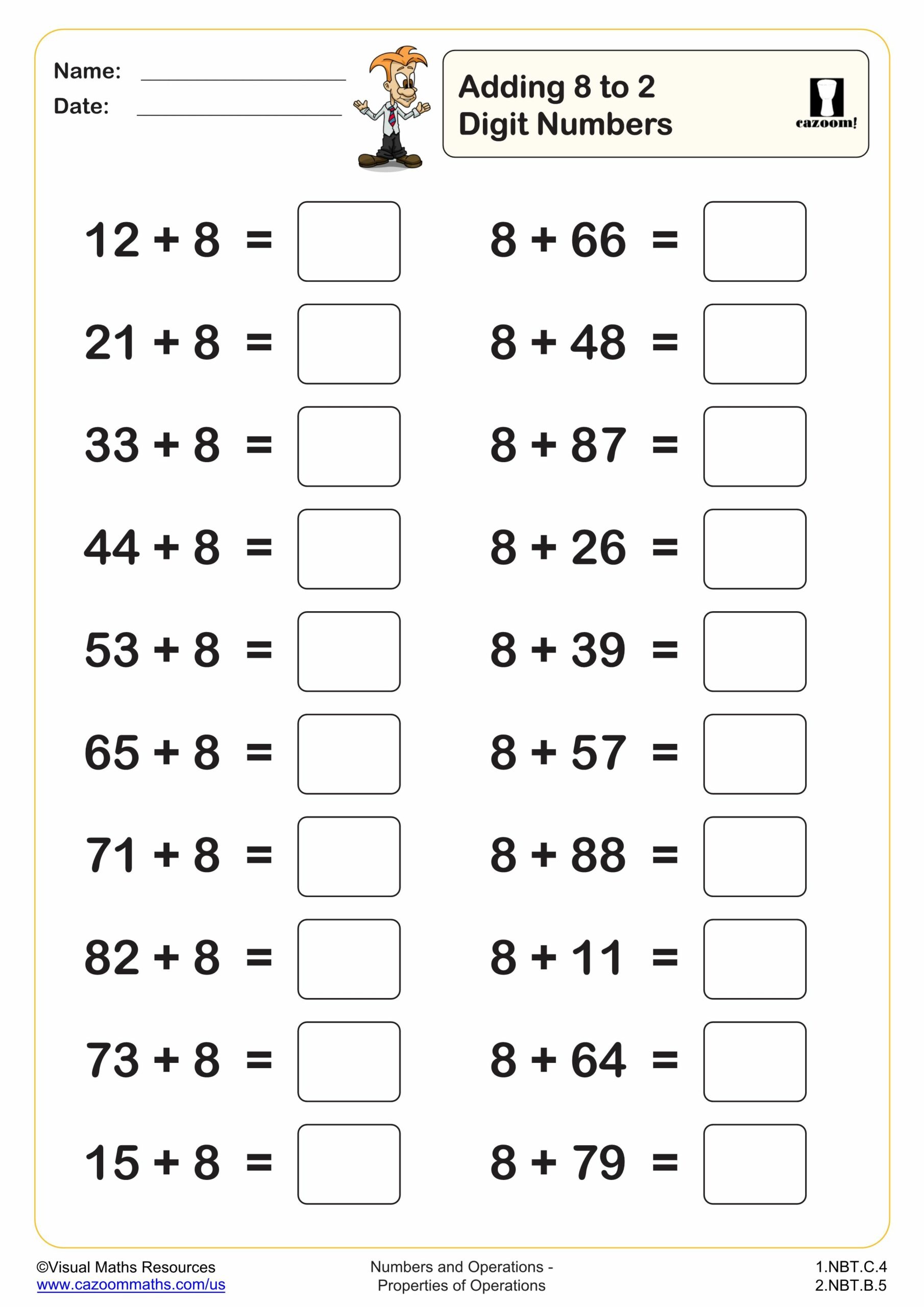
Adding 8 to 2 digit numbers (50 questions)
Adding 9 to 2 digit numbers (10 questions)
Adding 9 to 2 digit numbers (20 questions)
Adding 9 to 2 digit numbers (50 questions)
Adding mulitples of 10 to a 2 digit number (10 questions)
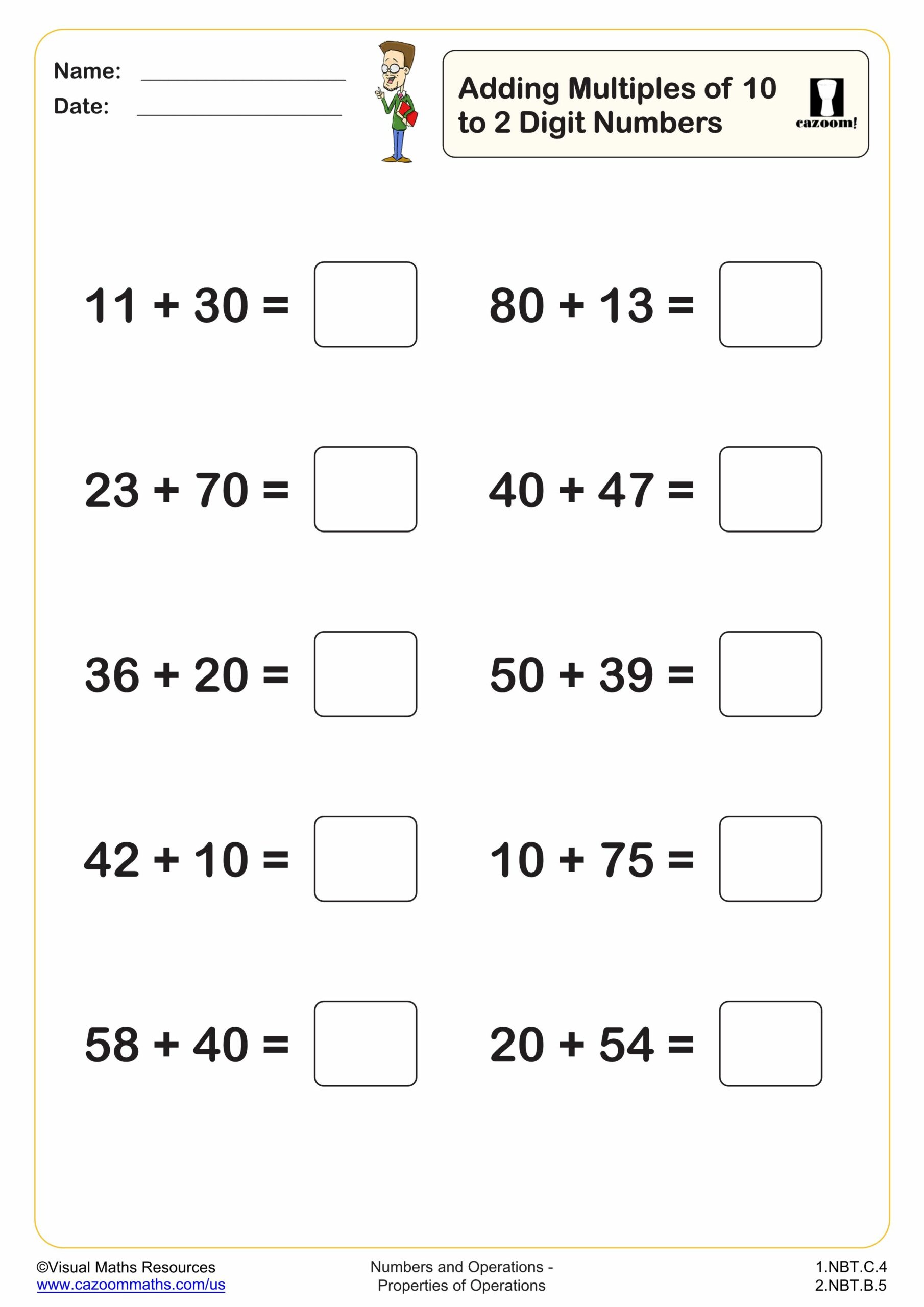
Adding mulitples of 10 to a 2 digit number (20 questions)
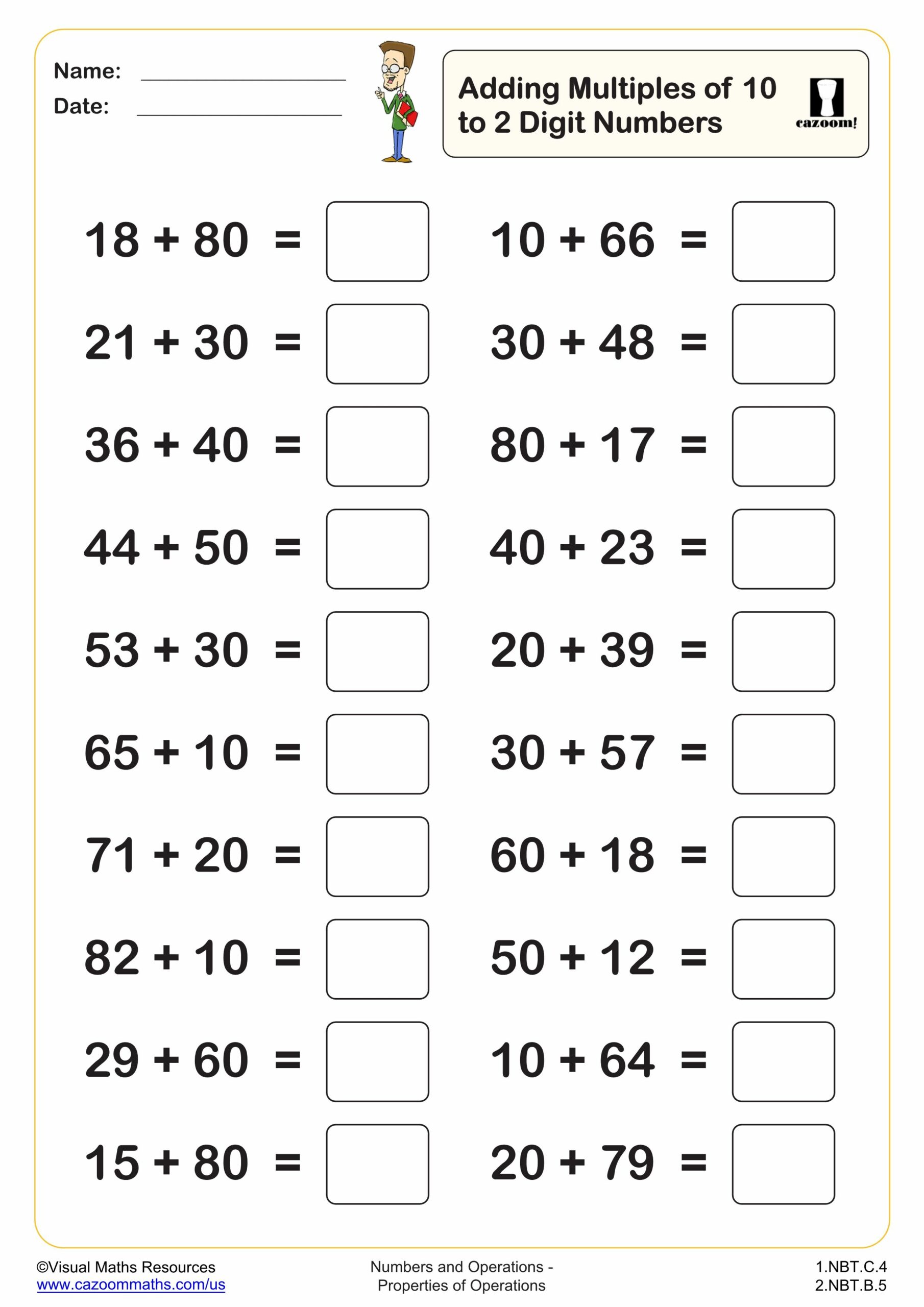
Adding mulitples of 10 to a 2 digit number (50 questions)
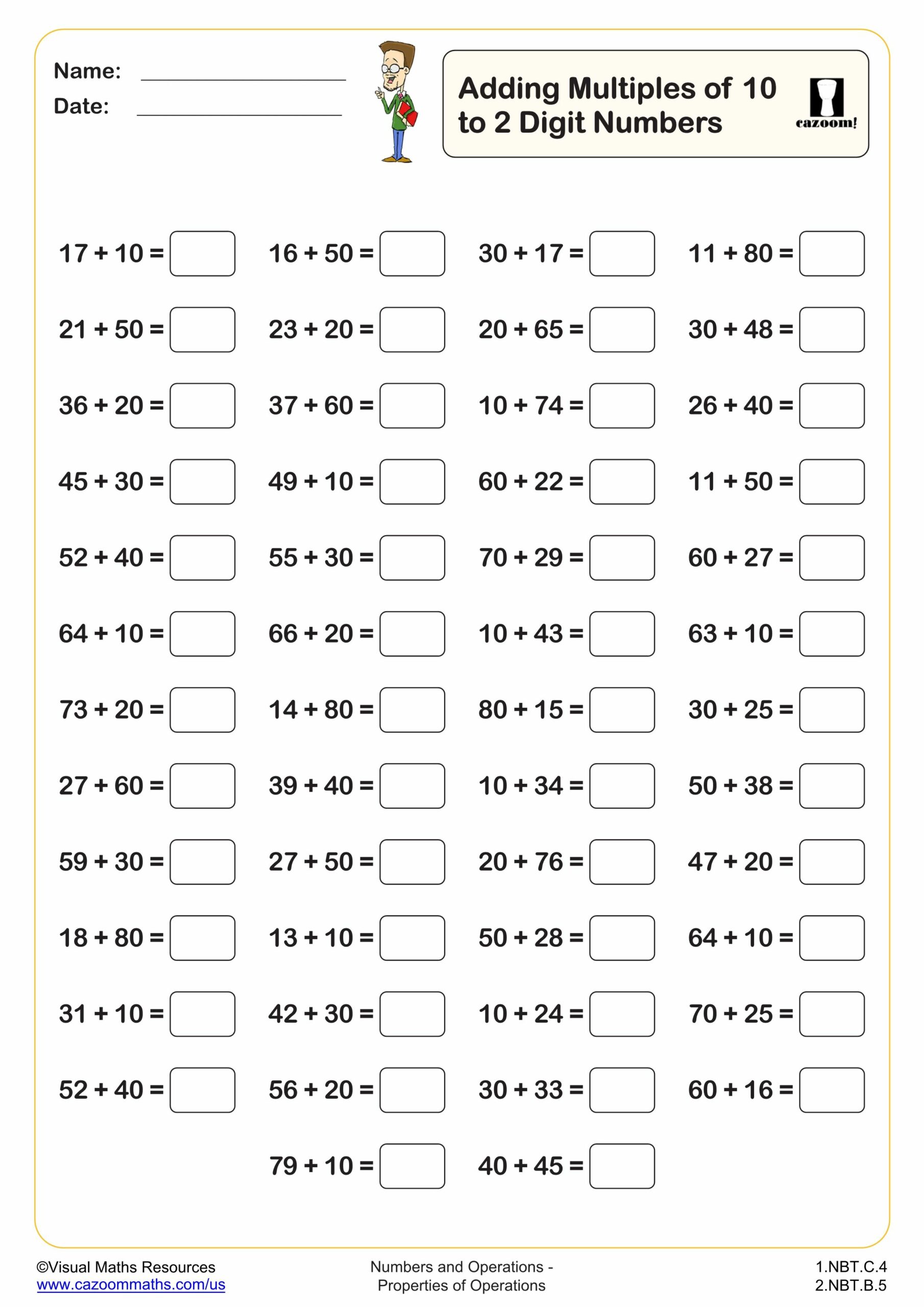
Adding mulitples of 5 to a 2 digit number (10 questions)
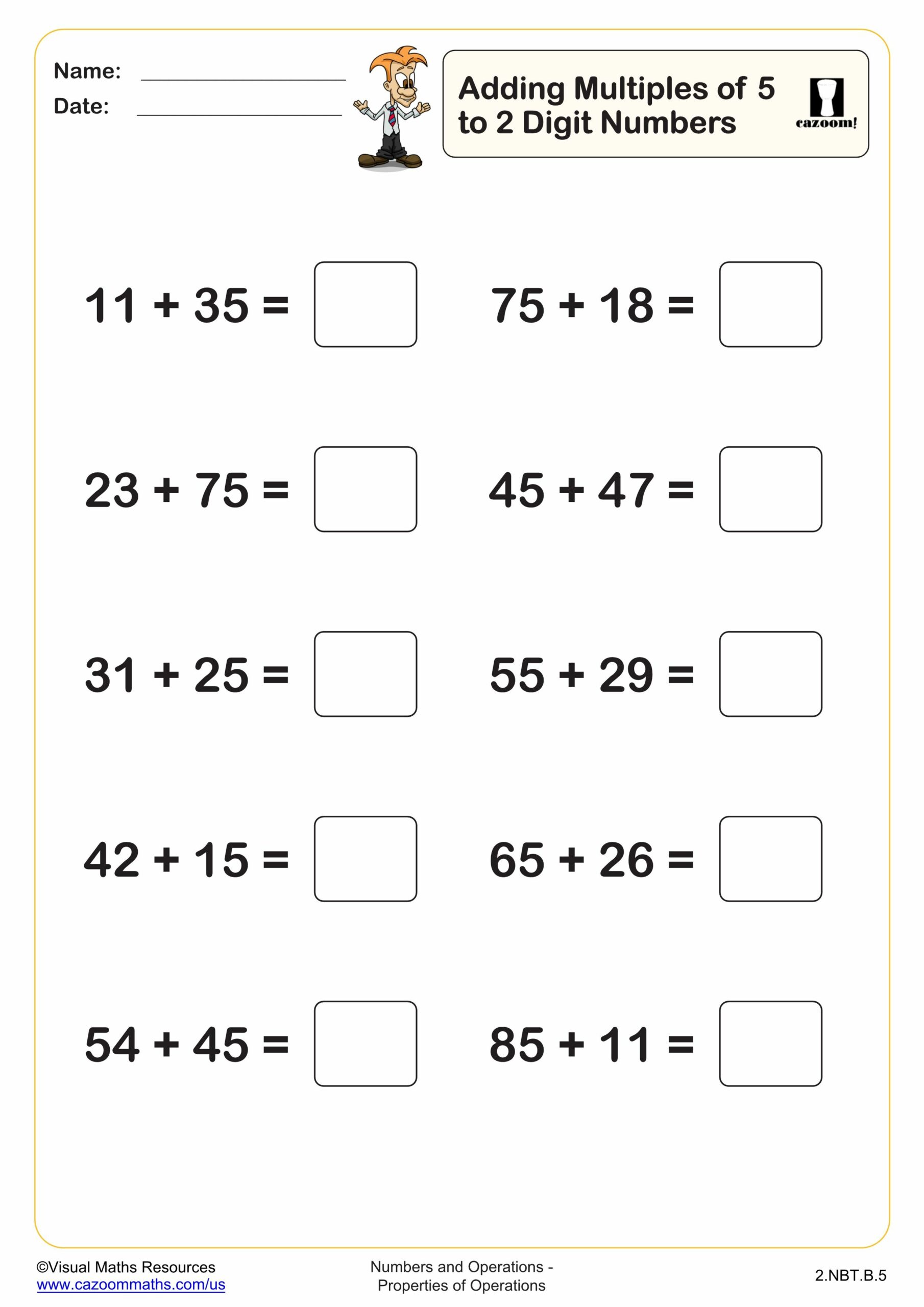
Adding mulitples of 5 to a 2 digit number (20 questions)
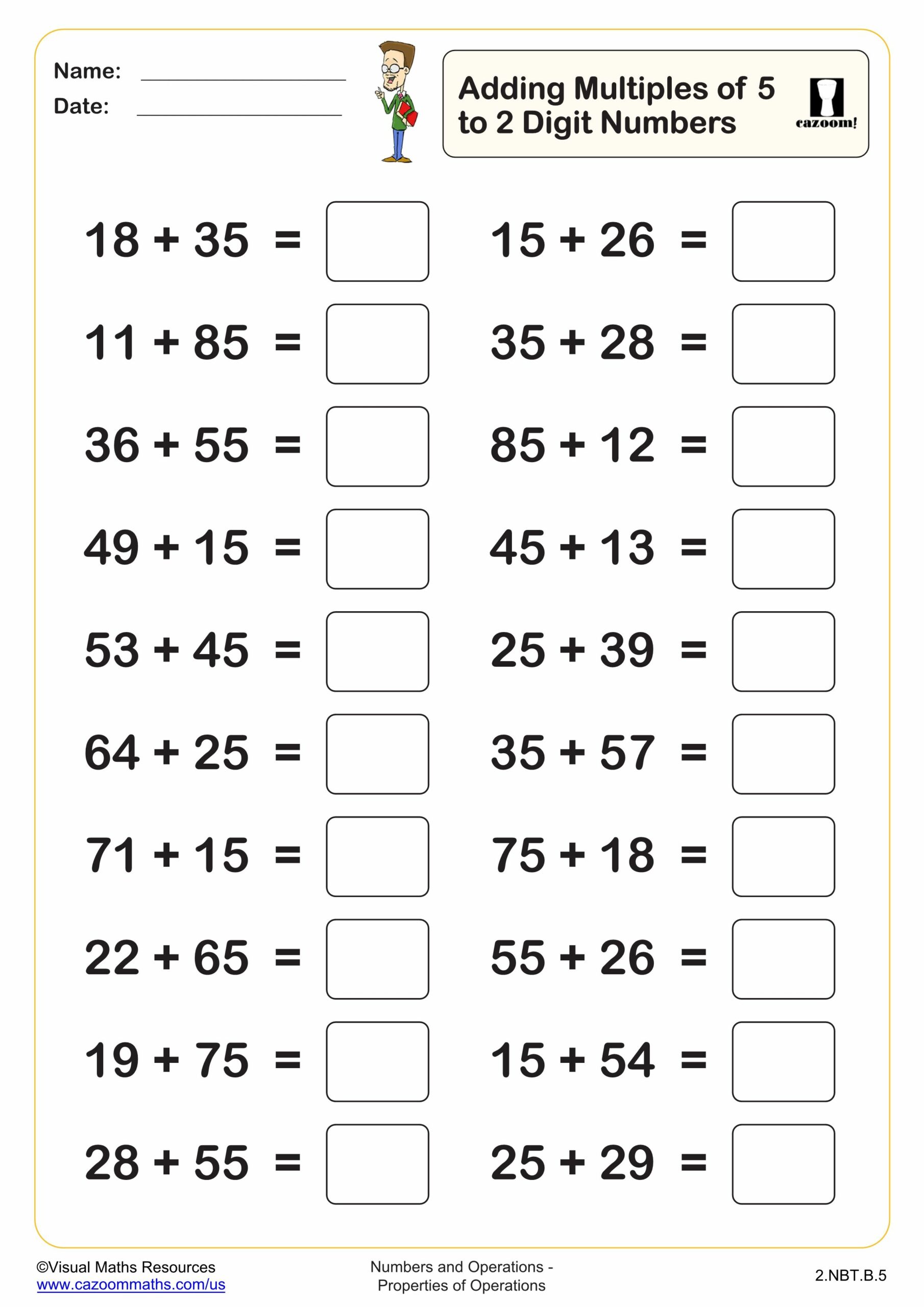
Adding mulitples of 5 to a 2 digit number (50 questions)
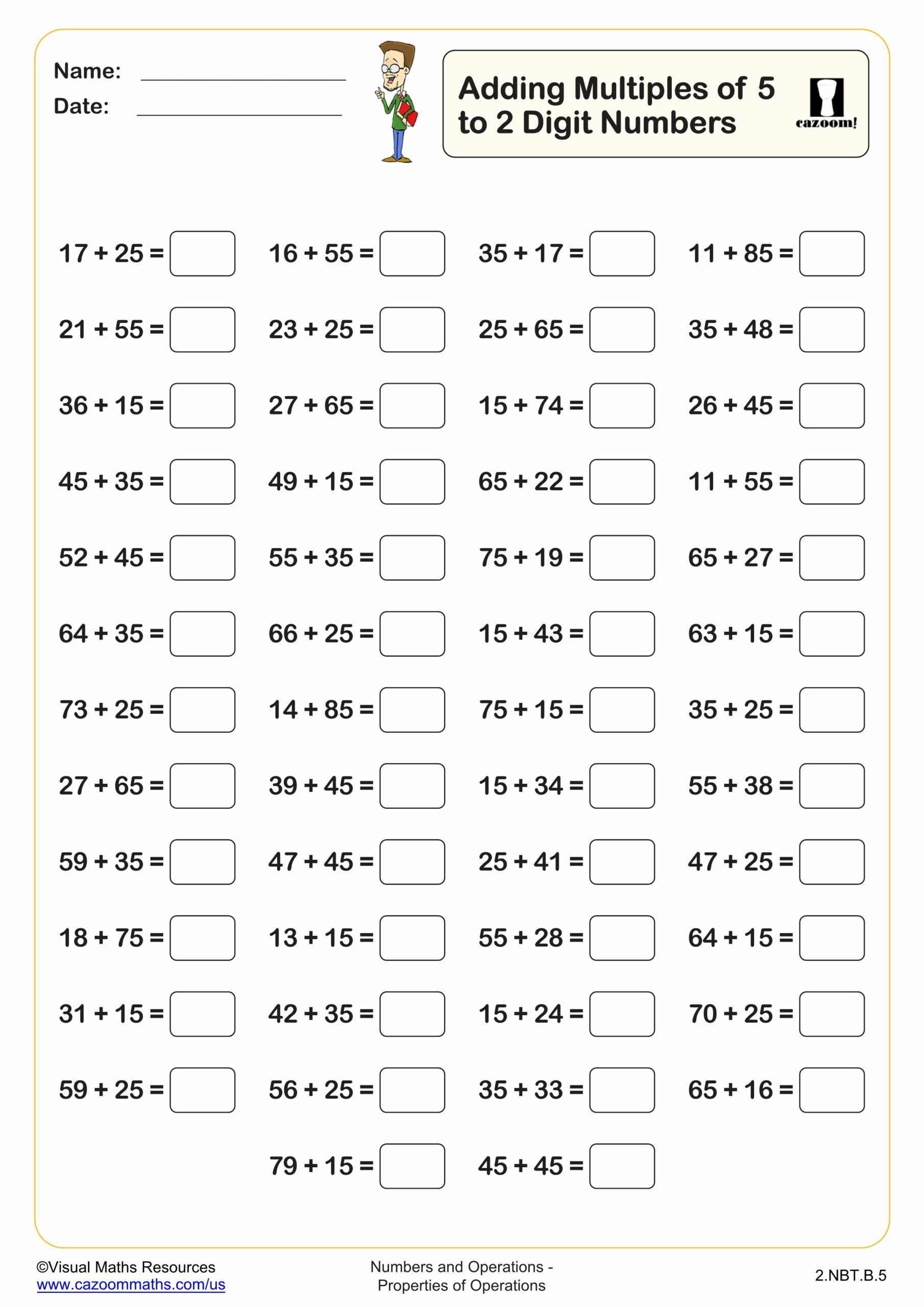
Adding Single Digits to Two Digit Numbers (No Regrouping)
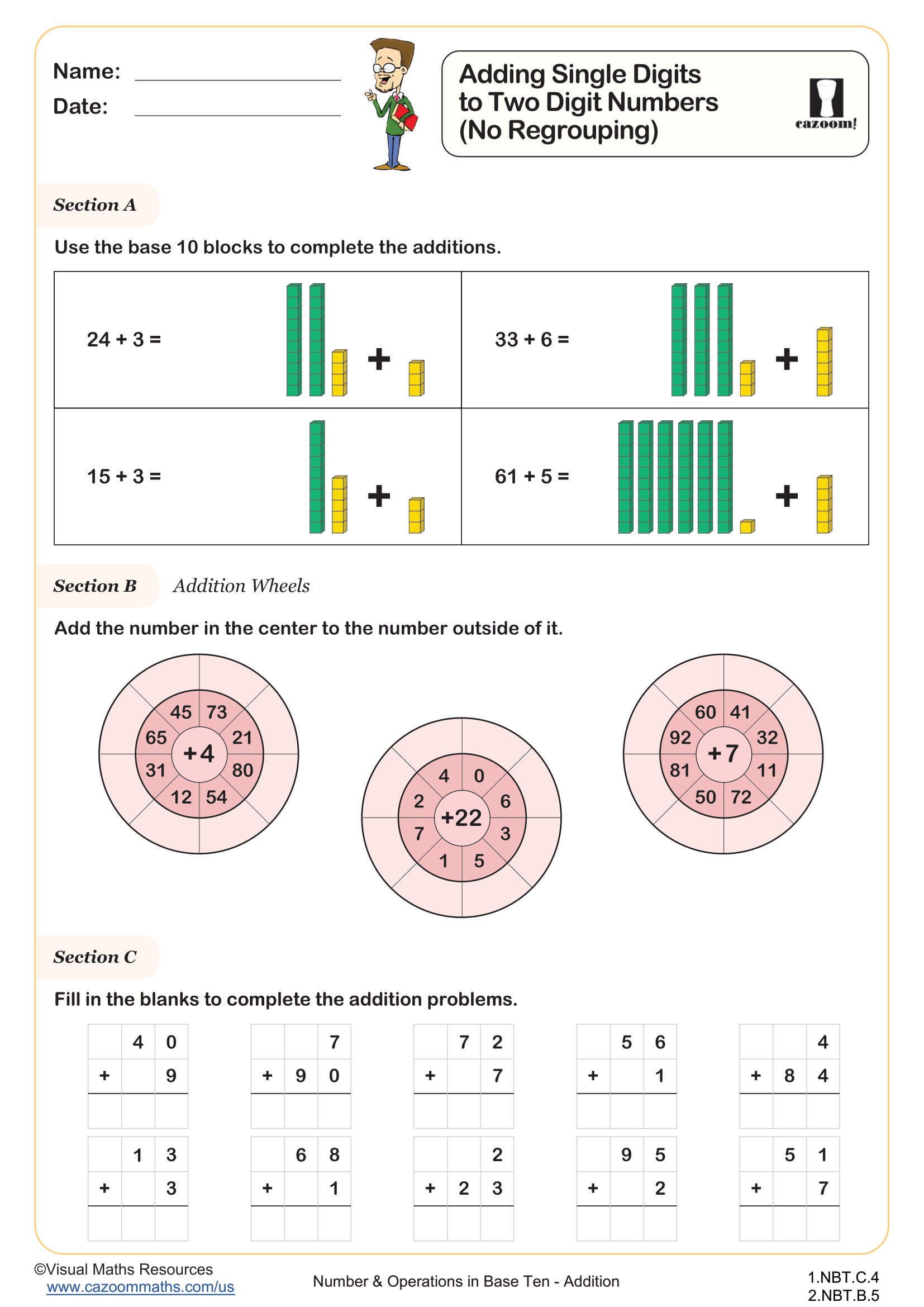
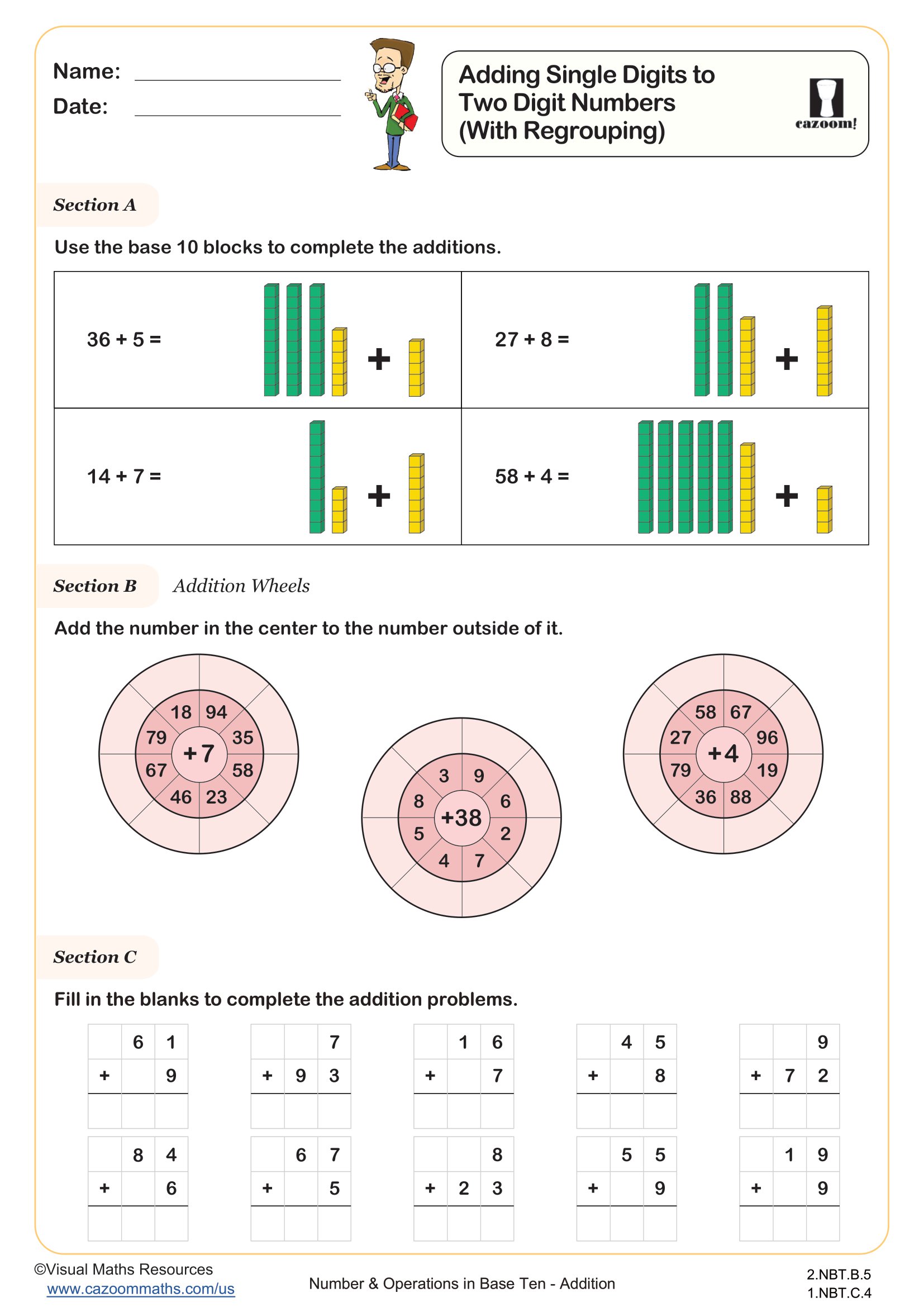
Adding Single Digits to Two Digit Numbers (With Regrouping)
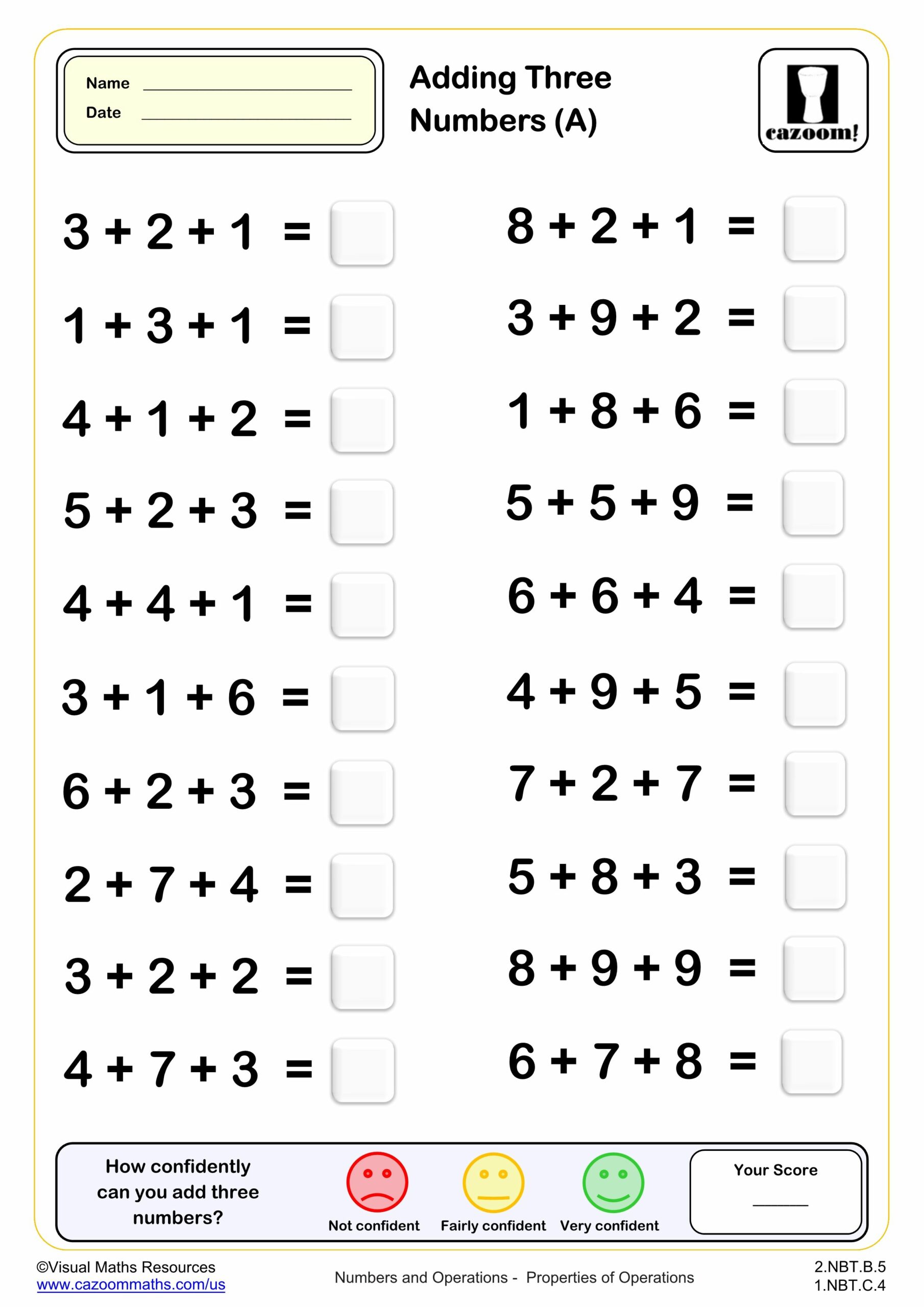
Addition Drills with three numbers (A)
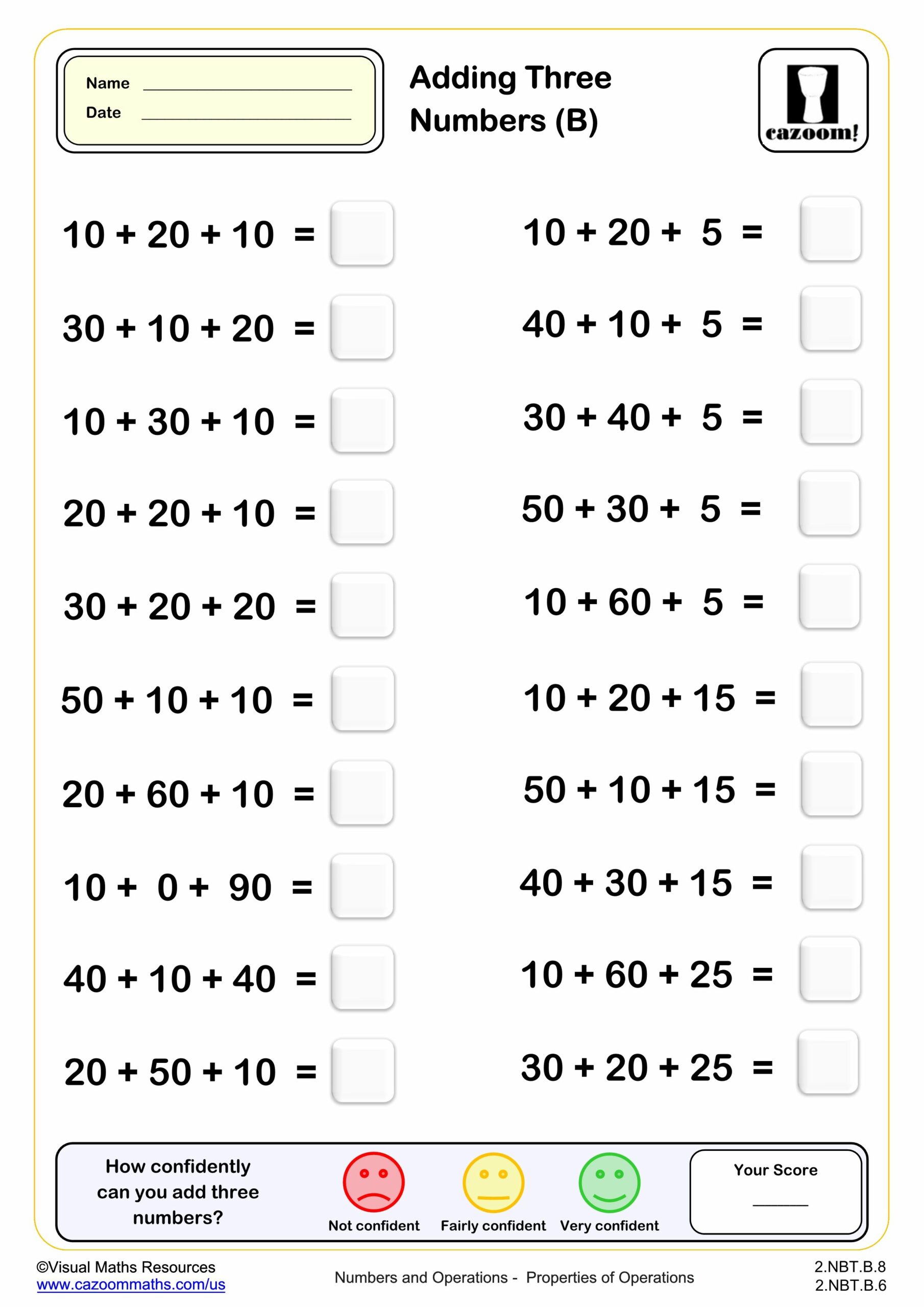
Addition Drills with three numbers (B)
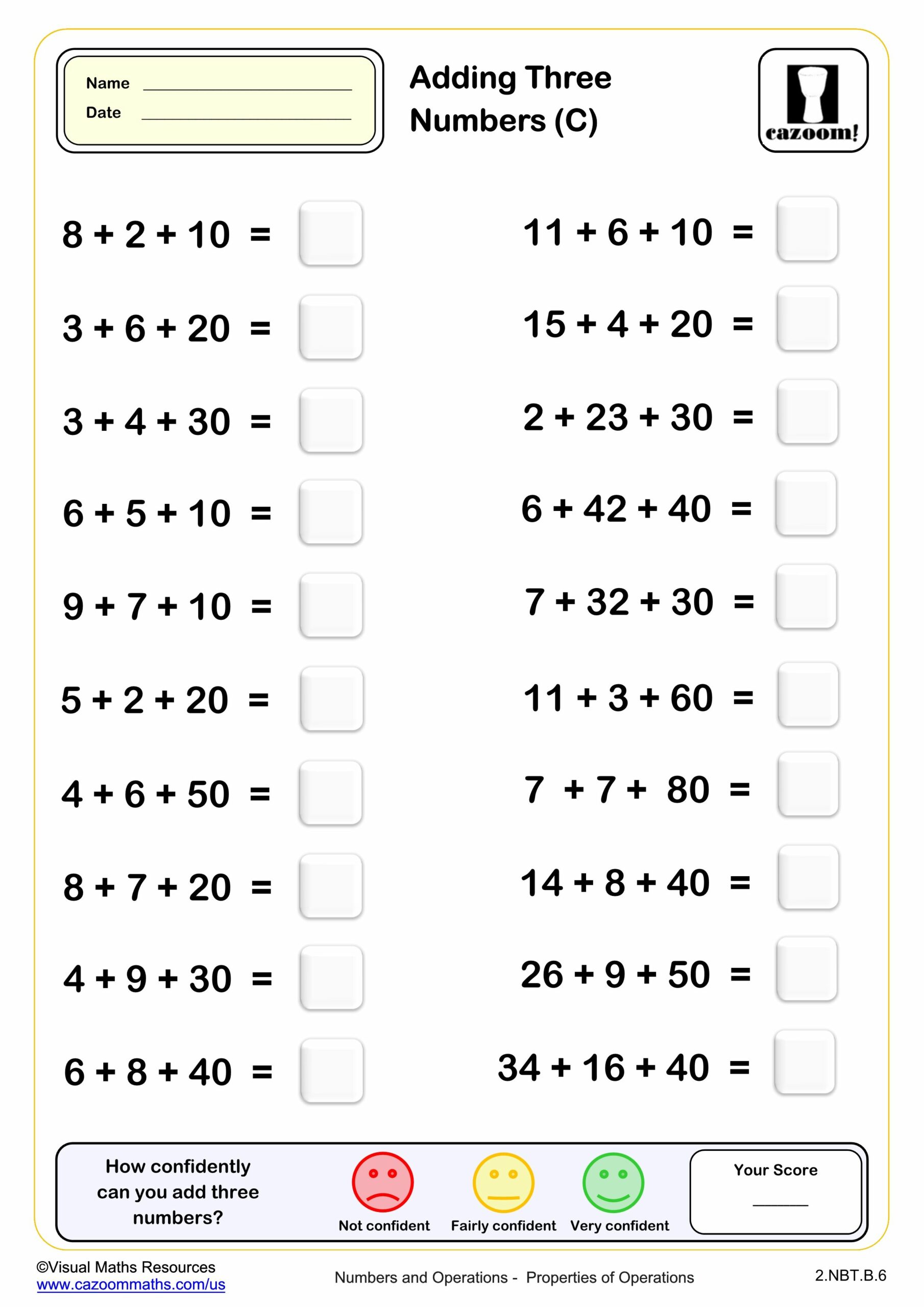
Addition Drills with three numbers (C)
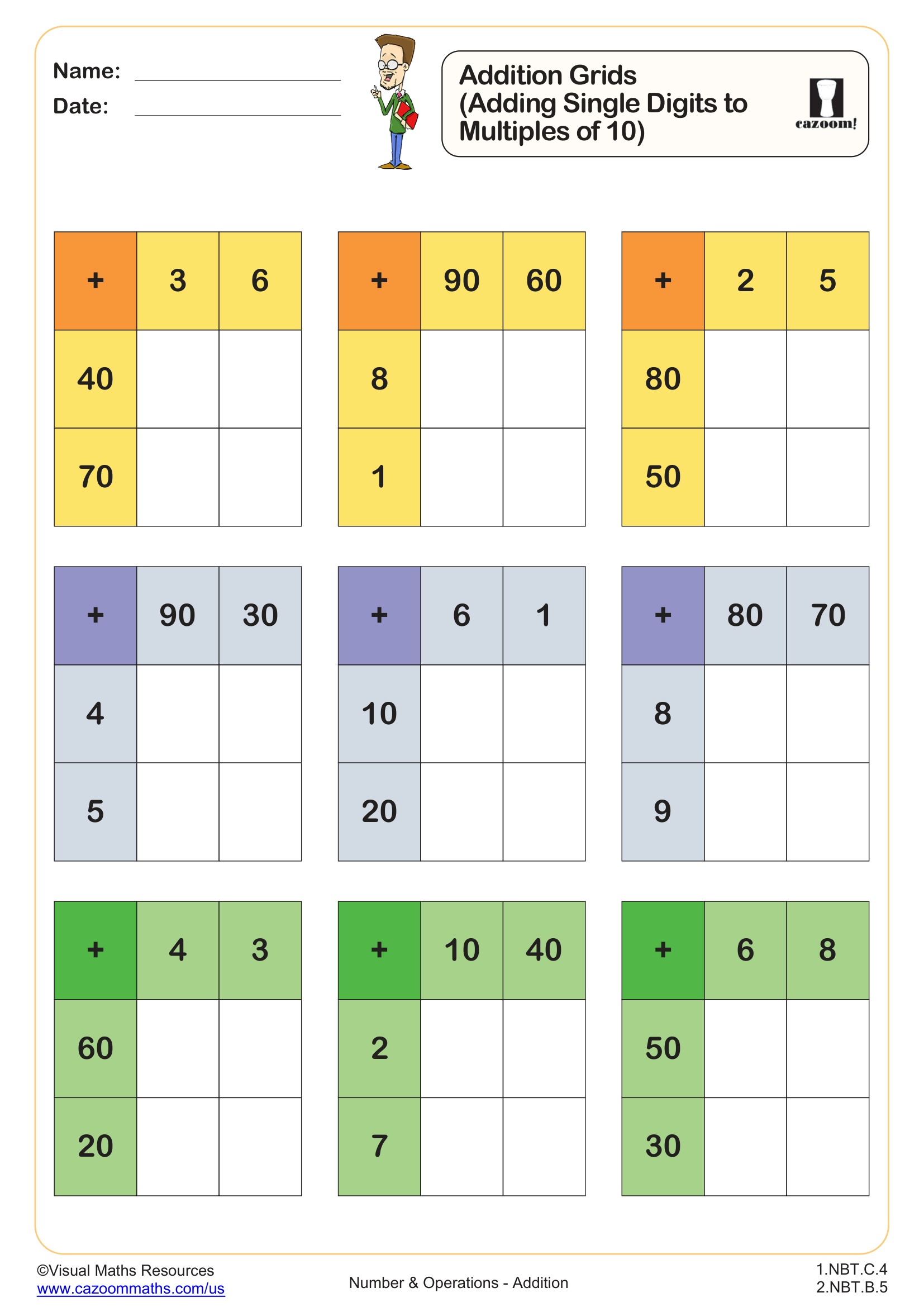
Addition Grids (Adding Single Digits to Multiples of 10)
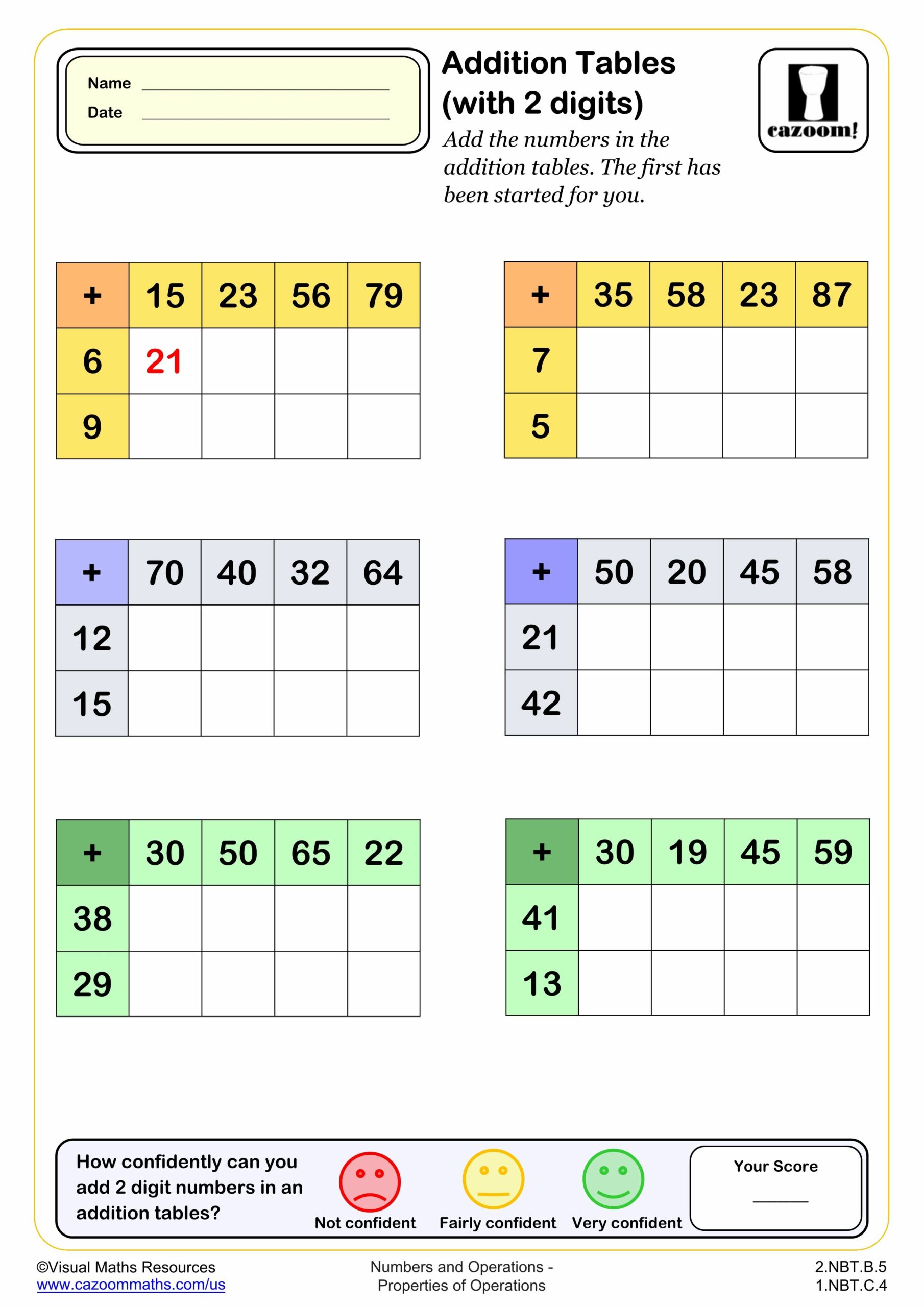
Addition Tables (2 digits)
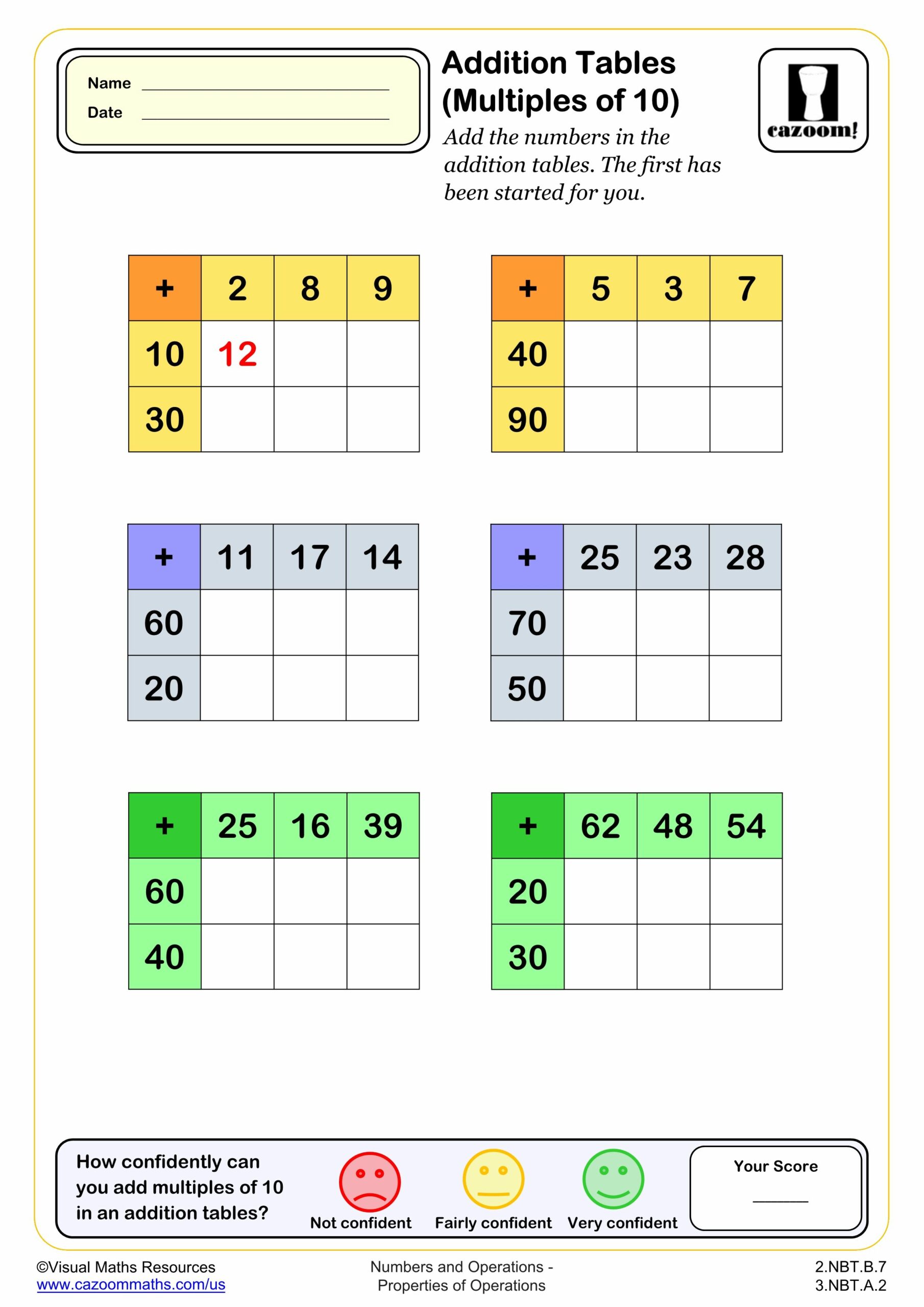
Addition Tables (Multipes of 10)
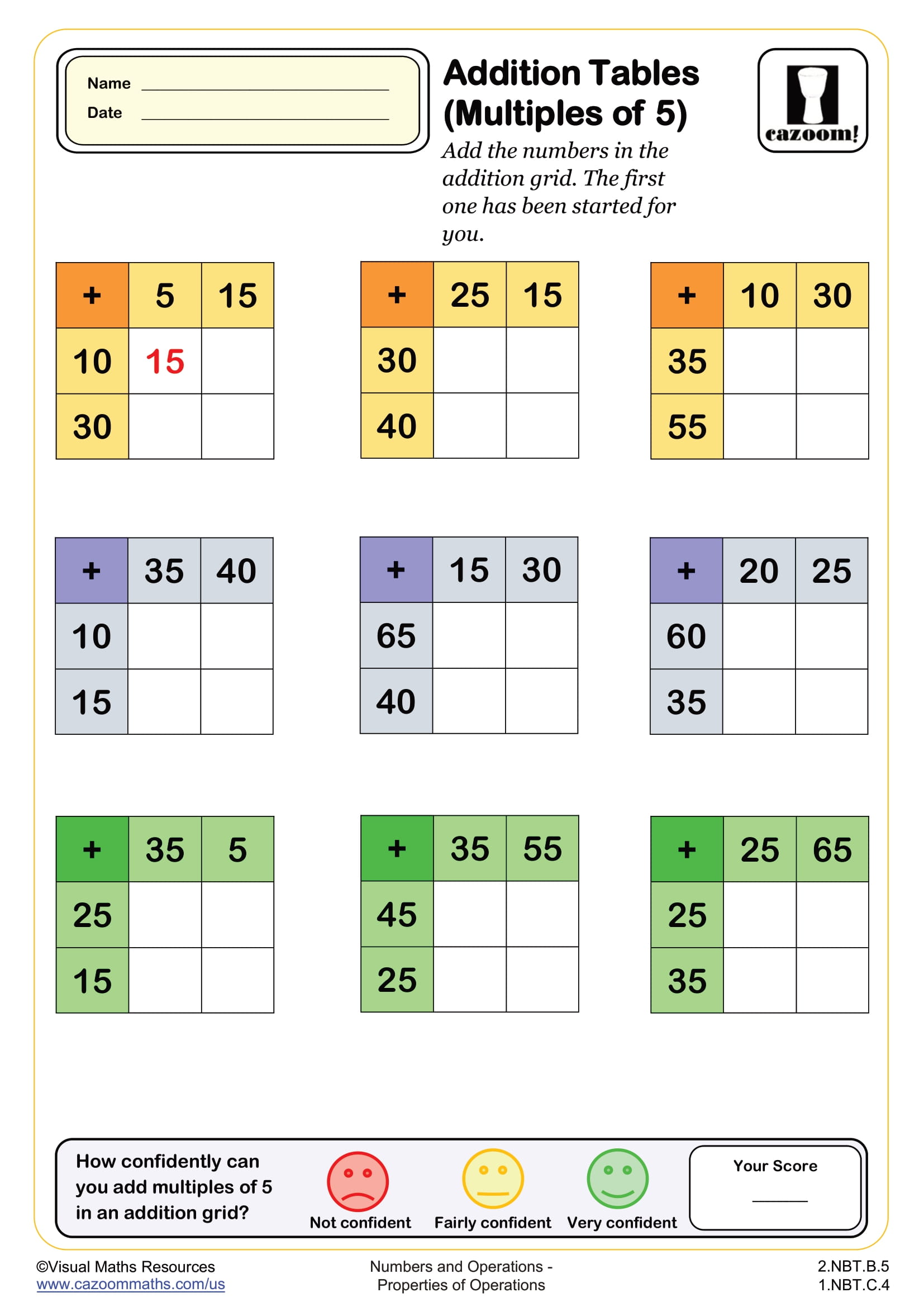
Addition Tables (Multiples of 5)
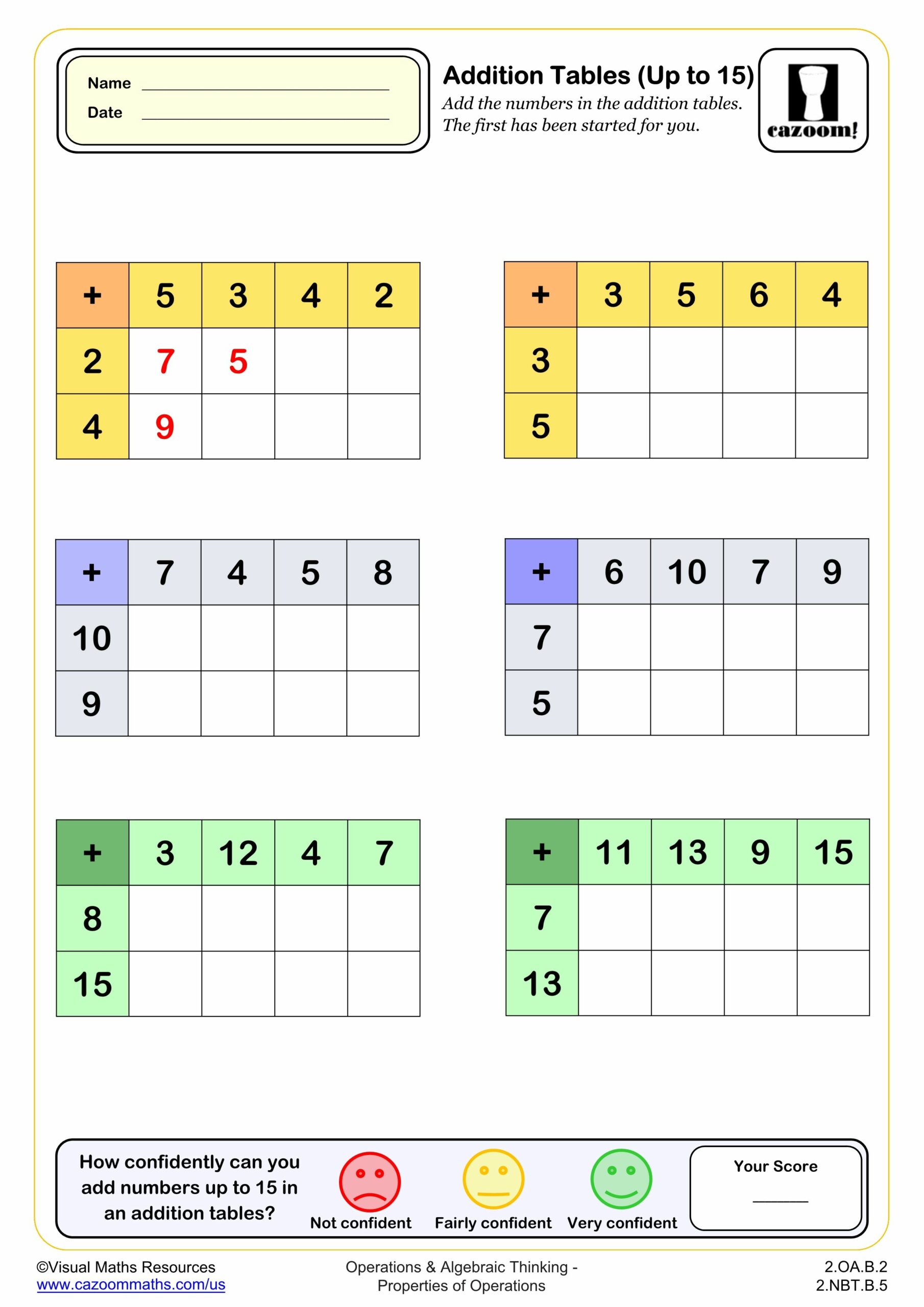
Addition Tables (Up to 15)
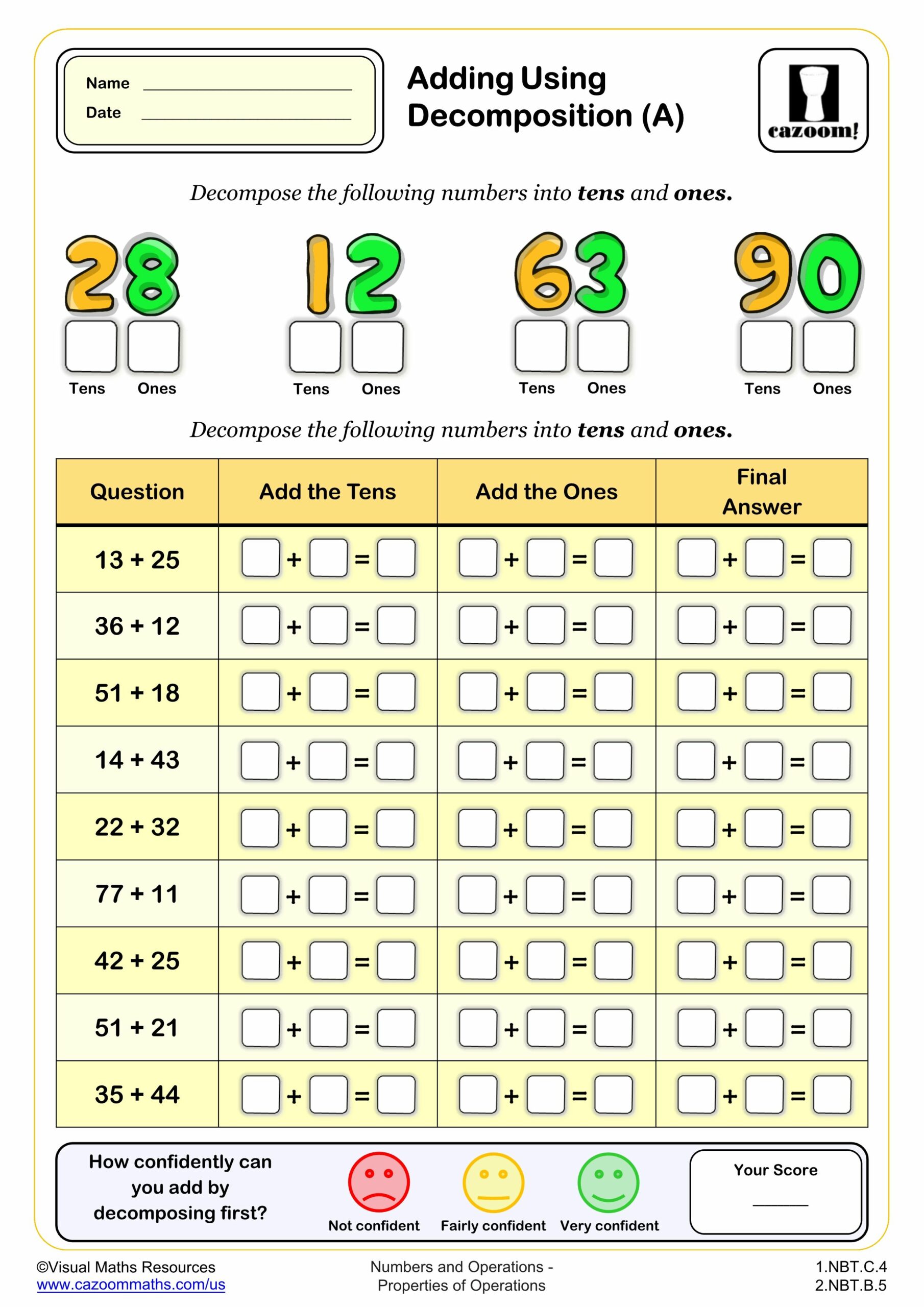
Addition using Decomposition (A)
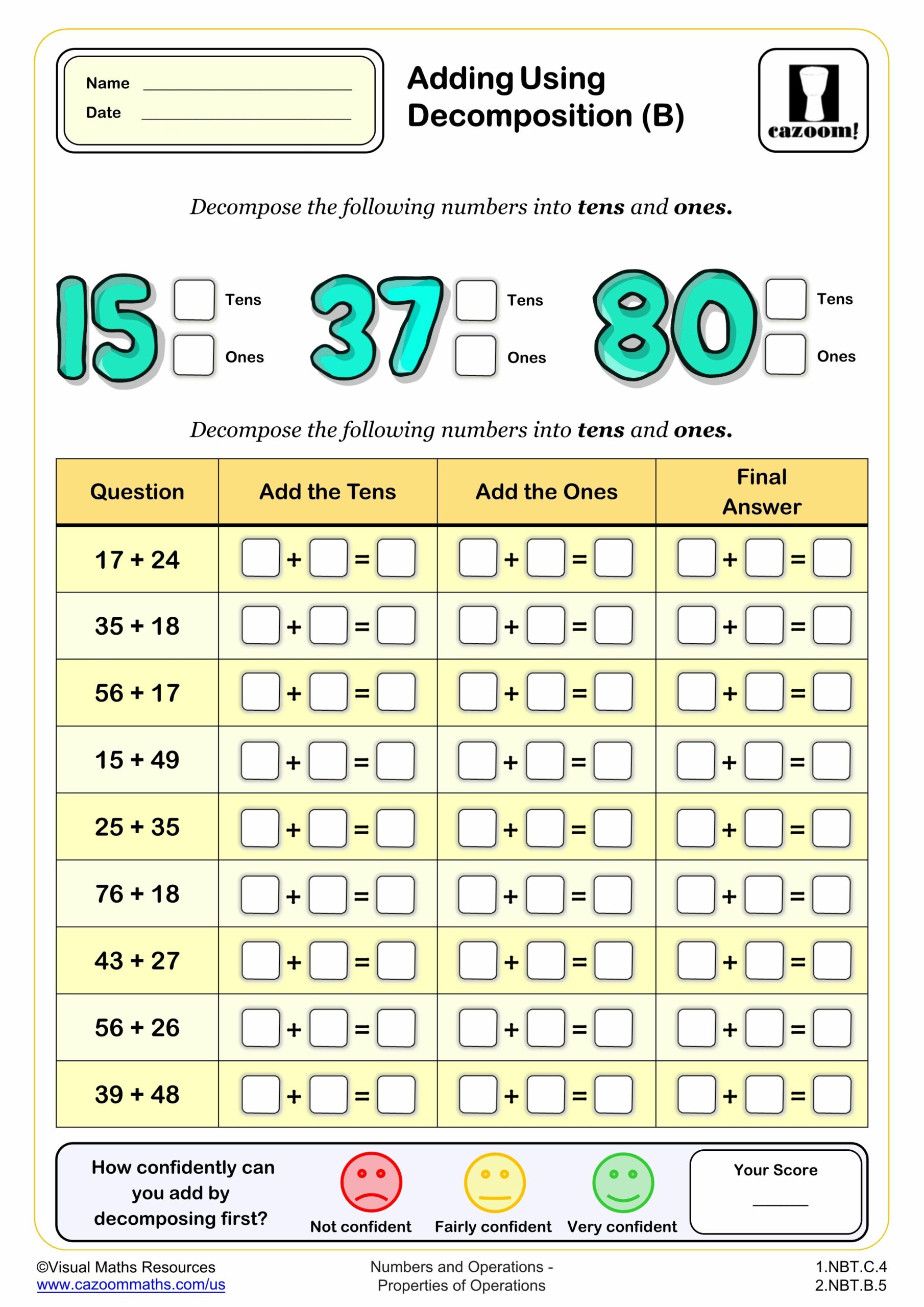
Addition using Decomposition (B)
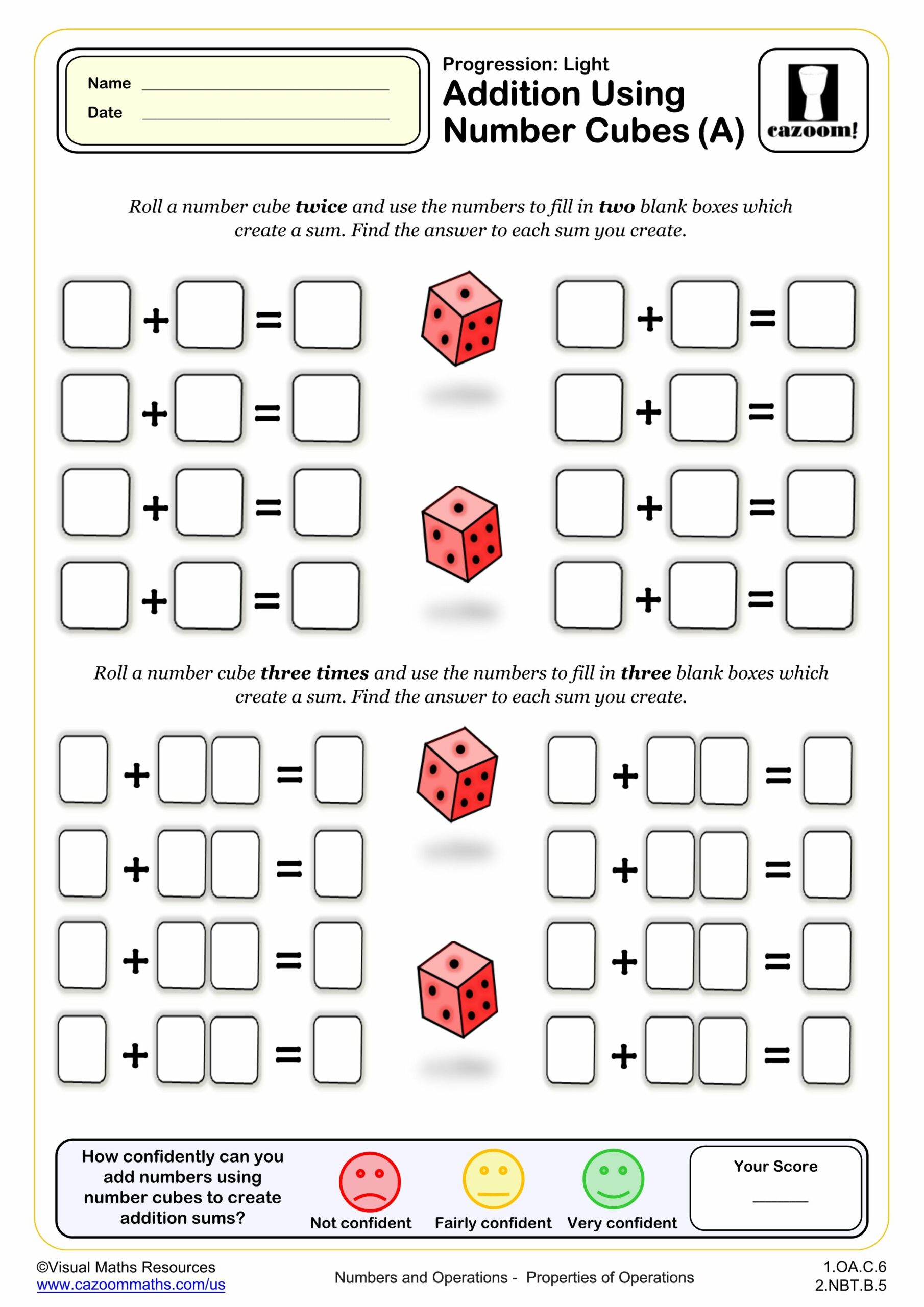
Addition Using Number Cubes (A)
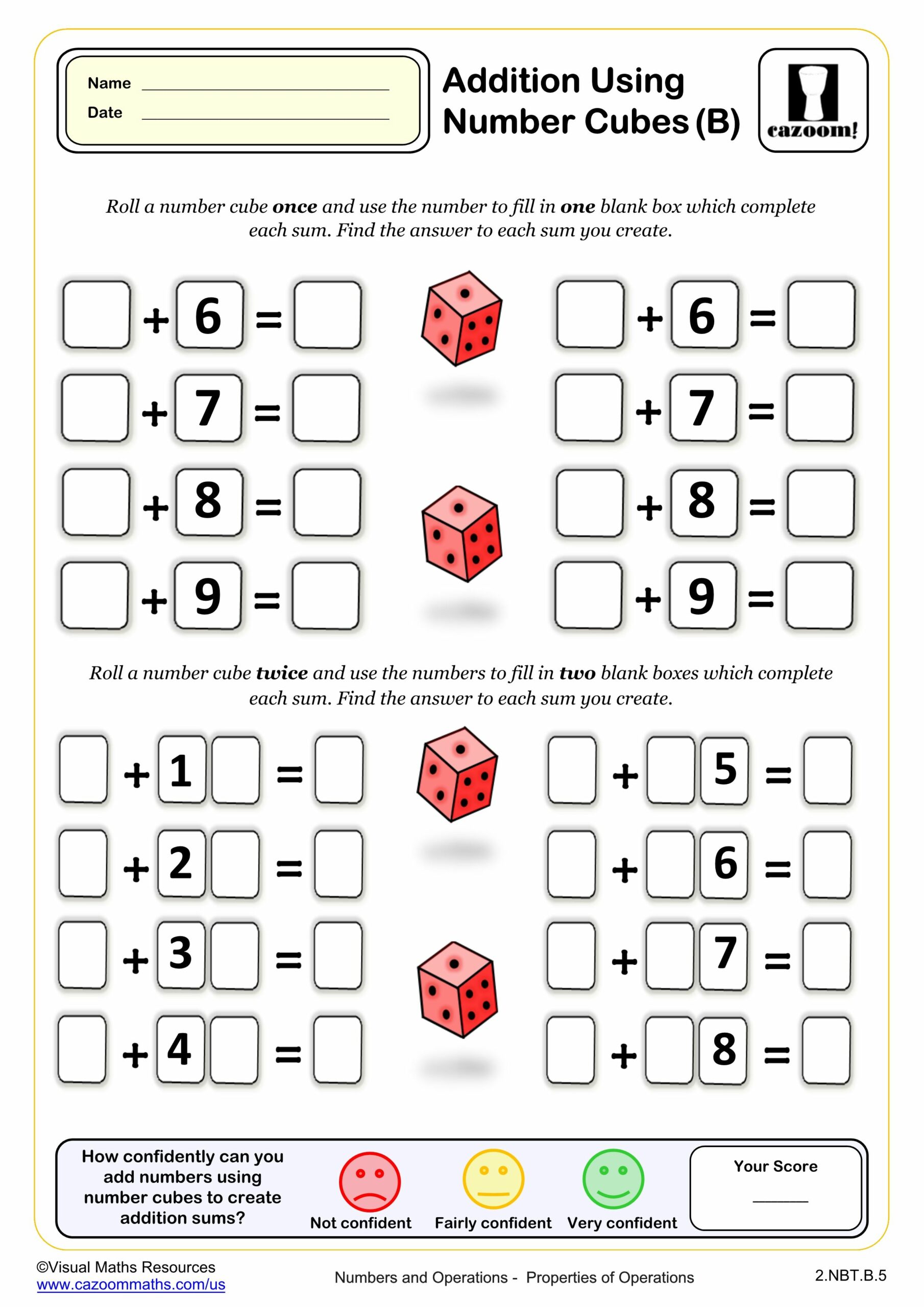
Addition Using Number Cubes (B)
Addition Wheel (adding 10 to 2 digits)
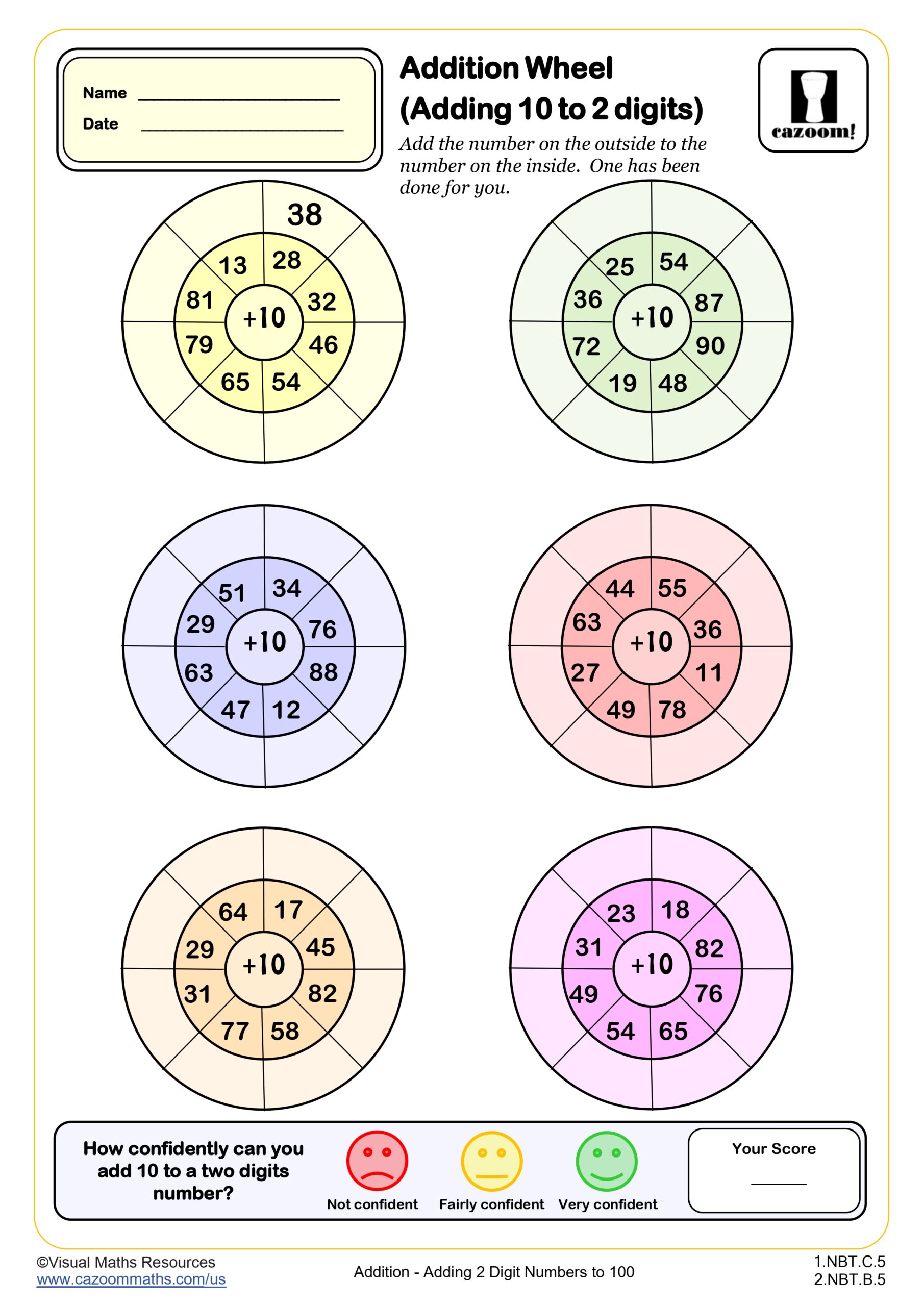
Addition Wheel (adding 9 - 11 to 2 digits)
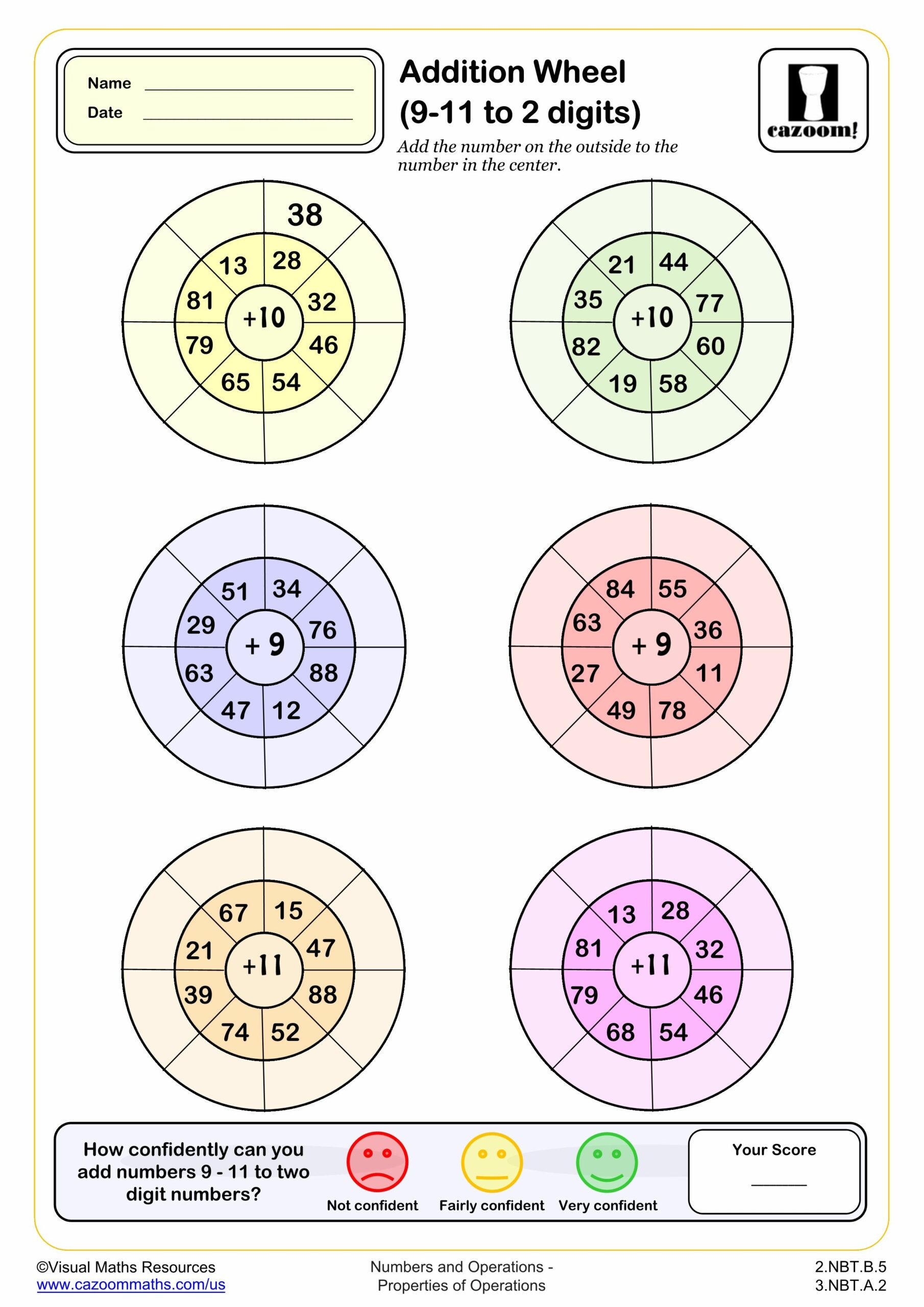
Addition Wheel Adding Three Numbers (A)
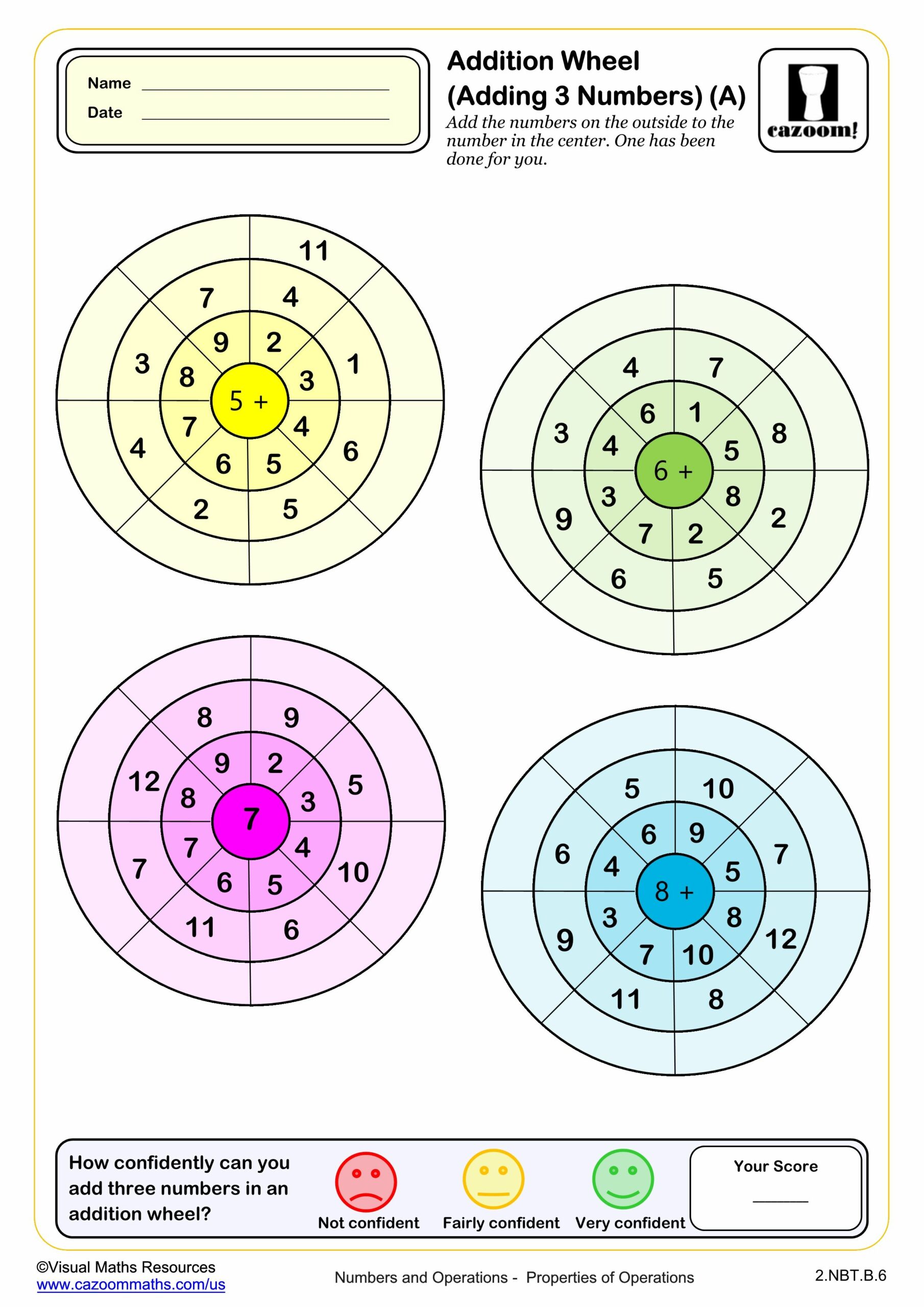
Addition Wheels (1 digit to 2 digits)
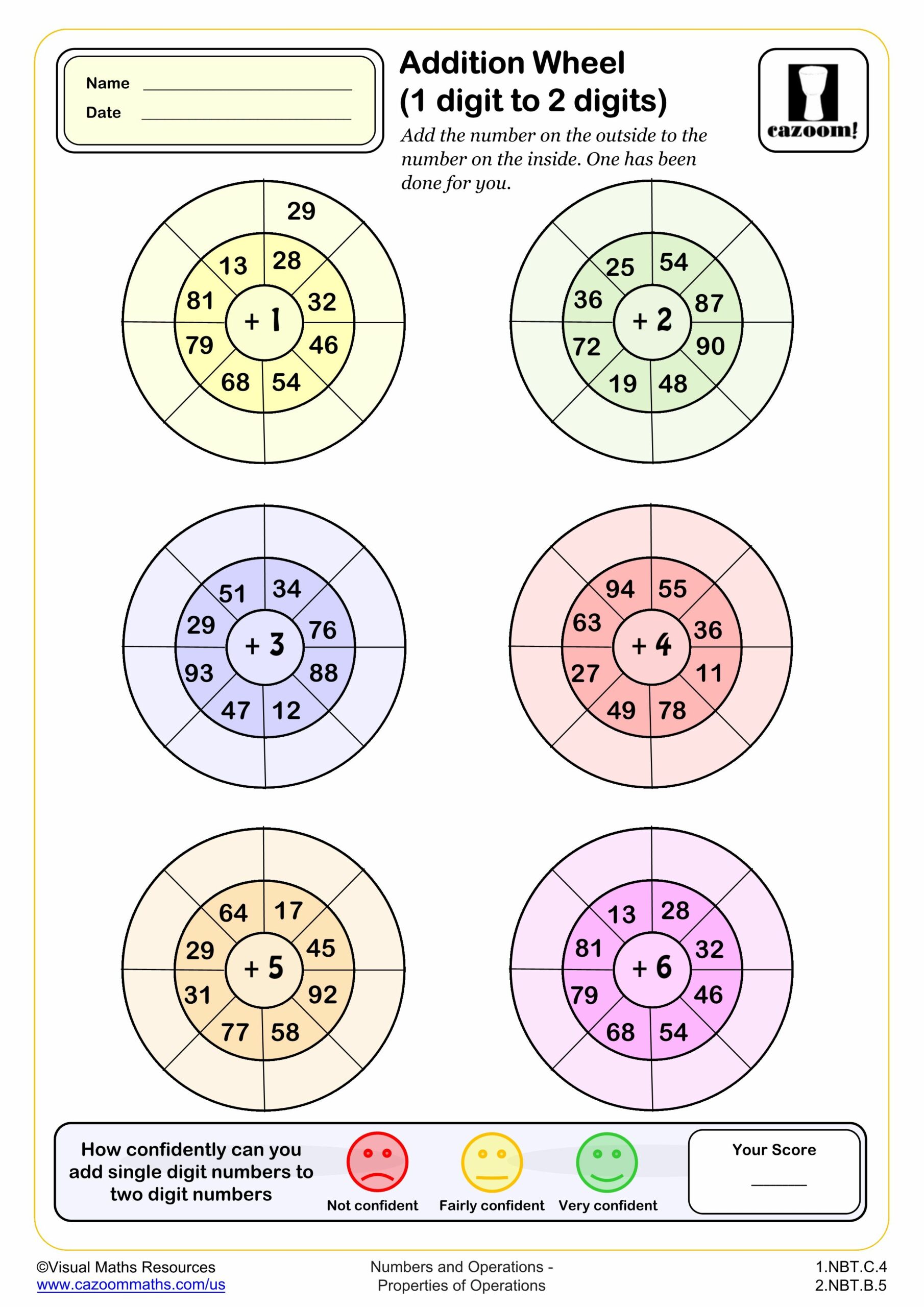
Addition Wheels (adding multiples of 10 to 2 digits)
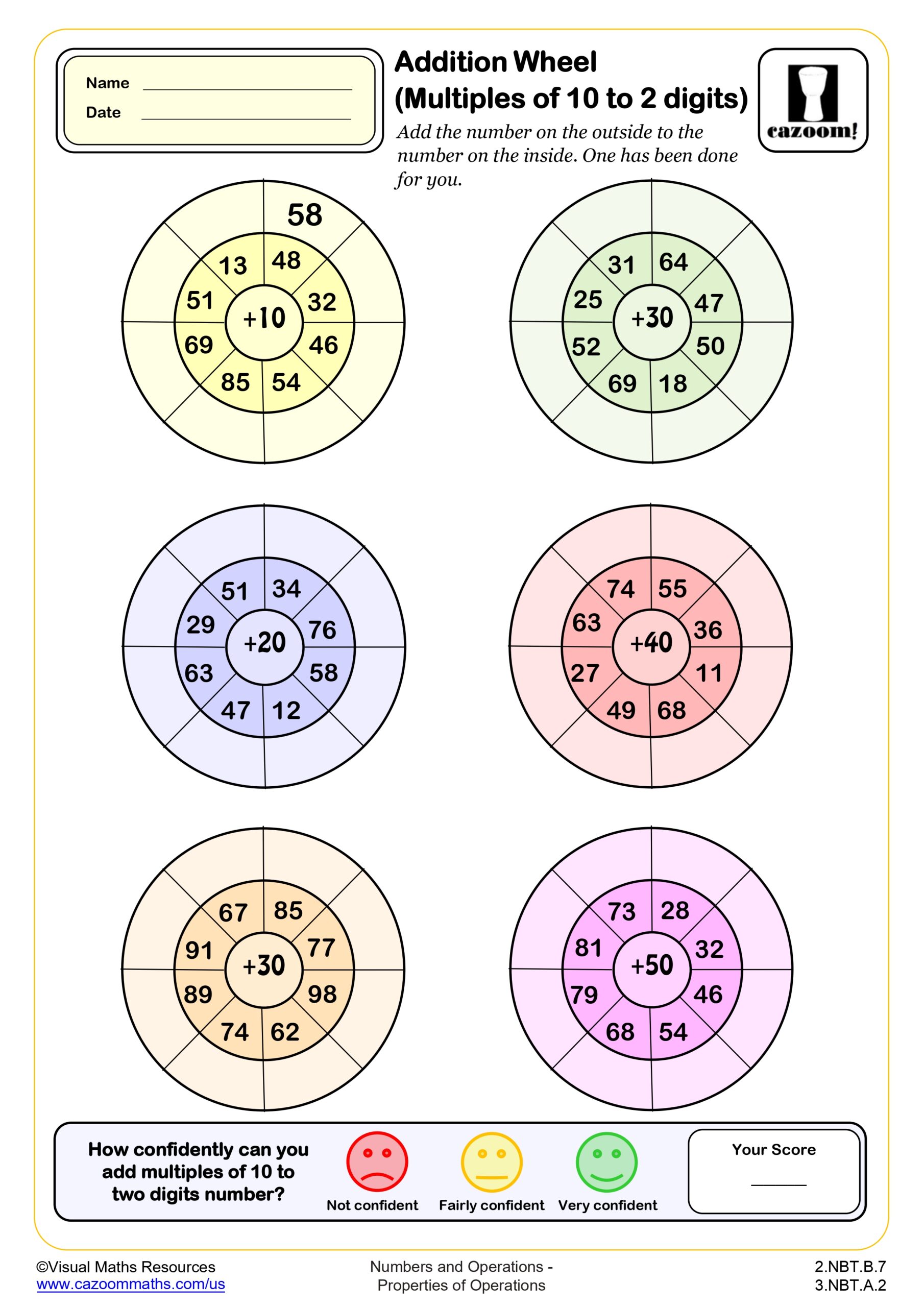
Addition wheels (multiples of 5 to 2 digits)
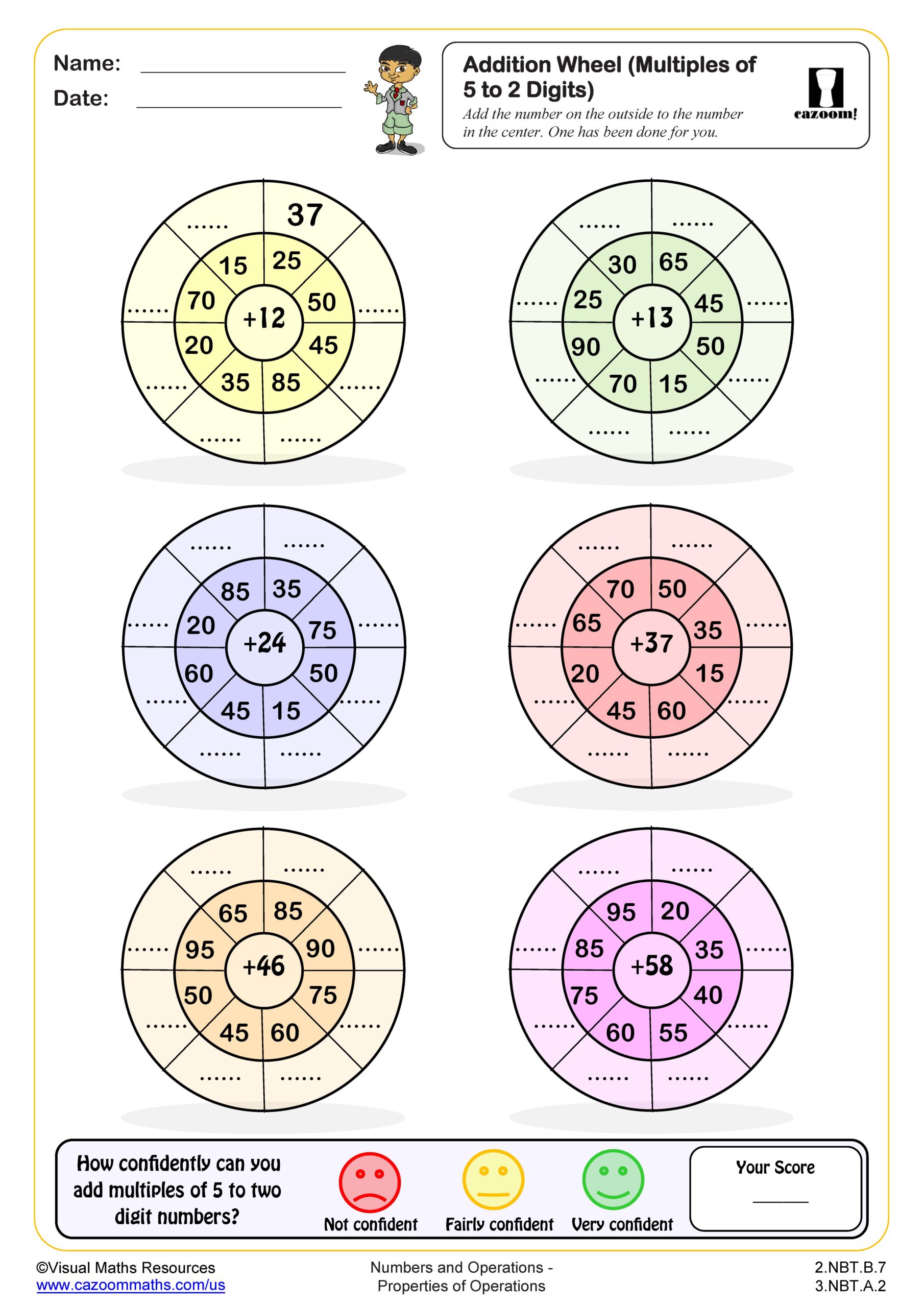
Addition Wheels adding three numbers (B)
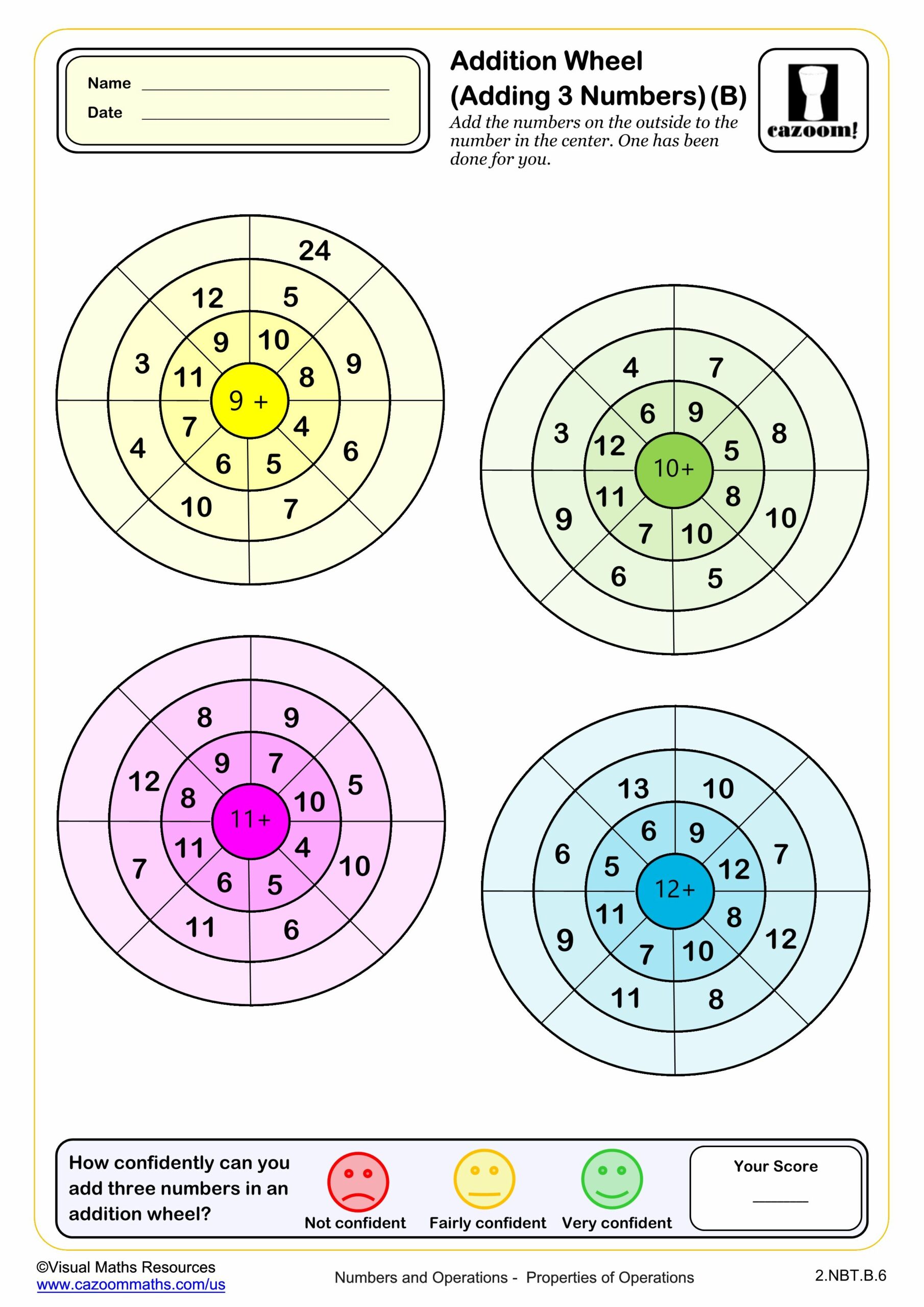
Addition Wheels adding three numbers (C)
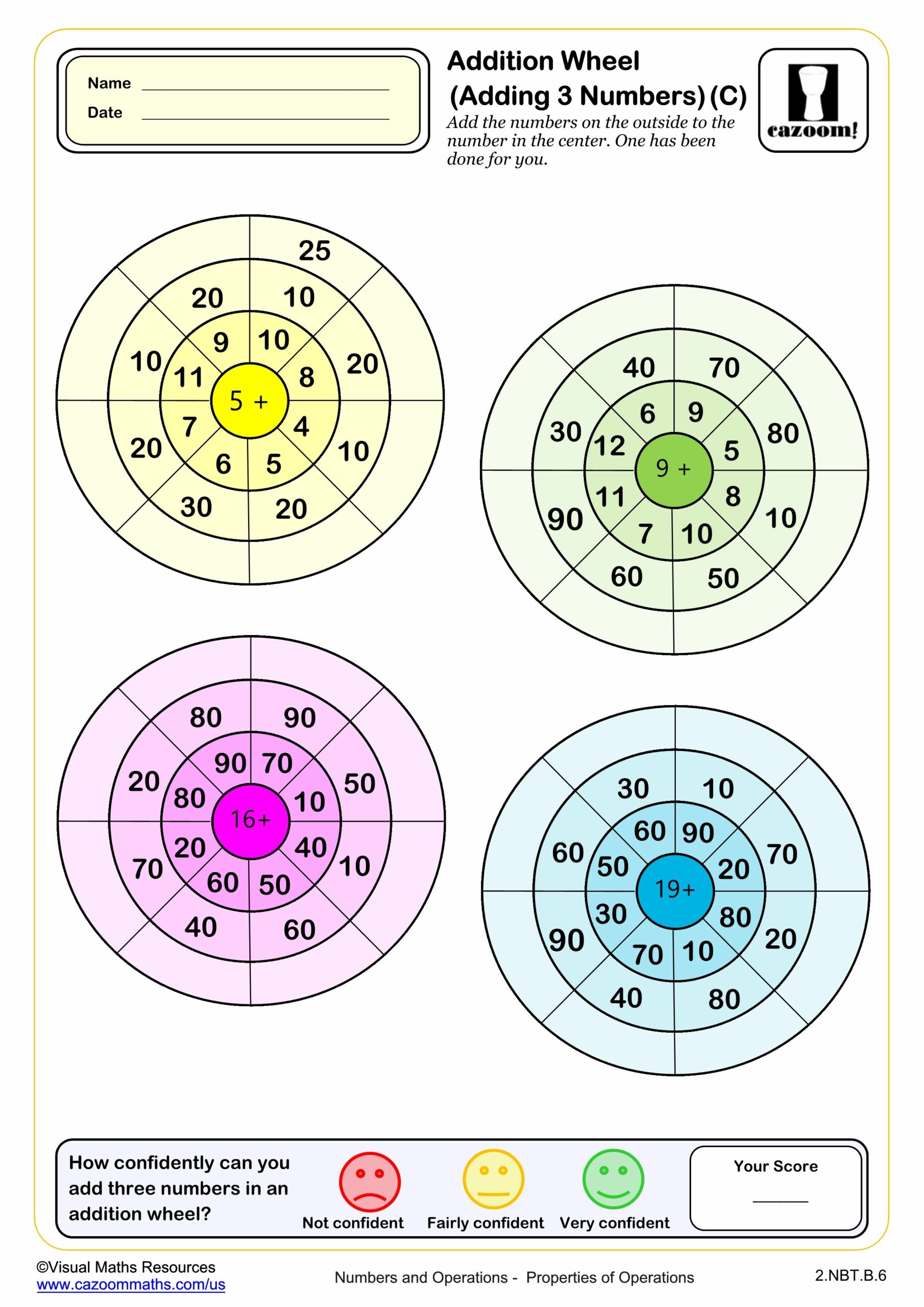
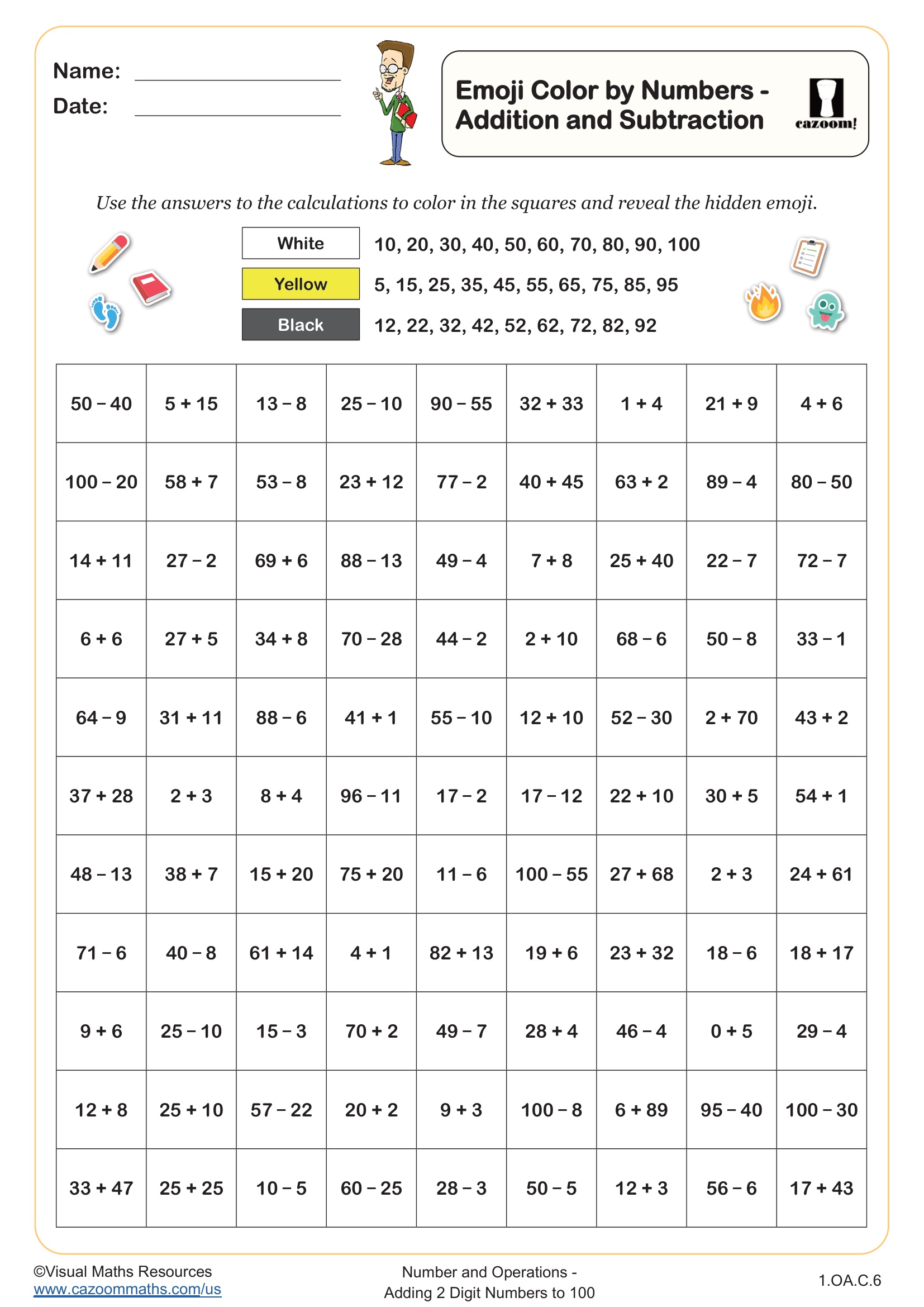
Emoji Colour by Numbers - Addition and Subtraction
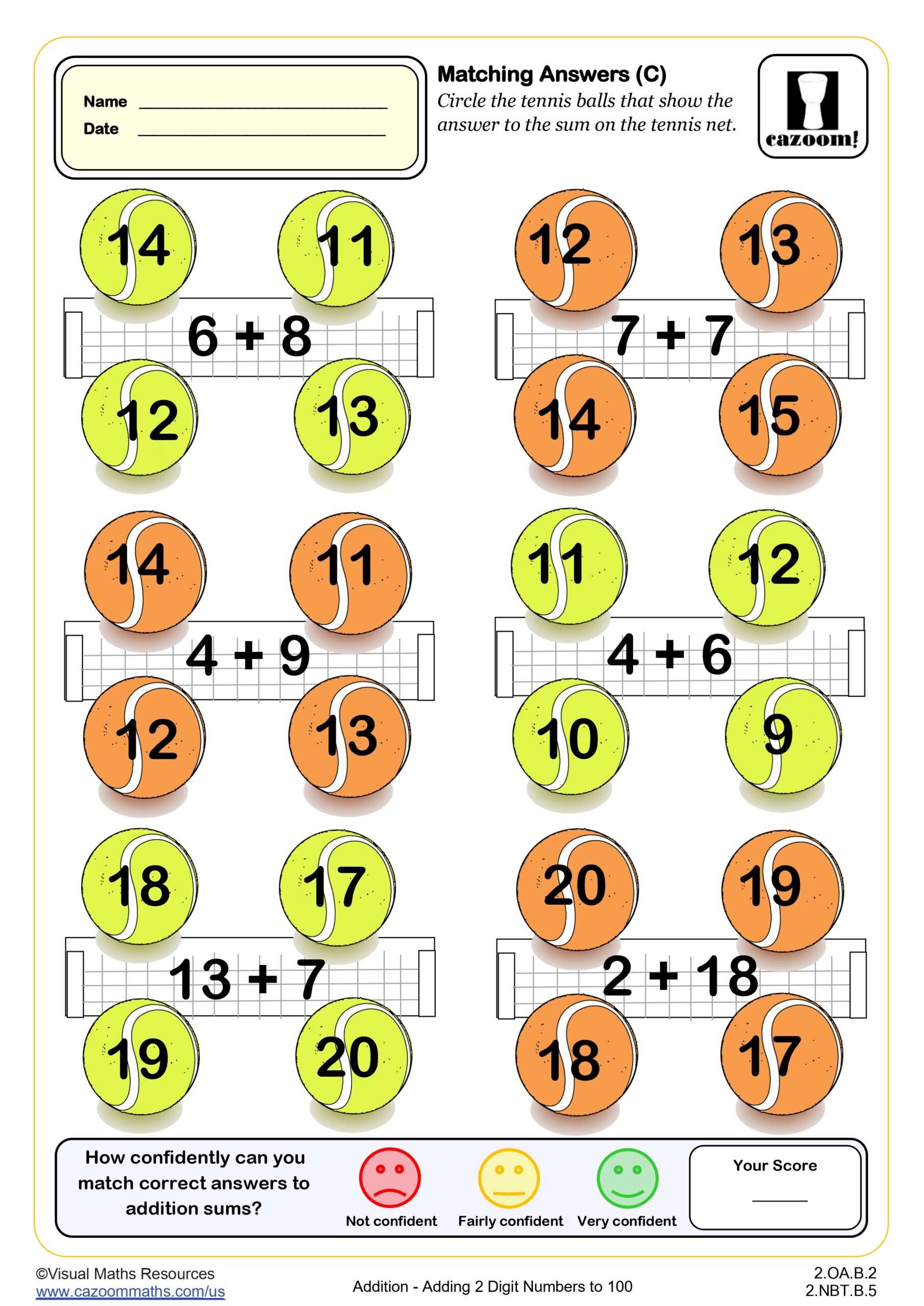
Matching Answers (C)
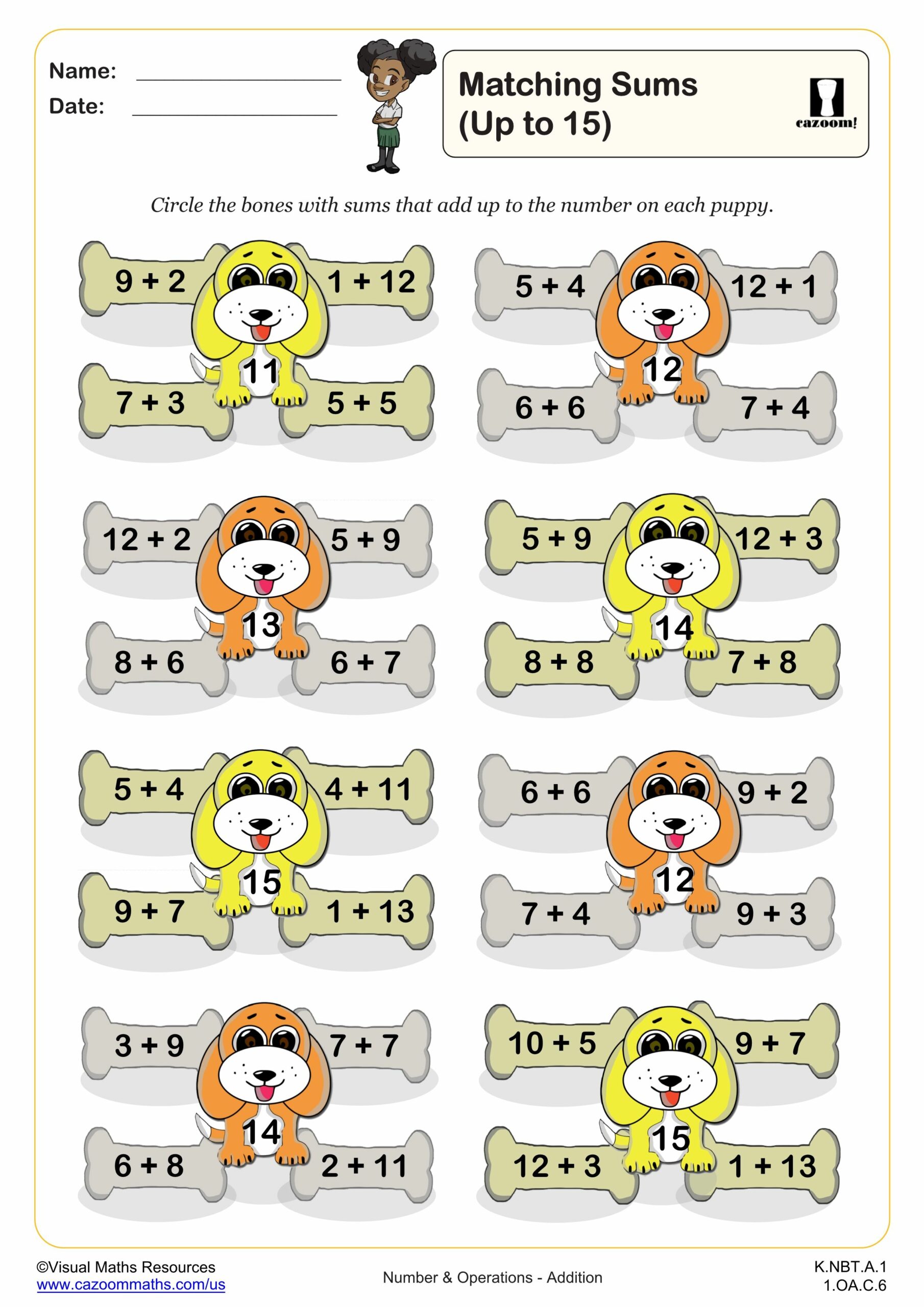
Matching sums (Up to 15)
All worksheets are created by the team of experienced teachers at Cazoom Math.
What Are 2 Digit Numbers and How Do Students Add Them to 100?
Two digit numbers range from 10 through 99, and adding them to reach sums up to 100 introduces students to foundational place value concepts. This skill bridges single-digit addition and more complex multi-digit operations that students encounter in later grades. Problems typically involve combining tens and ones separately before writing the final sum, reinforcing the base-ten structure of our number system.
A common error occurs when students add digits straight across without considering place value, calculating 24 + 35 as 59 by adding 2+3=5 and 4+5=9 separately. Standardized tests frequently assess this skill through word problems requiring students to combine two quantities, so mastering the mechanics now prevents confusion when context is added. Students confidently tackle larger addition once they recognize that tens always combine with tens and ones with ones.
Which Grade Levels Use Adding 2 Digit Numbers to 100 Worksheets?
These worksheets serve students from kindergarten through 5th grade at the elementary school level. While the core skill aligns with 1st and 2nd grade standards under the Common Core State Standards (1.NBT.C.4 and 2.NBT.B.5), the worksheets adapt across multiple grade levels depending on student readiness and instructional focus.
Kindergarten students might work on recognizing 2 digit numbers and understanding what "adding to 100" means conceptually. First graders typically practice addition without regrouping before tackling more complex problems. By 2nd grade, students combine this with regrouping skills. Third through 5th graders use these worksheets for review, intervention, or as warm-ups before tackling three-digit addition. The progression from 10-question sets to 50-question practice allows teachers to match worksheet difficulty to student stamina and mastery level.
What Does Adding Without Regrouping Mean for 2 Digit Numbers?
Adding without regrouping occurs when the sum of the ones digits and the sum of the tens digits each stay below 10, meaning no carrying is necessary. For example, 23 + 45 works without regrouping because 3+5=8 (no carrying needed) and 2+4=6, giving 68. This approach isolates place value understanding before introducing the additional complexity of exchanging ten ones for one ten.
This skill connects directly to money management in real-world contexts. When students calculate combining $32 and $47 in savings (totaling $79), they apply the same place value reasoning. Scientists and engineers rely on this foundational place value understanding when working with measurements and data sets, even though calculators handle computation. The mental math flexibility students develop through repeated practice transfers to estimation skills needed when checking whether calculated answers make sense in scientific experiments or budget planning scenarios.
How Do These Worksheets Help Students Master 2 Digit Addition?
The worksheets scaffold learning by offering different problem quantities, from shorter 10-question sets that work well for initial instruction or students building confidence, to extended 50-question practice for mastery and fluency development. Focused practice on adding specific single digits (like 5 or 6) to 2 digit numbers helps students internalize patterns and build automaticity with particular number combinations that appear frequently across mathematical contexts.
Many teachers use the 10-question worksheets during guided math rotations or intervention blocks where close monitoring helps catch errors immediately. The 20-question versions work effectively as homework assignments or independent practice following direct instruction. Longer sets suit students who need extended practice or timed fluency drills. The complete answer keys allow student self-checking during partner work, where one student solves while another verifies answers, promoting mathematical discussion about strategies and catching place value errors before they become habits.