Elementary School Adding 2 Digit Numbers to 1000 Worksheets
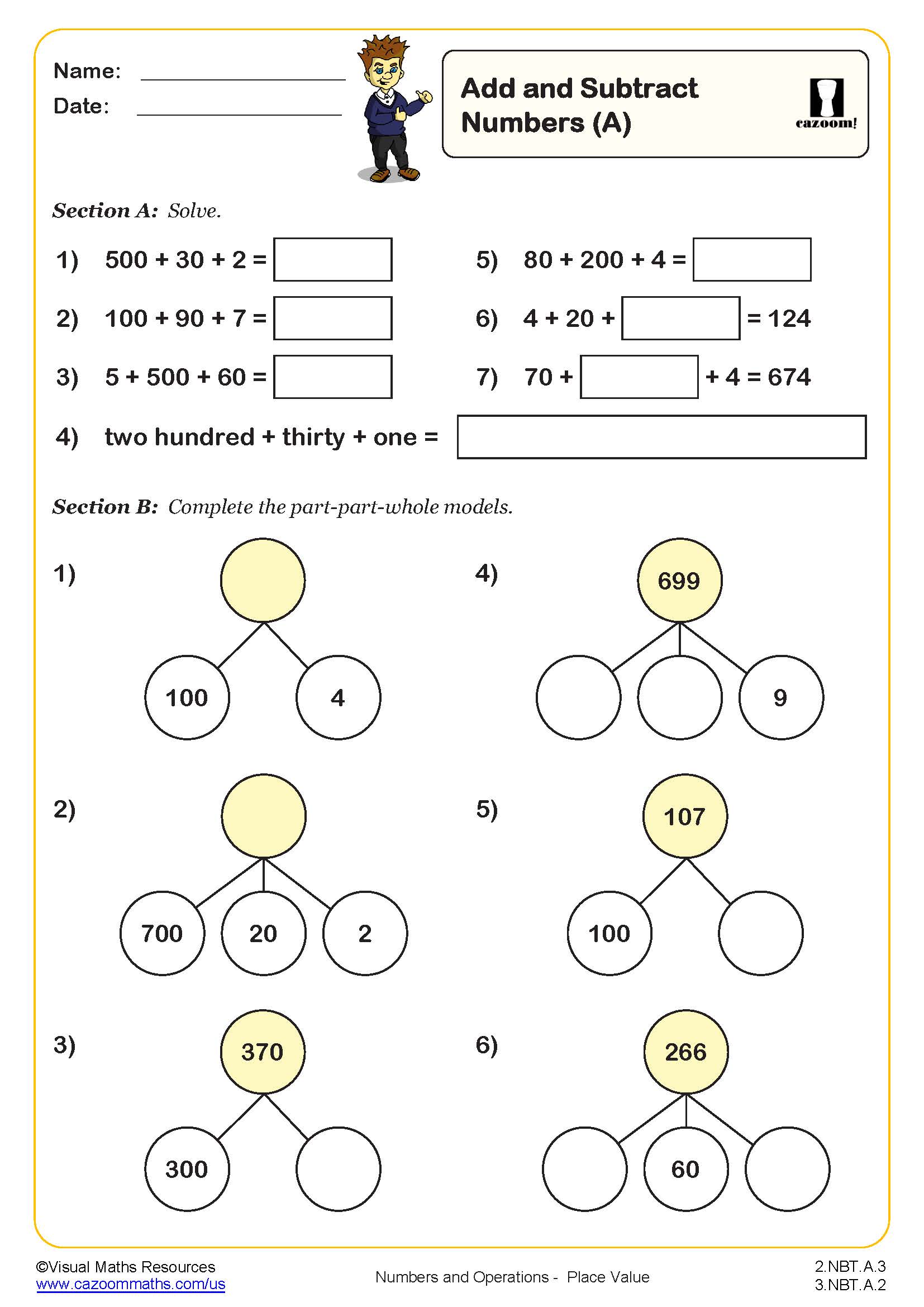
Add and subtract numbers (A)
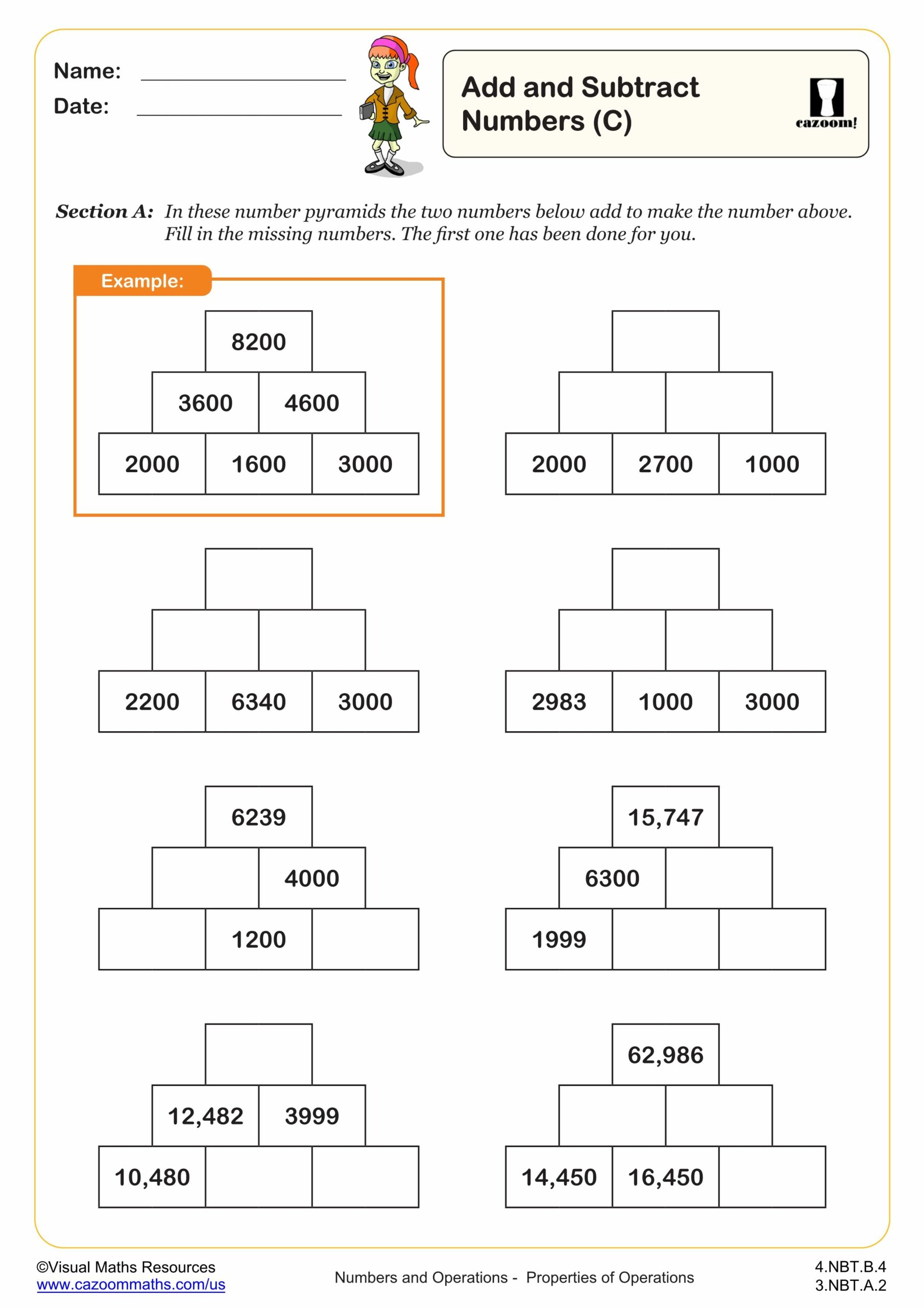
Add and subtract numbers (C)
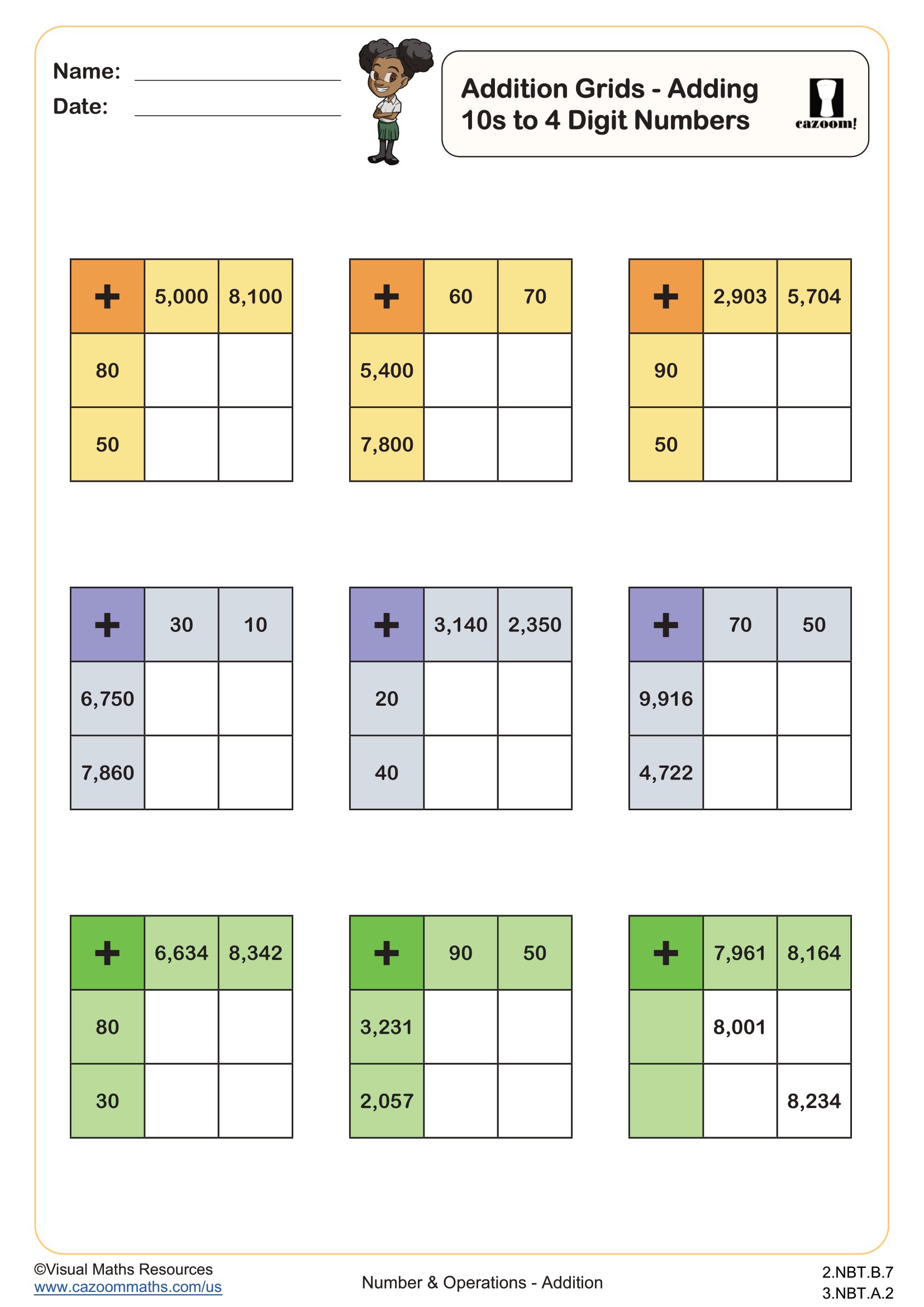
Addition Grids Adding 10s to 4 Digit Numbers
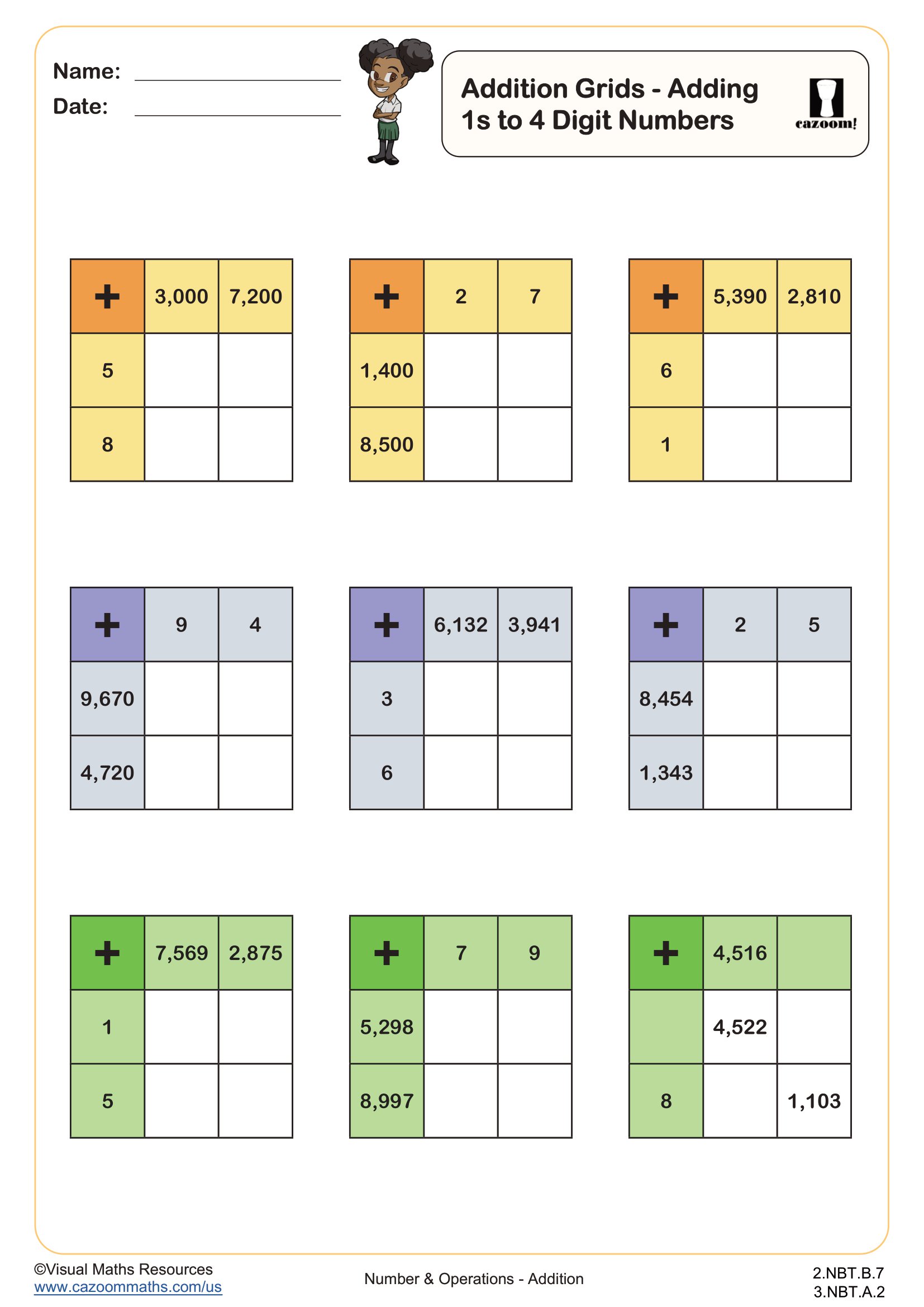
Addition Grids Adding 1s to 4 Digit Numbers
Addition Tables (adding hundreds to a 3 digit number)
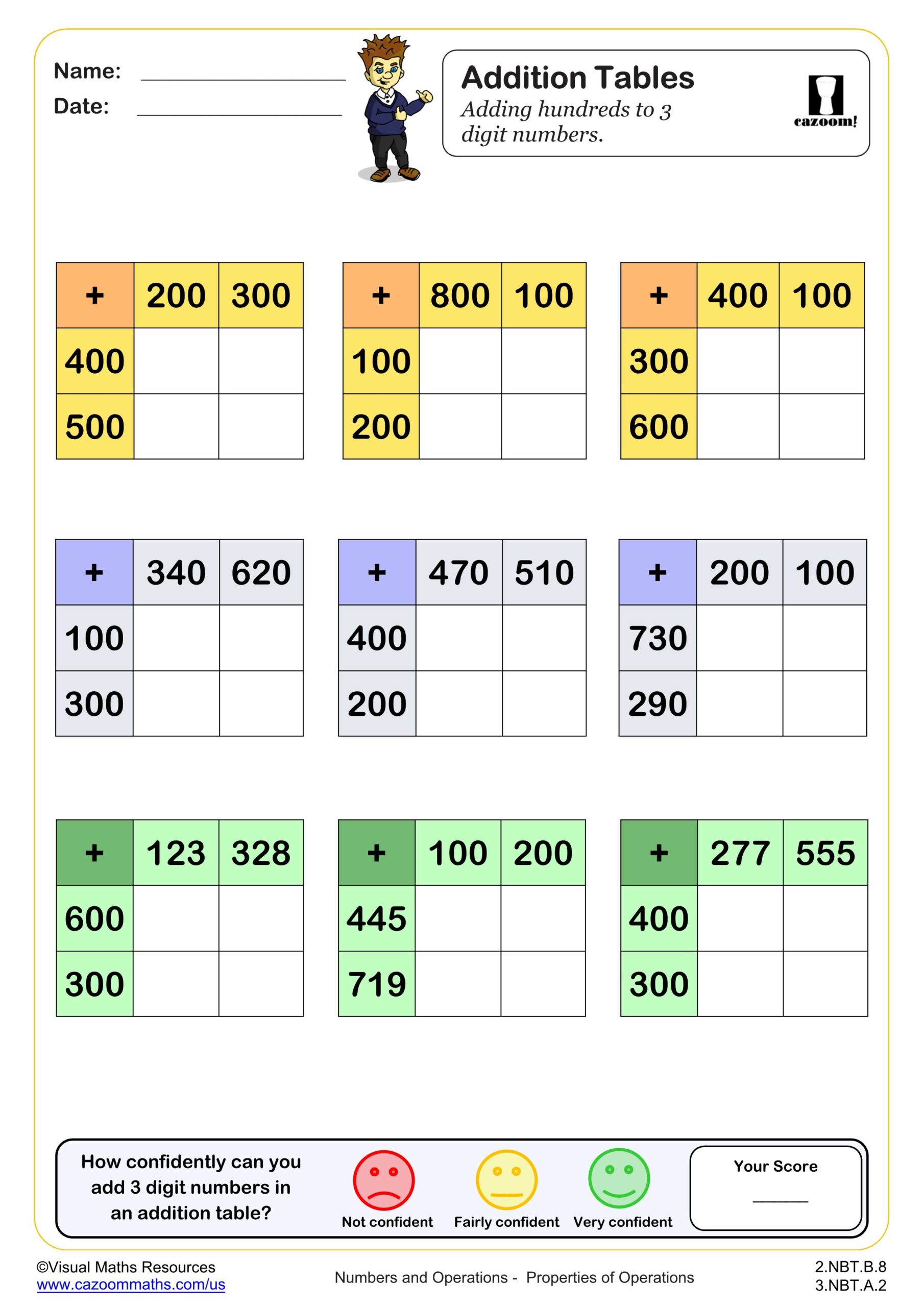
Addition Tables (adding ones to a 3 digit number)
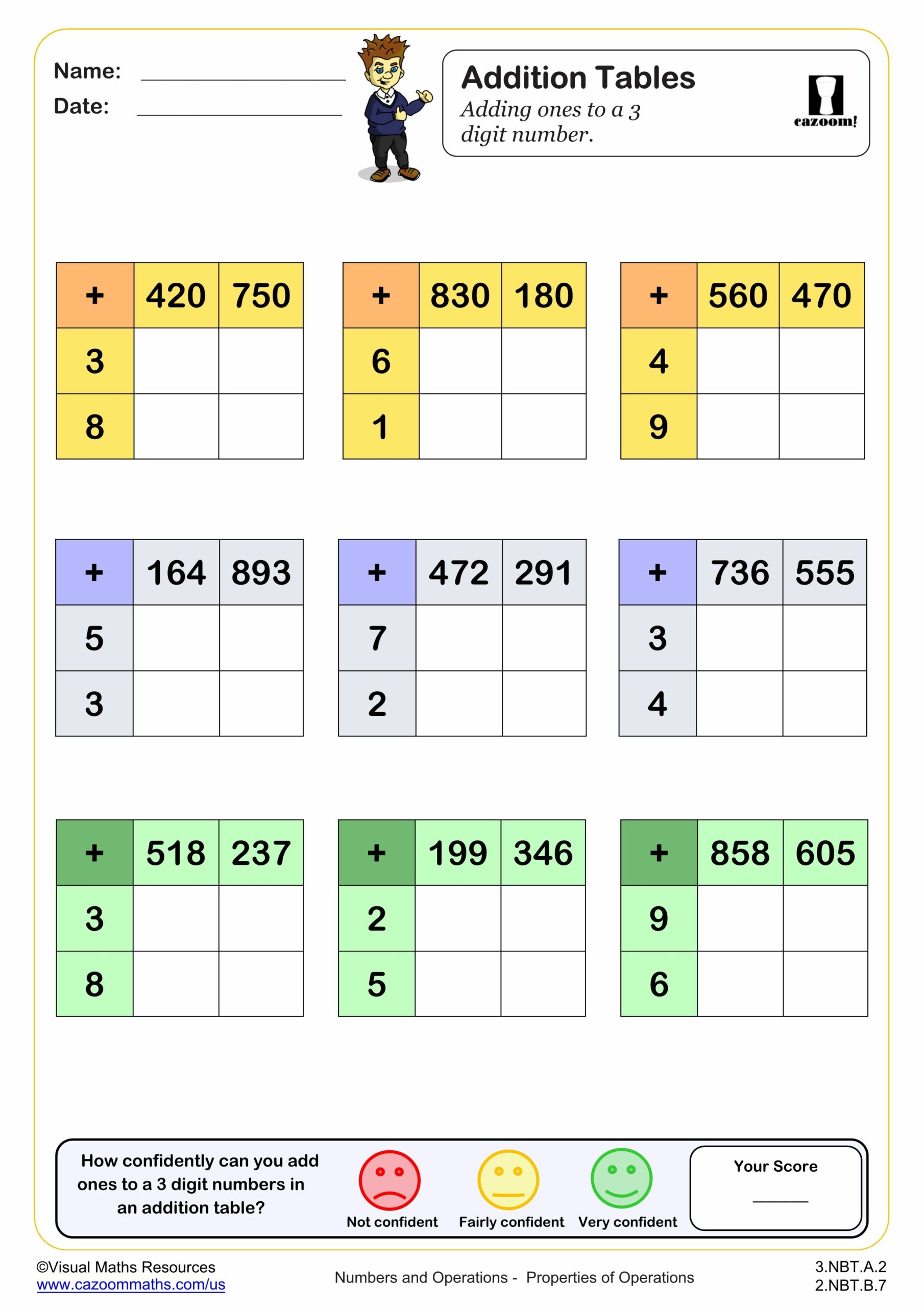
Addition Tables (adding ones, tens and hundreds to 3 digit numbers)
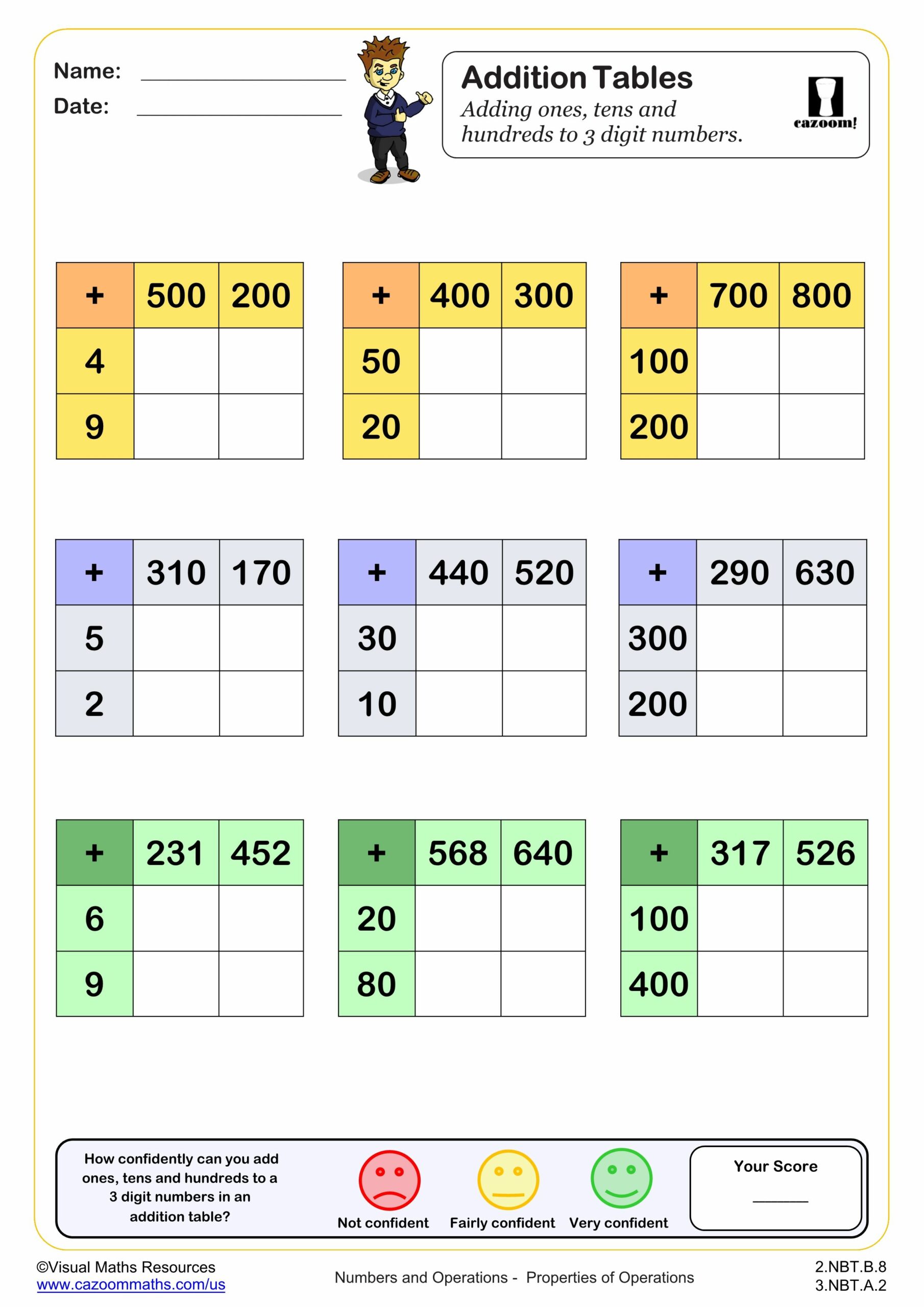
Addition Tables (adding tens to 3 digit numbers)
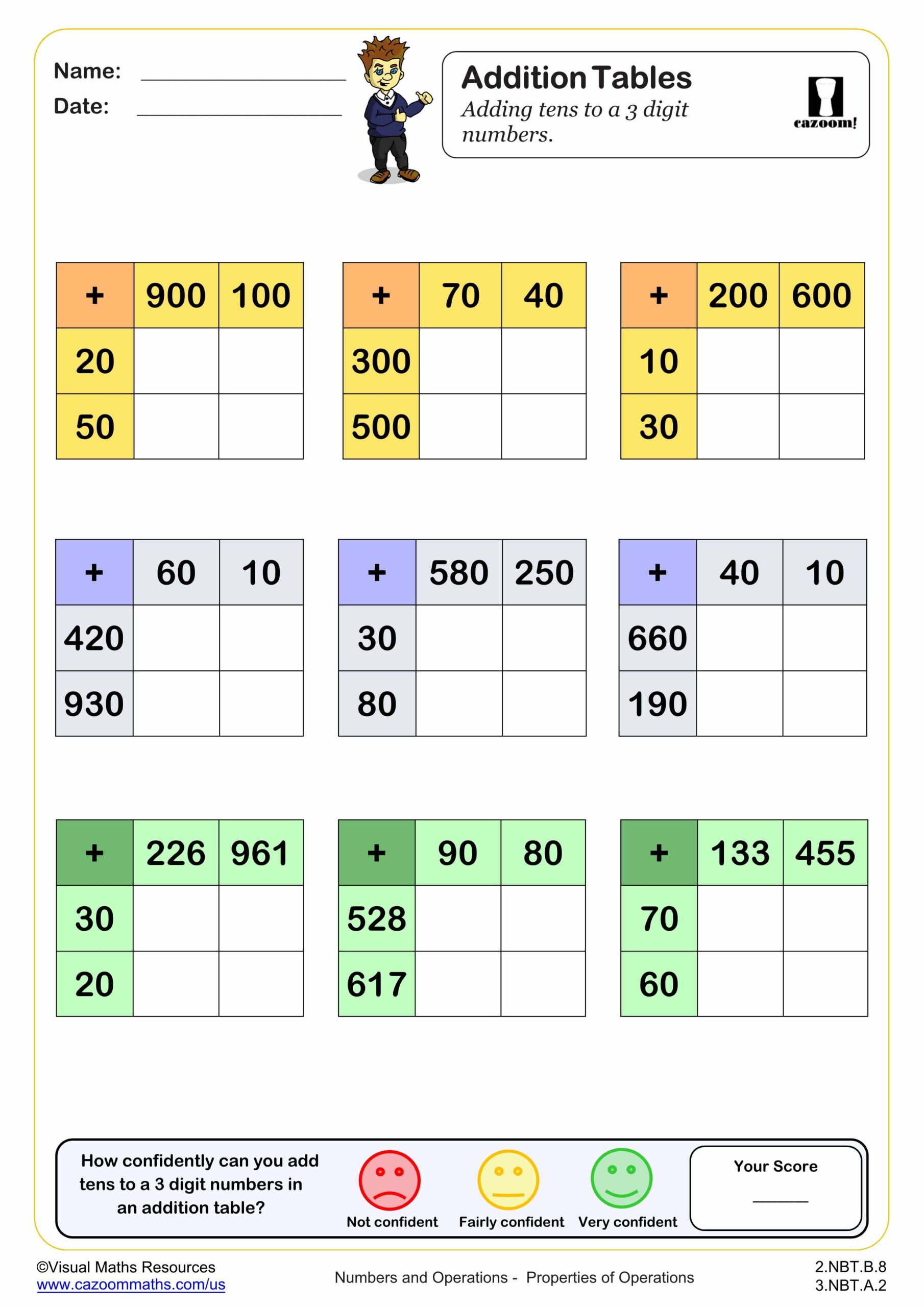
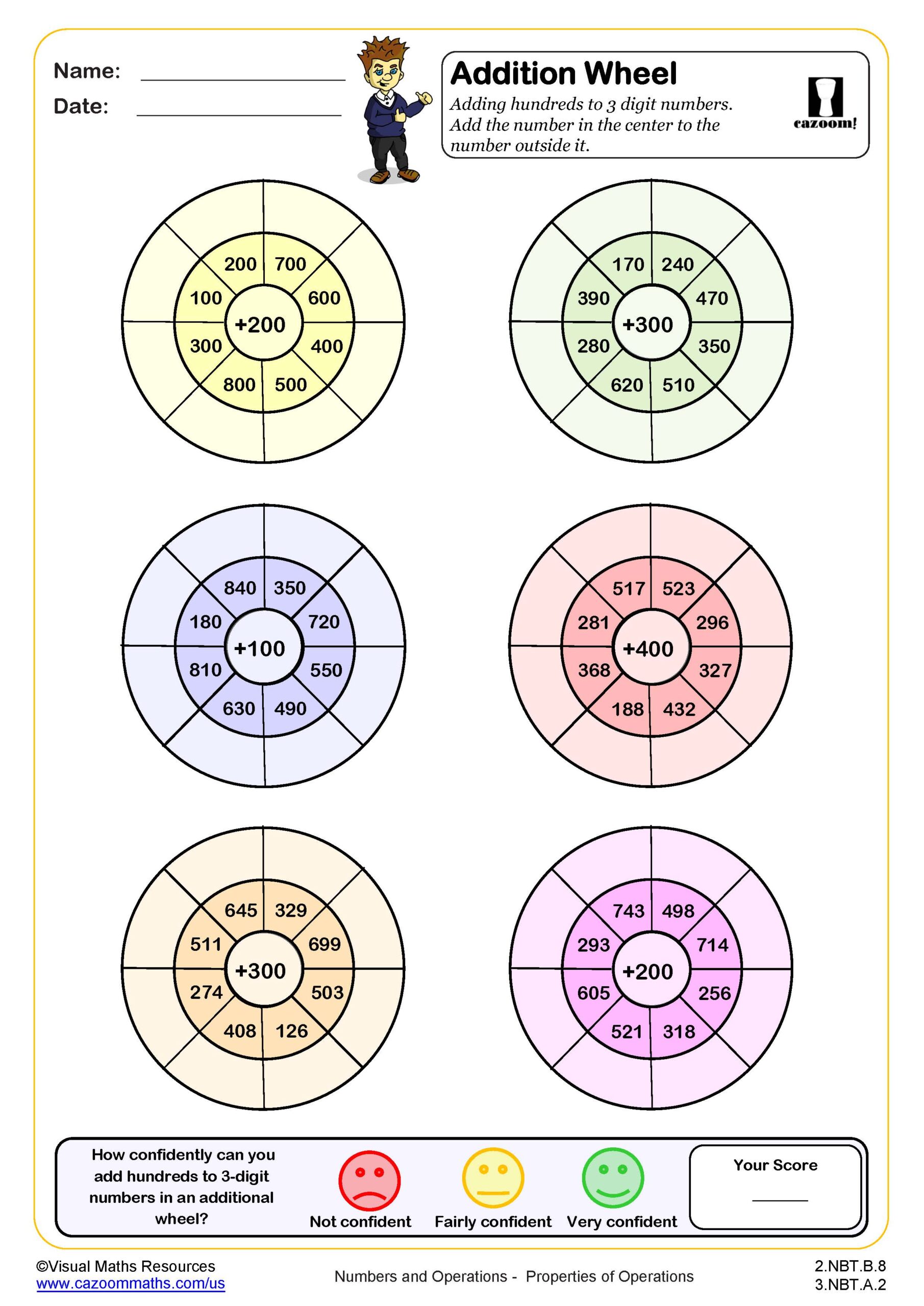
Addition Wheels (adding hundreds to 3 digit numbers)
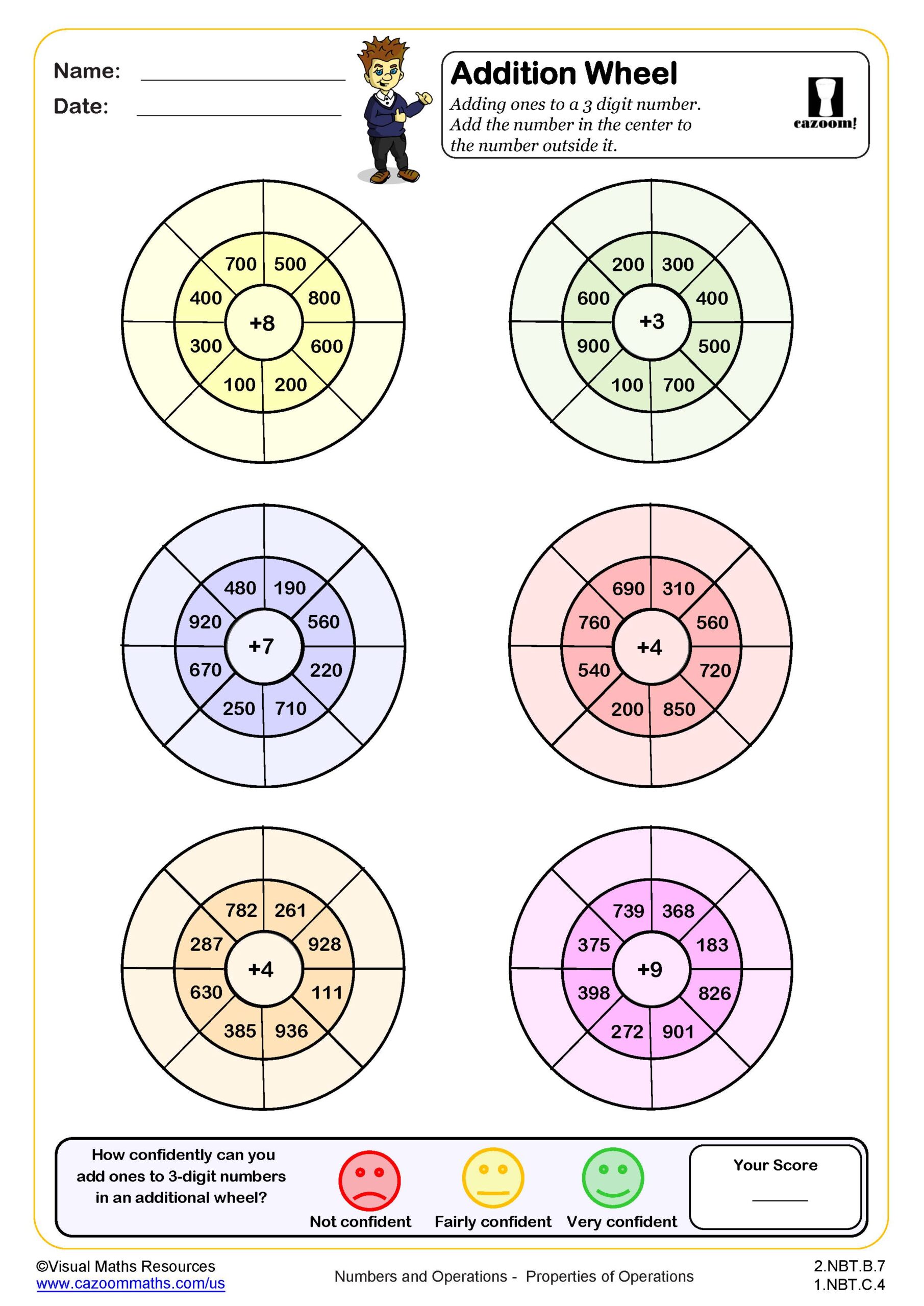
Addition Wheels (adding ones to 3 digit numbers)
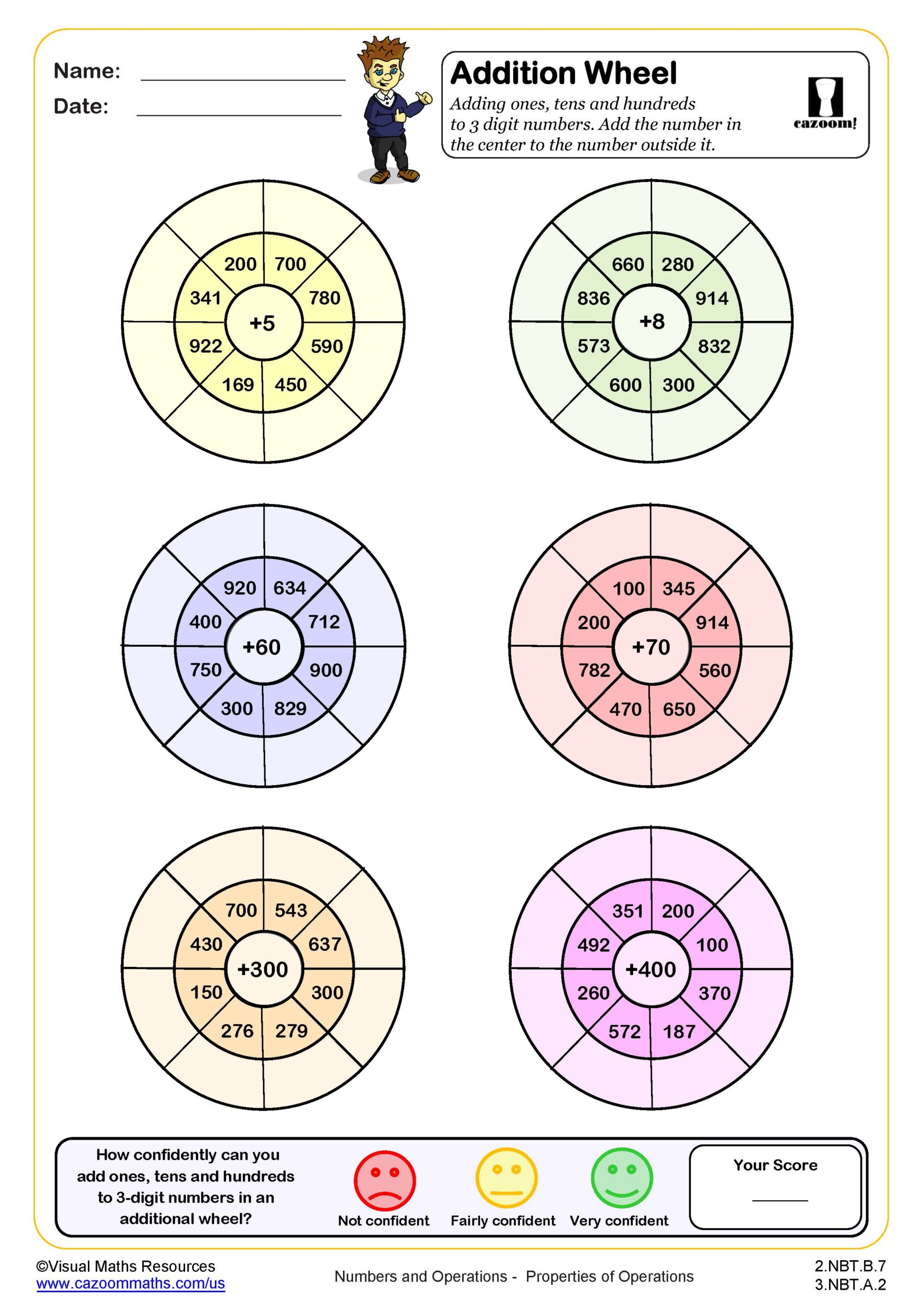
Addition Wheels (adding ones, tens and hundreds to 3 digit numbers)
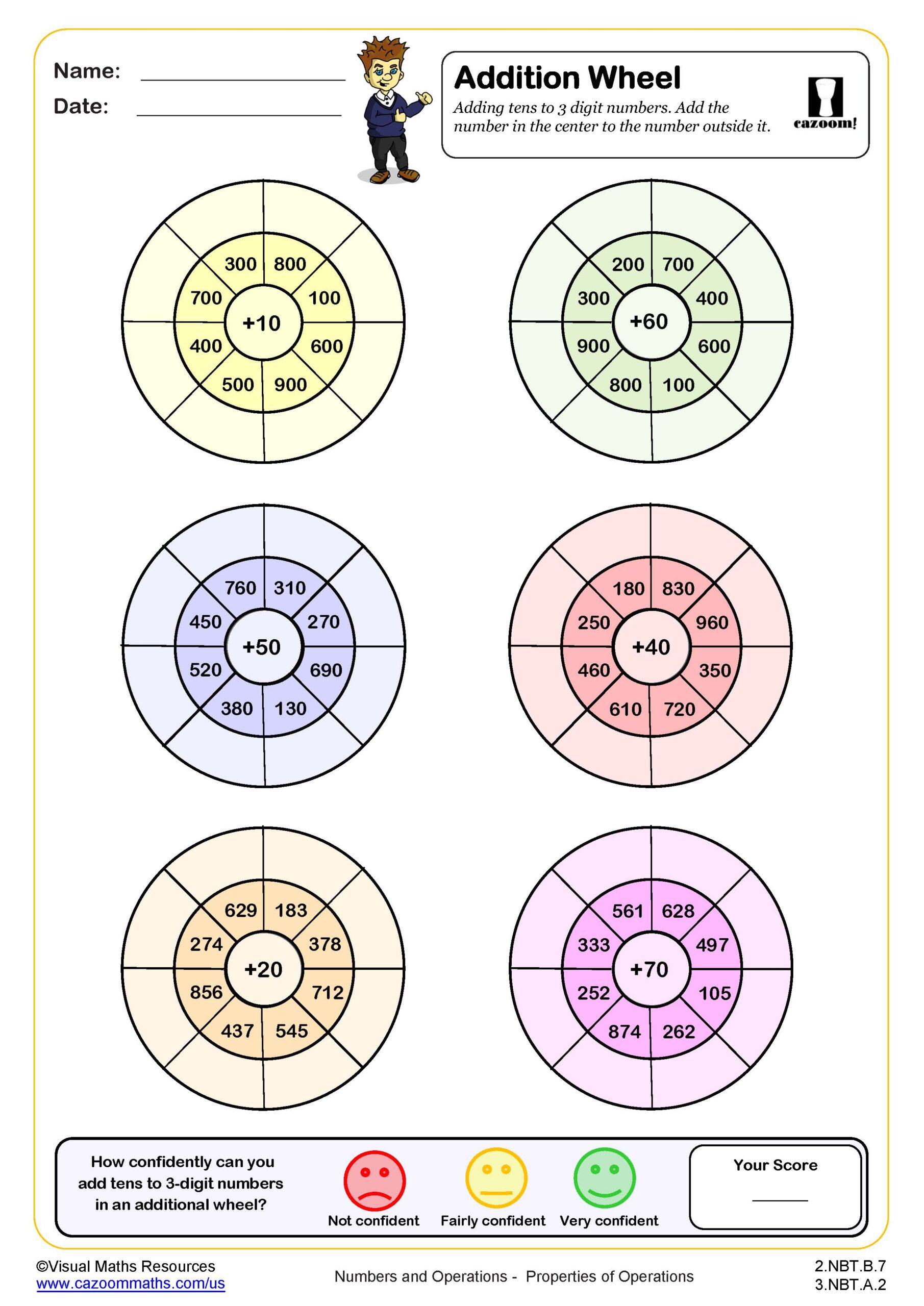
Addition Wheels (adding tens to 3 digit numbers)
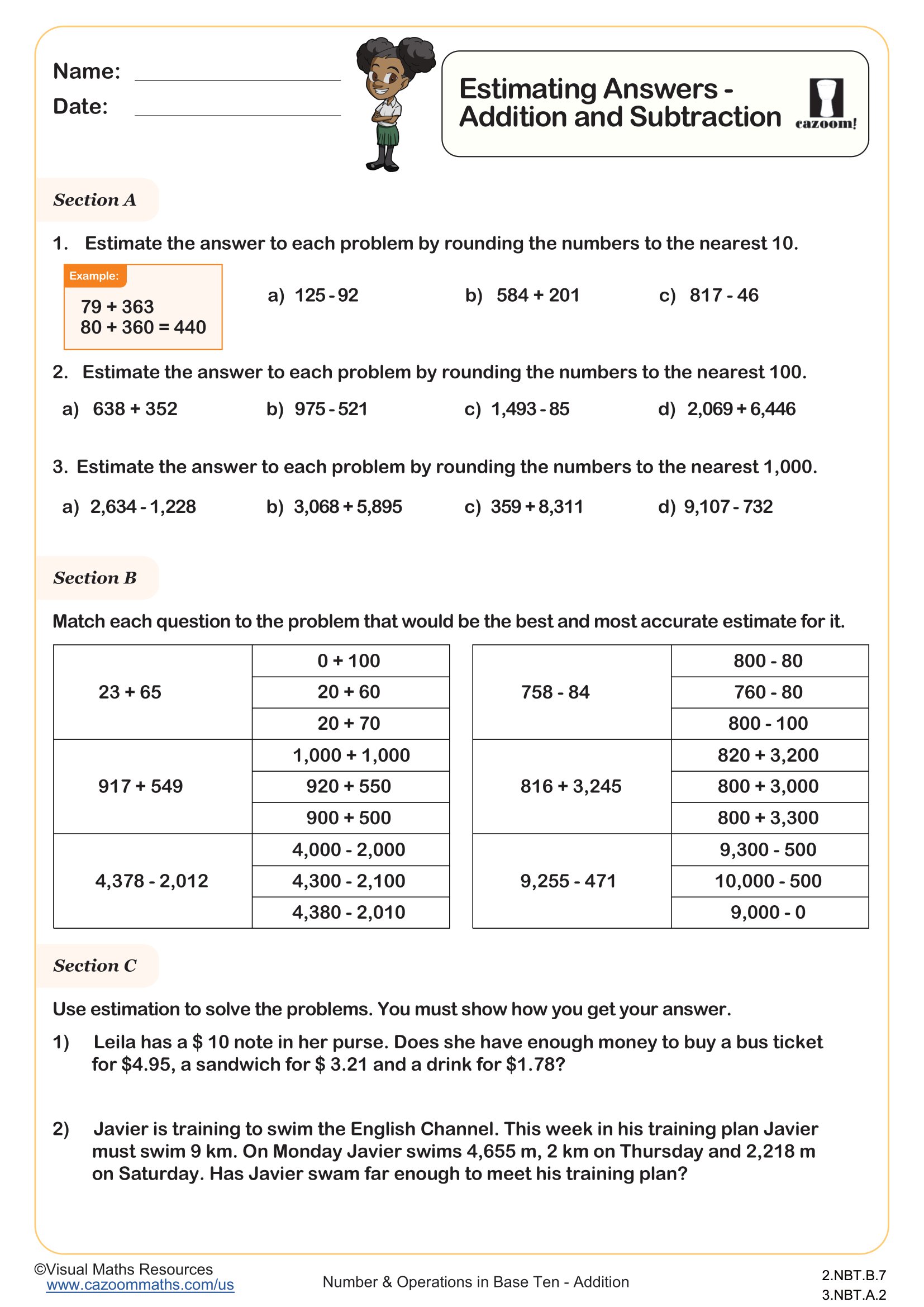
Estimating Answers Addition and Subtraction
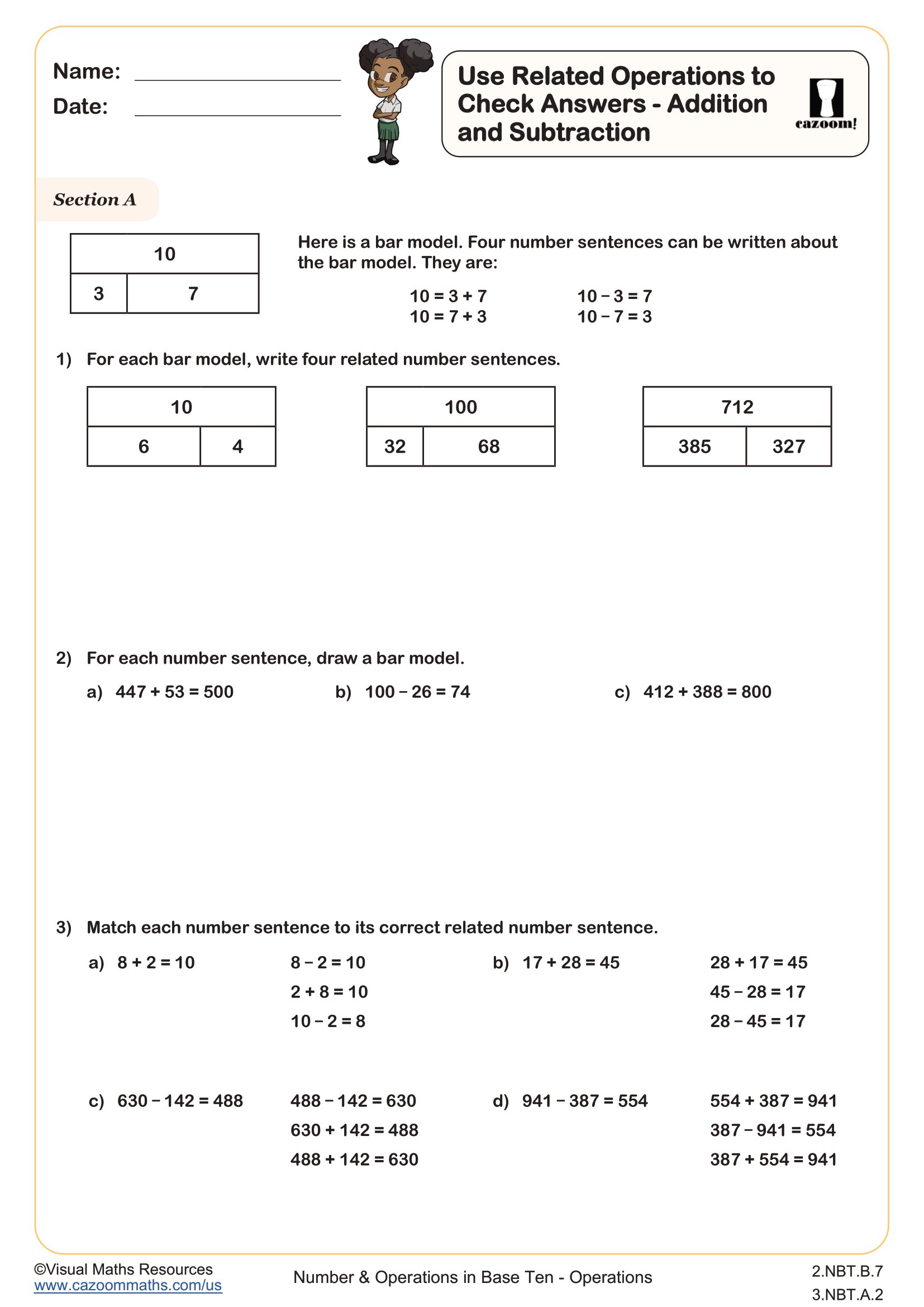
Using Related Operations to Check Answers Addition and Subtraction
All worksheets are created by the team of experienced teachers at Cazoom Math.
What Skills Do Students Practice When Adding 2 Digit Numbers to 1000?
Students practice place value addition with three- and four-digit numbers, focusing on adding tens and ones to larger numbers without regrouping initially, then progressing to problems requiring regrouping across place values. The worksheets address Common Core standards for operations in base ten across elementary grades, building computational fluency that supports estimation, mental math, and problem-solving. Students work with addition grids, tables, and various formats that reinforce the relationship between place values.
A common error occurs when students add digits in the wrong place value columns, particularly when the addend doesn't have digits in all positions. For example, when adding 45 to 326, students might incorrectly align the 4 under the 2 instead of under the tens place. The worksheets use grid formats and structured tables that help students visualize place value alignment, reducing these positional errors and strengthening their understanding of how place value affects sums.
Which Grade Levels Use Adding 2 Digit Numbers to 1000 Worksheets?
These worksheets span kindergarten through 5th grade in elementary school, though the focus and difficulty vary significantly across grade levels. Early elementary students (kindergarten through 2nd grade) typically work with simpler combinations and smaller numbers within 1000, while upper elementary students (3rd through 5th grade) encounter more complex problems involving multiple place values and strategic thinking about efficient calculation methods.
The progression moves from adding multiples of ten to three-digit numbers in early grades, then advances to adding mixed two-digit numbers that require understanding both tens and ones simultaneously. By 4th and 5th grade, students use these skills as building blocks for larger number operations and apply strategic thinking about when to regroup, estimate, or use mental math shortcuts. Teachers often use these worksheets for differentiation, assigning grade-appropriate complexity within mixed-ability classrooms.
How Do Addition Tables Help Students Learn Place Value Addition?
Addition tables present a structured format where students add specific place values—ones, tens, or hundreds—to three-digit numbers in systematic rows and columns. This organization helps students recognize patterns in how each place value behaves during addition. For instance, tables that focus solely on adding ones to three-digit numbers help students see that only the ones place changes (until regrouping occurs), reinforcing the independence of place values in computation.
This skill connects directly to real-world applications in inventory management, budgeting, and data analysis. When a store receives a shipment of 35 items to add to their current inventory of 428 items, employees use the same place value addition strategies students practice in these tables. In STEM fields, scientists and engineers constantly add measurements and data values, and understanding how place values combine ensures accuracy when recording experimental results or calculating quantities in chemistry, where precise amounts matter for successful outcomes.
How Can Teachers Use These Worksheets Most Effectively?
The worksheets provide scaffolded practice that moves from isolated place value addition (adding only tens or only ones) to mixed problems requiring students to manage multiple place values simultaneously. This structure allows teachers to target specific skill gaps—students struggling with regrouping can focus on addition grids that isolate that challenge, while those ready for complexity can work with tables requiring strategic thinking across all place values. The answer keys enable quick checking and immediate feedback during independent work.
Teachers commonly use these worksheets during math centers for differentiated practice, assigning different subtopics based on student readiness levels. They work well for intervention sessions where students need concentrated practice on specific place value concepts, and as homework to reinforce classroom instruction. Many teachers find success pairing students of similar ability levels to complete worksheets together, promoting mathematical discussion about strategies and self-correction when answers don't match the key before checking with the teacher.