Elementary School Adding Numbers up to 100 Worksheets
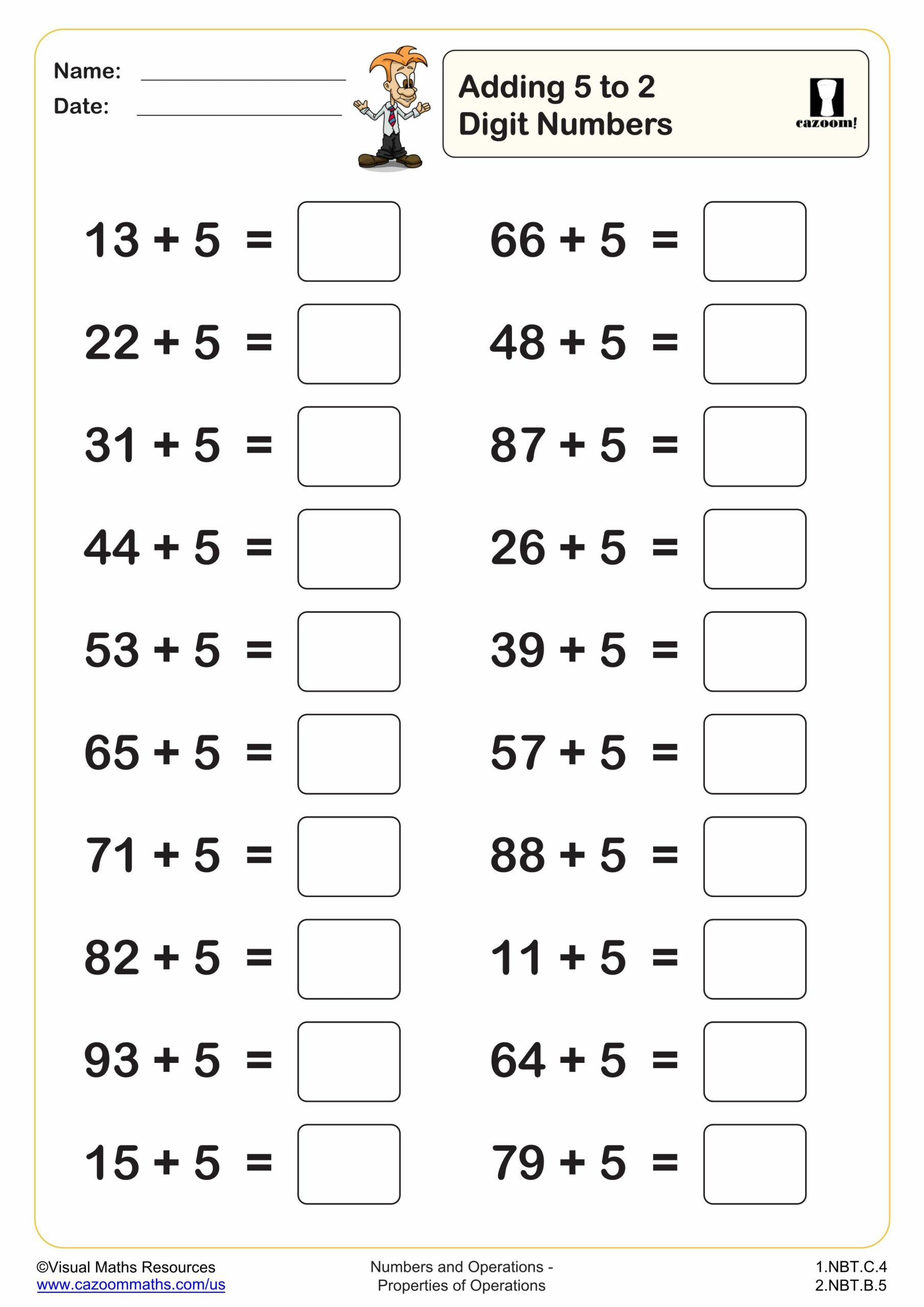
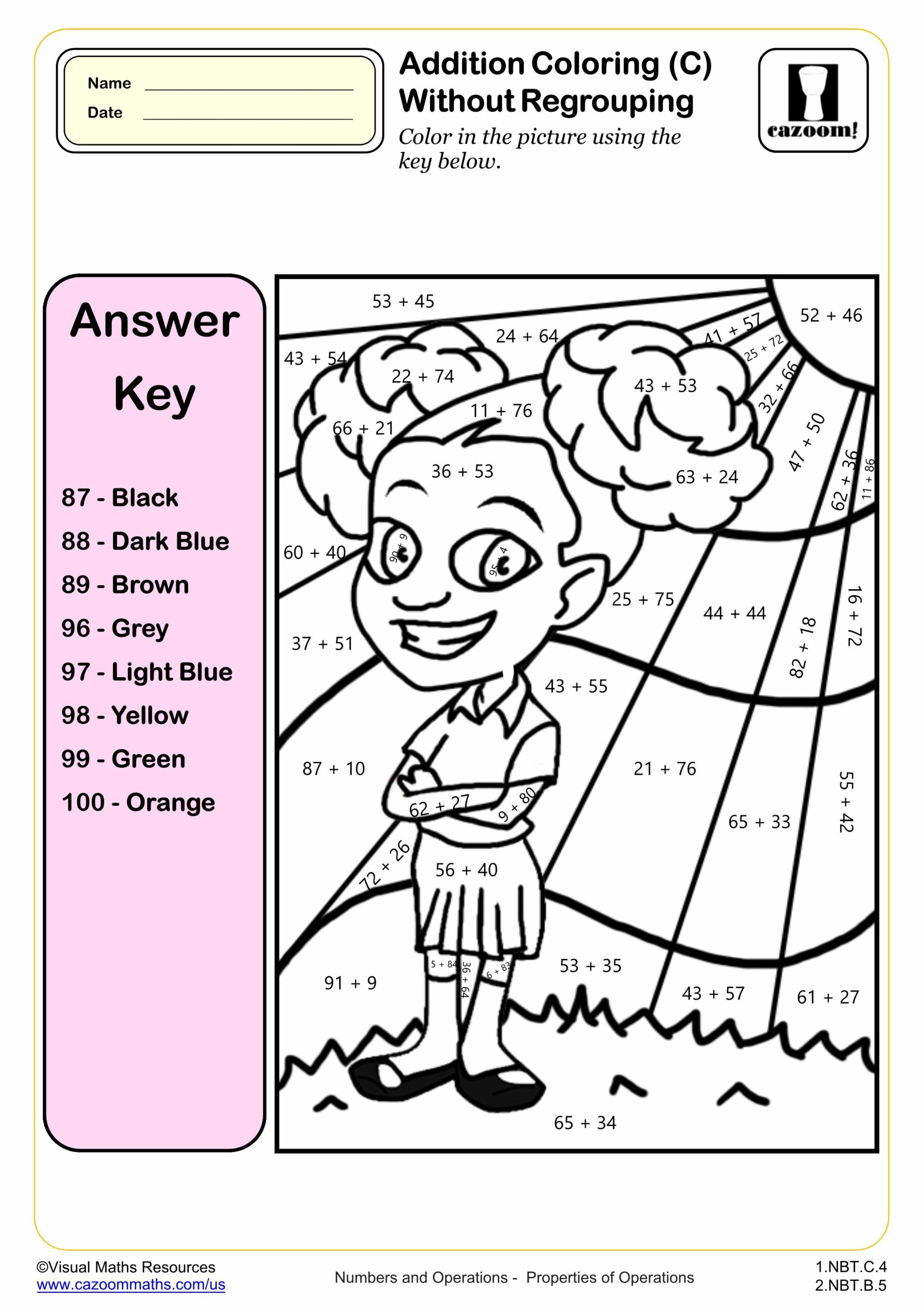
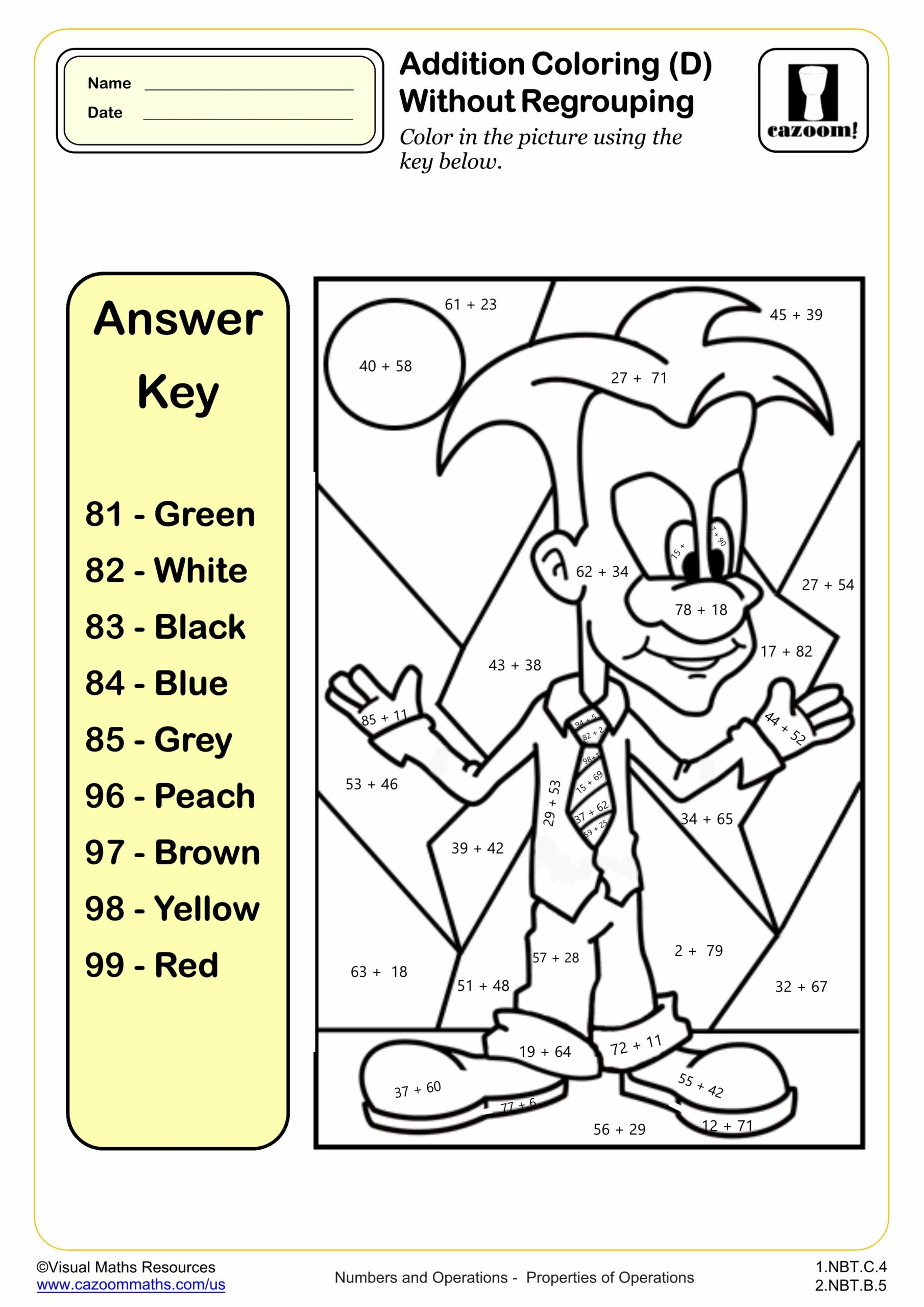
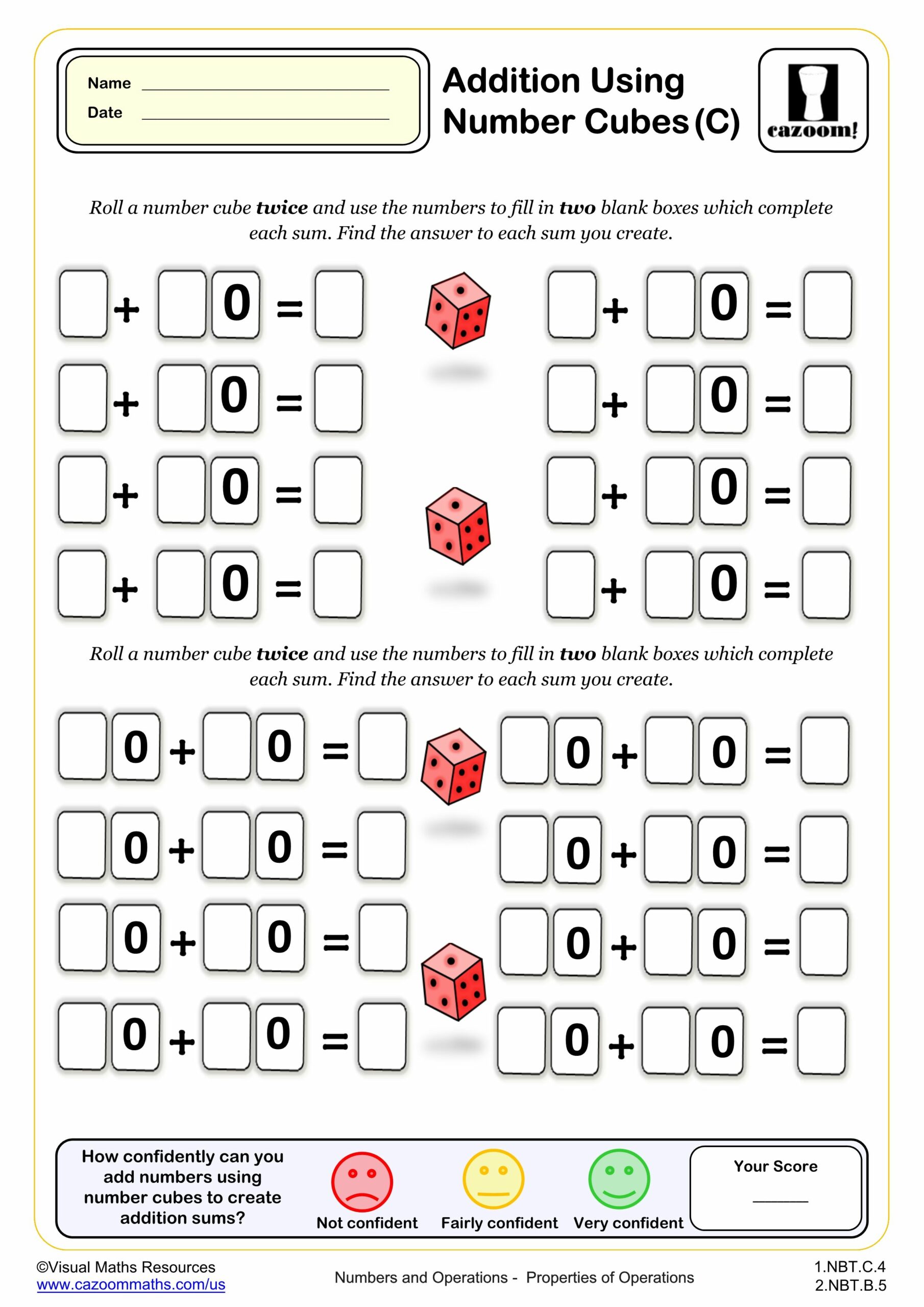
All worksheets are created by the team of experienced teachers at Cazoom Math.
What strategies do students learn when adding numbers up to 100?
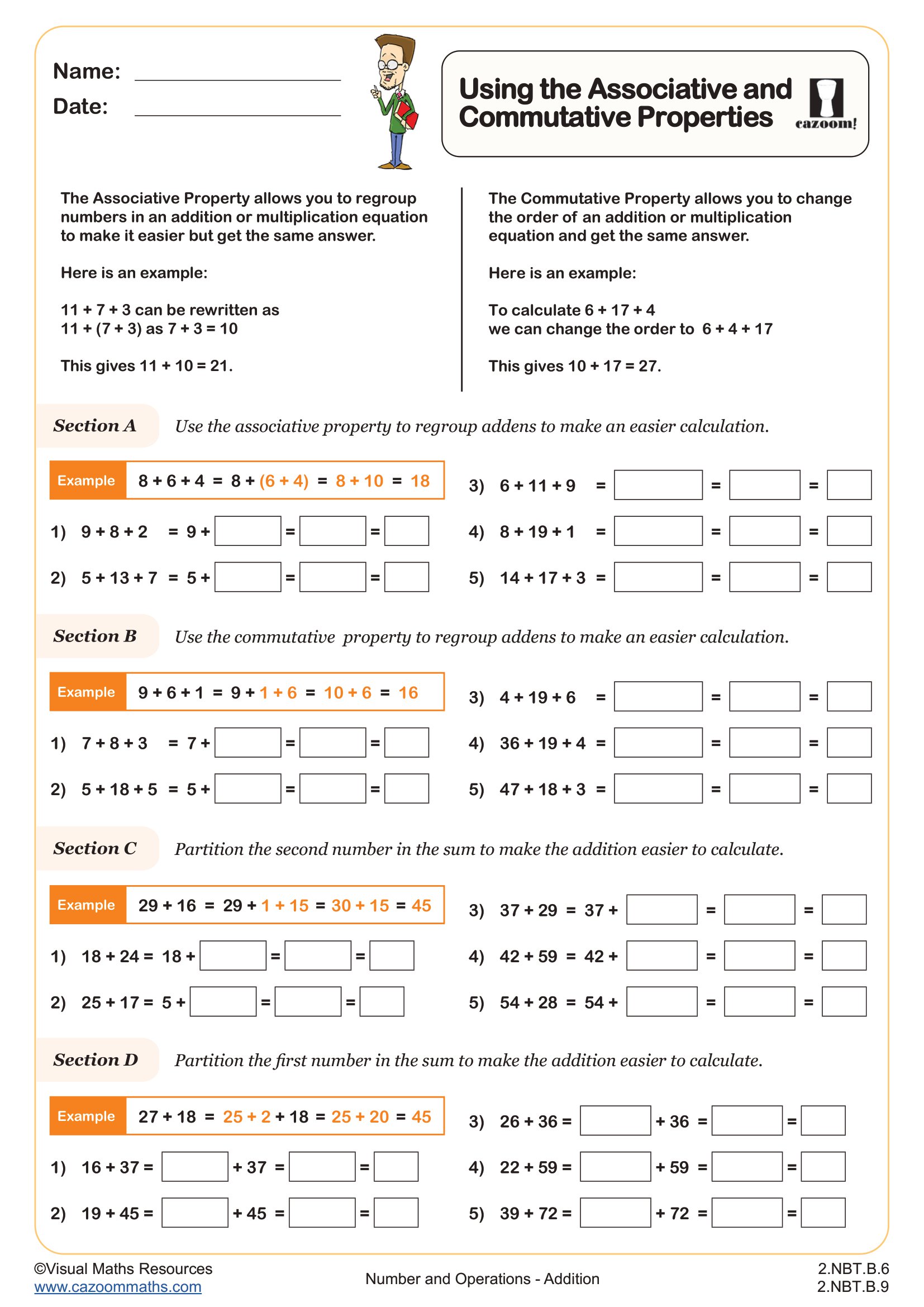
Students develop several computational strategies as they work with addition up to 100, including counting on from the larger number, decomposing numbers into tens and ones, making friendly numbers (like rounding to the nearest ten), and recognizing doubles and near-doubles patterns. These strategies align with Common Core standards for operations and algebraic thinking across kindergarten through second grade, with continued reinforcement in third through fifth grades as students build automaticity.
A common error occurs when students attempt to add two-digit numbers vertically without properly aligning place values, resulting in answers like 23 + 45 = 68 instead of 68. Teachers find that using manipulatives like base-ten blocks alongside worksheets helps students visualize the regrouping process, particularly when sums exceed 100. Students who understand that 47 + 38 means combining 4 tens and 7 ones with 3 tens and 8 ones make fewer alignment mistakes on paper.
Which grade levels practice adding numbers up to 100?
These elementary school worksheets span kindergarten through fifth grade, addressing addition skills at developmentally appropriate levels. Kindergarten and first grade students typically work with smaller addends and more visual support, second and third graders tackle increasingly complex two-digit problems with regrouping, while fourth and fifth graders use these skills as foundational practice for larger computations and problem-solving applications.
The progression moves from concrete to abstract representations across grade levels. Kindergarten worksheets might show addition sentences alongside countable objects, first grade introduces basic two-digit addition without regrouping, second grade emphasizes regrouping (carrying), and third through fifth grades integrate these facts into word problems and multi-step calculations. Students encounter addition within 100 on state assessments from first grade onward, making fluency with these facts essential for testing success.
How do number cubes help students visualize addition?
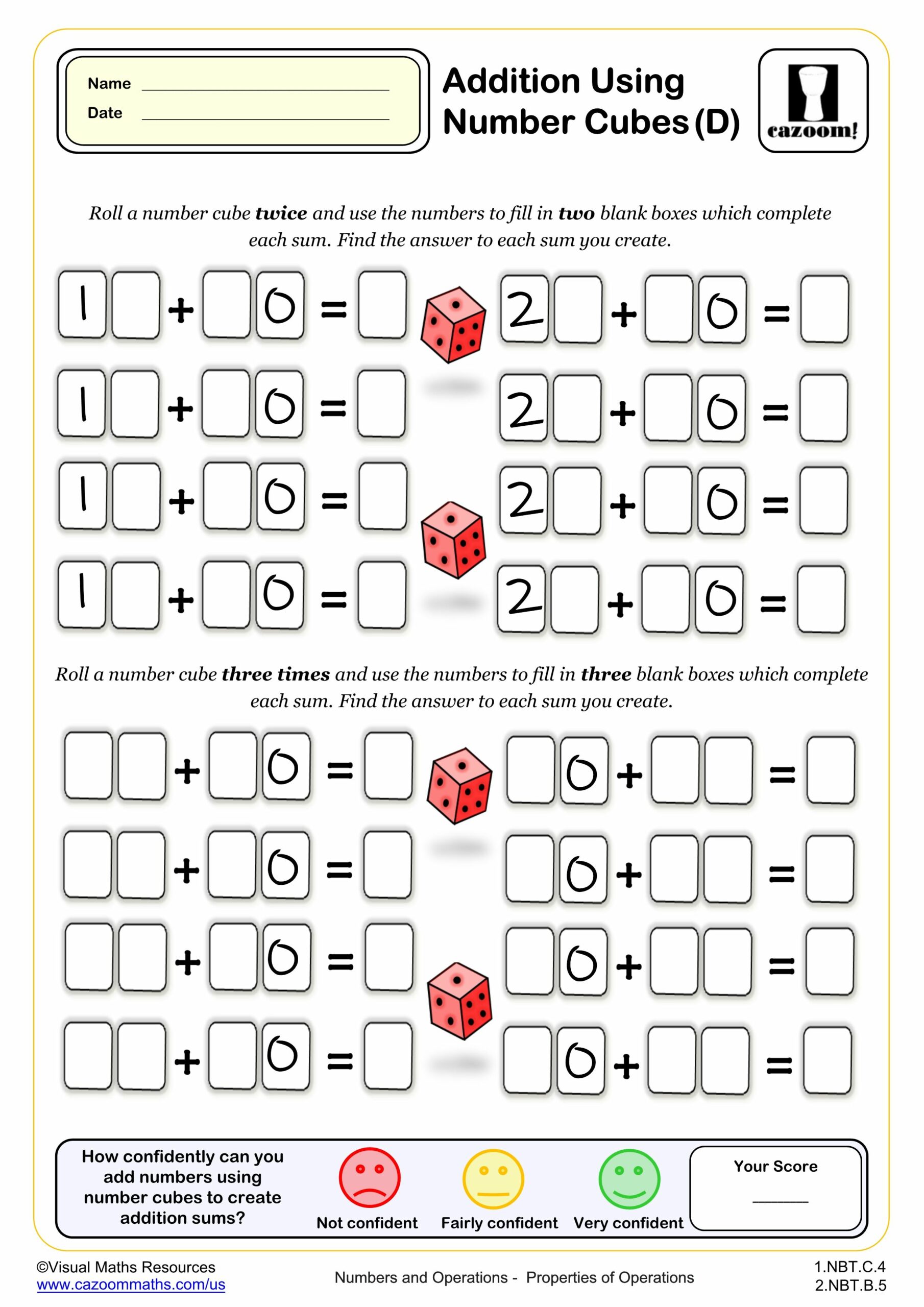
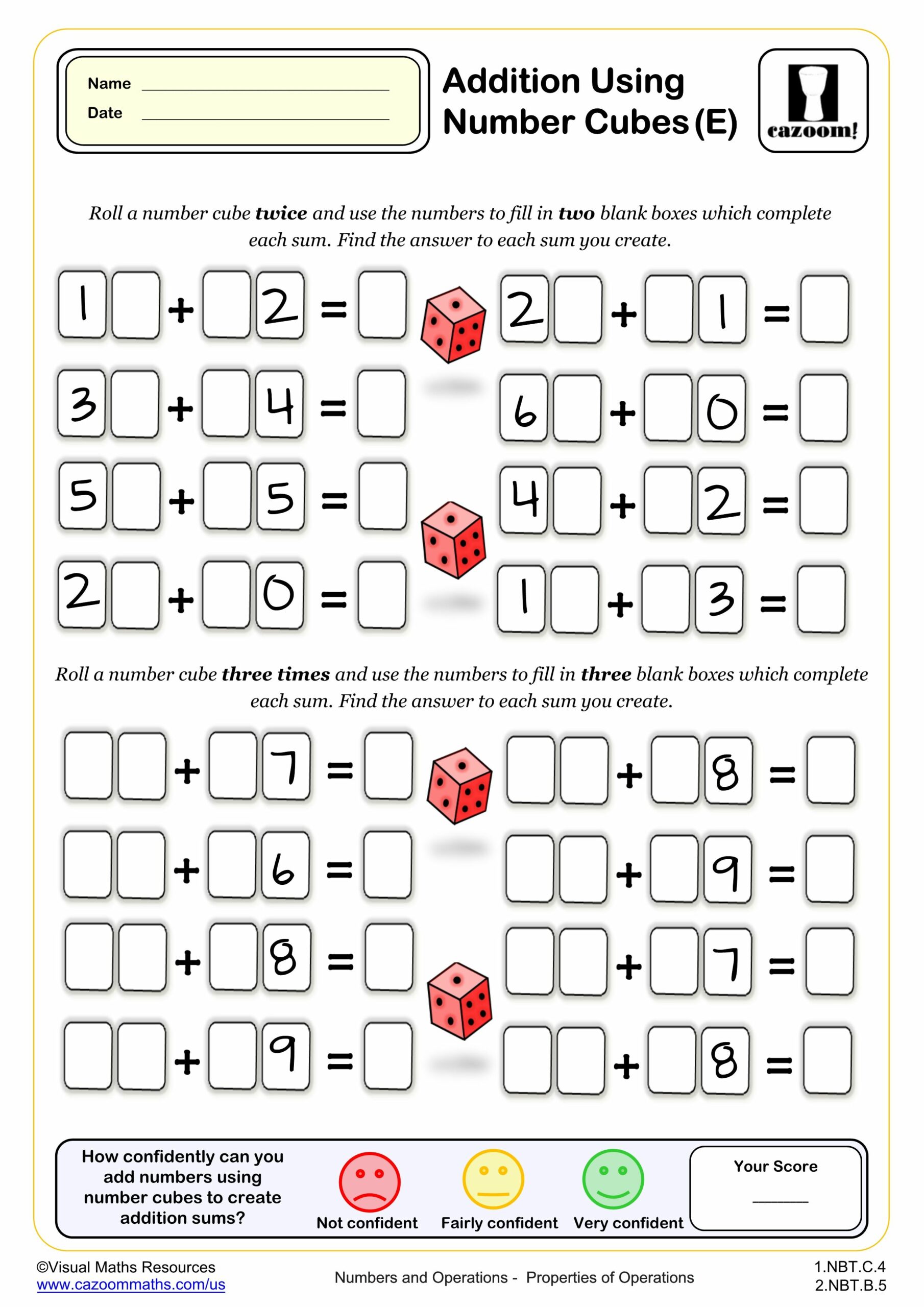
Number cubes (also called base-ten blocks or unit cubes) provide a visual and tactile representation of quantity that helps students understand addition as combining sets. When students see 24 represented as two rods of ten cubes and four individual cubes, then combine it with 13 (one rod and three cubes), they physically observe how the quantities merge to form 37. This concrete representation builds conceptual understanding before students transition to abstract number manipulation.
This visualization skill connects directly to measurement and data analysis in STEM fields. Engineers use unit cubes to calculate volume when designing containers, architects add measurements to determine material quantities, and data scientists combine datasets by understanding how individual units aggregate into totals. When students practice counting cubes to verify addition, they develop the same spatial reasoning that professionals use when estimating quantities, whether calculating lumber needed for construction or determining sample sizes for scientific experiments.
How can teachers use these addition worksheets effectively in the classroom?
The worksheets support differentiated instruction through varied formats and difficulty levels. Addition coloring worksheets engage reluctant learners by incorporating art into math practice, while number cube activities provide scaffolding for students who still benefit from visual models. Teachers can select worksheets that match individual student readiness, whether introducing basic addition facts or reinforcing two-digit computation with regrouping.
These resources work well for multiple instructional contexts throughout the school day. Many teachers use them during math centers or stations, allowing students to work independently while the teacher conducts small-group intervention. The answer keys make them practical for quick formative assessments, helping identify which students need additional support before unit tests. Some teachers assign them as homework to reinforce classroom learning, while others use them for early finishers or as warm-up activities to activate prior knowledge before introducing new concepts.