Elementary School Addition with Visual Aids Worksheets
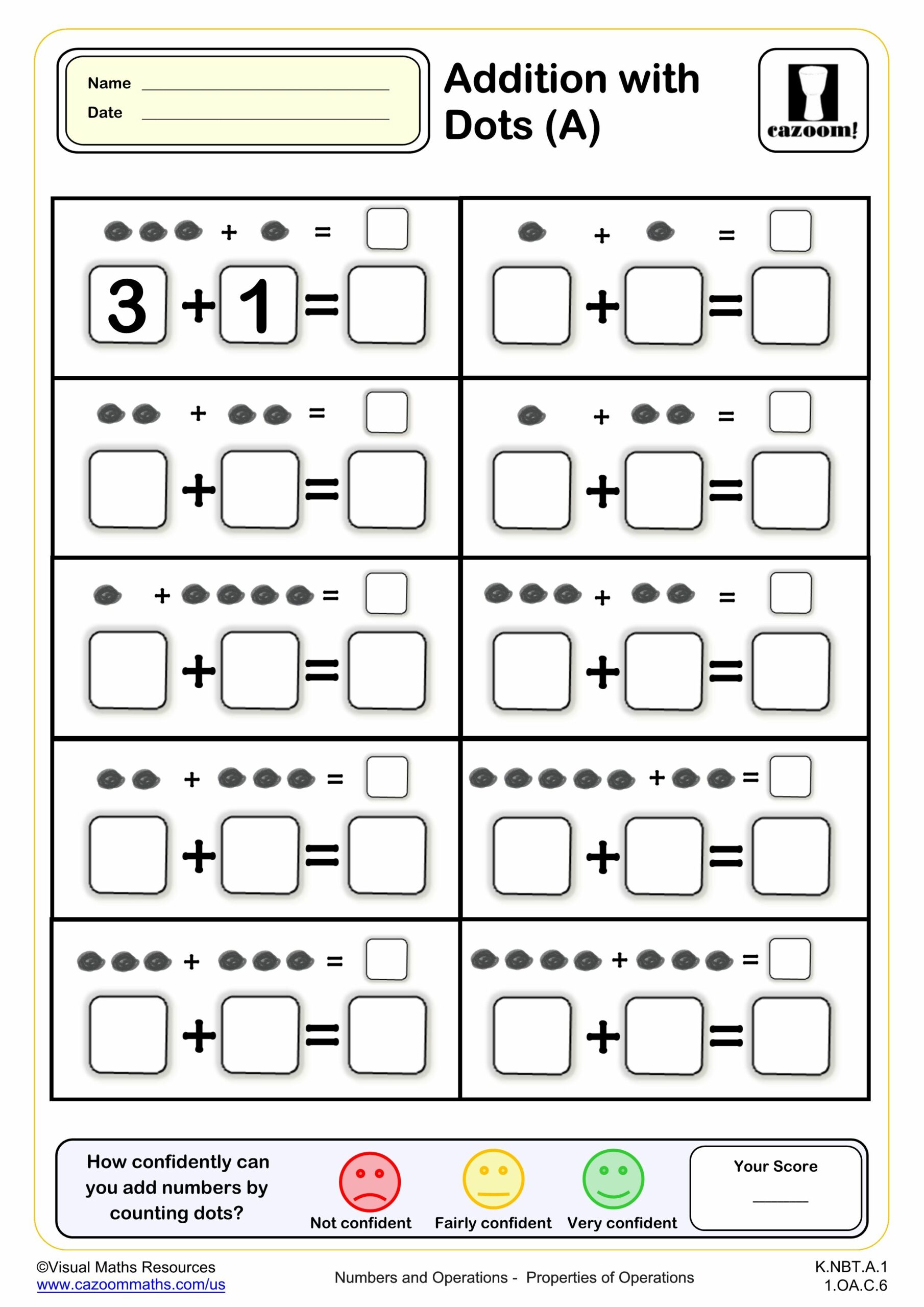
Addition with dots (A)
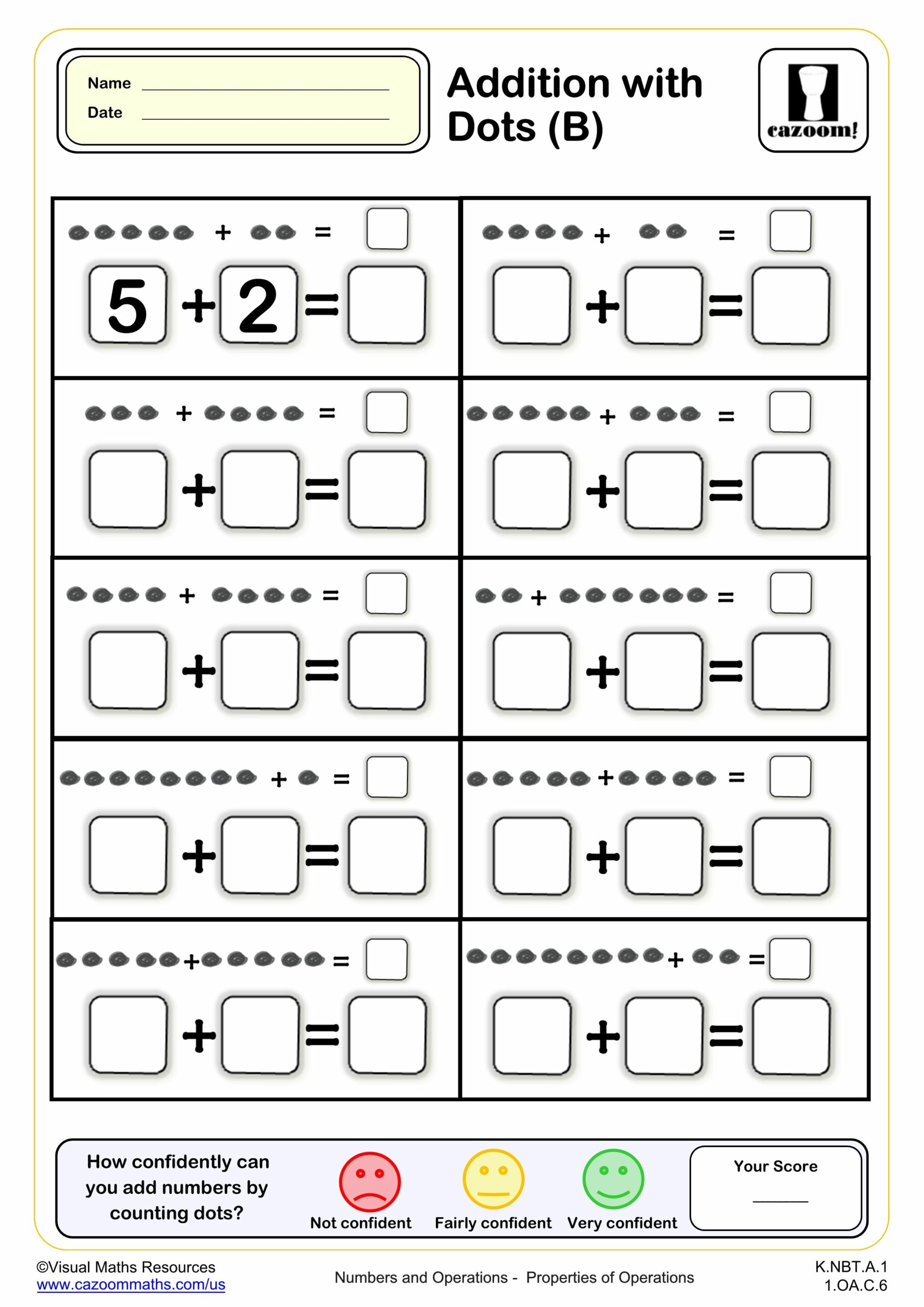
Addition with Dots (B)
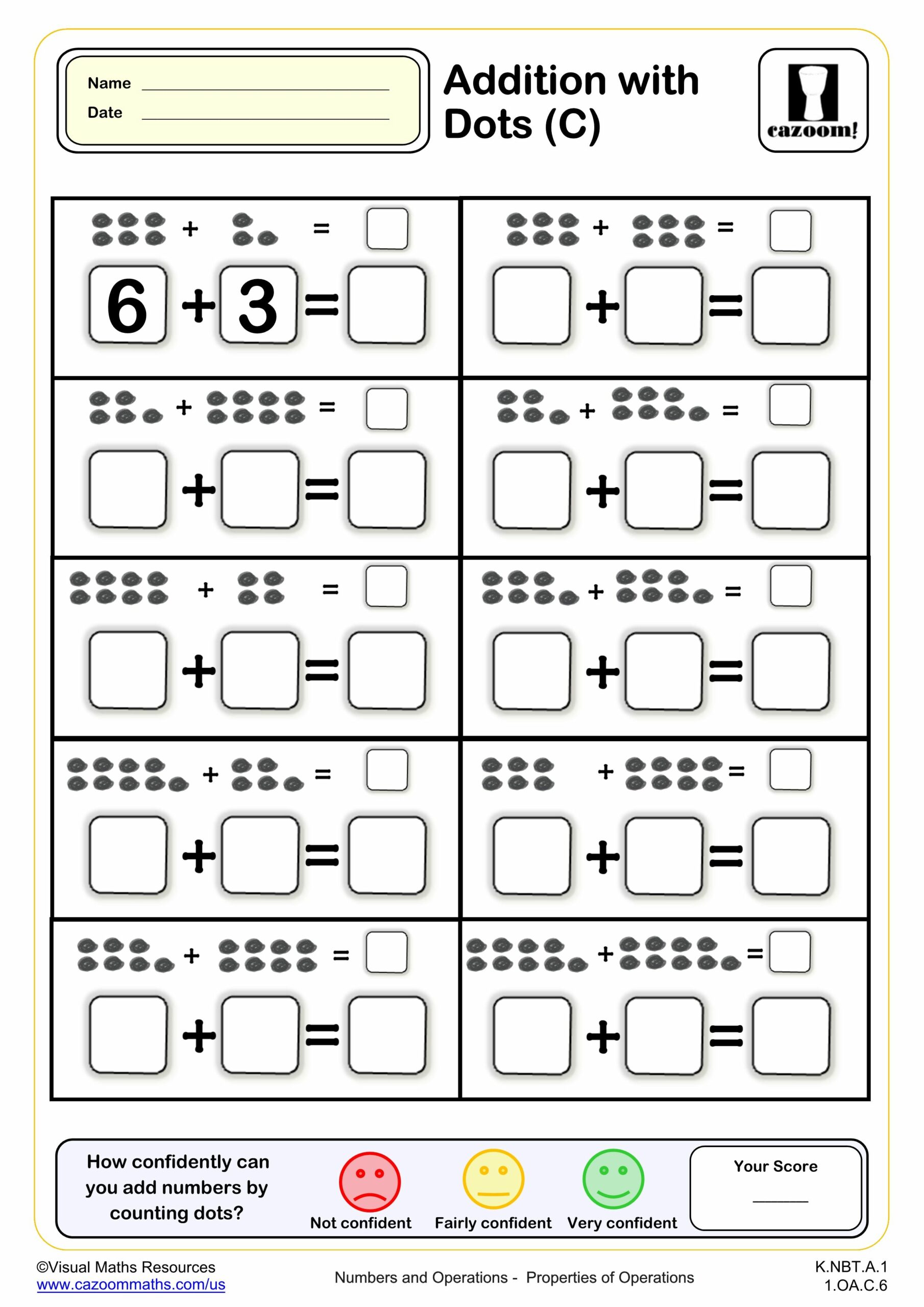
Addition with Dots (C)
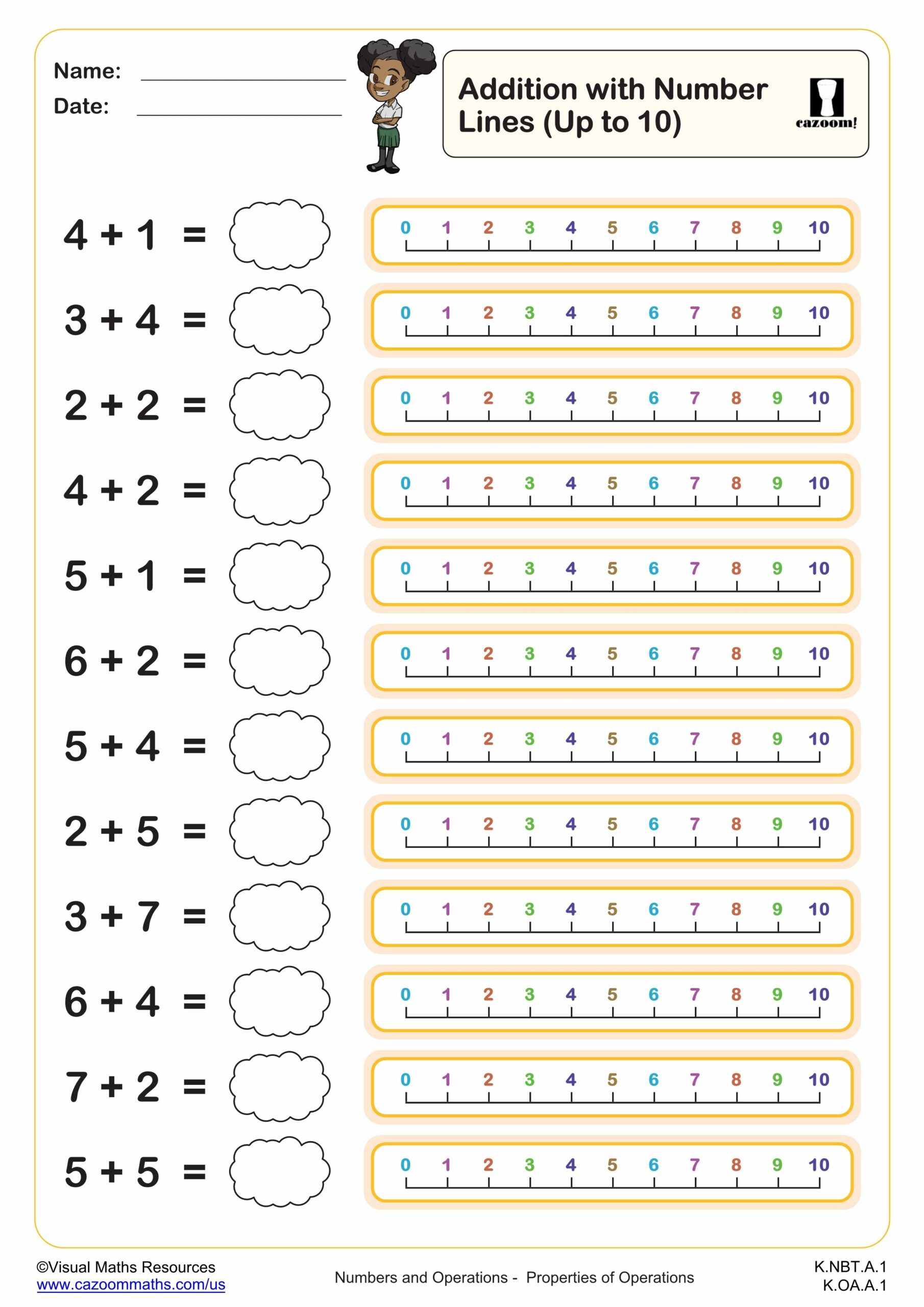
Addition with Number Lines (up to 10)
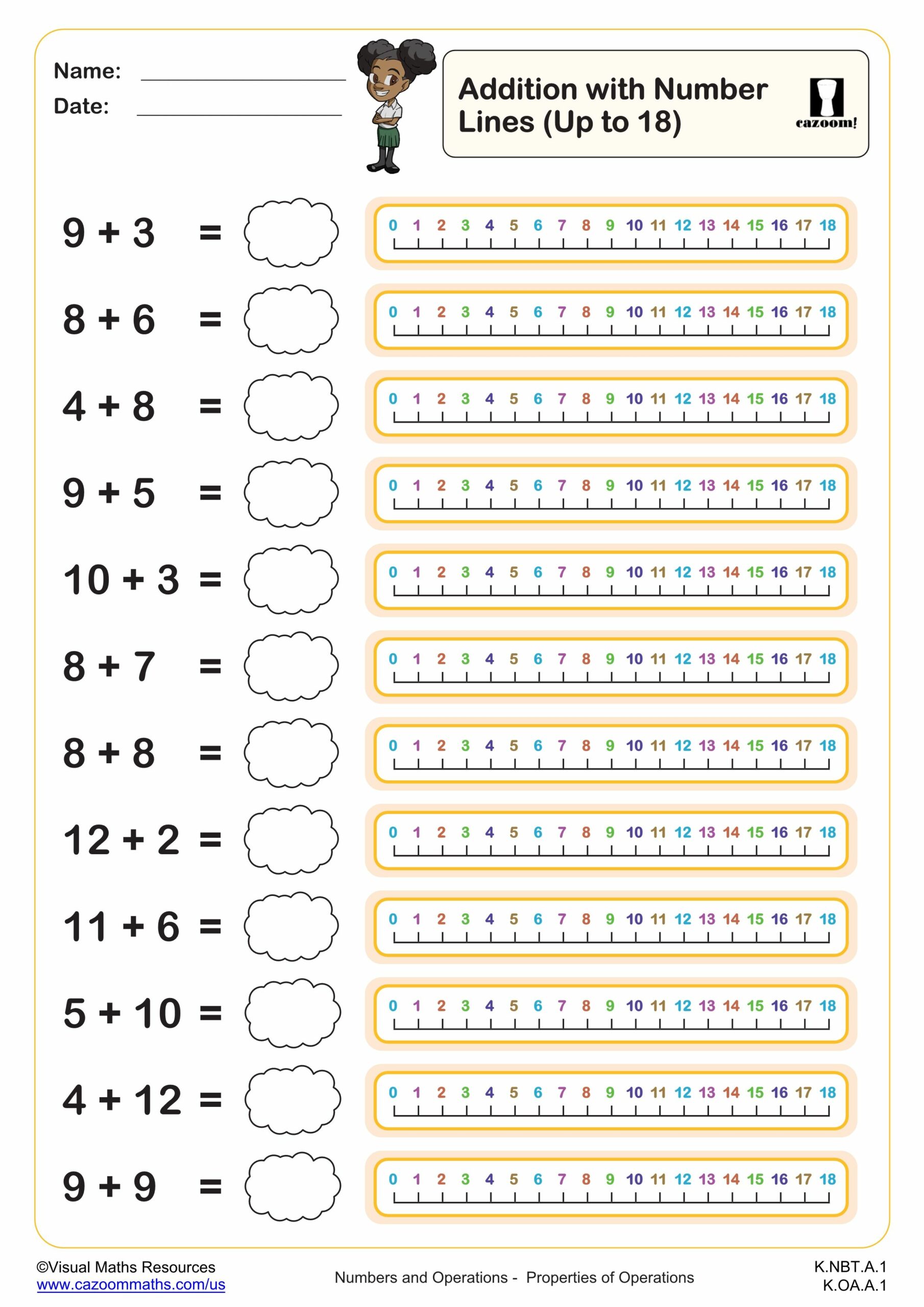
Addition with Number Lines (up to 18)
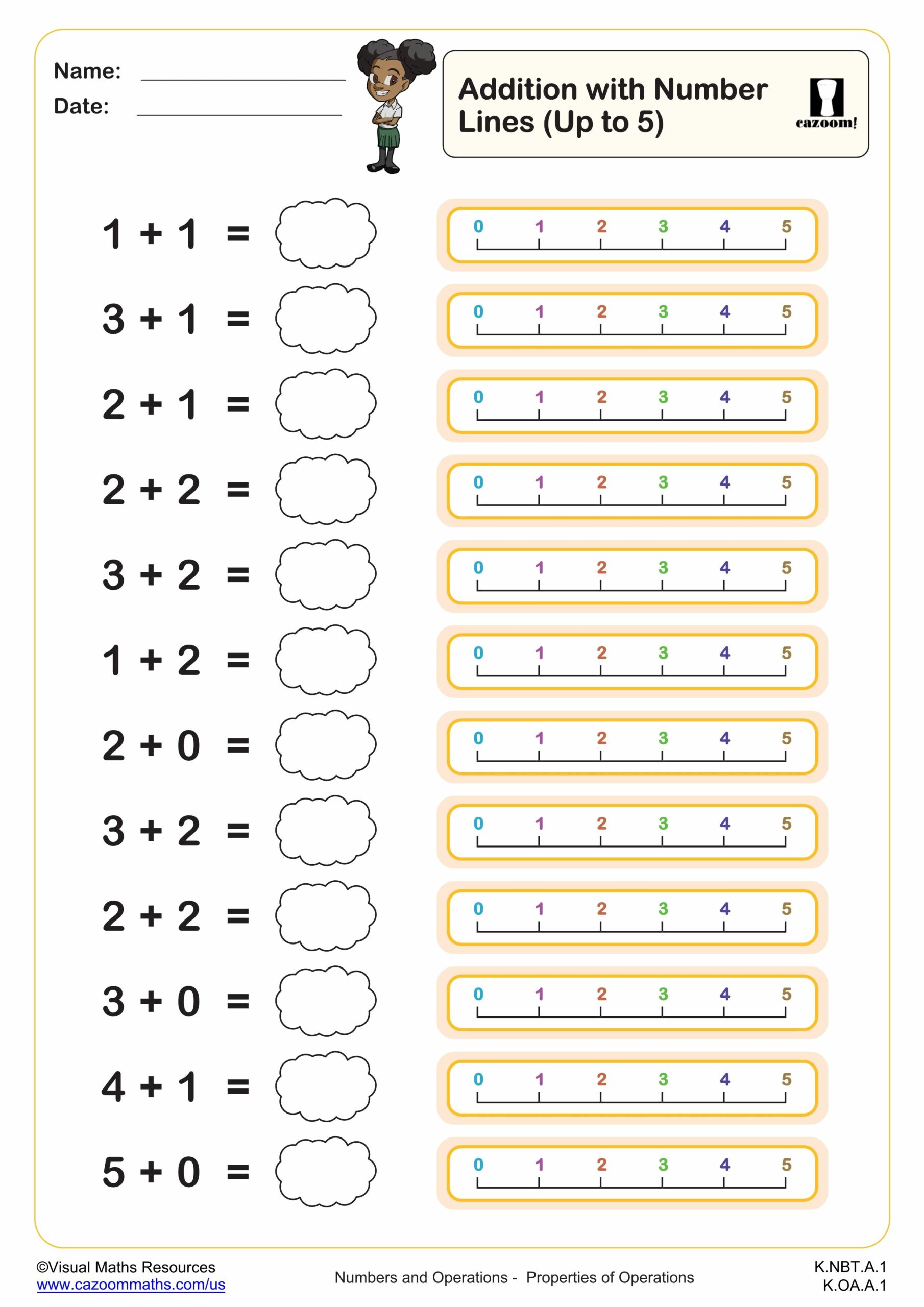
Addition with Number Lines (up to 5)
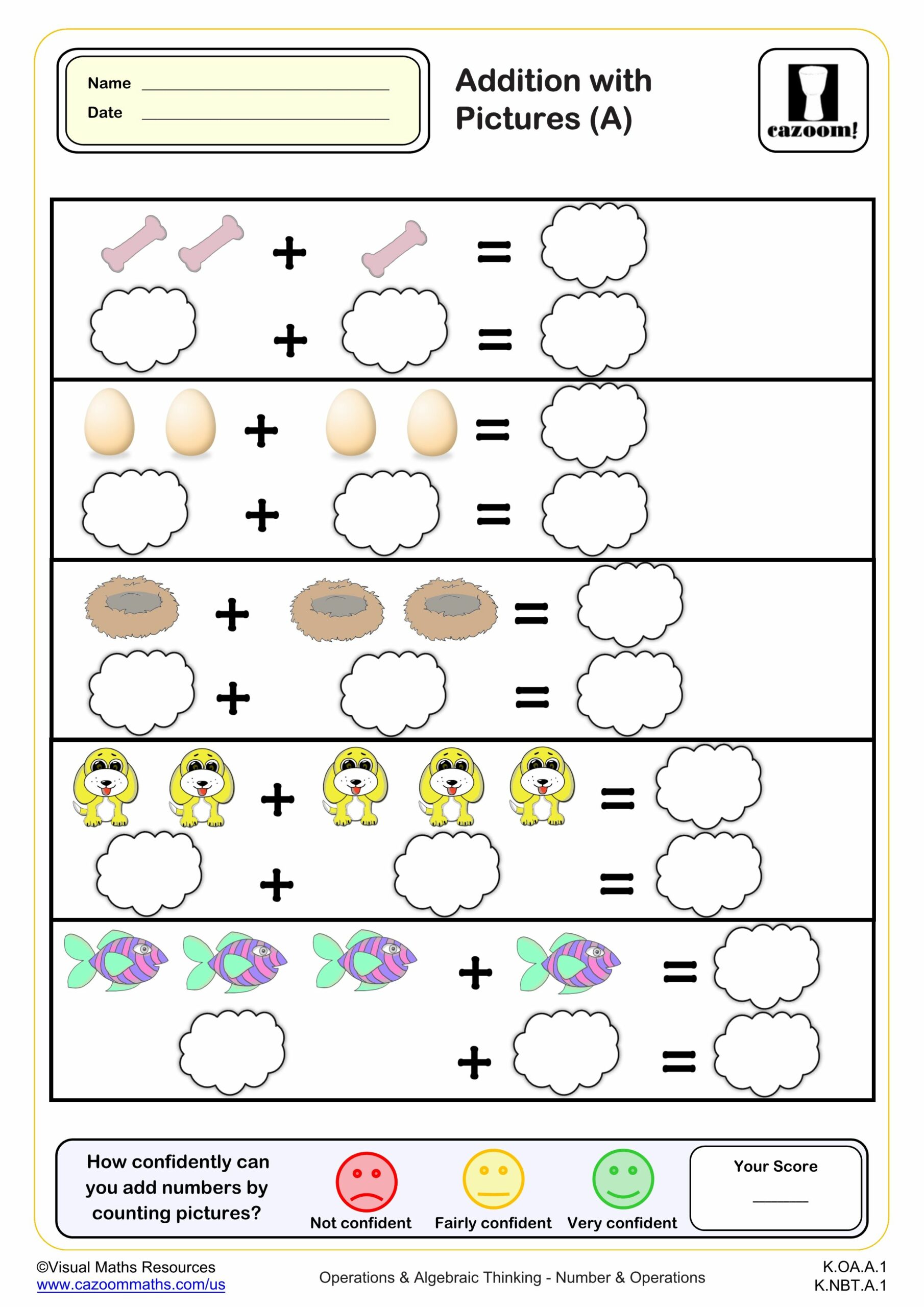
Addition with Pictures (A)
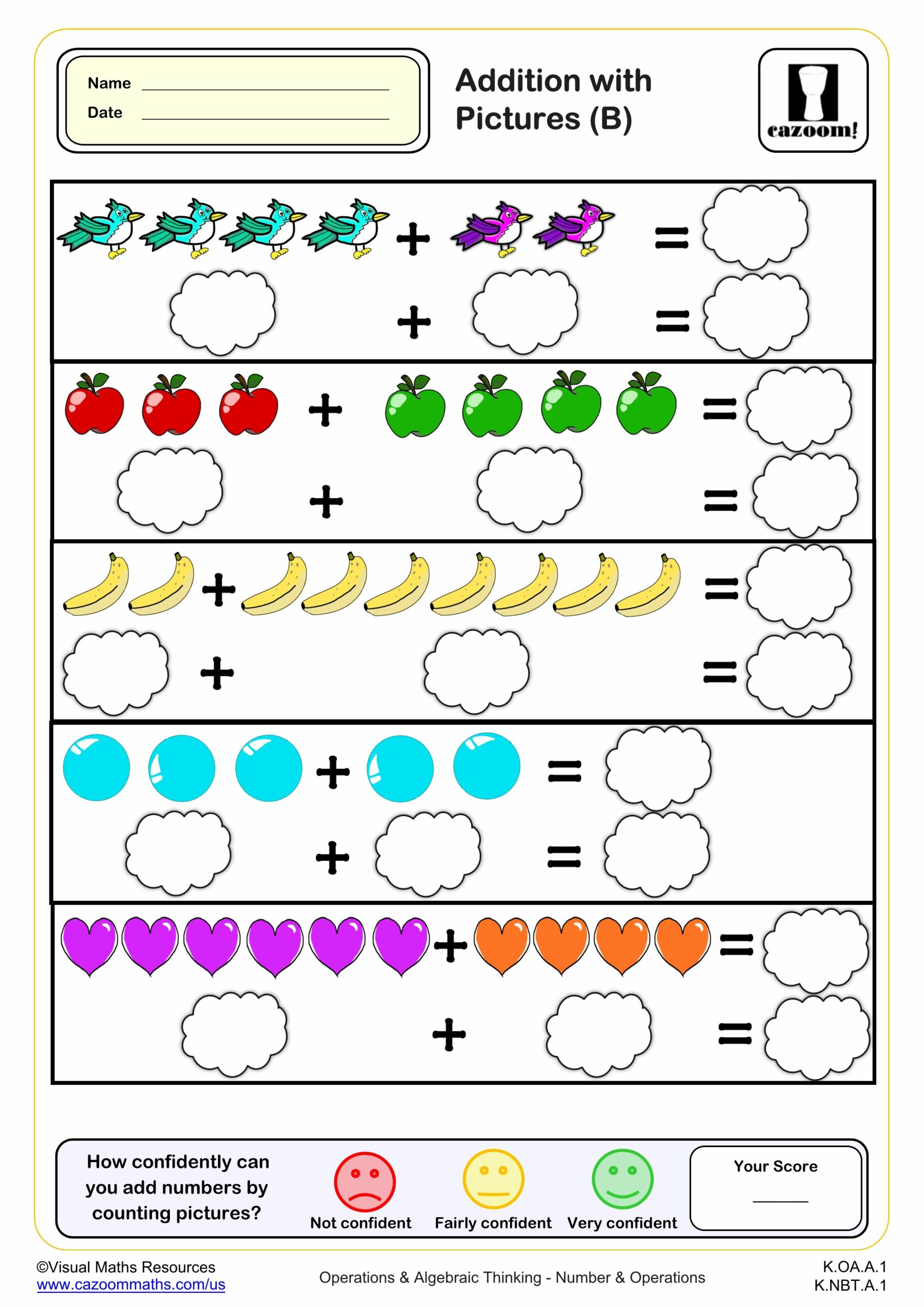
Addition with Pictures (B)
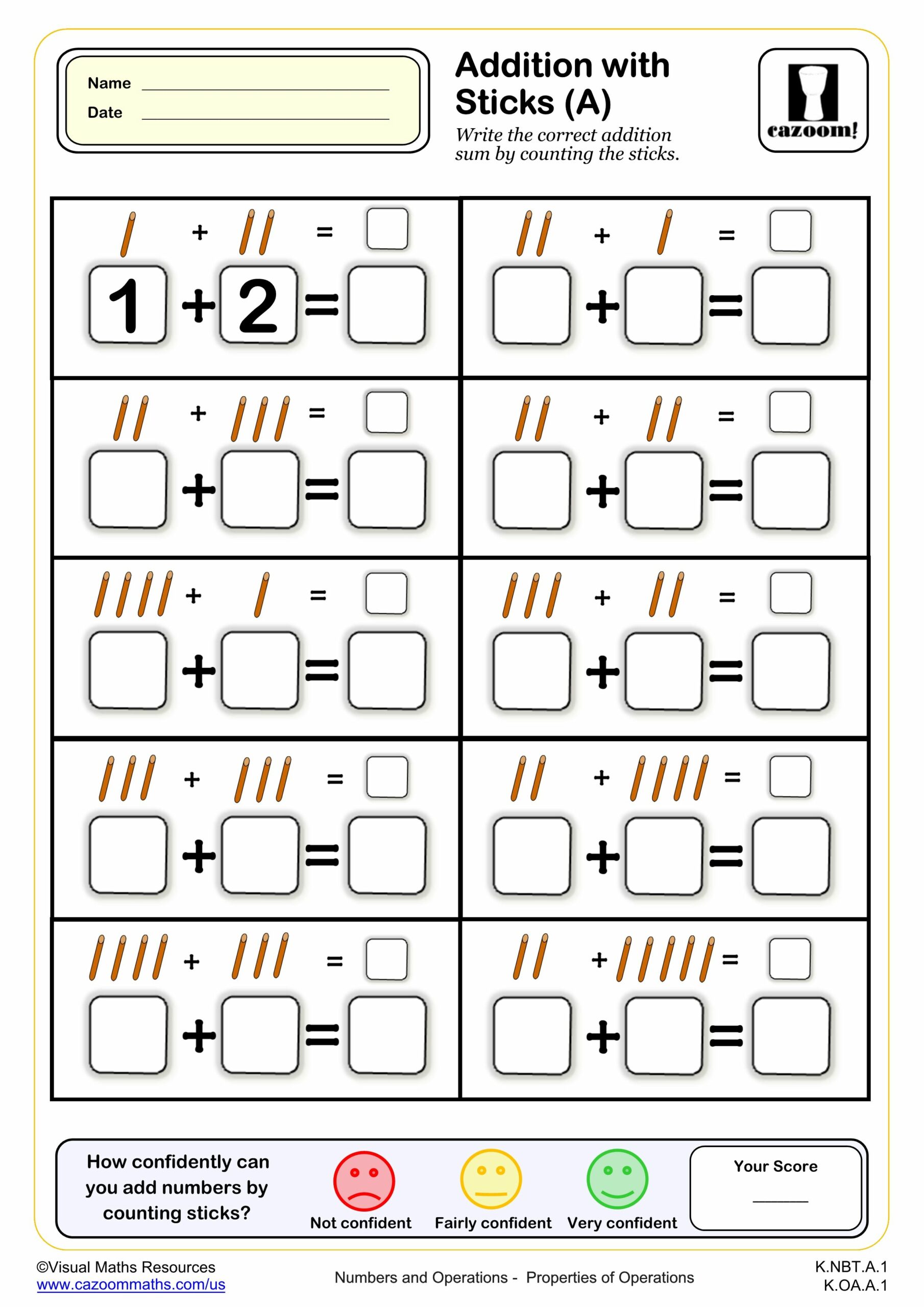
Addition with Sticks (A)
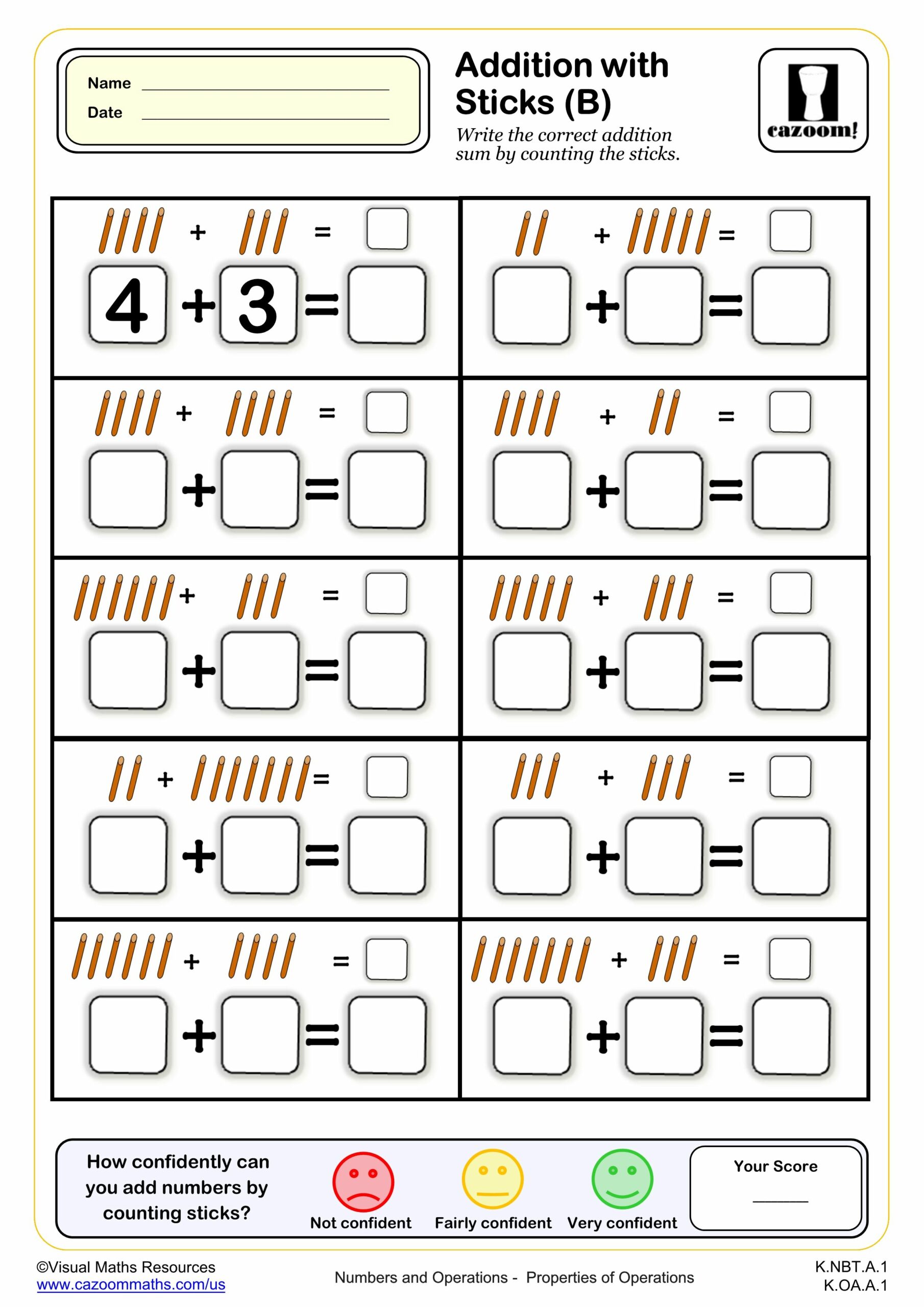
Addition with Sticks (B)
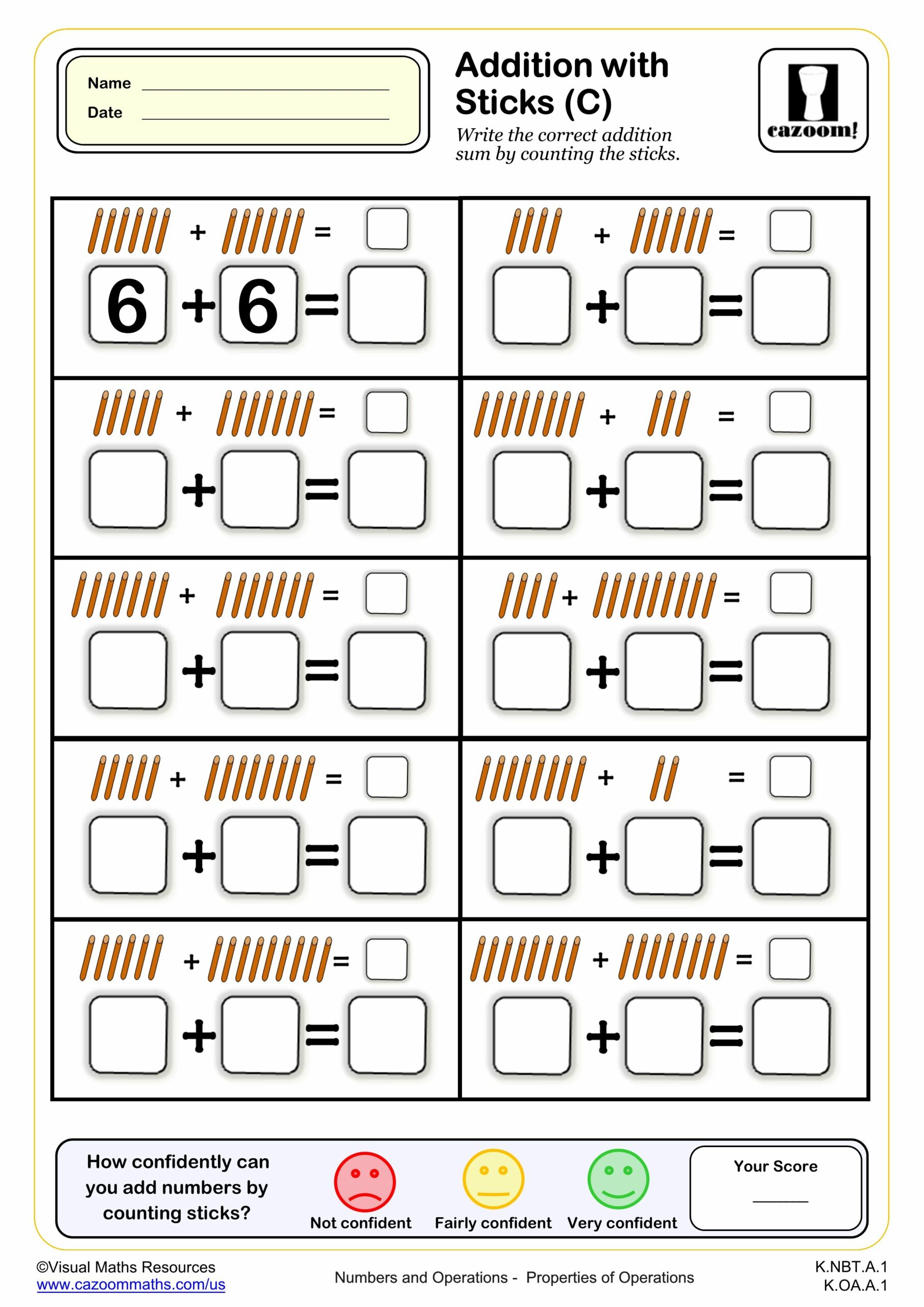
Addition with Sticks (C)
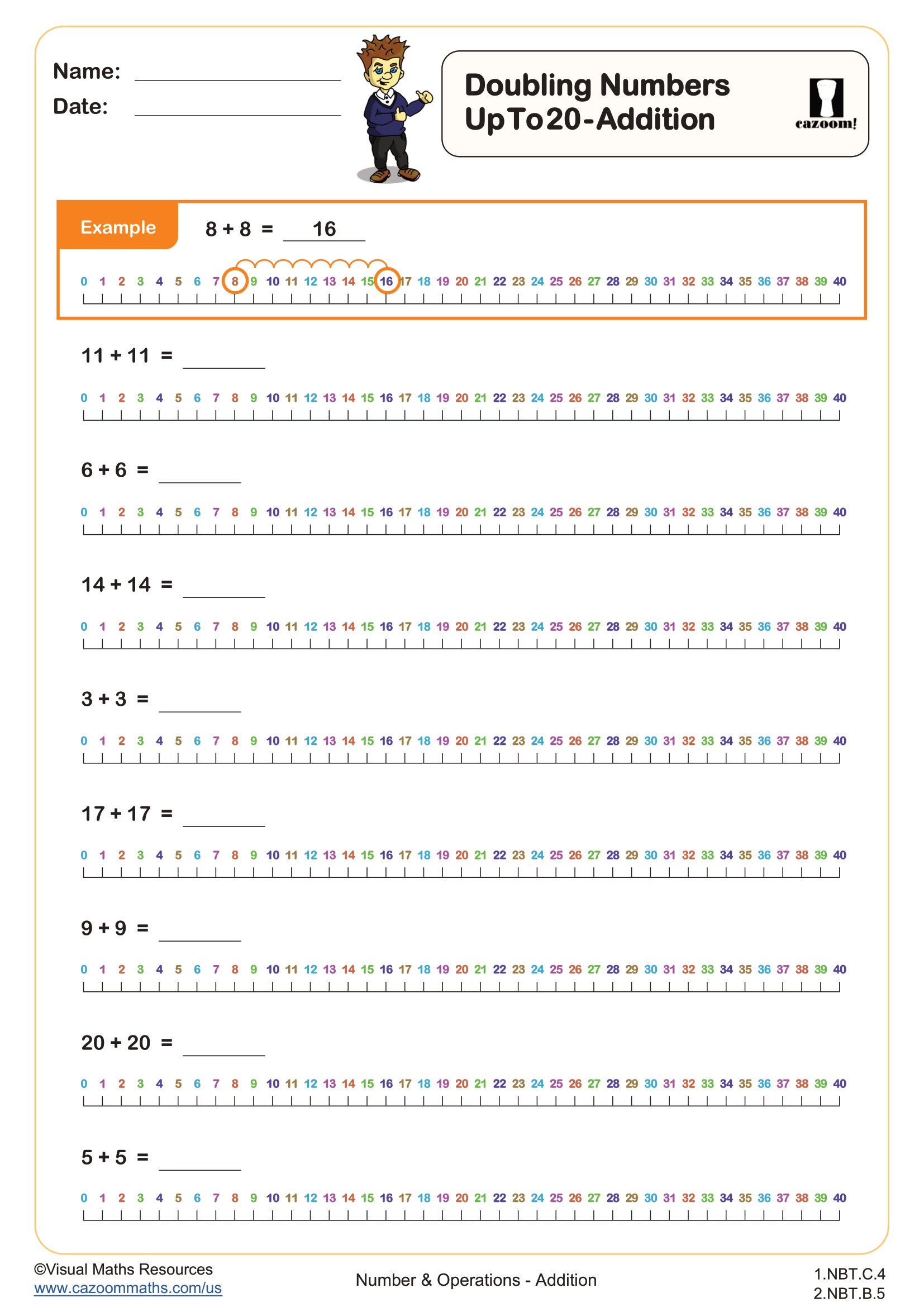
Doubling Numbers Up to 20 - Addition
Writing Addition Number Sentences
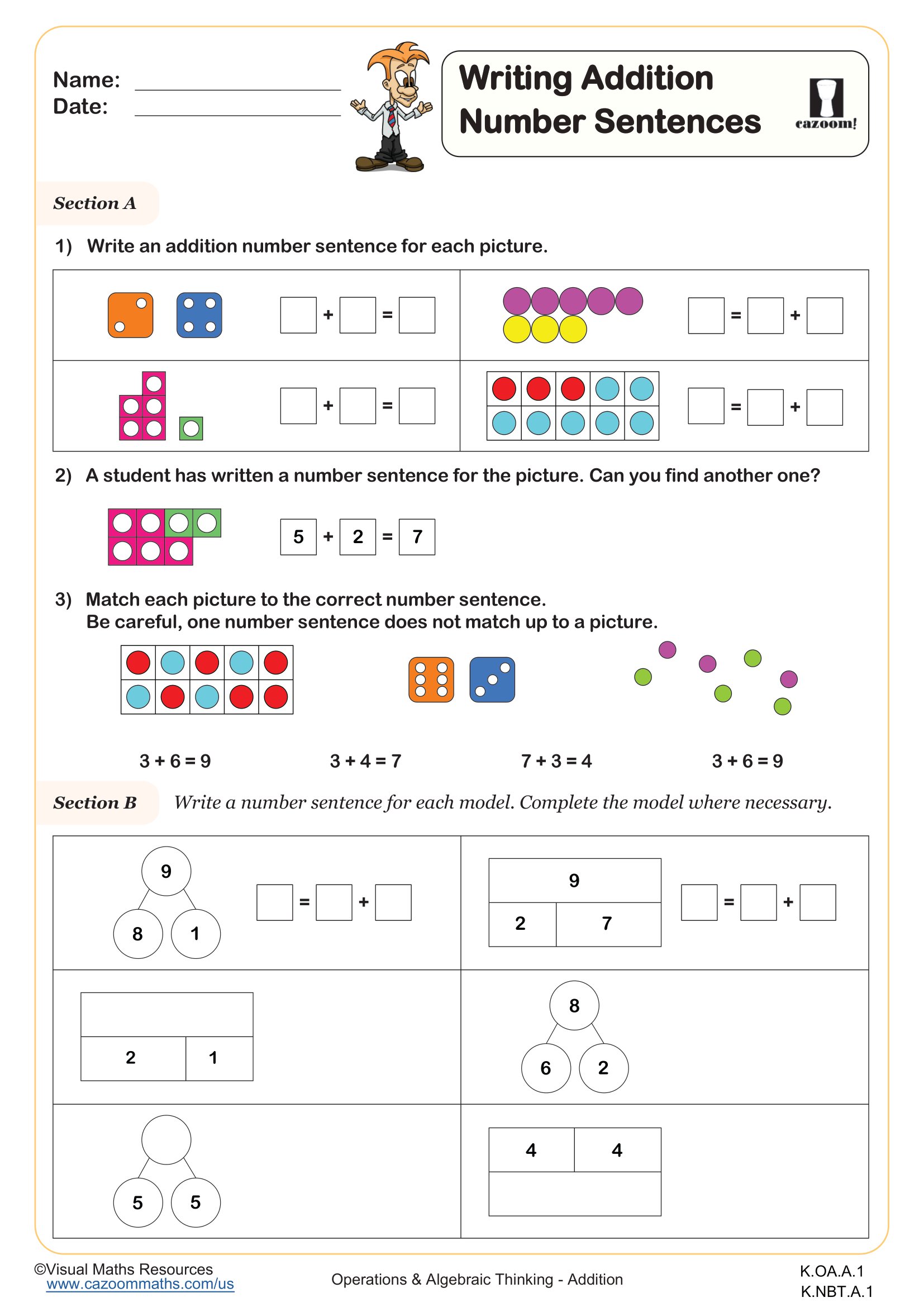
All worksheets are created by the team of experienced teachers at Cazoom Math.
Why Are Visual Aids Important for Teaching Addition?
Visual aids bridge the gap between concrete manipulation and abstract symbolic thinking, helping students understand what addition actually means rather than just memorizing facts. Students develop number sense when they see quantities represented as objects, pictures, or positions on a number line, making the concept of combining groups meaningful and memorable.
Teachers frequently notice that students who skip visual models may calculate correctly on drill sheets but freeze when facing word problems or mental math challenges. The transition from counting individual objects to recognizing patterns in visual representations marks a critical developmental milestone. Many students make significant progress when they realize that three apples plus two apples creates the same total as three blocks plus two blocks, connecting the abstract operation to multiple concrete situations.
What Grade Levels Use Addition with Visual Aids Worksheets?
These worksheets support elementary school students from kindergarten through fifth grade, with content specifically designed for each developmental stage. Kindergarten and first grade students work primarily with concrete pictures and manipulative-style images, while second and third graders transition to more abstract visual models including number lines and part-whole diagrams.
The progression builds complexity thoughtfully: kindergarteners count individual objects to find sums within 10, first graders use pictures to add within 20, second graders apply number line strategies for two-digit addition, and third through fifth graders use visual models to understand multi-digit addition and check computational work. Students who master visual strategies in early grades apply these same models to fractions, decimals, and algebraic thinking in upper elementary, making this foundational skill investment worthwhile.
How Do Number Lines Help Students Learn Addition?
Number lines provide a powerful visual model that shows addition as movement along a continuum rather than just combining static groups. Students place their finger or pencil on the first addend and count forward by the second addend, physically experiencing addition as a directional process. This model particularly supports students who struggle with counting all versus counting on, since the number line clearly shows where to start and which direction to move.
The number line model connects directly to measurement applications students encounter in science and everyday life. When students measure how much a plant grew (started at 8 cm, grew 5 cm more), calculate elapsed time on a timeline, or determine distances on a map, they're applying the same number line addition strategy. Engineers and architects use this spatial reasoning constantly when adding dimensions, making the number line more than just a beginner tool but a genuine problem-solving approach used across STEM fields.
How Can Teachers Use These Worksheets Effectively in the Classroom?
These worksheets provide scaffolded practice that moves students from heavy visual support toward increasing independence with symbolic notation. Teachers can select worksheets that match individual student readiness levels, using heavily illustrated problems for students who need concrete support while offering number line or diagram-based sheets to students ready for more abstract thinking. The variety of visual models allows teachers to differentiate within the same lesson without creating entirely different materials.
Many teachers use these worksheets during math centers or intervention blocks, pairing students so they can discuss which visual strategy makes most sense for each problem. The answer keys enable students to self-check during independent work time, freeing teachers to provide targeted support to small groups. These worksheets also work well as formative assessments, helping teachers identify which students still need manipulatives versus those ready to create their own visual models or move to purely symbolic work.