Elementary School Algebra Expressions Equations and Functions Worksheets
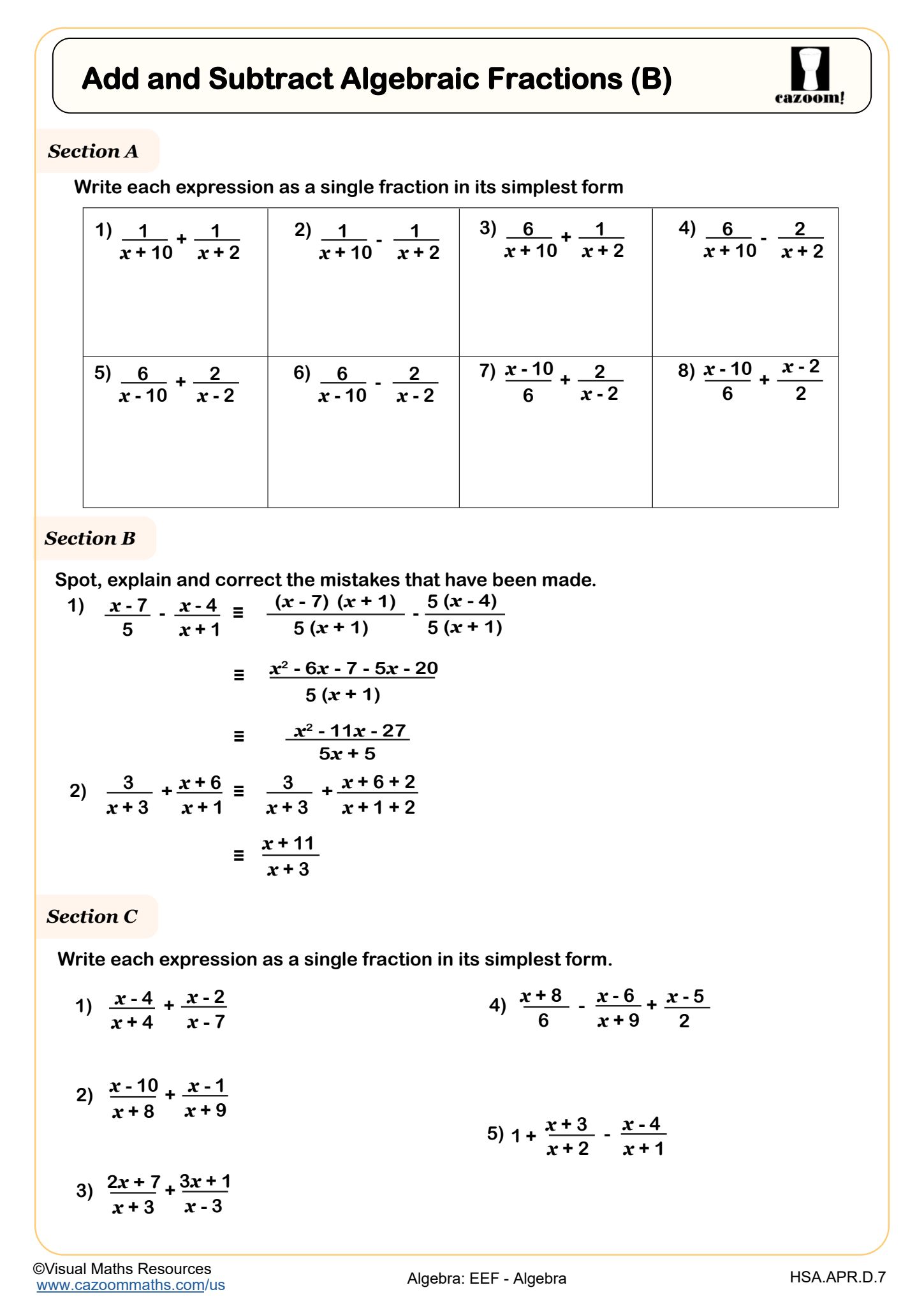
Add and Subtract Algebraic Fractions (B)
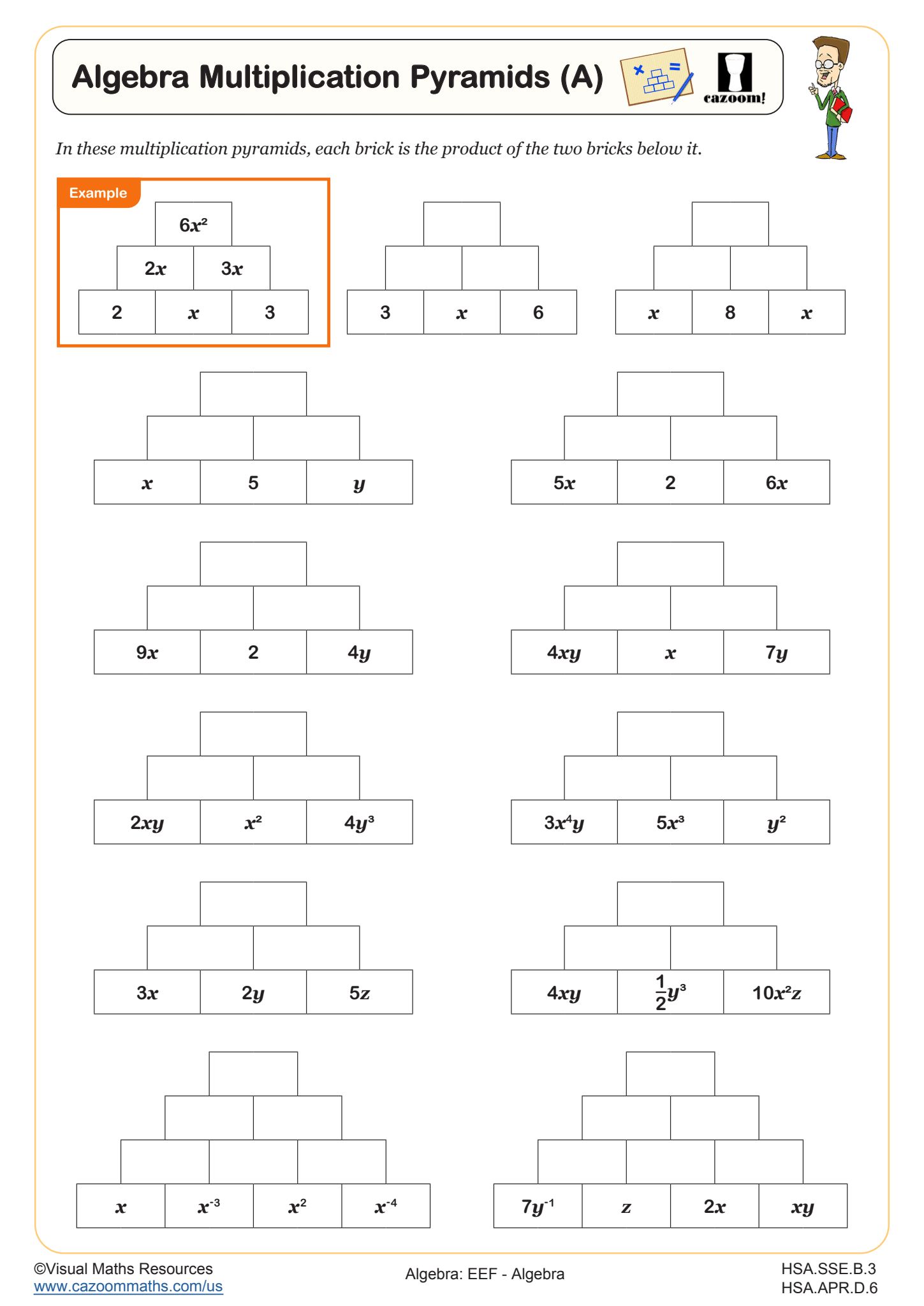
Algebra Multiplication Pyramids (A)
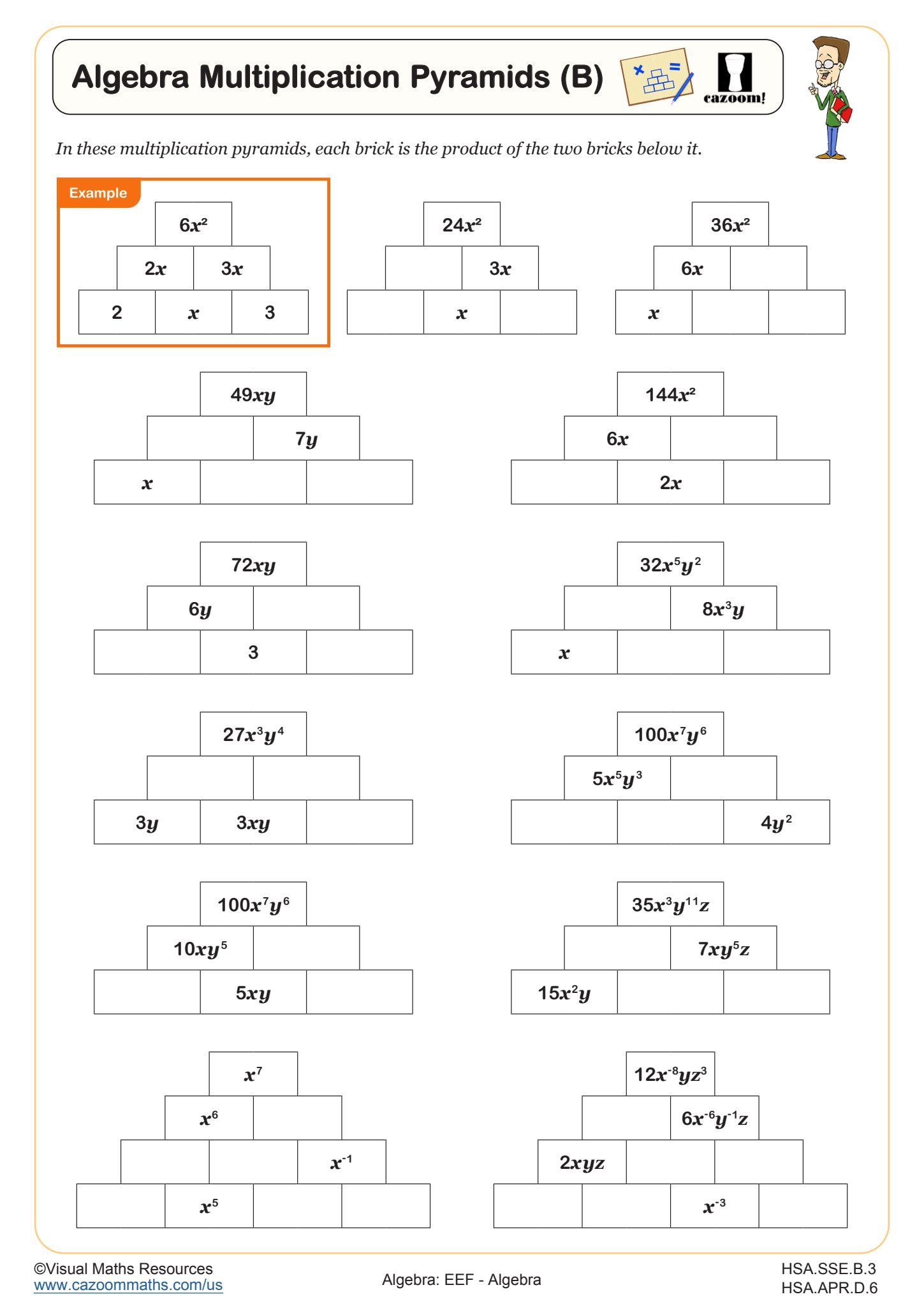
Algebra Multiplication Pyramids (B)
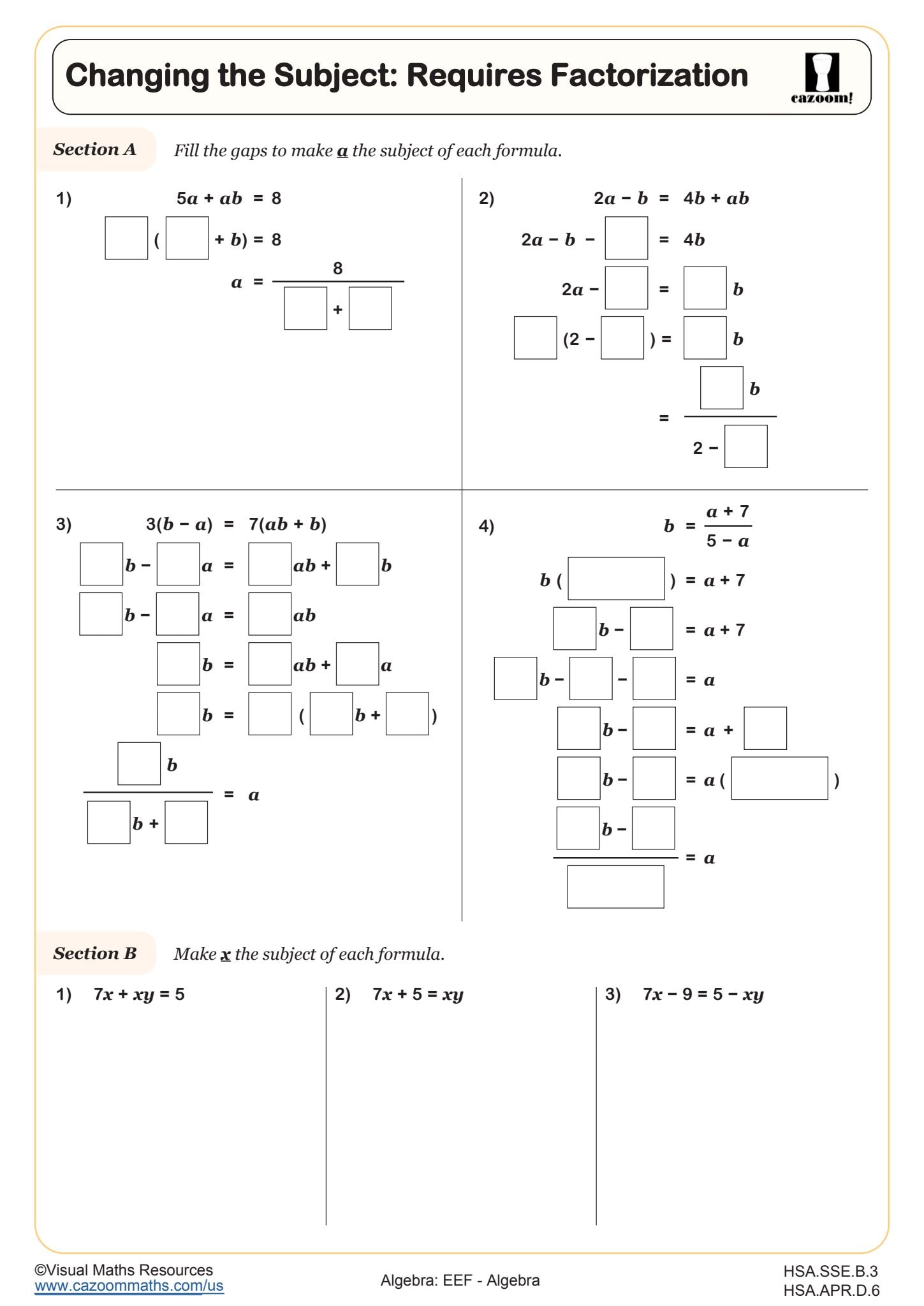
Changing the Subject: Requires Factorization
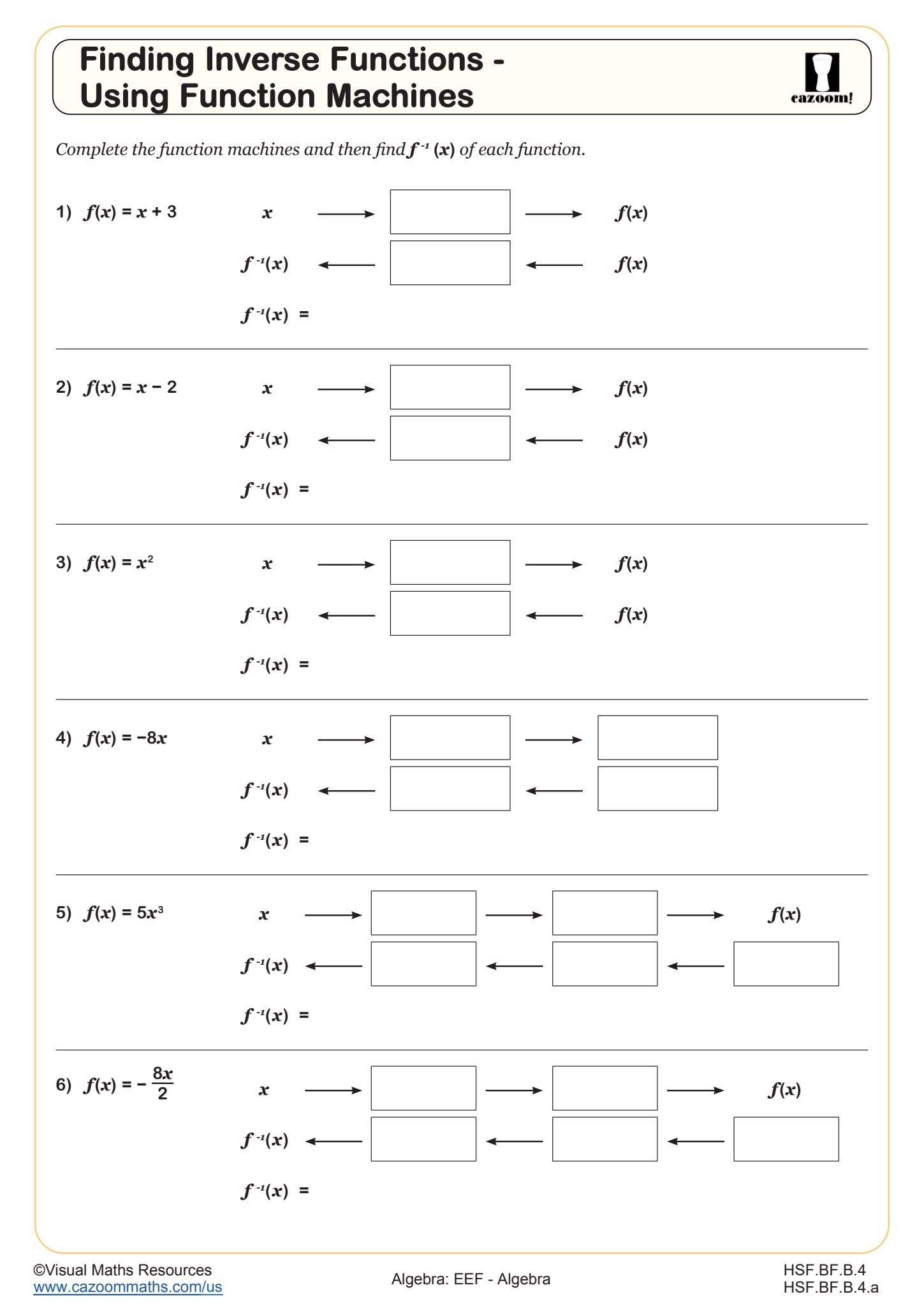
Finding Inverse Functions - Using Function Machines
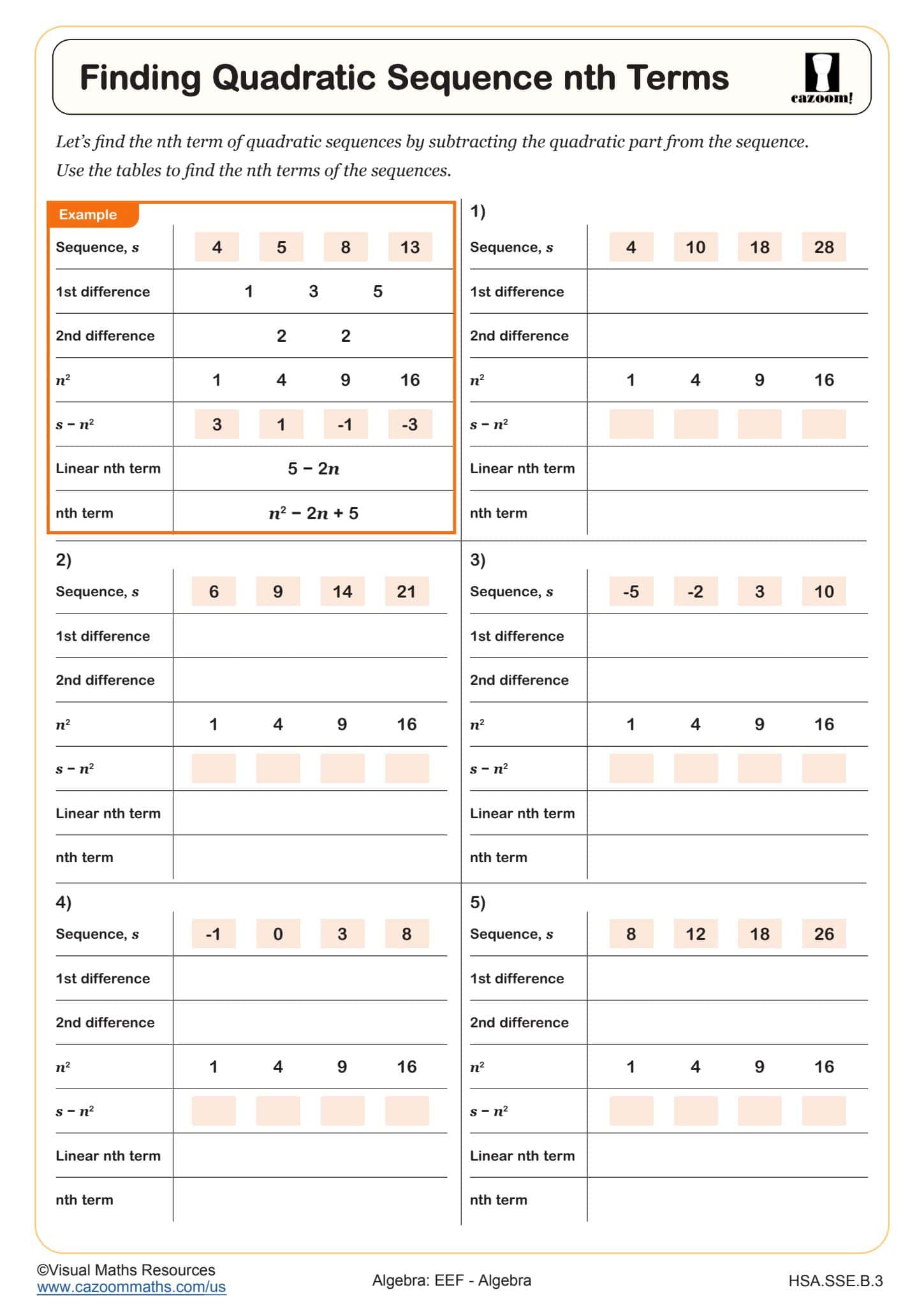
Finding Quadratic Sequence nth Terms
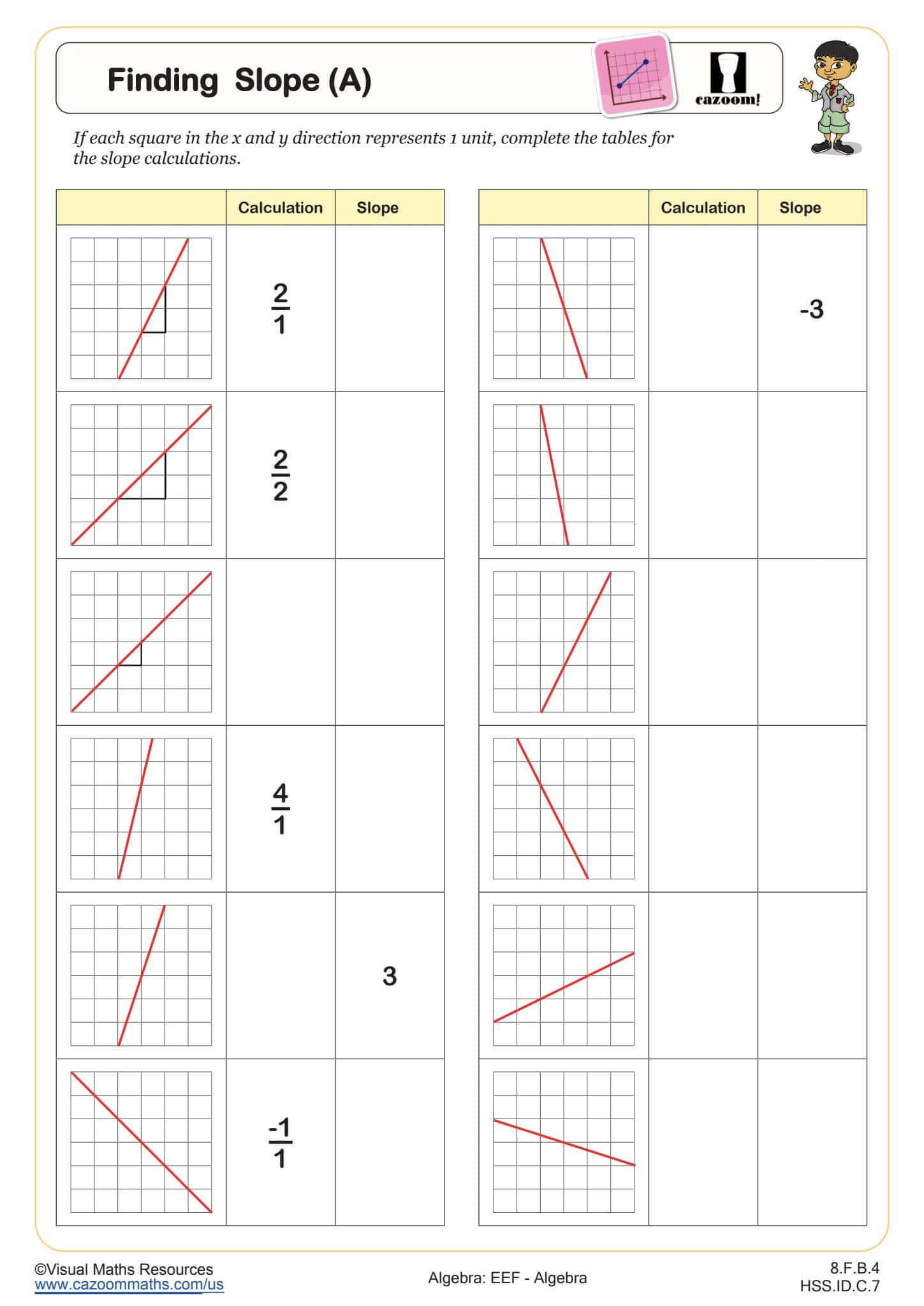
Finding Slope (A)
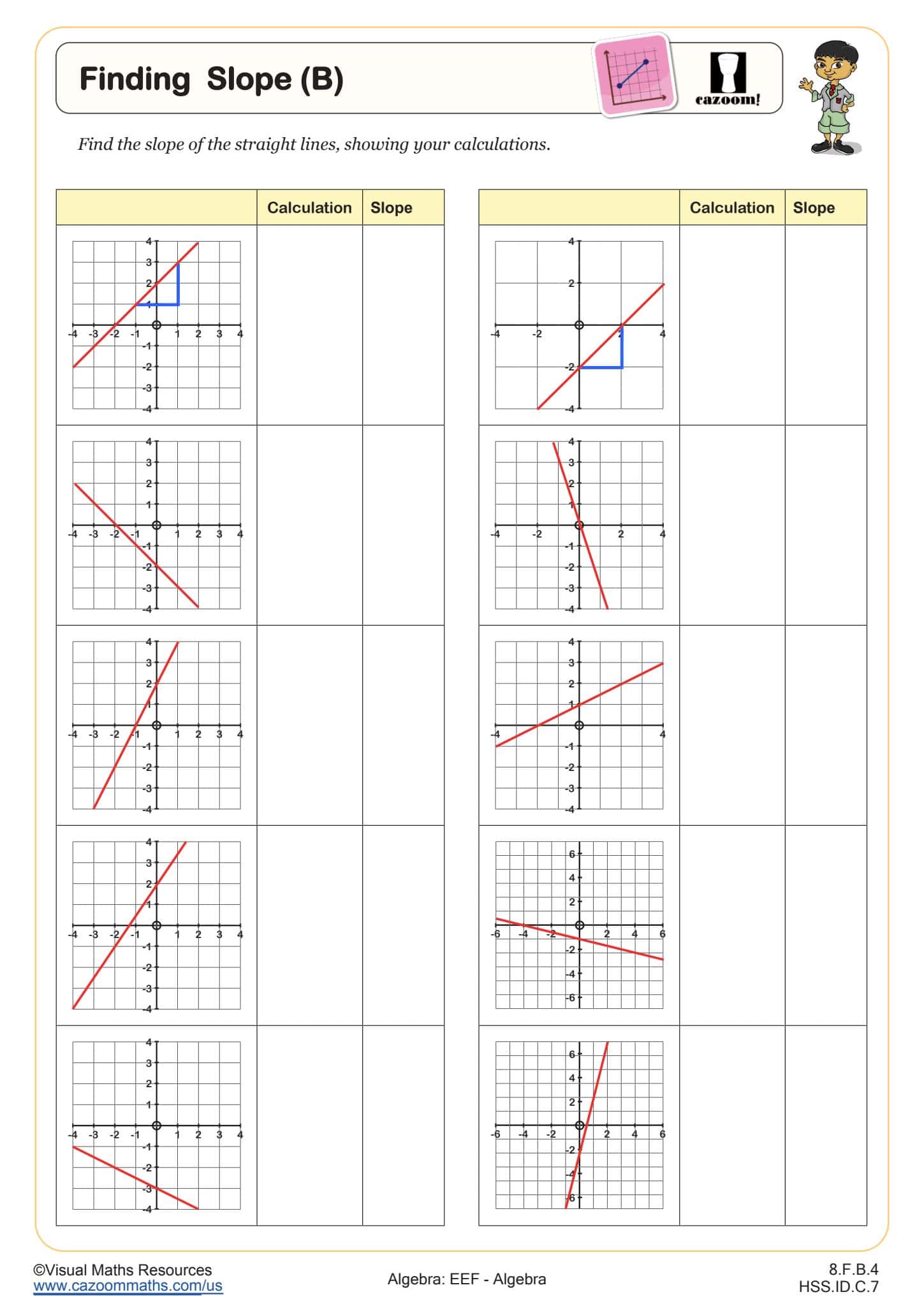
Finding Slope (B)
Finding Slope (C)
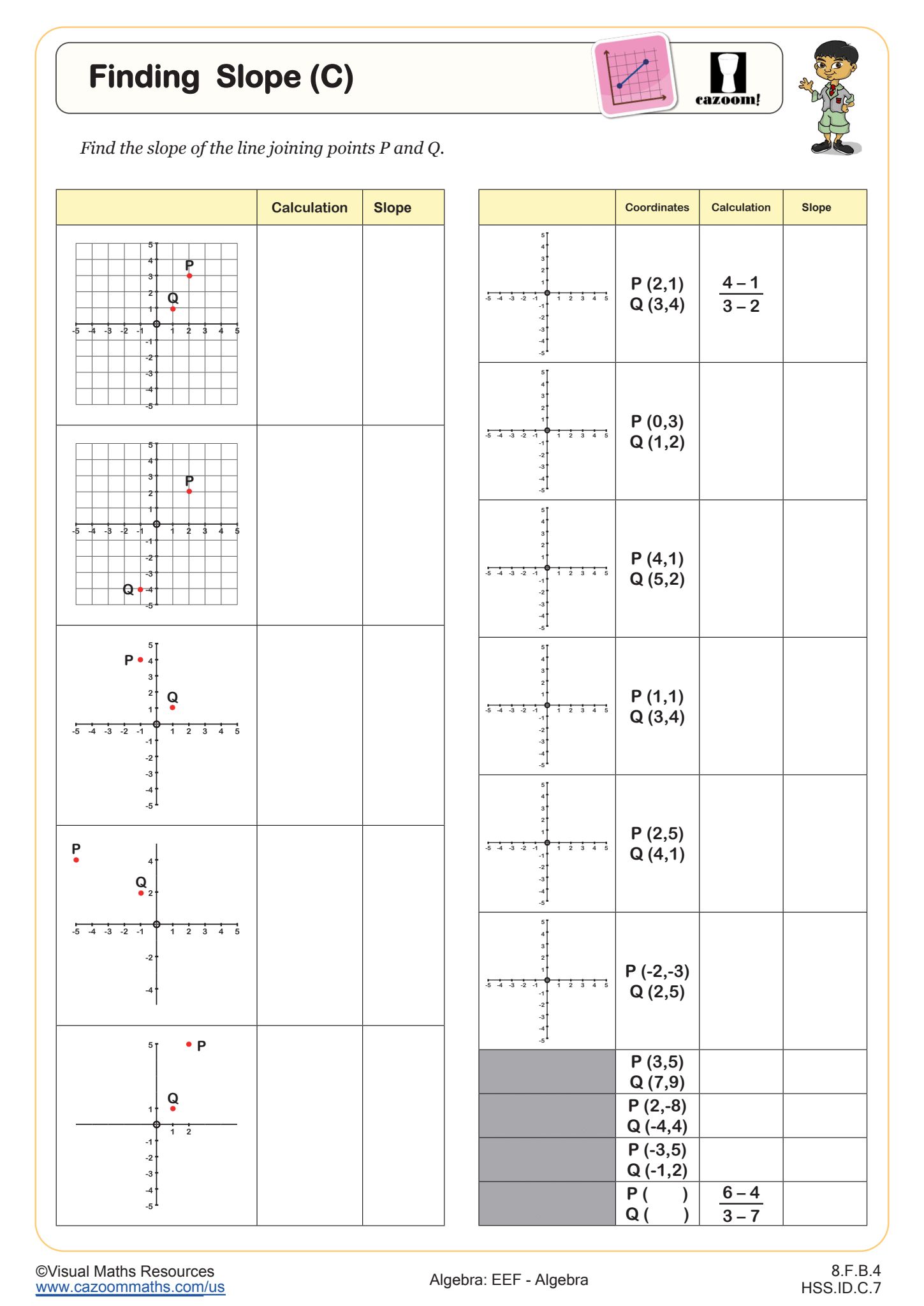
Form and Solve Linear Simultaneous Equations
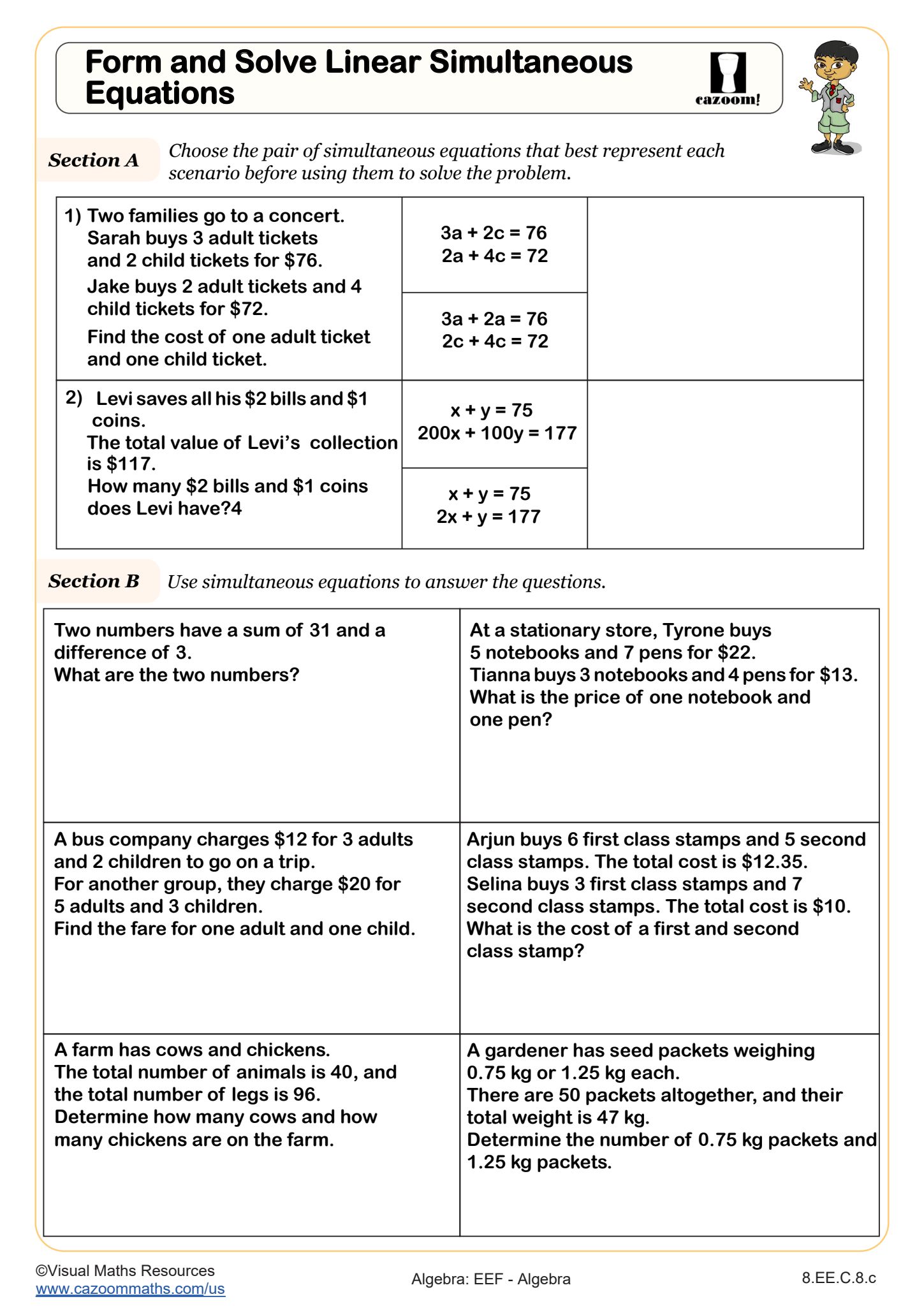
Forming Two Step Equations
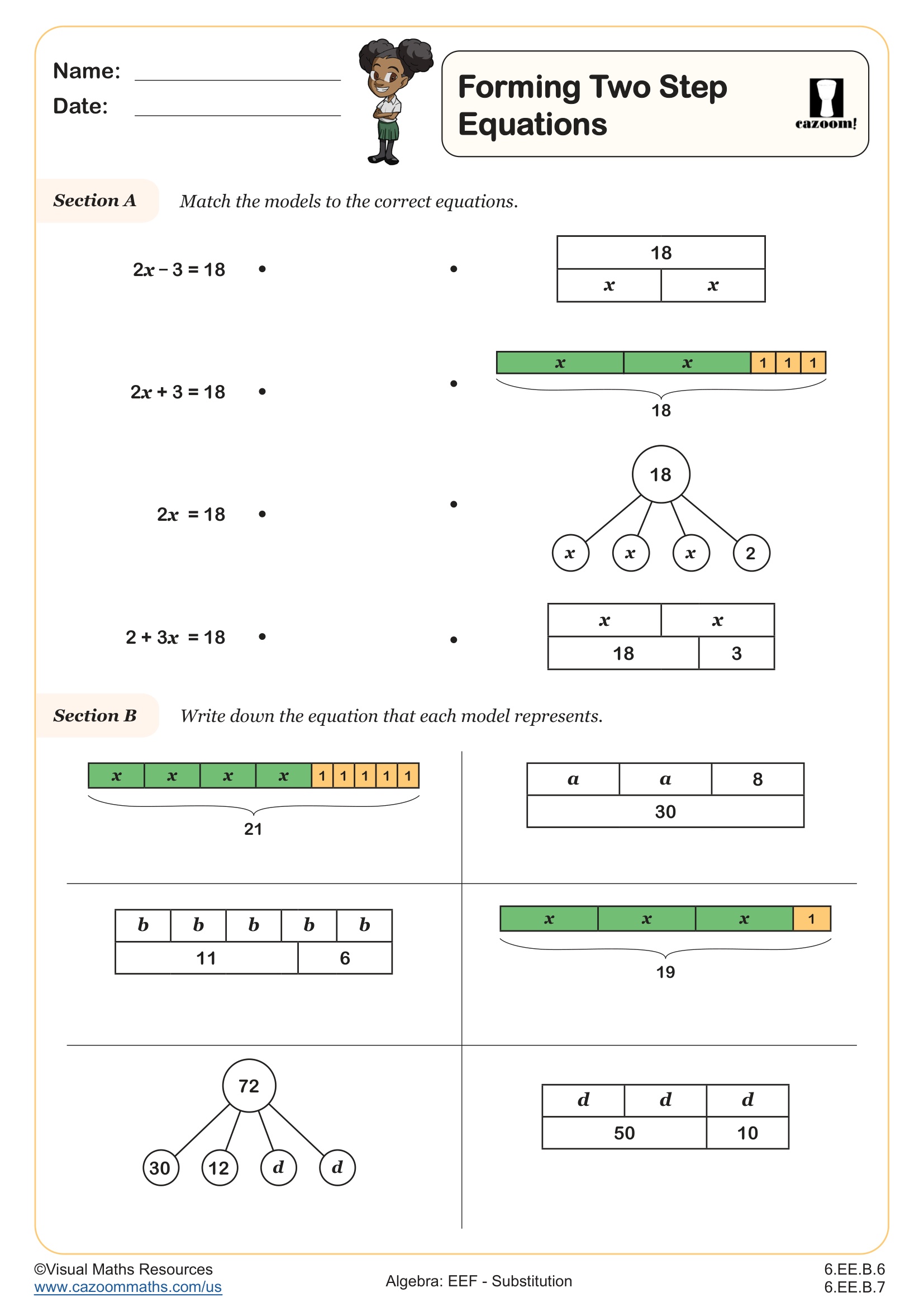
Identifying Parallel and Perpendicular Lines
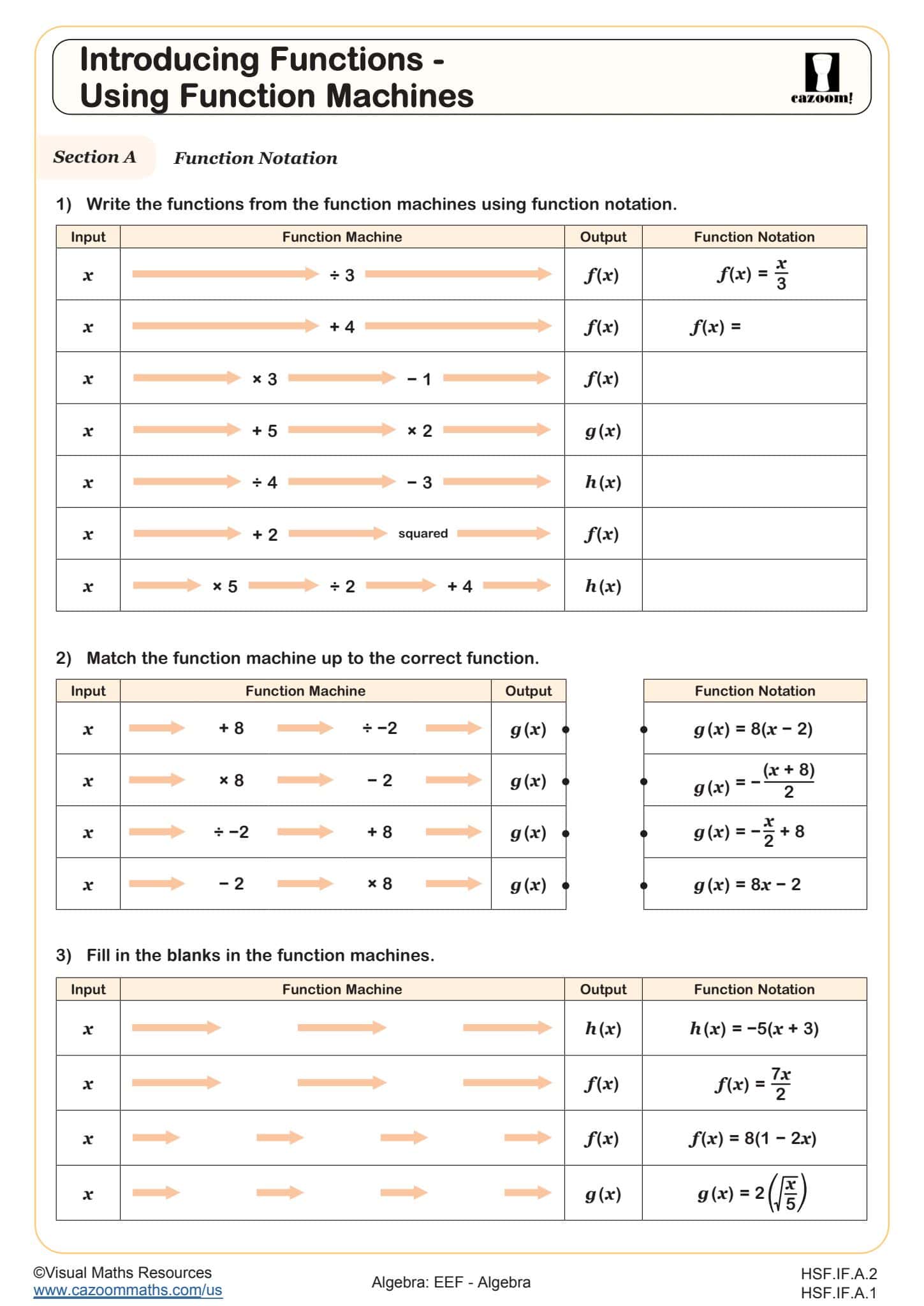
Introducing Functions - Using Function Machines
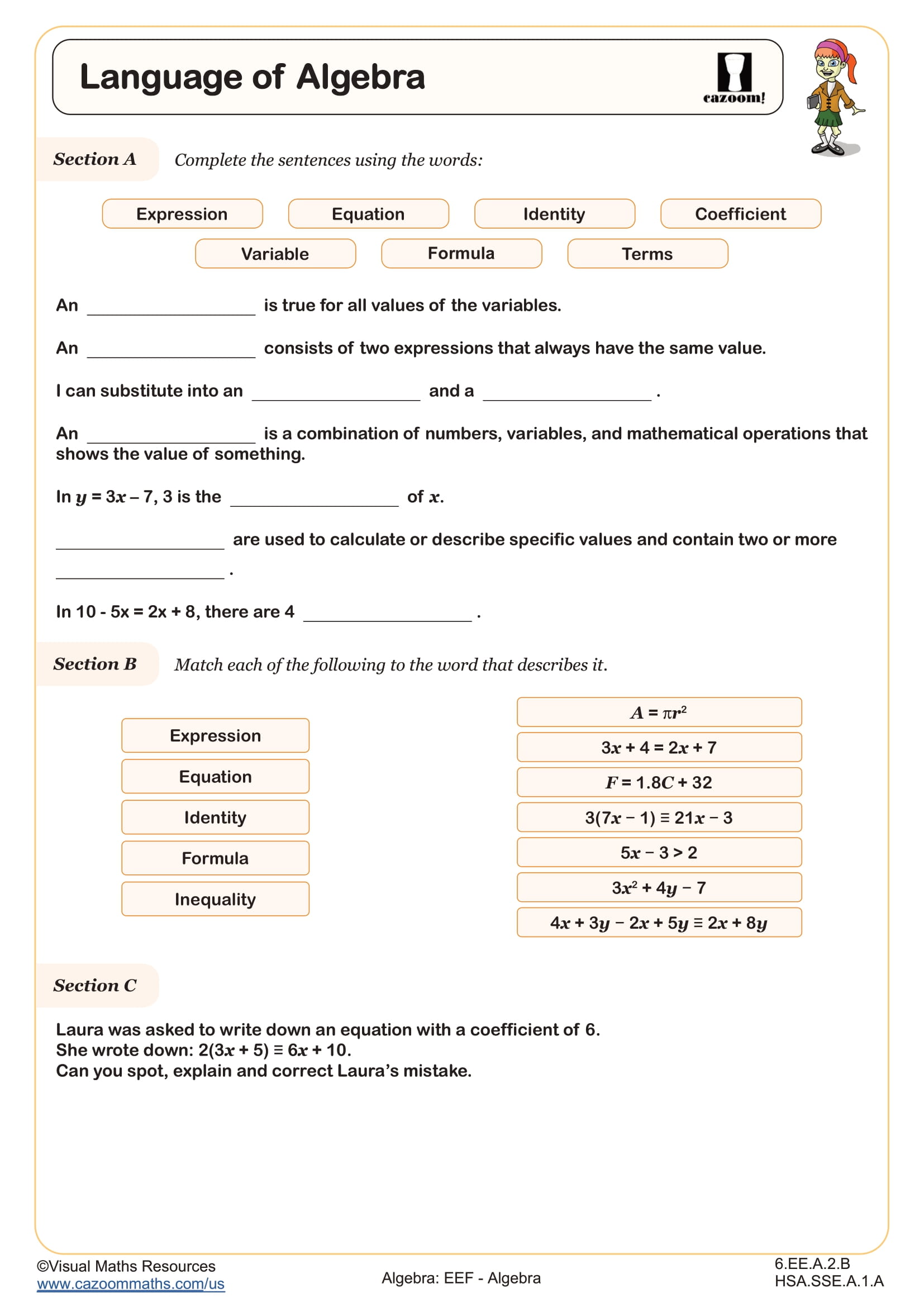
Language of Algebra
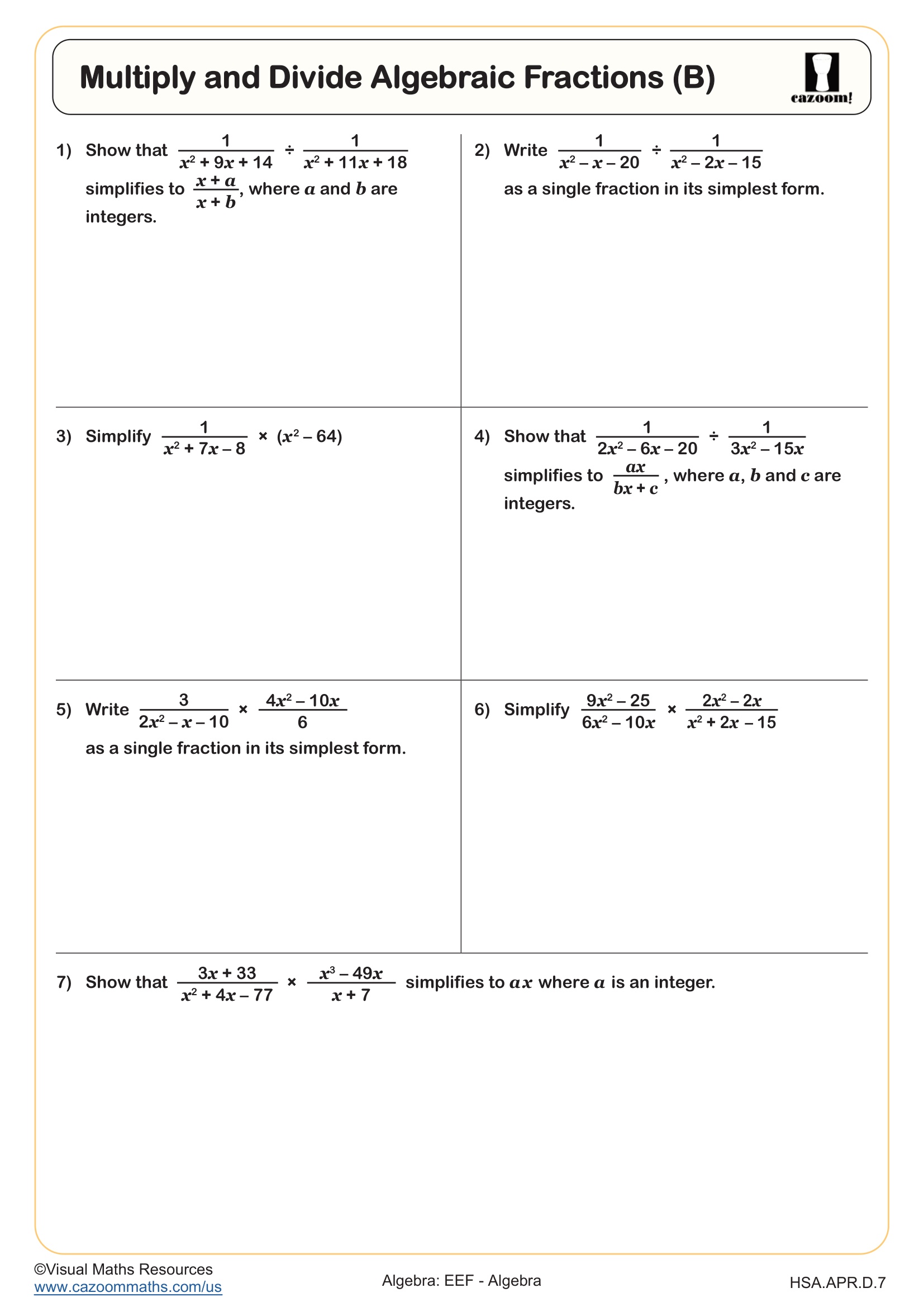
Multiply and Divide Algebraic Fractions (B)
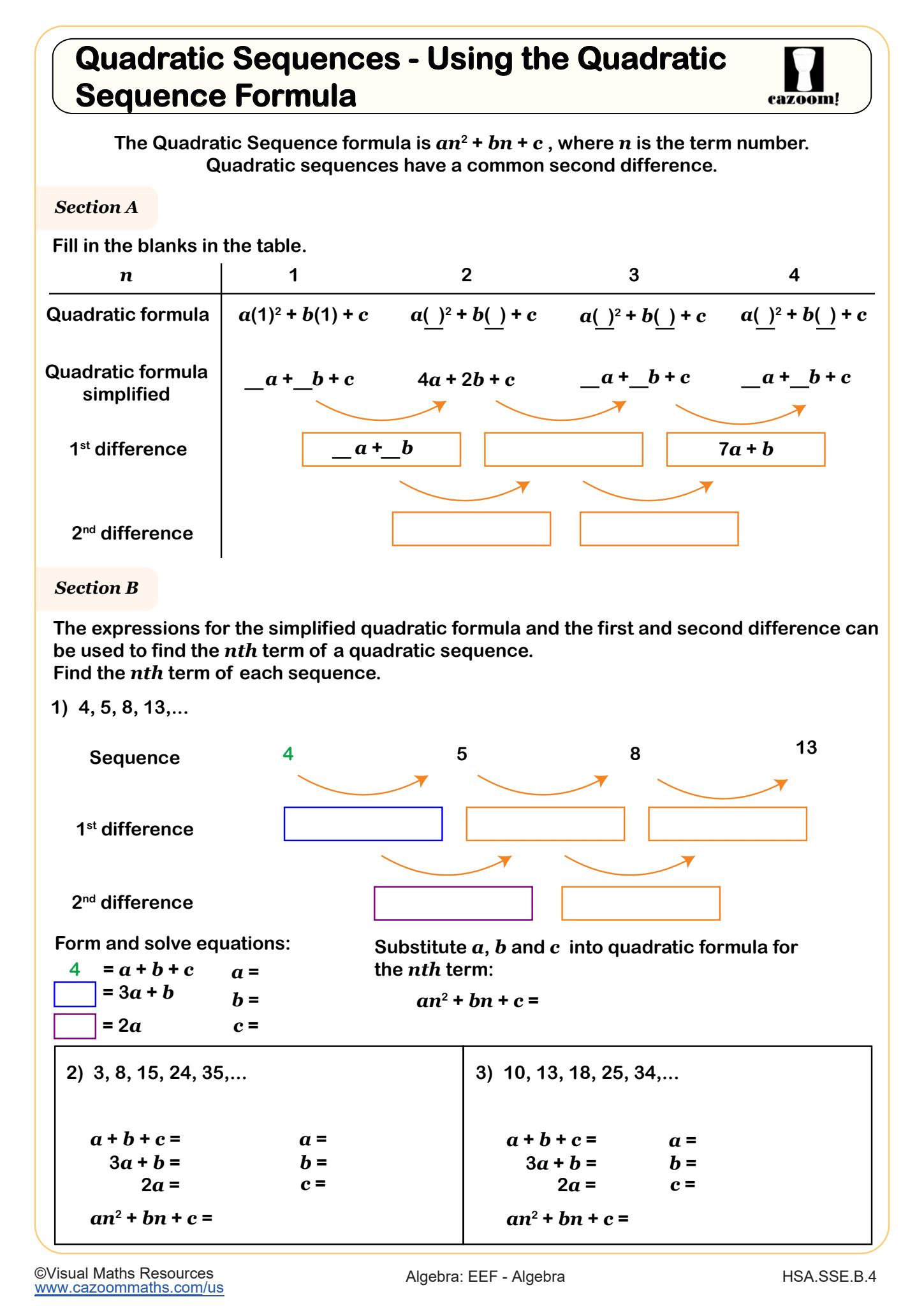
Quadratic Sequences - Using the Quadratic Sequence Formula
Rationalizing the Denominator - First Steps

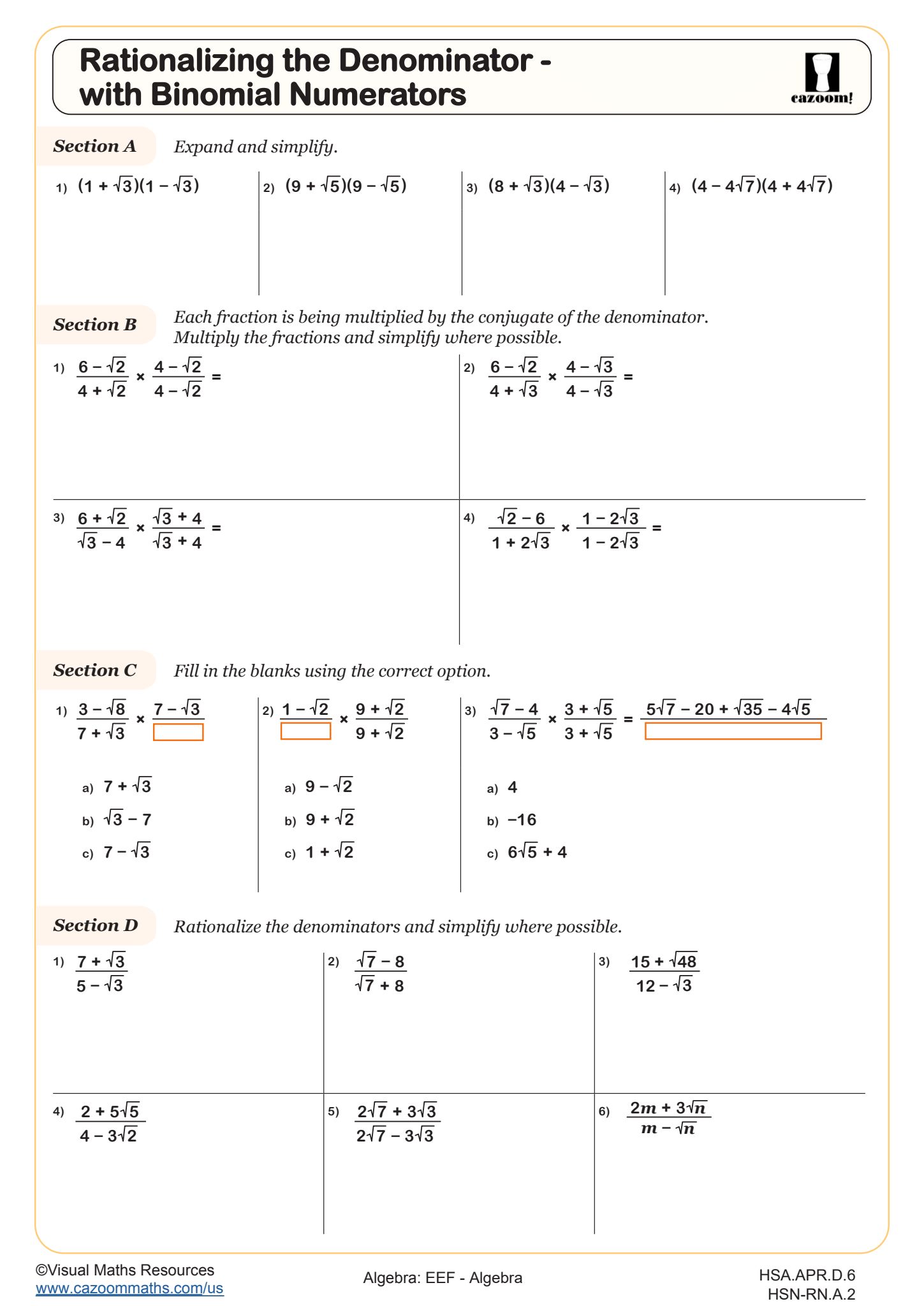
Rationalizing the Denominator - with Binomial Numerators
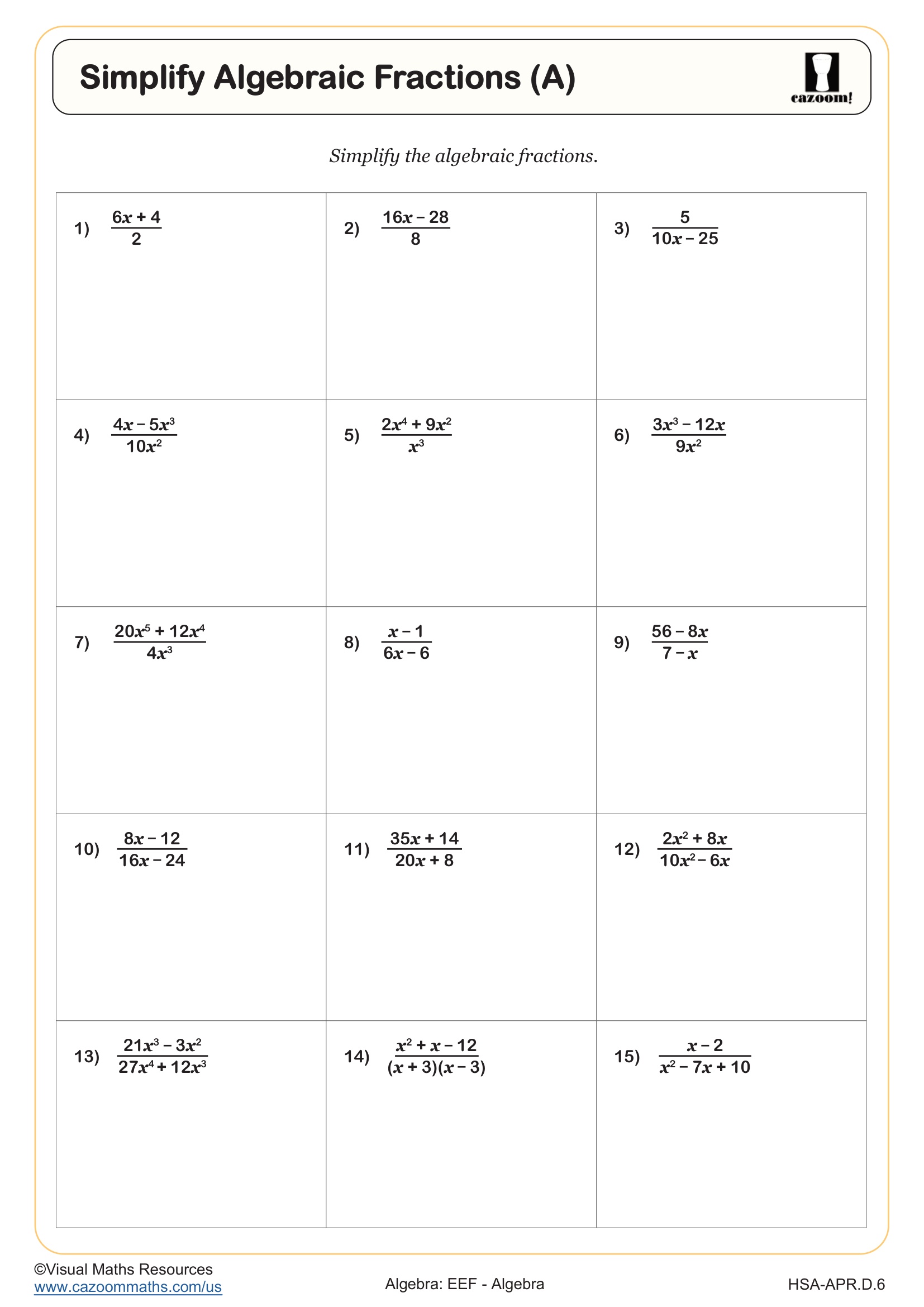
Simplify Algebraic Fractions (A)
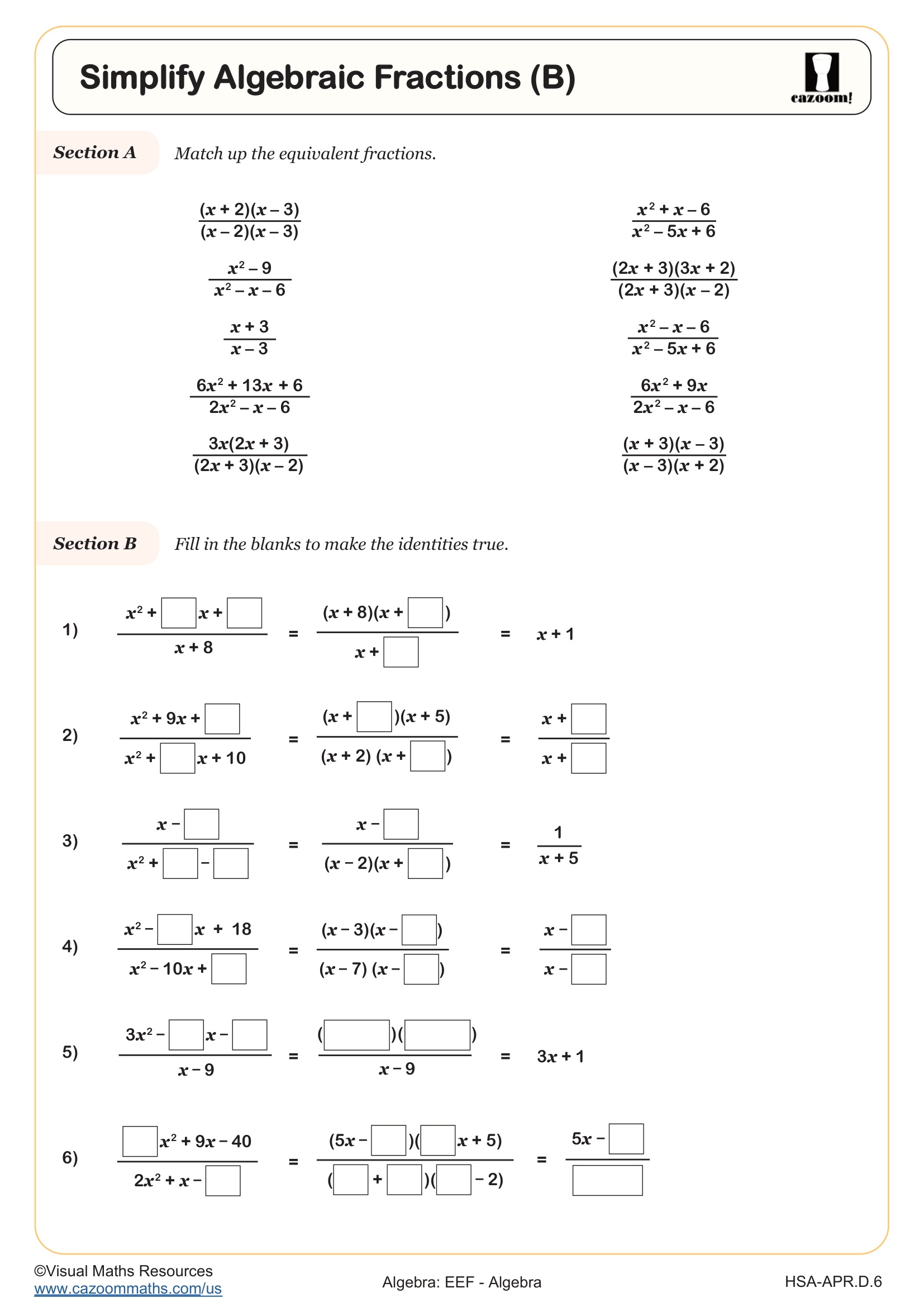
Simplify Algebraic Fractions (B)
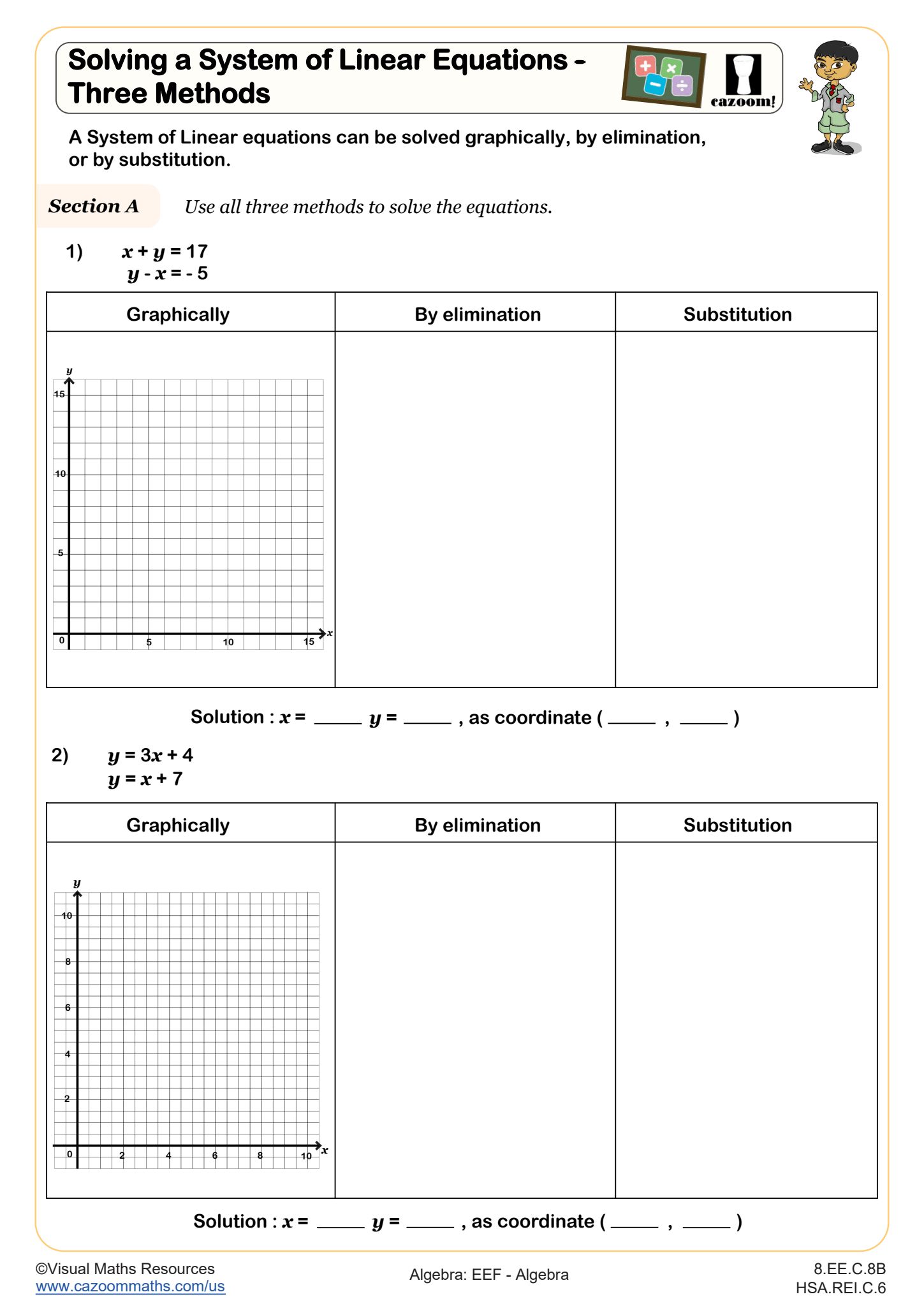
Solving a System of Linear Equations - Three Methods
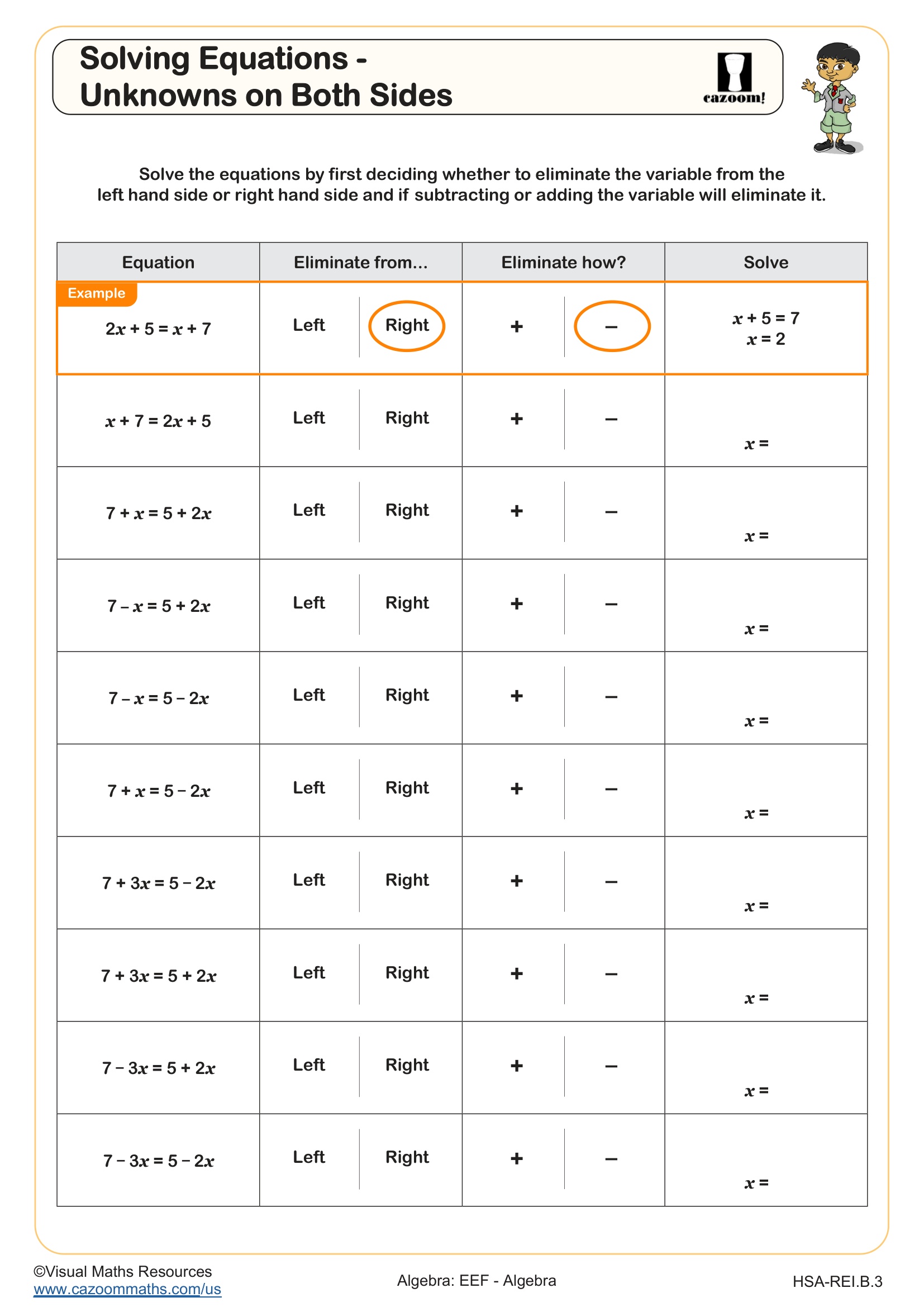
Solving Equations - Unknowns on Both Sides
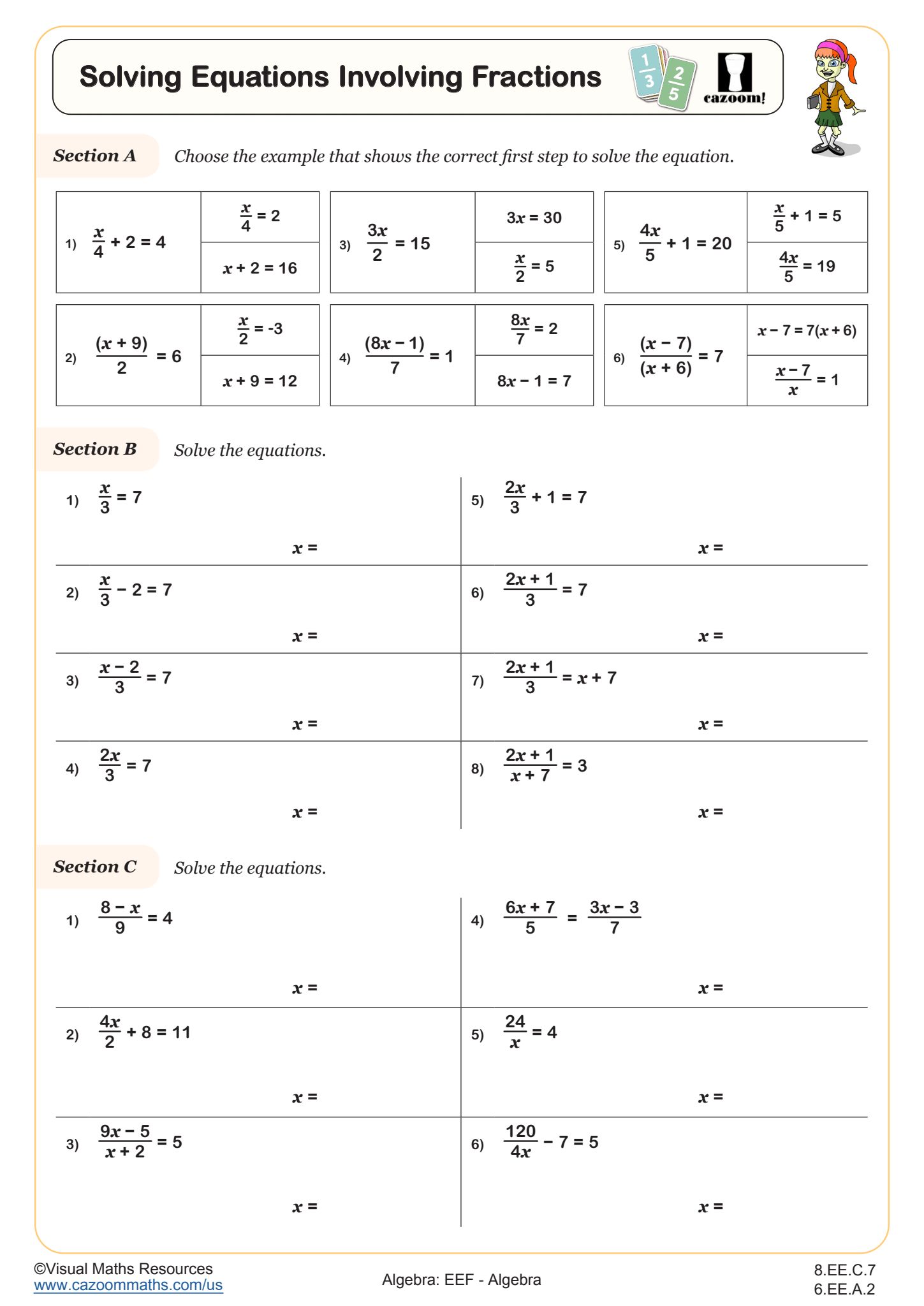
Solving Equations Involving Fractions
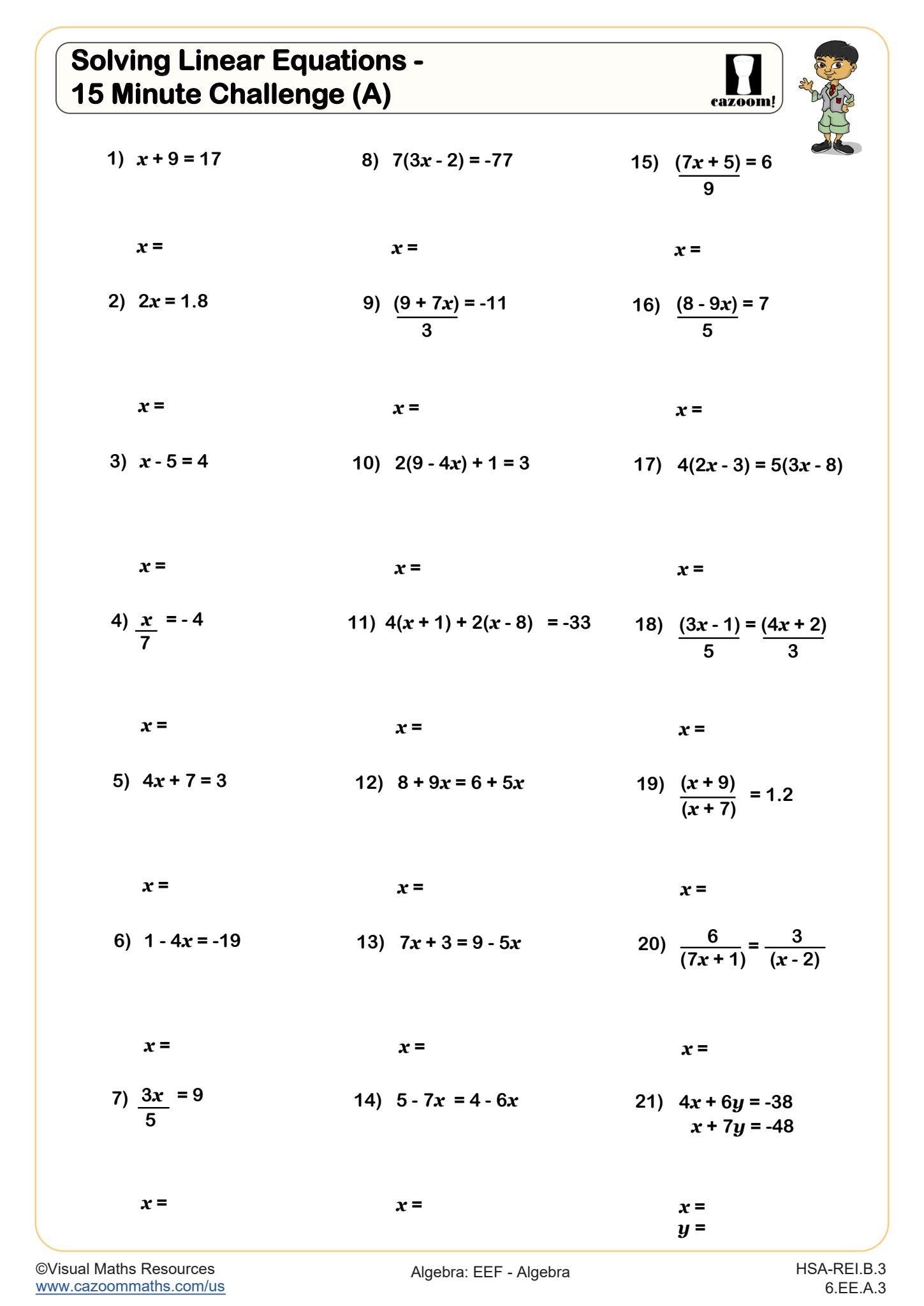
Solving Linear Equations - 15 Minute Challenge (A)
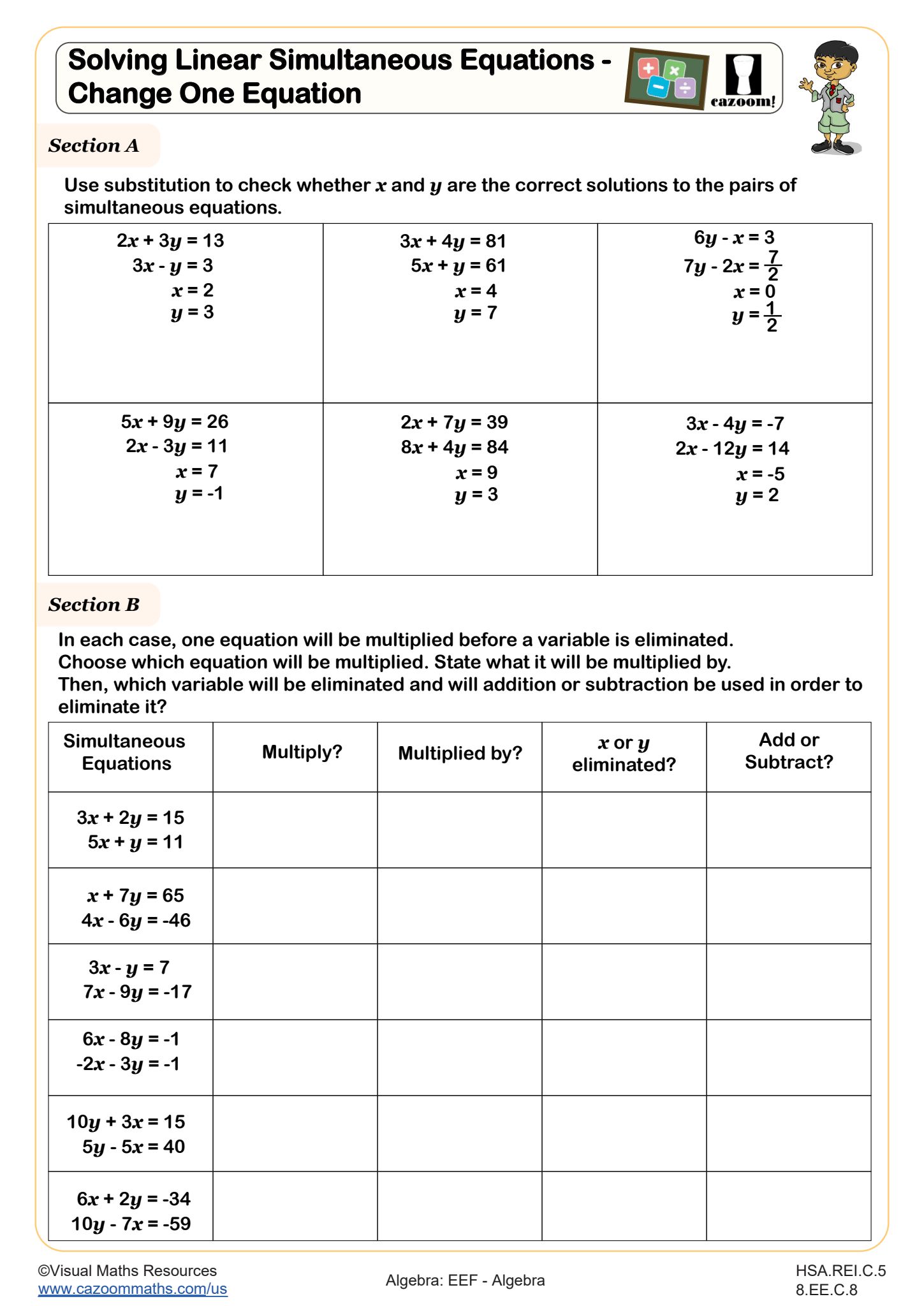
Solving Linear Simultaneous Equations - Change One Equation
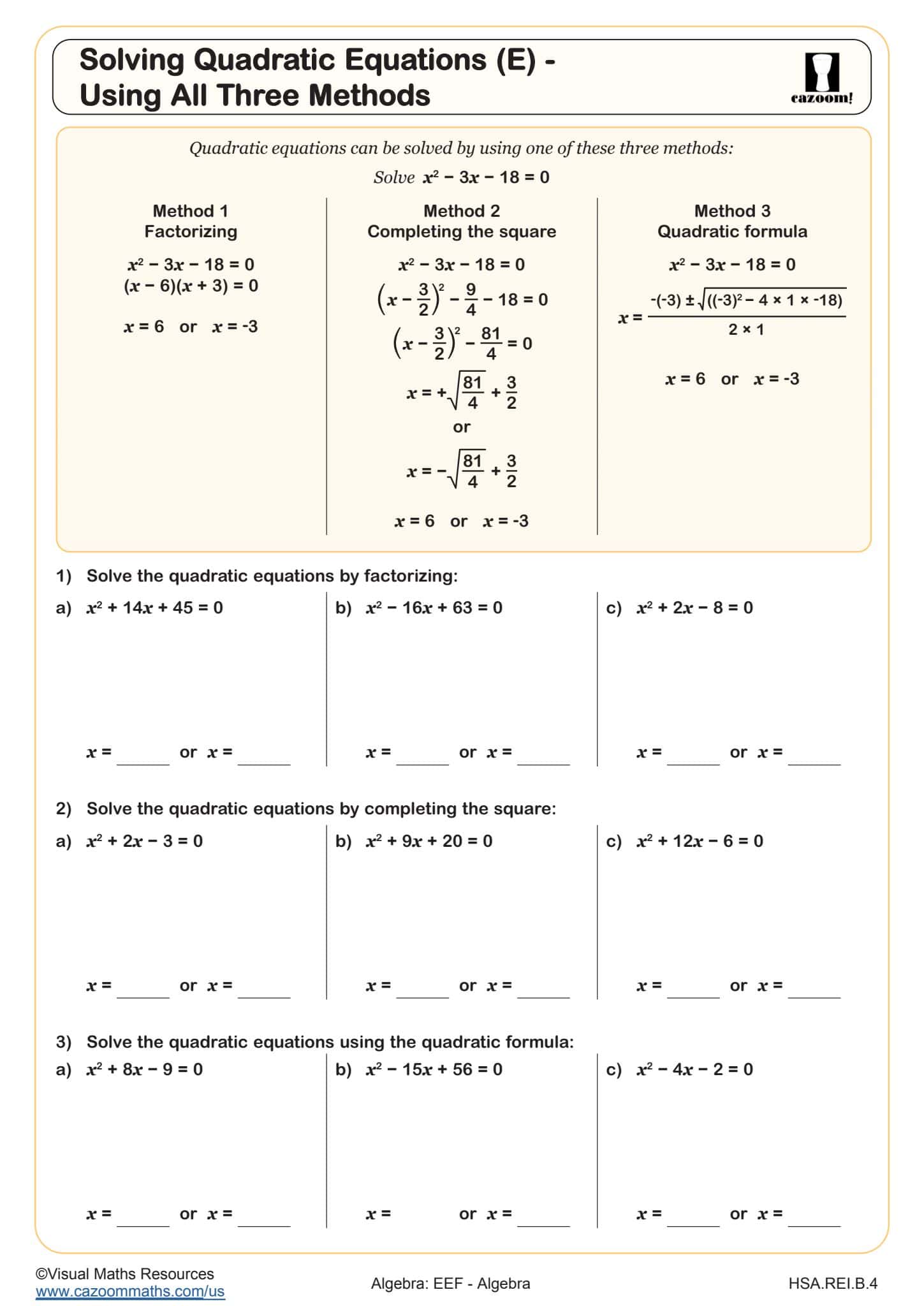
Solving Quadratic Equations (E) - Using all Three Methods
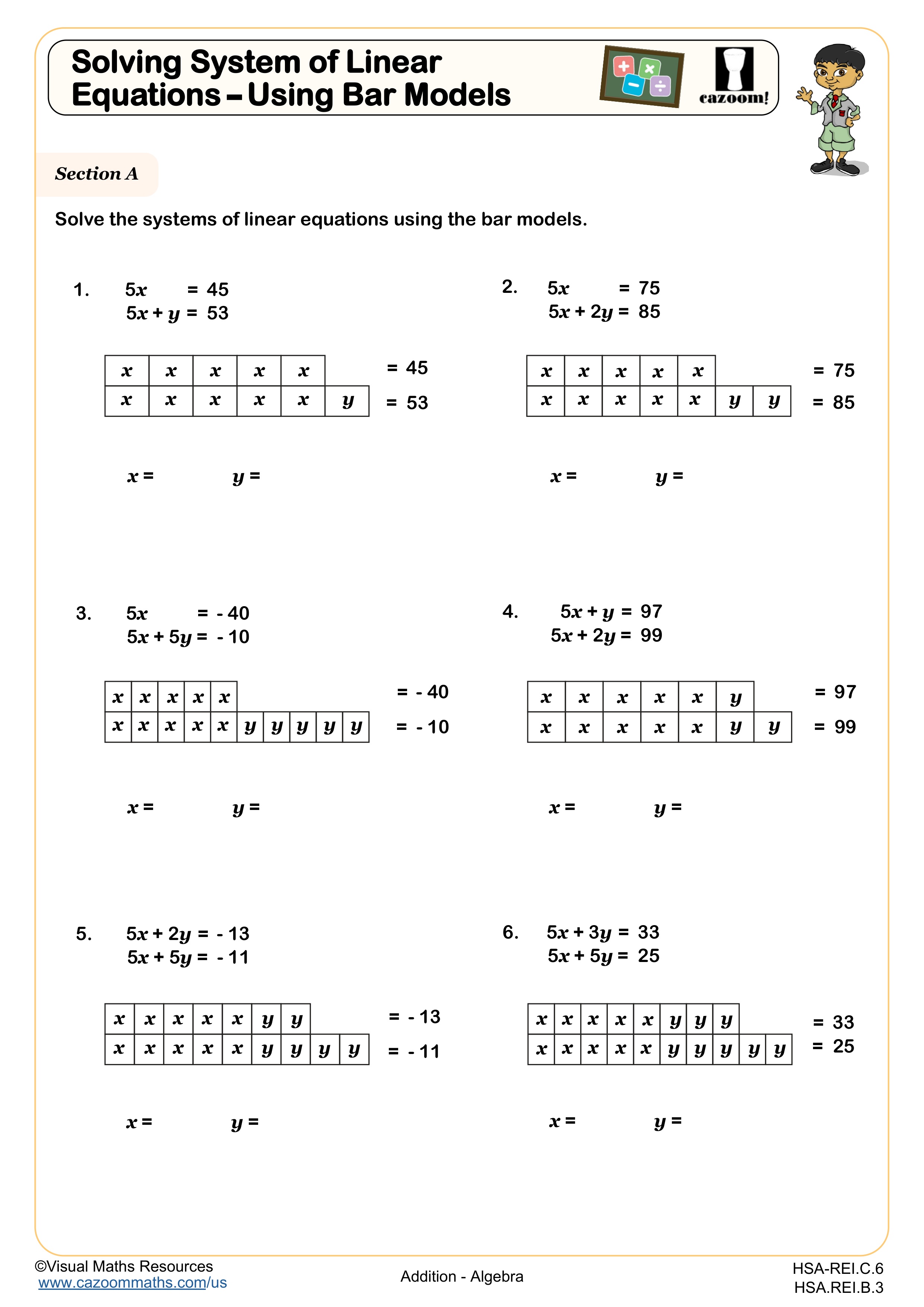
Solving Systems of Linear Equations - Using Bar Models
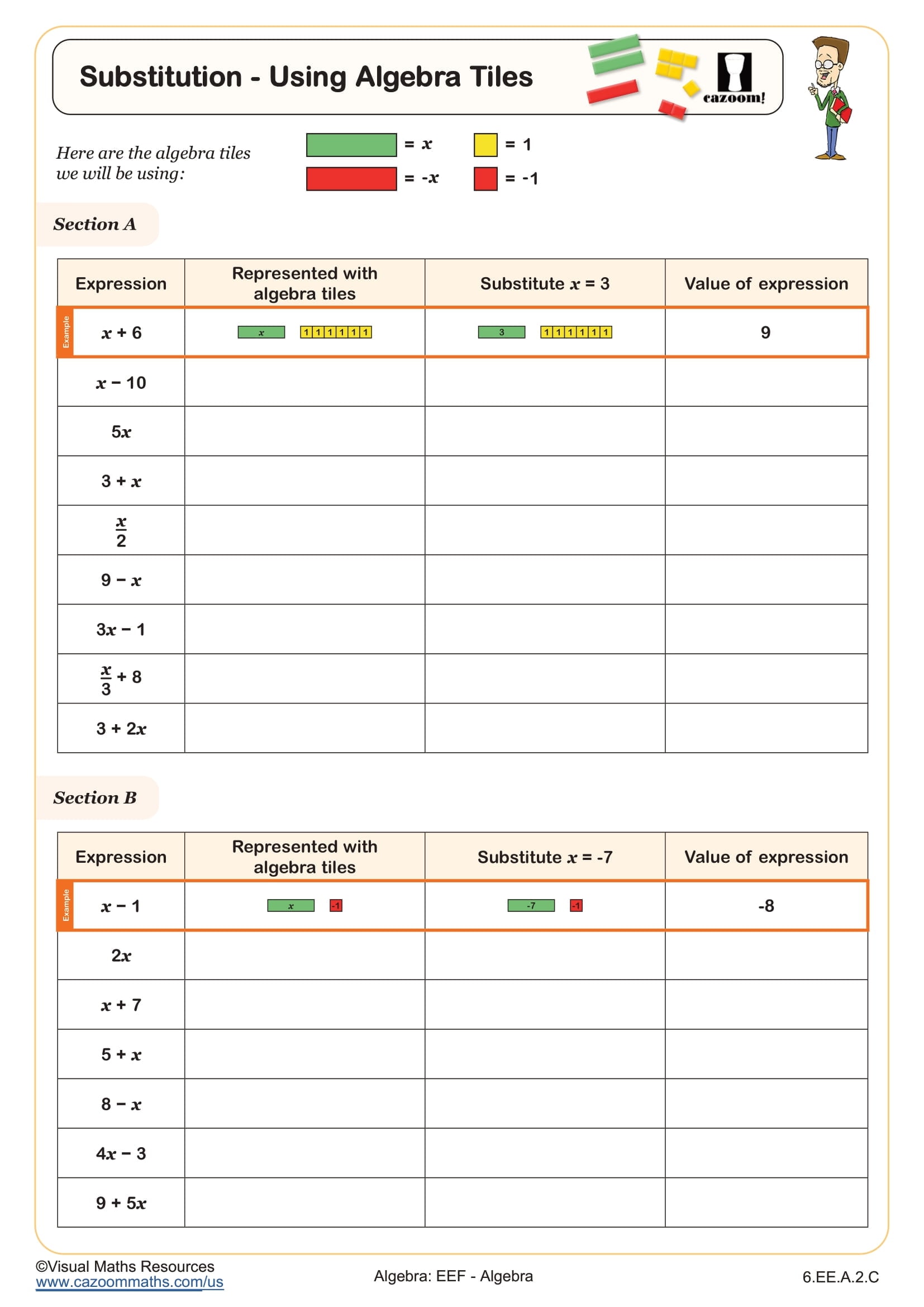
Substitution - Using Algebra Tiles
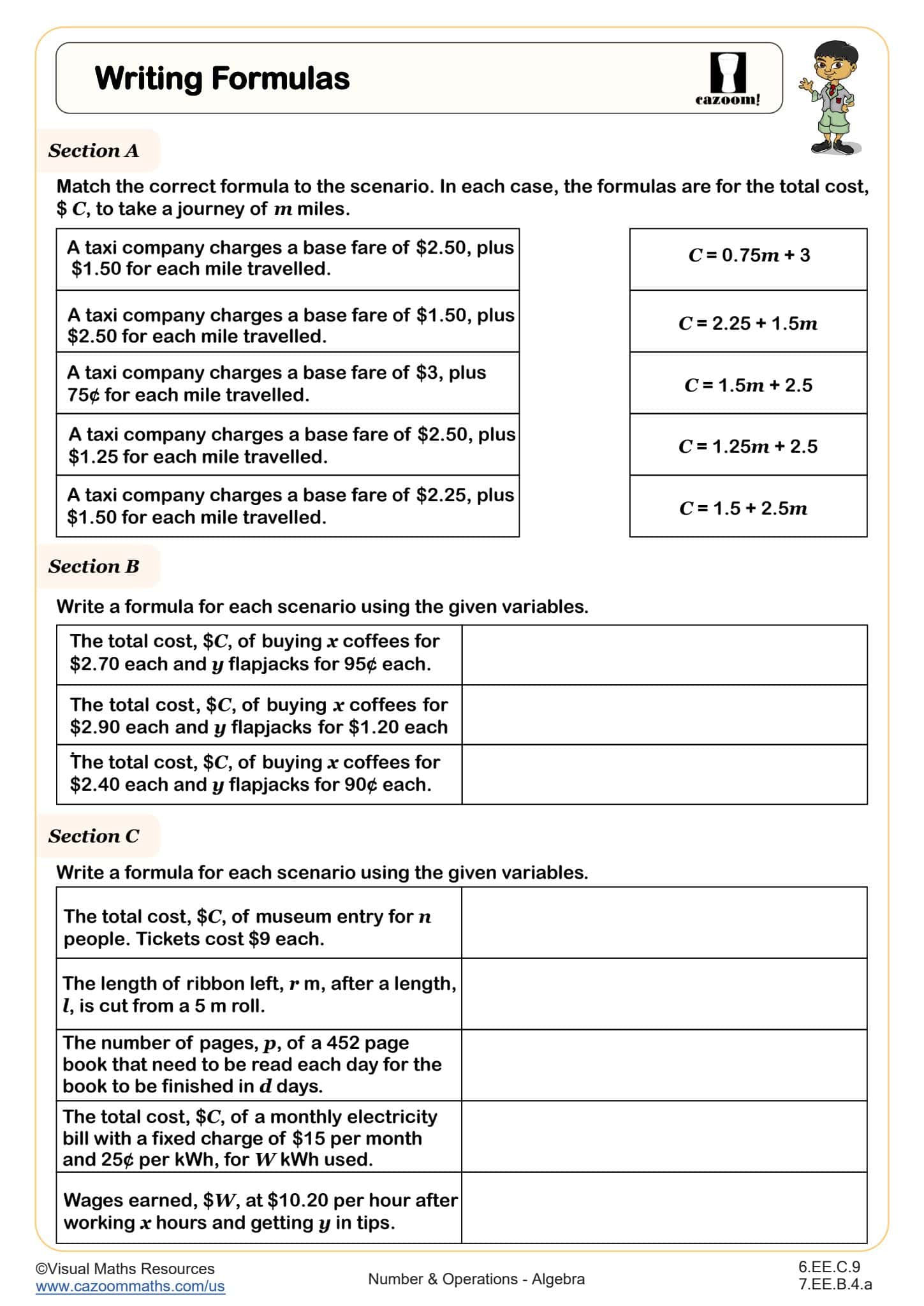
Writing Formulas
All worksheets are created by the team of experienced teachers at Cazoom Math.
Why Teachers Rely on Our PDF Elementary School Algebra Worksheets in the Classroom
Students who encounter algebraic reasoning early learn to see patterns and relationships, rather than just computing isolated answers. In earlier grades, children worked with number sentences and missing values—this collection extends those ideas into variables that can represent any quantity. Elementary algebra teaches students to think symbolically and approach problems by identifying what they know and what they need to find.
These skills lead directly to solving multi-step equations, graphing linear relationships, and analyzing functions in middle school. Regular practice removes the mystery from abstract mathematics and creates flexible thinkers who can apply logical reasoning across different contexts. The visual models and structured progression help every student understand that algebra is an extension of arithmetic, not a completely foreign subject.
Worksheet Topics at a Glance: Substitution, Functions, Solving Equations, and More
These worksheets help students transition from hands-on models to abstract algebraic notation. Visual tools like algebra tiles and function machines introduce variables, substitution, and inverse operations before learners progress to solving linear equations and finding slopes. Each worksheet includes complete, worked solutions that clearly show reasoning. Covering foundational algebra skills, equations with fractions, formula writing, and slope interpretation, this collection builds students' confidence and fluency as they advance toward higher-level algebra.
Get Consistent Accuracy Through Elementary School Expressions, Equations, and Functions Resources
Teachers select these worksheets because they work well in classrooms with students of different abilities without requiring different lesson plans. Students who require concrete models should receive basic function machine activities, but advanced learners can work with quadratic sequence problems from the same collection. The progression within each worksheet lets you differentiate instruction efficiently during a single class period.
Students can verify their work and identify incorrect steps by using solutions that present the full mathematical process, rather than just the final results. The system helps teachers reduce their grading workload while they focus on specific subjects that require additional explanation for their students. The resources work well for retrieval practice because students can complete slope activities weeks after their initial exposure to check their knowledge retention.
From Games to Budgeting: Where These Skills Show Up in Real Life
Algebraic thinking helps students solve everyday problems where quantities change or relationships matter. That is precisely why understanding functions and variables prepares students for science classes, technology projects, and situations requiring logical reasoning.
• Calculate sale prices with discounts
• Adjust recipe measurements for servings
• Convert currencies or units when traveling
• Plan budgets so income covers savings goals