Elementary School Area and Perimeter Worksheets
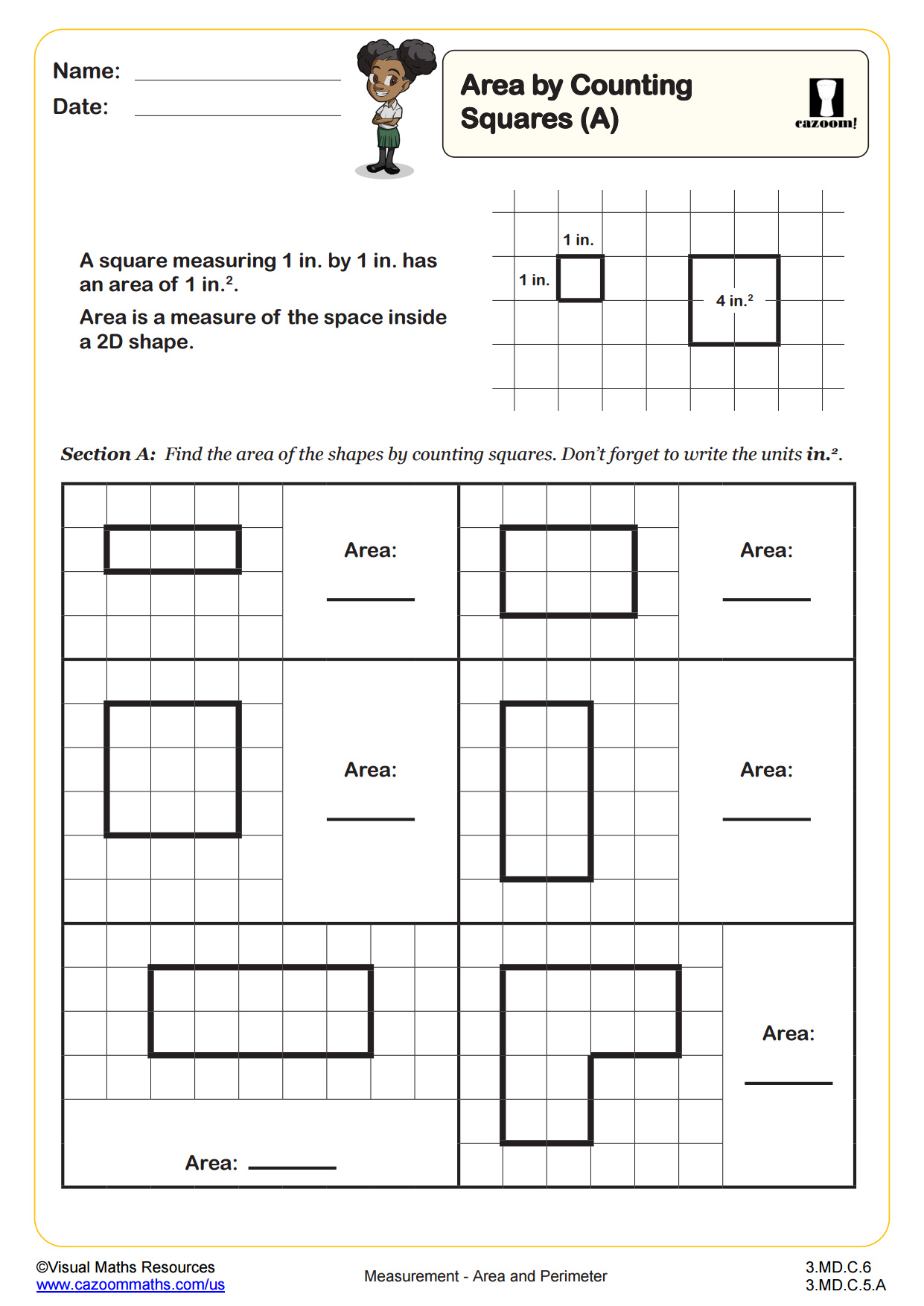
Area by Counting Squares (A)
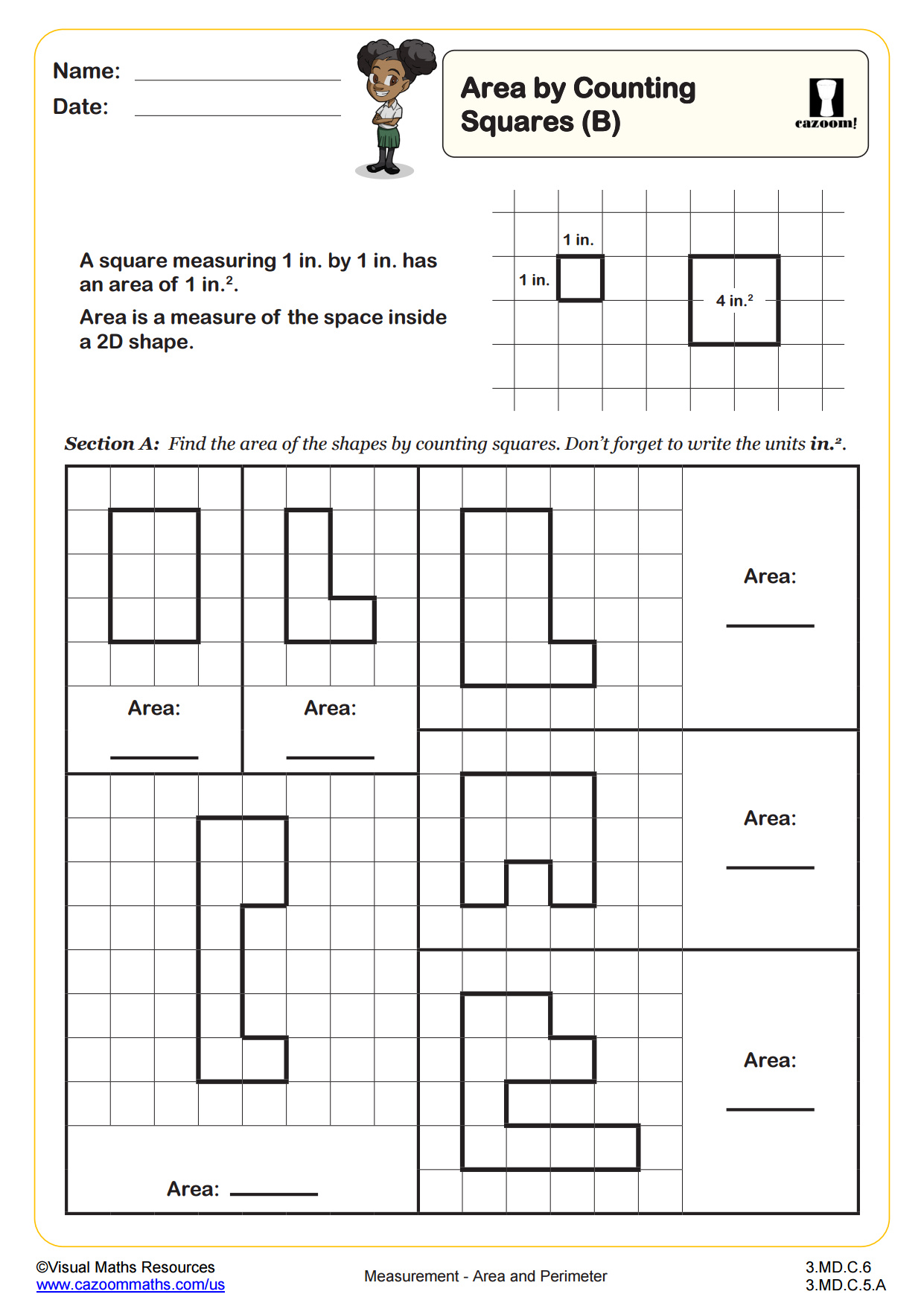
Area by Counting Squares (B)
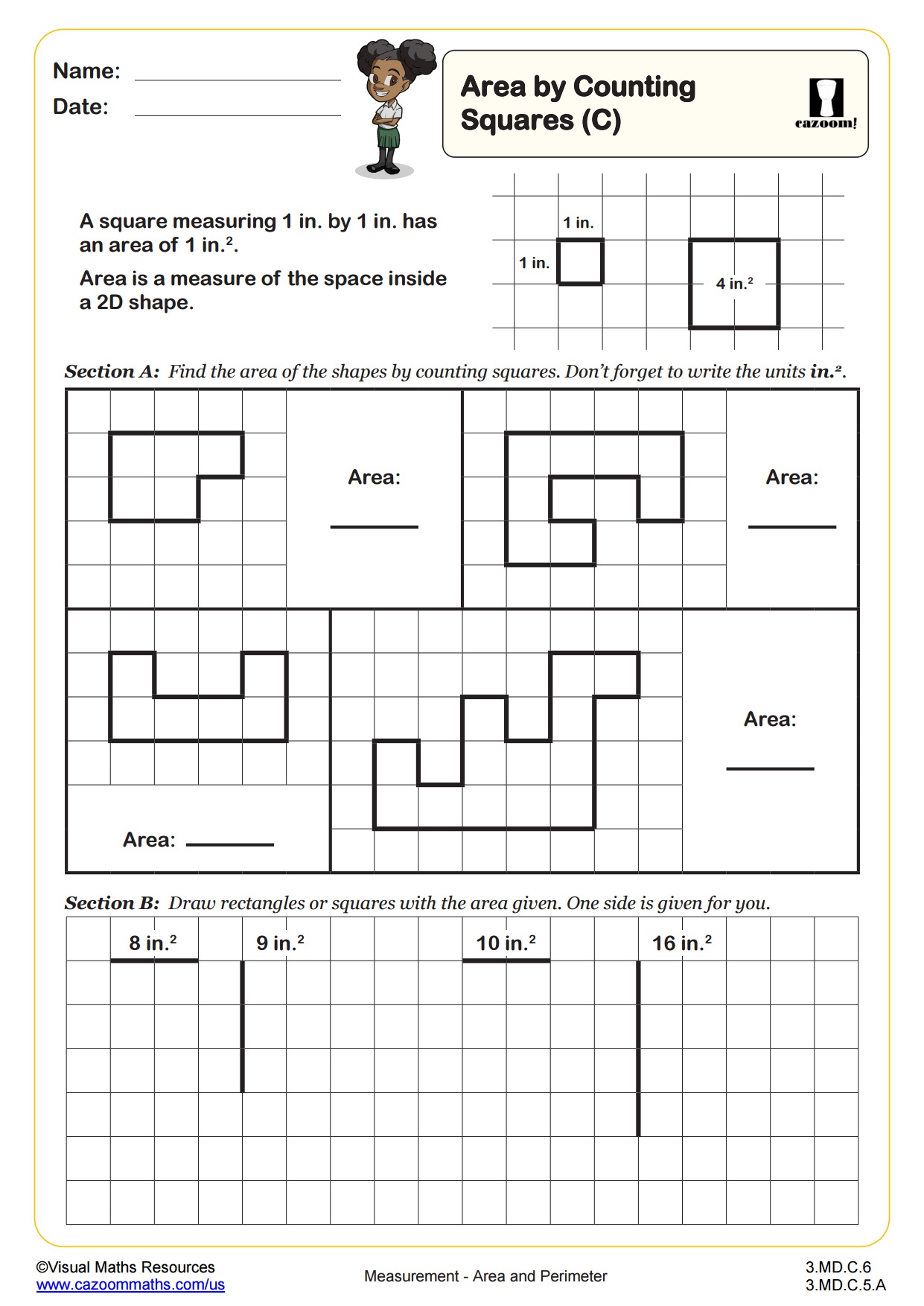
Area by Counting Squares (C)
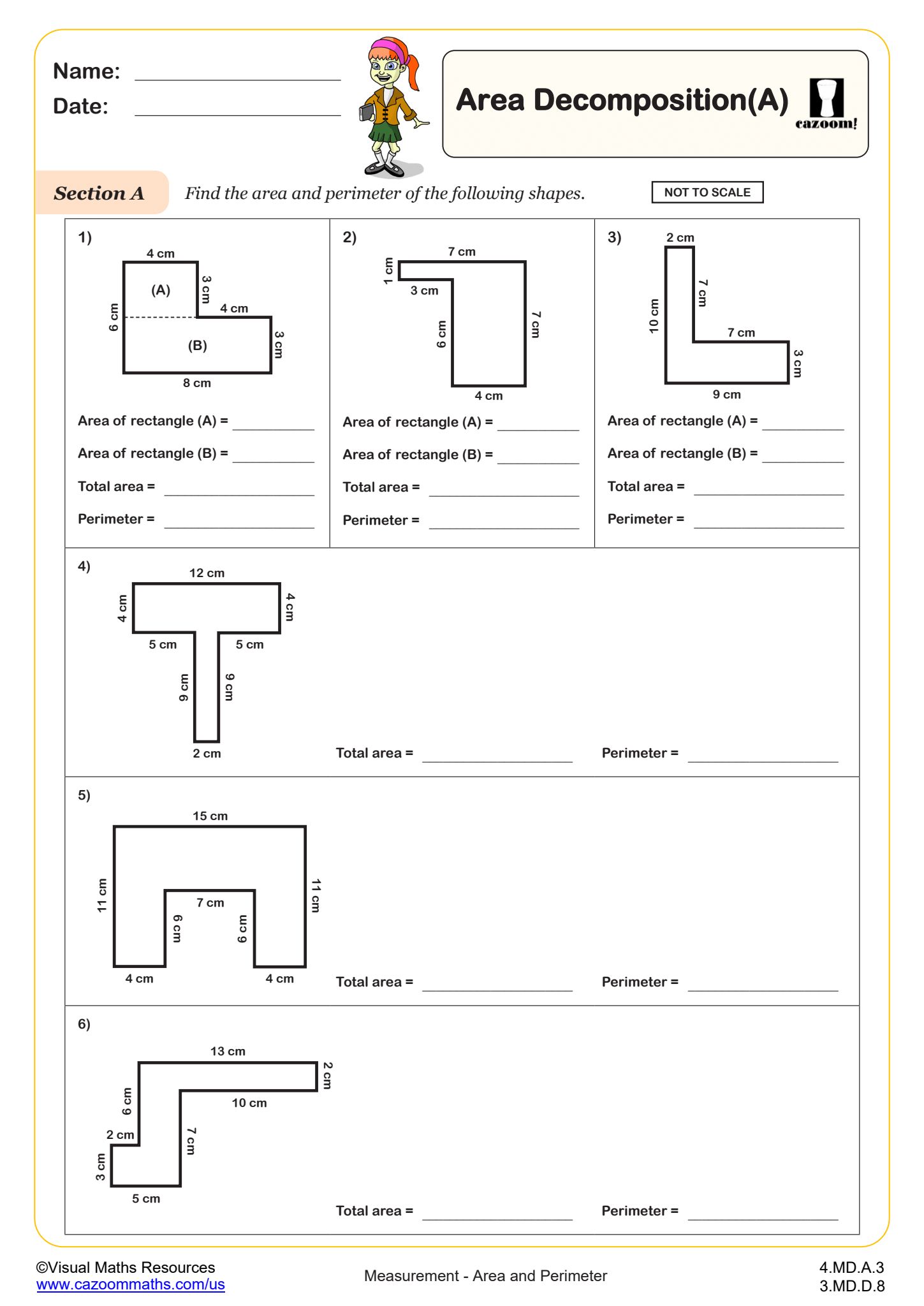
Area Decomposition (A)
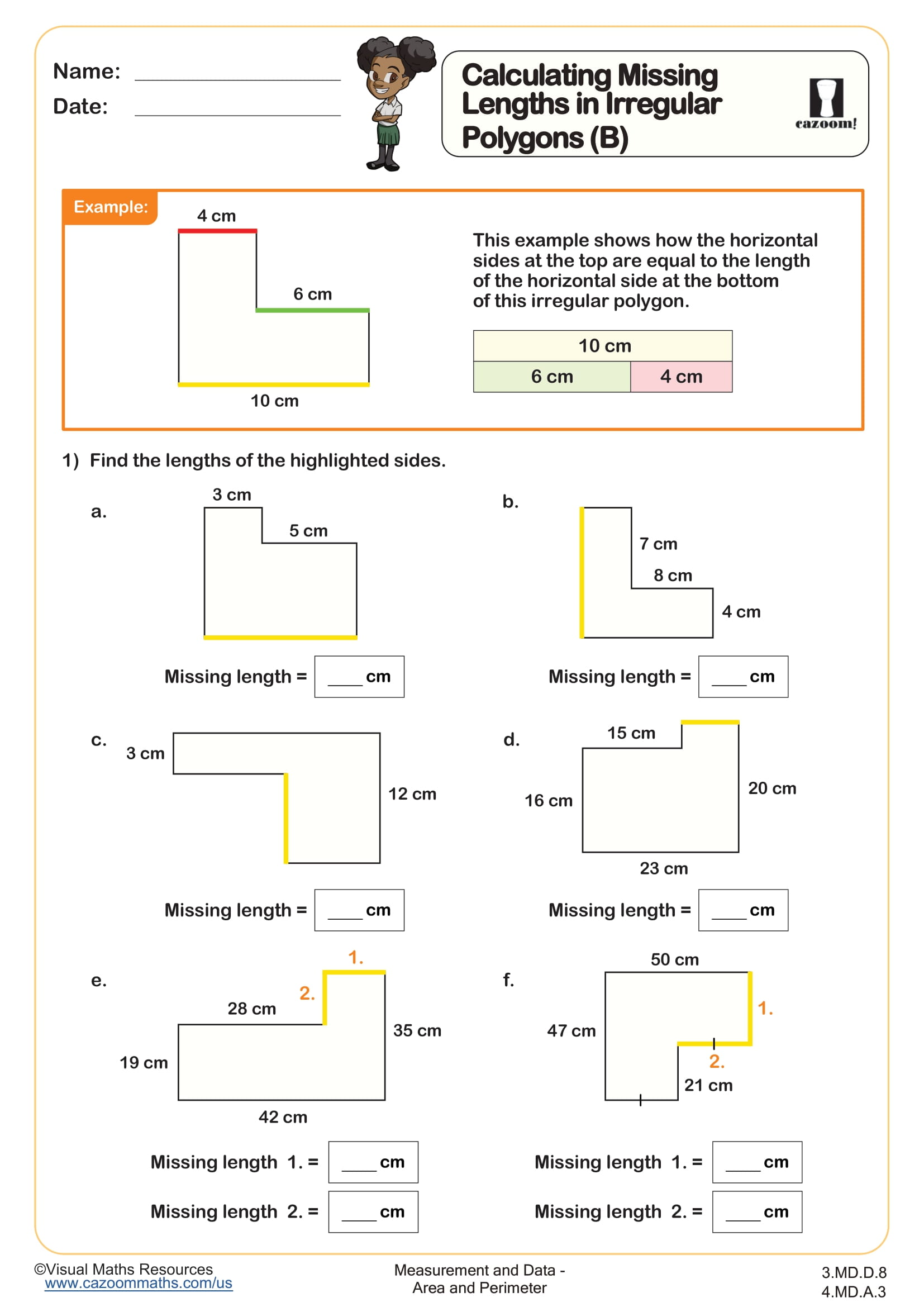
Area of Irregular Hexagons (L - Shapes)
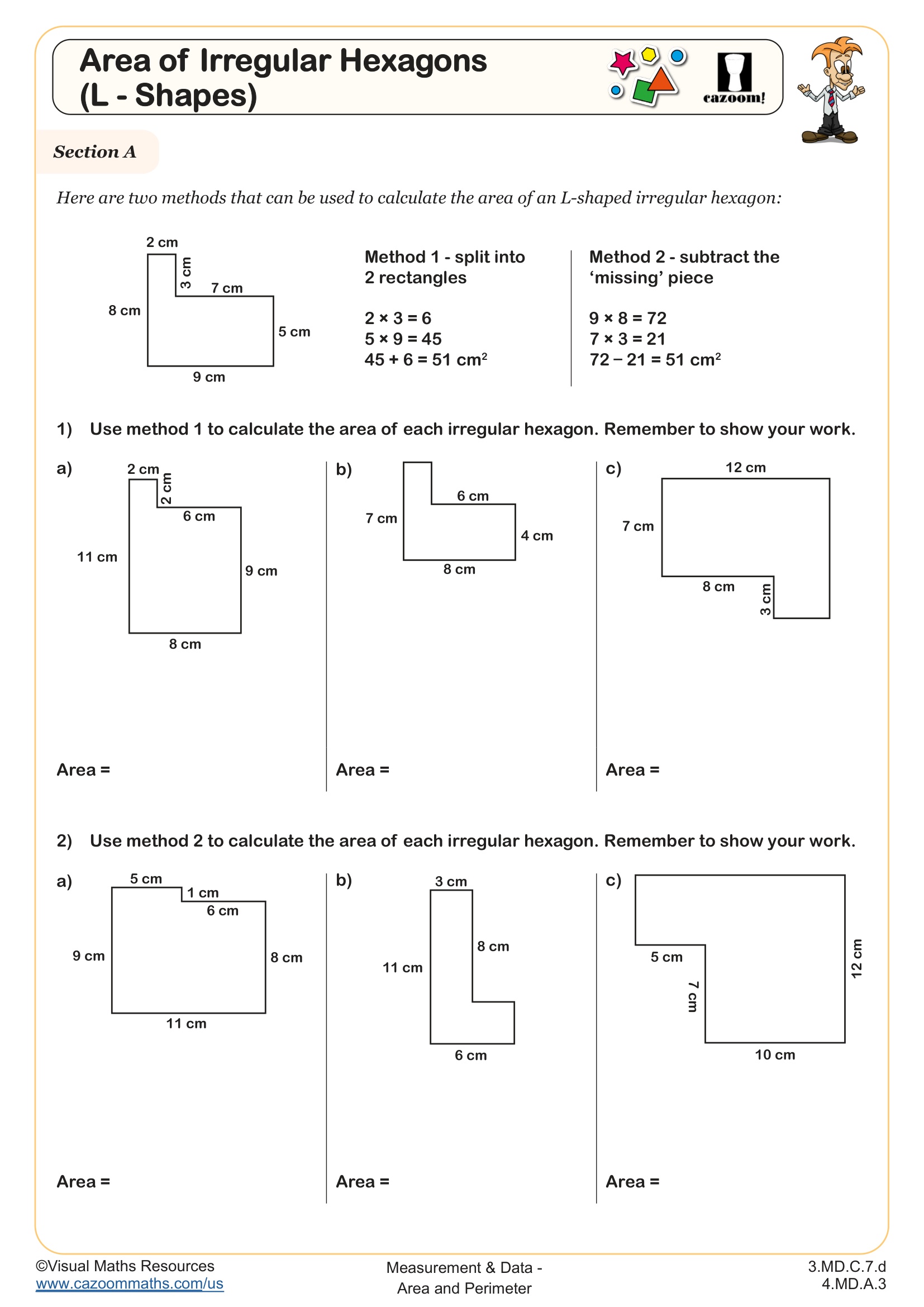
Area of Rectangles
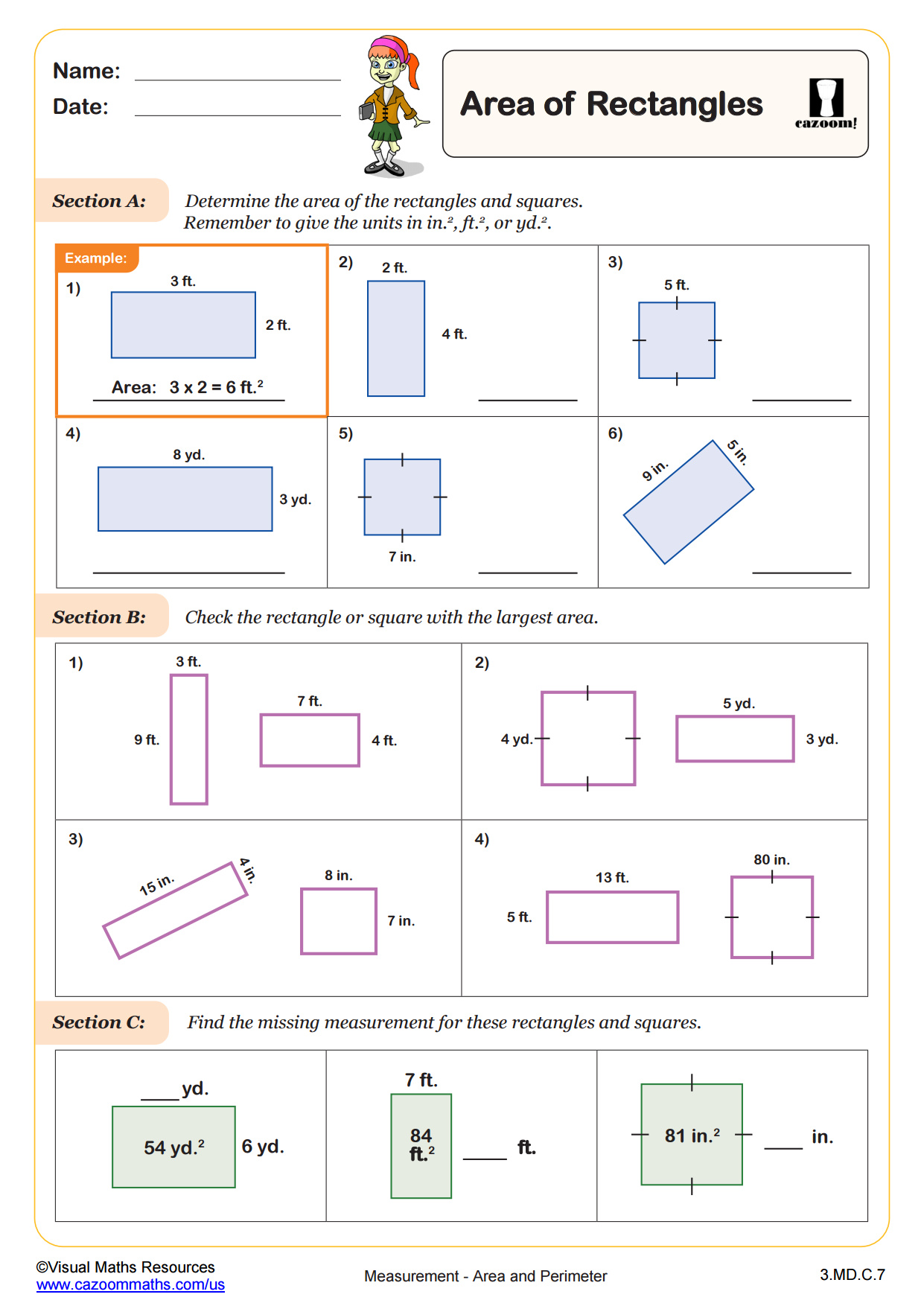
Calculating Missing Lengths in Irregular Polygons (A)
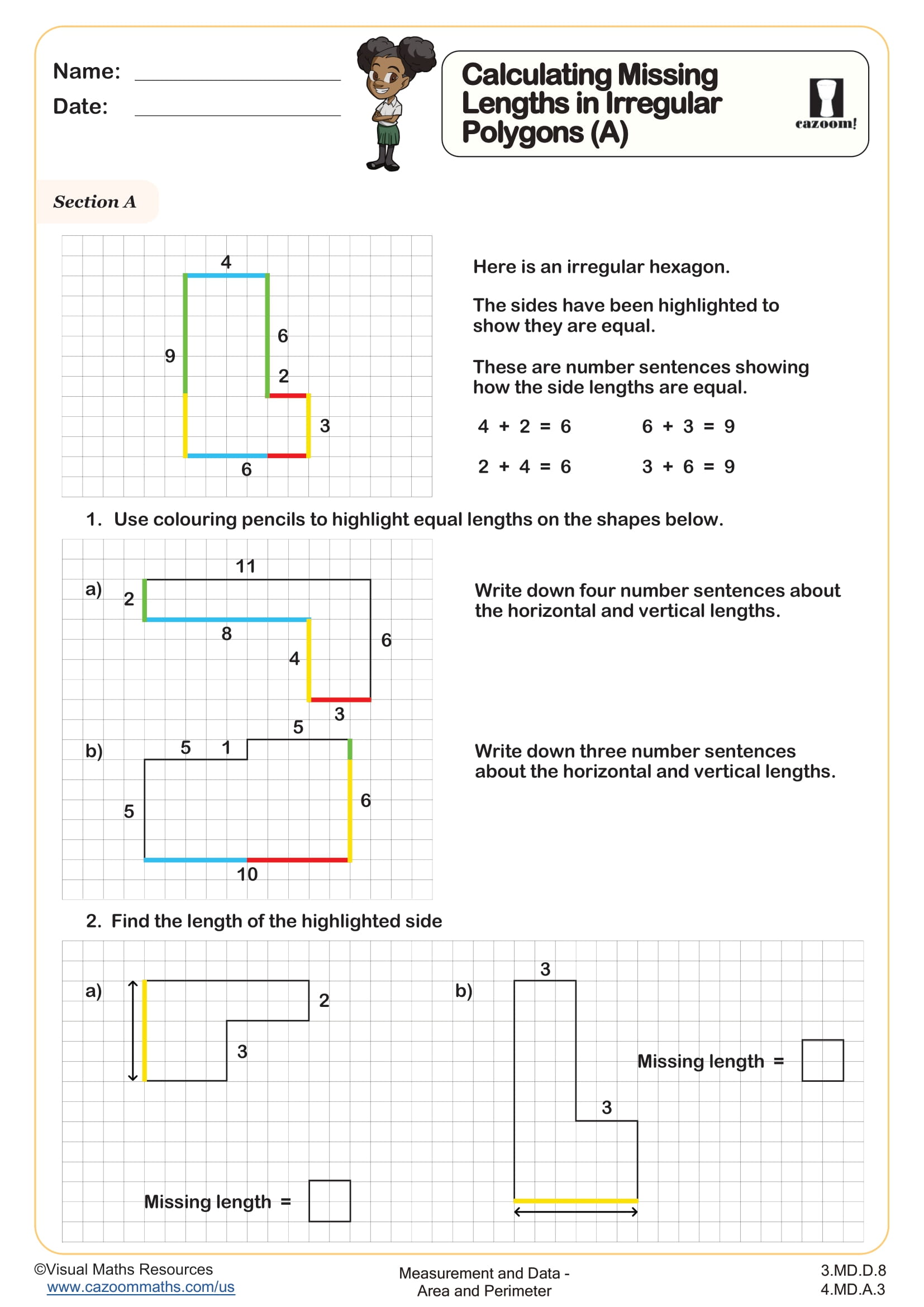
Calculating Missing Lengths in Irregular Polygons (B)
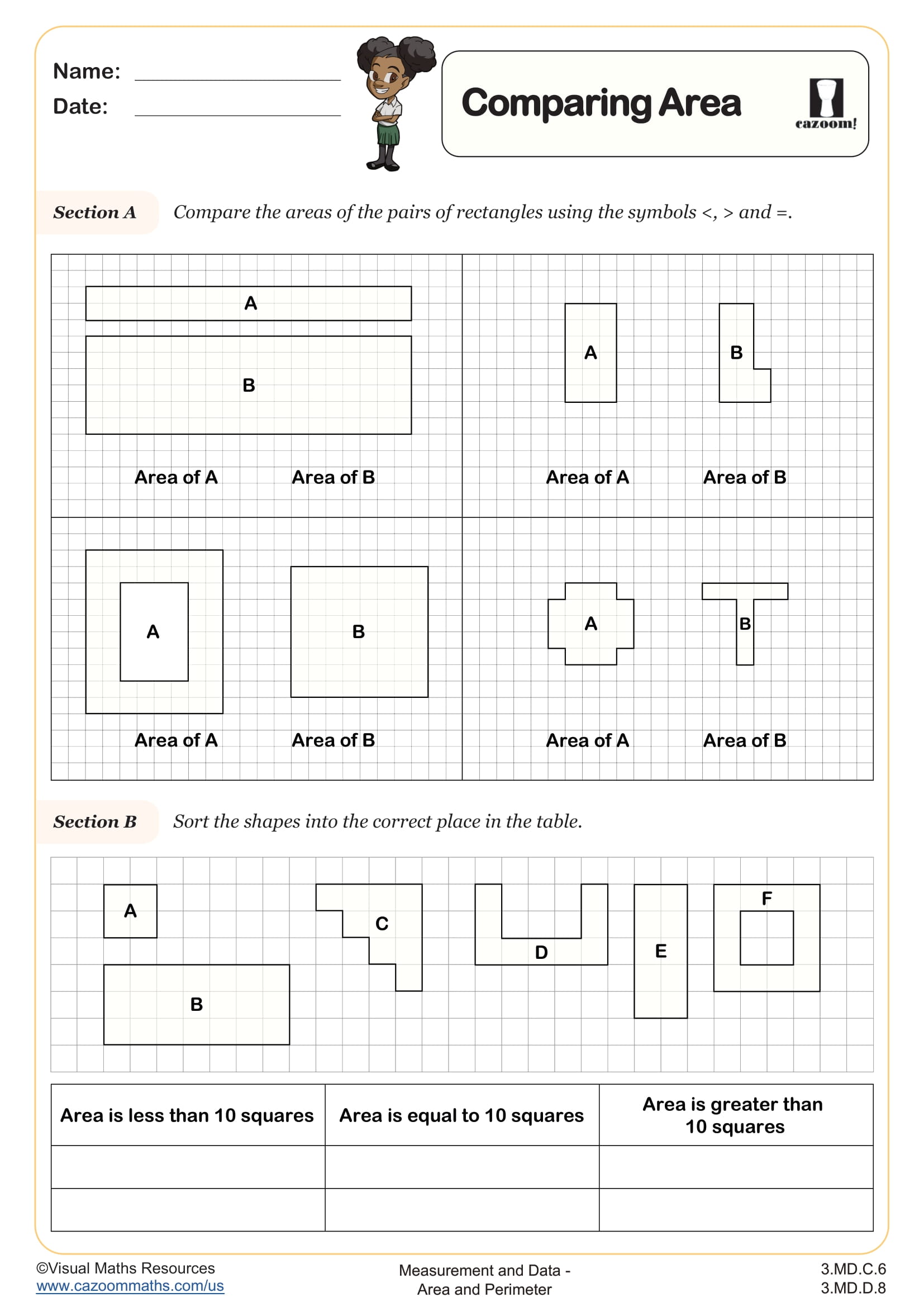
Comparing Area
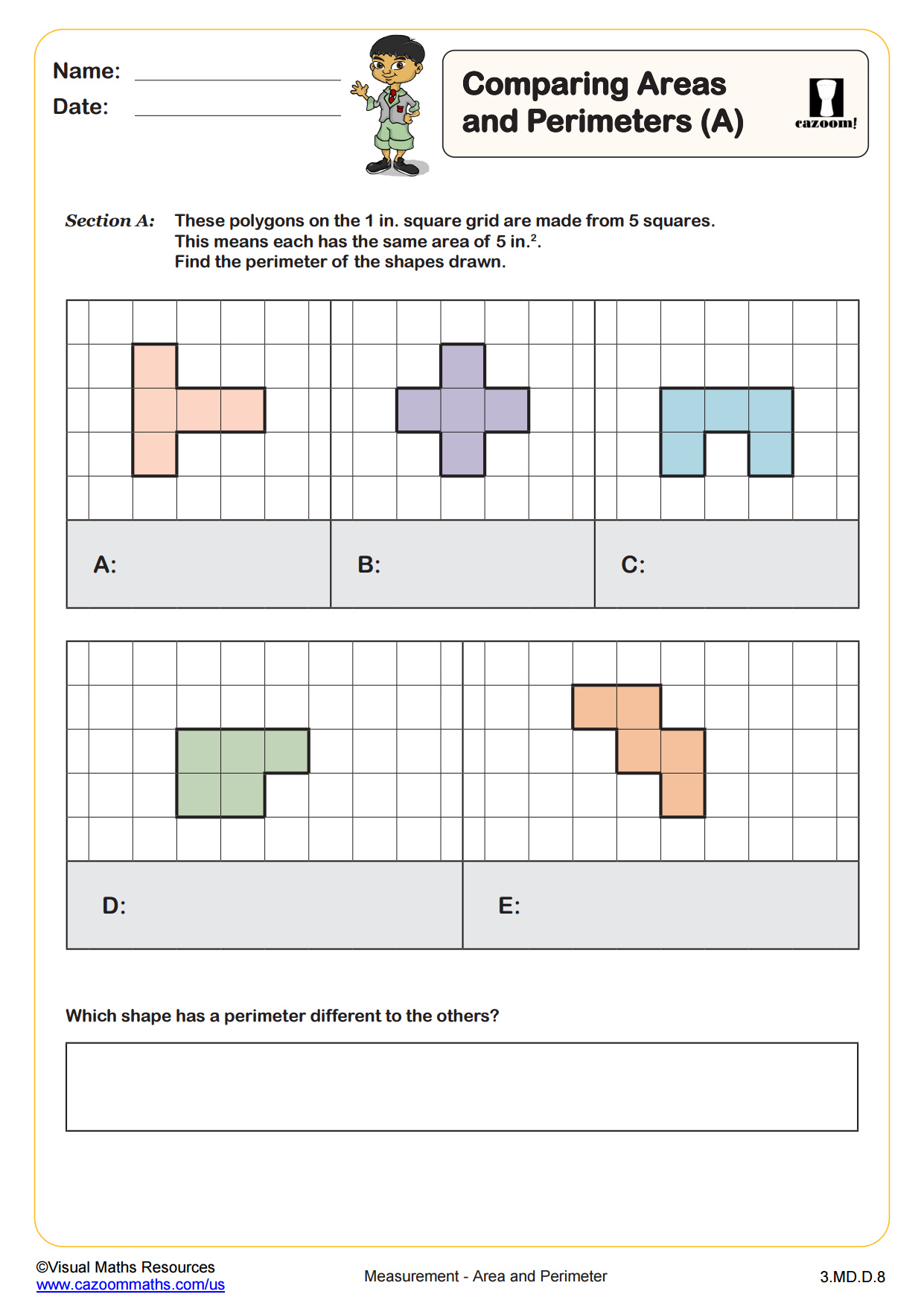
Comparing Areas and Perimeters (A)
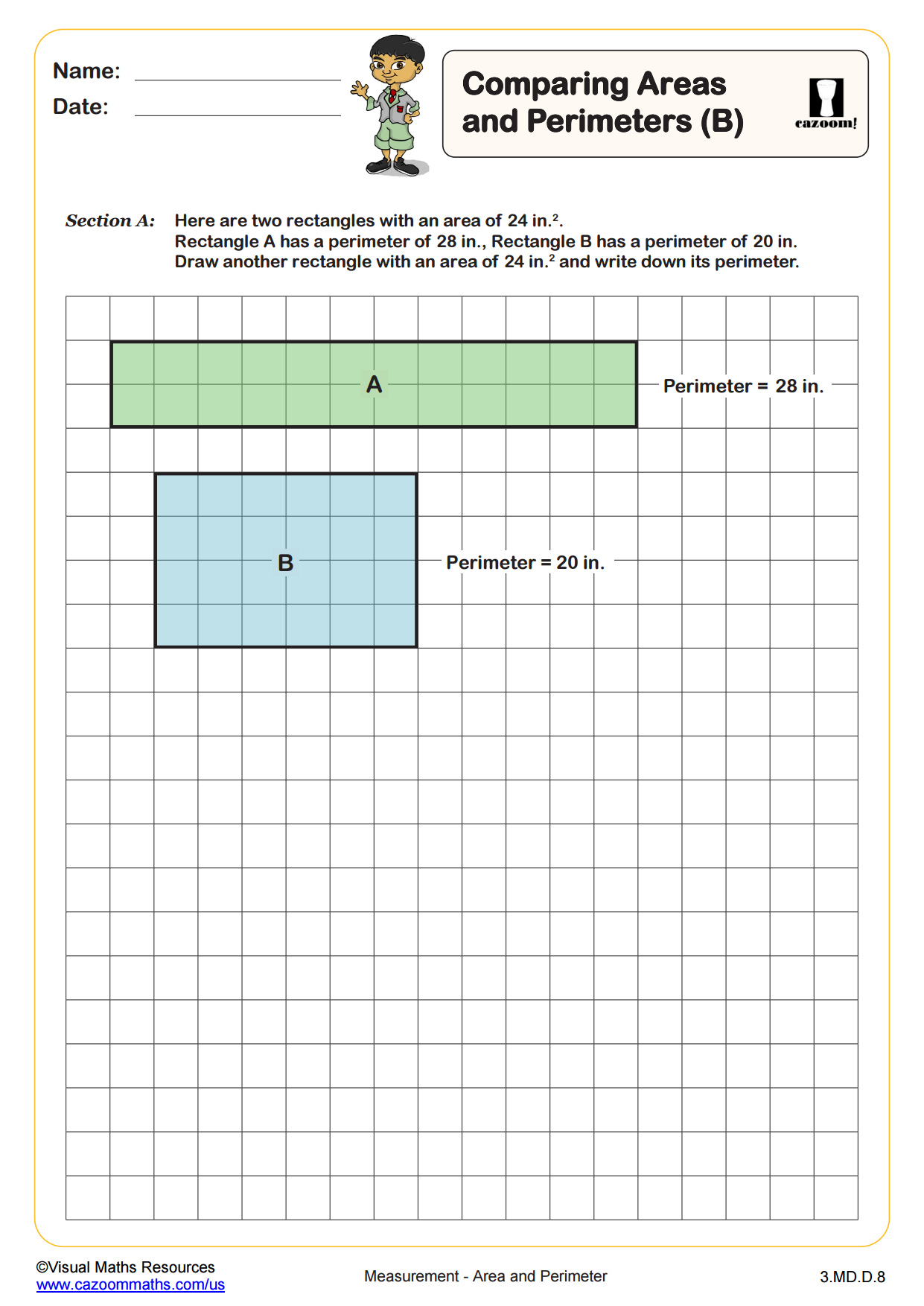
Comparing Areas and Perimeters (B)
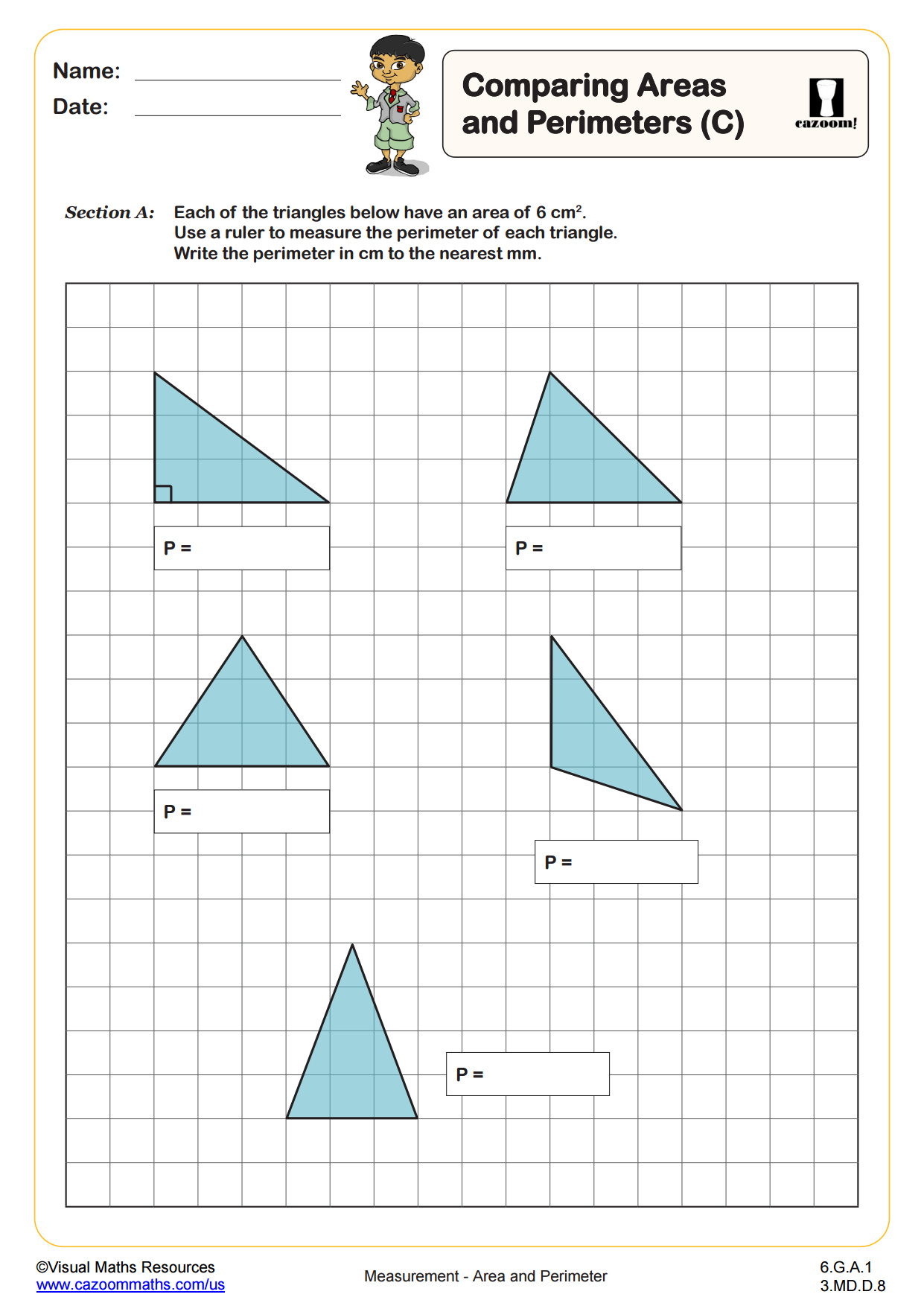
Comparing Areas and Perimeters (C)
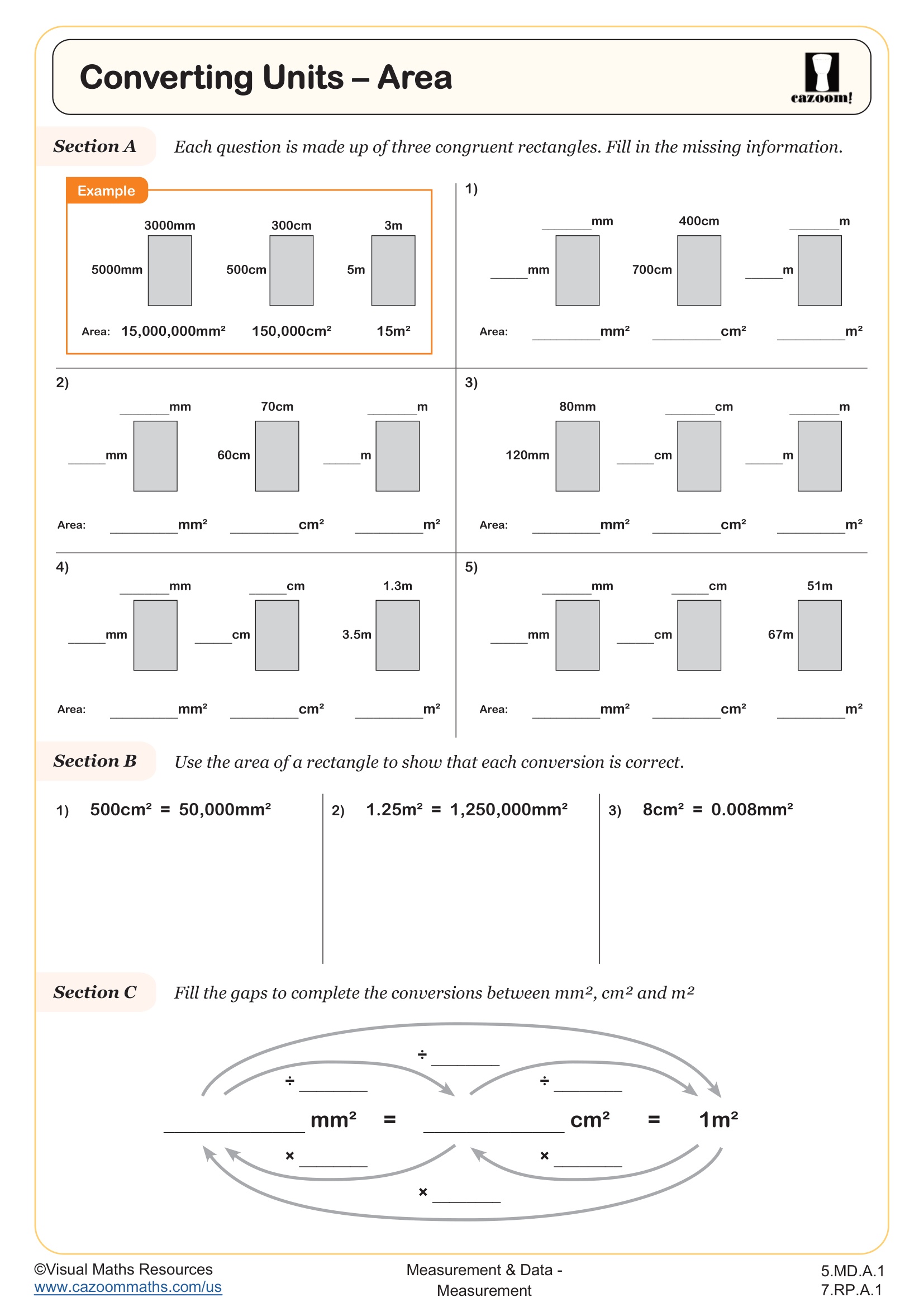
Converting Units - Area
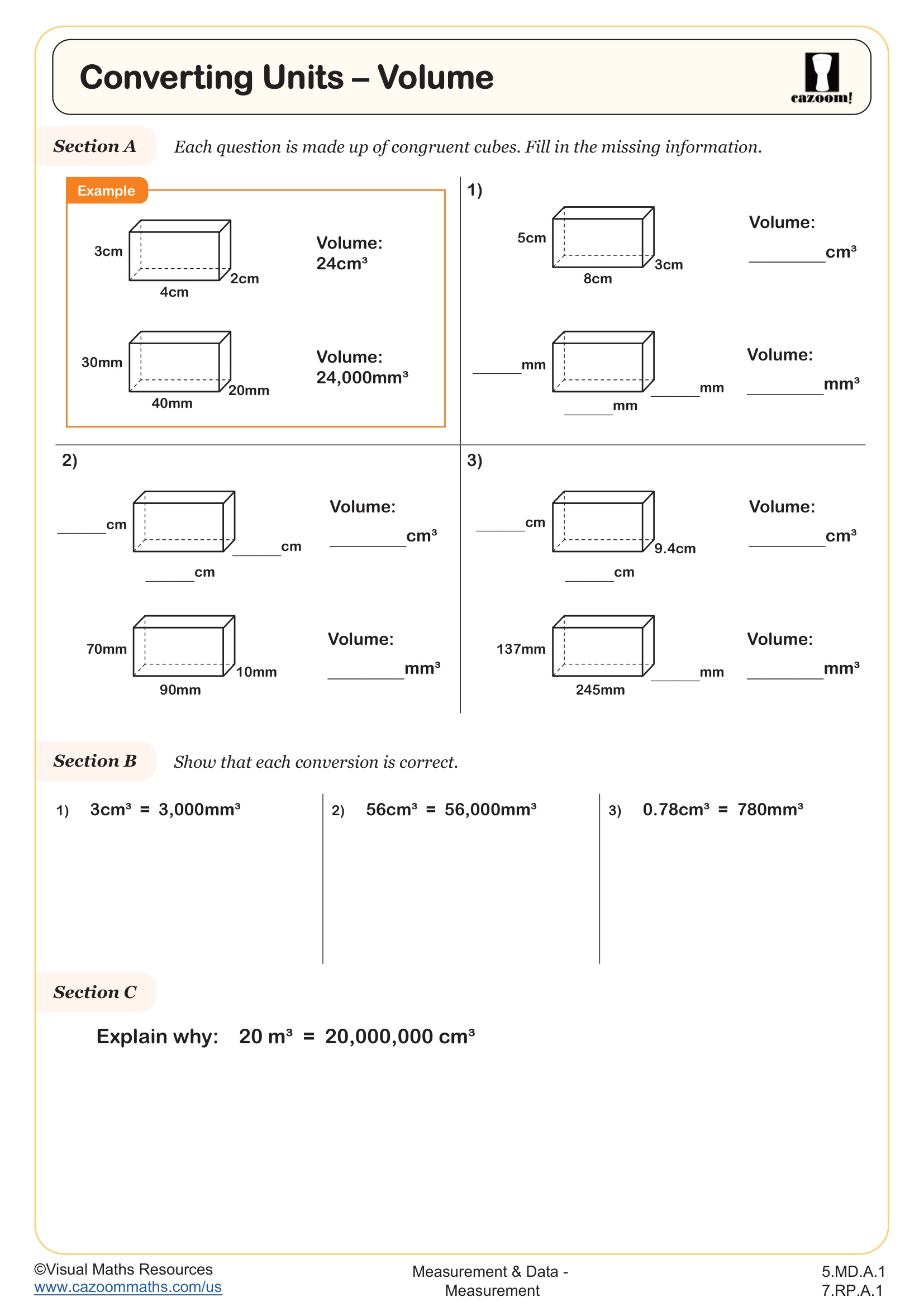
Converting Units - Volume
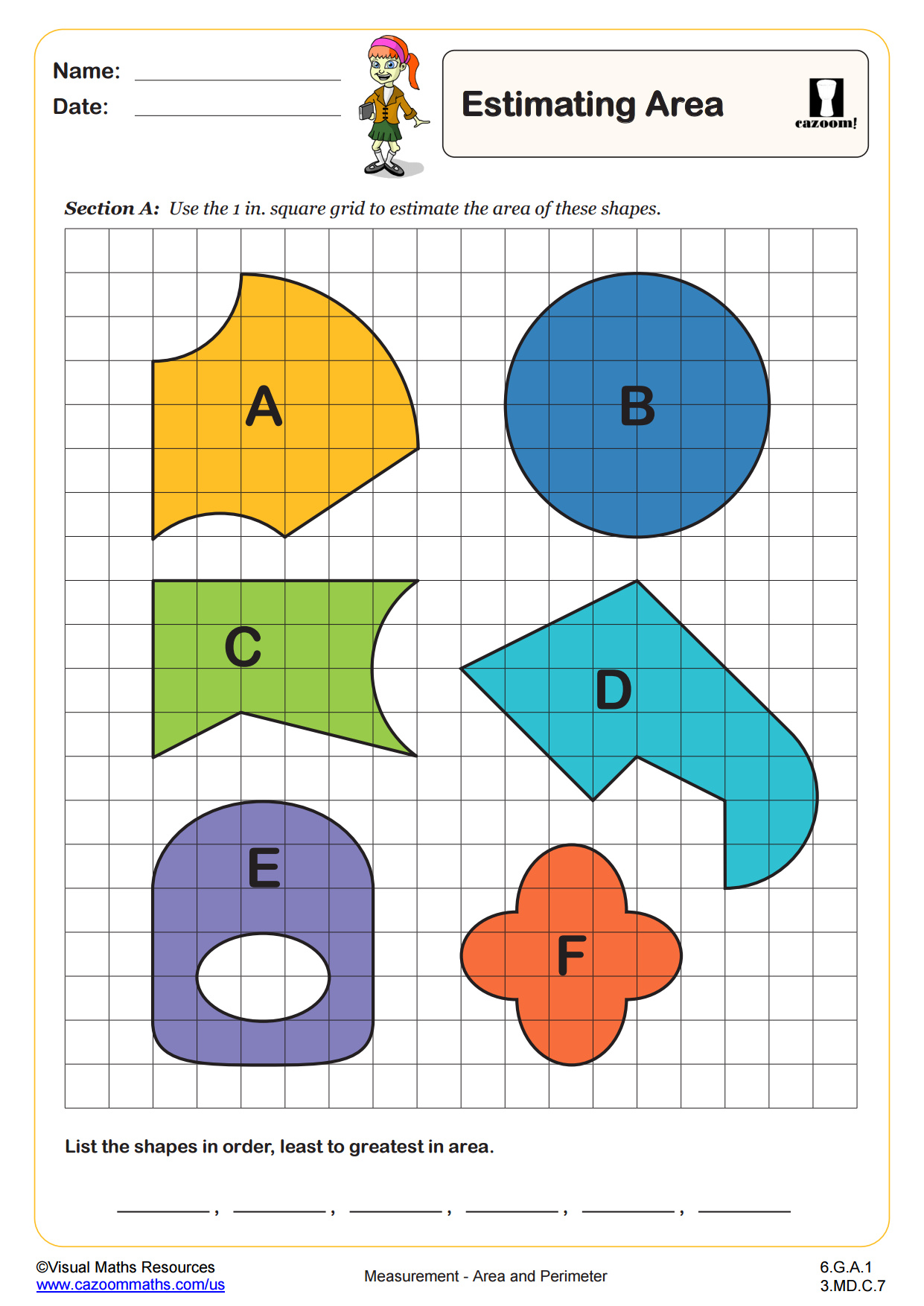
Estimating Area
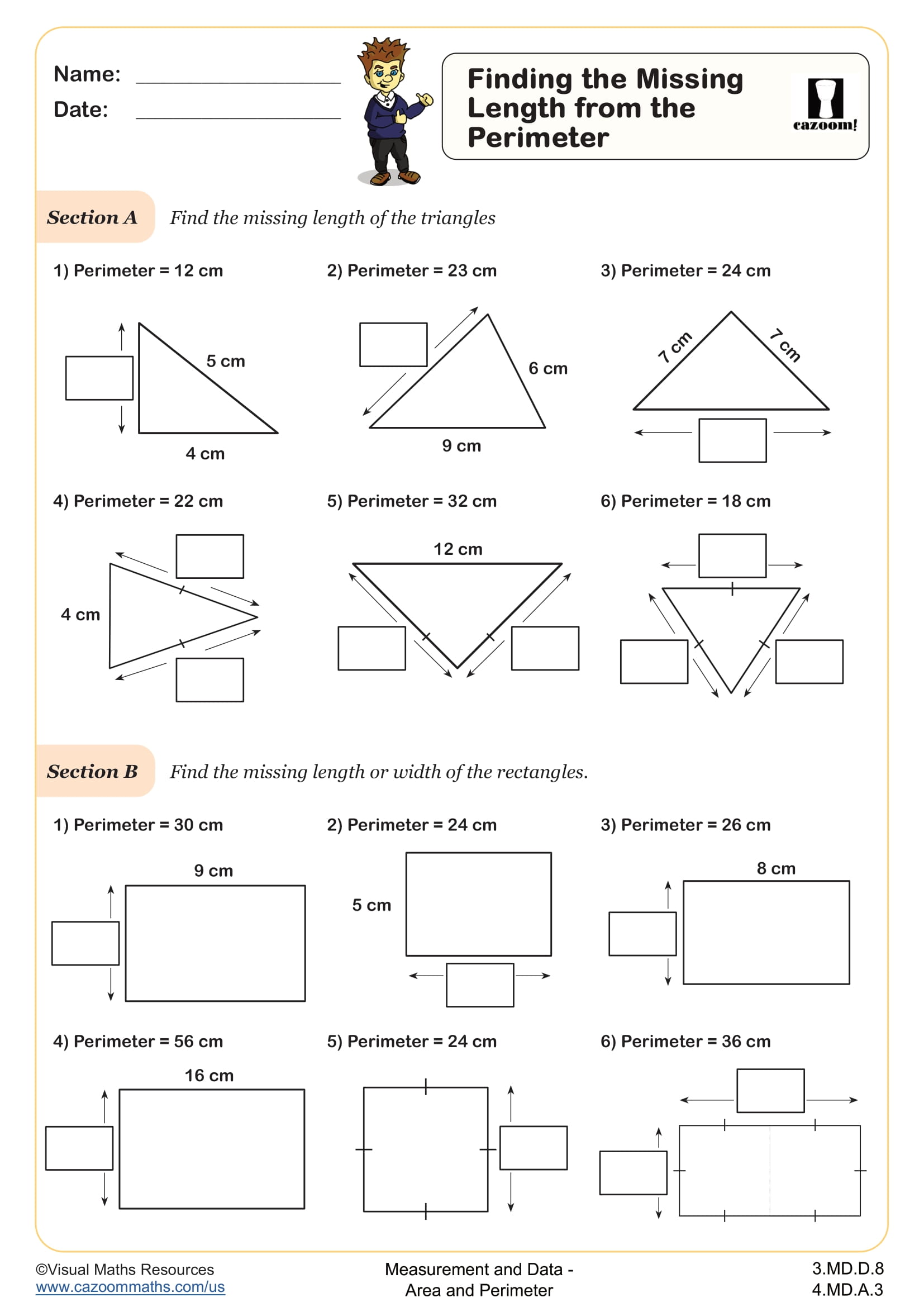
Finding the Missing Length From the Perimeter
Partitioning Rectangles
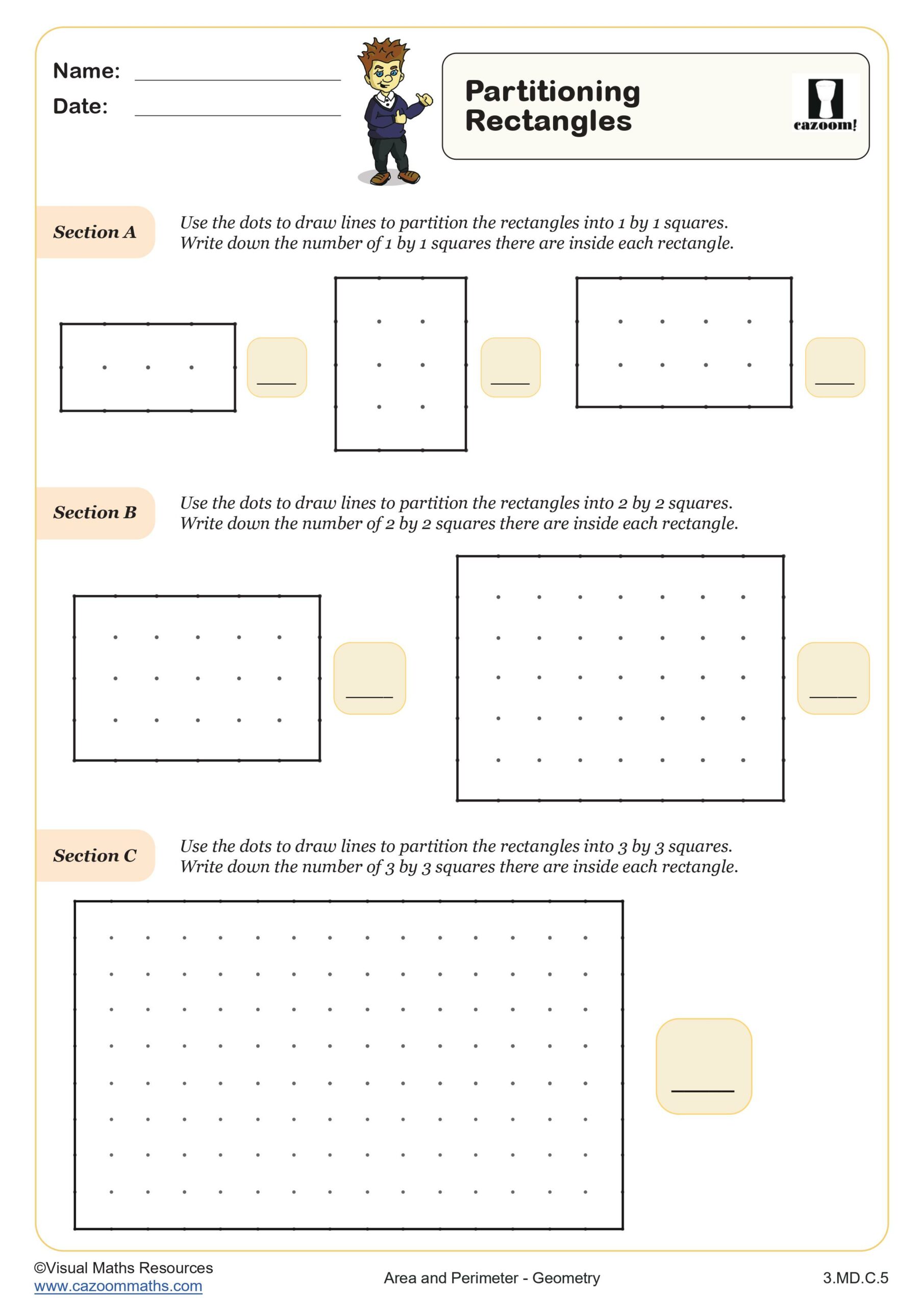
Perimeter
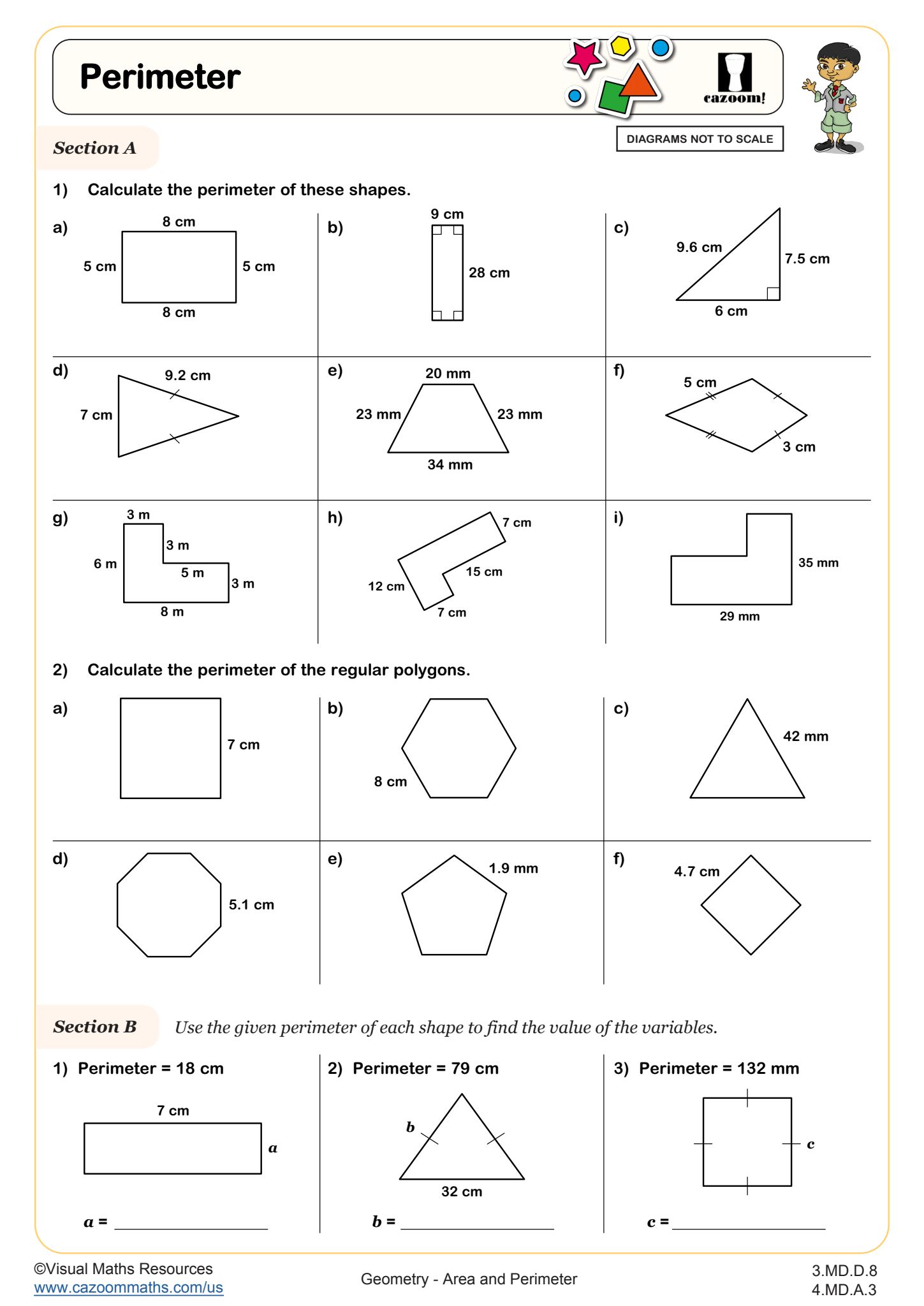
Perimeter of Regular Polygons
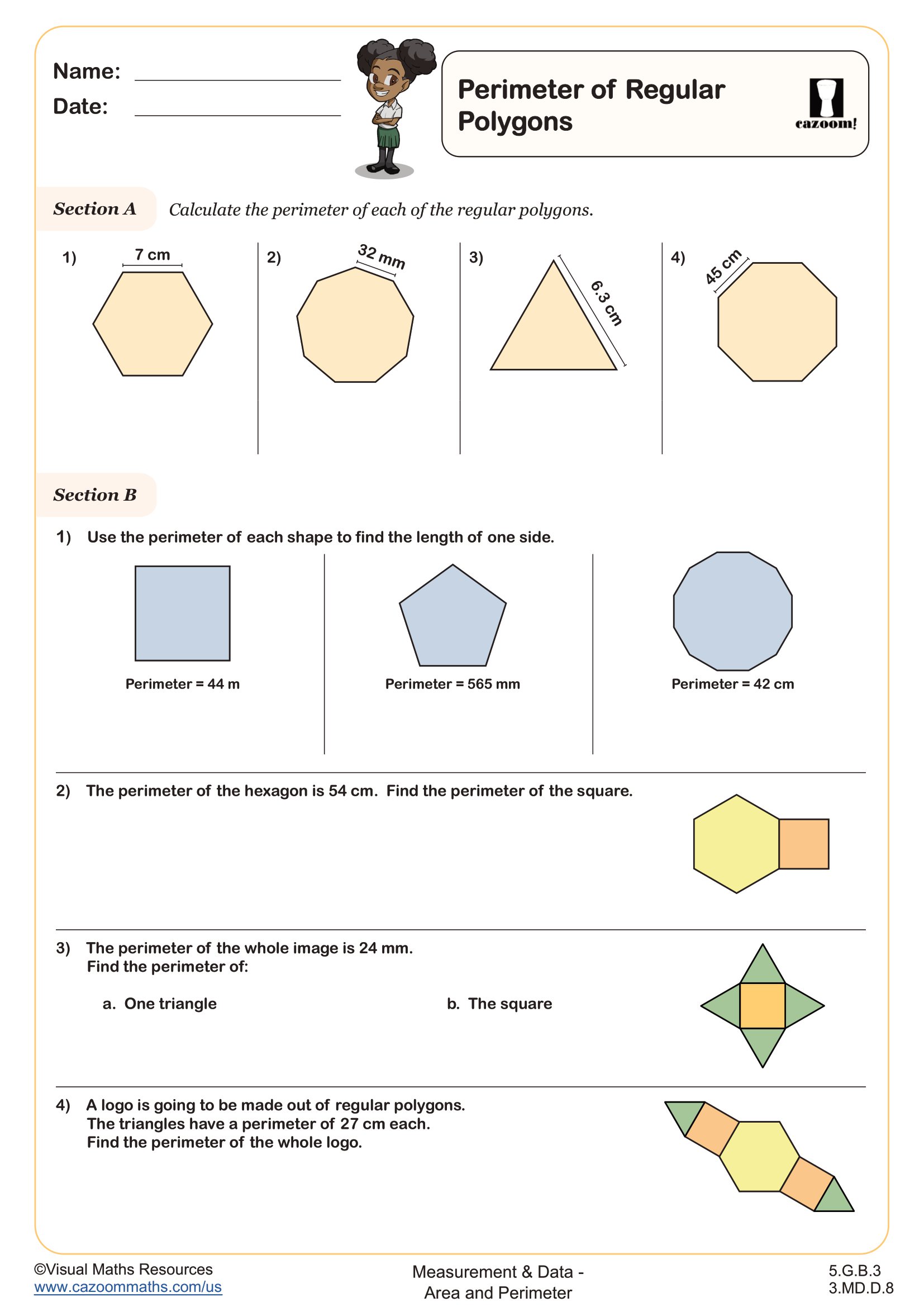
Perimeter of Shapes (A)
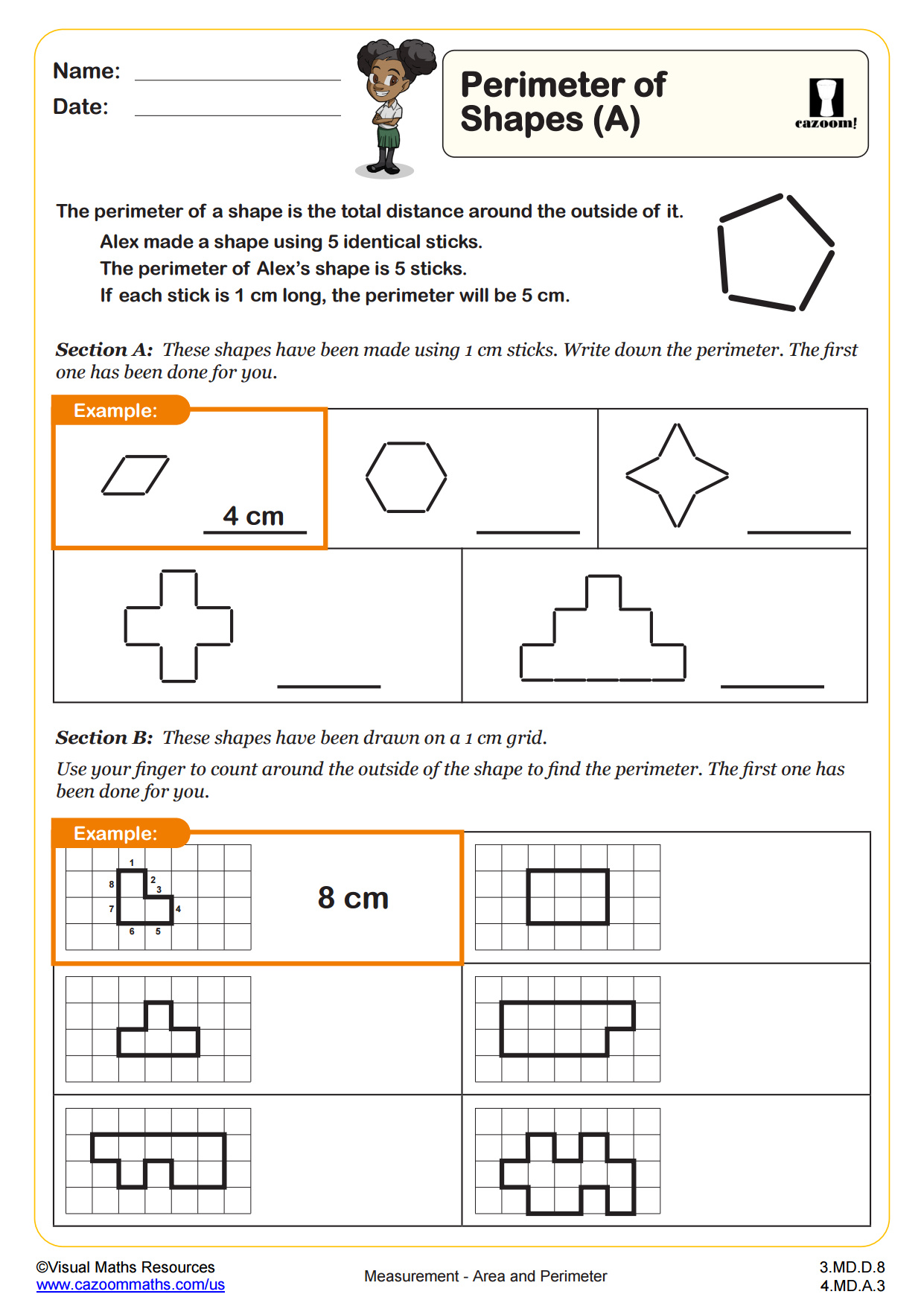
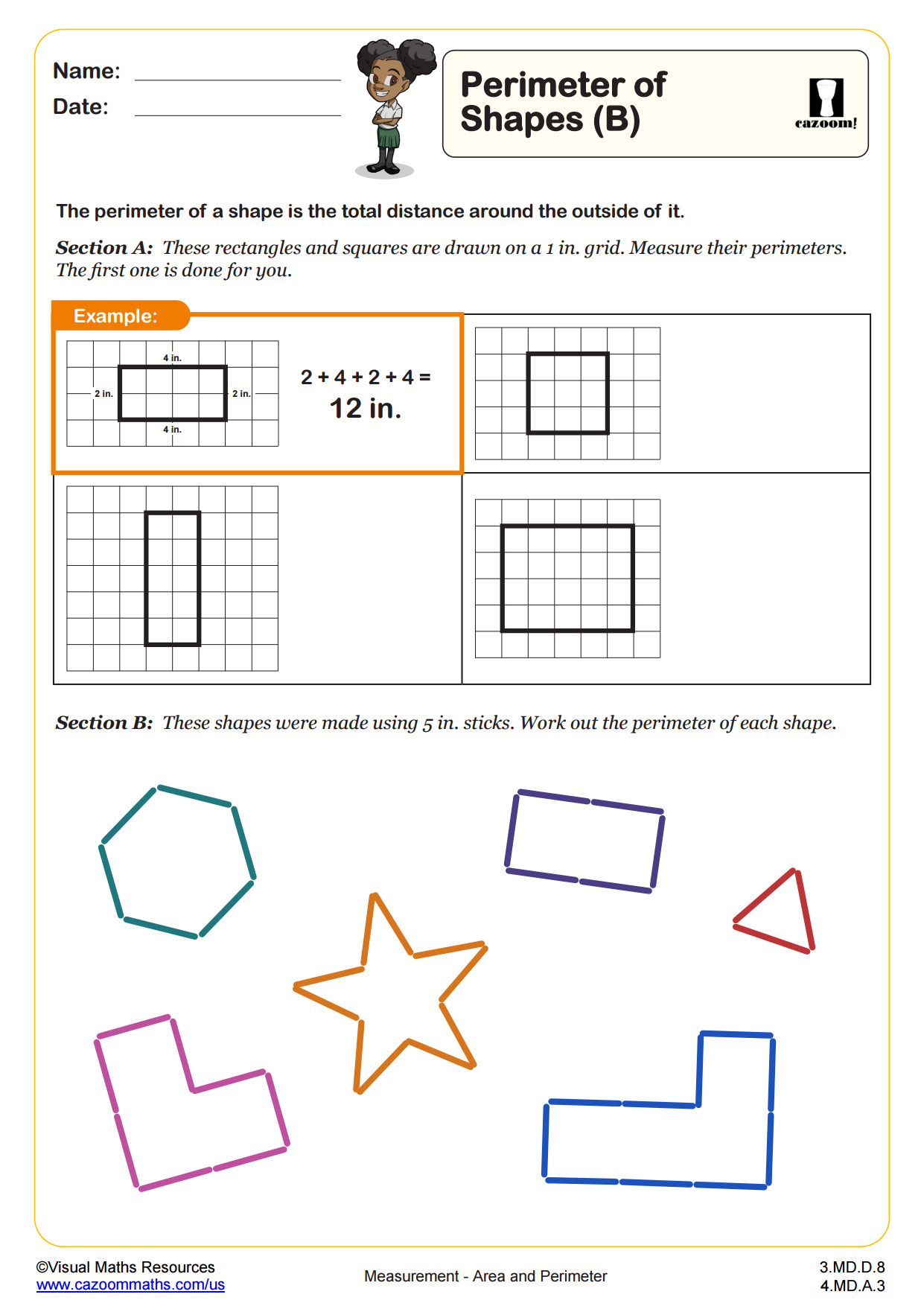
Perimeter of Shapes (B)
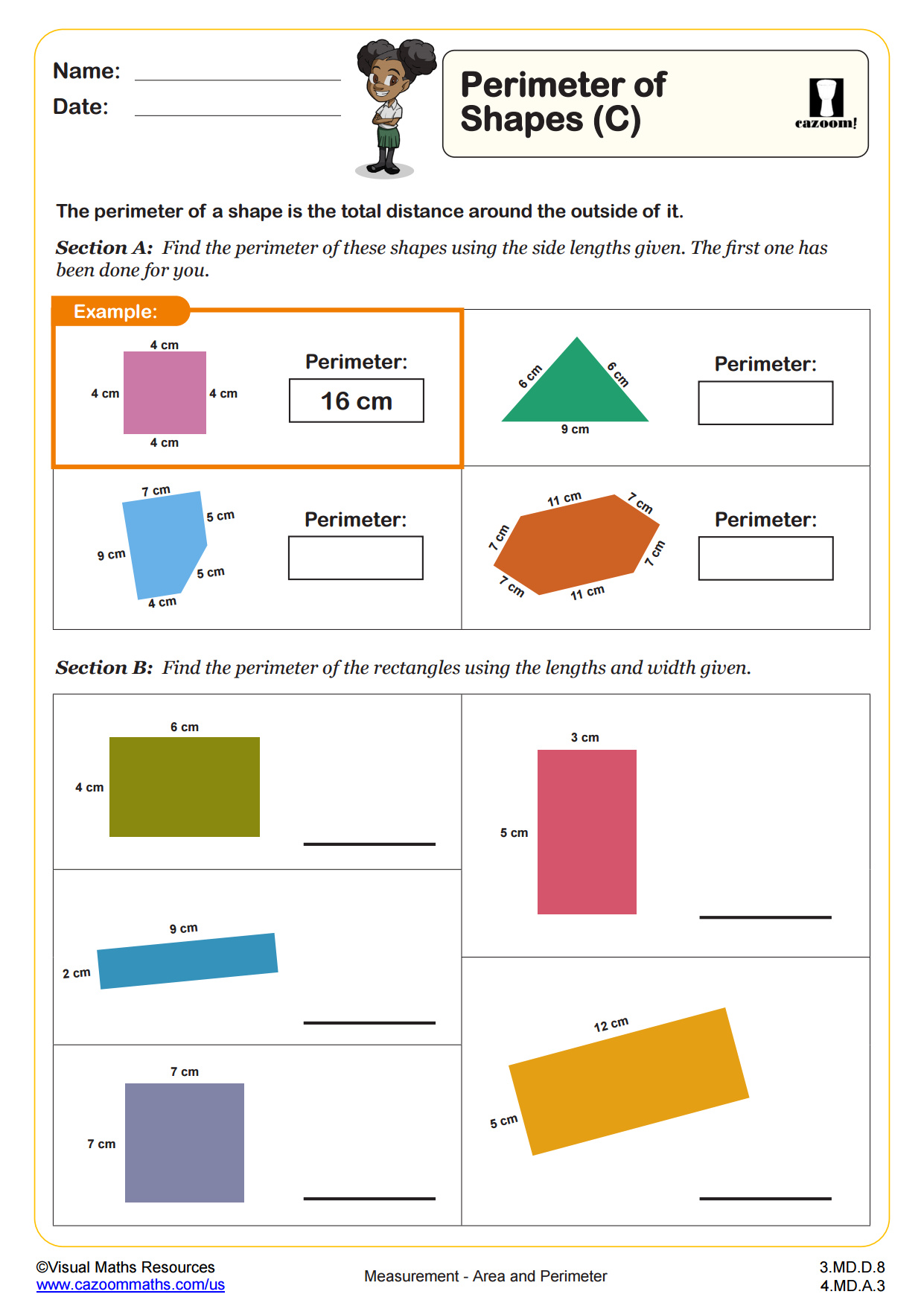
Perimeter of Shapes (C)
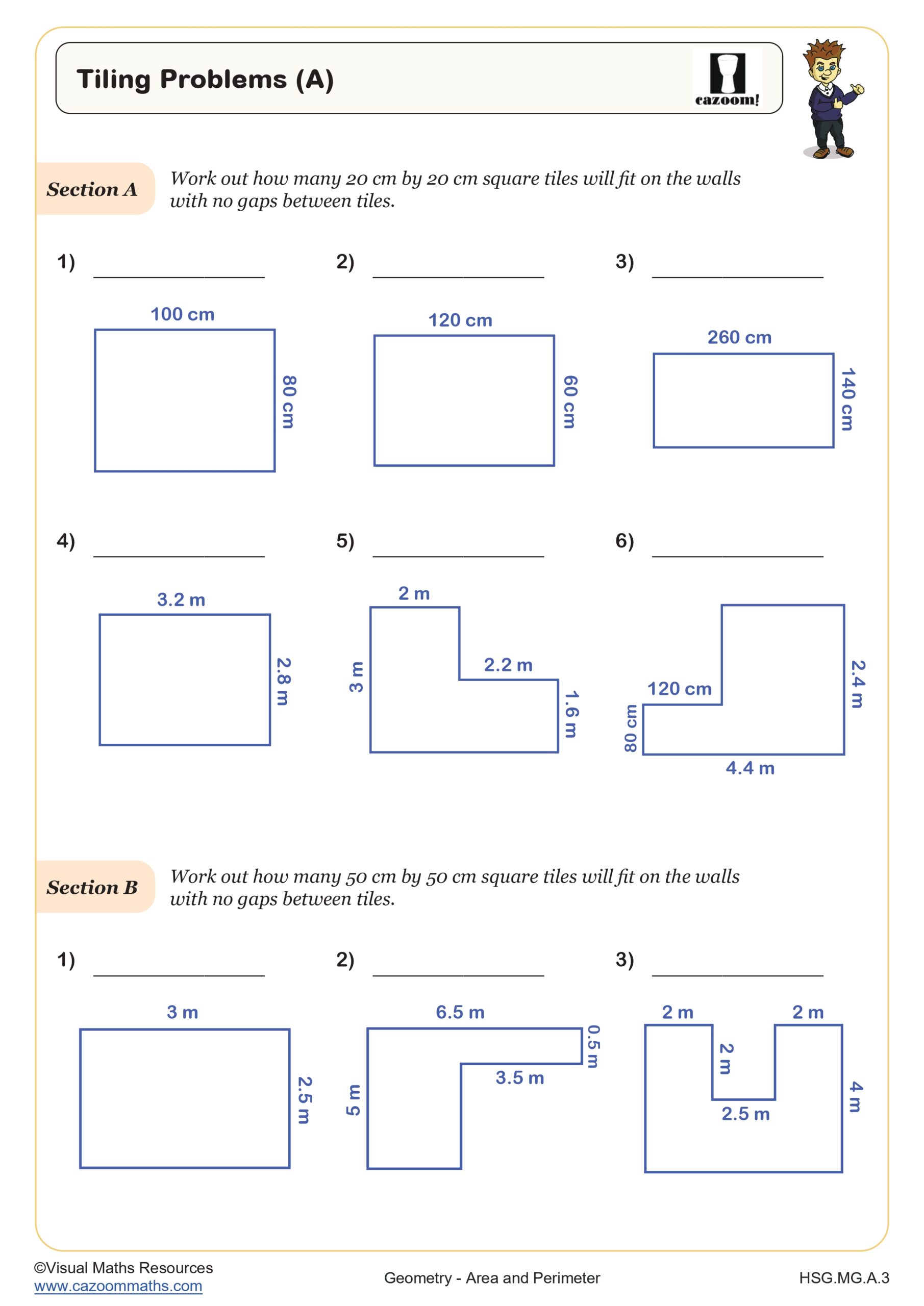
Tiling Problems (A)
All worksheets are created by the team of experienced teachers at Cazoom Math.
What's the Difference Between Area and Perimeter?
Area measures the space inside a two-dimensional shape, expressed in square units like square inches or square centimeters. Perimeter measures the distance around the outside of a shape, expressed in linear units like inches or centimeters. Students who understand this distinction early avoid the most common error in elementary measurement: adding side lengths when asked for area or multiplying when asked for perimeter.
A helpful classroom strategy involves having students label their work with units—writing "12 square feet" forces them to consider whether they're measuring coverage (area) or boundary (perimeter). Many students lose points on state assessments not because they can't calculate correctly, but because they apply the wrong measurement to the question asked. The formula sheets in this collection reinforce which operations match each measurement type.
Which Grade Levels Use Area and Perimeter Worksheets?
This collection supports elementary school students from kindergarten through 5th grade. Kindergarten and 1st grade worksheets focus on visual recognition of shapes and informal comparisons of size. Second grade introduces counting unit squares to find area and adding side lengths for perimeter. Third grade formalizes these concepts with the formulas for rectangles, while 4th grade extends to more complex shapes and word problems.
Fifth grade students work with area formulas for triangles, composite shapes, and shaded regions within circles. The progression mirrors Common Core State Standards, building from concrete experiences with manipulatives toward abstract formula application. Teachers notice that students who skip the counting stage and jump straight to formulas often struggle with conceptual understanding, particularly when shapes become irregular or require multi-step reasoning.
How Do Students Calculate the Area of Shaded Regions?
Finding the area of shaded regions requires students to subtract one area from another—they calculate the area of the larger outer shape, then subtract the area of the smaller inner shape. This subtopic reinforces why understanding formulas matters: students must correctly apply different formulas (rectangle, circle, triangle) to different parts of the same problem, then perform subtraction to find what remains.
This skill connects directly to real-world applications in construction, landscaping, and design. Architects calculate shaded regions when determining how much tile covers a bathroom floor after accounting for the shower area. Landscapers use this method to figure out how much grass seed is needed for a lawn that has a circular garden bed in the middle. Engineers apply the same principle when designing gaskets, washers, or any component where material is removed from a larger piece.
How Can Teachers Use These Worksheets Effectively?
These worksheets provide structured practice that moves from visual models to numerical calculations, helping students connect pictures to formulas. Early worksheets include grids and unit squares so students can verify their formula-based answers by counting, building confidence in their computational work. Later worksheets remove these scaffolds, expecting students to apply formulas independently and show their work step-by-step.
Many teachers use these worksheets for differentiated math centers, assigning different grade-level materials based on student readiness rather than age. The answer keys make them practical for homework assignments, allowing parents to check work without re-solving each problem. They also work well for paired activities where one student solves while the other checks against the answer key, then they switch roles—this builds both computational skills and error-analysis abilities that strengthen overall mathematical thinking.