Elementary School Coordinates Worksheets
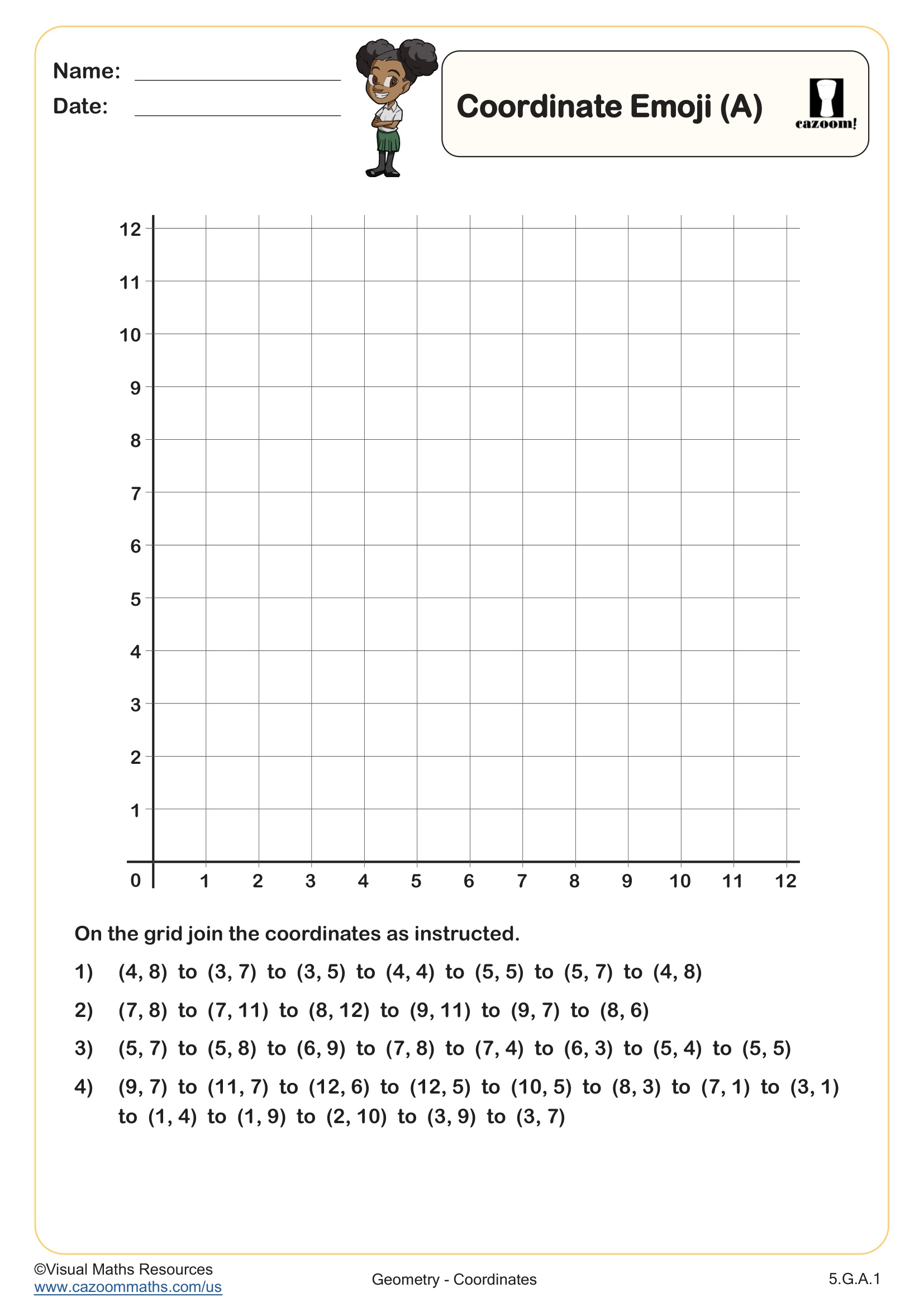
Coordinate Emoji (A)
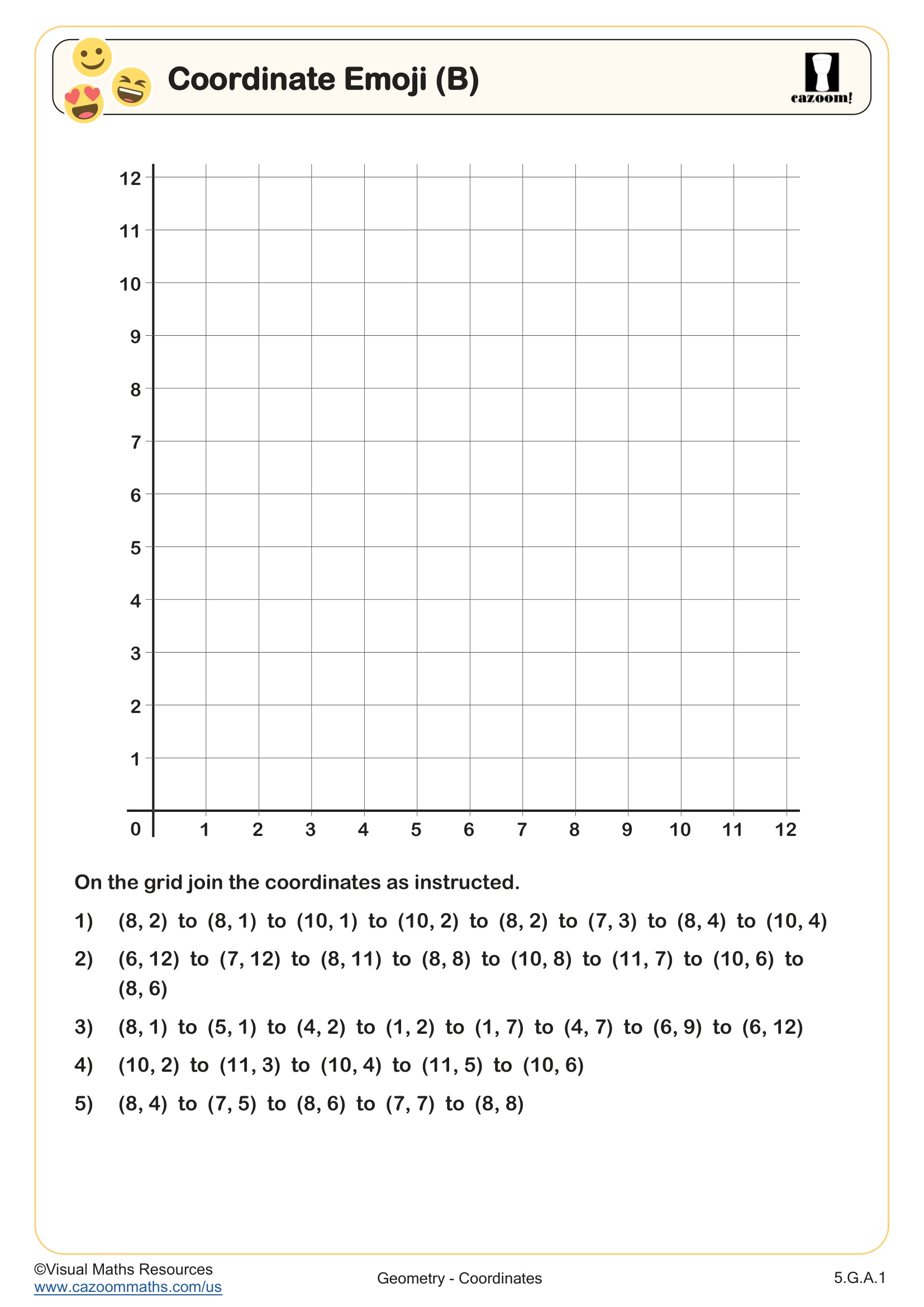
Coordinate Emoji (B)
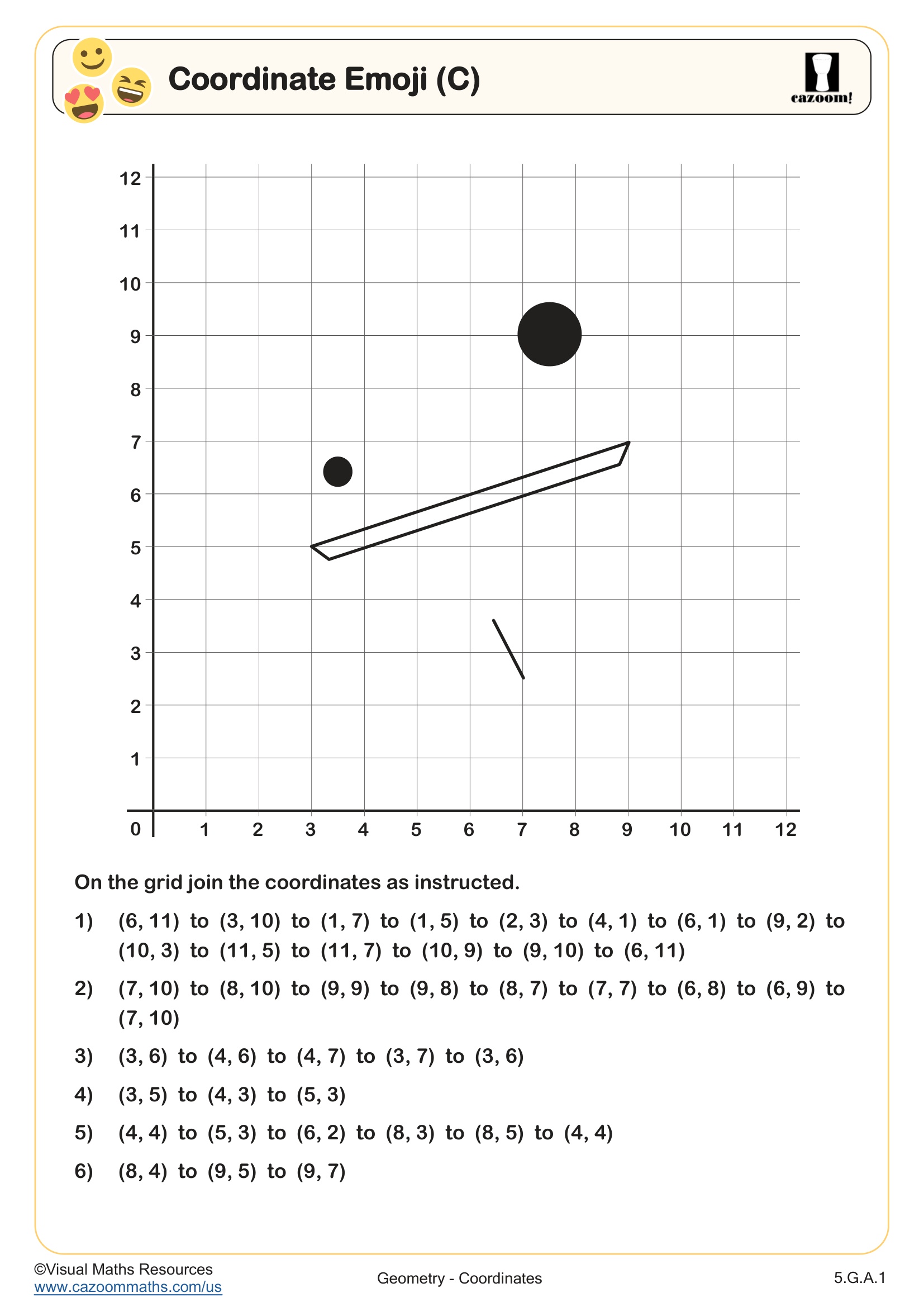
Coordinate Emoji (C)
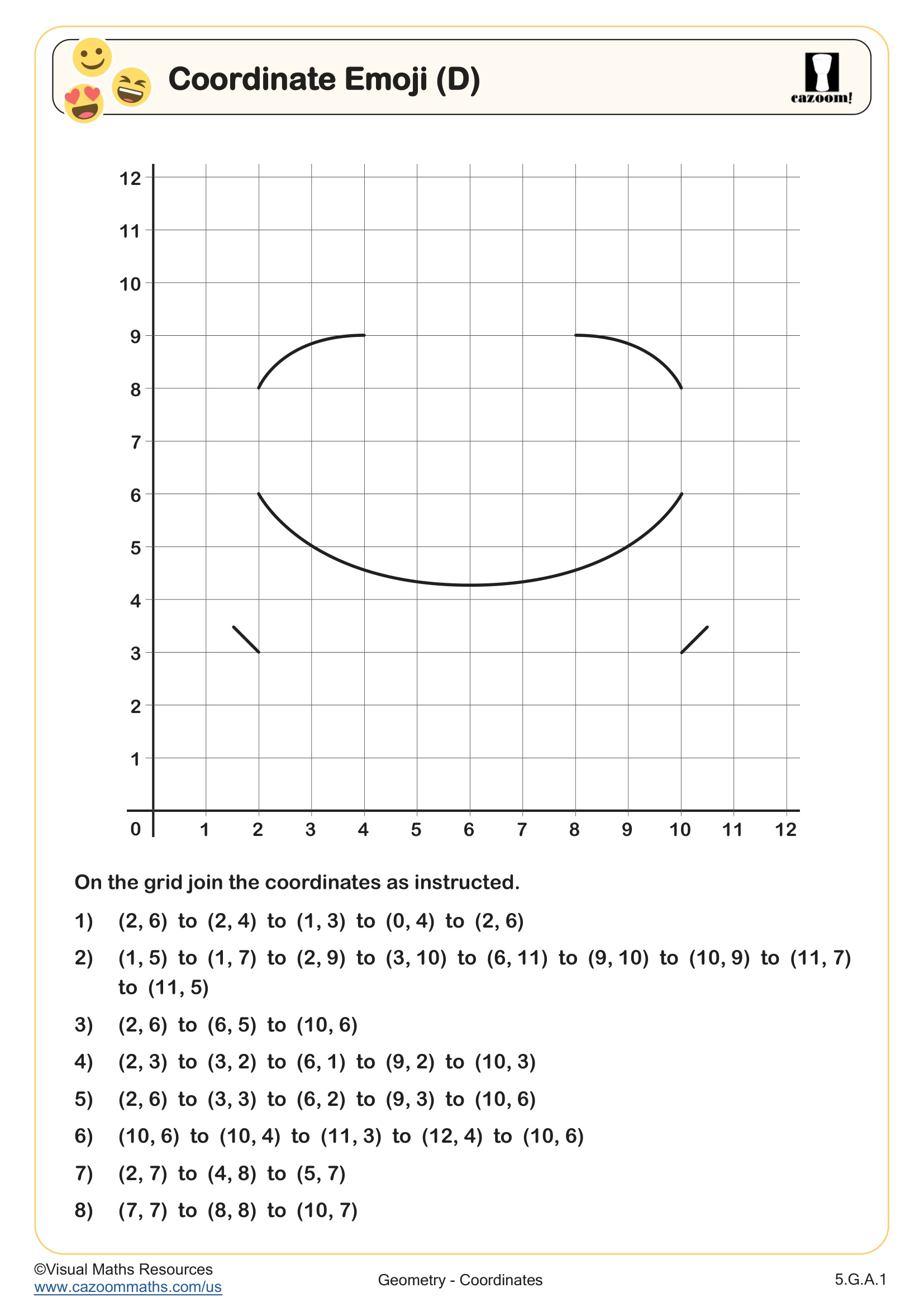
Coordinate Emoji (D)
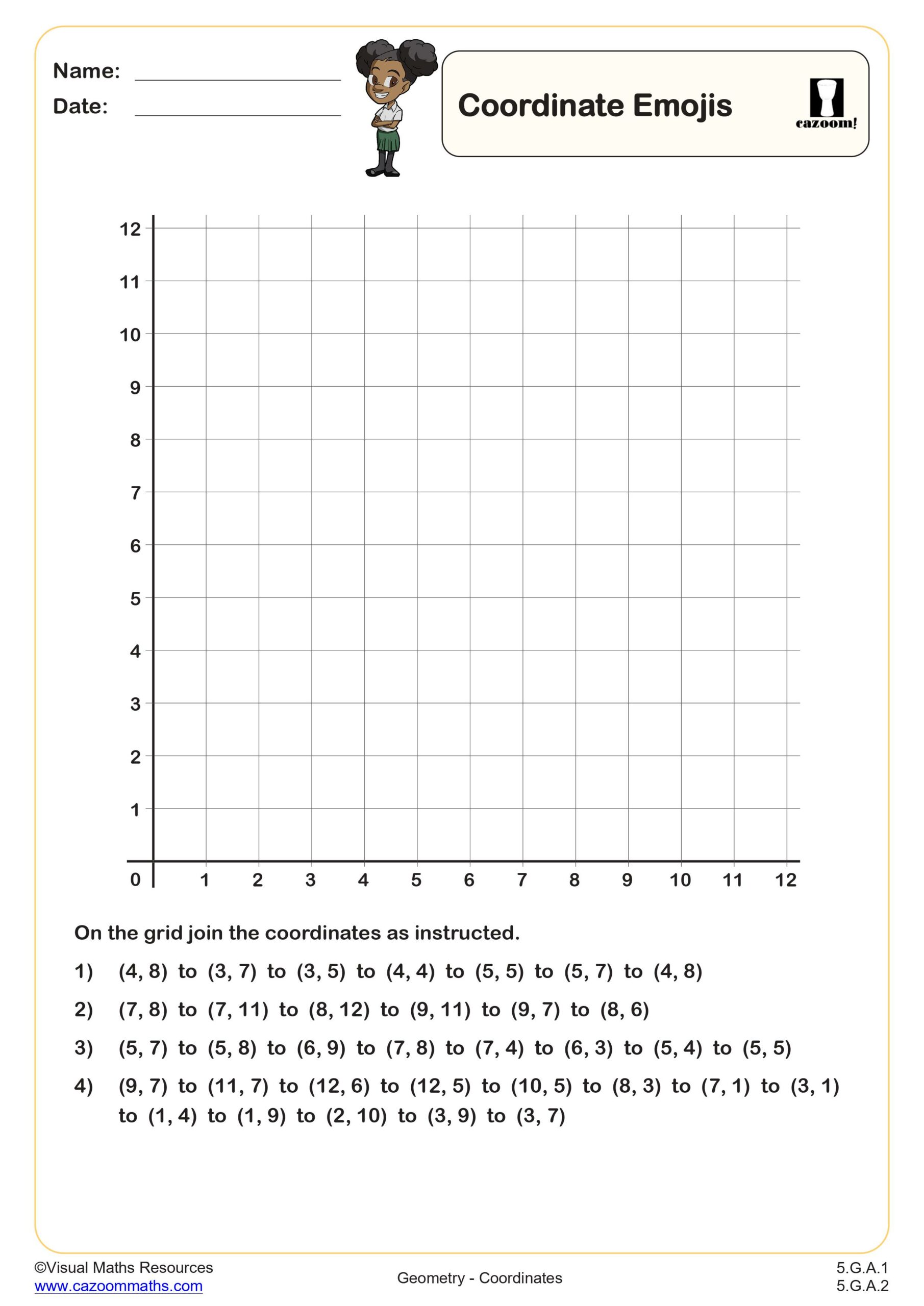
Coordinate Emojis
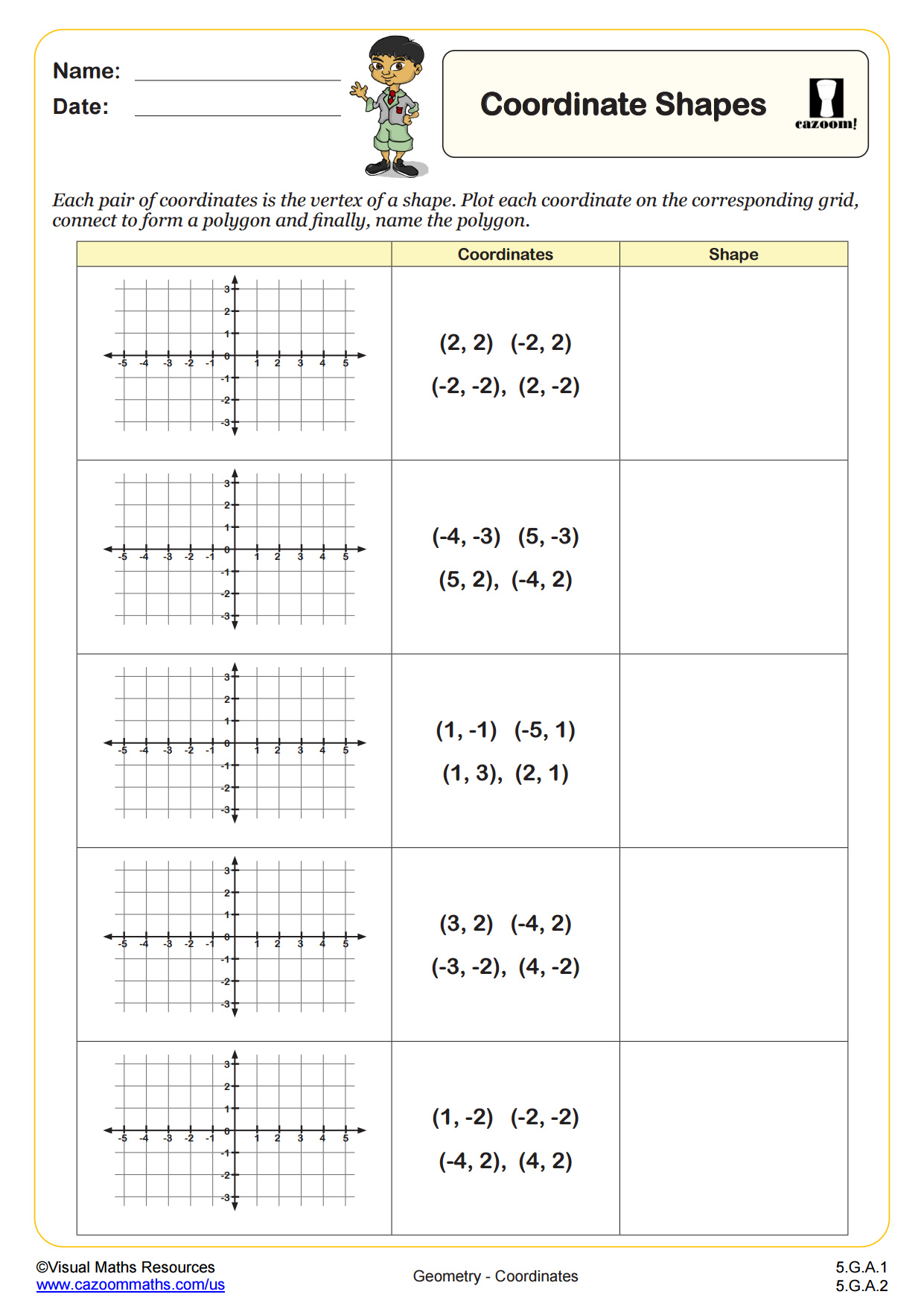
Coordinate Shapes
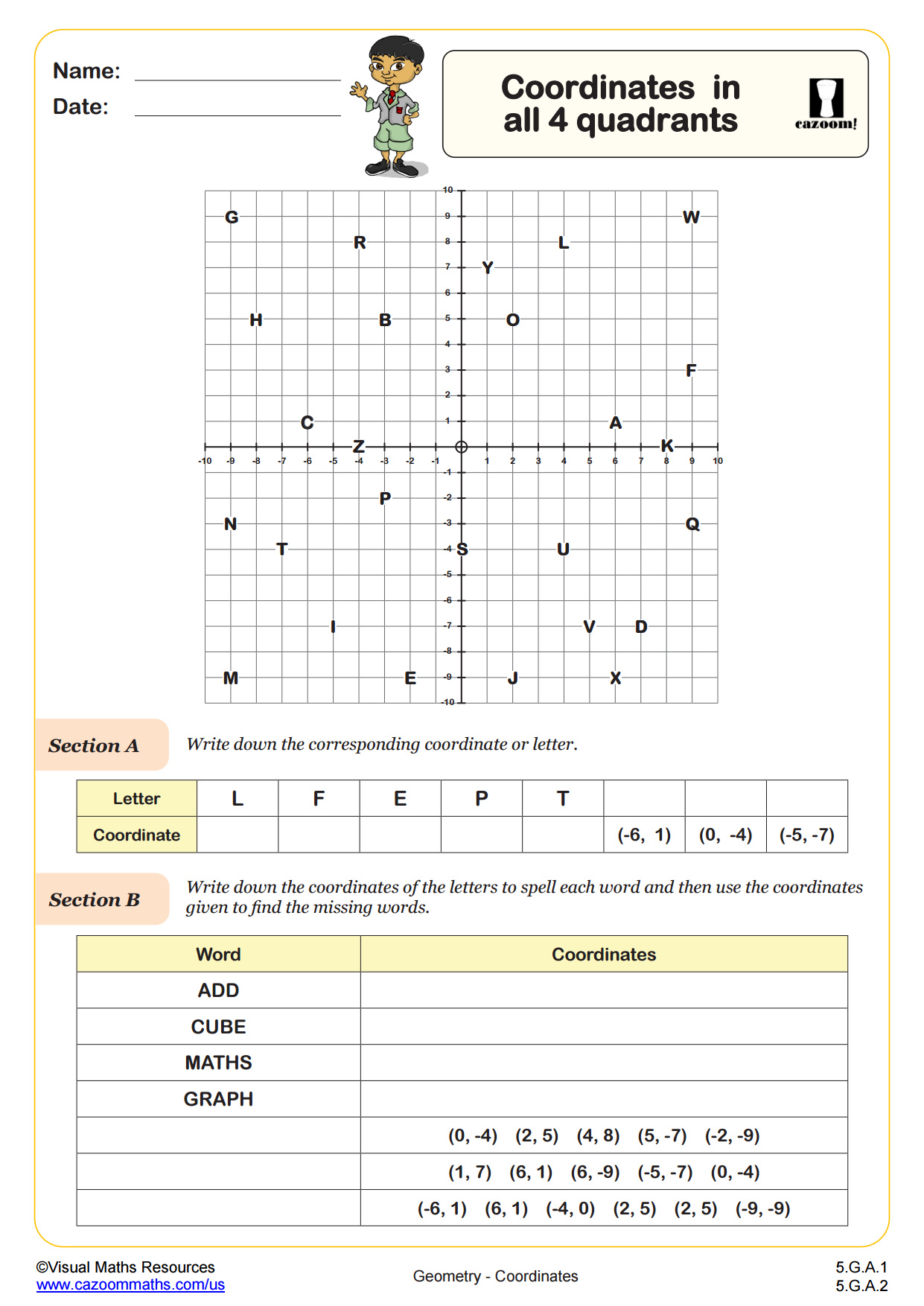
Coordinates in all four quadrants
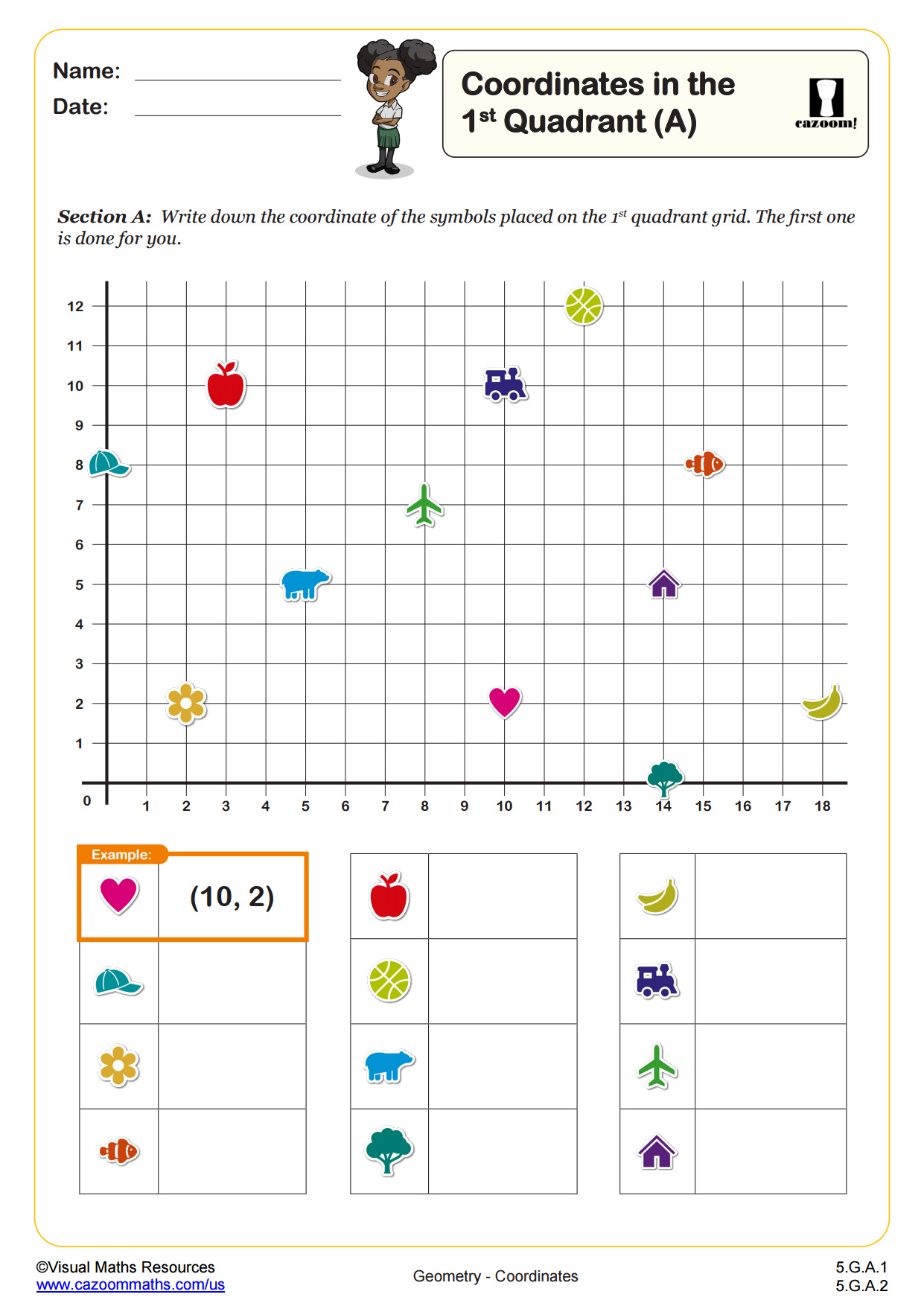
Coordinates in the First Quadrant (A)
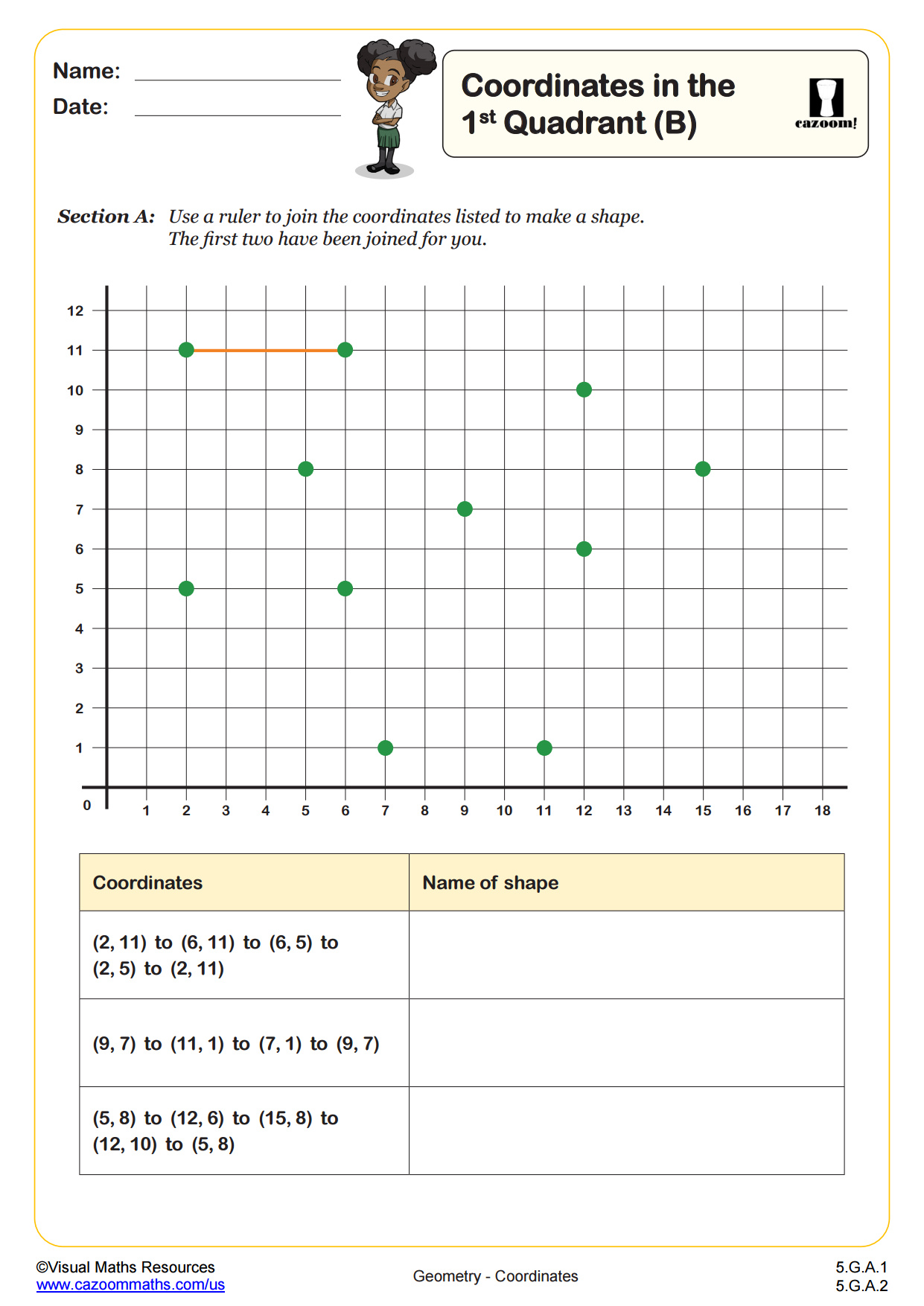
Coordinates in the First Quadrant (B)
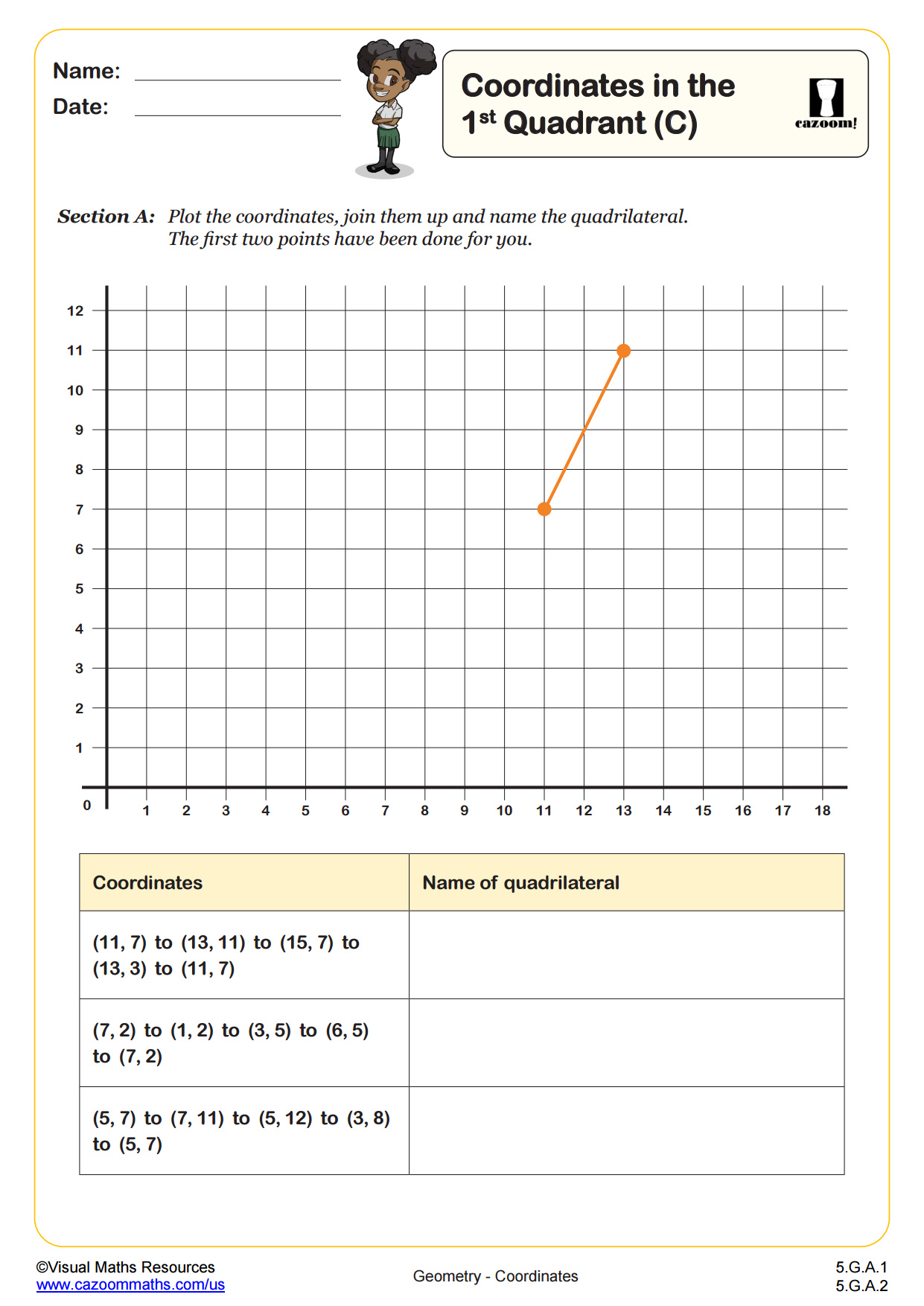
Coordinates in the First Quadrant (C)
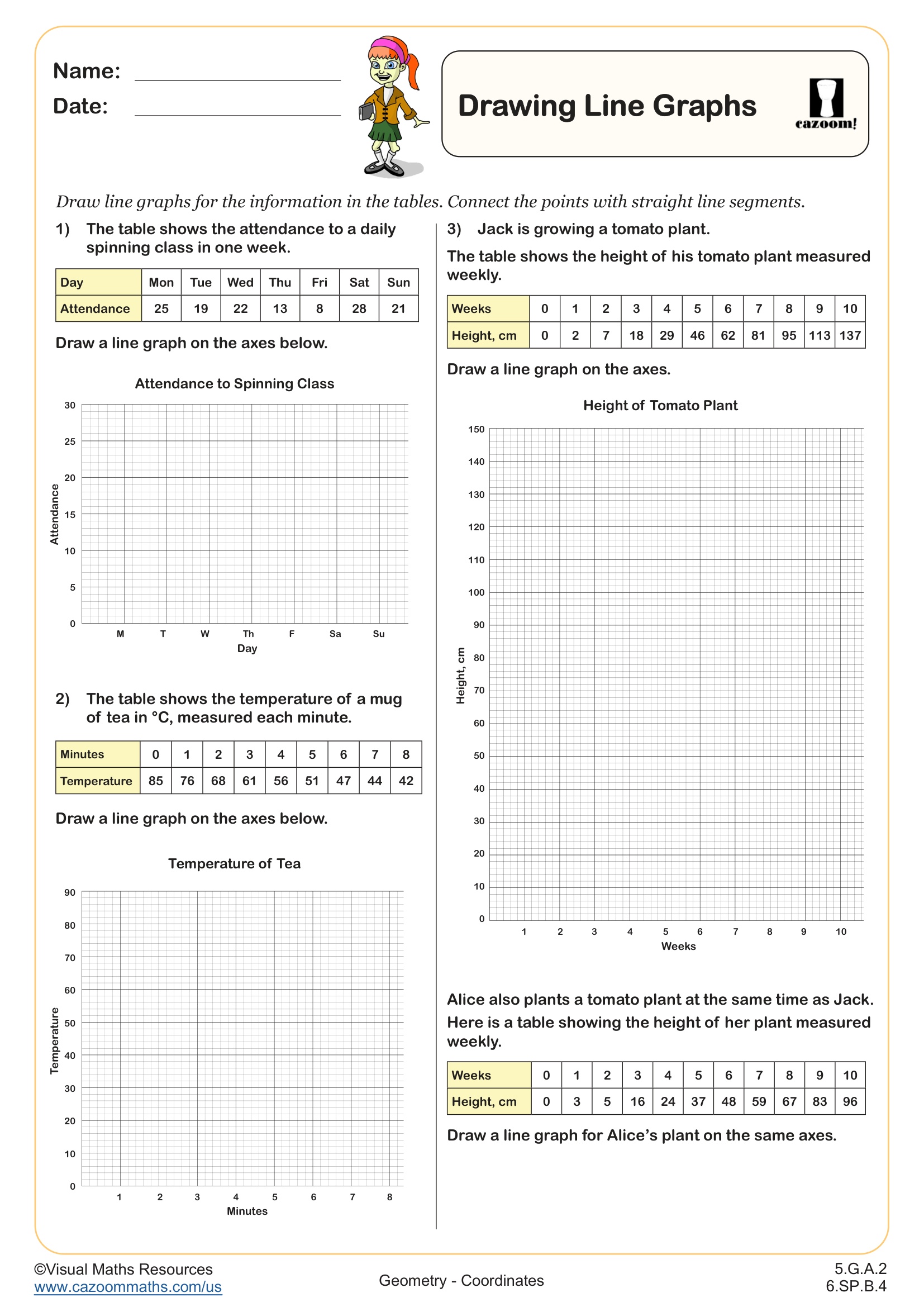
Drawing Line Graphs
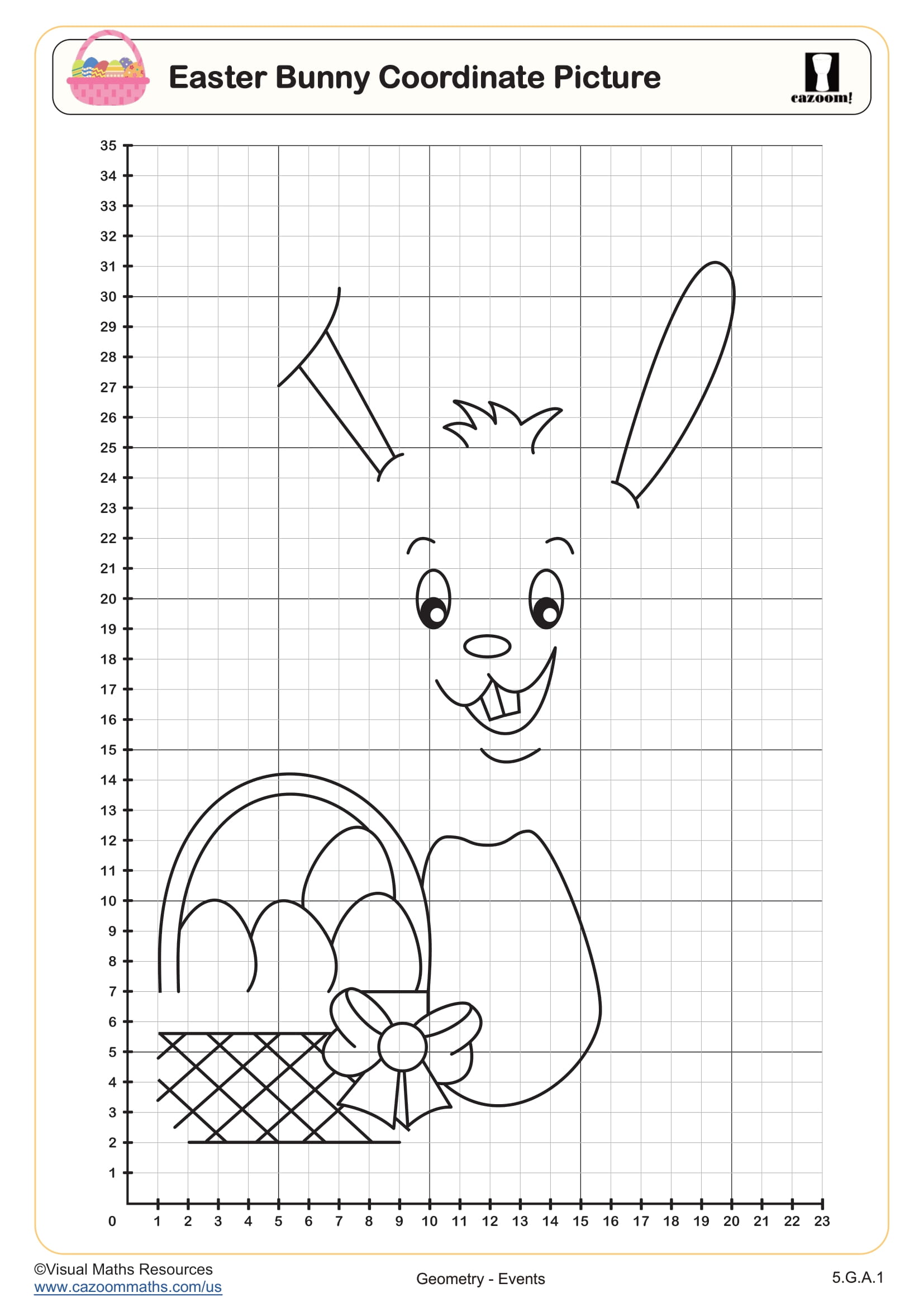
Easter Bunny Coordinate Picture
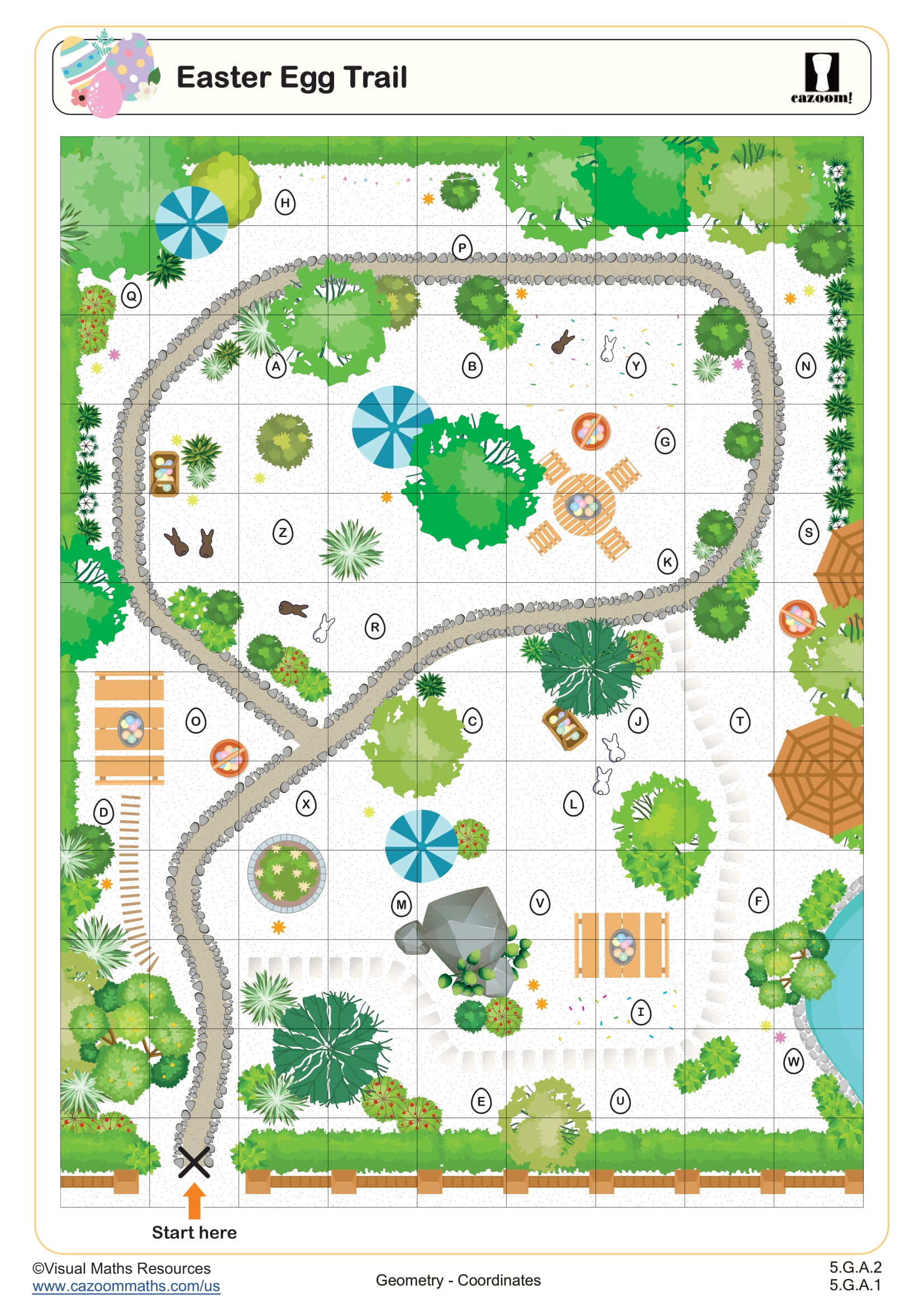
Easter Egg Trail
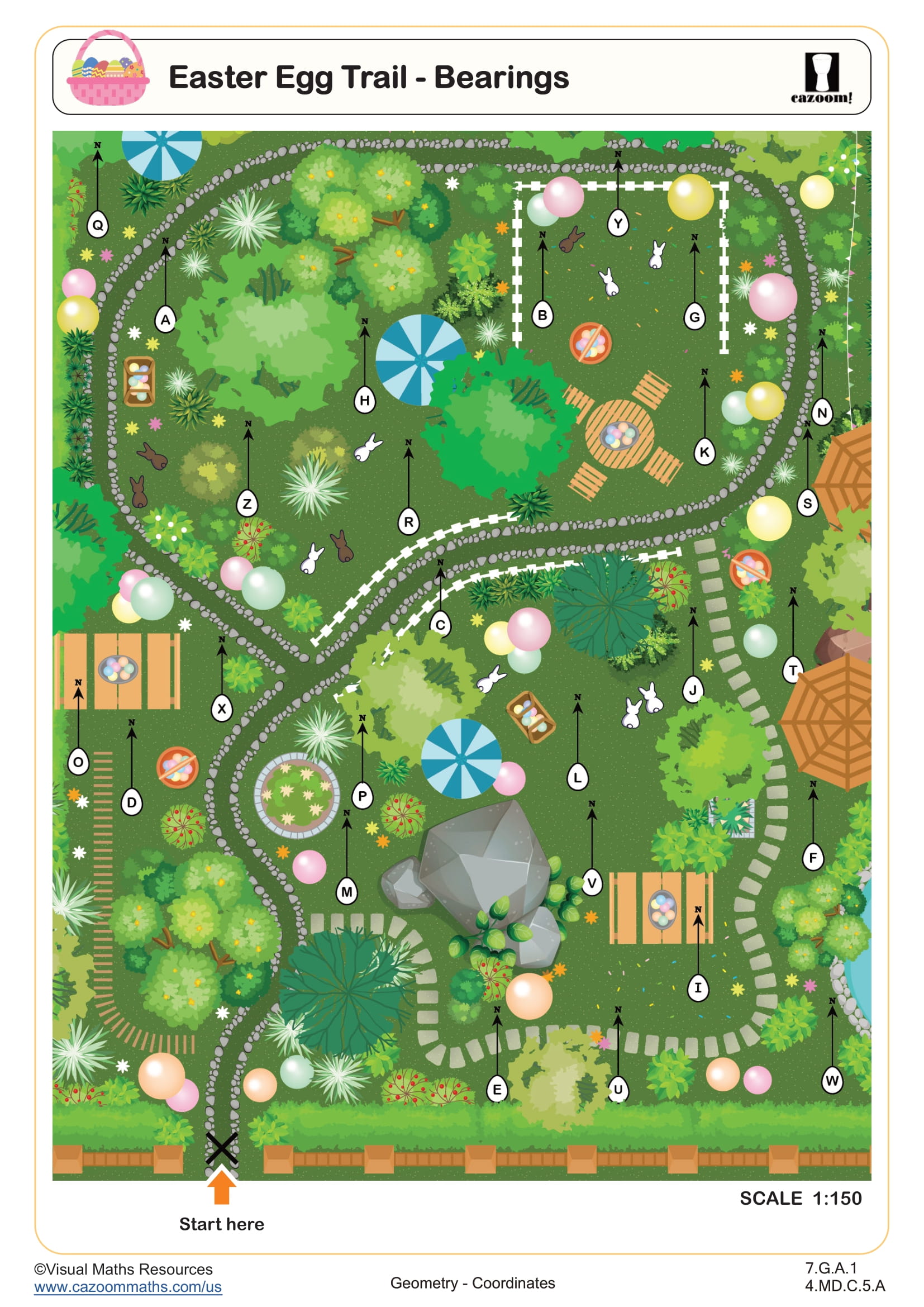
Easter Egg Trail - Bearings
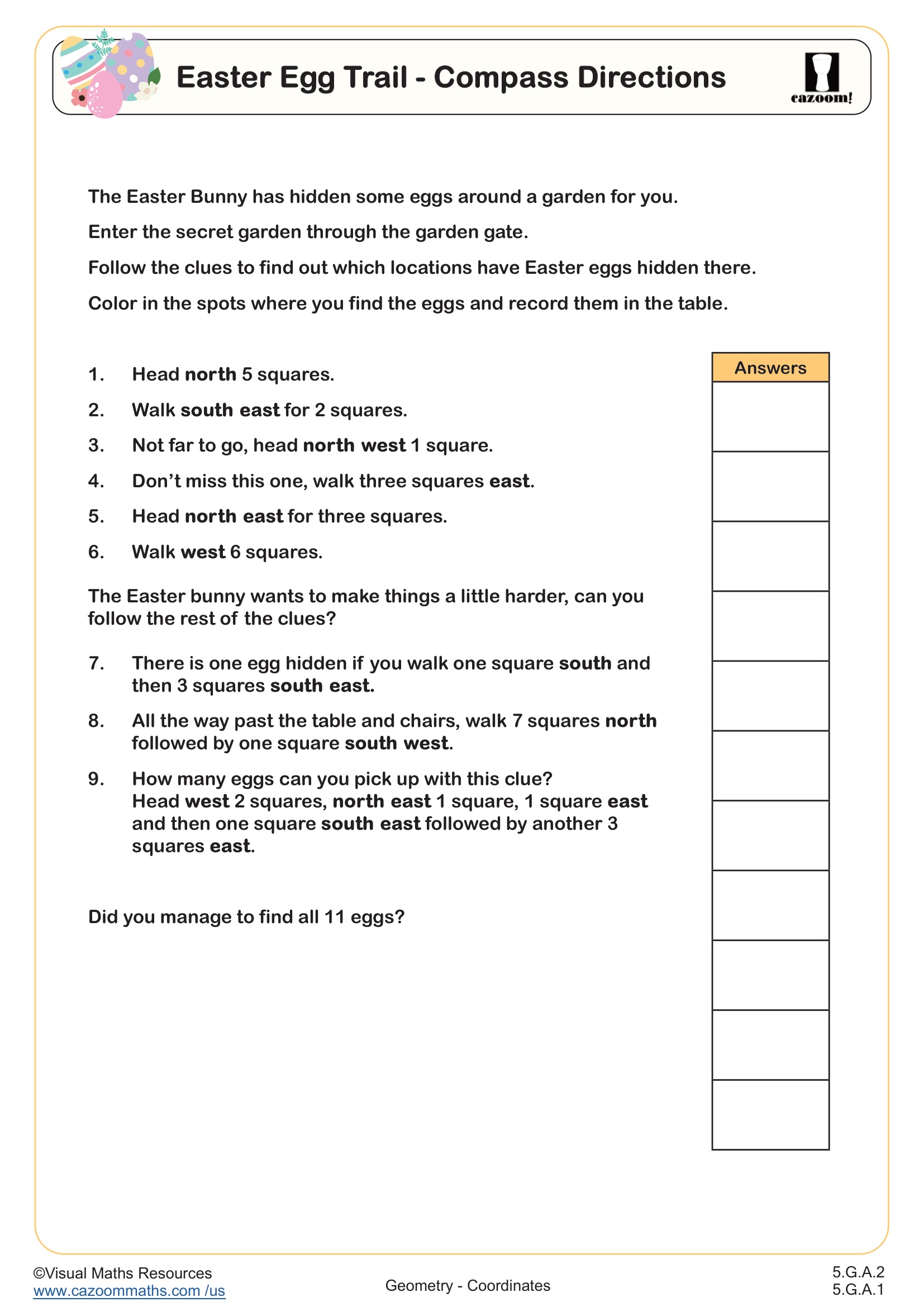
Easter Egg Trail - Compass Directions
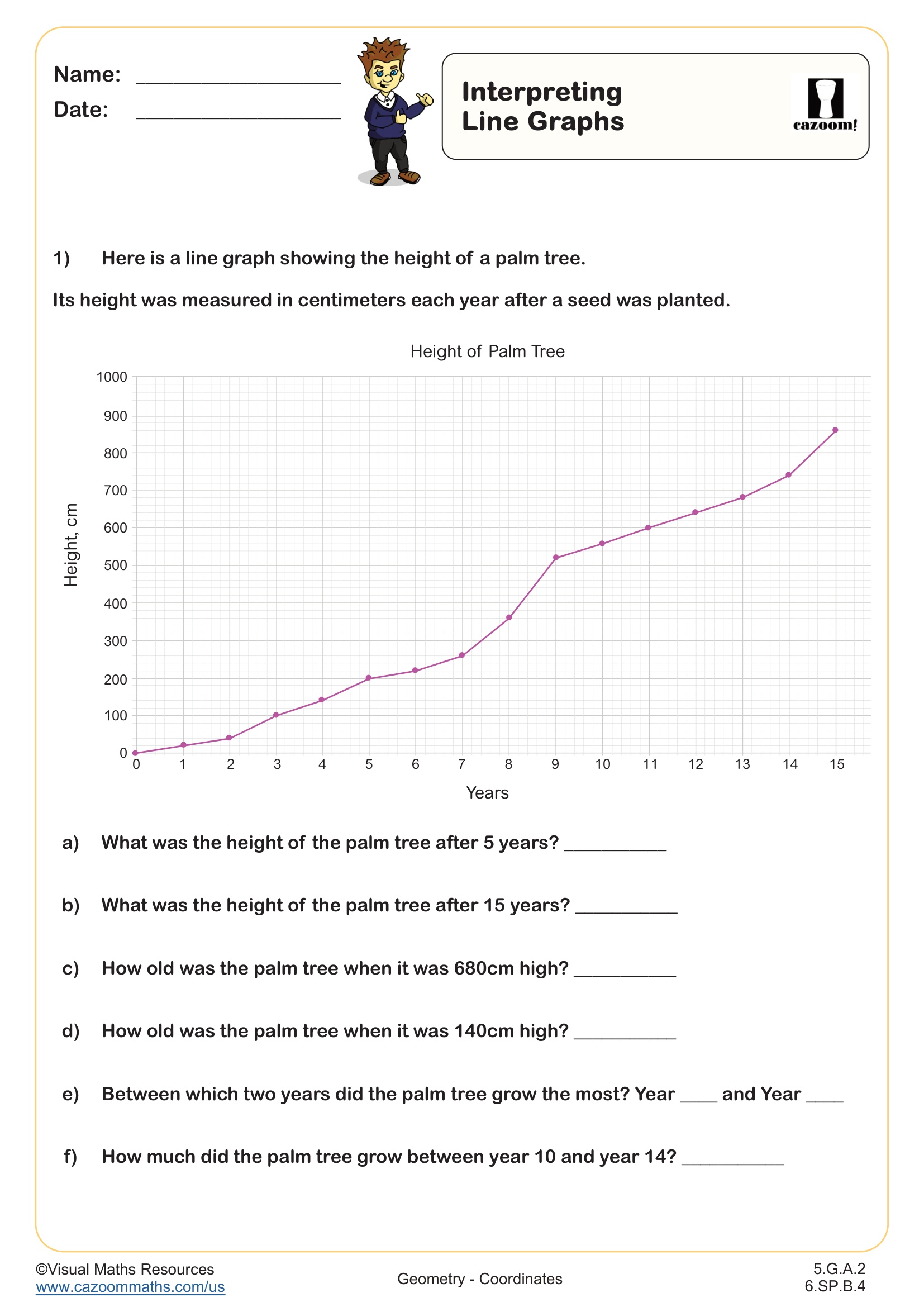
Interpreting Line Graphs
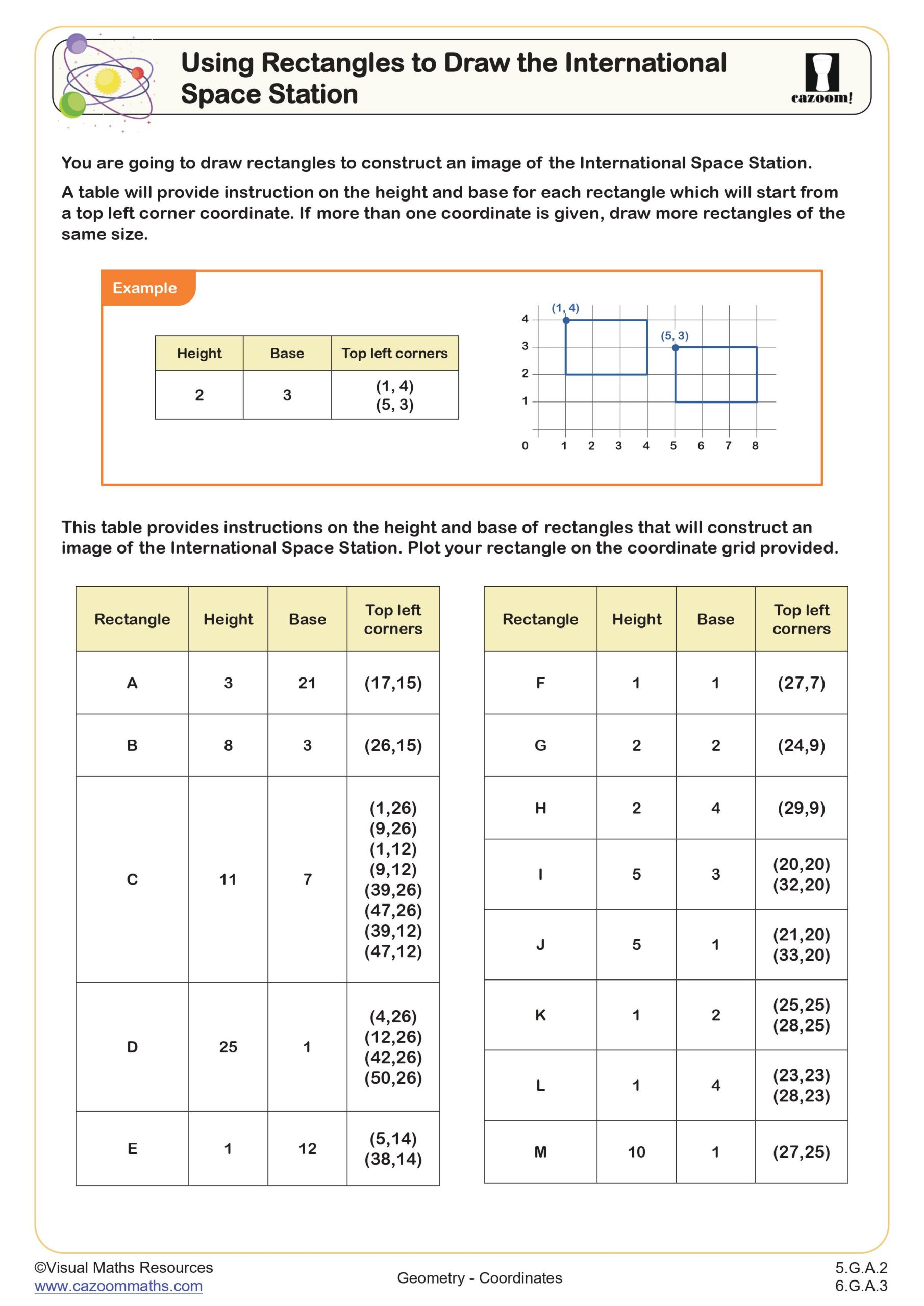
Using Rectangles to Draw the International Space Station
All worksheets are created by the team of experienced teachers at Cazoom Math.
What Are Coordinates in Elementary Math?
Coordinates are ordered pairs of numbers that describe the exact location of a point on a grid. In elementary math, students begin with simple position concepts (above, below, left, right) before progressing to coordinate grids where the first number (x-coordinate) shows horizontal position and the second number (y-coordinate) shows vertical position. This aligns with Common Core standards that introduce graphing in the coordinate plane starting in grade 5, with foundational spatial reasoning built throughout earlier grades.
Students often reverse the order of coordinates, writing (y, x) instead of (x, y), especially when the vertical position seems more obvious in pictures or diagrams. Teachers notice this error decreases when students consistently use the phrase "walk before you climb" or "along the hallway, then up the stairs" to remember that the x-coordinate (horizontal movement) always comes first. Repeated practice with plotting and reading coordinates builds this automaticity before students encounter four-quadrant graphing in middle school.
What Grade Levels Are These Coordinate Worksheets For?
These coordinate worksheets span kindergarten through 5th grade, covering the full elementary school range. Early elementary students work with basic positional language and simple grid navigation, while upper elementary students practice plotting ordered pairs on numbered coordinate grids. The progression aligns with how spatial reasoning develops across elementary mathematics curricula.
Kindergarten and 1st grade worksheets focus on describing positions and following simple grid paths. By 2nd and 3rd grade, students work with labeled rows and columns, building the vocabulary and visual skills needed for coordinate notation. Fourth and 5th graders practice reading and plotting coordinate pairs in the first quadrant (all positive numbers), preparing them for the full coordinate plane with negative numbers introduced in 6th grade. Each grade level builds systematically on prior spatial understanding.
What Are Positive Coordinate Grids?
Positive coordinate grids show only the first quadrant of the coordinate plane, where both x and y values are positive numbers. Elementary students work exclusively with these grids, plotting points like (3, 5) or (7, 2) without encountering negative coordinates. This simplified version allows students to focus on the mechanics of locating points using ordered pairs before the complexity of four-quadrant graphing arrives in middle school.
Coordinate grids appear throughout STEM fields, from mapping software and GPS navigation to computer graphics and video game design. Engineers use coordinate systems to design buildings and bridges, while scientists plot data points to identify patterns in experiments. When students see coordinates as a universal language for describing location, they connect classroom math to careers in architecture, robotics, animation, and data science. Many students recognize coordinate concepts when they first encounter spreadsheet programs, where columns and rows create a grid system similar to mathematical coordinates.
How Do These Worksheets Help Students Learn Coordinates?
These worksheets provide structured practice that moves from visual recognition to independent plotting and reading of coordinates. Many worksheets include engaging themes like emoji placement or holiday-themed treasure hunts that maintain student interest while building accuracy with ordered pairs. The answer keys allow teachers to quickly identify whether errors stem from coordinate reversal, counting mistakes, or misreading the grid scale, making targeted reteaching more efficient.
Teachers use coordinate worksheets during math centers for differentiated small-group instruction, assigning simpler grids to students still developing counting skills while challenging advanced students with more complex coordinate puzzles. The worksheets work well as quick warm-up activities to maintain skills between units, as homework that parents can easily support at home, or as intervention materials for students who need additional practice before assessments. Paired activities where one student calls out coordinates while a partner plots them build both communication skills and coordinate fluency.